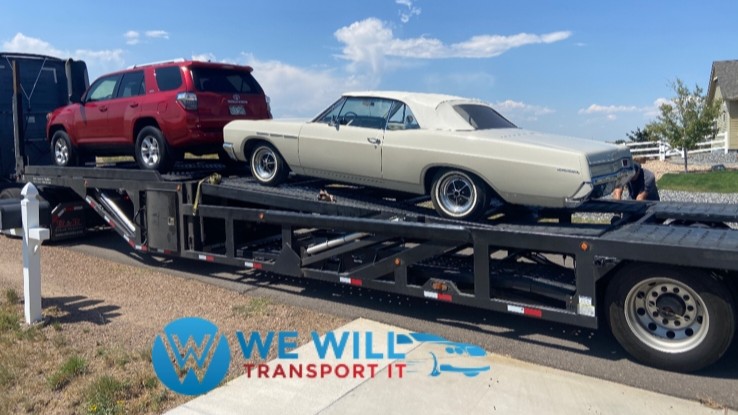
Car transport is used every day by people who need to relocate, buying vehicles online, or ship cars that should not be driven long distances. While the process looks simple from the outside, car transport pricing and logistics depend on several moving parts. Understanding how car transport works and what affects cost helps set realistic expectations before booking your car transport needs. Click to get a free quote from We Will Transport It.

What Is Car Transport?

Car transport is the process of moving a vehicle on a carrier rather than driving it. Most vehicles are shipped using open carriers, the same type of trailers used to deliver new cars to dealerships. When needing to transport your car, there are several main ways to do it. 

Common car transportation options can be:

  • Open Car Transport: When the car is exposed to weather conditions and road elements during movement. It’s the most widely used and affordable option.
  • Enclosed Cart Transport: When cars are shipped protected from elements and exposure. Used for classic or luxury cars, so this option is mostly on the costly side. 
  • Door-to-Door: Reduces the need for extra driving
  • Terminal-to-Terminal: Can be cheaper, but requires drop-off and pickup at designated locations

Open vs Enclosed Car Shipping: What’s the Difference?

Open car transport and enclosed car transport are the two most common ways to move a car. But, what’s the difference? 

  • Open car shipping: Affordable and common, your car is exposed to elements but secured on an open trailer. Best shipment method for standard cars and the go-to for cheap car shipping.
  • Enclosed car shipping: Provides full protection from weather, debris, and road hazards. Recommended for high-value, classic, luxury, or exotic vehicles. Costs more because the enclosed trailer has limited trailer space. 

How Vessel Transport Pricing Is Calculated

No boat transport price is ever the same. Pricing starts with the basics of distance, size and weight. 

  • Smaller cars take up less space and are easier to load, while SUVs, trucks, and vans increase cost because they’re bigger in size and weight. 
  • Operable vs inoperable: Operable vehicles can be driven onto the carrier, while inoperable vehicles require winches or special loading equipment. Additional equipment raises the price.
  • Timing/Season: Car transport peak season usually runs through spring and early fall. During the busy season, car movement demand increases, availability tightens, meaning transport gets more expensive.  Flexible pickup dates and early booking often help customers find better rates.
  • Fuel prices

Key Takeaways

Before it’s time to transport your car in, out or around the state. There are a few takeaways to keep in mind. These tips can save you money and ensure the safety of your car. Small steps, like cleaning your car or confirming details ahead of time, can make a big difference in the outcome of your vessel transport experience.  

  1. Plan Ahead: Booking your car transport early can help you take advantage of more flexible pickup and delivery windows.  
  1. Check Quotes: If a quote seems too good to be true, it probably is. Compare quotes from multiple trusted  car transport carriers. Look for consistency, and prioritize companies with a strong reputation for reliability and customer service.
  1. Pickup and Delivery Locations: Accessible pickup and delivery are generally easier and cheaper to service.  
  1. Car Preparation: Clean your car inside and out so that before pickup,  existing scratches or dents are visible. Remove personal and loose items from inside the car and check tires and fluids. Properly preparing your car helps avoid delays.
  2. Confirm details with your transportation company before pickup. Double-check about insurance coverage, delivery timing, and any special requirements because clear communication prevents surprises and guarantees a smoother experience.
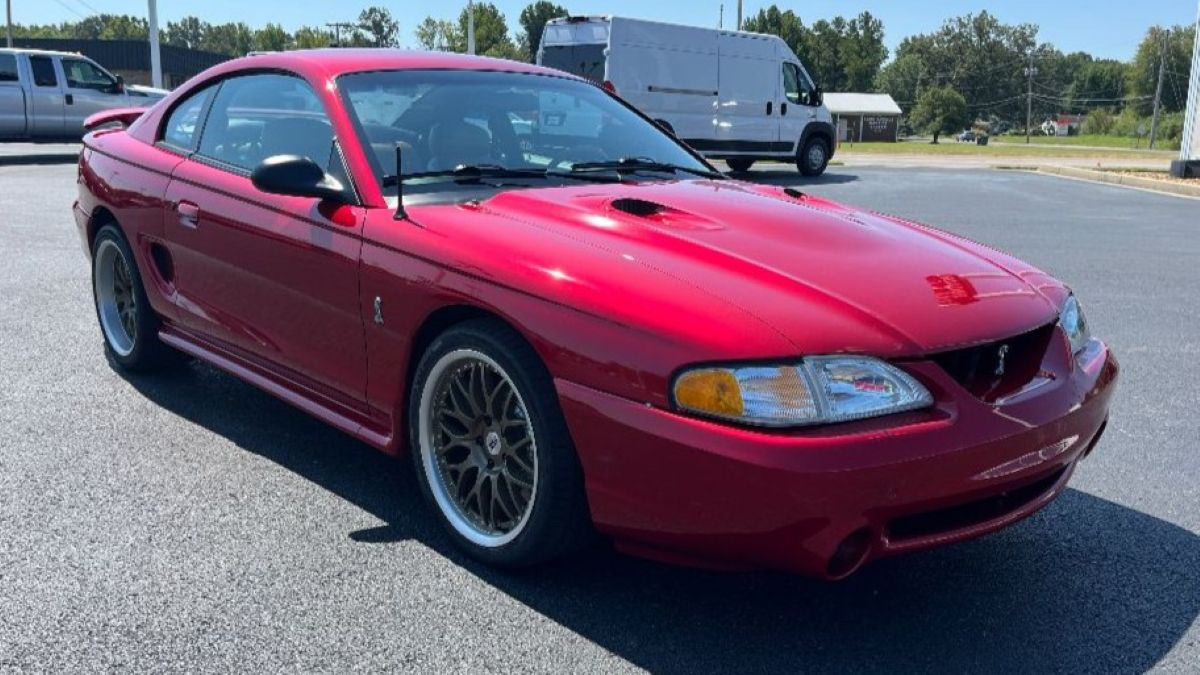
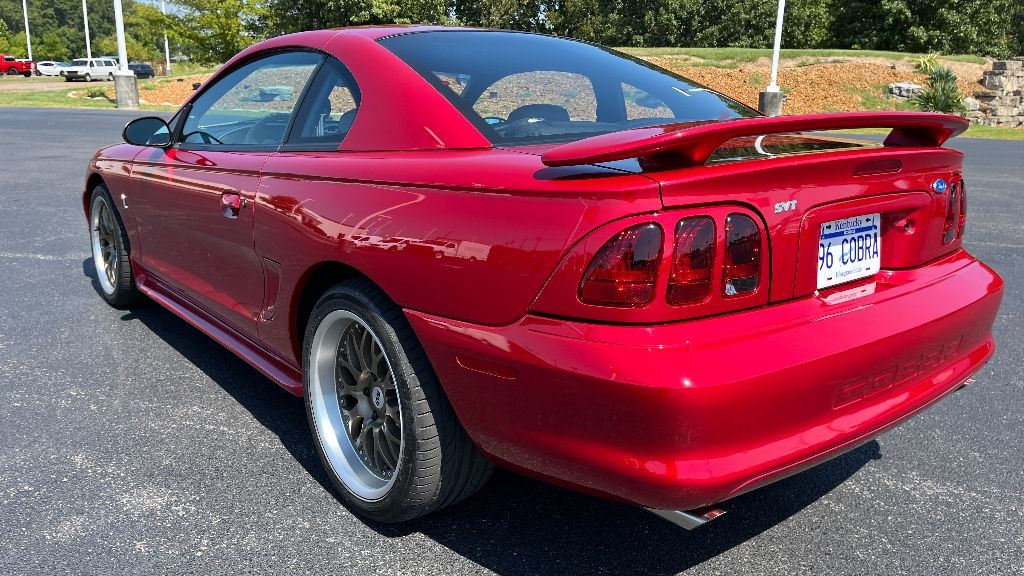
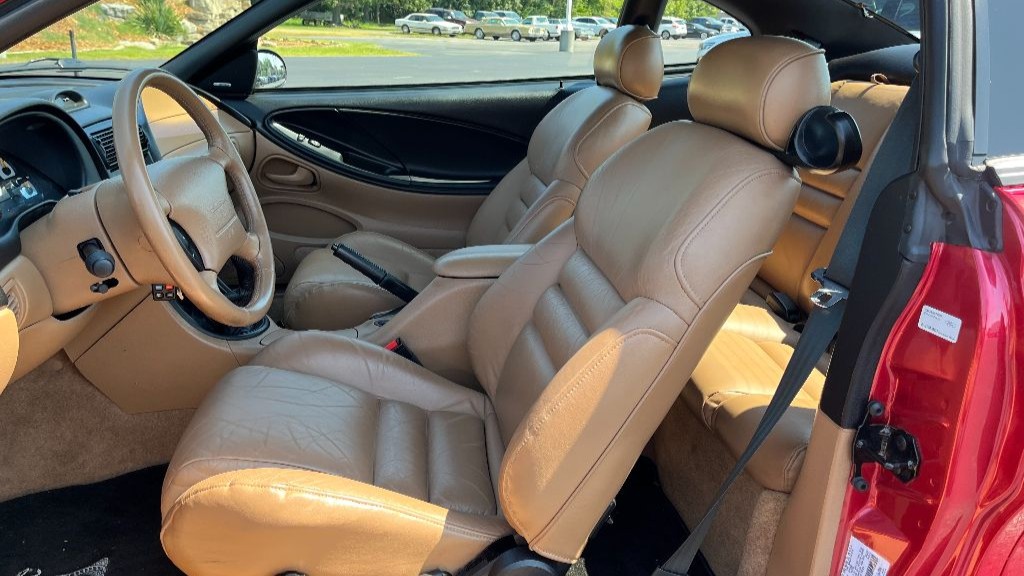
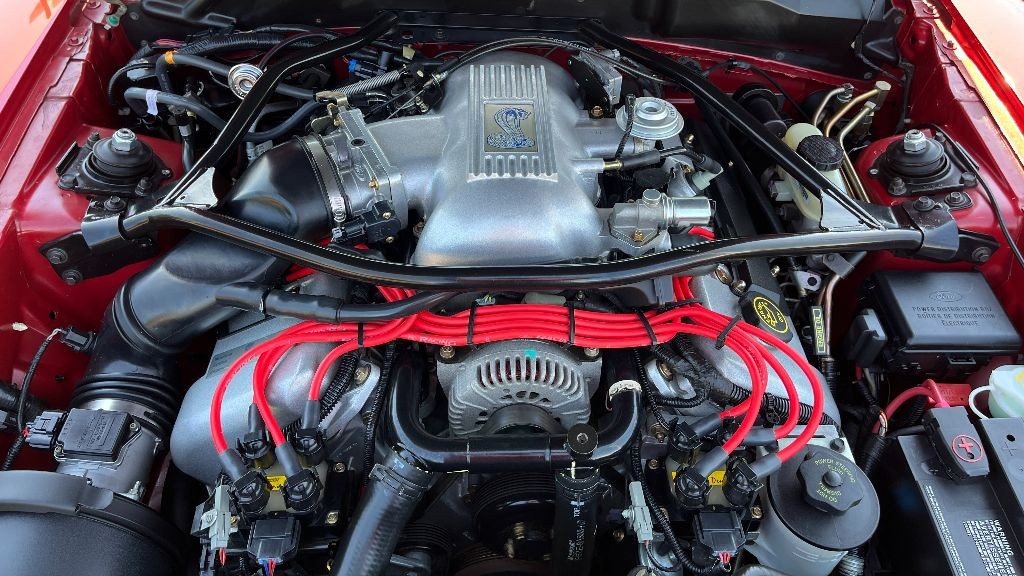
Ford’s Special Vehicle Team (SVT) brought to life some of Ford’s most popular performance vehicles. It was founded in 1991 and was merged into Ford Racing in 2015. One of the group’s prized creations was the Mustang SVT Cobra, and there just so happens to be one featured on AutoHunter. It is this 1996 Ford Mustang SVT Cobra Coupe listed by a dealer in Paducah, Kentucky. The auction will end on Tuesday, January 6, 2026, at 11:45 a.m. (MST).

Finished in Laser Red, the car is a low-miler, with only 30,818 showing on the odometer. The AutoCheck report provides good news all around. The car is free of title brands, accidents, damage, recalls, or odometer inconsistencies. According to the history, the car spent a little over the first two decades of its life in the Flagstaff, Arizona, area. It was relocated to Colorado in 2021 and Georgia the following year. Hopefully its next home is inside your garage.

The Mustang Cobra, Camaro Z28 SS, and Firebird Formula WS6 were arch rivals in the mid-1990s (as well as for a couple decades before that). Granted, the Chevy and the Pontiac were badge-engineered siblings of one another, but they were each uniquely tuned and styled. When Car and Driver’s editors got their hands on all three cars at the same time in December 1995, it made for a lively (combined-915-horsepower, in fact) comparison test.

In the end, the Mustang received high marks. The article said, “The Cobra was straight-line fast as well as smooth in corners, topping out at about 120 mph in fourth gear and generating the same quality of race-car-like engine and exhaust noise as the faster Camaro.” The car was also deemed the best daily-driver muscle car in the test. “It was the one car we would most want to drive home at the end of a long day,” the editors said.

Power for this pony car comes from a Modular 4.6-liter V8 mated to a BorgWarner T45 five-speed manual transmission and an 8.8-inch limited-slip differential. Ratings for the SVT Cobra were 305 horsepower and 300 lb-ft of torque. According to the AutoCheck report, the car received service within the last 2,000 miles including work to the cooling system, fuel system, battery, brakes, and fluids. Modification-wise, a MagnaFlow dual exhaust system has been added, as well as a set of staggered SVE wheels and cross-drilled brake rotors. Overall, it’s a largely original muscle car with plenty of collector appeal.

Get your hands on it when the auction ends tomorrow!

The auction for this 1996 Ford Mustang SVT Cobra Coupe ends Tuesday, January 6, 2026, at 11:45 a.m. (MST).

Visit the AutoHunter listing for more information and a photo gallery

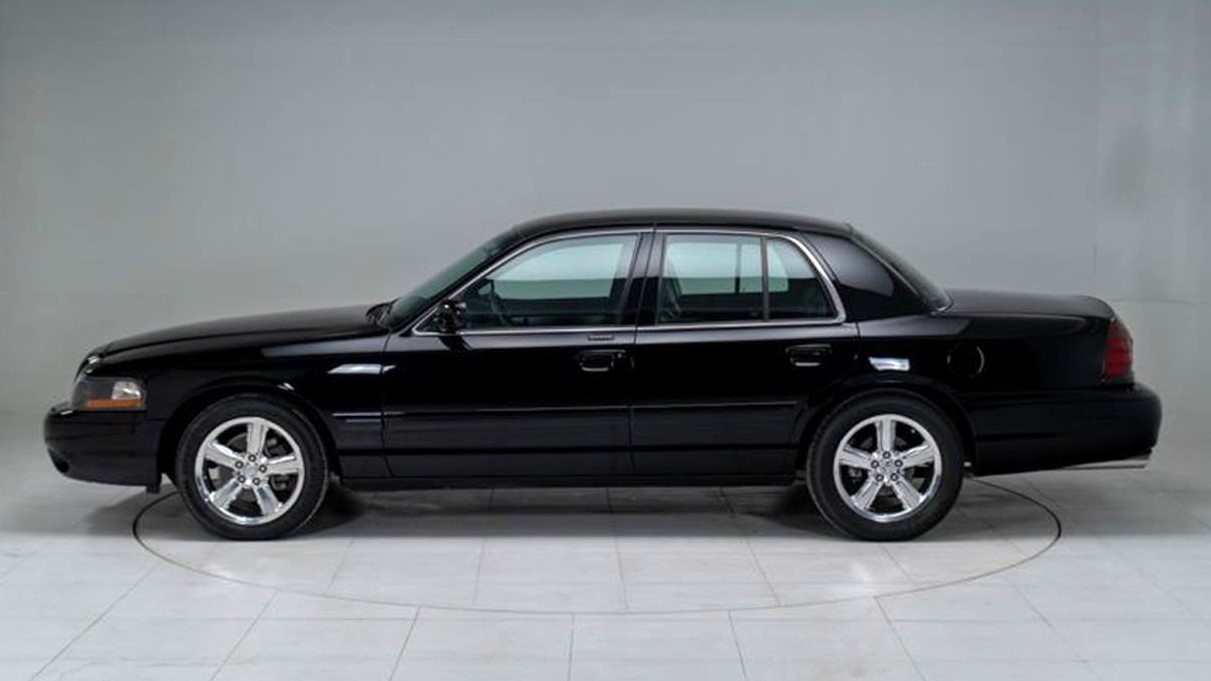
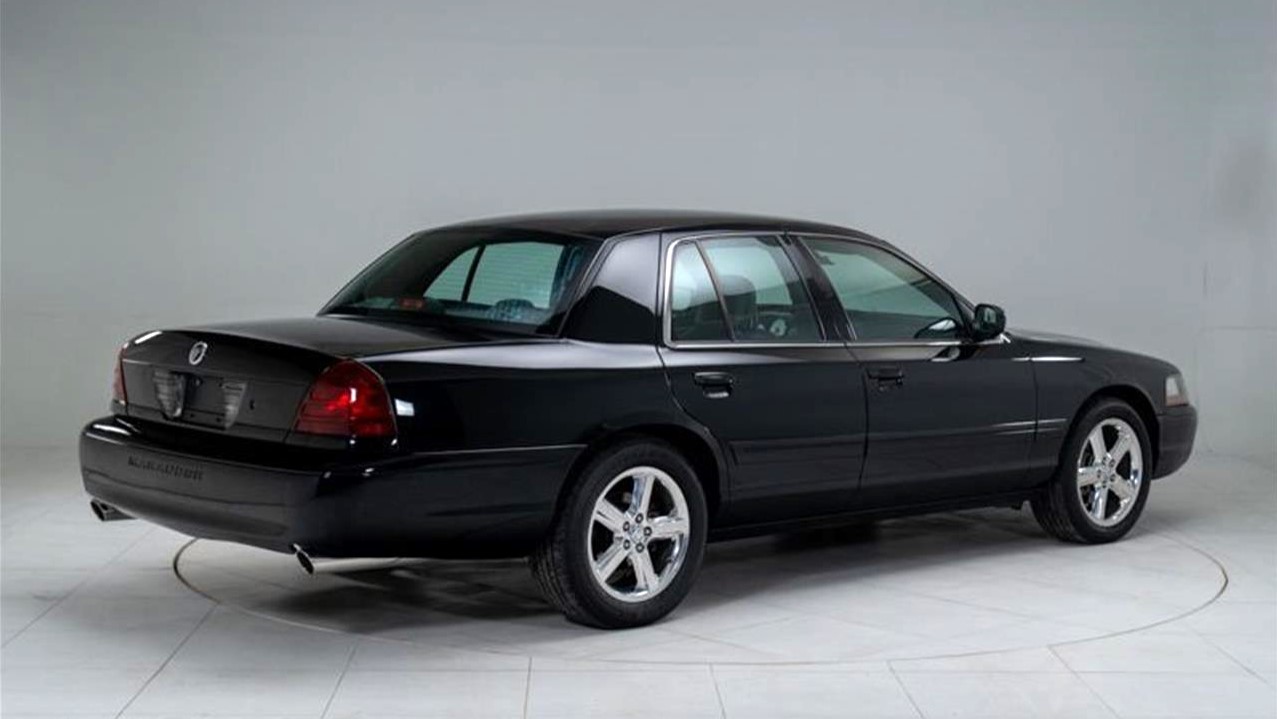
According to the Merriam-Webster dictionary, the definition of a marauder is “one who roams from place to place making attacks and raids in search of plunder,” which means other people are victims. When it comes to the 2003-2004 Mercury Marauder, in a way, it’s a victim – of its own success. It’s a big American rear-wheel-drive sedan that combines cool looks with V8 power, so most of them on the market are road warriors that have been driven well over 100,000 miles. Not our Pick of the Day, though. You can find this 3,855-mile 2003 Mercury Marauder listed on ClassicCars.com by a dealer in Halton Hills, Ontario, Canada.

The 2003 and 2004 model years were a lively time for the Ford Motor Company. Unfortunately, they were the only two years for the “New Edge” revival of the Mustang Mach 1 as well as the first supercharged SVT Cobra.

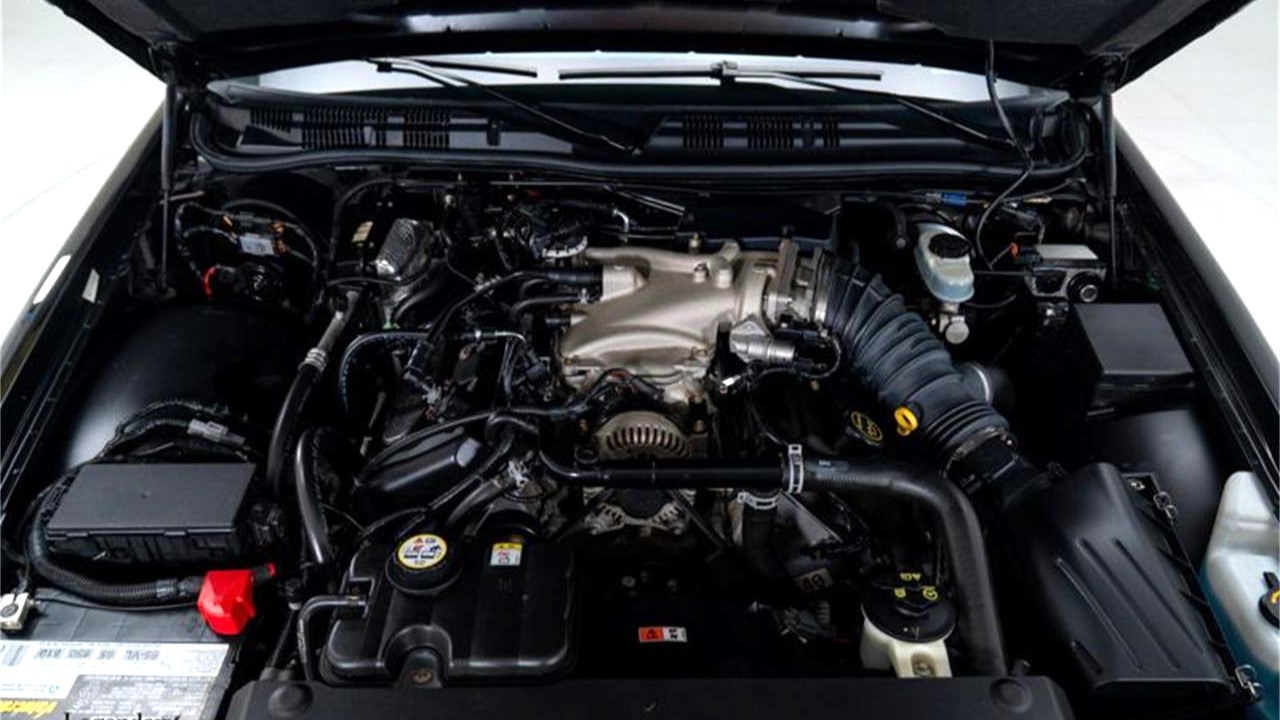
Those models years were also the entire lifespan of Mercury’s resurrection of the Marauder nameplate for a sinister, high-performance version of the Grand Marquis. In addition to giving the Marauder a monochromatic appearance, 18-inch chrome rollers, and dual exhaust outlets, Mercury dropped a 32-valve version of the 4.6-liter V8 in between the front shock towers. Thanks to that better breathing and Roush Performance engineering, the engine pumped out 302 horsepower and 318 lb-ft of torque, which was processed by a four-speed automatic and a 3.55 limited-slip rear end. To make sure the suspension could handle the significant increase in output, Mercury upgraded the suspension for “performance handling” with Tokico front shocks, 28-millimeter front and 21-millimeter rear stabilizer bars, and load-leveling rear air springs.

Back in 2022, when I was looking for my first American performance car, I considered getting a Marauder. That’s when I learned that most of them seem to have at least 100,000 miles on them. Not much has changed since then. It stinks, but I get it. Who wouldn’t want to crush long distances in a sleek sedan that has a Mach 1 V8 and room for his or her friends? Luckily, this ’03 Marauder has only covered 3,855 miles in the last two-plus decades.

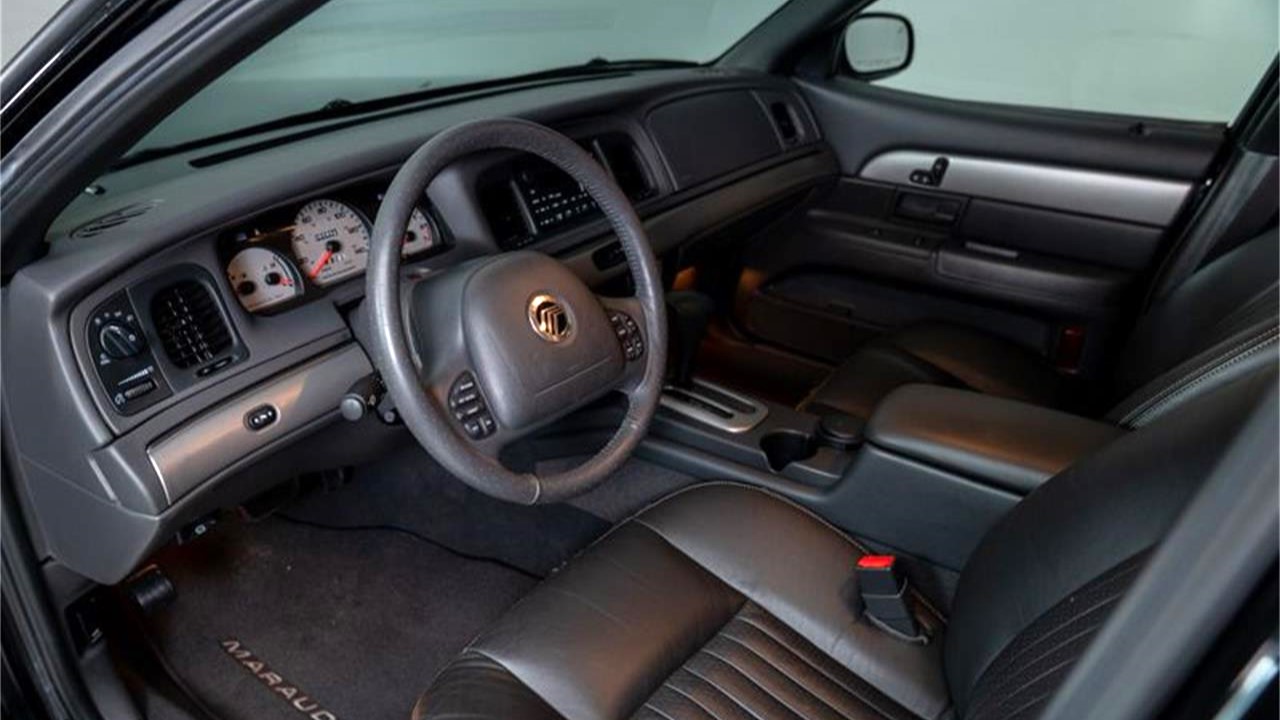
As I learned after buying my 25K-mile 2008 Ford Mustang Bullitt, low mileage isn’t everything because time catches up with seals and gaskets and fluids, but a super-low number on the odometer typically benefits a vehicle in two major ways: the paint and the interior. The less a vehicle is driven, the less it’s sat in and dirtied, and the less the elements contact its paint. You can see that logic applies to this specimen: The Black Clearcoat finish is deep and glossy, and the Dark Charcoal leather interior looks as if the driver(s) never traveled with passengers.

I’ve seen a lot of Marauders for sale online, but none as well preserved as this one. You can see this 3,855-mile 2003 Mercury Marauder in your garage every day if you buy it. To do that, start by contacting the Canadian dealer for the price.

Click here to view this Pick of the Day on ClassicCars.com

If you too have a classic car with a story to share, please visit this link and fill in the information to submit your story for a chance to be featured on the ClassicCars.com Journal.

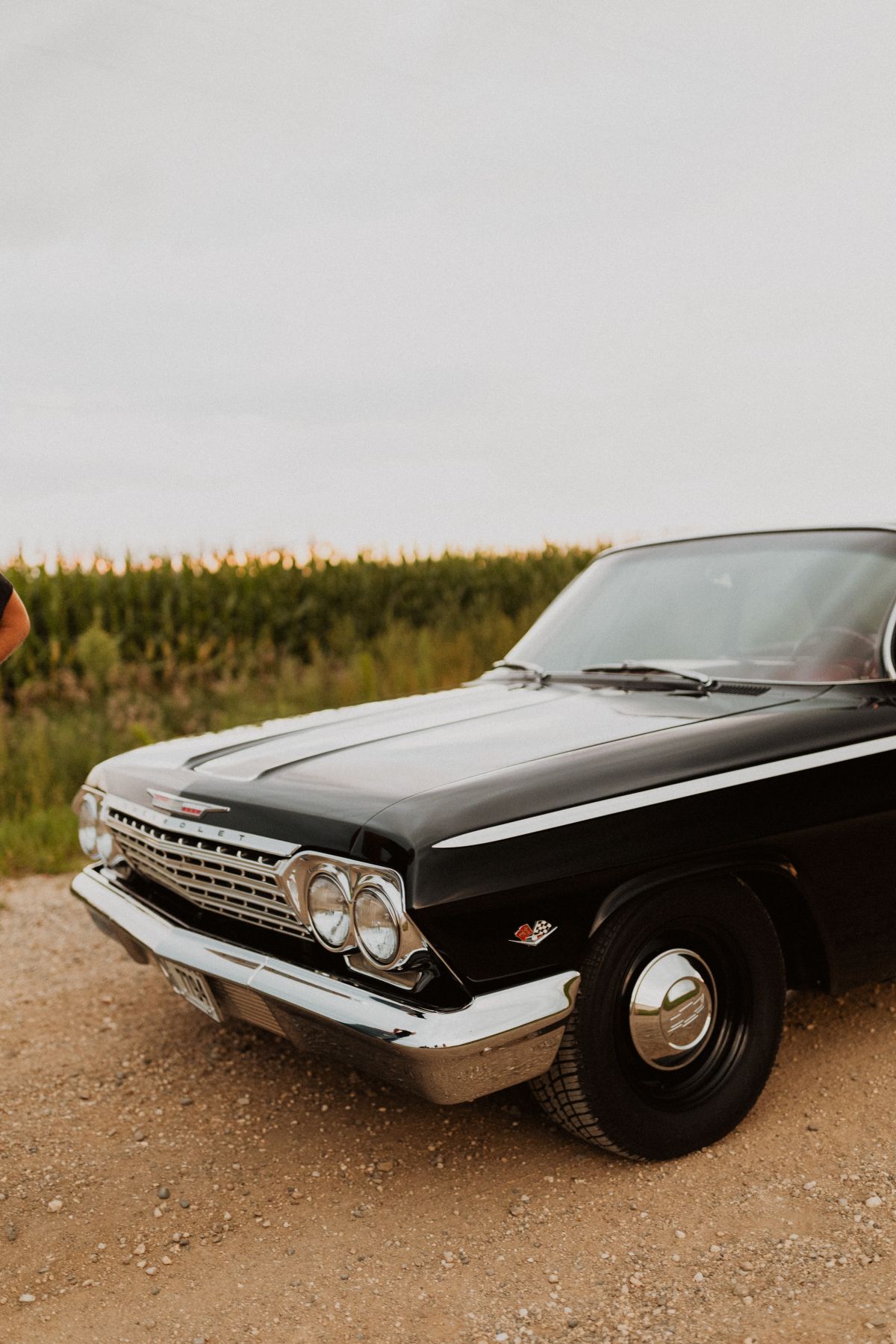
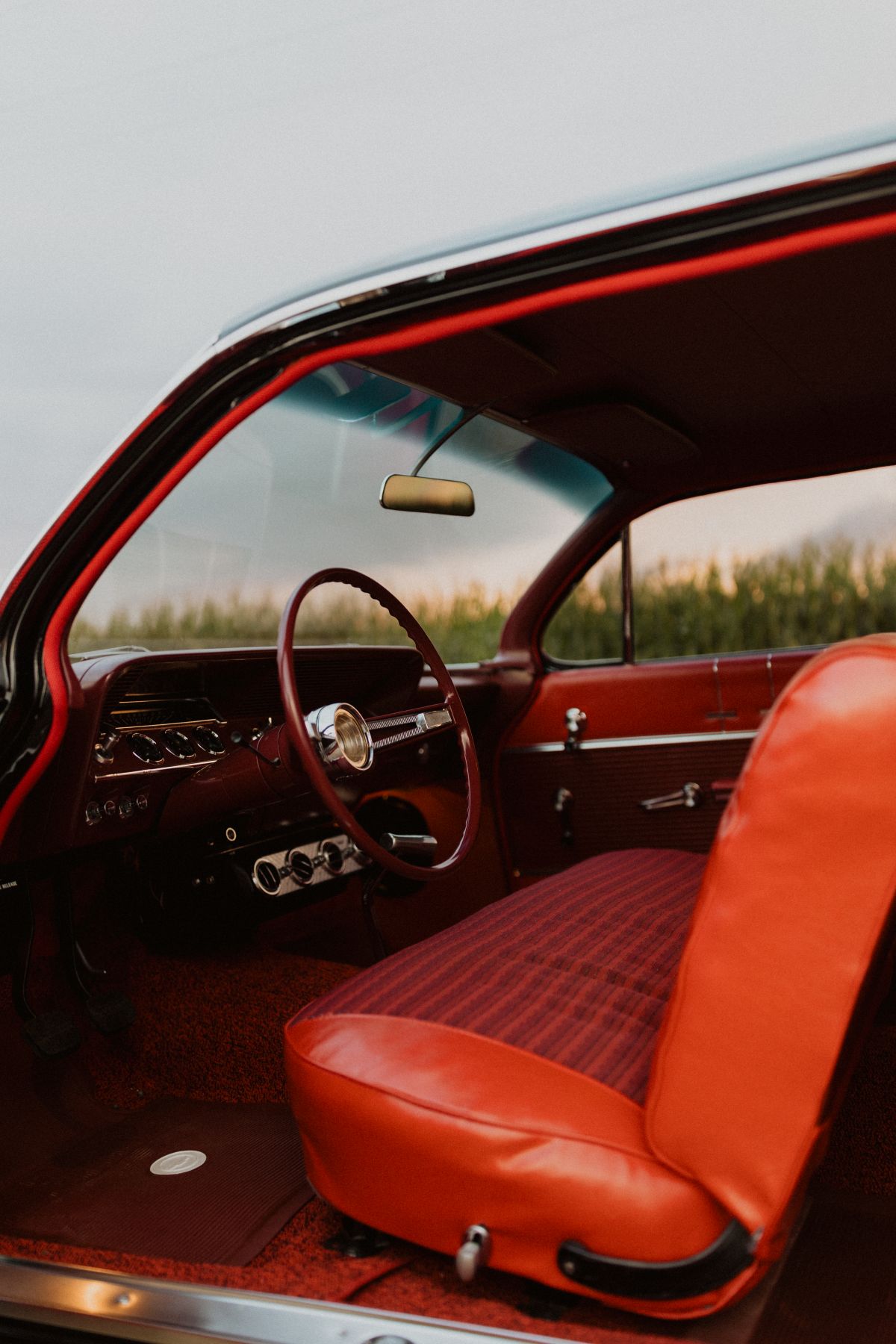
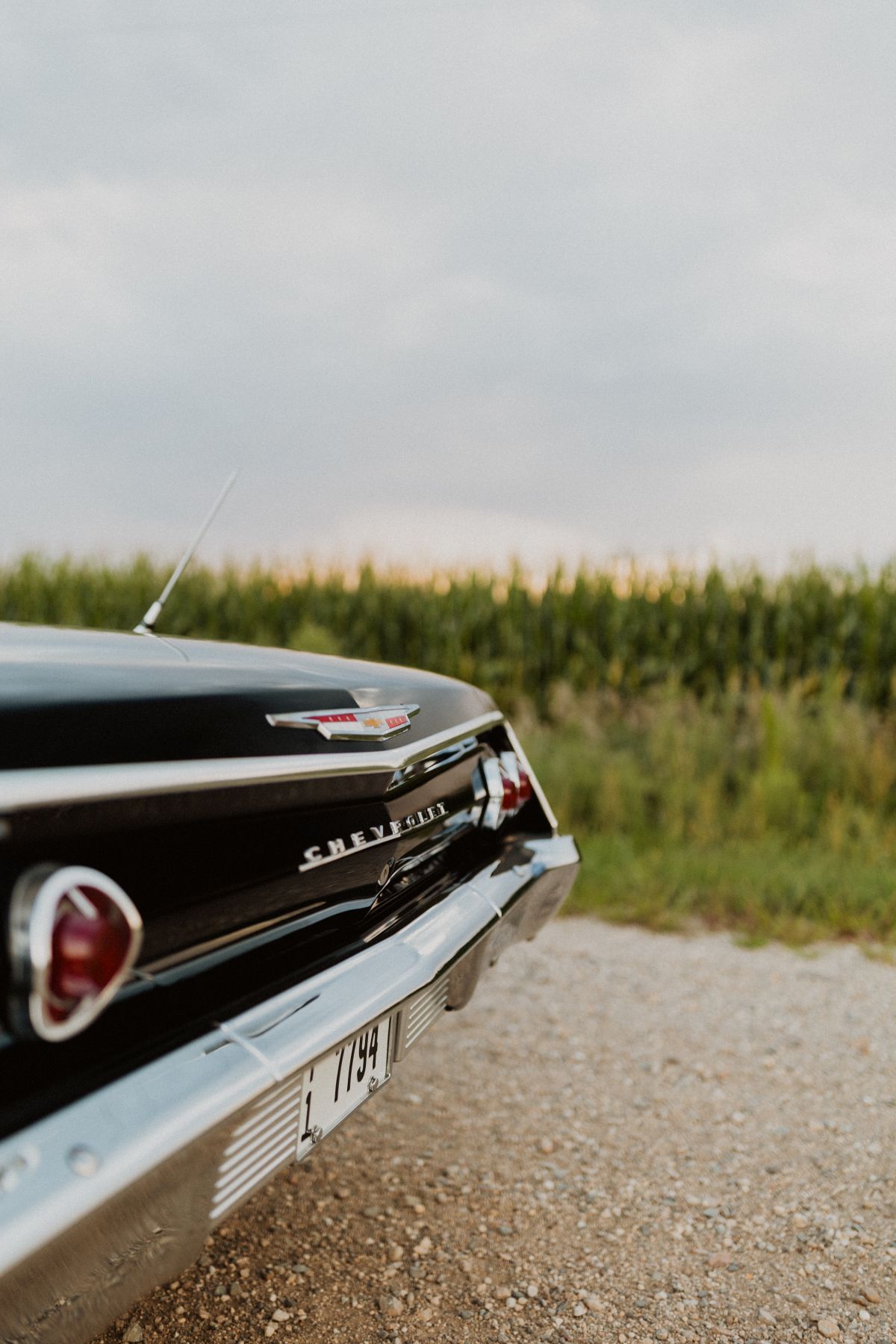
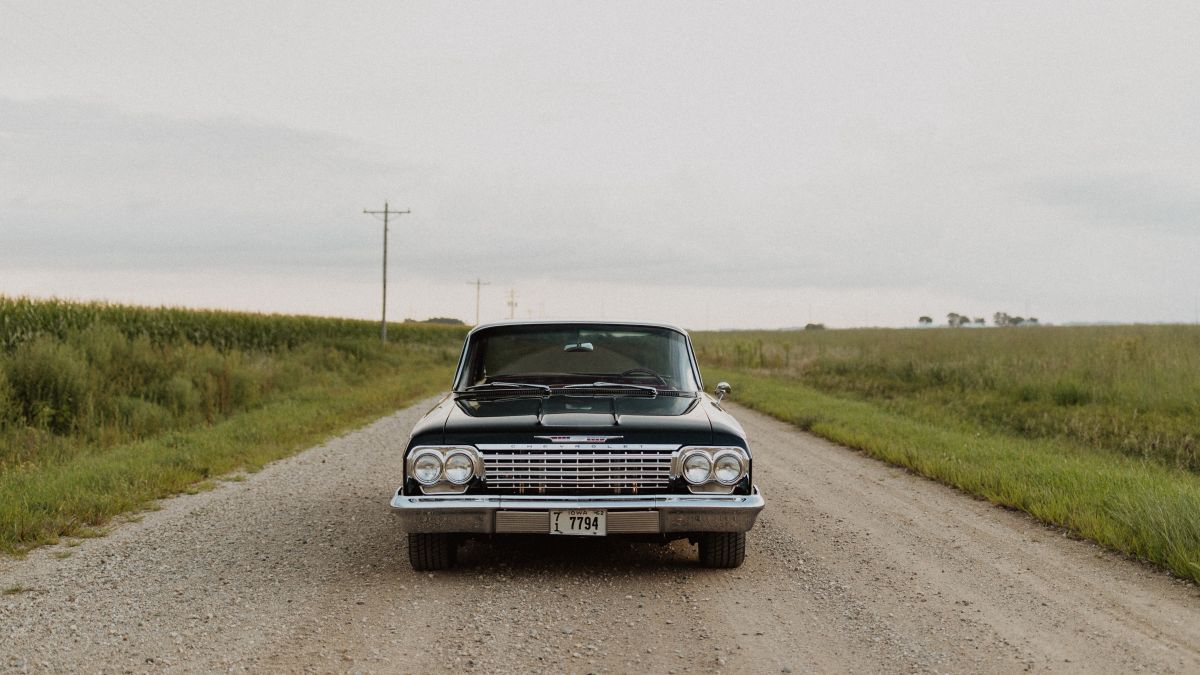
My grandparents purchased a 1962 Chevrolet Bel Air car new in George, Iowa. It was the family car until 1965, then driven by my dad and his siblings. Eventually it was used as a field car on the farm and to check fur traps in the pasture. In the early 1980s, the vehicle was parked and became an inoperable fixture on the family farm. As a kid I remember sitting in the driver’s seat and pretending to drive, and when I turned 15, I began to make plans to make it my own.

Due to various circumstances, my grandpa ended up selling the car locally in 1993. In the years that followed, I made unsuccessful attempts to purchase the car back. At last, in 2005, the owner agreed to sell it back to our family. I began restoring the ’62 at home. The restoration took 20 years, with life and other projects slowing progress. In 2025, the Bel Air was back on the road! The car was restored to appear as it did when purchased by my grandparents, with modifications such as a Muncie 4-speed, disc brakes, lowered suspension, and Dakota Digital gauges.

Weeks after getting the car back on the road, our community was struck with a devastating flood. Thankfully I was able to save the car by putting it on a four-post hoist.

– Casey T., Iowa

Click here to see more in our “My Classic Car” series.

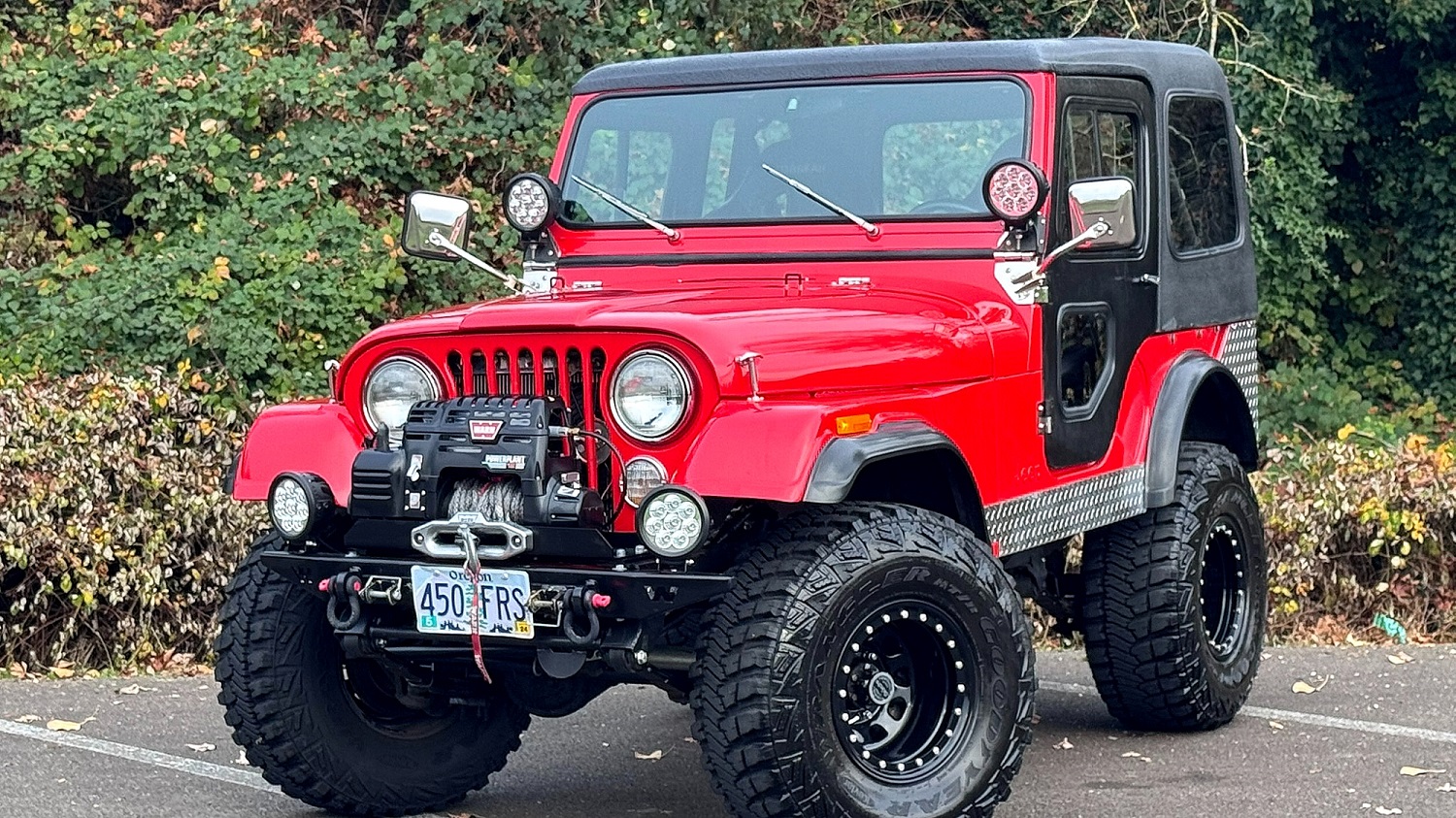
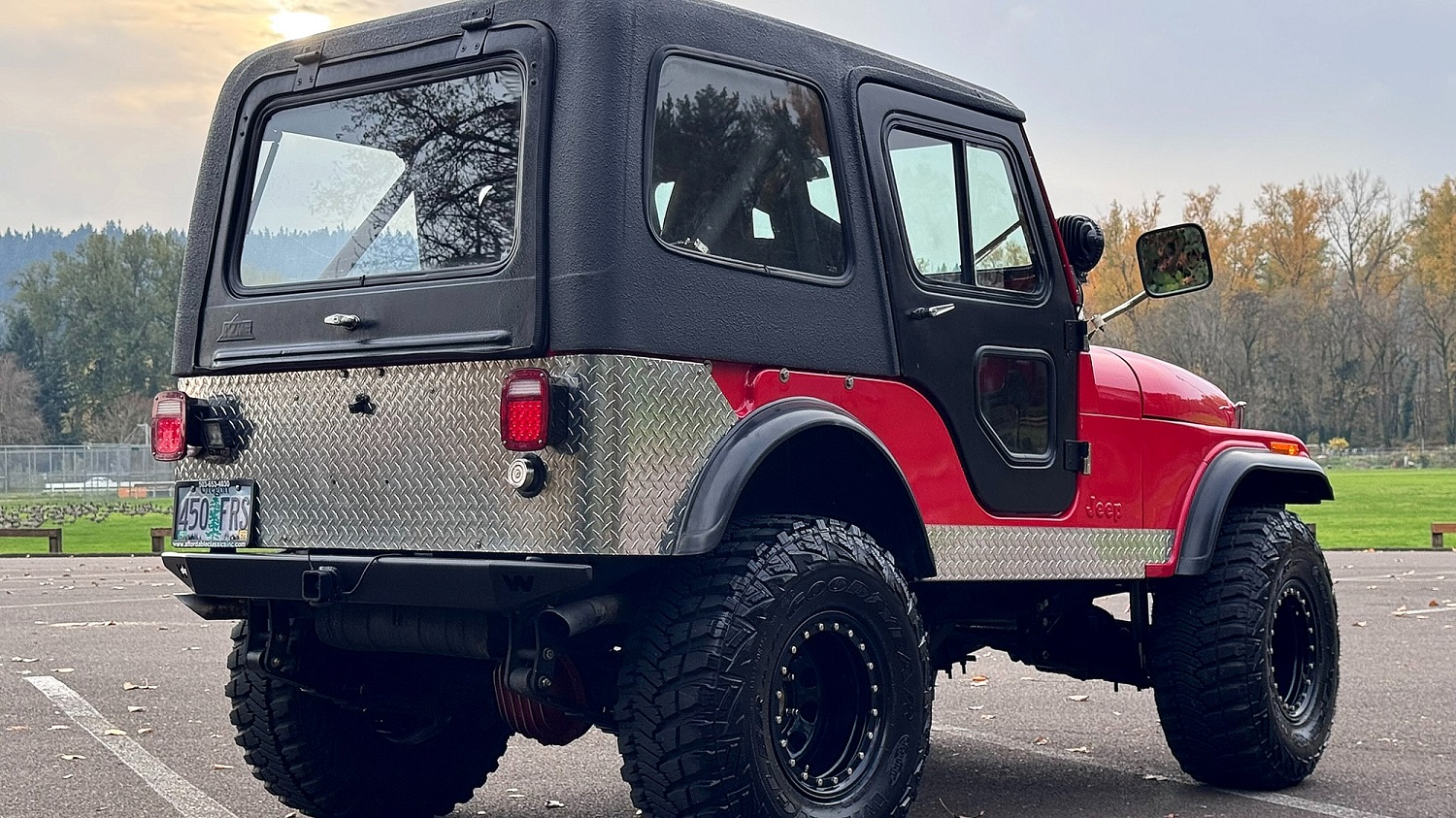
Right now on AutoHunter, you can find this 1976 Jeep CJ-5, which is powered by a 304ci V8 mated to a four-speed manual transmission and a dual-range transfer case. It’s been upgraded for off-road adventures with features such as a winch, body armor, a lift kit, and an onboard air compressor. Finished in red and equipped with a textured black removable hardtop over a black leather interior, this modified classic SUV is now offered by the selling dealer in Oregon with a clear title.

If you can take your eyes off the bright red paint, you’ll notice a variety of useful features and upgrades. Aftermarket bumpers have been installed at both ends. Up front, there’s a 12,000-pound Warn winch and LED fog lights. Black fender flares give this rig a more rugged appearance. In case Mother Nature gets a little too rugged, diamond-plate body armor protects the lower sides and the rear end. The black removable aftermarket doors have an upper main window and a small lower window that provides a better view of the terrain next to the vehicle. A textured black removable hardtop covers the passenger compartment and features a lift-up rear window.
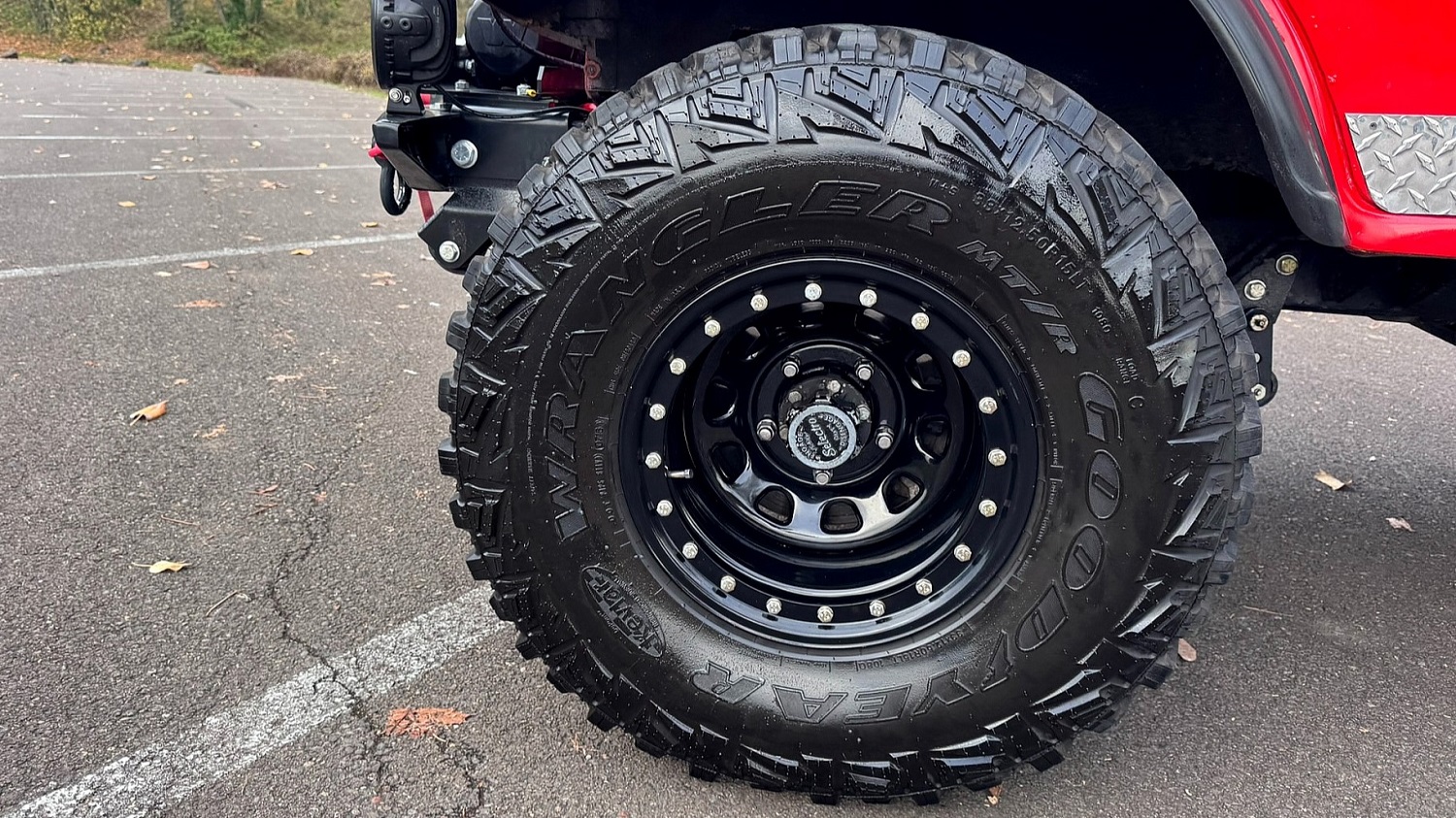
Like most Jeeps, this one comes equipped with aftermarket wheels and tires. In this case, the originals have been swapped out for 15-inch black wheels with chunky 33-inch Goodyear Wrangler MT/R radial tires. There’s a little more space for those thanks to a lift kit.

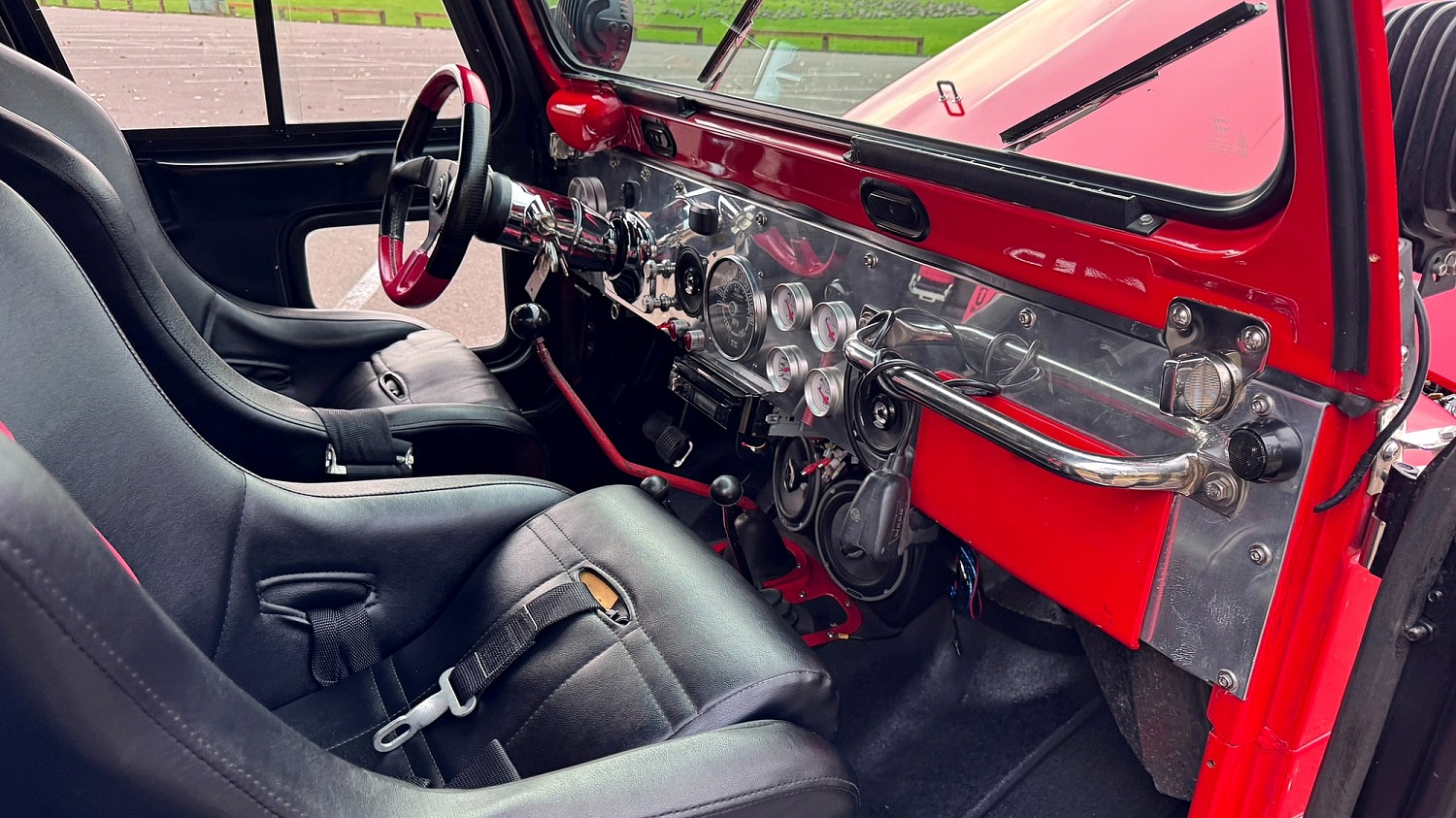
The black and red color scheme continues into the cabin, where the factory seats have been replaced with black leather Corbeau buckets. Those come with black harnesses and red Corbeau pads. In addition, the Grant steering wheel is wrapped in a combination of black and red. Comfort and convenience features include power steering, a tilt steering column, and a Bluetooth-compatible Soundstream AM/FM/CD/USB/AUX stereo with aftermarket speakers.

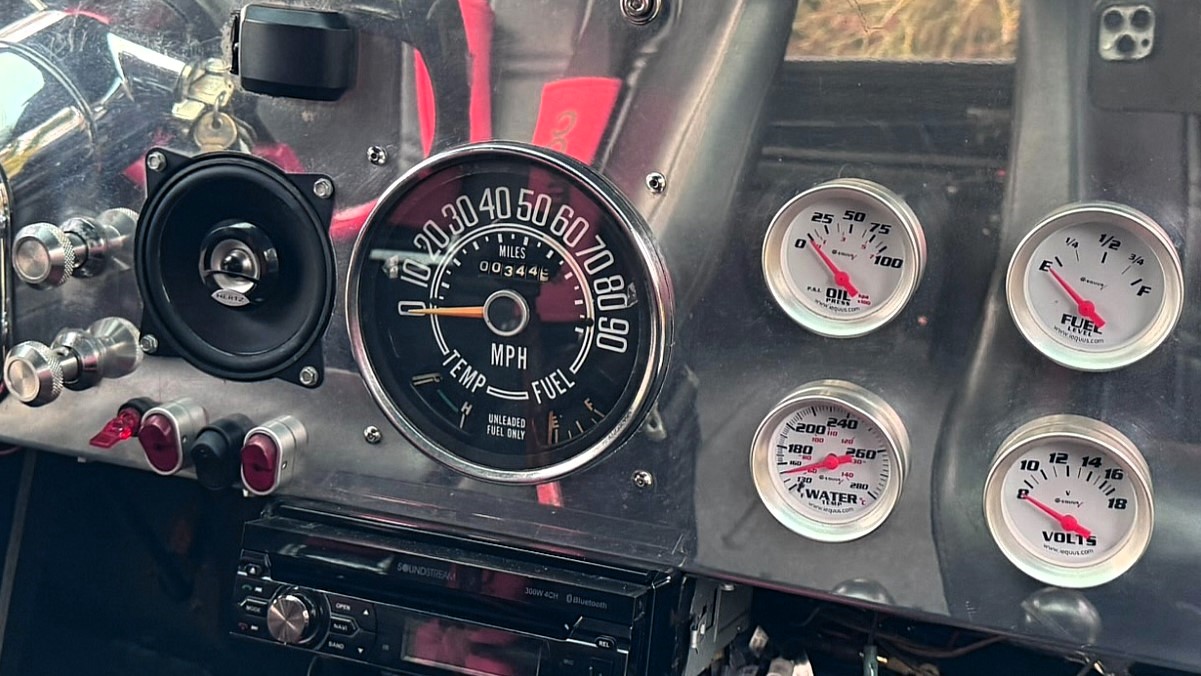
A polished metal dash fascia surrounds the instrumentation, which consists of an 8,000-rpm tachometer, a multi-gauge with a 90-mph speedometer and temperature and fuel gauges, and readouts for the oil pressure, fuel level, water temperature, and voltage. There are only 344 miles on the odometer, but this Jeep is mileage-exempt, according to its title.

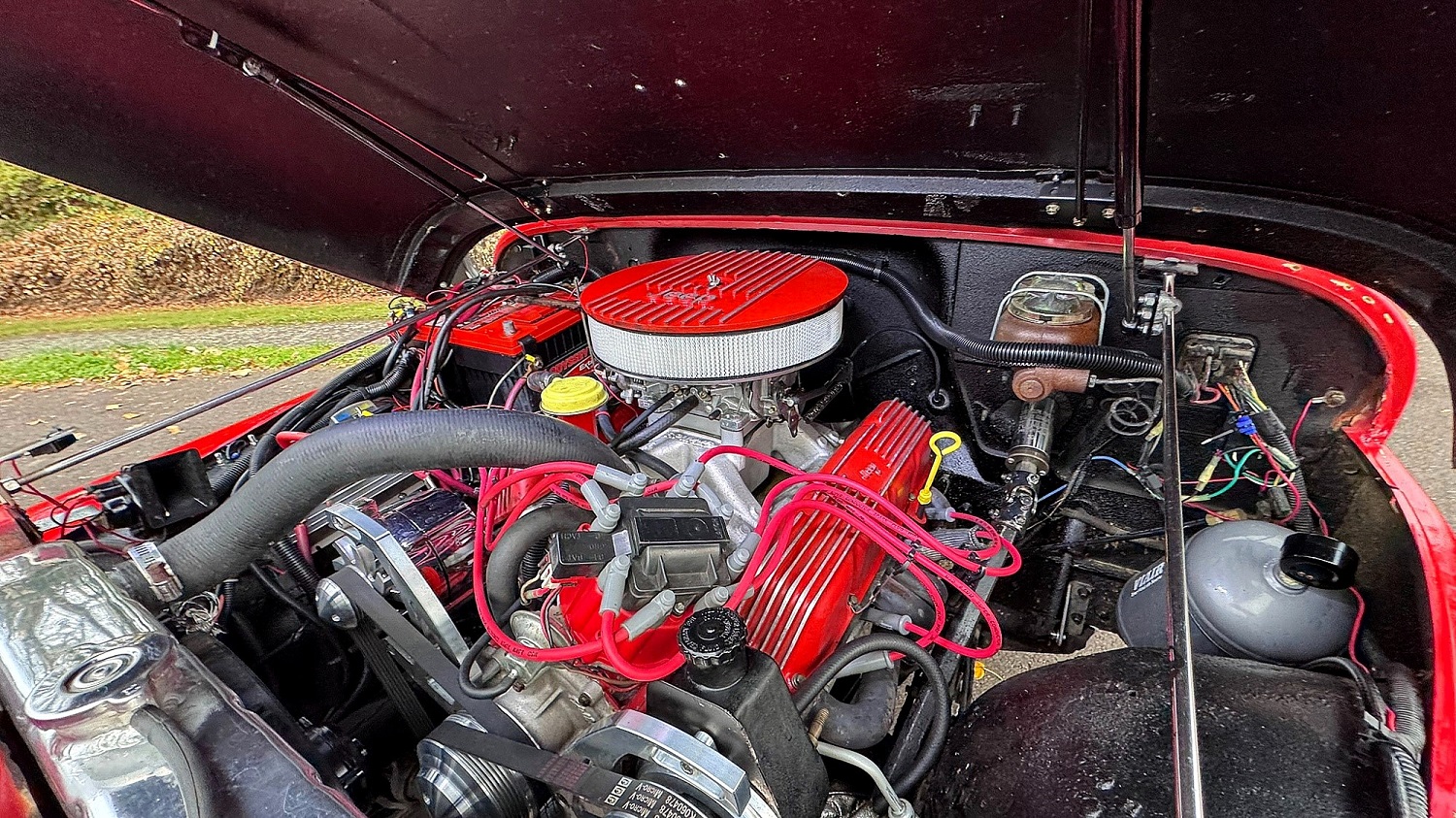
In keeping with the theme of this vehicle, the engine has also been upgraded. The 304ci V8 is connected to an aluminum radiator, aftermarket intake manifold, a four-barrel carburetor, and dual exhaust outlets. It sends power to the wheels through a four-speed manual gearbox and a dual-range transfer case.

If you want to see more of the great outdoors in a classic SUV this year, bid on this 1976 Jeep CJ-5 right now. The auction for it ends on Tuesday, January 6, 2026, at 12:15 p.m. (MST).

Visit the AutoHunter listing for more information and a photo gallery

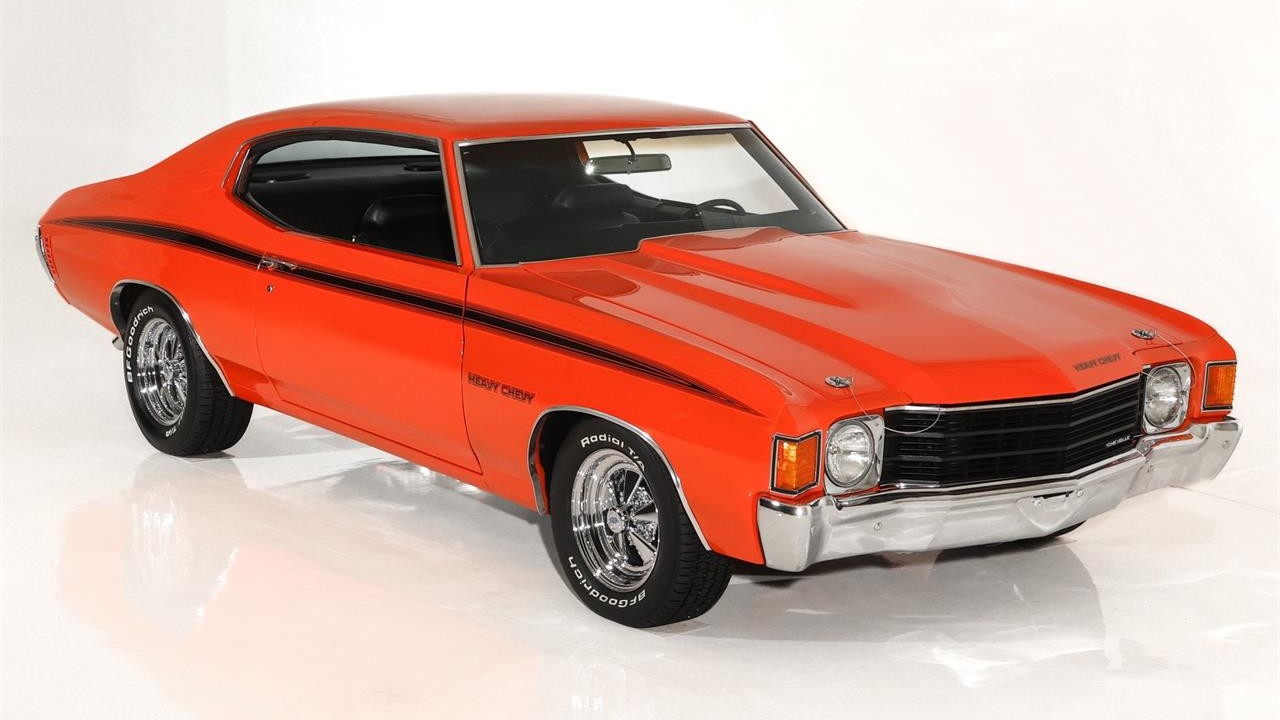
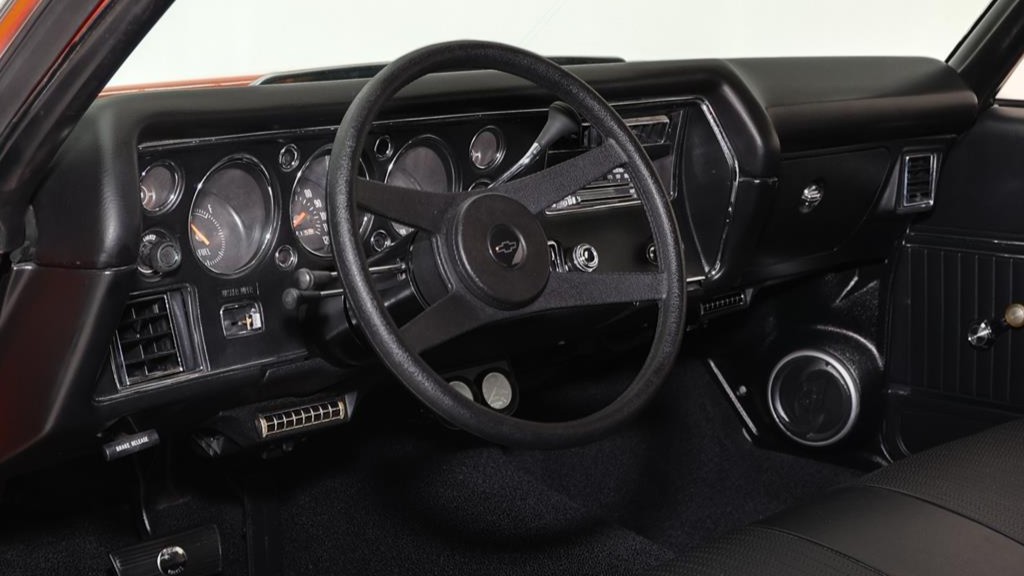
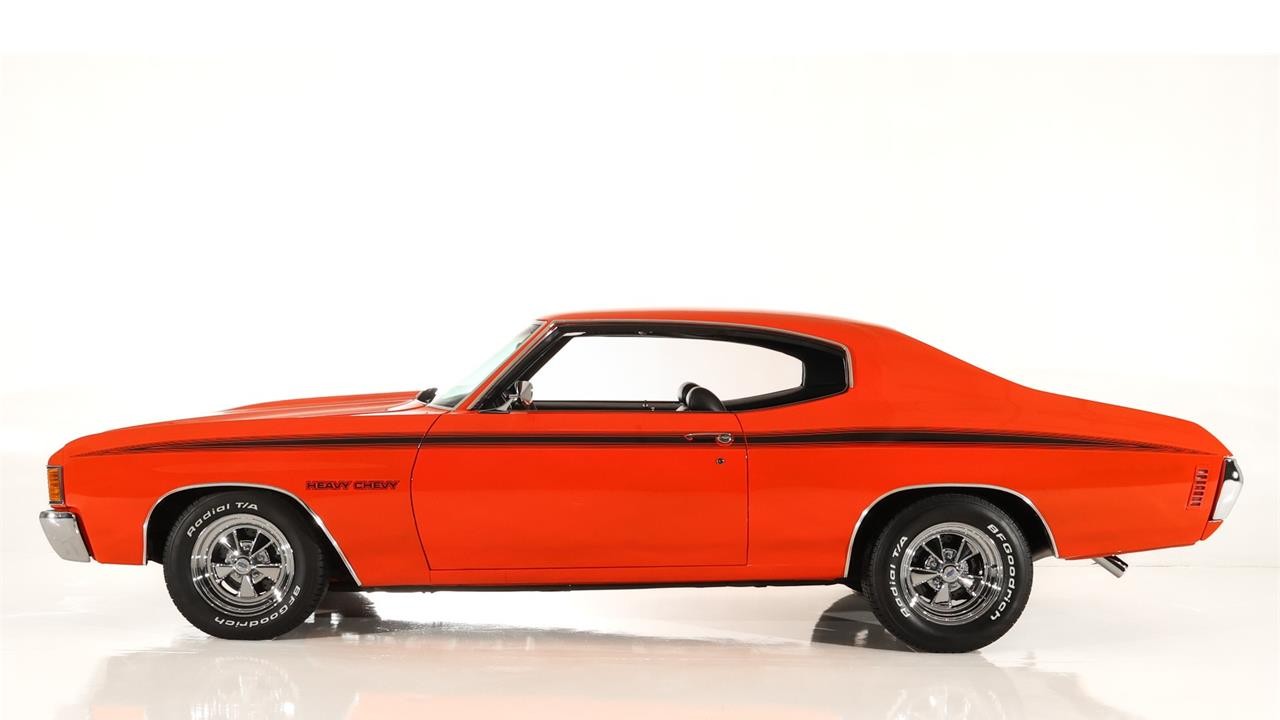
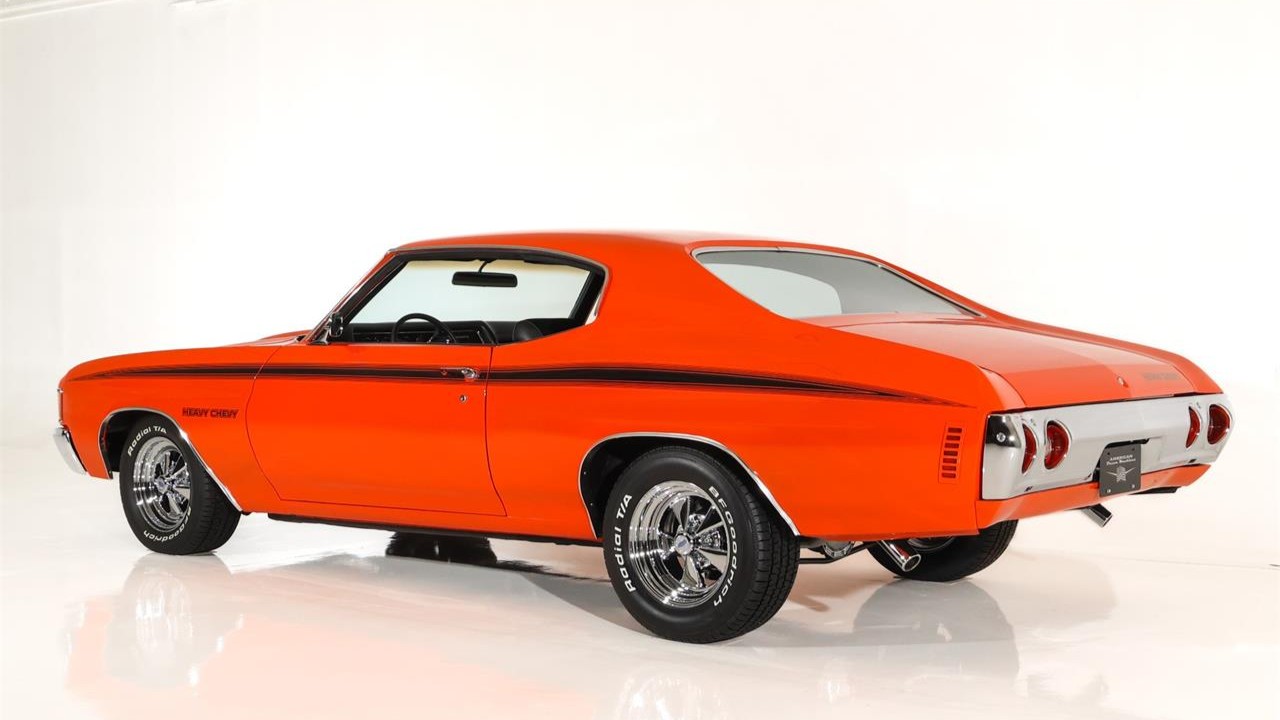
Image plays a strong role in the human condition—we can poo-pooh it all we want, but most of us have a stake in status. Starting in 1970, Chevrolet allowed a big-block to be installed in a Chevelle without SS equipment, but that didn’t seem enough for the marketing folks, who introduced a mid-year package in 1971 to satisfy the status slaves. Our Pick of the Day is this vehicle in the first (and final) full model year of its existence: this 1972 Chevrolet Heavy Chevy is listed for sale on ClassicCars.com by a dealership in Des Moines, Iowa.

Starting in the 1969 model year, Chevrolet expanded the Chevelle SS 396 by making it an optional performance package (it had been a model for several years previously) and available for both the 300 Deluxe and Malibu. Considering the success of the Plymouth Road Runner, it can be inferred Chevrolet prepared itself to do battle head-to-head. It didn’t quite turn out that way, as it seems Malibu-spec’d SS 396s greatly outnumber the duo of 300 Deluxes.

For 1970, the SS 396 and new SS 454 continued as performance packages, but only for the upscale Malibu. In fact, Magnum 500-style wheels were standard, showing that Chevrolet gave up on competing with the Road Runner on features (or lack thereof). The following model year, the SS package was downgraded to require a 350 two-barrel to help increase sales in the face of high insurance premiums and an evolving market.

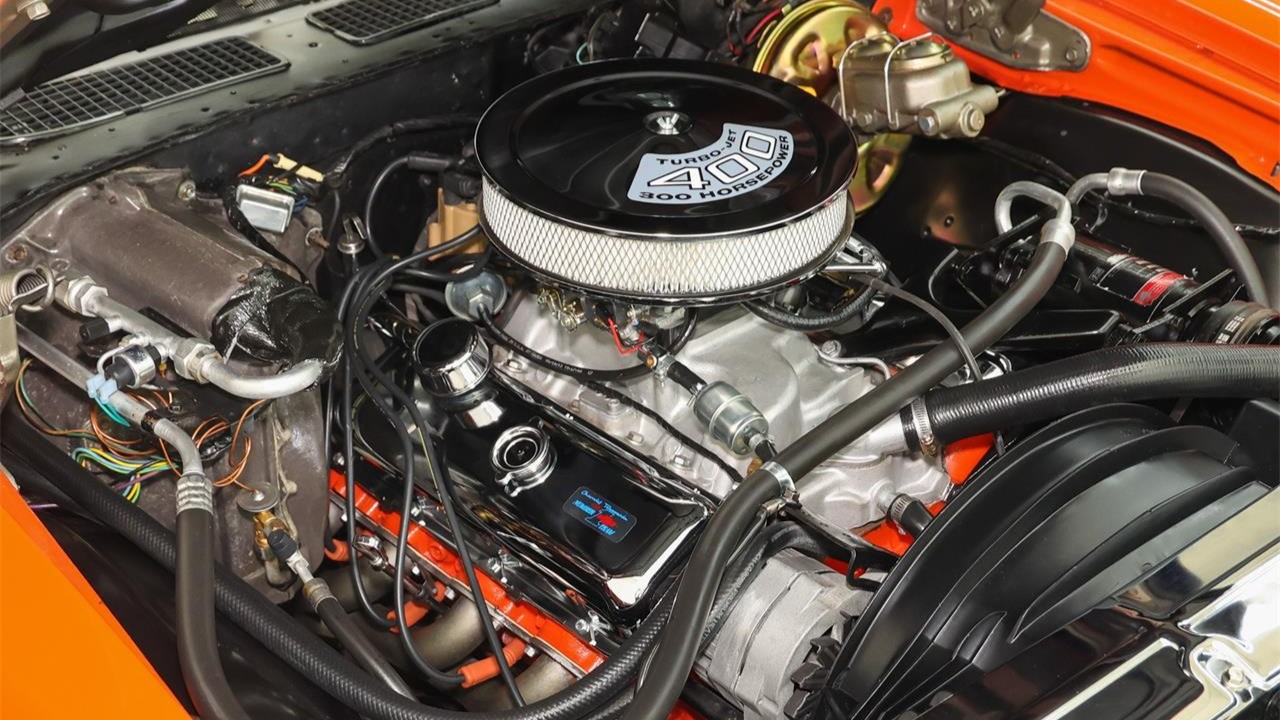
In addition, Chevrolet introduced a mid-year package called Heavy Chevy (code YF3). The Road Runner’s influence returned to Chevrolet because the Heavy Chevy was a combination of a late-to-the-party Road Runner-fighter and sporty insurance-buster. Any V8 up to the Turbo-Jet 400 (confusingly, the 402/300) was available, which included the lowly 307 two-barrel as the starting point. This contrasted with the SS, as the LS5 454 was the top engine.

Aside of price (about half as expensive) and fewer items of equipment, there was one more distinction between Heavy Chevy and SS packages: the former was based on the Chevelle, while the latter was based on the more upscale Malibu. The Heavy Chevy (which was introduced at the same time as the Rally Nova, also a companion to the Nova SS) was “heavy on looks and light on price.” It was “designed for the under-25 group, the single market, for guys as well as gals. Both these cars afford the owner an opportunity to express his or her individuality at a minimum price.” A prospect looking for a performance car image at an economy car price was the purpose: low initial cost, low operating costs, low insurance rates (something that the SS may or may not have been able to avoid, considering the insurance climate), and high resale (which was touted as a “Chevrolet tradition”).

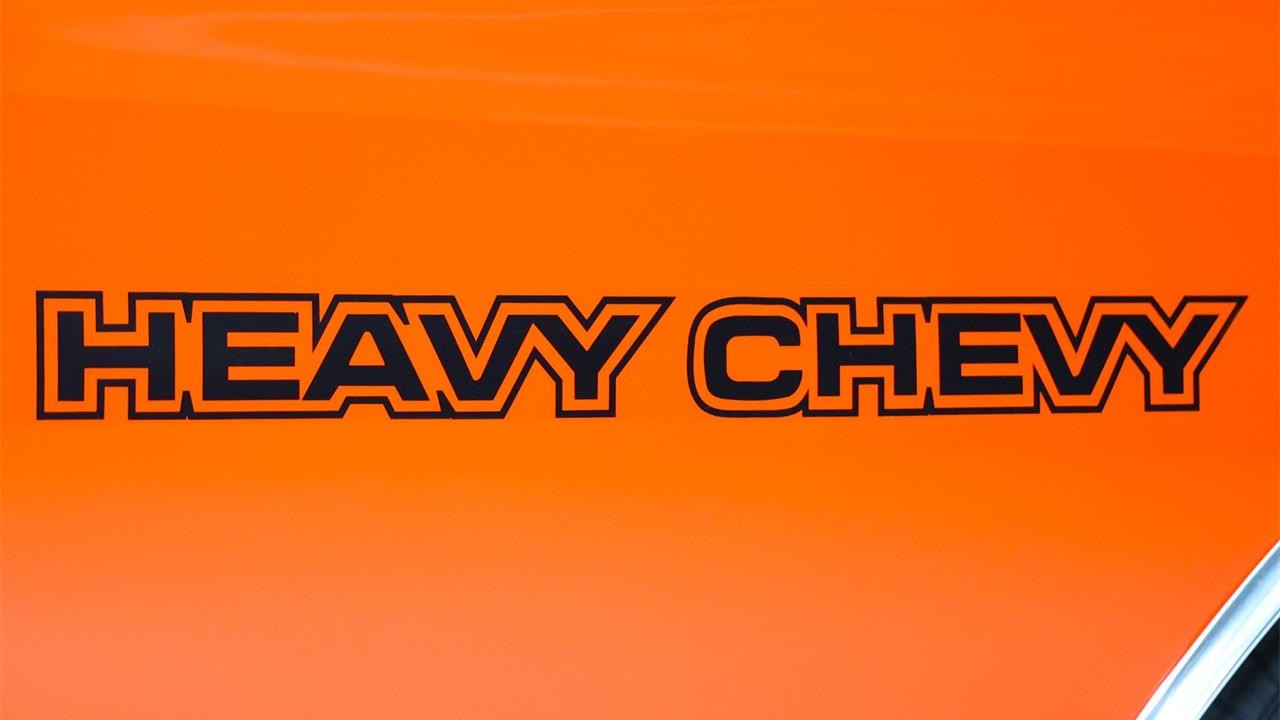
Equipment included in the YF3 package included special body stripes, Heavy Chevy decals on all four sides, special SS hood with raised center and lock pins, black-painted grille, black-painted headlight bezels, and 14-inch Rally Wheels without trim rings. For you Chevy die-hards, SS equipment that was not included with the Heavy Chevy included the Sport Suspension, special instrument panel, 15-inch SS wheels, and power disc/drum brakes, among others. After a mid-year introduction, 6,727 Chevelles were built as Heavy Chevys.

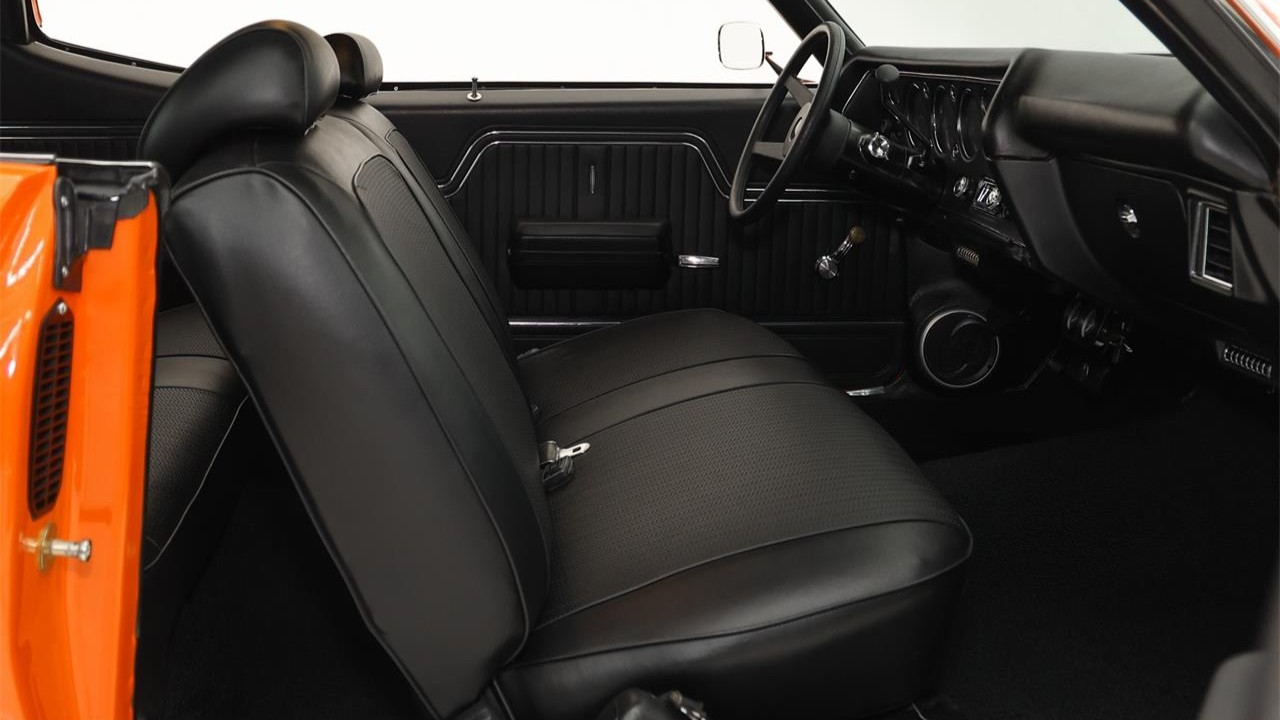
Chevrolet continued to offer the Heavy Chevy for one more year, with production ballooning to 9,508, but SS sales increased too so maybe the Heavy Chevy wasn’t needed—only SS Equipment continued for 1973. This Flame Orange 1972 Chevrolet Heavy Chevy is perhaps the most conspicuous iteration of this vehicle, plus it’s been “upgraded with big-block power, four-wheel Wilwood disc brakes, automatic transmission and new 12-bolt rear with Posi and a tire-smoking 4.11 gear” with options that include power steering and air conditioning. The seller says the “exterior chrome is all new, new shaded windshield, new blacked-out grill and domed hood with locking pins” while “the interior is restored with new Heavy Chevy material on the factory bench seat, new fitted carpet, tach and gauges, tilt steering column, and RetroSound [stereo] with rear-mounted speakers.” Though an original 350 car, this one features a 454 dressed as a 402.

Sure, one could spec a 402 Chevelle without Heavy Chevy equipment, but the “Q-ship” would lack one thing: image. Though the seller doesn’t specify a price (“contact seller”), we know that status plays a large role in people’s perceptions, both of themselves and what they want others to notice. The value of the Heavy Chevy is that no one will ever think it’s—and you’re—half a Super Sport.
Click here to view this Pick of the Day on ClassicCars.com

Happy New Year, everyone! Welcome to 2026 – and the first Car Connections of the year. If you don’t remember this series from 2025, here’s how it works: I have the Random Word Generator come up with a trio of random words, then I link each of them with cars in some way. Sometimes it’s quick and easy; sometimes it’s a more laborious, convoluted process. Either way, I connect seemingly unrelated ideas to automobiles (the way you do in your everyday life, I’m sure).

This week’s random words are: annual, record, and queen. Here we go . . .

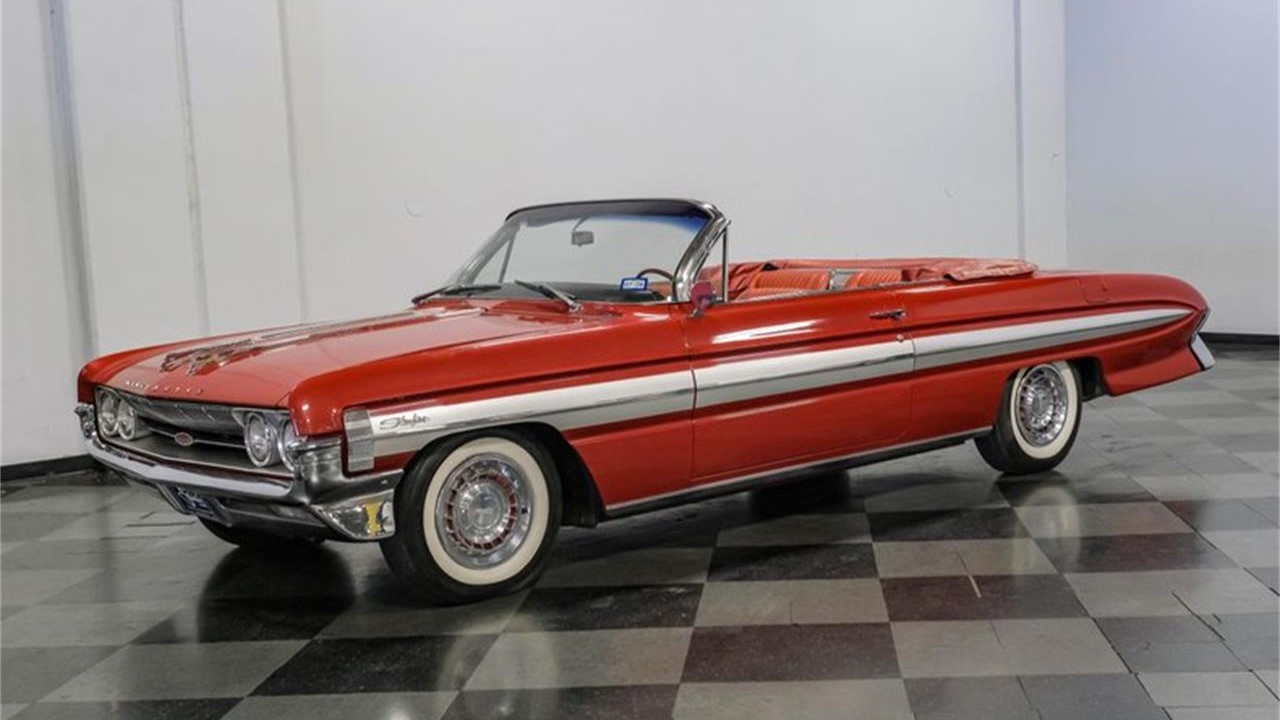
Click here to learn more about this 1961 Oldsmobile Starfire on ClassicCars.com.

Annual: Oldsmobile Starfire. Why? A few years ago, when I was working for one of our sister sites, AutoHunter.com, I saw a few 1962 Oldsmobile Starfires come through. My research showed me that Olds changed the side trim (among other things) annually in the early 1960s. If you ask me, the ’61s look the best. Which model year gets your vote?
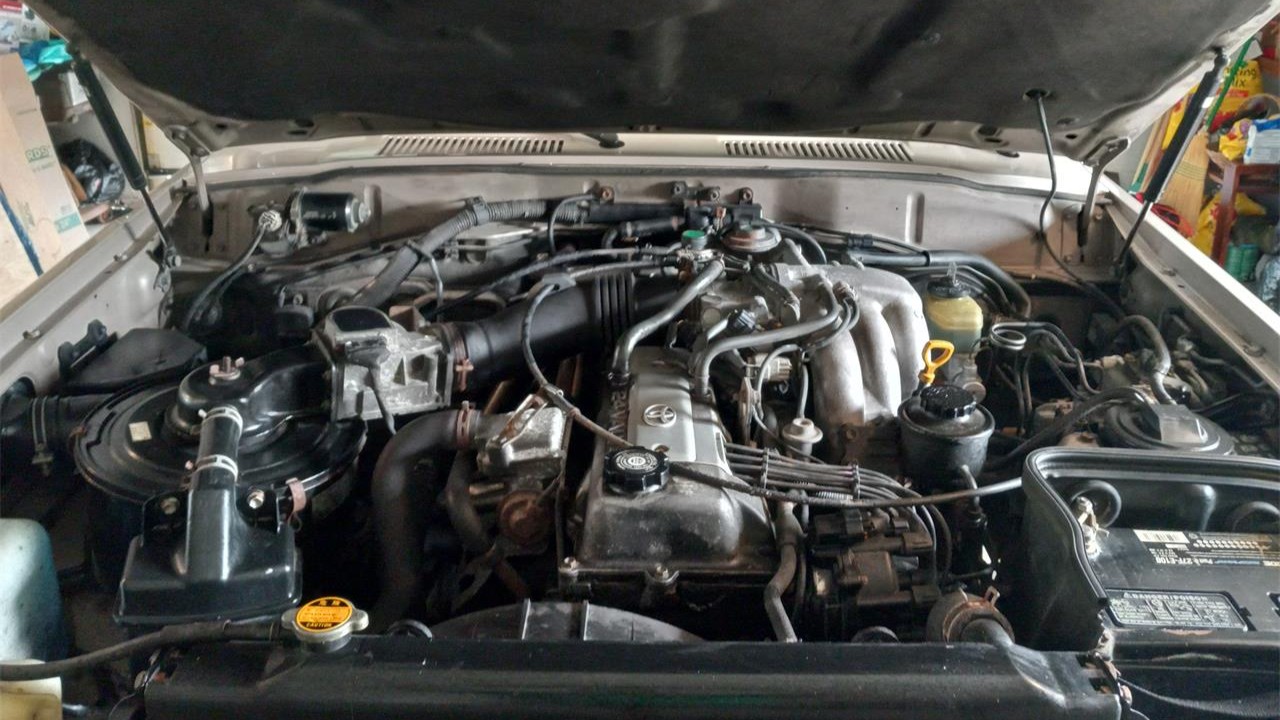
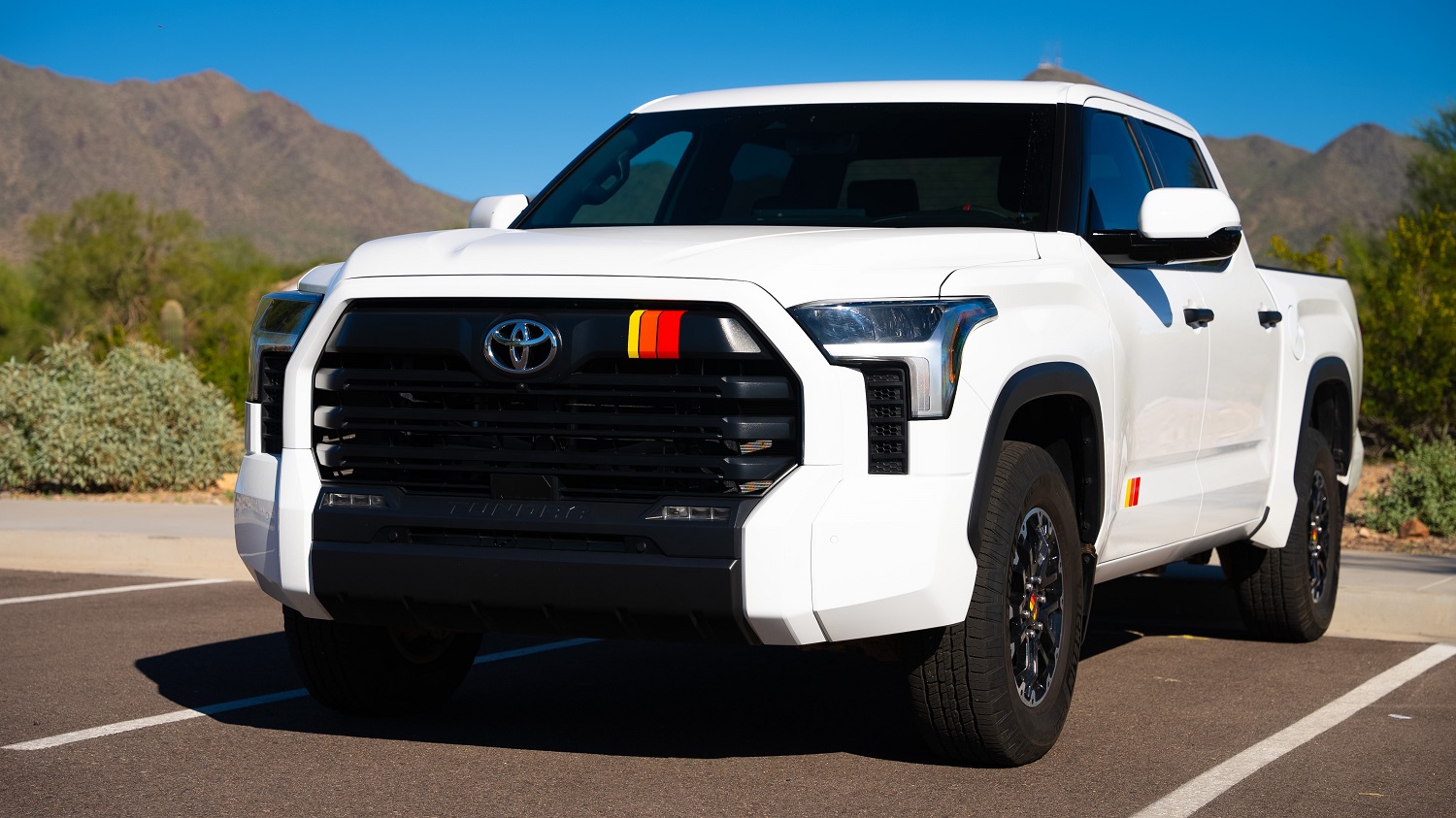
Photo courtesy of GM

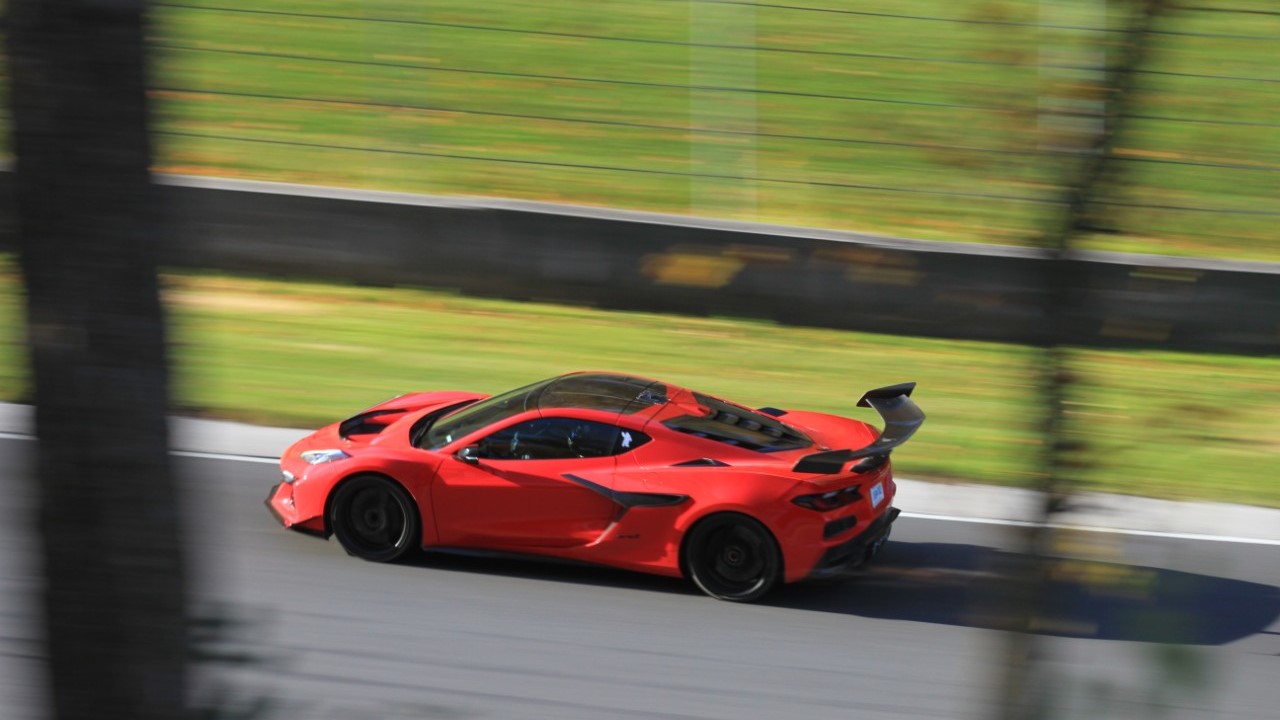
Record: Now, let’s flash forward several decades to the 2025 Chevrolet Corvette ZR1. A pre-production version of the 1,064-horsepower mega-Vette set five record lap times at four American tracks, including a 2:32.3 run on Virginia International Raceway’s Grand Course – beating the 2:34.9 time previously hit by the much more expensive 2019 McLaren Senna.

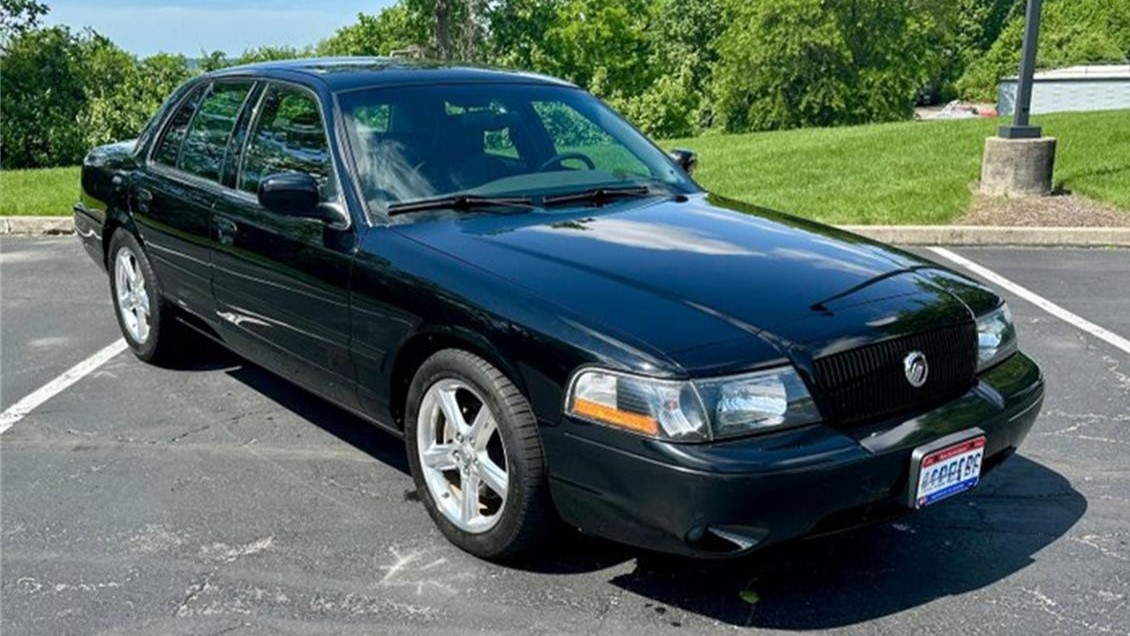
Click here to check out this 2003 Mercury Marauder for sale on ClassicCars.com.

Queen: This one takes us from GM to another domestic automaker. Queen is a band that was formerly headed by Freddie Mercury (I think you can see where this is going . . .). Mercury built a car that’s always interested me and was on my short list of vehicles to buy before I purchased a 2008 Ford Mustang Bullitt: the 2003-2004 Marauder, which had a cool monochromatic exterior treatment and a 302-horsepower 4.6-liter V8 with four-valve heads.

How would you associate these words with cars? Tell us in the comments section below. And be sure to share your ideas for random words to use in a future installment of Car Connections.

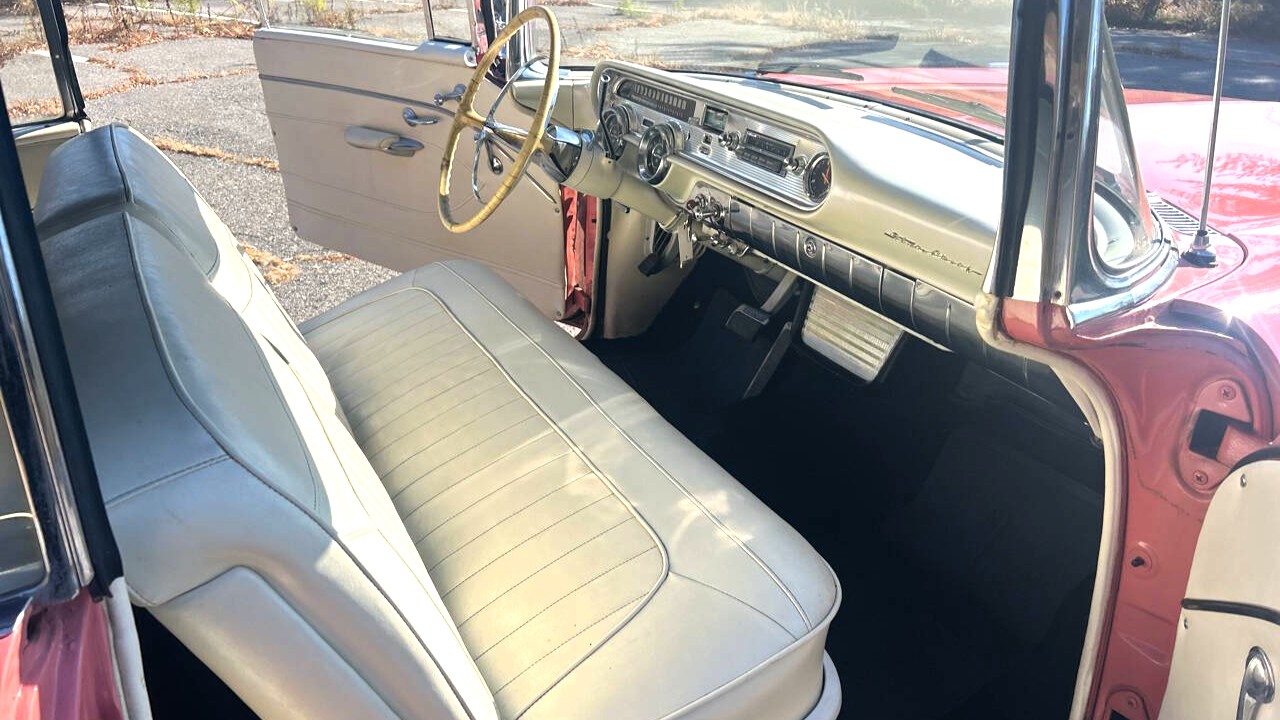
Available for purchase on AutoHunter is this 1957 Pontiac Star Chief convertible. Nineteen fifty-seven was an important year for Pontiac because it was an evolutionary link between the past and the future—the “Silver Streaks” were removed, and it was the first year for Tri-Power carburetion, though this one is powered by a 347 four-barrel with Strato-Flight Hydra-Matic. This Star Chief features a continental kit, fender skirts, power top, steering and brakes, dual exhausts, and more. Painted Carib Coral with Sheffield Grey trim and white top over a white vinyl interior, this classy 1950s cruiser comes from selling dealer with tonneau cover and transferrable New Hampshire registration.

Smacking of classic 1950s goodness, the Carib Coral hue is complemented by Sheffield Grey side trim and white top. Glance at the rear and you’ll find a continental kit with chrome brightwork. Other exterior features include rear fender skirts, white tonneau cover, chrome driver-side mirror, and an ornament atop each headlight. Fourteen-inch steel wheels with chrome wheelcovers are wrapped in 215/75 whitewall radials.

The white cabin features a split vinyl bench seat. Other interior features include an automatic transmission shifter on the column, power steering, pushbutton AM radio, and clock.

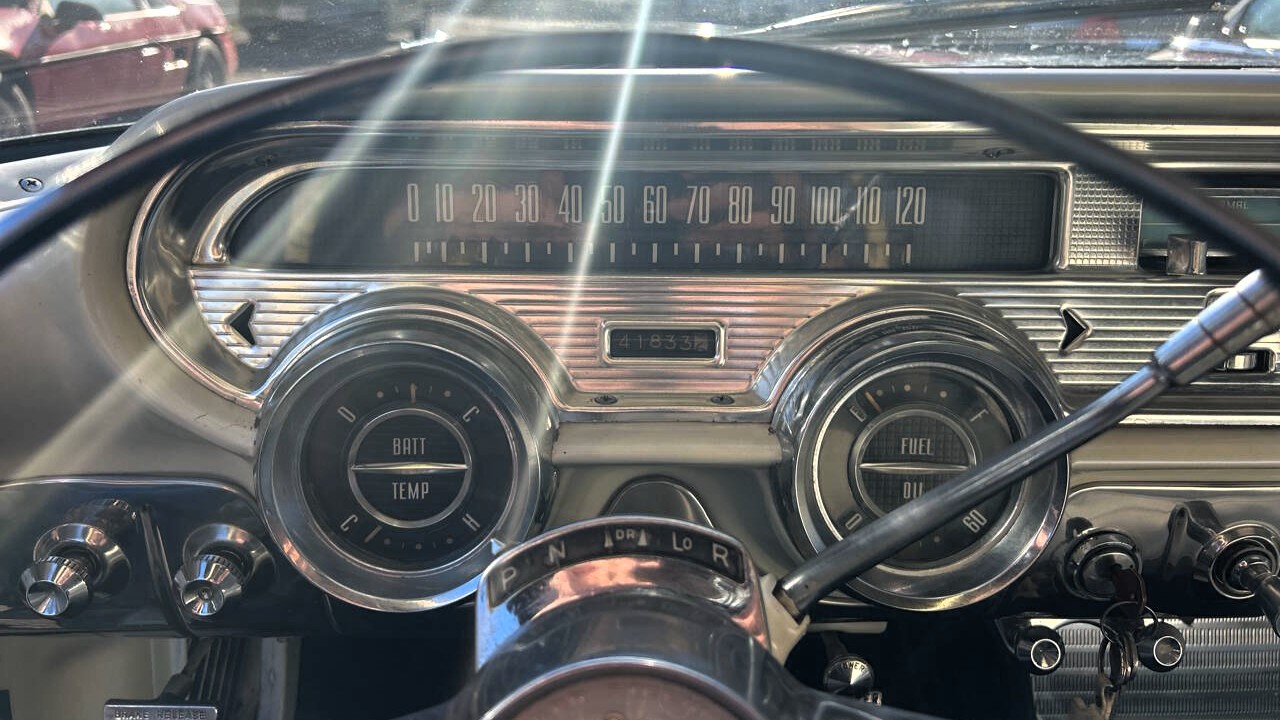
Instrumentation includes a 120-mph speedometer with gauges for the oil pressure, coolant temperature, battery, and fuel. The odometer shows 41,833 miles though the title reads it’s mileage-exempt.

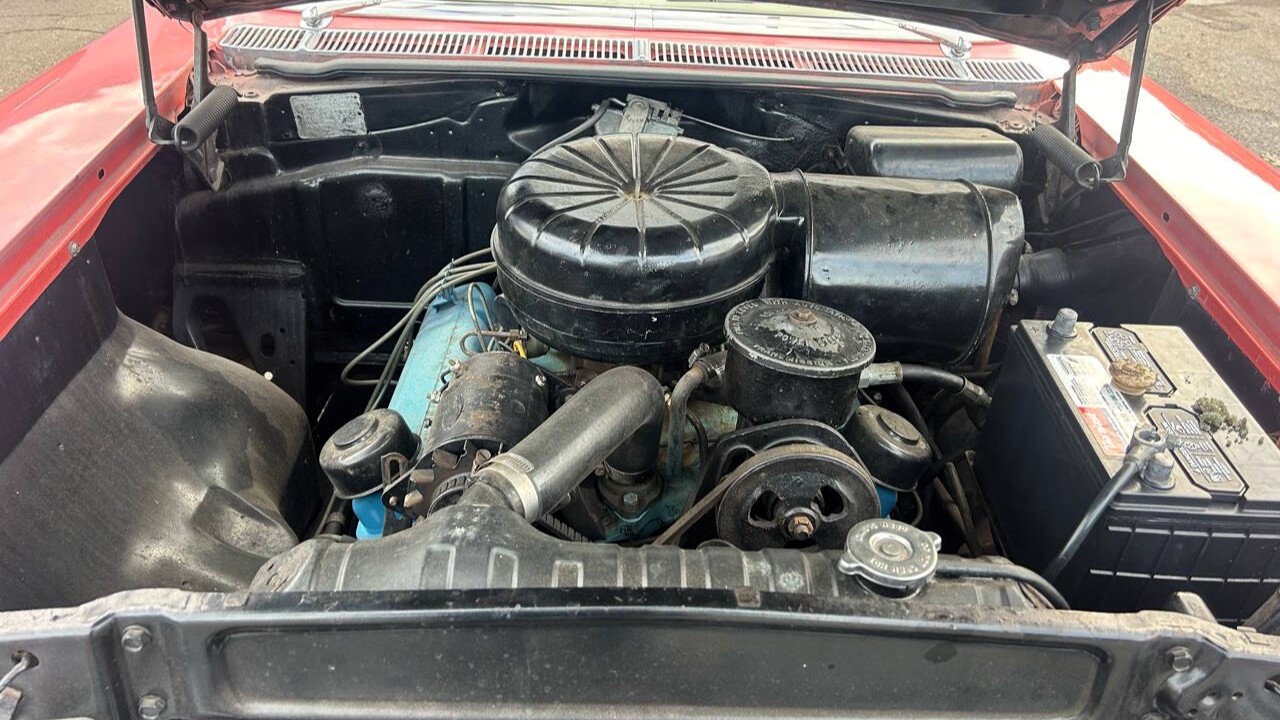
The 347 four-barrel was rated at 270 horsepower and 359 lbs-ft of torque. It is topped by a four-barrel carburetor and backed by a three-speed Strato-Flight Hydra-Matic automatic transmission. The seller says the carburetor and fuel lines are new.

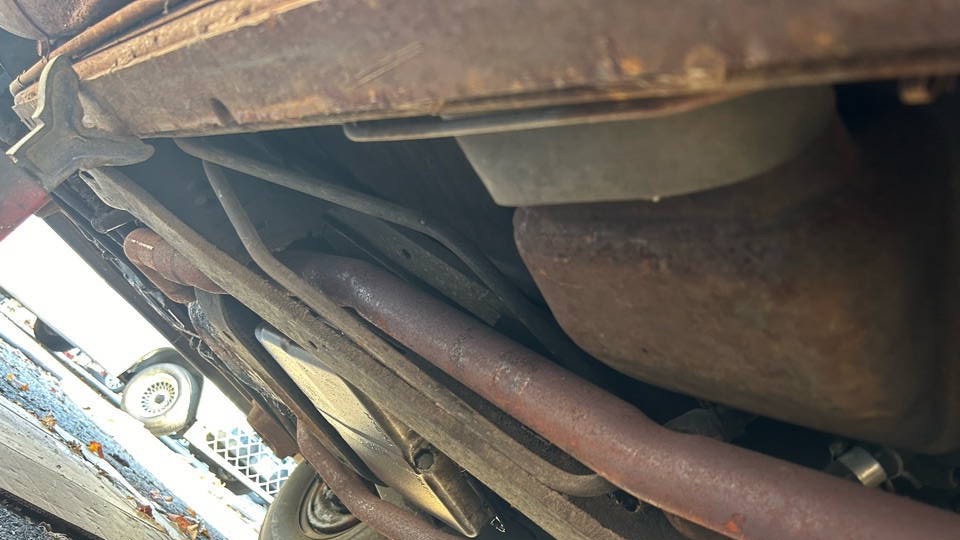
The undercarriage features power drum brakes and a dual exhaust system. The seller claims the brake system (including power booster), fuel lines, and gas tank are new.

The subject of our AutoHunter Spotlight shines bright because 1957 was such a fine year for General Motors products. Additionally, Pontiac was metaphorically molting, shedding much of the past for a more promising future as the “Horsepower Wars” commenced. Only 12,789 1957 Pontiac Star Chief convertibles were built, which was a good number, but being painted Carib Coral pushes this one near the top in desirability. If you have had dreams of driving a pink 1950s cruiser, we cannot think of a better opportunity than to place a bid now because once 11:30 a.m. (MST) hits on Tuesday, January 6, 2026, it’ll be gone—good luck and enjoy the cruise!

Visit the AutoHunter listing for more information and a photo gallery

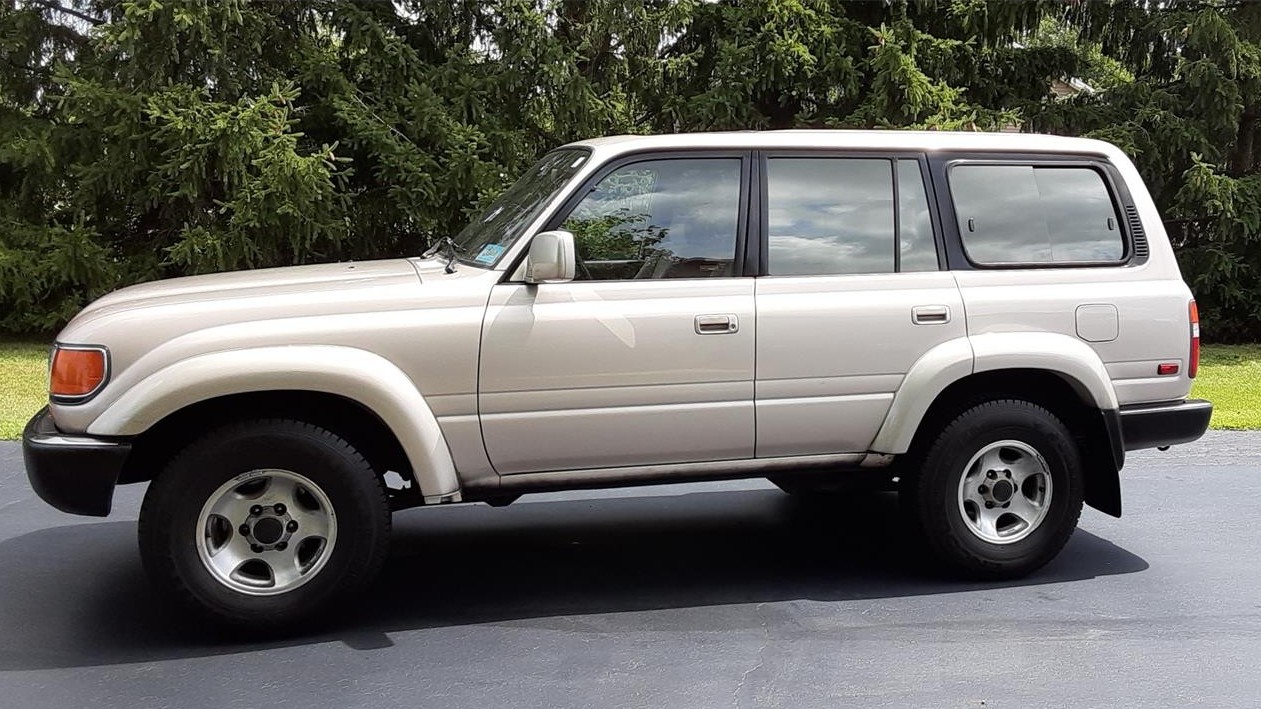
In 2023, Toyota launched its latest/current generation of the Land Cruiser – leveraging, as so many automakers have done in recent years, retro styling and nostalgia for a beloved nameplate. The Pick of the Day is a clean example of one of the vehicles that solidified the model’s status as an iconic sport-utility vehicle. It’s a 1994 Land Cruiser listed for sale on ClassicCars.com by a private seller in Whitehouse, Ohio.

“Purchased from a family member in 2002 with 53,500 miles,” the listing says. “Always has been very reliable and well taken care of.”

The “80 Series” generation of the Land Cruiser was first introduced at the Tokyo Motor Show in October 1989 and went into production shortly thereafter. It quickly became known for its ruggedness and reliability: Among its strong suits were a full-time four-wheel drive system, a solid front axle, a coil-sprung suspension, and a durable ladder frame.

By 1994, the Land Cruiser had already been out for over four decades in total, and Toyota had refined the engineering along the way. One advertisement said, “Over the past 42 years, the Toyota Land Cruiser has become as legendary as the remote places it travels. Places like the Yucatan jungle. The Serengeti. And the foothills of Nepal.” Toyota’s slogan at the time was “I love what you do for me,” and buyers did indeed love the Land Cruiser.

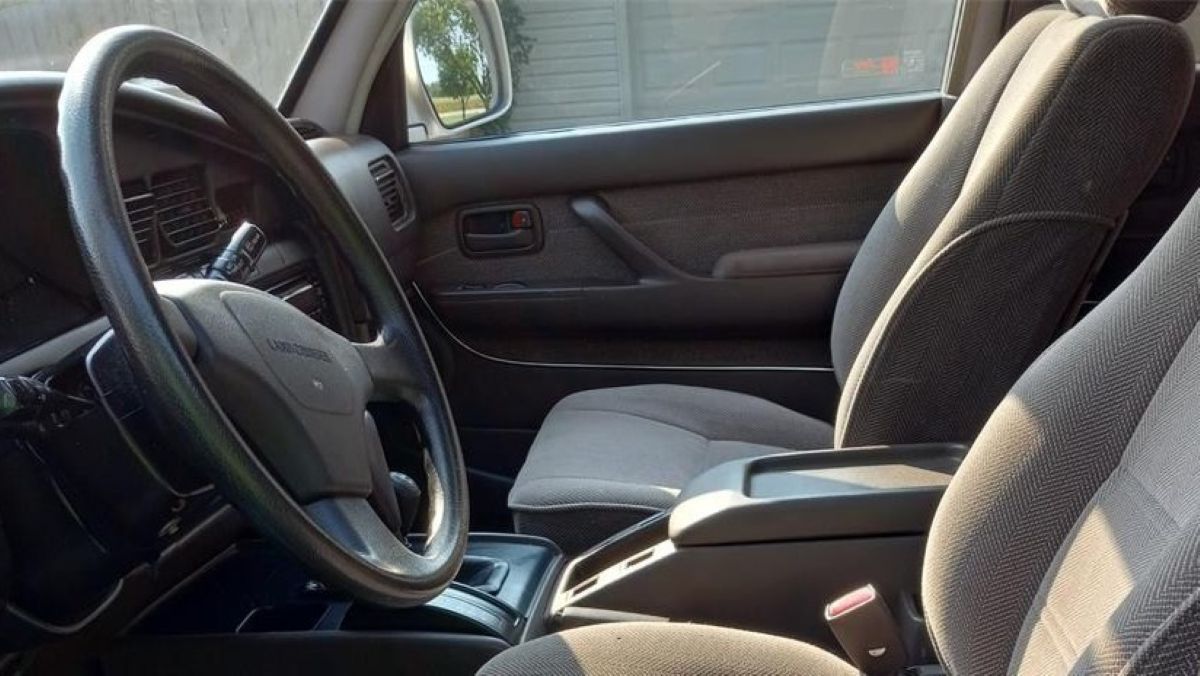
This Beige Metallic Land Cruiser has been well-loved, and the seller says that it wears the original paint. “Has been garaged up to a few years ago,” the listing says. As is expected for a vehicle over three decades old, there is some patina on the exterior. Toyota designed the Land Cruiser’s cabin to be a “civilized sanctuary,” and the tan cloth upholstery is cozy and inviting. Aside from an aftermarket JVC CD player, the interior looks original.

Under the hood is a “1FZ-FE” 4.5-liter, 24-valve inline-six mated to a four-speed automatic transmission and a dual-range transfer case. The odometer shows 173,321 miles, and the seller says that many of those miles were accumulated on the highway. Maintenance history is comprehensive: “Always serviced, regular oil changes,” the listing says. “Recent tune-up with new wires, plugs, muffler and tailpipe, new front brakes and rotors, newer shocks, newer battery, newer starter, newer radiator, and tires replaced.”

“This has been a very reliable and comfortable vehicle to drive for the past 23 years,” the listing concludes. “Have always maintained and kept it clean.”

Wish 80 Series Land Cruisers receiving widespread attention as classics – and future collectibles – this could be the chance to get in on the movement at a reasonable rate!

The asking price is $12,400 or best offer.

Click here to view this Pick of the Day on ClassicCars.com

Whenever we receive a vehicle to review for this site, we usually get a week to drive it and test it out. That didn’t happen with the 2025 Toyota Tundra SR5 TRD Rally. We had an unbelievably short amount of time with it, so I’ll keep my review short, too. These are my observations from my brief experience behind the wheel.

YOU GET WHAT YOU PAY FOR

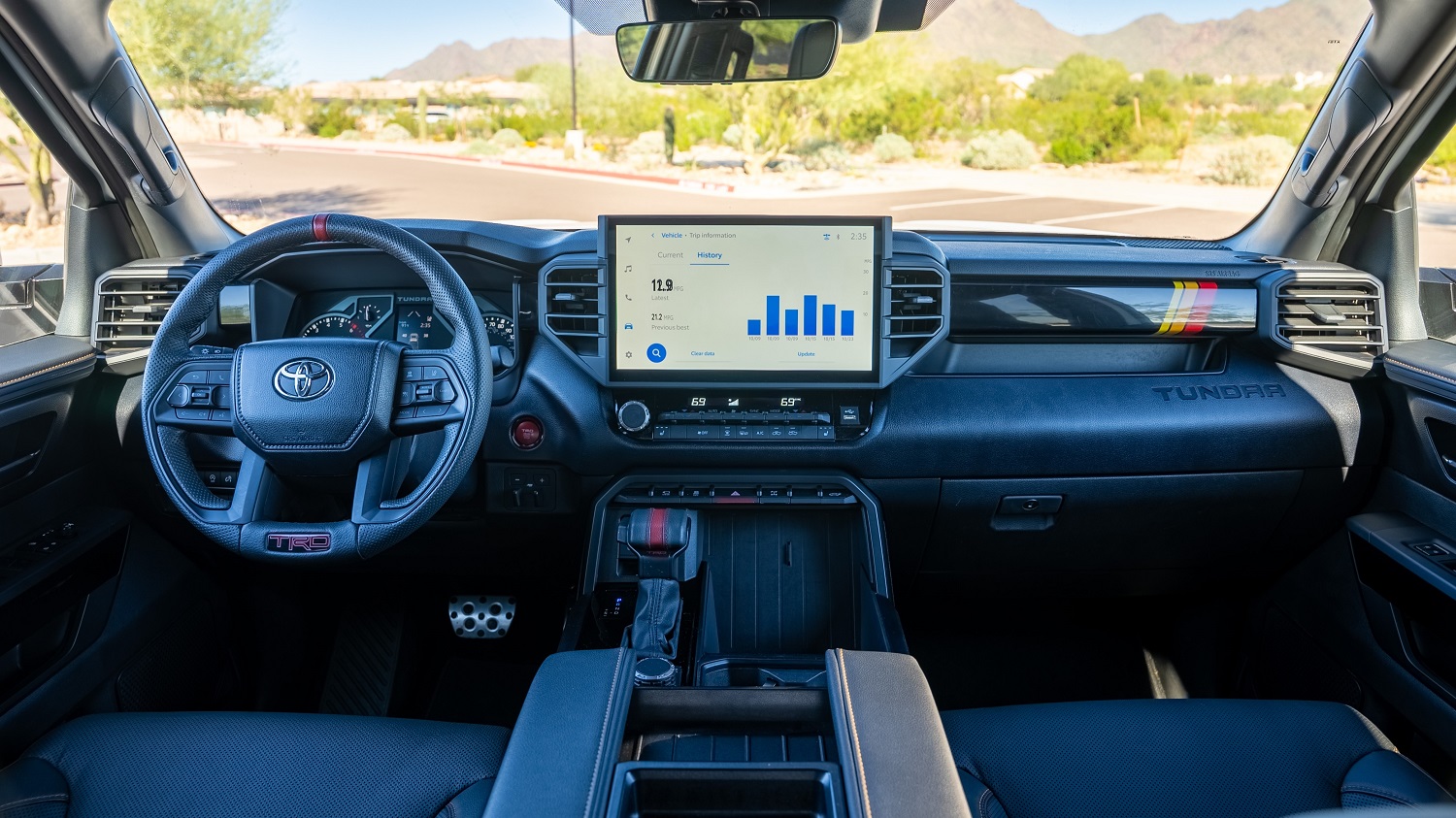
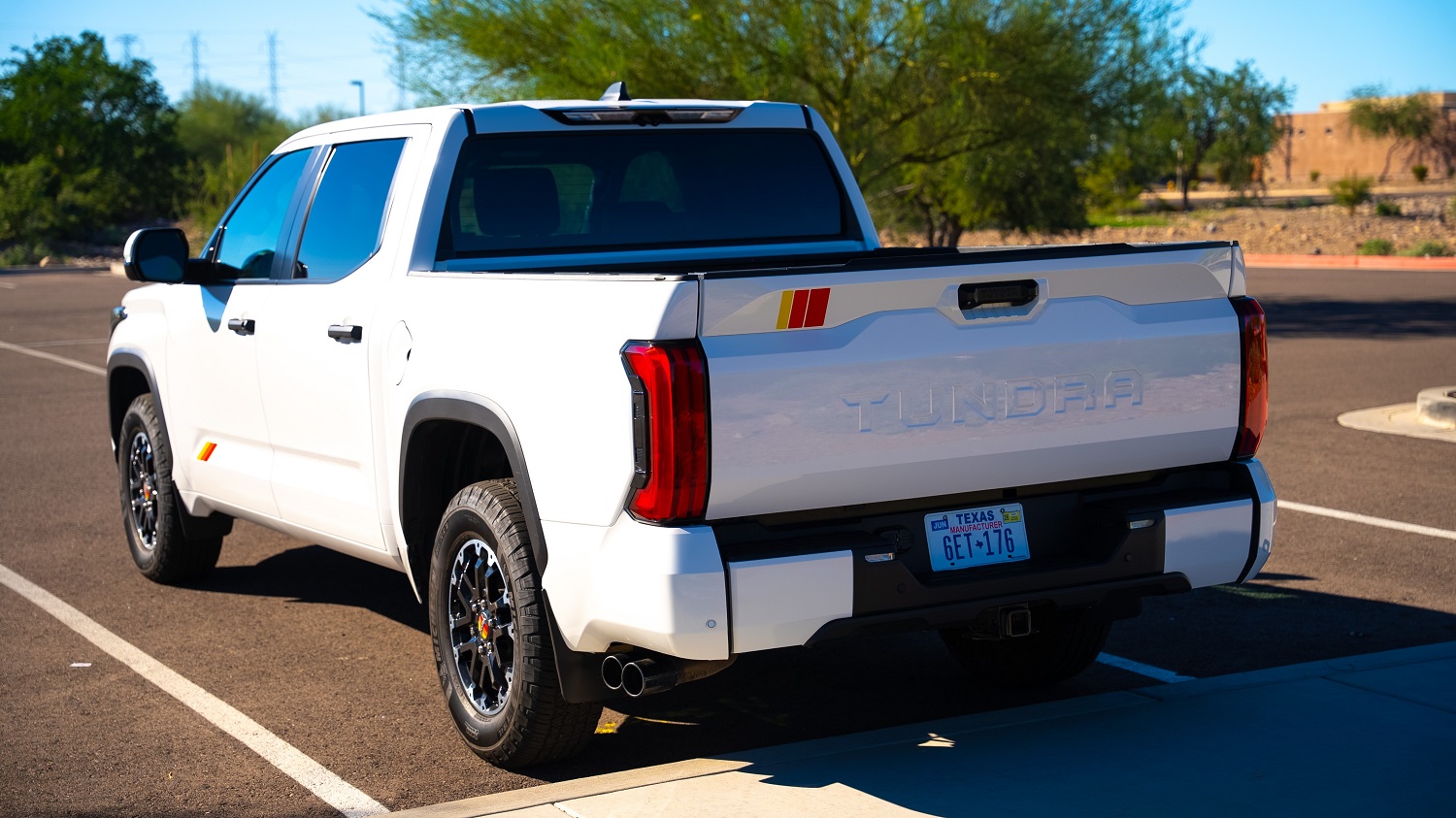
Toyota introduced the Baja racing-inspired TRD Rally package as an option on the 2025 Tundra SR5 CrewMax 4X4 with the 5.5-foot bed. It costs a whopping $8,660, which (along with a few other add-ons such as a TRD performance air filter and a bed mat) brought the as-tested price of my review vehicle up to $62,442, but it transforms the truck inside and out. Ticking the box for it adds a yellow, orange, and red decal to the grille, front doors, and tailgate. Toyota upgrades the rollers to a set of black 18-inch TRD wheels wrapped in all-terrain rubber. Inside, there are more yellow, orange, and red stripes on the heated and power-adjustable Heritage Black SofTex front seats as well as dual-zone automatic climate control, a TRD leather-wrapped steering wheel, a matching shifter, and a red TRD start button. Multi-Terrain Select, Crawl Control, Downhill Assist Control, an off-road suspension, and a rear locker magnify the four-wheel drive system’s capabilities.

SIMPLICITY IS KEY

When Toyota mixed the TRD Off-Road Package with its Texas-themed 1794 trim level on the 2025 Sequoia we tested, the result was odd and unattractive because those two elements were so bold and different that they didn’t mesh together well. However, the TRD Rally treatment looks great on – and in – the Tundra SR5 because Toyota starts with a low-key look, then applies subtle yet distinctive cosmetic changes.

HEARTY WITHOUT A HYBRID

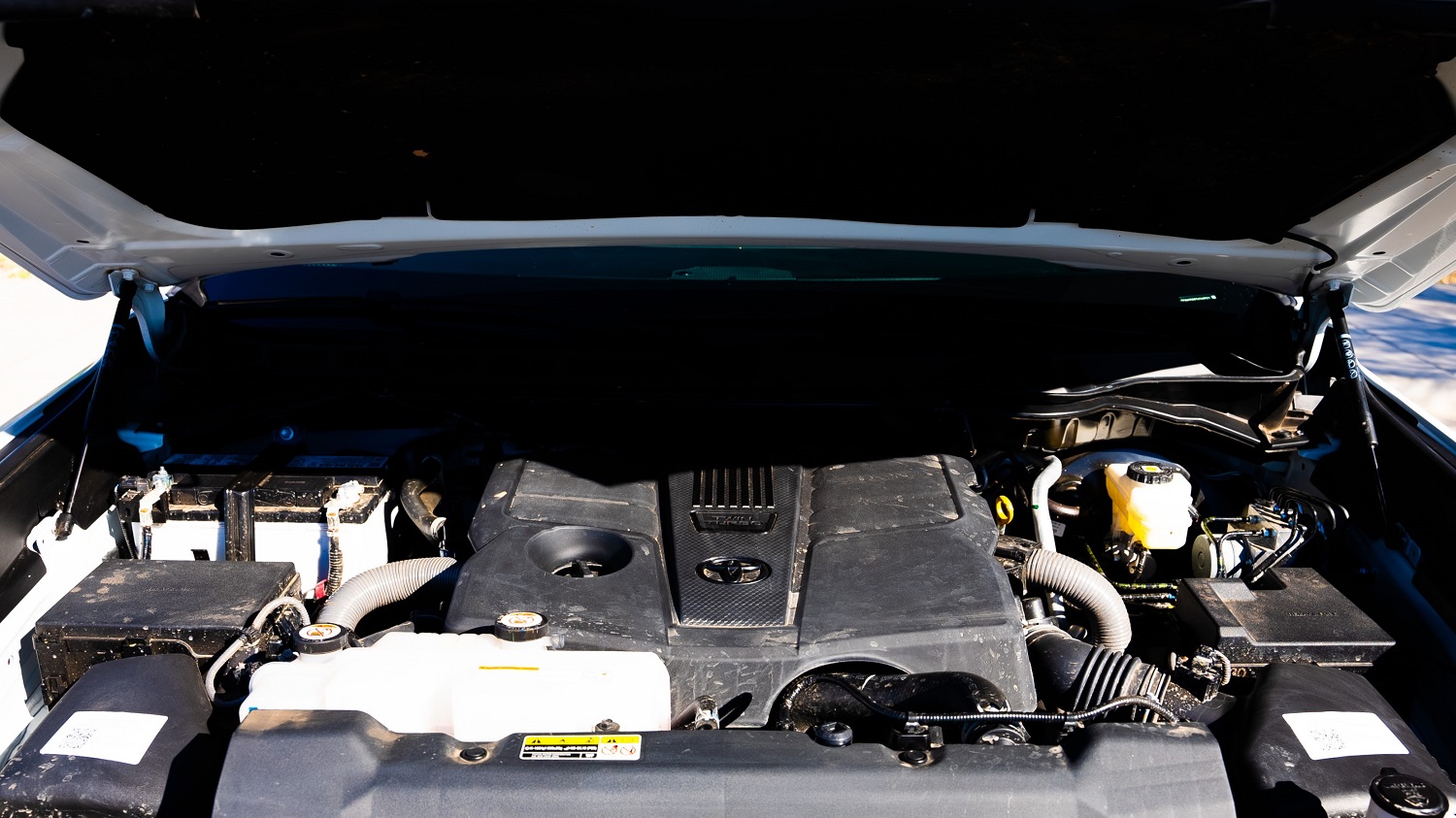
You can only get the Tundra SR5 TRD Rally with the i-Force 3.4-liter twin-turbo V6. Although it lacked the outright grunt of the i-Force Max hybrid setup, with 389 horsepower and 479 lb-ft of torque channeled through a 10-speed automatic, the mid-range engine offering was plenty quick when I put my right foot down. Too bad I didn’t have more time to do that.

The good news is that my colleague Luke spent slightly more time in the 2025 Toyota Tundra SR5 TRD Rally than I did, so check out his video review below.

Click above and watch our full video review on YouTube!

This video is sponsored by Legendary Car Protection. Car ownership today comes with high expectations and high risks. A well-designed Vehicle Service Contract not only protects your finances, but also ensures your vehicle receives the care it deserves – no matter how iconic, rare, or routine it may be. To explore tailored protection options for your specific vehicle, visit LegendaryCarProtection.com.