Every Bugatti is special in its own way, but some are in their own category. The Type 57SC Atlantic is an iconic rarity. The quad-turbo V12-powered EB110 is the only product of the brand’s 1990s revival by Italian industrialist Romano Artioli. In the 2000s, the 987-horsepower Veyron took the Molsheim hypercar-maker into a new stratosphere of price at a top speed of 253 mph. Then there’s the Baby II.
The original Bugatti Baby, styled after the Type 35, was what its name implies it would be. According to the company, “In 1926 Ettore and his son Jean decided to build a half-scale Type 35 for Ettore’s youngest son, Roland, on the occasion of his fourth birthday.” That was supposed to be a one-off, but it was so popular with Bugatti clients that the company ended up producing approximately 500 Baby models between 1927 and 1936. Back in 2019, to celebrate its 110th anniversary, Bugatti announced a 500-unit production run of the Baby II, a three-quarters-size all-electric replica of the Type 35 that could be driven by children and adults. The 1-kW “child mode” capped the top speed at 20 km/h (12 mph); the 4-kW “adult mode” raised that to 45 km/h (28 mph). There was even a “Speed Key” upgrade that unlocked 10 kW and took the governor off.
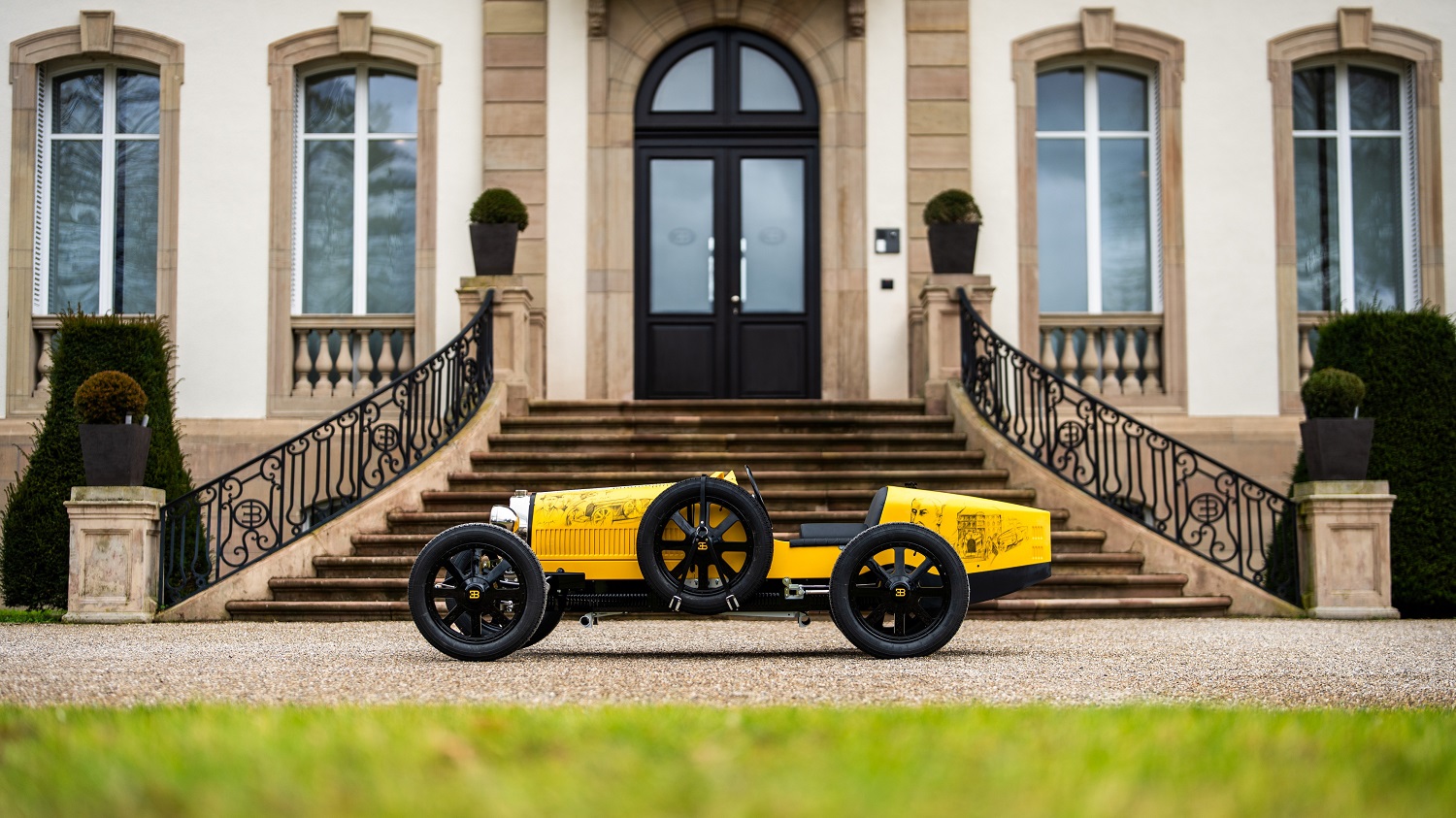
Now comes news of an even more exclusive Baby II. Hedley Studios (formerly known as The Little Car Company) collaborated with Jascha Straub, Bugatti’s Manager of Sur Mesure and Individualisation, to create a 1-of-1 Baby II inspired by Bugatti’s history and its founder, Ettore Bugatti.
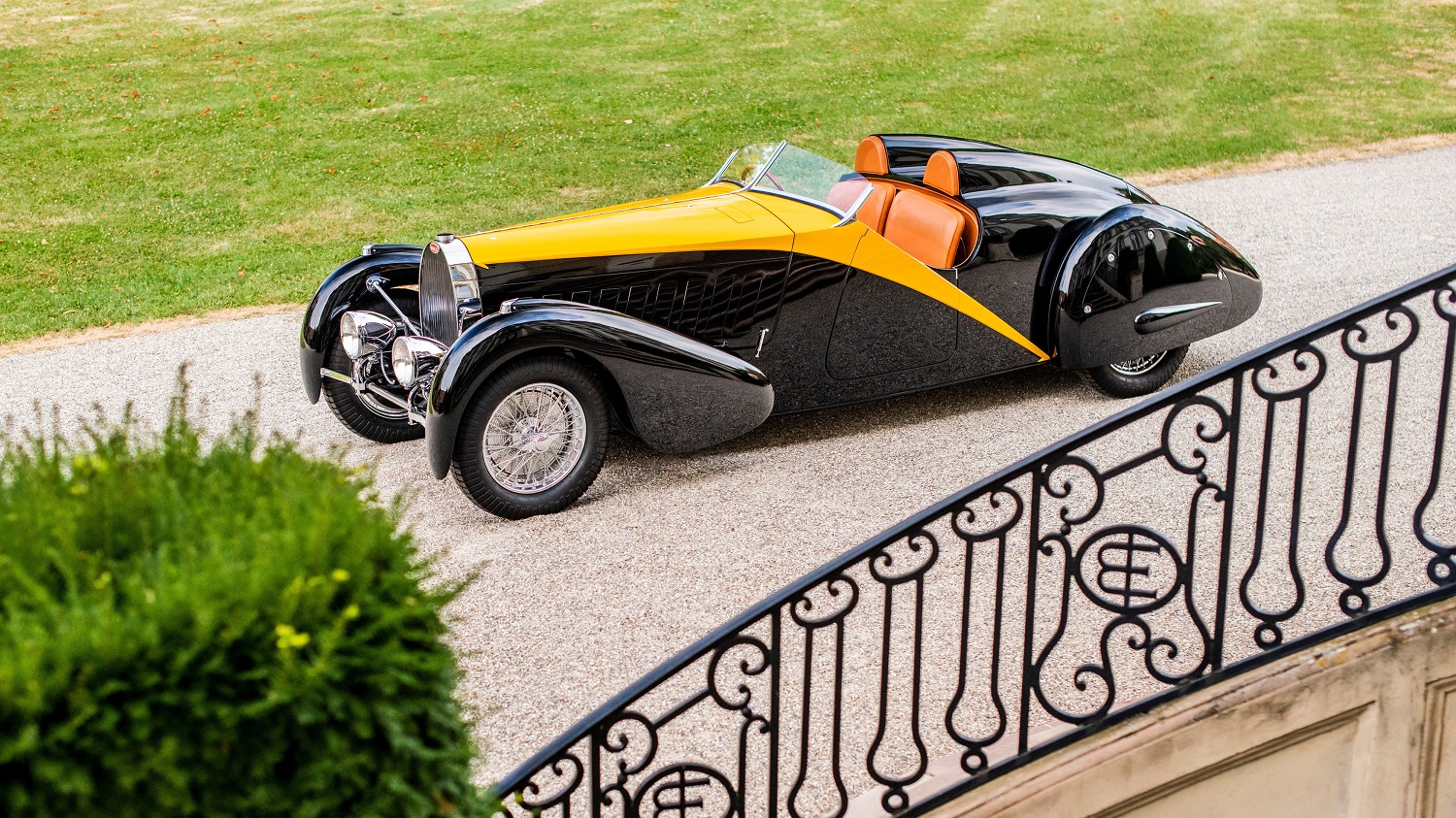
Bugatti Type 57 Roadster Grand Raid Usine
The body is finished in a combination of Nocturne black and Giallo Midas yellow, a pairing which Ettore himself favored, which is why it was applied to the Type 57 Roadster Grand Raid Usine.
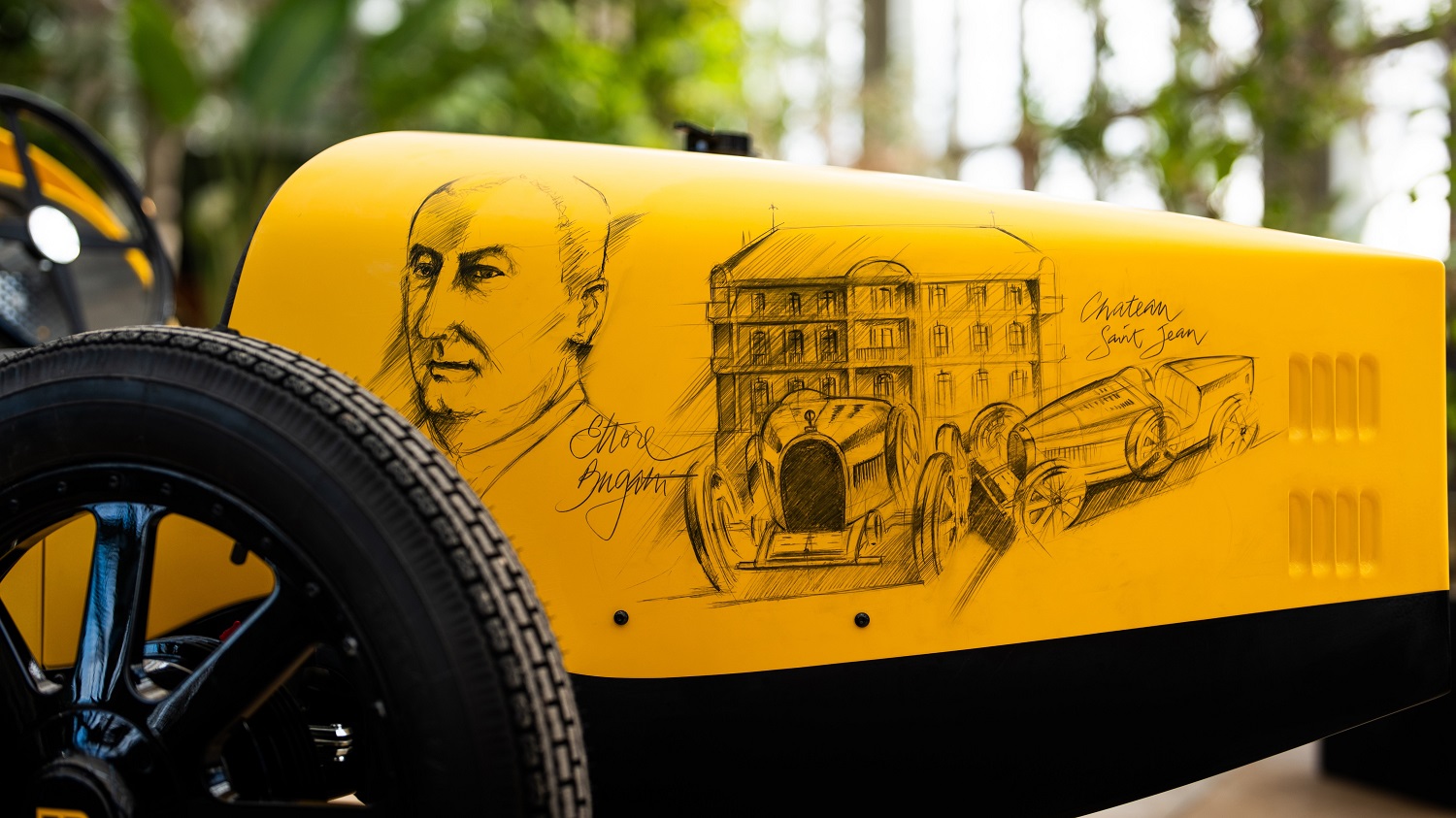
Straub decorated the two-tone finish with hand-drawn sketches that honor Ettore and Jean Bugatti, Bugatti’s home city of Molsheim, Ettore’s love of horses, and the Type 35’s racing victories, all of which are protected by clear coat.
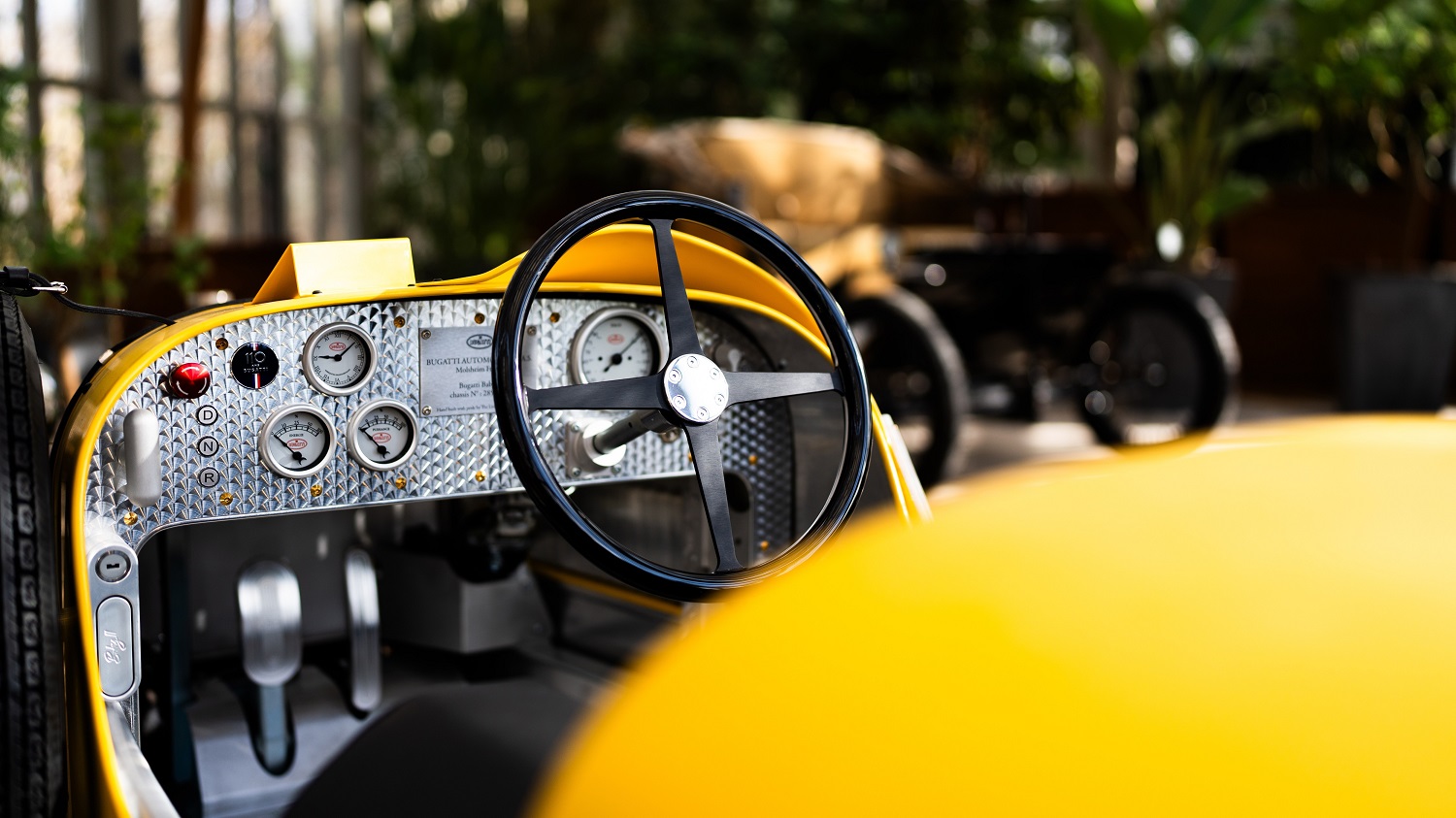
The open cockpit is furnished with black leather from Bridge of Weir as well as a vintage-style four-spoke steering wheel and an engine-turned dashboard fascia (driving goggles not included).
No word on who commissioned this or the price tag for it, but it’s highly likely seeing Bugatti’s bill for it would make the average person cry . . . like a baby.
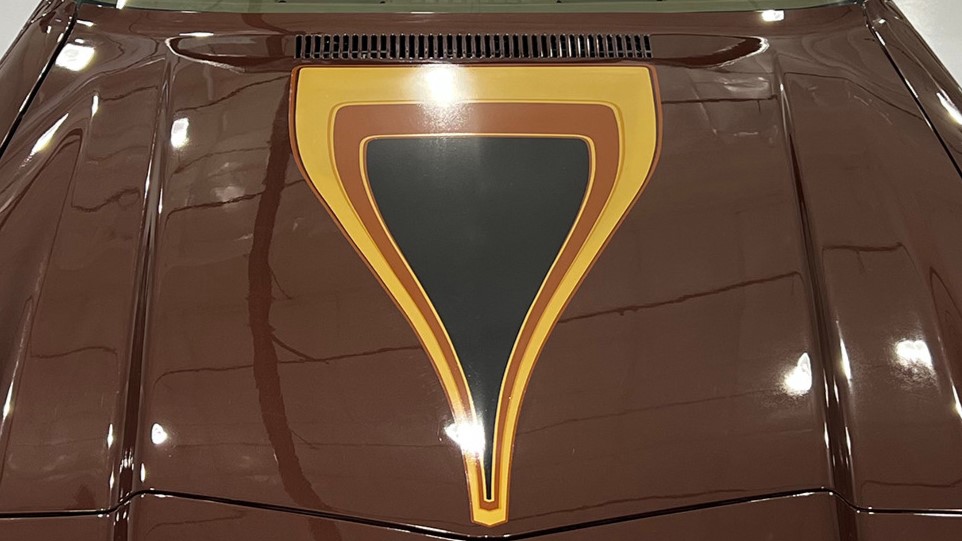
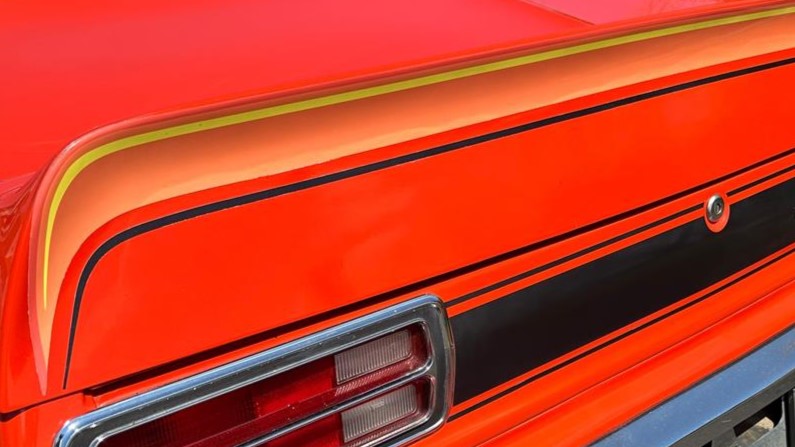
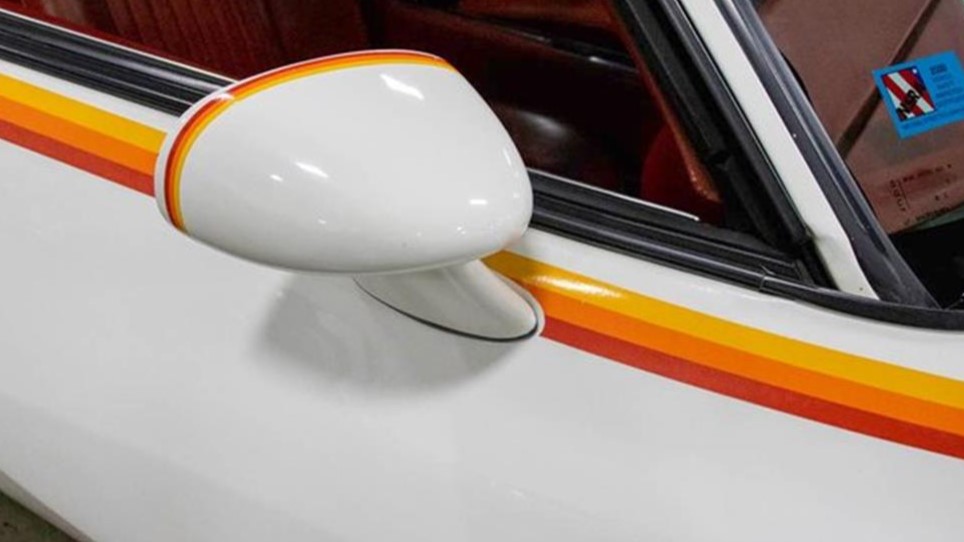
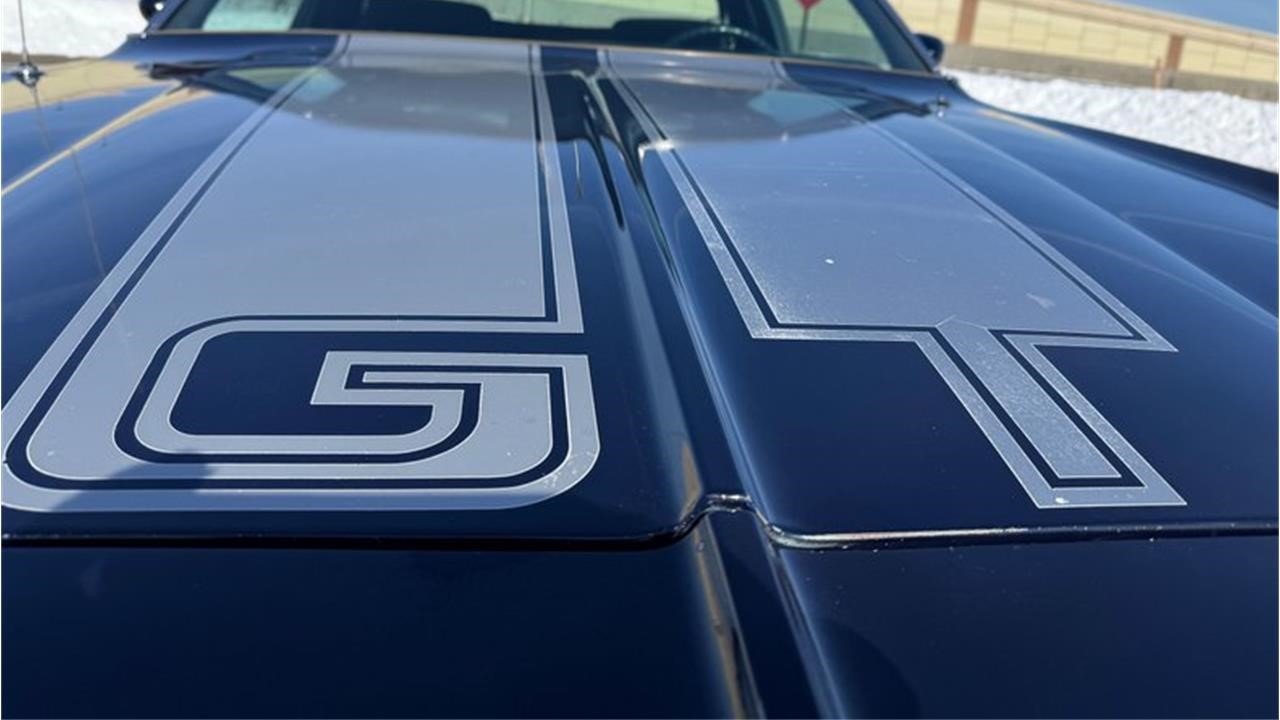
The 1970s: it was the best of times, it was the worst of times. And when looking at performance cars of the late-1970s, it tends to be the latter—but nothing a set of decals couldn’t fix!
Nonetheless, there were some neat cars produced during this era. Can you identify the below cars that are currently being sold on AutoHunter or ClassicCars.com? Year, make, and model, please! Post your answers in the Comments section below.
Over the years I have either owned or driven just about every single postwar model produced by Mercedes-Benz. Whether a luxury car or a sports/GT model, many of these vehicles were impressive, well-built and well-designed for their specific task.
That being said, in my mind there is one Mercedes that stands out from the rest, especially when considering models built from 1990 to the present: the SL55 AMG.
A number of years ago I purchased an SL55 AMG and used it as my “Monterey Car Week car” for two years in a row. The vehicle’s performance was pretty amazing, with a 0-60 time of 4.5 seconds and a 0-100 mph time of 9.9 seconds – just one-tenth of a second slower than the Ferrari 575M Maranello. If you think of it as Mercedes’ version of the 575, you aren’t too far off. Remember, Mercedes-Benz literally invented the luxury sports/GT convertible category when it introduced the R230 (SL-Class) generation of cars in 2001, and the quality is exceptional.
When compared to the later SL63, the SL55, to me, is simply more fun to drive. Its “imperfect” traction and stability control allow you to break the rear end loose, providing an overall feel of more sportiness and less refinement.
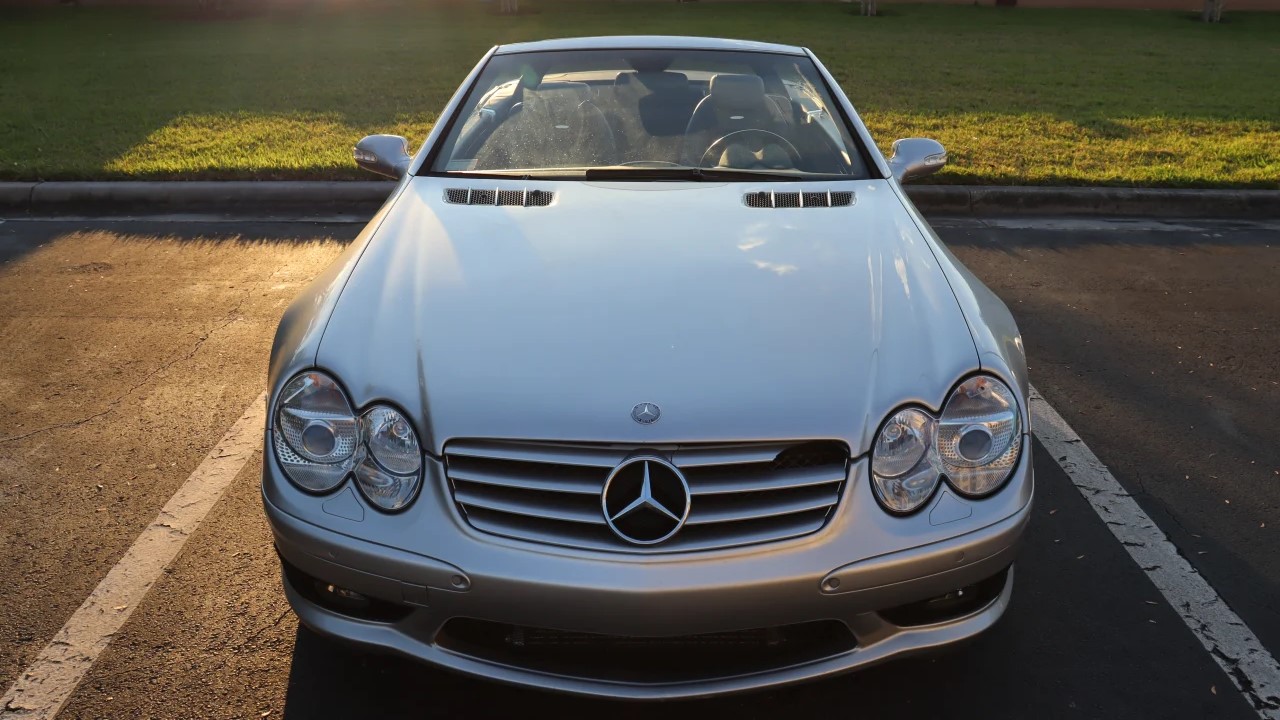
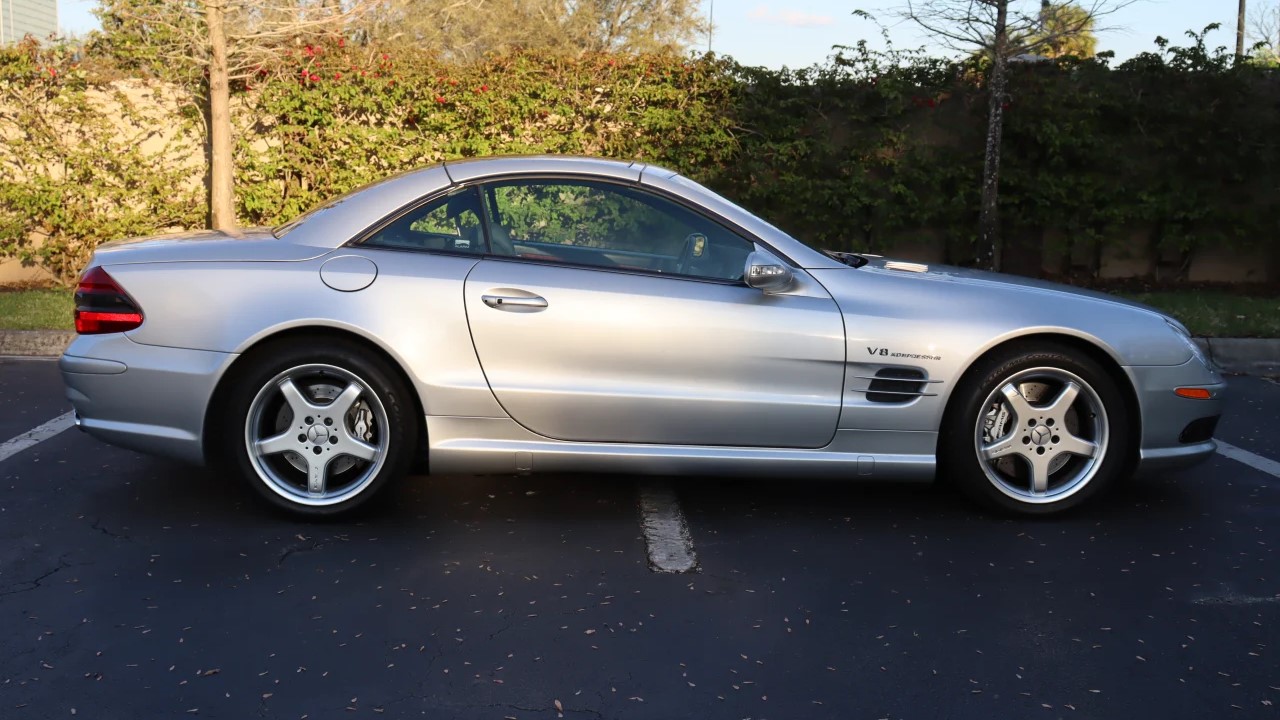
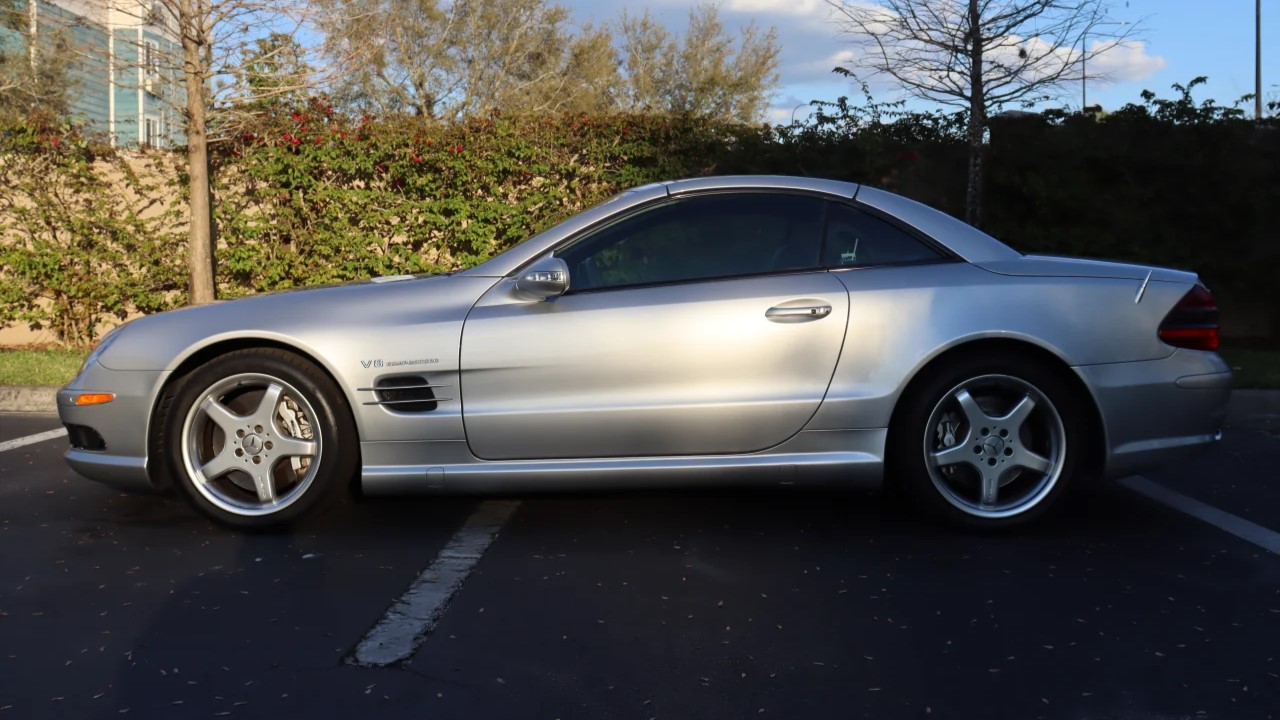
Featured on AutoHunter, your trusted source for classic rides, is a 2003 SL55 AMG with only 42,000 original miles.
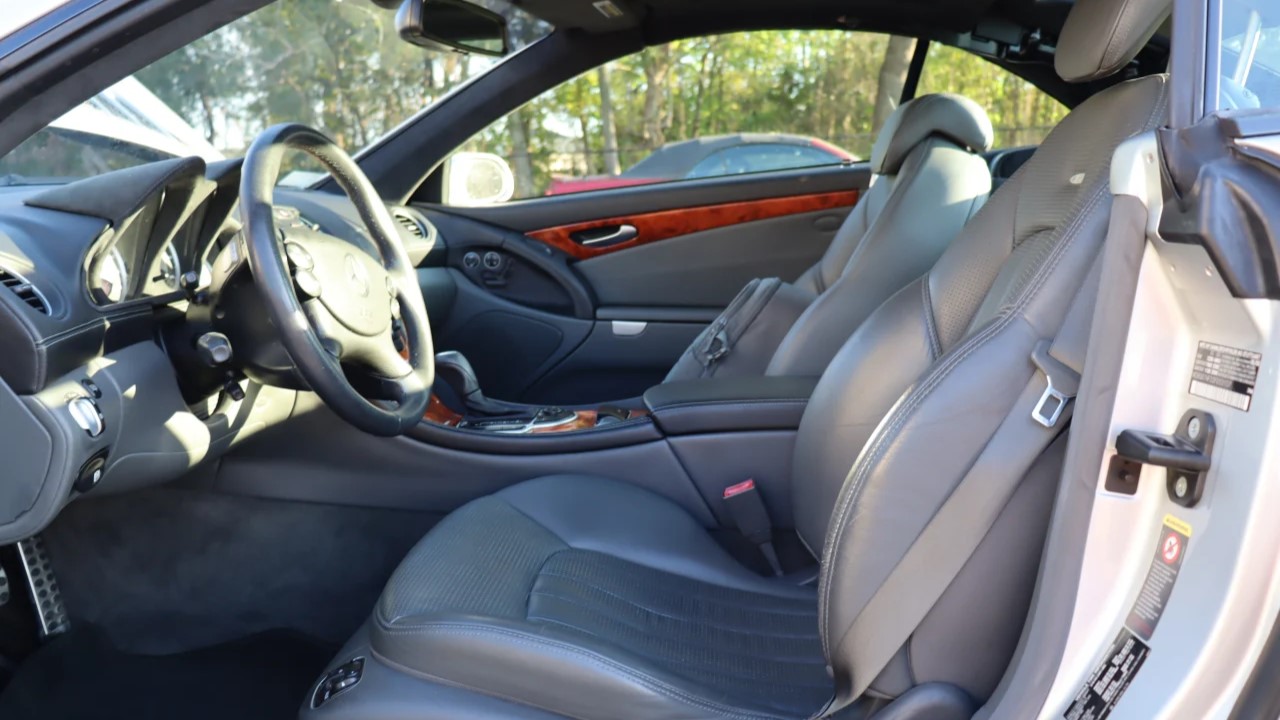
Offered by a dealer located in Orlando, Florida, the posting states this 2003 SL55 is a single-owner example that still wears its original Brilliant Silver paint with a gray leather interior. The car is accompanied by a clean CARFAX report
The exterior of this SL55 looks to be in exceptional condition, with no flaws seen in the photos (except for some slight damage to the grille on the driver’s side, which the seller is open to replacing or repairing at the end of the auction). The car rides on factory-correct 18-inch AMG monoblock wheels clad with staggered-width Continental Extreme Contact radial tires.
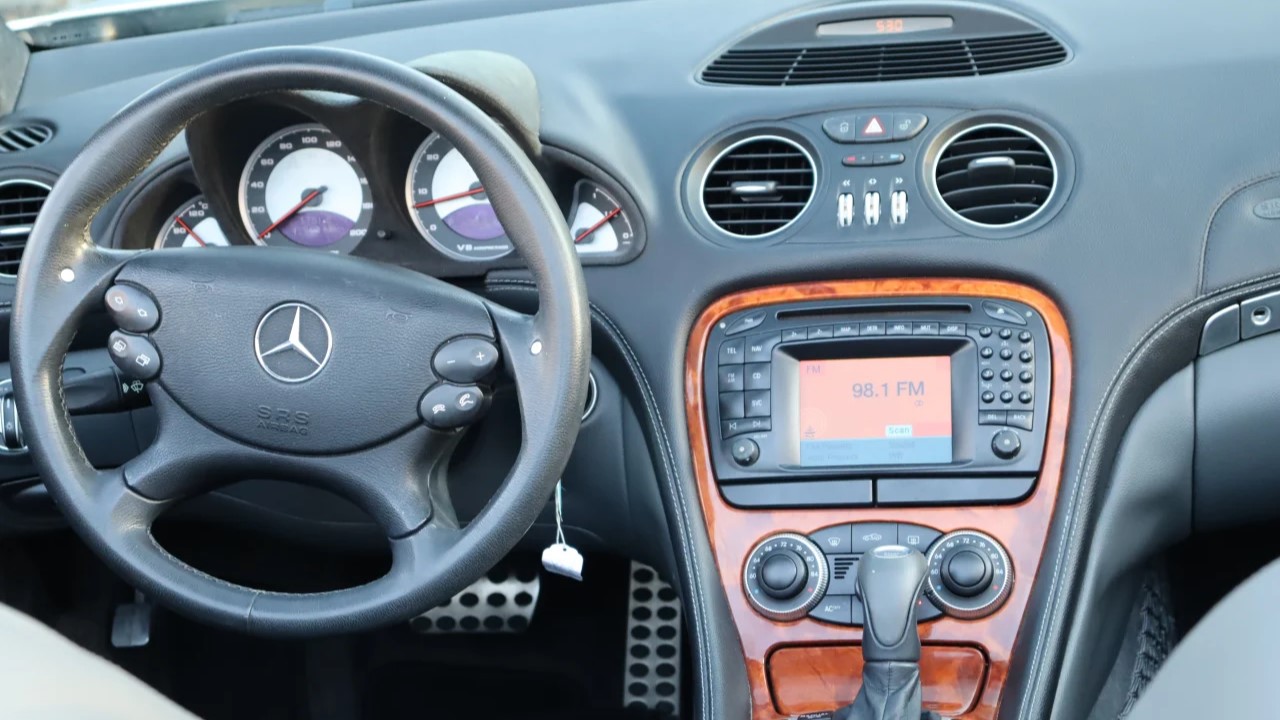
The interior looks as good as the outside of the car, only showing a little wear on the seats on the driver’s-side left bolster. This SL55 is also equipped with quite a few options, including Distronic adaptive cruise control, a Parktronic parking assistance system and a COMAND infotainment system.
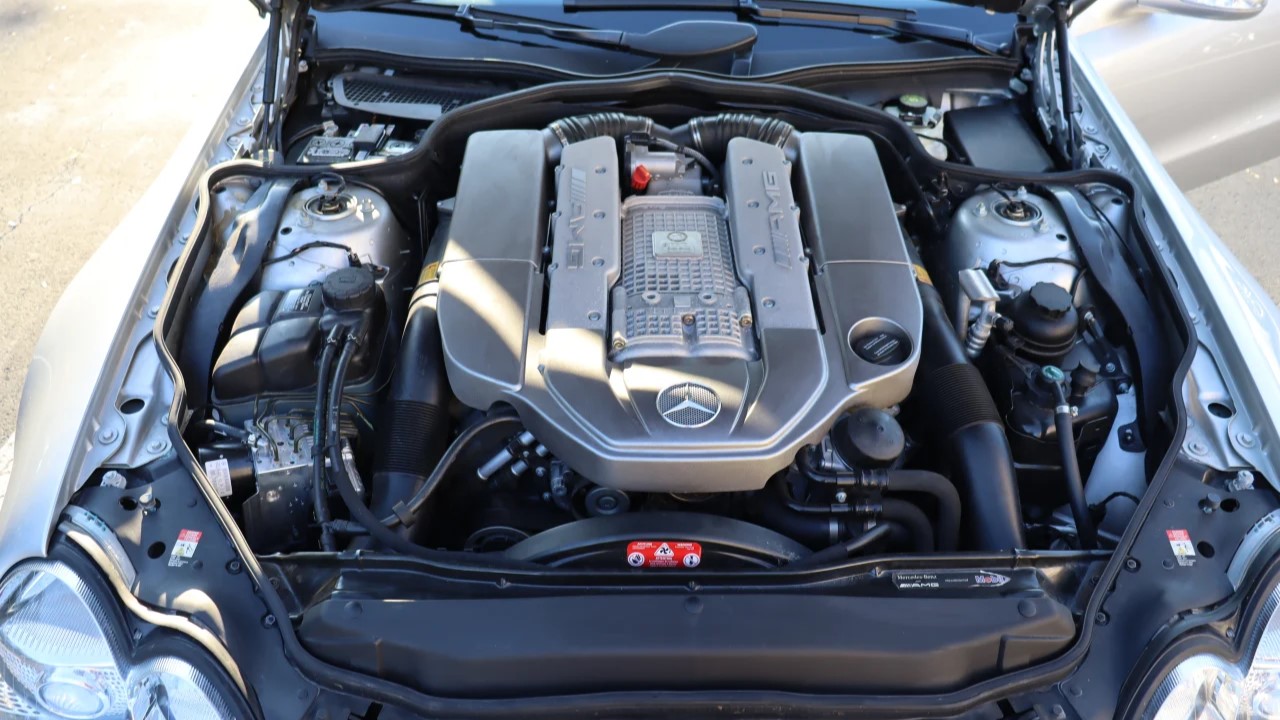
Under the hood is the awesome Mercedes M113K 5.5-liter twin-spark 24-valve supercharged V8 engine featuring 493 horsepower and 516 lb-ft of torque. Everything looks to be exceptionally clean and correct in the provided photos.
Truly great cars to drive, they go as fast as they look and set the standard for what a high-performance GT roadster should be, simply leaving the competition of their day in the dust. The SL55 is the perfect car to take down the street for an errand, exercise during a track day, show off at a Mercedes Club meeting or drive cross-country to attend an event. They do it all better than any other car in the category did at the time and would be a great addition to any enthusiast’s garage.
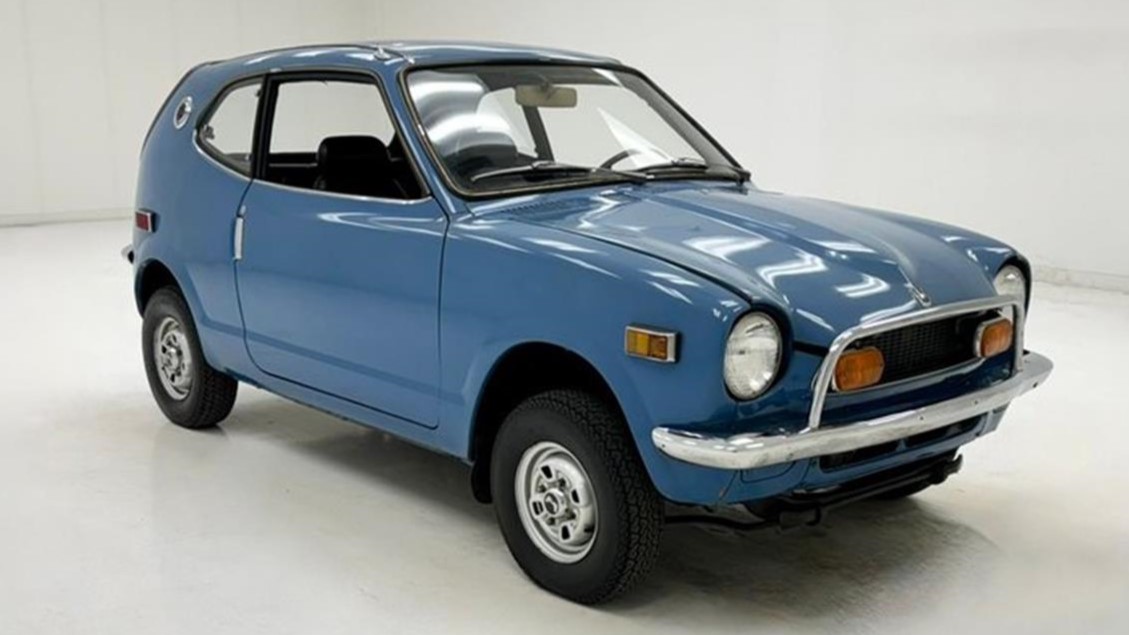
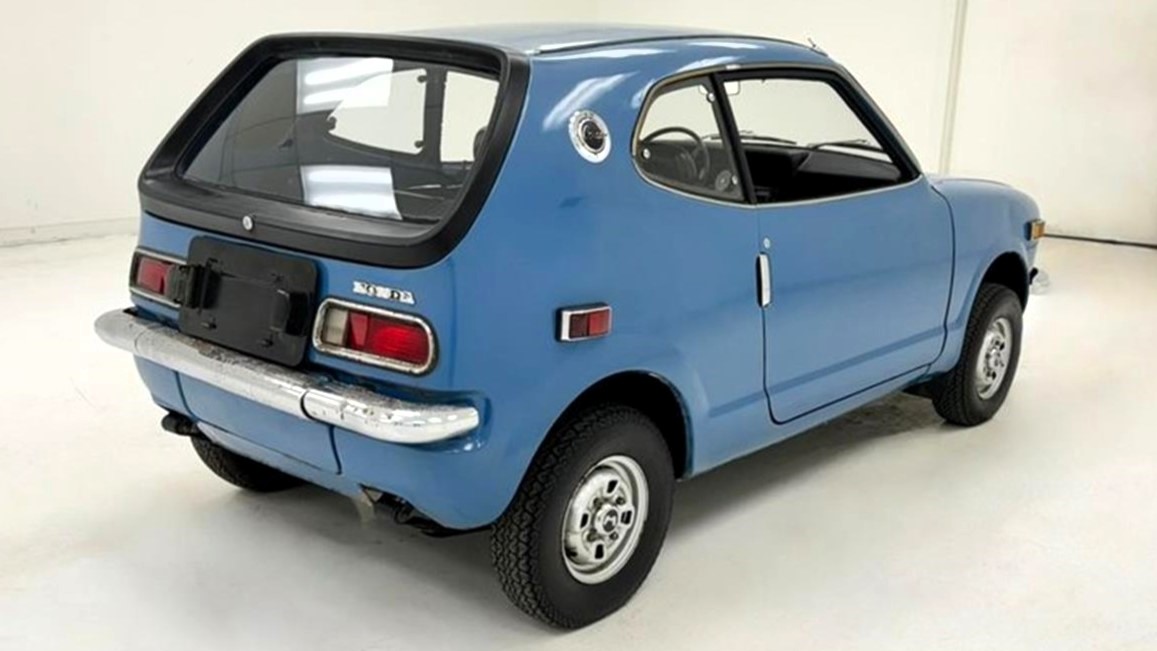
They say you meet the nicest people on a Honda. Though they were talking about folks riding a motorcycle, I bet it also holds true for our Pick of the Day, a 1972 Honda 600 Coupe. It is currently listed for sale on ClassicCars.com by a dealership in Morgantown, Pennsylvania.
I remember when I saw my first Honda—it was during the second gas crisis. I caught sight of this little car with funny parking lights in Stone Harbor, NJ. (I’m guessing it wasn’t truly my first, but it became my first upon this youthful awakening.) In subsequent years, I’d occasionally see a 600 or the earlier 600 Sedan, but they were quite uncommon on the East Coast. These Hondas always came off to my eyes as being half-baked cars until the Civic appeared on the scene.
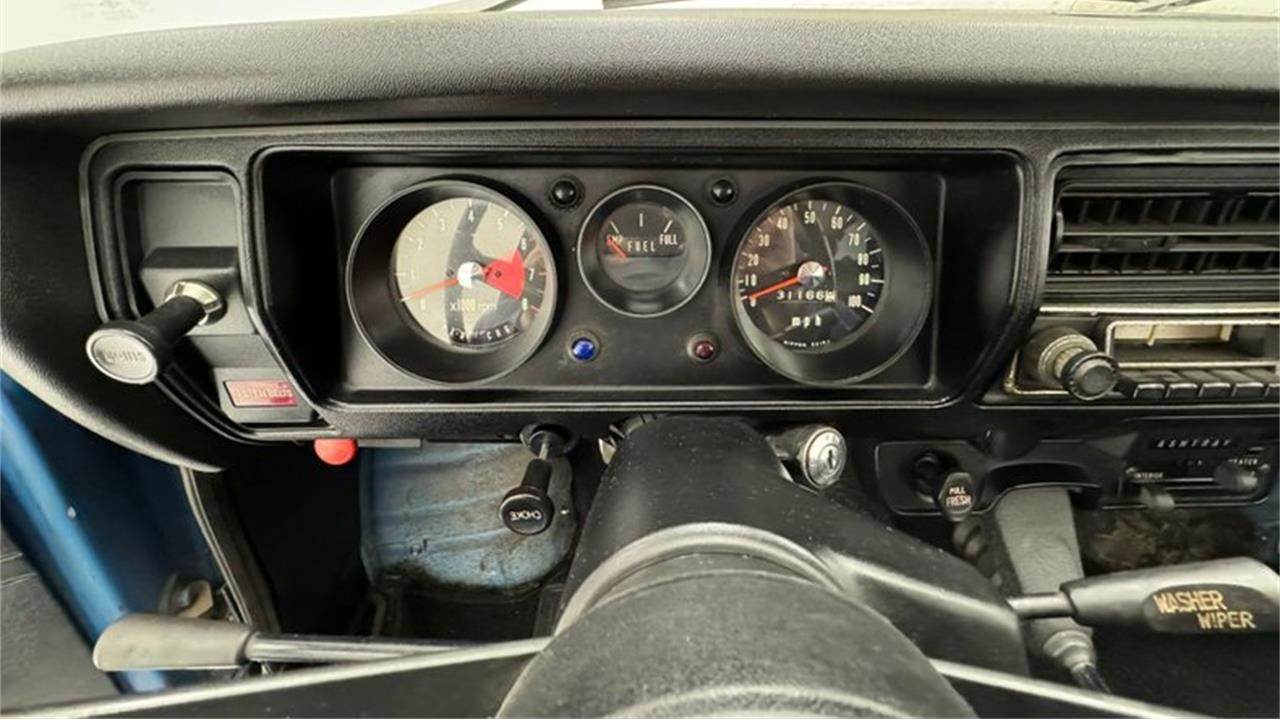
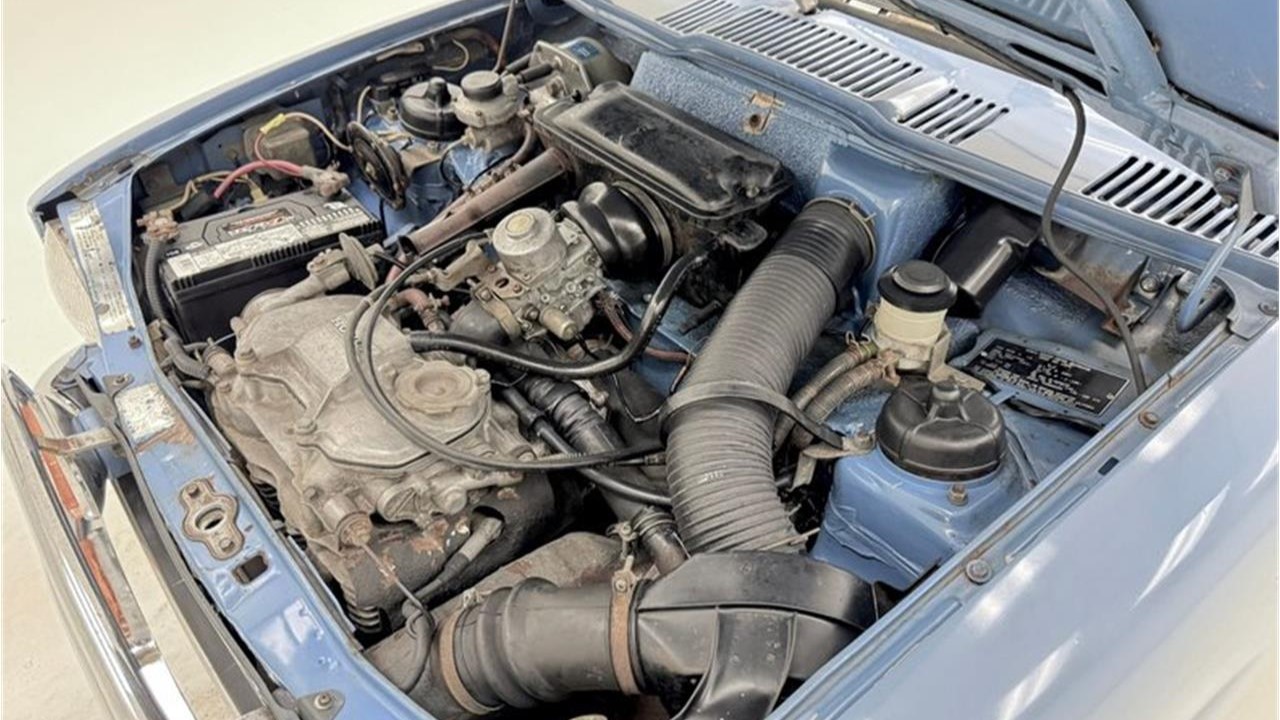
The front-wheel-drive 600 Coupe was produced from 1970-74, though in the U.S. it was available through 1972. Those sold in North America were powered by an air-cooled, 36-horsepower 598cc SOHC straight-twin, though in other markets it was available as the Z360 and powered by a 354cc SOHC. Interestingly, for 1972, the engines were converted to water-cooling. Rack and pinion steering, four-speed synchromesh, power-assisted front discs, radial tires, front bucket seats, tachometer, and left-side racing mirror were standard equipment.
We know how Honda advertised its motorcycles, but when it came to cars, Honda advertised the 600 Coupe with the tagline, “It makes a lot of sense.” The ad campaign focused on the kinds of things one could do with the money saved instead of buying a Chevy (and, starting at around $1,700, a lot could be saved). Plus, the 600 Coupe was able to achieve 40 miles per gallon, which added up to a few more bucks towards an Acapulco trip. Top speed was 75 mph. If you wanted to buy one, all you had to do was visit an authorized Honda motorcycle dealer.
The Honda Civic was introduced for 1973, which is what killed the 600 (both Coupe and Sedan). The Civic was longer, wider, taller, and featured a longer wheelbase, all better suited for American audiences. With a 1.2-liter inline-four, the Civic was more of a fully realized vehicle, though one that didn’t qualify as a “Kei car” like the smaller-engined Hondas that preceded it. When the first gas crisis appeared, Honda was ready, and its quality outshone what was coming from Ford’s Pinto and Chevrolet’s Vega.
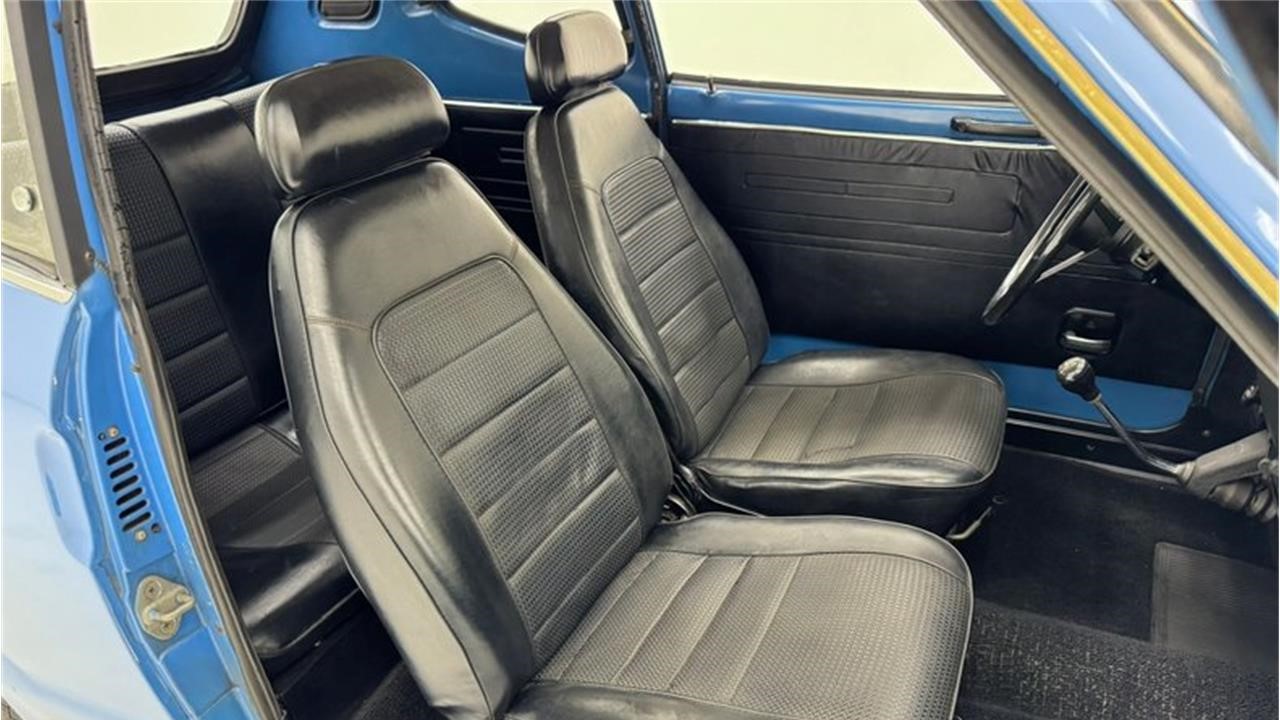
This Nassau Blue 1972 Honda 600 Coupe is “what Honda called “economy with flair.” “Ten-inch silver painted steel wheels have a central ‘H’ badge hub on them and are wrapped with 145SR10 rubber from the early 1990s,” says the seller. Inside, “high-back buckets are in very nice condition and sport textured knitted tuck and roll inserts, and smooth vinyl bolsters and headrests.” Adds the seller, “The car started right up and ran smoothly. On the test track it moved and handled nicely.” The standard four-speed manual handles the shifting chores.
Though restored, this little Honda is beginning to show rust, and pitting on the chrome. “Will need some TLC, especially on the exterior,” concludes the seller, so be sure to check out the gallery in the ad. For $8,500, this is a novel collectible for a nice person who can enjoy it while improving it along the way.
In an earlier era, there were performance models that were all about image, yet sometimes one could spec out a similar car without all the candy. This pair of 1970 Mustangs perfectly demonstrates this. In one corner, we have a Grabber Orange 1970 Ford Mustang Mach I. Aside of being powered by a 351-4V, note that this example is one of 96 Twister Specials built for a Kansas City promotion . . . and then, in the other corner, we have another Grabber Orange Mustang, but this one is your basic SportsRoof, but with a twist. It too is powered by a 351-4V, but note the lack of Mach I grille and rocker panels (among other items). A bit less flashy, but certainly no less capable—maybe even more so!
Join us as we discuss the differences between the two Mustangs. Both cars sold at the Barrett-Jackson 2024 Scottsdale Fall Auction for $313,500 and $41,800, respectively. Of the two, how would you roll?
The Grundy Insurance Agency has offered Agreed Value Collector Vehicle Insurance to America’s automobile enthusiasts for over 75 years. Their policies are designed for car guys and girls to enjoy their vehicles without fear of loss. Additional benefits include towing and labor, trip interruption, repair shop of your choice, and more. Contact them today for a quote on one or all of your vehicles.
Speed and affordability don’t always go hand in hand, but for those who crave adrenaline without breaking the bank, there are a handful of performance machines that defy expectations. Hitting 200 mph is a feat usually reserved for high-end supercars, but a few budget-friendly beasts—whether used or overlooked gems—can get you there for a fraction of the cost.
In this list, we’re diving into 10 cars that prove you don’t need a seven-figure paycheck to experience mind-bending speed. Whether they’re underrated supercars, high-powered muscle cars, or turbocharged performance sedans, these rides can push past the 200-mph mark without requiring a billionaire’s budget.
Buckle up, because these cars are built for speed—and surprisingly, they won’t destroy your wallet!
The Corvette That Embarrasses Supercars – Chevrolet Corvette Z06 (C7) – 202 MPH
Auto Journal
The C7 Corvette Z06 is a supercar killer with a 650-hp supercharged LT4 V8, a 0-60 time of just 2.9 seconds, and a 202-mph top speed. With exotic car performance at a fraction of the price, this American beast outruns Ferraris and Lamborghinis while still being shockingly affordable on the used market.
The Muscle Car That Can Smoke a Lamborghini – Dodge Challenger SRT Hellcat Redeye – 203 MPH
Motor 1
The Dodge Challenger SRT Hellcat Redeye is a 797-horsepower monster that roars past 203 mph, leaving exotics in its dust. With a supercharged 6.2L HEMI V8, it delivers muscle car brutality with supercar speed—all for a fraction of the cost. This isn’t just a Challenger; it’s a Lamborghini hunter.
The Fastest Mustang Ever Built – Ford Mustang Shelby GT500 (S550) – 202 MPH
Ford
The Ford Mustang Shelby GT500 (S550) is the most powerful Mustang ever, packing a 760-hp supercharged 5.2L Predator V8 and a blistering 202-mph top speed. With a lightning-fast dual-clutch transmission, aggressive aerodynamics, and track-ready performance, this Mustang doesn’t just dominate muscle cars—it challenges European exotics head-on.
The Japanese Godzilla That Eats Porsches – Nissan GT-R Nismo (R35) – 205 MPH
Nissan
The Nissan GT-R Nismo is a 600-hp beast with a 205-mph top speed. Its twin-turbo V6 and AWD system make it super quick and easy to handle. Known as Godzilla, this car is fast enough to beat many Porsches and Ferraris, all while being cheaper than most supercars.
The Lamborghini for Half the Price – Audi R8 V10 Plus (First Gen) – 205 MPH
Auto WP
The Audi R8 V10 Plus gives you Lamborghini speed without the Lamborghini price. With a 610-hp V10, a 205-mph top speed, and a lightweight design, it’s built for serious performance. Smooth, fast, and surprisingly practical, this supercar bargain delivers exotic thrills for half the price of its rivals.
The Porsche That Can Outrun a McLaren – Porsche 911 Turbo S (991) – 205 MPH
Studttcars
The Porsche 911 Turbo S (991) is a 205-mph speed machine with a 580-hp twin-turbo flat-six and all-wheel drive for insane grip. It’s lightning-fast off the line, outrunning many McLarens while staying comfortable enough for daily driving. This Porsche proves you don’t need a McLaren to go supercar fast.
The Family Sedan That Will Outrun a Ferrari – Cadillac CTS-V (Third Gen) – 200 MPH
GM
The Cadillac CTS-V (Third Gen) is a 200-mph four-door rocket powered by a 640-hp supercharged V8 from the Corvette Z06. It’s luxurious, comfortable, and brutally fast, making it one of the quickest sedans ever. With room for the family and Ferrari-killing speed, this Caddy is the ultimate sleeper.
The EV That’s Faster Than a Bugatti – Tesla Model S Plaid – 200 MPH
Tesla
The Tesla Model S Plaid is an electric missile with 1,020 horsepower and a 200-mph top speed. It goes 0-60 in just 1.99 seconds, making it quicker than a Bugatti off the line. With instant torque and cutting-edge tech, this EV proves speed isn’t just for gas-powered supercars.
The Luxury Supercar Nobody Talks About – Aston Martin V12 Vantage S – 205 MPH
Pinterest
The Aston Martin V12 Vantage S is a 205-mph sleeper with a 5.9L V12 and 565 horsepower. It’s fast, rare, and packed with British luxury, yet often overlooked. With exotic speed, a roaring engine, and timeless styling, this Aston proves you don’t need a Ferrari to feel like a legend.
The AMG Beast That Eats the Autobahn – Mercedes-AMG GT R – 202 MPH
AMG
The Mercedes-AMG GT R is a 202-mph track monster with a 577-hp twin-turbo V8 and aggressive aerodynamics. Built for autobahn domination, it delivers supercar speed with German luxury. With sharp handling, a roaring exhaust, and eye-catching looks, this AMG isn’t just fast—it’s a beast built to devour the road.
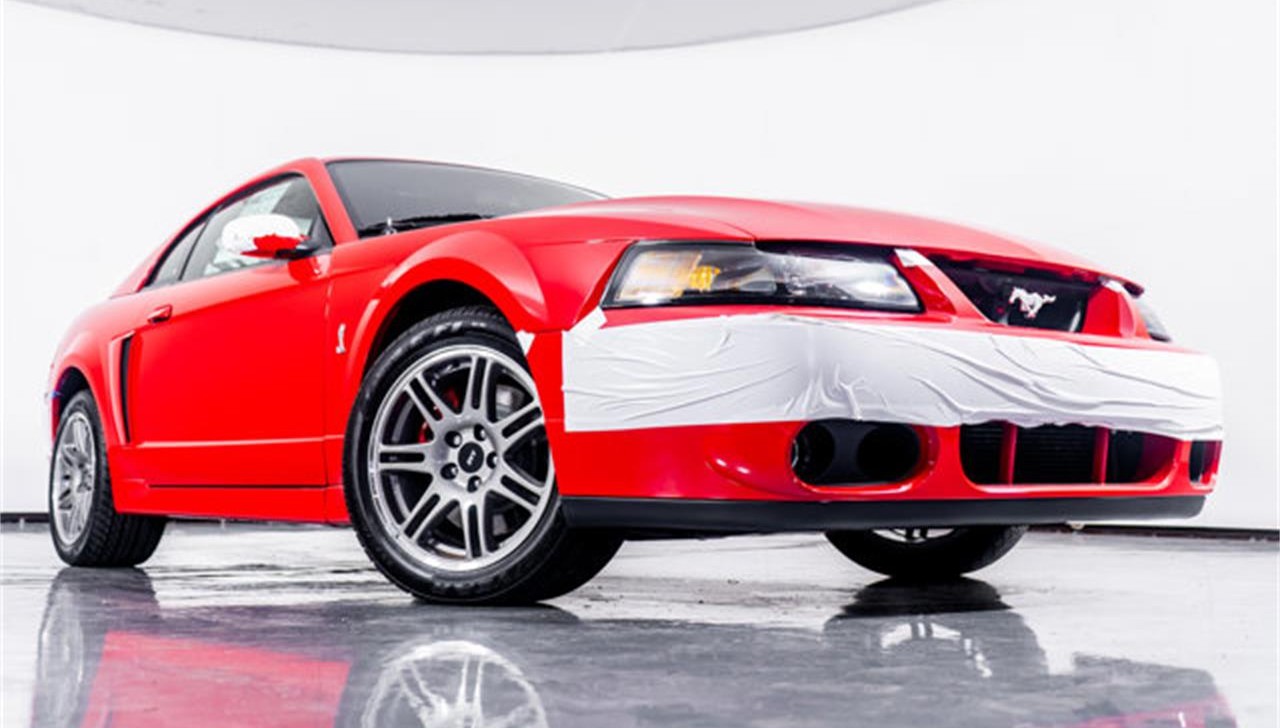
Imagine being able to teleport yourself to 2003 to buy a brand-new Mustang from over two decades ago. The cherry on top: The car isn’t even yet “dealer-prepped” – it comes with the protective plastics both inside and out – almost as if it rolled out of the Dearborn, Michigan, assembly plant just yesterday.
The fourth generation of the popular Mustang pony car launched in 1994 using what Ford internally called the “SN95” design. Straight out of the gate, the car was a marketplace success: It was named Motor Trend’s “Car of the Year” for its ability to revitalize the muscle car image for a new generation of buyers. In that vein, magazine advertisements for the SN95 Mustang harkened back to the original Mustang from 1964 as “the horse that carried away a nation, untamed spirit captured in chrome.” The 1994 Mustang was said to have “that same spirit captured in an all-new shape.”
The SN95 generation lasted through 2004. Toward the tail end of that span – specifically, for model year 2003, a 10th Anniversary Mustang Cobra was sold in commemoration of 10 years of Ford’s “Special Vehicle Team.” There were 2,003 total units produced with the 10th Anniversary package.
How about a refresher on the Special Vehicle Team? “SVT” was a division of Ford Motor Company dedicated to the production of high-performance vehicles. Much like BMW has its “M” and Mercedes-Benz has its “AMG,” Ford channeled its engineering knowledge and dollars into squeezing more power, enhanced handling and sportier aerodynamics from some of its models. The first two vehicles that SVT worked on were the SVT Lightning F-Series pickup truck and the SVT Cobra Mustang.
Which brings us to what may very well be the lowest-mileage fourth-gen Mustang in the country.
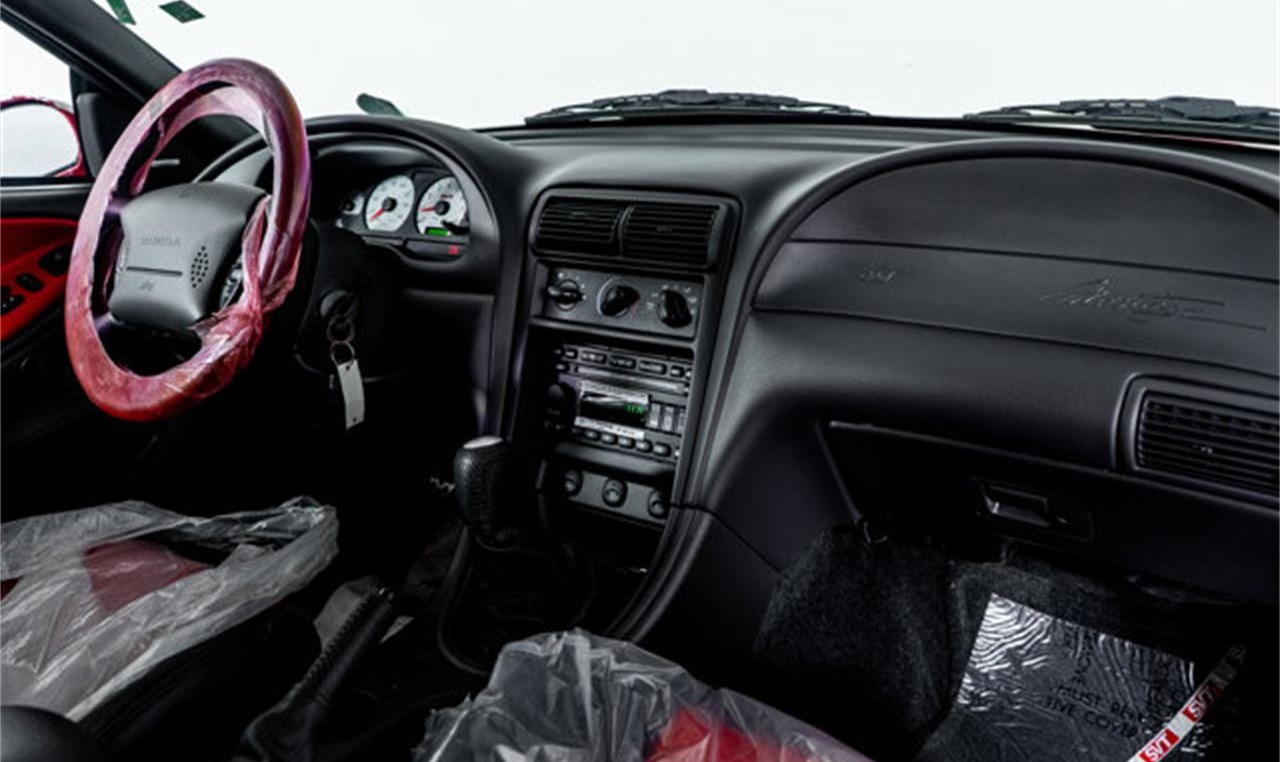
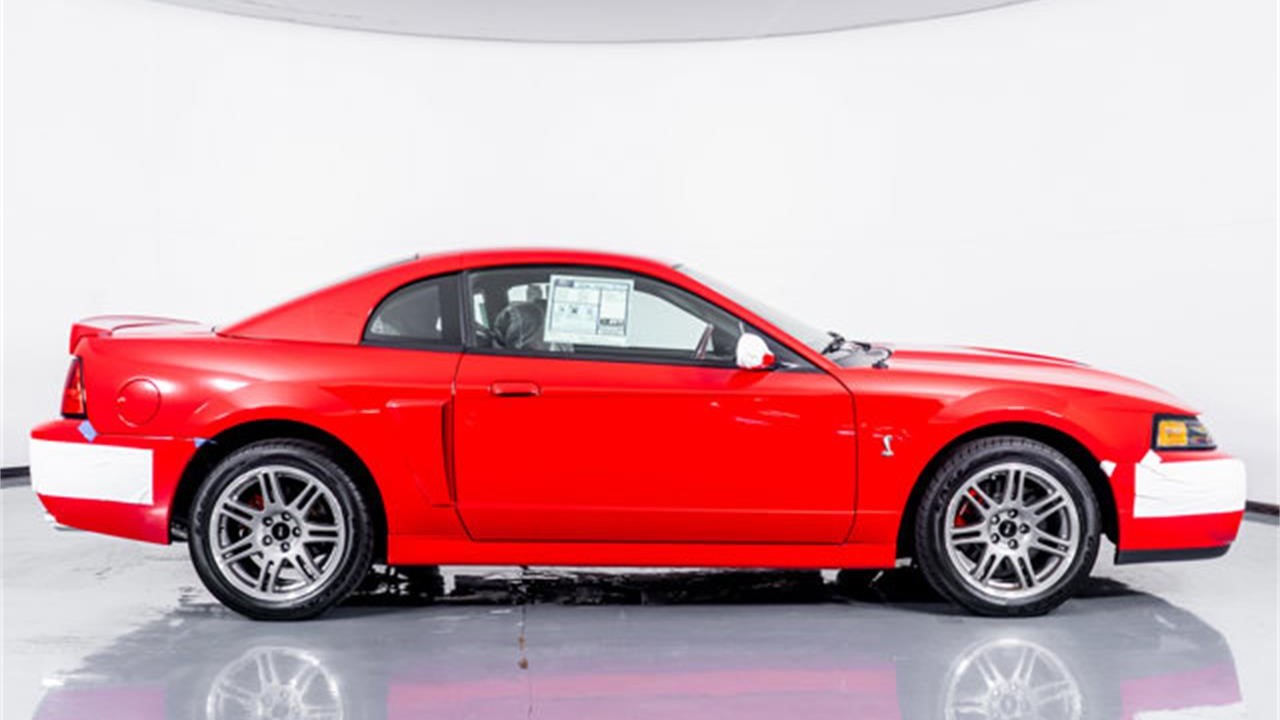
HGREG LUX provided some key details and over 50 photos of the exceptional car: The Torch Red exterior retains its factory-applied protective plastics on the bumpers and the sideview mirrors – in fact, many aspects of the car are still wrapped up, including the seats, the steering wheel and even the radio display. The car’s 17-inch split-spoke wheels were exclusive to 10th Anniversary models, and handling was optimized by an SVT-specific suspension using linear-rate springs and gas-pressurized Bilstein dampers.
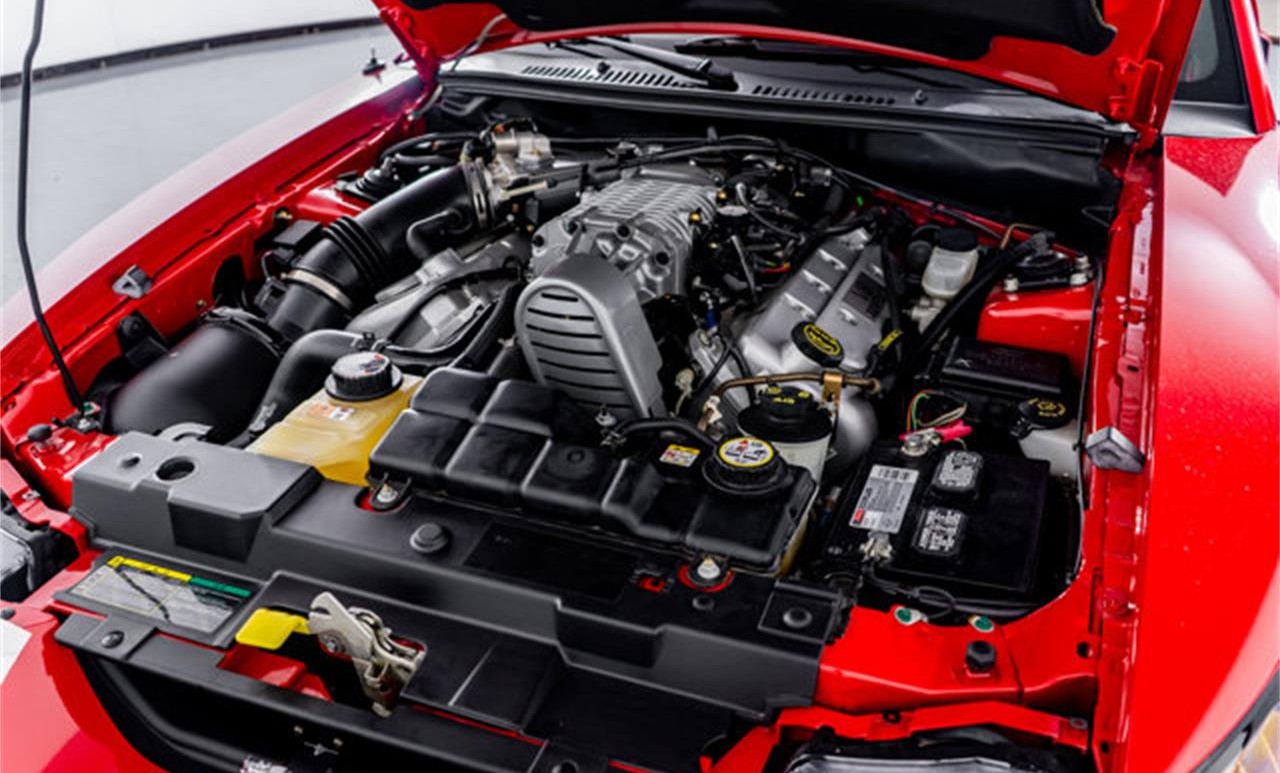
Power for this mean machine is provided by a supercharged 4.6-liter DOHC Modular V8 featuring a cast-iron block, aluminum cylinder heads, a forged rotating assembly, and an oil cooler. Ford rated the engine at 390 horsepower and 390 lb-ft of torque when new. A TREMEC T-56 six-speed manual transmission and a limited-slip differential handle the task of getting power to the rear (original) Goodyear Eagle tires.
The car will come with the original window sticker, SVT memorabilia, magazines and two sets of keys with fobs. HGREG LUX says, “Experience the legacy and exclusivity of this 2003 Ford Mustang Cobra 10th Anniversary, an ultra-rare collector’s car with just 8 miles on the odometer. This is a pristine opportunity to own a piece of Mustang history. Don’t miss out!”
Would you unwrap and enjoy the car or stash it away for safekeeping? Either way, you’ll be hard-pressed to find a 22-year-old car as “fresh” as this Cobra. Check out the photo album, and envision yourself becoming the lucky owner of this essentially brand-new car.
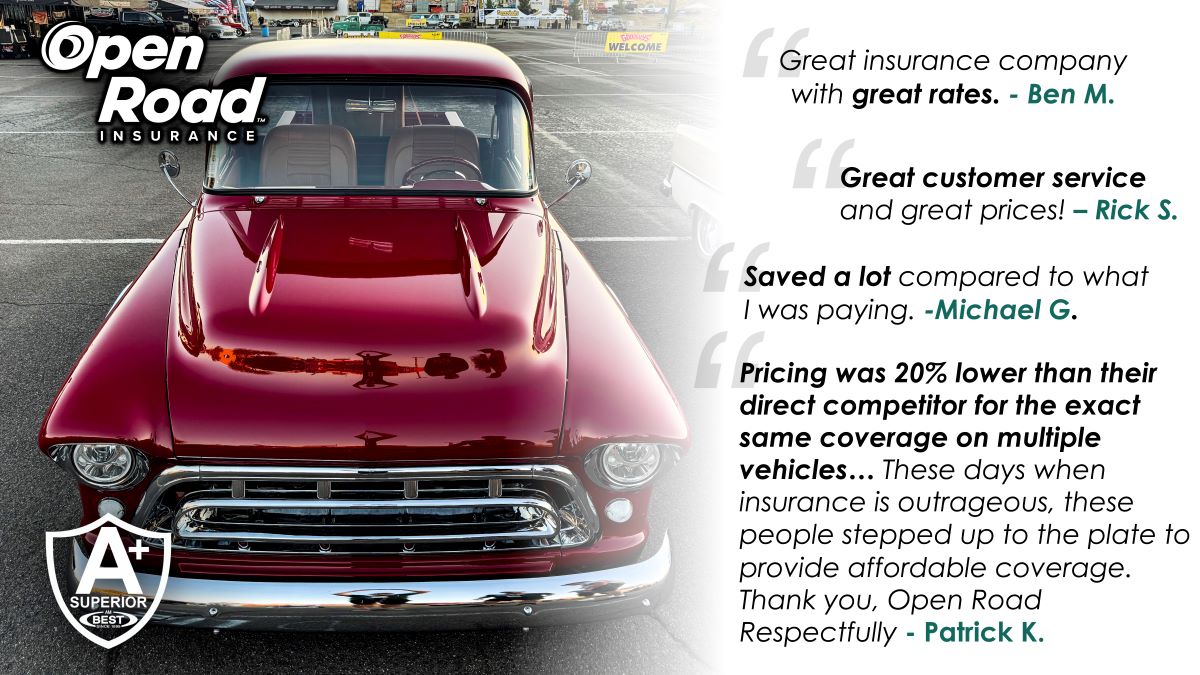
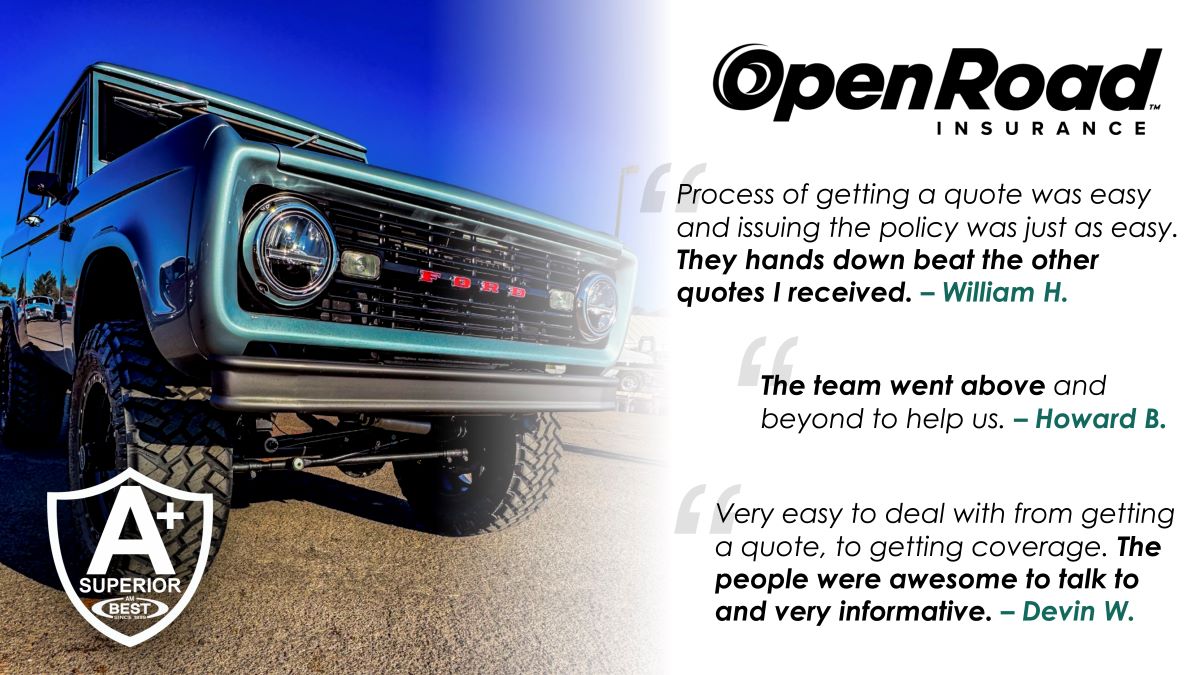
February 2025 proved to be yet another record-breaking month for classic and collector vehicle insurer OpenRoad. Compared to January, the brand saw a 53% increase in customer growth as more and more auto enthusiasts are signing up for their new auto insurance program. Why are so many classic and collector vehicle owners making the switch? Customer testimonials highlight huge savings on equal or better coverage as well as excellent customer service that feels like, “calling a friend.” That is some high praise for an insurance company.
How does OpenRoad stack up against the rest?
It’s no secret that for decades collector vehicle owners have been fairly limited in terms of options for auto insurance. Confusing programs, complicated coverage options, and regular rate increases, even when they haven’t filed a claim, have left many auto enthusiasts looking for an alternative. Some owners have even gone the route of bundling their classic car coverage with their home and daily driver insurance, leaving them likely overpaying for coverage that is inadequate for their collector ride.
Realizing the market was ripe for more choice, the seasoned team of collector car and insurance experts at OpenRoad set out to build a program that addressed the gaps currently facing collector vehicle owners as well as insurance agents and brokers servicing this community. The result being a program that includes specialized coverages tailored to the unique needs of classic and modern collector vehicle owners, with pricing that accounts for the reduced usage and accident frequency often associated with these vehicles. This means better coverage and often lower rates for owners making the switch from standard auto insurance companies or those other collector vehicle insurers.
“When developing our program, we examined all the contributing factors that were causing skyrocketing rake hikes,” explained Mark VanDam, OpenRoad’s Chief Underwriting Officer. “In the process, we identified several opportunities for us to build a better program, one that passed more savings along to our customers and provided the specialized coverages they need.”
In addition to their already highly competitive rates, OpenRoad goes above and beyond by offering additional discounts to car club members as well as customers who transfer their coverage from another classic car insurer. With so many auto enthusiasts making the switch to OpenRoad, it seems that they have found everything that they have been looking for in a classic auto insurance provider. Just check out these recent customer reviews:
“Almost half the price as your competitors for equal coverage!”
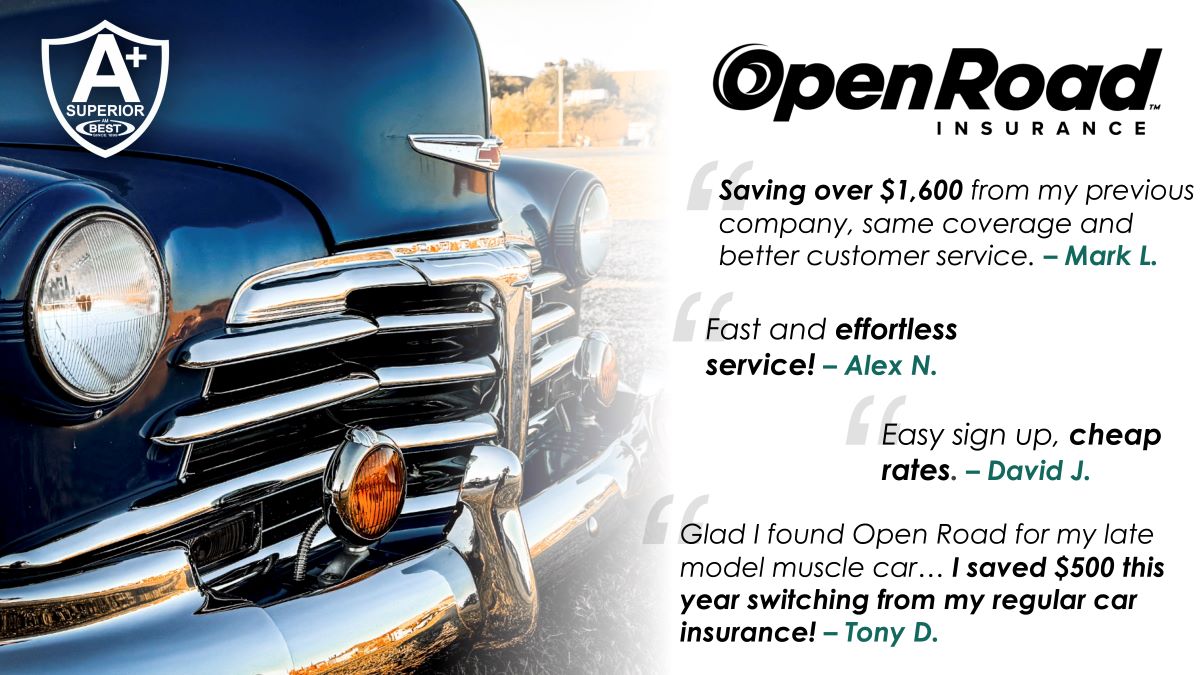
“Saving over $1,600 from my previous company, same coverage and better customer service.”
“25% less premium than my former classic car insurance company for the same coverage.”
“Pricing was 20% lower than their direct competitor for the exact same coverage on multiple vehicles.”
“Hands down beat the other quotes I received.”
“Great coverage without all the unnecessary, useless, costly bells and whistles of other classic car insurance companies.”
How is OpenRoad’s Coverage a Better fit for Classic & Collector Vehicles?
With OpenRoad, paying less doesn’t mean getting less. In addition to all the standard coverage you’d expect with an auto insurance policy— think comprehensive, collision, uninsured motorist, and the like — every OpenRoad policy comes with protection tailored to car collectors that simply can’t be matched by traditional auto insurance companies. For example, OpenRoad’s agreed value policy guarantees that the insurance payout you’ll receive in the event of a total loss equals the actual worth of your classic car, rather than a depreciated value that most insurance programs use.
“Many collector vehicle owners don’t realize that their standard auto coverage is based on a depreciated market value,” said Justin Moreno, OpenRoad’s Chief Marketing & Communications Officer. “That may work well for daily drivers but not for a classic car or truck. These vehicles require coverage that considers their true replacement cost, assigning a market value that takes into account their condition as well as the owner’s investments. We provide that as well as expert claims handling and many other protections that are better suited to the needs of the collector car community.”
OpenRoad’s coverage is also better when it comes to minor damages. First, the company lets you pick the shop of your choice to carry out any repairs, so you can rest easy knowing your car is in the hands of mechanics you trust and who specialize in classic and collector cars. And second, it will cover the cost for OEM parts, ensuring that a fender bender doesn’t spoil the authenticity of your ride.
An OpenRoad policy is so comprehensive that it can even help you prevent your classic car from getting damaged in the first place. In the event of a pending natural disaster, such as a hurricane or wildfire, the company will cover the cost of getting your car out of harm’s way. That includes reimbursing the many out-of-pocket expenses associated with relocating and temporarily storing your car somewhere safe.
OpenRoad’s coverage also extends beyond the bumpers of your classic car to the tools and spare parts you’ve stockpiled for maintaining your vehicle. OpenRoad will even foot the bill for a new car cover if yours is stolen or vandalized.
Rapidly Expanding Into New Markets
In order to keep pace with rising demand for its classic car insurance program, OpenRoad is rapidly expanding its coverage across the U.S. and is now live in 21 states including Arizona, Arkansas, Colorado, Connecticut, Georgia, Illinois, Indiana, Louisiana, Michigan, Minnesota, Mississippi, Missouri, New Mexico, Ohio, Oklahoma, Pennsylvania, South Carolina, Tennessee, Texas, West Virginia, and Wisconsin. The brand has also seen significant interest among insurance agencies and brokerages, registering over 1,000 new partners in the past few months who are keen to have another option for their clients
Check out OpenRoad’s coverage options and get your quote today in about five minutes.
If you live outside the company’s current coverage area, be sure to sign up for OpenRoad’s newsletter so you’ll be notified as soon as policies are available in your area. The company is quickly expanding to new states each and every month.
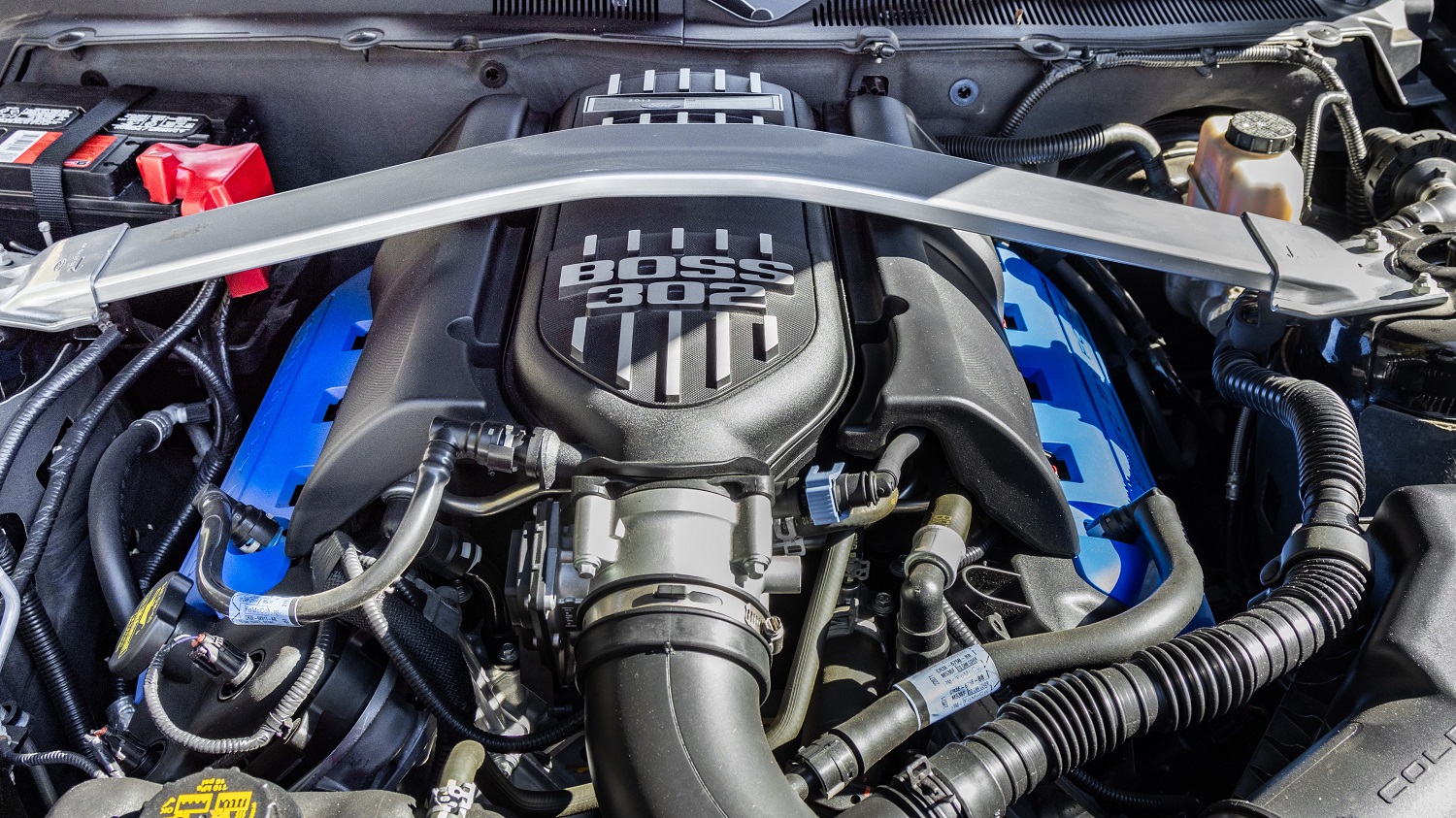
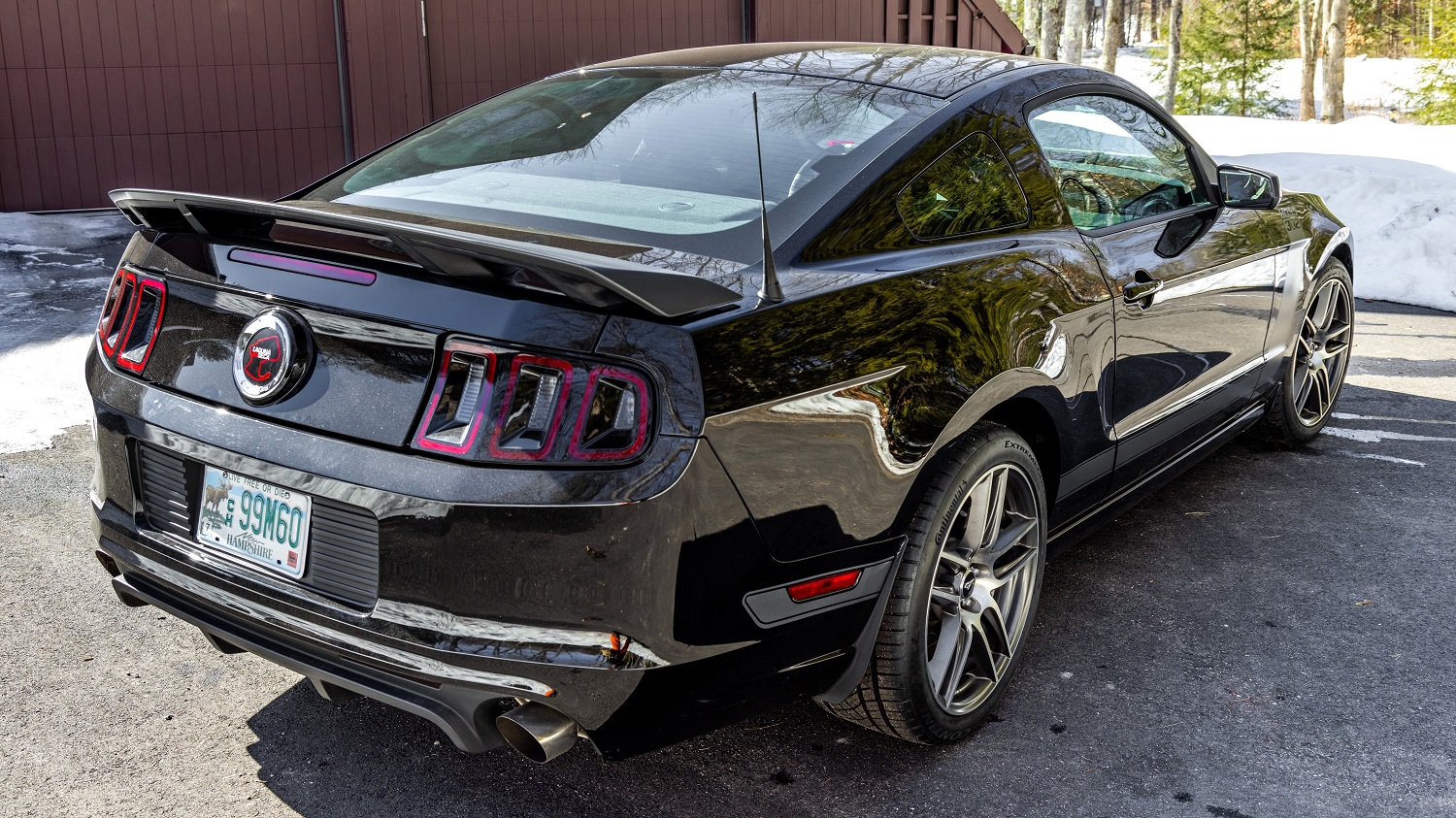
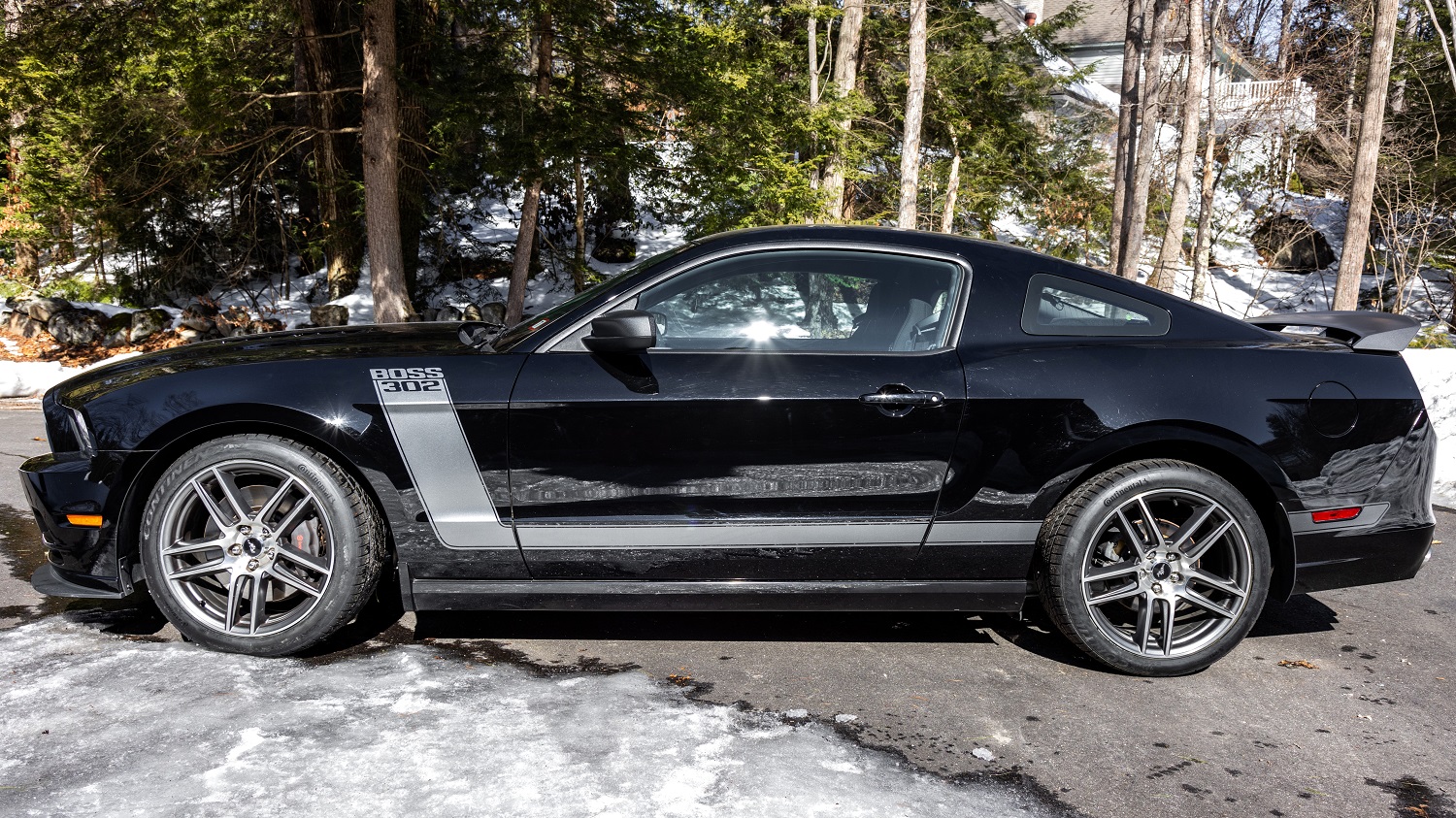
For many people, it’s a good thing when the boss leaves. If their manager is overbearing, they can relax a little. If the head honcho is a micro-manager, they can probably get more work done with them gone. But to Ford Mustang fans, the Boss’s departure in the 1970s left a void. They awaited its return until 2012, when the Boss came back from a ridiculously long hiatus. Unfortunately, the Boss didn’t stay for long. Today’s AutoHunter Spotlight, a 2013 Ford Mustang Boss 302 with the Laguna Seca performance package, comes from the final production year of the second-generation model.
The Boss returned in S197 form not only with more power, but better performance all around. Ford’s powertrain engineers enhanced the Coyote 5.0-liter V8 with forged aluminum pistons, upgraded connecting rods, a unique intake manifold, and revised oil pan baffling, boosting output from 412 to 444 horsepower (although torque dipped from 390 to 380 lb-ft). They paired that high-output 302 with staggered-width 19-inch wheels, a six-speed manual gearbox, a quad exhaust system (two side and two rear outlets), and a 3.73 limited-slip differential. Of course, Ford’s in-house performance enthusiasts beefed up the Boss’s suspension and brakes so they could make the most of its extra power, swapping out the regular hardware for adjustable shocks and struts with five settings, a 25-mm rear stabilizer bar, 14-inch Brembo front rotors with four-piston calipers, and 11.8-inch rear discs with high-performance pads.
The available Laguna Seca package took things up a notch with a front splitter, front brake cooling ducts, wider rear wheels, more aggressive rubber, unique rear springs, a larger stabilizer bar, and more. In the pursuit of higher performance and lower lap times, Ford deleted the rear seat and replaced it with an X-brace. The Laguna Seca treatment was easy to spot because it also included a red grille surround, mirror caps, roof, and rear spoiler.
Was the Boss’s return worth the wait? Car and Driver thought so. One of the publication’s writers stated, “As automotive resurrections go, this is a knockout that venerates the original Boss while embarrassing it objectively and subjectively in every meaningful measure. What this is, is the best Mustang ever.”
This 2013 Boss 302 has those same performance enhancements as well as the unique front and rear springs and cosmetic changes that Ford incorporated for the model year. Whereas the 2012 Boss came with 1969-inspired “C” side stripes, Ford added 1970 Boss 302-inspired hood striping and changed the side graphics to hockey stick-style stripes for 2013. The Laguna Seca package was largely the same, although the red accents were dropped in favor of reflective Sterling Gray hood and side stripes, mirror caps, and rear spoiler.
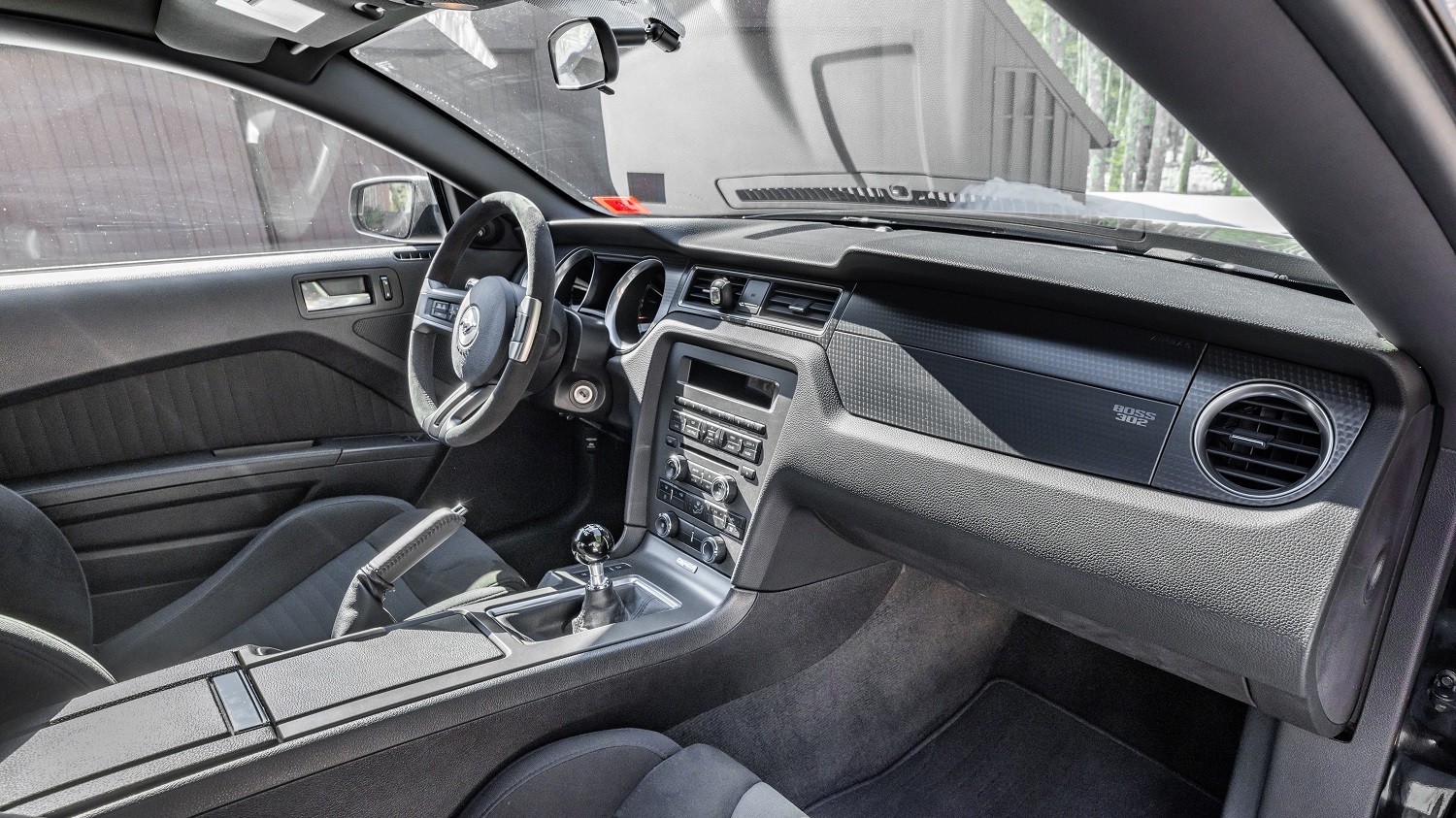
There are even more Boss 302-specific features in the cockpit of this focused machine. The main touchpoints are an Alcantara-wrapped steering wheel and a black cue ball-style shift knob. The special gauge cluster is surrounded by dark aluminum dash trim. Charcoal Black cloth front bucket seats with gray “BOSS 302” embroidery keep passengers in place on the road and road course.
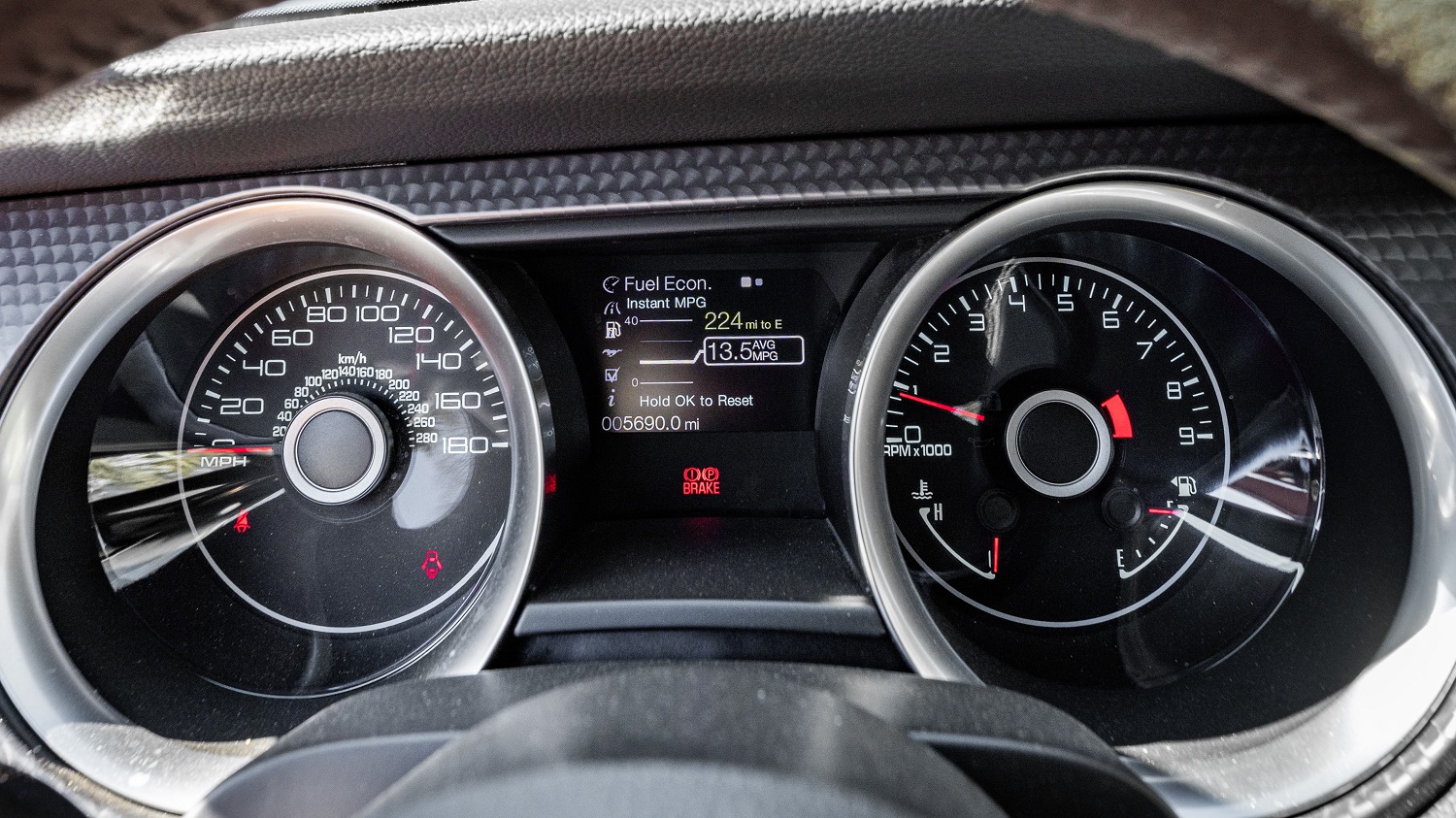
Judging by the 5,690 miles on the odometer, this Boss hasn’t left the office and gotten out much. If you want to let it loose on the highway or your favorite motorsports park, place the winning bid for it and you’ll never have to worry about the Boss returning because it’ll be in your garage every night. Get your bid in now; the auction for this 5K-mile 2013 Ford Mustang Boss 302 Laguna Seca ends on Thursday, March 13, 2025 at 11:15 a.m. (MST).
I’ve often wondered, “Wouldn’t it be great if a manufacturer built a car with hidden headlights? To hell with perfect aerodynamics—let’s have a little airflow disruption in the name of style.” Anyone with me?
(Image courtesy of Bertone)
So, maybe you will be happy to learn that Italian coachbuilder Bertone has designed a new sports car that features pop-up headlights. Neat!
(Image courtesy of Hyundai, with apologies from us)
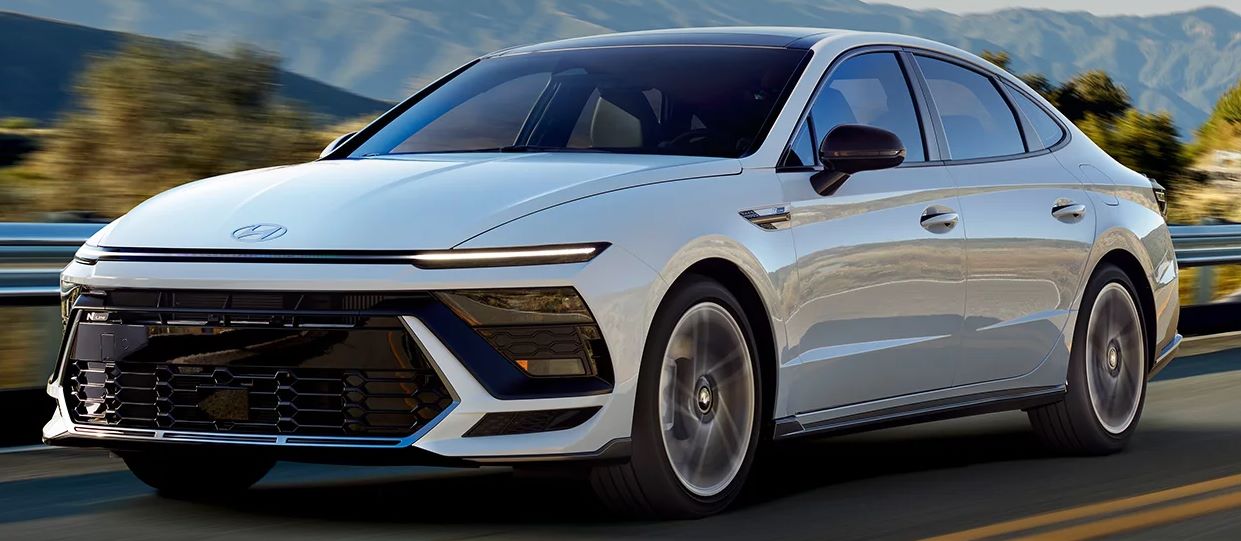
Truth be told, it could be said that, thanks to lighting technology and design trends, automotive styling has been moving in the direction where it looks like the headlights are hidden. Glance at a brand-new Hyundai Sonata and, other than daytime running lights, the sedan has a look that hides the headlights. However, the mechanical novelty is missing.
(Image courtesy of Bertone)
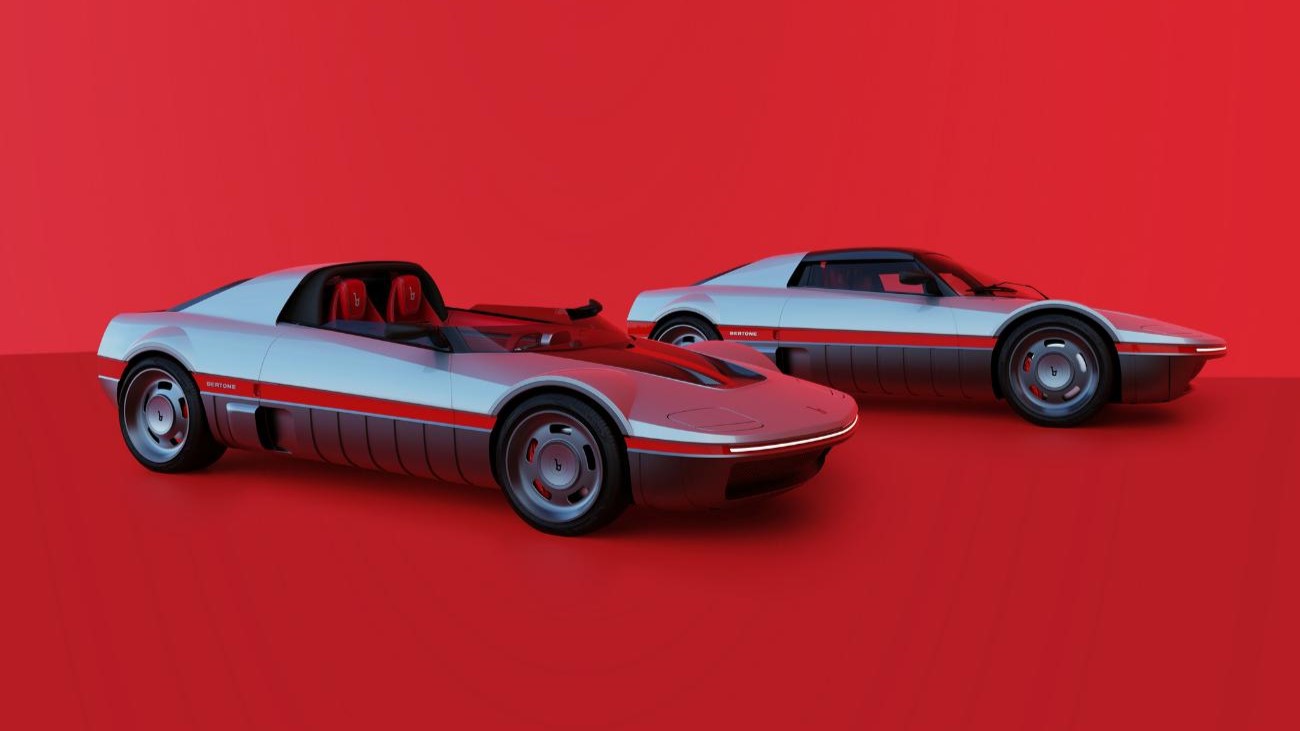
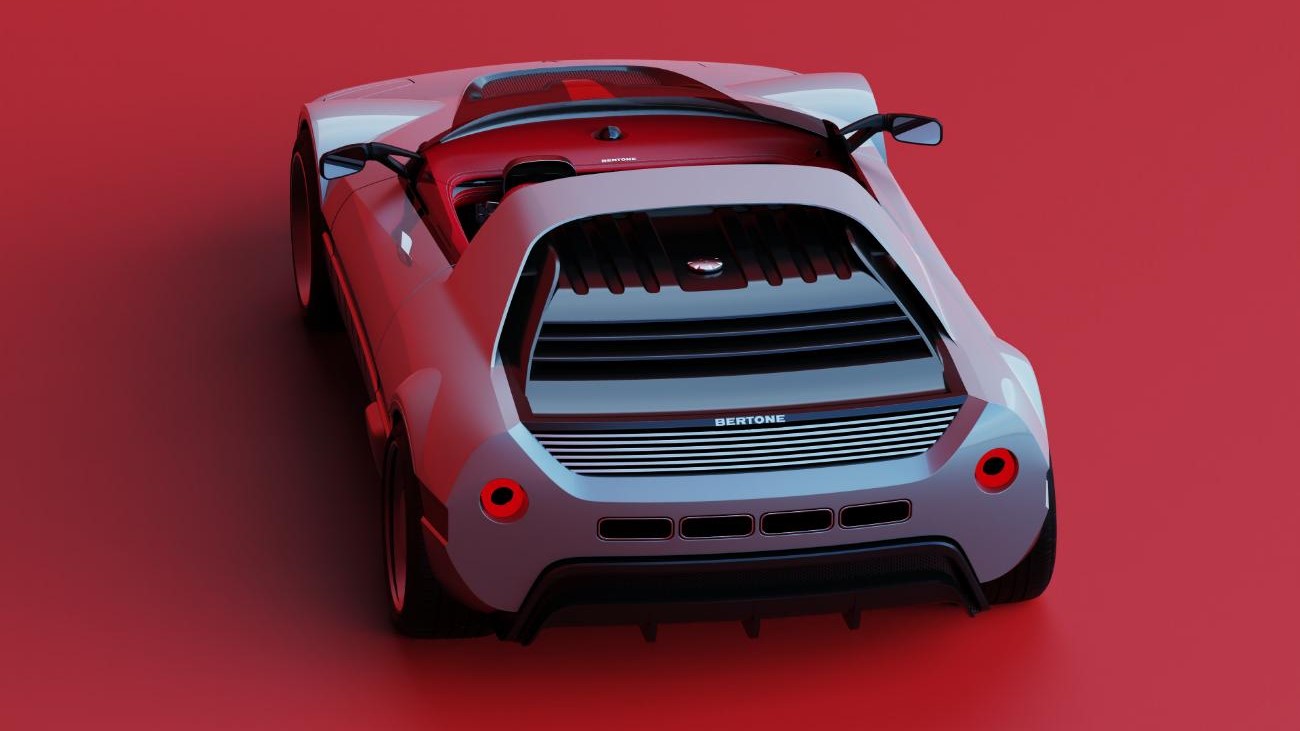
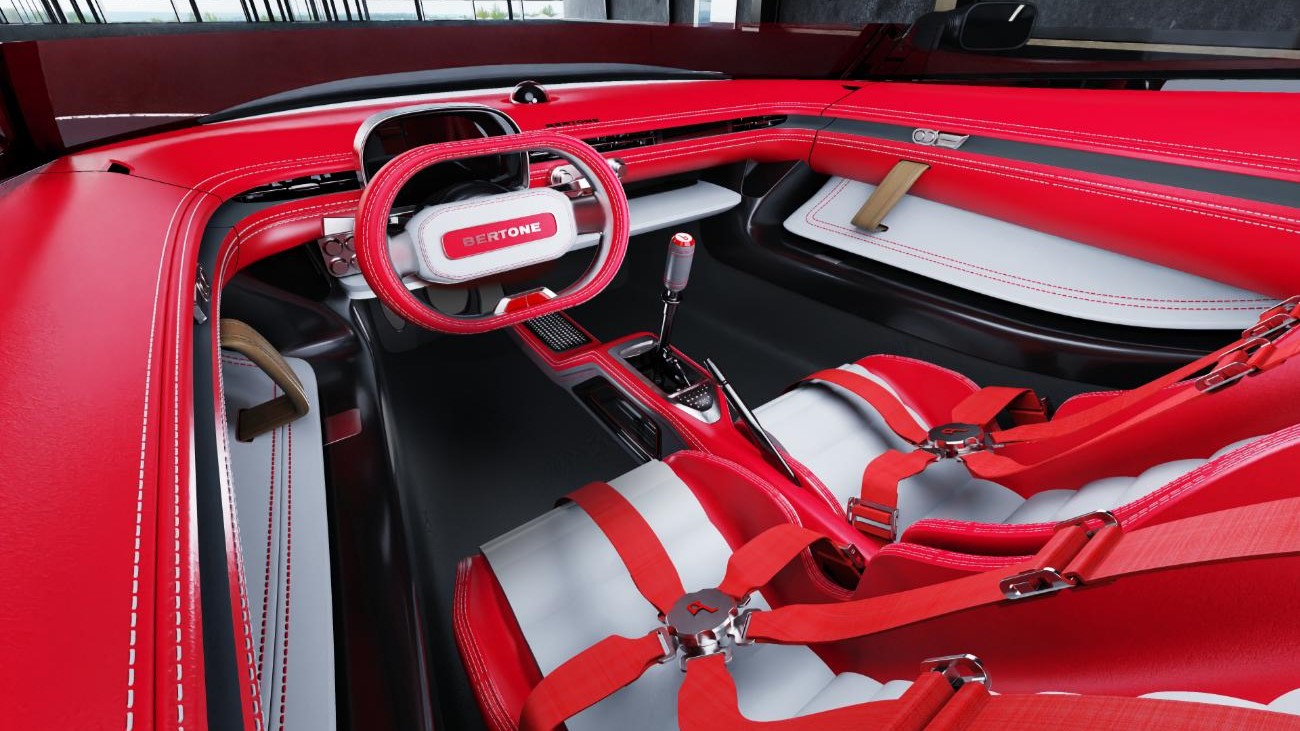
With the Bertone Runabout, not only is there no doubt the headlights are hidden, but they also pop up quite literally, each unit jutting straight from the nose to reveal a pair of headlights that would look at home on an Atari. According to Motor Trend, the Runabout features a mid-engine configuration with a V6 offering approximately 460 horsepower.
(Image courtesy of Bertone)
If this car seems familiar, it’s because Bertone designed a Runabout Concept in 1969, faithfully replicated by Matchbox and Corgi (and perhaps others).
(Image courtesy of Bertone)
Two body styles will be available: Barchetta and Targa. If you keep on forgetting what pasta fagioli is, then chances are you need us to explain that a barchetta is an open-air speedster. The Targa comes with a larger windshield and, of course, a removable hardtop. Three colors will be available: the copper-ish Rame Antico, Azzurro Mediterraneo blue, and Bianco Perla, a pearlescent ivory.
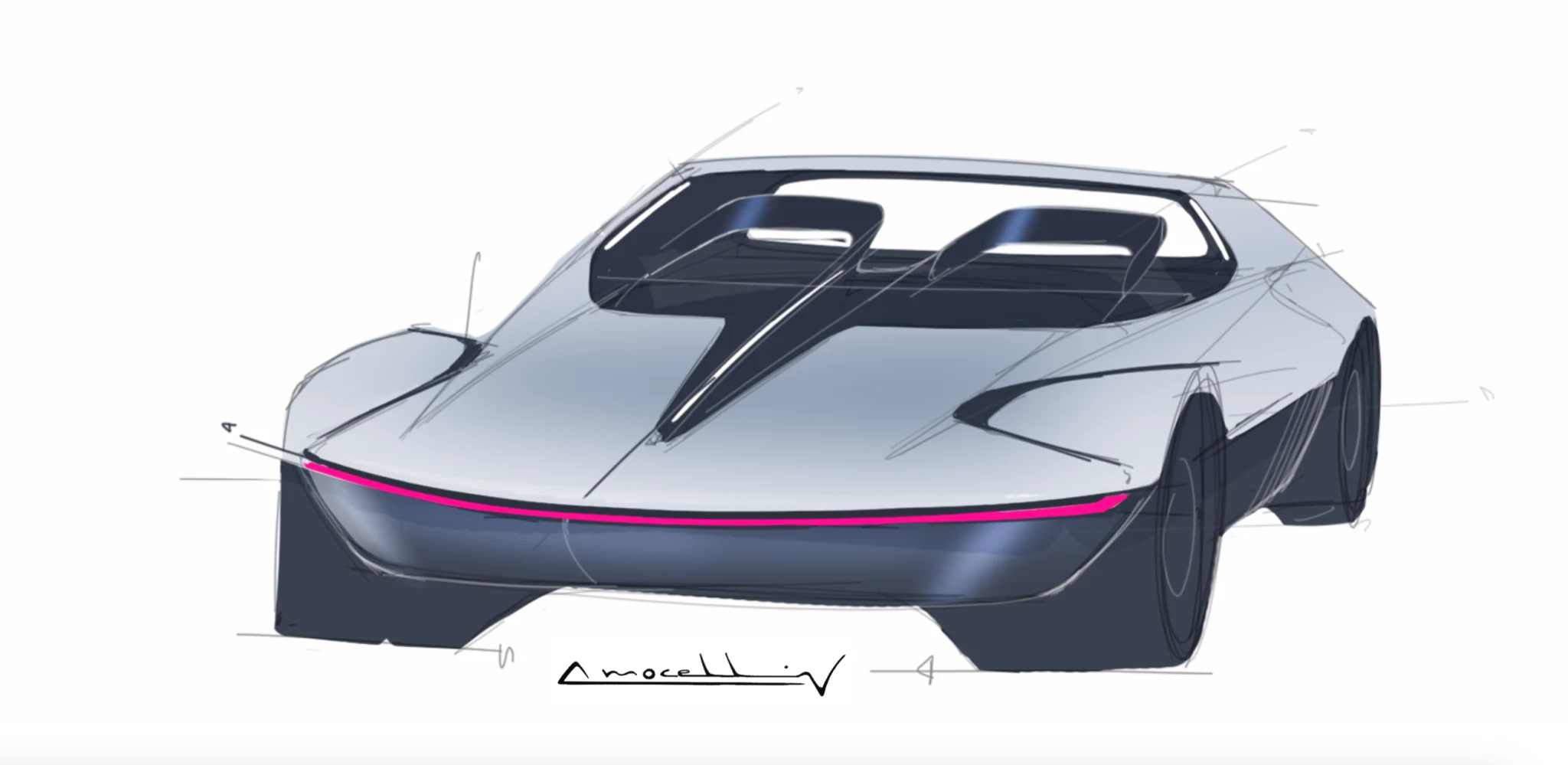
It all starts with a drawing. (Image courtesy of Bertone)
As the first in a series of the new Bertone Classic Collection, the Runabout will cost approximately $369,000, and only 25 will be produced. Pre-orders are being taken at this very moment, with delivery scheduled for a bit more than a year from now. If you’re well-heeled and moved, be sure to check your country’s safety standards for small-batch cars because it would be a bummer for you to ix-nay your order.