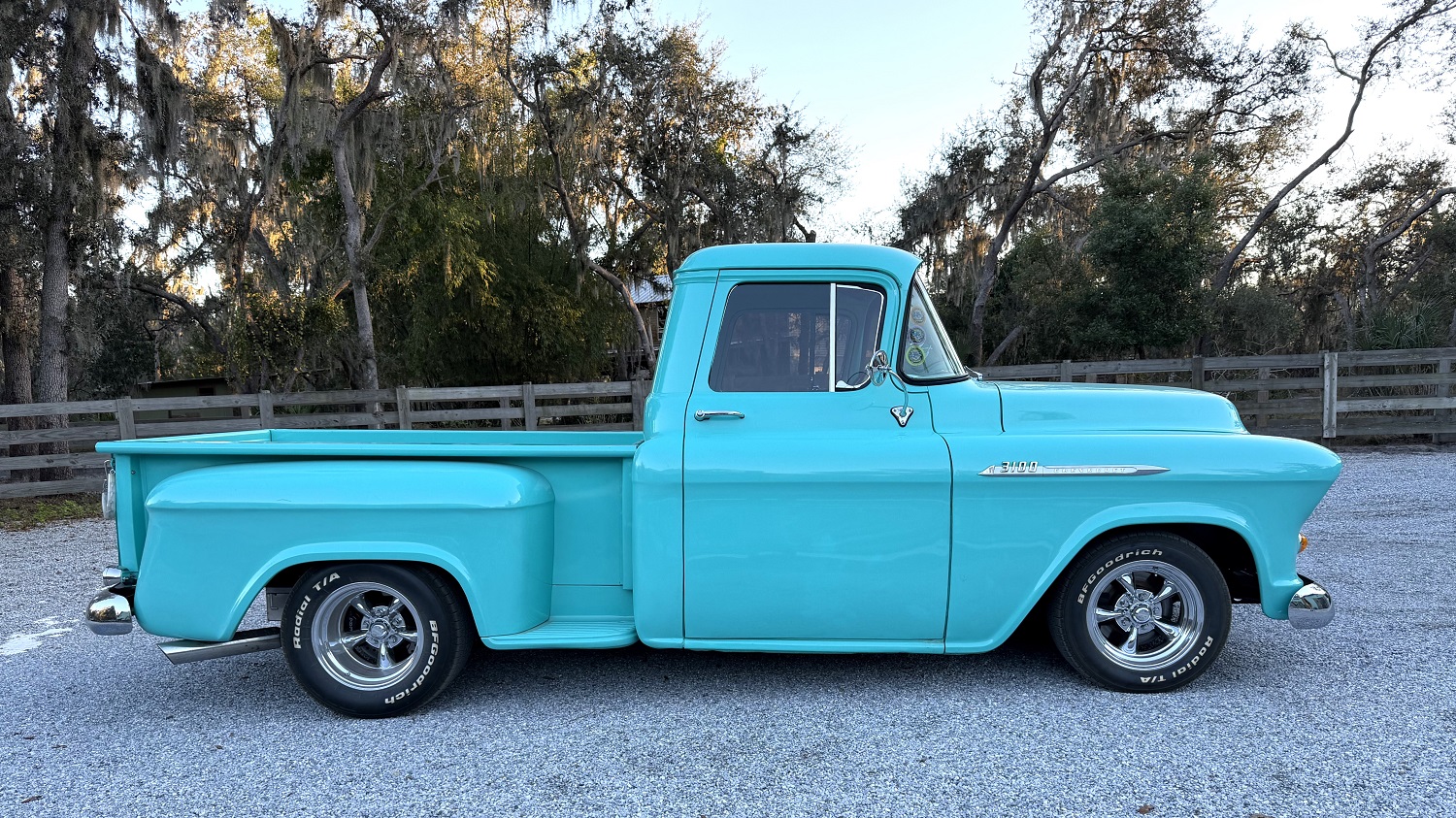
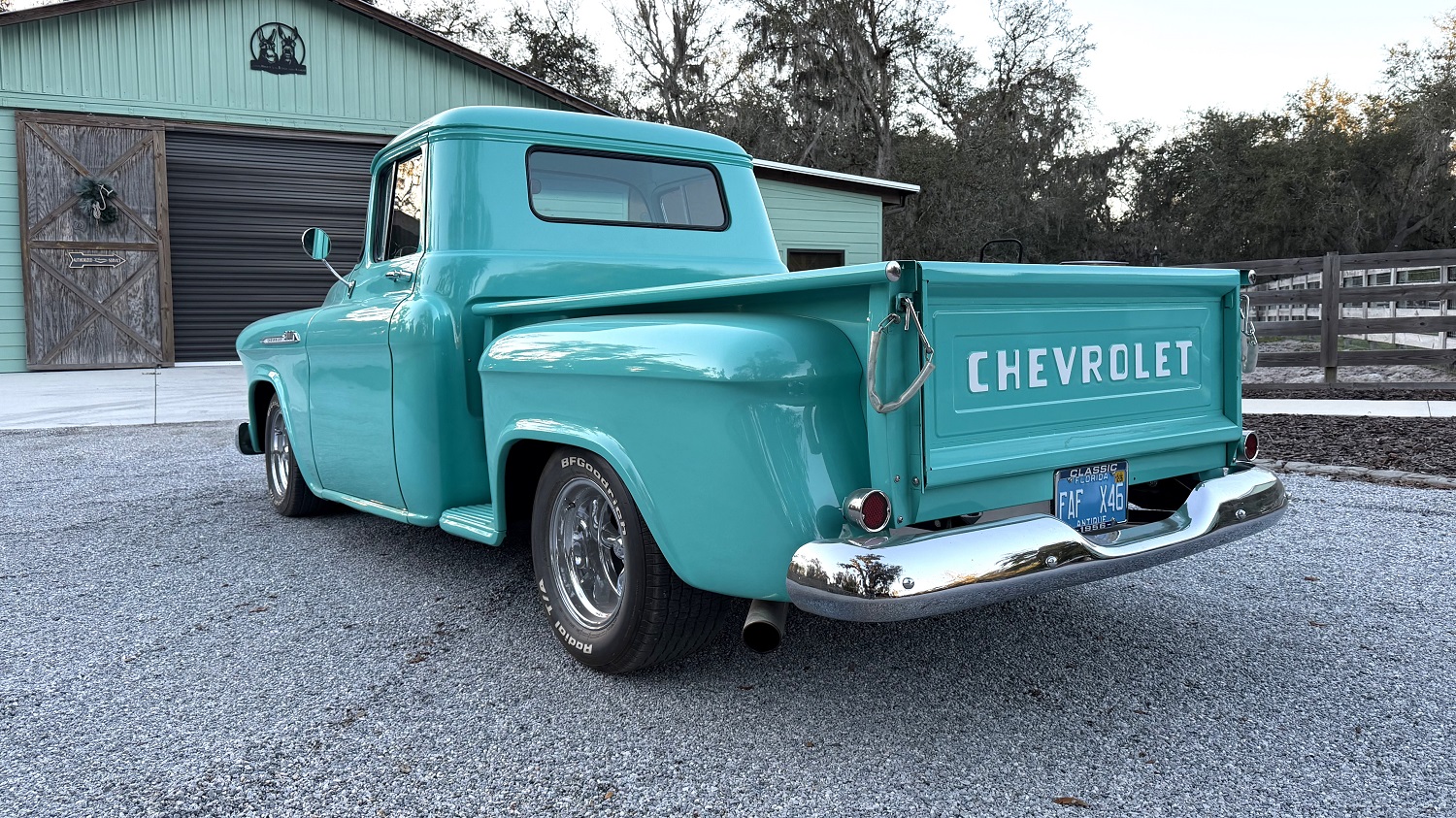
Right now on AutoHunter, you can find this 1956 Chevrolet 3100 custom pickup, which is powered by a 283ci V8 paired with a five-speed manual transmission. Highlights include air conditioning, rack-and-pinion steering, rear coilovers, and power disc brakes. Finished in aqua over an aqua and white vinyl interior, this Task-Force truck comes from the private seller in Florida with a clear title.
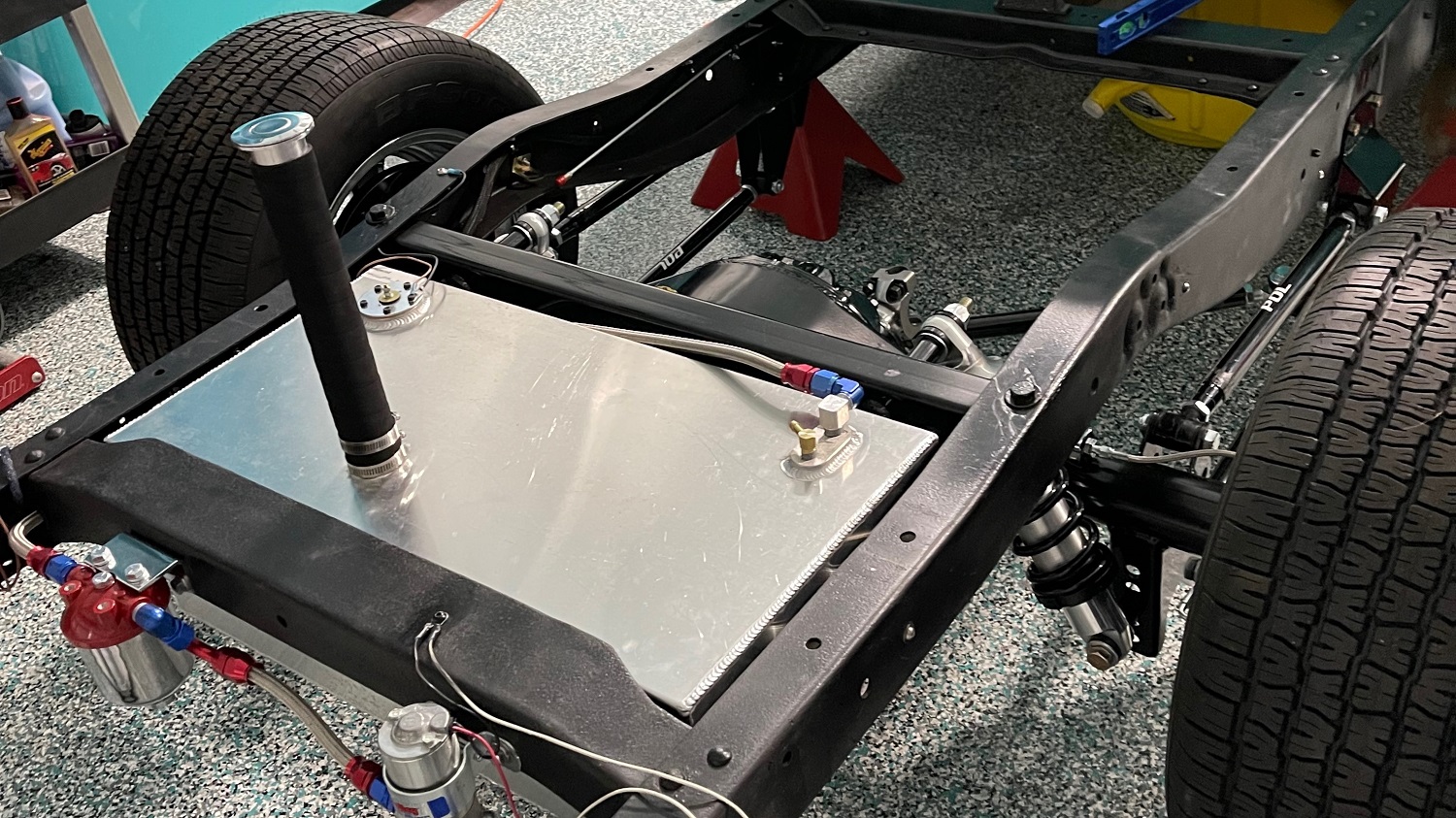
As part of a restoration, the color of the body was changed to the current aqua. That eye-catching color is accented with chrome bumpers, dual mirrors, and dual exhaust outlets. The floor of the bed is lined with wood planks and metal strips, and provides access to the cap for the relocated fuel tank.
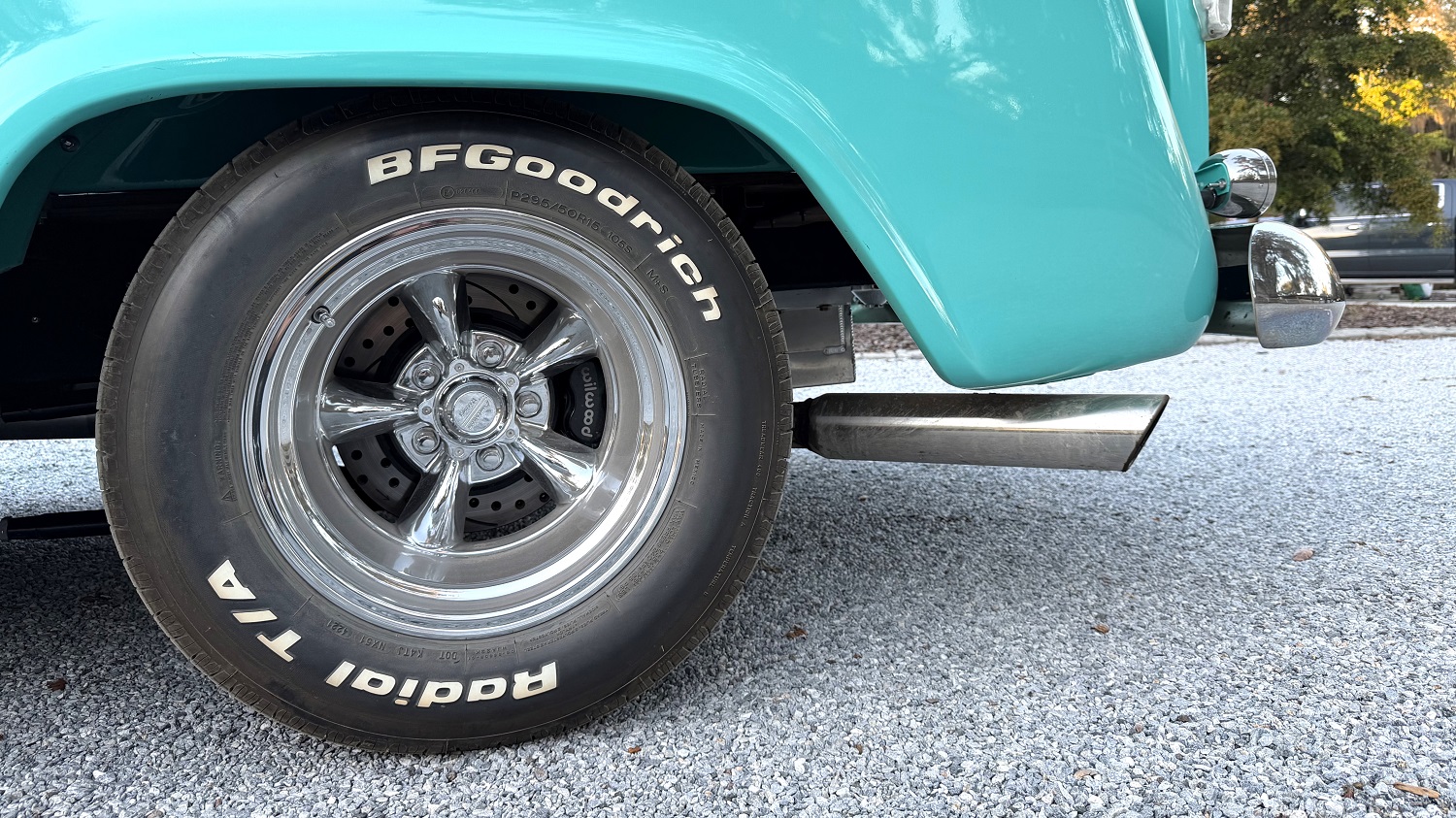
A set of 15-inch American Racing Torq Thrust wheels with 295/50 BFGoodrich Radial T/A raised-white-letter tires make it clear this truck was meant for fun on the streets, not work at a farm.
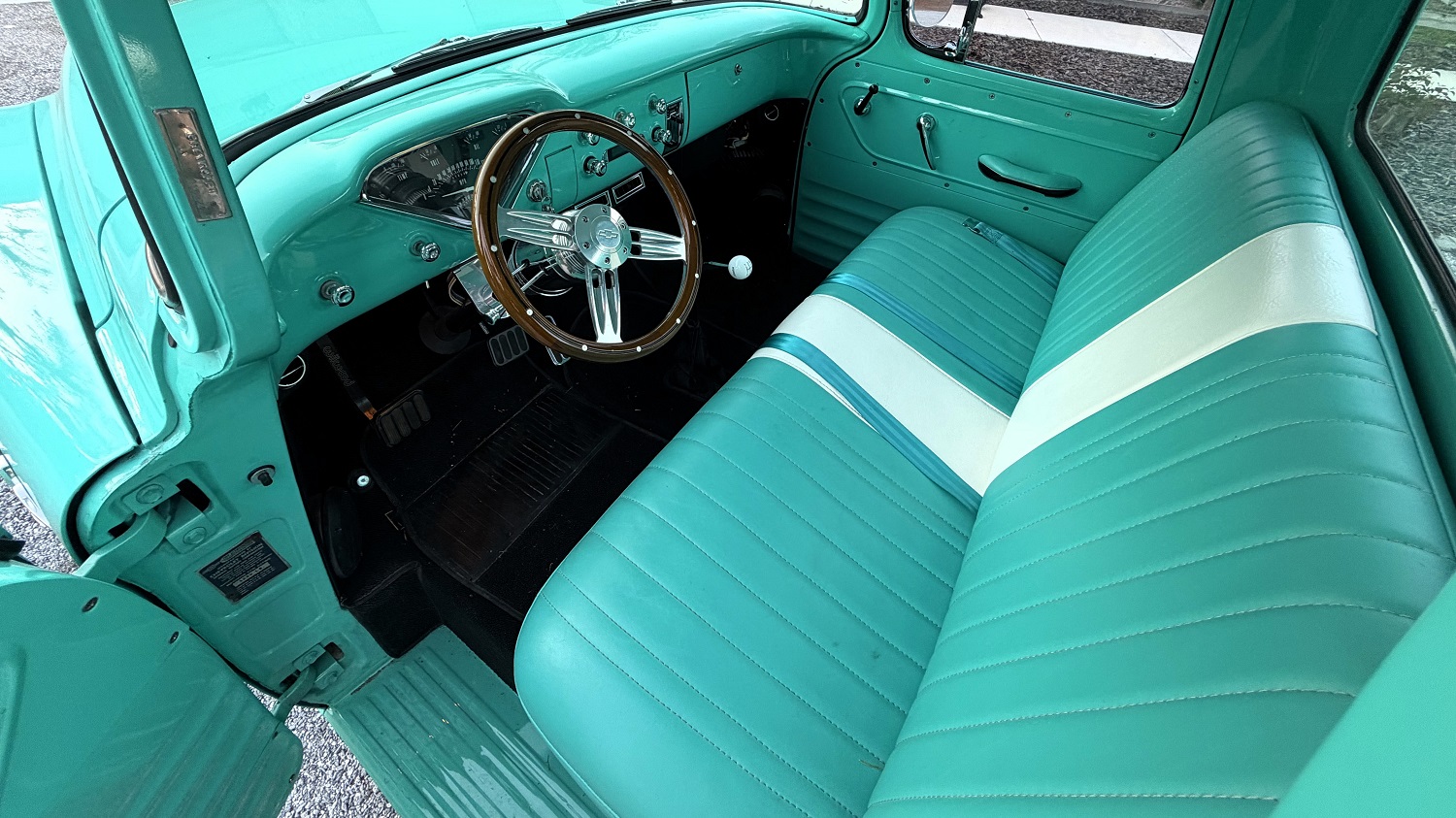
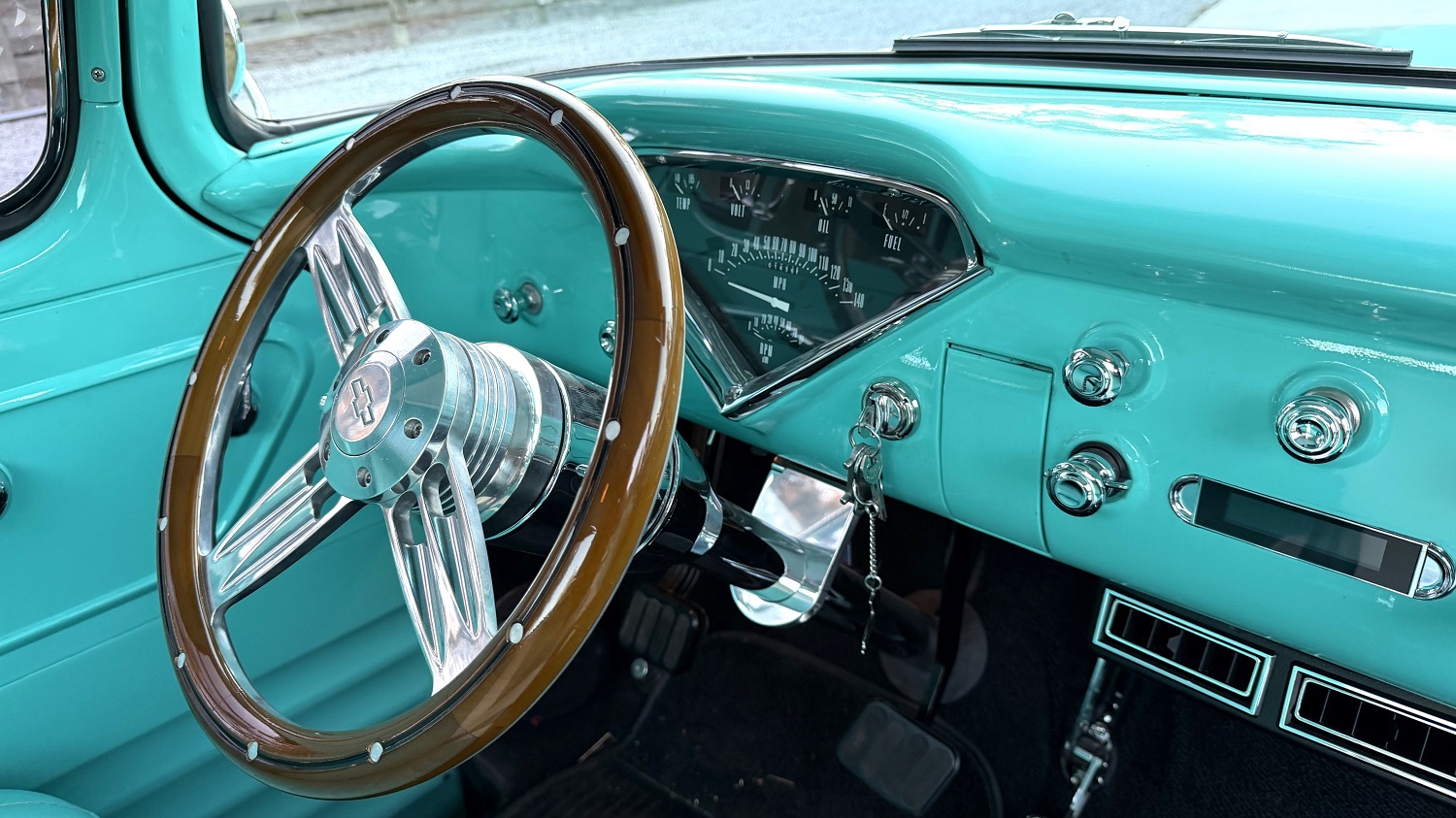
The aqua exterior finish flows into the cabin, where it covers the dash and door panels. Even the bench seat is covered in aqua vinyl, although there is a white accent stripe down the middle. Features include a tilt steering column connected to an aftermarket wood-rimmed steering wheel, billet control stalks, Vintage Air A/C and heat, aftermarket retro-look AM/FM stereo with Bluetooth, and floor-mounted Hurst manual shifter.
Inside the gauge cluster is an 8,000-rpm tachometer, 140-mph speedometer, and readouts for the temperature, voltage, oil pressure, and fuel level. The odometer shows 1,436 miles, but the title indicates this truck is mileage-exempt.
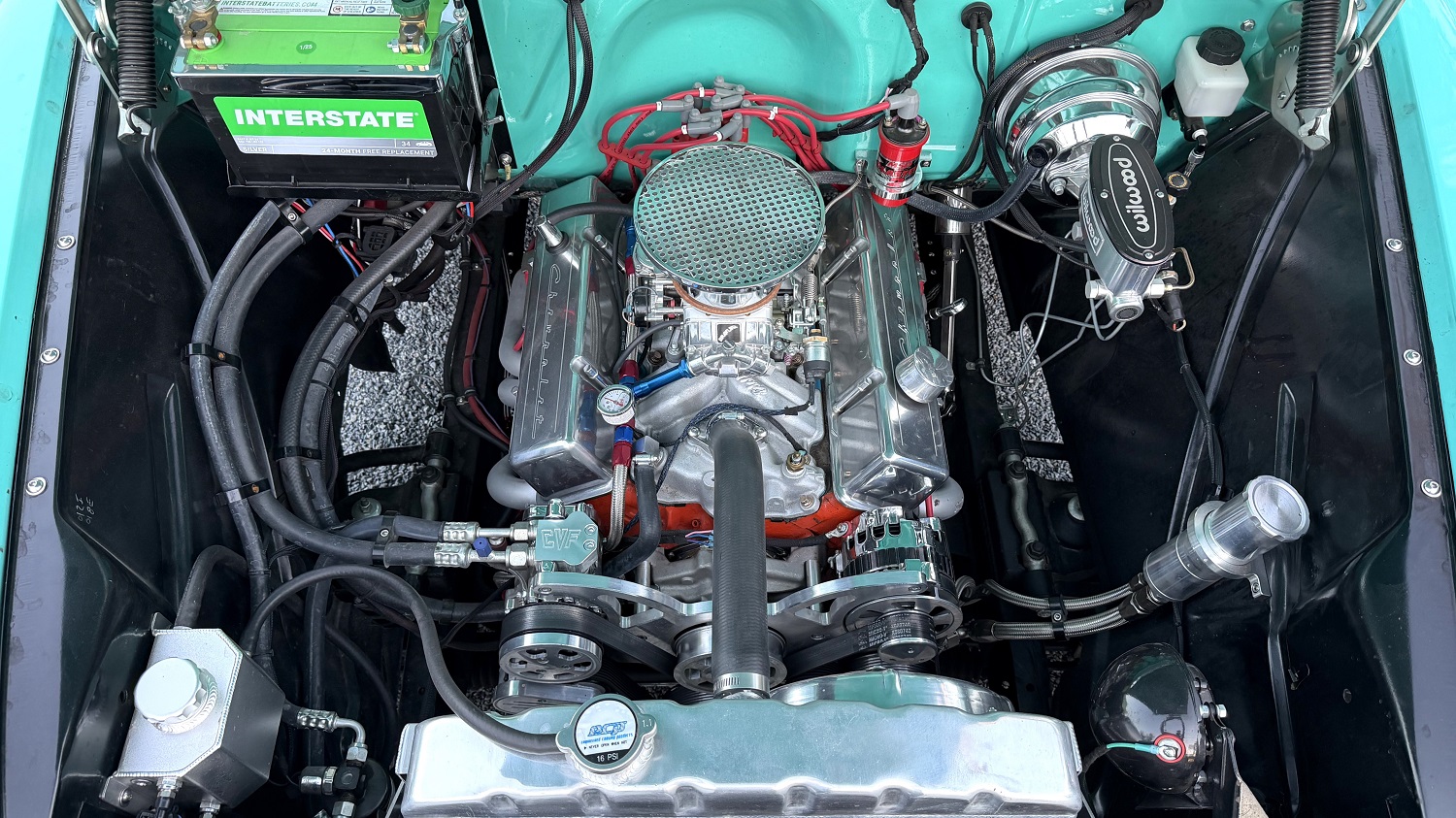
The original engine has been replaced with a 283ci V8 that comes equipped with a Holley Brawler four-barrel carburetor, aftermarket intake manifold, MSD ignition, and aluminum radiator with dual electric fans. A five-speed manual gearbox sends the engine’s power to 3.50 rear gears.
In addition to the under-bed fuel tank, there’s also rack-and-pinion steering, an upgraded suspension with rear coilovers, and power Wilwood disc brakes at all four corners.
To see more of this customized 1956 Chevrolet 3100 pickup, check out the video below. To make it yours, bid on it before the auction ends on Thursday, January 15, 2026, at 11:15 a.m. (MST).
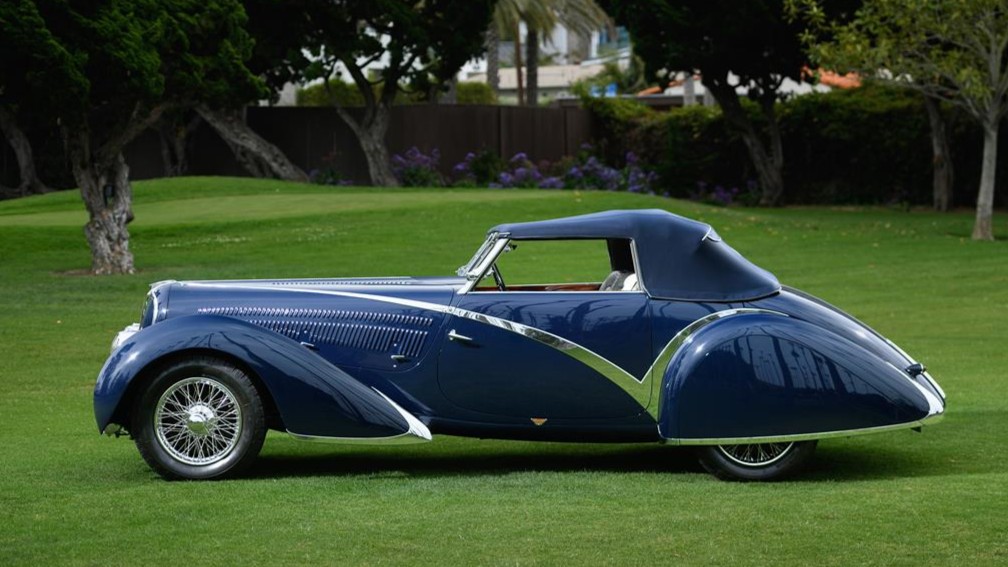
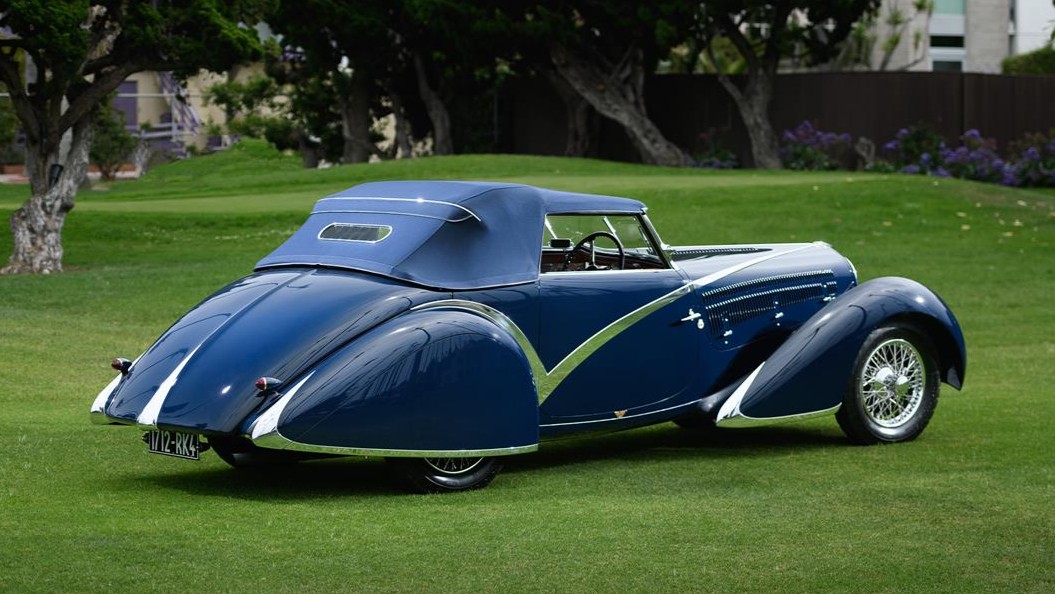
The Italians seem to have co-opted the title for “most desirable cars in the world,” but in a different era, that unofficial title could have gone to the French. At one time, Paris was the epicenter of culture for much of the world. Automobiles joined those ranks in the 1920s, with the following decade arguably being the greatest among all automobiles. One of the finest brands, paired with the finest of coachbuilders, is our Pick of the Day. This 1936 Delahaye 135 Competition Convertible by Figoni et Falaschi is listed on ClassicCars.com by a private seller in La Jolla, California.
Delahaye was founded by Emile Delahaye in 1894 in Tours before moving to Paris in 1898. As a producer of low-volume, high-quality luxury cars, trucks, and utility and commercial vehicles, Delahaye took the next logical step by establishing a racing department in 1932, garnering the company international recognition for fast and resilient cars due to setting many world records by the mid- to late-1930s. This was during the time when coachbuilders were developing a reputation separate from the automobiles they were designing.
The most esteemed coachbuilders also were French, though Figoni et Falaschi (like Bugatti) was founded by two Italian expats who moved to France in their youth. Designer Giuseppe Figoni formed his own company after World War I. In 1935, he was joined by business partner Ovidio Falaschi, who handled the business side. Pair their bespoke designs with Delahaye’s winning record of race-proven cars and you have a tour de force among prestigious cars of the 1930s.
One of Figoni’s personal friends was a wealthy gentleman by the name of Monsieur Wolff. While the two were dining together and discussing Figoni’s new streamlined concepts, Wolff decided he wanted to commission a car that would wow the cognoscenti at concours events and be capable of the performance demanded by racing teams. The first of these was “Design 532,” a 1936 Delahaye 135 Competition Coupe with enclosed fenders and a sliding metal roof.
The second, “Design 581,” is the subject of our Pick of the Day: a Bleu Foncé 1936 Delahaye 135 Competition Convertible. A longer wheelbase was chosen to give Figoni more reign to express his vision, which included a flowing, streamlined design with chrome accents and components. Perhaps most unique was the patented top mechanism that allows the roof to neatly fold into the space between the passenger compartment and the trunk, creating a cleaner look than what was prevalent at the time.
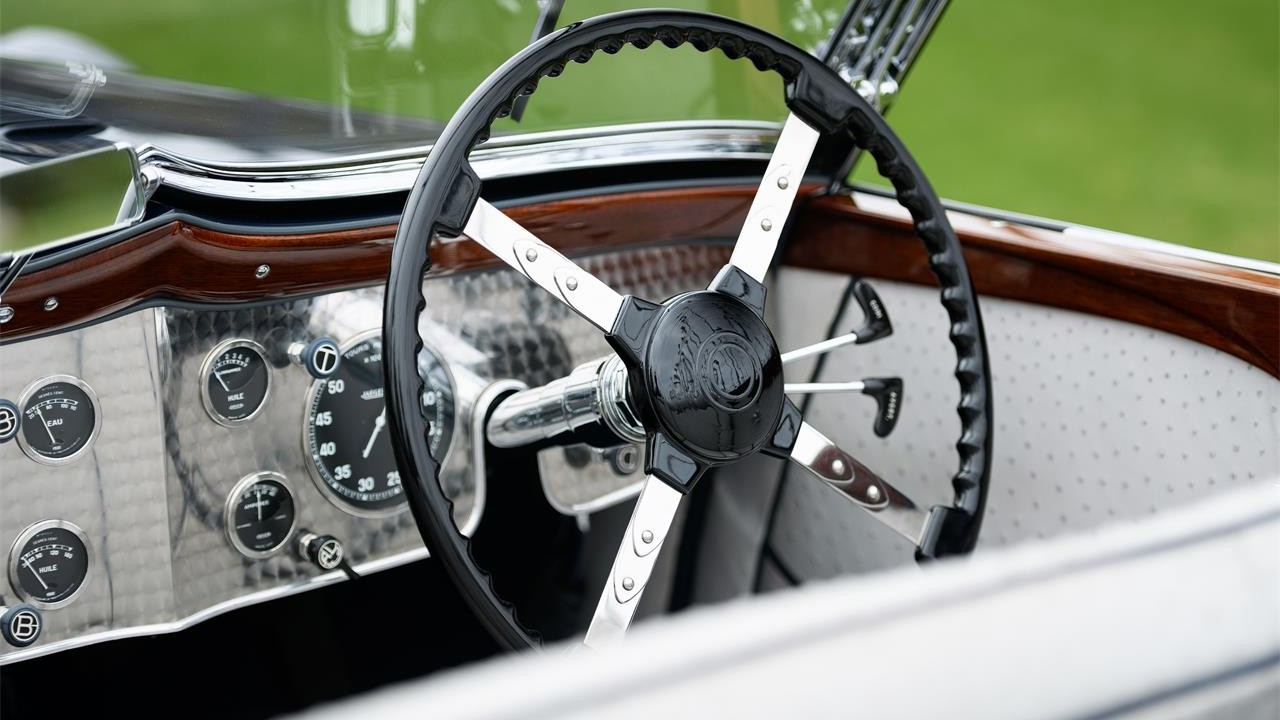
Of course, an automobile of this caliber has an artisan’s bent on the inside as well. Upholstery is light gray quill ostrich with dark blue piping and carpet, with a perimeter of wood trim accenting the cabin. The instrument panel features a guilloché (engine-turned) fascia with Jaeger gauges. The four-spoke steering wheel cleverly uses leaf springs. A pair of ostrich jump seats rest folded behind the front compartment, along with a shelf for three pieces of elegant luggage that inversely match the interior colors: dark blue quill ostrich piped with light gray quill ostrich.
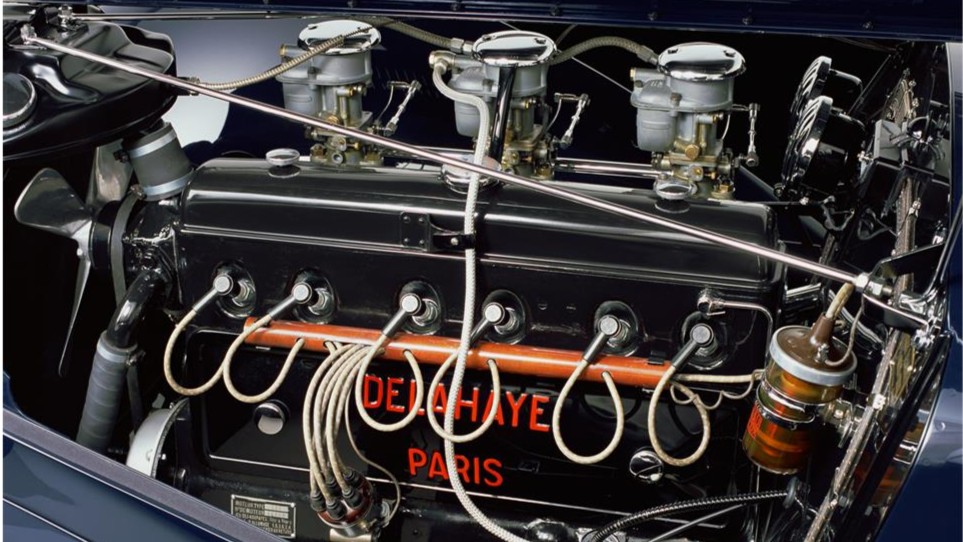
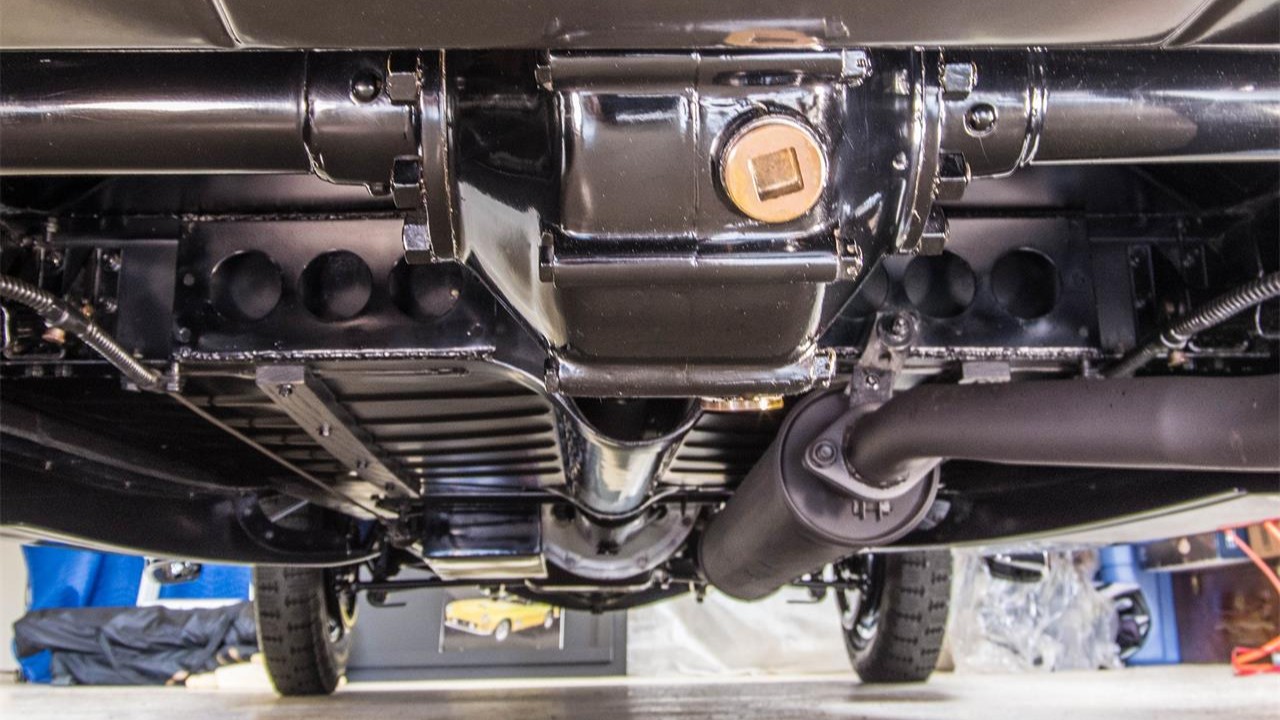
The 3,557cc overhead-valve inline-six engine offered a substantial (for its time) 120 horsepower, equal to a contemporary Buick Century straight-eight. It is paired with a competition-tested four-speed manual transmission with synchromesh on the top three gears. Fuel delivery is handled by a trio of Solex 40PAI carburetors, a higher-compression cylinder head, oil cooler, and two fuel fillers in the trunk. Underneath the 116-inch wheelbase, you’ll find an independent suspension using transverse leaf springs as the lower control arm. A set of 17-inch Rudge-Whitworth chromed wire wheels are wrapped in 5.60 x 6.00 Michelin tires.
In modern times, this Delahaye has continued the tradition of visiting concours events, this time around North America. It has garnered approximately 30 Best of Show awards plus a host of other prizes (Best Prewar, Best Paint, Best Interior, Most Elegant, Best of the Best, etc.). At Classic Car Club of America (CCCA) Grand Classics competitions, this vehicle proudly wears the Senior Premier badge, the highest CCCA recognition badge available, thanks to never having been judged less than a perfect 100 points. The body is the original from Figoni, as authenticated in writing by Club Delahaye France, along with the competition drivetrain that includes the four-speed manual transmission.
This Delahaye is also very complete thanks to copies of the original build sheet and owner’s manual in English, a comprehensive matching leather tool kit, the correct French jack, a three-inch-thick history/authentication book, a copy of the original French registrations, and a photo of the car being raced by a famous French racing team at Rallye de Monte Carlo in 1949. In all, it is one of the most complete and well documented classic cars extant. If this sounds like one of the most important vehicles listed on ClassicCars.com to you, you are not wrong, so move mountains so you can be the first in line to Venmo $15 million from your account.
Automakers occasionally misjudge or overestimate market demand, leading to ambitious vehicles with few actual buyers. These ‘missed market’ launches remain fascinating in automotive history, highlighting the challenges of aligning innovation with consumer interest. For instance, the Chrysler Pacifica, introduced as a luxury crossover, failed to meet sales expectations due to stiff competition and its high price point. (en.wikipedia.org) Similarly, the Cadillac Cimarron, a compact car bearing the Cadillac badge, was criticized for its lack of luxury features and poor performance, leading to its discontinuation. (en.wikipedia.org)
The automotive industry has long been characterized by well-defined market segments, each catering to specific consumer needs and preferences. From compact hatchbacks to full-size SUVs, these categories have guided both manufacturers and buyers in their choices. However, throughout automotive history, certain vehicles have emerged that defy these conventional classifications. Manufacturers occasionally produce cars so unconventional that they don’t fit neatly into any existing market segment, challenging traditional norms and expectations. These unique models often blend characteristics from multiple categories, creating a distinct niche of their own. In this article, we explore 14 such vehicles that have left an indelible mark on the automotive landscape by refusing to be pigeonholed.
In the ever-evolving automotive landscape, certain vehicles fade from production and public consciousness without much fanfare. Design refreshes, market shifts, and quiet discontinuations often occur beneath the radar, causing even popular models to seamlessly disappear from roads and showrooms. This phenomenon underscores the industry’s rapid adaptation to consumer preferences and technological advancements. In this article, we explore ten such vehicles that were quietly replaced, leaving enthusiasts and consumers alike to wonder where they went.
Throughout automotive history, manufacturers have ventured beyond conventional designs, introducing vehicles that challenge traditional norms and explore uncharted territories. These groundbreaking concepts often serve as experimental platforms, testing new technologies, materials, and design philosophies. While many of these innovations never transition into mass production, they provide valuable insights into the future of transportation. In this article, we delve into 12 such vehicles that, at their core, felt more like experiments than market-ready products.
Throughout automotive history, manufacturers have often channeled their creativity and resources into fulfilling a singular vision or purpose. This approach has led to the creation of iconic vehicles that embody bold, specific concepts—whether it’s maximizing speed, achieving unparalleled efficiency, or solving a unique problem. These cars stand as testaments to the ingenuity and daring spirit of their creators, each designed with a singular focus on four wheels.
Throughout automotive history, certain vehicles have transcended their initial market reception, evolving into cultural icons and collector’s treasures long after their production ceased. This phenomenon often arises from a combination of factors, including nostalgia, rarity, and shifting cultural values. As time passes, these cars are re-evaluated, with enthusiasts and collectors recognizing their unique qualities and historical significance. The allure of these models is further amplified by their scarcity, as limited production numbers and discontinued status contribute to their desirability. This retrospective appreciation highlights how perceptions can change, transforming once-overlooked vehicles into celebrated classics that embody a rich automotive heritage.
Throughout automotive history, certain vehicles were initially conceived as temporary solutions to meet immediate market demands or to bridge production gaps. However, these models often exceeded expectations, resonating with consumers and becoming enduring fixtures in the automotive landscape. Their unexpected success transformed them from short-term fixes into long-term icons. This phenomenon underscores the unpredictable nature of the automotive industry, where even the most transient designs can leave a lasting impact.
The automotive world has witnessed some truly unconventional vehicles that challenged traditional design principles. These “backward” designs, often defying logic and expectations, have showcased the ingenuity and creativity of engineers and designers. From vehicles with reversed controls to those with unconventional layouts, these innovations have sometimes led to unexpectedly successful, if peculiar, machines that challenged automotive norms. In this article, we explore 12 such vehicles that, against all odds, worked and left a lasting impact on automotive history.