Although Plymouth has disappeared from the list of Detroit’s brands, the brand is still highly respected by collectors. Established as an economy manufacturer offering cheap and dependable mechanics, the company flourished in the 1950s and 1960s with a lineup of exciting yet affordable muscle cars. Today, we will remember this once-famous car company by looking at its best models. 

1. Plymouth Fury (1958)

Photo Credit: W Super Cars

Before the Fury was a separate model, it was an option on Belvedere, and for 1958, this model benefited from Chrysler’s new Golden Commando engine. The mighty Hemi was gone, but Chrysler didn’t abandon the performance market. The Golden Commando had 350 CID displacement, hotter equipment, and 305 HP.

Photo Credit: W Super Cars

Plymouth even experimented with a fuel injection setup, but the system proved very problematic, so the factory compensated the owners and gave them a conventional four-barrel setup. If the fuel injection worked as it should, it should produce up to 315 HP.

2. Plymouth Savoy Super Stock 413 (1962)

009 1962 Plymouth Fury Max Wedge 413 Left Rear.jpg Copy
Photo Credit: HR

Mechanically almost identical to the Dodge Dart 413 Max Wedge, the Savoy Super Stock was Plymouth’s version of a drag strip unique. It featured a different design, but the platform was the same, and the engine, the mighty 413 Wedge, had 420 hp in top trim. 

This Original Specced 1962 Plymouth Savoy Is The First Manual Super Stock Max Wedge 206556 1
Photo Credit: HR

The interesting fact was that the automatic transmission, the favorite option, was even better for launching off the line than the standard 3-speed manual. In those early days, Chrysler didn’t offer a four-speed manual, and the automatic was a better choice. The Savoy Super Stock 413 was the first car to break the 12-second quarter-mile time record for stock cars.

3. Plymouth Barracuda (1964)

1964 Plymouth Barracuda Muscle Car Rewind Plymouth Barracuda Rear Left Side View Promo.jpg Copy
Photo Credit: Plymouth

Introduced in April 1964, just two weeks before the Mustang, the Barracuda was the first Pony car ever made. It was based on the standard Valiant platform, and since the automotive world was anticipating the Mustang due to reports from Ford, Chrysler decided to introduce a car in the same segment. 

Plymouth Barracuda (1964)
Photo Credit: Hot Rod

The Barracuda had modest underpinnings, with three engines available: two straight sixes and one V8, so designers had to develop an exciting design to attract buyers. The 1964 Barracuda had a big panoramic rear glass and a sleek fastback body line, which was pretty advanced for the period. 

4. Plymouth GTX (1967 to 1971)

1967 Plymouth Belvedere Gtx Front End
Photo Credit: Hot Rod

Introduced in 1967 as a luxury option in the Belvedere lineup, this model was based on the same platform as the Coronet. Still, it was much more luxurious and had a 375 horsepower 440 V8 as standard. Plymouth wanted the GTX to compete with luxury cars of the period, so it installed almost all possible creature comforts and some unique trim on the outside to distinguish the GTX from the rest of the model lineup. 

Ultra Rare Restored 1971 Plymouth Hemi Gtx Sold For 253k At Mecum
Photo Credit: Mecum

The GTX was a gentleman’s hot rod with all the options, lovely interior and exterior details, and only one optional engine choice—the mighty 426 Hemi. The 440 Magnum was the standard engine, but if you wanted the ultimate Plymouth muscle luxury, you had to go for the Hemi. Because it was significantly more expensive than the rest of the Mopar muscle car lineup, the GTX was never that popular, and it is pretty rare today. 

5. Plymouth Roadrunner (1968 to 1974)

1968 Plymouth Road Runner 426 Hemi Coupe 001 1080 1024x576
Photo Credit: Mecum

When it first appeared in 1968, the Plymouth Roadrunner proved to be a very influential and essential muscle car. Not only did it introduce the new trend of inexpensive and fun vehicles, but it was also a strong seller, which affected the whole segment. The entire idea behind the Roadrunner was simple. Present a low-priced but powerful model and attract people with a limited budget but a strong need for performance. 

Plymouth Road Runner 426 Hemi Hardtop Coupe 4
Photo Credit: Mecum

The Roadrunner had a bench seat, no luxury options, and manual steering, but it came with the powerful 383 V8 as the base engine, and buyers could also opt for the 440 or the mythical Hemi 426. In 1969, the Roadrunner got a convertible option for those buyers who wanted an open-air driving feel, but most Roadrunners produced were two-door hard tops. For just above $3,000, you could be the proud owner of a Roadrunner in 1970. However, if you wanted a few options and the Hemi engine, the price would quickly rise to over $4,000.

6. Plymouth Superbird (1970)

1970 Plymouth Superbird
Photo Credit: Hot Rod

As one of the craziest muscle cars ever produced, Plymouth has one of the most recognizable graphics packages ever presented to the general public. The Superbird attempted to win the famous Aero Wars in the late ’60s to early ’70s NASCAR championship. Plymouth built just under 2000 road-going Superbirds to homologate the car for racing and sold them all over America.

Photo Credit: Super Cars

The car was based on the Roadrunner, and it came with a 440 V8 as standard and a 426 Hemi as the only engine option. However, Plymouth installed a nose cone, hideaway headlights, and an enormous spoiler on the back to make it as aerodynamically efficient as possible. Also, it transformed the rear glass from the standard concave-shaped one to a regular one, which proved more slippery in wind tunnel testing. 

7. Plymouth AAR Cuda (1970)

Photo Credit: Classic Auto Mall

The 1970 model year was undeniably the pinnacle year for classic muscle cars. Never before or since have there been so many muscle cars and memorable and sought-after machines on offer. The Pony car wars were in full swing with the brand new Firebird and Camaro, the Dodge Challenger, and the latest and much improved Plymouth Barracuda. One of the most interesting 1970 Barracudas was the rare AAR ‘Cuda.

Greenaarcuda
Photo Credit: Mecum

The AAR Cuda was a limited production model to commemorate Dan Gurney’s All-American Racing team, which used ‘Cudas in the Trans Am championship. It came with a 340 V8 small block, a unique plastic hood in matte black paint with a hood scoop, a rear spoiler, and exciting side graphics, which included a big AAR logo. This version was more expensive than the regular 340 ‘Cuda, so only 2724 were made. 

8. Plymouth Barracuda Hemi (1970/71)

Plymouth Hemi Cuda Convertible Takes 35 Million At Auction Video Photo Gallery 3
Photo Credit: Edmunds

Two of the biggest Chrysler legends from the classic days of muscle car culture are the Barracuda and the 426 Hemi engine. Throughout the ’60s, those industry icons didn’t mix, at least not in street-legal cars. In 1970, Plymouth offered this legendary engine in the Barracuda body style, immediately creating one of the fastest and most desirable muscle cars ever made. 

Plymouth Hemi Cuda 4
Photo Credit: Autowp

The mighty Hemi engine was an expensive top-of-the-line option for 1970 and 1971, available in coupe or convertible form. It cost around $900 more than the standard Barracuda, and it was installed in just about 600 coupes and only 17 convertibles during a two-year production period. The power was rated at 425 hp, but everybody knew the orange monster delivered more than 500 hp straight from the box. 

9. Plymouth Duster 340 (1970)

04 Alt 1970 Plymouth Duster Front Three Quarter
Photo Credit: Mecum

As an economy brand, Plymouth was very active and successful at the lower end of the market since the early ’60s and the Valiant model. By the late ’60s and early ’70s, the compact market had grown, and Plymouth introduced the Duster 340. This model was a junior muscle car since it looked like bigger competitors, but it had a more petite 340 hp engine rated at 275 hp. 

002 1971 Plymouth Duster Right Rear 1
Photo Credit: HR

Plymouth never anticipated the success that Duster 340 had achieved, and production doubled in just a few months. Despite being a compact model, the 340 was a very good muscle car since 275 hp moved the light body to respectable 0 to 60 mph times in just over 6 seconds. The vehicle may have been half the size of some of the heavy hitters of the era, but it was almost as fast. Also, it costs just under $3000, which is highly affordable. 

10. Plymouth Prowler (1997)

Plymouth Prowler With 134 Miles And Matching Trailer Hits The Auction Block 2
Photo Credit: Hot Rod

The Hot Rod culture is one of the critical ingredients of the American automotive landscape. However, no company dared present a factory-built Hot Rod until 1997, when Plymouth presented the Prowler—a retro-futuristic roadster with a V6 engine and fantastic looks. 

Photo Credit: Motor 1

Imagined as the follow-up to the Viper, the Prowler was a hit on the show circuit, and Chrysler wanted to capitalize on that. Despite its initial success, the car proved to have slow sales.

Source

This custom ’33 Ford is a fiberglass-bodied roadster built on a custom frame by Foley Bros. Custom Works in California in the early 2000s at a cost estimated around $180k. The car rides on a Kugel Komponents independent front end and a Jaguar-style independent rear end with adjustable coilovers, disc brakes, and alloy wheels. Power comes from a 5.7-liter LS1 linked to a six-speed T56 manual transmission and a Dana 44 third member with 5.30 gears, and the car has a custom intake, custom-fabricated headers and frame-hugging pipes, an under-car oil cooler, and a “Fan Man” aluminum radiator and fan. The custom interior and removable top were done by Sid Chavers, and the hood, side panels, and rear filler panel were hand-formed by Jack Hagemann. Acquired by the seller in 2021, this ’33 roadster is now offered with service records, spare parts, a car cover, and a clean California title in the seller’s name listing the car as a 1933 Ford.

The car rides on a custom frame with independent front and rear suspension. The Mustang II-style front end is from Kugel Komponents, and a Jaguar-style independent rear end with adjustable coilovers is used out back. Disc brakes are mounted at each corner, and the car has rack-and-pinion steering.

=

The fiberglass body is from Gibbons with raised rear wheel wells. The floor was raised and strengthened by Kenny March according to the seller, who tells us the hood, side panels, and rear filler panel were hand-formed by Jack Hagemann. The windshield was made by Leonard Lopez of Dominator Street Rods and has a curved aluminum frame with a polycarbonate window.

The top is from Sid Chavers and has custom-fabricated chrome bows. The top and bows are removable and can be stowed in the trunk.

Stripes accenting the front end run behind the custom-fabricated headers, which are linked to fabricated piping that follows the body lines. The front wheels are Gasser-style alloys, while Halibrand alloys are mounted out back. The seller states the tires were mounted in 2021.

The interior was also done by Sid Chavers and features heated bucket seats with integrated cup holders and Willians harnesses. An under-dashboard heater is fitted along with a Hurst shifter.

Auto Meter gauges are set in an engine-turned panel. The seller has added ~1,300 of the 15k miles indicated.

The seller states the engine is an 5.7-liter LS1 V8, and it wears Z06-logo beauty covers. Power is sent to the rear wheels through a T56 six-speed manual. Recent service included replacing the slave cylinder and pinion seal, servicing the rear end, and changing the oil.

The third member is a Dana 44 with 5.30 gears according to the seller. An Earls inline oil cooler, a 20-gallon fuel tank, a power brake booster, and a “Fan Man” radiator and cooling fan were also utilized.

Records are included with the car along with sketches.

The car is titled as a 1933 Ford using VIN 18F0472.

This 1938 Packard Super Eight 2/4-passenger coupe was built into a street rod under prior ownership. Power comes from a 460ci Ford V8 linked to a C6 automatic transmission and a Ford 9” rear end, and the car rides on an independent front suspension with power steering, four-wheel disc brakes, and Billet Specialties 15” wheels. Maroon paint is accented with gold pinstriping, and the interior was customized with beige leather upholstery, burl woodgrain trim, brass hardware, a power-adjustable driver’s seat, a Pioneer head unit, a banjo-style steering wheel, and Classic Instruments gauges. The Vintage Air climate control system was overhauled following the current owner’s acquisition around 2010, and the engine was recently rebuilt with an ISKY camshaft, hydraulic lifters, and valve springs. This custom Packard is now offered by the seller on behalf of the owner with recent service records and a clean California title in the name of the owner’s business.

The steel body was refinished in maroon with gold pinstriping, and custom bumperettes follow the contours of the front and rear valances. Exterior details include a “Goddess of Speed” hood ornament, a black roof covering, mesh hood vents, fender-mounted spare tires, teardrop side mirrors, running boards, and oval exhaust tips. Cracked paint and blemishes around the car are shown up close in the image gallery below.

Billet Specialties 15” wheels are mounted with 235/75 BFGoodrich tires up front and 245/75 Uniroyal units out back. A Mustang II-style independent front suspension with power rack-and-pinion steering has been added, and the live rear axle is supported by a panhard rod and parallel leaf springs. Braking is handled by four-wheel discs.

The cabin features bucket seats trimmed in beige leather that extends to the rear bulkhead as well as the door panels, which are accented with decorative stitching. The dashboard fascia and window frames have been painted with a burl woodgrain finish and gold pinstriping that is complemented by brass bezels and hardware. A Pioneer KEH-P690 head unit is mounted behind the seats along with controls for the Vintage Air climate control system, and additional appointments include a power-adjustable driver’s seat, a Lokar shifter, and three-point seatbelts. The dome light lens is missing, and a crack in the passenger seat trim is shown up close in the gallery.

The banjo-style steering wheel is mounted to a tilt column and sits ahead of Classic instrumentation consisting of a 120-mph speedometer, a 6k-rpm tachometer, and auxiliary gauges. The six-digit odometer shows 11k miles, approximately 5k of which have been added under current ownership. Total mileage is unknown.

The rumble seat is trimmed to complement the cabin.

The 460ci Ford V8 was rebuilt in 2025 at City Auto Repair in Bakersfield, California, using an ISKY camshaft, hydraulic lifters, pushrods, and valve springs. A high-torque starter was also installed, and the engine is still within the break-in period. A Cadillac batwing-style air cleaner sits atop the four-barrel carburetor, which is mounted to an Edelbrock Performer intake manifold. Ford Motorsport-branded valve covers have been installed, and the aluminum radiator is cooled by a SPAL electric puller fan.

Power is sent to the rear wheels through a C6 three-speed automatic transmission and a Ford 9” rear end.

The car is titled using North Carolina assigned identification number NCS94139.

Nineteen seventy-one was a good year to be a pony car fan. The whole market was packed with debuts or pony cars that were a year old or less. It was an ironic time because manufacturers modernized their pony car models while the specialty car market was shrinking rapidly—in fact, General Motors considered discontinuing its F-bodies after poor 1972 sales. Chrysler and AMC did just that after 1974, the same year the Mustang evolved into a compact and the Cougar became an intermediate.
So, in a fresh market, which one would you have bought? Here’s the run-down for pony car fans. (Click on the captions to view the cars for sale.)

AMC
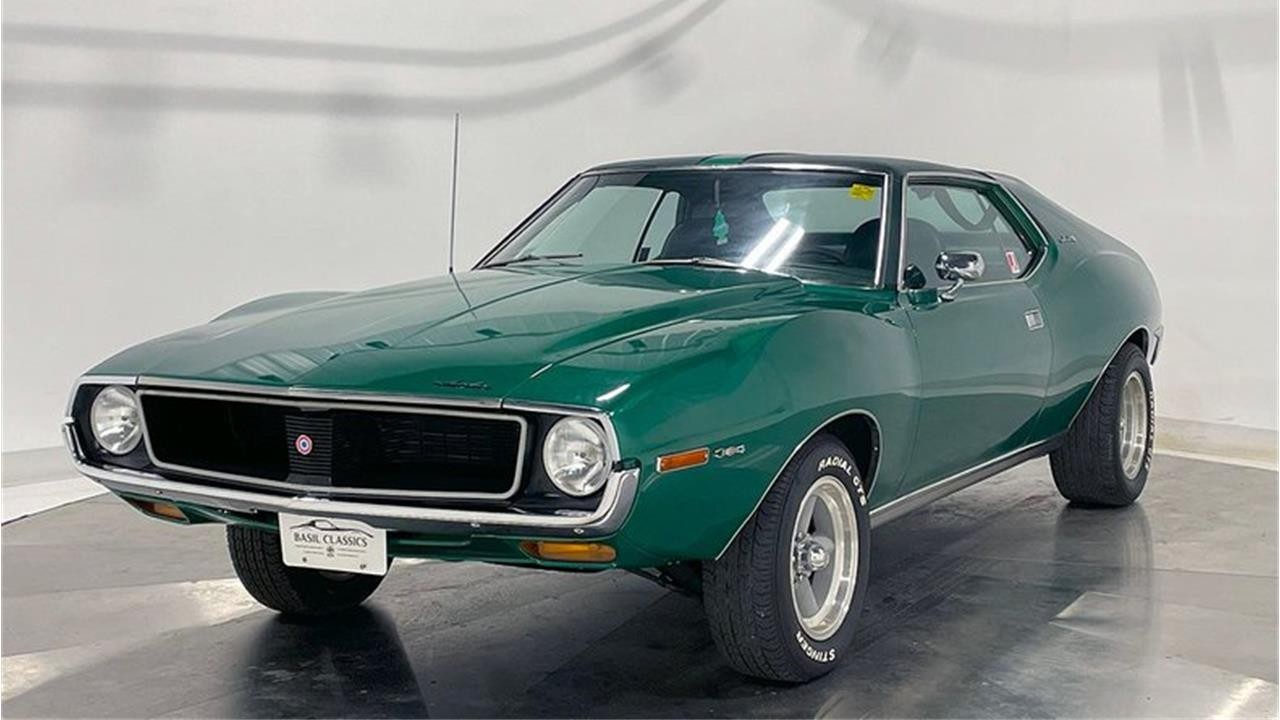
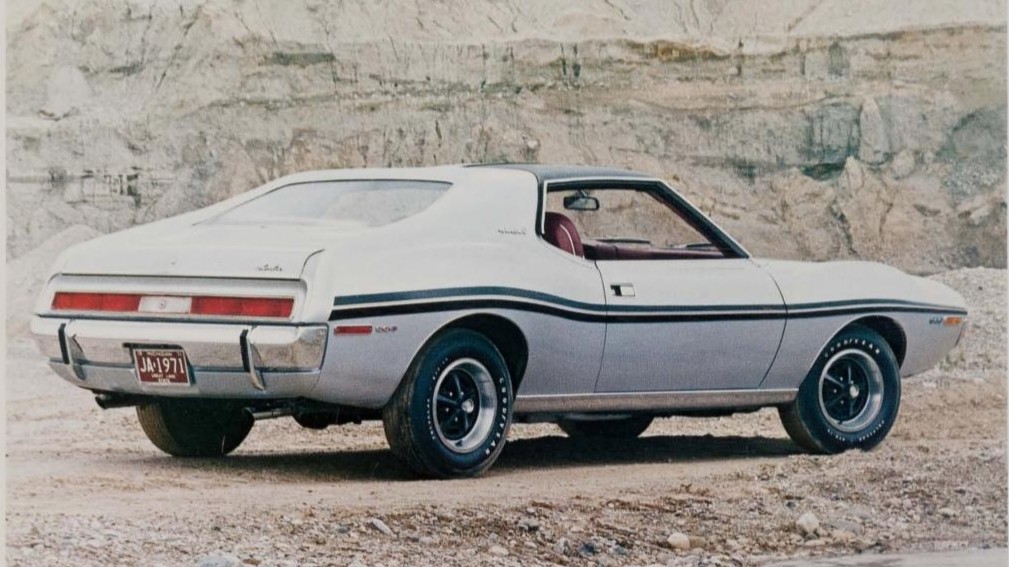
After three years of Javelins and AMXs, AMC came back with a redesigned Javelin that in reality was a heavily restyled version of the previous-generation car. The two-seater AMX was now gone, reconfigured to be a performance package for the Javelin. Like the new Mustang, the Javelin seems to have been influenced by contemporary race cars of the time, with exaggerated front wheel arches and rear haunches that gave the it a broad-shouldered look. An integrated roof spoiler was an evolution of an accessory that was introduced in the middle of the 1969 model year.

1971 AMC Javelin SST listed for sale on ClassicCars.com

Mark Donohue, AMC’s Trans-Am driver, assisted with several styling features, especially the Javelin AMX’s grille cover, a flat mesh overlay covering the Javelin’s inset grille. The Javelin AMX also came with a cowl-induction hood that was functional with the Go Package.

1971 AMC Javelin SST (Click here to go to the 1971 AMC Data Book)

Under the hood, things started to get interesting with the 360 four-barrel, a carry-over from 1970. The 390, a popular engine for 1968-70 models, evolved into the 330-horse 401 for 1971. This would be the biggest motor ever installed in an AMC pony car.

Chevrolet
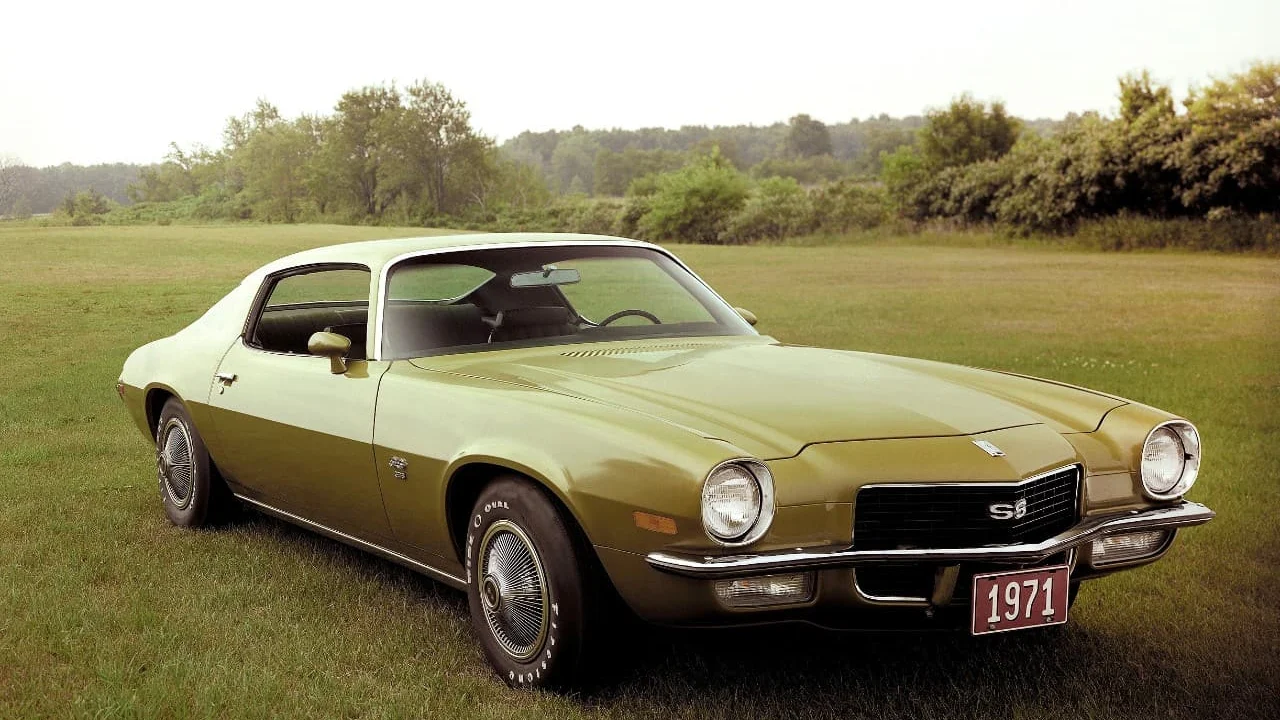
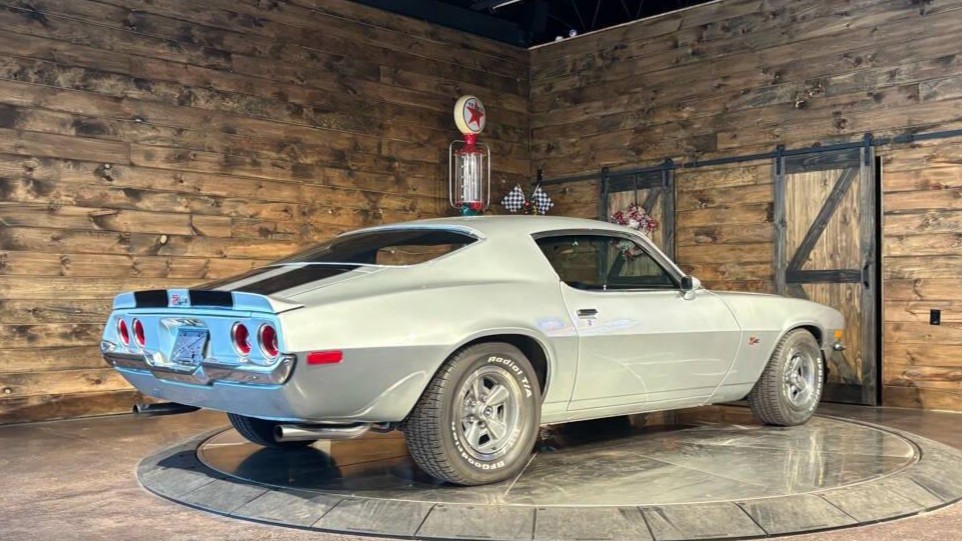
The redesigned Camaro debuted mid-year 1970, so there were only a few detail changes for 1971. As the most European-influenced of the new wave of pony cars (aside from the heavy doors), the Camaro’s fuselage-like body appeared lower and leaner despite having the same wheelbase and length as the previous generation. Even with the abbreviated 1970 model year, there were enough changes for 1971 to give the Camaro its own unique flavor, such as high-back bucket seats, a three-piece D80 spoiler (previously a 1970 COPO item), new mag wheels, and new colors. As before, there were two flavors of Camaro, with the base receiving a conventional front bumper while the Rally Sport featuring minimalist front bumperettes and a grille surrounded by the Endura material made famous by the post-1967 Pontiac GTO. The performance Super Sport continued, but by now, the Z/28 was encroaching on its popularity.

1971 Chevrolet Camaro SS

Compression was lowered across the board at GM for 1971, so the base SS 350 put out 270 horsepower, down from 300; the SS 396 was only available as a 300-horse 402, down from 350 (with the solid-lifer L78 now being a memory). The Z/28 with its LT1 350 was down from 360 to 330 horsepower, but now, for the first time, it was the most powerful Camaro.

1971 Chevrolet Camaro Z28 listed for sale on ClassicCars.com

The Camaro may have been the most revolutionary of the new-gen pony cars in its time, but its popularity as a collector car follows the first-gen Camaro. It’s the second gen’s duration—1970 through 1982—that has maintained its popularity, but aside from the Z/28, the 1971 Camaro doesn’t seem to arouse as much interest beyond it being a Chevrolet, which means it’s still strong.

Dodge
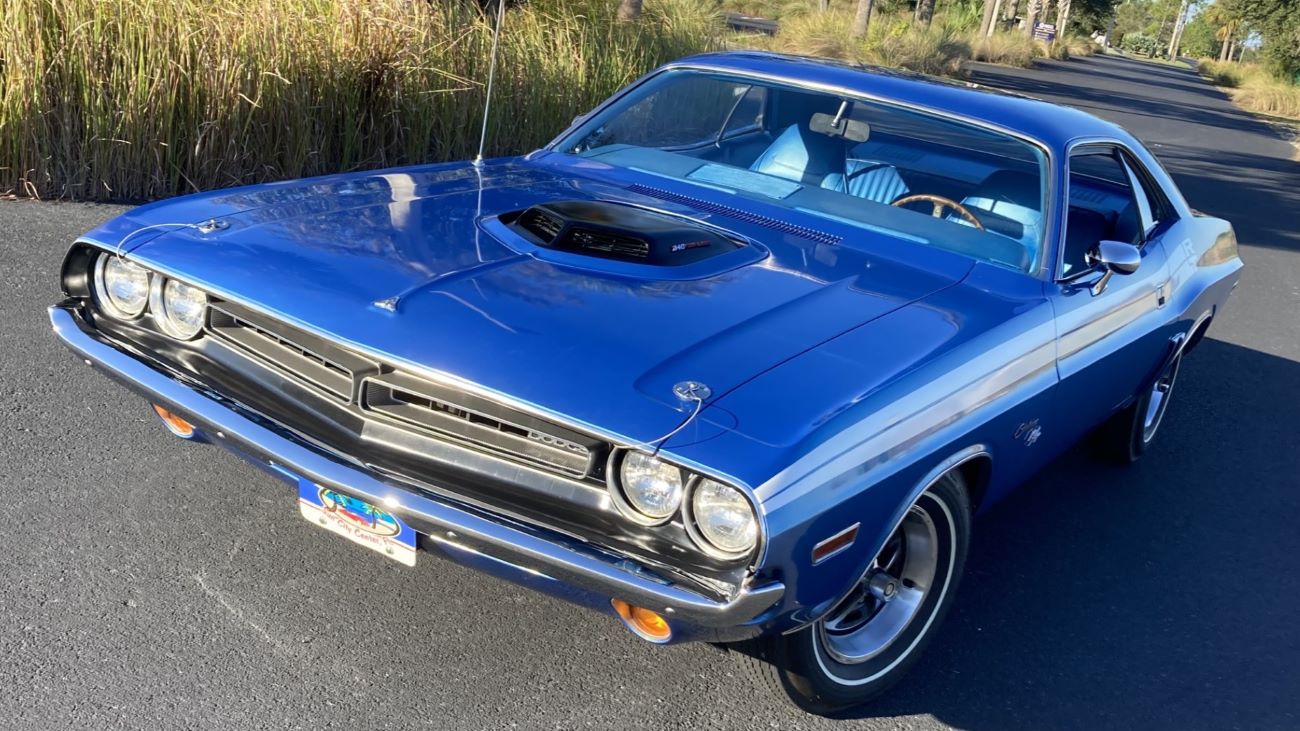
With the introduction of the Challenger in 1970, Dodge finally had a serious pony car contender and, if sales are a reflection, the Challenger did pretty well. However, it was a case of too little, too late as performance and specialty car sales were headed downward. You wouldn’t have been able to tell just by looking at the 1971 Challenger as it was practically a rerun from 1970.

1971 Dodge Challenger R/T

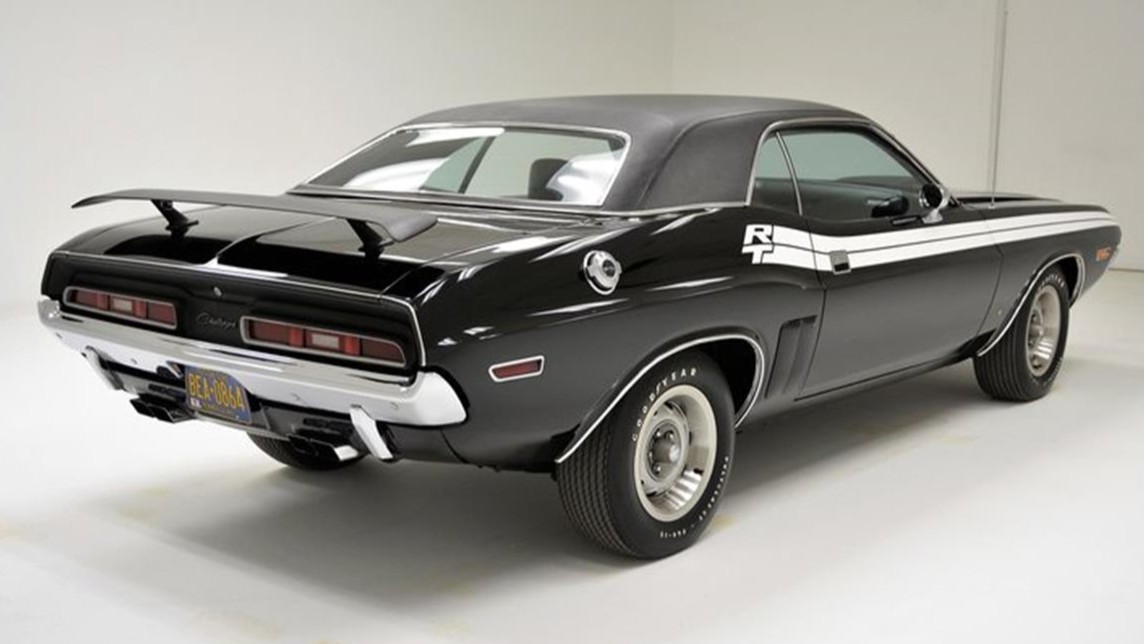
New for 1971 was a two-piece plastic grille that replaced the one-piece wide-mouth grille; the design was mimicked out back by the taillights. Stripes for the R/T (optional on the base Challenger) ran above the character line, from under the C-pillar and down to the nose; black and white were popular color choices, but fluorescent lime and orange were also available. Unlike all the other pony cars, the Challenger was stubby like a ’69 Camaro instead of lean like a ’70 Camaro, but it didn’t suffer because of that.

1971 Dodge Challenger R/T listed for sale on ClassicCars.com

The standard motor for the R/T was a 383, now rated at 300 horsepower. The 340 was a new option (though it continued to be available on the base Challenger), and then the next steps up were the 440 Six Pack and 426 Hemi, with the 340 Six Pack (Challenger T/A) and 440 Magnum disappearing from the options list. Despite the new features, Challenger sales were down drastically—by more than half.

Ford
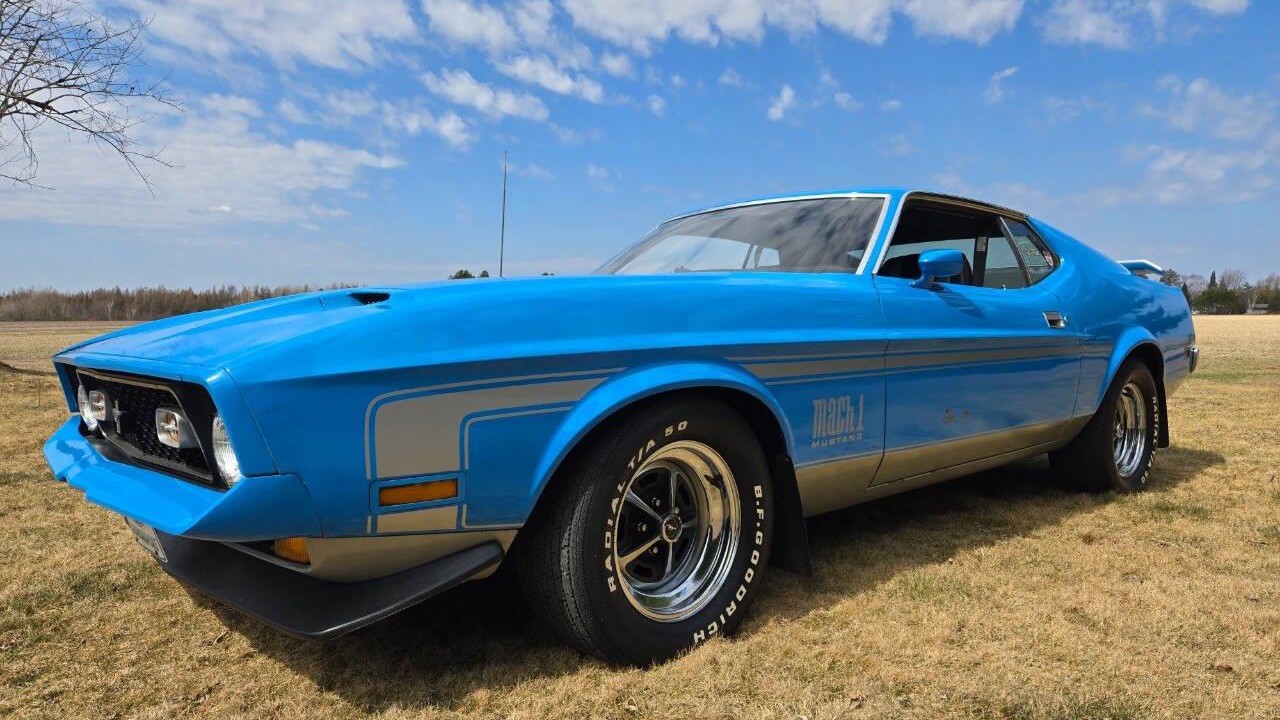
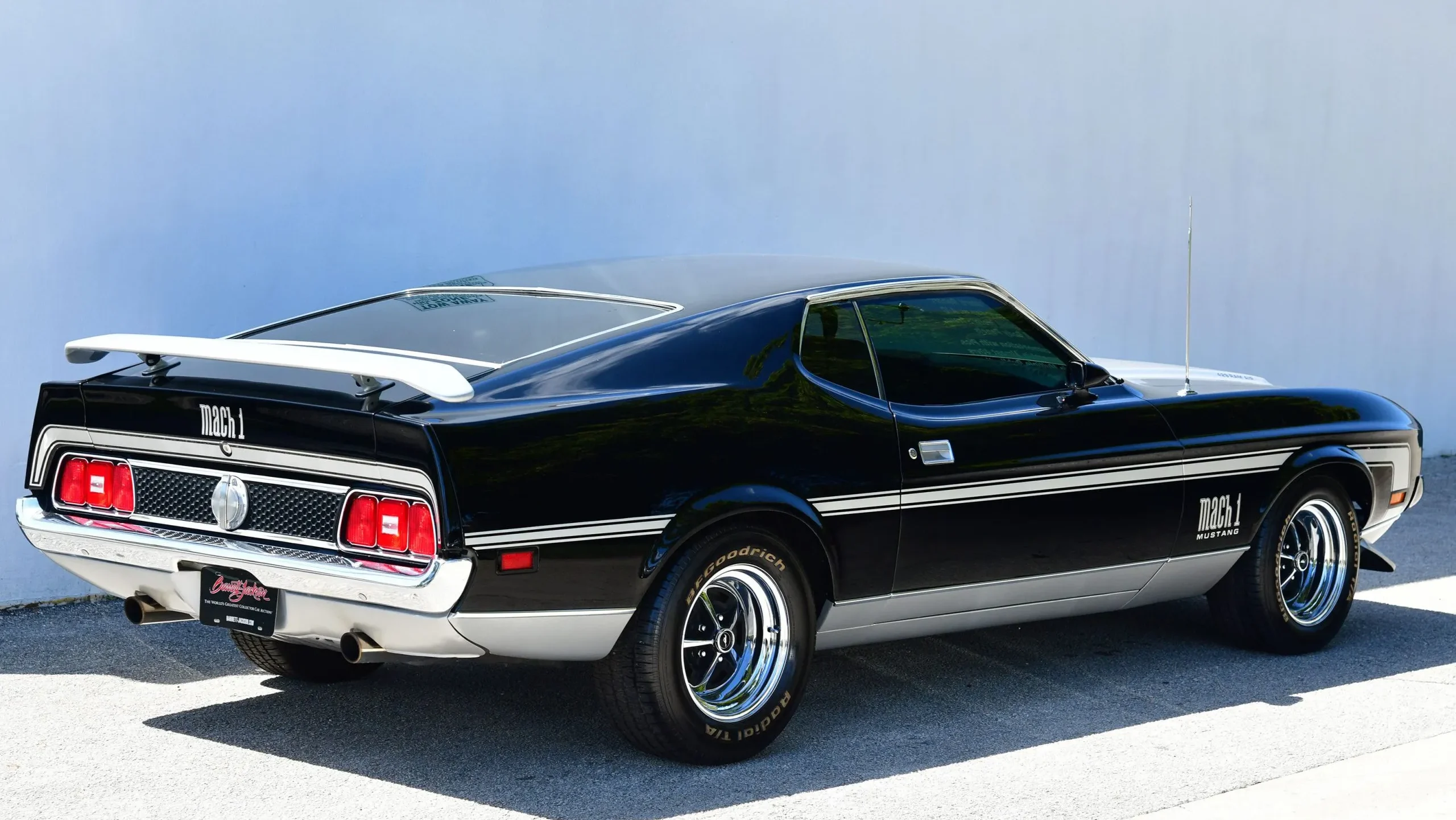
The Mustang was all-new for 1971. There were two performance models: Mach 1 and Boss 351, both only available as a SportsRoof fastback, but of course, the coupe and convertible continued to be available. The Mustang grew in wheelbase, length, and weight, but its styling and design—especially the performance models—appeared to be shaped by a combination of “Total Performance” racing exploits and the 1969-70 Shelby Mustangs. For the performance models, NASA-type scoops replaced both the non-functional and Shaker scoops (though the hood was a no-cost option for the 1971 Mach 1 with the standard 302). Optional racing stripes were bigger and badder than before, now available in black or silver.

1971 Ford Mustang Mach I SportsRoof listed for sale on ClassicCars.com

Sure, the Mach 1’s standard engine was a demotion, but things started to get interesting with the “M-code” 351 Cleveland which, at 285 horsepower, was down 15 from 1970. Offered mid-year (and quite rare) was the 280-horse “Q-code” 351 Cobra Jet, a low-compression version of the Cleveland four-barrel that would eventually become the default performance motor for 1972-73. The next step up was the new-for-Mustang 429 Cobra Jet, available with or without air induction (J- and C-code, respectively). Want digger gears? Add the Drag Pack, which turned the CJ into a Super CJ. Included with the Drag Pack was a tougher bottom end, solid-lifter bumpstick, Holley carb, and 4.11 or 4.30 gears—the latter with a Detroit Locker.

1971 Ford Mustang Mach I SportsRoof

But arguably, the best of the performance Mustangs was the Boss 351. Looking like the Mach 1 in most respects, the Boss was powered by a 330-horse 351 and is often considered the fastest small-block of the era. Some even think it’s faster than the 429 CJ.

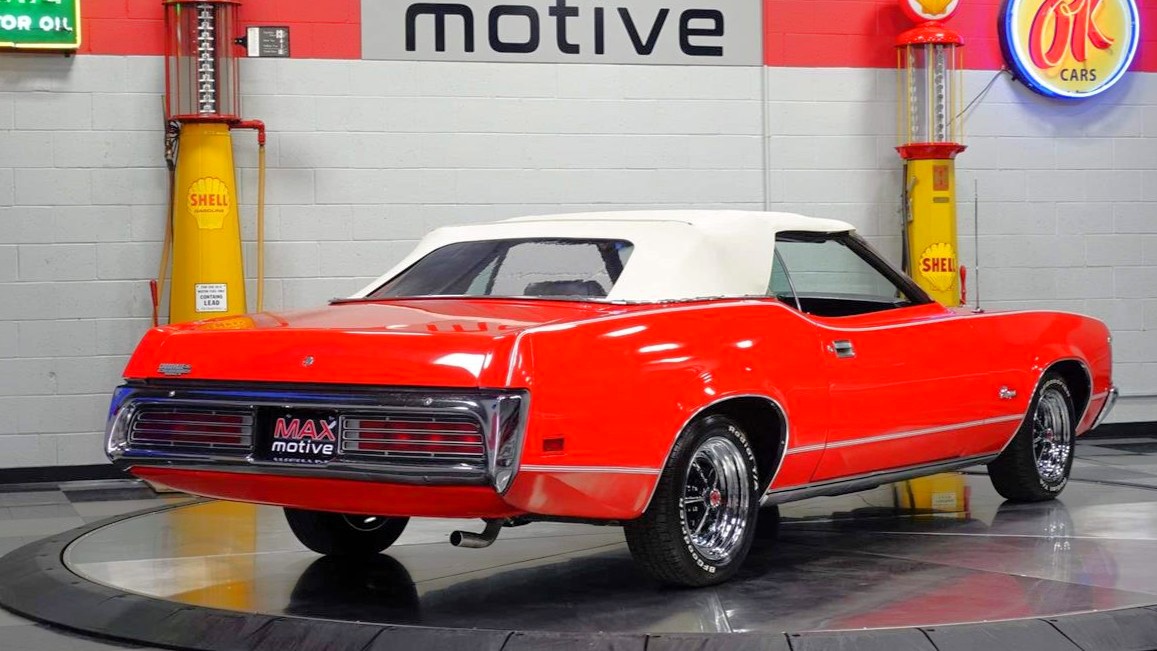
1971 Mercury Cougar listed for sale on ClassicCars.com

Mercury
Like the Mustang, the Cougar was all-new for 1971. However, the Cougar leaned even more into the personal luxury segment, losing any semblance of sportiness that it had before. Gone was the performance-oriented Eliminator package, but a new GT package added a hood scoop (only functional with the 429 CJ with ram air induction), a tach, and Competition Suspension. As before, there was the base Cougar and high-line XR-7.

Motor choices were similar to those for the Mustang, but the Cougar’s standard engine was a 351 two-barrel. The 351 four-barrel and both 429 Cobra Jets were available, although the Drag Pack was not. When equipped with air induction, 429 cars received the same hood scoop as GTs.

Plymouth
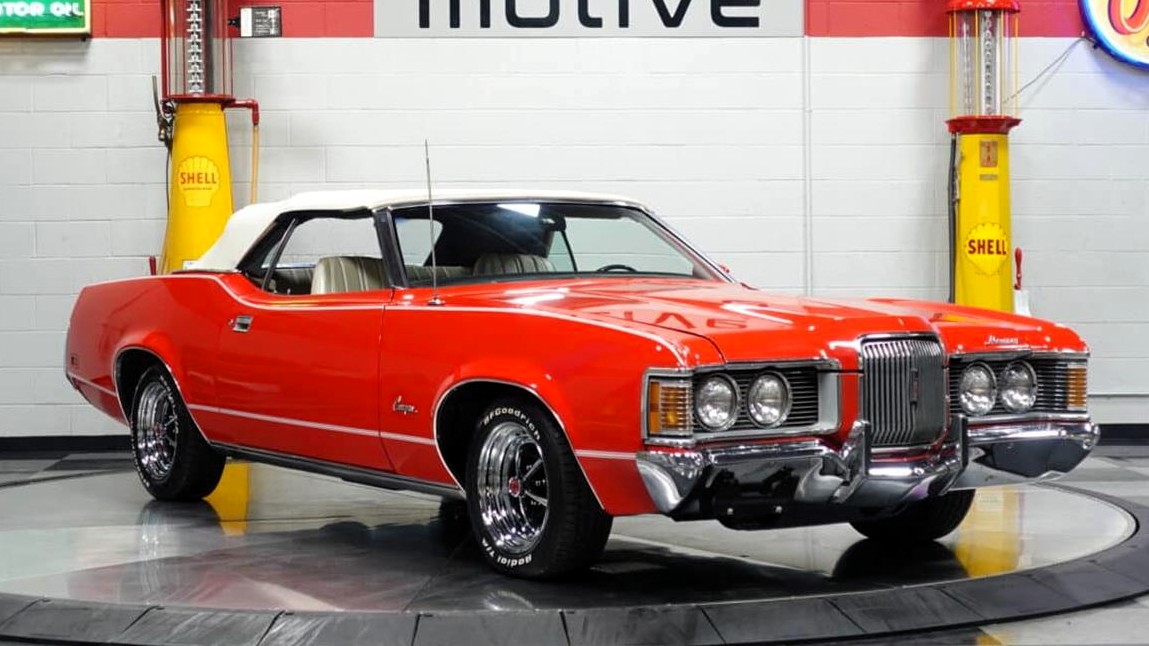
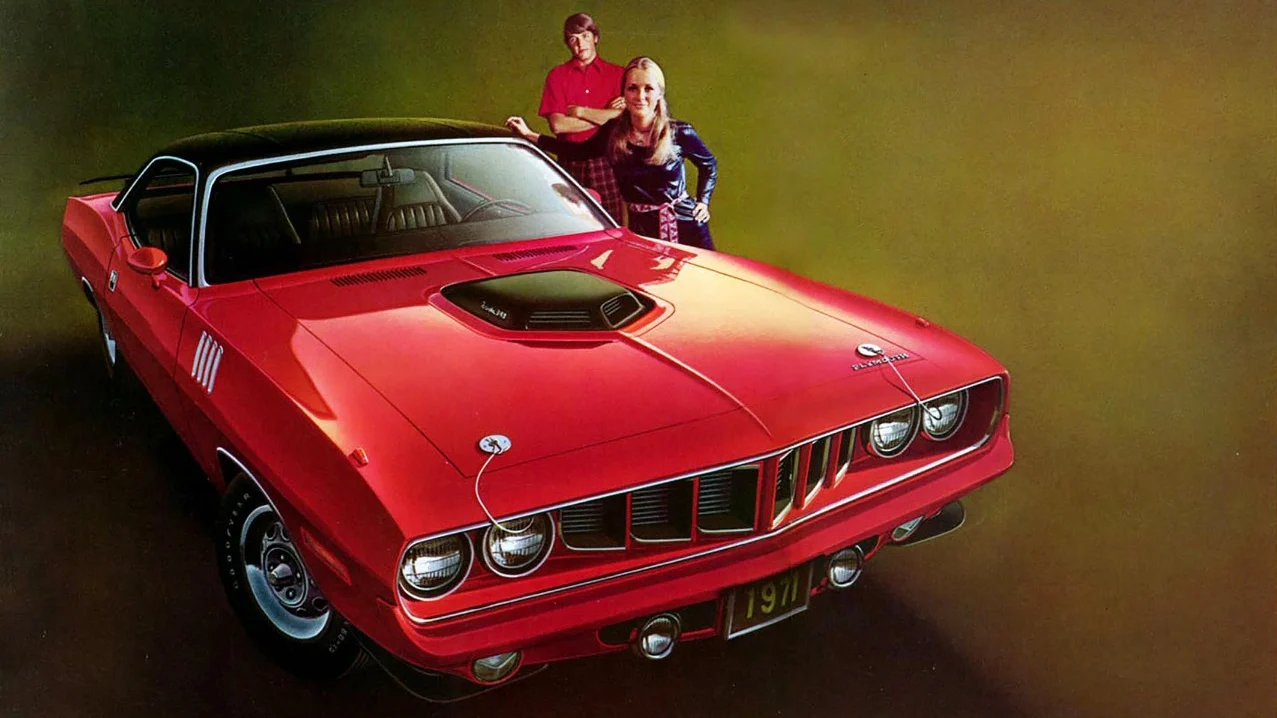
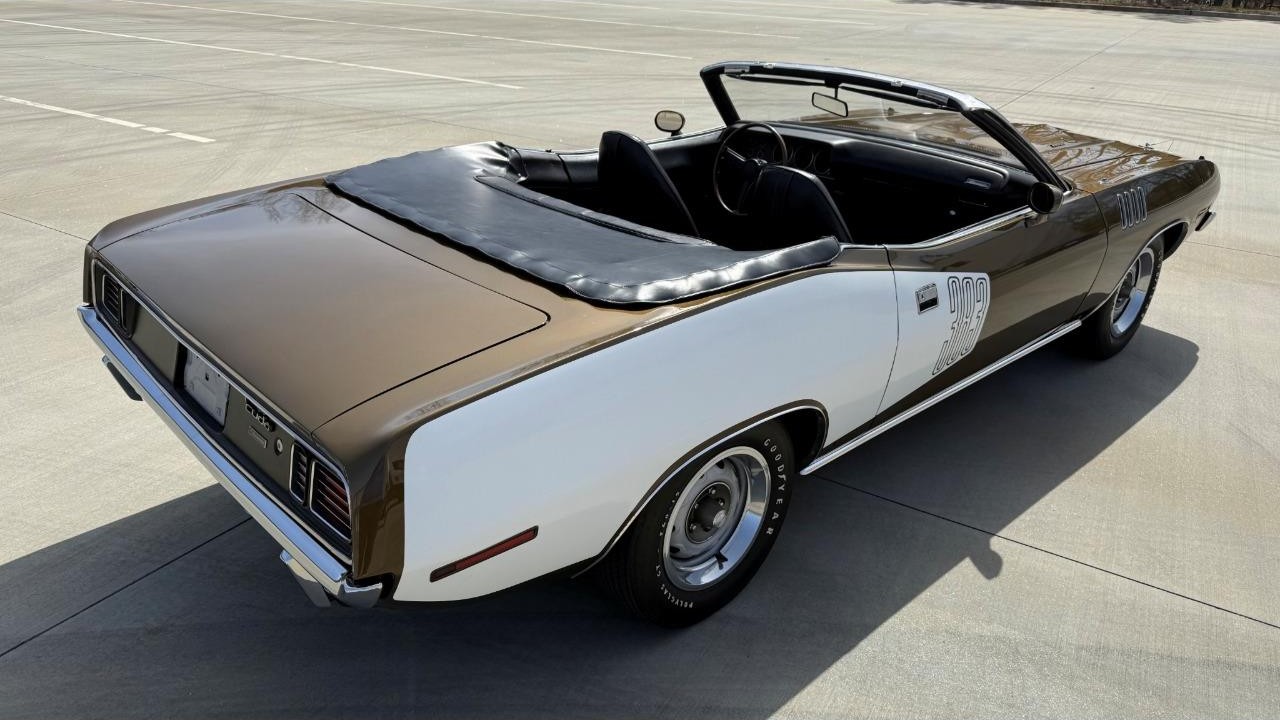
Like the Challenger, the Barracuda was all-new for 1970, but the 1971 facelift brought quad headlights that gave the pony car a different look. At the time, the buff books hated it (and sales tanked, just like the Challenger’s), but in today’s collector world, the 1971 Barracuda is the premiere muscle car out of all brands and years. Like the Challenger, the Barracuda featured proportions similar to those of the first-gen Camaro, though slightly evolved and exaggerated.

1971 Plymouth ‘Cuda

Several options could make the Barracuda the wildest-looking car on the market. For example, if you ordered one in “EV2” Tor Red, “FC7” In Violet, “GB5” Blue Fire, “FE5” Rallye Red, “GY3” Curious Yellow, “FJ6” Sassy Grass Green, “GW3” Sno White, “GK6” Autumn Bronze, or “GF7” Sherwood Green, you’d receive a color-keyed grille; six of those colors could be paired with Elastomeric bumpers (front or front/rear) to add to the monochromatic look. Additional eye candy included front and rear spoilers, rear window louvers, and the mighty “Billboard” stripes (black or white).

1971 Plymouth ‘Cuda listed for sale on ClassicCars.com

Engine choices were like the Challenger’s, but the outrageousness of the ‘Cuda with a certain combination of trim options, combined with the Hemi and the availability of a top that goes down, makes it the top car in the muscle car hobby.

Pontiac
The Camaro’s sibling, the Firebird, also had a mid-year 1970 introduction. Minimal changes followed for 1971, such as fake air extractors on the front fenders for the base Firebird, Esprit, and Formula; high-back seats; new wheels (especially the polycast Honeycombs); and new colors. The big news was under the hood, as Pontiac had to make do with low-compression motors.

1971 Pontiac Firebird Formula 400

The Formula was the popular model that would capture the interest of the performance masses. For 1970, a 400 was available in two states of tune, but for 1971, the Formula model expanded to include a tepid 350 and two 455s in addition to one 400. The latter was the first step towards performance, featuring 300 horsepower, but 325 was available with the 455 four-barrel, which was new for the Firebird. Still not enough? For 10 horsepower more, the 455 HO was available, which combined the round-port heads from the previous year’s Ram Air IV with the big-bore 455. Despite the reduction in compression compared with 1970’s motors, it was quite possibly the strongest of GM’s low-compression engines save the LS6 454, which was only available on the Corvette.

1971 Pontiac Firebird Trans Am for sale on ClassicCars.com

And if this was the motor you desired, perhaps you’d consider the Trans Am, which came with the 455 HO standard. The spoiler-ed and air-dammed race car for the street was back for ’71, still available in white/blue or blue/white.

Out of all the 1971 pony cars, which one would you pick? It’s a difficult choice. A Grabber Blue Boss 351 looks racy, while a SportsRoof with the 429 has street-bruiser appeal, but I think I prefer others. The Firebird Formula 455 is a great street car, capable of using today’s gas, but it’s almost too adult for me as I’m currently not in that mood. A Curious Yellow ‘Cuda fits my mood more, a visual masterpiece that was out of fashion at the time. However, I have had a certain fascination with the Challenger R/T, fantasizing about it painted “GA4” Light Gunmetal metallic with “V6V” fluorescent orange stripes and “H5X9” black vinyl and orange/black cloth buckets. Was one ever built like that?

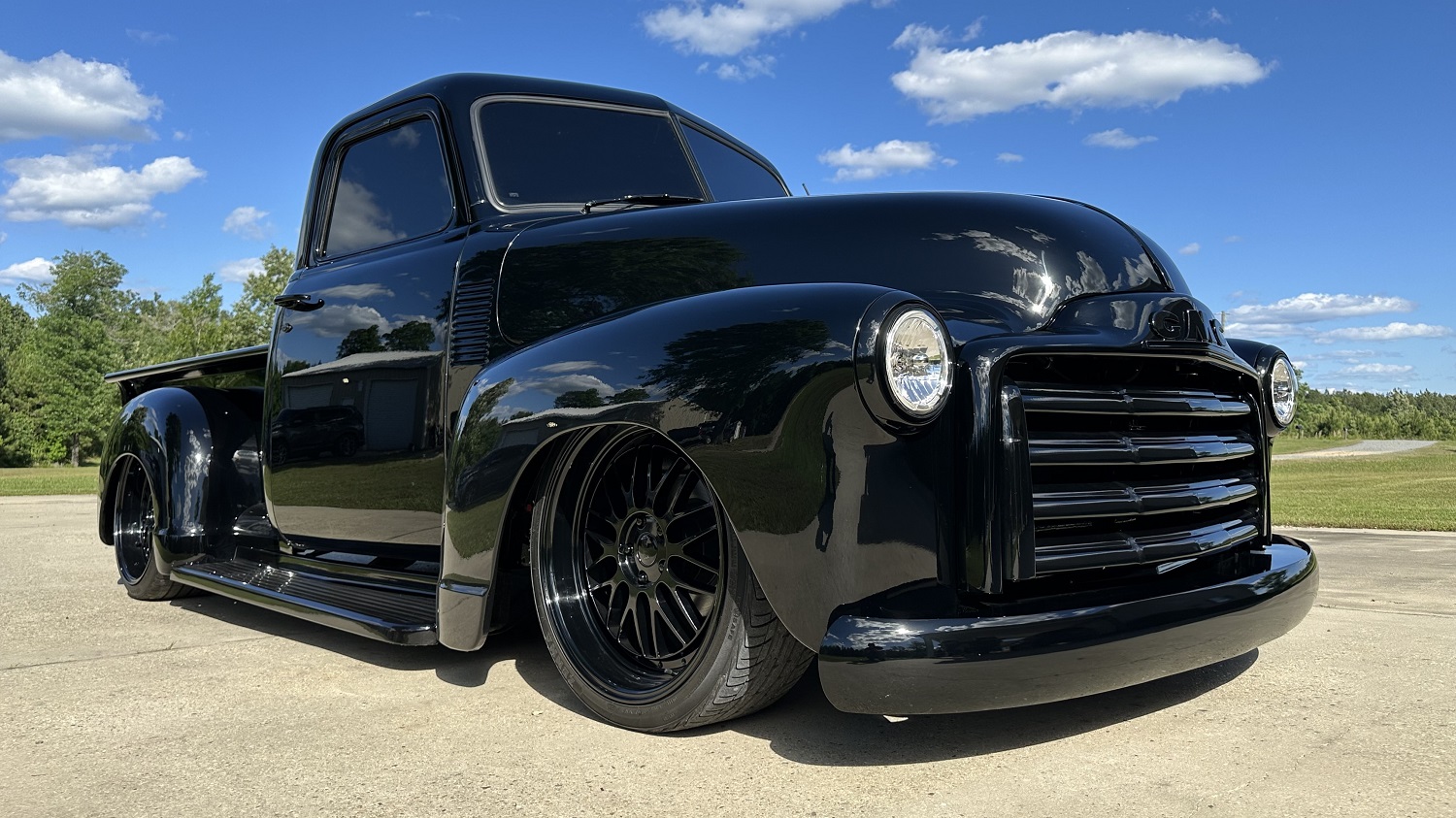
Featured on AutoHunter is this 1953 GMC 100 pickup, which has undergone a frame-off restoration and customization process that was completed in 2020. It’s powered by an LS 5.3-liter V8, which is paired with a 4L60E four-speed automatic transmission. Finished in black over a black leather interior, this GMC New Design truck is now offered by the seller with Arkansas registration.

As part of the build, the body was refinished in black. Exterior features include a black front bumper, black trim, halogen headlights with LED halos, tinted windows, running boards, black-stained wood bed slats, a full-width rear brake light, and a black rear roll pan.

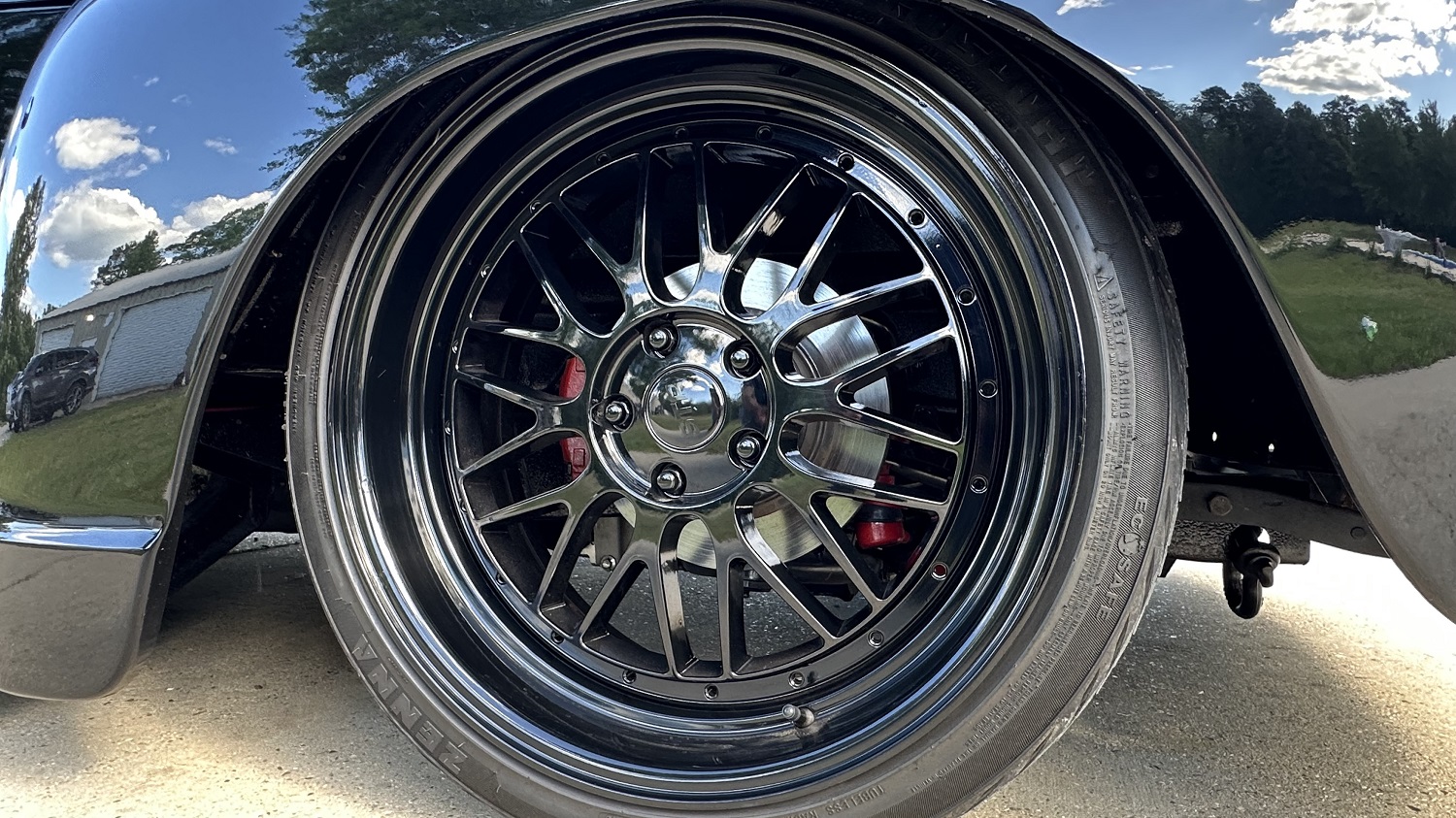
Like the rest of this truck, the 20-inch STR wheels are black. They come wrapped in 245/35 Zenna front and 285/30 Nexen rear tires.

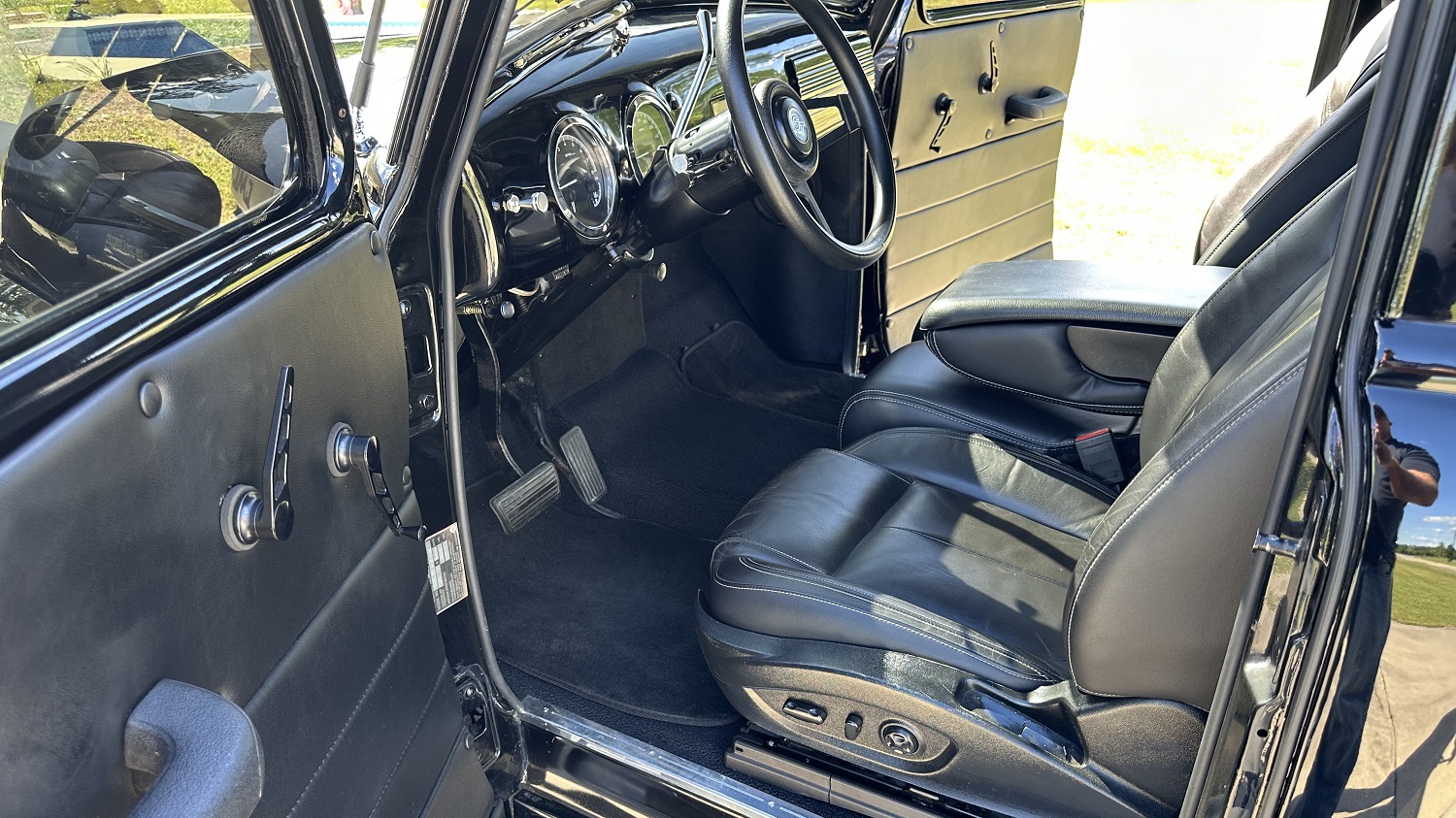
There’s more black inside the single cab, which has black leather upholstery on the power adjustable bucket seats and black door panels. Other content includes a tilt column with a Grant steering wheel, power steering, fold-down center armrest, AM/FM/Bluetooth Pioneer touchscreen radio, and Kenwood speakers.

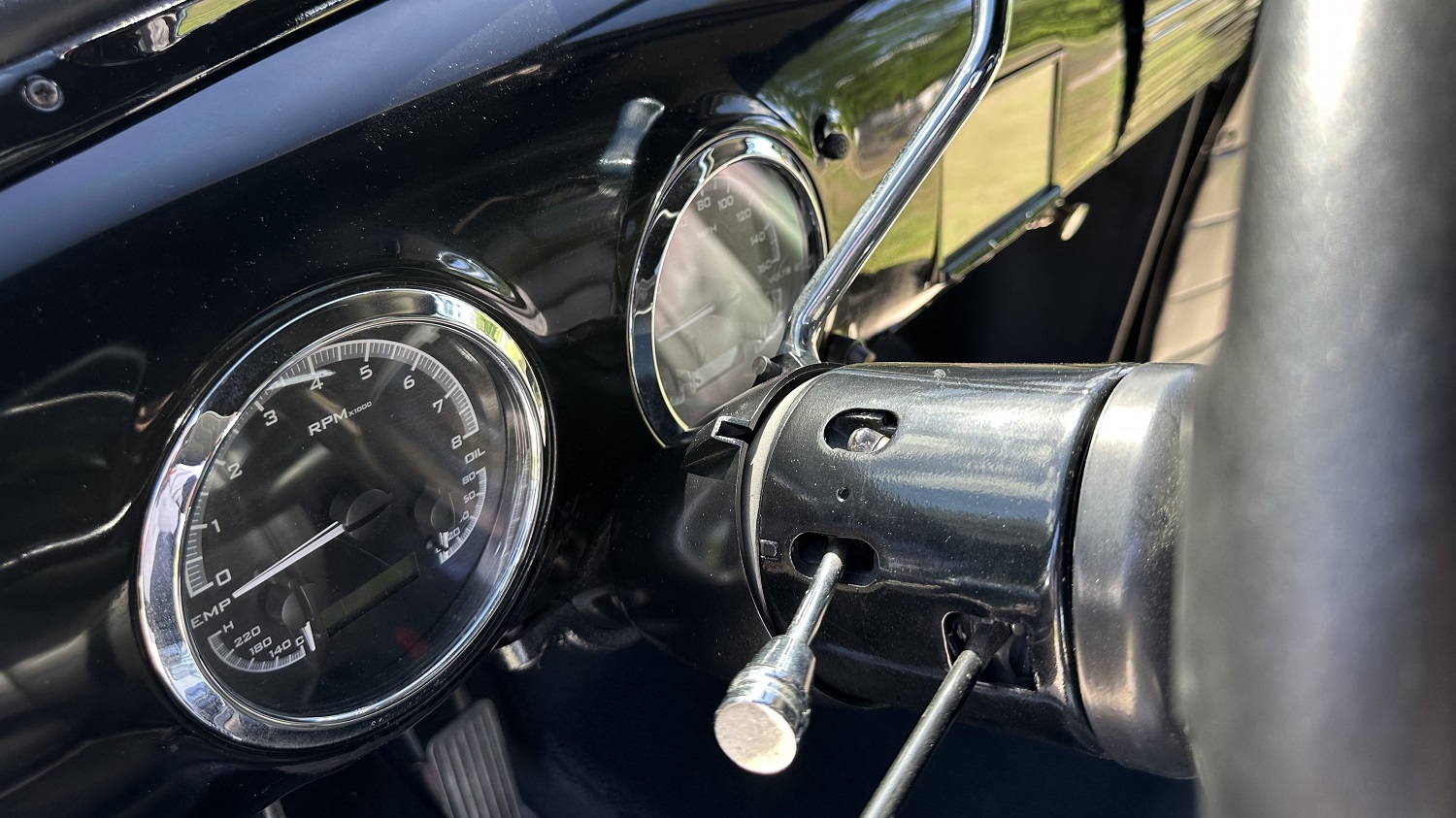
The Dakota Digital instrumentation consists of a 160-mph speedometer, 8,000-rpm tachometer, and gauges for the oil pressure, temperature, voltage, and fuel level. The true mileage on this vehicle is unknown; the title reads this truck is mileage-exempt.

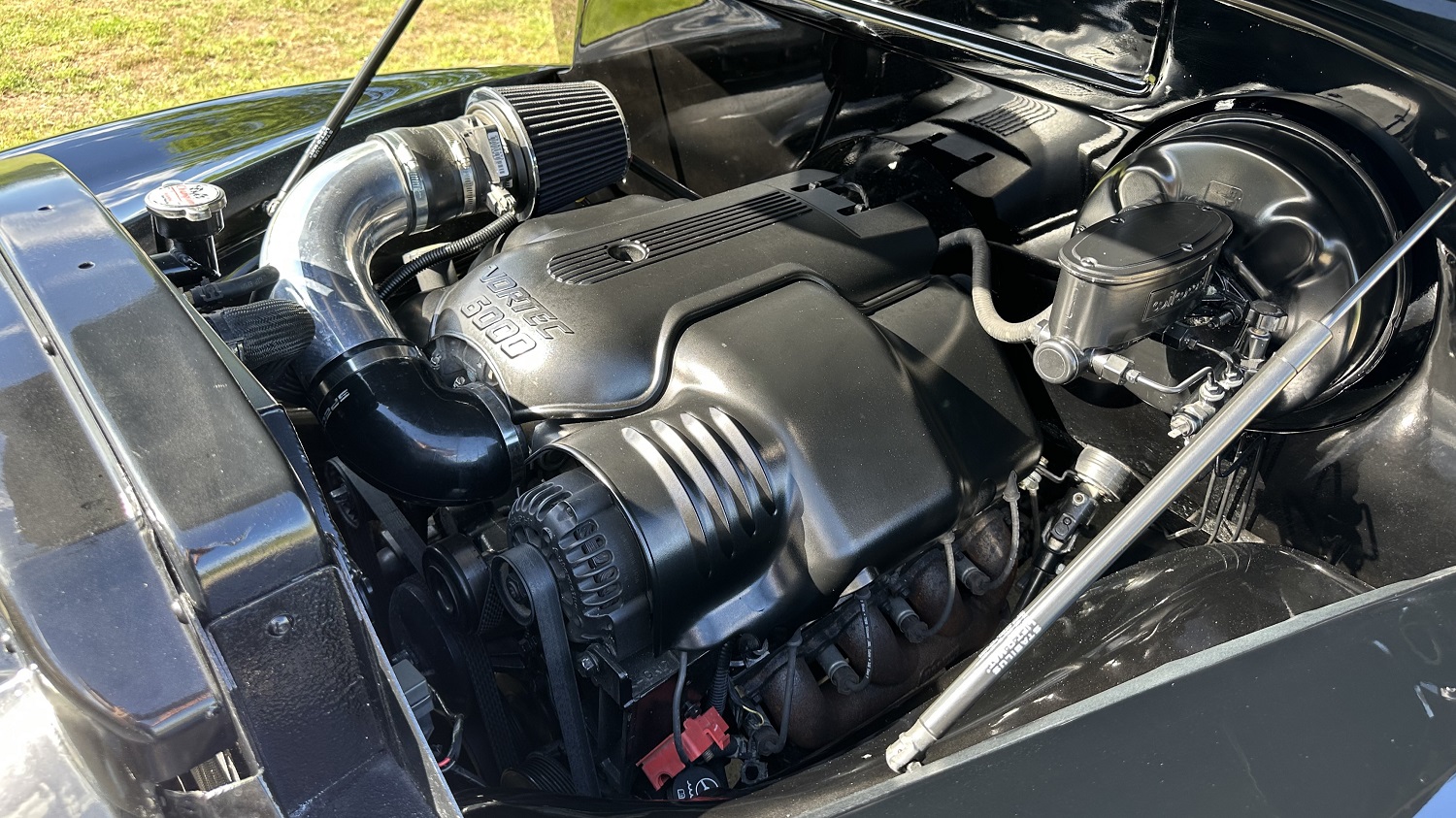
Under the hood is an LS 5.3-liter V8 equipped with a performance air intake and Champion aluminum radiator. The engine is connected to a 4L60E four-speed automatic transmission.

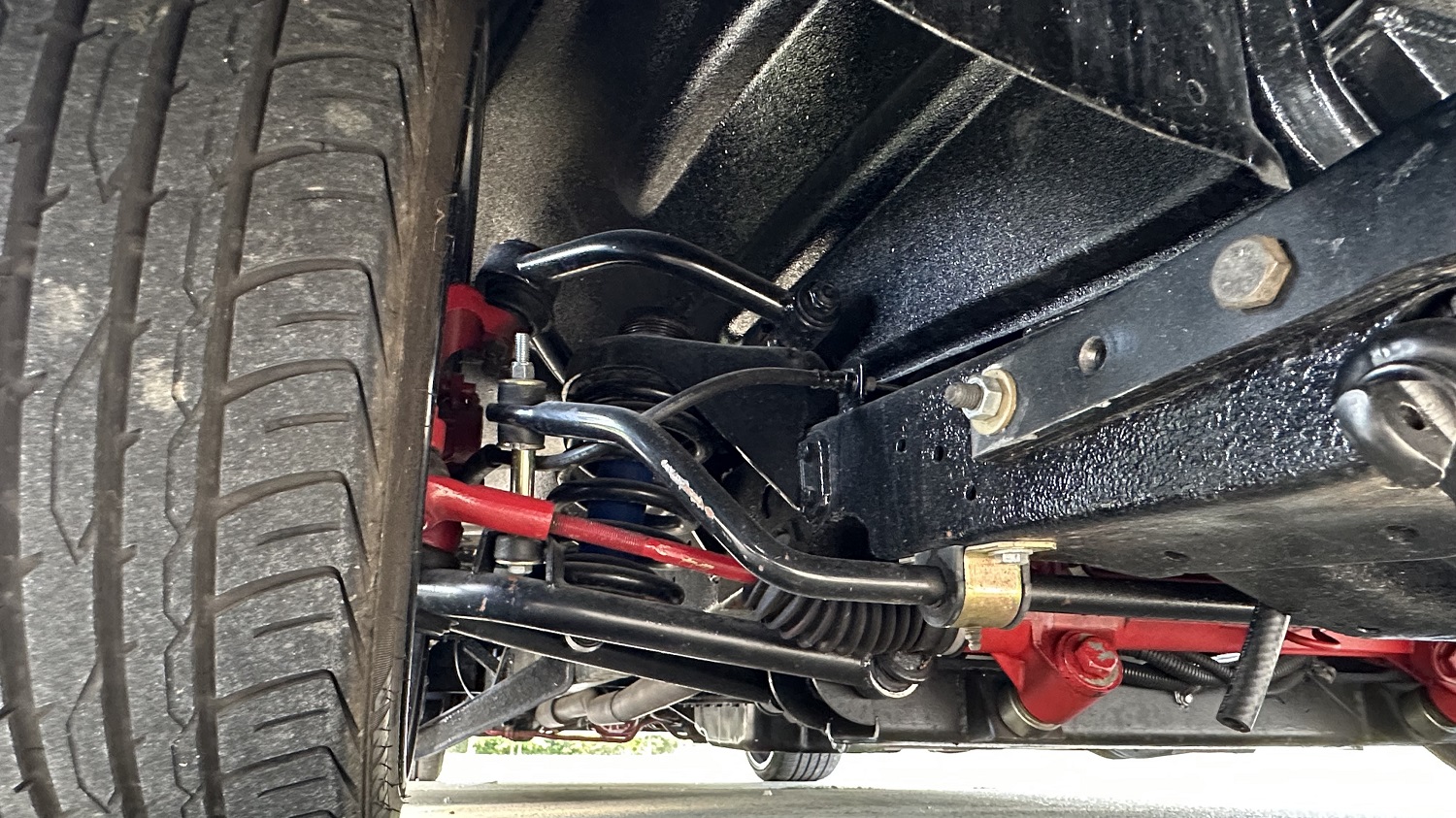
This custom GMC truck has been lowered and rides on a Ford Mustang II front suspension and Nissan 350Z independent rear suspension. Wilwood four-wheel power disc brakes help keep the shiny black bodywork smooth and crumple-free.

The auction for this 1953 GMC 100 pickup ends on Tuesday, May 20, 2025, at 11:30 a.m. (PDT).

Visit the AutoHunter listing for more information and a photo gallery

I’ve been into cars my whole life as well as a fan of the band Counting Crows for about 25 years. In all that time, aside from jamming out with some high school friends to the “This Desert Life” album in a 1997 Ford F-150 or listening to a great live version of “Have You Seen Me Lately?” during an autumn drive, those two passions have never intersected. But that recently changed when I saw lead singer Adam Duritz on The Joe Rogan Experience podcast talking about his beloved Volkswagen Karmann Ghia cabriolet.

Given the long-form nature of the podcast, Rogan’s interview with Duritz goes on for quite a while—nearly three hours. If you’re a fan of Counting Crows but you don’t know the story of Duritz’s early days and the genesis of the band, you’ll learn a lot; I know I did.

Of course, I was aware the songs “Mr. Jones” and “Round Here” were major propellants of Counting Crows’ rocket ride to superstardom in the 1990s. What I didn’t know were the particulars of how Duritz and his fellow bandmates structured the deal for their first album, “August and Everything After.” As Duritz explains it, when he and his band signed with Geffen in the early 1990s, they accepted a paltry sum of an advance in exchange for complete creative control and higher royalty payments. Instead of the millions of dollars in advance cash that other companies offered, each member of the group went home with $3,000. What did Duritz spend his money on? “I bought a convertible red 1970 Karmann Ghia and drove it down to L.A. to make the record.” (I wonder if he had Ben Folds on his radio when he did.)

According to Duritz, his VW drop-top is largely original, but it does have newer parts such as the steering wheel and mirrors. Although he’ll never sell his Ghia, Duritz currently has a long-distance relationship with it because it’s being looked after by a friend at the Elyse Winery (which he co-owns) in Napa, California, while he lives in Manhattan.

The entire interview is great but, if you want to get to the meatiest car-related chunk of it, check out 2:01:06–2:04:00. It turns out Duritz is an owner or fan of at least several other cars that don’t have their engines in the front. Any guesses as to what they are?

In today’s fast-paced world, reliability is a key factor to consider when purchasing a car. No one wants to be stranded on the side of the road due to an unexpected breakdown.
Understanding which car brands are more prone to mechanical issues can save you time, money, and frustration.
This article delves into ten car brands known for their higher-than-average breakdown rates.
By identifying these unreliable brands, you can make a more informed decision when choosing your next vehicle.
Let’s explore the brands that might leave you in the lurch more often than you’d like.

1. Fiat

1. Fiat
A stranded Fiat car sits by the roadside, its owner waiting hopefully for assistance to arrive. | Image source: Photo by Matheus Ferrero on Pexels

Fiat has long been associated with European charm, but its reliability often falls short of expectations.
According to various consumer reports, Fiat vehicles tend to experience frequent mechanical issues, especially as they age.
Common problems include electrical system failures and engine troubles. Despite their stylish design, Fiats are often outperformed by similar brands such as Volkswagen and Peugeot in terms of dependability.
Owners have reported spending significantly more on repairs compared to other compact car brands. It’s important to weigh these factors when considering a Fiat, as their charm may come with a cost.

2. Land Rover

2. Land Rover
A rugged Land Rover SUV sits stranded on a scenic dirt road, a testament to its unpredictable reliability. | Image source: Photo by cottonbro studio on Pexels

Known for their luxury and off-road prowess, Land Rovers often suffer from reliability issues that can tarnish their premium image.
Models like the Range Rover Sport and Discovery have been flagged by industry reports for issues ranging from air suspension failures to electrical glitches.
According to recent studies, Land Rover ranks lower in reliability compared to other luxury SUVs, with owners frequently encountering costly repairs. While these vehicles offer impressive capabilities, potential buyers should be prepared for the possibility of frequent visits to the repair shop, which could overshadow their adventure-ready appeal.
3. Jeep

3. Jeep
A rugged Jeep conquers a muddy trail, showcasing its legendary reliability amidst challenging off-road conditions. | Image source: Photo by Brett Sayles on Pexels

Jeep vehicles, renowned for their rugged design and off-road capabilities, often face criticism for their reliability.
Common mechanical issues include transmission problems and electrical malfunctions, which have been highlighted in numerous consumer feedback reports.
Models like the Jeep Cherokee and Wrangler are popular among adventure enthusiasts but are frequently reported for unexpected breakdowns.
According to consumer reviews, Jeep owners often find themselves dealing with higher maintenance costs than initially anticipated. Despite their iconic status, these reliability concerns should be carefully considered by prospective buyers looking for a dependable ride.

4. Alfa Romeo

4. Alfa Romeo
A sleek Alfa Romeo sits idly on the roadside, showcasing the unexpected woes of luxury car ownership. | Image source: Photo by Miguel Cuenca on Pexels

Alfa Romeo, a brand synonymous with Italian styling and performance, often struggles with reliability issues.
Reports from industry experts frequently cite problems with engine components and electrical systems.
Models such as the Giulia and Stelvio are known for their driving dynamics but fall short in durability compared to other luxury brands like BMW and Mercedes-Benz.
Consumer feedback suggests that unexpected repairs and maintenance costs can be a significant downside for Alfa Romeo owners. While their allure is undeniable, those considering an Alfa Romeo should be aware of its potential reliability pitfalls.

5. Chrysler

5. Chrysler
A sleek Chrysler parked by the roadside with its hood open, hinting at a potential mechanical hiccup. | Image source: Photo by Nate Biddle on Pexels

Chrysler, a staple of American automotive history, often grapples with reliability issues that fall below industry standards.
Owners frequently report mechanical problems such as engine failures and transmission issues, particularly in models like the Chrysler 300 and Pacifica.
According to industry evaluations, Chrysler’s reliability scores lag behind competitors such as Ford and Chevrolet.
While these vehicles offer a blend of comfort and style, potential buyers should consider the potential for increased maintenance needs. Understanding these concerns can help consumers make a more informed decision when evaluating Chrysler’s offerings.

6. Dodge

6. Dodge
A classic Dodge sedan parked roadside, its hood open as the driver assesses a familiar American car issue. | Image source: Photo by abdo alshreef on Pexels

Dodge, known for its muscular vehicles, has a history of reliability challenges that persist today.
Statistical data highlights frequent issues with engine performance and braking systems in models like the Charger and Durango.
Reports from consumer surveys indicate that many Dodge owners experience more breakdowns compared to industry averages.
Despite their powerful performance and appealing aesthetics, these vehicles often require more frequent repairs. Prospective buyers should weigh these potential drawbacks when considering Dodge, as their strong reputation in performance might not always translate to reliability.

7. Cadillac

7. Cadillac
A sleek Cadillac SUV parked on the roadside, highlighting the juxtaposition of luxury and unexpected reliability concerns. | Image source: Photo by zhuzichun on Pexels

Cadillac, a symbol of American luxury, often faces reliability challenges that can tarnish its prestigious image.
Owners frequently encounter issues with electrical systems and suspension components, especially in models like the Escalade and CTS.
When compared to other luxury brands such as Lexus and Audi, Cadillac vehicles tend to have a higher rate of mechanical failures.
Consumer reports suggest that while Cadillac offers a blend of luxury and performance, the potential for breakdowns is a factor worth considering. Potential buyers should be prepared for the possibility of increased maintenance needs.

8. Volvo

8. Volvo
A sleek Volvo stands confidently on a scenic Swedish road, embodying both its renowned reliability and subtle quirks. | Image source: Photo by Efrem Efre on Pexels

Volvo, a brand acclaimed for its focus on safety, sometimes falls short in terms of mechanical reliability.
Specific models such as the Volvo XC90 and S60 are often mentioned in industry reviews for issues like electrical failures and transmission problems.
According to industry evaluations, Volvo’s breakdown rates are higher than some other European brands like BMW and Audi.
While Volvo’s dedication to safety innovations is commendable, prospective buyers should consider the potential for increased repair frequency. Understanding these reliability concerns can help make a more informed choice when considering a Volvo.

9. Tesla

9. Tesla
A sleek Tesla parked by the roadside with its hood open, hinting at a potential electric car conundrum. | Image source: Photo by Pixabay on Pexels

Tesla, a pioneer in the electric vehicle market, faces unique reliability concerns that stem from its cutting-edge technology.
Issues such as software glitches and build quality inconsistencies are frequently reported by Tesla owners, particularly in models like the Model S and Model 3.
While industry reviews often praise Tesla for its innovation and performance, reliability scores tend to lag behind traditional automakers.
The electric vehicle-specific issues, such as battery degradation and charging system failures, highlight the importance of considering these factors. Prospective Tesla buyers should weigh these concerns alongside the brand’s technological allure.

10. Volkswagen

Volkswagensciroccor 4171 1

Volkswagen, a brand with a diverse lineup, often faces reliability challenges that can frustrate owners.
Models such as the Volkswagen Jetta and Passat have been noted for experiencing issues like engine troubles and electrical faults.
Though Volkswagen offers a blend of performance and style, its breakdown frequency can be higher than expected, as per numerous consumer reports. Understanding these challenges can help potential buyers make informed decisions.
As you consider your next vehicle, remember that reliability is crucial for ensuring peace of mind. Choose wisely and consider how each brand’s history of breakdowns might impact your driving experience.

Source

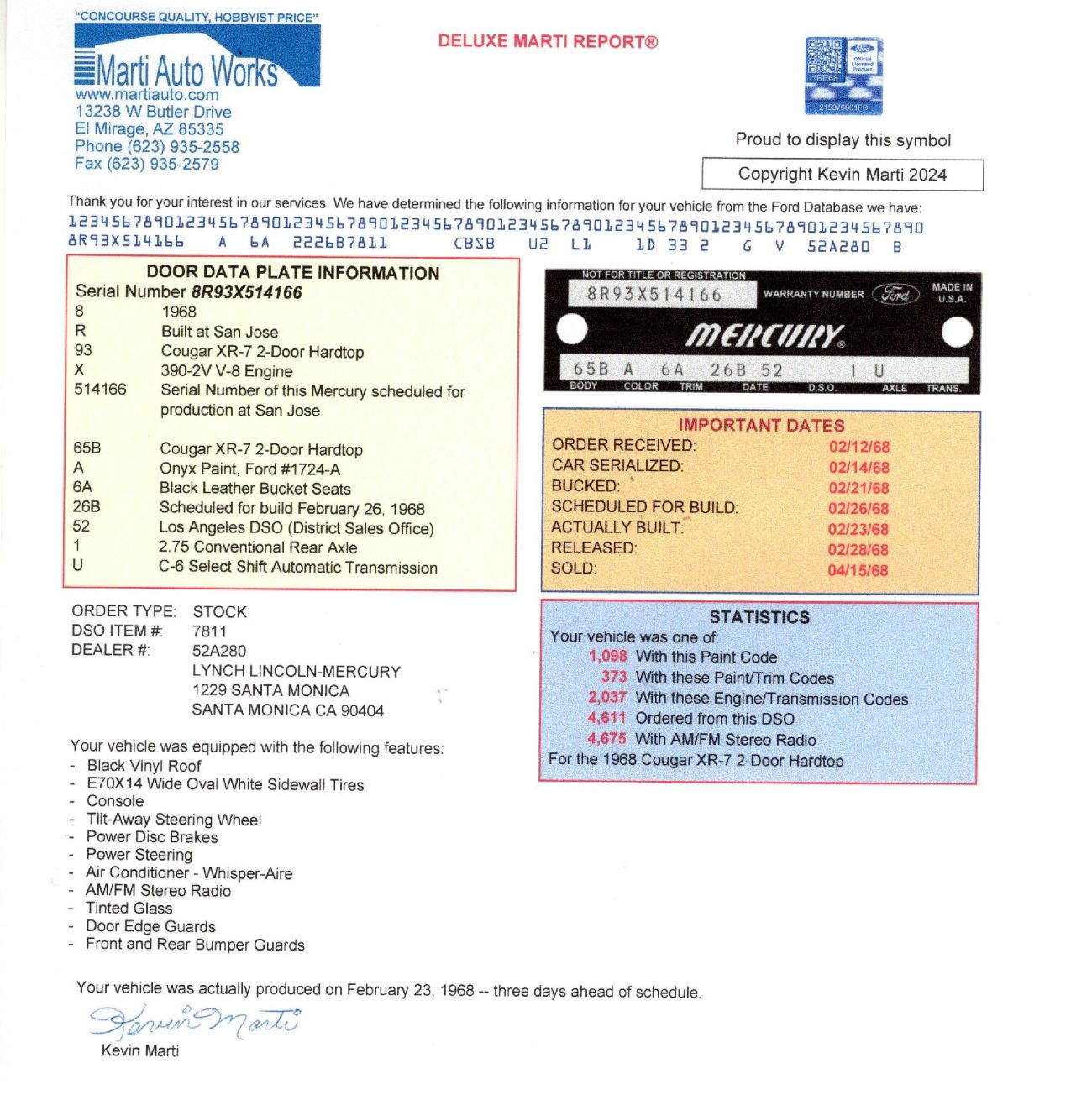
When it comes to pony cars, small-blocks were the name of the game. When the pressure was on to offer more performance, big-blocks were introduced. Within those two scenarios, Ford Motor Company offered a big-block two-barrel for only one model year. Our Pick of the Day is one of these unusual cars: a 1968 Mercury Cougar XR-7. It is listed for sale on ClassicCars.com by a dealership in Lake Havasu City, Arizona.

The 390 V8 was introduced for the Ford Mustang in 1967, the first year of its new generation. The 390 was rated at 320 horsepower, which was much more than previous top offerings. The same 390 was also available for the all-new Mercury Cougar, the market’s first attempt at a more upscale pony car. Don’t confuse “upscale” with “luxury” because the 1967 Cougar was not luxurious at all, but its standard appointments were certainly a step up from the standard Mustang’s. Add deluxe features like hidden headlights, sequential taillights, and a standard V8, and it was clear the Cougar offered distinction.

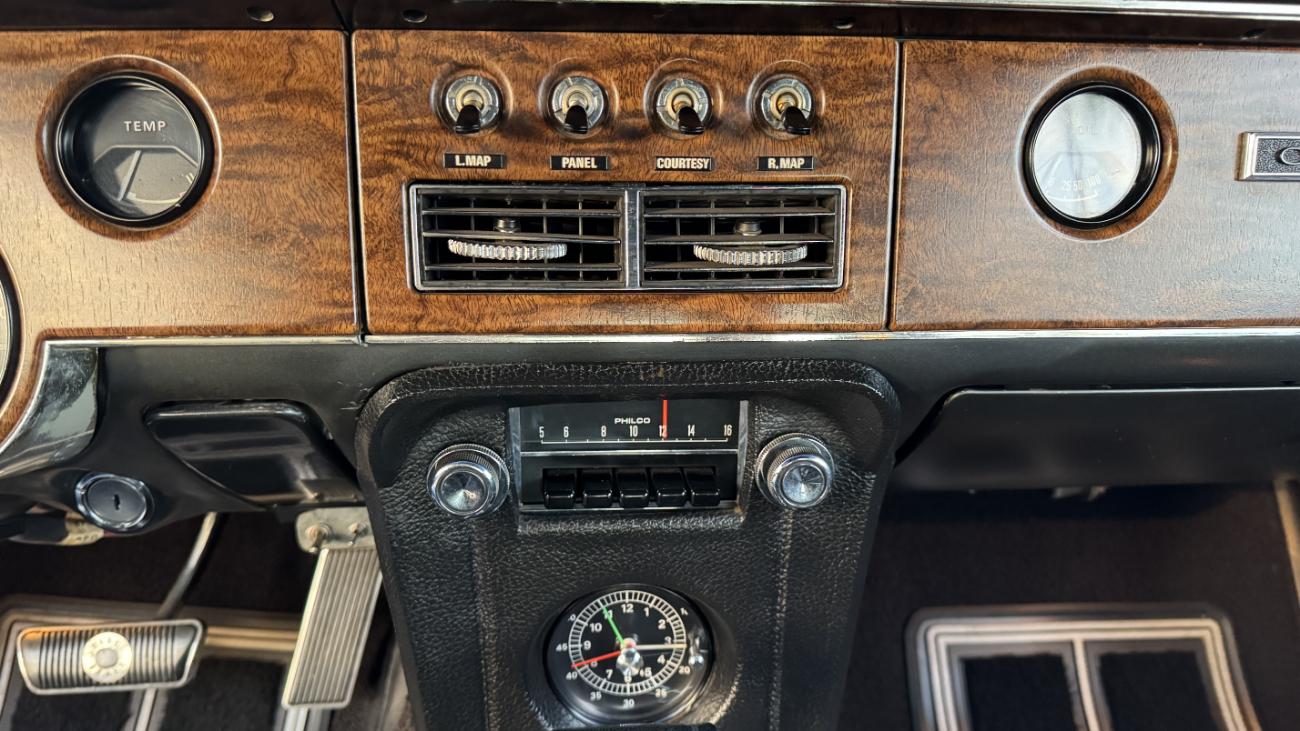
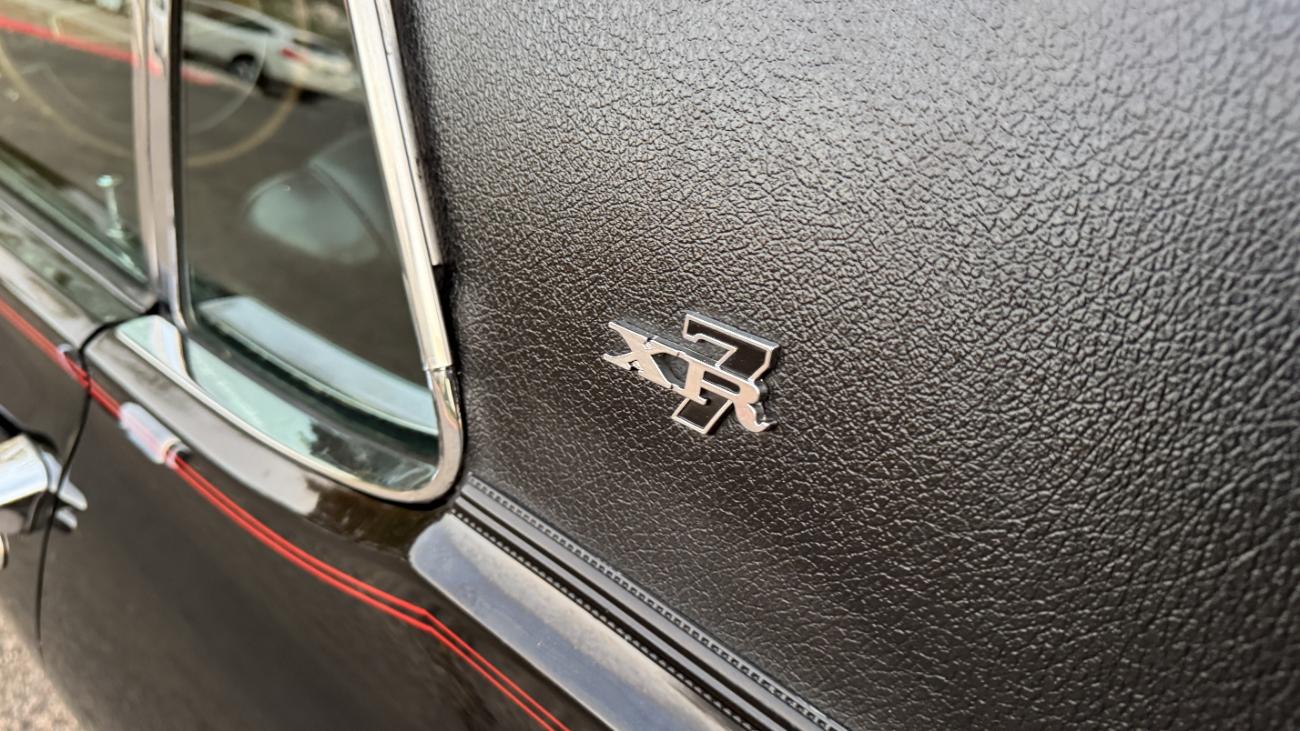
In January 1967, Mercury announced the introduction of a “luxury interior model” called the XR-7. It featured a “walnut finish instrument panel, glove-soft leather, and vinyl trim upholstery,” according to newspaper articles of the time, plus “full European touring car instrumentation,” an overhead console, toggle switches, C-pillar interior courtesy lights, map pockets, door assist straps, and seven die-cast chevrons on the rocker panels.

“This is the car for the man who admires the understated elegance and refinement of the most expensive foreign cars yet wishes to retain the American standard of spaciousness, convenience features, and ease of operation,” said E.F. Gar Laux, Mercury’s general manager. “The Mercury Cougar XR-7 offers all these qualities—and at a price far below the figure most customers would guess. In short, it is the car for the man who aspires to be an Aston-Martin, but doesn’t have James Bond’s pocketbook.” At that time, the Cougar was already the number-three pony car in the market, overshadowed by only the Mustang and Chevrolet’s new Camaro.

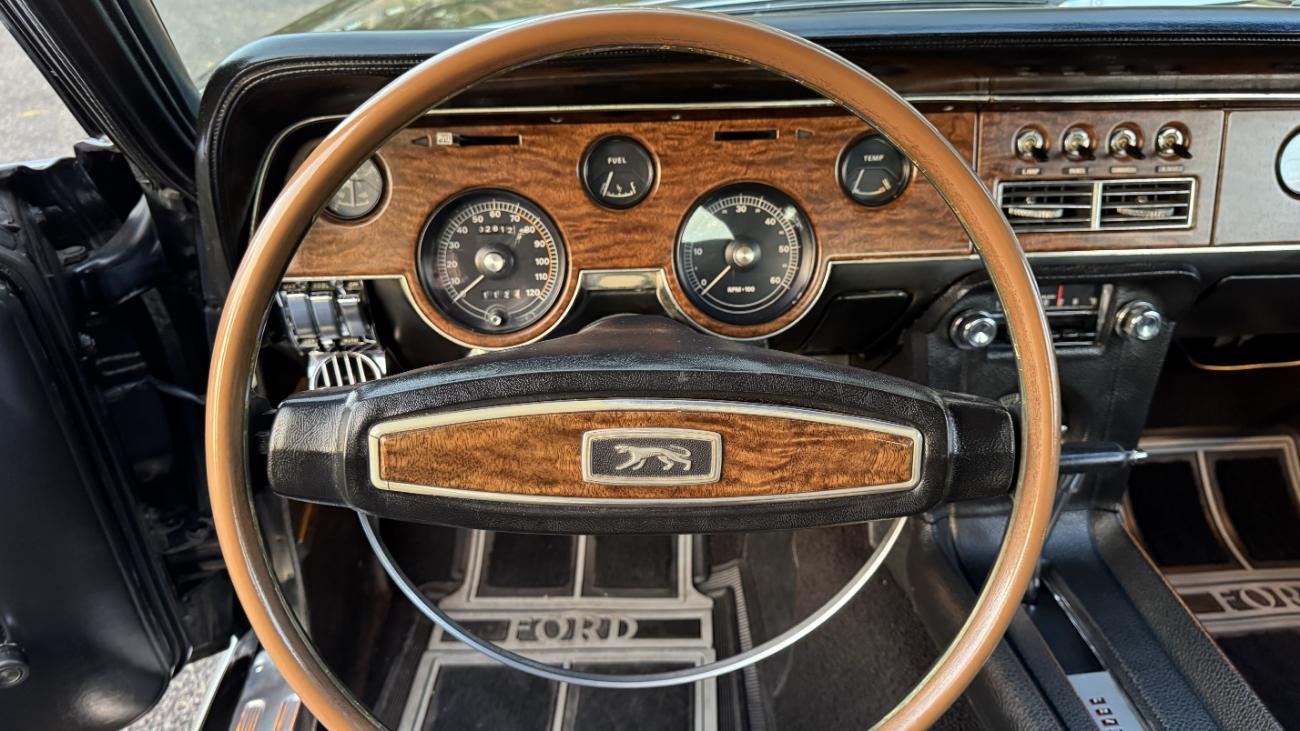
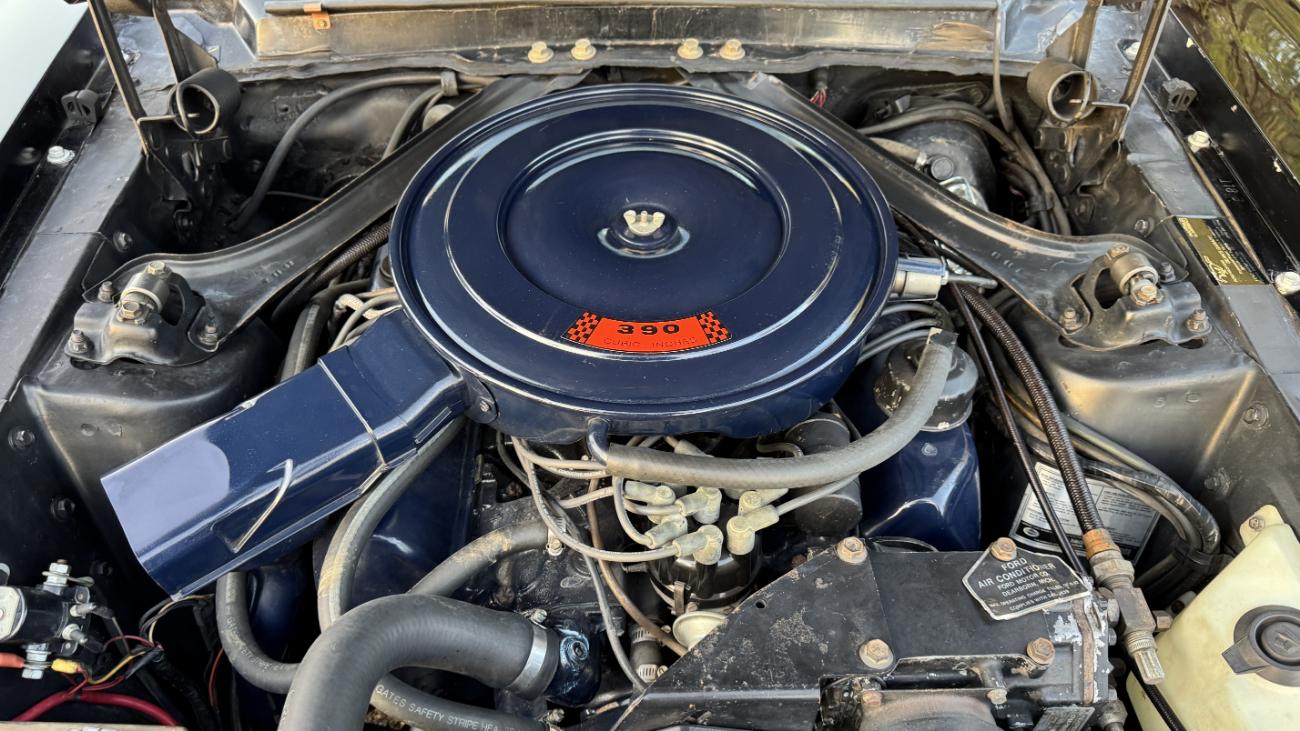
Both Cougar models returned for 1968. For performance fans, the 427 was introduced with the GT-E package, to be succeeded by the 428 Cobra Jet in April (and available on non-GT-E cars as well). However, those looking for something in between standard small-blocks and performance big-blocks could find a new 390 two-barrel that offered big-block torque combined with a bit of economy. Officially known as the Marauder 390 P V8, this engine offered 280 horsepower with 10.5 compression, so it required premium fuel. The only transmission offered was the Select-Shift Merc-O-Matic automatic. At the end of the model year, only 3,254 Cougars were built with this engine, of which 2,037 were XR-7s. In fact, more Cougars with the 390 four-barrel were built (ditto the Mustang), if that gives you any indication how much the market cared about such a combination.

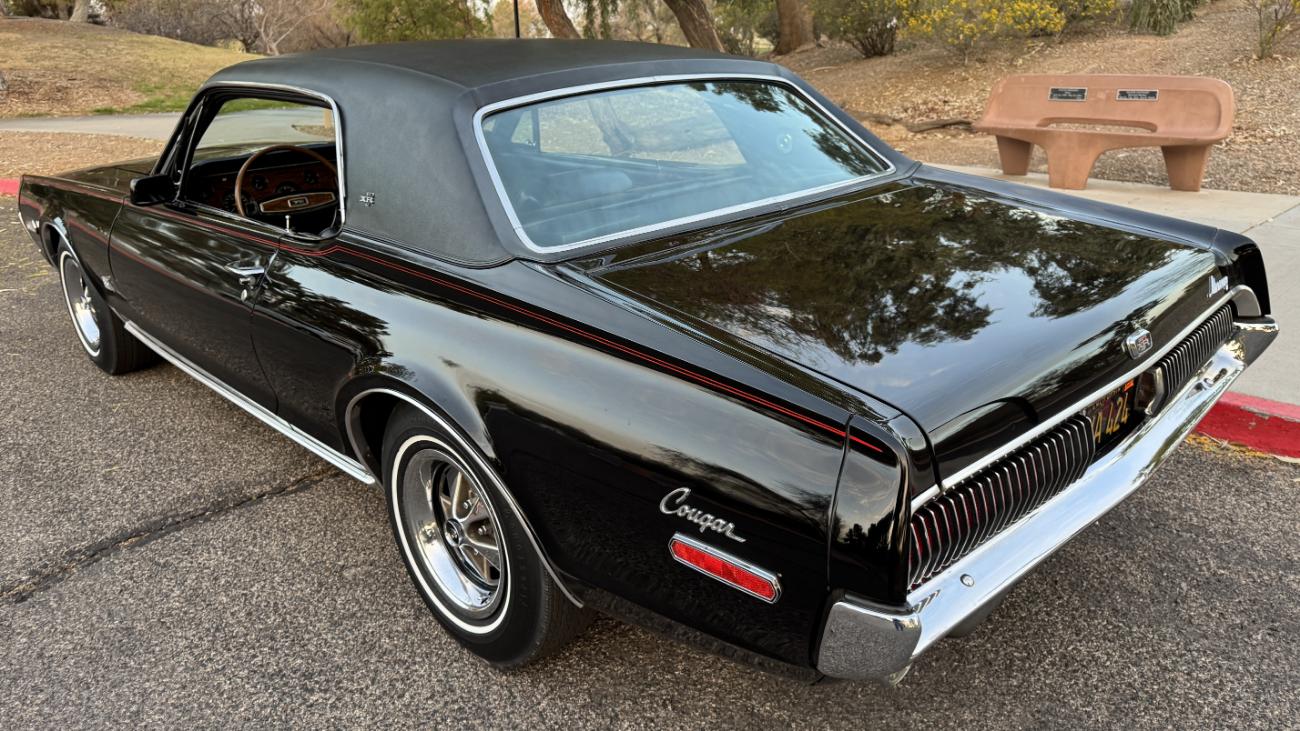
In the world of pony cars, only the 1970-71 Plymouth Barracuda and Dodge Challenger offered a big-block two-barrel, so it was an unusual proposition, though the Mopars sold better with this configuration. Nonetheless, this 1968 Mercury Cougar XR-7 is a fine example of this quasi-anomaly. It’s an original California car (delivered to Santa Monica) painted Onyx Black with a matching vinyl top and leather/vinyl interior. The rear gears have a lazy 2.75:1 ratio, but the 390’s torque prevents this Cougar from appearing underpowered. Other features include air conditioning, a tilt wheel, power disc brakes, an AM/FM stereo, tinted glass, door edge guards, and bumper guards front and rear.

No matter what happened to be under the hood, this Cougar XR-7 would be a standout. The unusual engine gives it a distinction that no Brand X pony car can match. For $49,500, this is prime luxury sports car.

Click here to view this Pick of the Day on ClassicCars.com

“Little GTO, you’re really lookin’ fine…”

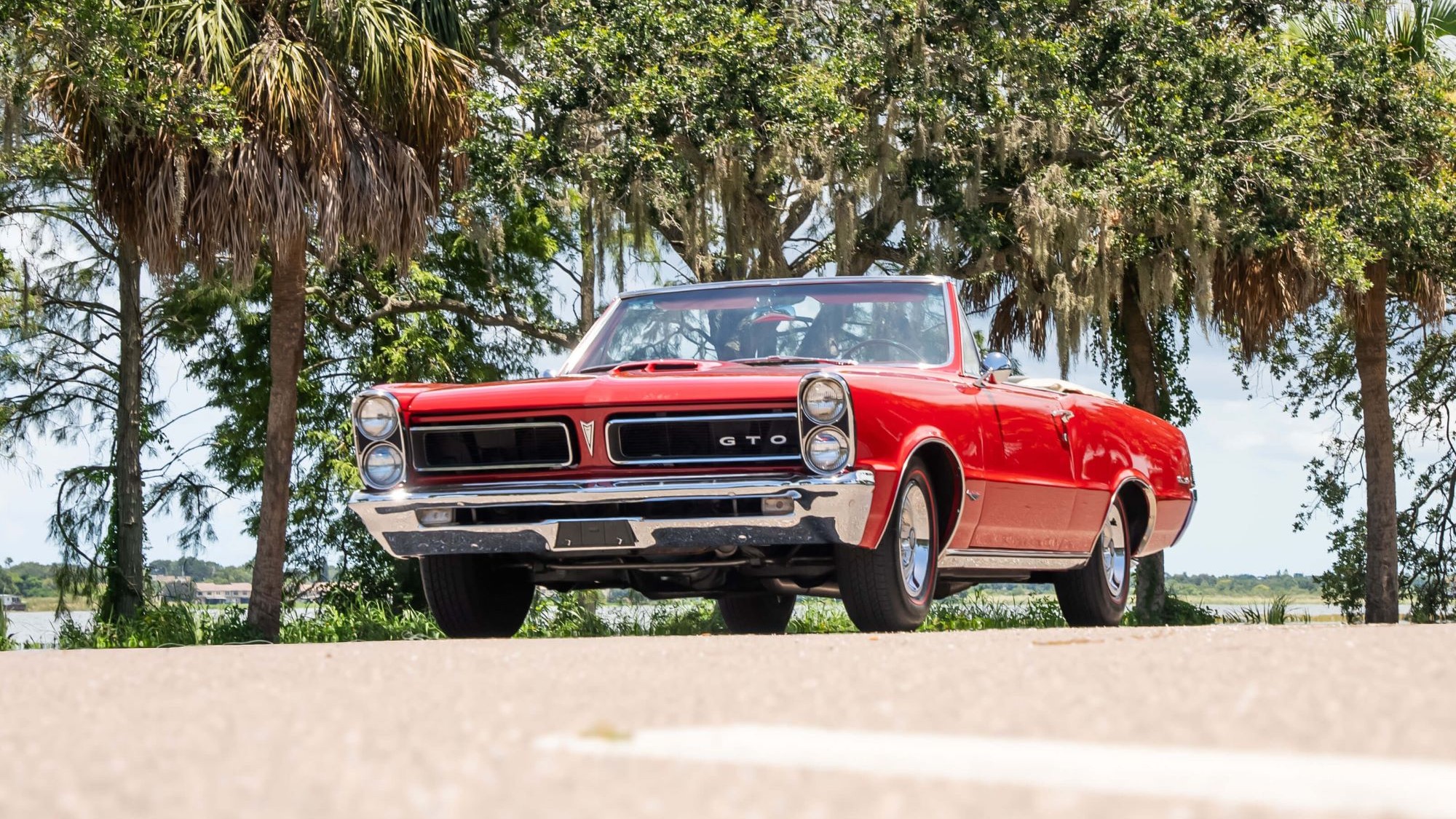
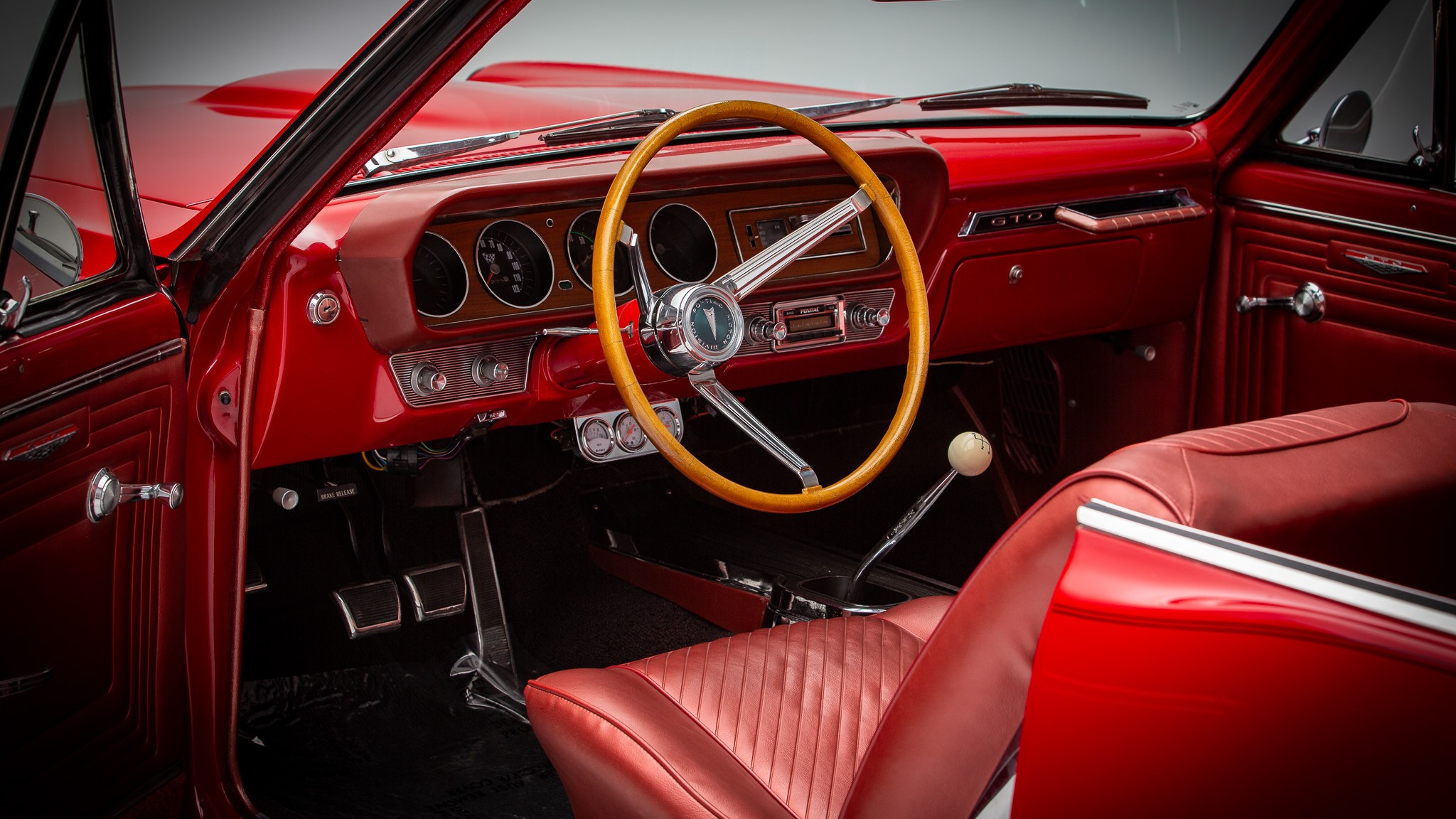
If those lyrics take you back—or make you wish you were there—this is your moment. Because the car that kickstarted the muscle car revolution, the 1965 Pontiac GTO, could be parked in your garage. But time is running out.

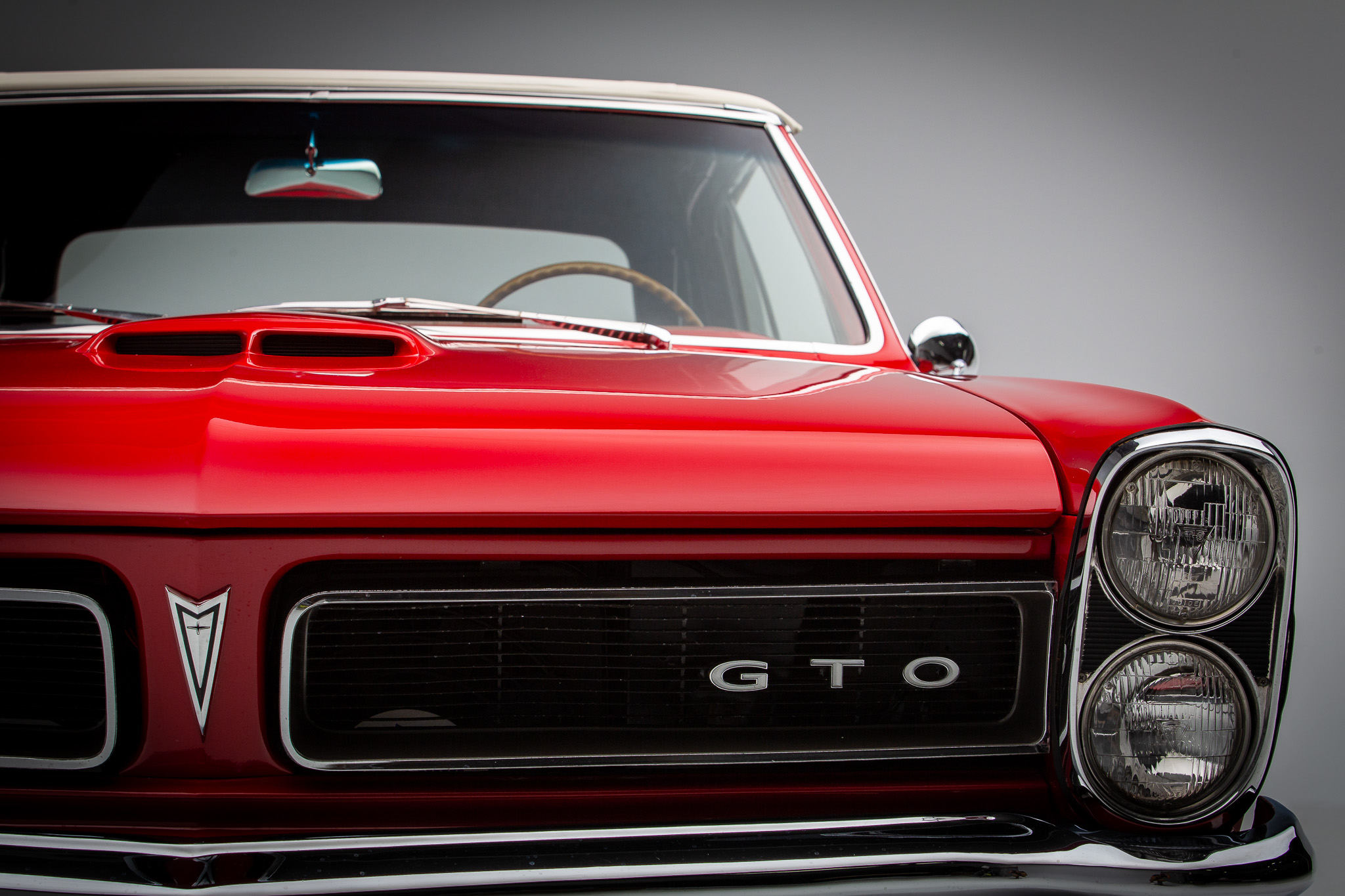
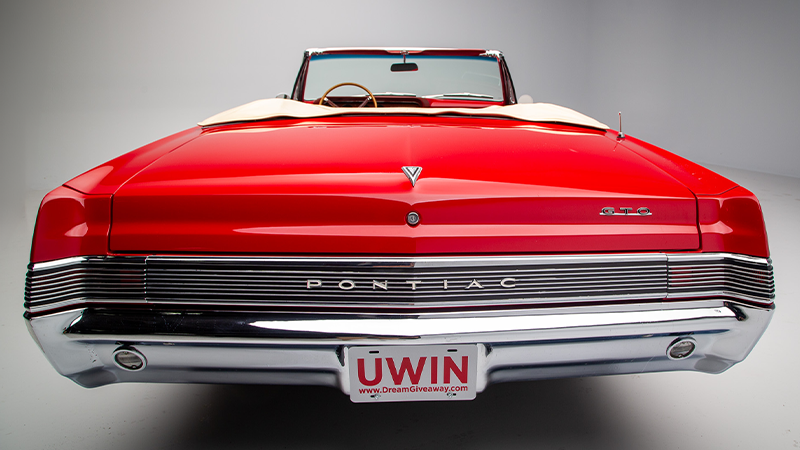
This isn’t just any GTO. This is a rotisserie-restored, Tri-Power, four-speed, convertible legend with all the right ingredients: Montero Red paint, matching red interior, white drop top, and a growling 389ci V-8 with triple carbs. This GTO was built to turn heads, leave rubber on the road, and make hearts race.

And yes, Dream Giveaway is giving it away.

Even better, Dream Giveaway will cover $25,000 toward the taxes, so the only thing you need to focus on is how good you’ll look behind the wheel. Click here to enter now!

Whether you call it The Tiger, The Goat, or The Humbler, there’s no mistaking the GTO’s place in history. When Pontiac first rolled it out in 1963, it wasn’t just a car—it was a cultural shift. Car and Driver famously compared it to a Ferrari. America called it something else: unstoppable.

Dream Giveaway scoured the country for the best example of this American icon and found a GTO that checks every box. From its muscular Muncie 4-speed to its limited-slip rear axle, this car is built for driving, not just displaying. It’s a full-body adrenaline rush, wrapped in vintage chrome and muscle.

But this opportunity won’t wait.

The deadline to enter is almost here. Just one donation puts you in the running to win this unforgettable piece of automotive history. Even better, your entry supports veterans and children’s charities—so you’re not just chasing a dream, you’re helping those in need.

159 people have already won their dream vehicles since 2008. You could be next.

So, what are you waiting for? The top is down. The engine’s warm. The open road is calling.

Enter now for your chance to own the most iconic muscle car ever built—the 1965 Tri-Power Pontiac GTO convertible. Entry deadline is midnight on May 15th.

Turn it on. Wind it up. Blow it out… GTO.

This ’32 Ford roadster was built using a fiberglass body and boxed steel frame fabricated by TRC Auto Reproduction of Lavonia, Georgia. Completed in 2020, the car is powered by a 350ci Chevrolet V8 with an Offenhauser intake manifold and triple Holley carburetors. The engine is backed by a three-speed automatic transmission and a Ford 9″ axle with an Eaton Suretrac locker and 3.55 gears, and the car rides on staggered-width Ridler 15” wheels with four-wheel disc brakes, a Pete & Jake’s front drop axle with hairpin radius rods, and a four-link rear setup with adjustable coilovers. Inside, brown vinyl upholstery is joined by a floor shifter, a central instrument bezel, and AutoMeter gauges. Other highlights include a tilt-out windshield, chrome headlight buckets, and tubular headers. This Highboy hot rod was acquired by the seller in 2022 and is now offered with a Georgia title in their name listing the car as a 1932 Ford.

The fiberglass body and boxed steel frame were sourced from TRC Auto Reproduction, and the seller tells us they were painted Viper Red. Details include a tilt-out windshield, a left-side mirror, and teardrop taillights in addition to a chrome grille insert, spreader bar, and headlight buckets. Paint chips and cracks in the windshield are shown up close in the image gallery below.

Ridler Halibrand-style 15×4” front and 15×10” rear wheels are wrapped in 145-series Firestone F-560 tires and Mickey Thompson 255/60 units, respectively. The suspension features a Pete & Jake’s drilled front drop axle with a transverse leaf spring and hairpin radius rods, while the live rear axle is supported by a triangulated four-link setup with adjustable coilovers. Braking is handled by four-wheel discs.

The bench seat is trimmed in brown vinyl that extends to the door and kick panel, and additional appointments include a double-bend floor shifter, black carpets, and red lap belts.

The body-color dashboard fascia is accented by a bright metal instrument bezel with AutoMeter instrumentation consisting of a 120-mph speedometer and gauges for oil pressure, coolant temperature, fuel level, and voltage. The five-digit odometer shows 286 miles, approximately 150 of which have been added under current ownership.

The 350ci Chevrolet V8 breathes through triple Holley carburetors mounted on an Offenhauser intake manifold. Short-tube exhaust headers and and finned valve covers were also utilized along with an aluminum radiator cooled by an electric fan.

Power is sent to the rear wheels through a three-speed automatic transmission and a Ford 9″ axle with an Eaton Suretrac locker and 3.55 gears, per the seller.

The car is titled in Georgia as a 1932 Ford using the VIN 71742. The title has a “conditional” notation.