
The 1990s were a golden era for Japanese car manufacturers, blending reliability, innovative engineering, and unique styling into affordable packages. While iconic models like the Toyota Supra or Nissan Skyline often steal the spotlight, numerous hidden gems from this decade remain largely overlooked. These underrated cars provide enthusiasts with exceptional value, combining engaging driving dynamics, proven dependability, and timeless charm—all without breaking the bank. Today, many of these lesser-known classics are still affordable and readily available, making them perfect candidates for budget-minded collectors or daily drivers seeking something distinctive. Let’s explore 15 underrated Japanese vehicles from the ’90s that deserve your attention.
The 1990s marked a vibrant era for automotive enthusiasts, defined by bold styling, advancing technology, and an increasingly competitive horsepower race. While iconic models like the Toyota Supra, Mazda RX-7, and Nissan Skyline often dominate conversations about this era, numerous other cars delivered exhilarating performance yet somehow slipped from memory. Hidden beneath more famous badges and enduring legends, these underrated vehicles offered power and acceleration that could surprise even seasoned drivers. Join us as we rediscover fifteen forgotten gems from the ’90s—cars that were far quicker, more thrilling, and significantly more impressive than most people remember today.
Choosing a truly rare muscle car means hunting down models so scarce that spotting one today feels like striking gold. Below are ten legendary American muscle cars, each produced in fewer than 100 examples. From all-aluminum racing engines to open-top Hemi convertibles, these machines combined earth-shaking power with extreme exclusivity—delivering heart-pounding acceleration and collectibility. Buckle up as we explore ten ultra-rare muscle cars, each packing enough thrust to leave any onlooker awestruck.
1. 1969 Chevrolet Corvette ZL1 (2 Made)
Chevrolet’s 1969 Corvette ZL1 was essentially a race car in street clothes. Under its hood, an all-aluminum 427-cubic-inch V8—sourced directly from Chevy’s Top Fuel dragsters—delivered a conservative 430 horsepower rating on paper, but in practice output hovered closer to 550 hp at the crank. Bolted to a beefy M22 “rock crusher” four-speed, this Corvette rocketed to 60 mph in around four seconds—astonishing for the era.
Only 2 examples were built, making the ZL1 an instant legend. Its lightweight engine block and aggressive camshaft gave the Corvette blistering throttle response, ensuring that any twist of the gas pedal launched it down the quarter mile with authority.
Sweden’s automotive heritage is defined by a unique blend of rugged practicality, innovative safety engineering, and unexpected performance flair. From the humble family cruiser to turbocharged rally machines, Swedish marques carved out niches that combined reliability with an understated excitement. Below are ten legendary Swedish cars from Volvo and Saab—each a testament to Scandinavian design’s blend of function, form, and fun. Buckle up as we traverse decades of clean lines, potent engines, and automotive milestones that continue to inspire enthusiasts worldwide.
1. Volvo PV444
Launched in 1947, the Volvo PV444 marked a turning point for postwar European automaking. Its unibody construction and efficient 1.4-liter straight-four produced about 40 horsepower—modest by modern standards but spirited enough to handle rugged Swedish roads. With its distinctive rounded fenders and sloping hood, the PV444 blended charming aesthetics with unexpected agility.
The hot-rodders of the 1950s discovered that swapping in larger B-series engines, including the 1.6- and 1.8-liter units, transformed the little Volvo into a quick street performer. Its robust chassis and simple suspension made it a favorite for rally raids, earning the PV444 its reputation as the car that put Volvo on the performance map.
Choosing the right mid-size pickup truck means finding a balance between rugged capability, responsive performance, and everyday usability. In 2025, several models deliver muscular power, refined handling, and attractive styling without tipping into full-size territory. Whether you need a weekend adventurer or a reliable workhorse, these ten mid-size pickups excel in power delivery, towing capacity, and driver-focused comfort.
Below, we explore ten attractive mid-size trucks available today—each packing enough grunt to satisfy gearheads while retaining maneuverability for urban streets. Buckle up as we dive into ten standout mid-size pickups you can own right now, each boasting its unique blend of performance, poise, and practicality.
1. Ford Ranger
The Ford Ranger mixes a bold, rugged exterior with engines that pack genuine punch. Under the hood, the 2.3-liter EcoBoost four-cylinder cranks out 270 horsepower and 310 lb-ft of torque, delivering instant throttle response whether you’re towing a trailer or carving through off-road trails. With its off-road-focused Tremor package, the Ranger gains a lifted suspension, all-terrain tires, and heavy-duty skid plates—perfect for adventurous drivers who demand both traction and reliability.
On paved roads, its independent front suspension and refined chassis tuning allow for predictable handling and minimal body lean. Inside, driver-assist features like adaptive cruise control and lane-keep assist combine with an intuitive infotainment system to make every drive feel composed and controlled.
Making one change can lead you down a slippery slope. Modifying cars is a great example. Say you want to lift your XJ Jeep Cherokee for a little more ground clearance. Once you raise it up about three inches, you realize your tires look a little wimpy, so you upgrade them to chunkier all-terrains. Those changes enable you to take on more challenging trails, which means you need to protect the body of your rig with a brush guard and rock sliders, and on and on and on. Whoever altered our Pick of the Day, a 1949 Packard Eight Station Sedan posted on ClassicCars.com by a private seller in Colorado, seems to have made that same rapid descent.
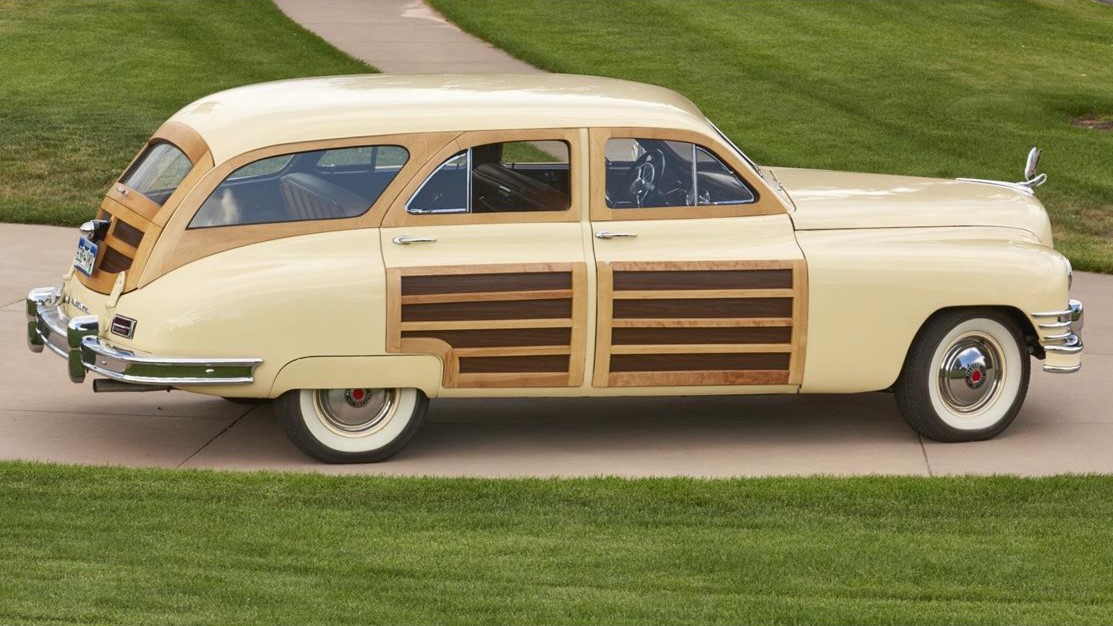
This Station Sedan (which looks an awful lot like a wagon) was recently restored inside and out, according to the seller. The bathtub-like exterior was repainted in the current cream color and accented with fresh chrome and new wood trim on the greenhouse, doors, and rear end. A new set of wide-whitewall tires makes sure this woodie can log miles for years to come.
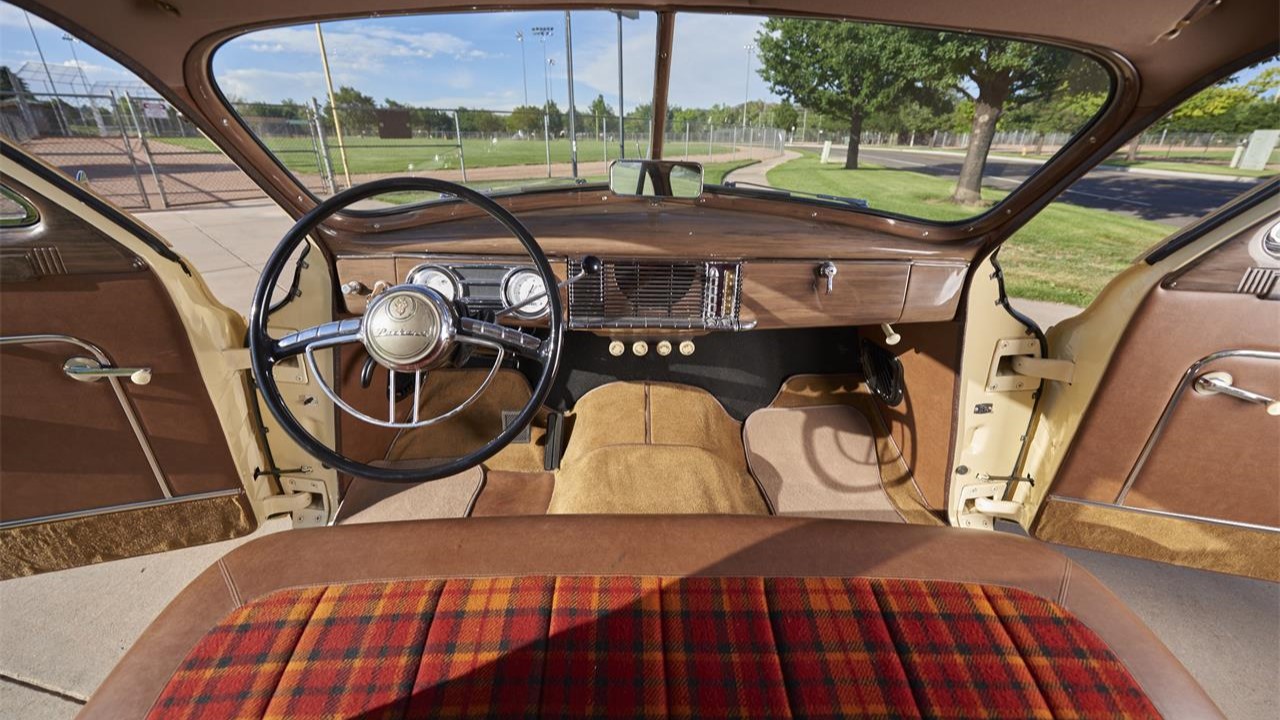
The cabin also got some attention when the seating was reupholstered with brown vinyl and red, orange, and black plaid fabric inserts, which give this unusual vehicle a bit of an outdoorsy flair. Those colors also coordinate well with the brown dash and door panels, and tan carpeting. An automatic transmission and power steering add convenience to that style.
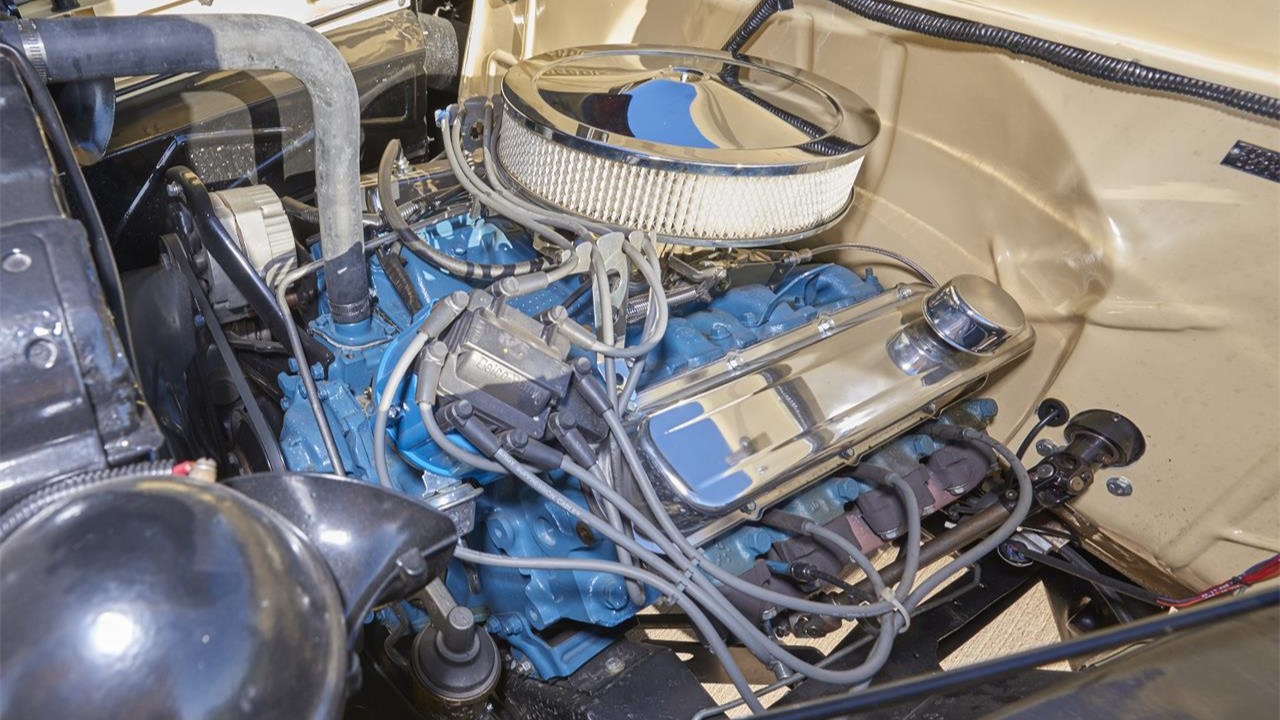
On the way to the bottom of the slippery slope of alterations, the seller made a major change under hood. Unlike many of its competitors, Packard was slow to offer a V8 of its own, instead carrying on with its straight-eight. That changed in 1955, by which time the Station Sedan had been out of production for five years. Luckily, this ’49 was upgraded with a 425ci V8, albeit one from Cadillac.
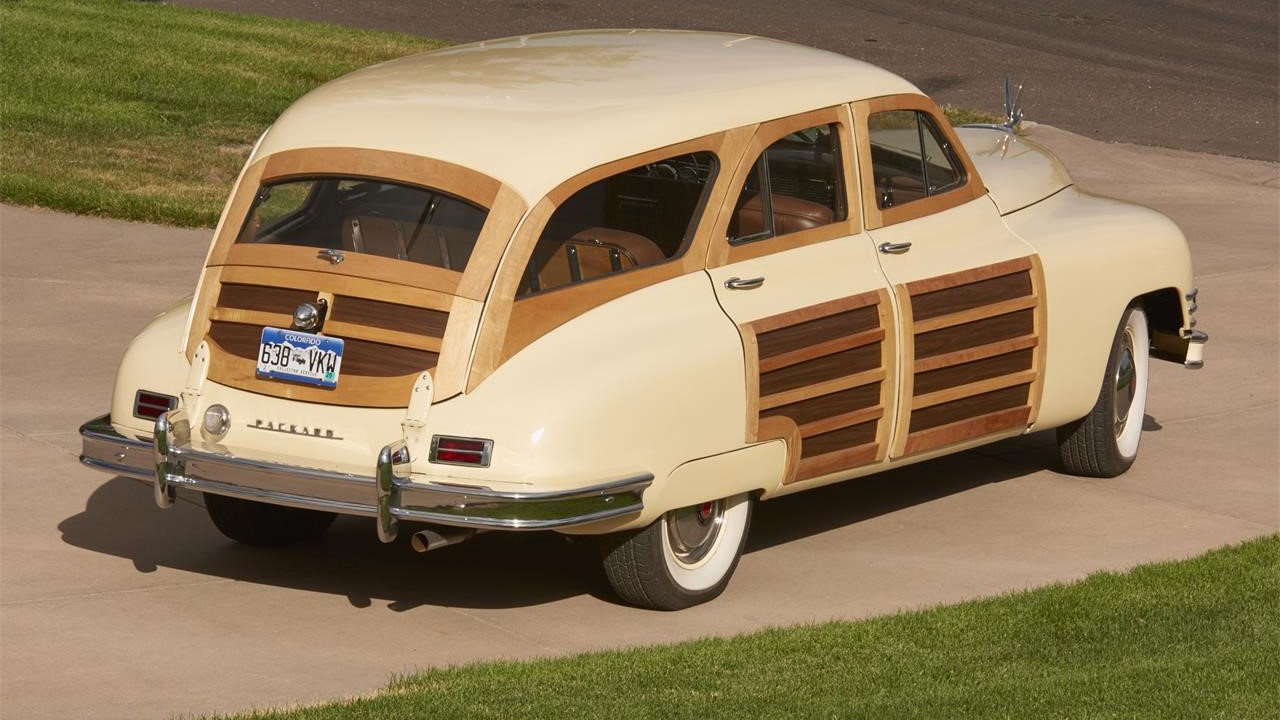
Whether you call this 1949 Packard a sedan or a wagon, just know that if you want to call it yours, it’ll take $42,500.
Click here to view this Pick of the Day on ClassicCars.com
When Hyundai spun off Genesis as its standalone luxury brand, it had capital, resources, and expertise to draw upon, but none of those guaranteed the upscale division’s success in a space populated by juggernauts such as Mercedes-Benz, Audi, Lexus, and BMW. Genesis has done something (actually, a lot of things) right because 2025 marks its 10th anniversary. It’s also brings a refreshed G80, which has new exterior and interior styling as well as updated technology. I recently spent a week in the flagship model of the range: the G80 3.5T Sport Prestige.
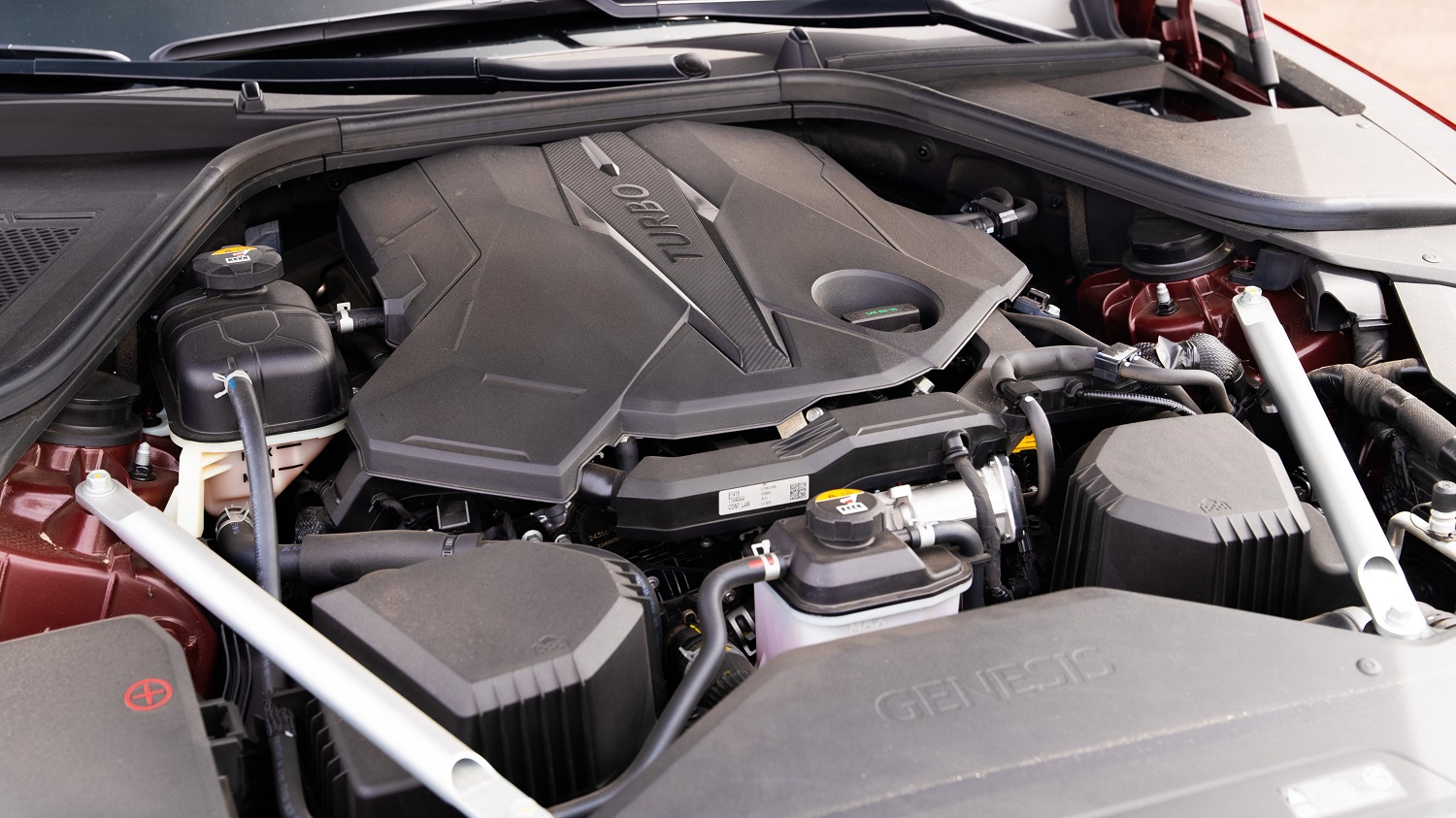
As its name implies, the 3.5T Sport Prestige comes equipped with a 3.5-liter V6 engine, which has twin turbos that boost output to 375 horsepower and 391 lb-ft of torque. Like the rest of the G80 range, the top model has an eight-speed automatic and all-wheel drive.
The Sport Prestige suffix is also self-explanatory. It combines luxuries such as Nappa leather, carbon fiber trim, and a suede-like microfiber headliner with performance-focused features that include a head-up display, Sport+ drive, limited-slip rear differential, and rear-wheel steering. In its most basic form, the G80 3.5T Sport Prestige has a starting price of $77,000. My test car’s optional Cavendish Red paint and NFC card raised its as-tested price to $78,930.
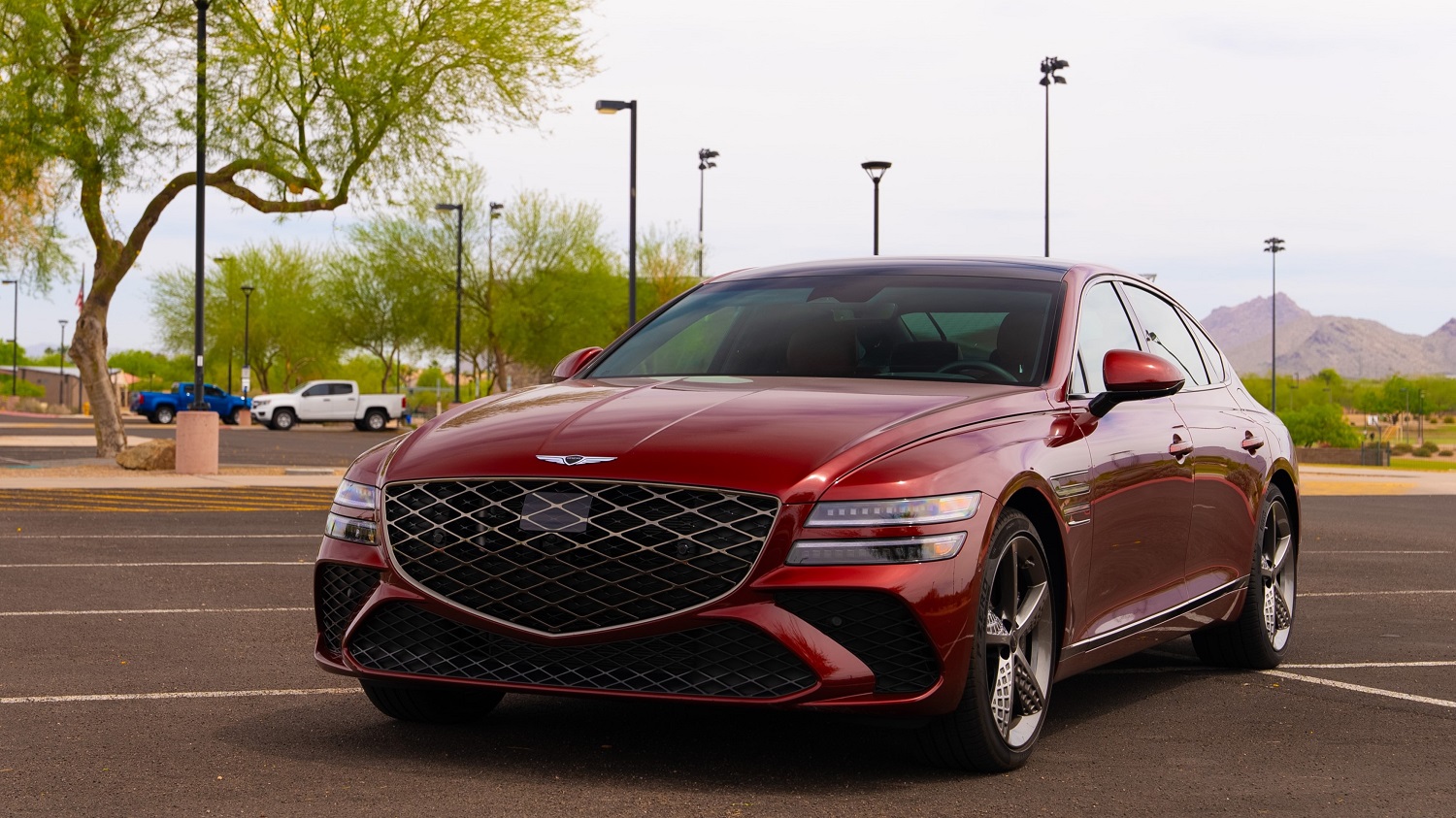
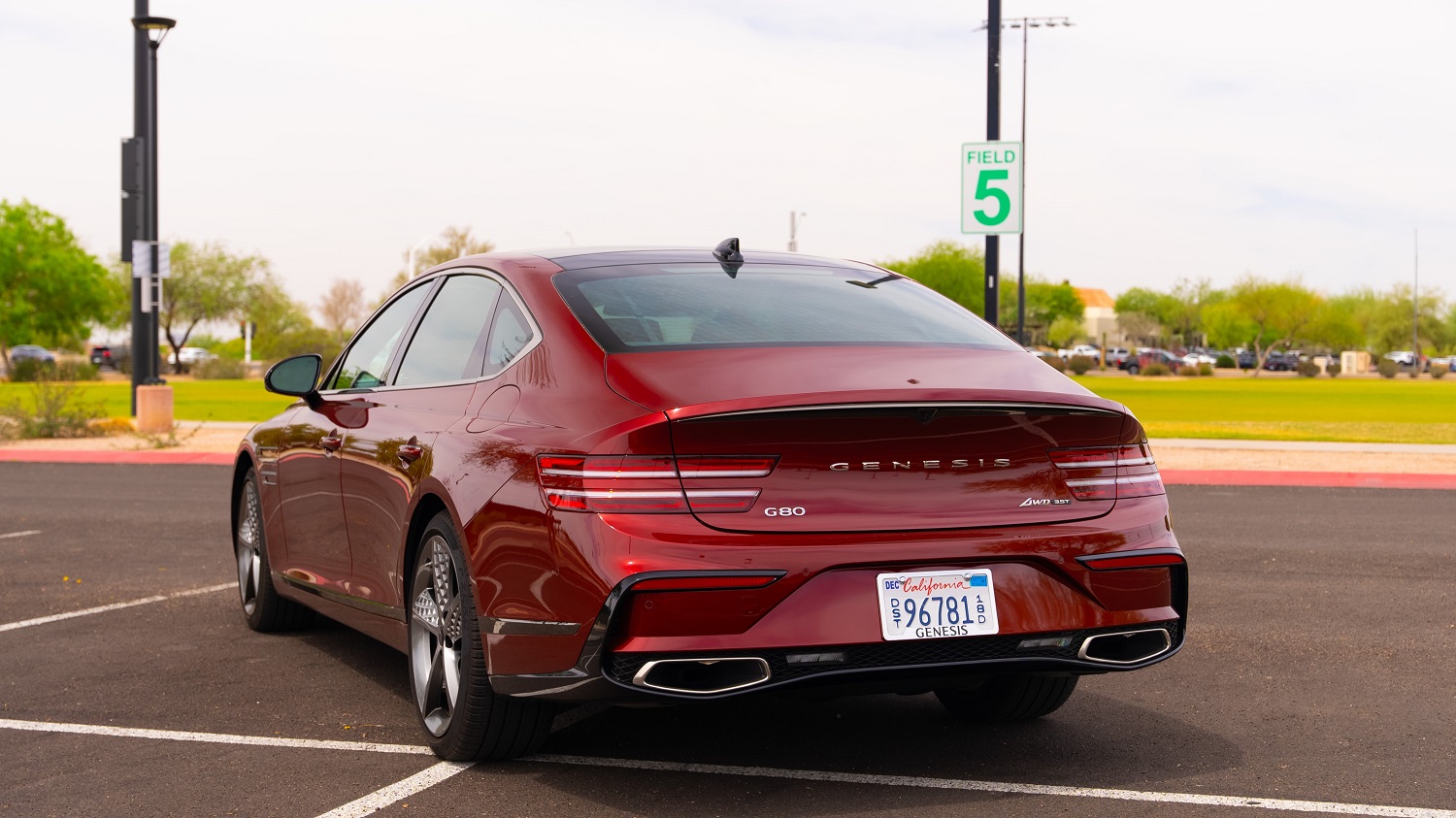
This year’s mid-cycle refresh updates the front and rear fascias. Like its 2025 GV80 SUV sibling (which we reviewed here), the G80 gets upgraded headlights with Micro Lens Array technology that’s essentially designed to provide better illumination without being a nuisance to other drivers on the road. Only the 2.5T models have new wheel designs, but all models now come with four-piston monobloc front brake calipers. Genesis made minor revisions to the G80’s rear end, stopping short of doing away with its crest-shaped exhaust outlets as it did with the GV80.
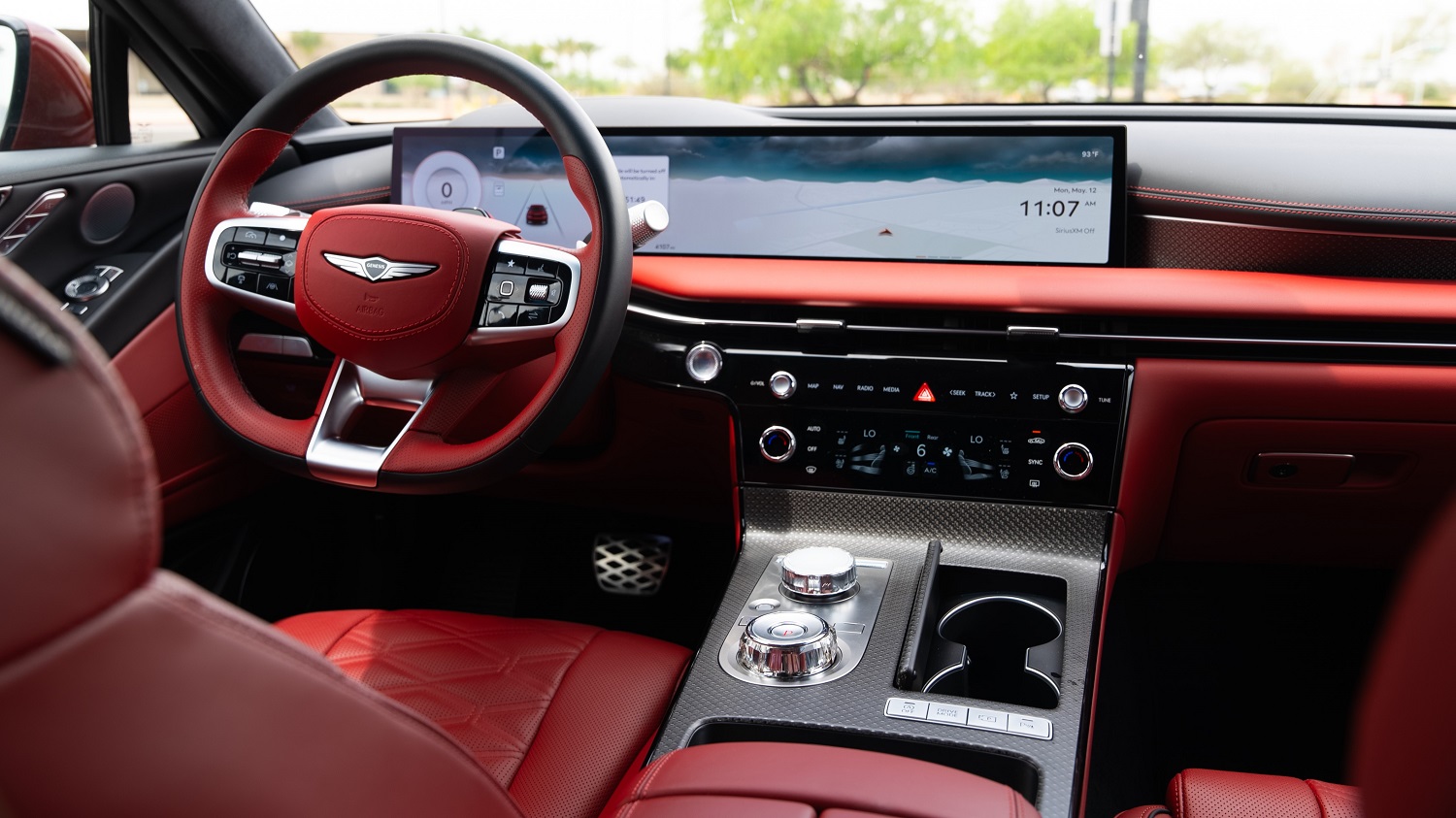
The 2025 G80’s interior revisions are much more noticeable, especially in the G80’s available Sevilla Red and Obsidian Black color scheme. Everything in front of the driver and shotgun passenger is new. Once separate units, the gauge cluster and infotainment screen have been combined into a massive 27-inch OLED display, which protrudes from a new dashboard. A revised steering wheel replaces the outgoing unit. The redesigned center stack houses a touch-sensitive panel for the HVAC controls and flows into an updated center console.
Over the past several years, I’ve tested multiple Genesis models, including the pre- and post-refresh versions of the G70, GV80, and second-generation G80. One of the many things that the brand has done right is not only make attractive vehicles, but vehicles with an immediate identity. When you see those Two-Line headlights or taillights, you know right away which brand of car they’re on. While not as visually singular inside, Genesis models look and feel worthy of their price tags, joining flashy modern tech with flowing lines, elegant materials, and soft-touch surfaces. On the road, they have the refinement and composure – as well as the power – expected from luxury vehicles.
All of those things are true of the 2025 Genesis G80. While it is an example of the brand’s characteristic strengths, its execution in certain areas does leave something to be desired. Yes, the OLED display is impressively large, but it was artlessly inserted rather than integrated into the gracefully shaped cabin around it. In most scenarios, the electronically controlled suspension did a fine job of insulating me from the road’s imperfections. However, no matter how cushy it happened to be, it couldn’t mask the weight of the G80’s wheels. More of the G80’s shortcomings became apparent once I tested out the “Sport” in “Sport Prestige” on curvy roads. They certainly weren’t from a lack of effort; Genesis threw a lot of software and hardware into making the G80 handle better. Think of it in terms of sports: A regular person might perform better with good equipment and the right shoes, but no amount of gear is going to give him or her the abilities and spirit of a natural athlete. Although the G80 3.5T Sport Prestige has ample power and easy-to-modulate brakes, it inherently lacks those crucial traits.
To learn even more about the 2025 Genesis G80 3.5T Sport Prestige and see it in action, watch my video review below.
Click above and watch our full video review on YouTube!
This video is sponsored by Legendary Car Protection. Car ownership today comes with high expectations and high risks. A well-designed Vehicle Service Contract not only protects your finances, but also ensures your vehicle receives the care it deserves – no matter how iconic, rare, or routine it may be. To explore tailored protection options for your specific vehicle, visit LegendaryCarProtection.com.
The mid-20th century stands out as a pivotal era in automotive history—a time when pickups were transformed from humble workhorses into enduring American icons.
With rugged engineering, bold styling, and a no-nonsense attitude, these trucks embodied a spirit of resilience and innovation.
From farms to highways, their influence stretched far beyond utility, shaping culture and industry alike.
In this article, we’ll spotlight 20 legendary trucks whose legacies continue to inspire and captivate enthusiasts around the world.
The automotive industry is a world of high stakes and even higher ambitions. Over the decades, major car manufacturers have experienced dazzling triumphs—vehicles that redefined expectations and dominated the roads. Yet, these same brands have also faced humbling setbacks, from infamous design blunders to notorious flops that left a lasting mark.
This rollercoaster journey highlights one truth: success in the car world is never guaranteed. Join us as we explore twenty extreme hits and misses, revealing the unpredictable nature of this dynamic industry.
Step into the exhilarating world of American SUVs crafted not just for utility, but for sheer speed. These vehicles break the mold, seamlessly blending raw horsepower with modern technology and bold styling.
Whether you crave the sophistication of a luxury badge or the familiarity of iconic brands, these SUVs deliver pulse-quickening acceleration and performance worthy of the racetrack.
Get ready to explore the top 15 American SUVs that prove you don’t have to sacrifice excitement for practicality. Speed and versatility have never looked—or felt—so thrilling.