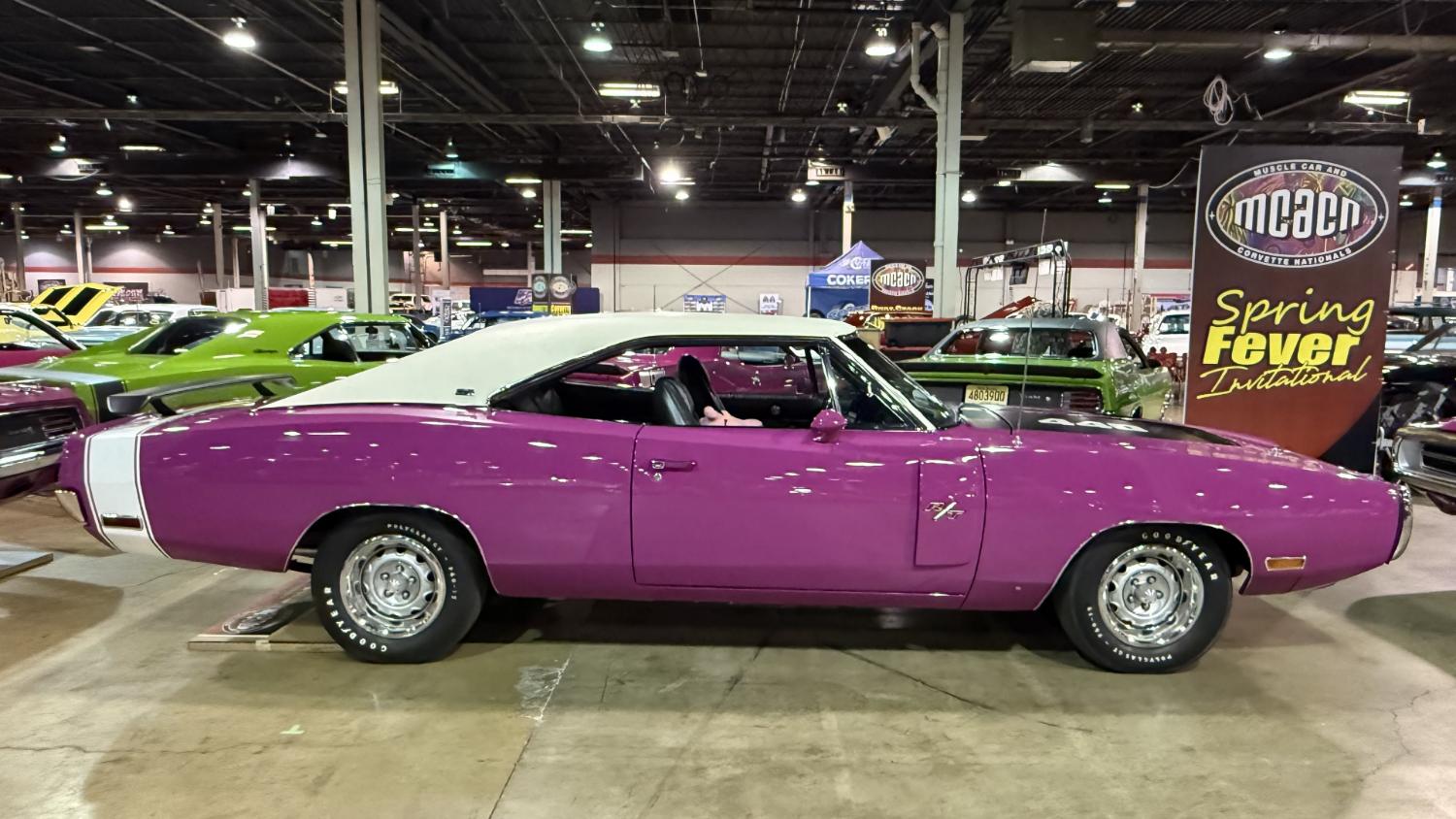
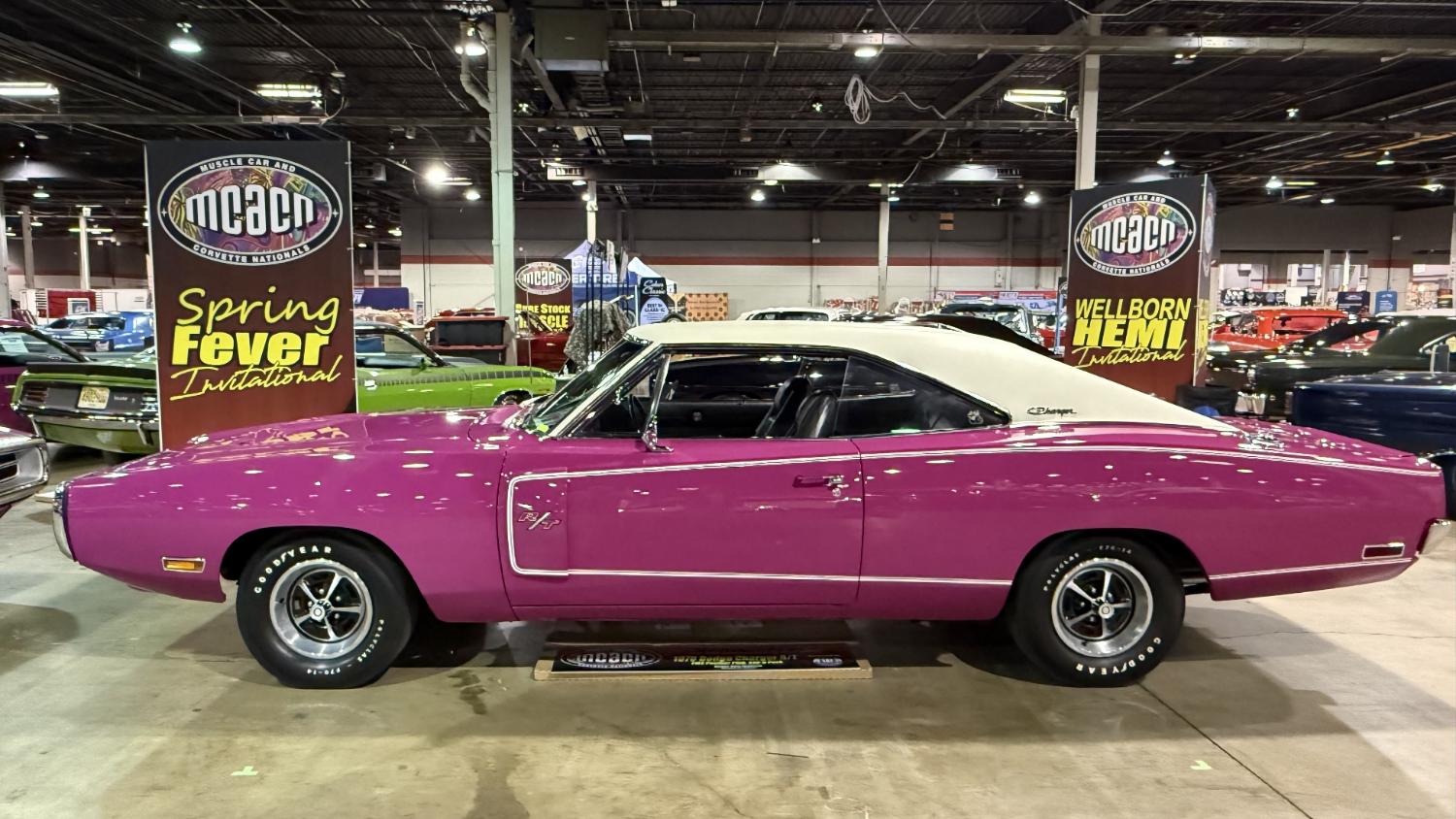
The postwar automotive market in the United States is full of spring marketing efforts to give sales a kick in the rear. When it comes to Plymouth and Dodge, one of the most famous features introduced in the spring was the pair of colors that are quite rare: FM3 and FJ6.
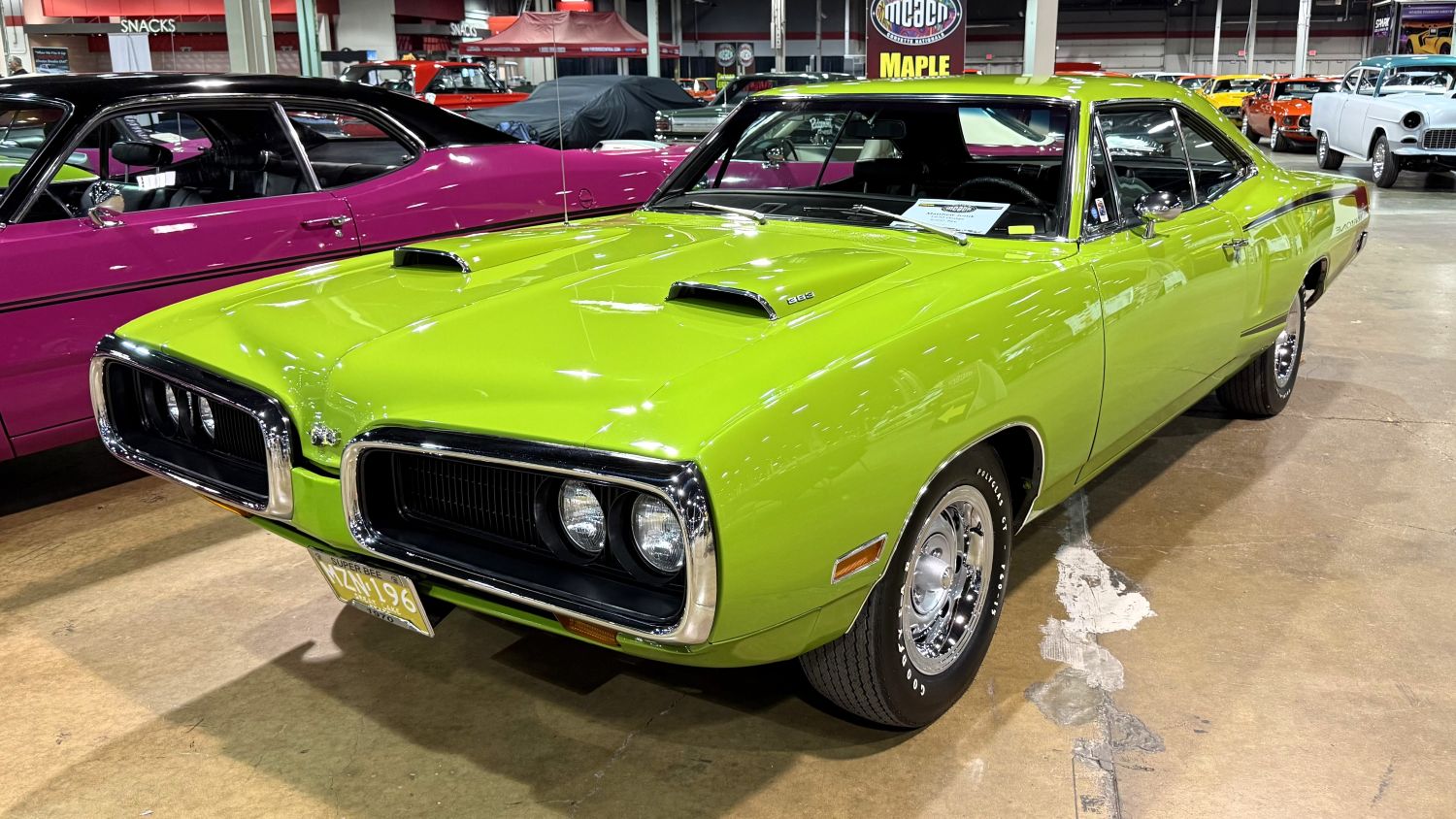
Note the different stripes on these two1970 Dodge Charger R/Ts.
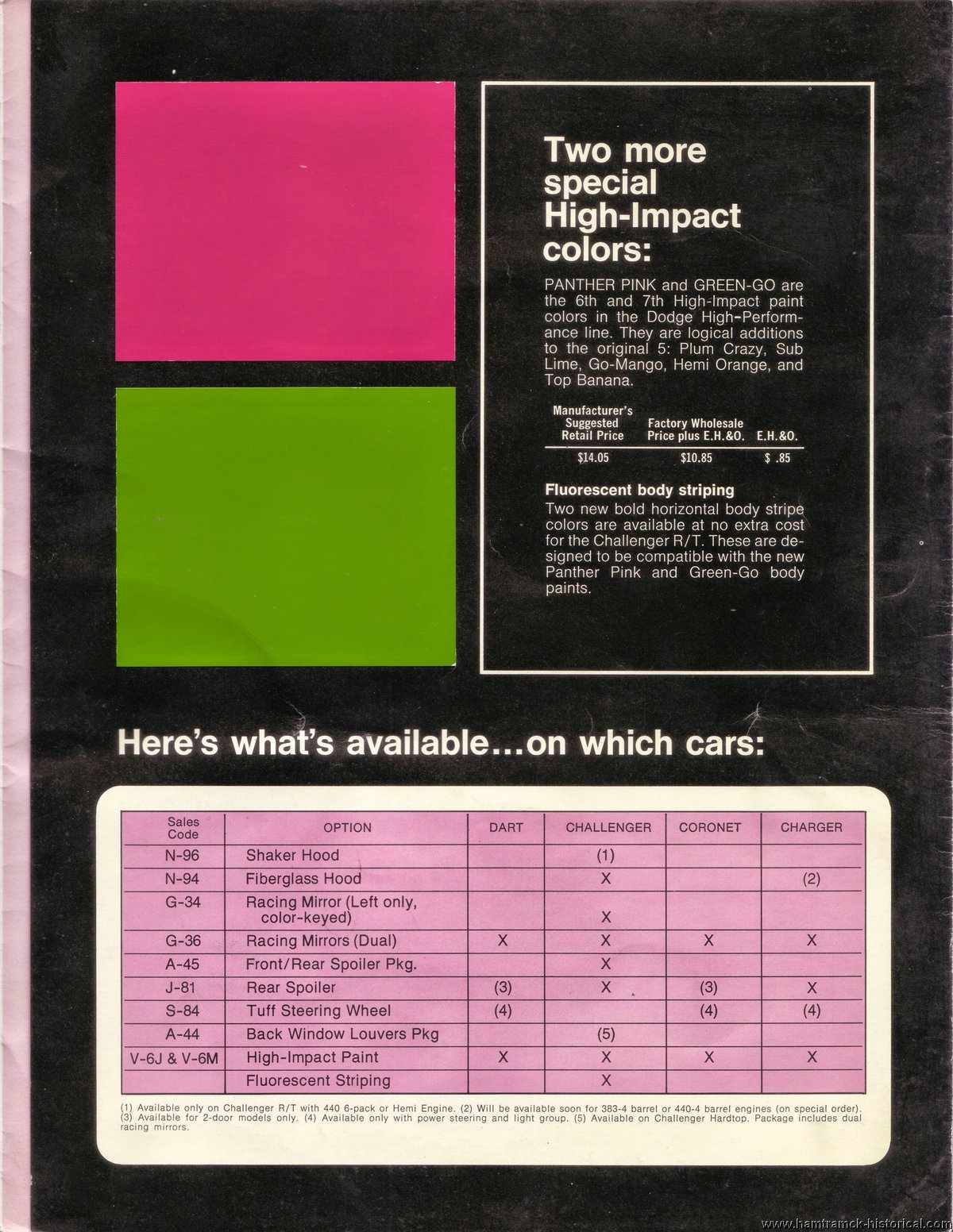
Those codes translate to Moulin Rouge/Panther Pink and Sassy Grass Green/Green Go, respectively. The magenta hue in particular commands a strong premium for any vehicle that came with it from the factory; the green, in comparison, is equally as rare but was carried over into the 1971 model year, so it tends to sit in FM3’s shadow.
Image courtesy of https://www.hamtramck-historical.com.
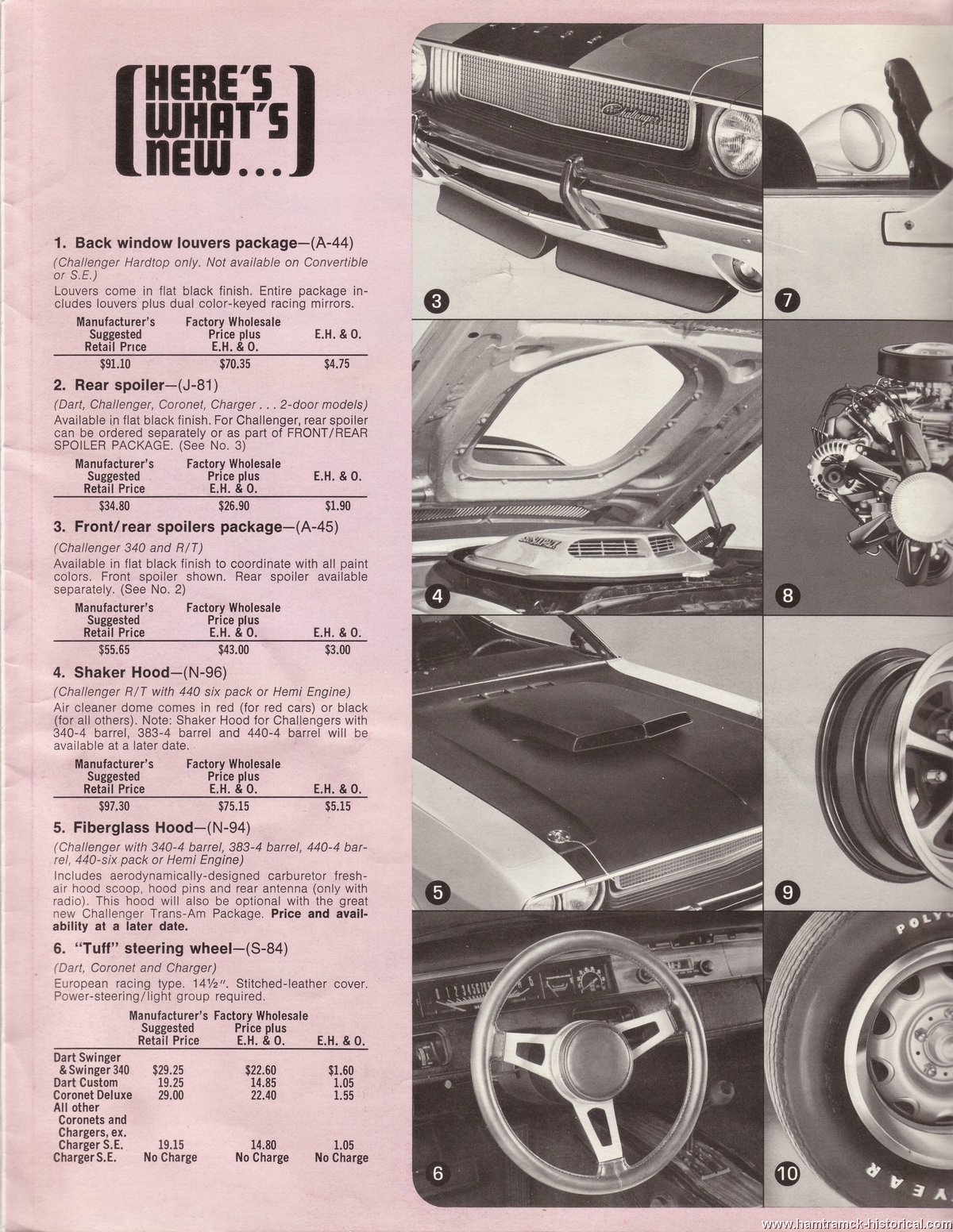
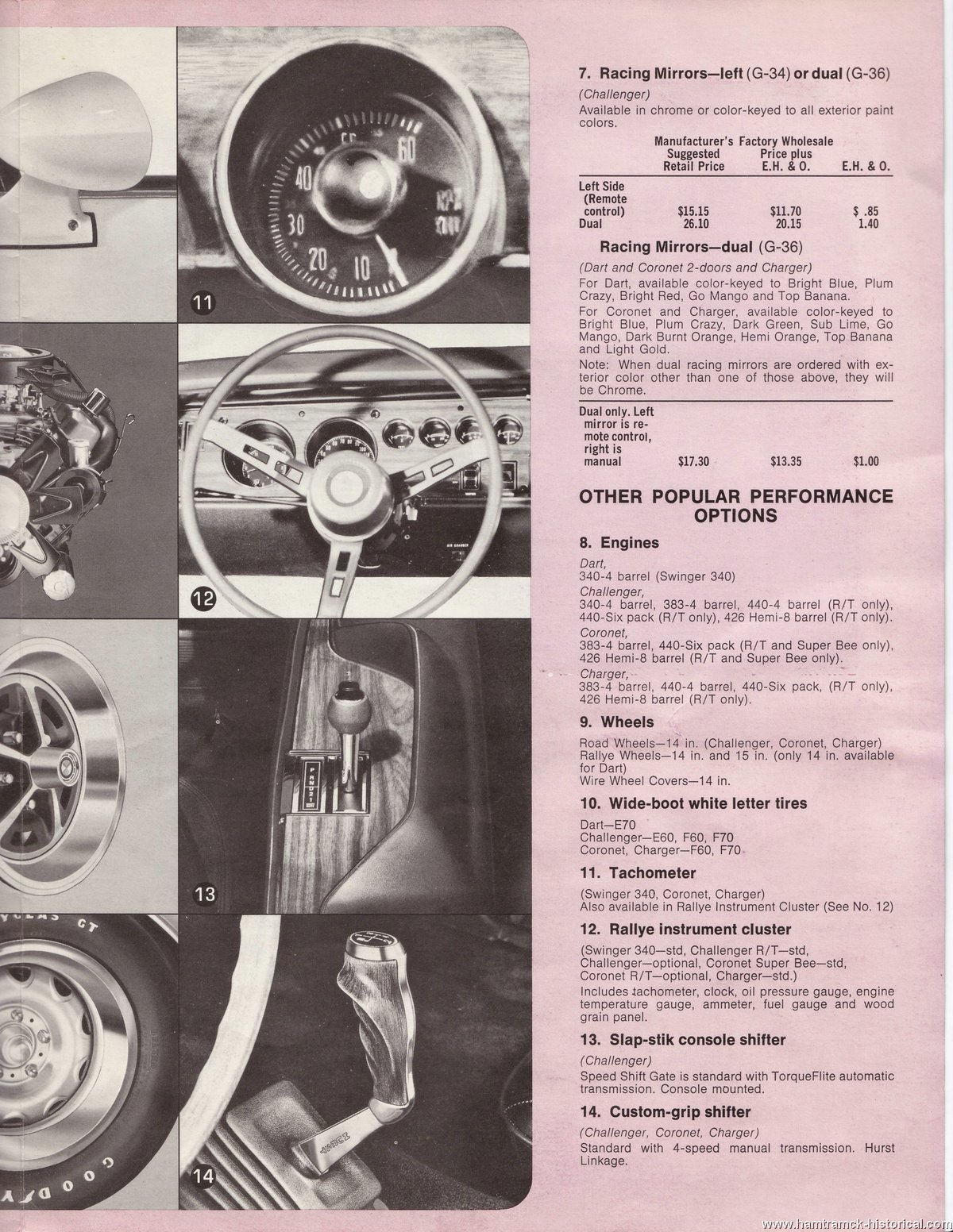
Those colors were among a bunch of other options that were introduced in the spring, though many happened to be delayed from the model year’s introduction and were not introduced to spur sales. Below, you can find several new features available for the Dodge Challenger.
Image courtesy of https://www.hamtramck-historical.com.
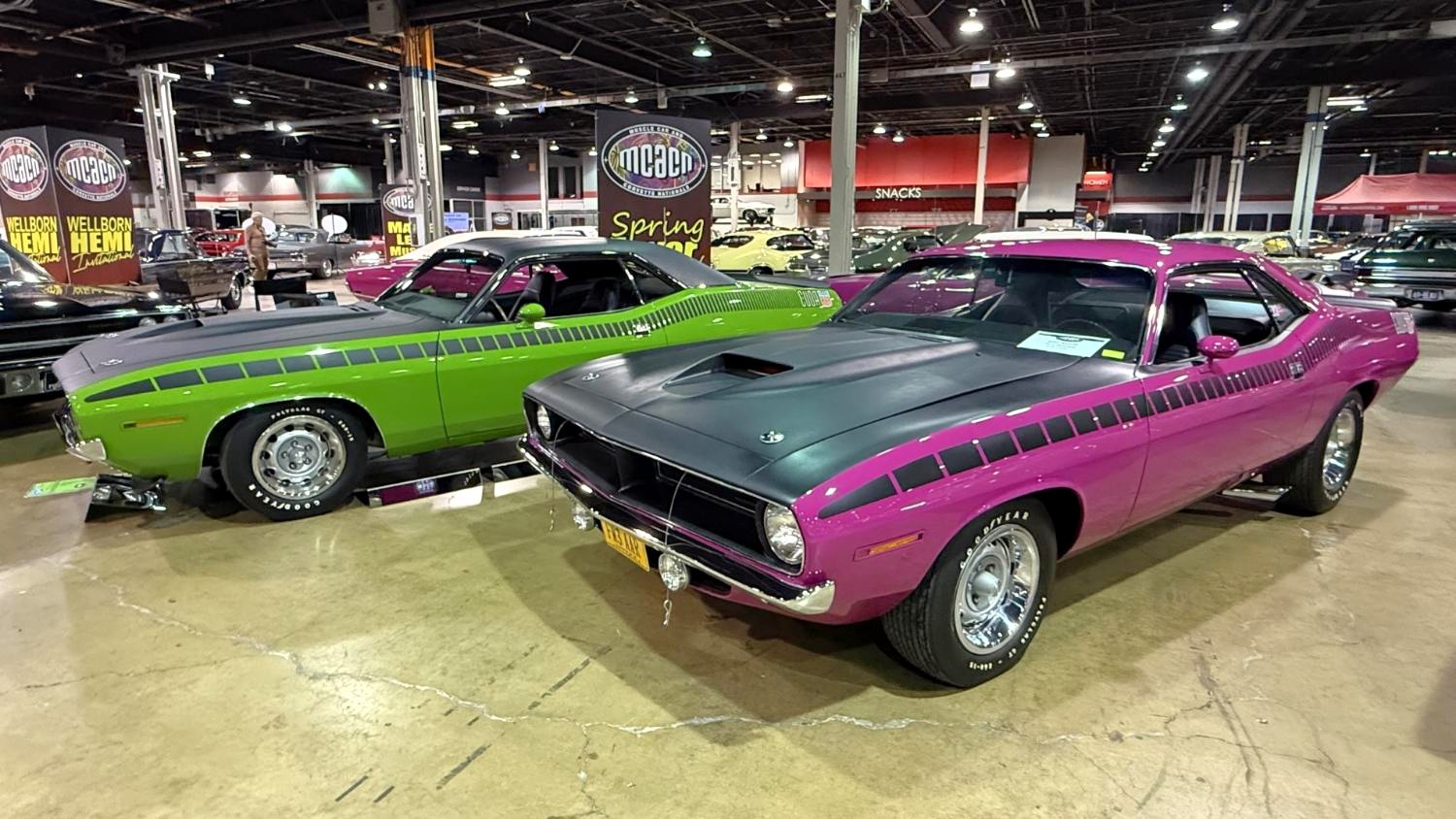
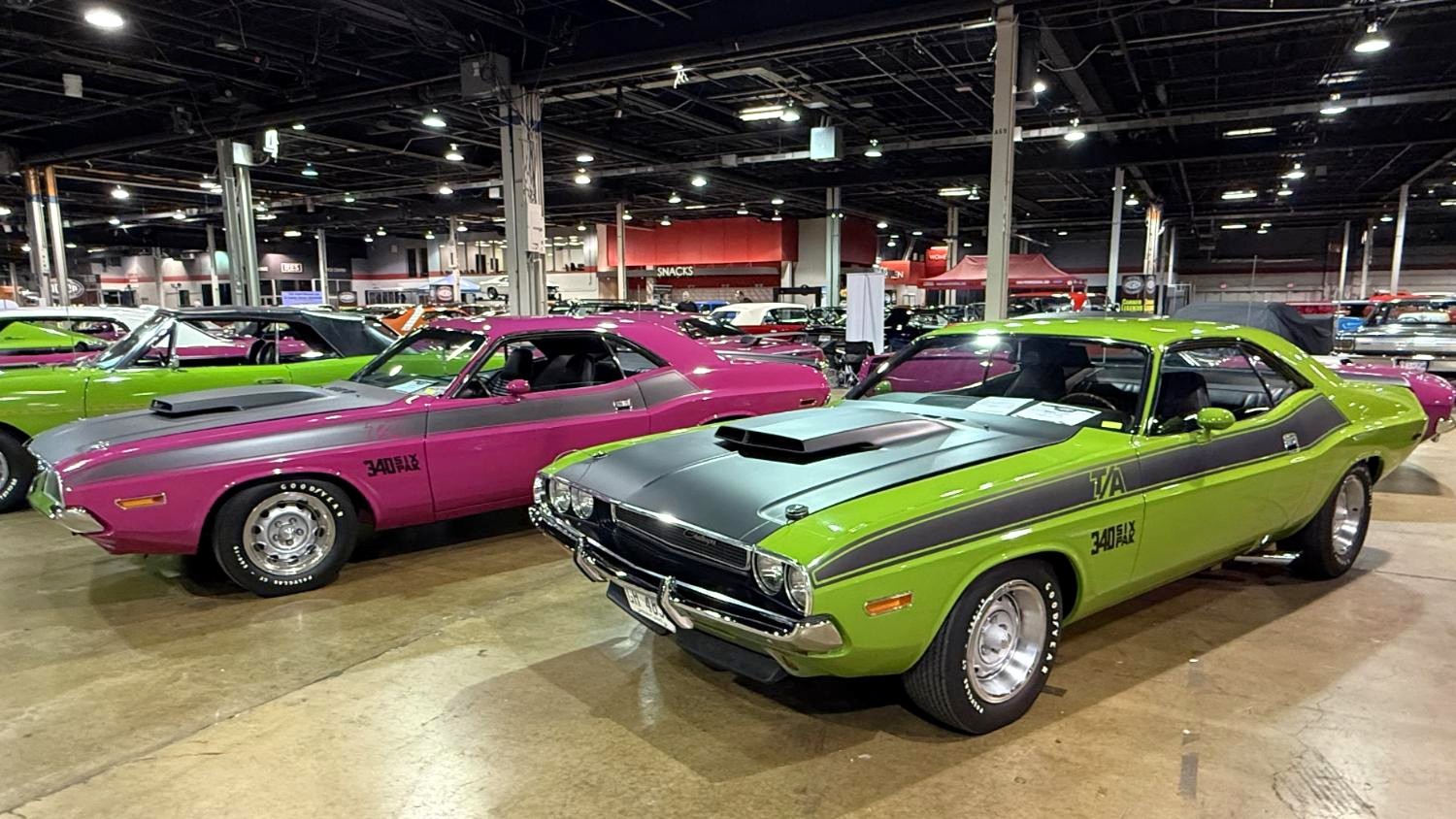
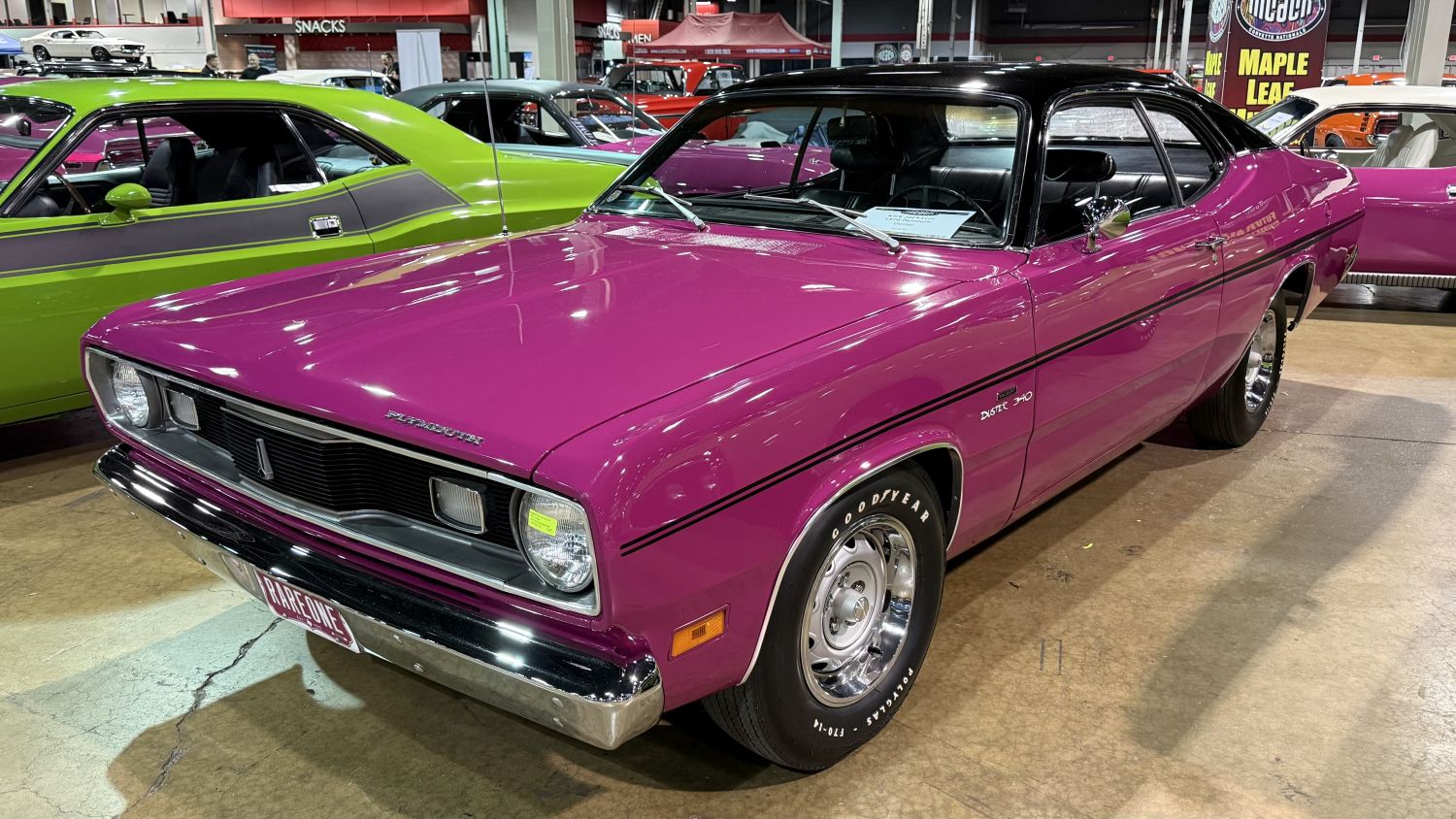
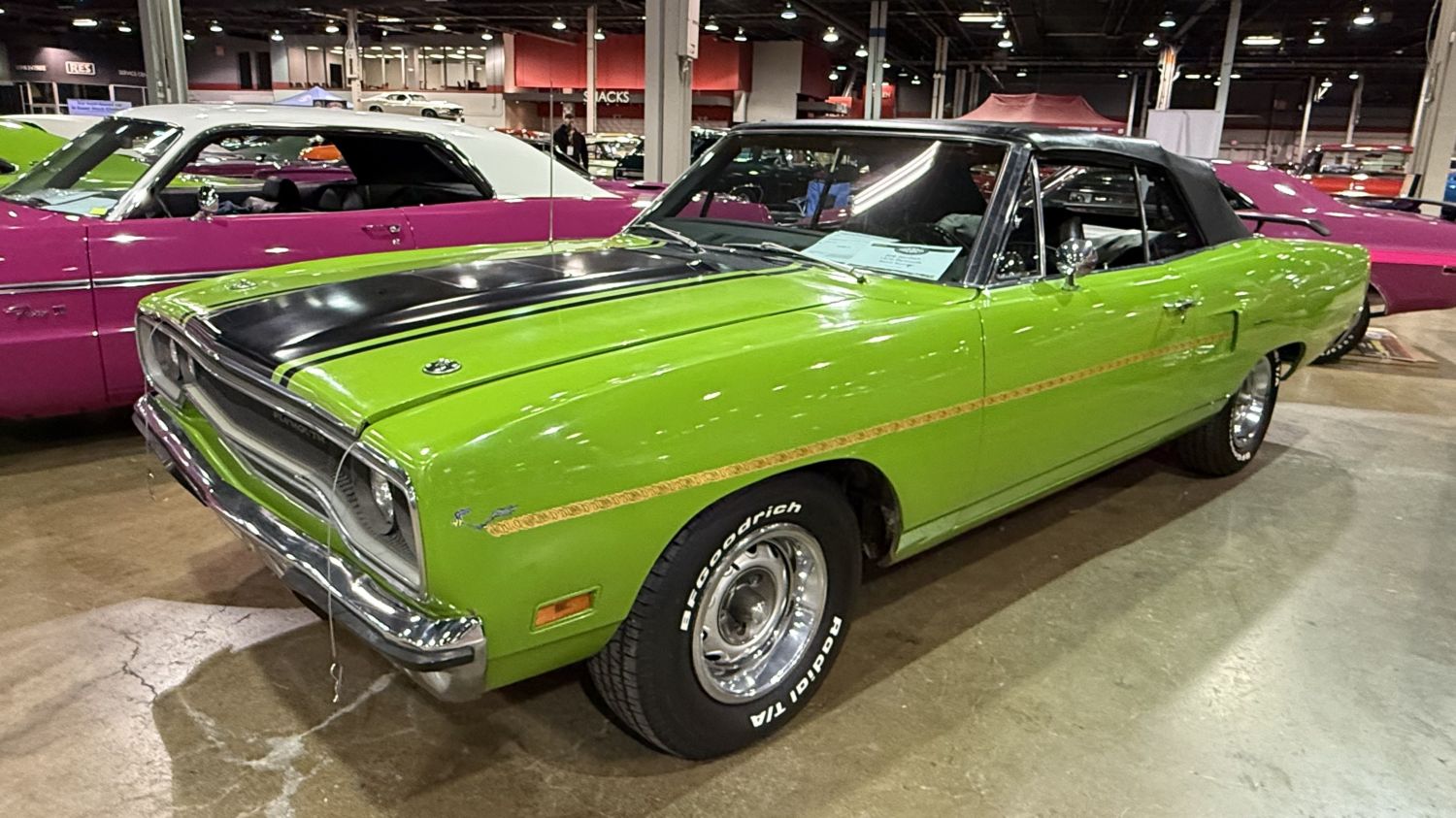
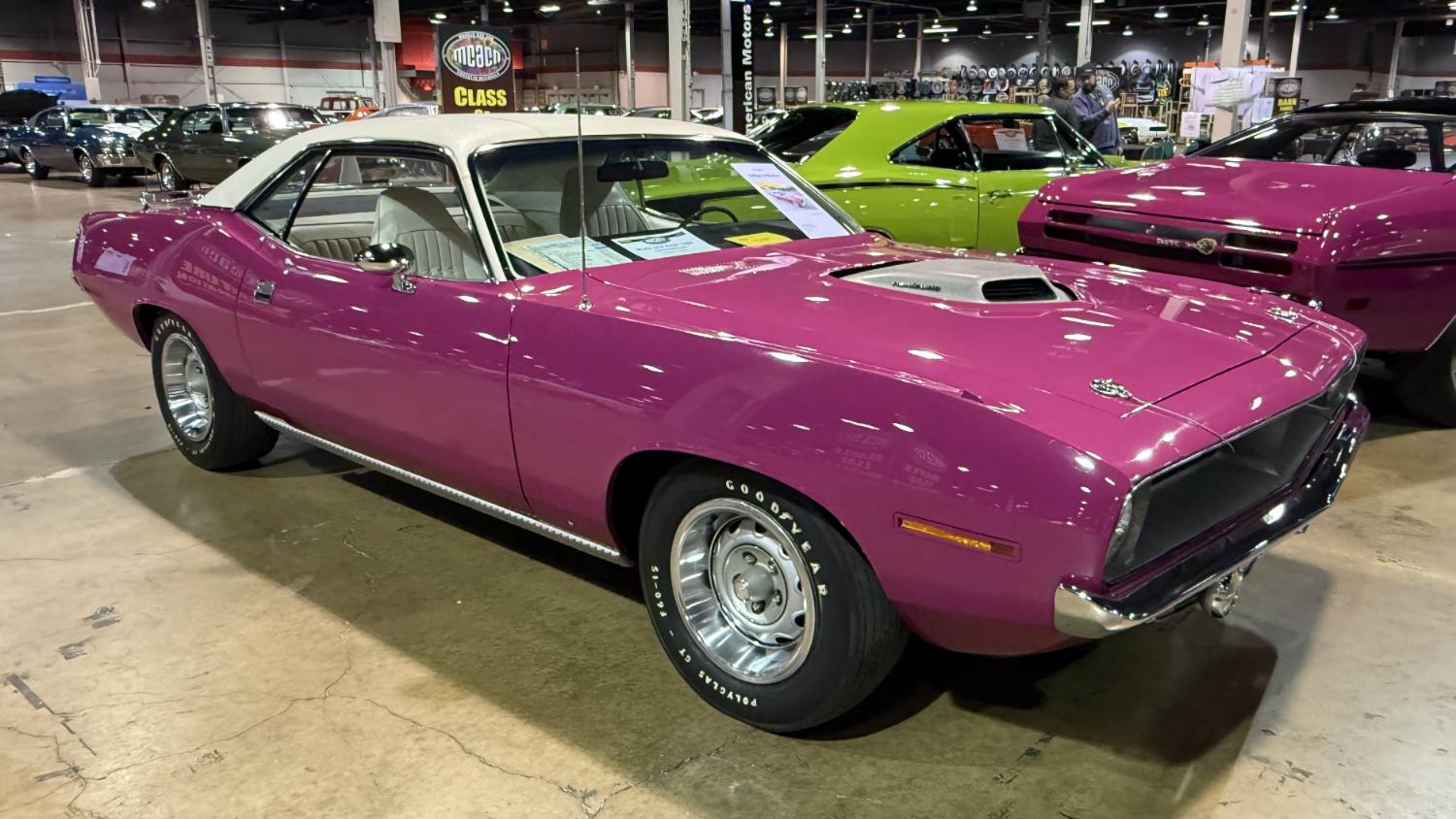
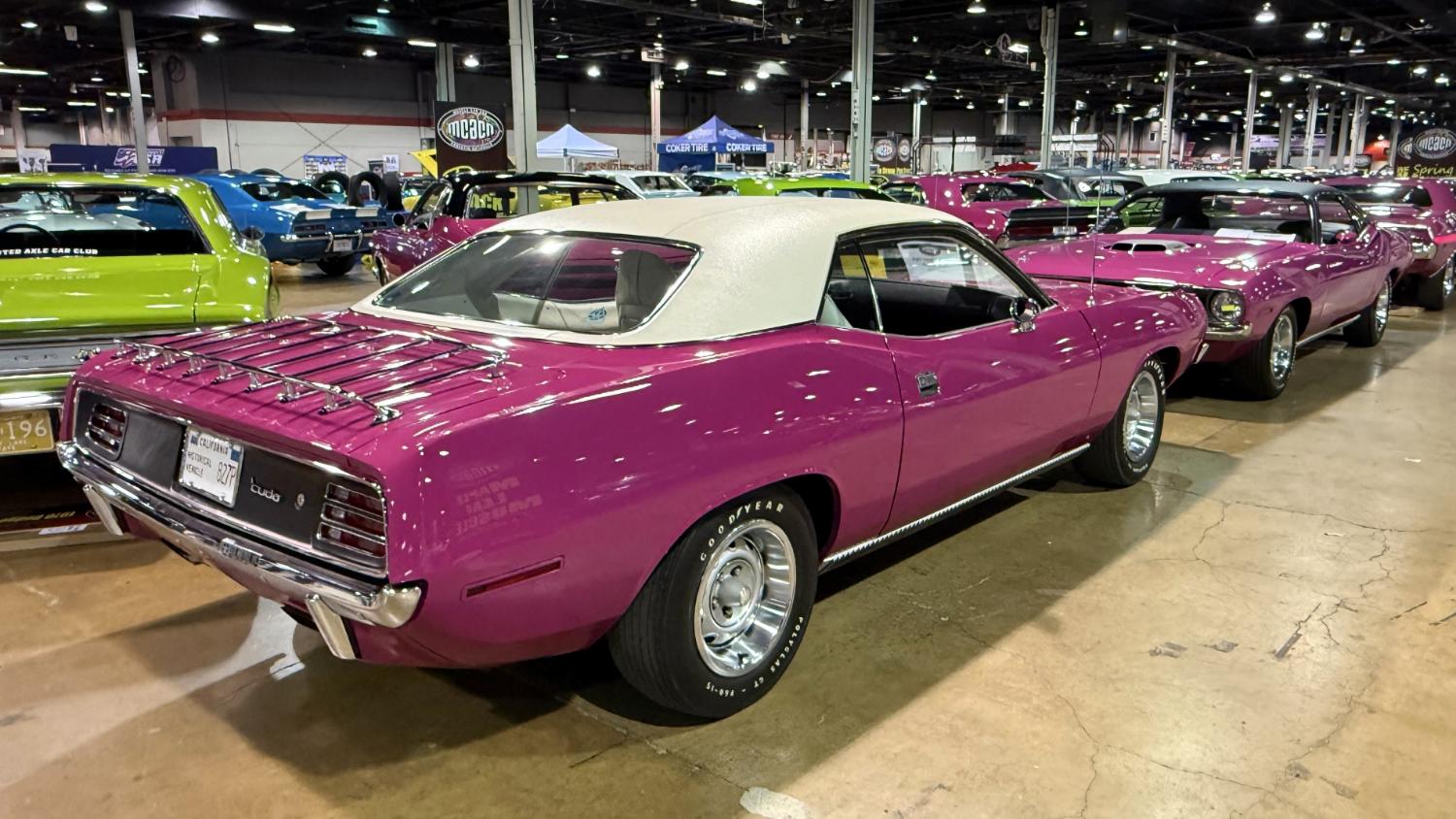
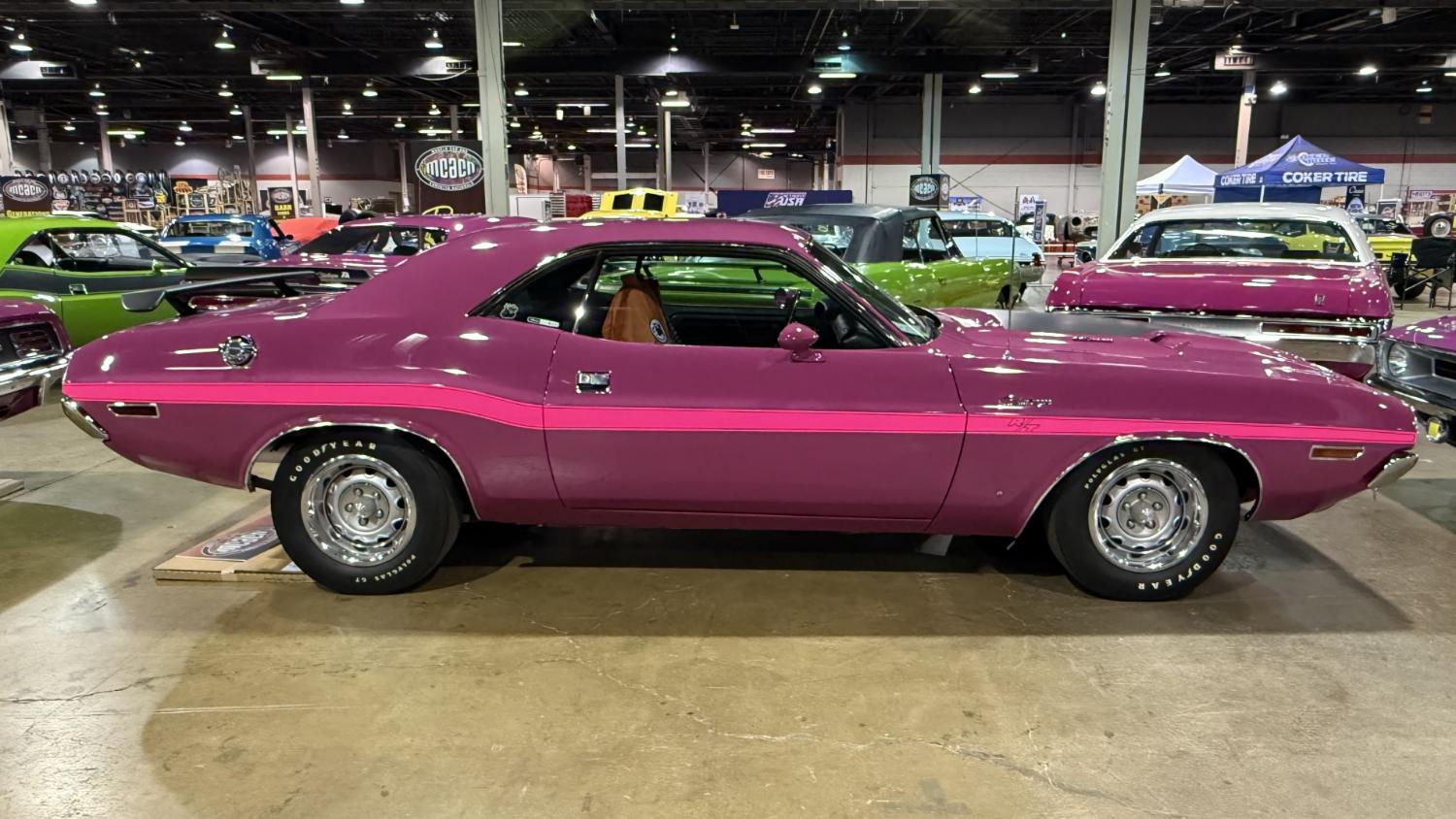
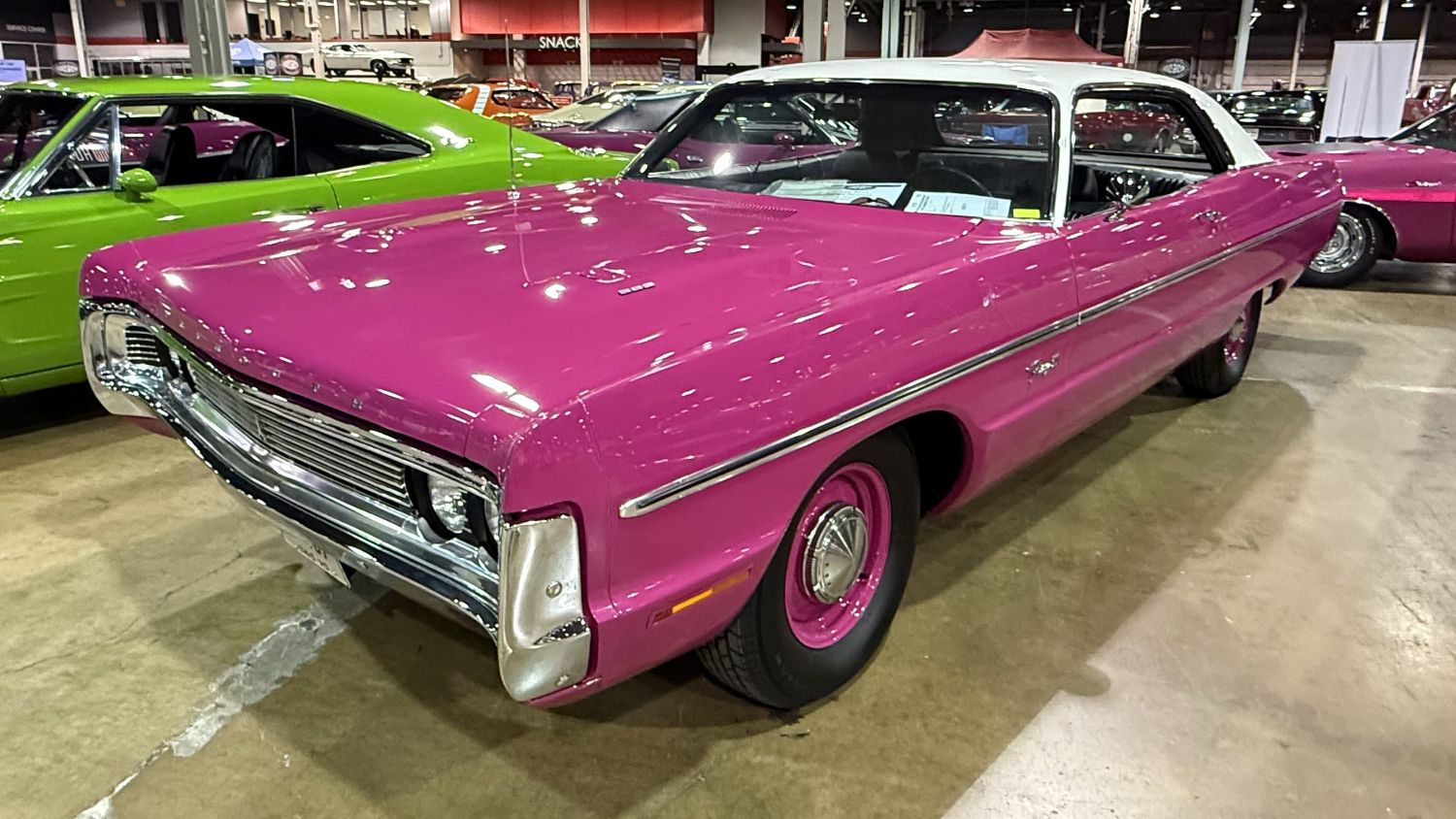
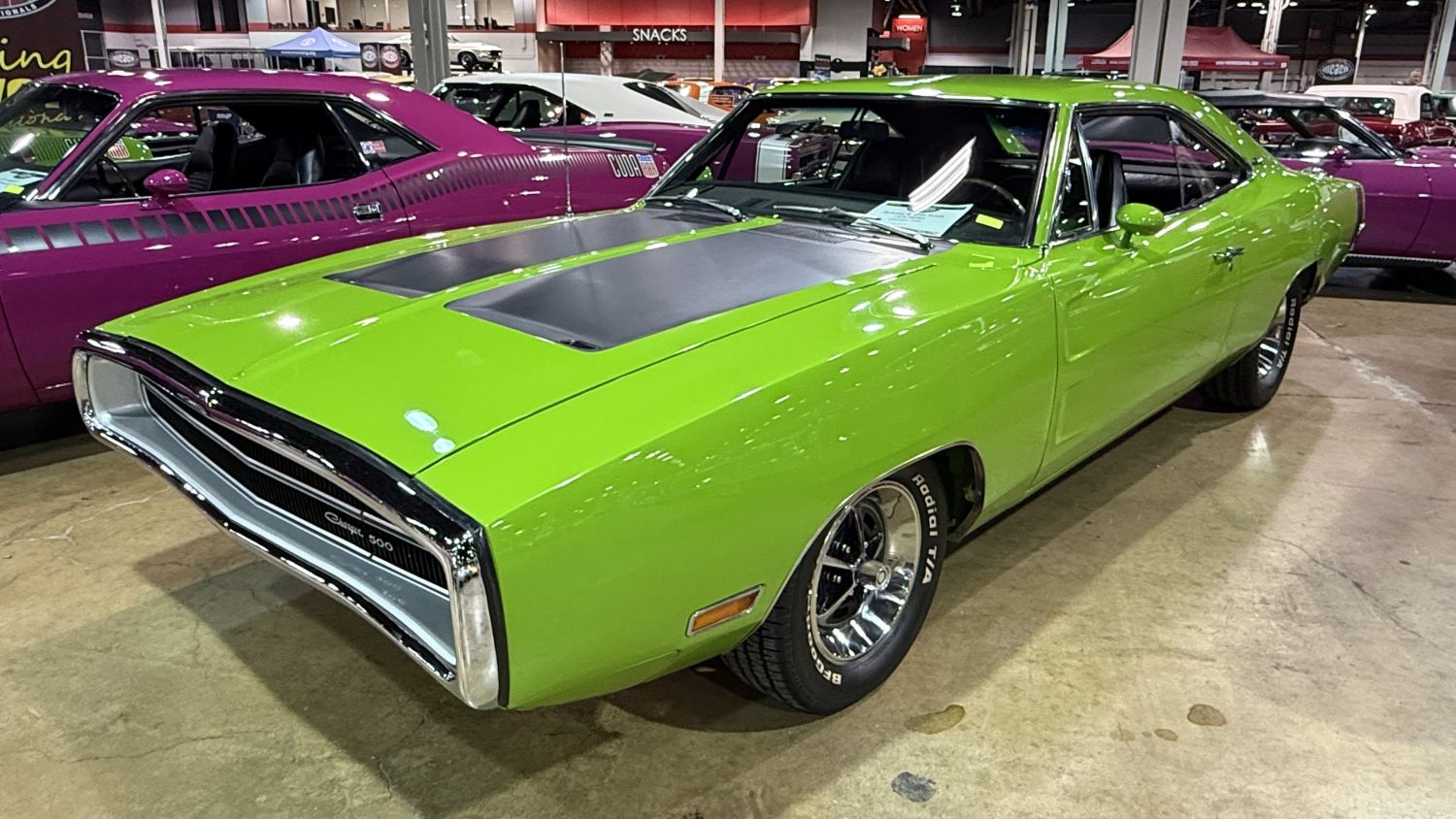
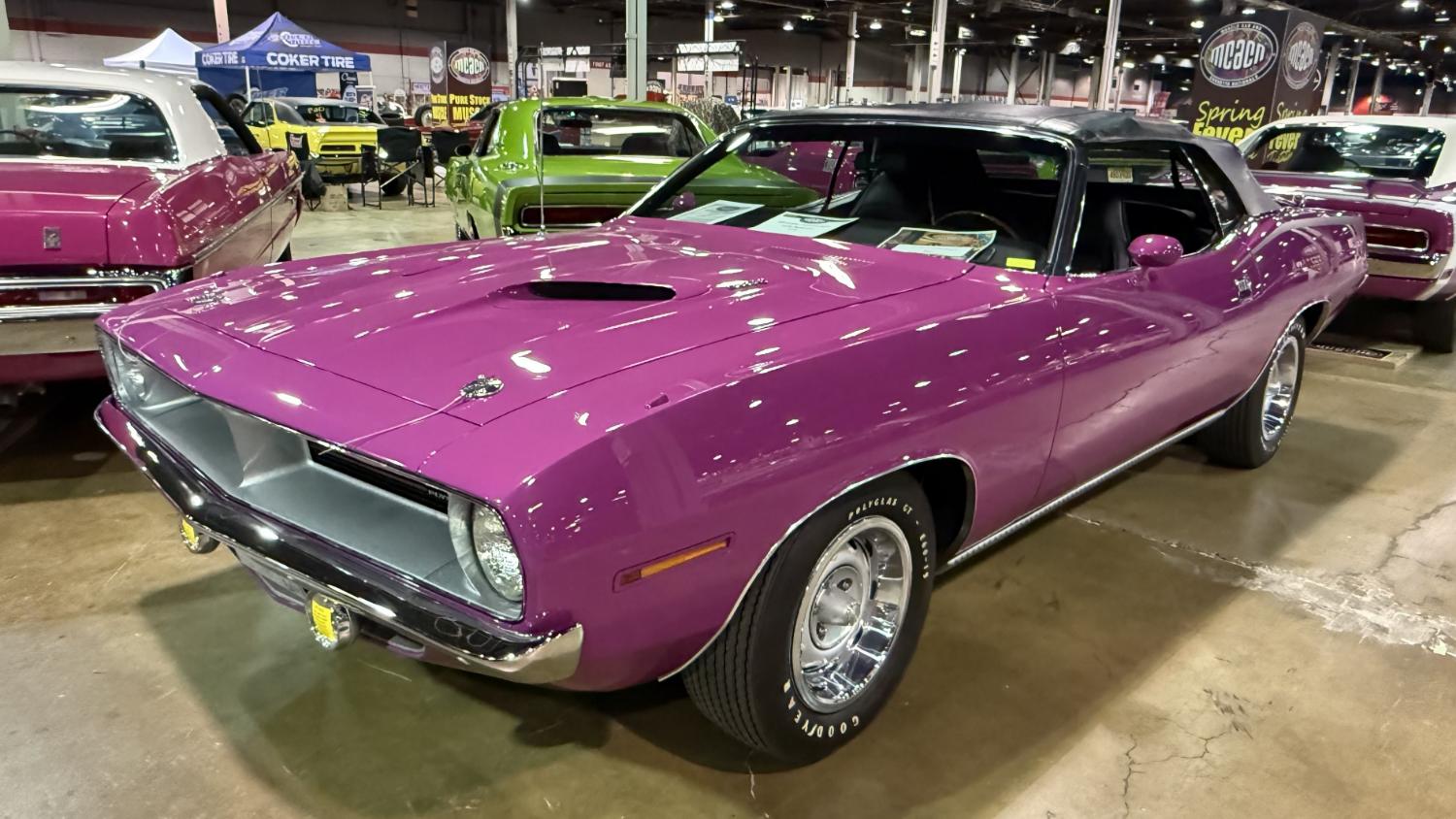
At the 2025 Muscle Car and Corvette Nationals, fans of these high-impact hues had the chance to appreciate the eye-searing goodness of Mopar A-bodies, B-bodies, E-bodies, and even a special-order C-body painted in one of these colors. Dig into the Spring Fever Invitational and find a variety of cars, engines, and stripes!
The production numbers stated are based on U.S. shipments and don’t include Canadian cars and exports, so the numbers don’t represent total production. That’s a quirk of surviving production records that is rarely explained in articles and literature.
Approximately 37 1970 Dodge Super Bee hardtops were built in Green Go.This is a pair of Plymouth’s and Dodge’s Trans-Am pony cars.Around 414 1970 Plymouth Duster 340s were built in Moulin Rouge, much more than other models. Note the painted black top.Would you believe five 1970 Plymouth Road Runner convertibles were built in Sassy Grass Green?It is not known how many Hemi’Cudas were built in Moulin Rouge, but two are known to exist.Both were present at MCACN!The magenta stripe was paired with the introduction of Panther Pink, though there’s no saying how many of the 41 1970 Challenger R/T hardtops built had this stripe.This 1970 Plymouth Fury III hardtop was special-ordered in Moulin Rouge. Note the white painted top.Approximately 27 1970 Dodge Charger 500s were built in Green Go.At least three 1970 ‘Cuda convertibles were painted Moulin Rouge. This one is powered by a 340 engine.
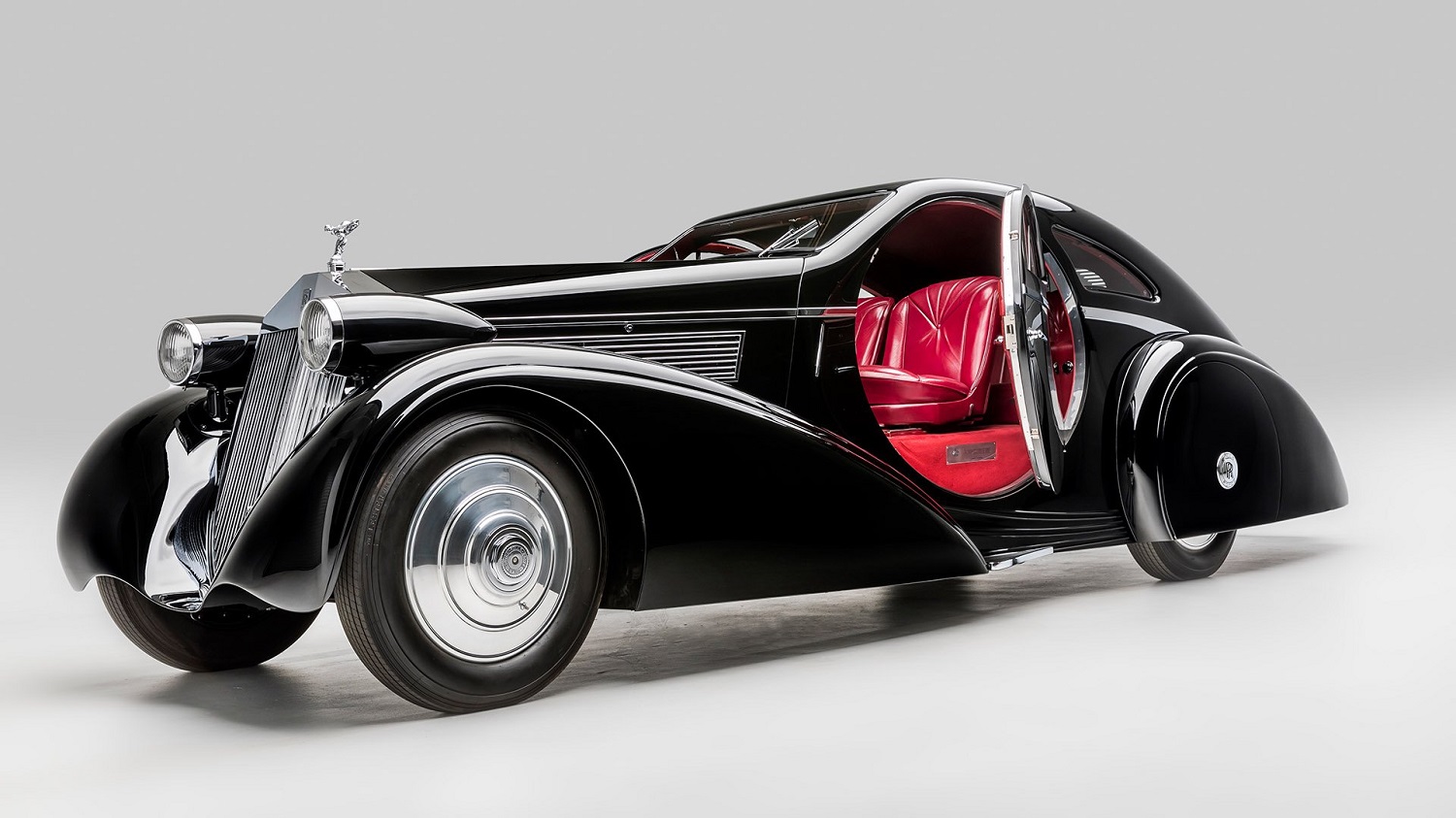
One thing that I’ve learned about vintage cars is that no matter how expensive or luxurious they were when new, many of them have been hacked up, modified, and painted different colors over the years. Nothing is sacred—at any dollar amount. Rolls-Royces are no exception, not even the one-off 1925/1934 Rolls-Royce Phantom I “Round Door.”
Photo courtesy of the Petersen Automotive Museum
Why does the Round Door have two model years? If you read my piece about it back in June, you’ll know that it’s because the 1925 Phantom I started life with a Cabriolet body by the coachbuilders at Hooper & Co. After it was purchased by the the Raja of Nanpara in India, it changed hands once again. In 1934, the new owner sent the Rolls to Jonckheere in Belgium for a custom body with a sloping radiator grille cover, dual sunroofs, semicircular fender skirts, louvered rear end, side-hinged trunk cover with a prominent fin and—you guessed it—round doors. The car is currently housed in “The Vault” at the Petersen Automotive Museum, wearing a black finish over a red leather interior.
The Round Door hasn’t always been that way, though. It’s had several owners in different continents over the last century and who-knows-how-many color changes. According to the Petersen’s short history of the vehicle, “Once thought to have been owned by the Duke of Windsor, the concours-winning car then passed through the hands of several other owners before being discovered in New Jersey in the early-1950s in near derelict condition. Max Obie later acquired the unusual Rolls-Royce, had it painted gold, and charged curious individuals one dollar to enter a special enclosure to look at the car.”
Photo courtesy of America’s Packard Museum
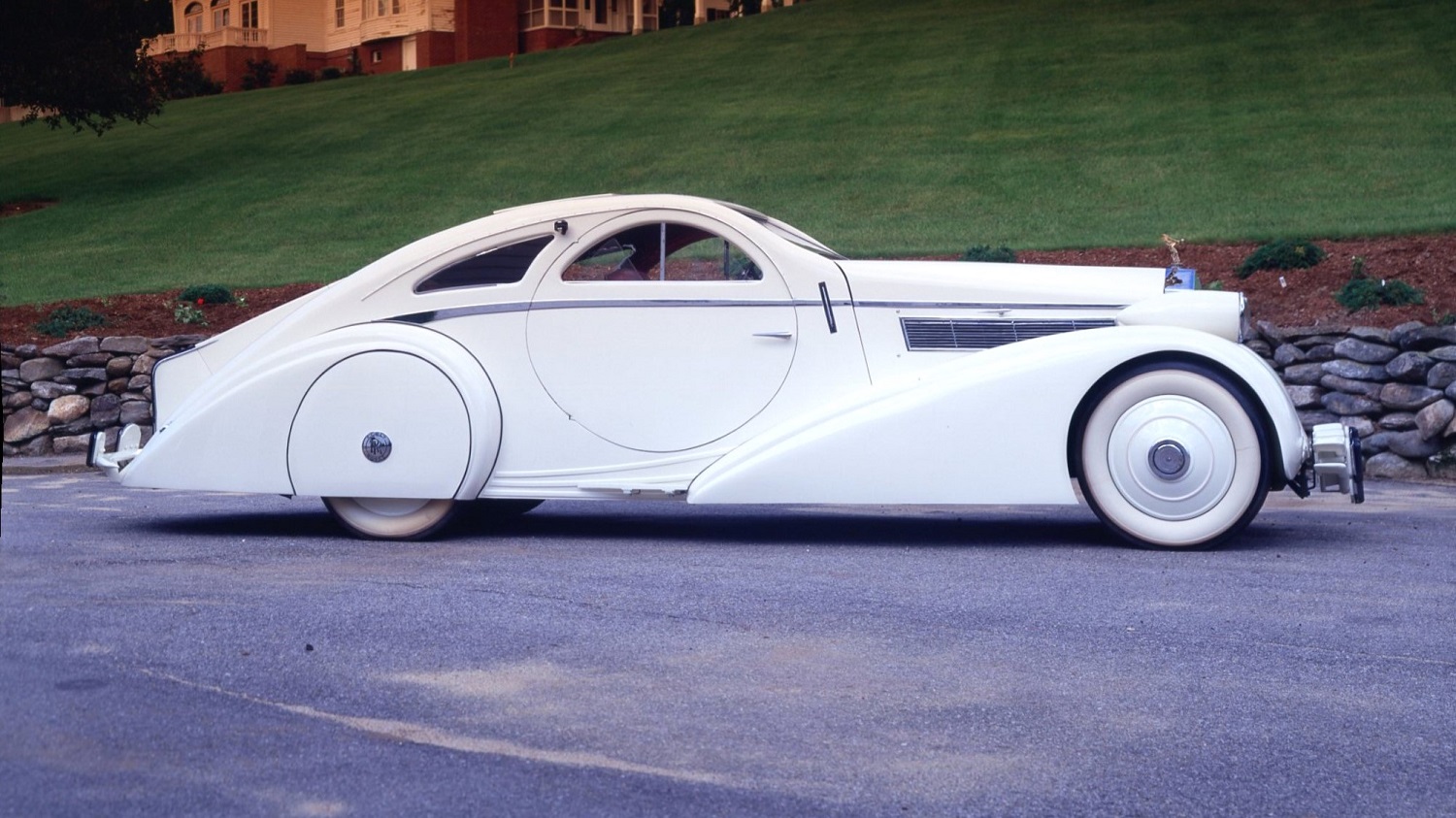
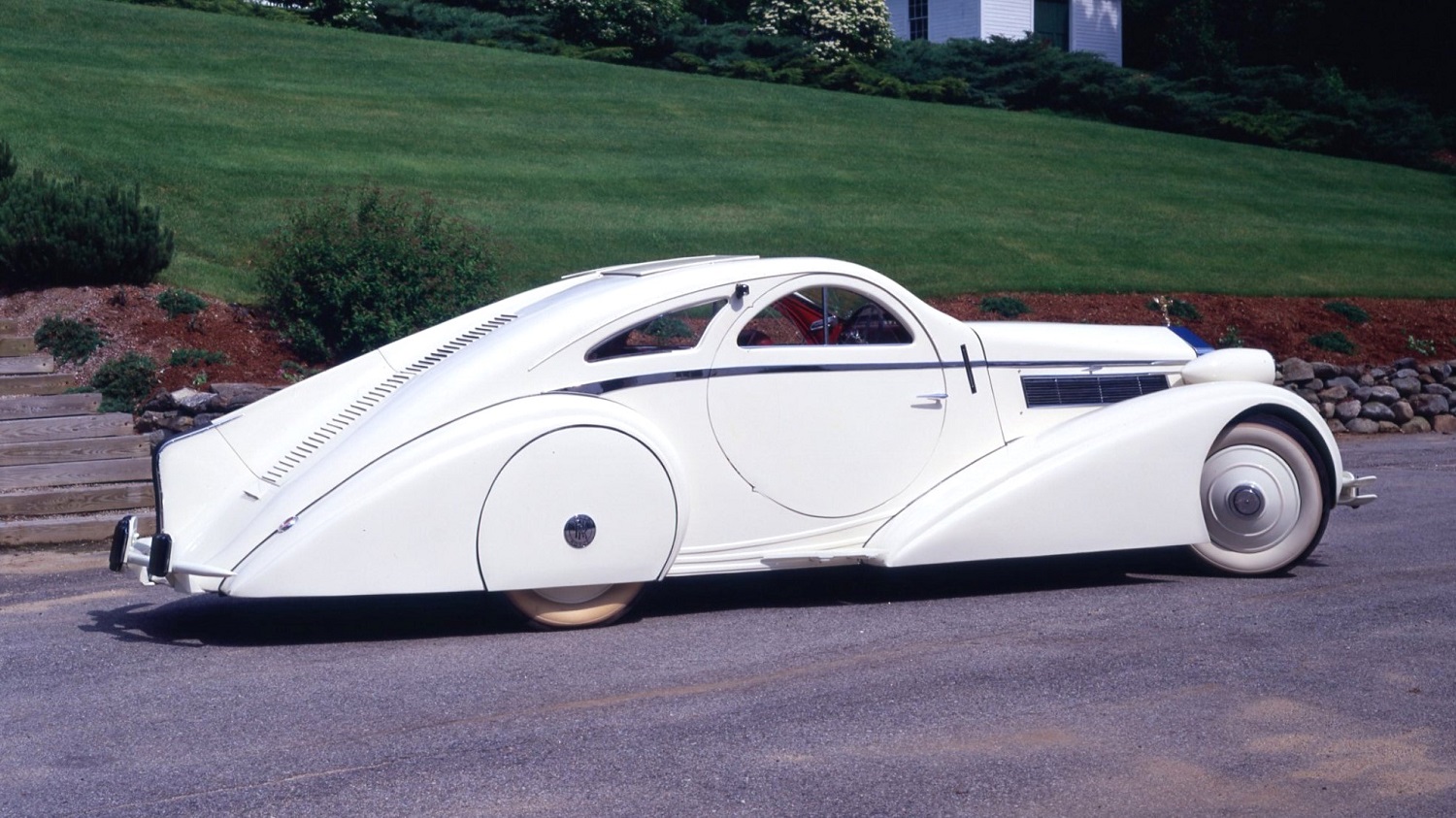
Apparently, in the 1980s, the Round Door was painted another color. I discovered this on the America’s Packard Museum website, of all places. The photos sourced from the museum’s Automobile Quarterly collection date back to 1989 and show the distinctive 1-of-1 creation in all white, complete with wide whitewalls.
Photo courtesy of America’s Packard Museum
This goes to show how much color can change the personality of a car. Black-over-red makes the Round Door look like the vehicle the main villain in an Ian Fleming James Bond novel would drive (and probably use to bash another vehicle off the road, sending its occupants to their deaths). In white, the Round Door brings to mind the hero’s car in a fantasy action/adventure film set in a utopian future.
With its undeniable presence and dramatic lines, the Rolls-Royce Phantom I Round Door would probably look great in any color, but tell me your answer to this question in the Comments section below: Does it look better in black or white?
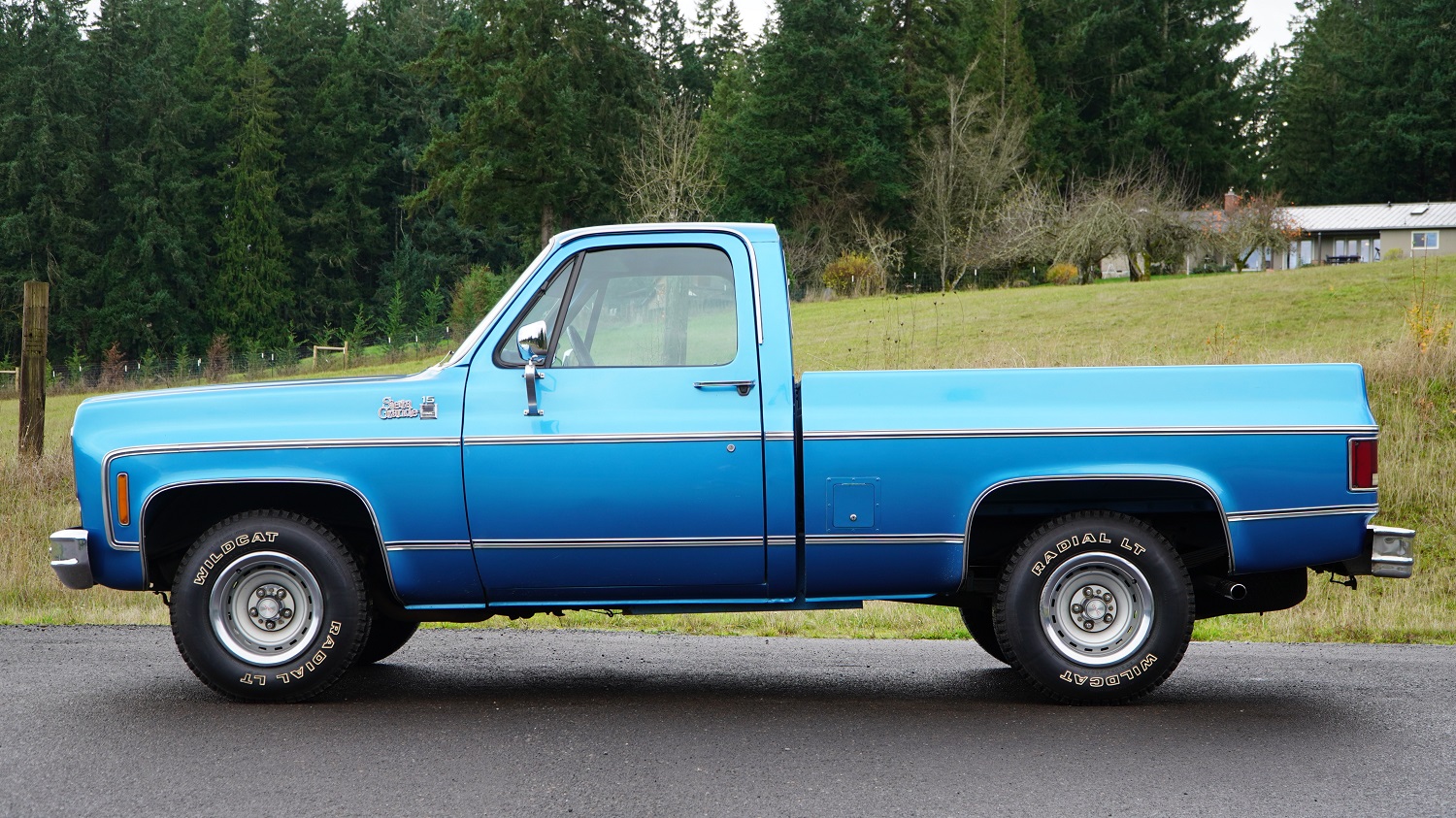
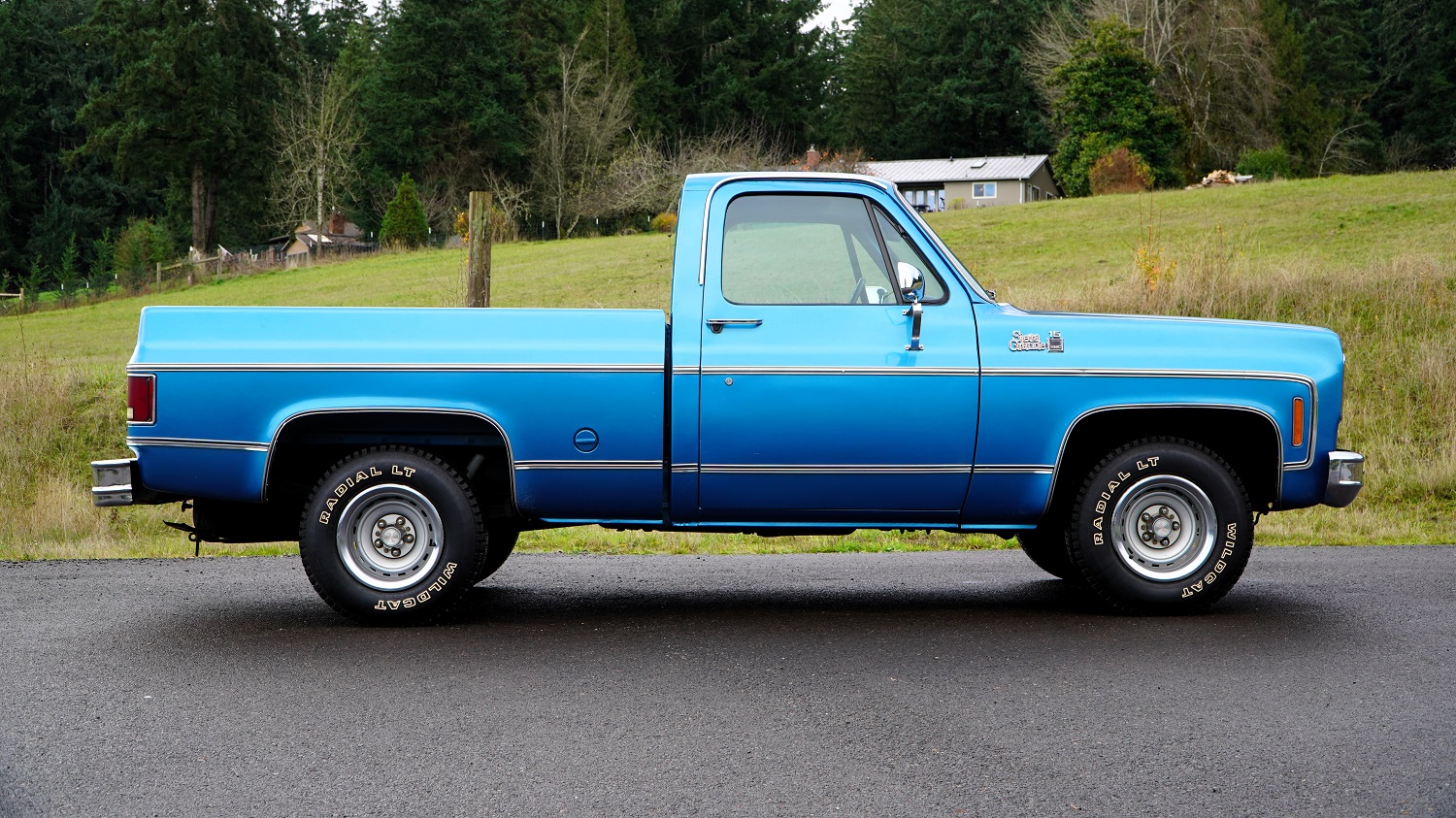
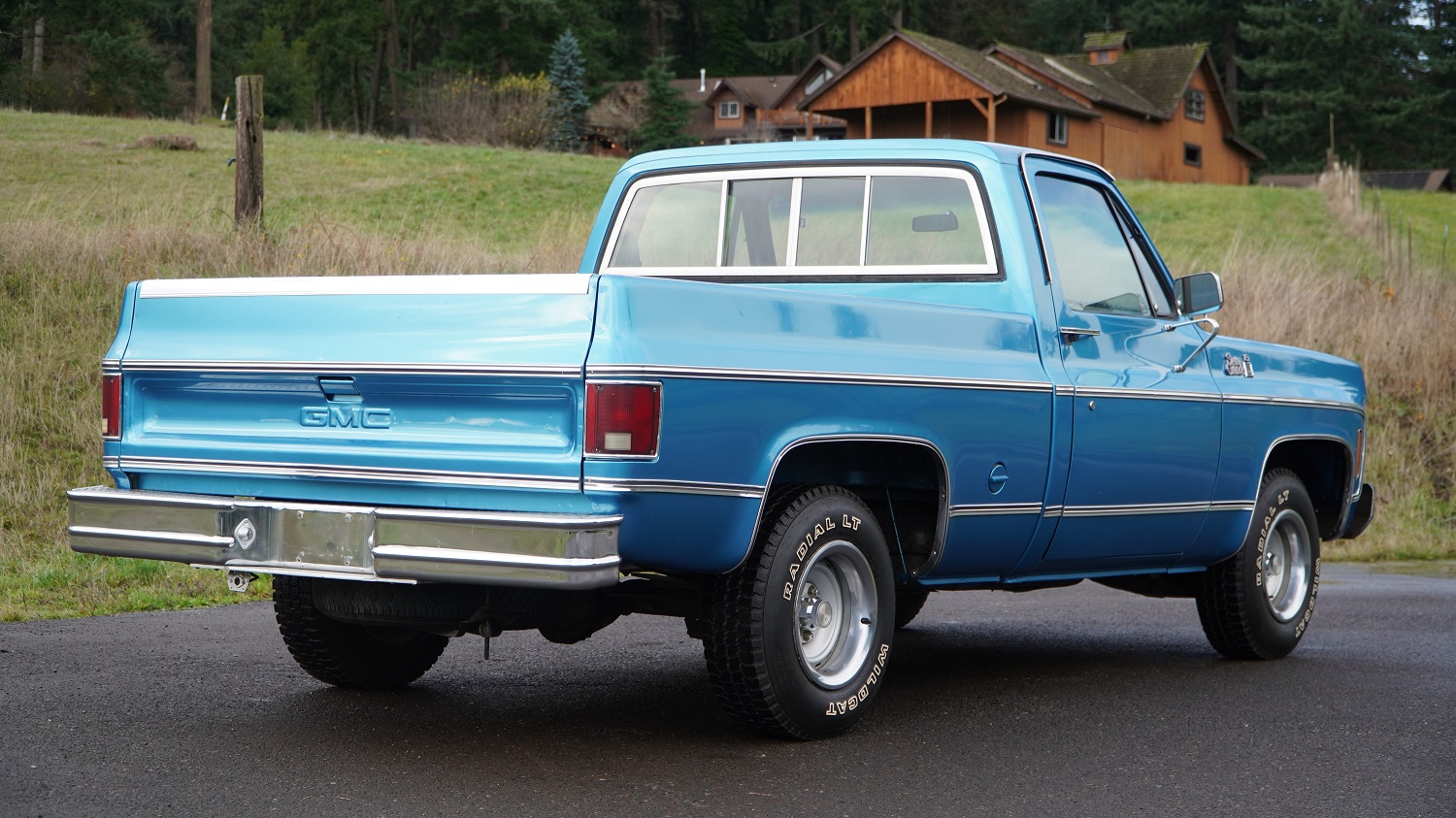
Right now on AutoHunter, you can find this one-owner 1978 GMC C1500 Sierra Grande Wideside pickup, which is powered by a GM Goodwrench 350ci V8 crate engine mated to a rebuilt TH350 three-speed automatic transmission. Finished in Mariner Blue over a blue cloth interior, this two-wheel-drive truck is now offered by the selling dealer in Oregon with the original build sheet, SPID card, broadcast sheet, Rochester carburetor, warranty booklet, owner’s manuals, and service receipts as well as an appraisal report and a clear title.
The “Square Body” has been refinished in its original color of Mariner Blue. Exterior features include chrome bumpers, replacement windshield, dual mirrors, Soft-Ray tinted windows, sliding rear window, tailgate protector, and single exhaust outlet.
This classic truck rides on a set of 15-inch GM truck Rally wheels surrounded by 235/75 Wildcat Radial LT tires.
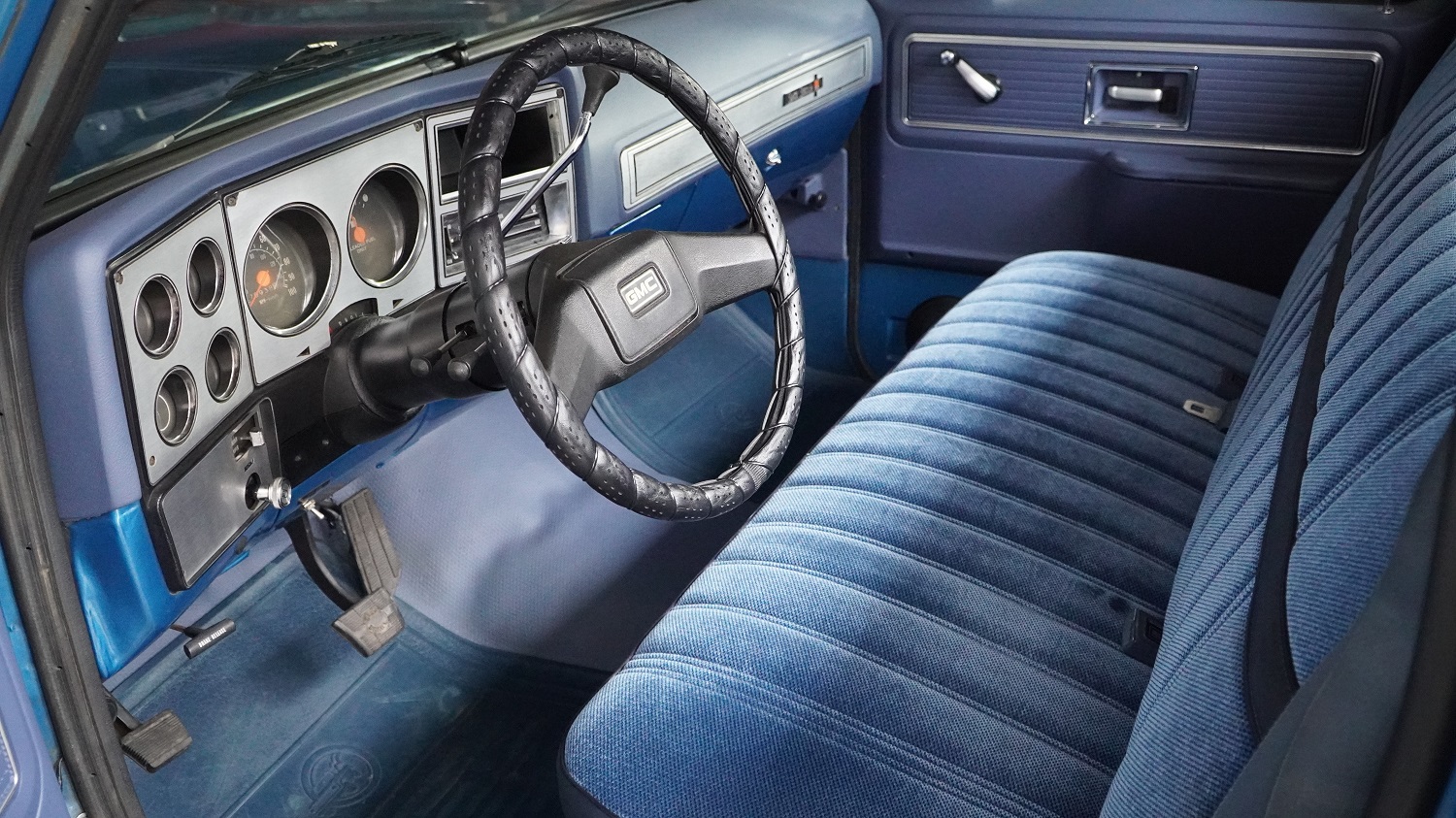
There are different shades of blue in the cabin, including blue vinyl and cloth on the bench seat. The dashboard is a combination of another blue on top and Mariner Blue on the bottom. Comfort and convenience features include tilt steering column, power steering, and Pioneer AM/FM/cassette stereo.
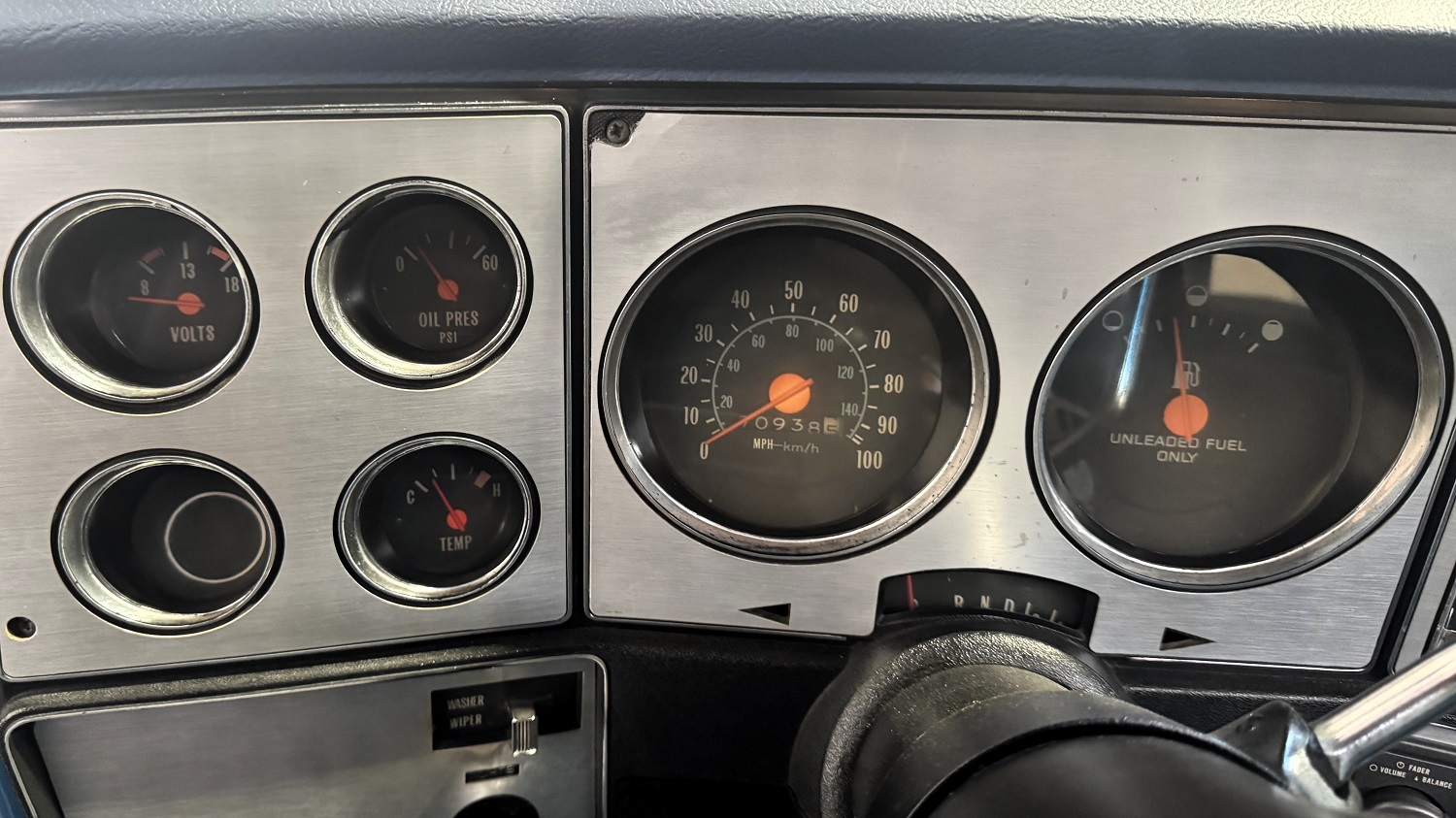
Instrumentation consists of a 100-mph speedometer and gauges for the voltage, oil pressure, temperature, and fuel level. The odometer shows 70,938 miles, but this truck is mileage-exempt, according to its title.
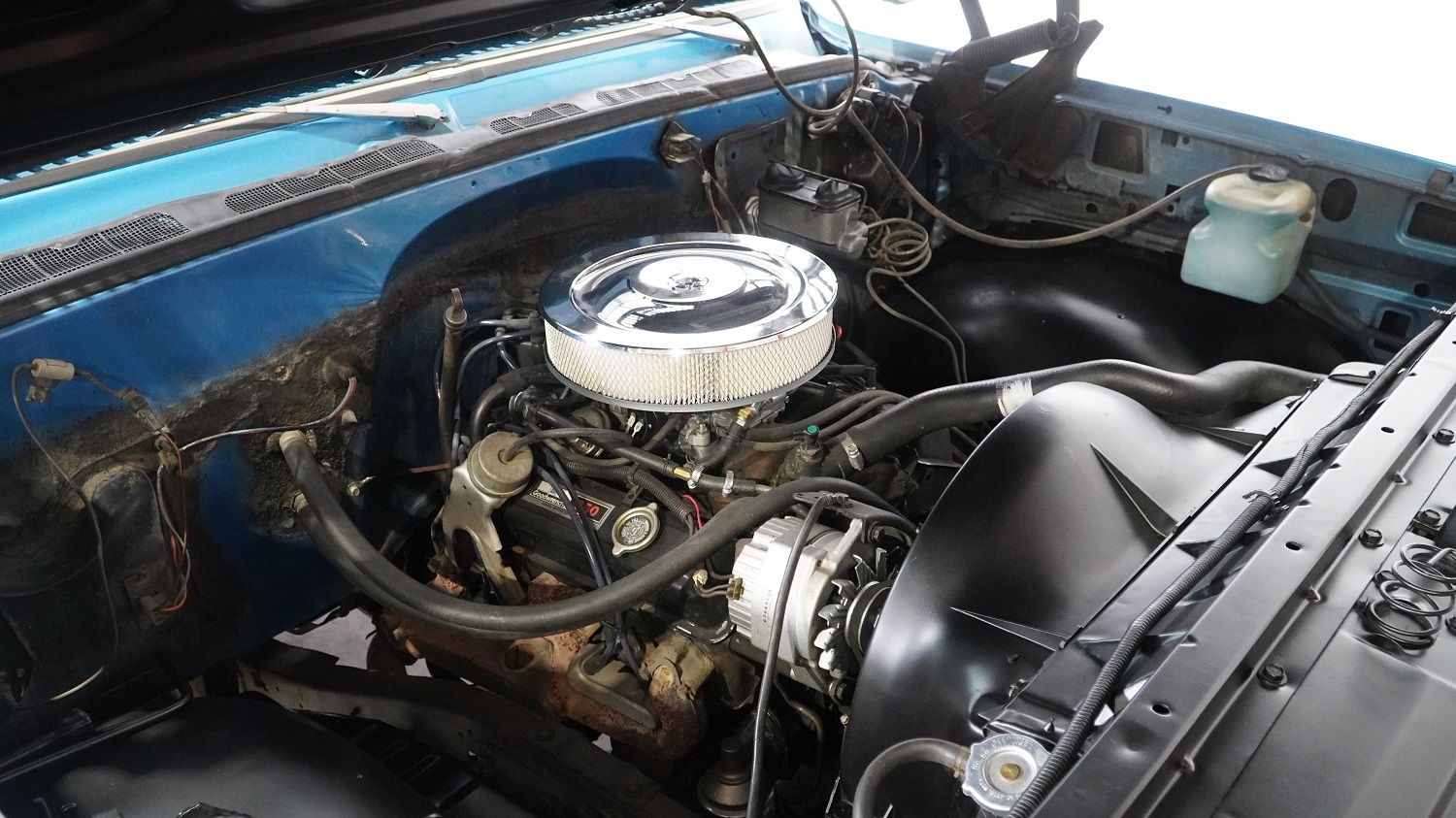
In 2000, the original four-barrel 350 was replaced with a GM Goodwrench 350ci V8 crate engine, which is equipped with a Holley 670cfm four-barrel carburetor and heavy-duty four-row radiator. The engine sends power to the 3.07:1 rear end through a rebuilt TH350 three-speed automatic.
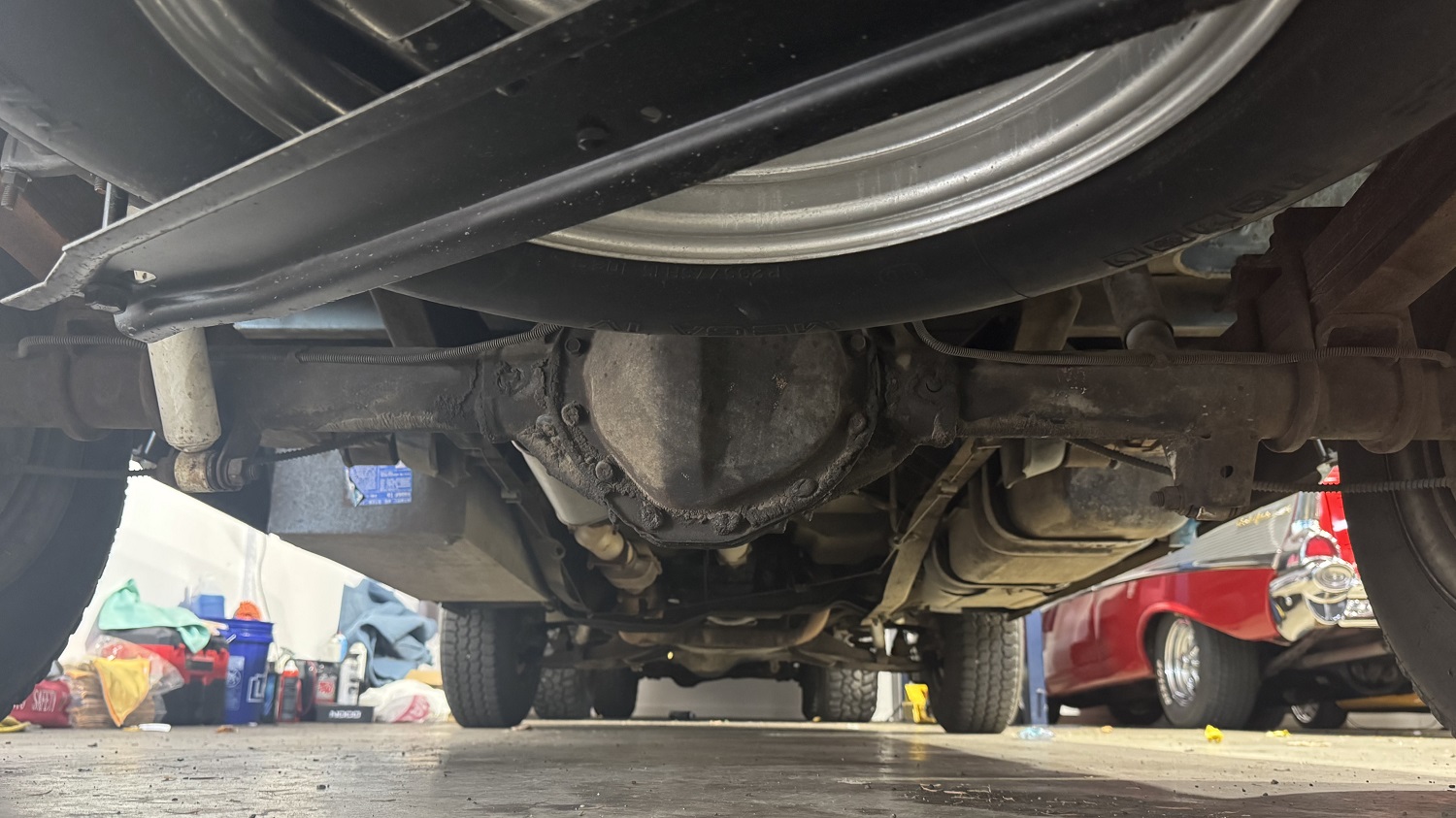
This truck came from the factory with a front stabilizer bar and heavy-duty rear springs. A 15-gallon auxiliary fuel tank, which features its own fuel door, has been added. The manual front disc and rear drum brakes help make sure this rig can keep on truckin’.
Time is running out to get this 1978 GMC C1500 Sierra Grande before Christmas, so bid on it right now. The auction ends on Monday, December 22, 2025, at 12:00 p.m. (MST).
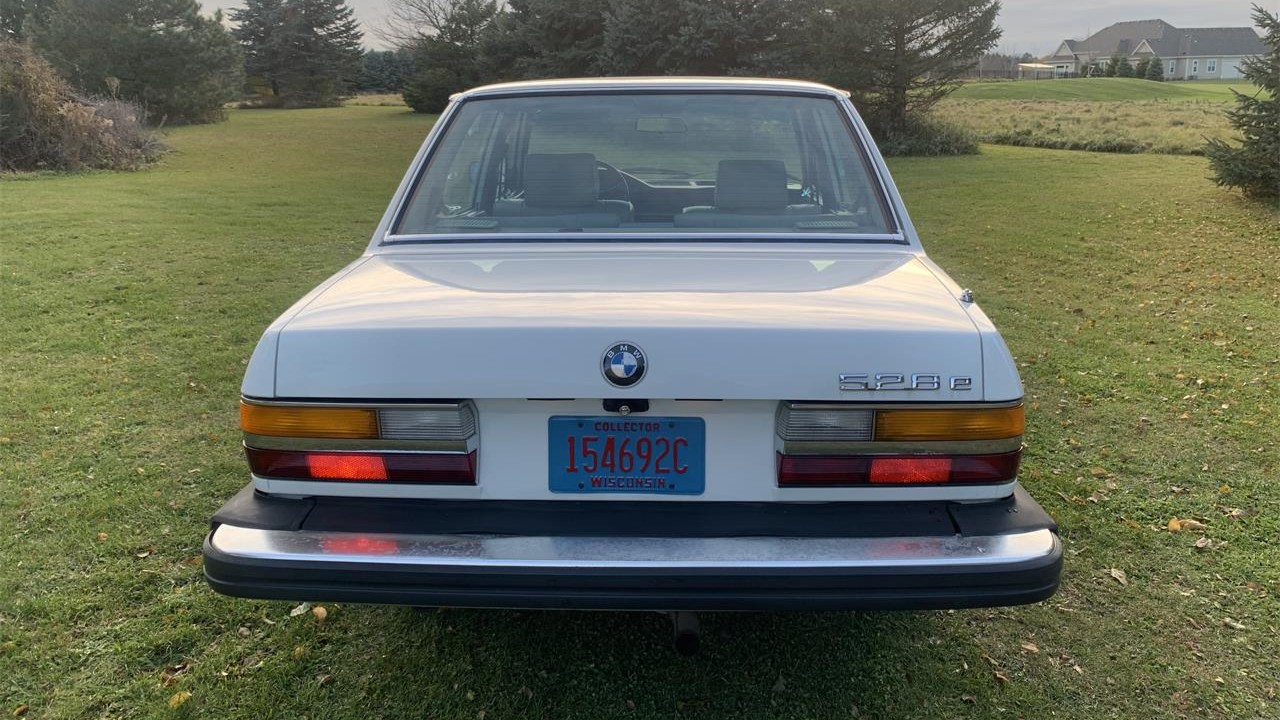
It might be 40 years old and show over 180,000 miles, but you’ll be hard-pressed to find a classic 5-Series as well-loved as our Pick of the Day. It’s a 1985 BMW 528e sedan listed for sale on ClassicCars.com by a private seller in Lisbon, Wisconsin.
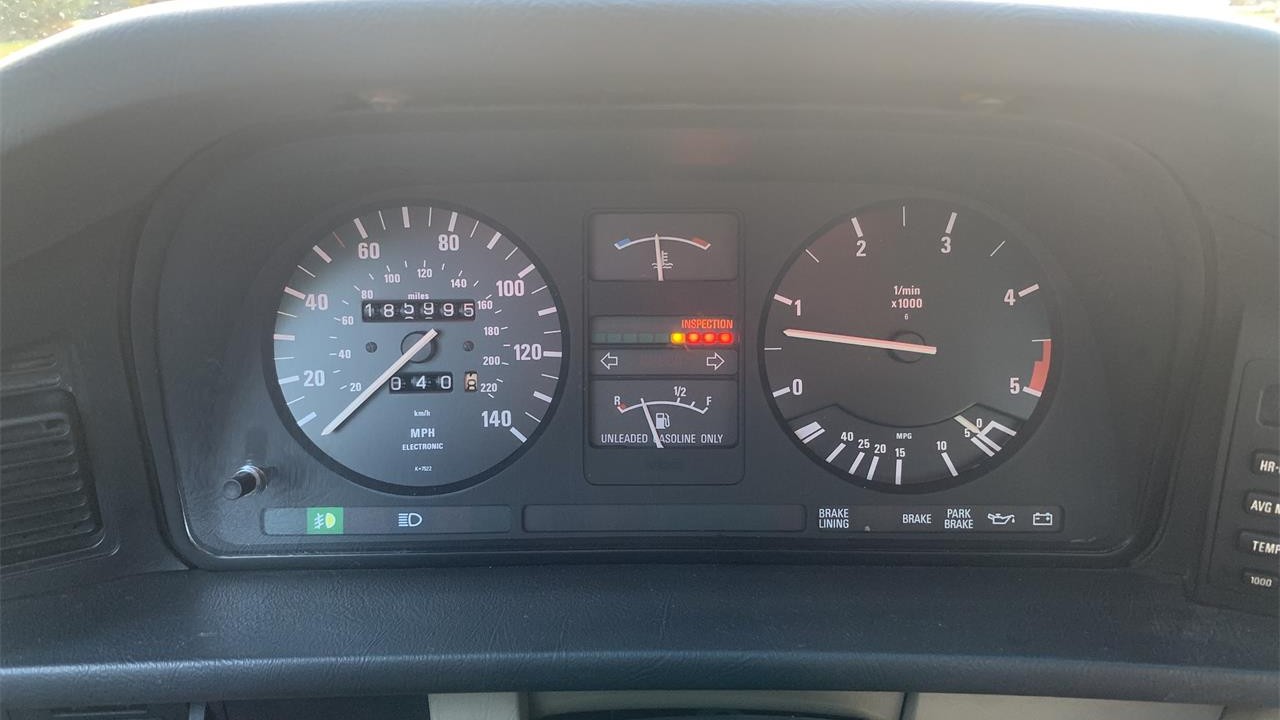
“Extremely well maintained with service records dating back to 1995,” the listing says. Noteworthy features for the vintage European luxury sedan include fog lamps, chrome bumpers, and body side moldings. The 14-inch alloy wheels are usually referred to in the enthusiast community as “bottlecap” wheels due to their unique design. Even though the odometer reads 185,995 miles, the car looks to be preserved both inside and out.
Since 1972, the BMW 5-Series has showcased some of the brand’s cutting-edge technology. One of BMW’s advertisements called it, “A car that reflects scientific achievement, not merely social acceptance.” The “E28” generation was produced from 1982 through 1988, and its styling was drawn by BMW chief designer Claus Luthe who had been working with the brand in 1976. Luthe was later tasked with supervising the design of the subsequent 5-Series, so his influence in BMW’s cars of the era was strong.
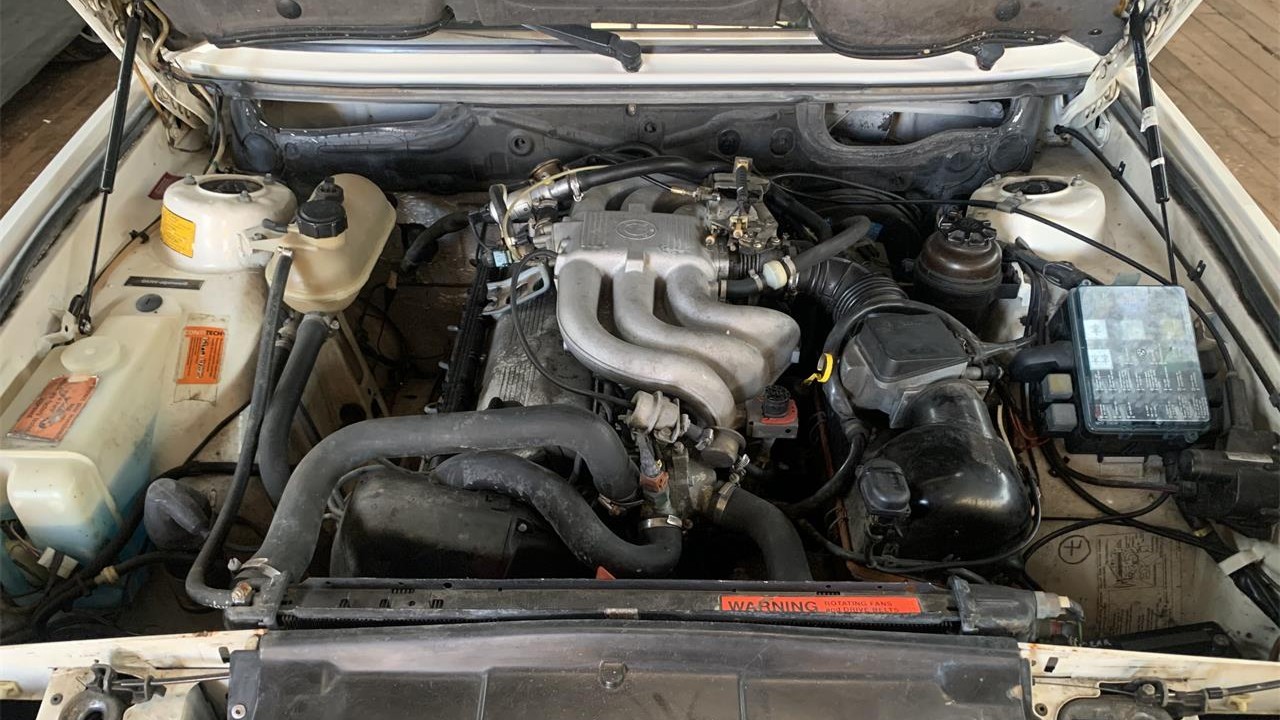
Under the hood resides an “M20B27” 2.7-liter inline-six that uses Bosch L-Jetronic fuel injection. BMW called it the “Eta” power plant, and it was pretty smart for its time. As BMW stated, “The car’s patented Eta power plant—not duplicated or even closely imitated since its invention—is guided by an engine management system to advanced it actually calculates the altitude, factors in weather changes, measures the engine load, and then uses all this information to determine the optimum balance of performance and efficiency.” When new, BMW rated the 528e at 121 horsepower and 170 lb-ft of torque.
It’s hard to believe, but the 5-Series is now in its eighth generation. As one would expect, the most current version is hugely innovative, featuring things like an iDrive 8.5 operating system, a curved infotainment display, various driver-assistance features, and an all-electric variant. It’ll also set you back anywhere from about $60-80k, depending on options.
As for the trusty old 1985 version, the seller is asking $11,500 or best offer. “Runs, drives, and rides smooth and quiet,” the listing says. “Everything works as it should.” What are the chances that everything will “work as it should” in the 2026 5-Series, 40 years from now? I guess time will tell.
This ’30 Model A Tudor is a full-fendered, steel-bodied hot rod that was purchased by the seller in 2023.Subsequently, a BluePrint 350ci V8 was installed, and it is linked to a three-speed Turbo Hydramatic automatic transmission and a Ford 9″ rear end. The car rides on Torq Thrust-style wheels with a drop axle, hairpin radius rods, and a four-link rear end with Alden American coilovers. Inside, a ’32 dashboard was added along with Stewart-Warner gauges, a tilt column, a custom wood wheel, and seatbelts. The car is further equipped with a fabric roof, Sanderson headers, a brass radiator, custom upholstery on bucket seats, and more as described below. This hot rod is now offered with service records and a clean California title in the seller’s name listing the car as a 1930 Ford.
The seller tells us the body and full fenders are steel, and they have been painted metallic dark red. The roof has a fabric covering, and the car has a windshield visor and a louvered hood along with a chrome nerf bar out back.
The car rides on a modified frame with a drop axle and hairpin radius rods up front, while out back is a four-bar setup with adjustable coilovers. A mix of staggered Nexen and Cooper tires are mounted on the 15″ Torq Thrust-style wheels, and the car has front disc brakes.
The individual seats tilt forward to grant access to the rear bench, and the seller tells us the 8-ball-topped shifter is from Lokar. Speakers are fitted in the rear floor.
A ’32-style dashboard was added along with Stewart-Warner gauges, and a Sun tachometer is mounted next to the tilt column. The seller has driven the car ~1k of the 11k indicated miles.
The seller tells us the BluePrint 350ci V8 was installed in 2023. It features a roller camshaft, aluminum heads, an aluminum intake manifold, and a four-barrel carburetor. The replacement radiator was also installed in 2023, and it is cooled by an electric fan.
THe three-speed TH automatic transmission is linked to a Ford 9″ rear end.
The car is titled as a 1930 Ford using VIN A26553302.
This belly tank lakester was built many years ago and is powered by a mid-mounted 226ci Ford inline-six with a Cyclone aluminum cylinder head, a Tattersfield intake manifold, and triple carburetors. The engine is backed by a four-speed manual transmission, and the car rides on a tubular steel chassis with 18” wire wheels, a drop front axle, front coilovers, and a rigidly mounted rear axle with drum brakes. Inside, a bomber-style seat is complemented by a steering yoke and aircraft gauges. Work performed since the seller’s purchase in 2018 has involved repairing the aluminum bodywork and overhauling the fuel and cooling systems. This custom lakester is now offered in Illinois on a bill of sale.
Based on the shape of a Lockheed P-38 Lightning drop tank, the hand-fabricated aluminum bodywork is mounted to a chassis constructed from steel tubing. Work performed by the seller included repairing dents and cracks, adding a safety latch to the nose panel, and installing flush-mounted twist-lock fasteners. The carburetor velocity stacks protrude through the louvered engine cover, and dual exhaust outlets pass through the right side.
Maroon-finished 18” wire wheels wear polished hubcaps and are wrapped in 7.00” Coker Excelsior tires. The drop front axle is supported by ladder bars and adjustable coilovers, while the rear axle is rigidly mounted to the frame. Braking is handled by hydraulic rear drums.
The cockpit features a bomber-style seat with a green lower cushion and a five-point harness. A fire-suppression system has been installed along with a perforated floorboard and toggle-switch controls.
The steering yoke has wood grips and sits ahead an engine-turned bezel housing a variety of aircraft gauges including a functional tachometer. The car is not equipped with an odometer.
The seller states that the vehicle may have been fitted with a different engine in the past, and the current overbored 226ci inline-six is sourced from a ’46 Ford. It features domed aluminum pistons, an external oil filter housing, and a Cyclone finned aluminum cylinder head. Triple Ford 94 carburetors are mounted to a Tattersfield intake manifold and connected to a progressive linkage, with the central unit acting as the primary. Fuel is drawn from dual tanks connected in series, and cooling is provided by radiators mounted ahead of and alongside the engine. Coolant and oil leaks are noted along with corrosion on various components.
Power is sent to the rear wheels through a four-speed manual transmission with a reverse gear.
The vehicle is not legal for road use and carries no title or registration. It is being sold on a bill of sale.
Like many of you, not only am I a car enthusiast, but I’m also a bit of a watch nut. Ever since I was a little kid trading toys for cheap plastic timepieces, I’ve always had a watch of some sort. My wish list is always growing; diving into Paul Miquel’s book “Rare Watches: Explore the World’s Most Exquisite Timepieces” has only added to it. It also taught me that James Ward Packard, who co-founded the Packard Motor Car Company, is partially responsible for the Patek Philippe Henry Graves Jr. Supercomplication pocket watch, one of the most complex—and legendary—timepieces ever created.
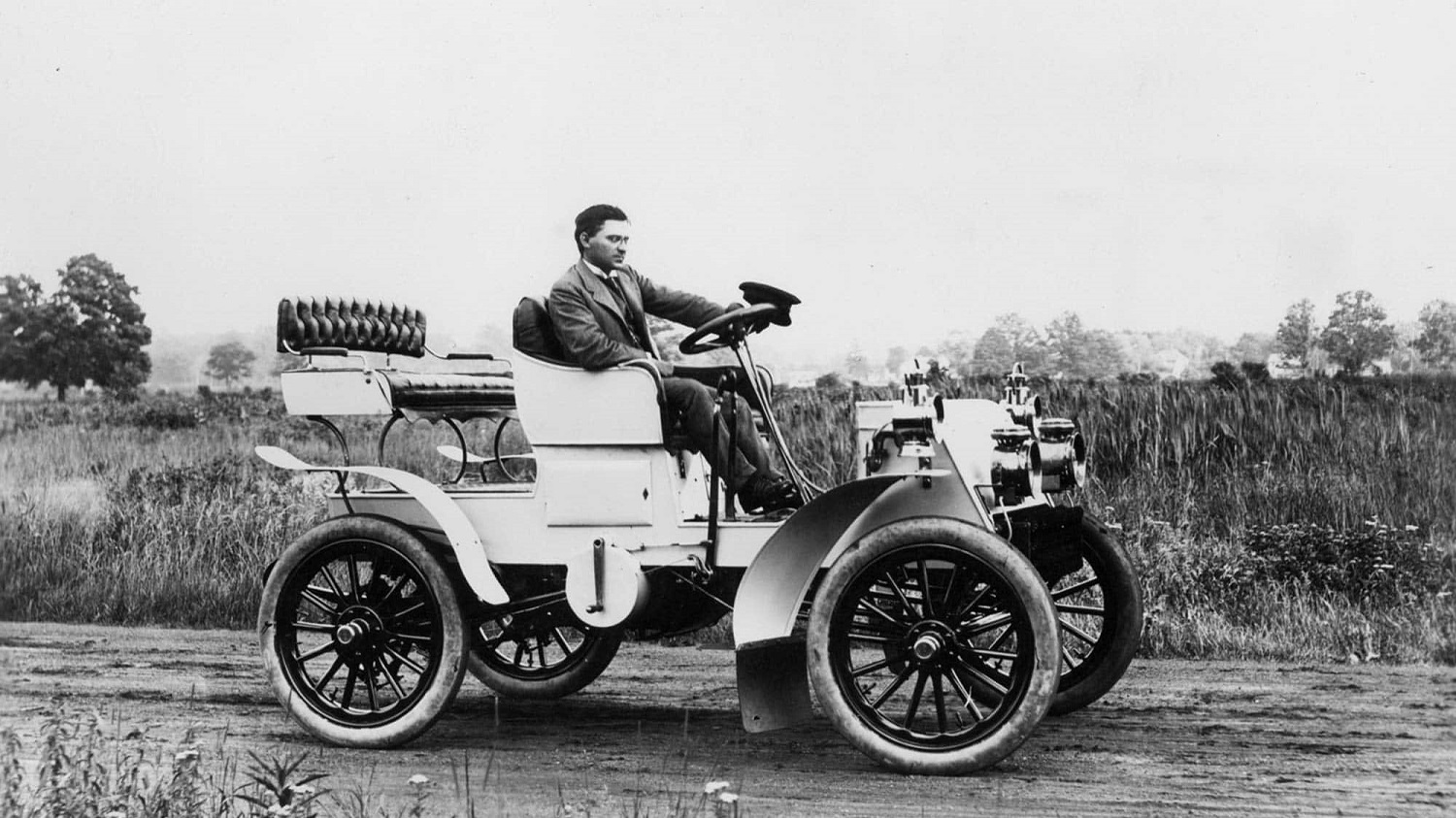
James Ward Packard driving an early Packard model (Photo courtesy of Worn & Wound)
From a young age, Packard was mechanically inclined. According to the New York Heritage Digital Collections, as a student at Lehigh University in Pennsylvania, “James spent a great deal of time working on his own engineering projects in his dorm room. He created a magnetic arrangement that connected to the lock on his door, allowing him to open the door with the flick of a switch. He also rigged a telegraph line to a friend’s room and was considered a good operator.” In 1890, James and his brother William started the Packard Electric Company. Nine years later, following a unsatisfying ownership experience with a Winton automobile, the brothers released the first Packard automobile. The following year, per the Automotive Hall of Fame, they established the Ohio Automobile Company, which was renamed to the Packard Motor Car Company in 1902. Packard’s fascination with mechanical objects (and his subsequent financial success) led to him being a client of renowned Swiss watchmaker Patek Philippe; he had the watchmaker create several unique timepieces, such as a gold ring watch in 1917 and a silver-encased watch for the top of his ebony walking stick in 1918.
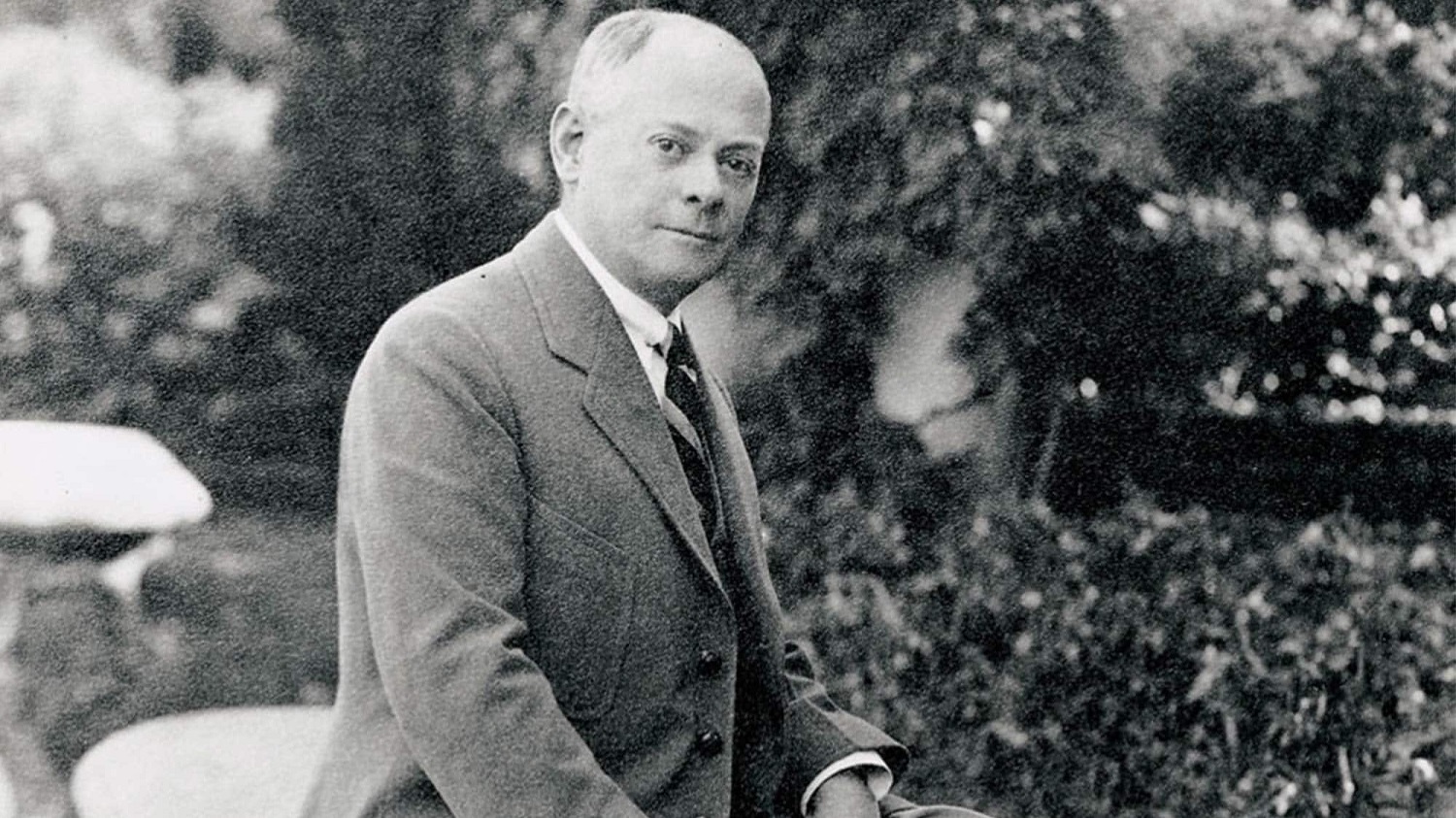
Henry Graves Jr. (Photo courtesy of Worn & Wound)
Packard wasn’t the only wealthy Patek Philippe aficionado in the early 20th century. Henry Graves Jr. was born into a family that made its fortune in railroads, banking, and commerce, not to mention he was the son of Henry Graves Sr., a New York Stock Exchange governor and co-founder of the Wall Street firm Maxwell & Graves. In addition to being an equestrian, yachtsman, and marksman, Graves Jr. was also an avid collector who amassed rare Chinese porcelain, Old Master etchings, American Revolution-era naval prints, and coins. His love of Patek Philippe horological creations led to one-offs such as a clock concealed inside a 1904 20-dollar gold coin.
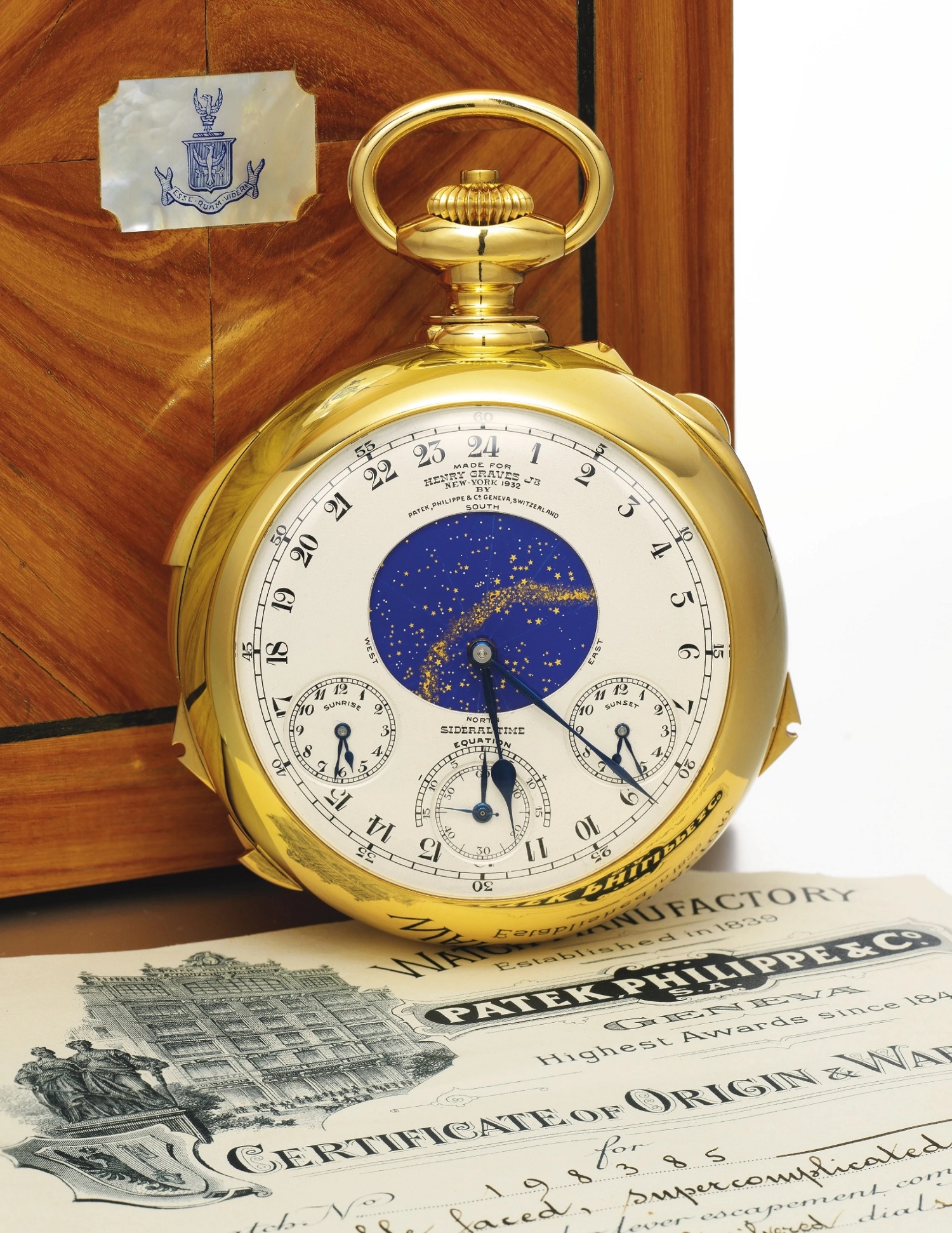
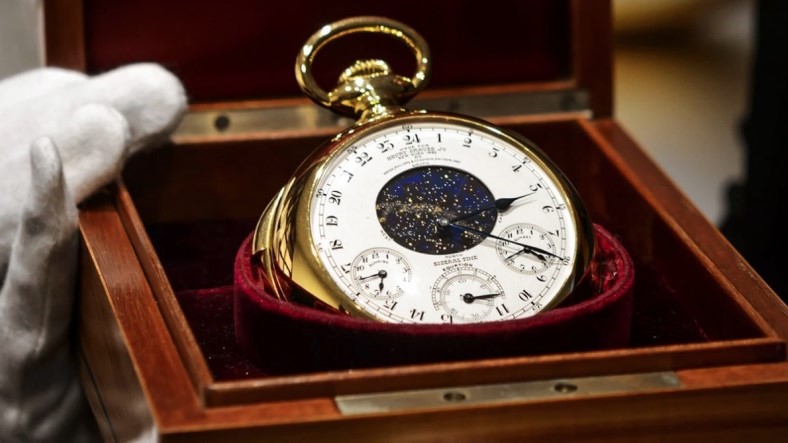
Patek Philippe Henry Graves Jr. Supercomplication (Photo courtesy of Sotheby’s)
Eventually, an unofficial rivalry developed between Packard and Graves, each man trying to top the other with the number of complications in his timepiece. In 1925, Graves directed Patek Philippe to craft “the most complicated watch” with “the maximum possible number of complications.”
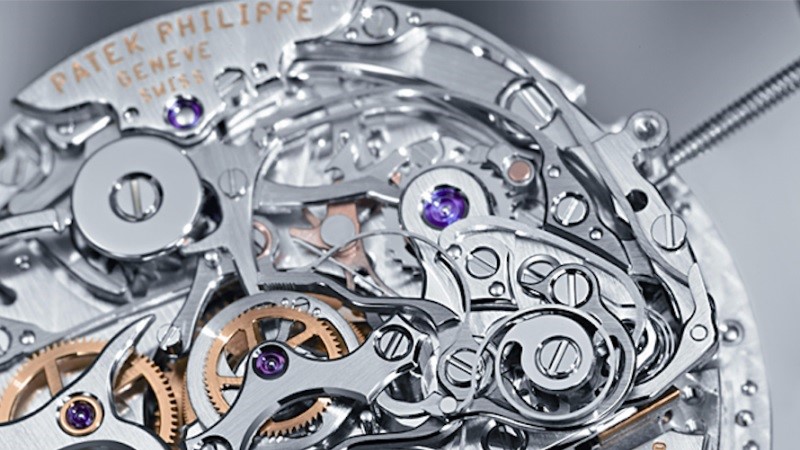
Inner workings of the Henry Graves Jr. Supercomplication (Photo courtesy of Celebre Magazine World)
Eight years later, Graves received the product of unprecedented research, engineering, and artistry: a 1-pound, 3-ounce pocket watch with a 74mm gold case filled with 920 individual parts and a staggering 24 complications displayed on two dials. A 2014 Sotheby’s listing for the Henry Graves Jr. Supercomplication shows that those included:
Both dials (Photo courtesy of Celebre Magazine World)
Perpetual calendar: Shows the correct day, date, and month regardless of the length of the month, and automatically adjusts for the leap year. Accurate until 2100.
Moon phase indicator
Grande Sonnerie with Westminster chimes: Strikes the hours and quarters at every quarter hour and plays the Westminster chime, which many know from the Big Ben clock in London.
Minute repeater: Strikes the quarter hours and minutes.
Split-seconds chronograph: Used for timing two events at the same time.
Sidereal time: “Based on the amount of time it takes the Earth to make two consecutive transitions of a meridian by a fixed star.” A sidereal day is approximately 23 hours, 56 minutes, and 4.1 seconds long.
Equation of Time: The difference between apparent solar time (the time indicated by a sundial) and mean time (the average of solar time).
A 2024 Hodinkee article indicates that the celestial chart, equation of time, and sunrise and sunset subdials were calibrated specifically to Graves’ New York City residence on 64th Street and 5th Avenue.
Photo courtesy of Celebre Magazine World
The biggest number of all associated with the Henry Graves Jr. Supercomplication is its most recent auction price: at a 2014 Sotheby’s auction in Geneva, it sold for more than $24 million—a record for a timepiece, which also happened to beat the Supercomplication’s previous record of $11 million set in 1999.
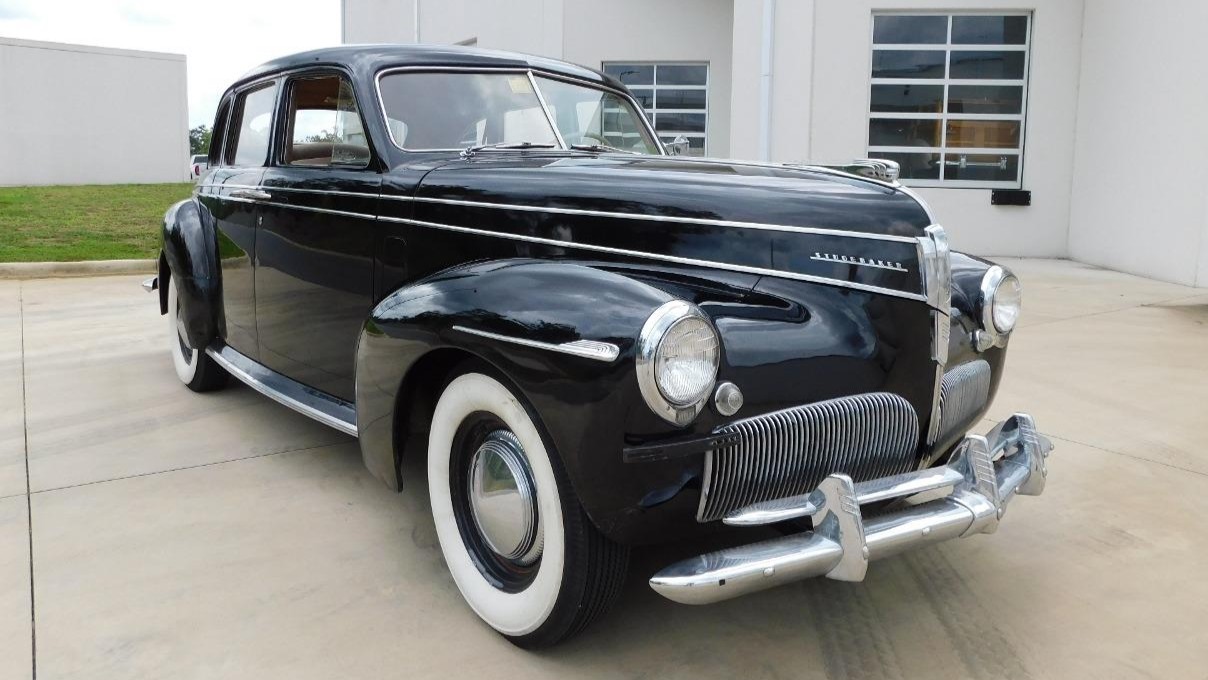
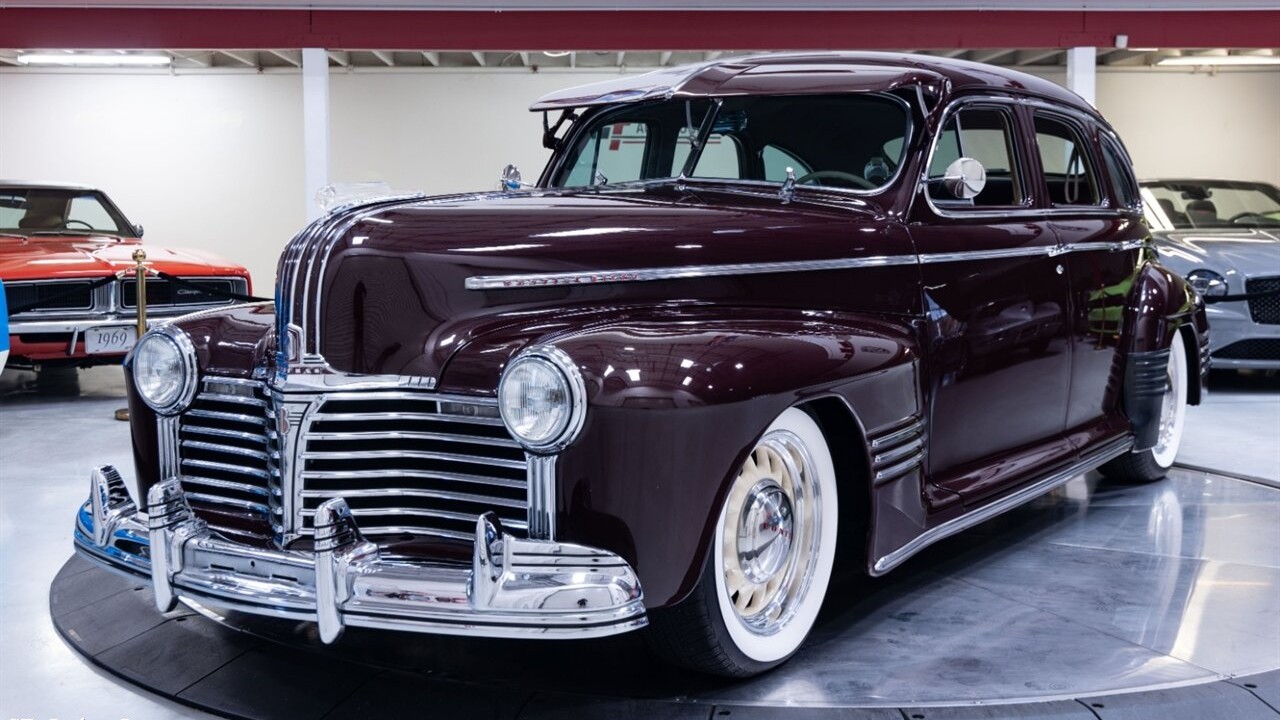
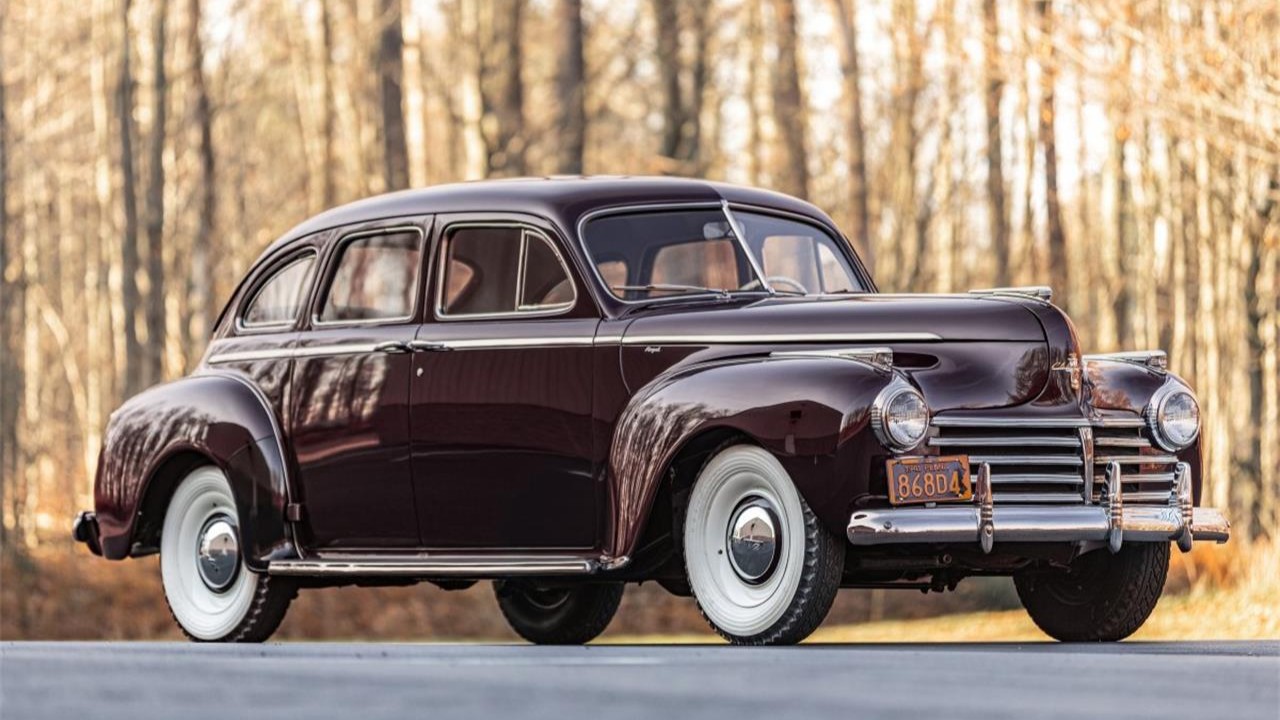
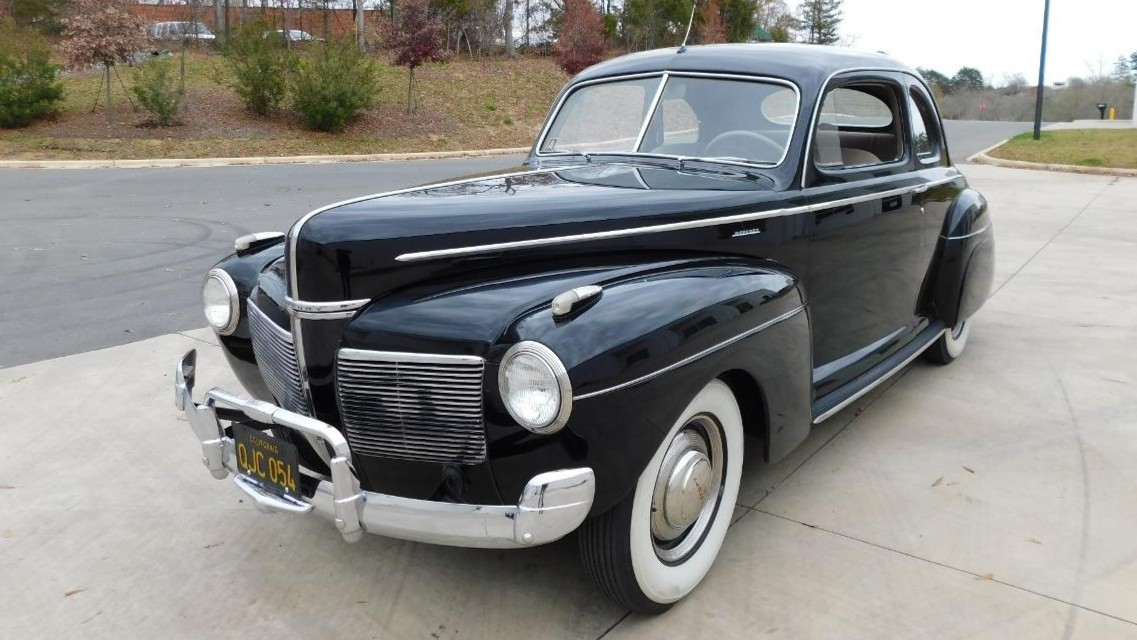
In the history of the American auto industry, there have been model years that stand out as unique. In the case of the four cars below currently listed for sale on AutoHunter or ClassicCars.com, they all are from a certain model year that featured a lot of new and old, all of it unique. Can you tell us what model year that may be?
While you’re at it, tell us the make of each. Easy enough, no? Post your answers in the Comments section below.
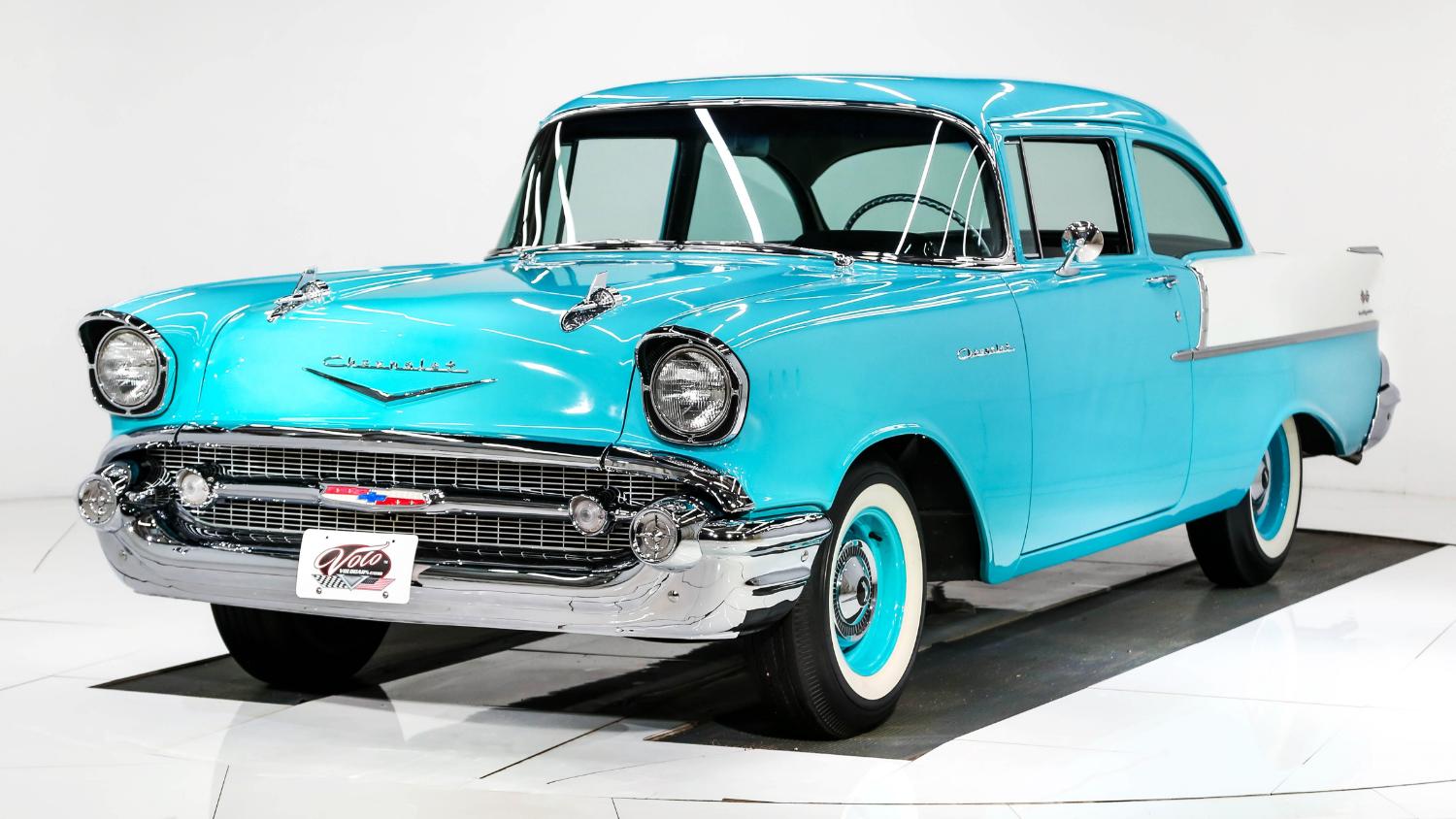
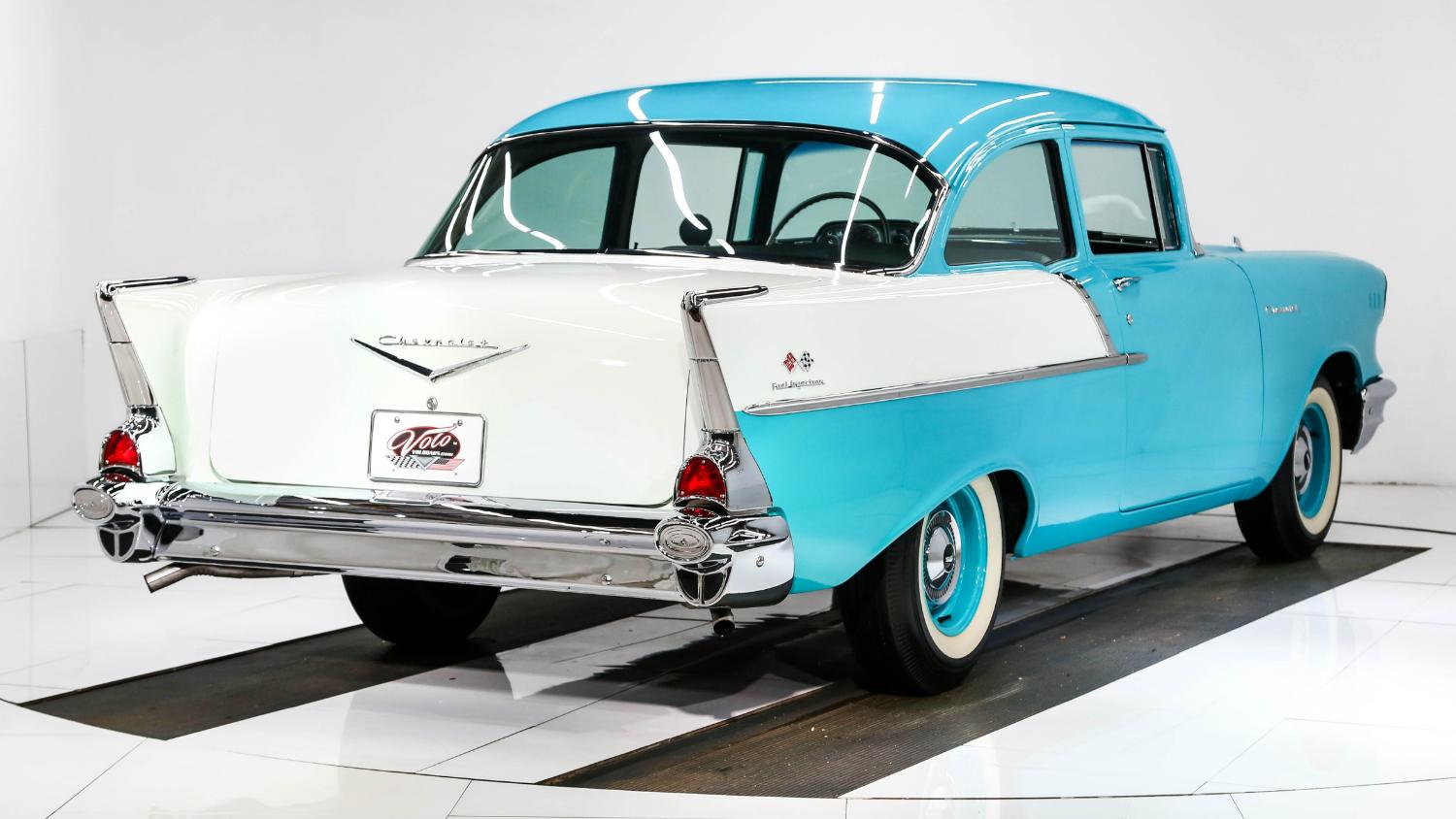
Currently listed on AutoHunter is this frame-off-restored 1957 Chevrolet 150 Utility Sedan powered by the pioneering fuel-injected 283. Having a fuel-injected Utility Sedan would have been the racer’s choice since it was the lightest Chevrolet save the Corvette. As this is a solid-lifter car, the engine is hooked up to a three-speed manual. Other features include Positraction with 4.11 gears, though it’s also significant for what it doesn’t have: radio, cigarette lighter, heater, and clock. A rubber floor mat also seems quite appropriate for this sort of car, doesn’t it? Painted Tropical Turquoise and India Ivory with a gray cloth and vinyl interior, this early muscle car comes from the selling dealer with a clear title.
The Tropical Turquoise and India Ivory two-tone paint is complemented by a chrome spear and band that start at the rear fender and reach the door. Other features include a chrome driver-side mirror, Fuel Injection badges and racing flags on the rear fenders, rocket-inspired hood ornaments, and more. A set of 14-inch painted steel wheels with Chevrolet hubcaps is wrapped in 8.00 BFGoodrich Silvertown whitewalls.
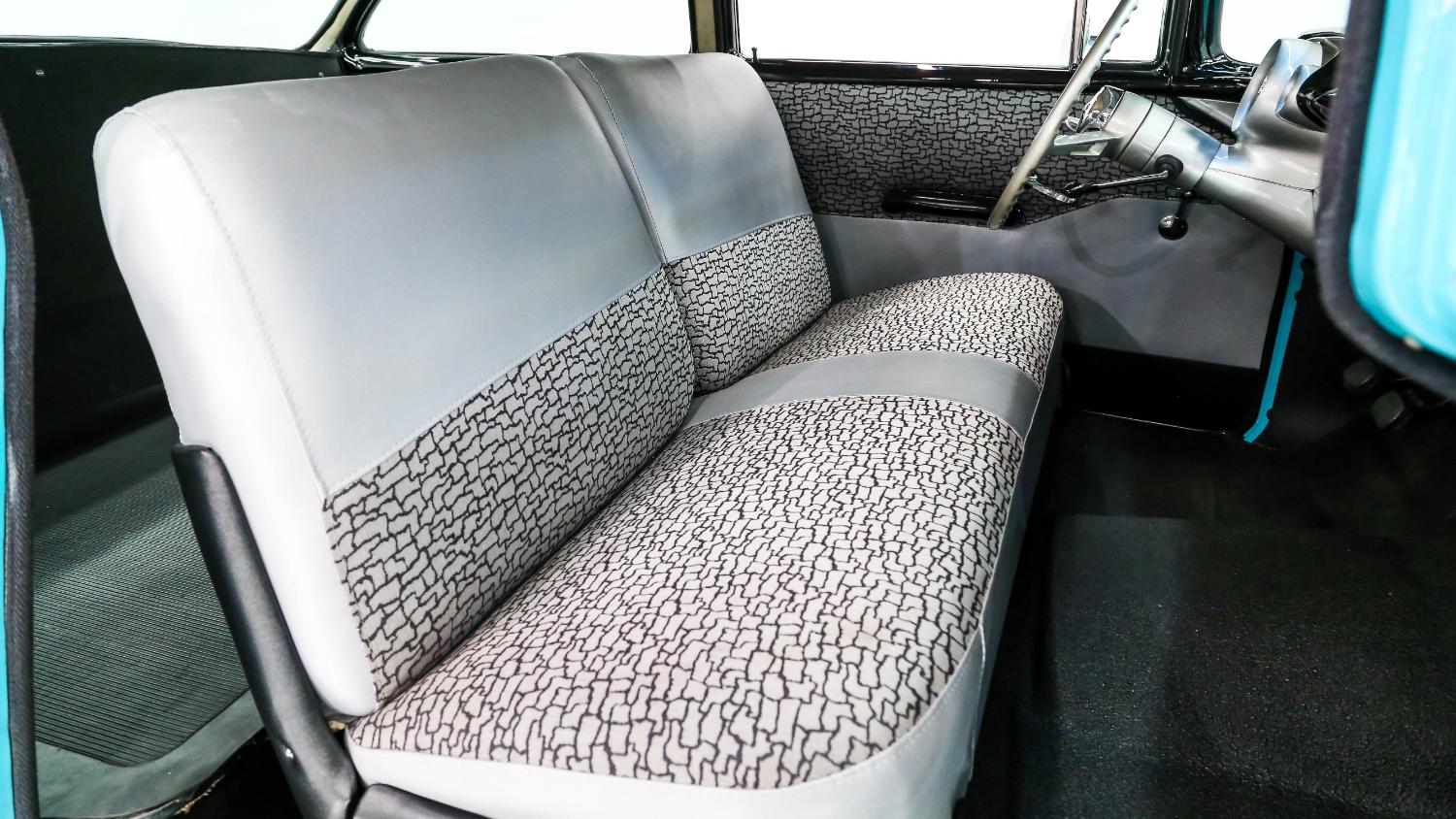
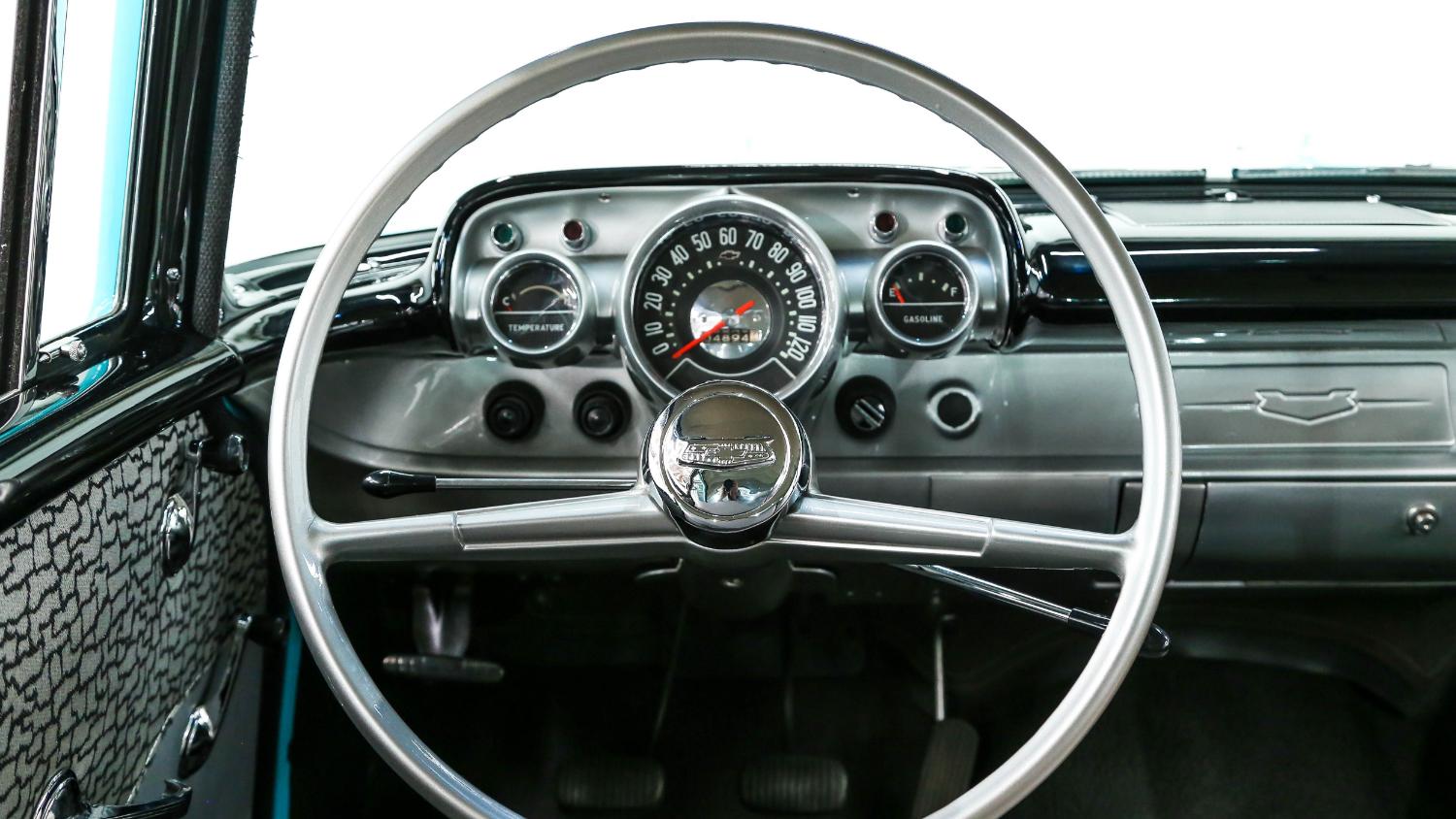
The cabin features a front bench seat covered with gray patterned cloth and vinyl upholstery; as this is a Utility Sedan, there is no rear seat. There really isn’t much else to describe other than what is lacking because this vehicle was ordered without power-robbing items that add weight—no radio, no lighter, no heater, and no clock.
Instrumentation includes a 120-mph speedometer and gauges for the fuel and coolant temperature. The odometer reads 4,894, which is the mileage driven since the restoration.
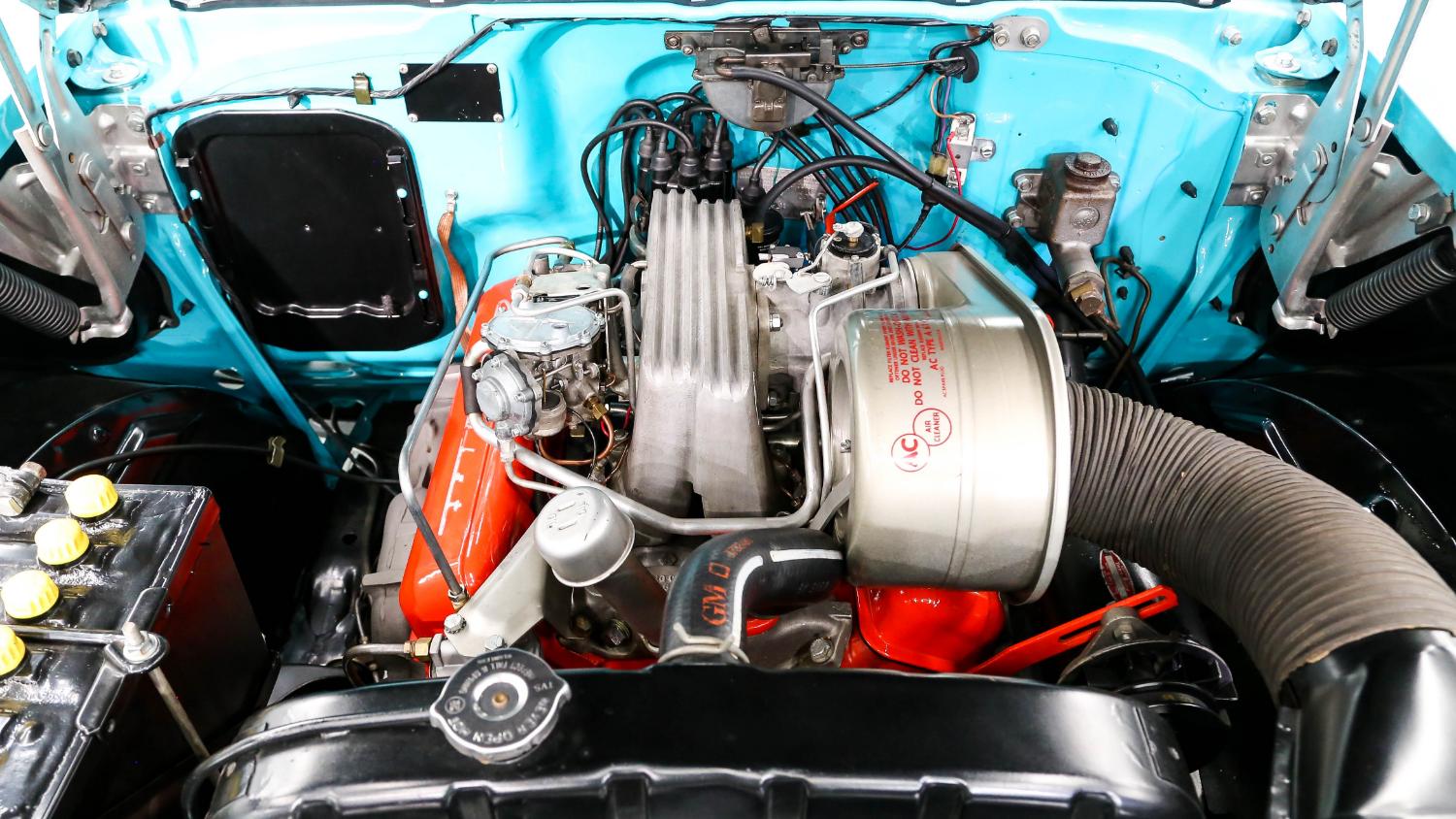
The EK-code 283ci small-block V8 was rated at 283 horsepower with fuel injection. The fuel injection unit has been rebuilt and adjusted, plus authenticated. The engine is paired with a column-shifted three-speed manual.
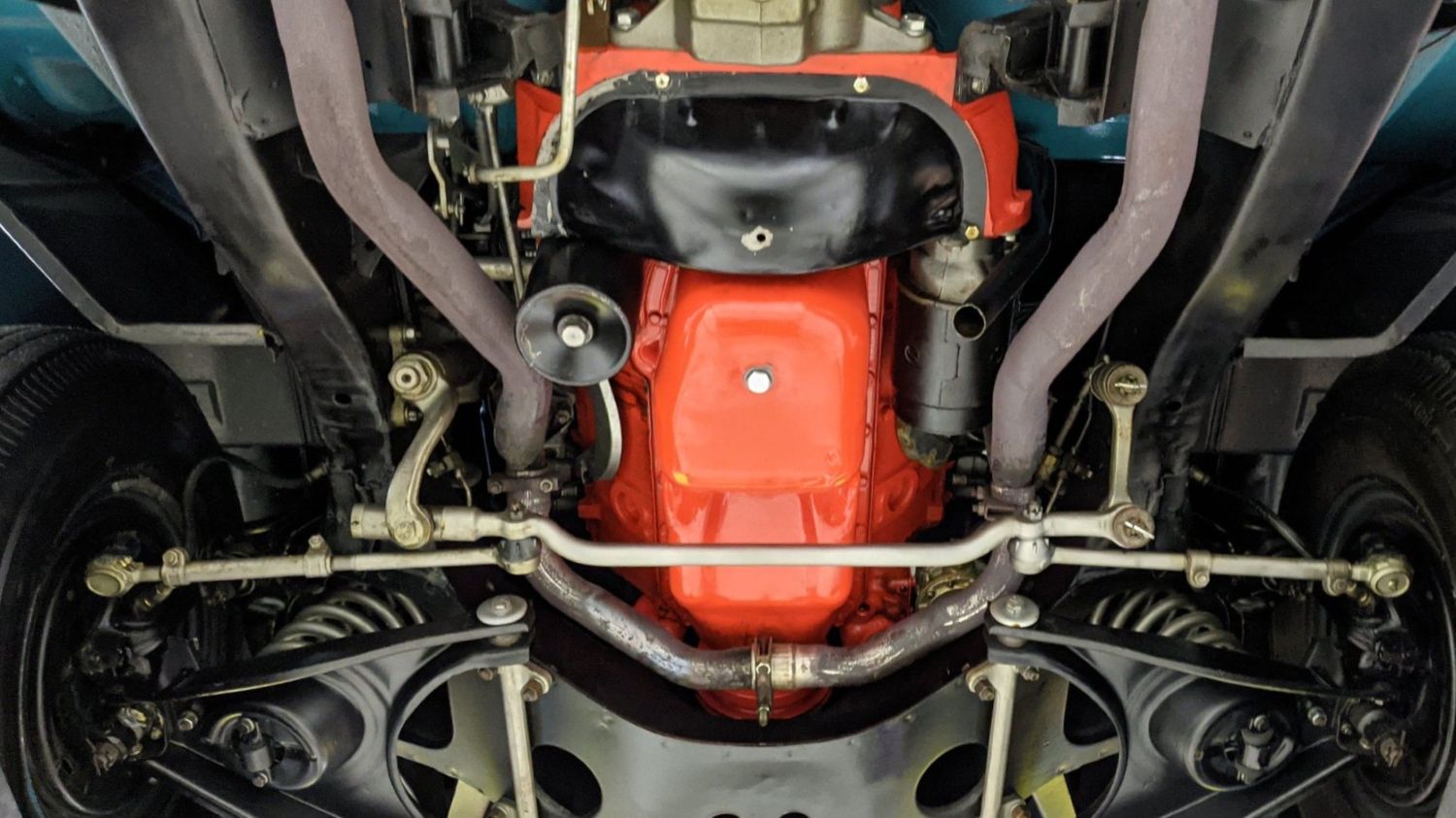
The undercarriage features a Positraction rear axle with 4.11 gears, which was heavy stuff for 1957. Drum brakes can be found at all four corners. A dual exhaust system routs the spent fuel out the rear corners.
This award-winning 1957 Chevrolet 150 Utility Sedan with fuel injection may not appear as pretty as a Bel Air Sport Coupe, but it may be more beautiful. For those people who believe muscle began before 1957, this Tri-Five is a historical seminal high-performance machine, one spec’d out with the lightest model and body style and the most powerful engine. This AutoHunter Spotlight is one not to be missed, so bid wisely and bid high because once 11:15 a.m. (MST) on Thursday, December 18, 2025, comes around, you will have to settle for a lesser ’57 Chevy.
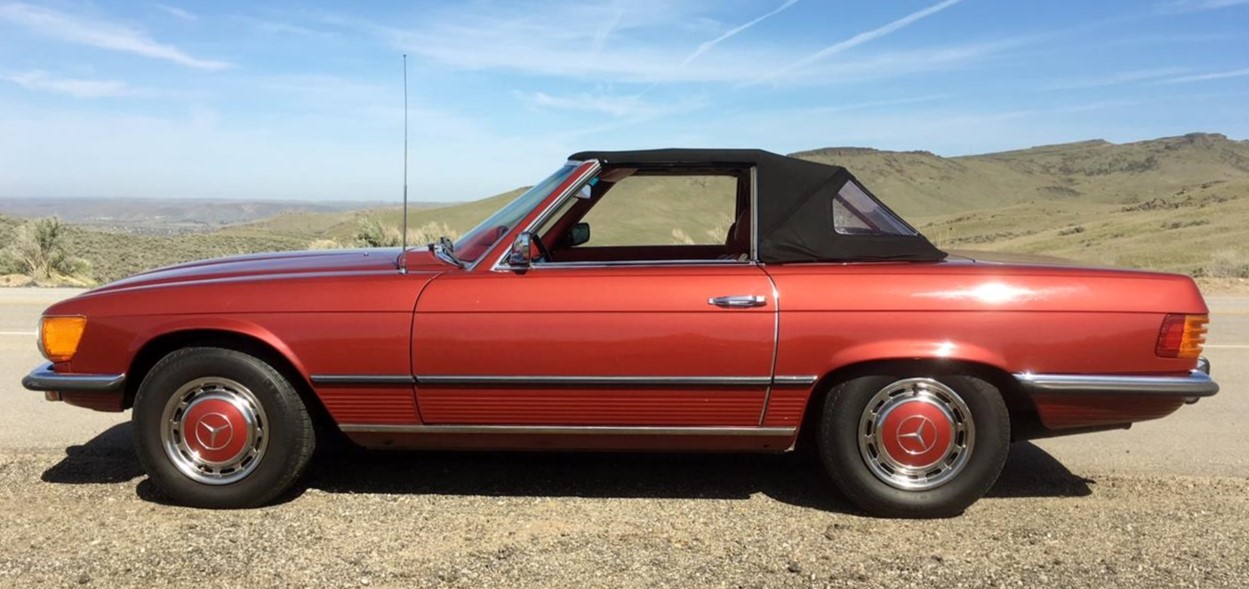
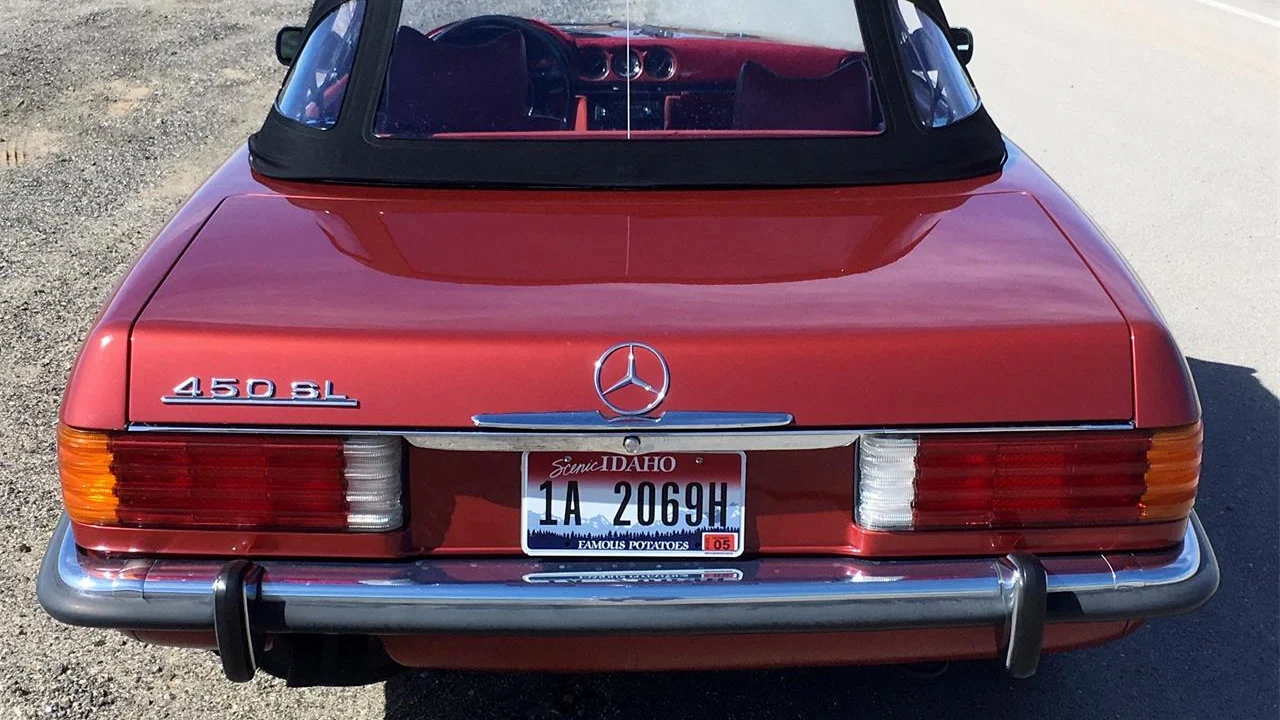
Since the introduction of the original W113 Mercedes-Benz 230SL, Mercedes has literally owned the entire category of the roadster GT car. Over the years only Cadillac (with the Allante and the XLR) and Lexus (with the SC430) attempted to move into this market, but gave up after a few years due to the fact that when people wanted a luxury roadster GT car, they wanted a Mercedes SL. There is a good reason for this. Not only does it have no competition in the marketplace, but also every single generation of the Mercedes SL has produced some of the finest-built Mercedes cars of the time – in fact, some of the finest built cars in the world, period. My Pick of the Day is from the generation that firmly established the SL as a measuring stick of success: a 1973 Mercedes-Benz 450SL listed on ClassicCars.com by a private seller in Boise, Idaho.
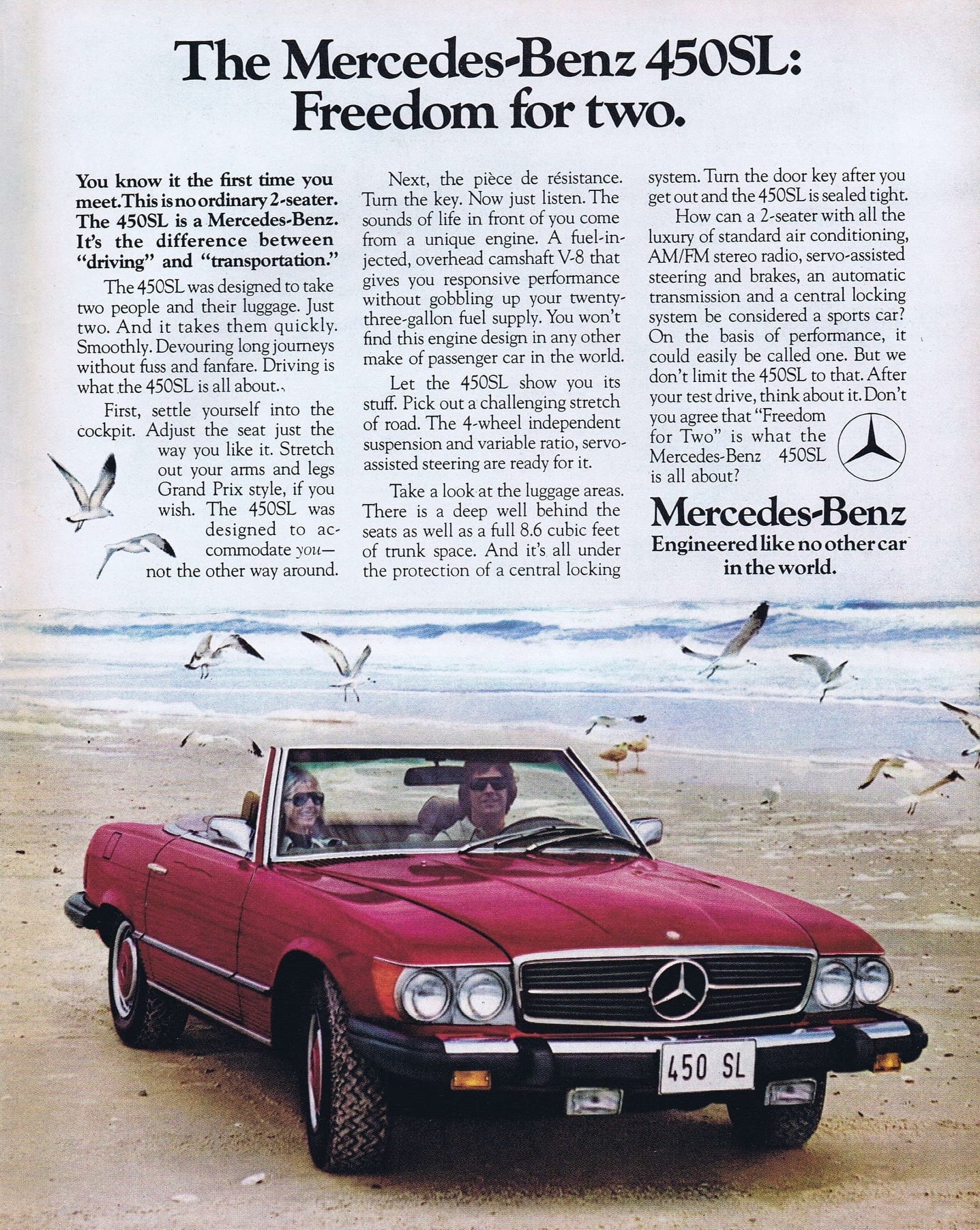
The 450SL was the car to have in the 1970s and ’80s. It represented elegance, taste, style, and success. It was the car of choice for world leaders, actors, millionaire businessmen, and rock stars. Mercedes probably sold more of these cars to the entertainment industry than any other manufacturer ever. Their ad campaigns of the time only helped this. Heck, people seemed to embrace Janis Joplin’s 1971 song “Mercedes Benz” for years.
I have owned two of the SL’s R107 generation, which this car is a part of, and have to say that the build quality is better than any single car of the era. Not only are they built using the finest of materials, but also the door gaps, interior finishing, and every single piece you can see or touch is nothing short of the best in the world. Take a look at one of these cars in a showroom, open and shut the doors, and you will know what I mean. The idea of bank-vault solidity was first used to describe this era of SL Mercedes.
This specific car is an early example, with the small European bumpers as standard and a much more basic and yet still well-constructed interior. This is the SL that was built before the overly complicated climate controls, making it an easier car to live with than the later models. In addition, those small bumpers make this car’s design look perfect.
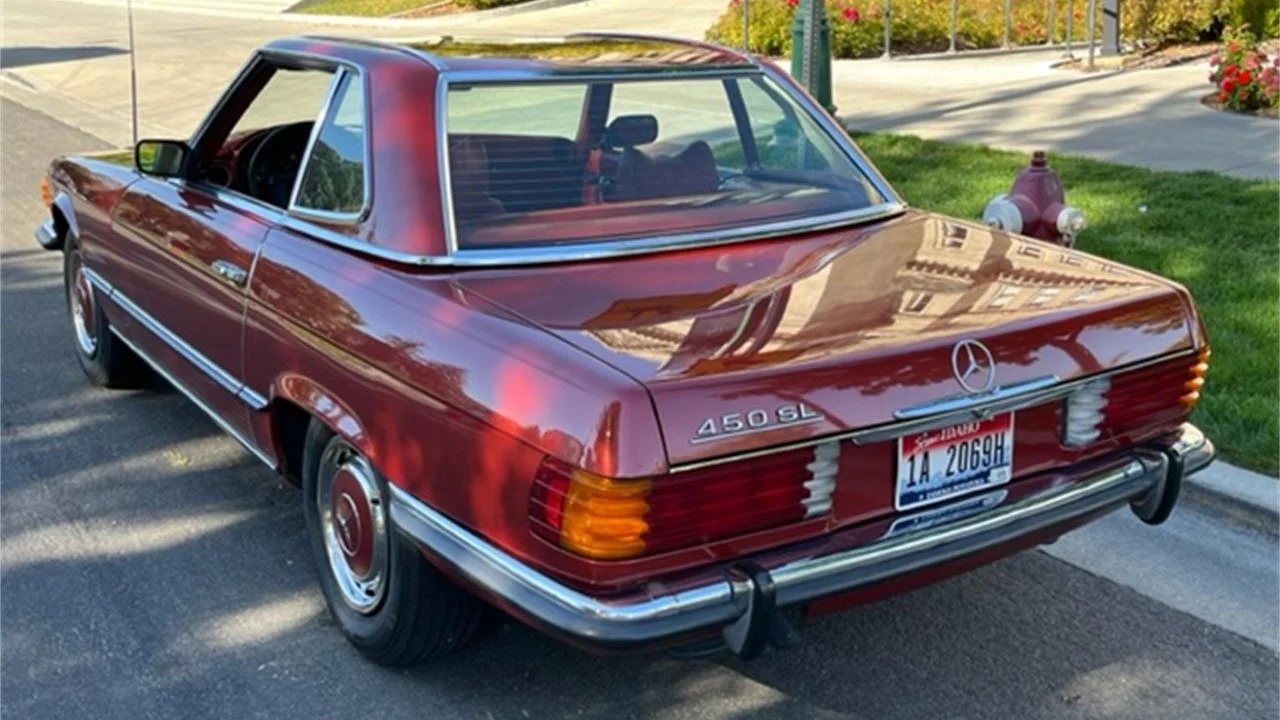
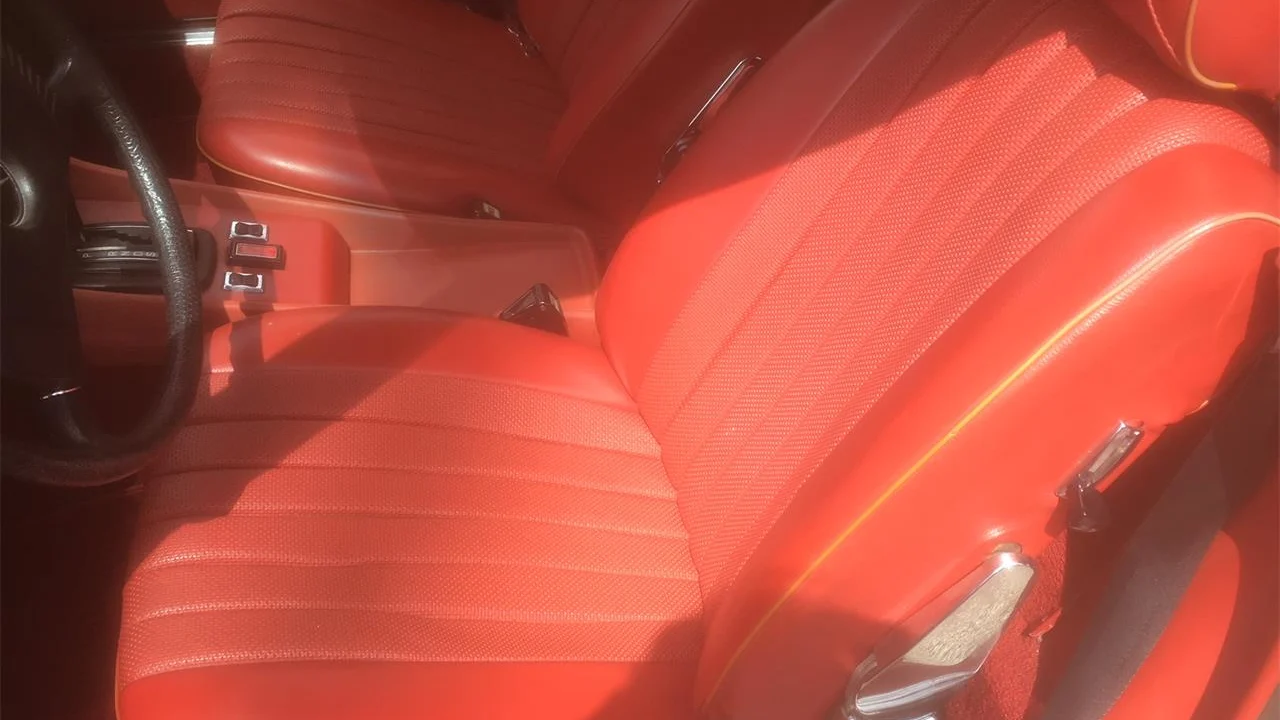
The SL has been repainted in its original color of Signal Red, a color that looks spectacular, especially against the red MB Tex interior. I see no dash cracks or anything else that makes the car looks like it has any cosmetic needs. It includes its hardtop and soft-top and still rides on factory steel wheels with color-matched hubcaps.
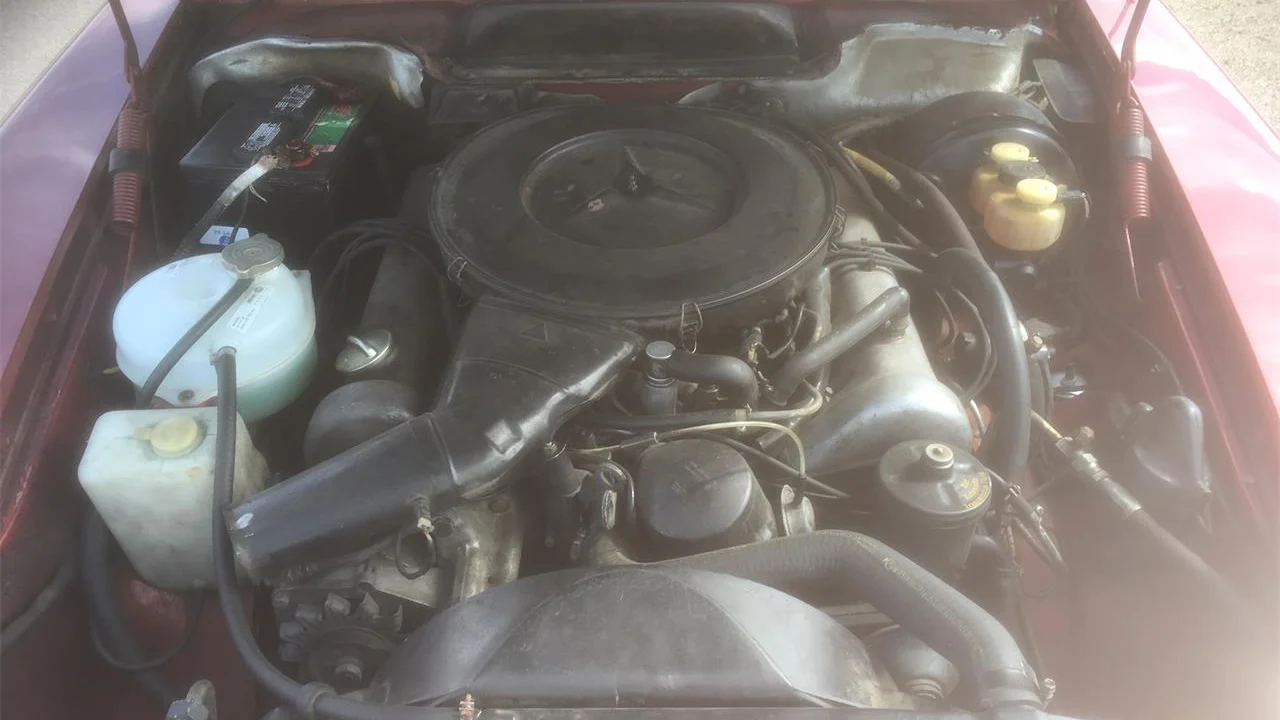
The seller states that he “looked for a ’73 for a long time before I could find one this clean and original and strong. I’ve gone through everything it’s needed mechanically to take it from a B to a straight A.” New brake hoses and new master brake cylinder were installed, as well as new fuel lines, new tie rods, new shocks, new correct Michelin tires, a new air-conditioning compressor, and fresh R12 in the A/C (which the seller states blows ice-cold).
In addition, the seller had the soft-top replaced with a correct German fabric top, and says the hardtop is in excellent condition.
They describe the interior as being “in amazingly good condition for a convertible of this age. The dash has no cracks. The seats are perfect. Carpet is like new. Door panels are complete and solid. The all-red interior is an amazing experience.”
These Mercedes 450SLs, especially the early ones like this example, are becoming more and more popular with younger collectors, who have found out just how well-built and amazing these cars were when new, and offer quality that few cars have today. They are simple to maintain, reliable, fun to drive, and still make a statement wherever they go. I think that shopping for one of these cars is a smart thing, as the demand for really good examples like this one are harder and harder to find. This 1973 450SL has an asking price of $25,000, which is a fair price for one this nice. I feel that this is truly a situation where you can buy it now or pay more later. If you buy it, I am betting you will not be disappointed.