My week in the 2026 Volvo XC90 Ultra T8 plug-in hybrid is a reminder that, in automotive terms, the 2016 model year was a long time ago. Since then, the Corvette has transitioned from its seventh generation to a dual-clutch-automatic-only, mid-engined sports car; the Dodge Charger has gone from supercharged Hellcat power to all-electric or twin-turbo Hurricane I6 propulsion; and Jaguar is now on hiatus as it prepares to become an ultra-luxury EV brand. But one thing hasn’t changed since 2016: the second-generation Volvo XC90 is still in production.

Of course, Volvo’s largest SUV has been updated over the past decade. It’s now available as a mild hybrid and a plug-in hybrid; its cousin, the EX90, is a three-row EV. The most recent refresh was in the 2025 model year, when the XC90 received exterior changes, a redesigned cabin with a larger touchscreen, better ride quality, and more. My 2026 XC90 T8 plug-in hybrid test vehicle benefited from those changes plus the top-of-the-line Ultra trim level, which comes standard with second-row sunshades, cushion extensions and four-way power lumbar support in the first row, and head-up display. Nappa leather upholstery is also standard, but the person who configured my review vehicle opted for the navy Herringbone Weave fabric, which precludes the leather’s front seat coolers. The seven-seat layout with a middle bench is a no-cost option; the addition of the four-corner air suspension and the 1,410W-watt, 19-speaker Bowers & Wilkins audio system brought my media loaner’s as-tested price up to $89,695.
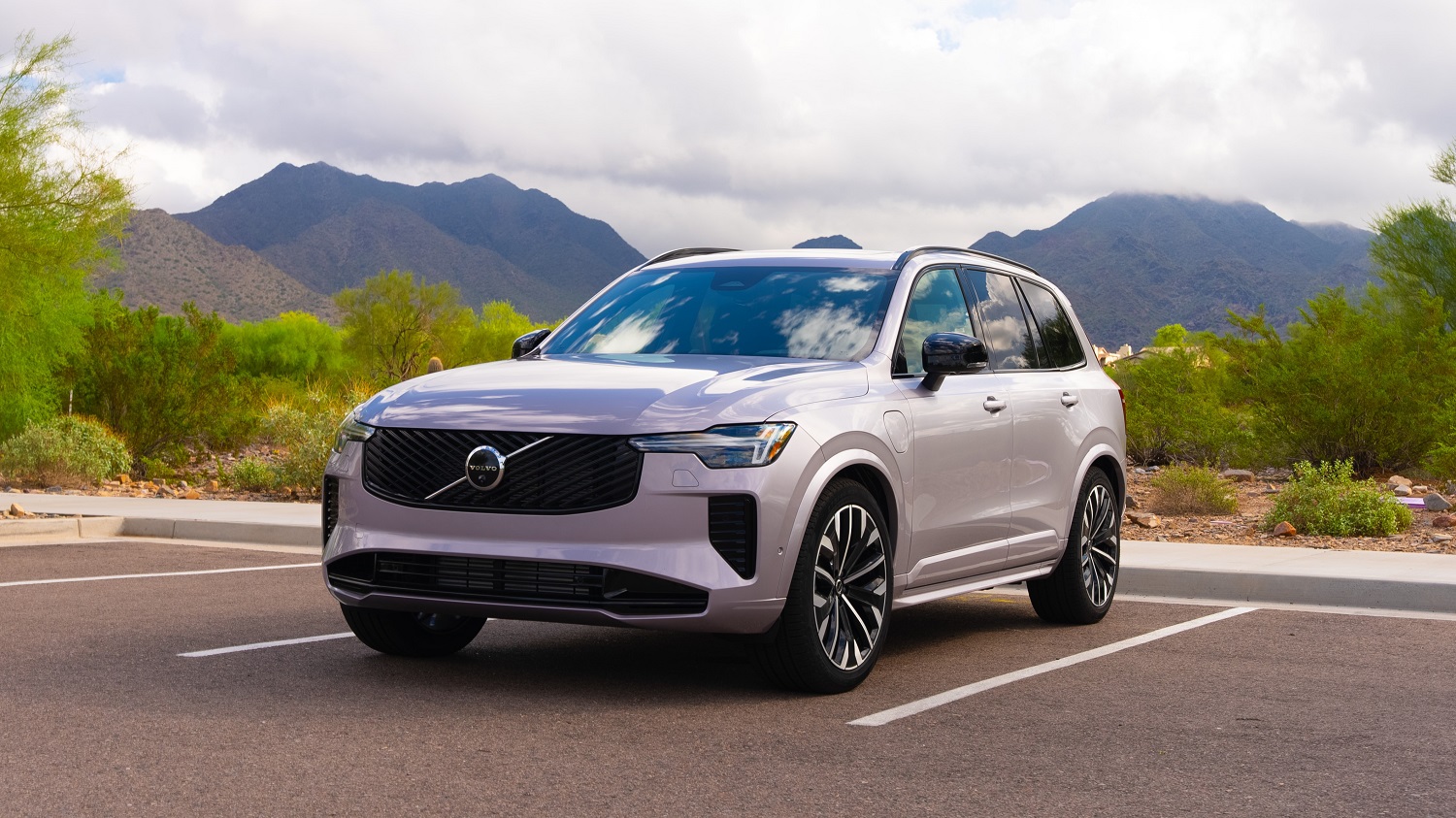
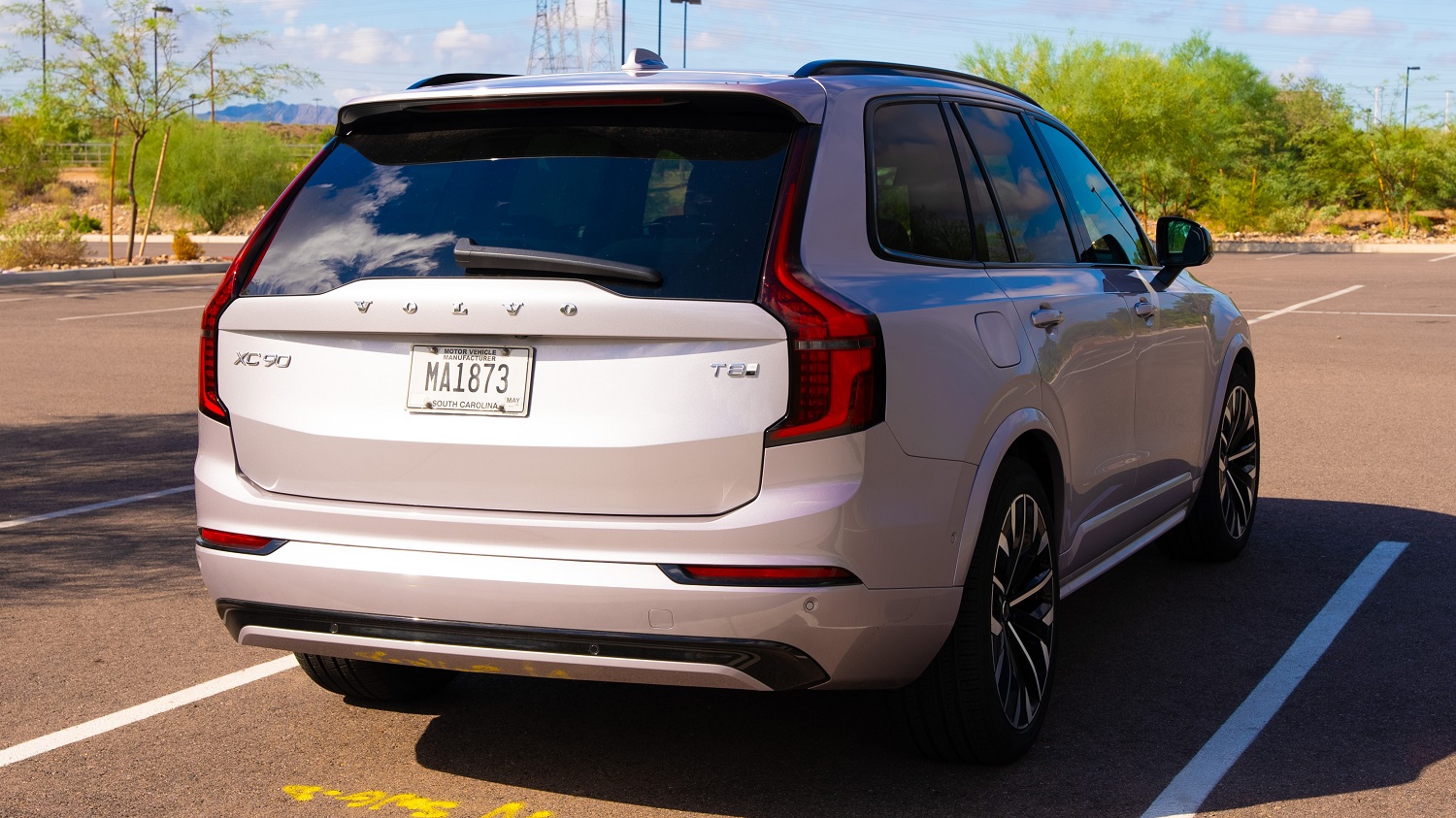
Despite its age, the XC90 is still an attractive vehicle. Unless you count the “Thor’s Hammer” headlights (which I don’t), there aren’t any gimmicks to its design, like cosmetic off-roader add-ons, coupe-like roofline that cuts into cargo space, or a “floating” roof—just nice lines with the right amount of curves. Like many vehicles, my XC90 tester has a dark trim package (named—get this—Dark), which coordinates well with the purple-tinted Aurora Silver paint. The XC90 is not a flashy vehicle that screams for attention but, when you do see it, it’s easy on the eyes.
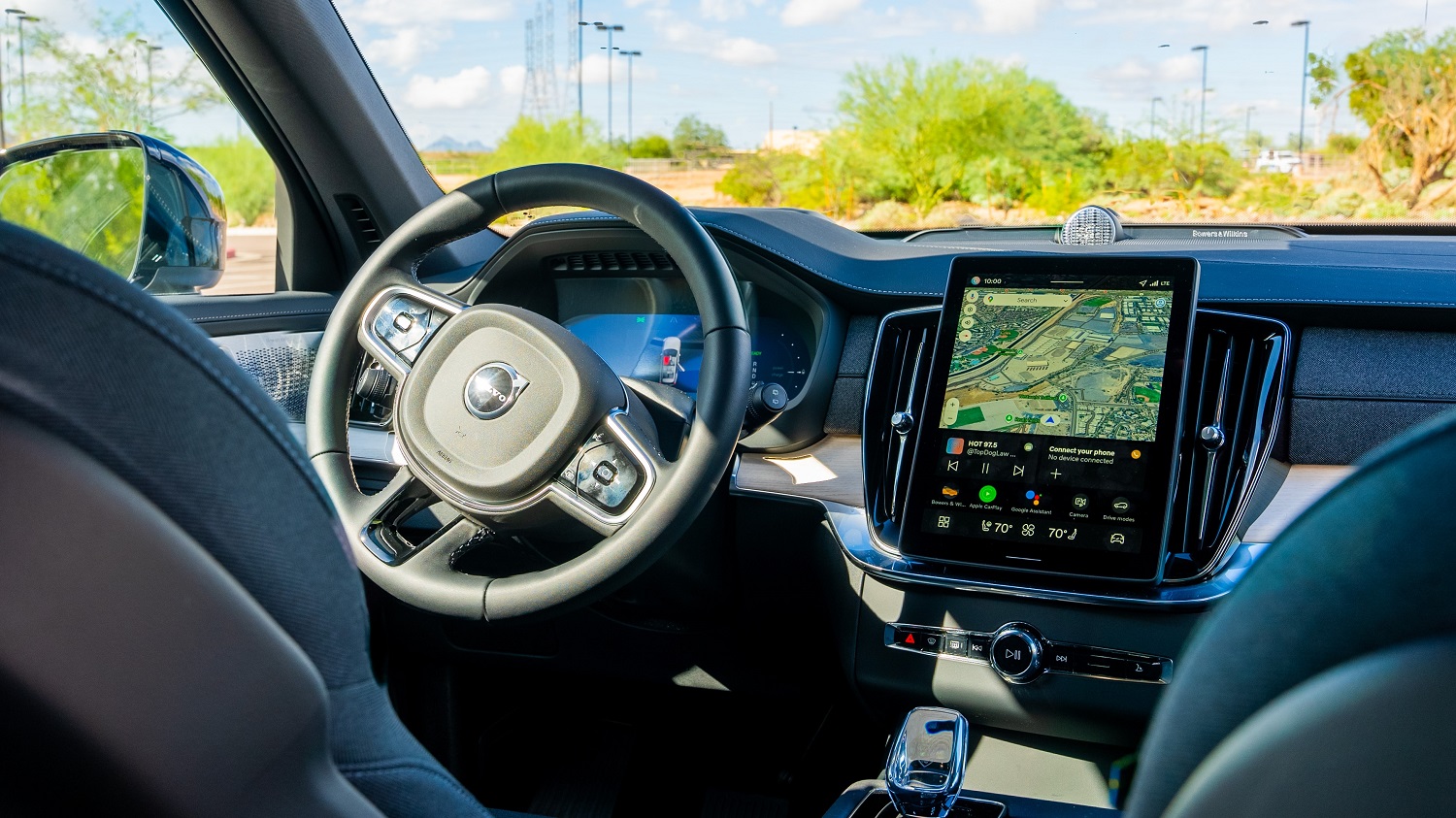
The interior of my XC90 tester was similarly tasteful. Sure, it has a 12.3-inch digital instrument cluster, an 11.2-inch infotainment touchscreen, and Light Ash wood trim that contrasts with its charcoal surroundings but, overall, the combination never looks garish or gaudy. It also isn’t entirely conventional; the navy recycled polyester upholstery is an unusual touch that tempers the almost-white accents. The Orrefors crystal shift knob is a nice (and thoughtful) touch: Volvo put a distinctive feature in a place where it can always be enjoyed because it’s used every time the XC90 is driven.

Unfortunately, I also saw something else when I was behind the wheel of the XC90: glitching or outright failure of the digital gauge cluster’s map display. That fault had company in the form of the second-row bench seat’s middle section, which refused to fully raise no matter how much I tugged on its pull-strap. The third row has an adequate amount of legroom for all five feet and 10 inches of me, but headroom can be a little tight.
There was no shortage of power from the XC90’s combination of a turbocharged 2.0-liter I4, electric motor, and 18.8-kWh battery pack. Total output is 455 horsepower and 523 lb-ft of torque, which reaches the road through an eight-speed automatic and all-wheel drive. Turning out of a driveway or onto an access road in a hurry required keeping both hands on the wheel because the XC90 was potent and ready to please. Volvo says the 5,064-pound XC90 can get to 60 mph in five seconds flat, and I believe it. With a completely charged battery and a full gas tank, it has a potential driving range of 530 miles. If I desired to use pure electric power—something I did a few times on the way to the office—the XC90 could travel up to 32 miles. On gas alone, it’s capable of returning 27 mpg. Using a mix of gas and electricity over 263.4 comfortable miles on the air suspension, I averaged 27.3 mpg.

The Volvo XC90 has been around an eternity in car years, but the 2026 XC90 Ultra T8 plug-in hybrid shows that age hasn’t dulled its appeal. To learn more, watch my full video review below.

Click above and watch our full video review on YouTube!

This video is sponsored by Legendary Car Protection. Car ownership today comes with high expectations and high risks. A well-designed Vehicle Service Contract not only protects your finances, but also ensures your vehicle receives the care it deserves – no matter how iconic, rare, or routine it may be. To explore tailored protection options for your specific vehicle, visit LegendaryCarProtection.com.

This ’32 Ford Victoria was built under previous ownership, and per the seller it uses a metallic burgundy Downs Manufacturing fiberglass body finished mounted on a color-coordinated TCI chassis. Power comes from a 350ci V8 linked with a Turbo 350 three-speed automatic transmission and a Ford 8″ rear end, and it rides on staggered-diameter Boyd Coddington five-spoke wheels with a triangulated four-link rear suspension and a drop front axle with disc brakes. The car is further equipped with a Holley four-barrel carburetor, an Edelbrock intake manifold, and electric door poppers, and inside, the cabin features bucket seats trimmed in two-tone tan leather along with a tan sueded headliner, a Vintage Air HVAC system, power windows, a Pioneer stereo, a Billet Specialties steering wheel, and a tilt steering column. This Victoria was purchased by the seller’s son in 2024, and it is now offered with a clean Texas title in the owner’s name listing the car as a 1932 Ford.

The seller tells us that the fiberglass body was sourced from Downs Manufacturing, and it is finished in metallic burgundy and mounted on a color-coordinated TCI chassis. Features include a chrome headlight bar and headlight buckets, chrome spreader bars, a stainless steel grille, hood vents, side-view mirrors, a chopped top, tinted windows, electric door poppers, a high-mount brake light, and blue-dot taillights. There is a crack in the right door glass.

Five-spoke Boyd Coddington wheels are mounted with 215/45-17 Triangle Talon front tires and 245/45-18 Nexen N3000 rear rubber. The car rides on a drop front axle with transverse leaf springs and hydraulic shocks up front, while the triangulated four-link rear setup has adjustable coilovers. Braking is handled by ventilated discs up front and drums out back.

The cabin features front bucket seats and a rear bench trimmed in two-tone leather, along with matching door panels and brown carpets lining the floors. Amenities include a Vintage air HVAC system, power windows, and a Pioneer stereo mounted in the tan sueded headliner.

A Billet Specialties steering wheel, a tilt steering column, and a mix of Stewart-Warner and Sun Pro gauges. The five-digit odometer shows 11k miles, approximately 1k of which were added under current ownership.

The 350ci Chevrolet V8 is mounted beneath a side-hinged hood, and it features a Holley four-barrel carburetor and an Edelbrock intake manifold. A chrome air cleaner and accessories are also fitted along with an electric cooling fan. The seller tells us that the spark plugs and air filter were replaced in 2025, and an oil change was also performed.

A Turbo 350 three-speed automatic transmission is linked to a Ford 8″ rear end. The underside is painted to match the body, and an aluminized dual exhaust system is also fitted.

The car is titled as a 1932 Ford using VIN 181563419, which aligns with a 1935 sequence.

This 1934 Ford five-window coupe is the product of a multi-year build by Todd Lewis of Xtreme Restorations in Slatersville, Rhode Island. Work was completed in 2020 and included channeling the all-steel Ford body fore and aft, painting it satin green, and mounting it on a stretched and Z’ed 1934 chassis fitted with a front drop axle, split wishbone radius rods, orange-bodied tube shocks, and a four-link rear setup with Carrera Shocks coilovers. Power is provided by a 350ci V8 equipped with a Howards Cams roller camshaft, Dart heads, a Holley four-barrel carburetor, and an Offenhauser intake manifold. It is backed by a three-speed automatic transmission and a 10-bolt rear end with a limited-slip differential. Additional features include Boling Brothers Lincoln-style front drum brakes, Wheel Vintiques 15″ artillery-style wheels, guide-style headlights, and 1948 Oldsmobile taillights. The diamond-stitched black leather cabin houses Stryker low-back bomber-style seats, a tilt steering column, a T-handle floor shifter, Classic Instruments gauges, and a Clarion CD receiver with Kicker and Rockford Fosgate speakers. This custom ’34 coupe was purchased by the selling dealer in November 2025 and is now offered at no reserve in Massachusetts with a Massachusetts title listing it as a 1934 Ford.

The Henry Ford steel body was channeled 7″ up front, 4″ at the rear, and finished in the 2003 Nissan hue of Canteen Green metallic (D13) with a PPG satin clear coat and pinstriping by Kent Brotherton. Exterior features include Ford truck Guide-style LED headlights, rear-hinged doors, a tilt-out windshield, a padded black vinyl roof, and 1948 Oldsmobile taillights.

The Z’ed chassis was stretched 4″ and fitted with a front drop axle, a transverse leaf spring, orange-bodied tube shocks, and split wishbone radius rods, while a four-link setup with chrome Carrera Shocks coilovers and a Panhard bar is employed at the rear. It rolls on gloss green Wheel Vintiques 15″ artillery-style wheels wearing Ford-branded dog dish hubcaps and Firestone Deluxe Champion “pie crust” tires. Braking is provided by Boling Brothers Lincoln-style drums at the front and GM 10″ drums out back.

The cabin houses Stryker bomber-style seats with diamond-stitched black leather that extends to the door panels and roof. Dynamat-lined floorboards are overlaid with black Daytona carpeting, and additional interior features include a floor-mounted T-handle shifter, custom door hardware, a dash-top traffic light viewer, and a Clarion CD receiver hooked up to four Rockford Fosgate speakers and a Kicker amplifier/subwoofer. The car was wired using a Painless Performance harness and a 17-circuit fuse box.

The three-spoke steering wheel is mounted atop a tilt-adjustable column with a Classic Instruments Rocket Tach tachometer affixed to it. The engine-turned aluminum panel houses a Classic Instruments direct-fit gauge set that includes a 140-mph speedometer. The 645 miles on the odometer represent the distance driven since completion of the build.

The carpeted trunk compartment provides access to an original-style fuel tank.

The 350ci V8 was was bored .030″ over and rebuilt utilizing a Howards Cams roller camshaft and Dart heads. It wears Eelco ribbed valve covers along with a matching oval air cleaner cover, and a 650-cfm Holley four-barrel carburetor is mounted on an Offenhauser intake manifold. 1962 Corvette exhaust manifolds flow into a dual exhaust system equipped with Cherry Bomb mufflers. The radiator is finished in black with a SPAL electric fan and a black billet overfill tank, and a Powermaster PowerGEN alternator, a Delco Remy distributor, and Edelbrock Max-Fire ignition wires were used.

Both the Turbo Hydra-Matic three-speed automatic transmission and a 10-bolt rear end with a Positraction differential were rebuilt, per the selling dealer. Black textured paint has been applied to the underbody.

The car is titled as a 1934 Ford using VIN 18765447.

This custom roadster was built between 1948 and 1950 by Fred Stammer of Burbank, California, using fabricated steel bodywork and a modified Willys frame. Power is provided by a 136ci Ford V8-60 featuring dual Stromberg carburetors, and additional equipment incudes a three-speed manual transmission, staggered-diameter wire wheels, and cable-operated brakes. After its build was completed, the car appeared in several magazines including Road and Track, Motor Trend, and Popular Science. A refurbishment was initiated in the 1980s and continued for nearly two decades, though it was never completed. The car was featured on BaT in April 2014 and was ultimately acquired by the Petersen Automotive Museum of Los Angeles in 2021. It remains a project with a seized engine, stripped cockpit, and numerous mechanical components in need of overhaul. This unique roadster is now offered on a bill of sale at no reserve with a collection of parts and records dating to 1987.

Stammer was a metalworker by trade with experience in the aircraft industry, and to build his roadster he fabricated body panels from sheet steel and assembled them using countersunk rivets. Highlights of the design include a perforated grille, a split windscreen, cycle fenders, tubular bumpers, dual headrest fairings, and a louvered hood secured by draw latches. Tubular exhaust headers pass through the body and merge into side-mounted exhaust pipes.

Initially finished in blue, the car was repainted in gold under prior ownership. The right headlight is missing, the front bumper is broken, and some of the panels are misaligned and loosely fitted. Holes in the bodywork, paint chips, and other blemishes around the car can be viewed in the image gallery below.

Silver-finished 16” front and 17” rear wire wheels are mounted with older Firestone tires. The car rides on a shortened and narrowed frame sourced from a Willys 77, which also contributed the axles, steering box, and cable-operated drum brakes. The seller states that the car rolls freely.

The cockpit has been stripped, and the steering wheel is constructed from round steel rod. A plastic fuel tank has been placed behind the seat framework.

A feature in the October 1950 issue of Popular Science shows decorative wood trim that is said to have been carved from mahogany by Stammer’s father. Remaining pieces of the trim will accompany the car and can be viewed in the gallery.

The flathead V8-60 features a Weiand intake manifold and dual Stromberg 81 carburetors. Period articles describe a water-injection system of Stammer’s design, though the components are no longer present. The seller notes that the engine is seized and the fuel system is incomplete.

The engine is backed by a three-speed manual transmission, and additional underside photos are provided in the gallery.

A windshield frame and Brooklands-style windscreens will accompany the car along with other removed and spare parts, documentation dating back to 1987, and historical photos.

Identification number AZ292451 was assigned to the car by the State of Arizona as shown above. However, the car does not currently have a title and is being sold on a bill of sale.

This Factory Five Racing ’33 Hot Rod replica was reportedly assembled in 2010 and was listed on BaT in May 2025 and June 2025 before it was acquired by the selling dealer later that year. Finished in metallic red over black leather, the car is powered by a 302ci V8 linked with a three-speed automatic transmission and a limited-slip differential. Equipment includes a four-barrel carburetor, an Edelbrock intake manifold, an aluminum radiator, tubular headers, electric power steering, a coilover suspension, disc brakes, 17″ alloy wheels, a black soft top, front and rear fenders, bucket seats, air conditioning, cruise control, and a rearview camera. This ’33 Hot Rod shows 831 miles and is offered by the selling dealer in Indiana with a clean Florida title describing the vehicle as a 2010 Assembled Roadster.

The fiberglass bodywork is finished in metallic red with silver stripes and features a black soft top. Exterior details include chrome headlight housings, a full hood, a polished aluminum windshield surround, rear-hinged doors, door-mounted side mirrors, side-exit exhaust outlets, front and rear fenders, and LED taillights.

Gunmetal-finished 17″ alloy wheels with polished lips are mounted with Nexen tires. The car is equipped with electric power steering, an independent front suspension, a live rear axle, and front and rear coilovers. Braking is handled by four-wheel discs.

The low-back bucket seats are trimmed in black leather. Appointments include a black roll hoop, air conditioning, cruise control, and three-point seat belts. The car is not equipped with side windows.

The billet aluminum steering wheel has a modern banjo-style theme and frames a screen for the rearview camera. AutoMeter instrumentation is mounted within an engine-turn dash accent and includes a 120-mph speedometer, a 7k-rpm tachometer, and gauges for oil pressure, coolant temperature, fuel level, and voltage. The digital odometer indicates 831 miles.

The 302ci V8 features a polished air cleaner with an exposed filter element as well as a four-barrel carburetor, an Edelbrock aluminum intake manifold, an aluminum radiator, chrome valve covers, and tubular headers that lead to side-exit exhaust pipes.

Power is sent to the rear wheels through a three-speed automatic transmission and an 8.8″ rear end with a limited-slip differential.

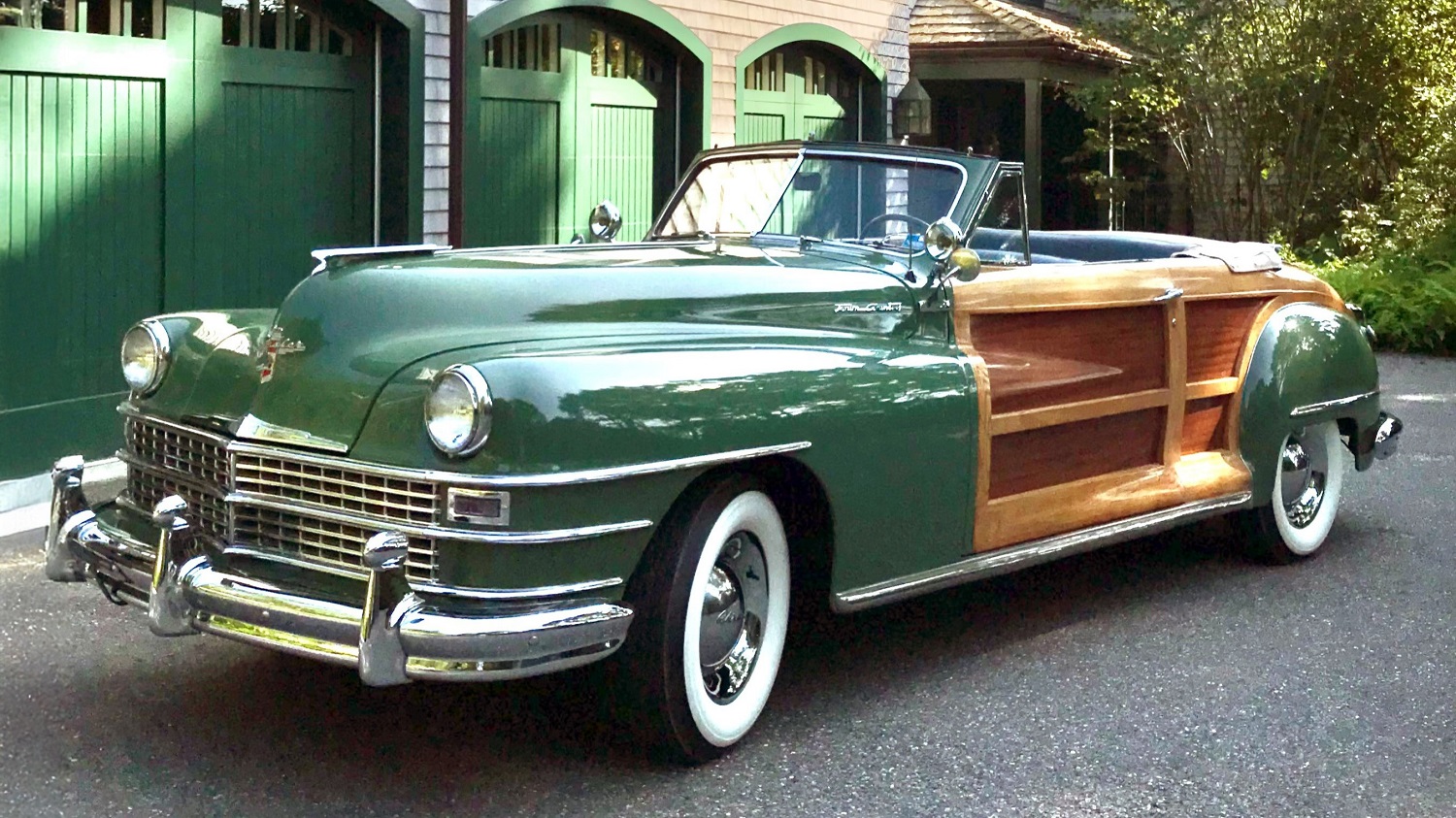
As a car enthusiast, when you hear the word “woodie,” you probably picture a station wagon of some sort, perhaps one with a surfboard on its roof rack. Those are out definitely out there, but there are more wood-sided vehicles than just wagons. Take this 1947 Chrysler Town and Country Convertible Coupe as an example. You can see it – and win it – at the upcoming Barrett-Jackson 2026 Scottsdale Auction.

The Town and Country nameplate dates back to 1941, when Chrysler introduced the model as a wagon with wood paneling that covered the doors and extended to what many call the “barrelback” rear end, which featured a pair of side-hinged doors to ease loading and unloading. America’s entry into World War II cut the 1942 model year short. When the Town and Country returned to the Chrysler lineup in 1946, it looked completely different. Not only was it restyled, but it also wasn’t a wagon any more. Instead, Chrysler turned the Town and Country into its own model line, which included a 4-Door Sedan, Brougham 2-Door Sedan, Custom Club Coupe, Convertible Coupe, and Roadster – all decked out with White Ash wood frames around Mahogany panels bonded to the steel bodywork. Depending on model selection, the Town and Country was either based on the 121.5-inch-wheelbase Windsor chassis and powered by the 250.6ci Spitfire straight-six or set on the 127.5-inch-wheelbase New Yorker frame and equipped with the 323.5ci Spitfire straight-eight.

Changes for 1947 were minimal, but if you check out the Town and Country section of the ’47 Chrysler brochure, you’ll see that there’s no Roadster variant. Fortunately, Chrysler still offered the six-passenger Convertible Coupe. The one you see here is finished in a lovely shade of light green, which coordinates wonderfully with the well-preserved ash and mahogany wood. Chrome bumpers, bright trim, chrome wheel covers and beauty rings, and wide-whitewall tires add even more sparkle to an already eye-catching car.

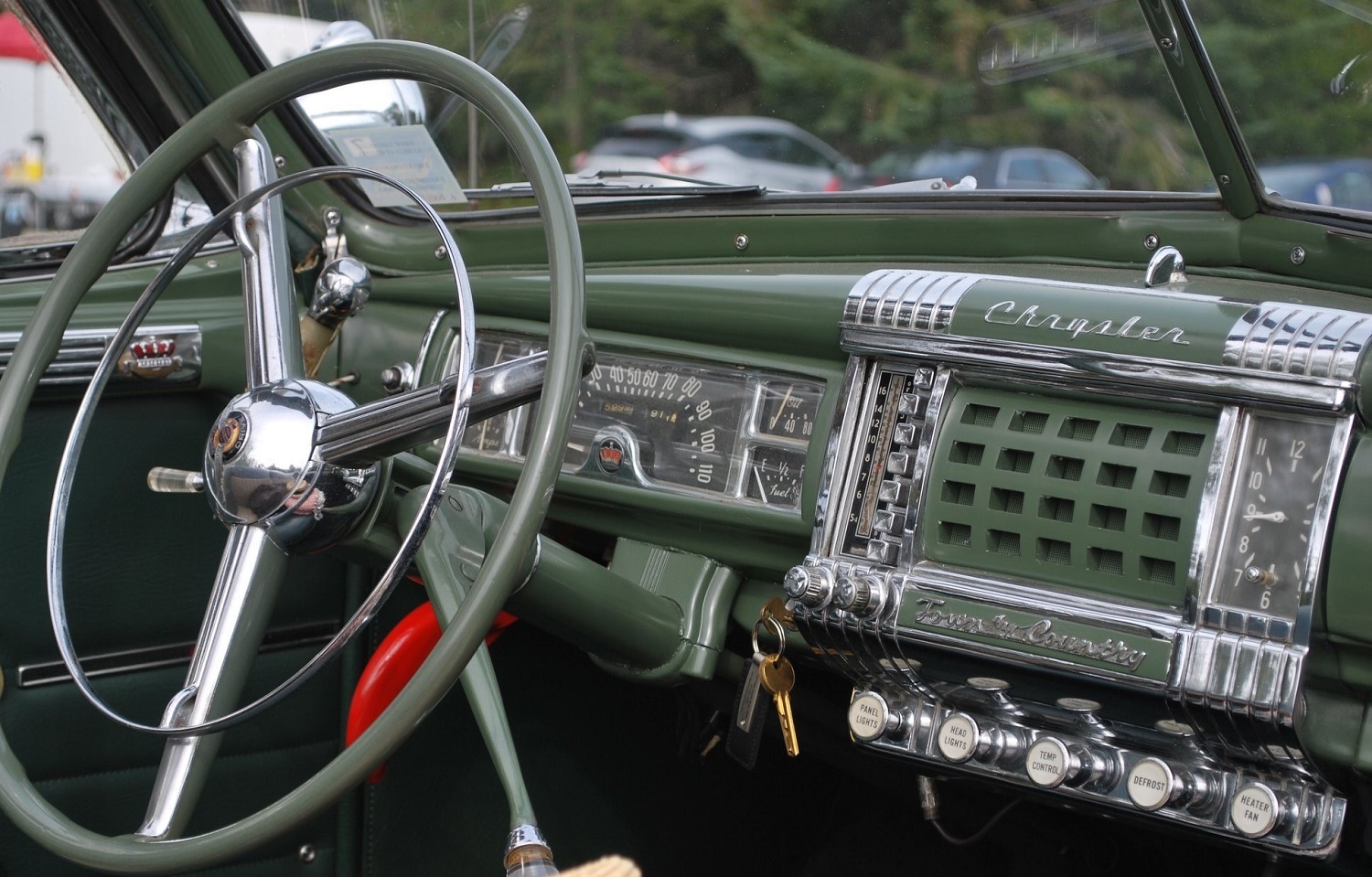
According to the auction listing, the 323.5ci inline-eight and Fluid Drive semi-automatic transmission have been “consistently serviced and maintained during approximately 15 years of ownership.” The green and tan leather interior has also been cared for and is protected by a power convertible top that “operates easily” and fits under a beige top boot.

There’s a chance you’ve seen this 1947 Chrysler Town and Country Convertible Coupe somewhere before because it’s been in several car shows, museum exhibits, parades, and community events. You’ll definitely see it cross the block at the Barrett-Jackson 2026 Scottsdale Auction, which runs January 17-25, 2026. Click here to register as a bidder. Want to sell your car at the event? Go here.

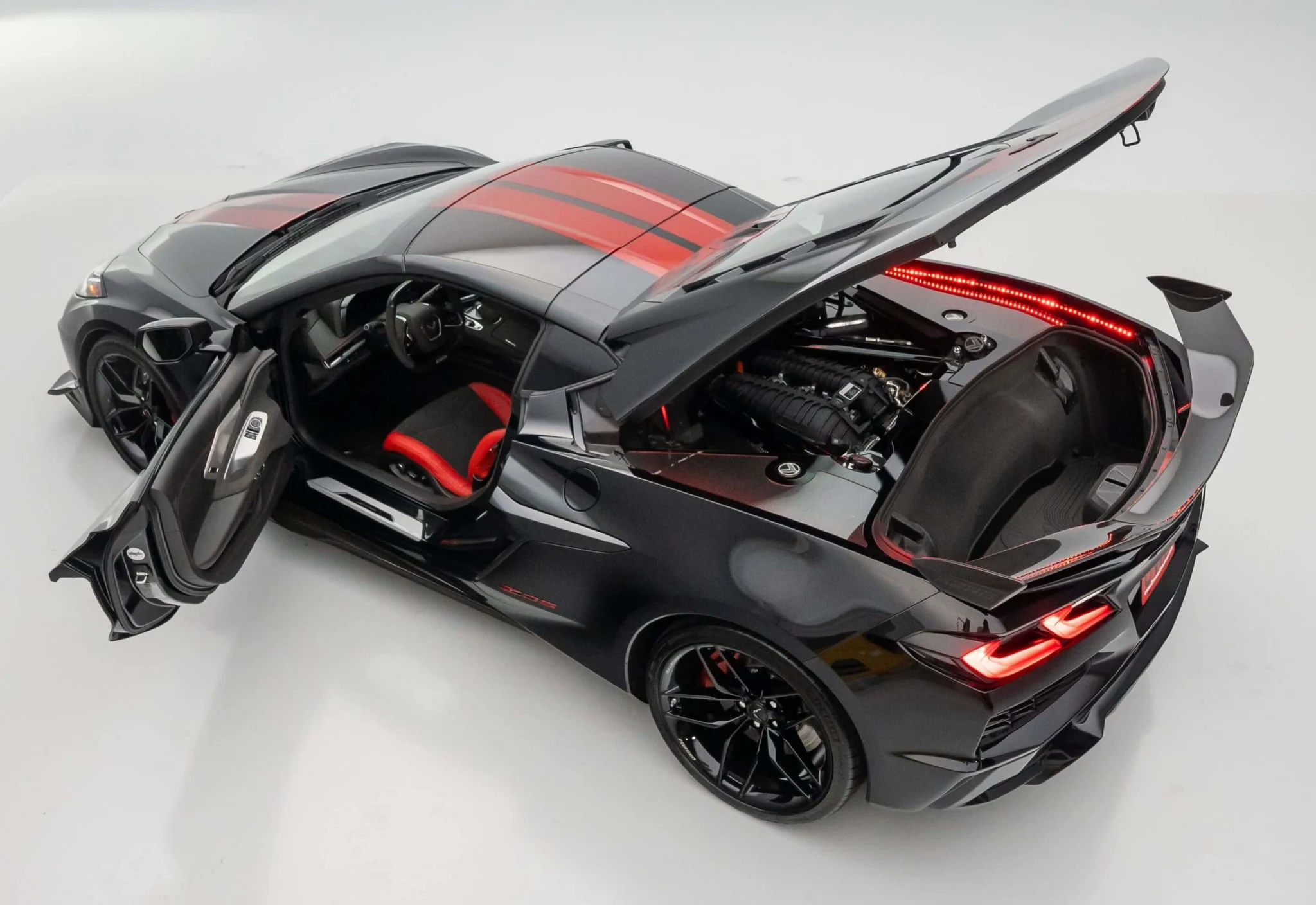
Picture opening your garage door and seeing two perfectly matched legends staring back at you. That’s exactly what’s on the line in the Corvette Dream Giveaway, and time is running out. This giveaway ends December 31, and when the clock strikes midnight, the opportunity is gone. Click here to enter now!

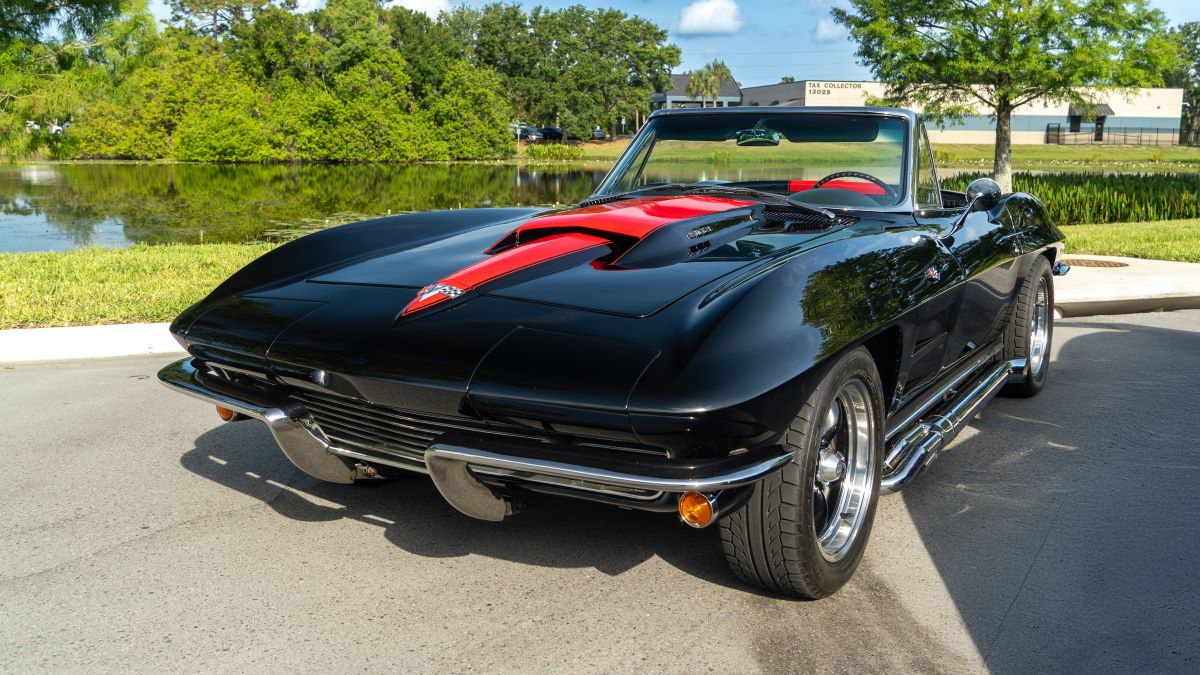
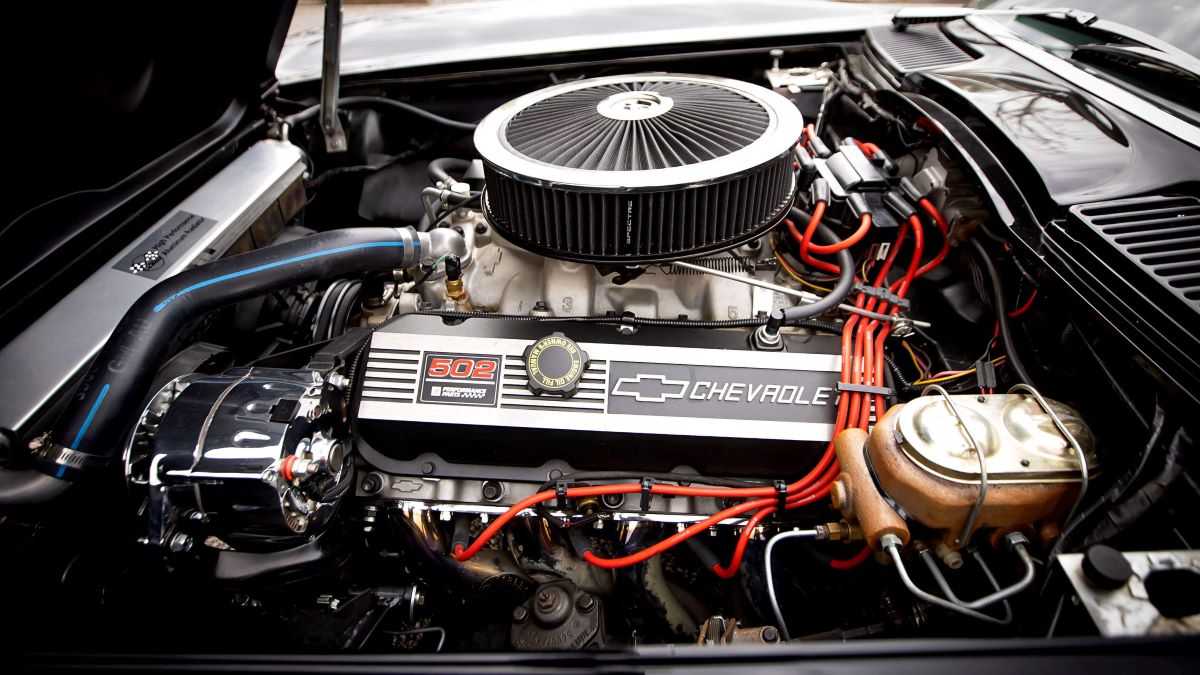
At the center of this prize package is a timeless icon: a 1964 Corvette Sting Ray Convertible, professionally restored and reimagined with serious muscle under the hood. Its 502ci Chevrolet Performance big-block V8, manual transmission, side pipes, and Stinger hood give this midyear Corvette a bold, modern attitude without sacrificing its unmistakable classic soul. It looks incredible, sounds even better, and delivers the kind of driving experience that made Corvettes legendary.

Parked beside it is the ferocious 2025 Corvette Z06, a modern American supercar powered by a 670-horsepower flat-plane-crank V8 that screams to an 8,600-rpm redline. Mid-engine balance, carbon-fiber performance upgrades, and aggressive blacked-out styling make this Z06 a statement piece wherever it goes. It’s refined, ruthless, and engineered to dominate roads and racetracks alike.

As if a midyear Corvette and a mid-engine Corvette weren’t enough, the winner also takes home a Wildfire Lifts Exotic Lift so your new dream garage is ready from day one. And to make the victory even sweeter, $60,000 in federal prize taxes is included.

This giveaway ends December 31, and once it’s over, these matching black Corvettes will belong to someone else. Don’t wait.

Every donation supports veterans’ and children’s charities, turning your entry into something that truly makes a difference.

Two Corvettes. One winner. Enter now—before time runs out on December 31.

The Ford Motor Company made an interesting strategic move when it put the “Mustang” nameplate on an electric crossover called the Mach-E beginning in 2021. That same year, the brand launched the sixth generation of its traditional, gas-powered pony car. Featured on AutoHunter is a high-performance variant of the latter, a 2023 Ford Mustang Mach 1. The car is being sold by a private seller in Carlyle, Illinois, with the auction ending on Friday, December 19, 2025, at 11:15 a.m. (MST).
About that dual-nameplate move: Some folks may not realize that the electric Mach-E would go on to outsell the gas-powered version just a few years later. In 2024, the sales numbers showed 44,003 internal-combustion Mustangs versus 51,745 electric Mustangs. Will that direction continue? Time will tell. For now, let’s shift our focus to a gas-powered Mustang that has raised the performance bar in recent years.

The Mach 1 originally appeared in August 1968 for the 1969 model year. It has since been a part of the Mustang’s evolution off and on, most recently making a reappearance for the sixth-generation (“S550”) pony car from 2021-23. It is estimated there were just 3,030 Mach 1 Mustangs built for 2023. As a track-focused model, the car came with things like a sport-tuned adaptive suspension, Brembo brakes, larger radiator, and coolers for the transmission and differential.

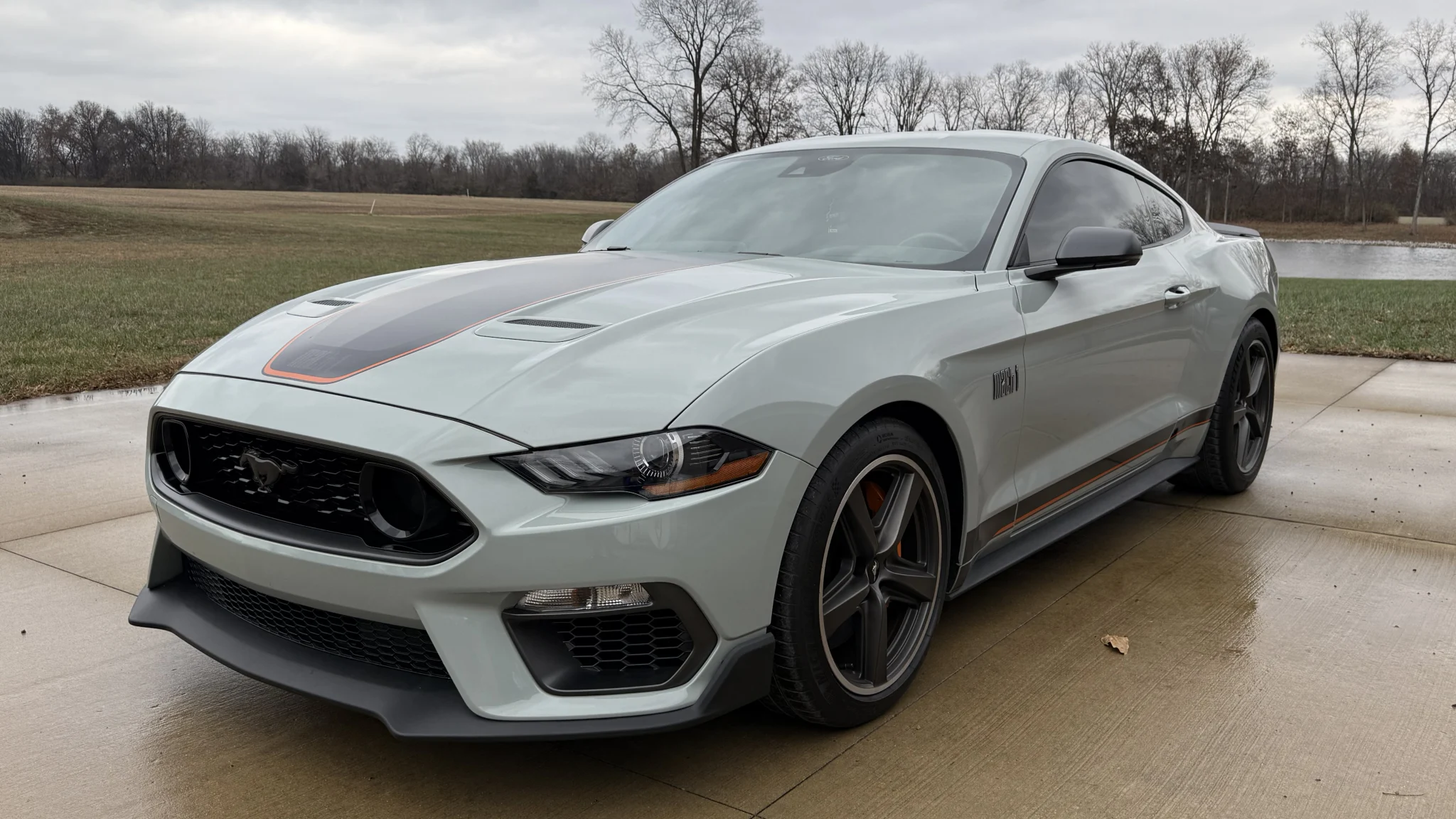
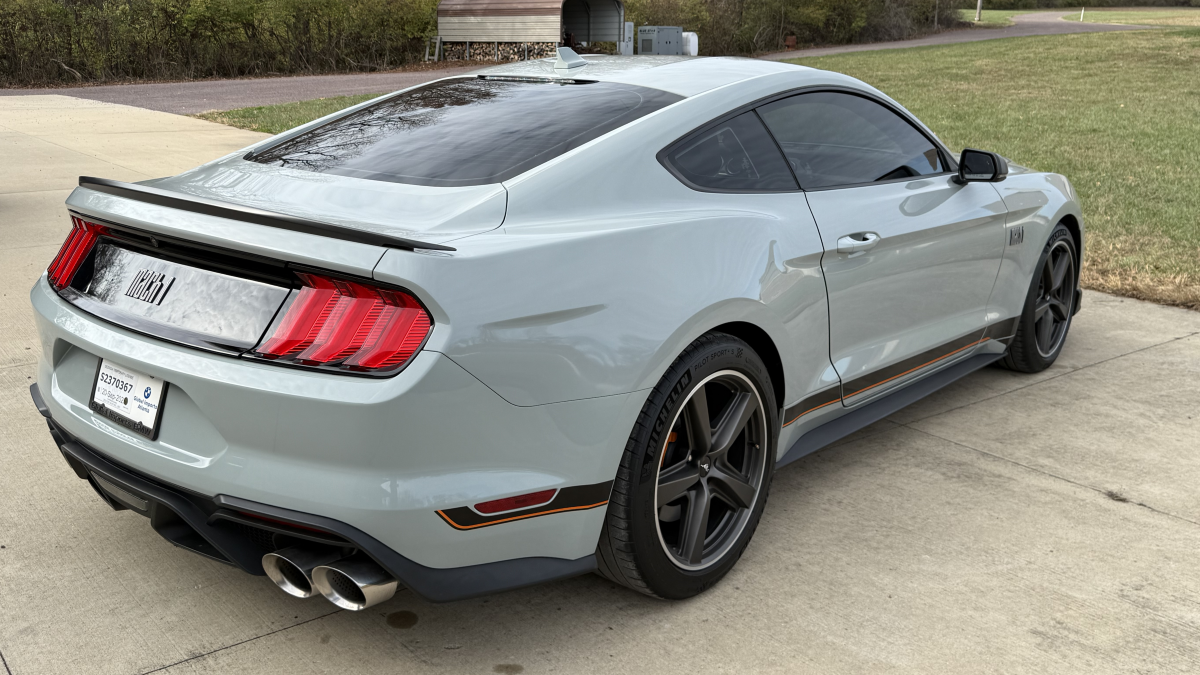
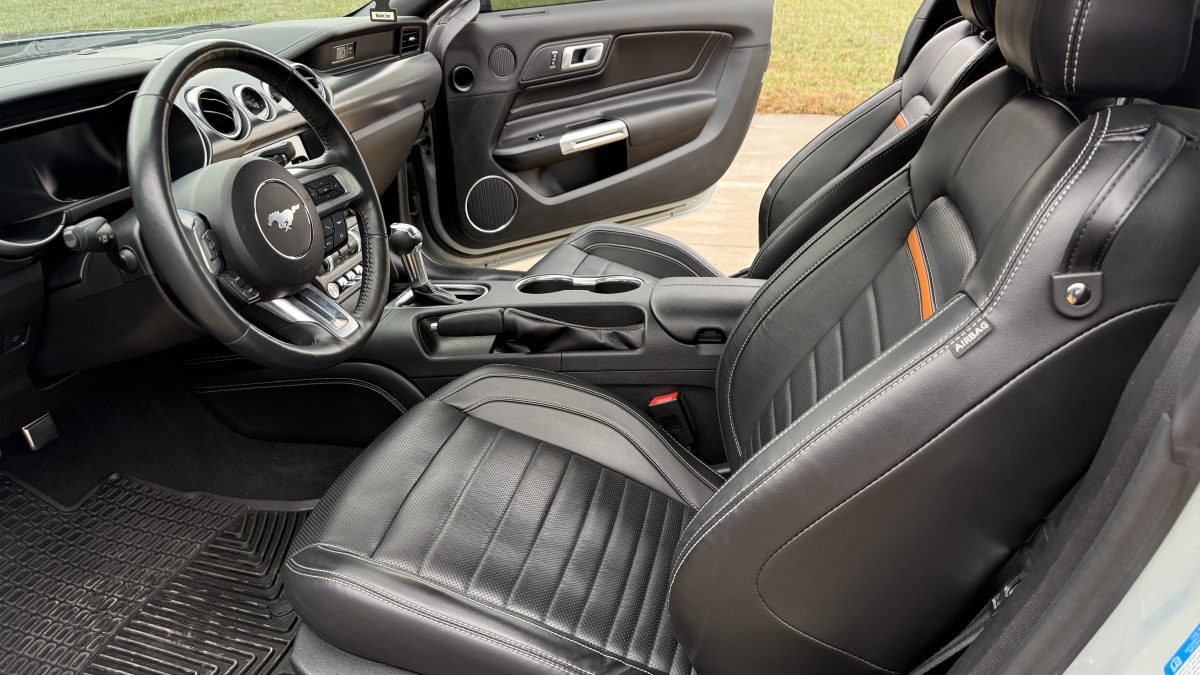
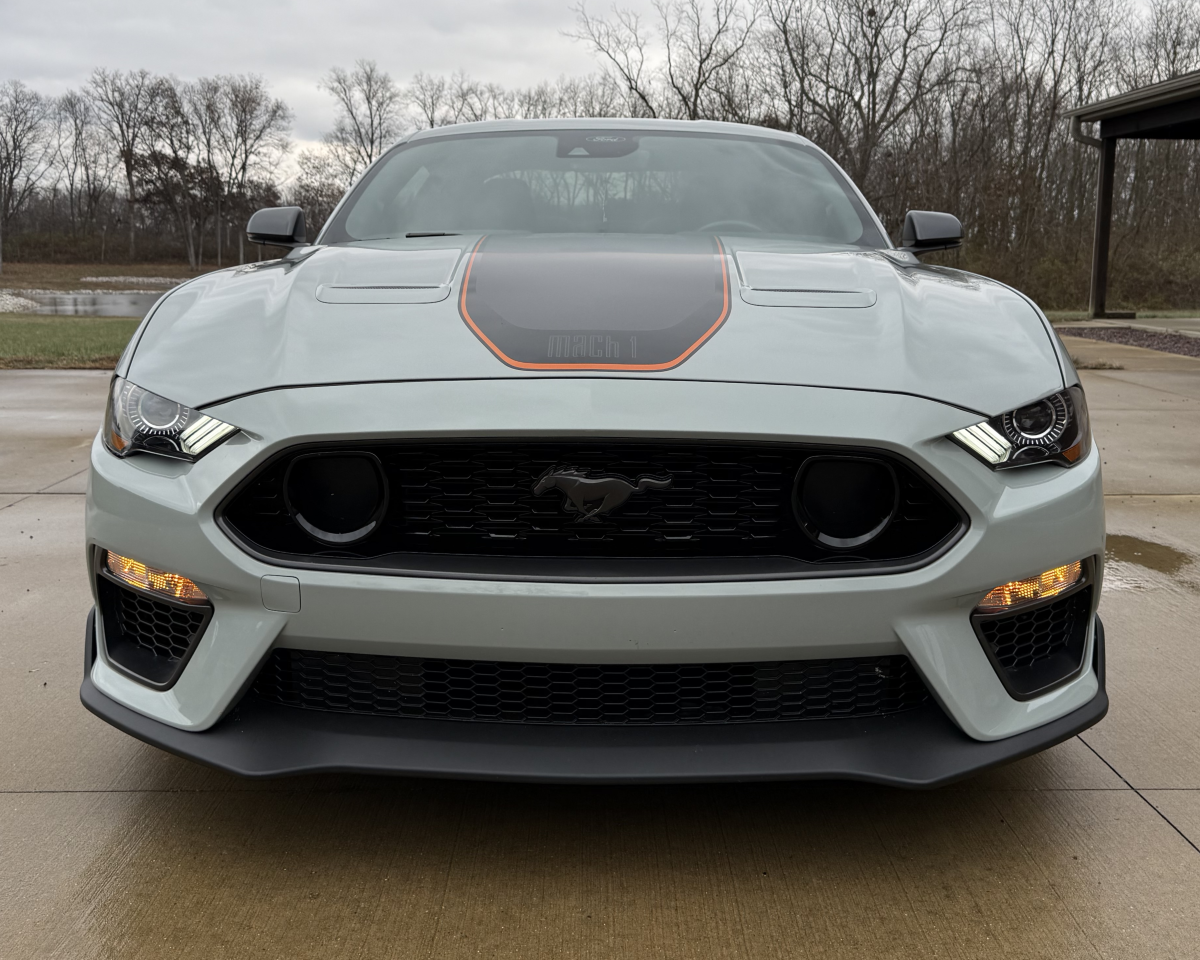
Finished in Fighter Jet Gray, this Mach 1 has just 16,362 miles and has been left unmodified with exception of window tint. Distinctive exterior features include a front splitter, hood air inlets, Mach 1 decals, orange and black accent striping, decklid spoiler, and quad exhaust outlets. Each Mach 1 had an individually serialized dash placard on the passenger side; this car shows production number PO 183.

This car’s low mileage reading is corroborated by its AutoCheck report, which shows Georgia ownership through May 2025 and the most recent odometer reading of 14,919 miles in September. New front Michelin Pilot Sport tires were installed in recent months.

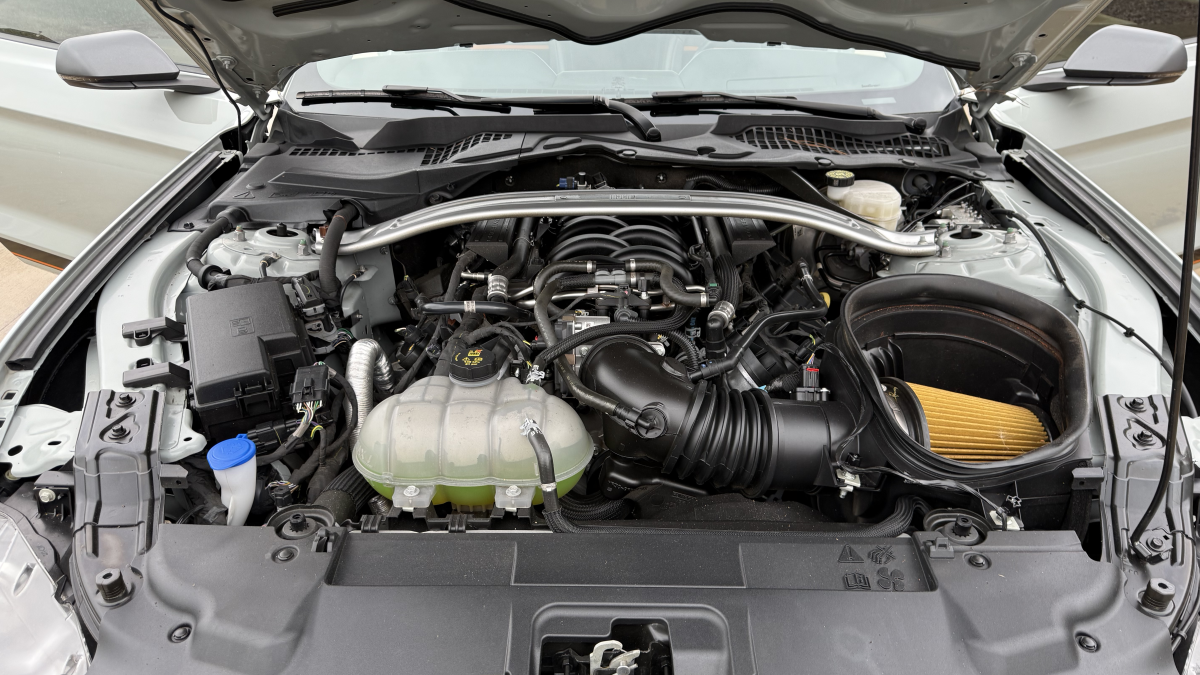
Up front is an unmodified 5.0-liter Ti-VCT V8 that was rated at 480 horsepower and 410 lb-ft of torque. It is mated to a SelectShift 10-speed automatic transmission and a Torsen limited-slip differential with a 3.55:1 gear ratio. Real-world tests showed the 10-speed automatic Mach 1 achieving 0-to-60 times of about four seconds, which is plenty fast for most people.

The Mach 1 has been a favorite of enthusiasts and journalists alike. Cool Hunting said, “Even at low speeds, the Mach 1 provides a sense of occasion, with its visceral exhaust note, notch-perfect stick shift, and deeply bolstered Recaro seats. There’s ample tactile feedback to keep the driver feeling engaged, and it’s easy to keep the Mach 1 pointing in the intended direction.”

As EV sales gain momentum, there will be fewer and fewer opportunities to buy low-mileage, unmodified gas-powered versions of Ford’s famous pony car. Make a move as the auction for this 2023 Ford Mustang Mach 1 ends on Friday, December 19, 2025, at 11:15 a.m. (MST).

Visit the AutoHunter listing for more information and a photo gallery

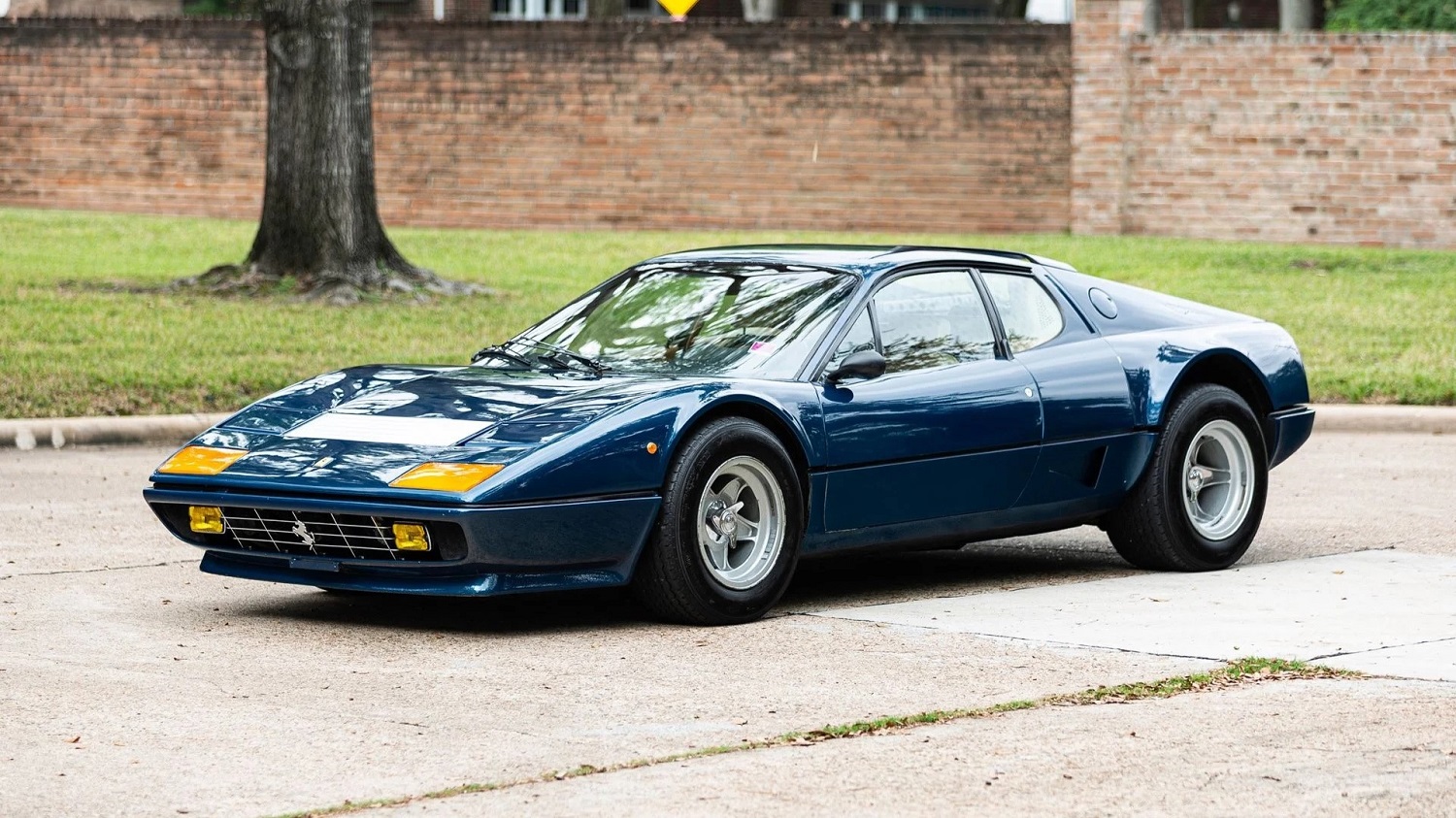
Shortly before Thanksgiving, I wrote a piece about how a Marrone Colorado brown Ferrari 365 GTC4 showed that Prancing Horses look great in colors other than Rosso Corsa red. Our Pick of the Day is more proof of that concept. You can find this Blu Chiaro 1977 Ferrari 512 BB listed on ClassicCars.com by a dealer in Houston.

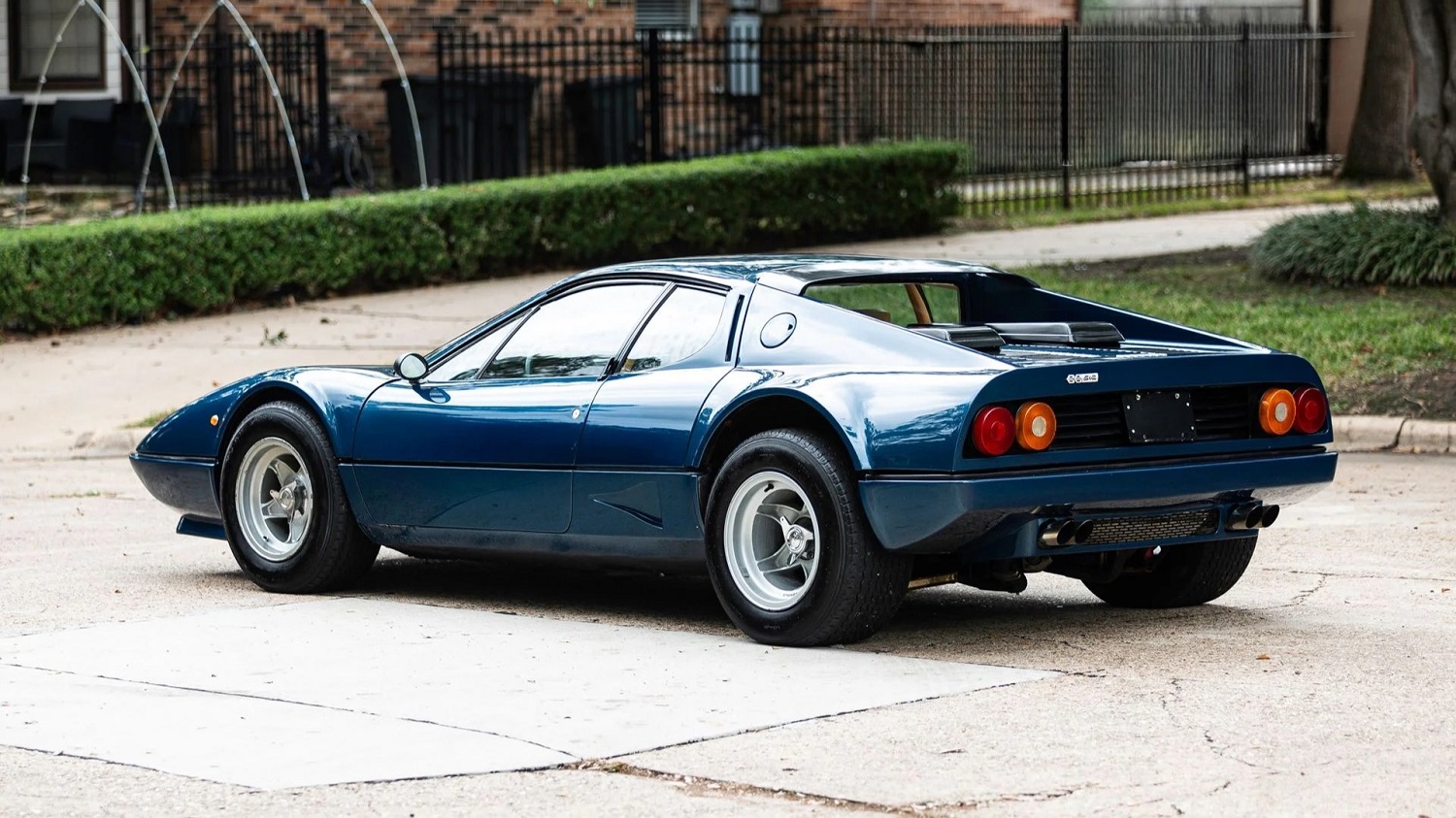
At the 1976 Paris Salon, Ferrari debuted the 512 BB as a successor to the 365 GT4 BB (as in Berlinetta Boxer). Visually, the differences between the two cars were subtle: the 512 BB featured a chin spoiler, NACA side ducts, satin black louvered tail panel, wider rear track, and four taillights and exhaust outlets instead of six.

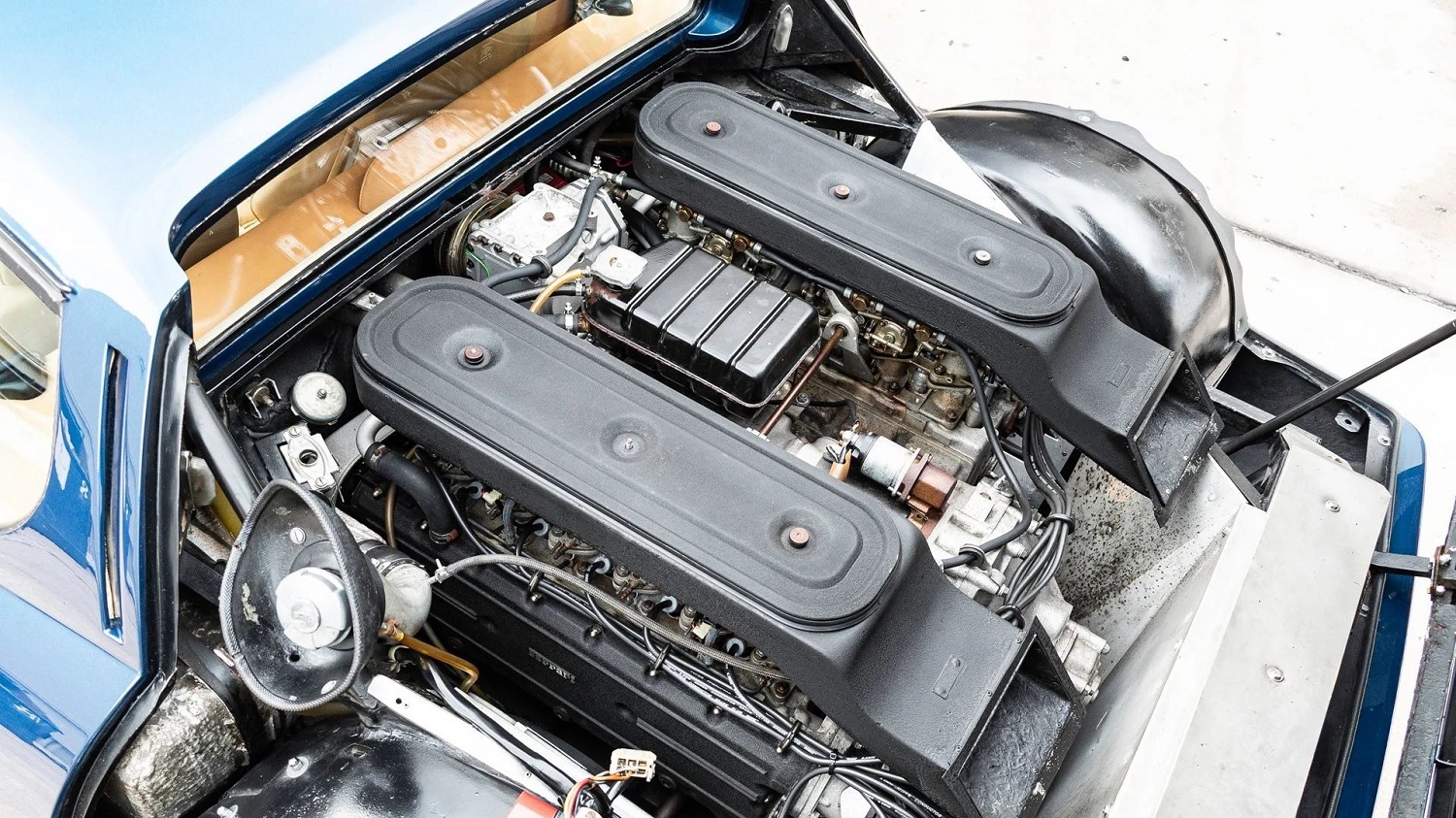
The biggest differences were mechanical, starting with the name. As Ferrari puts it, the 512 BB “broke with standard Ferrari practise of referring to the swept volume of a single cylinder. Instead it continued the theme started with the Dino series, of referring to the total engine capacity and number of cylinders. Hence it meant a 5 litre engine with 12 cylinders,” paired with a five-speed manual gearbox. Despite its larger displacement (which was closer to 4.9 liters) and four Weber carburetors, the dry-sump, DOHC flat-12 generated only 360 horsepower—less than its predecessor. The good news is that the F 102 B delivered more torque and offered better driveability.

Between the 512 BB’s introduction and 1981, Ferrari only produced 929 cars, none of which were built for the U.S. market. Ferrari’s private clients took the 512 BB (with light modifications) and its 512 BB LM race car sibling to Le Mans, where the drivers took 1st place in the IMSA (International Motor Sports Association) class and 5th place overall in 1981, and 6th overall the following year.

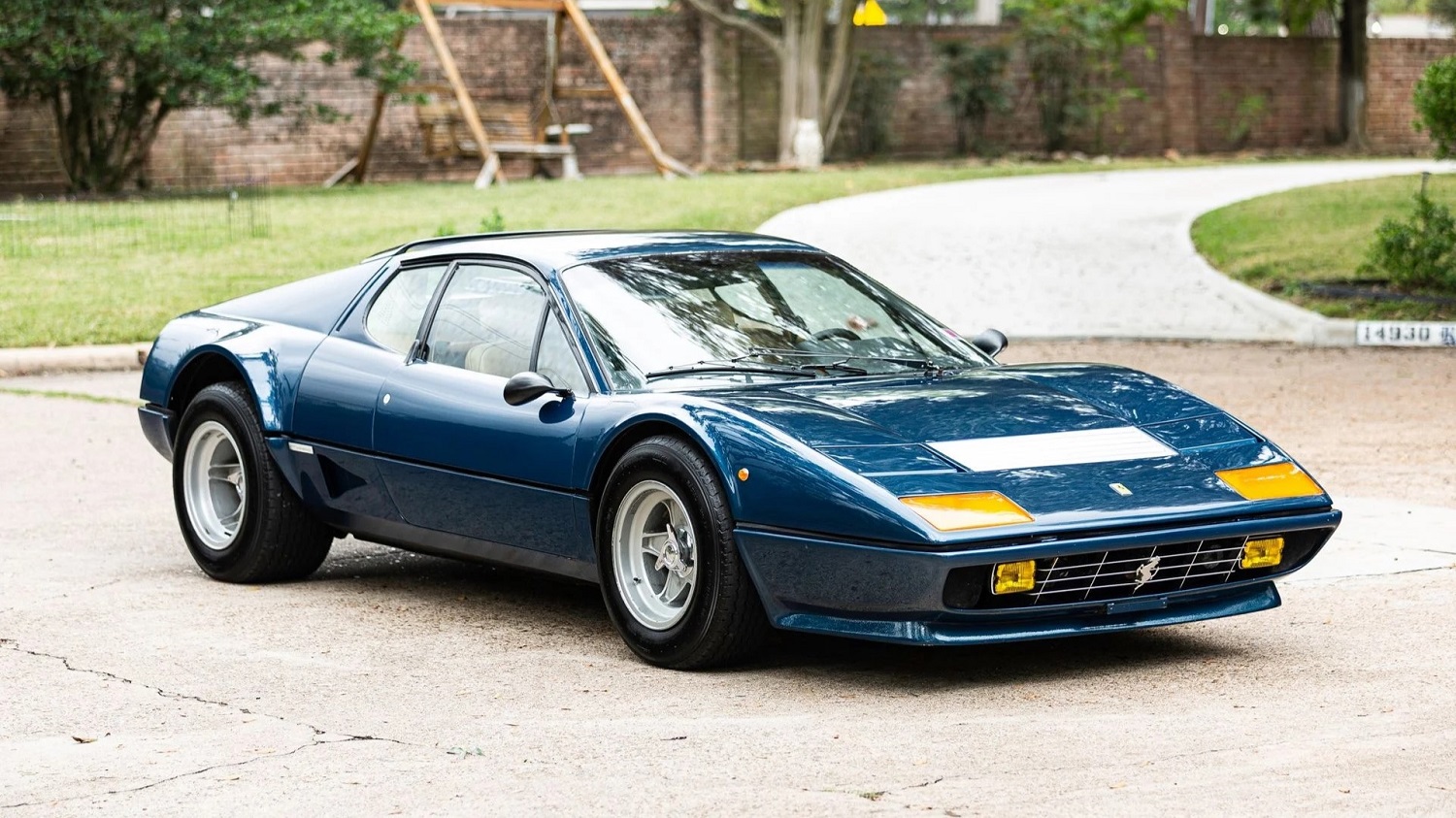
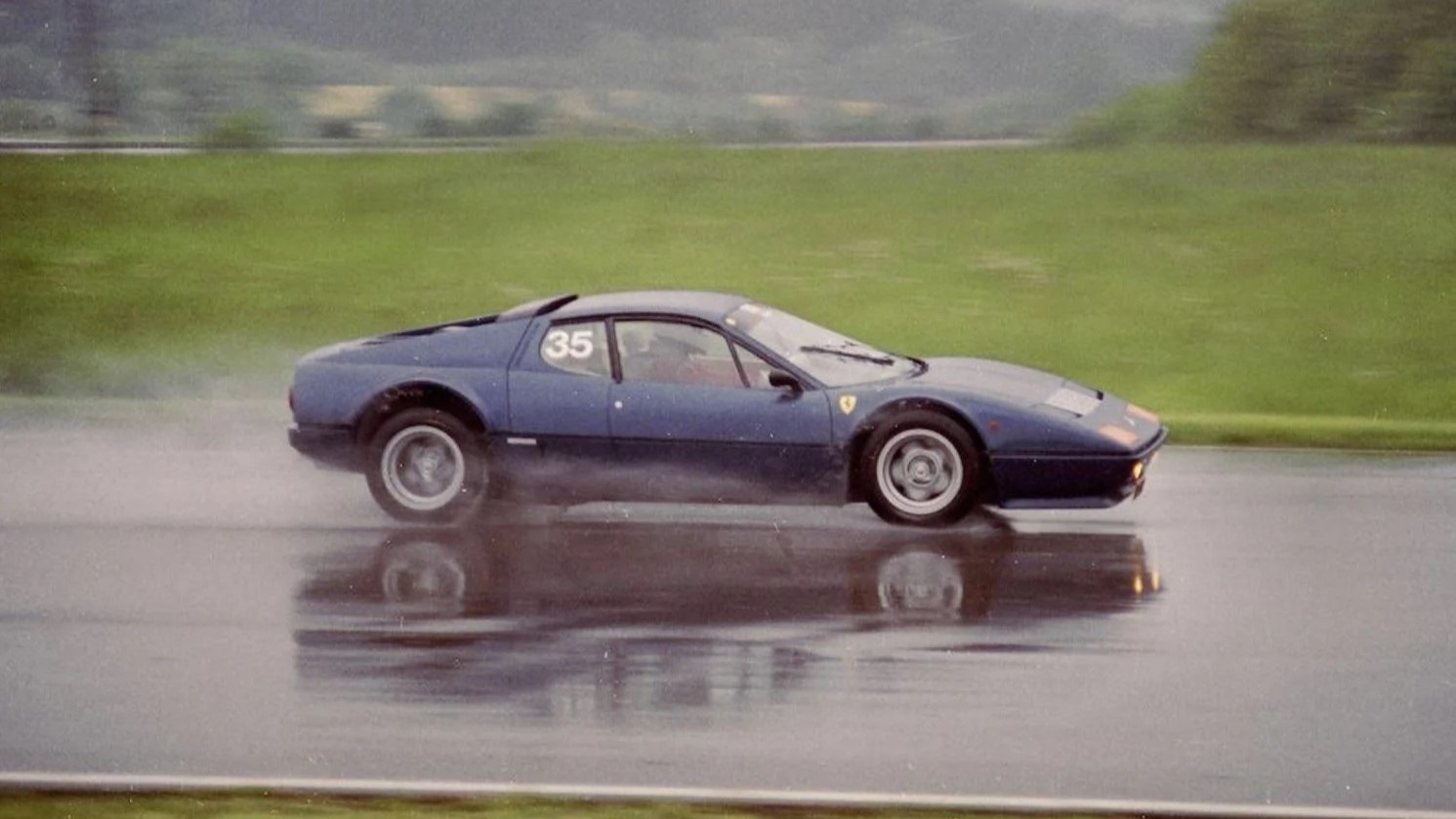
This particular 1977 512 BB has come a long way, both literally and figuratively. True to its heritage, it went racing in Europe in the 1980s. In a way, it hasn’t fully retired because its flared rear fenders and wider Campagnolo wheels are still present. Later, this car became part of a collection of Ferraris owned by Frits Kroymans, Ferrari’s Netherlands importer. Eventually, chassis 20747 wound up in a garage in Palm Beach, Florida, “where it remained tucked away and largely forgotten—preserved, untouched,” according to the selling dealer.

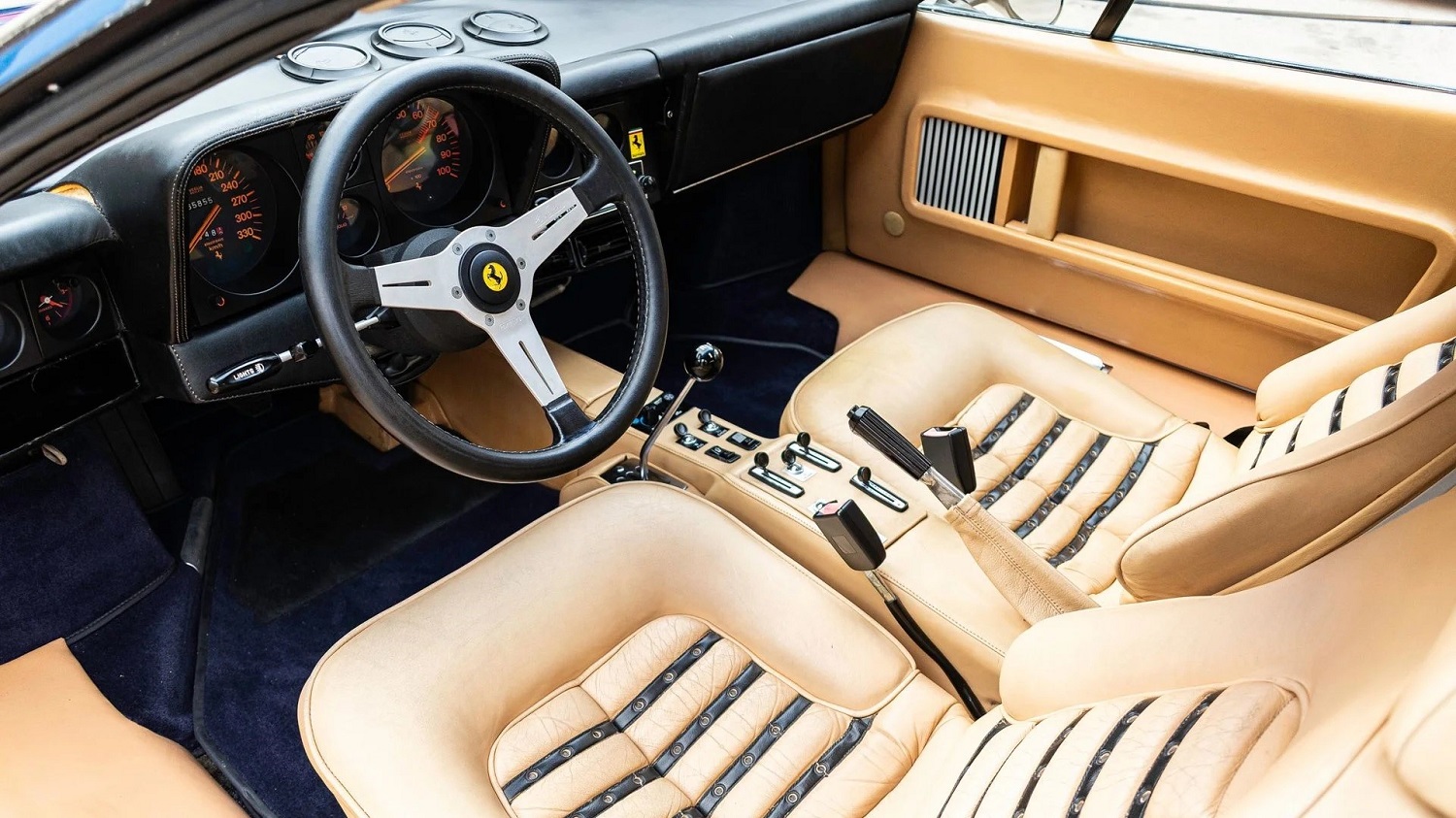
Luckily, the engine still runs after that hiatus, although the dealer recommends having a full inspection and service performed. The passage of time certainly hasn’t dulled the visual appeal of this mid-engine machine. It has a definite ’70s Italian car wedge shape to it, but the flared rear fenders add an undeniable muscularity. The body is even more striking in Blu Chiaro, a beautiful and refreshing change from the reds that cover many Ferraris. Whoever spec’d this car made the wise decision to pair that color with a tan interior with black horizontal ribbing on the seat inserts.

Every Ferrari looks ready to hit the track, but this 1977 Ferrari 512 BB actually has. If you want this attractive piece of Ferrari history to cross the finish line and reach your driveway, it’ll take $227,500 to get it there.

Click here to view this Pick of the Day on ClassicCars.com

This 1940 Ford Tudor sedan was the subject of a custom street rod build under prior ownership that involved shaving the trunk lid, removing the factory bumpers, and painting the body black with yellow and orange flames. A 350ci Chevrolet V8 was installed along with a three-speed automatic transmission and a 9″ rear end, while the chassis was modified with a Mustang II-style front suspension assembly with power rack-and-pinion steering and power-assisted front disc brakes. Inside, the seats are trimmed in gray and an aftermarket air conditioning system is installed along with a cassette radio, a Grant steering wheel, and VDO gauges. Additional equipment includes a dual exhaust system, tinted glass, running boards, and 15″ American Racing wheels. This ’40 Ford street rod was acquired by the selling dealer in 2023 and is now offered with a Texas title.

The Tudor sedan body was refinished in black with yellow and orange flames after the trunk lid was shaved and the bumpers were replaced with tubular bumperettes front and rear. Details include running boards, tinted windows, a Deluxe grille, dual side mirrors, and chevron-style taillights. Paint blemishes are pictured in the gallery below.

The car rides on a Mustang II-style front suspension assembly along with rear leaf springs, and the 15″ American Racing Torq Thrust wheels are wrapped in 205/70 front and 235/75 rear Hankook Optimo tires. It is equipped with power rack-and-pinion steering as well as power-assisted front disc brakes.

The split front bench and rear seat are trimmed in gray cloth and accompanied by coordinated trim and carpeting. An aftermarket air conditioning system is installed along with a cassette stereo in the dash. Discoloration is visible in the headliner and carpeting.

The Grant steering wheel frames a brushed aluminum instrument bezel housing a set of VDO gauges consisting of a 120-mph speedometer and readouts for fuel level, voltage, coolant temperature, and oil pressure. A tachometer is mounted atop the dash. The five-digit odometer shows 22k miles, approximately 200 of which were added by the selling dealer.

The 350ci Chevrolet V8 features finned valve covers and louvered exhaust manifold covers.

Power is sent to the rear wheels through a three-speed automatic transmission and a 9″ rear end with 3.70:1 differential gearing.

The body number, 78183894158, is shown above. The Texas title is listed as a “Certified Copy” and lists the VIN as 183894158.