In my opinion, one of the most unlikely cars ever to be produced by Toyota is the MR2 Spyder. One of these is our Pick of the Day, a 2003 Toyota MR2 Spyder listed for sale on ClassicCars.com by a dealer in North East, Pennsylvania.

Toyota is a car company that makes many very rational and few emotional decisions. Even the first- and second-generation MR2s made lots of sense in the sports car market of the time, offering 5/8-size exotic car looks, strong performance, amazing handling, and super reliability. At the same time, both the first- and second-generation MR2s were comfortable for two people, had plenty of storage space in their trunks, and offered a sports car experience without any compromises having to be made.
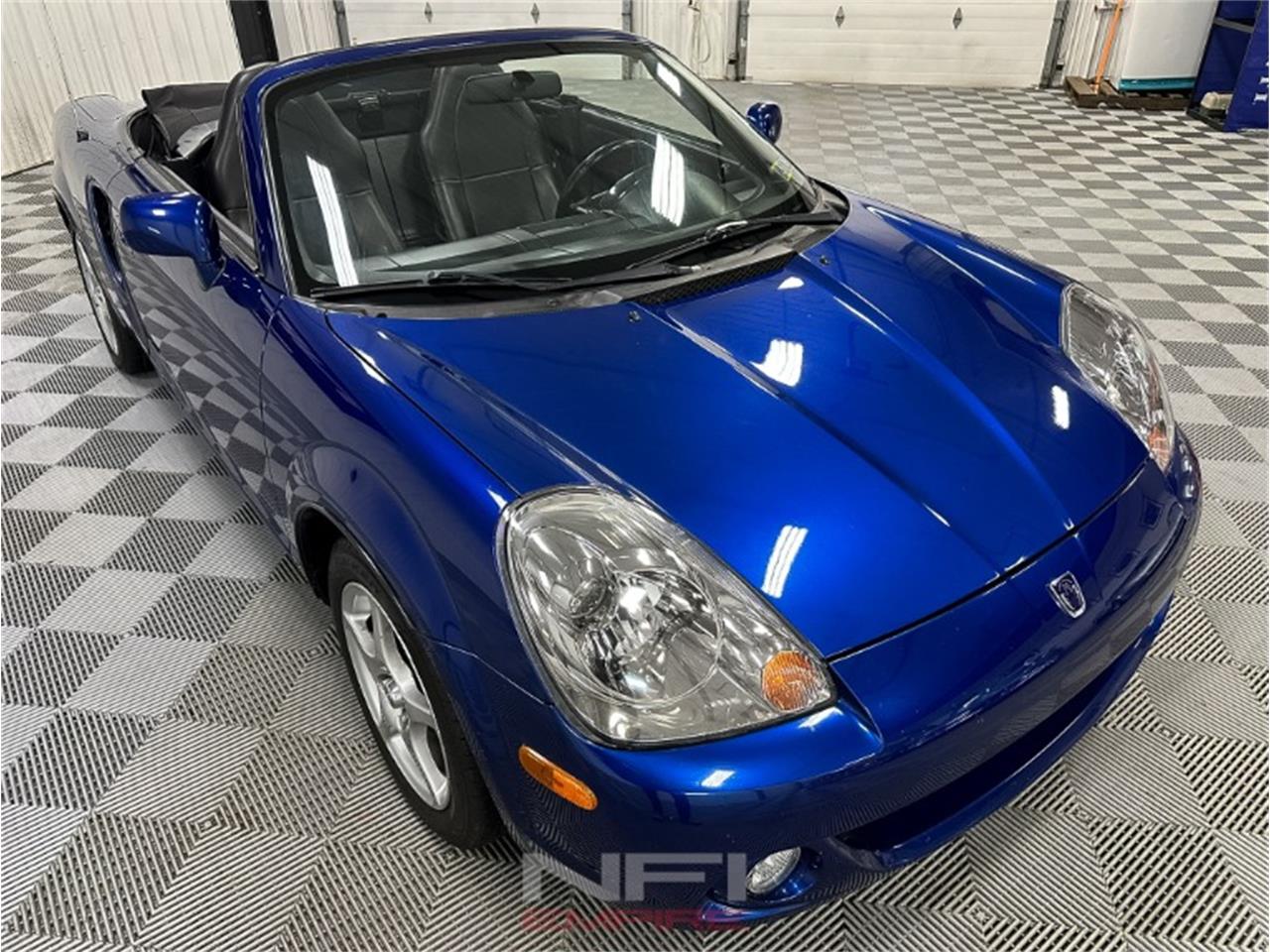
Introduced in 1997 at the Tokyo Motor Show as the MRS concept car, the new MR2 was not a coupe with a sunroof or T-Tops as an option, but a full convertible. It was actually more of a mid-engined roadster, something completely different from Toyota, but the company had some specific goals in mind. According to the project’s chief engineer, Harunori Shiratori, “First, we wanted true driver enjoyment, blending good movement, low inertia, and lightweight. Then, a long wheelbase to achieve high stability and fresh new styling; a mid-engine design to create excellent handling and steering without the weight of the engine upfront; a body structure as simple as possible to allow for easy customizing, and low cost to the consumer.”

I will say that they accomplished all of that – but one thing was lacking: a trunk. This seemed a bit crazy to me, especially from Toyota. But after driving the MR2 Spyder on numerous occasions, I soon forgot about that. This is a fun, engaging, and smile-inducing sports car. From behind the wheel, it reminded me somewhat of a cross between a Lotus Elise and a Porsche 986 Boxster, but in a more reliable and inexpensive package.
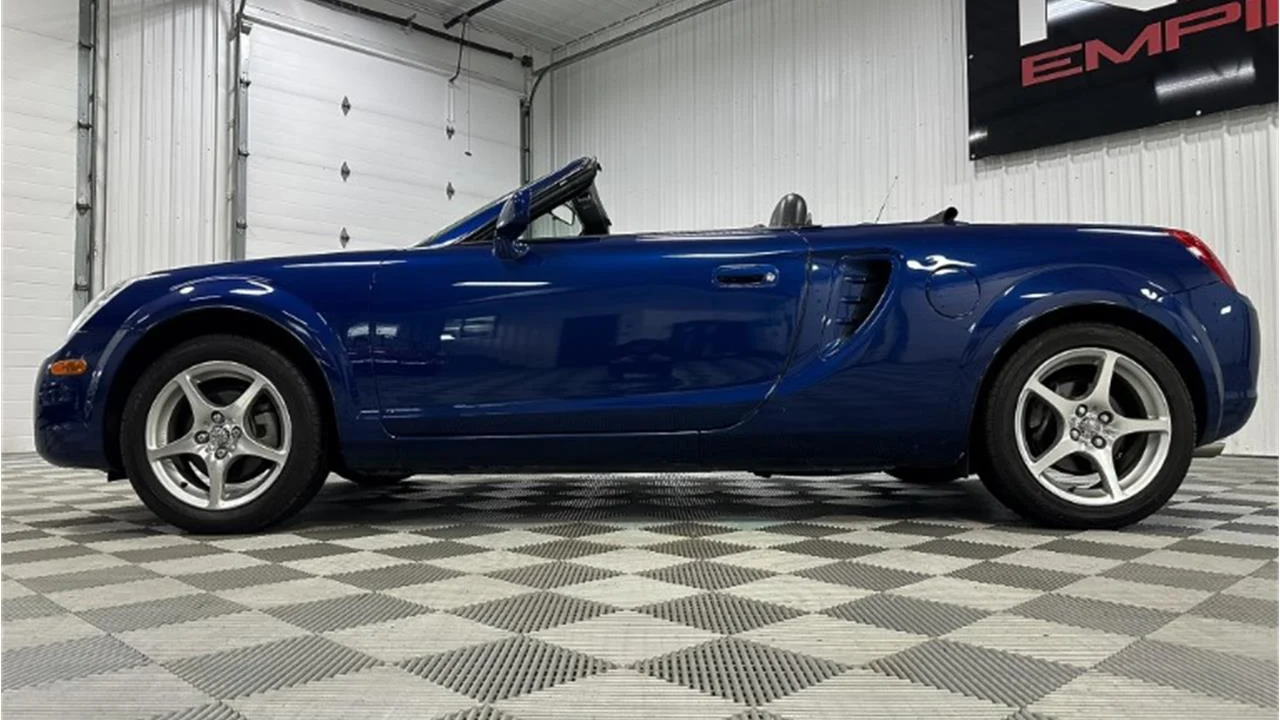
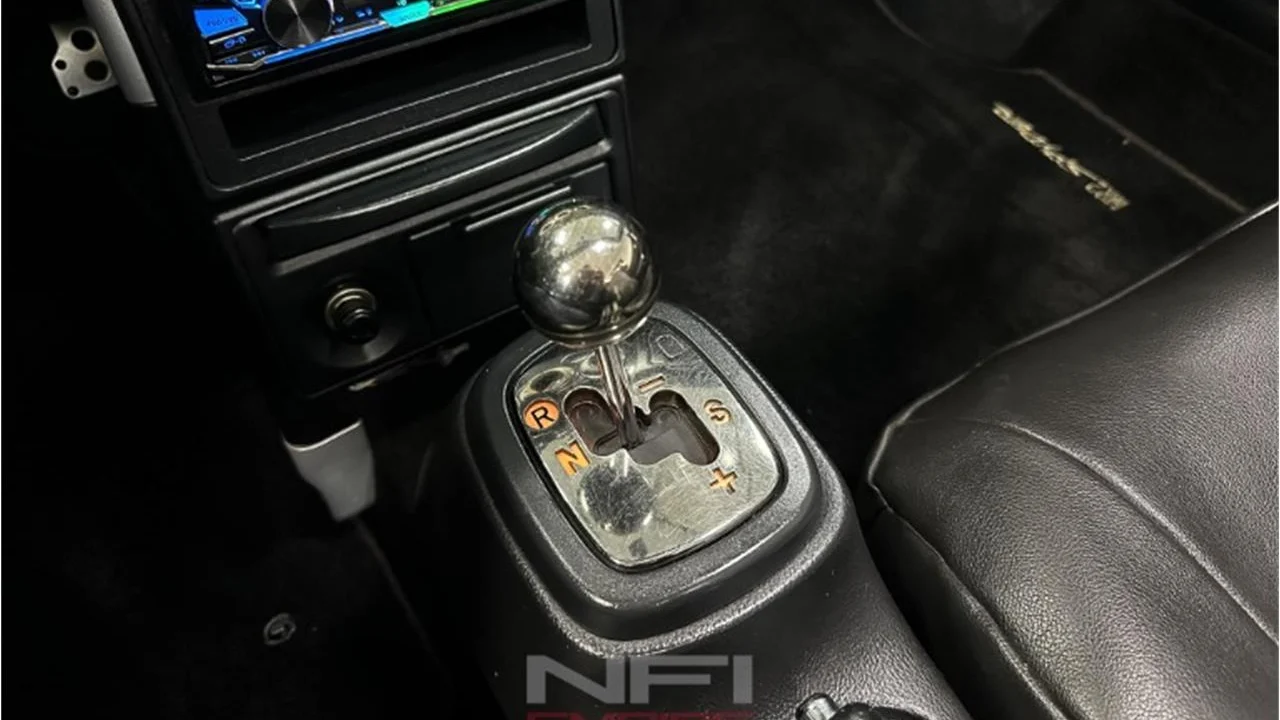
I have been looking for a nice example of one these cars in this spec for over a year and now have finally found one in this 2003 Toyota MR2 Spyder. It is finished in Spectra Blue Mica over a black interior, which is my favorite color combo on these cars. Although some will not like this, I also absolutely love another interesting option it offers: a factory sequential manual transmission. This is not an automatic, but an F1-style gearbox that works amazingly well, and – unlike the F1 box from the Ferrari and Maserati cars of the time – is also amazingly reliable.
Both the exterior and interior of this MR2 appear to be in excellent shape. The paint looks terrific, and it seems like a well-cared-for car. I also love that it still rides on its factory alloy wheels.
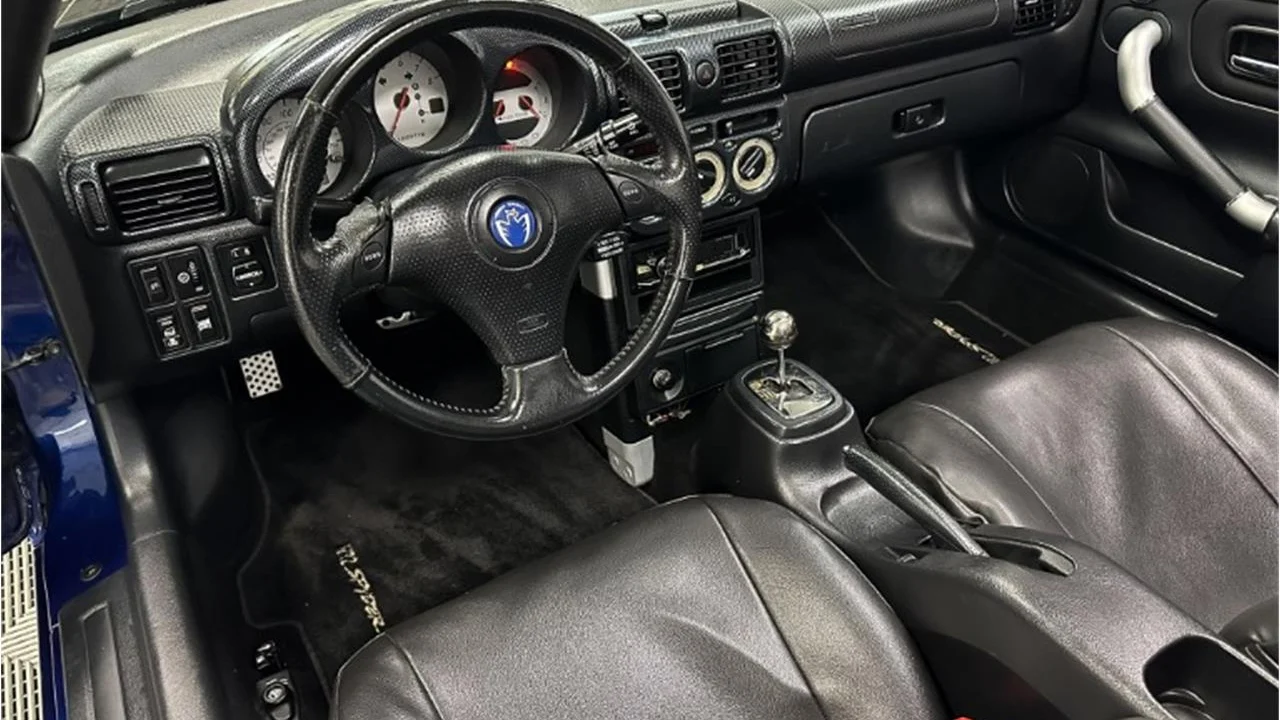
The interior also seems to be in great condition, with no serious wear to be seen. The only change from stock is the addition of a modern Bluetooth-enabled radio. The seller notes that this car has recently had its convertible top replaced.
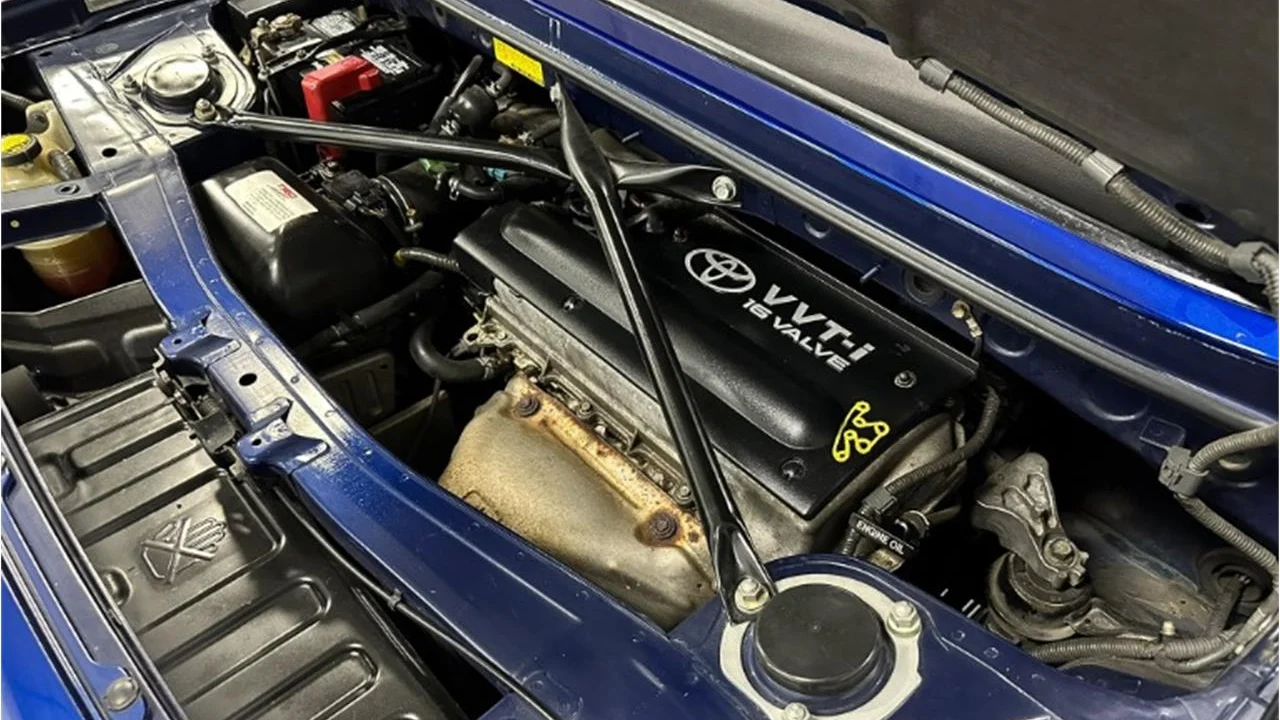
Because these cars are so much fun to drive, it is hard to find any MR2 Spyder with less than 100,000 on the clock. If you do find one, it is usually a super-low-mile example that has a premium price tag attached. This 2003 MR2 Spyder has covered a total of only 83,682 miles, which puts it in that sweet spot of having enough mileage to be in good shape without having to deal with every seal leaking, but not too many miles, which often means the car is near the end of its life. The lack of modifications on this example also makes me believe it has never been tuner-owned and, as a result, there are no budget or crazy mods on the engine or the chassis.
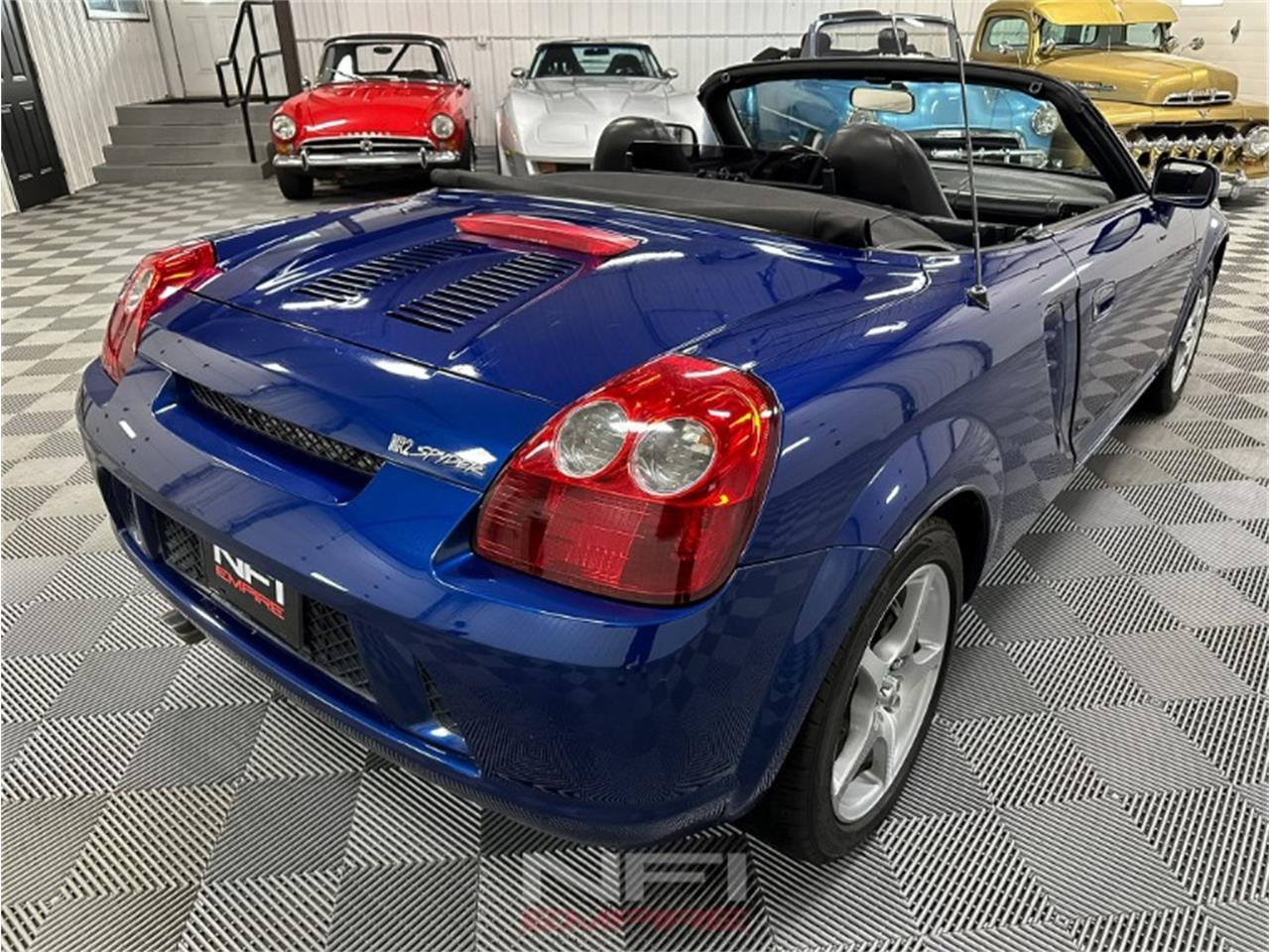
I think these cars have a serious future in the more modern collectible sports car market, and this one, with a price of $13,991, seems like a great deal. So why not get yourself a present this holiday season and park this MR2 Spyder in your garage? Tell your significant other Santa must have left it.

Click here to view this Pick of the Day on ClassicCars.com
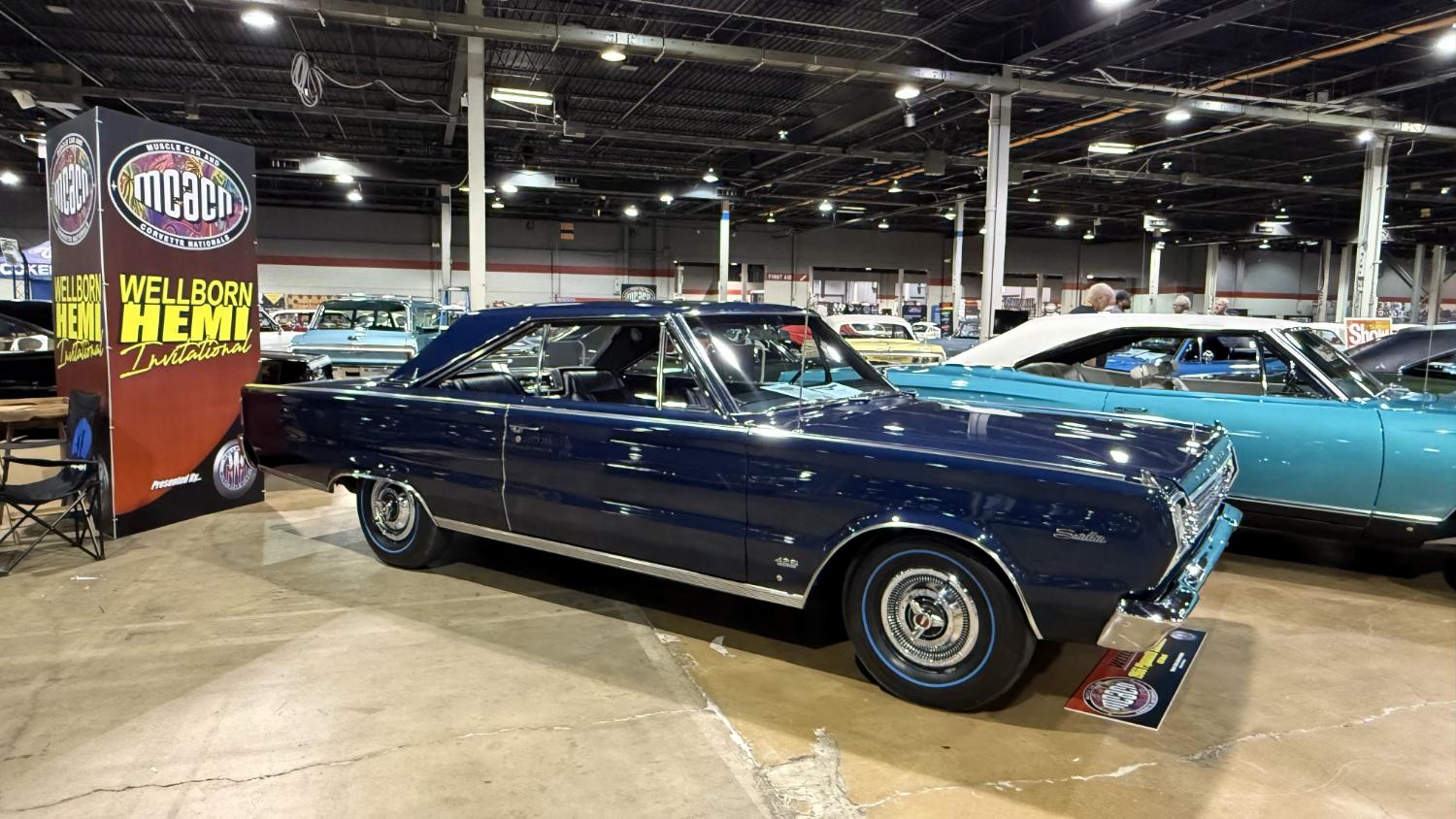
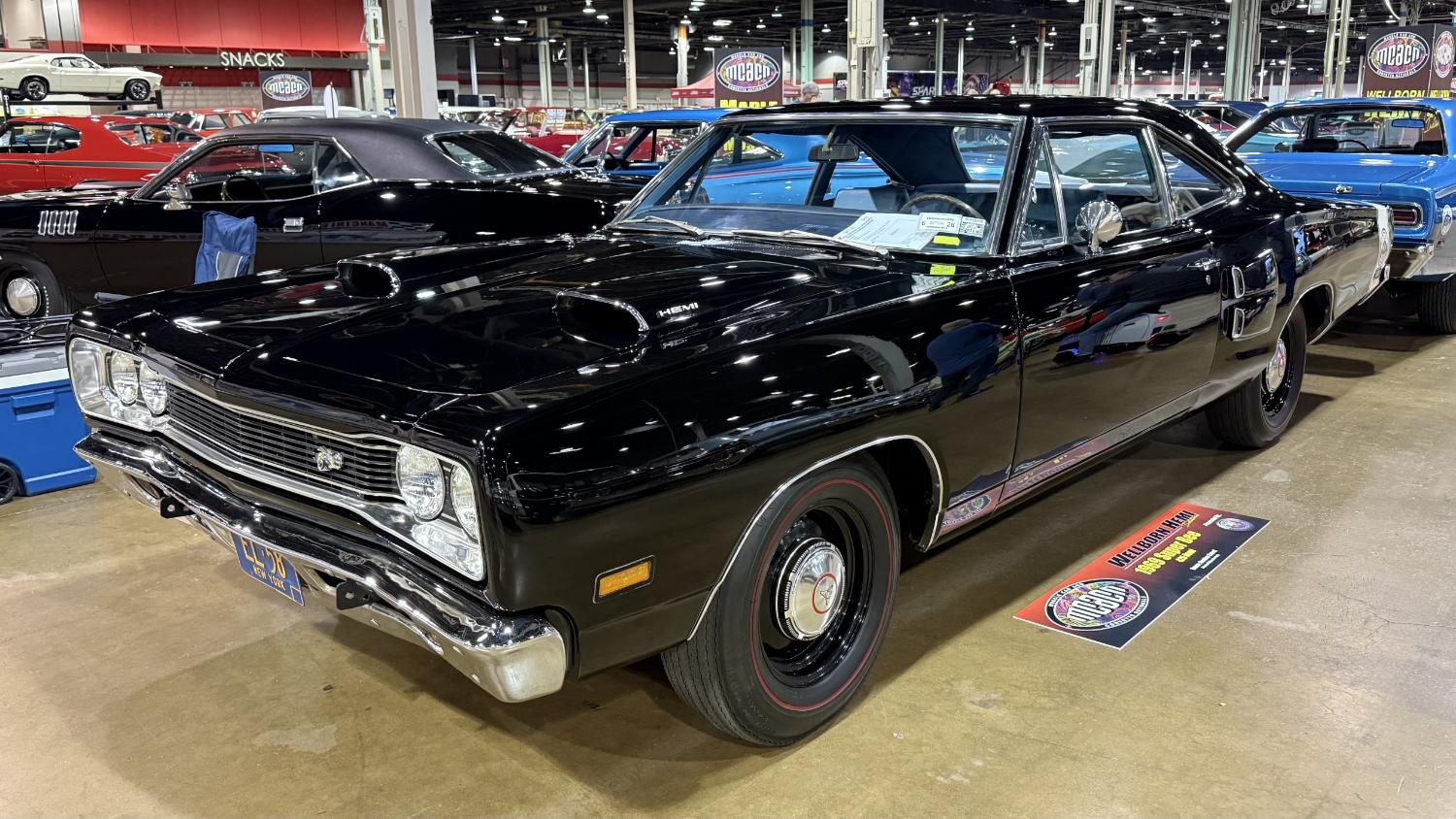
There’s no getting around it, Brand Xers: The 426 Hemi is King! It didn’t earn the nickname “King Kong” for nuthin. There have been many great V8s out of the 1960s, but none have made the same impact on the banked ovals, strip, and street as this 7.0-liter V8.

1966 Plymouth Satellite

Fans of Mopars, the Wellborn family has been involved with Hemis for quite a long time. Their cars have appeared in the buff books for over 40 years, with Tim and wife Pam, in particular, founding the Wellborn Musclecar Museum in Alexander City, Alabama, around 15 years ago.

This 1969 Dodge Super Bee coupe features a white Bumblebee stripe and blue interior.

So it only seems natural for the Wellborns to host a Mopar display at the Muscle Car and Corvette Nationals. In fact, the Wellborns have a display at MCACN every year, with 2025 being cars powered by the 426 Hemi. Though the muscle car peak is generally acknowledged to be 1970, by far the most Hemis were built for 1966, the inaugural model year for the street version of the Hemi that made its debut at Daytona years prior. However, most of the cars in the display were from the latter part of Hemi production. Enjoy!

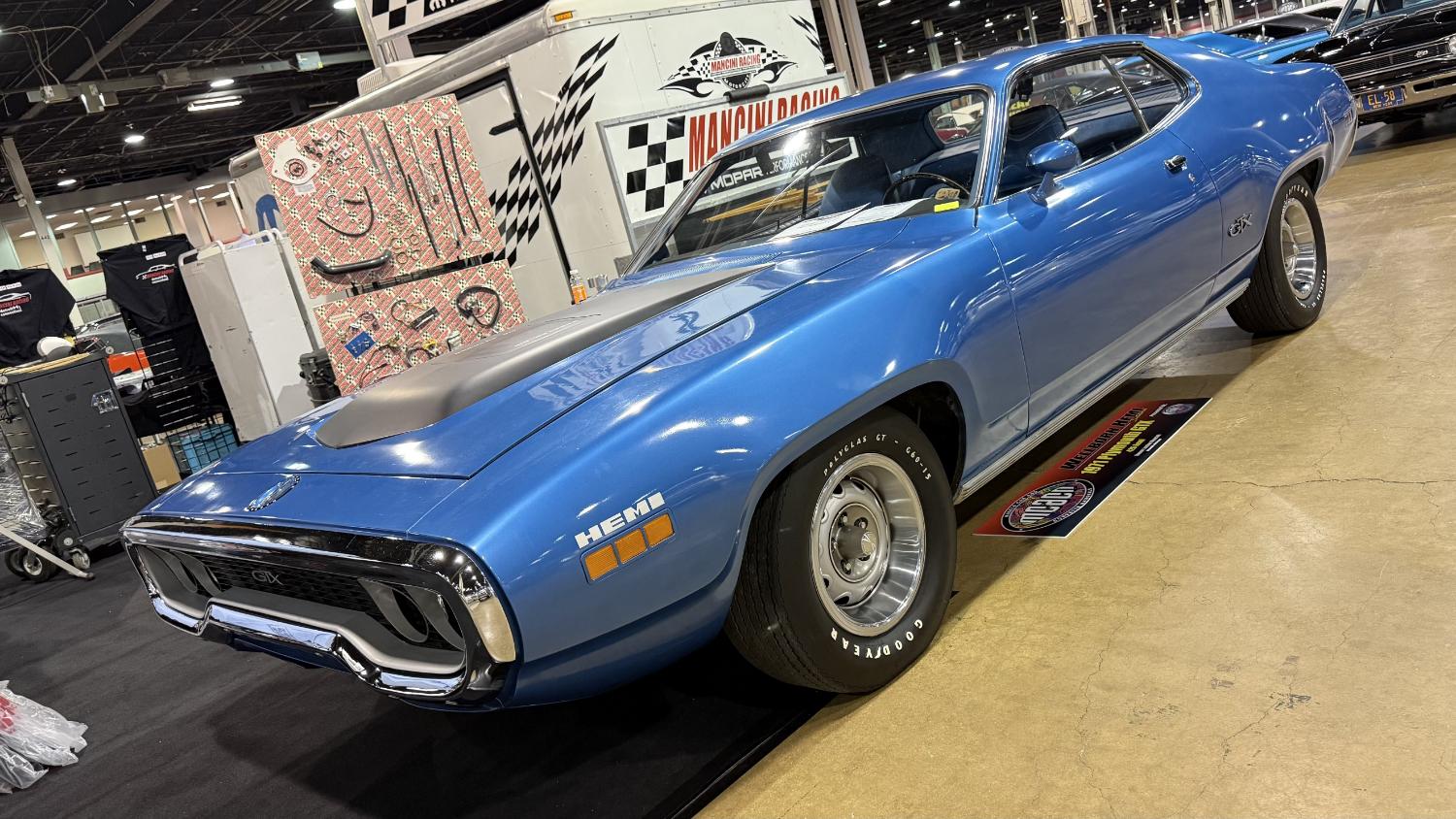
Only 35 U.S.-spec Pymouth GTXs were built with the Hemi in 1971.
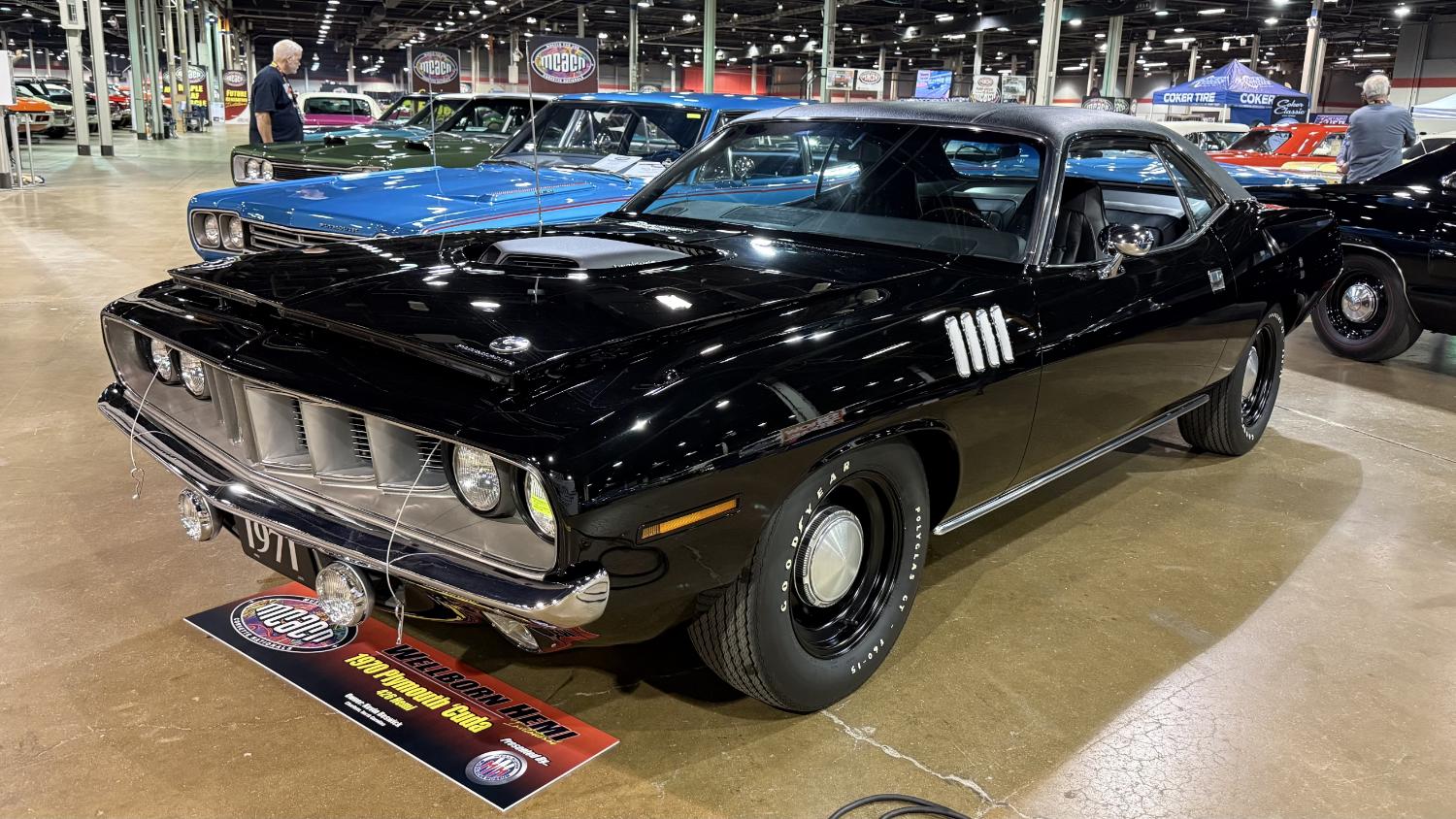
With approximately 108 U.S.-spec Hemi’Cudas built in 1971, it is no wonder that they are among the most expensive muscle cars out there.
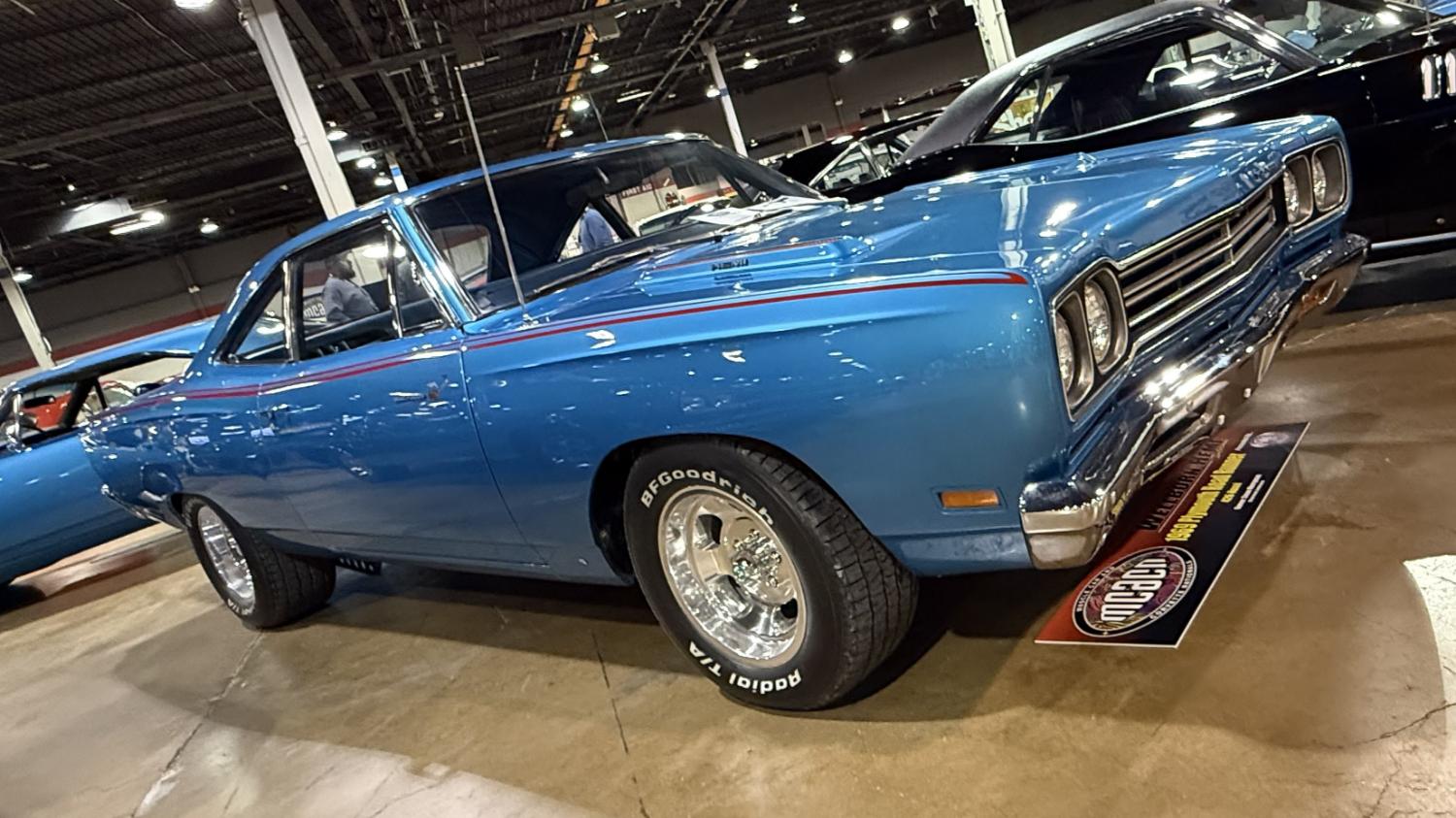
This 1969 Plymouth Road Runner coupe is “B5” Blue Fire metallic with the unusual “V6R” Sport Stripe.
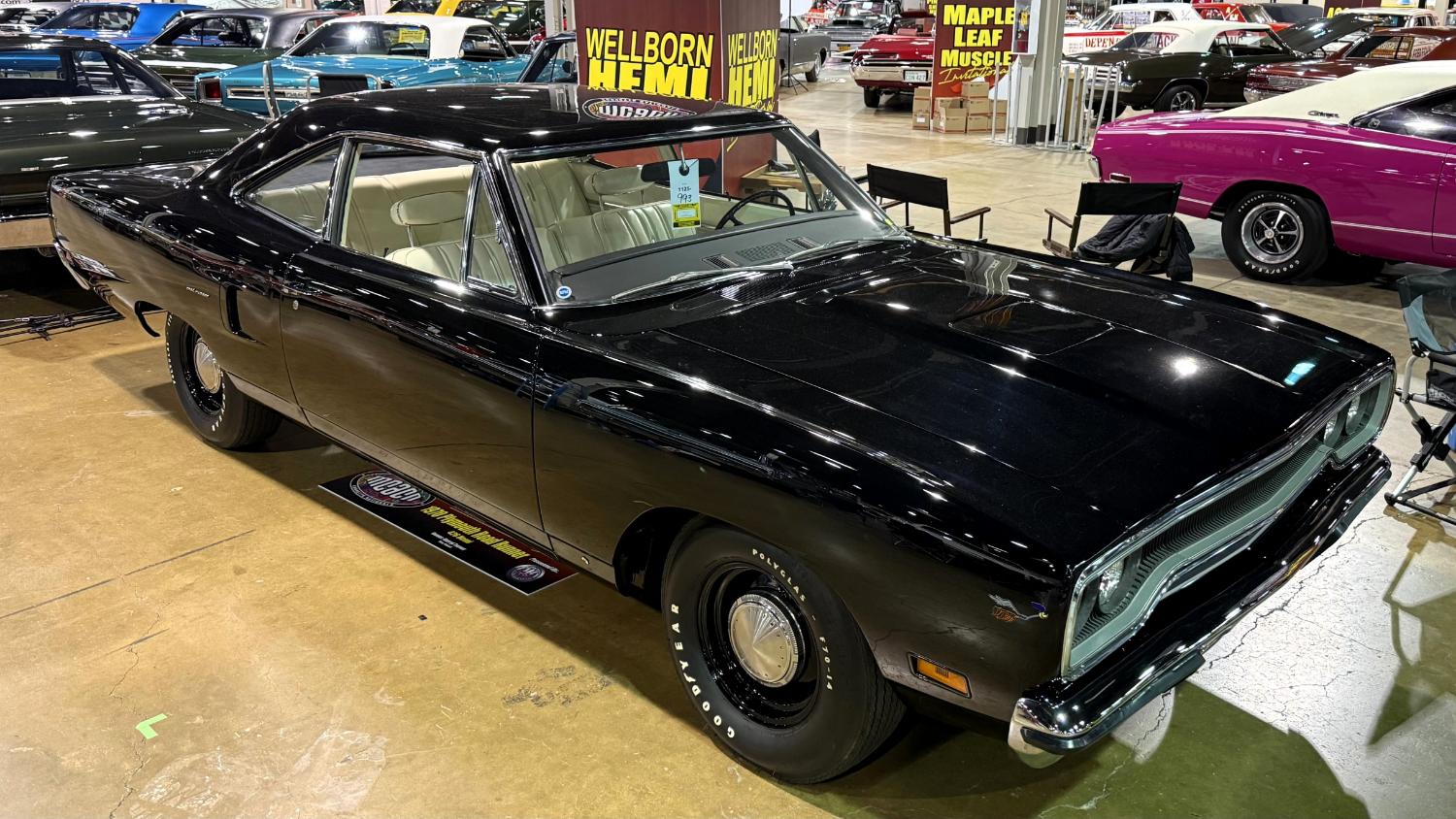
The lack of chrome on the B-pillar of this 1970 Hemi Plymouth Road Runner coupe means it lacks the Decor package.
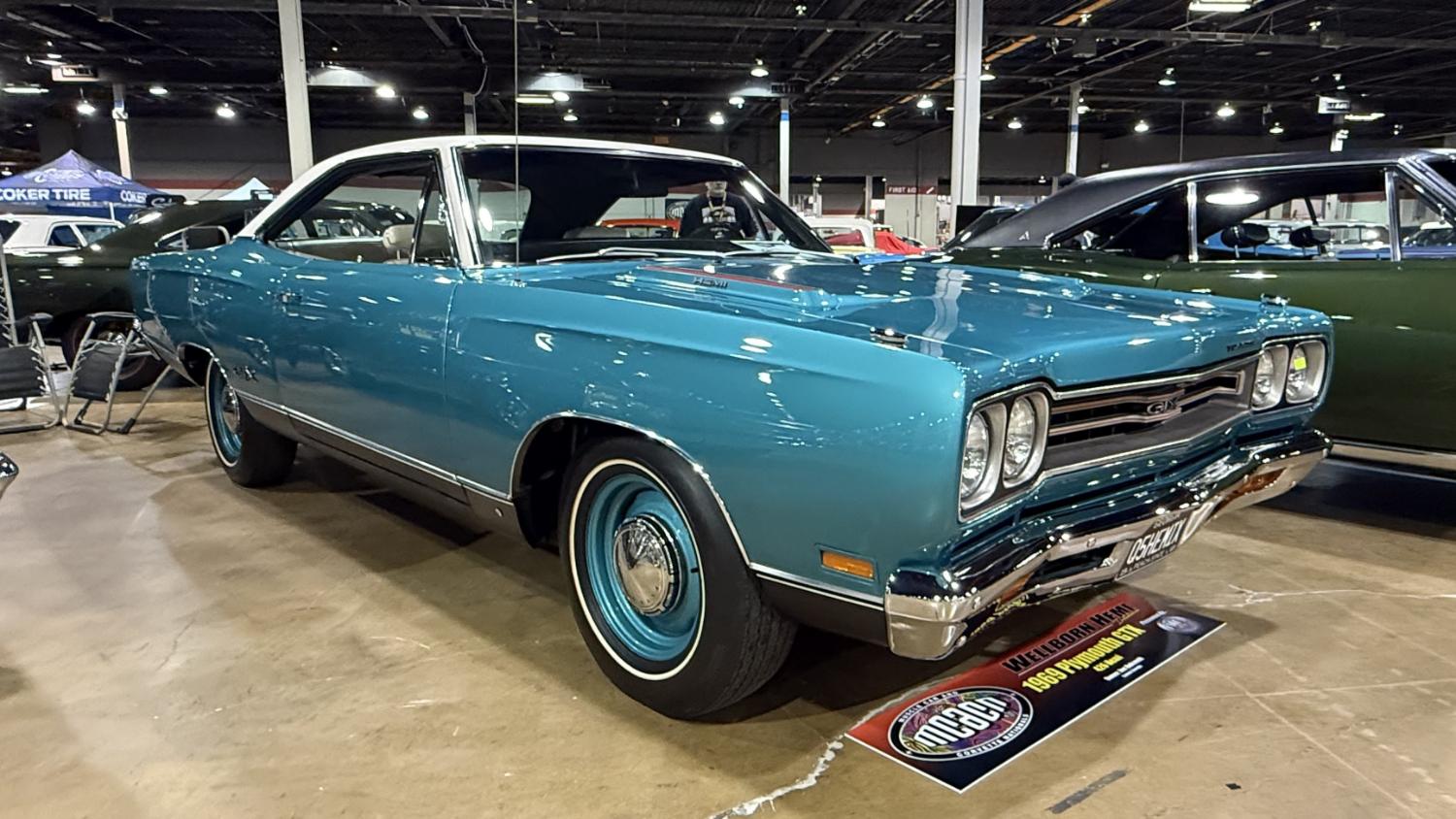
This 1969 Hemi Plymouth GTX was painted “Q5” Seafoam Turquoise with a white vinyl top—pretty!
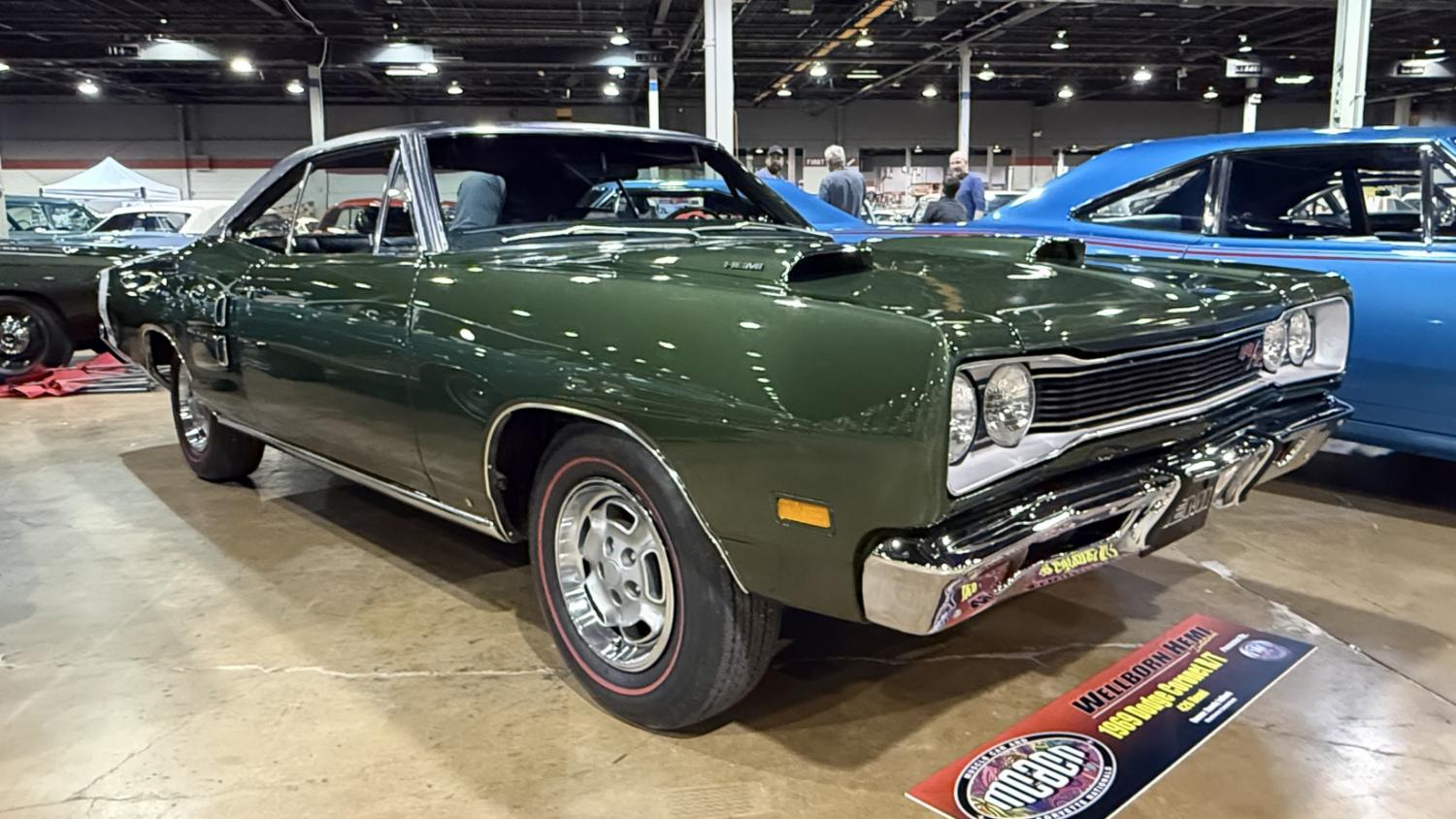
The cousin to the turquoise GTX above was the Dodge Coronet R/T. Note the Kelsey-Hayes “recall” wheels.

The holidays center around selflessness and giving, so one Phoenix-based event gave import car owners and enthusiasts a chance to give back to the community via a charitable toy drive.

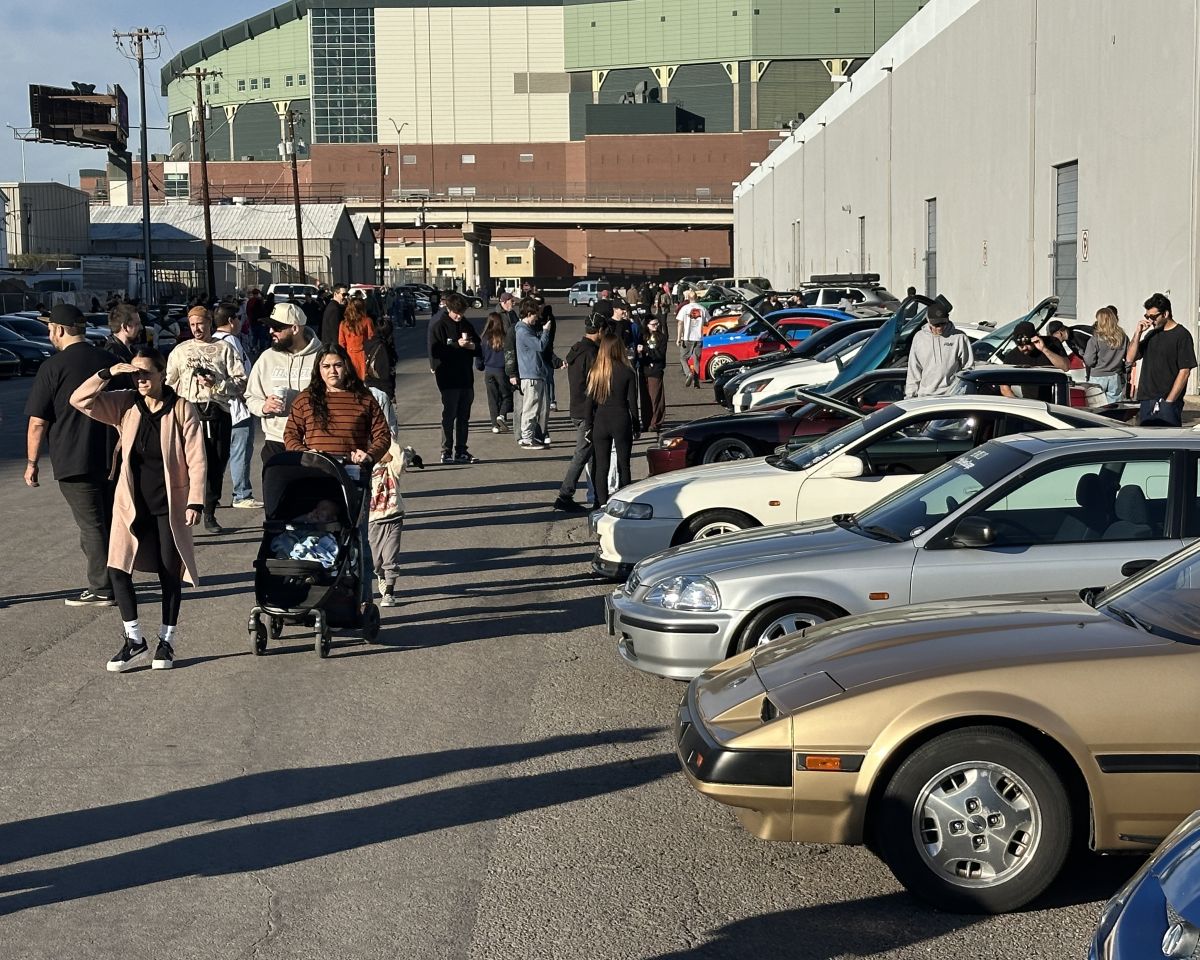
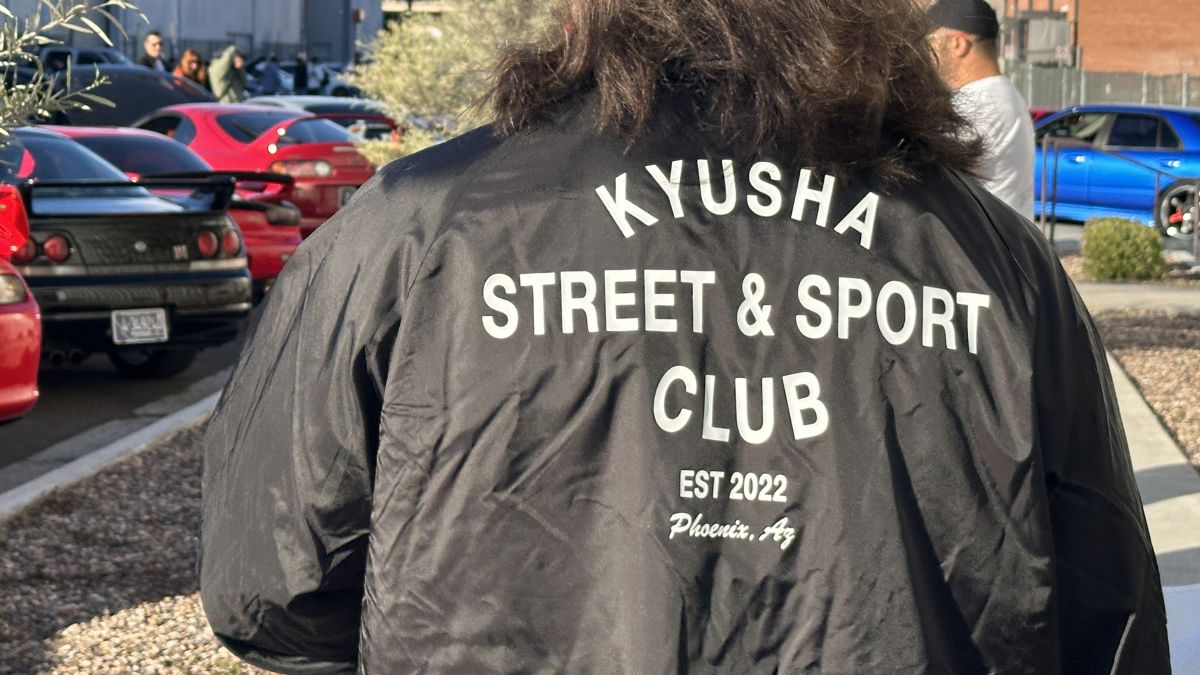
The Kyusha Club – dedicated to the appreciation and preservation of European and Japanese cars from 2005 and older – has become one of the highest-attended events in the region. There is no registration process, and parking is first-come, first-served, so people appreciate the laid-back atmosphere.

The group also operates with a community-oriented mindset, and in December, attendees were invited to bring toys for a drive to benefit the Phoenix Children’s Hospital. The turnout was strong, to say the very least. Below were a few specific cars that caught my eye.

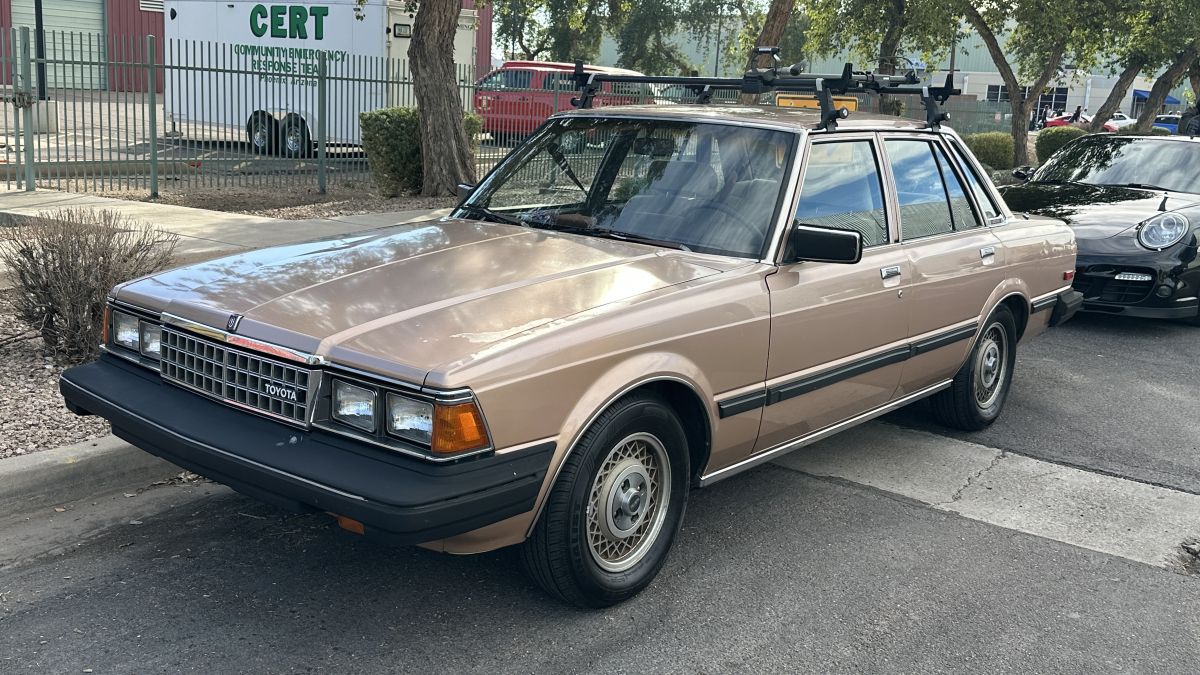
1983 Toyota Cressida sedan

Positioned as Toyota’s luxury offering, this four-door sedan (also available as a five-door station wagon) came standard with a 2.8-liter inline-six mated to a four-speed automatic transmission and rear-wheel drive. In some markets, the Cressida was called the Mark II. This car set the stage for the upmarket Lexus brand that would debut in the late 1980s.

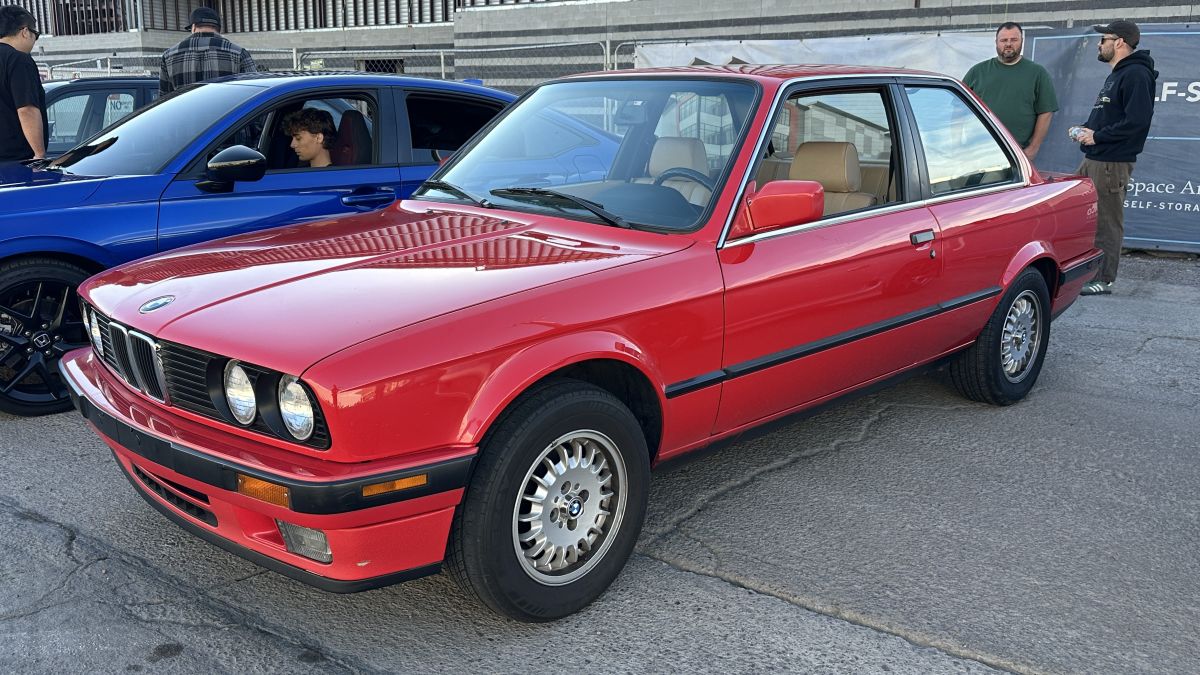
1991 BMW 325i coupe

The classic “E30” generation for BMW’s compact executive car lasted from 1984 through 1991. This clean final-year example in red was extremely well kept. Power came from an M20B25 2.5-liter inline-six that was rated at 168 horsepower and 164 lb-ft of torque. An “iX” all-wheel drive variant was offered, too.

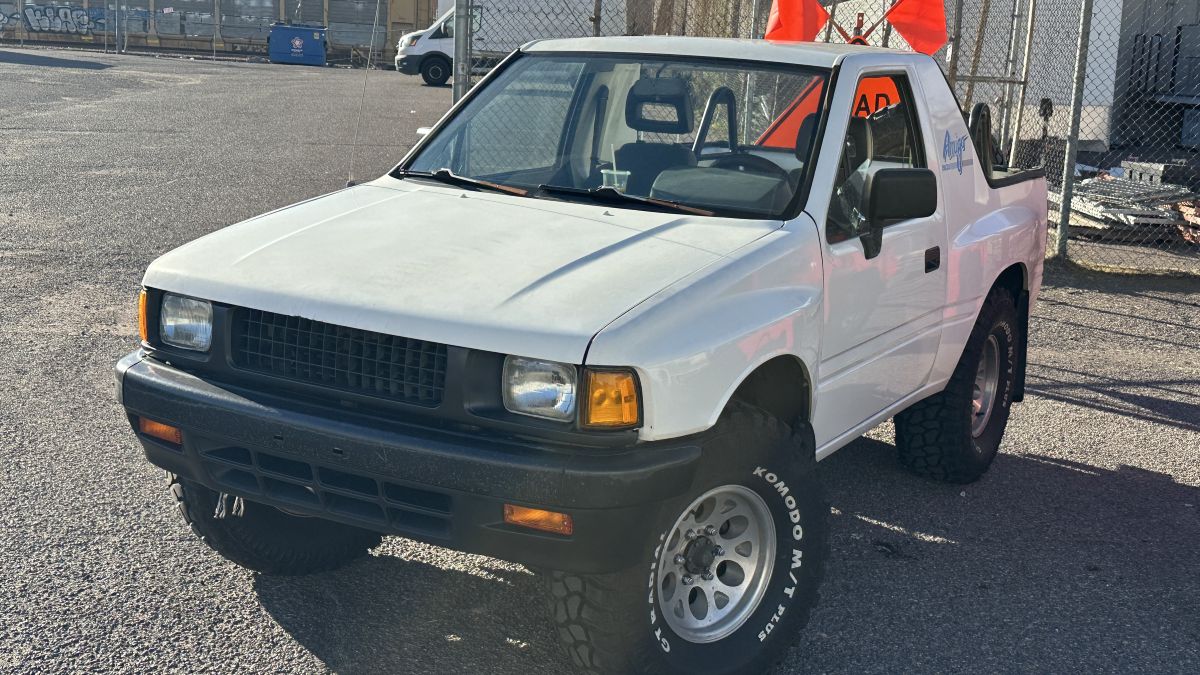
1992 Isuzu Amigo XS 4WD

The fun-loving Amigo was a versatile SUV, known for its removable soft-top and decent off-road capability. Power came from a 2.6-liter inline-four mated to a four-speed automatic transmission. The XS trim was one of the higher trim levels, and it included things like a tilt steering wheel. The Amigo nameplate was dropped in the U.S. market after model year 1995.

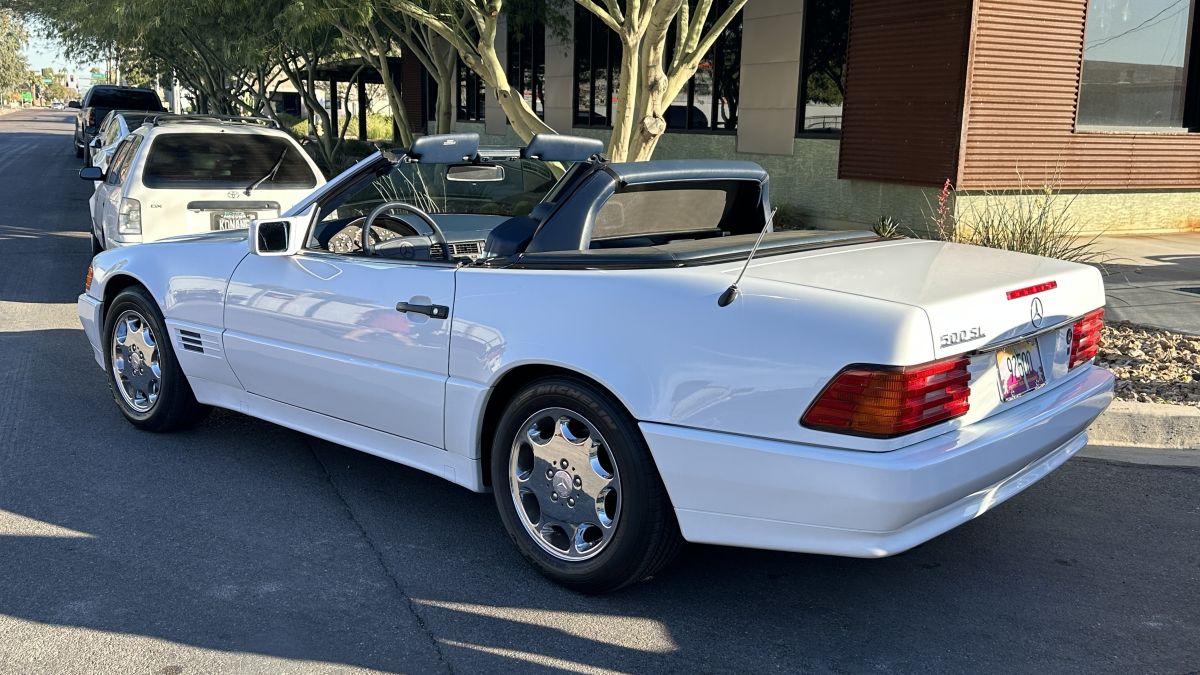
1992 Mercedes-Benz 500 SL

When it came to Grand Touring, the German-built SL-class was hard to beat in the 1980s and 1990s. The car went by the “R129” code name and came standard as a two-door roadster with a hydraulic roof. Power for this luxury roadster came from a 5.0-liter V8 mated to a four-speed automatic transmission. I thought this particular white-on-blue SL was striking.

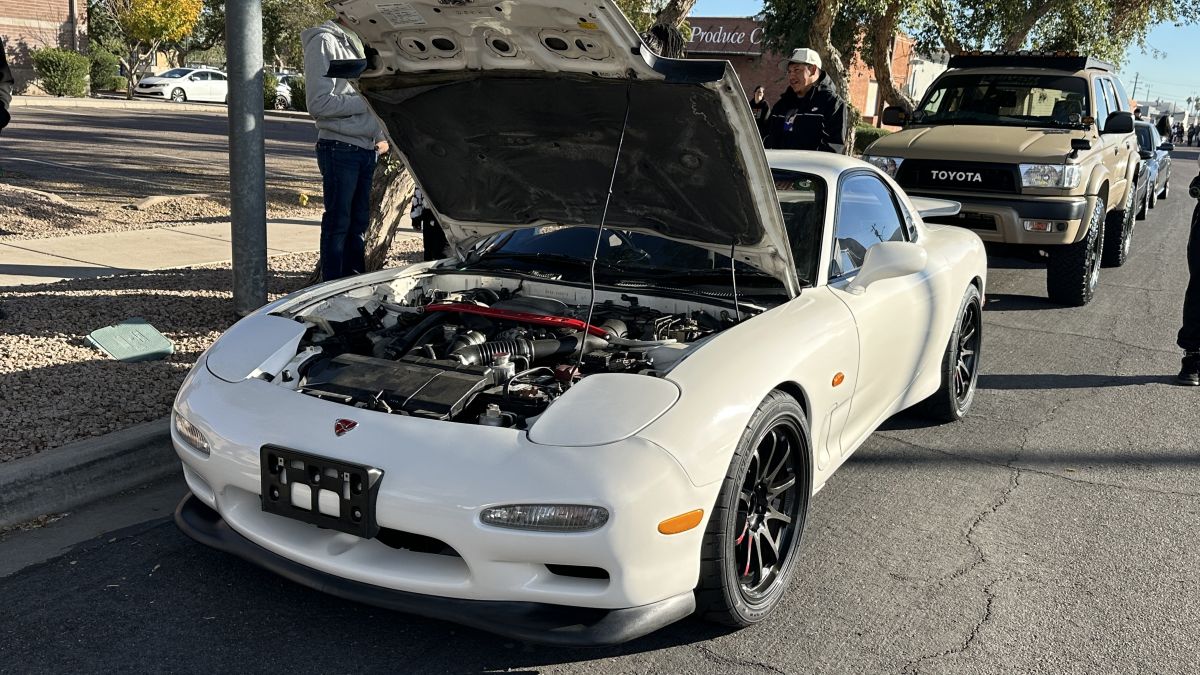
1994 Mazda RX-7

The FD-generation RX-7, built between 1993 and 1995 for North America, developed an incredibly strong enthusiast following and remains collectible. Its unique powertrain included a 1,308cc twin-turbo, twin-rotor Wankel engine. The RX-7 had a lightweight chassis and a 50/50 weight distribution, making it a competent handler. This white RX at Kyusha Club was a Japanese-market, right-hand-drive example.

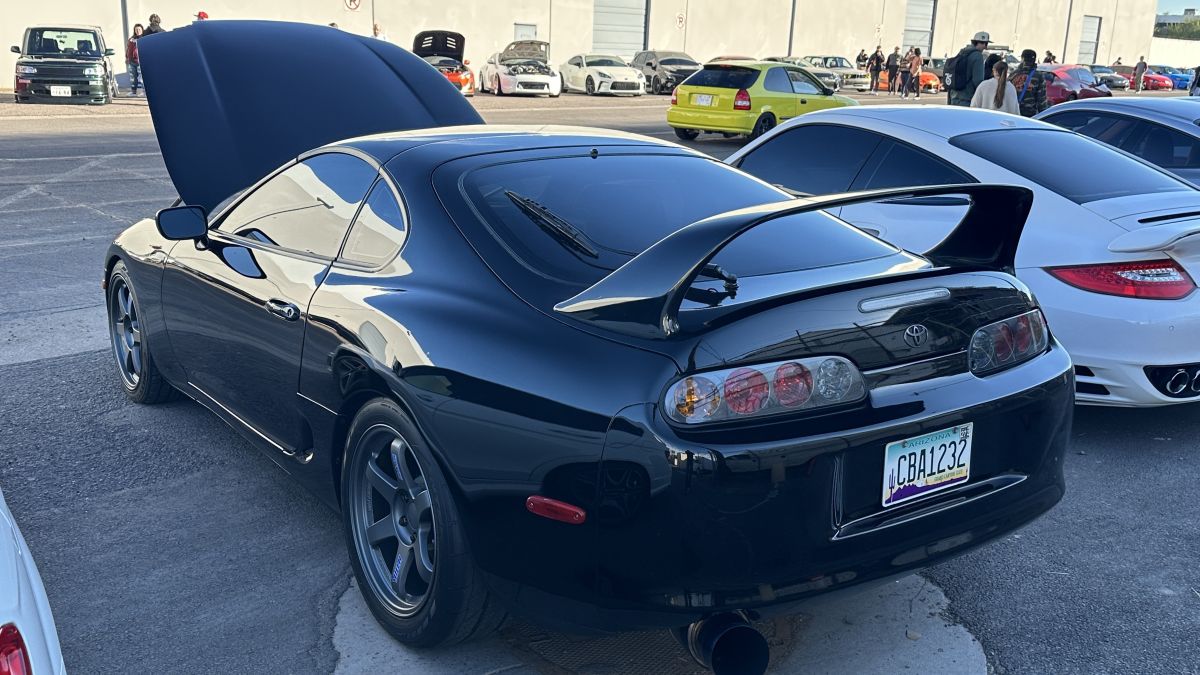
1994 Toyota Supra Turbo

Another twin-turbo favorite from the mid-1990s was the fourth-generation (MKIV) Supra, which was powered by a 3.0-liter 2JZ-GTE engine. Among tuners, it’s an incredibly popular car – and finding one that hasn’t already been modified is incredibly tough.

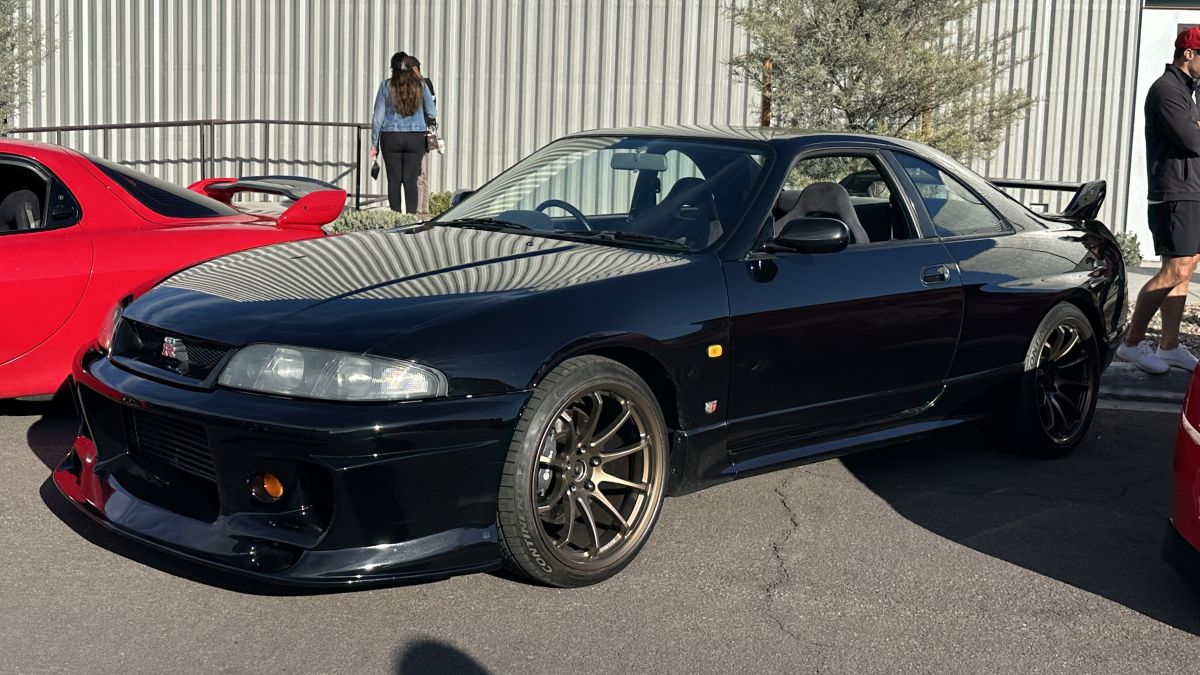
1995 Nissan Skyline GT-R

Twin-turbochargers were the name of the game for Japanese automakers when it came to sports cars. The R33-generation GT-R featured a 2.6-liter inline-six mated to a five-speed manual transmission. One of its other noteworthy features was an ATTESA all-wheel-drive system.

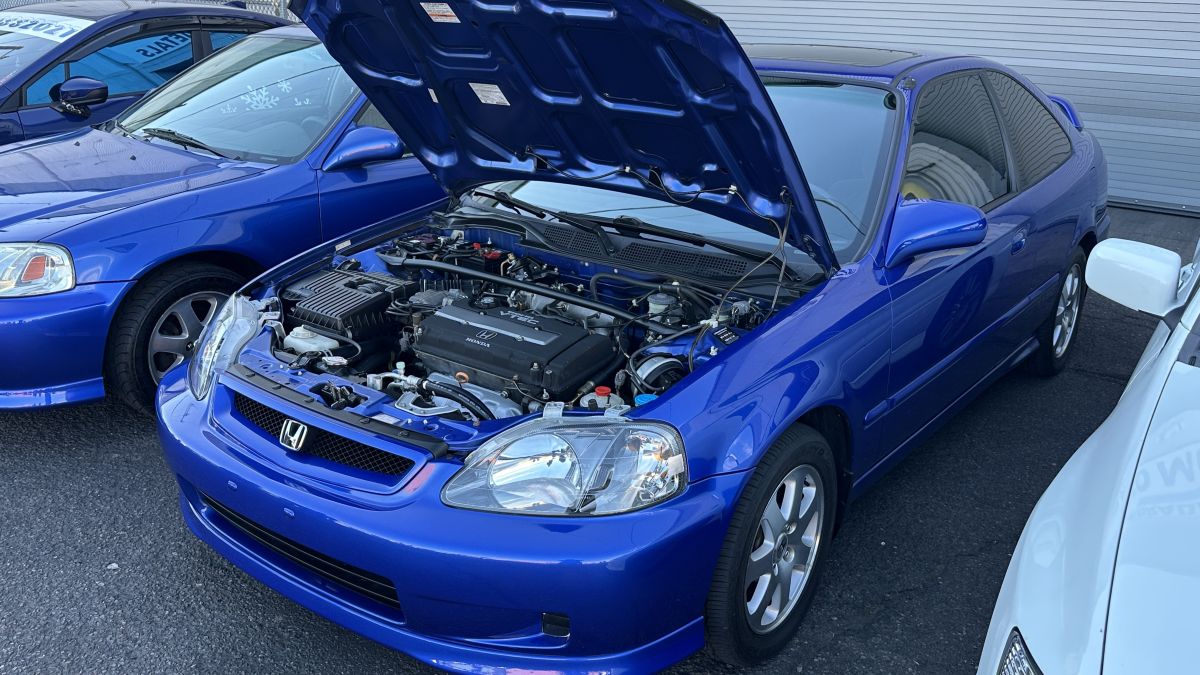
1999 Honda Civic Si

The classic Honda two-door compact got a dose of performance, courtesy of a high-revving 1.6-liter “B16” inline-four that produced 160 horsepower. Despite its value-oriented underpinnings, the Civic Si was still an engaging car to drive. A quarter-century later, almost all of them have been modified, so seeing this Electron Blue Pearl one looking mostly original was a treat.

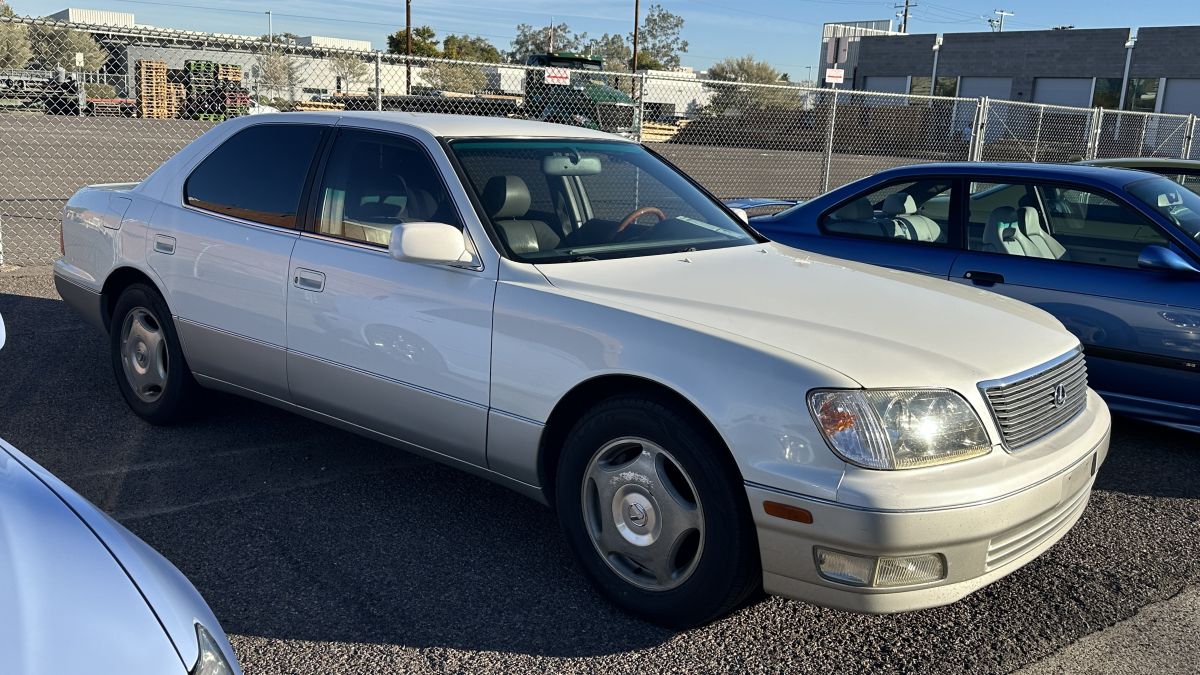
1999 Lexus LS400

The LS400 was one of Lexus’ pioneering models when the brand launched in September 1989, and for years it went head-to-head with the premier luxury cars of Germany. It was powered by a 4.0-liter V8 mated to a five-speed automatic transmission. Many of these cars are still on the road today – a testament to their exceptional build quality.

2003 Porsche 911 Turbo

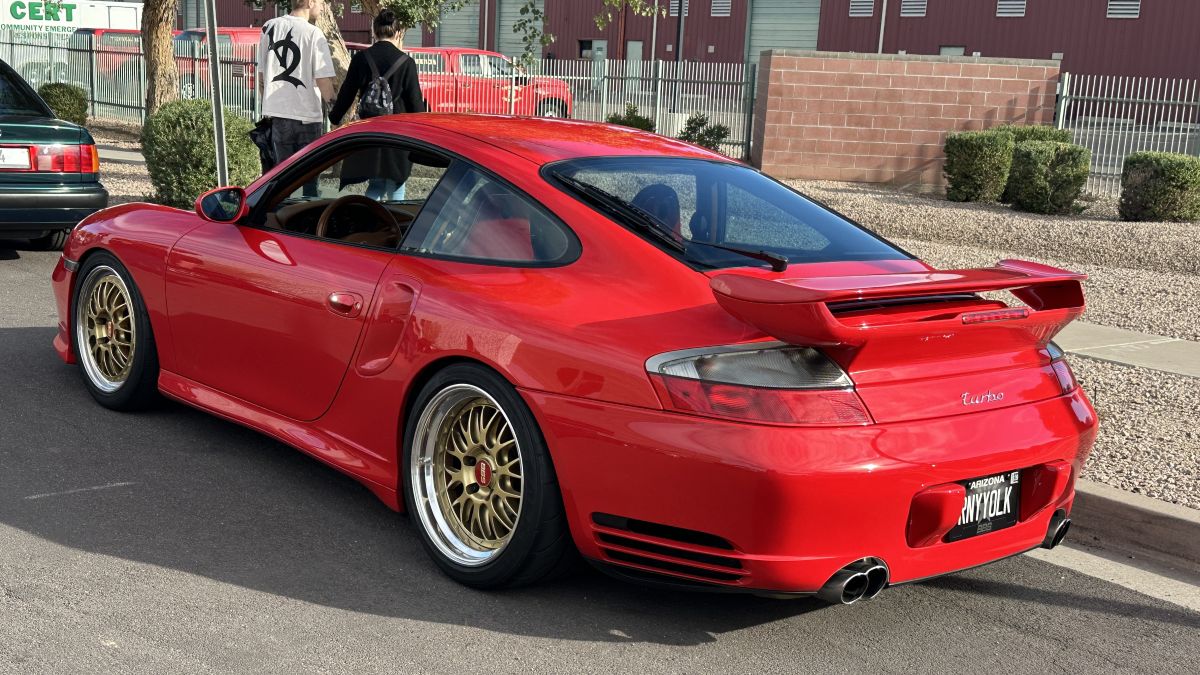
Finished in eye-catching red, this sexy 911 was from the “996” generation and came with a 3.6-liter twin-turbocharged flat-six “Mezger” engine. It was a performance powerhouse, offering 415 horsepower, all-wheel drive, and a six-speed manual transmission.

The Kyusha Club event was a memorable occasion – and a strong reminder for all of us that car clubs are much more than a venue for talking about horsepower specs. They are opportunities to bring people together for a common good. Follow the group on Instagram for announcements about future program dates and locations.

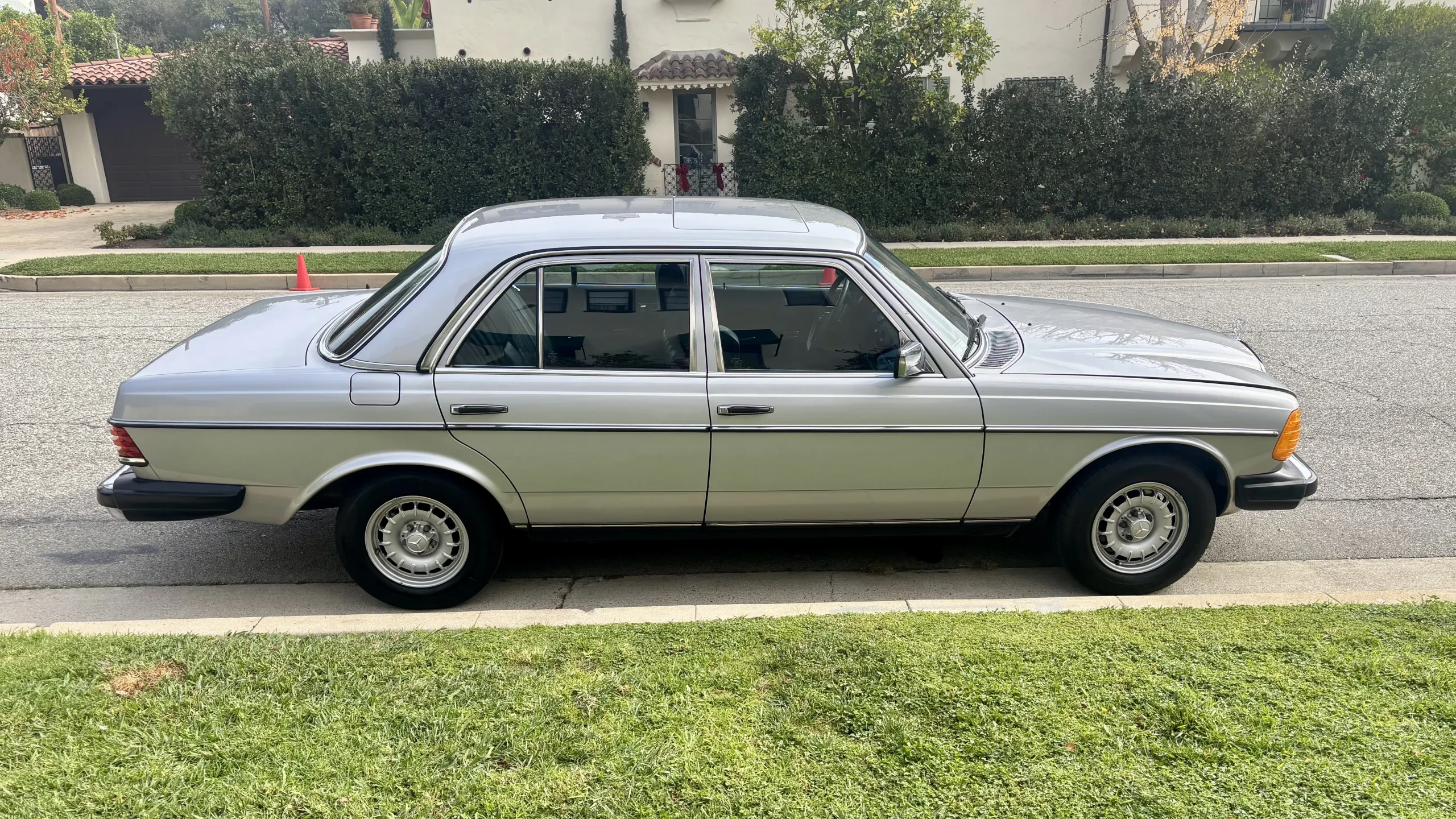
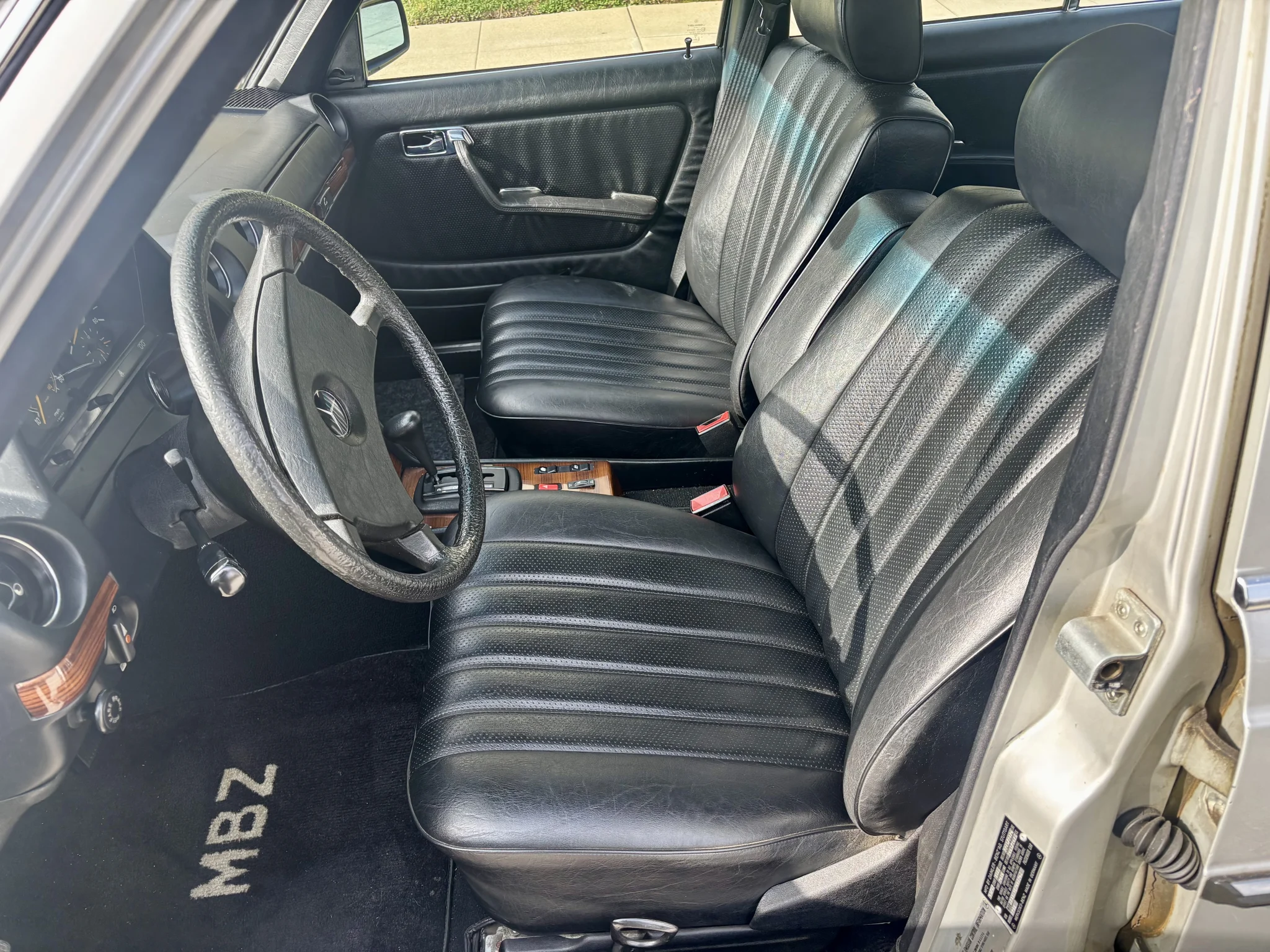
The Mercedes-Benz W123s produced from 1975-86 have long been considered some of the finest-built vehicles the automaker ever constructed. They were more mid-range market than top-tier; sort of like a BMW 5 Series, offering great quality and plenty of period 1970 and ’80s German luxury features. Over the years they have proved to be all but indestructible, and even today are not only one of the best-built classic Mercedes cars ever, they also are still usable as daily drivers. Of all the W123s, the diesel-powered cars are so good that many have clocked over a million miles on their odometers. Our AutoHunter Spotlight of the day is one of those cars, a 1982 Mercedes-Benz 300D sedan. It is being offered by a private seller in Pasadena, California, and the auction ends on Tuesday, December 23, 2025, at 12:00 p.m. (MST).

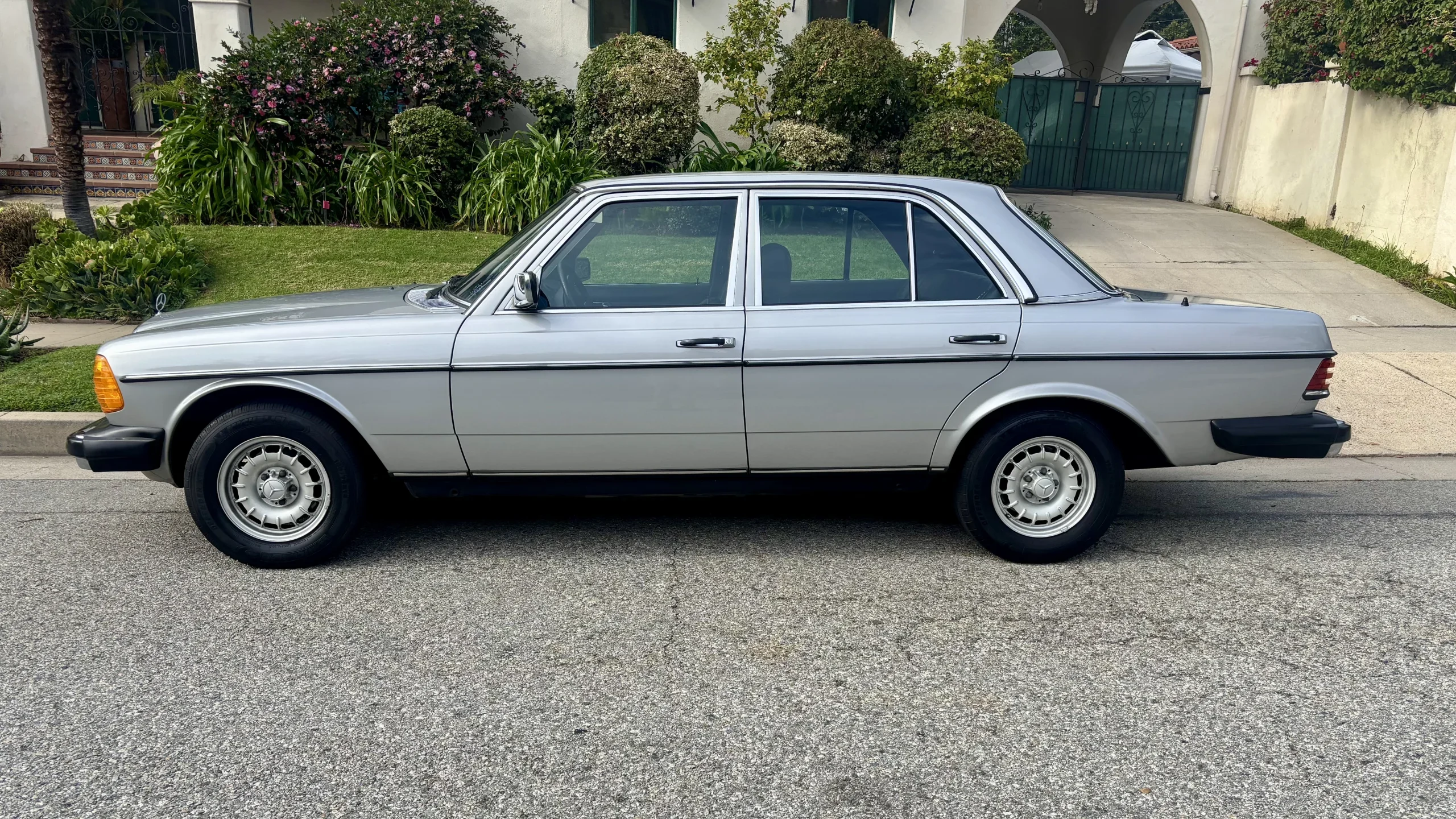
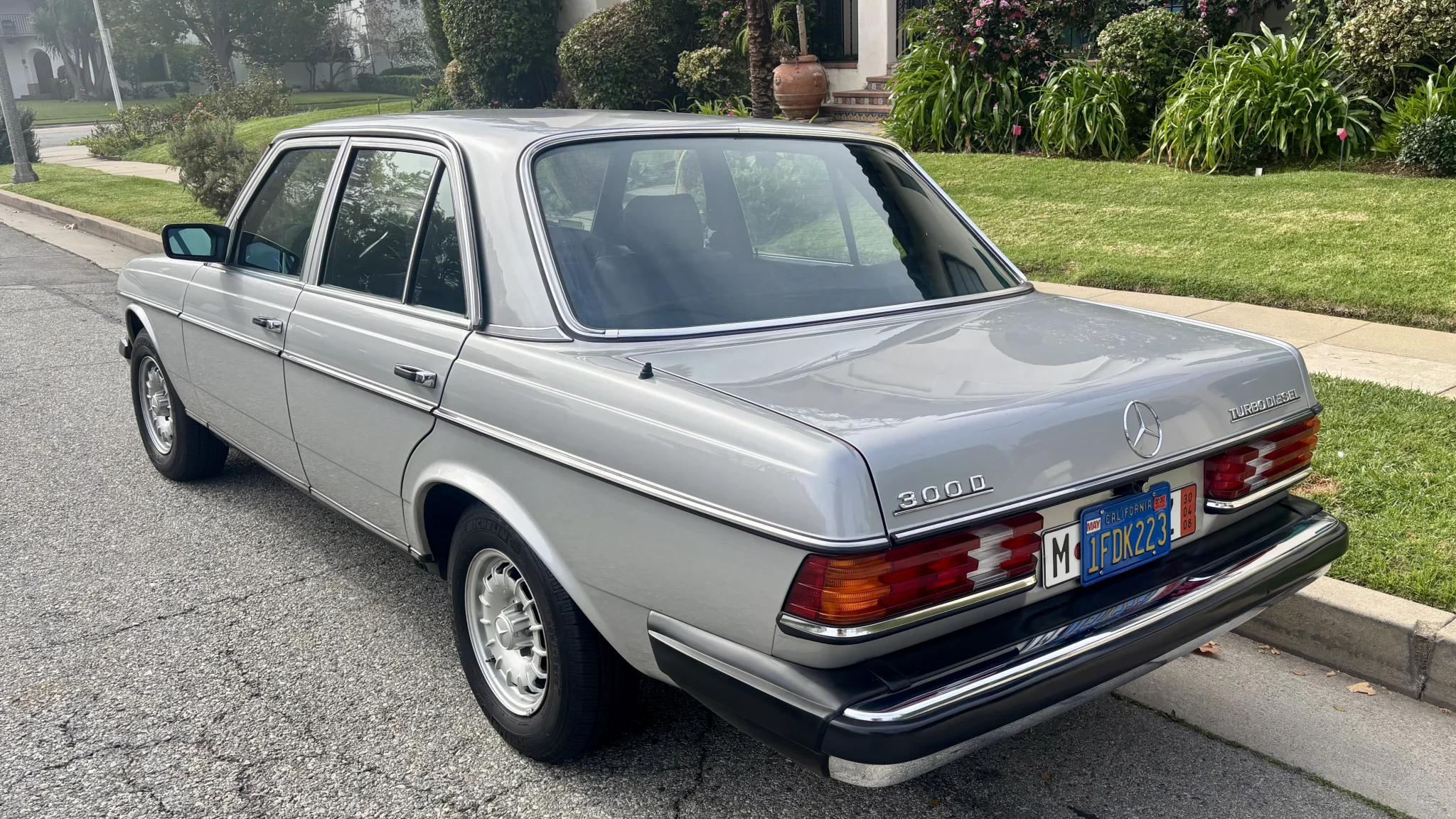
According to the seller, this garage-kept 300D is powered by its correct OM617 3.0-liter inline five-cylinder turbo-diesel engine combined with a four-speed automatic transmission. The car is painted in factory-correct silver over a black MB-Tex interior. It is being offered with a car cover, shop manual, the original tool kit, and a clear title.

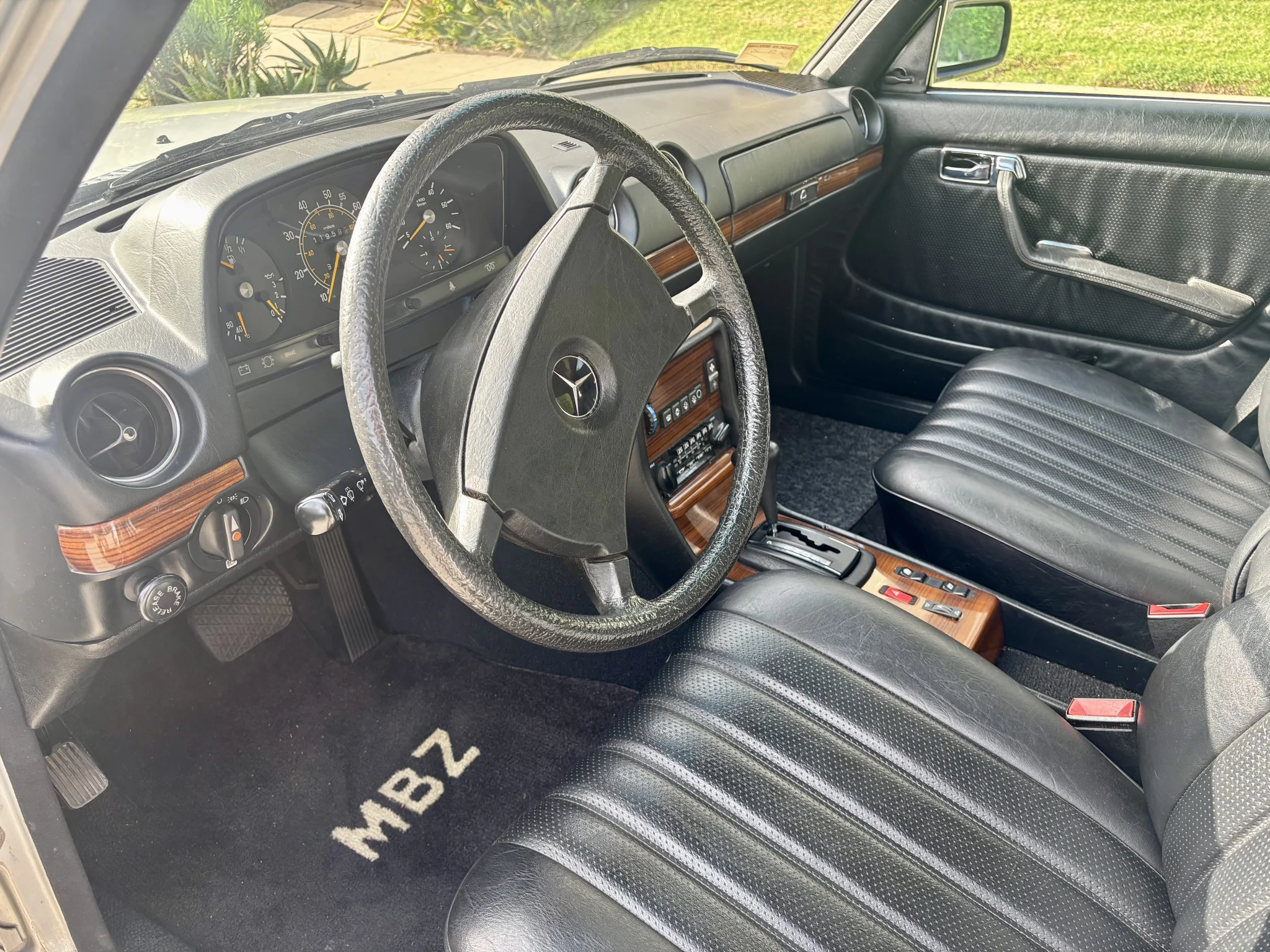
The exterior of this 300D looks to be in good shape. I don’t see any evidence of poor panel gaps, and the paint looks good overall—I would not be surprised if it was original. The brightwork also seems to be in excellent condition, with no corrosion on the bumpers or other chrome parts. The car still rides on its original Mercedes 14-inch bundt-pan alloy wheels clad with 195/70 Michelin Defender XT radial tires.

The interior also looks great – not a big surprise with a car that has MB-Tex for its seats. What is very nice is that the dash does not appear to have any cracks, and the wood is also in excellent shape. This really looks like a well-cared-for and truly garage-kept example. (If it wasn’t, the dash would definitely be cracked, and the wood bits would be crazed as well.)

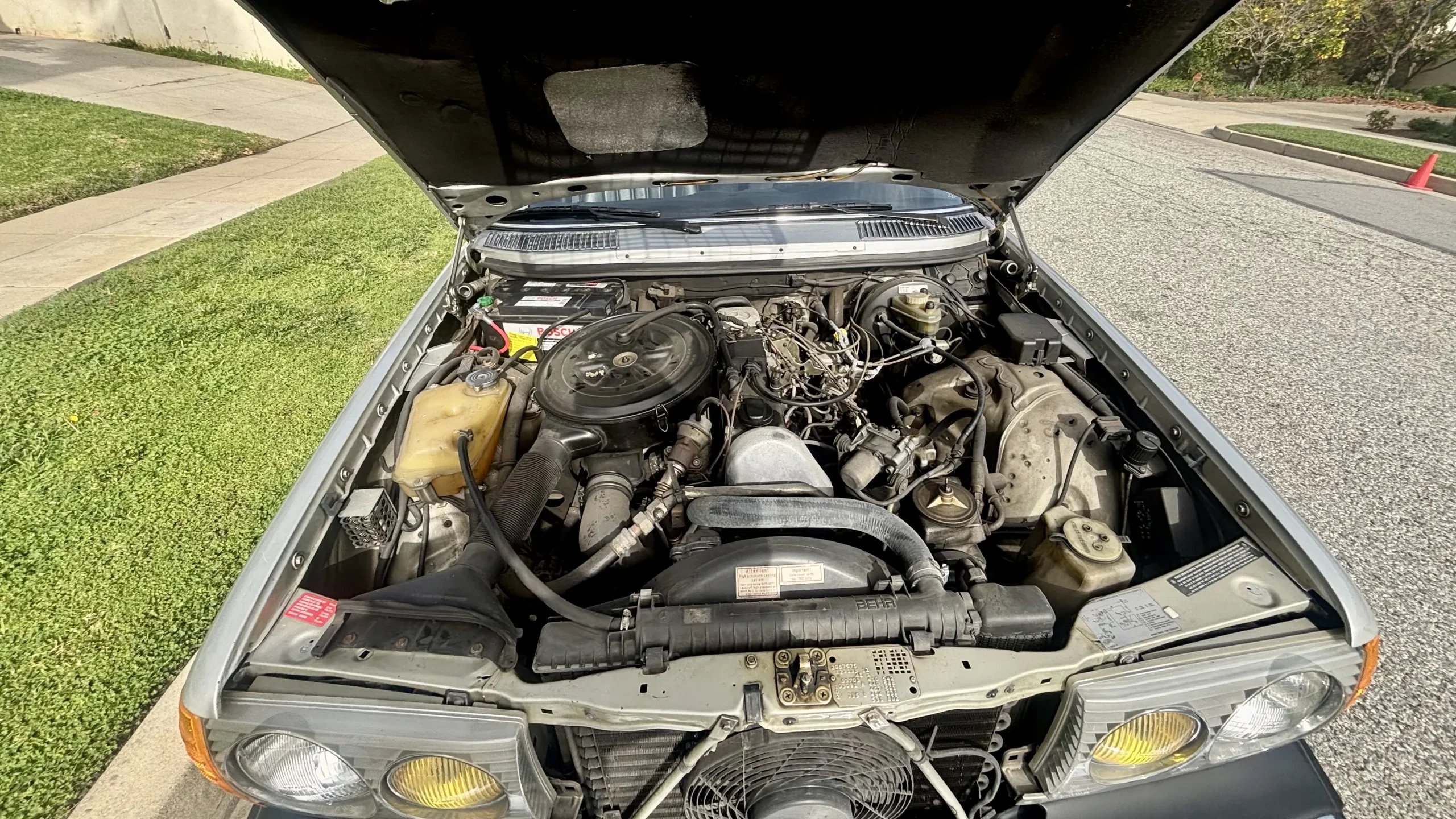
Under the hood, the OM617 3.0-liter inline five-cylinder turbo-diesel engine looks to be in good shape and correct, albeit a little dirty. This engine compartment would look amazing after a detail. These inline five-cylinder diesel engines last literally forever, so the 119,954 miles clocked on this car means it has decades left in its lifespan. Service history includes a coolant flush, new thermostat, new upper and lower radiator hoses, power steering fluid flush, new power steering filter, new check valves, and a new air filter.

These W123 Mercedes cars literally will run forever, and this appears to be a 300D that has been carefully used and well cared for over the last four decades. In terms of its design or condition, it certainly does not look like a 43-year-old vehicle. Representing a high point for one of the world’s best auto manufacturers, this 300D would make a great daily driver or one to take to shows and even on long road trips. The auction for this 1982 Mercedes-Benz 300D ends on Tuesday, December 23, 2025, at 12:00 p.m. (MST)—just in time to treat yourself to one fantastic Christmas present!

Visit the AutoHunter listing for more information and a photo gallery

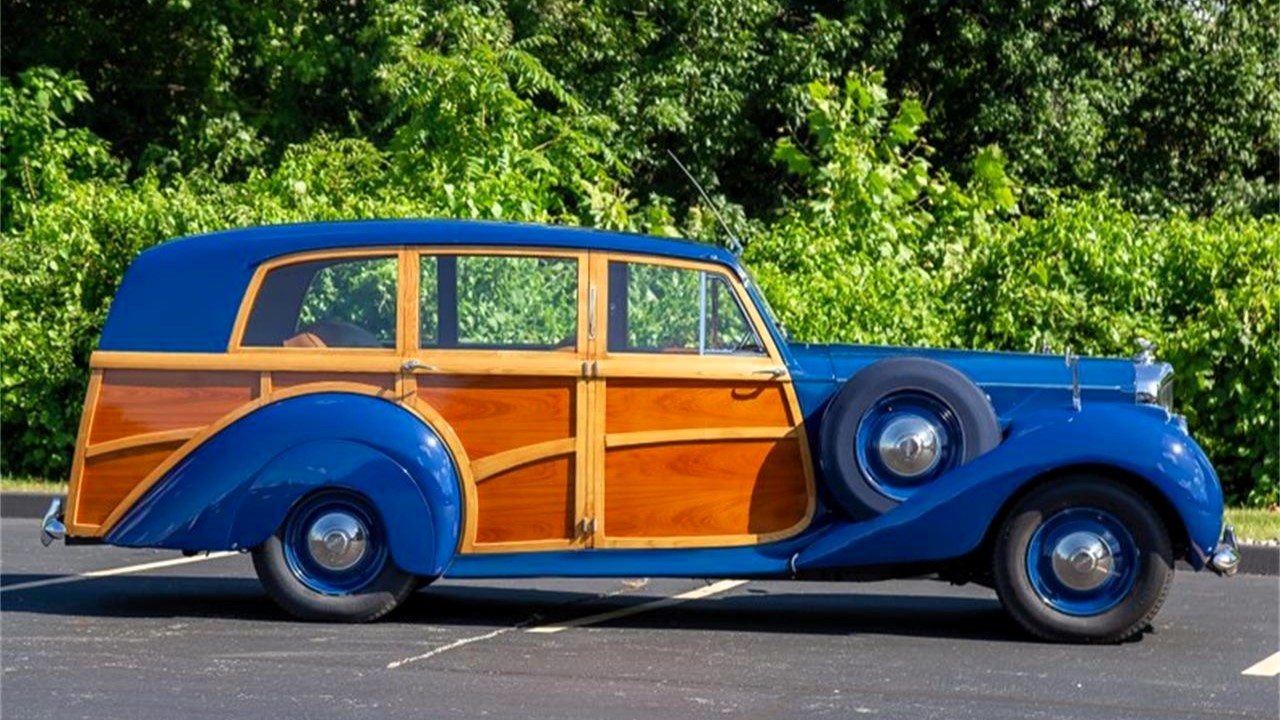
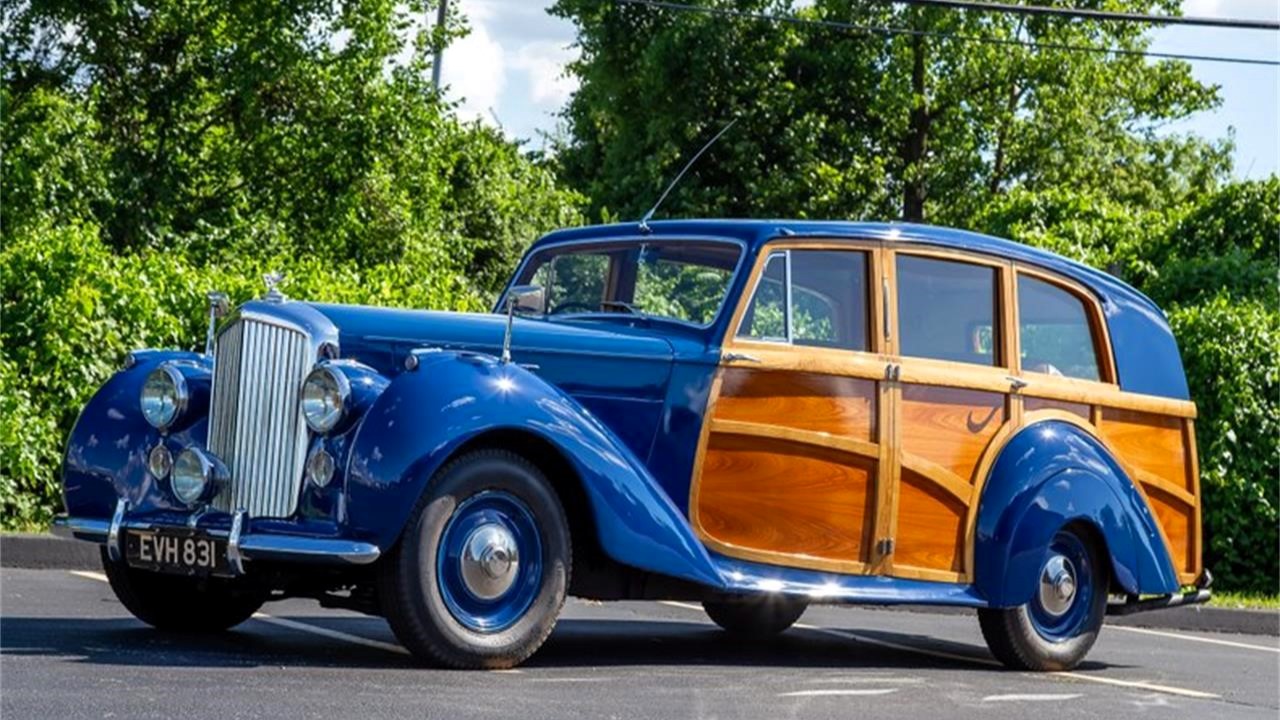
You may have noticed a lot of “woodies” being posted here on The ClassicCars.com Journal over the past few weeks. Perhaps you read about this 1988 Jeep Grand Wagoneer, 1949 Buick Roadmaster Estate Wagon, or 1947 Chrysler Town and Country Convertible Coupe. Guess what—today’s Pick of the Day is another woodie, but this time, it’s a very different one. You can find this 1949 Bentley Mark VI shooting brake by Rippon Bros Limited listed on ClassicCars.com by a dealer in St. Louis.

According to automotive historian Jonathan Wood’s 2012 book “Rippon Bros: A Coachbuilder of Renown,” the business was established in England in 1870. “Renowned for the quality of its coachwork and closely allied with Rolls-Royce for most of its corporate life, Rippon survived until 1970. Its bodies, created by some of the trade’s finest craftsmen, also featured on examples of the best British and Continental makes of their day, with Bentley, Daimler, Delage, Railton, and Renault chassis being so enhanced.”

What makes this Bentley so unusual is not just its body style (which is reportedly one of two shooting brakes built on the Mark VI chassis) but when its body was styled. Instead of starting life as a regular Mark VI and later being converted into a shooting brake, this car was initially purchased by Rippon Bros on behalf of its original owner, Captain George H. Ackroyd of the carpet company T.F. Firth & Sons, then built according to his requests.

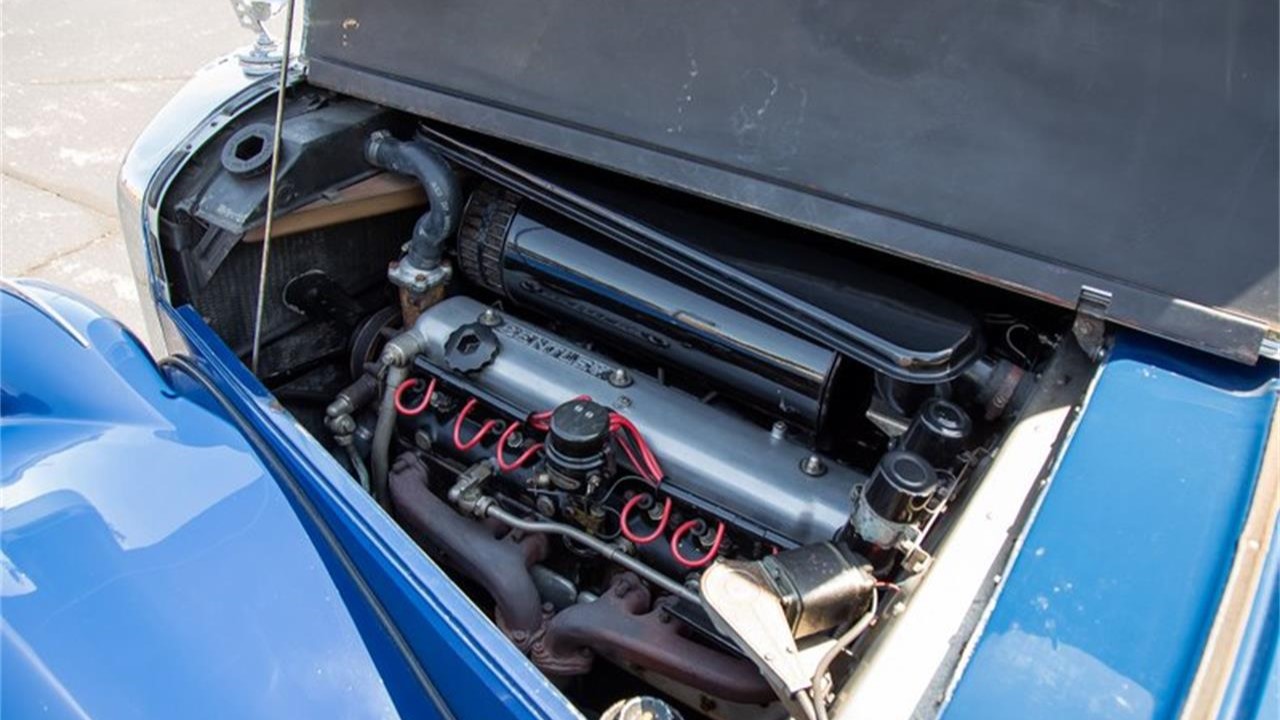
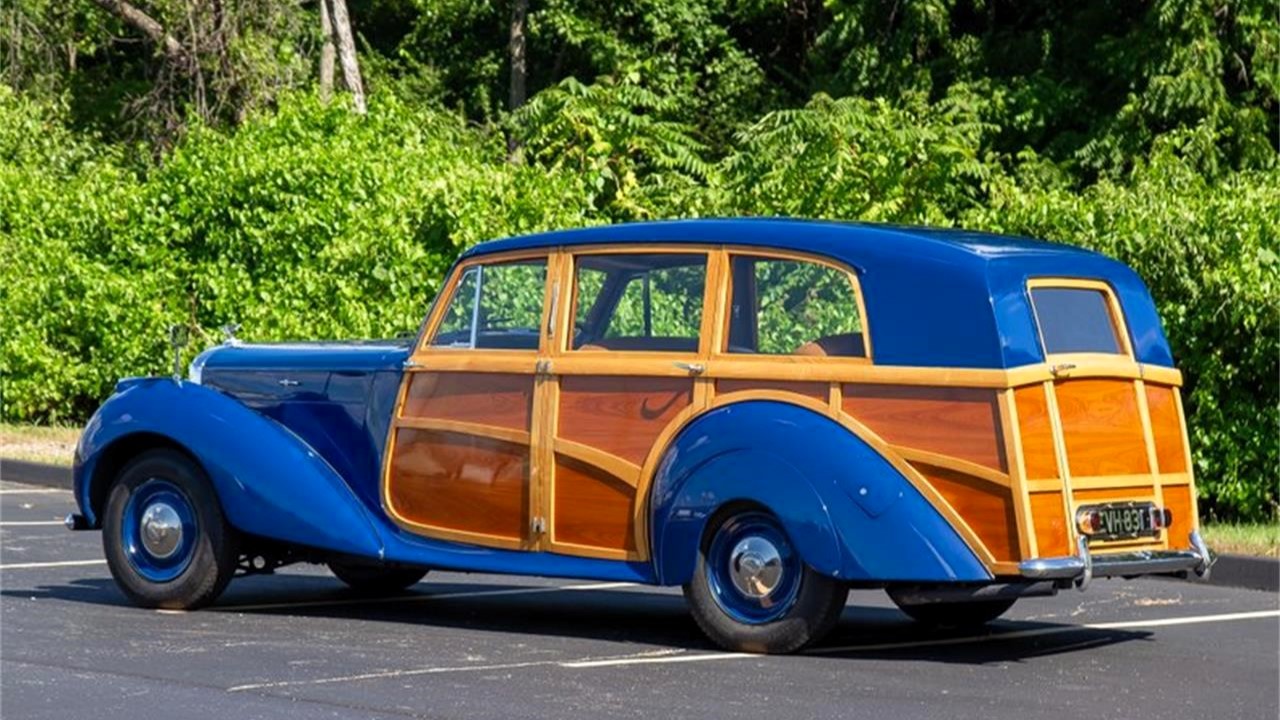
The prevailing theory is that Ackroyd used this bespoke Bentley for hunting. Notice the side-mounted spare tire, which freed up interior room; the rear seat can be folded down to fit large cargo. If you look closely, you’ll also see a sunroof panel. Under the hood’s twin swing-up panels is a carbureted 4.3-liter OHV inline-six, which is paired with a four-speed manual transmission.

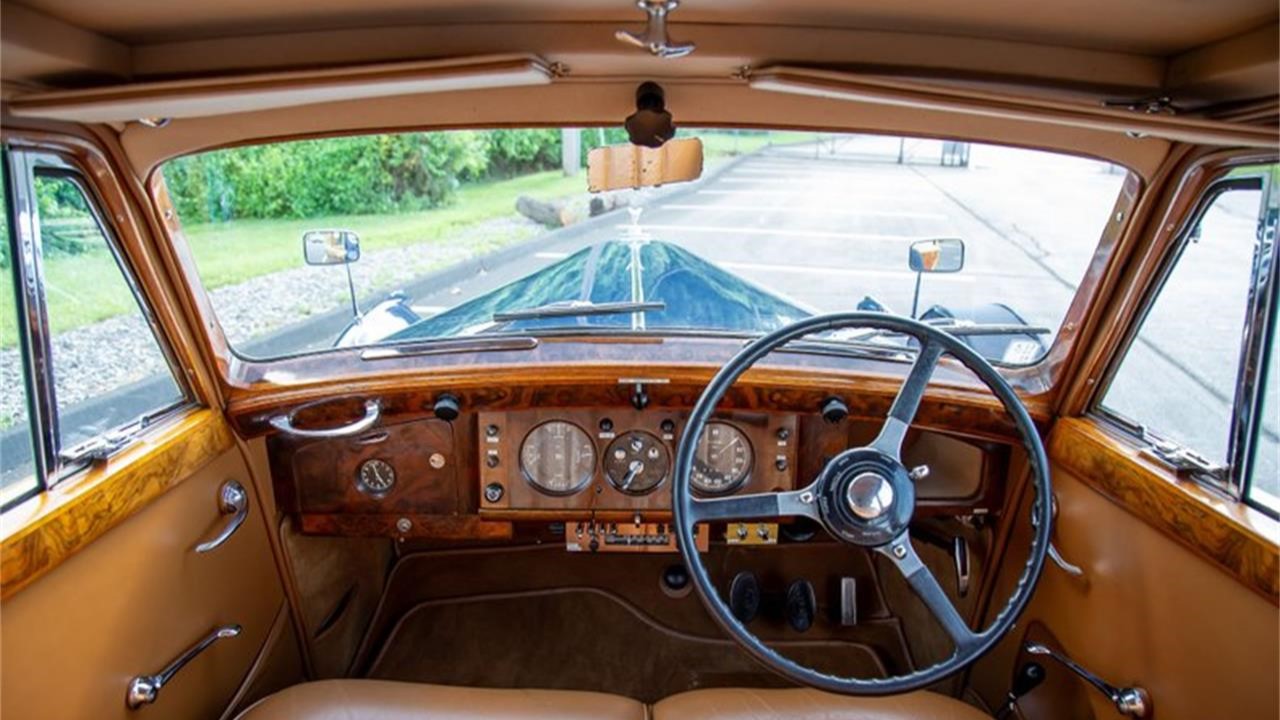
After changing hands in England in the 1960s, this unusual creation was purchased by a Rolls-Royce Owners Club member and shipped to the U.S. Under the subsequent ownership of collector Henry Petronis, the metal bodywork was painted Royal Blue, the woodwork was restored, and the leather upholstery was changed from light blue to the current tan, which coordinates perfectly with the walnut wood trim. In 2016, this Bentley was purchased from car collector and cellular phone industry pioneer Craig McCaw, then sent to Automotive Restorations for a mechanical refresh.

If you want a woodie that’s a little out of the ordinary, this 1949 Bentley Mark VI shooting brake is it. You can make it yours for $129,900, but will you be ready for all the questions people will ask about it? There’s only one way to find out . . .

Click here to view this Pick of the Day on ClassicCars.com
If all the last-minute shopping for presents, picking up relatives from the airport, and planning Christmas dinner has you a little frazzled, just know that you can turn your brain off for a few minutes as you read this week’s installment of Car Connections. I’ll have the Random Word Generator spit out three words, then I’ll find ways to connect those to automobiles. You don’t have to think or lift a finger!

This week’s words are achieve, personal, and chapter. Pour yourself some eggnog and I’ll figure these out.

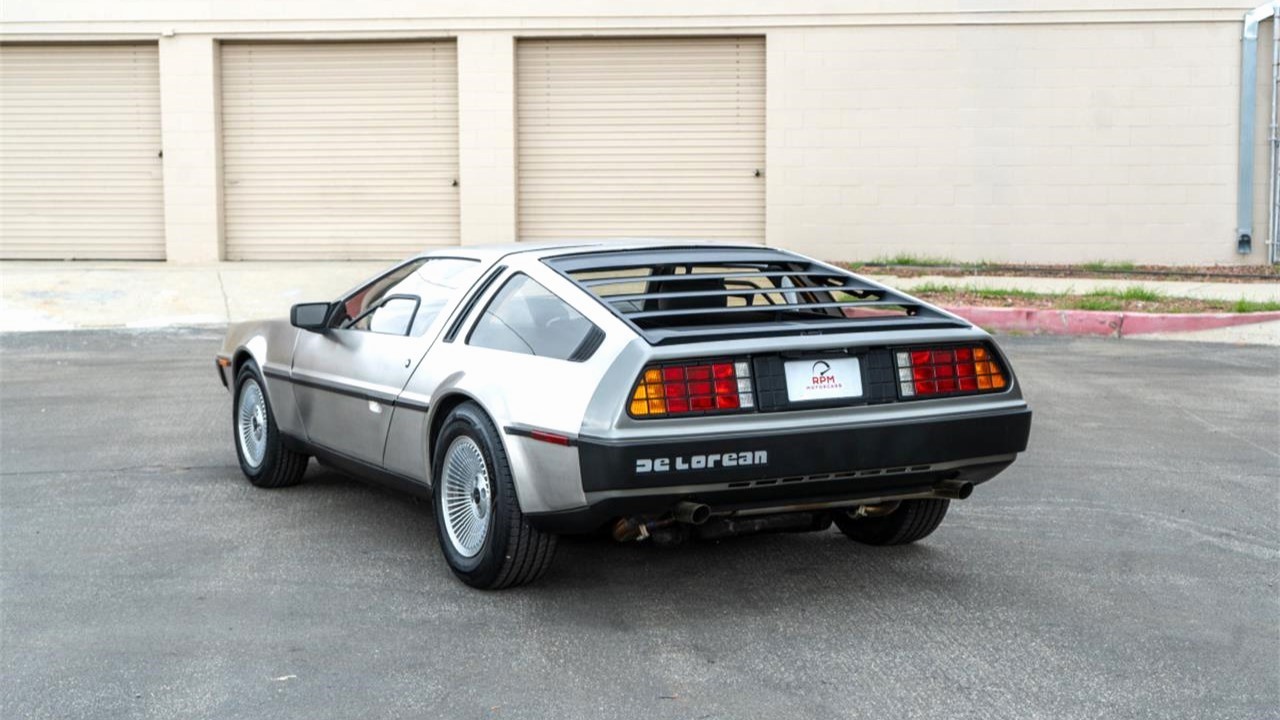
Click here to learn more about this 1981 DeLorean DMC-12 available on ClassicCars.com.

Achieve: It always amazes me that there are people with enough confidence to think they can start their own car company. John DeLorean had that as well as decades of automotive industry experience when he founded the DeLorean Motor Company in the 1970s. As we all know, his business ultimately failed, but the fact that he started his eponymous company and actually produced cars—in Northern Ireland during “The Troubles” using an inexperienced crew of Catholics and Protestants—is one hell of an achievement.

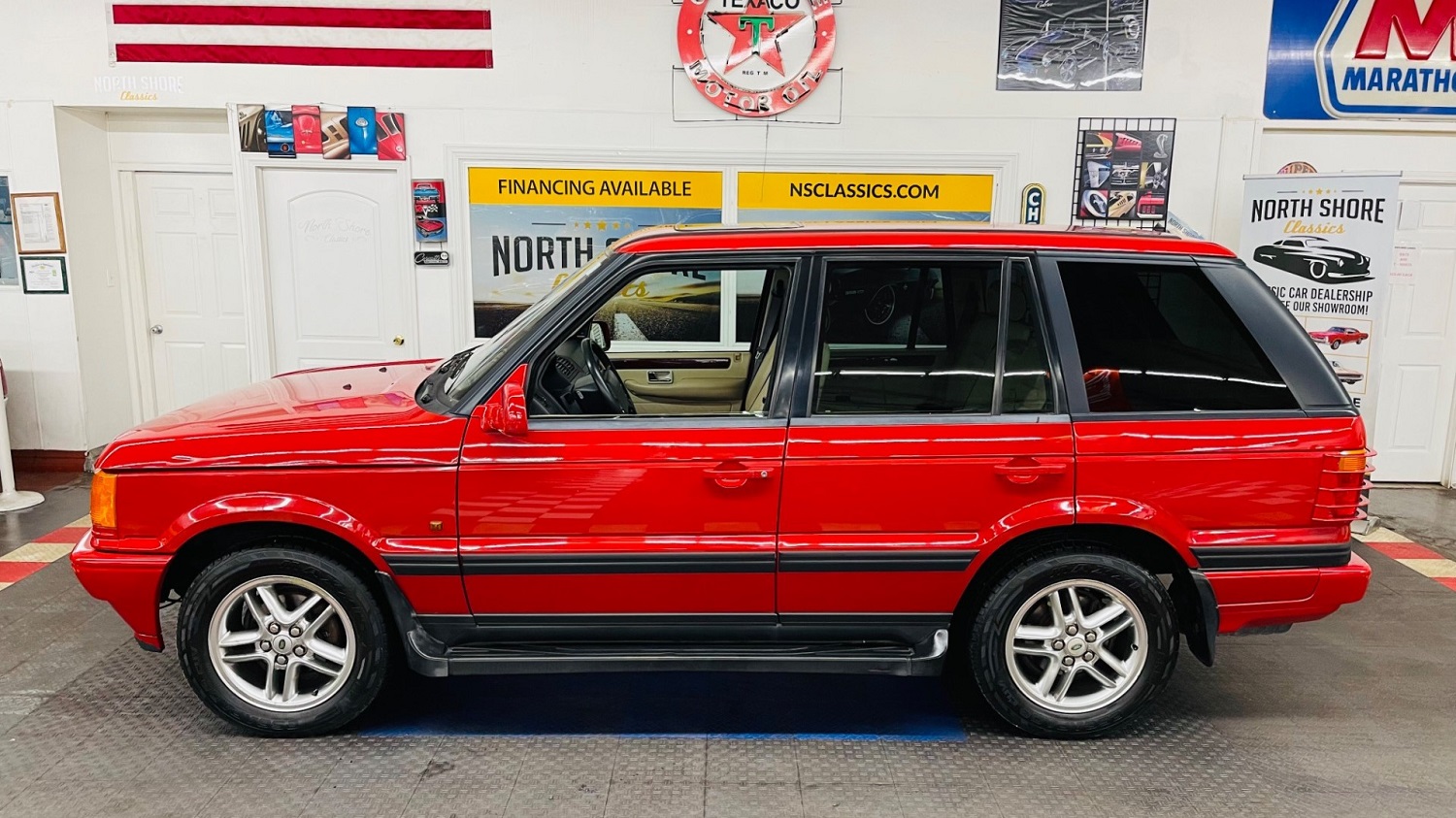
Photo courtesy of North Shore Classics, a ClassicCars.com dealer.
Personal: The 2020 Netflix documentary series “The Last Dance” covered the Chicago Bulls’ 1990s NBA dynasty. It also showed how Michael Jordan would take defeats and social slights personally, then use his rage as fuel for redemption/revenge. “His Airness” has owned a variety of high-end vehicles, including a 1999 Land Rover Range Rover 4.6 HSE – in red, of course.

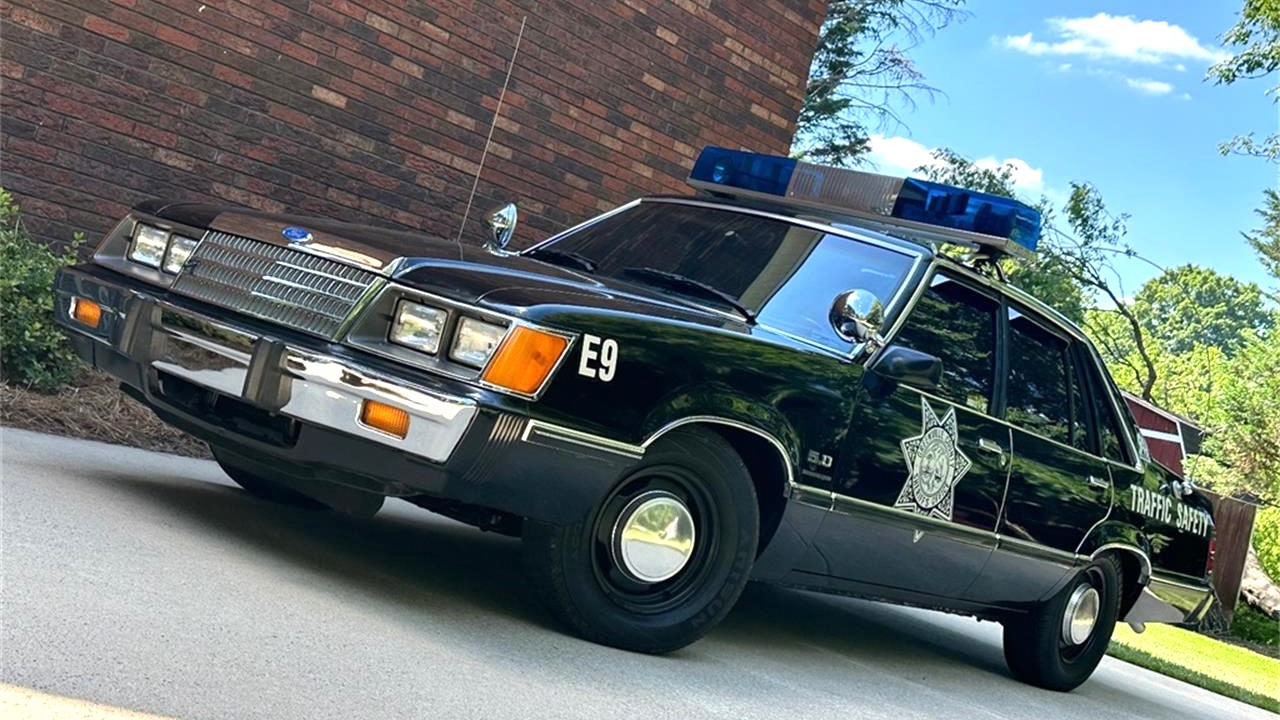
Click to learn more about this 1984 Ford LTD for sale on ClassicCars.com.

Chapter: Book. John Book was a character in the 1985 film “Witness.” He was played by Harrison Ford. So the answer is Ford. Which one? According to the Internet Movie Cars Database, there was a 1983 LTD in the movie, so check out this 1984 LTD police car on ClassicCars.com.

How would you associate these words with cars? Tell us in the Comments section below. And be sure to share your ideas for random words to use in a future installment of Car Connections.
My high school chum Bob Harnsberger had a semi-custom 1956 Cadillac Sedan de Ville christened “Battlecar Cadillactica” after we had graduated. I don’t know if he has a green thumb, but if so, he’d be planting Cadillactus around his home.

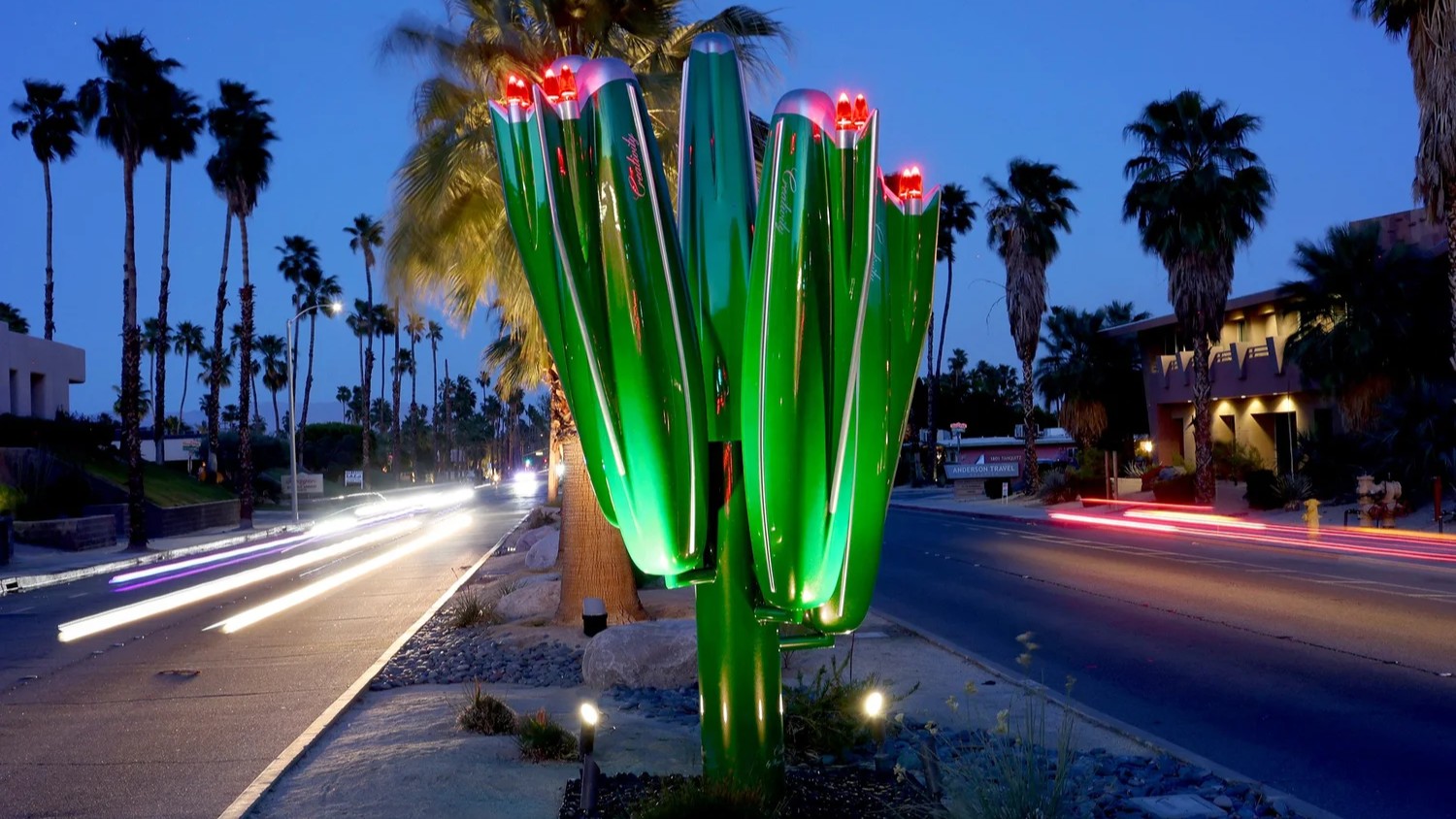
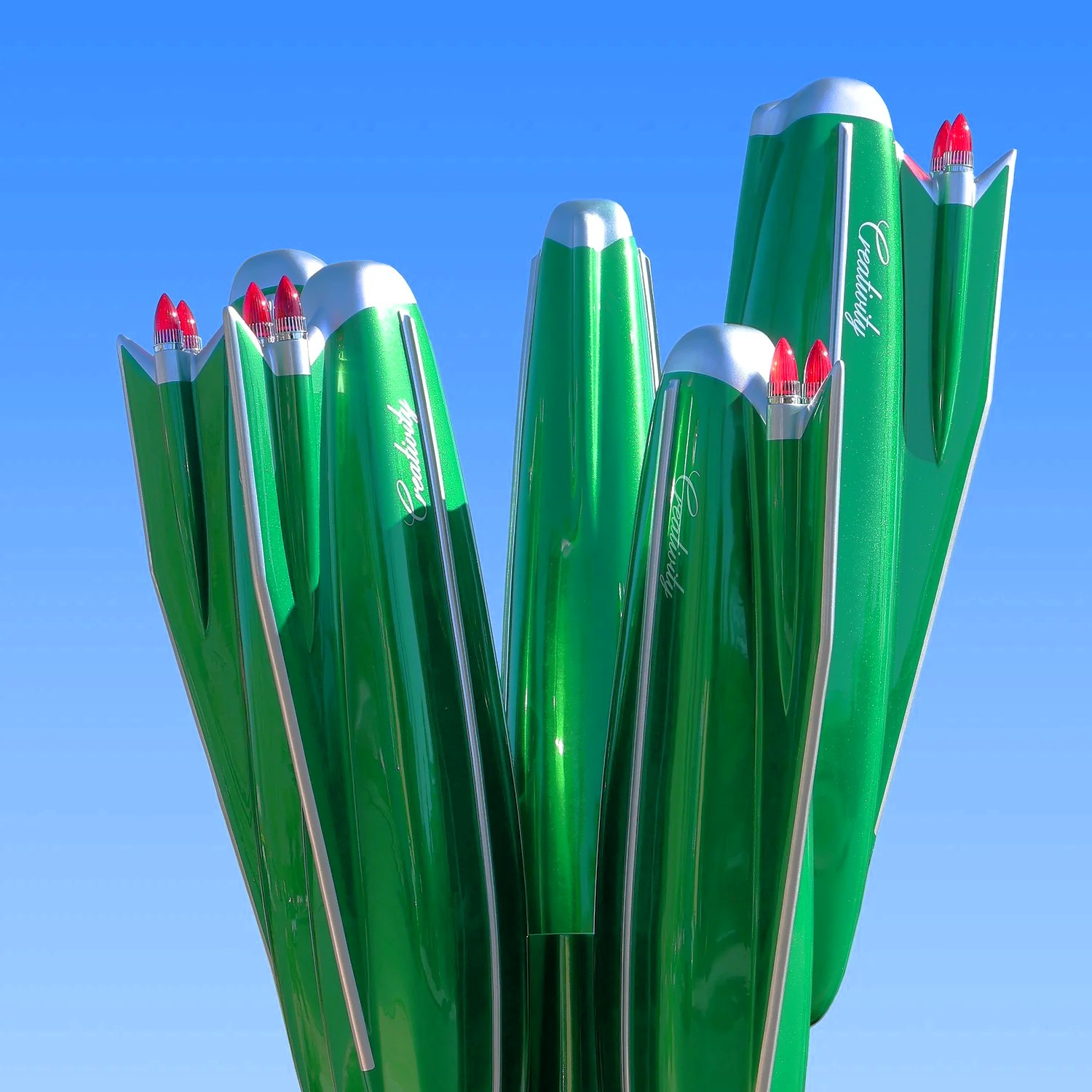
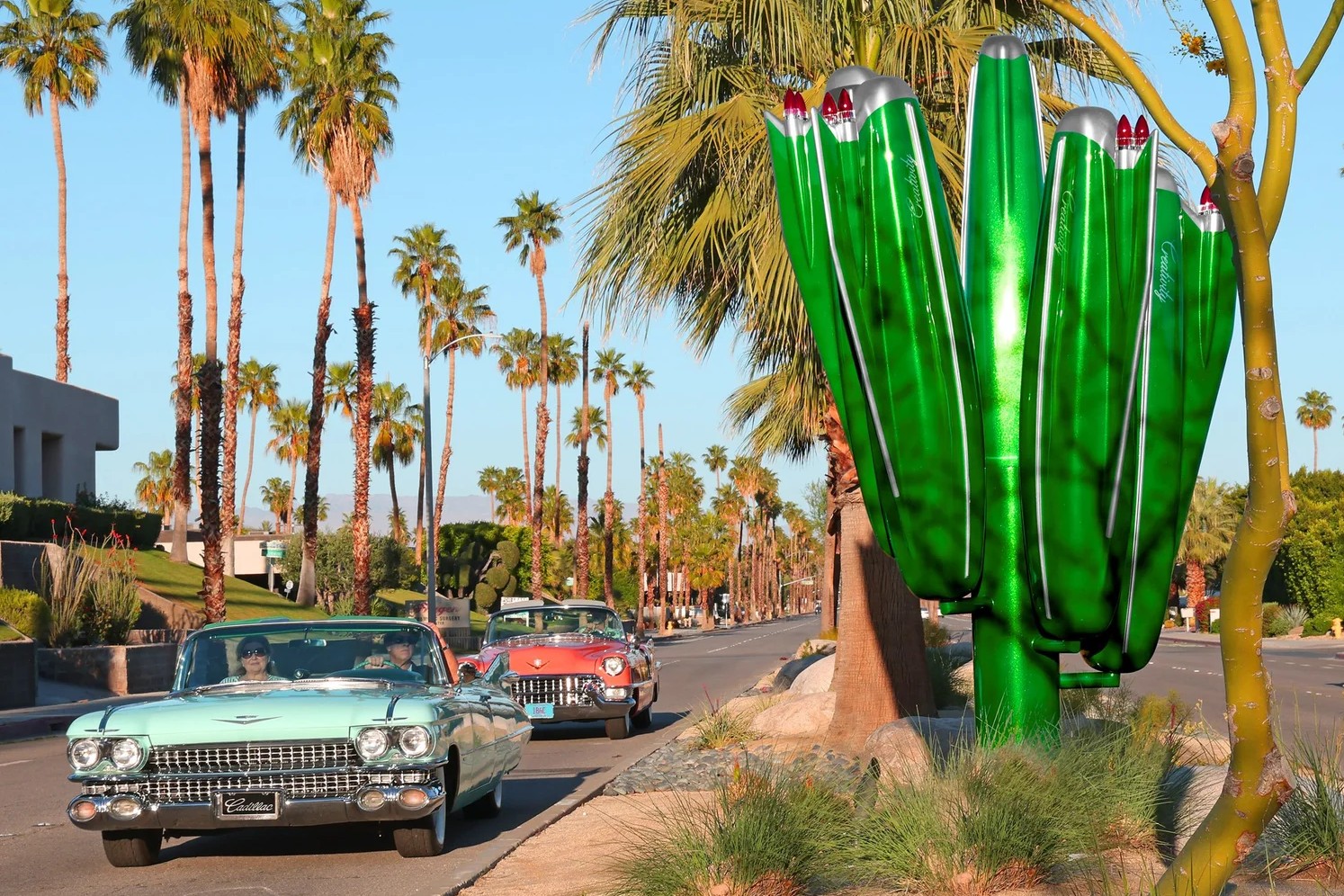
Another Cadillac aficionado with a penchant for punny names is Roger Reutimann, a Swiss sculptor who was commissioned by the City of Palm Springs (California) to produce what the industry calls “public art.” Reutimann’s vision resulted in the installation of vertical sculptures scattered between the Palm Springs Airport and downtown Palm Springs that reference both local flora and Detroit iron, the latter being the most iconic American automobile from the 1950s: the 1959 Cadillac.

Though the Cadillac was a looker from all sides, it was the derriere that has inspired so many fans—Reutimann included. He used the fins and bullet-shaped taillights to “evoke the appearance of cactus spines and nocturnal blooms” that illuminate at night. These automotive-inspired sculptures are constructed in steel and fiberglass using the very same processes used on the cars, such as powder coating.

Thanks to Reutimann’s creativity, Cadillactus won the “prestigious” CODAworx People’s Choice Award in 2024, reflecting a “synthesis of sculpture, design, and engineering.” Say, wasn’t that Cadillac’s tagline several years ago?

This Ford T-bucket was built during the 1990s utilizing California Custom Roadsters (CCR) kit components consisting of a 1923-style fiberglass body, boxed chassis, suspension, and interior. Power is provided by a recently installed 390ci FE V8 that has been bored .030″ over and fitted with an FE Power intake manifold adapter, a tunnel ram intake, and a pair of Edelbrock four-barrel carburetors, and it is linked to a C-6 automatic with a cooler and a Lokar shifter, while the Chrysler rear end has a limited-slip differential. The car rides on modified suspension with a suicide front setup using a tubular drop axle, haripin radius rods, and disc brakes, while the rear end uses ladder bars, a Panhard bar, and adjustable coilovers. Staggered Cragar S/S wheels and wheelie bars were also fitted, while the body is finished in black over a black vinyl interior with a wood-rimmed steering wheel, a programmable tachometer, and VDO gauges. This T-bucket was purchased by its current owner in 2024 and is now offered on dealer consignment with build/refurbishment records and a clean Florida title in the owner’s name that lists the car as a 1923 Ford convertible.

The Model-T-style fiberglass body is finished in black and features a single door, a fixed windshield with chrome support rods, and a short pickup bed with an upholstered black vinyl cover and sequential LED flame taillights.

Chrome 15″ Cragar S/S wheels are mounted with 26×8″ front and 29×15″ rear Mickey Thompson Sportsman S/R tires. CCR-sourced suspension components consist of a drop axle, a transverse leaf spring, chrome shocks, and hairpin radius rods up front, while ladder bars, adjustable coilovers, and a Panhard bar are utilized out back along with a set of sprung wheelie bars. Braking is provided by ventilated front discs and rear drums.

The cockpit houses a CCR drop-in seat kit upholstered in black vinyl that extends to the interior surround and the door panel. The body-integrated floor is overlaid with black carpeting and additional features include a floor-mounted Lokar shifter with a skull knob as well as a pair of dash-top turn signal indicators with amber skull lenses.

A row of switches mounted along the bottom front of the seat below the driver control the fan, parking lights, headlights, starter, fuel pump, and ignition.

The four-spoke steering wheel programmable 10k-rpm tachometer with a shift light are mounted on a chrome column, and a VDO 110-mph speedometer with matching auxiliary gauges are mounted in the dashboard. The digital odometer shows 6,500 miles, approximately 100 of which were driven under current ownership.

The 390ci Ford FE V8 was installed under current ownership at Southpoint Auto Body of Ft. Myers, Florida. It has been bored .030″ over and fitted with an FE Power intake manifold adapter, a Hi-Ram-style intake manifold, and a pair of four-barrel Edelbrock carburetors topped by polished velocity stacks, round air filters, and Outerwears pre-filters. Additional equipment includes Edelbrock Classic Series valve covers, an electric cooling fan, a CVR electric water pump, a flexible stainless-steel radiator hose, a chrome alternator, and exhaust headers flowing into short side pipes with turned-out, slash-cut tips.

The C-6 three-speed automatic transmission is equipped with an aluminum heat-sink cooler, while the Chrysler rear end uses a limited-slip differential.

The car is titled by the number T8904452 that is stamped on a reproduction Briggs body number tag affixed to the top of the left front frame rail.

This belly tank lakester was built decades ago and is equipped with a non-running Ford flathead V8 fitted with quadruple carburetors. A Ford transmission is also installed, and the car rides on a tubular steel chassis with 15” wire wheels, a drop front axle, front disc brakes, and a rigidly mounted rear axle with drum brakes. Inside, an unpadded seat is positioned behind a steering wheel and gauges. The seller notes that the non-running project could be displayed as wall or ceiling art or as the centerpiece of a large glass-topped table; the seller wanted to display it on the roof of his garage, but his municipality’s building codes restricted the choice. Recommissioning work would be required to operate the vehicle again. Acquired by the seller in 2024, this custom lakester is now offered in Austin, Texas, on a bill of sale.

The seller believes that the aircraft fuel drop-tank was repurposed into a lakester in the 1940s or 1950s. Mounted to a steel-tubing chassis, the bodywork is painted orange and accented with various decals. The 15” wire wheels are wrapped in older whitewall tires. Braking is handled by front discs and rear drums.

The cockpit features an unpadded seat, a steering wheel, and non-operational gauges.

The non-running flathead V8 is from a 1932 Ford, according to the seller, who also believes the transmission is from a Ford, and that the rear end is from a more contemporary vehicle. Quadruple carburetors are installed over a quad intake manifold.

Uninstalled spare components include a single carburetor and intake manifold setup, a radiator, exhaust components, and other miscellaneous parts.

The vehicle is not legal for road use and carries no title or registration. It is being sold on a bill of sale.

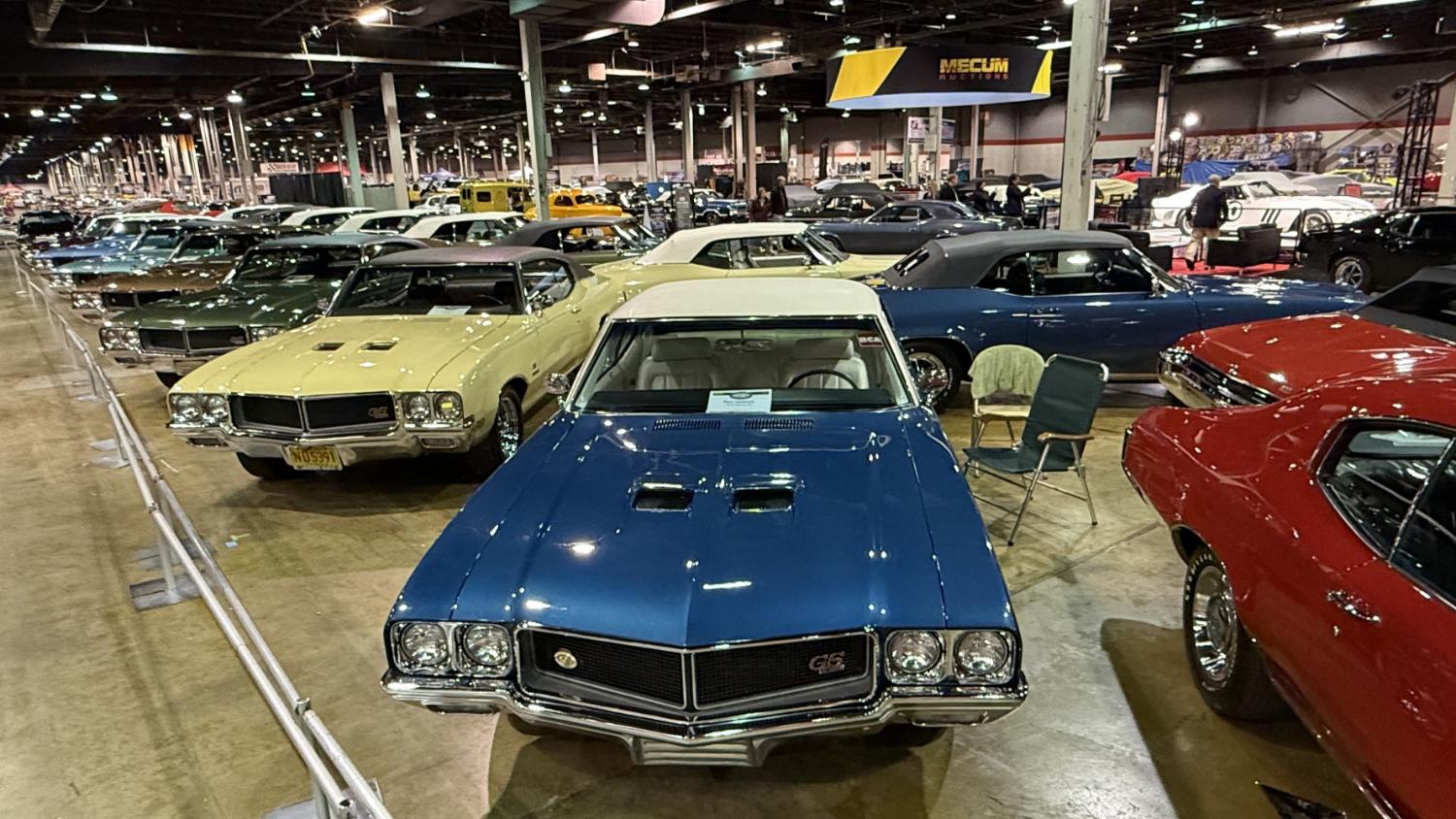
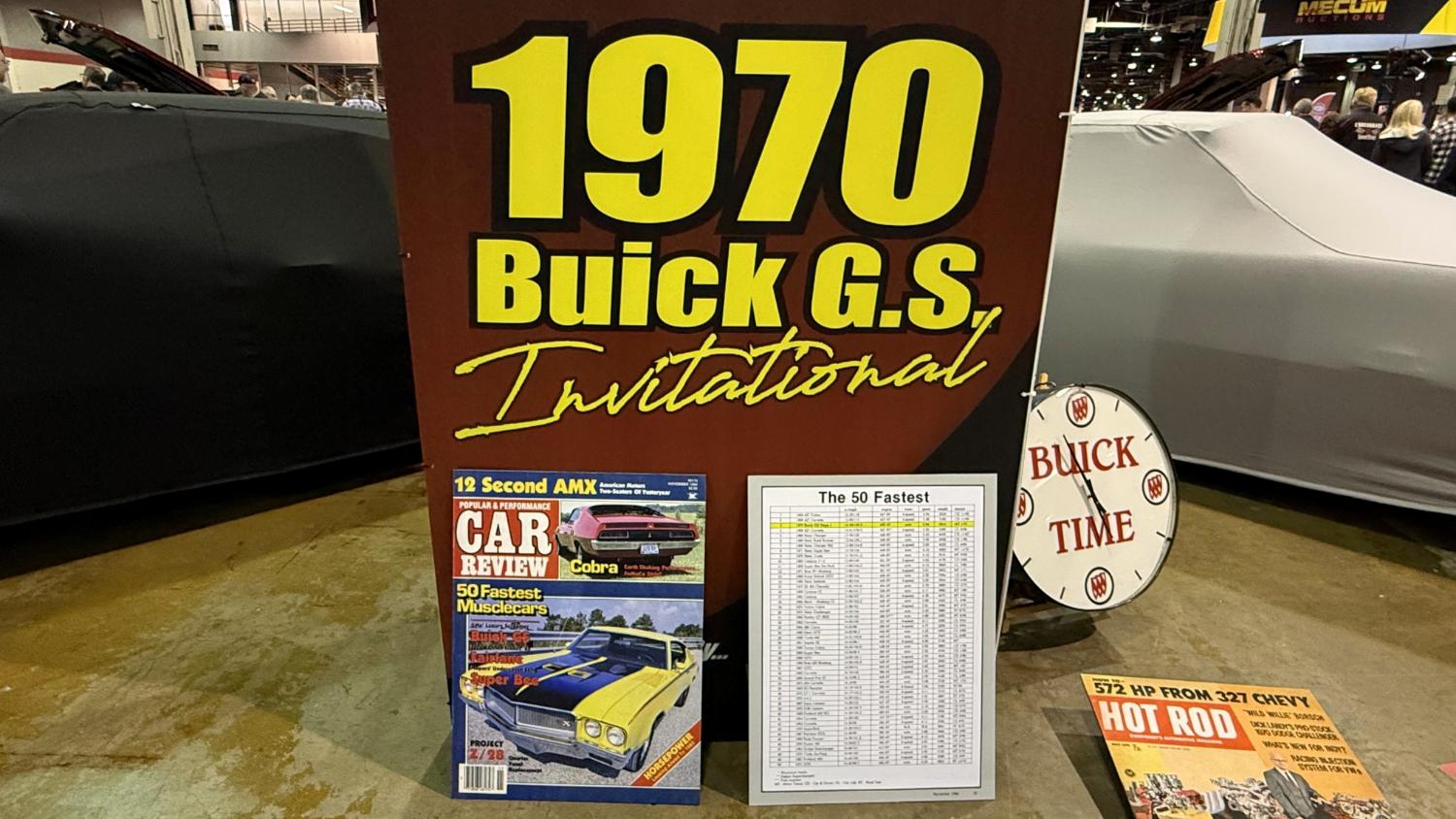
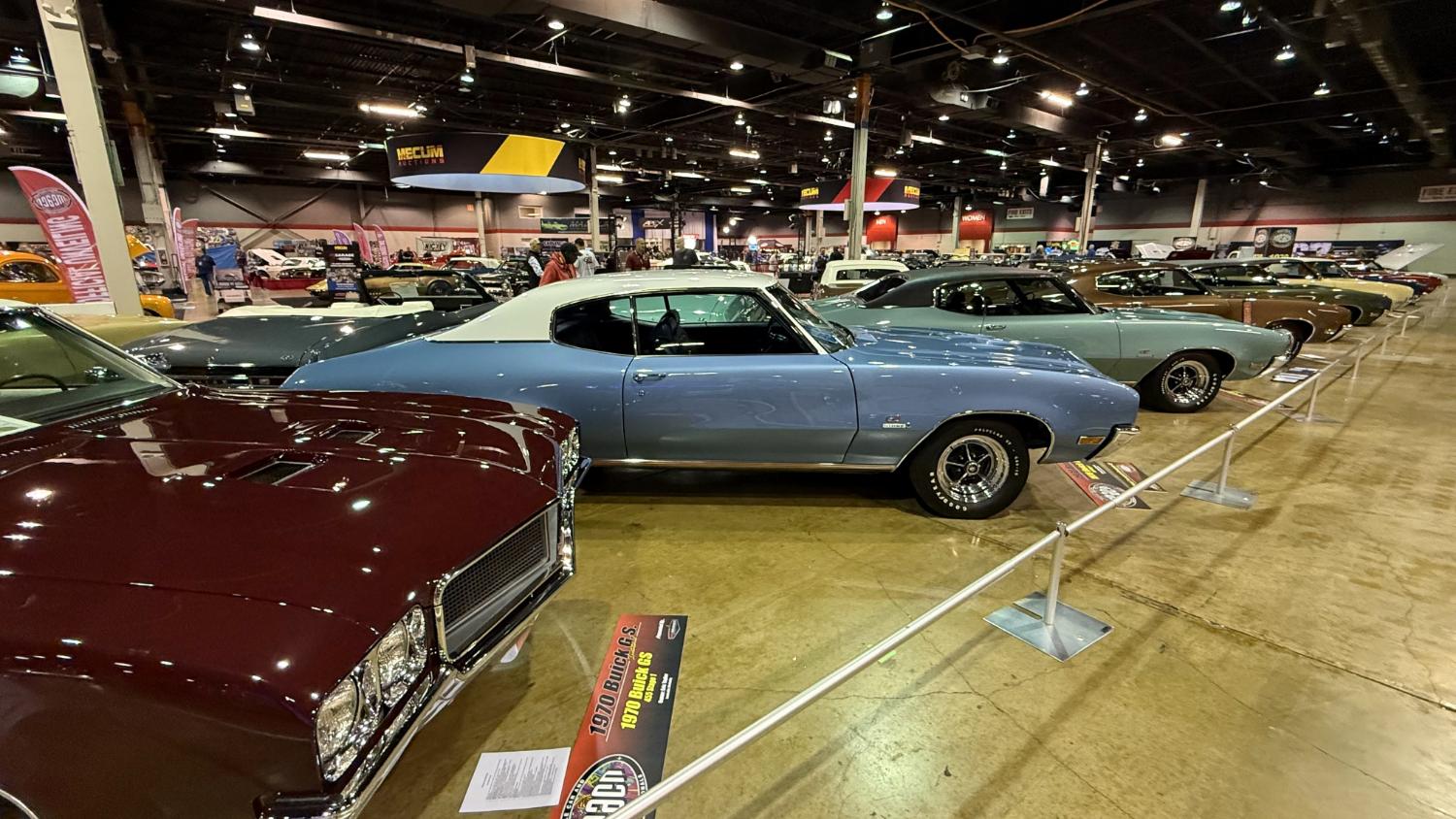
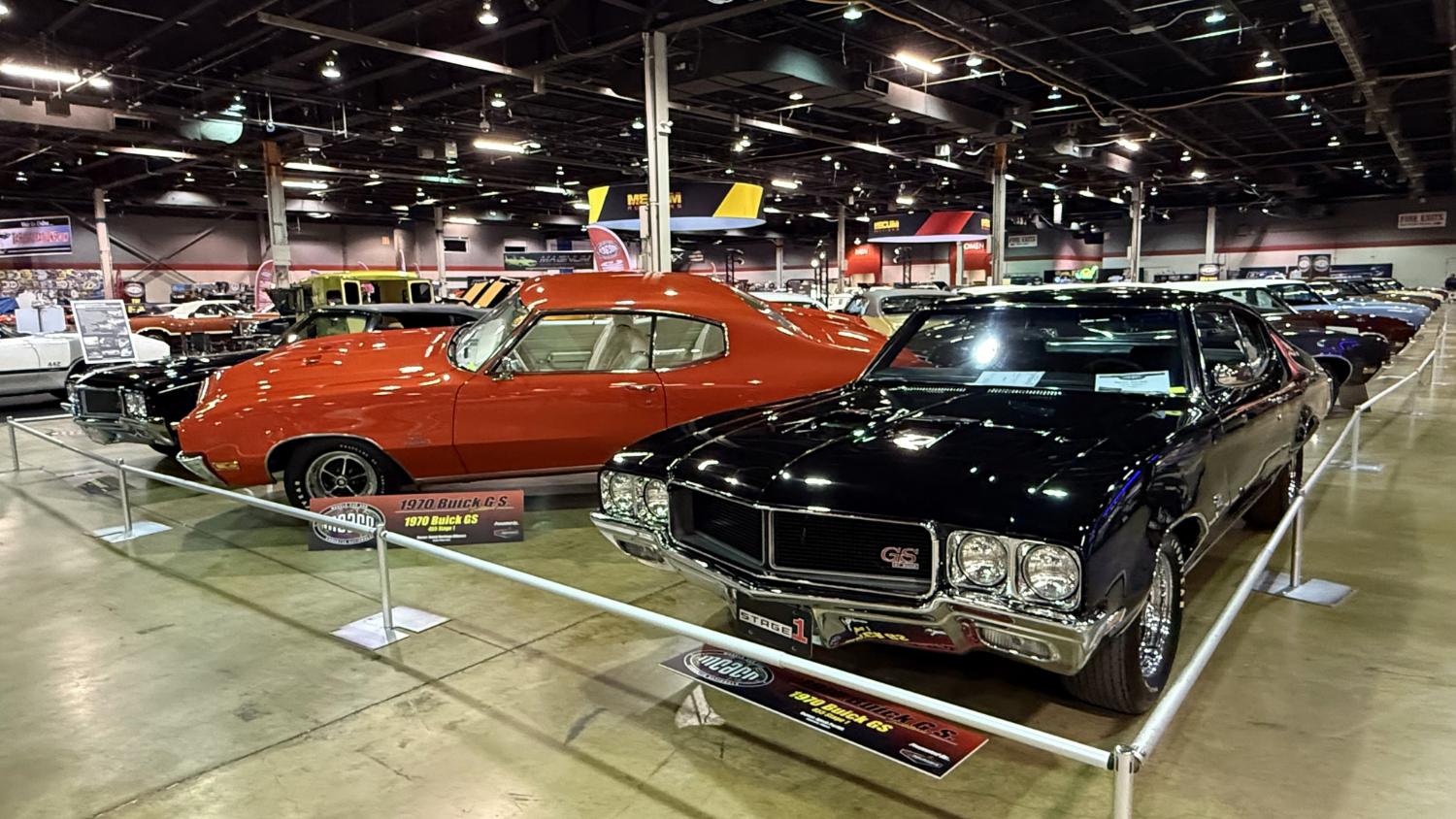
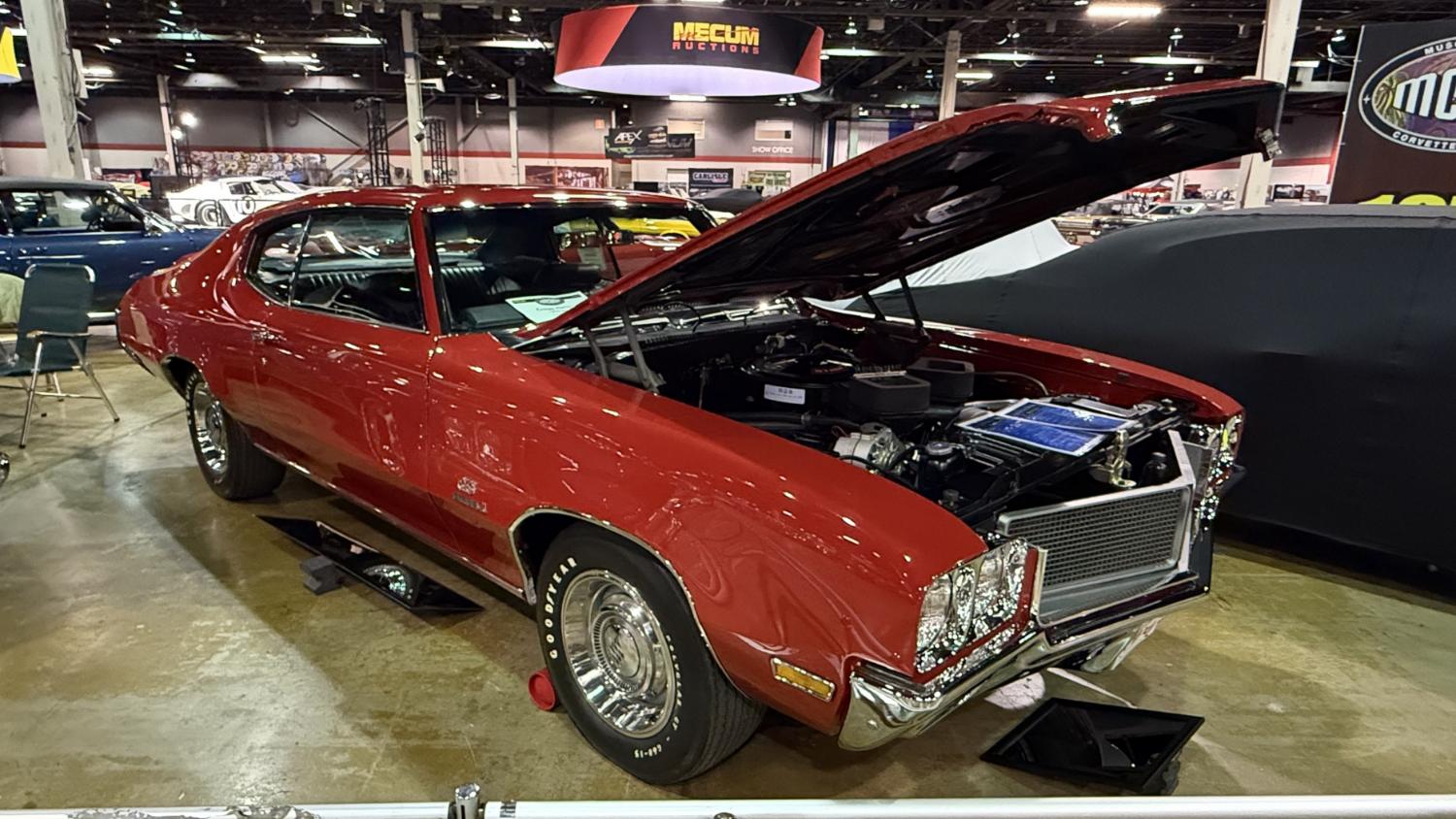
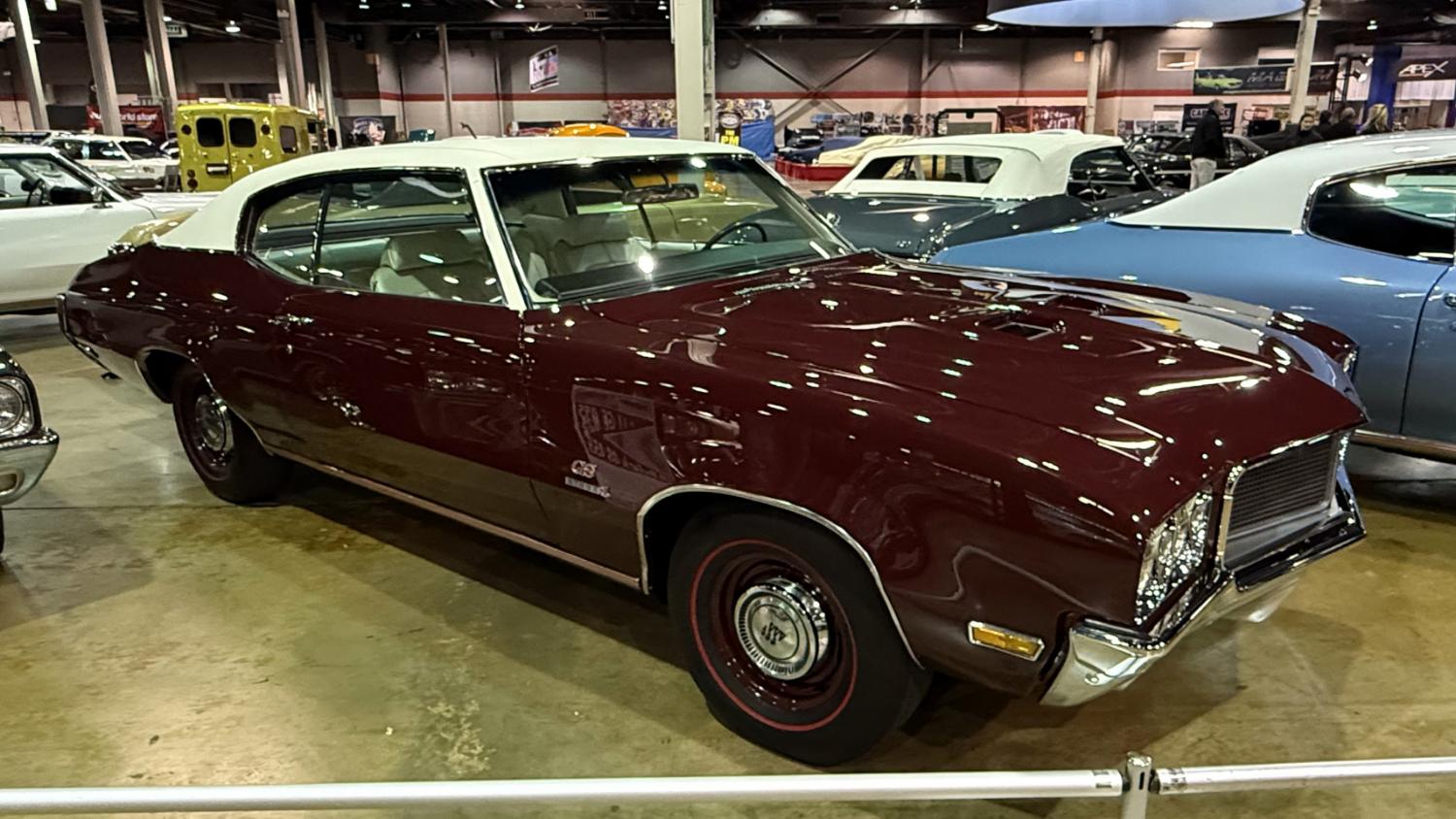
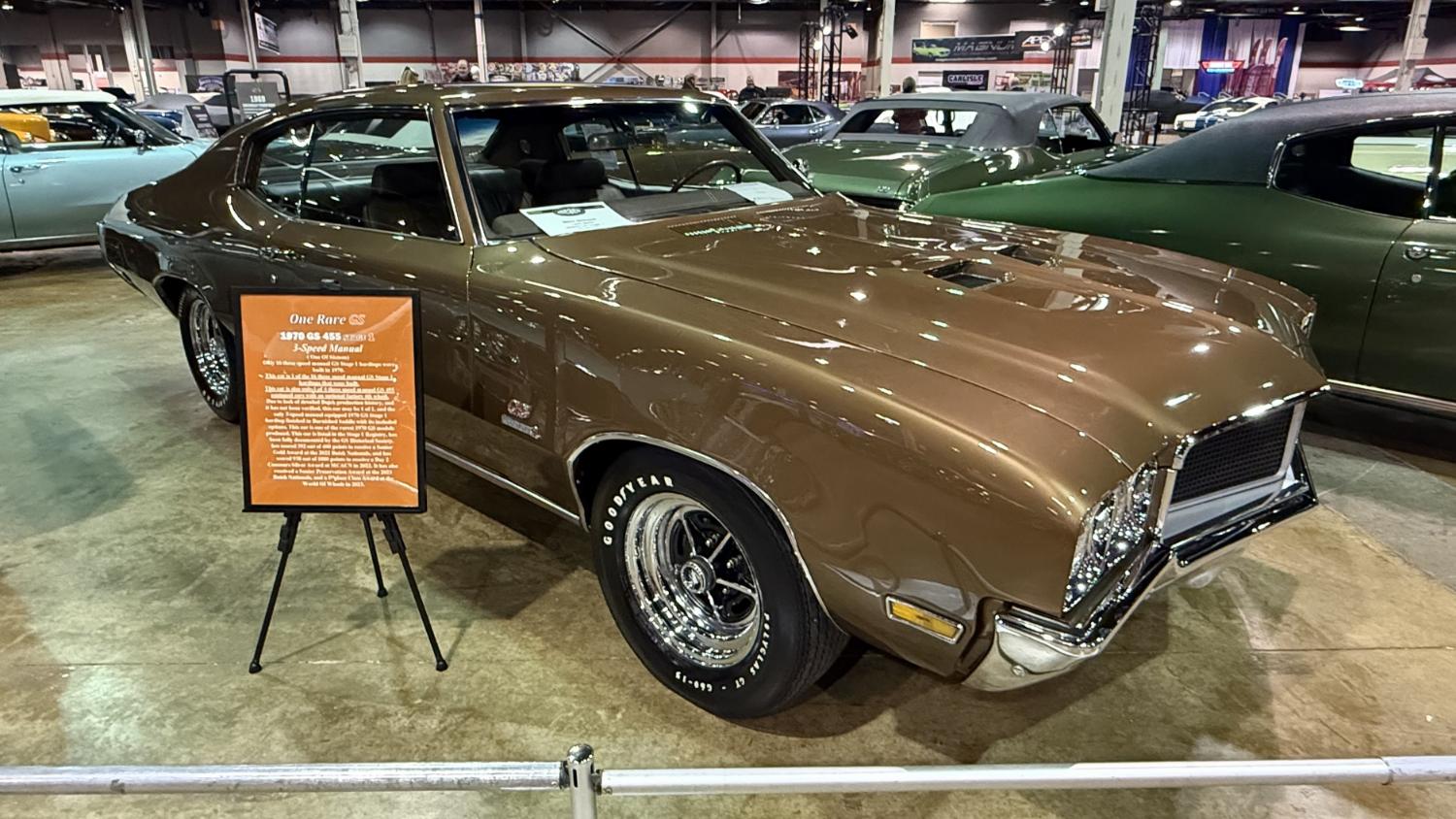
Dr. Ajesh Parikh is the hard-working guy who has the pleasure of assembling Buick displays at the Muscle Car and Corvette Nationals past and present. For 2025, he went back to basics, organizing what’s generally considered the high point of Gran Sport production: 1970 GS 455.

For 1970, the A-body Gran Sport series was reshuffled. The former GS 350 became the GS, and the introduction of the 455 V8 led the GS 400 to become the GS 455. For the latter, the Stage 1 option was available, and cars so equipped received Stage 1 badges replacing the 455 on the front fenders.

As you may know, Stage 1s were a word-of-mouth affair, a car not given much notice except by those who bore witness to them beating more substantial (by reputation) machinery. After a Hemi vs. Stage 1 drag race by Car Review magazine in 1986, the cat was out of the bag, but not without controversy. That controversy continues today in social media, and it will likely continue until the end of time.

The cars above and below are all 1970 GS 455s and Stage 1s, which could get boring after awhile if not for the good doctor having the fortitude to find a broad selection of colors and equipment to keep things interesting. After viewing these MCACN pics, perhaps you will find lust in your heart for one?

Note the monotone white pearl interior on the Fireglow Pearl Stage 1, which was a custom show car during the 1970 model year’s introduction.
You don’t see many Stage 1s with poverty caps and trim rings.
Here’s a pretty GS Stage 1 with poverty caps sans trim rings.
By far the most popular Gran Sport color for 1970 was Burnished Saddle. This car is one of 16 Stage 1 hardtops shifted by the standard floor-mounted three-speed manual.
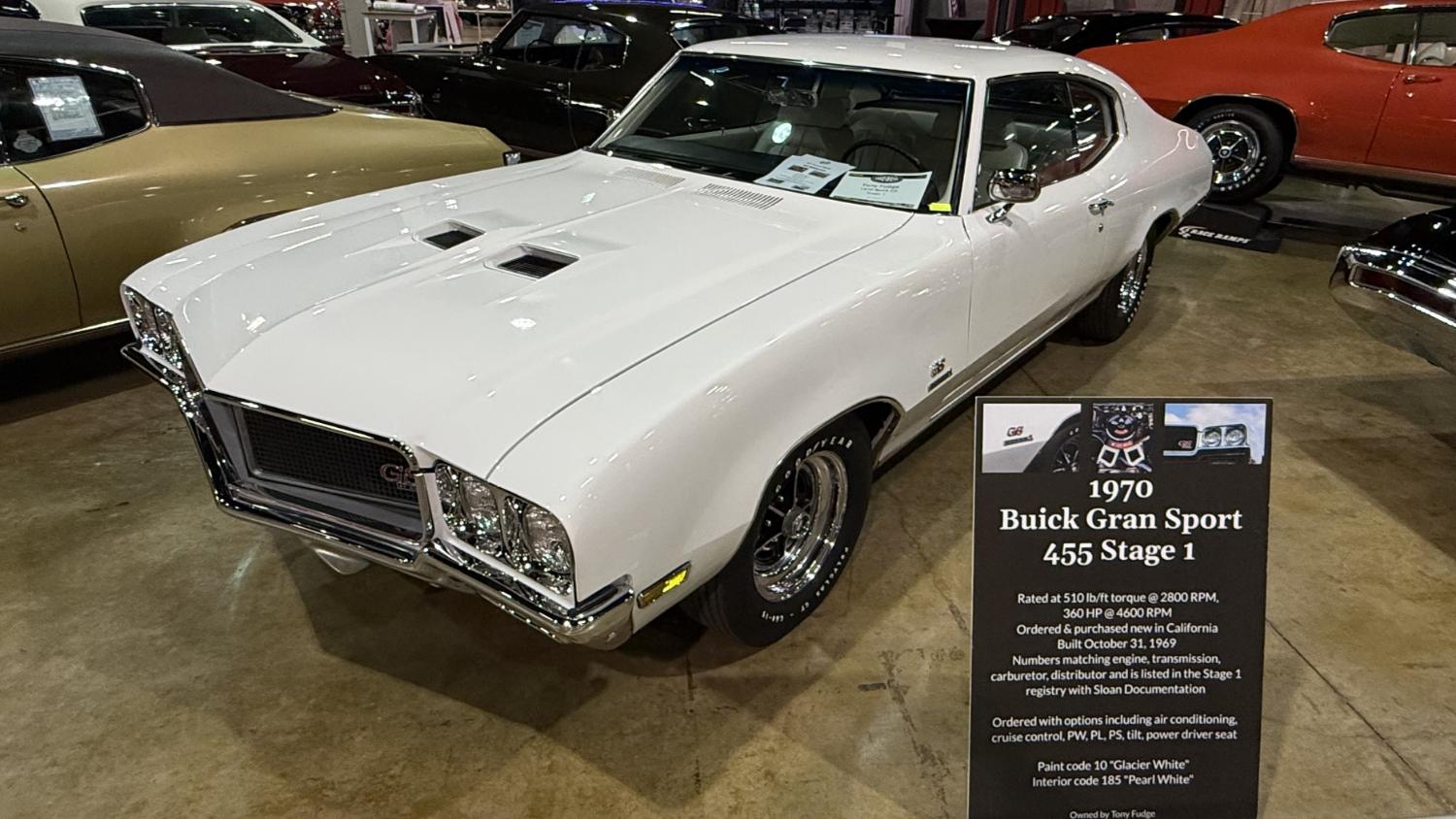
Only 2,465 Stage 1 hardtops were built, and it’s likely few wore this triple white color combo.
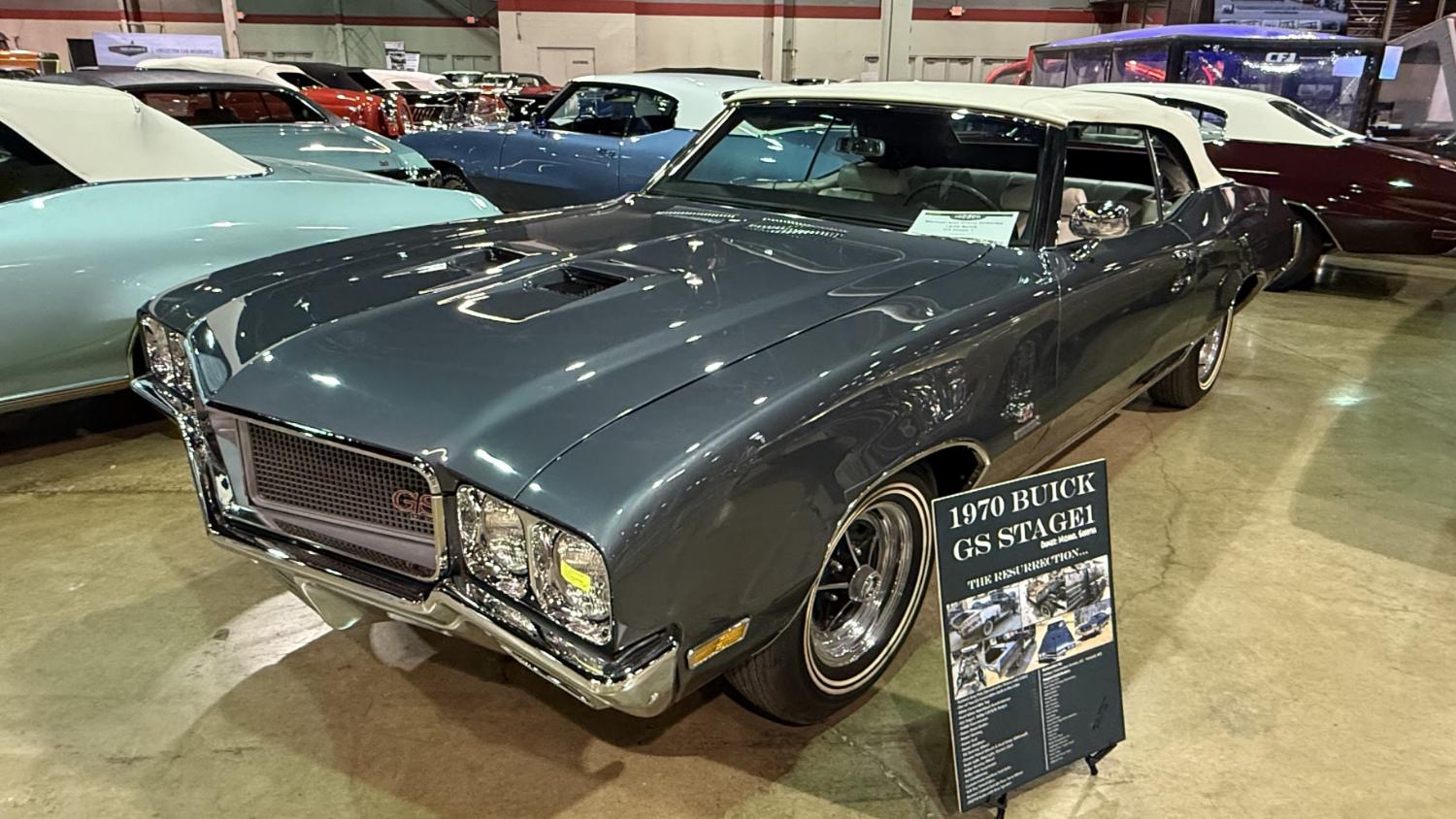
Out of 1,416 GS 455 convertibles, only 232 were powered by the Stage 1. This one is one of two special-ordered in a Riviera hue called Tealmist Gray.
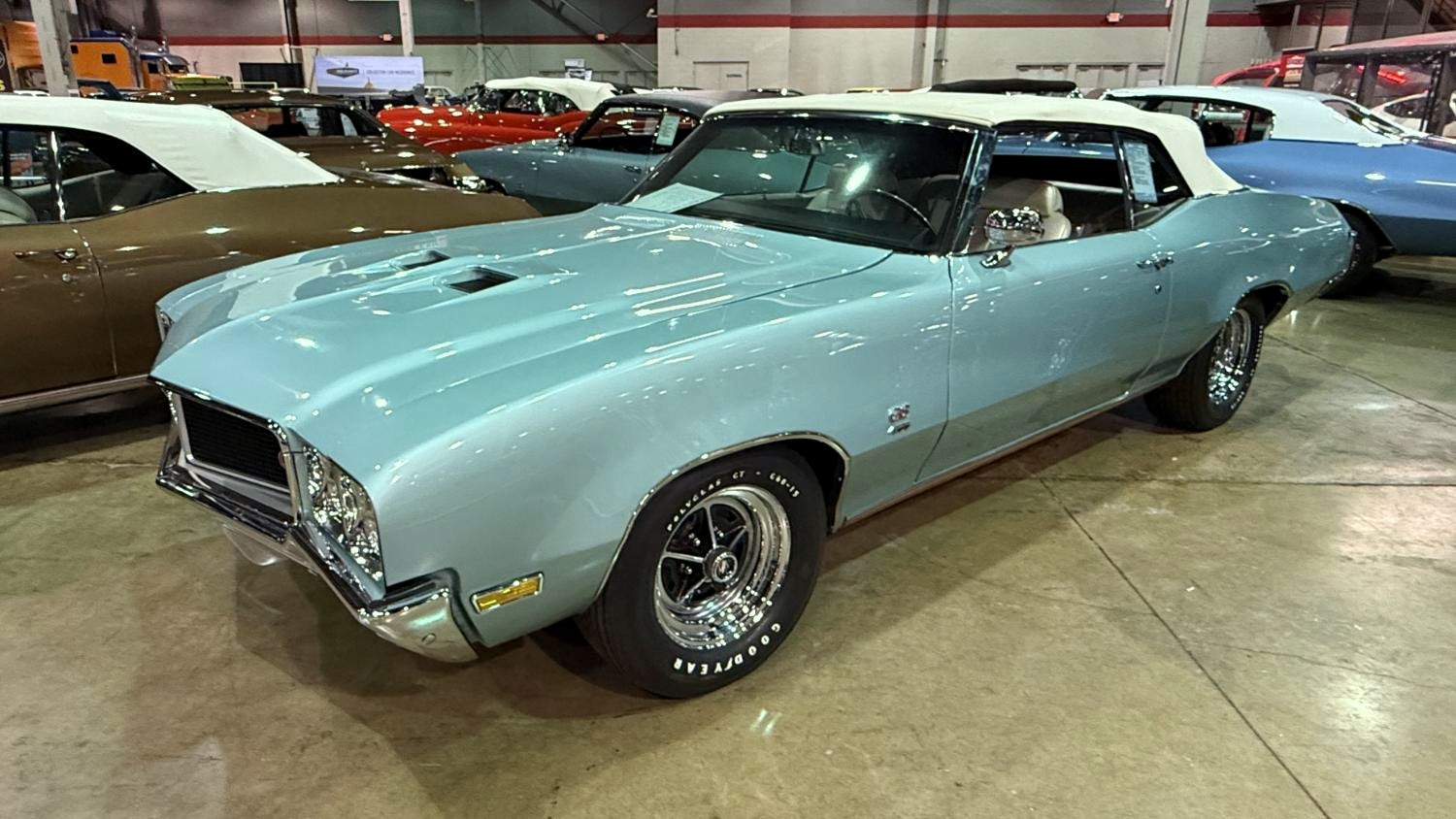
Though pretty to contemporary eyes, Aqua Mist was not a popular color for performance cars in 1970. Only 36 GS 455 convertibles featured this hue.
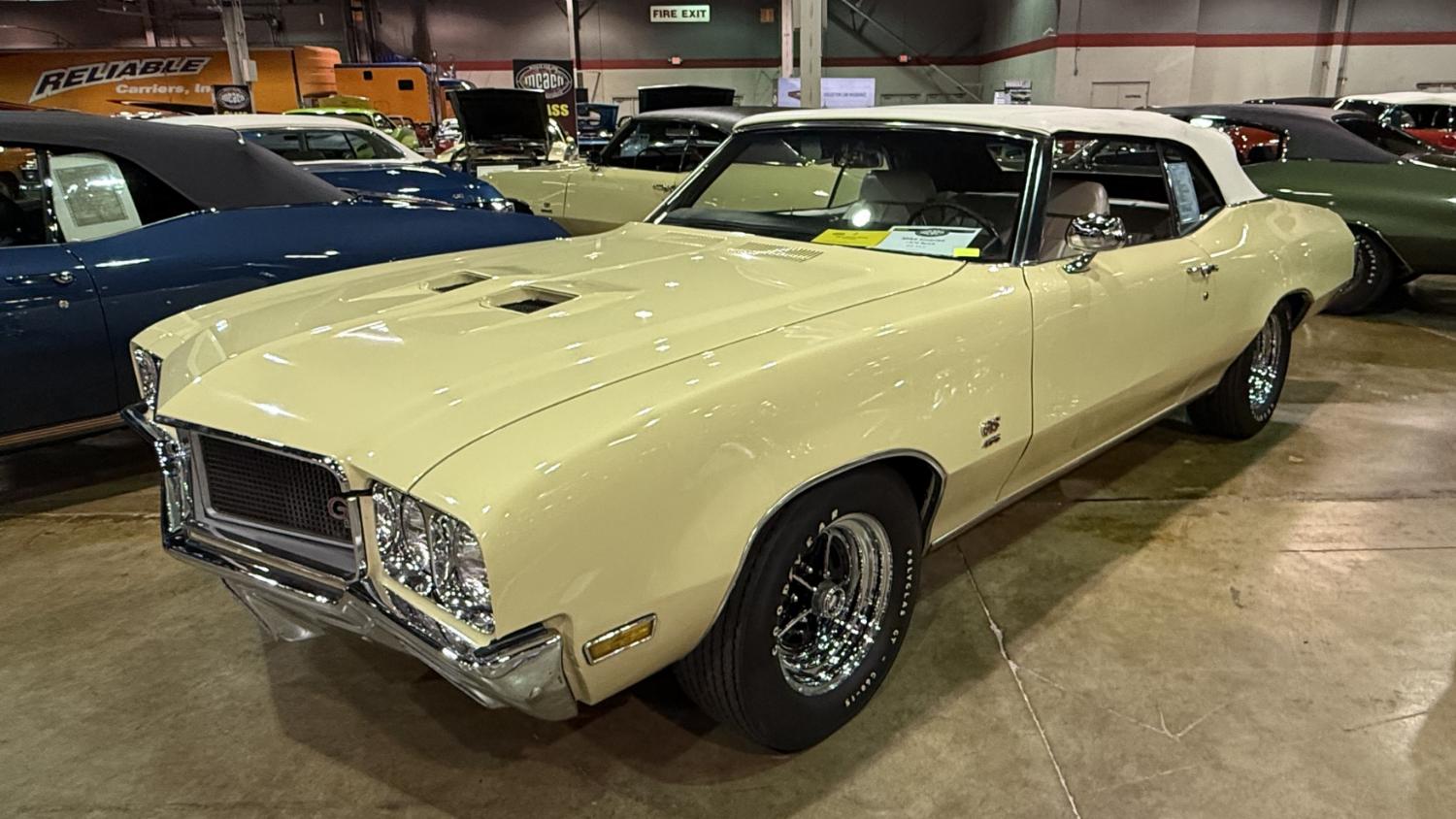
To contrast, Bamboo Cream may not have much appeal to many today, but it was one of the more popular colors for the 1970 Gran Sport. In the case of this GS 455 convertible, one of 136.
This 1970 GS 455 features a four-speed transmission but what makes it stand out is that it was special-ordered in a Cadillac hue called Dark Walnut.