Journal Classic Cars

Category Added in a WPeMatico Campaign

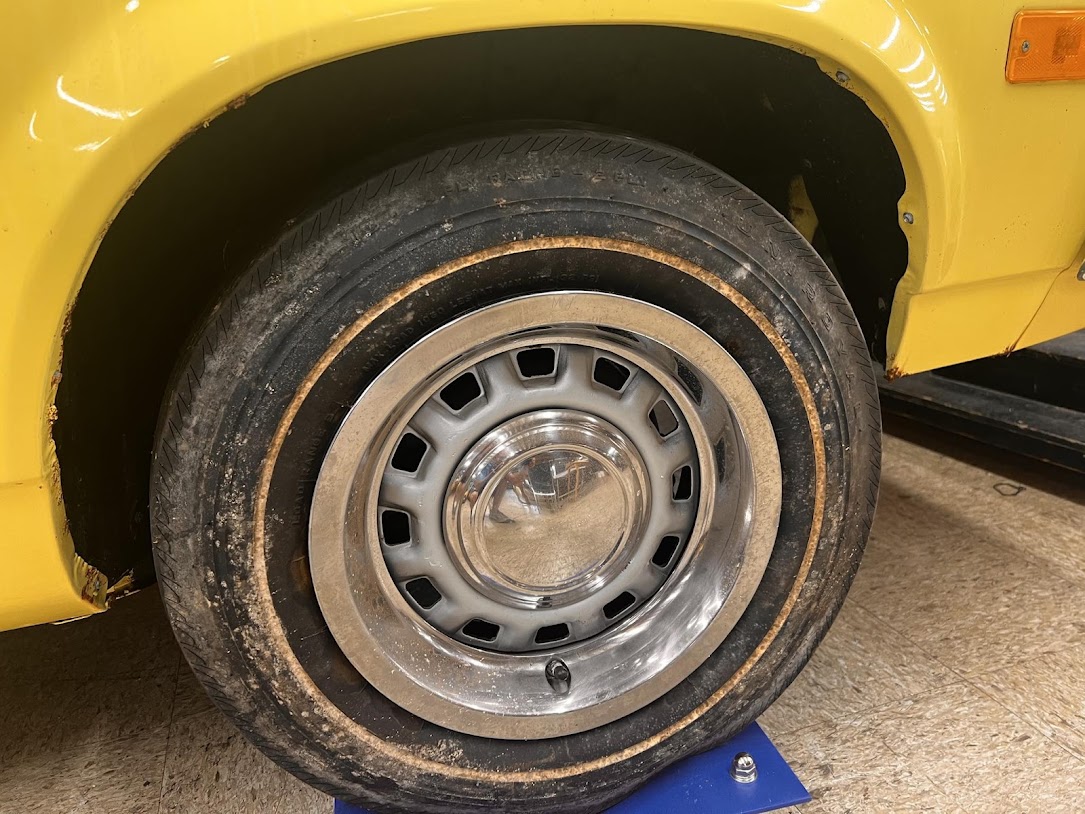
The problem with Chevrolet muscle cars is that many were performance packages, so you need documentation in order to prove their provenance. However, our Pick of the Day is one of the few hi-po Chevrolets that has its pedigree baked in the VIN. This 1972 Chevrolet Nova SS is listed for sale on ClassicCars.com by a dealership in Lenexa, Kansas.

Make a list of primo Chevrolet muscle cars and there’s a good chance documentation is the only way to prove it is what it is. 1961 409 Impala SS? Nothing will tell you whether it came with a 409 or the SS package. L78 1966 Chevelle SS 396? Sorry, you’re SOL—the VIN will tell you it’s a real SS, but nothing will tell you which version of the Rat motor was originally installed. Ditto the L79 1966 Nova SS. What about a first-gen Camaro Z/28? The data plate may hold a clue, depending on the model year. And the hallowed LS6 Chevelle? Nothing will give you info on whether it’s an SS 454 or which 454 it was built with, again unless you have original documentation.

The 1972 Nova SS doesn’t suffer from this problem. No, the Super Sport package is not reflected in the VIN, but the engine is. Nineteen seventy-two was the first year General Motors put the engine code in the VIN, which helps collectors to no end, and the Super Sport’s engine was an exclusive, so it wasn’t available on any other Nova. That means if you find a Nova with a “K” in the fifth character of the VIN, you will have an authentic Super Sport. The L48 350, which first appeared in the Nova SS in 1968, was now rated at 200 net horsepower after producing 270 gross horsepower the year before. Most of the drop had to do with the rating method rather than an actual drop in horsepower.

Through 1968, the model was known as the Chevy II, with the Nova and Nova SS being the highest trim levels. Starting in 1969, the Chevy II name was dropped and all were now known as Novas. From 1968-72, the Chevy II/Nova evolved little, featuring detail changes that would require a discerning eye to determine the model year. Starting in 1973, with federalized requirements for the front bumper, Chevrolet’s compact received its first restyle for its generation.

As such, the 1972 Nova SS is the last of the desirable Novas. However, this 1972 Chevrolet Nova SS  stands out for other reasons, as it has only 33K miles on the odometer. It has “the original window sticker, Protect-O-Plate, new vehicle inspection from the original dealer, maintenance logs, [and] owner’s manual, many historical and restoration photos will be included in the sale,” says the seller. Aside from its numbers-matching 350, it is equipped with a Muncie four-speed manual transmission, power front disc brakes, and Flowmaster exhaust system. Vintage aftermarket items include a column-mounted tachometer, Thrush headers, Lakewood traction bars and subframe connectors, Accel SuperCoil, Weiand intake, and Holley carb. It’s painted Golden Brown with a Light Covert cloth and vinyl bench seat—can you think of a more 1972 color combo?

Sure, the big-block 396 often seems the way to go, but those weren’t built past 1970, and it takes a lot to prove that it’s real. This 1972 Nova SS requires little fuss and offers peace of mind that no other Nova SS can offer. For $59,900, isn’t it worth the peace of mind?

Click here to view this Pick of the Day on ClassicCars.com

Making one change can lead you down a slippery slope. Modifying cars is a great example. Say you want to lift your XJ Jeep Cherokee for a little more ground clearance. Once you raise it up about three inches, you realize your tires look a little wimpy, so you upgrade them to chunkier all-terrains. Those changes enable you to take on more challenging trails, which means you need to protect the body of your rig with a brush guard and rock sliders, and on and on and on. Whoever altered our Pick of the Day, a 1949 Packard Eight Station Sedan posted on ClassicCars.com by a private seller in Colorado, seems to have made that same rapid descent.

This Station Sedan (which looks an awful lot like a wagon) was recently restored inside and out, according to the seller. The bathtub-like exterior was repainted in the current cream color and accented with fresh chrome and new wood trim on the greenhouse, doors, and rear end. A new set of wide-whitewall tires makes sure this woodie can log miles for years to come.

The cabin also got some attention when the seating was reupholstered with brown vinyl and red, orange, and black plaid fabric inserts, which give this unusual vehicle a bit of an outdoorsy flair. Those colors also coordinate well with the brown dash and door panels, and tan carpeting. An automatic transmission and power steering add convenience to that style.

On the way to the bottom of the slippery slope of alterations, the seller made a major change under hood. Unlike many of its competitors, Packard was slow to offer a V8 of its own, instead carrying on with its straight-eight. That changed in 1955, by which time the Station Sedan had been out of production for five years. Luckily, this ’49 was upgraded with a 425ci V8, albeit one from Cadillac.

Whether you call this 1949 Packard a sedan or a wagon, just know that if you want to call it yours, it’ll take $42,500.

Click here to view this Pick of the Day on ClassicCars.com

When Hyundai spun off Genesis as its standalone luxury brand, it had capital, resources, and expertise to draw upon, but none of those guaranteed the upscale division’s success in a space populated by juggernauts such as Mercedes-Benz, Audi, Lexus, and BMW. Genesis has done something (actually, a lot of things) right because 2025 marks its 10th anniversary. It’s also brings a refreshed G80, which has new exterior and interior styling as well as updated technology. I recently spent a week in the flagship model of the range: the G80 3.5T Sport Prestige.

As its name implies, the 3.5T Sport Prestige comes equipped with a 3.5-liter V6 engine, which has twin turbos that boost output to 375 horsepower and 391 lb-ft of torque. Like the rest of the G80 range, the top model has an eight-speed automatic and all-wheel drive.

The Sport Prestige suffix is also self-explanatory. It combines luxuries such as Nappa leather, carbon fiber trim, and a suede-like microfiber headliner with performance-focused features that include a head-up display, Sport+ drive, limited-slip rear differential, and rear-wheel steering. In its most basic form, the G80 3.5T Sport Prestige has a starting price of $77,000. My test car’s optional Cavendish Red paint and NFC card raised its as-tested price to $78,930.

This year’s mid-cycle refresh updates the front and rear fascias. Like its 2025 GV80 SUV sibling (which we reviewed here), the G80 gets upgraded headlights with Micro Lens Array technology that’s essentially designed to provide better illumination without being a nuisance to other drivers on the road. Only the 2.5T models have new wheel designs, but all models now come with four-piston monobloc front brake calipers. Genesis made minor revisions to the G80’s rear end, stopping short of doing away with its crest-shaped exhaust outlets as it did with the GV80.

The 2025 G80’s interior revisions are much more noticeable, especially in the G80’s available Sevilla Red and Obsidian Black color scheme. Everything in front of the driver and shotgun passenger is new. Once separate units, the gauge cluster and infotainment screen have been combined into a massive 27-inch OLED display, which protrudes from a new dashboard. A revised steering wheel replaces the outgoing unit. The redesigned center stack houses a touch-sensitive panel for the HVAC controls and flows into an updated center console.

Over the past several years, I’ve tested multiple Genesis models, including the pre- and post-refresh versions of the G70, GV80, and second-generation G80. One of the many things that the brand has done right is not only make attractive vehicles, but vehicles with an immediate identity. When you see those Two-Line headlights or taillights, you know right away which brand of car they’re on. While not as visually singular inside, Genesis models look and feel worthy of their price tags, joining flashy modern tech with flowing lines, elegant materials, and soft-touch surfaces. On the road, they have the refinement and composure – as well as the power – expected from luxury vehicles.

All of those things are true of the 2025 Genesis G80. While it is an example of the brand’s characteristic strengths, its execution in certain areas does leave something to be desired. Yes, the OLED display is impressively large, but it was artlessly inserted rather than integrated into the gracefully shaped cabin around it. In most scenarios, the electronically controlled suspension did a fine job of insulating me from the road’s imperfections. However, no matter how cushy it happened to be, it couldn’t mask the weight of the G80’s wheels. More of the G80’s shortcomings became apparent once I tested out the “Sport” in “Sport Prestige” on curvy roads. They certainly weren’t from a lack of effort; Genesis threw a lot of software and hardware into making the G80 handle better. Think of it in terms of sports: A regular person might perform better with good equipment and the right shoes, but no amount of gear is going to give him or her the abilities and spirit of a natural athlete. Although the G80 3.5T Sport Prestige has ample power and easy-to-modulate brakes, it inherently lacks those crucial traits.

To learn even more about the 2025 Genesis G80 3.5T Sport Prestige and see it in action, watch my video review below.

Click above and watch our full video review on YouTube!

This video is sponsored by Legendary Car Protection. Car ownership today comes with high expectations and high risks. A well-designed Vehicle Service Contract not only protects your finances, but also ensures your vehicle receives the care it deserves – no matter how iconic, rare, or routine it may be. To explore tailored protection options for your specific vehicle, visit LegendaryCarProtection.com.

Well, that didn’t last long. Ram nixed the Hemi V8 from its half-ton truck lineup for 2025 in favor of standard- and high-output versions of its Hurricane twin-turbo 3.0-liter I6, but now comes news from Stellantis that it’ll be available on the 2026 Ram 1500.

Ram CEO Tim Kuniskis didn’t provide a noncommittal, sanitized quote about the reversal of course—he was blunt and brutally honest, saying, “Everyone makes mistakes, but how you handle them defines you. Ram screwed up when we dropped the HEMI—we own it and we fixed it.” Kuniskis added, “At the end of each month, we count sales to customers, not to statisticians or ideologues. Data be damned—we raise our flag and let the HEMI ring free again!”

If that’s the battle cry against forced induction and turbos being the replacement for displacement, then a ram’s head attached to a Hemi V8 is the movement’s Symbol of Protest.

Ram didn’t give the Hemi 5.7-liter V8 with the eTorque mild hybrid system a bump in output (which remains 395 horsepower and 410 lb-ft of torque), but it did couple the engine with a standard performance exhaust system and a 33-gallon fuel tank.

As popular as the Hemi is, it’s not the most powerful or capable engine in the Ram 1500’s arsenal. According to Ram, a 1500 with the eTorque Hemi has a payload capacity of 1,750 pounds and a towing limit of 11,470 pounds. The automaker’s consumer website shows the less potent Pentastar 3.6-liter V6 with eTorque has a higher max payload rating of 2,370 pounds. The base Hurricane I6 blows out 420 horsepower and 469 lb-ft of torque, and can transport up to 1,980 pounds of payload and tow as much as 11,550 pounds. Opting for the high-output Hurricane bumps the stats up to 540 horses and 521 lb-ft, although the payload and towing specs can’t match those of the Hemi.

You might not have to wait as long as you think to get a new Hemi-powered Ram 1500. The consumer website says, “Now available on select 2025 Ram 1500 models, the HEMI® V8 engine you’ve been craving is back. Go get it.” However, the official press release distinctly mentions the 2026 model and that the new Hemi trucks will be in Ram dealerships this summer. Either way, the Hemi is coming back to Ram’s light-duty pickup. Does this mean there’s a chance Dodge will offer the beloved V8 in the new Charger?

Sure, that’s a headline you’ve probably seen on many other websites, but here at The ClassicCars.com Journal, we try to offer a take that’s different from the usual tired cliché words and phrases such as “iconic” and “legend.” Nonetheless, Muscle Car Campy raises a valid question regarding Chevrolet’s LS6 Chevelle, the car that carried the highest horsepower rating in the era.

(Image courtesy of Muscle Car Campy)

Though the 1970 Chevelle SS 454 with the LS6 engine is not rare, there are several variations that are rarer than others. The quintessential version is red with Cowl Induction with black stripes, but that was not the standard configuration. If you ordered any Chevelle with the SS package (Z25 for the 396 or Z15 for the 454), you’d receive a domed hood, among other equipment. If you wanted the stripes, that was code D88, but if you wanted the ZL2 Special Ducted Hood Air System (a.k.a. Cowl Induction), the stripes were included. Many will agree that the latter was the most popular configuration, though there’s no way to support that with factory documentation.

(Image courtesy of Muscle Car Campy)

If you’re like me, you like stripes on a performance car, but there’s something to be said about a Chevelle Super Sport without the stripes—your eyes focus on it differently. To my eyes, the lack of stripes makes the Chevelle look ripped, like it’s wearing a shirt bursting at the seams.

Join Muscle Car Campy as he guides us through David Povio’s 4.10-geared LS6 Chevelle. Aside from featuring the standard domed hood without stripes, it is also a bench-seat, four-speed car, making it more distinctive than all the red and black Chevelles out there.

Imagine winning two brand-new cars – a 1969 Chevrolet Camaro and a 1969 Chevrolet Corvette – in a sweepstakes. That was a very real opportunity in late 1968 as a grand prize award at a Texas dealership. While our high-level internal research didn’t uncover the names of those who won the cars, hopefully one of our savvy readers will have information – or at least a recollection.

The inquiry came about because I was reviewing some artifacts left behind by a family member who passed away some years ago. One of them was a yellowed old newspaper – the Fort Wolters Trumpet, dated Friday, September 27, 1968. Jack Ferrill, of Jack Ferrill Chevrolet in Weatherford, about 30 miles west of Fort Worth, had reserved the entire page 8A for an advertisement about the “Super Sport Sweepstakes.” The prizes were laid out as follows:

1969 Chevrolet Camaro Corvette
  • Grand Prize: 1969 Corvette Coupe + 1969 Camaro SS Rally Sport Coupe + $1,000 cash
  • 2nd Prize: 1969 Impala SS 427 Sports Coupe + $500 cash
  • 3rd Prize: 1969 Chevelle Malibu SS 396 Sports Coupe + $500 cash
  • 4th Prize (50 Winners): Magnavox Townsman portable color TV
  • 5th Prize (6,500 Winners): Kodak Instamatic Hawkeye R-4 camera

At the time, Ferrill’s dealerships were offering a $1,500 discount on all 1968 Chevrolets – the newer models were landing, after all. The fine print said that entries (for which no purchase was required) were due November 9, 1968, and winners would be notified by December 15, 1968.

I did find out that other dealerships had the same promotion, so this was a bigger event than just a Jack Ferrill marketing tactic. One was W&J Chevrolet in North Canton, Ohio, which ran an ad in the Sun on September 25, 1968. Another was House Chevrolet Co in Silverton, Texas, which ran an ad in the Briscoe County News on September 19, 1968. They were collectively pushing this promotion pretty hard at various dealerships around the country.

1969 Chevrolet Camaro Corvette

Being a numbers geek, I had to crunch the values of the prizes at stake. As we would have expected, the cars ranked in values from high to low in order of prize hierarchy. The grand prize winner received about $8,209 worth of vehicles and $1,000 in cash. The Magnavox televisions (quantity of 50) and the Kodak cameras (quantity of 6,500) were big-ticket items at $79 and $40 each respectively. The cameras alone came out to $260,000 in prize winnings.

So, the total? $280,828 in January 1969 dollars, which comes out to $2,530,567 in 2025 dollars.

Yeah, this was a pretty big deal – which makes me wonder if any such giveaway has been attempted prior or since. Incidentally, I did come across a website that mentioned something about Jack Ferrill’s dealership going bankrupt by 1970. Oh, and along the way, I learned that the word Magnavox is Latin for “great voice.” I love these little investigations.

So, where are those sweet Super Sports today?

When I entered the world of motorcycles and began to shop for my first one, I found it difficult to keep track of model names because almost nothing was memorable—it’s easier to remember “Impala” over “Z400.” Yet today it seems there are so many awful car names out there that I’d rather settle for something uninspired and alphanumeric.

Why follow a naming structure from 100 years ago?

Look at pre-war American cars; they started off being uninspired. Model T, Series 75, and the like were typical, though model names did exist (Studebaker being a fine example with the Dictator, Commander, and President—notice the theme?). In the 1950s, names began to take center stage with most brands, often invoking the image of a fancy hotel, a sunny island or far-away place, an animal, or anything that could be considered exotic. Sometimes they were made-up names, but nonetheless, they invoked an image.

Was this better than the Caddy that zigs?

More recently, we’ve had to bear Detroit’s misguided attempts at thinking a name inspired by European automotive companies would make up for quality or dynamic misgivings, such as J2000 (Pontiac) and 400 (Dodge), but Detroit was able to sort itself out as both horsepower and quality increased—that is, until Cadillac went with CTS, SRX, etc. and then CT5, XT5, etc.

Still, none of that is as bad as several of the names applied to car models today. I blame the trend on the Volkswagen Touareg. Does it make me look up what a Touareg is? Sure (they’re nomadic people from North Africa), but I don’t want to have the indignity of telling the car lot guy, “Mine’s the Touareg.” Since then, there’s been a rash of horrible car names. The culprits tend to be European—and Miuras they’re not. I don’t want to fall into the trap of being Ameri-centric and demanding all car names match my sensibilities, and I certainly understand the skill needed to come up with a name that works for most markets (though different markets sometimes have different names), but why is there a trend towards stupid names that don’t help the brand?

One of the dumbest names ever is the Toyota bZ4X. Thankfully, it’s now just bZ, which somewhat helps. (Image courtesy of Wikipedia)

Here’s a list of the current culprits:

  • Alfa Romeo Stelvio was named after a mountain pass in Italy, but it sounds like a Nescafe pod.
  • Bentley Bentayga was inspired by a rock formation in the Canary Islands, yet it comes off as too obscure and disconnected from the brand.
  • Lamborghini Revuelto, like many Lamborghinis, was inspired by a fighting bull, but the word can mean “scrambled” (eggs) in Spanish.
  • Maserati Grecale’s name was derived from a Mediterranean wind, but Grecian Formula is what pops up in my mind.
  • Maserati Levante is another name for a Mediterranean wind. I appreciate the theme, but here in Arizona we have desert haboobs, which would be embarrassing to drive.
  • Rolls-Royce Cullinan makes sense to a point as it was named after the world’s largest diamond, but I had to look up the name while images of pelicans swirled in my head.
  • Volkswagen Tiguan appears to be a portmanteau of the German words Tiger (same in English) and Leguan (“iguana”). Say what?
1970 Buick Electra
Buick is said to be bringing back the Electra for a future EV model. (Image courtesy of General Motors)

We need more animals, like Ocelot and Komodo, or more inspiration and alliteration, like Honda Horizon. Wait…that was a Plymouth at one point. Can you think of some good ones?

Right now on AutoHunter, you can find this 26K-mile 2008 Dodge Challenger SRT8, which is #3,178 of 6,400 First Edition models produced. As the high-performance version of the Challenger, the SRT8 comes equipped with a Hemi 6.1-liter V8, which is paired with a five-speed automatic. Finished in Hemi Orange over a Dark Slate Gray leather and microfiber interior, this garage-kept Challenger SRT8 is now offered by a private seller in Minnesota with the original window sticker, service records, clean CARFAX report, and clear title.

2008 Dodge Challenger SRT8 front angle

The Hemi Orange body is accented with carbon fiber-style stripes on the nose and hood. Additional exterior features include black front and rear spoilers, fog lamps, high-intensity discharge headlights, dual hood scoops, power-folding and heated mirrors, an exposed fuel cap, and dual exhaust outlets.

2008 Dodge Challenger SRT8 wheel/tire combo

The wheel wells are filled with 20- by 9-inch forged aluminum wheels wrapped in 245/45 (front) and 255/45 (rear) Goodyear Eagle F1 tires.

2008 Dodge Challenger SRT8 interior

Inside the cockpit are a pair of heated Dark Slate Gray leather and microfiber bucket front seats and matching seating for three in the back. Comfort and convenience features include a power-adjustable driver’s seat, tilt and telescoping leather-wrapped steering wheel with integrated audio controls, universal garage door opener, power sunroof, GPS navigation, 13-speaker Kicker SRT audio system with amplifier and subwoofer, and front and rear center armrests.

2008 Dodge Challenger SRT8 gauges

Instrumentation consists of a 180-mph speedometer, 8,000-rpm tachometer, and gauges for the fuel level and temperature. The digital odometer shows 26,523 original miles, a figure only slightly above the 26,262 miles most recently logged on the CARFAX report from October 2022.

2008 Dodge Challenger SRT8 engine

Under the hood is a naturally aspirated Hemi 6.1-liter V8 that was factory-rated at 425 horsepower at 6,200 rpm and 420 lb-ft of torque at 4,800 rpm. A five-speed automatic with Autostick transfers the big Hemi’s output to the 3.06:1 rear end.

2008 Dodge Challenger SRT8 undercarriage

Traction, stability control and four-wheel anti-lock disc brakes keep this SRT8 from going STR8 into a ditch or tree.

2008 Dodge Challenger SRT8 rear end

The auction for this this 2008 Dodge Challenger SRT8 ends on Monday, June 9, 2025, at 11:30 a.m. (PDT).

Visit the AutoHunter listing for more information and a photo gallery

The idea of an affordable coach-built Italian sports car is just about a nonsensical statement. Add the name Alfa Romeo to the equation, and you may think there is no such car. Unbelievably, though, there is a classic coach-built Alfa Romeo that is not only affordable but also fun to drive and easy to live with on a daily basis. That car is our Pick of the Day – a 1970 Alfa Romeo Junior Zagato on ClassicCars.com.
The Alfa Junior Zagato is based on the Alfa 105 chassis made famous in the GT and GTV coupes of the 1960s and ’70s. It was penned by designer Ercole Spada, whose first design while at Zagato was the legendary Aston Martin DB4 GT Zagato. The Junior Zagato, introduced at the 1969 Turin Motor Show, was sold and marketed by Alfa Romeo. Alfa would build a total of only 2,618 total Junior Zagato cars over the car’s 7-year production run, making it a very rare 105 Series Alfa.
The best part of the Junior Zagato is that even though it is a coach-built Italian car, all of its mechanicals are the same as any other 105 Series Alfa, meaning the cost to run one of these special cars is the same as a 1974 Alfa Spider, yet it qualifies for most of the world’s top concours events, as it is a coach-built car.

The seller’s description of this Alfa Junior Zagato states it is a very well-sorted, long-term California car with numerous performance upgrades and benefits from expert care by a series of devoted marque enthusiasts. One notable past owner of this car is Ken “Mr. Alfa” Shaff, best known as co-founder of both Autoweek magazine and the California Mille rally (with fellow Alfa enthusiast and classic car legend Martin Swig).

The seller adds that this Junior Zagato was treated to extensive engine-out mechanical refurbishment work in 2019 done by Stewarts Automotive in Sacramento, California. Since early 2022 the car has been in the care of an experienced Alfa specialist and vintage racer, who expertly dialed it in to be a reliable classic tour car. According to the seller, the blue paintwork is in very good condition overall and is done to a level that encourages regular driving. They disclose there are minor cracks around the A-pillars, C-pillars and near the tailgate opening – something quite common on these cars.

The interior trim is said to be well-preserved and in good condition and features correct instruments, switchgear and cockpit fittings, though an aftermarket radio has been added.

I owned one of these cars many years ago and found it to be one of the most fun Alfas I have ever owned. It sounds amazing, has adequate power to be able to keep up with modern traffic and has incredible handling for the era. Although quite small, even my 6-foot-4 self found the Junior Zagato comfortable for hundreds of miles of driving. It drives as good or better than any Alfa GTV and looks like no other Alfa ever built. (It is said the Junior Zagato was the design template for the Honda CRX, which to me only adds to the car’s allure.)

Now for the best part. The Alfa Romeo Junior Zagato has always been the single most affordable entry into the world of coach-built Alfas, and this car – with an asking price of only $85,000 – represents a good deal on what sounds to be a fully sorted vehicle with an interesting ownership history.

Click here to view this Pick of the Day on ClassicCars.com

In the annals of American road rallies, we have had the Cannonball Run, which led to the One Lap of America. More recently, we have had the goldRush Rally, an event that’s in its 16th year. The 2025 Gold Tour had its kickoff several days ago and will run through June 8.

(Image courtesy of goldRush Rally)

The goldRush Rally bills itself as “a gathering of passionate individuals who share a love for luxury and the thrill of the open road.” Per the website, it’s synonymous with “opulence, adventure, and unforgettable experiences. Our world-renowned luxury and exotic vehicle rallies are more than just drives; they’re immersive journeys curated to leave lasting memories, forge lifelong friendships, and will have you coming back year after year.” As you can see, this is a different kind of rally, not so hell-bent on finishing first as much as enjoying putting exotics (really, anything) through their paces beyond the local Cars and Coffee meet.

On Friday, May 30, 2025, drivers left Beverly Hills for Las Vegas. Every day is a new stop, continuing on to Park City, Vail, Denver (alright, I lied—two days for that), Kansas City, St. Louis and, finally, Chicago. “This epic journey … showcases breathtaking landscapes, vibrant cities, and lavish accommodations.”

(Image courtesy of goldRush Rally)

There are three options for participants, which include hotel room, secured parking at all locations, luggage transportation, gifting suite, “The Gold Tour” gear, VIP entrance to all planned events, private lunches and dinners in select cities, and CIP entrance to all nightly entertainment and clubs, plus attendance to the awards ceremony and professional photography of cars and their drivers:

  • Team of two for the whole rally costs $23,000
  • Team of two, going halfway to Denver, costs $12,000
  • Team of two, going halfway starting in Denver, costs $12,000
(Image courtesy of goldRush Rally)

Considering this is “The Ultimate Luxury Lifestyle Automotive Rally in the USA” and the high bar of entry, chances are there will be several interesting vehicles driven by participants. If you live near a destination city and fancy yourself as an enthusiast for McLarens, Lamborghinis, Ferraris and more, it’s worth visiting www.goldrushrally.com to see how you can catch some Gold Tour action.

Barrett-Jackson, our parent company, is a sponsor of the goldRush Rally.