Journal Classic Cars

Category Added in a WPeMatico Campaign

As a car enthusiast, the first thing you probably think of when you see an attractive vehicle is how nice it would be to drive for fun or use on date night. You might be doing that right now because you laid eyes on our Pick of the Day, a 1928 Chevrolet Series AB National woodie wagon posted on ClassicCars.com by a dealership in South Dakota. But if you’re in a certain industry, you might also envision how great it would be for your business.

Introduced in 1928 as a replacement for the Series AA Capitol, the Chevrolet Series AB National was built on a longer 107-inch wheelbase and equipped with new hardware. According to GM Heritage Center archive materials, under the hood, that included new “invar strut” pistons, mushroom valve tappets, and a steel engine enclosure; new ball-bearing worm-and-gear steering, non-locking four-wheel brakes, and semi-elliptic shock absorber springs were also on the list of equipment.

The restored ’28 you see here has a different kind of hardware . . . or is that hardwood? The selling dealer states it has a “real wood coachbuilt body,” which nicely complements the beige cowl and hood, and the matching disc-style wheels.

Inside, all three rows of seats are upholstered in pleated black vinyl and covered by a ceiling made of wood slats that match the exterior.

Behind the tall radiator is a 35-horsepower 171ci OHV I4 that transmits its output through a three-speed manual gearbox and the rear wheels.

This woodie wagon looks like it was made for taking the family out for a leisurely drive or the grandkids to the local ice cream shop, but it could also be a great business vehicle. Think of how charming this would be as a shuttle at your vineyard, bed-and-breakfast, or wedding venue.

If you buy this 1928 Chevrolet Series AB National woodie wagon for $28,700, you’ll get a lot closer to making any of those ideas into reality.

Click here to view this Pick of the Day on ClassicCars.com

Statistically, the idea of a 1-of-1 car is cool. Outside of that, a one-off loses a certain amount of appeal because it will probably not be seen by the majority of car enthusiasts—in person, at least. Last November, we shared the news that Rolls-Royce made an extremely special Phantom Extended to honor the 60th anniversary of the James Bond film “Goldfinger.” Instead of being locked in a warehouse somewhere for its value to appreciate or parked in a mansion’s giant living room, the Phantom Goldfinger was put on display at the 2025 Concorso d’Eleganza Villa d’Este in Italy.

Every car manufacturer has customers, but when it comes to ultra-high-end companies such as Rolls-Royce, the people who buy its cars (particularly the special or unusual ones) become ambassadors of the brand. In fact, certain automakers require you to show up to some of their events with one (or more) of the cars you purchased if you want to obtain a build slot for one of their halo cars. The 007 fan who commissioned the Phantom Goldfinger, which is covered and packed with references to the 1964 movie, agreed to showcase it as part of Rolls-Royce’s celebration of 100 years of the Phantom.

The Phantom Goldfinger had some very special company on the Grand Hotel’s Mosaic Lawn by Lake Como. Rolls-Royce started the festivities with an opening parade that included a Phantom V, which is also rare (although much more common that the Goldfinger): Rolls-Royce built only 832 fifth-generation Phantoms. It also brought the car that inspired the Phantom Goldfinger: the 1937 Phantom III Sedanca de Ville that the villain Auric Goldfinger owned.

Rolls-Royce didn’t state if the Phantom Goldfinger’s owner drove it or had a chauffeur do it for him or her. The photos from the event don’t show anyone in a bowler hat or any headless statues, so we can make a highly educated guess . . .

Barrett-Jackson, The World’s Greatest Collector Car Auctions, is proud to sponsor the Mustang Club of America (MCA), the largest gathering of Mustang lovers on the planet. Let’s just say Barrett-Jackson’s love for Mustangs isn’t just deep … it’s V8-rumbling, tire-squealing, pony-powered passion!

Back in 2006 at the Scottsdale Auction, Ford roared onto the stage with a showstopper – the very first 2007 Shelby GT500, VIN 001. The hammer dropped on a bid of $600,000, with 100% of the hammer price benefiting the Carroll Shelby Foundation. That set a high-octane precedent for future charity sales and began a powerful tradition at Barrett-Jackson: using the thrill of the auction block to drive real impact for those in need.

Buster Posey’s 1967 Ford Mustang Eleanor Tribute Edition

Shortly after the special sale, the auction company joined forces with Ford and Shelby American to
unleash something truly special: the 2008 Limited Edition Barrett-Jackson Mustang Shelby GT. Dressed
in Barrett-Jackson’s signature black and red, only 100 of these head-turning coupes and convertibles
were built. Sold exclusively through Arizona Ford dealers, this rare stallion was a bold tribute to
performance, style and the energy of the auction block.

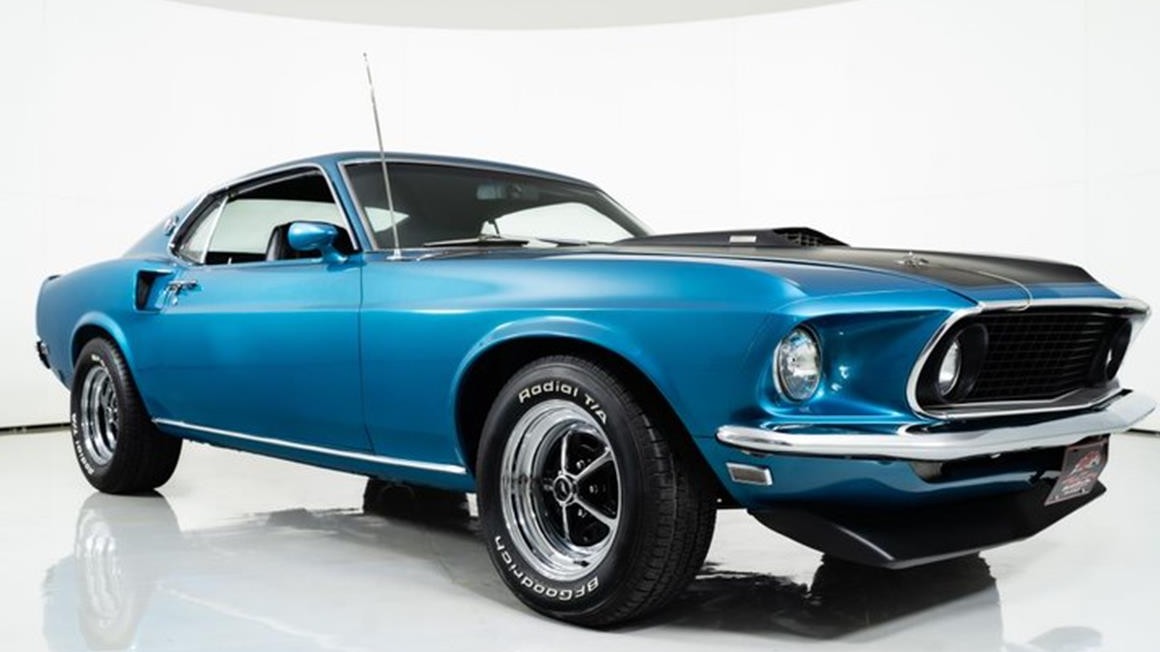
1969 Mustang Boss 429

Over the years, Barrett-Jackson has become a Mustang lover’s dream – it’s the place to enjoy a
Hot Lap in the new Dark Horse, see a special VIN 001 Mustang raise funds for charity, experience
the newest Mustangs revealed by Ford and Shelby American, and witness thousands of incredible
pony cars galloping across the stage. Among the showstoppers? MLB great Buster Posey’s 1967
Mustang Eleanor Tribute
that set a world auction record at the 2022 Scottsdale Auction, selling for a
cool $550,000. The following year, a stunning 1969 Mustang Boss 429 flexed its muscle and sold for
$605,000. And more recently, at the 2025 Palm Beach Auction, a custom ’69 Mustang with country
music star roots (it was once owned by Keith Urban) cranked up the excitement and sold for $176,000.

1969 Ford Mustang Custom Fastback formerly owned by Keith Urban

Barrett-Jackson’s enduring connection to the Mustang legacy is more than a shared history – it’s a celebration of American performance, heritage and heart. As its partnership with the Mustang Club of America continues to grow, Barrett-Jackson looks forward to creating more unforgettable moments,
from VIN 001 charity cars to limited-edition builds and star-powered classics, shared with passionate
Mustang enthusiasts everywhere.

This article was originally published on Barrett-Jackson.com.

Featured on AutoHunter is this 1977 Chevrolet Corvette, which is powered by an L48 350ci V8 paired with a four-speed manual gearbox, both of which are reportedly numbers-matching. Finished in Dark Red over a tan leather interior, this C3 is now offered by the selling dealer in Oregon with service records and a clear title.

The curvaceous fiberglass bodywork is covered in Dark Red paint. Exterior features include body-color urethane bumpers, pop-up headlights, body-color T-tops, tinted windows, door edge guards, chrome rocker panel trim, a flip-up fuel door, and dual exhaust outlets.

Every classic Vette looks great in Rally wheels and this ’77, with its 15-inch Rally wheels and 255/30 Goodyear Eagle GT II raised-white-letter tires, is no exception.

The cockpit is equipped with tan leather bucket seats, surrounded by conveniences such as power locks and windows, power steering, tilt and telescoping steering column, air conditioning, and Kenwood AM/FM/SiriusXM head unit with Bluetooth.

Instrumentation consists of a 160-mph speedometer, 7,000-rpm tachometer, and gauges for the temperature, fuel level, oil pressure, and voltage. The odometer shows 63,934 miles, but the title for this vehicle indicates it’s mileage-exempt.

Under the hood is the numbers-matching, four-barrel L48 350ci V8, which came from the factory with 8.5:1 compression, and180 horsepower and 270 lb-ft of torque. The numbers-matching wide-ratio four-speed manual transmission sends the engine’s output to the 3.36:1 rear end.

Four-wheel power disc brakes and a four-wheel independent suspension prevent this version of “America’s Sports Car” from getting turned into a compact in the worst way possible.

Are you all revved up for this 1977 Chevrolet Corvette? Then get moving and place a bid on it. The auction ends on Monday, June 16, 2025, at 12:15 p.m. (PDT).

Visit the AutoHunter listing for more information and a photo gallery

Sticking with the Italian theme I will begin next week, I did some scrounging around on ClassicCars.com and found this little gem to use as my Pick of the Day, a Fiat Dino Coupe located at a dealer in Newport Beach, California.

The Fiat Dino is interesting and often misunderstood in the world of collector cars. They are also often messed with and frequently wear Ferrari badges on every possible surface. Whenever I see this, I cringe, as the Fiat Dino is a great GT car of its own accord.

Fiat Dino road cars came to be when Ferrari needed to homologate a V6 engine for their Formula 2 racing cars. In 1965 the FIA created new rules for the 1967 season that stated F2 engines would be required to have no more than six cylinders and had to be derived from a production engine used in a road car homologated in the GT class. In addition, the manufacturer had to produce at least 500 examples of said road cars powered by this engine within 12 months. Being a small manufacturer, Ferrari did not possess the production capacity to build this many engines or road cars. To solve this problem, Ferrari made an agreement with Fiat to produce the 500 engines needed for the homologation that they would then install in a yet-to-be-designed GT car.

These Dino V6 engines were based on the racing engine designed by Vittorio Jano and then modified for road use by Aurelio Lampredi, who not only designed several four-cylinder Ferrari racing engines but is also responsible for the Fiat 124 Spider engine. According to Lampredi, “Things didn’t work out exactly as Ferrari had foreseen.” Enzo Ferrari had counted on building the engines at Maranello, but Fiat insisted on taking control of production to avoid any engine supply slowdowns. The result is that the Fiat-built Dino V6 ended was installed in two very different vehicles: the Fiat Dino, a front-engine Grand Tourer assembled in Turin by Fiat, and Ferrari’s first production mid-engine sports car, built in Maranello – the Dino.

While the Fiat Dino Spider was designed by Pininfarina, the coupe was designed by Bertone. Not only that, but the Fiat coupe designers were none other than the legendary Giorgetto Giugiaro and Marcello Gandini.

The seller describes this 1967 Fiat Dino coupe as a solid, “no stories” Fiat of the 1960s. The car is said to have received a $30,000 service last year by a local specialist shop, during which they rebuilt the Weber carbs, did a full tune (including valve adjustment), installed new mufflers, a new interior and window motors. 

The seller goes on to say that a local Fiat specialist shop just inspected the vehicle and was surprised that parts usually missing or corroded are all intact, solid and tidy. 

In addition, this car has all the correct trim and badging a Fiat Dino is supposed to have (there’s not a single Ferrari badge in sight).

I have personally owned a Fiat Dino coupe and can honestly say it’s a great car for driving on vintage tours and is certainly something you don’t see every day. The model is powered by a true Ferrari engine and the exhaust note is one of the best I have ever heard on a road car. Being a V6 that sports cam chains rather than belts, it is also the least expensive Ferrari engine to deal with and service.

If you are looking for a true, storied, great-driving Italian GT car with impressive design and development history, but are also on a budget, then this Fiat Dino coupe, with an asking price of $59,800, is just the ticket.

Click here to view this Pick of the Day on ClassicCars.com

In North America, we tend to look at V8s as a traditional configuration, but that’s not true with the rest of the world. In Italy, four-cylinders have been the standard, with sixes reserved for the more upscale mainstream cars. Our Pick of the Day is one of those vehicles, but it has the additional twist of coachbuilt design. This 1968 Alfa Romeo 2600 Sprint Zagato is listed for sale on ClassicCars.com by a dealership in the Netherlands.

When we think of Alfa Romeos from the 1960s, the one that pops up in people’s minds is the one Dustin Hoffman made famous in The Graduate. That car was sold as the Spider (a.k.a. Duetto), though it was based on the popular Giulia sedan and the Giulia Sprint GT (and variants). Twin-cam inline-fours hooked up to four- and five-speed manuals backed this series.

The 2600, on the other hand, was a fancier Italian, a flagship of sorts that was produced from 1962-68. It was available in several different configurations that, like the Giulia and many other mainstream Italian cars, may not have appeared related to each other. All mainstream 2600s were facelifted versions of their predecessor (the 2000), but the 2600 featured an engine upgrade that included two extra cylinders. In European terms, it would be considered an Executive car though, to American sensibilities it would be a tidy mid-sizer or even smaller.

Powering the 2600 was a 2,584cc DOHC straight-six with a pair of Solex carburetors and 8.5:1 compression. With 130 horsepower, this engine powered the Berlina (sedan). You would not be wrong in thinking this would have been the bread-and-butter model, but production was only 2,038 cars out of 11,451. There was also a contemporary de Luxe version by OSI but only 54 were built.

The 2600 Spider looked like a larger version of the Giulietta Spider though with a more imposing front end featuring driving lights almost equal in size to the headlights. It featured an upgraded engine featuring three Solex carburetors and 9.0:1 compression for 15 more horses. This engine was also used in the 2600 Sprint coupe, which was designed by Bertone. Interestingly, this was the biggest seller at 6,999 units.

A special version of this car designed by Zagato was unveiled at the 1965 Frankfurt Motor Show. Bucking the usual Zagato habit of using steel instead of aluminum, this special 2600 Sprint featured styling in the usual Zagato idiom including show-car looks and a more aerodynamic silhouette. Only 105 were built through 1968.

This 1968 Alfa Romeo 2600 Sprint Zagato was originally built for a customer in Switzerland, though it has been with its current owner since 2007. The numbers-matching engine has recently been rebuilt, and the four-disc braking system has been “renewed” to ensure better stopping power. “This is no ordinary vehicle; it is a dynamic work of art that refuses to hide behind the silent walls of a museum and instead dazzles on the catwalk of the streets as an extremely rare and coveted phenomenon,” says the seller.

Cutting-edge engineering and design are something that the Italians have done well, though it often features a prancing horse or a trident. Here we have something different, something that will get people asking you questions while others will simply nod with envy. For $225,000 OBO (a hair over a quarter of a million dollars), you can own one of the most darling of Alfas with style that could only come from Zagato.

Click here to view this Pick of the Day on ClassicCars.com

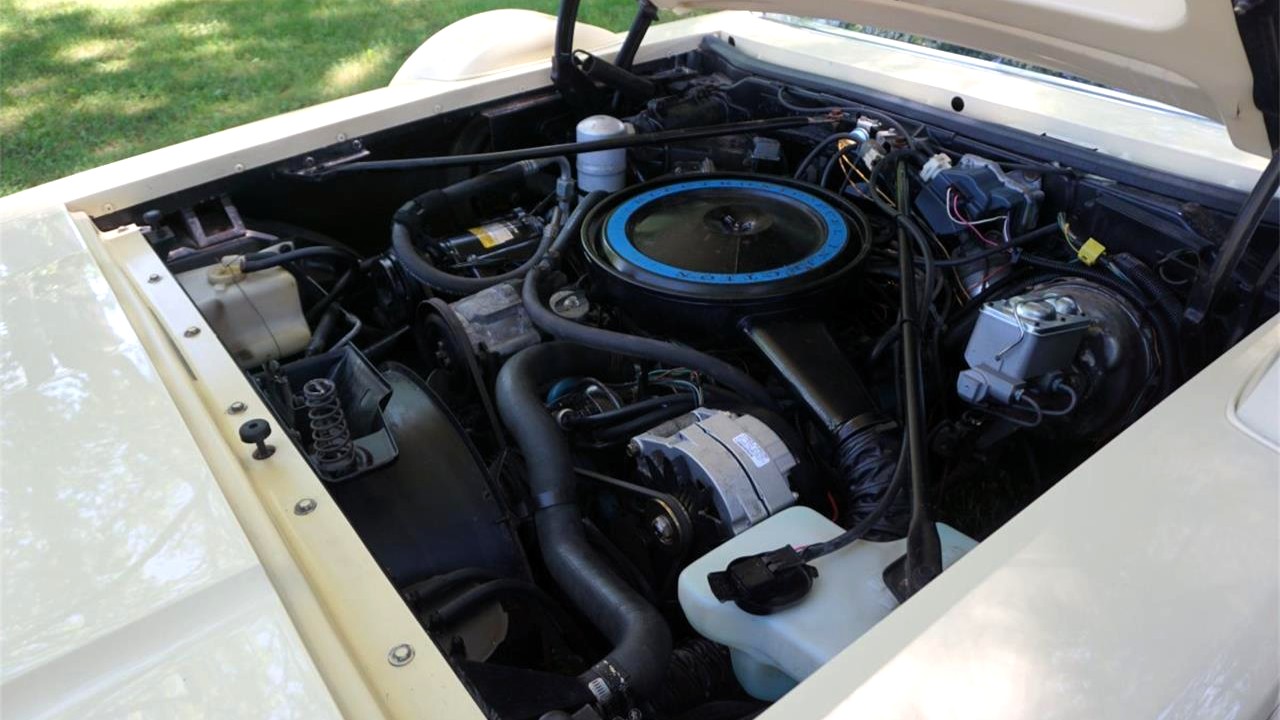
The below vehicles that are currently listed for sale on AutoHunter or ClassicCars.com share something: a model year. Can you identify which?

While you’re at it, can you tell us the brand of each? Post your answers in the Comments section below.
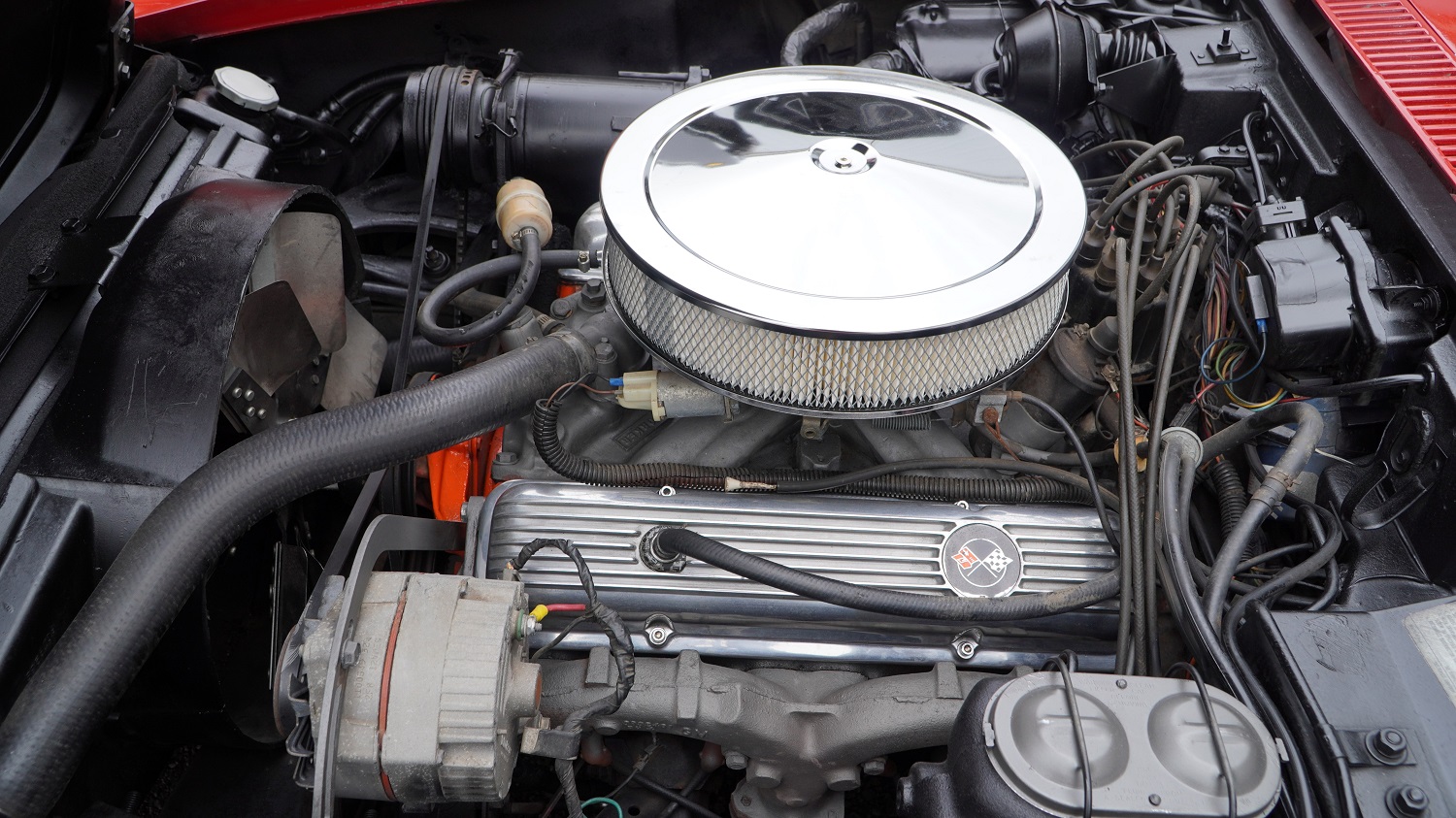
Click on a photo to reveal each car

Every Tuesday, The ClassicCars.com Journal features an automotive puzzle for your enjoyment. You can also access past car games here!

When Ford introduced its 1963 full-size models, hardtops featured a Thunderbird-inspired roofline. If you wanted the ultimate in performance, your only choice was the carry-over 406, available in 385- and 405-horse flavors (four-barrel and tri-carb, respectively). However, mid-year 1963, Ford introduced the Sports Hardtop body style, which featured a sleeker look—perfect for NASCAR. At the time, Ford also introduced an upgrade to the 406, now measuring 427ci. With 410 or 425 horsepower (four-barrel or dual-quads), the 427 was the engine that truly created a Ford legend through six model years and plenty of racing wins—most notably Le Mans. Our AutoHunter Spotlight is on this 1963½ Ford Galaxie 500/XL Sports Hardtop that features the “R-code” 427 with four-speed manual, nine-inch rear with limited-slip, aftermarket mags, and more. Finished in red over white vinyl interior, this early muscle car comes from the selling dealer with a clear title.

This car was originally painted in Rose Beige but, along the way, it was repainted red. Exterior features include a driver-side chrome mirror and a set of 15-inch mag wheels with spinners wrapped in staggered-width Michelin radials—225/70 (front) and 255/65 (rear).

The original White and Rose Beige interior has been replaced with White with Black components. Being an XL, bucket seats and console were the name of the game. A Hurst shifter, AM/FM radio (currently inoperable), and clock are several interior features.

The instrument panel includes a 120-mph speedometer and gauges for the temperature and fuel. A column-mounted 8,000-rpm tachometer (currently inoperable) sits right in the line of sight. The odometer shows 30,967 miles, though the mileage is not indicated on the title.

The engine is an authentic dual-quad 427 as evidenced by the code “R” in the VIN. It is backed by a Borg-Warner T-10 four-speed manual transmission.

The undercarriage features a tough nine-inch rear with 3.00 gears plus limited slip, though the originals were 4.11s. Drum brakes are at all four corners. And, of course, for an engine of this caliber, there is a dual exhaust system.

Early Ford muscle cars have a distinction that few can match: as much horsepower as any American brand, and good looks that rival any mainstream vehicle of the period. Add the stylish interior that was part of the XL trim level and this R-code 1963½ Galaxie 500/XL Sports Hardtop stands tall among 1960s American cars. Plus, if you look up what it would look like with the original hue and interior, you’ll realize what a pretty car this is. Curious? Keep tabs on this car by plugging the end date on your smart phone because you don’t want to miss the auction deadline of Friday, June 13, 2025, at 12:45 p.m. (PDT).

Visit the AutoHunter listing for more information and a photo gallery

It’s been more than 20 years since Cadillac unveiled the CTS-V, the first model in its high-performance V sub-brand, showing the world that it could produce vehicles beyond cushy sedans for octogenarians to drive slowly to the grocery store. Since then, Cadillac has made V versions of coupes, four-doors, wagons, and even the Escalade. It’s done the same with its electric vehicles, the newest of which is the 2026 Optiq-V.

To differentiate the Optiq-V from its tamer Optiq sibling, Cadillac gave it a different front fascia with V-pattern mesh in the lower grill, a glossy black front splitter, body-color lower trim, and a glossy black rear diffuser. The standard 21-inch wheels have a satin graphite finish and come wrapped in all-season or optional summer performance tires; polished and painted 21s with a dark finish are also available. For a more aggressive look, there’s a carbon fiber package that includes a front splitter, rear diffuser, and rear mid-spoiler made out of the lightweight material.

Two limited-edition exterior colors join the palette of paint choices: Magnus Metal Frost and Deep Ocean Tintcoat. There’s more blue on the rear quarter windows, which feature blue accents inspired by the V-Series badge. If that’s not enough, royal blue brake calipers are an option. No matter which color the Optiq-V wears, it comes with Brembo front calipers and a black roof with a panoramic fixed glass panel. Most importantly, all Optiq-Vs are equipped with an NACS (North American Charging Standard) charging port—a first for a General Motors vehicle.

There are two available interior color schemes: Noir and Noir/Sky Cool Gray, both of which have blue accents. Technically, they’re Santorini Blue, which Cadillac says, “evokes the energy, action, and excitement associated with innovation and high performance.” You can even step things up to Santorini Blue seatback panels and matching seatbelts. If for some reason you don’t feel like driving, you can let the standard Super Cruise system do it for you and watch it take you closer to your destination on the 33-inch LED infotainment display while you enjoy the sound of the 19-speaker AKG Studio Audio System.

Like the regular Optiq, the V-Series model is equipped with an 85-kilowatt-hour battery pack connected to dual-motor all-wheel drive. Range is down from 302 to 275 miles, but output is way up from 300 horsepower and 354 lb-ft of torque to 519 and 650, respectively. The Optiq-V’s Velocity Max mode unleashes the full potential of all that power. Launch Control focuses it on straight-forward acceleration, enabling the Optiq-V to reach 60 mph in only 3.5 seconds—0.4 seconds ahead of the CT4-V Blackwing with the six-speed stick (and only a tenth behind the 682-horsepower CT5-V Blackwing with the same gearbox).

The 2026 Cadillac Optiq-V will go into production this fall and carry a starting price of $68,795. When will it be drag-raced against a gas V-Series vehicle? Probably shortly after it hits the streets.

The year 1942 was interesting in terms of automotive manufacturing. You see, there was this conflict going on called World War II, and very quickly production at every automotive plant in the world was converted to wartime production of tanks, jeeps, and aircraft. Cars were not built in the U.S. from 1942 through 1946, and production of 1942 model-year vehicles was very low. In 1941 – the year America entered the war – about 3 million cars were manufactured, but in 1942, that number shrank to about 100,000. That year, Lincoln produced a total of only 336 Continentals, while in 1941, they built 850.
Today’s AutoHunter Spotlight vehicle is one of those cars, a 1942 Lincoln Continental Club Coupe.

The seller states this 1942 Lincoln Continental is powered by the reportedly original 4.8-liter V12 mated to a three-speed manual transmission. It is finished in stunning deep green paint over a beige cloth and light brown vinyl interior, and comes with a 1942 Lincoln reference book, Arizona Classic Roadrunner magazine, and clear title.

This specific 1942 Lincoln Club Coupe is said to have received a complete restoration and is considered to be what the Classic Car Club of America (CCCA) calls a “Full Classic,” putting it at the top of the heap of American collector cars. I know many people like the convertible version of the Lincoln Continental, but I honestly prefer the stately grandeur of the Club Coupe much more.

The exterior of this Lincoln appears to be in excellent condition. The paintwork looks amazing and is show-ready. The only flaw I can see is that the radio antenna looks like it could use some chromework and the tires appear a bit old and may need replacing (easily rectified with a call to Coker Tire). That’s really it – otherwise, this seems to be a truly show-worthy example.

1942 Lincoln Continental interior picture on AutoHunter.com.

From what I can see in the photos provided, the interior looks to be even better, with no wear and perfect trim. The gold plating on the instruments and dash trim appears to have been done flawlessly. The stunning dash makes these already special cars look even more exclusive.

1942 Lincoln Continental interior picture on AutoHunter.com.

Under the hood is the Lincoln flathead V12 engine in all its glory. Everything looks correct and is quite tidy, only needing some cleaning around the firewall to be ready to show.
1942 Lincoln Continental engine picture on AutoHunter.com.
These classic Lincoln Continentals were some of the finest cars in the world when new and could hold their own against just about any rival. The fact that this is a 1942 model only adds to its rareness and collectibility. This model continues to impress beyond expectations in the world of classic show cars. It’s also nice to drive, offering everything you would expect from a prewar luxury automobile.

If you have been looking for a true top-tier collector car that qualifies for just about any concours and absolutely any standard car show in the world, this could be just the ticket. Act fast and place your bid on AutoHunter right away because the auction for this 1942 Lincoln Continental Club Coupe ends on Friday, June 13, 2025, at 12:00 p.m. (PDT).

Visit the AutoHunter listing for more information and a photo gallery