Pontiac was on a roll in the 1960s. During the early part of the decade, specially trimmed models with buckets and (sometimes) consoles were becoming a thing, and Pontiac stepped up to the plate and created a special model of its own. Based on the Catalina, the newly christened Grand Prix two-door hardtop featured a distinctive inset grille, special trunklid trim, clean flanks, a standard 303-horsepower Trophy V8 with a four-barrel carburetor, buckets, a center console, and a tachometer. Needless to say, the new model was a rousing success. A fine example of the 1962 Pontiac Grand Prix is the focus of today’s AutoHunter Spotlight. Restored within the last four years at a reported cost of $100,000, it is powered by a 455 Tri-Power paired with a TH400 transmission. With a Midnight Blue metallic body complemented by a white painted top over a black interior, this personal-luxury Poncho comes from the selling dealer with build receipts, spare parts, the original 389, and a branded title.
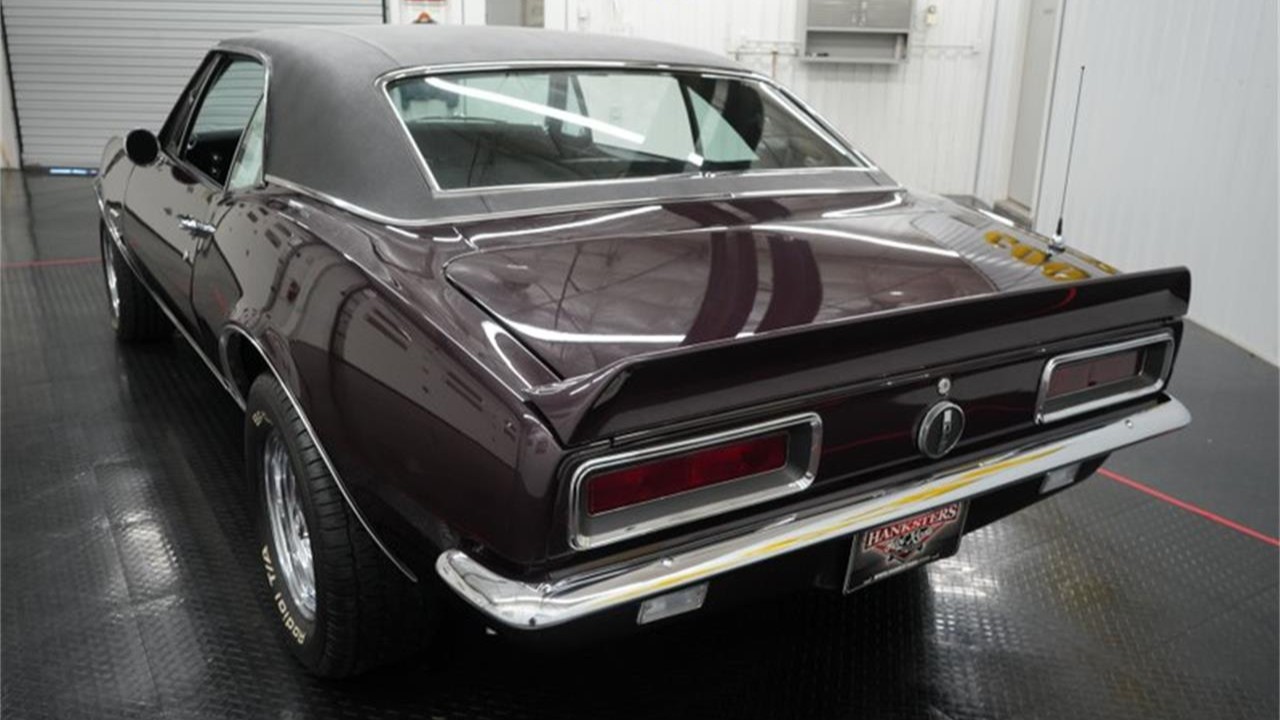
Nineteen sixty-two was the year Pontiac instituted convertible-like styling for its two-door hardtops. The hardtop on this Grand Prix is white, which nicely contrasts with the deep blue body. Other features include a driver-side mirror, rocker moldings, LED headlights, chrome ornaments on the front fenders, and a front fender-mounted antenna. A set of 8-lug wheels are wrapped in 235/75 American Classic wide-whitewall tires.
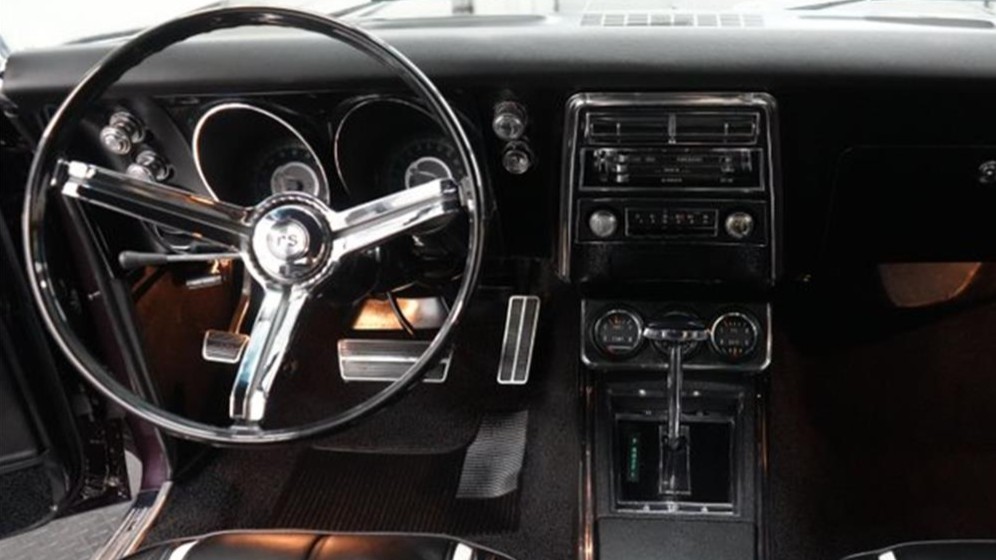
The black vinyl interior features front bucket seats with a center console. Other interior features include a push-button AM radio, clock, heater, an instrument panel pad, chrome pedal trim, and rubber floor mats.
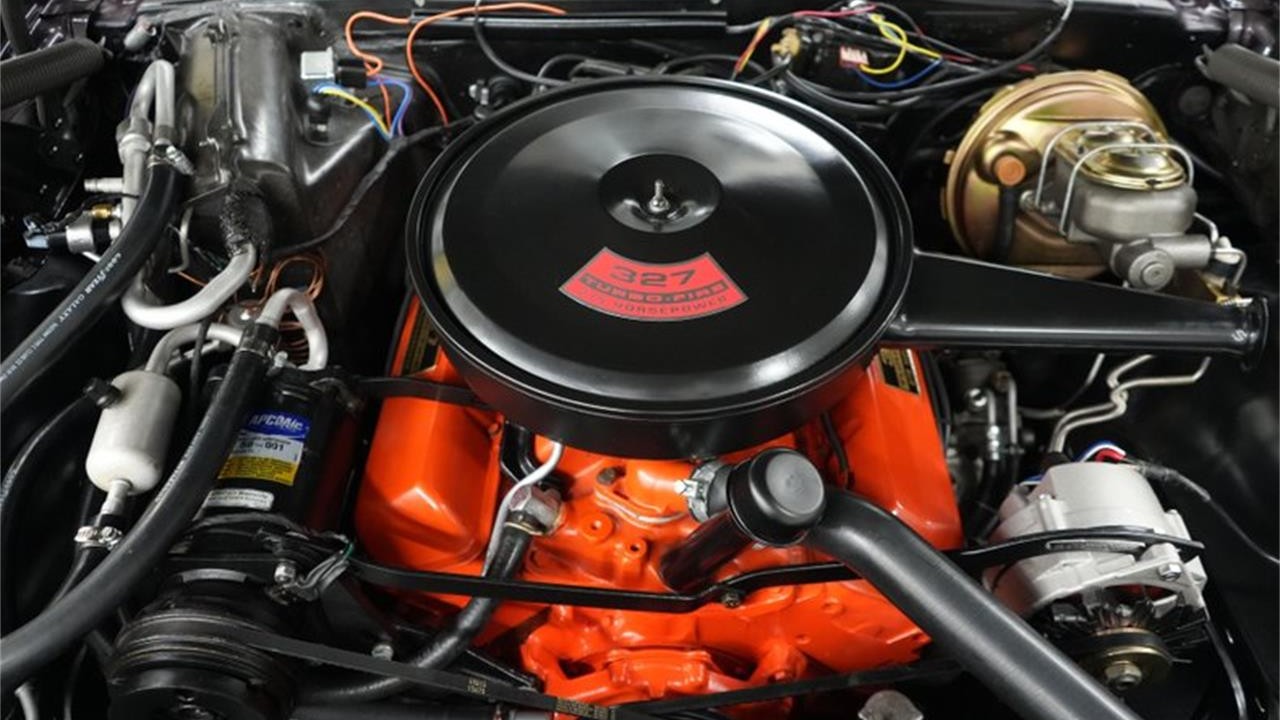
Instrumentation includes a 120-mph speedometer, console-mounted 7,000-rpm tachometer, and fuel gauge. An aftermarket gauge cluster for the oil pressure, voltage, and coolant temperature is mounted underneath the dashboard. The odometer shows 60,344 miles, though the true mileage is unknown.
The rebuilt 455 (which has accrued less than 1,000 miles since being overhauled) features Tri-Power induction, Edelbrock Performer aluminum heads, roller rockers, and more. The engine is backed by a three-speed TH400 automatic.
The undercarriage features a custom driveshaft leading to a limited-slip differential. Other features include power brakes, newer springs and shackles, and a dual exhaust system.
This 1962 Pontiac Grand Prix may have been a response to a young trend, but the model itself sparked a trend because personal luxury cars were usually a step up or two in price. The Grand Prix brought affordable class to the segment, leading to me-too responses from competitive brands such as Oldsmobile, Dodge, and even Buick. The auction for this GP ends on Wednesday, June 18, 2025, at 11:00 a.m. (PDT), so be poised to bid on this classy coupe before you miss out.
No matter how expensive, attractive, or lavishly furnished a car may be, when you see too many examples of it out on the road or in parking lots, it starts to feel much less special. Our Pick of the Day, a 1967 Mercedes-Benz 300 SE Cabriolet posted on ClassicCars.com by a dealership in Missouri, is all those things, but it still manages to remain special.
Why? Because there’s a good chance you’ll never see one up close. If you do, there probably won’t be a second time—Mercedes only made 708 300 SE Cabriolets between February 1962 and December 1967. Statistically, a certain percentage of those have likely been lost to accidents, natural disasters, or poor care/negligence. This particular 300 SE cabrio not only avoided such a fate but, thanks to a reportedly $300,000 restoration, it also looks decades younger than its model year indicates.
As part of the visual overhaul, the Paul Bracq-designed body was refinished in Anthracite Grey Metallic, which is attractive all by itself and even more handsome under the chocolatey Brown soft top. Those are definitely conservative colors, but the 300 SE’s lines and chrome accents should have no problem turning heads.
When the top is down, people will definitely be looking to see who’s in this majestic open-air cruiser. As they do, they’ll also get a glimpse of the Cognac leather upholstery and gleaming, vibrant wood trim on the upper and middle sections of the dashboard. Only the driver of this W112 and his/her passengers will get to experience the convenience of its power features, full sound of its Becker Grand Prix AM/FM radio, and comfort of its air suspension.
Given that this 300 SE was built after 1964, its M189 (189.987) fuel-injected 3.0-liter I6 benefits from a slight bump in output to 170 horsepower and 183 lb-ft of torque. A four-speed automatic with a column-mounted shifter puts this drop-top into motion and gives people the chance to see a rare sight.
You don’t have to be one of those many—you can be one of the few to own such a low-production vehicle. The price of that privilege—and this 1967 Mercedes-Benz 300 SE Cabriolet—is $269,900.
This year, I will attend the Pebble Beach Concours d’Elegance for the 23rd time. I have gone to The Amelia, The Quail, Hilton Head, and just about any other concours you can think of more than 15 times over the years. I have shown, written, spectated, and judged at most of these events, so I feel I have an excellent breadth and depth of experience in this world. None of it prepared me for what I saw at Concorso d’ Eleganza Villa d’Este 2025, presented by BMW Group Classic.
I had heard from friends who had previously attended this event just how good it was. They all called it the best concours they had ever attended, but I was still skeptical given my experience at Pebble Beach. I thought, Sure, it is probably a nice show, maybe similar to the first few years at The Quail. I was wrong.
I have been struggling for the past few days over how best to explain the event. After thinking about what I saw and what others had said while there, here is the best I have offer.
On Saturday morning, just as I arrived at the Villa d’Este resort, I ran into a really good friend who is a collector car dealer and big-time collector. He has shown at The Amelia and Pebble Beach multiple times and won at them as well. We caught up a little, then both of us went quiet as we watched the cars roll in and get positioned for the concours. After looking at the parade of cars for about 10 minutes, my friend summed up Villa d’Este perfectly when he said, “I have entered this event five times in a row and none of the cars I entered have ever been accepted. Now I understand why.” Yes, this show is that amazing.
The Concorso d’Eleganza Villa d’Este describes itself as “a visual celebration of automotive artistry and elegance.” That is a good way to sum up the event, but it still does not begin to give you a feel for it.
The schedule runs from Thursday through Sunday, with a tour on Thursday for entrants and a Friday cocktail affair followed by a truly gourmet dinner at Villa d’Este. The evening ends with BMW unveiling several very special vehicles. Saturday is the by-invitation-only portion of Concorso d’Eleganza Villa d’Este, with 54 cars on display, all evaluated by the best team of judges (led by my friend Kris Kramer) I have ever seen, followed by the awards ceremony. While this is happening, there is a “cars and coffee”-style event at Villa Erba next door. On Sunday, the 54 Villa d’Este cars are shown at Villa Erba, with the public invited to see them. At the end of Sunday evening, the Best of Show winner is announced at the event’s final dinner.
At the Friday cocktail party/dinner, BMW came out of the gate fast with a new model introduction. This year’s debut was the 2026 M2 CS, a car that is likely to sell out quickly and wear the crown as the quickest gasoline-powered M car available. Its designer explained the new body panels, increased power, and other little details that separate it from the standard and already amazing M2.
After a delicious, world-class dinner that was akin to one you would enjoy at a Michelin star-winning restaurant, BMW made two more introductions on the grounds of the resort. The first was the Concept Speedtop, a shooting brake GT car that will actually be produced (just like the Skytop that was introduced at Villa d’Este last year) and likely be limited to 50 examples. This really is a concept car brought to life, one that you can actually drive. The second was the BMW RR concept motorcycle, which is likely the quickest motorcycle the company has ever built.
Saturday began early, as it usually does at any concours d’elegance; I was on the show field just before 8 a.m. After meeting up with the friend I mentioned earlier, we walked the grounds to see what was around. The first thing I came across was a pair of Rolls-Royces. One was the Phantom used as the villain’s car in the 1964 James Bond film “Goldfinger.” The other was the new 1-of-1 Phantom Goldfinger, which is full of Easter eggs from the film. As a big James Bond fan, I was stopped in my tracks by these cars.
The cars on display at Villa d’Este were nothing short of perfection on wheels. The way they were carefully displayed only added to the atmosphere of the event. It was quite obvious that whomever set the show field was very aware of each car’s background, which, combined with the cars themselves, raised the concept of a concours to an otherworldly level. Take a look at the photos and you will get the idea.
One surprise at the event was running into my friend Dirk de Groen, a collector I know from the BMWCCA (BMW Car Club of America) and various concours, including Hilton Head. Dirk was showing his perfectly restored 1957 BMW 507 roadster. He had a book documenting the restoration that was completed just in time for the event. After flipping through the book and seeing the work done on the 507, I can say the final result was definitely worth the effort. When Dirk bought the car, it was a bit of a mess, but the multiyear restoration he commissioned transformed it into what is probably one of the best examples of a 507 in the world.
After spending a few hours looking at the cars at Villa d’Este, Dirk and I took a water taxi to nearby Villa Erba for the Amici & Automobili – Wheels & Weisswürscht event. The water taxi ride was something out of a James Bond film. The gorgeous wood-hulled boat took us on a scenic route on Lake Como to the event. The view over the bow was stellar, as was the interior.
Wheels & Weisswürscht was, in essence, a cars and coffee event, but it was like nothing I had ever seen before. There were, of course, scores of BMWs, all parked by series and (in most cases) by year, with some special cars parked in small groups. The most amazing of those was the 16 E36 BMW M3 GTs that were in attendance – a significant percentage of them, considering that there are only 200 in the world.
Various Italian, British, and other German cars were also in attendance. There was even a vintage BMW motorcycle club display of some amazing old bikes.
After spending about an hour there, Dirk and I again took the amazing wood-hulled water taxi back to Villa d’Este for lunch and the awards presentation, which is called “The Parade.” Simon Kitson served as the MC for that part of the event, which was different from any other concours because guests were sitting at tables along the path the cars took to receive their awards.
Another surprise was that my friend Dirk won the Coppa d’Oro (a.k.a. People’s Choice Award) at Villa d’Este. That might not sound impressive until you consider that the people who voted were the attendees at Villa d’Este, and a select group of entrants, journalists, and VIP guests.
Sunday, all the cars from Villa d’Este headed over to Villa Erba for the general public portion of the concours. Reasonably priced tickets for this part of the event are available to all, but are limited to 20,000. If that sounds like a lot of people, keep in mind that the grounds at Villa d’Este are so spacious that the cars on display are never blocked by crowds of people.
In addition to the Villa d’Este entrants, there were also other cars on display. This year, the most impressive group consisted of every BMW Works-raced 328. It was the very first time all these cars had been gathered at the same time and place. The display was tasteful and extremely well curated. There were no huge signs – just info on signage that framed the entire group. It was a museum-quality exhibit along the lines of the Museum of Modern Art or the Louvre.
Just down from the 328s was the BMW Art Car display. The walls of the hallway were covered with images of the various BMW Art Cars and led to the actual cars on display at the end. This year’s featured Art Car was the 1992 M3 GTR painted by Sandro Chia.
Sunday’s show ended with a parade of the winning cars from Saturday, which spectators could see from the grandstands. Although it was not as exclusive as the Saturday procession, it was still the best one I have seen at any concours.
Sunday concluded with a black tie dinner back at Villa d’Este. You might notice that I have not revealed the Best of Show winner yet. That is because the winner is announced at the end of the dinner. Even those who aren’t there know when the announcement is made because it is punctuated with fireworks over the water.
This year, the Best of Show winner was the 1934 Alfa Romeo P3 from the Auriga Collection. This car is fantastic, an Alfa 8C 2900 race car that was campaigned by Scuderia Ferrari. What a deserving winner!
The Best of Show winner receives a wonderful trophy specially made by A. Lange & Söhne and the satisfaction of knowing their car beat the absolute best ones at the world’s most exclusive and magnificent concours d’elegance.
If you have always wanted to attend Villa d’Este, here are a few tips. The only way to get into the Saturday show is to display a car, be invited, or sign up for the waitlist for the special Villa d’Este hotel package. That being said, the Villa Erba Saturday event is open to spectators and tickets are available. It may be the second-best day in concours events behind Saturday at Villa d’Este. You can get more info at the Concorso d’Eleganza Villa d’Este website.
My friend and host Tom Plucinsky from BMW Group Classic on the left, my friend Steffan Frisk in the middle, and me on the right at Villa d’Este
I want to thank my friends Tom Plucinsky and Helmut Käs from BMW Group Classic for sending me to the best concours event on the planet. I now understand what all the fuss is about and hope my story here conveys the grandeur of the Concorso d’Eleganza Villa d’Este.
Remember the days when the Pontiac Firebird was a thing? Millennial ads read, “To a bug, it’s a 320-horsepower blender” and “The other red meat.” While the Firebird wasn’t riding high like in 1979, the boisterous Trans Am was replete with power that rivaled the high points in its history. Even Ram Air was brought back!
The fourth-generation Firebird was the last of the line, with a 1998 facelift giving it a more boisterous look (or, to some, overwrought in typical Pontiac fashion). At some point, 325 horsepower was on tap with the WS6 package, with another 10 horses available thanks to SLP’s Firehawk. It really felt like the 1960s were back.
But then it began to feel like the 1980s, with General Motors making a boner of a move: no more F-bodies. Seriously? How could GM not offer a successor to the American public? Next think you know, they’ll kill Pontiac too . . . and they did. What will GM kill next? Oh, that’s right—after a Camaro revival, that has been killed too.
Today, the acceleration of the Trans Am and Firehawk pales in comparison to modern vehicles, but sprints are but one element to muscle cars—few insipid late-model vehicles can offer the number of grins that the final performance Firebirds can.
Join Muscle Car Campy as he gives us rides in two twilight Firebird convertibles: a 2001 Trans Am with the WS6 package owned by Kevin Guido, and a 2002 SLP Firehawk owned by Tony Palese. Pay attention to the distinctions between the two, as they show how the Firebird evolved once it was in SLP’s hands.
Featured on AutoHunter is this 1956 Ford Customline Victoria, which was restored in its original two-tone color scheme in 2015. It’s powered by a 272ci Y-block V8 mated to a Fordomatic three-speed automatic transmission. Finished in Berkshire Green and Springmist Green over a Medium Green cloth and vinyl interior, this stylish hardtop is now offered by the seller in Oklahoma with an owner’s manual, shop manual, and clear North Carolina title.
As part of the restoration completed in 2015, the body was refinished in its original paint colors of Berkshire Green and Springmist Green. Exterior features include chrome bumpers with overriders, hood badge and ornament, fender badges, dual mirrors, rear fender skirts, and dual exhaust outlets.
A set of recently installed 215/75 American Classic wide-whitewall tires surrounds the 15-inch body-color steel wheels, which are equipped with polished covers.
Like the exterior, the cabin of this Victoria is green: Medium Green cloth and vinyl upholstery covers the two rows of bench seating. Features range from manual windows and heater to an AM push-button radio and FM transmitter, the latter of which is located in the glove compartment. The trunk contains a patterned vinyl mat and spare tire.
Instrumentation consists of a 120-mph speedometer, gauges for the fuel level and temperature, and warning lights for the oil pressure and generator. The odometer shows 43,139 miles, which the dealer states is this car’s true mileage.
Under the hood is a two-barrel 272ci Y-block V8 that was factory-rated at 176 horsepower. It delivers its power to the road through a Fordomatic three-speed automatic transmission.
This Victoria is carried down the road on an independent front suspension, solid rear axle, and leafspring rear suspension.
Are you one of those folks who gets bored with something the more you experience it? It can lead to being nudged into something off your radar. Our Pick of the Day fell into the former in the past but, today, it falls into the latter. This 1972 Mercury Marquis Brougham four-door sedan is listed for sale on ClassicCars.com by a dealership in O’Fallon, Illinois.
Through 1968, Park Lane was the top-of-the-line full-size Mercury, but the advent of the 1967 Marquis added color to the Mercury line. Initially a formal two-door hardtop, the 1967-68 Marquis functioned more as a personal luxury coupe than a complete series. For the 1969 redesign, the Marquis took over from the Park Lane and the personal luxury model was given a heavy dose of sportiness and renamed Marauder. There also was a fancier Brougham package for the Marquis, which officially became its own model for 1970.
For 1971, the full-size Mercury was redesigned, though there was no mistaking it was a Mercury. “Take the most dramatic styling in the medium price class . . . add the best ride ideas and luxury features from the world’s most expensive luxury cars . . . and you have a better medium priced car.” With 124-inch wheelbase, hidden headlight, and fancy interiors, the top-of-the-line Marquis Brougham certainly seemed fancier than a middle-class car (let’s call it upper-middle, shall we?). There was also a regular Marquis, Monterey Custom, and Monterey. Though Ford’s LTD retained the convertible, it was gone from the full-size Mercury. Standard for the Marquis was a 429-2V producing 320 gross horsepower, which was quite prodigious considering what was coming for 1972.
With only detail changes, 1972 was similar, but the standard Marquis engine had been upgraded to a 429-4V. This may have been done to compensate for the loss in horsepower due to the federally mandated lowering of compression to handle low/no-lead fuels. Horsepower fell to 208 net. Visually, the biggest styling change from 1971 was the coarse egg-crate grille pattern; this pattern was repeated in the center section between the taillights, which had been a reflector in 1971. For the first time, a 460 was available as an option, though Mercury required air conditioning to be ordered with it.
It’s neat to see cars not often seen anymore, and this 1972 Mercury Marquis Brougham four-door sedan is a pleasure to see once again. It appears it has been mildly modified with a fancy root beer paint job and dechroming, but this Merc still displays all its charms including a long and lithe design with an interior that invokes Lincoln. “Complementing the exterior is a luxurious tan interior, crafted with vinyl materials that offer both comfort and style, making every drive an enjoyable experience.” Equipped with the 429, power steering and brakes, air conditioning, and AM/FM radio, there is no reason to doubt the dealership’s claim.
Most cars like this were disposed of long ago, which makes them unfamiliar to many in today’s general population. If you agree to the $17,500 asking price, we imagine it can be guaranteed that you will receive no contempt from those around you.
You might be wondering why ClassicCars TV went to the 2025 Electrify Expo. There were cars there—that’s why! Of course, many of them were new EV, hybrid, and plug-in hybrid models from a variety of automakers, but there were also some older models converted to run on electric power.
We started the day by learning about Ford’s electric vehicle offerings, then experienced what its Mustang Mach-E can do on a course. After that, we spoke with Peter Culin, the co-founder and vice president of Drive Electric Arizona, about how the nonprofit organization is educating consumers and trying to help EV owners. The man behind Electrify Expo, CEO and founder BJ Birtwell, told us what EV newcomers and enthusiasts alike can expect to see at the event. We wrapped up our day by interviewing the talented people who built fully electric versions of a Ford F-250 and Jaguar E-Type. If you’re charged up to learn more the Electrify Expo, click the play button below.
Be sure to subscribe to our YouTube Channelfor more event coverage!
Nineteen seventy-two was a humdinger in Detroit, and no manufacturer felt it more than Ford Motor Company. Over the previous two years, Ford was replete with high-performance engines measuring 302, 351, and 429 cubic inches, but for 1972, Ford Motor Company was left with a 351 four-barrel as its peak engine. Mercury offered one version for the Cougar that was not available anywhere else.
What happened to the 429 Cobra Jet? Discontinued. What about the 429-4V? Ford didn’t even try, going from 360 gross to 206 net horsepower. Big-block horsepower was dead in Dearborn, while Highland Park continued to offer a relatively potent 440 and all four General Motors performance brands could name LS5, HO, W30, and Stage 1 in their rosters.
The performance engines that Ford Motor Company offered for 1972 are interesting. The standard performance 351 was called the 351 Cobra Jet, defined by a “Q” as the fifth character of the VIN. It was a mid-year addition in 1971, a low-compression companion to the standard 351-4V that ended up usurping it as part of the new values imposed upon Detroit by the District of Colombia. For 1972, this engine was rated at 266 net horsepower for the Mustang and 246 for the Torino and Montego (though I can’t say if there’s much, if any, difference between the two).
Then there was the 351 HO, a remnant of the Boss 351 that only appeared between the shock towers of the Mustang. This truly was a glorious engine, on par with big-blocks at the time, but only 398 were built, so little impact was made.
So what about the Cougar?
Interestingly, the Cougar offered two versions of the Q-code 351 four-barrel—something distinct from other products in the FoMoCo portfolio. To a modern mind, asking the question, “Why would Mercury go through the expense of offering two distinct engines that shared 98 percent of the same parts?” seems like an appropriate query, but let’s not forget that the Cougar, while still a pony car, had been moving into the realm of personal luxury. For the Cougar’s target market, the upgrade from the standard 351-2V—the 351 Cobra Jet—may have been a bit too unfettered for their tastes, so Mercury offered a toned-down version called the 351-4V that was only offered with an automatic transmission with a 12-inch converter and “quiet exhaust.” Horsepower was 262, a loss of four.
If you wanted the high-performance 351 Cobra Jet, you had to order the 351 Cobra Jet Performance Group to trigger the engine upgrade and equipment. Ordering the package scored you a low-restriction exhaust system, Competition Suspension, F70 x 14-inch whitewalls, and a 10.25-inch converter for automatic-equipped vehicles.
If you’re interested in knowing how many Cougars were produced with the 351 Cobra Jet, we can provide that answer thanks to Marti Auto Works.
Last weekend, I attended my 25-year high school class reunion in Utah. It was a rewarding experience to reconnect with friends who are now of middle-age—many of whom who now have adult children of their own.
We collectively agreed: Time seems to accelerate as we get older, and we all found it hard to believe that a quarter-century has flown by. Adding insult to injury, a vehicle that was built in 2000 can now wear “historic” license plates here in Arizona. I recently discussed the Honda Insight as one example of a “Class of 2000” car that is now eligible for such a distinction—here’s another.
Featured on AutoHunter is this low-mileage 2000 Pontiac Firebird Trans Am WS6. The car is being sold by a private seller in Madison, Mississippi, and the auction will end Monday, June 16, 2025, at 11:15 a.m. PDT.
Finished in menacing black, it’s a perfect symbol of Pontiac’s performance-oriented prowess. After all, the brand’s slogan in 2000 was “Driving Excitement.” From its pop-up headlights and sleek body lines to its aggressive rear spoiler, the car screams Y2K-era Pontiac.
The fourth-generation Firebird was introduced in model-year 1993, with production taking place at General Motors’ Quebec, Canada, plant. The WS6 package added suspension enhancements such as thicker sway bars and higher spring rates for improved handling. So-equipped cars could also be identified by the Ram Air hood, distinctive wheels, unique tailpipes and special badging. The WS6 looked muscular from any angle, and it had the power to back up the stance.
According to the CARFAX report, this Trans Am has been Mississippi-owned since new. It shows only 55,175 miles on the odometer, which comes out to a scant 2,200 miles per year. The car’s clean inside-and-out look makes that mileage believable. The listing includes a video with a start-up and engine bay overview.
Underneath the bulging hood lives a 5.7-liter LS1 V8 mated to a 4L60E four-speed automatic transmission and a limited-slip rear end. When new, the powertrain was rated at 320 horsepower and 345 lb-ft of torque. One of my favorite magazine advertisements for the Trans Am said, “To a bug, it’s a 320-horsepower blender.” Sounds about right!
The WS6 made its place in automotive history and has become a sought-after classic. And finding one nowadays that remains unmodified—let alone in a handsome black-on-black color combination—is a rare feat. It also has a 12-disc CD changer for all your 2000-era music like Savage Garden and Matchbox 20. Don’t miss the chance to pick up a piece of history.
Imagine cruising down the open road in a fully restored 1966 Corvette Sting Ray convertible—wind in your hair, the roar of a 427 big-block V8 under the hood, and every eye on you. This isn’t a fantasy. It’s your chance to win one of the most iconic American muscle cars ever built, thanks to the Classic Corvette Dream Giveaway. With its rare low mileage, award-winning restoration, and head-turning performance, this Sting Ray could soon be parked in your garage—all while your entry supports a great cause. Click here to enter now!
This 1966 Corvette Sting Ray convertible is a three-time NCRS Top Flight award winner, recognized for its exceptional authenticity and quality of restoration. It has only 19,607 original miles on the odometer, making it one of the lowest-mileage examples in the country. Every inch of this car has been restored to concours-level detail, from the flawless paint and chrome to the precision-tuned mechanics under the hood.
At the heart of this Corvette is the iconic 427 cubic-inch big-block V-8 engine, factory rated at 425 horsepower. It features high-compression internals, a four-barrel carburetor, mechanical lifters, and delivers raw, classic American power. The car is equipped with a four-speed Muncie manual transmission, making it a purist’s dream. Side-exit exhaust pipes add to the performance sound and the aggressive styling. A factory-correct color-matched auxiliary hardtop comes included, complementing its road-ready convertible form.
This Sting Ray isn’t just a showpiece—it’s built to be driven and admired. With its sharp lines, hidden headlights, and signature Corvette details, it turns heads wherever it goes. It represents the pinnacle of mid-60s American sports car design and engineering.
Your entries support veterans’ and children’s charities, ensuring that every donation helps those in need. Even a $3 donation enters you into the sweepstakes and helps make a difference.
This isn’t just about winning a car. It’s a chance to own an iconic piece of American automotive history—restored, documented, and built for enthusiasts. Whether you’re a lifelong Corvette collector or simply someone who appreciates timeless design and high-performance engineering, this 1966 Sting Ray is a once-in-a-lifetime opportunity.
ENTER TODAY. Support great causes. And maybe, just maybe, you’ll soon be behind the wheel of the ultimate Corvette dream.