Journal Classic Cars

Category Added in a WPeMatico Campaign

There is something special about classic Aston Martins. They transcend the usual classics, even those from Ferrari, Maserati, and Porsche. Part of that appeal comes from the history of the manufacturer, which has had significant racing success. Another part is the craftsmanship, with Astons being some of the most well-built cars of their respective eras. Finally, Astons have been featured in a lot of films and TV shows, from 007 movies to “The Persuaders” – and they continue to be. Today’s AutoHunter Spotlight is a car whose basic shape you will recognize from three James Bond films, including the most recent one, “No Time To Die”: a 1977 Aston Martin V8 coupe.

The Aston V8 coupe is directly linked to the last car designed in the David Brown era of Aston Martin. It is basically a revision of the DBS, the car that came after the DB6. Over the years, it was modified and improved.

The 1977 Aston Martin V8 coupe featured here is powered by a 5.3-liter V8 mated to a three-speed TorqueFlite automatic transmission. Finished in burgundy over a tan leather interior, this British classic is now offered by the seller with an original owner’s manual, service records, and a clear title.

The burgundy paint is said to be in good condition although the seller notes a minuscule paint chip on the driver-side front fender and a side mirror that is misaligned. The body features a factory hood scoop and the iconic Aston fender vents.

The interior is finished in its correct tan leather upholstery and looks to be stock with correct gauges, a center console-mounted automatic shifter, power windows, and air conditioning. The only flaw noted is a slight tear in the driver seat, which I am guessing can be repaired by a good upholstery shop.

Under the hood is the Tadek Marek-designed four-cam 5.3-liter V8, which is fed by four two-barrel Weber carbs. The seller states that it has 380 horsepower, but my books on this car state that horsepower for the 1977 model is actually 330, as the ’77 cars came with what Aston called “stage one tuning.” The engine compartment looks tidy overall and has no glaring issues.

These Aston V8 coupes are the end of the classic Aston Martin era. I have owned a pair of these cars and I loved every minute I spent behind the wheel of them. I also loved taking one last look back at the car after I parked it in the garage – which is something I did every time I parked.

A 1977 Aston Martin V8 coupe

One thing I would do is get this car inspected by someone who knows these kinds of Aston Martins. They are pretty simple cars to deal with, but parts are expensive and service costs can add up. Overall, this looks like a great driver-level classic Aston Martin that – at the right price – will give its new owner years of enjoyment.

If you want to be that new owner, I suggest you act fast because the auction for this 1977 Aston Martin V8 coupe ends Wednesday, June 18 at 11:30 a.m (PDT).

Visit the AutoHunter listing for more information and a photo gallery
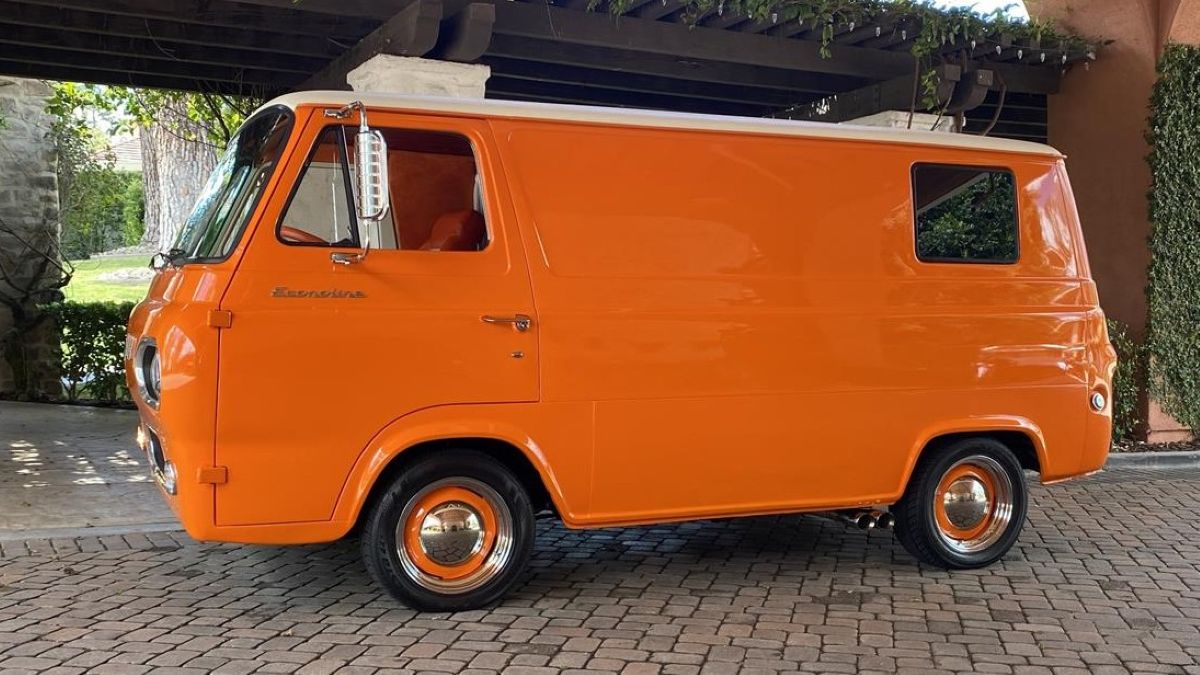
Here we have several cars listed for sale on AutoHunter or ClassicCars.com. They all share a connection, but we recommend you put your thinking cap on before you tell us what they have in common.

Post your answer in the Comments section below. To impress us even more, tell us the year, make, and model of each vehicle. The winner will receive online glory so he or she can flex with flair!

Click on a photo to reveal each car

The ClassicCars.com Journal features an automotive game for your enjoyment every Tuesday. Once you’re done with this one, you can also play games of puzzles past!

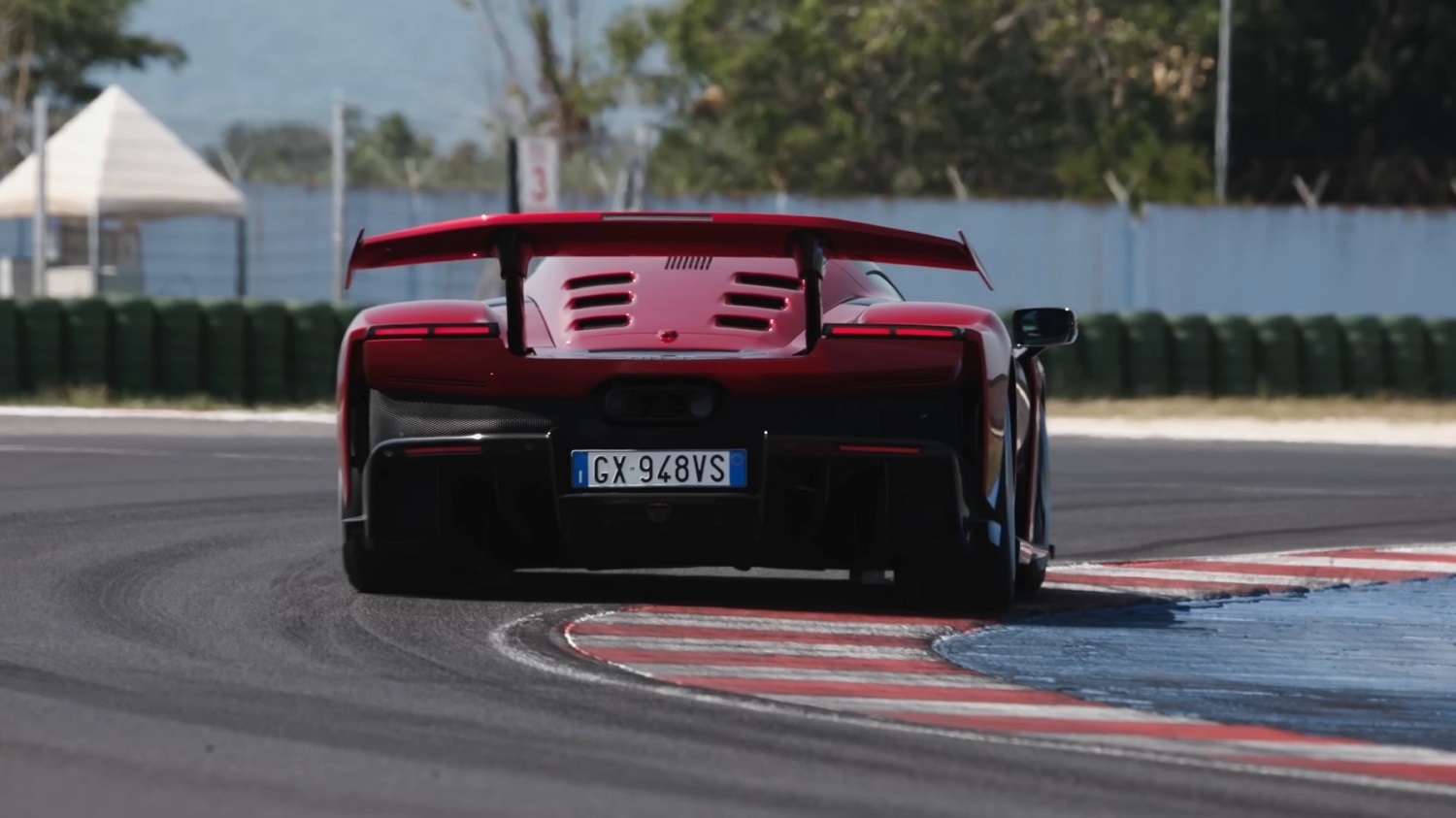
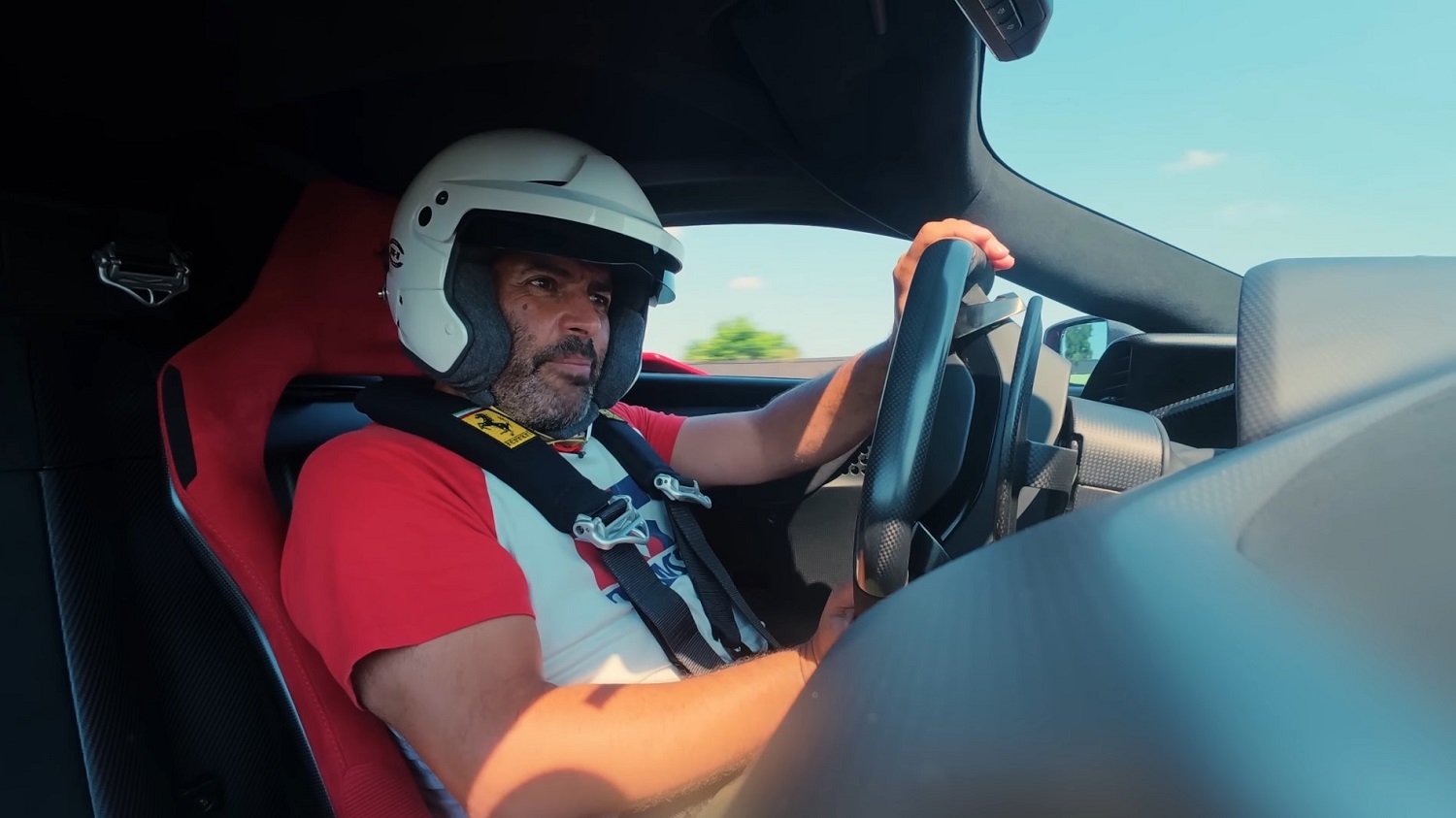
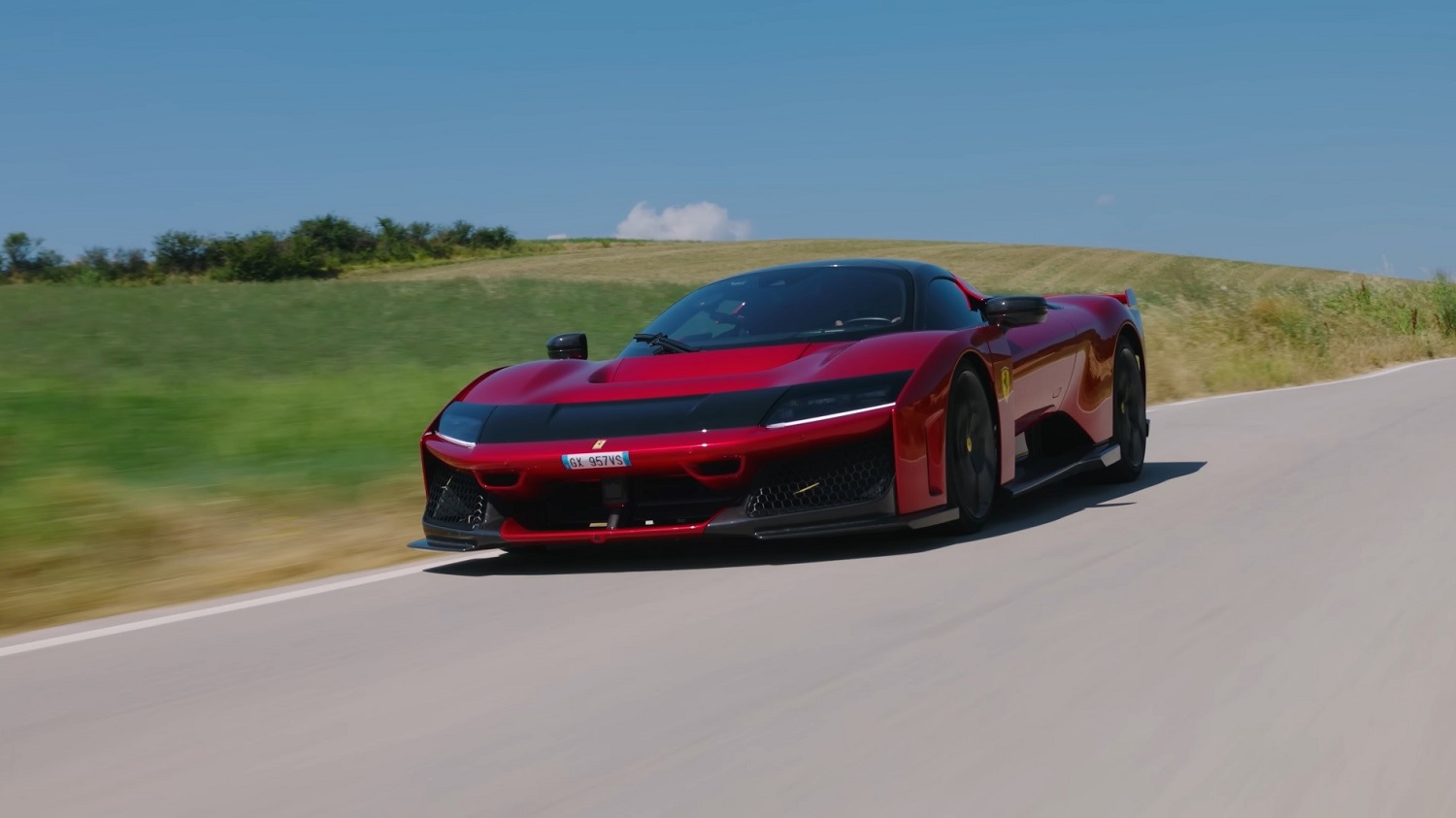
Even though Jay Leno owns a massive collection of vehicles, he can’t own—or house—every car out there. Luckily, he doesn’t have to because he has industry contacts and friends who are more than willing to bring their cars into his garage and show them off for all of us to see. One of his pals, David Lee, is a renowned Ferrari collector who recently dropped by with his 2025 Daytona SP3.

The second car in Ferrari’s Icona series of vehicles, which reinterpret icons from the brand’s past for the modern age, the Daytona SP3 honors Ferrari’s 330 P3/4, 330 P4, and 412 P race cars that took the top three spots at the 1967 24 Hours of Daytona. The influence of those champions is easy to spot in the SP3’s curvy front fenders, cockpit-like passenger compartment, and muscular haunches.

Under the engine cover, Ferrari opted for the 812 Competizione’s naturally aspirated 6.5-liter V12 instead of a turbo V6 or hybrid setup. With ratings of 828 horsepower and 514 lb-ft of torque, the “F140HC is the most powerful internal combustion engine ever built by Ferrari,” according to the automaker. A seven-speed dual-clutch automatic transfers the big V12’s output to the rear wheels. Flat out, the SP3 can race to 100 km/h (62 mph) in 2.85 seconds and reach a top speed in excess of 211 mph.

Lee has several Prancing Horses in red and yellow, but Ferrari offered him (and about 29 other SP3 buyers) the choice of configuring his build with exposed carbon fiber; Lee accepted, then chose to have it tinted a dark shade of green—the relish to all his other ketchup- and mustard-colored cars. There’s a little mustard inside the SP3, where Lee had Ferrari’s Tailor Made service cover the fixed seats in deep yellow upholstery.

2025 Ferrari Daytona SP3 on the road

Despite the SP3’s inspiration, Lee and Leno view it as two different cars. Leno enjoys the SP3’s brutality and the fact that its rear-wheel-drive, likening it to the legendary F40; Lee sees it as more of an evolution of the Enzo. Watch the video below to decide which Ferrari of yesteryear it brings to mind., but be sure to listen too because the SP3 lets out of an unforgettable wail. As Leno says, there’s “a nice set of lungs on this thing.”

Have you ever bought back one of your previous vehicles? I’m guilty of getting a little bit too sentimentally attached to my cars. Against my better judgment, I even bought back my ragged 1986 Chevrolet Celebrity about six years after I’d previously sold it. It was a short-lived ownership experience the second time around, but if I’d had the time and space, I probably would have kept it. Here’s a car that came back to a prior owner:

The Pick of the Day is a 1957 Chevrolet 210 two-door listed for sale on ClassicCars.com by a private seller in Buffalo, New York.

“My dad was in the car repair business and bought this car for me when I was 14,” the listing begins. “We spent two years restoring it and we put it on the road in 1984 when I was 16. It was my first car.”

The story goes on to say that the car left the family in 1987 when the seller joined the military. And miraculously, the same friend who bought the car that year still owned it 27 years later in 2014 – and was willing to sell it back. So, like a boomerang, it returned to its prior owner. And now 11 more years later, it’s time to pass the reins once more. Still following? Bottom line – this family-loved Chevy is ready to move on to a loving home.

While badged and dressed as a Bel Air, the car is in reality a 210, which means it’s a mid-range trim level for the year (a “150” would have ranked below the 210 in the hierarchy). The two-tone black and white paint scheme is attractive and clean. The seller says, “The frame and sheetmetal are clean and solid, and she looks great!”

The interior was overhauled in 2018 and is outfitted in the same neutral color scheme, and updates include new all-new wiring, bucket seats, a center console, Dakota Digital gauges, a tilt steering wheel, and a Bluetooth-enabled retro-look audio system. The listing says that the engine is a 283ci V8 that dates back to about 1964 and was rebuilt in 2015. A Muncie four-speed manual transmission sends power to the rear wheels.

If history holds true, the seller might end up wanting to buy this car back a third time in a decade or two. So, who’s willing to look after it in the meantime? I know I’d volunteer!

The asking price is $59,999.

Click here to view this Pick of the Day on ClassicCars.com

We use the term “droptop” as a synonym for a convertible, but Dodge never built a Charger droptop. So what are your thoughts on a Charger “slidetop”? Because our Pick of the Day is a 1969 Dodge Charger with a special option not often seen. It is listed for sale on ClassicCars.com by a dealership in Sherwood, Oregon.

Dodge offered several convertibles in 1969. The Dart was available as an upscale GT and performance-oriented GTS. The Coronet followed a similar path, with the convertible being available as a 500 and performance R/T. The full-size cars were a bit different, as the low-line Polara featured a convertible, as did the sporty mid-line Polara 500.

It seems that the Charger was the only model that didn’t feature a convertible, but as it was based on the same platform as the Coronet, it made no sense to offer a droptop for the hit sport coupe that experienced a rebirth after its 1968 redesign.

In these years, there were two Charger models: Charger and Charger R/T. The Charger was available in two configurations: Charger 6 and Charger 8, with the latter featuring a standard 230-horsepower 318; a 383 two-barrel or 383 four-barrel were optional.

The Charger R/T also was available in several configurations, though in a different manner. The Charger 500 came with a flush nose and backlite for NASCAR homologation, while the Charger Daytona was its successor. Standard for these cars was the 375-horsepower 440 Magnum, with the optional 426 Hemi offering 50 more horses. (The 440 Six Pack wasn’t available until 1970.)

A new Special Edition (SE) package was available for both Charger models, though not available on R/Ts with the Hemi. Upgraded equipment included leather and vinyl front bucket seats, a woodgrain steering wheel, woodgrain inserts in the instrument panel, hood-mounted turn-signal indicators, pedal dress-up, deep-dish wheel covers, a light package, and Special Edition badges on the C-pillars.

So maybe Dodge didn’t feel a Charger convertible was necessary, but it did add a special option that was starting to show its face in the industry: a sunroof. They were very expensive (over $400) and not available on many American vehicles, but starting in 1969, the Charger was one of them. Dodge announced this in a September 18, 1968, bulletin, mentioning that a vinyl top was required. When the dust settled, 260 Chargers and 131 Charger R/Ts were built for the U.S. market with this option.

Barring the R/T, the ultimate regular Charger would be built with a 383 four-barrel and a sunroof. This Bright Blue metallic 1969 Dodge Charger fits that bill to a T. “It has a fresh coat of factory original B5 Blue paint that looks beautiful, especially with the new vinyl top,” says the seller. “The body is in amazing shape throughout.” Claimed to be a one-owner California car, this Charger is also believed to feature the original C6D blue upholstery, though the carpet and headliner are new. “The power windows have new motors and we rebuilt the sunroof motor too.” Other features include a remote driver-side mirror and Road Wheels. Both the 330-horse engine and TorqueFlite automatic have been rebuilt.

You can choose a Coronet 500 convertible and enjoy the rays or you can go with the exceptional styling of the Charger and soak up the sun thanks to a sunroof. Yes, Chargers are expensive these days, but the $69,500 being asked for this Mopar muscle car seems like a proper price point. It’s time for you to slide over and scoop it up before someone else does.

Click here to view this Pick of the Day on ClassicCars.com

According to the California Wolf Center, “In 1980, the Northern Rocky Mountain Wolf Recovery Team initiated wolf population recovery efforts in the northern Rockies of Montana, Idaho, and Wyoming. As a result of these efforts … the wolf population of Montana is now on the rise.” The wolf population within Ford is also increasing because the 2025 F-150 is the newest addition to the Lobo street truck lineup that started last year with the Maverick.

Based on the F-150 STX SuperCrew, the Lobo is available in Agate Black Metallic, Atlas Blue Metallic, Carbonized Gray, Oxford White, or Rapid Red Metallic Tinted Clearcoat. Up front, a cowl hood with black vents, special upper grille with light bar, and glossy black mesh lower grille make sure the Lobo stands out from the pack of other F-150s.

Upgraded taillights and black dual exhaust outlets do the same at the rear. A two-inch rear suspension drop and a 10-piece ground effects kit physically and visually bring the Lobo closer to its 22-inch gloss-black wheels and the ground below.

2025 Ford F-150 Lobo profile shot

Lobo, Spanish for wolf, has been the name for the Ford F-150 in Mexico since 1997. Given the visuals such a name brings to mind, Ford needed to pair its newest street truck with the right engine, something with a growl. That explains why Ford chose the 5.0-liter V8, which has 400 horsepower and 410 lb-ft of torque. An upgraded two-speed automatic four-wheel drive system and a 3.73:1 locking rear end help the Lobo rip into the road.

2025 Ford F-150 Lobo interior

By itself, the Lobo package is $4,695. When Ford dealers get 2025 F-150 Lobos in its showrooms this fall, it will cost you at least $57,800 (plus another $2,195 for destination and delivery) to take one (a.k.a. a lone wolf) home with you.

Founded in 1899, Packard became a powerhouse in the luxury car market in the early part of the 20th century. The company sold cars in 61 countries as of about 1928. Its president and General Manager, James Macauley, was understandably proud of what the brand had become. Advertisements featured the tagline, “Ask the Man Who Owns One.”

While a sexist phrase like that would never fly in today’s automotive media, it did convey the sense of self-image and dignity that Packard salespeople were going for. And who could blame them? The cars were indeed gorgeous.

Featured on AutoHunter is this 1940 Packard Custom Super Eight 180 Sedan. The car is being sold by a dealer in Fort Smith, Arkansas, and the auction will end Thursday, June 19, 2025 at 11:30 a.m. PDT.

The car’s profile screams sophistication—especially in an elegant black paint job—thanks to its prominent hood ornament, sidemounts, and suicide doors. The listing says that the car was restored in 2018, at which time the chrome trim was also replated. The fold-down luggage rack at the rear is a handy feature—not that the car was lacking for space inside the cabin.

The Custom Super Eight, after all, was the large flagship of the Packard lineup, taking the place of the outgoing V12-powered Packard Twelve. Packard prided itself in luxury, offering a smooth ride even on unimproved roads. “Your ride is almost as comfortable as though you were on new concrete—for which miracle you can thank Packard’s improved Safe-T-fleX suspension, the finest yet developed and the envy of the automotive industry.” 

Power comes from a 356ci L-head straight-eight that was rated at 160 horsepower. The engine is fed via a single downdraft carburetor, and the listing says that the wiring was replaced during restoration. The car is parade-ready, and just in time for the upcoming Independence Day holiday.

An ad for the 1940 Packards from The Saturday Evening Post said, “You’ll fall in love and never get over it.” It went on to say, “Unless there is ice in your veins, you’re going to lose your heart to the most stunning new car that ever left a designer’s board.”

Automotive enthusiasts may recall that Packard merged with Studebaker in 1953, and the nameplate was eventually phased out by the end of 1958. It was a great run while it lasted—and this car is a prime example of peak Packard engineering and design.

The auction for this 1940 Packard Custom Super Eight 180 Sedan ends Thursday, June 19, 2025 at 11:30 a.m. (PDT).

Visit the AutoHunter listing for more information and a photo gallery
Today we are checking out one of the toughest—and coolest—off-roaders ever made: the Toyota Land Cruiser “Troopy.” Known for its durability and go-anywhere capability, this vehicle has a rich history of service around the world, from deserts to disaster zones. In this video, we take a look at this restored example’s upgraded engine and check out a few upgrades that take this rig to the next level.

For more interesting finds, be sure to follow our YouTube channel here.

My dad would never be considered a “car guy,” but he did have appreciation for cars. Was it because of me? I cannot say, but I know I was able to nudge him in a certain direction from time to time. Not all of his car were interesting, but many played a pivotal role for me growing up because visiting new-car dealerships helped shape me as an enthusiast. Happy Father’s Day, Dad!

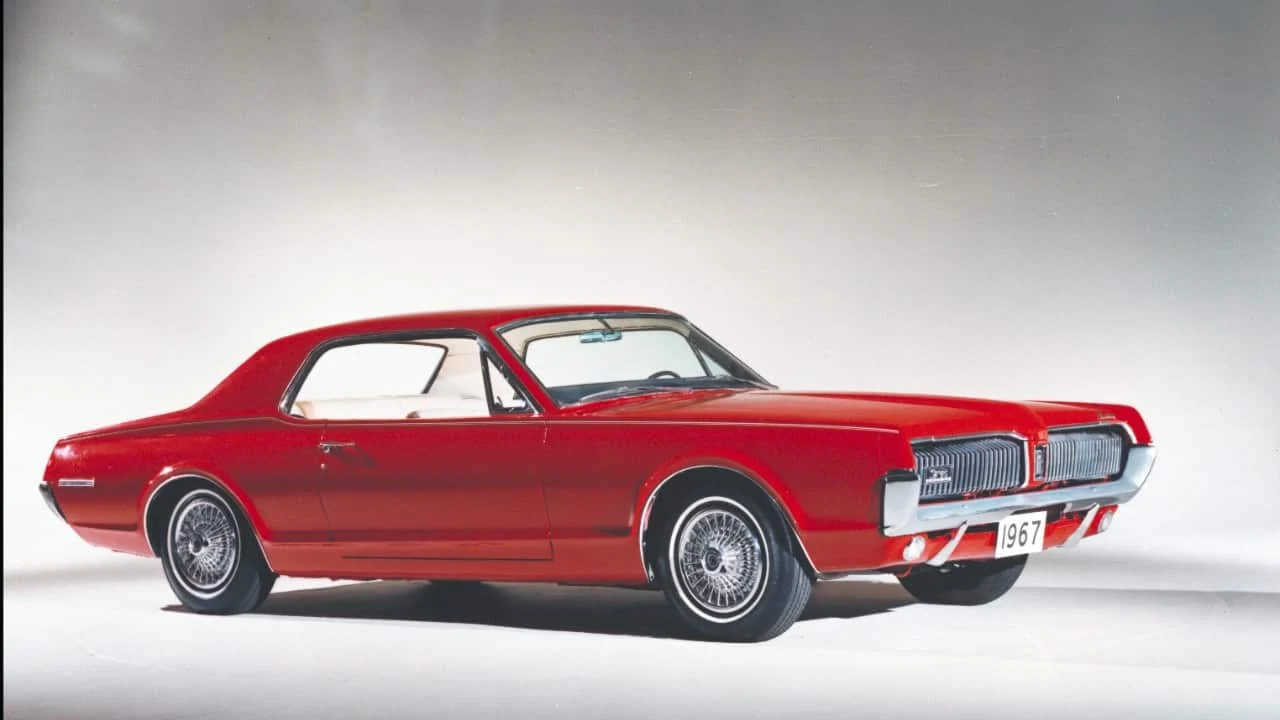
1967-68 Mercury Cougar XR-7
I’m not sure what year it was (and neither is my dad), but this was the first new car he and my mom bought. They were living in California at the time after immigrating in 1964 for grad school. In 1970, they moved to Delaware, and my first memory was playing with this car. I also remember being run off Route 202 by Mt. Lebanon Road—I recall a bumpy ride for a moment, then the front fender kinking out. My dad stopped, grabbed me, put me on the roof, and asked if I was okay. I was, but I don’t remember anything else after that.

My sitter had a similar car, so I was able to relive the Cougar for several more years until it became just another unreliable old car.

1974 Volvo 164
I don’t remember car-shopping for this one, but I do remember the dealership, which was a small import car facility on Market Street not far from Holiday Lincoln-Mercury. What I do remember is that it was burgundy with a black interior, and my dad never really cared for the car. The strongest memory I have is pretending to drive and moving the automatic gearshift, only to have the car roll backwards down the driveway and narrowly miss my sister on her tricycle.

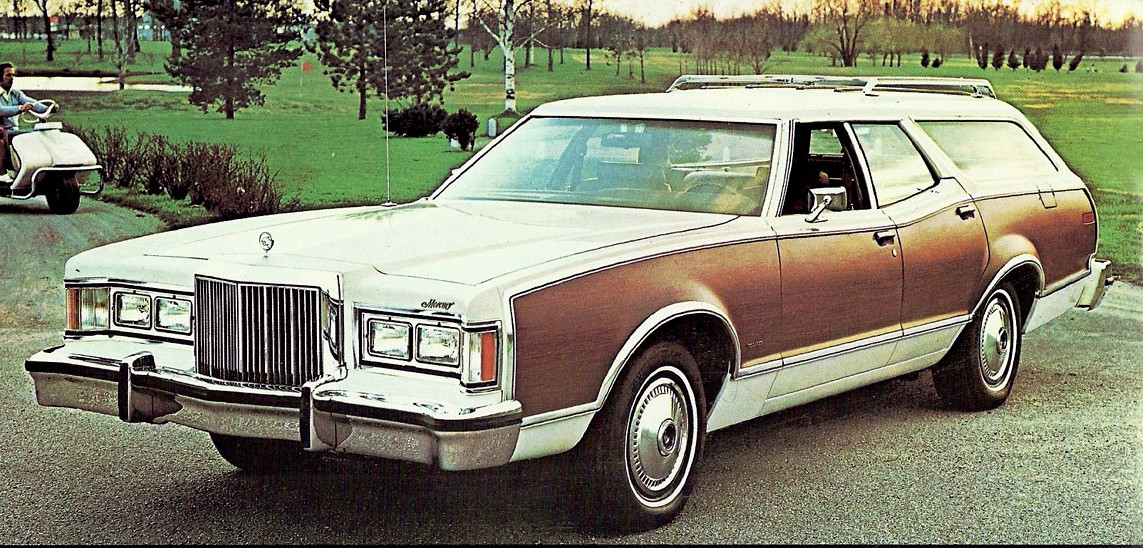
1976 Lincoln Continental Mark IV
I know this was the fall of ’76 because I remember the Mark Vs on the Holiday lot, so clearly my dad bought a leftover. It was pale yellow with a yellow vinyl roof, matching interior, and full wheelcovers. Of course, I loved the hidden headlights! I recall the Mark being a great highway cruiser, from DC to New York, though Philadelphia was the city most often traveled. One time when it was fresh in our garage and my dad had a business trim, my sister and I begged our mom to take us for a ride, but she was not able to find the emergency brake release so it stayed in the garage—seems this Lincoln’s brake was released once the shifter was moved from Park.

1982 Cadillac Eldorado Touring Coupe
I was in love with Cadillac at the time. I saw a direct lineage from the finned cars from the 1950s to what was being built at that moment. Downsized cars meant nothing to me, though in retrospect they were a big deal at the time. I do recall checking out several other brands including the Seville-inspired Lincoln Continental, Chrysler Imperial (I had begged him to take a look), and Saab. I believe our Touring Coupe was a demonstrator at Delaware Cadillac, so it appeared on our radar due to the test drive and not because my dad was dexterous with the order form. Alas, it was a lemon, so he quickly replaced it.

1984 Cadillac Eldorado
So, we were back. I don’t remember why we bought this and not another brand, though maybe the dealership worked something out to replace the Touring Coupe. Nineteen eighty-four was the first year of the Eldorado Biarritz convertible, but my dad could not afford it (and, in retrospect, it was somewhat ostentatious). What he settled on was a dark blue Eldorado with matching interior, fake tan convertible top, and full wheelcovers. This was an understated car, and it didn’t come off as cheesy as the roof may suggest.

1987 Porsche 928 S4 sports coupe

1987 Porsche 928 S4
I caught my first sight of this car at some dealer open house near the Boxwood GM plant. Car was painted Summer Yellow, and I fell in love. Apparently, so did my dad, but he could not afford that kind of car. However, after a lot of dreaming, he bought one, using his inheritance for a no-option 928 S4 in Guards Red. Too bad he opted for the automatic! To tell you the truth, the car was troublesome and the Blaupunkt sucked. (Pssst! Don’t tell anyone but, stupid me, I took it up to 130 mph on Rosedale Road in Princeton, New Jersey, till I ran out of road.)

1975 Cadillac Coupe de Ville
This was on the side of Wilson Road with 12,000 miles on the odometer. I think my dad missed his Lincoln, so he snapped this up for a fair price (and I’m guessing so the Porsche could have a more comfortable place during inclement weather). I managed to take it airborne a few times after we moved to New Jersey. The emissions junk meant the Caddy was never running properly.

1993 Volvo 850 Sedan
I don’t know why he bought this, as I was in college, but it was a great car. He still had the Porsche, but this was the one he could depend on daily. There’s no spectacular stories to tell, but it looked great in Fjord Blue. My mom eventually ended up with one too to replace her 1987 740 wagon, which was the car I learned to drive on after a brief experience with her 1979 Pontiac LeMans Safari (another great experience for a kid going to Union Park Pontiac when the Trans Am was the hottest car in America).

(Image courtesy of Wikipedia)

2000 Mercedes S 320
Aside from randomly lusting after a Maserati Quattroporte throughout the 1980s, he really wanted a Mercedes but could never afford one, though I have experience tagging along for several test drives during the same decade. In 1999, he was ready, and Mercedes had just debuted a redesigned S-Class to boot. He went with the S 320 because he couldn’t afford anything fancier though, when he moved to Scottsdale around 2000, it appeared absolutely puny compared to the S 500 and S 600 models that were all around town. It looked great with black cherry paint and oyster interior, but it was not reliable, and it soured my dad on Mercedes.

2002 Volkswagen Passat
Though retired by this time, my dad picked up a contract job and was given a company car. This sedan, which was produced during Audi’s rebirth and featured plenty of elements that had trickled down from the A4, was powered by the VR6 engine. This may have been the most perfect car that he ever owned, full of comfort and power in a package that would suit most people’s needs. In some respects, I feel this era was Volkswagen’s peak.

2006 Infiniti M35
One time when I traveled to Arizona to visit my dad, he picked me up in one of these. It was totally random and, honestly, I am unsure of the model year or whether it could have been an M45, but he liked it. However, it didn’t last long as he pulled out from a shopping center and was T-boned.

2008 Jaguar XJ
I’m not sure when was Dad’s accident, so again I am unsure if 2008 is the proper model year, but he ended up with this Jaguar XJ next. I recall when he tested the classic XJ in the 1980s, but the console took up so much space in the foot well that he hated it. This time, things were different. I think this car was more than satisfactory to him than the Mercedes but, while having his car serviced by the dealership, they convinced him to move into something new.

2019 Jaguar XJ
This is his final car. He still owns it, though he no longer drives. I’ve driven it at length and what’s notable is the sharp steering, but the center-stack interface is woefully outdated by now. Otherwise, this is a pretty neat car that’s not seen on every street corner, though I often wish his swan-song vehicle was something more interesting to me (and with a better resale value).
To all you dads out there, Happy Father’s Day. At the beginning of this year, I joined your special club. It’s too early to tell if my little guy will be into cars, but what I do know is that I am because of my dad. I thought I would write something for him that tells him how much he’s influenced and helped me, and share it with you.

You Did This

A black Lexus SC 400.
(Photo courtesy of Lexus)

Dad, maybe it was because you were into cars or perhaps you just knew that little kids like toys, but you (and Mom) gave Anthony and me a nice assortment of Hot Wheels, Matchbox, and Majorette cars. Trust me, we got your money’s worth out of them. You know that carpet in the room Anthony and I shared, the one with the dot pattern that formed a frame around the middle of it? Anthony and I used that as the racetrack for a dice-based board game we invented. For some reason, the black Lexus SC always did well. As a lifelong believer in Toyotas, maybe you get a little satisfaction from learning that. I don’t think you or I knew it at that point, but cars were quickly turning into more than just a passing fascination to me.

A white 1965 Ford Mustang convertible.
(Photo courtesy of the Ford Heritage Vault)

Even if I wasn’t into cars, I really couldn’t get away from them because you took me with you on your hunts for vintage American wheels. I recall being with you the evening you bought either your 1964½ Ford Mustang convertible or your 1965 Mustang 289 drop-top. Then there was the Sterling (an 827, I think), vintage Volkswagen Beetle, late-1960s Pontiac LeMans (or was it a GTO?) convertible, postwar GM trucks and, of course, the ever-changing fleet of Toyota Cressidas and 4Runners I remember in our driveway (too bad you didn’t hang onto the XJ Jeep Cherokee that long).

Red Lamborghini Diablo coupe.
(Photo courtesy of Lamborghini)

A random walk by a garage sale in the late 1990s only intensified my interest. It was the first time I recall seeing a 1:18 scale model up close—and it just so happened to be a red Lamborghini Diablo. What great timing! The price was even better: $1. You paid for it, which was money well spent, if you ask me.

After that, you kept my collection growing with several models every Christmas and birthday. Of course, I went after the exotics I knew about, but coming across cars I had never seen before broadened my horizons—and, eventually, my array of models.
Now that I can take a step back from it all as a father myself, I think you were trying to nurture a love of automobiles in me because you were a car guy yourself. I totally get it. Who wouldn’t want to have something so major and enjoyable in common with his son? I hope I can pass that passion on to Hayden.

I’m Sorry
I know there was at least one point where you must have thought you had created a monster—a nerdy, overly talkative one that would randomly point out minute, who-cares details about bland, effectively invisible vehicles (the Ford Five Hundred, for instance). Time and age has taught me that sometimes I need to pull back and not constantly bombard people (no matter how into cars they may be) with facts and stats that only I care about. When someone does that to me regarding a different subject, I know I get irritated.

Thank You
I would not be the person I am today without you. Cars are not my entire identity, but they are a big part of me. They’ve always excited and interested me, and they continue to do that, even when I think they can’t anymore. I am more of my true self when I’m around them (usually spouting off facts and trivia) and they’re part of a language I speak with you and many of my friends.

Years ago, when I was a freelancer, I would always try to think of ways to use the review vehicles I received for the things they were built to do, especially the big trucks. You knew I wanted to truly test out the 2019 Ford F-250 King Ranch, so you took time out of your day to go with me to the local quarry to pick up over 3,000 pounds of road base. You even helped me shovel it out at your house in the summer heat. And thanks to your thinking, I had heavy stuff to haul away in the bed of the 2020 Ford F-450 I reviewed. My write-ups were better—and more fun—due to your help. The love of cars I gleaned from you led me to where I am today: writing for a well-known automotive website with a large audience. What I do here teaches me more about my favorite subject and enables me to provide for my family.

I Hope You Had Fun

Land Rover Range Rover going off-road.
(Photo courtesy of Land Rover)

I’ve been fortunate to drive many press vehicles over the past decade. I’m glad I was able to share some of them with you. You and I never went wheeling in your first-gen 4Runner, but going to an OHV park with you and Sylvia in a Range Rover was a nice consolation prize. I hope you saw the effect you’ve had on me; I definitely saw the effect our adventure had on you. We hit a substantial roll angle in one section of the trail we were on, which gave you a horrifying view of the rocky terrain right outside your window. That was the first time I’d ever seen you scared in a vehicle. We reached the top of that trail without a scratch and went on to explore more of the terrain, so I’d like to think you (and Sylvia) enjoyed the experience overall. I know I did! It was a dream come true to be able to share that kind of adventure with you.

2020 Chevrolet Corvette Stingray going down a road.
(Photo courtesy of Chevrolet)

I’ll always remember my week in the 2020 Chevrolet Corvette Stingray. Yeah, it was curvy and dramatic and fast and loud, but it also brought out a part of your inner car guy that I don’t think I had ever seen before. You didn’t bemoan the price or lack of practicality—you simply wanted to go for a ride in a Vette for the pure fun of it. I was happy to oblige (and test out the C8’s acceleration at the same time).

1930 Duesenberg Model J at the Martin Auto Museum.
(Photo by Tyson Hugie)

I can’t believe it took 41 years, but you and I finally went to a car museum together for the first time. We should have done it much sooner. It was nice to get your perspective on different eras of the automobile and learn which ones you liked the most. I had no idea you’d be so drawn to a Holden, especially one from the 1930s, but I have the picture to prove it. Even better, I have our photo together in front of a 1930 Duesenberg Model J.

Perhaps you see a little of your own father or even yourself in these stories. Feel free to share your car-related memories with your dad or children in the comments below. Happy Father’s Day to my dad and all of you other dads out there. Here’s to all of us making more memories in cars we love with the people we love the most.