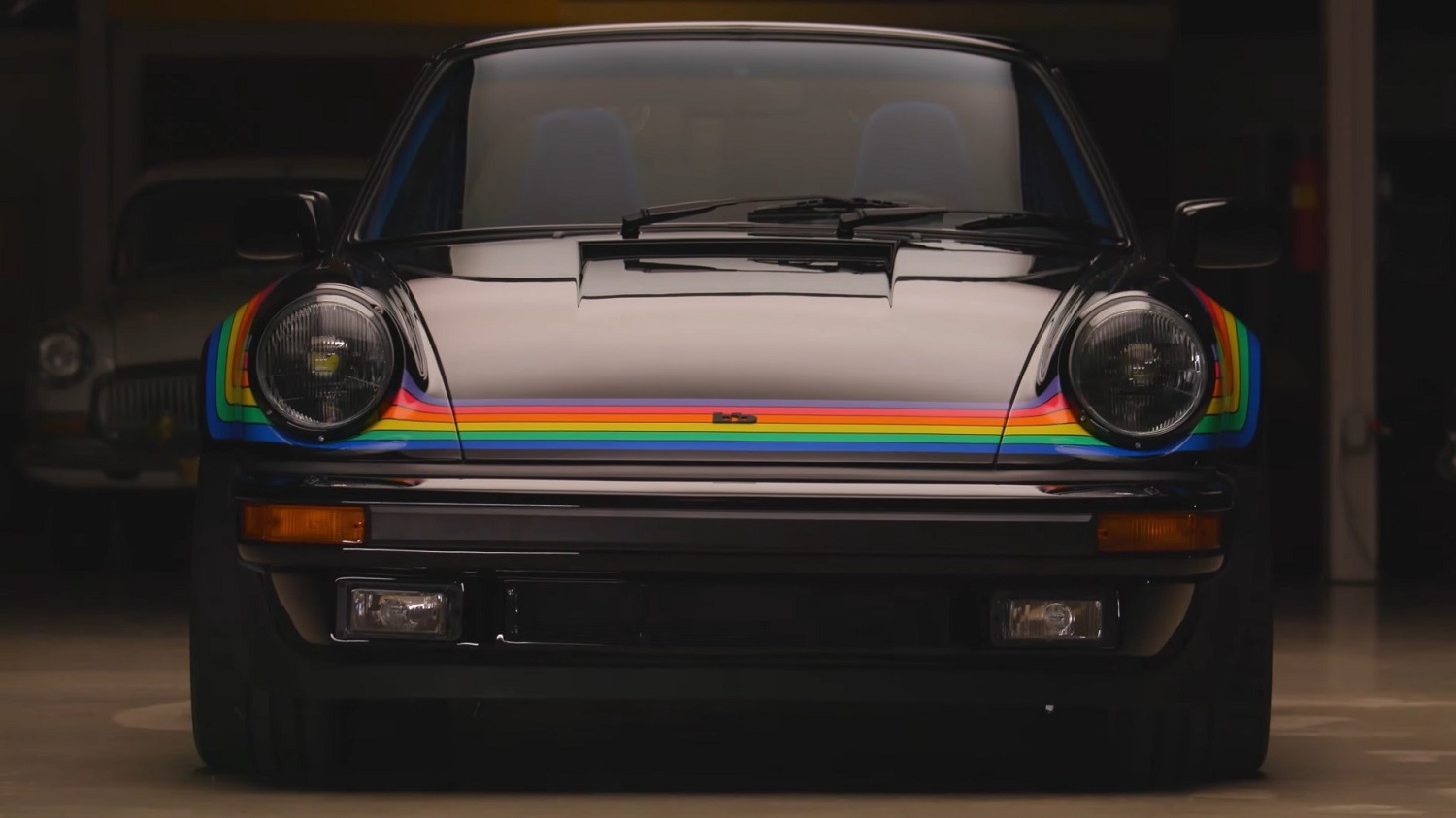
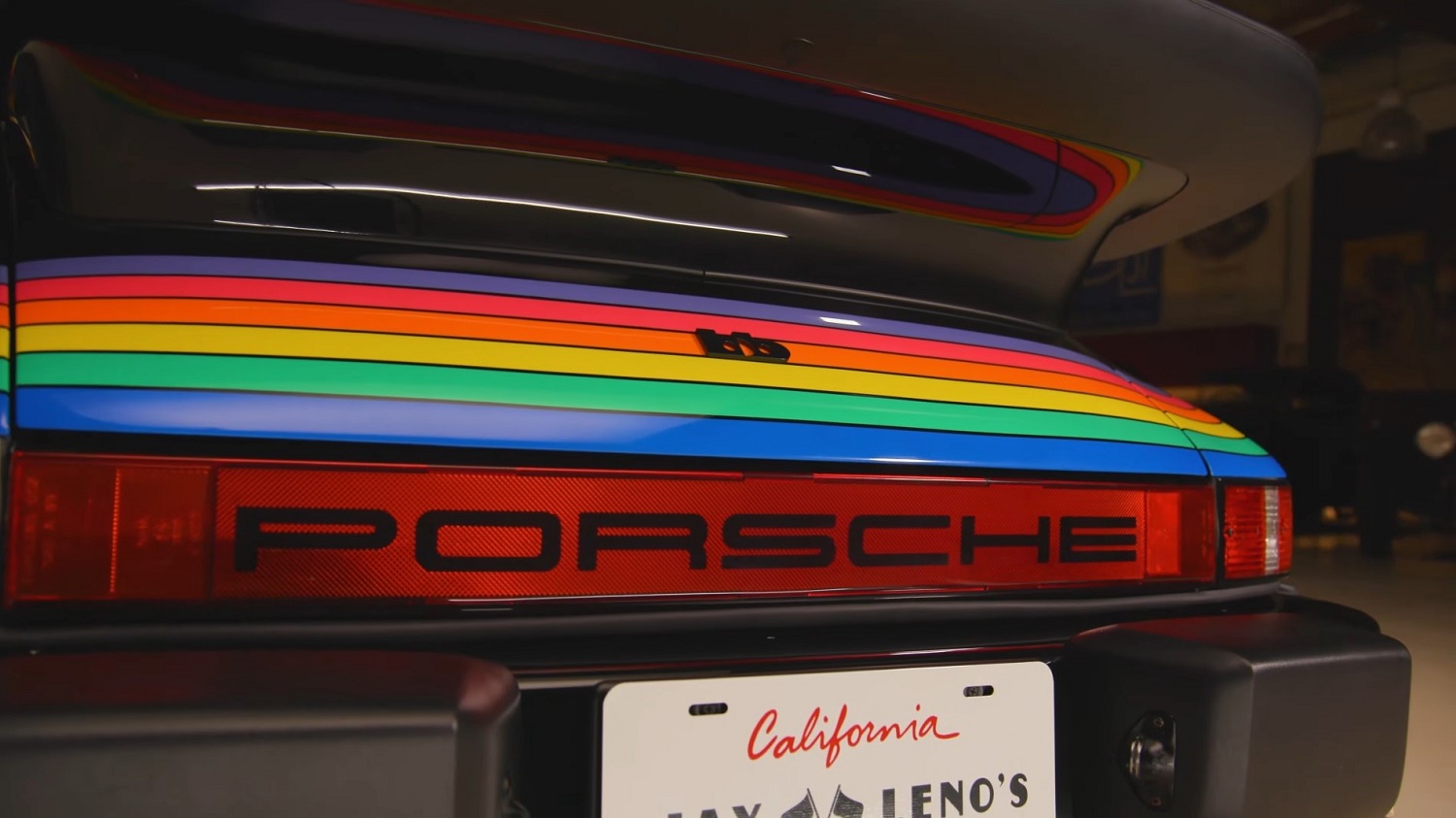
Jay Leno has had several Porsches in his garage over the years. Many of them were his, but a lot of them were brought in by companies such as Singer and Lab Eleven. For a variety of reasons, none were quite like this bb-Auto 1986 Porsche 911.
In the 1970s and ’80s, German tuner BB was known for its customized cars. One of the company’s most famous builds was the “Rainbow Car,” a 1976 Porsche 911 that combined the Targa body style with Turbo power and Polaroid’s color scheme as part of a display at the 1976 Photokina trade show in Cologne, Germany. These days, Galpin Motors has the rights to bb-Auto in North America. To honor BB’s colorful creation, the company has developed a prototype of a 1986 Porsche 911 with a similar color scheme (with painted stripes!), but a very different engine.
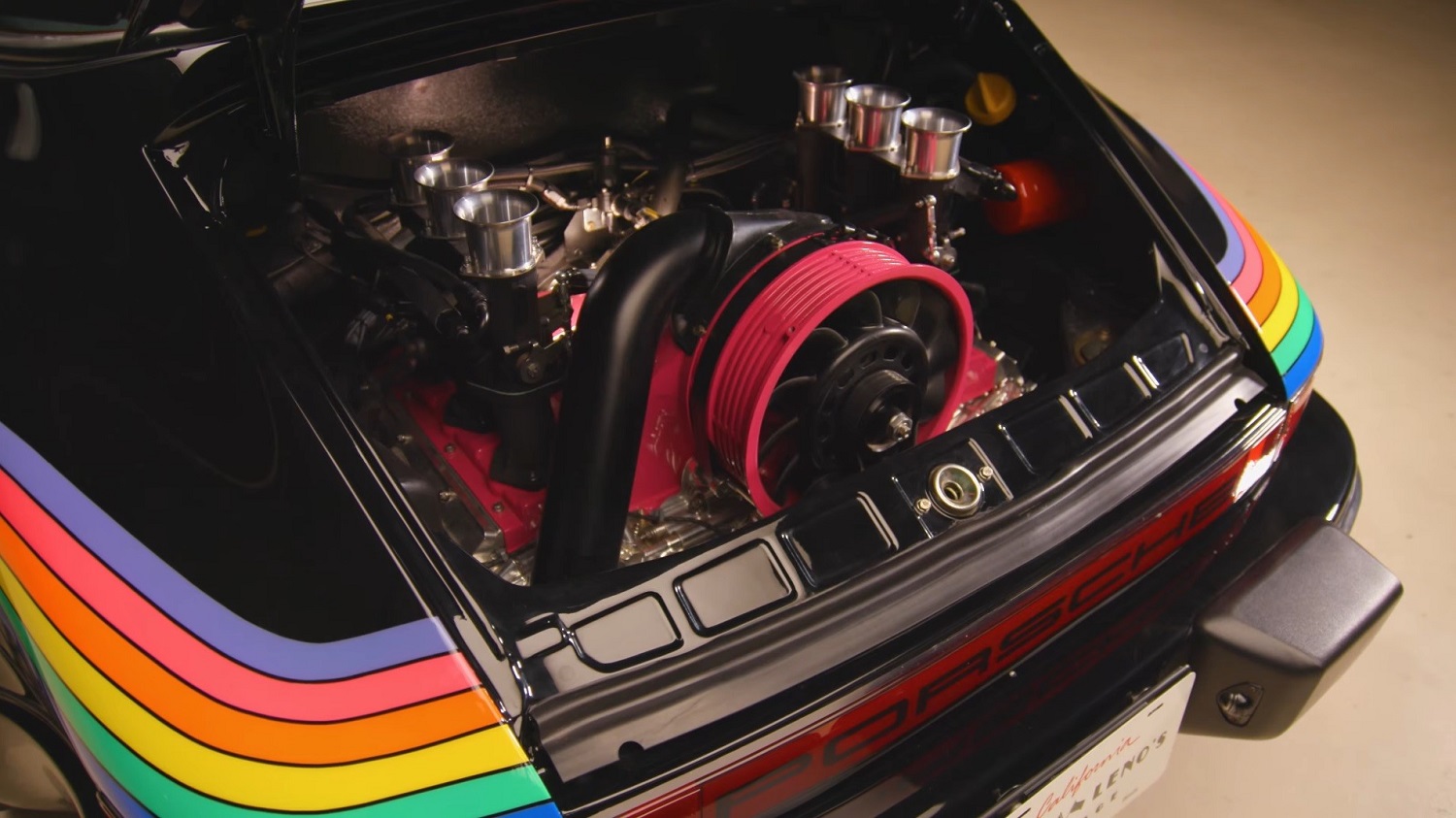
As Galpin Motors president Beau Boeckmann explains, under the rear engine cover is a fuel-injected Ed Pink 4.0-liter flat-six. Between the 4.0 and the upgraded G50 five-speed manual gearbox is a lightweight electric motor that instantly adds 150 horsepower, raising the grand total to 550. An Elephant Racing 997 GT3-style adjustable suspension and custom Fuchs-style wheels made by Titan 7 for bb-Auto help all that reach the road or track. When the Brembo discs aren’t needed, a regenerative braking system puts juice back into the lithium-ion battery pack.
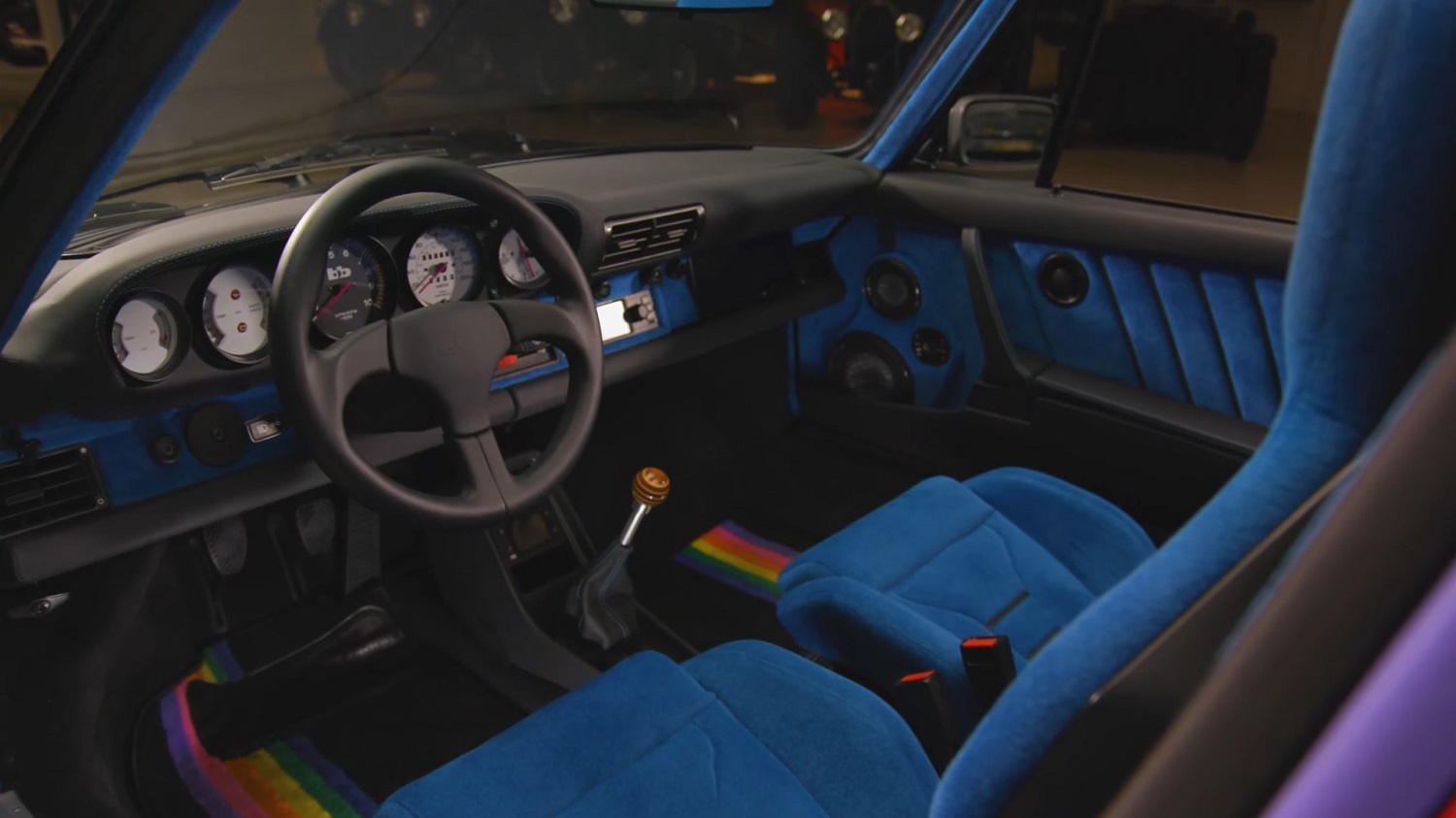
The cockpit is colorful in its own way: both Recaro buckets, the rear seats, and the door panel inserts are covered in a vibrant blue upholstery.
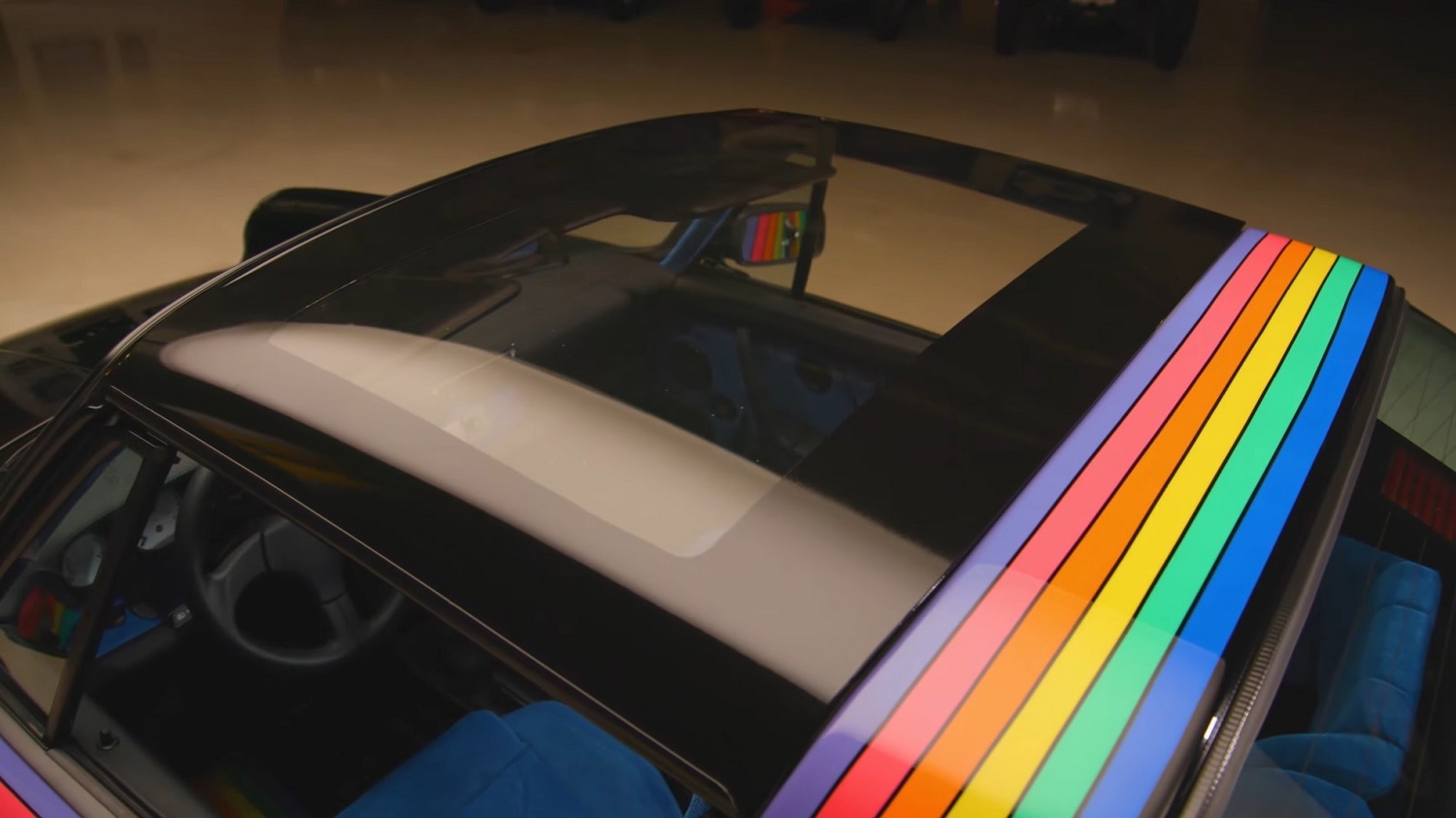
Like the Targa, the roof panel is removable, but now it’s transparent glass. Air conditioning keeps things cool while a TV in the dash keeps the shotgun passenger entertained.
What does Leno think of bb-Auto’s retro-inspired 911 build? Are all of the changes too much? Watch the video below to find out.
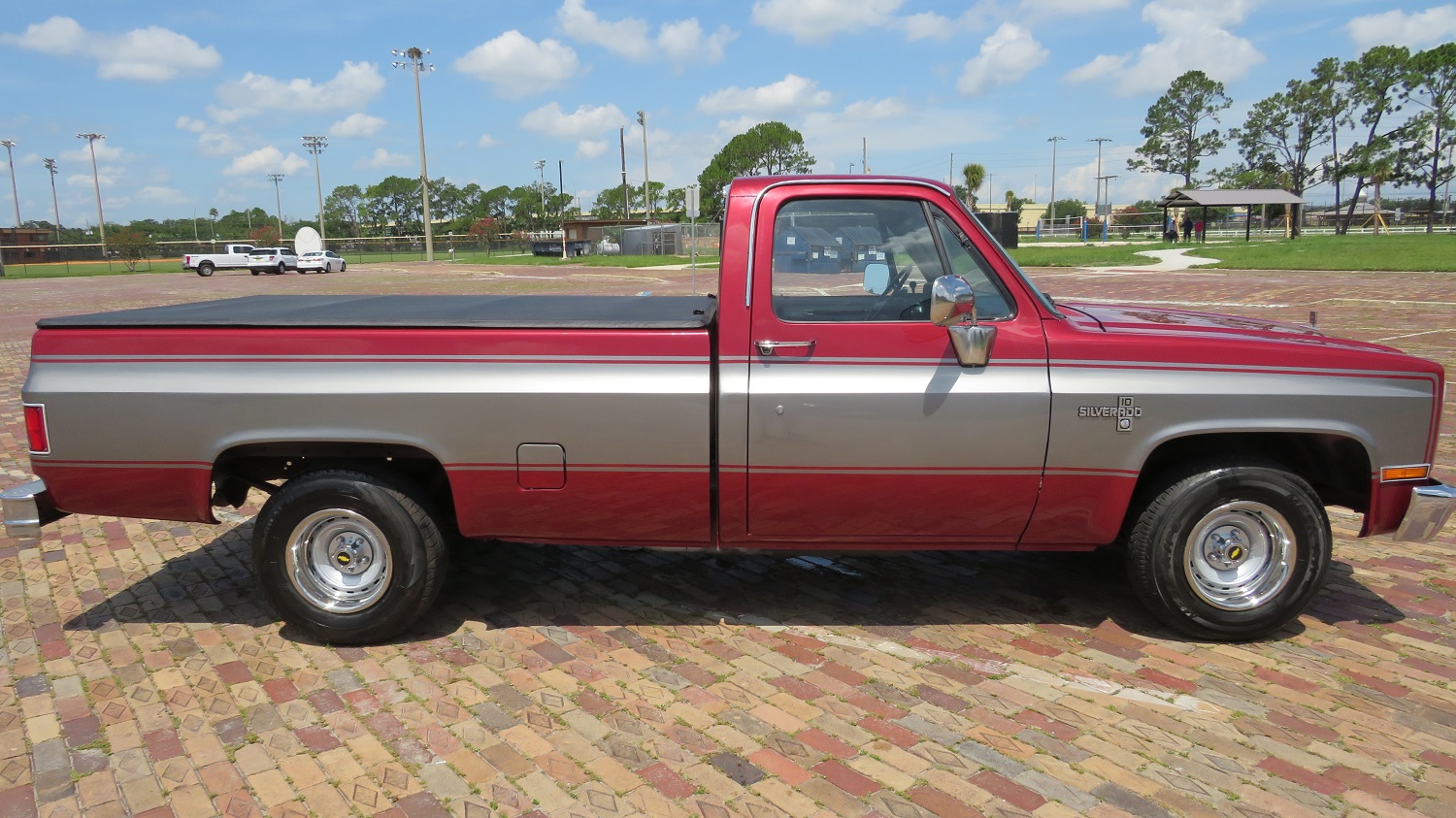
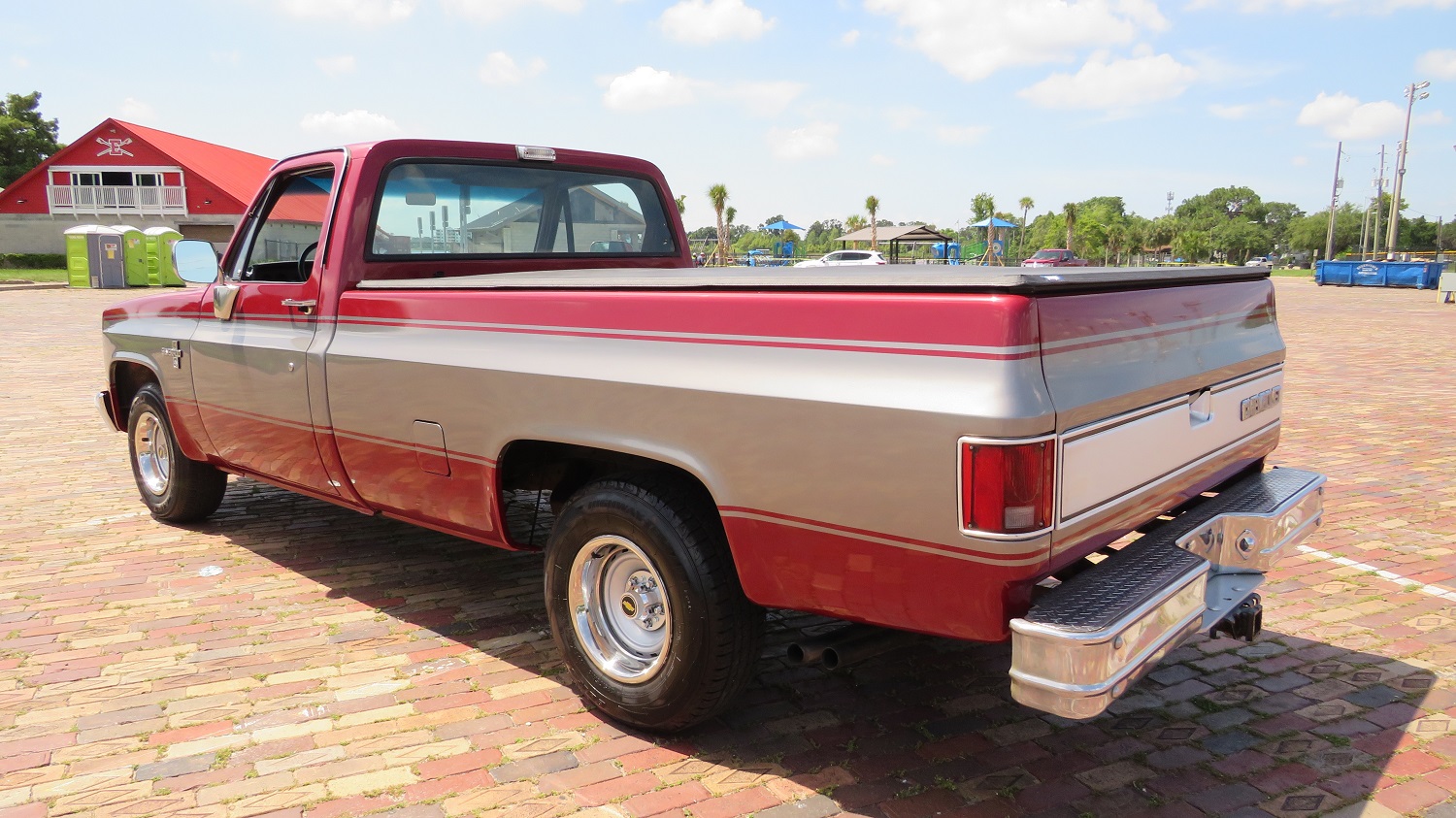
Right now on AutoHunter, you can find this restored, two-wheel-drive 1987 Chevrolet R10. It is equipped with features such as air conditioning and cruise control. Under the hood is a fuel-injected 5.0-liter V8 connected to a 700R4 four-speed automatic transmission. Finished in red and gray two-tone paint over an updated gray cloth interior, this Chevy R/V-series (formerly C/K) pickup is now offered by the Florida selling dealer with the original owner’s manual, CARFAX report, and clear title.
As part of its 2024 body-on restoration, this “Square Body” was refinished in a combination of red and gray paint. Exterior features include chrome bumpers, front bumper guards, fog lights, tonneau cover, hitch receiver, and single exhaust system with dual pipes.
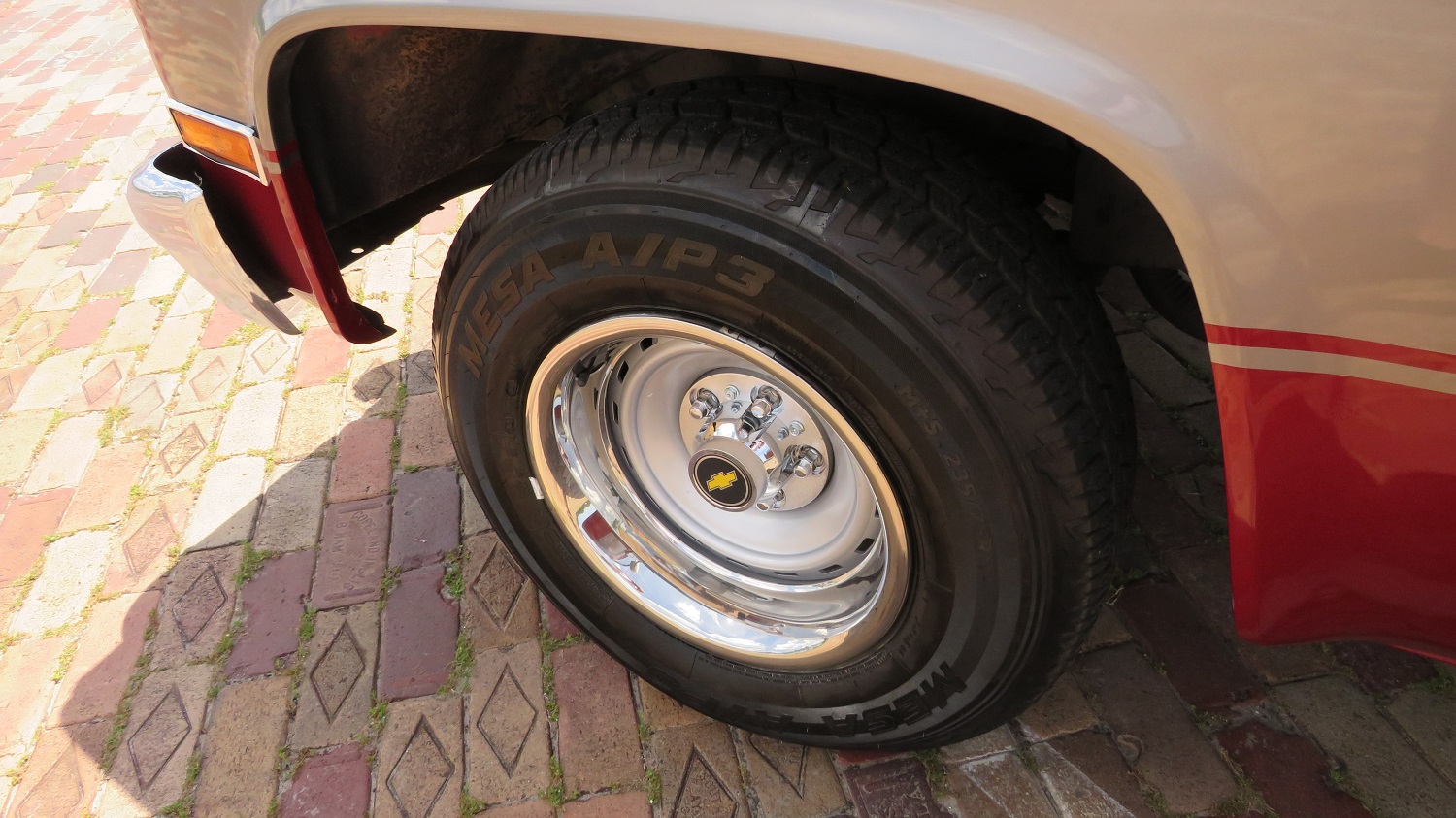
The tires have also been updated to new 235/75 Mesa (front) and Corsa (rear) radials, which surround a set of 15-inch Rally wheels.
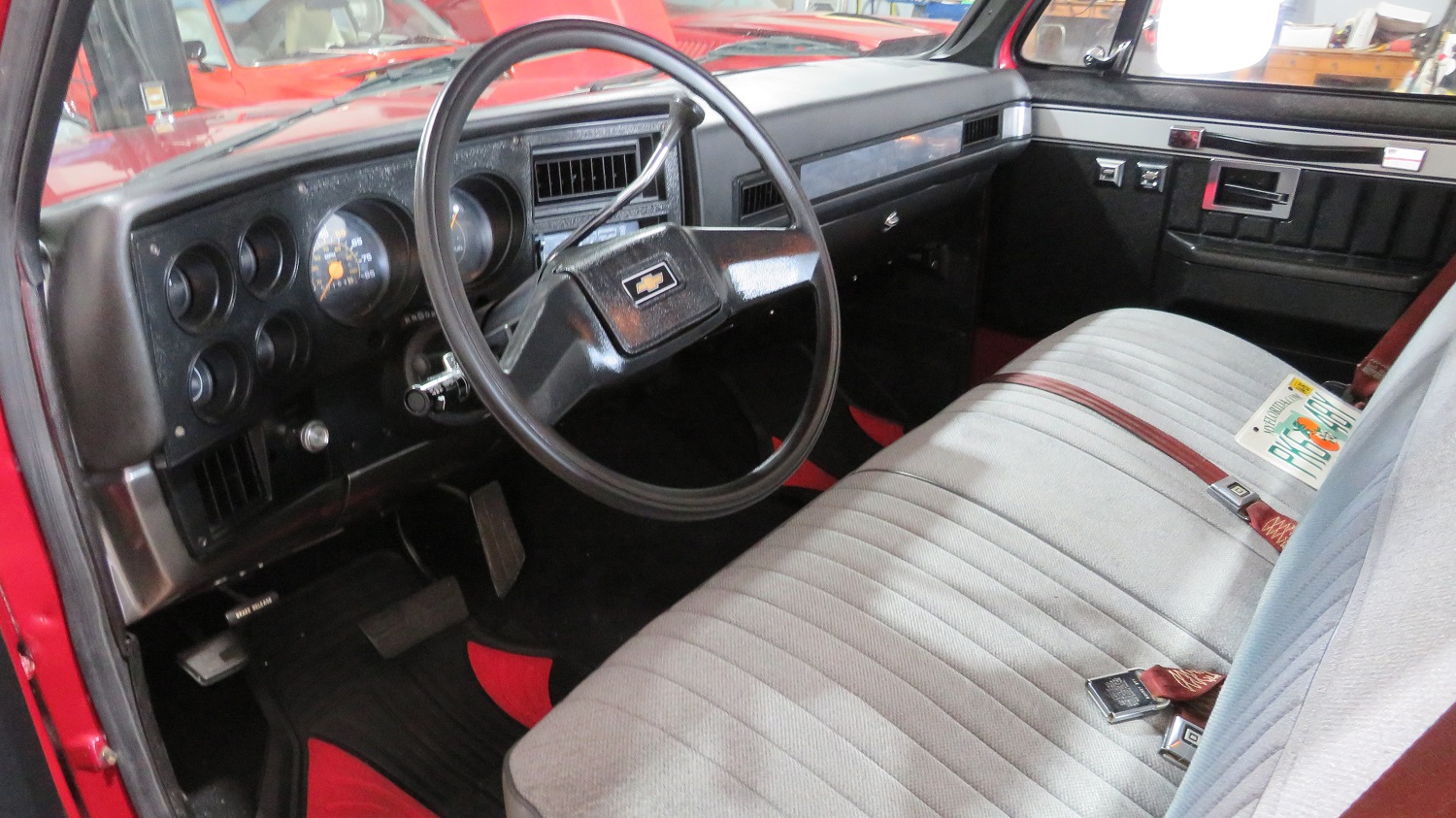
The refreshed interior features a gray cloth bench seat plus the convenience of power windows and locks, cruise control, tilt steering column, power steering, air conditioning, and new AM/FM/Bluetooth retro-look stereo with new speakers.
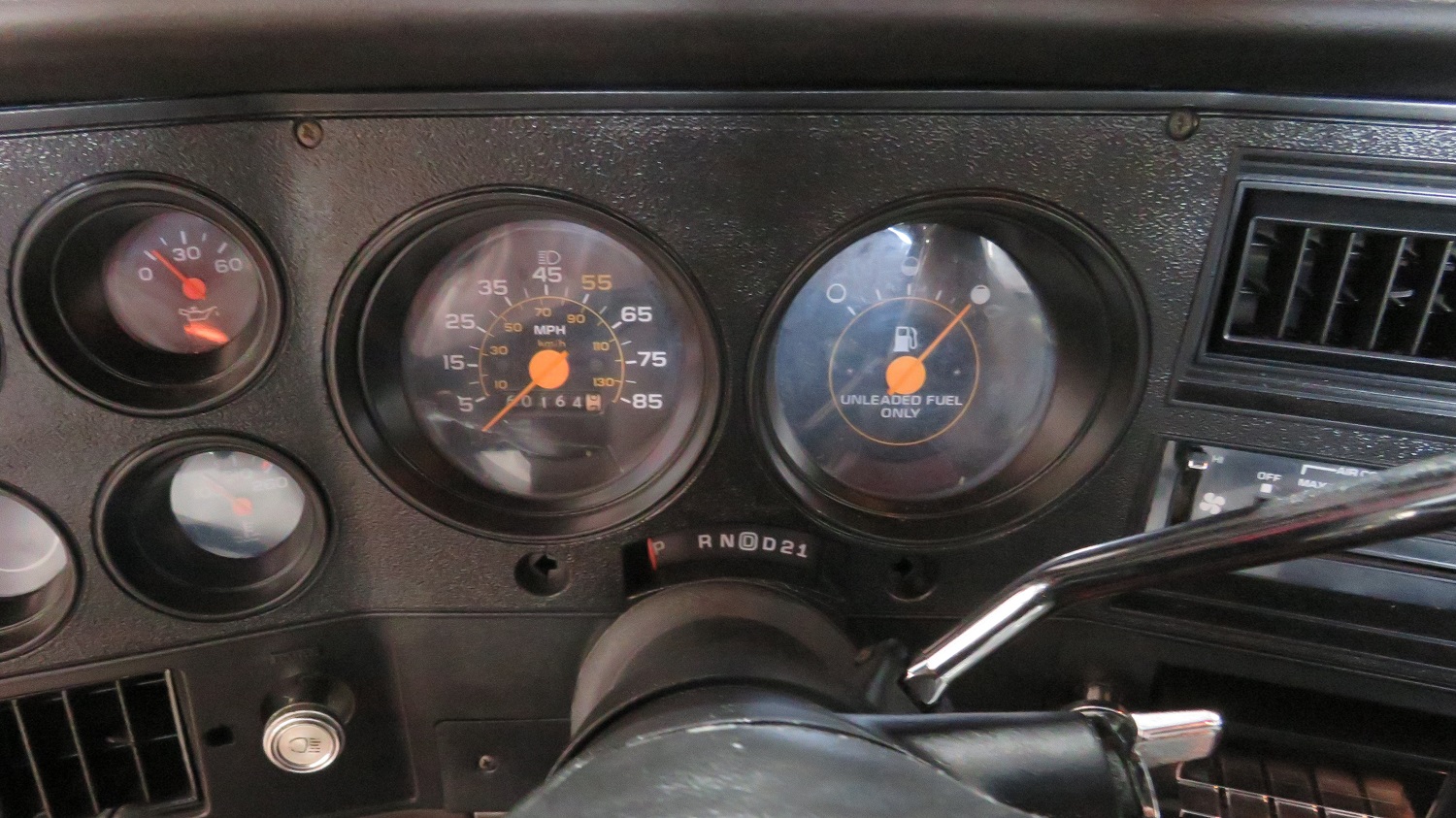
Instrumentation consists of an 85-mph speedometer and gauges for the fuel level, voltage, oil pressure, and temperature. The odometer shows 60,164 miles, though a mileage inconsistency was logged in the CARFAX report in January 2023, the same month a mileage figure of 57,689 was recorded. The title for this truck indicates it’s mileage-exempt.
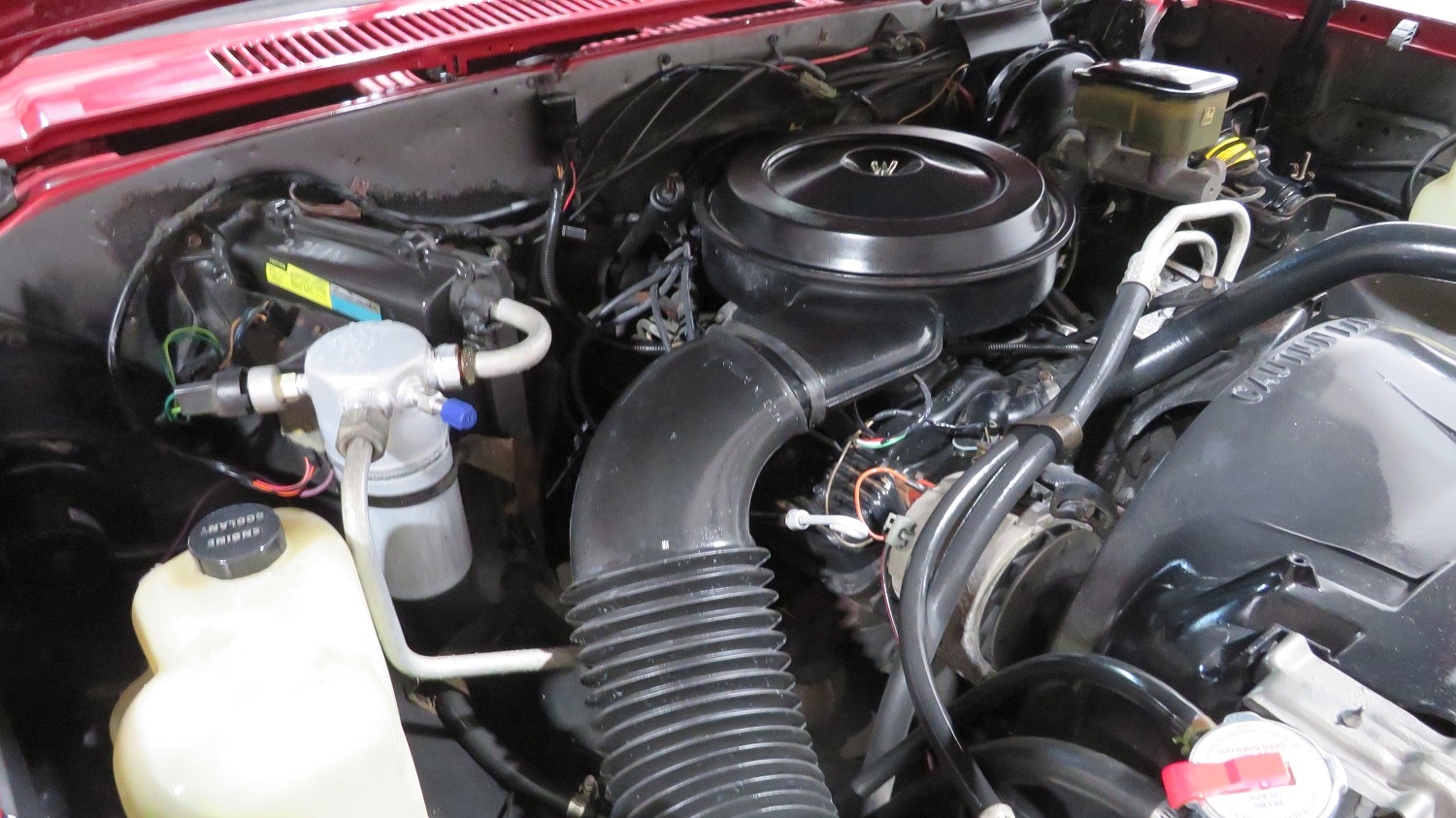
A fuel-injected 5.0-liter V8 that was factory-rated at 170 horsepower and 260 lb-ft of torque gets this Chevy down the road. The L03 small-block draws fuel from two gas tanks and delivers its output to the rear wheels through a 700R4 four-speed automatic transmission. Power front disc and rear drum brakes help this R10 stop so that it can keep on truckin’.
If you want this updated 1987 Chevrolet R10 pickup for cruising, hauling, or a little of both, bid on it now. The auction for it ends on Friday, July 25 at 11:00 a.m. (PDT).
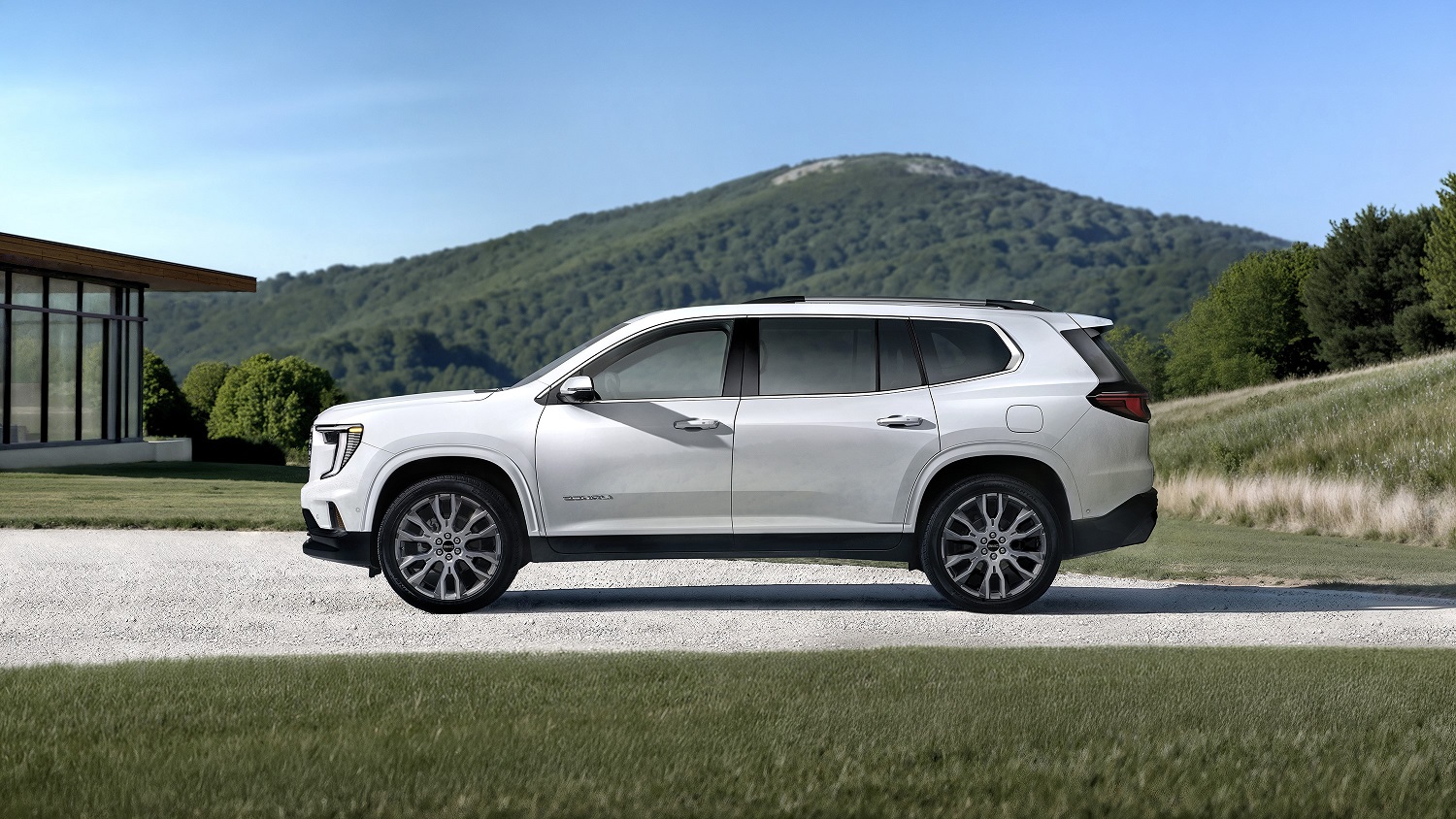
In 1999, GMC introduced Denali, its new top trim level, on the Yukon. It wasn’t long before GMC started offering Denali versions of its other vehicles. Now you can get every model in the GMC lineup (except the Hummer EVs) in Denali trim. But starting in 2022, Denali got one-upped by Denali Ultimate, which is currently available on the Sierra 1500, Sierra HD, Yukon, and Yukon XL. The newest GMC to get that super-luxury treatment is the 2026 Acadia.
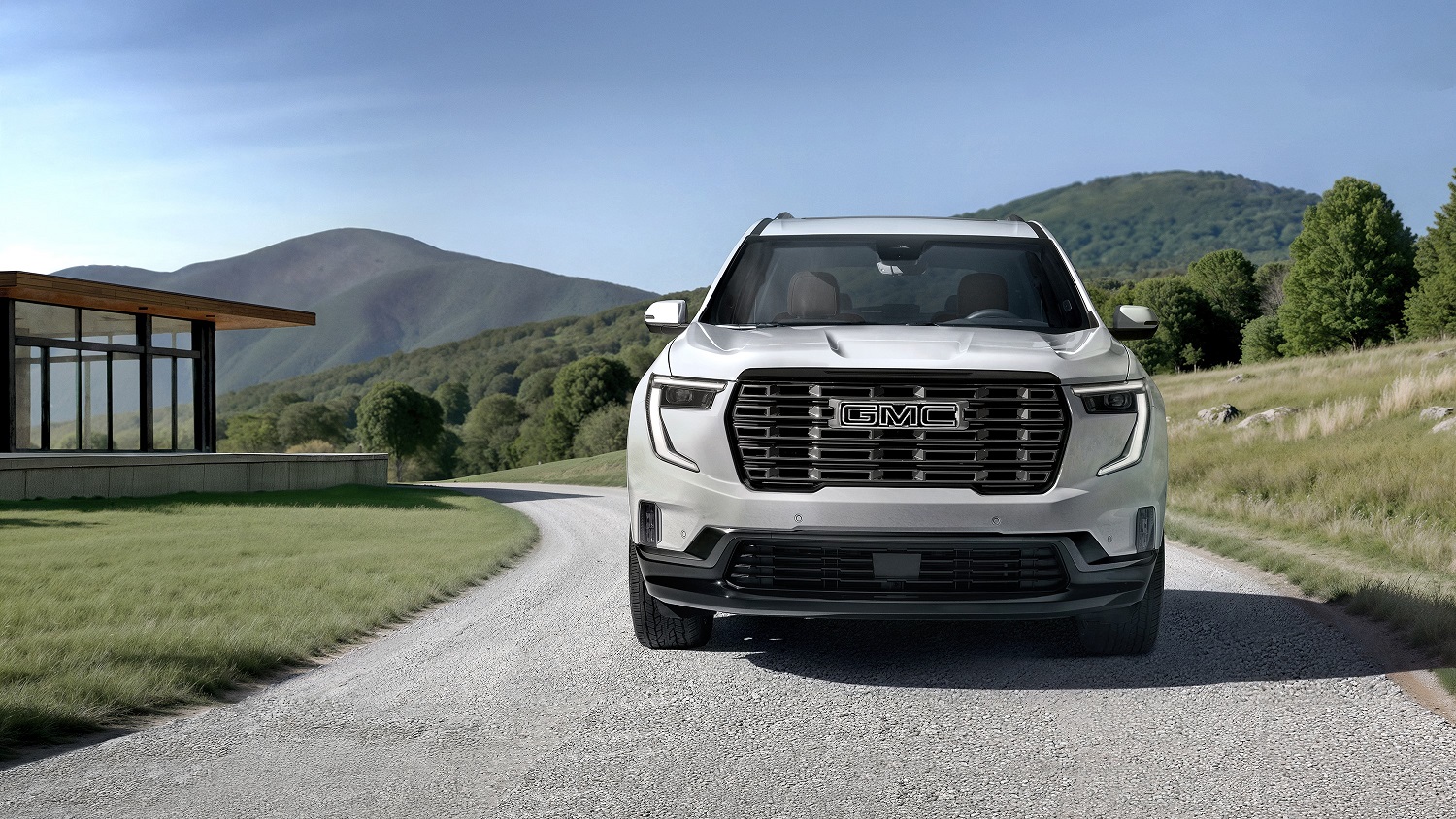
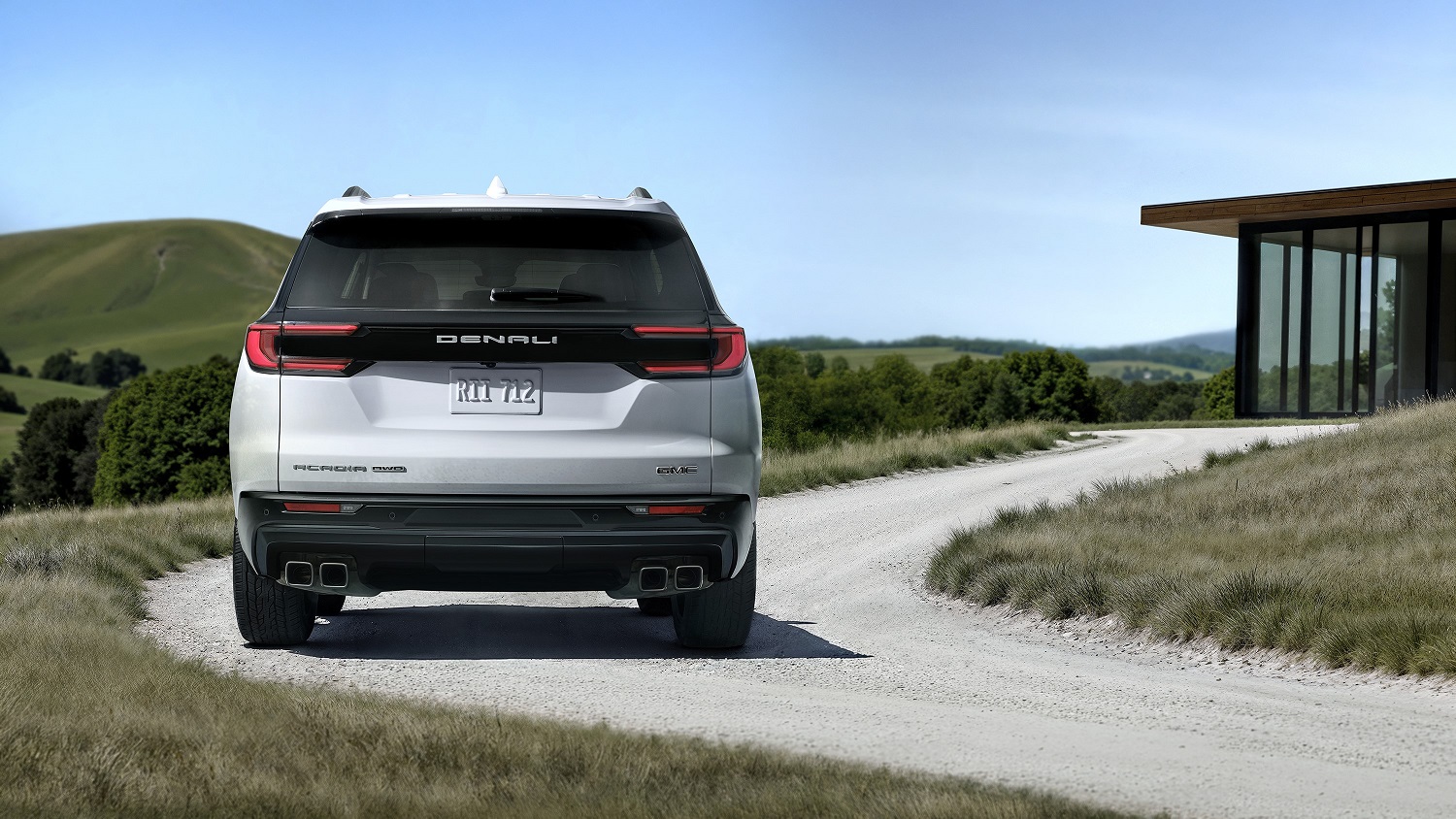
Someone on GMC’s design team must be a Star Wars fan because two of the flagship Acadia’s most distinguishing exterior characteristics are the Vader Chrome grille and GMC logo, which are flanked by LED daytime running lamps with an animated lighting sequence (perhaps one resembling a lightsaber battle?).
The 20-inch wheels get a similar makeover, going from the regular Denali’s Pearl Nickel finish to After Midnight Metallic (does GMC have an Eric Clapton fan on its design team too?). If those clues aren’t enough, GMC also identifies the top Acadia model with exclusive badging.
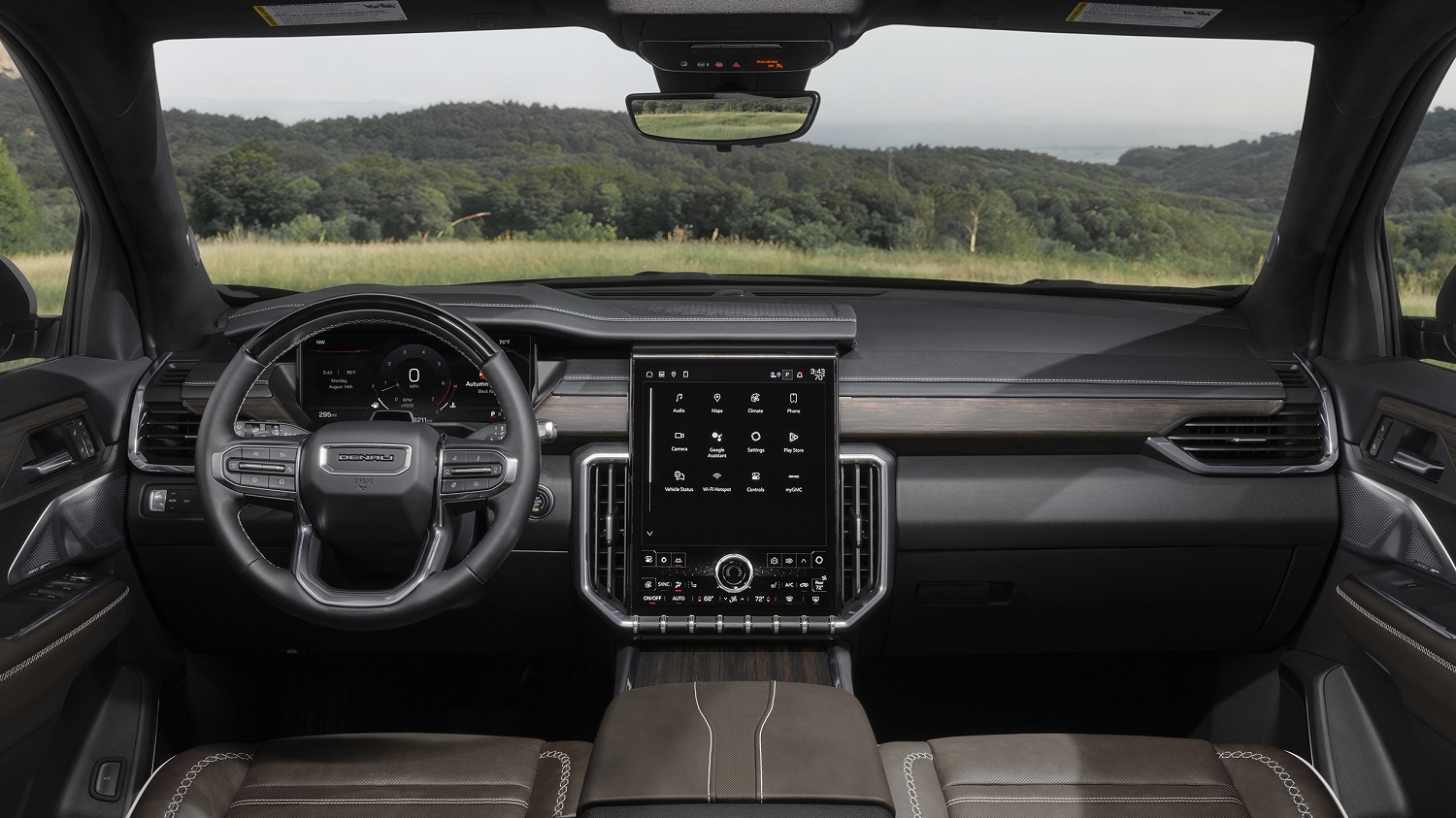
Inside, GMC sets the Acadia Denali Ultimate apart in two major ways. As you might expect, it comes equipped with more standard features than lesser models. Those make up a long list that includes an eight-inch head-up display, Bose 16-Speaker Performance Series sound system, panoramic sunroof, HD Surround Vision, Super Cruise hands-free driver assistance tech, and performance suspension. A Rear Camera Mirror is also on the list, but it’s now standard on all 2026 Acadias.
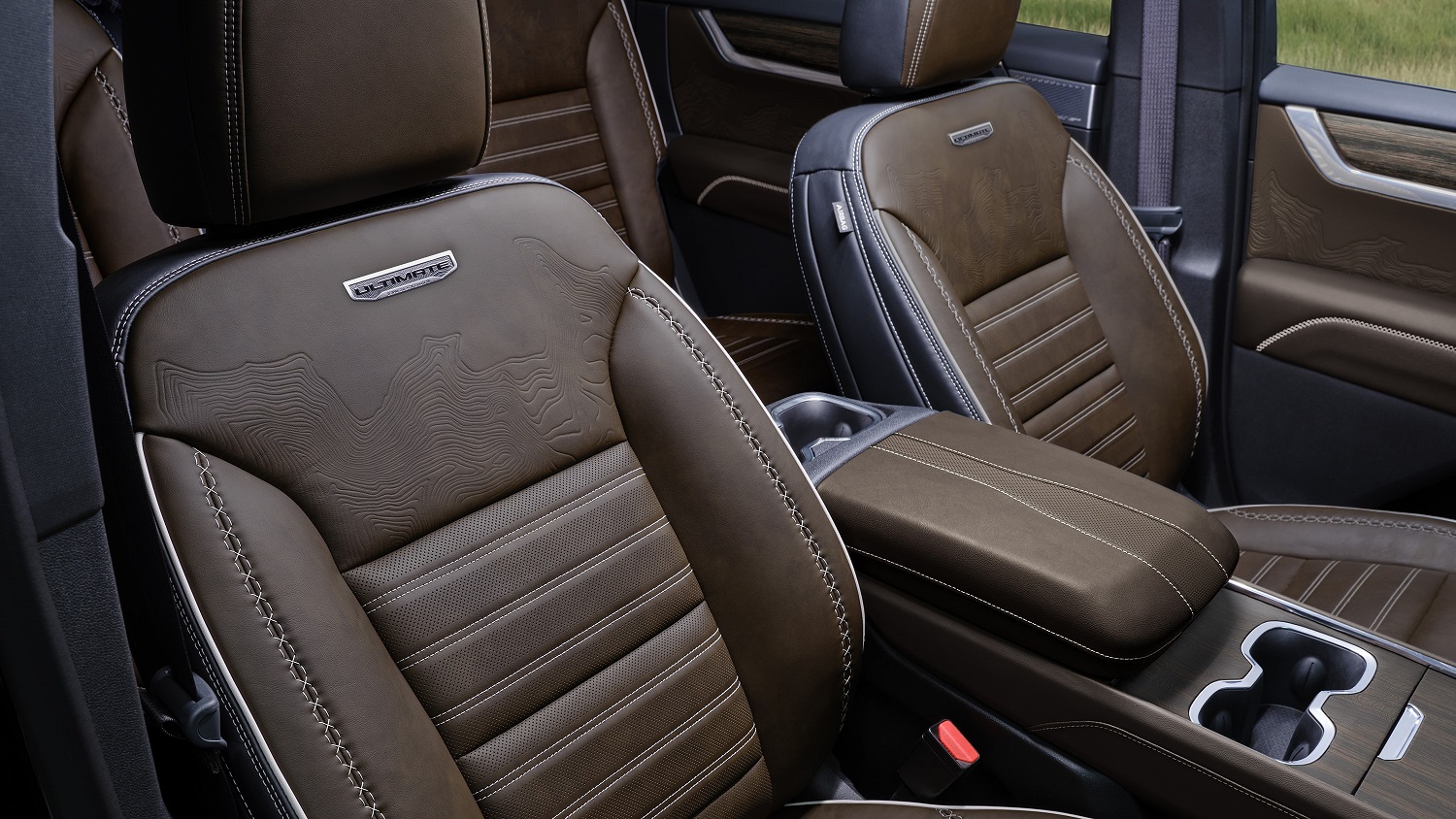
The Denali Ultimate’s materials are the second half of the interior upgrades. The Woodland Mahogany massaging front seats are heated and ventilated, and accented with plaited contrast stitching. All three rows get Denali Ultimate badges on their seatbacks along with embossed topographical maps, which extend to the door trim and map pockets. Laser-etched accents give the Paldao wood trim its own texture.
Look for the 2026 Acadia in GMC dealerships in Q3 of this year. Denali Ultimate models should arrive later; expect final pricing and additional info at around that time.
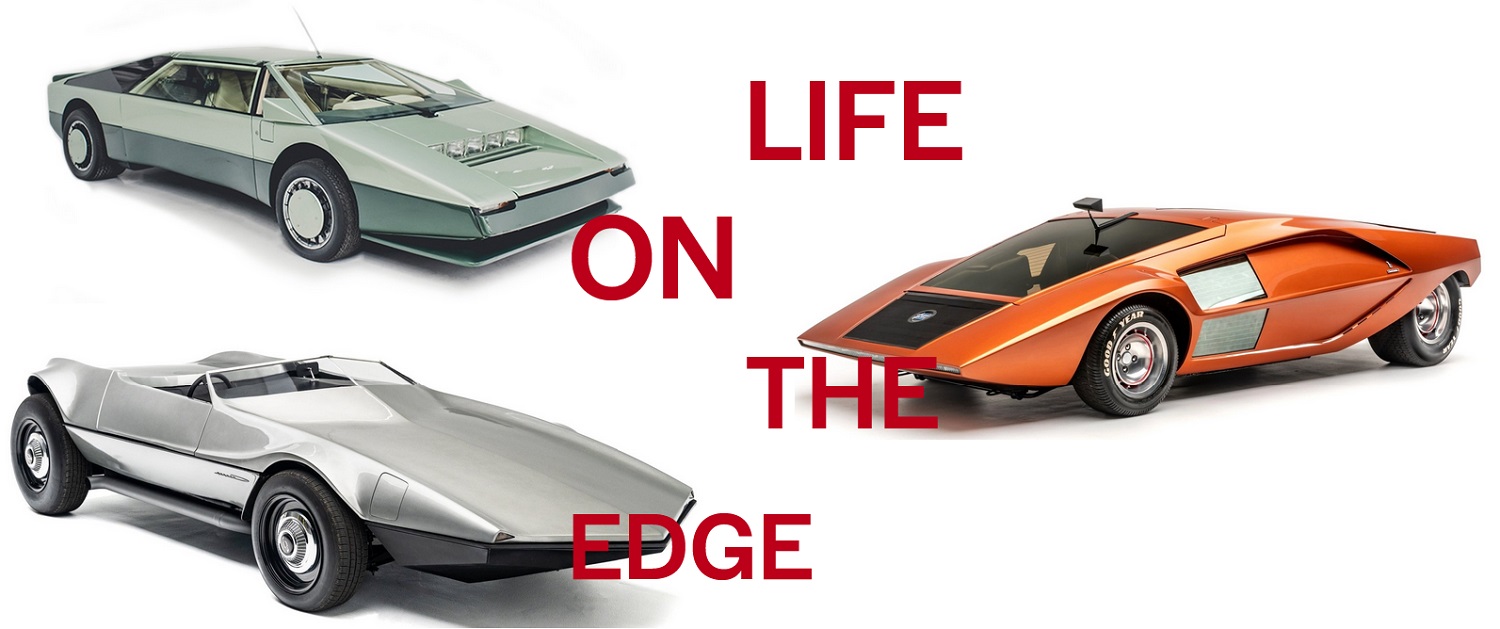
The wedge-shaped cars of the 1960s-1980s are so dramatic and angular that it seems as if there were no compromises made in the transition from initial sketch to production. Unfortunately, they’re so old now that you rarely see any of them out on the street unless you count the C4 Chevrolet Corvette. The good news is that the Petersen Automotive Museum in LA will be opening an exhibit called “The Wedge Revolution: Cars on the Cutting Edge” on August 2.
Aston Martin Bulldog, 1970 Lancia Stratos HF Zero, and 1966 Cannara I (Photo courtesy of the Petersen Automotive Museum)
According to the museum, the display, “co-curated with Tesla Chief Designer and wedge design aficionado Franz von Holzhausen, will showcase a wide range of vehicles embodying the bold, angular styling that defined this unique era in automotive design. It will highlight the transitional period when designers moved from decorative curves and chrome to clean lines, flat surfaces and geometric forms.”
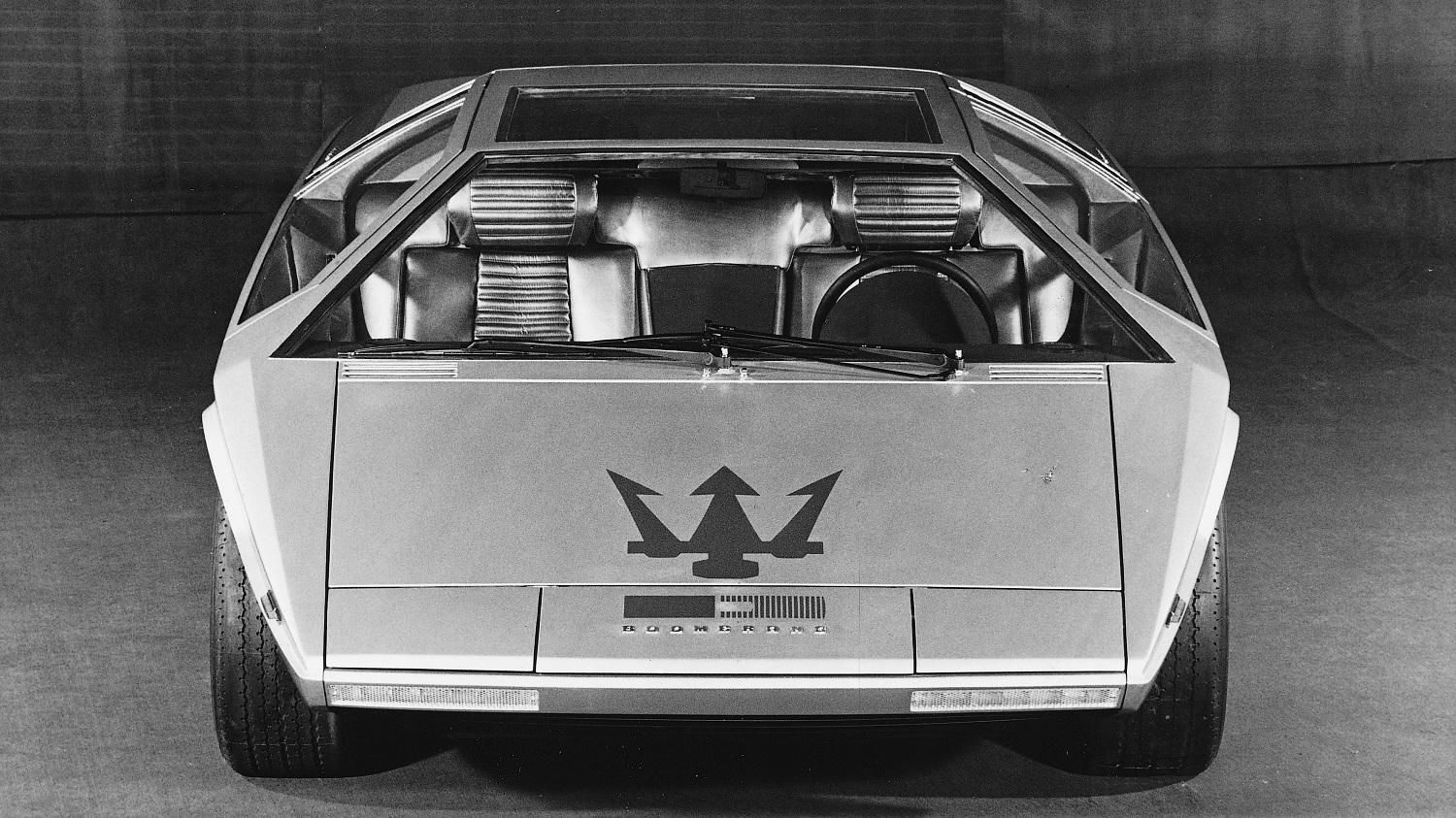
Maserati Boomerang (Photo courtesy of Maserati)
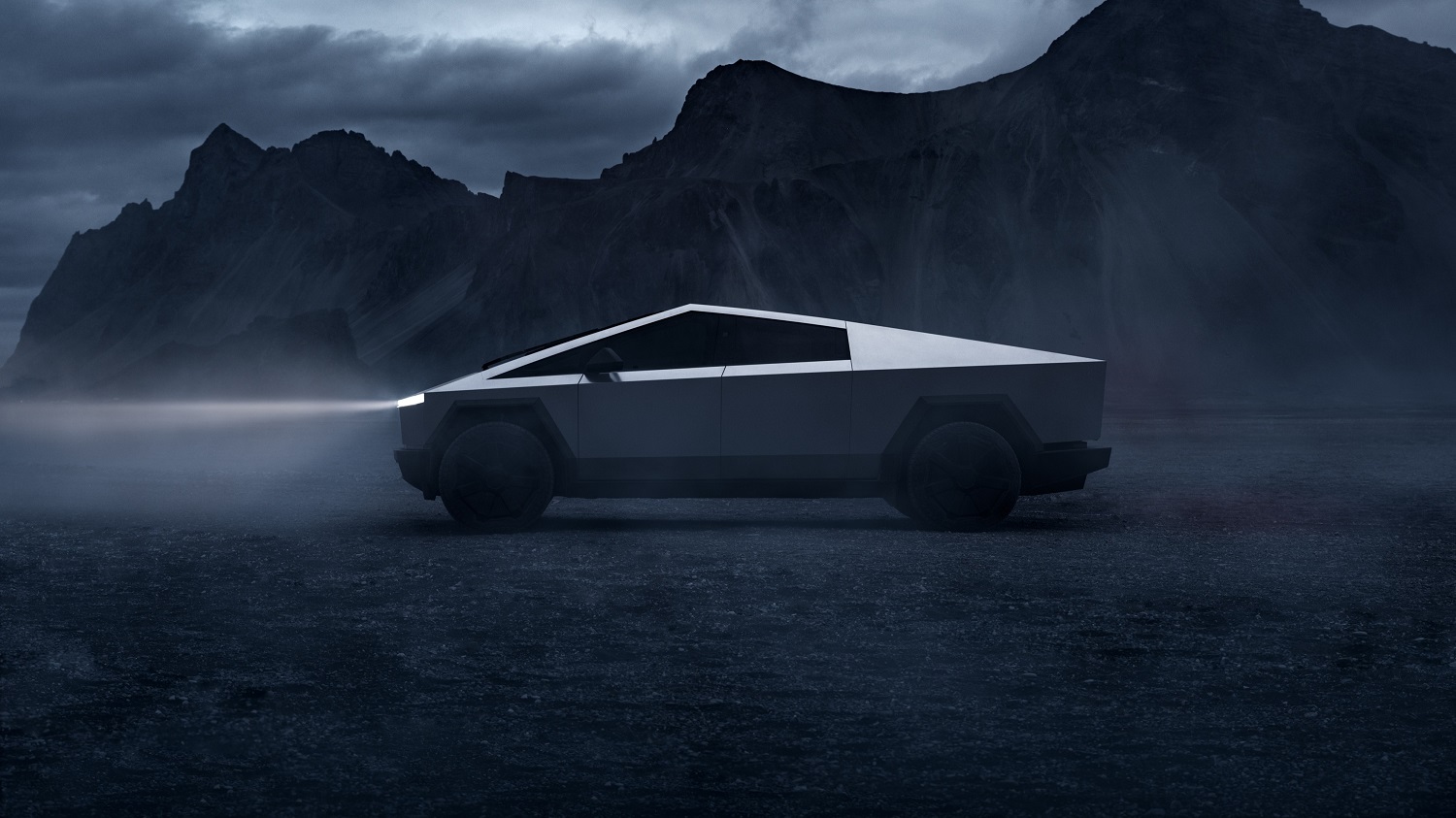
Work from designers such as Marcello Gandini, Sergio Coggiola, William Towns, and Jerry Palmer will be showcased there. Some of the concept and production cars include the 1966 Cannara I, 1970 Lancia Stratos HF Zero, 1974 Lamborghini Countach LP400 “Periscopio,” 1979 Aston Martin Bulldog, and 1976 Chevrolet Aerovette. Although not from the era, the Tesla Cybertruck and the Lo Res Car from the footwear brand United Nude will also be on-site to check out. Given the designers mentioned, it wouldn’t come as a surprise if the exhibit also includes the Maserati Boomerang or an Aston Martin Lagonda sedan.
Tesla Cybertruck (Photo courtesy of Tesla)
For more information about the “The Wedge Revolution: Cars on the Cutting Edge” exhibit at the Petersen Automotive Museum, click here. If you can’t get to Los Angeles anytime soon, don’t worry—the exhibit runs through September 2026.
The Beach Boys have a success story worth sharing. They have sold over 100 million records worldwide, and over the course of their career—which dates back to 1961—they’ve achieved 36 “Top 40” hits. Some of the anthems the Beach Boys perform have specific ties to the automotive world, including the songs “Little Deuce Coupe” and “409.”
The carefree spirit of the 1960s was a big factor in the use of cars as prominent symbols back when those songs were written. Building on the band’s success, the “Surfer Girl” album came out in September 1963 as the third studio album from the group. Surfer Girl also happens to be the name of a car once owned by the Beach Boys’ manager. “She” is a 1955 Chevrolet Bel Air two-door hardtop, and she was one of many unique collector cars sold at no reserve during a recent Barrett-Jackson auction held in Scottsdale.
The description from Barrett-Jackson says, “This example was recently refreshed with a new paint job, contrasted by all-new chrome. It also features a full interior update with gauges replaced along with bezels in the dash.”
The color combination is a striking one indeed, bringing white and orange together for two-tone paint treatment, which continues to the bench-seat interior. Special touches include Bel Air-embroidered floor mats, custom center console with cup holders, and Bowtie-branded aluminum trim extending across the face of the dashboard. While some Bel Air buyers in 1955 opted for the new 265ci small-block V8, this car was optioned with the smaller 235ci inline-six paired with a three-speed manual transmission.
The car—or should we call her Surfer Girl?—was adopted by a new owner earlier this year who is no doubt spending the summer racking up miles. Hopefully, some of those miles involve trips to the beach to catch some gnarly waves. Hang ten!
There are hundreds of unique stories like this one to be told about the cars that are sold each year at Barrett-Jackson. We look forward to seeing what the upcoming auctions will bring. Who knows—maybe there will be some other music industry tie-ins to discuss.
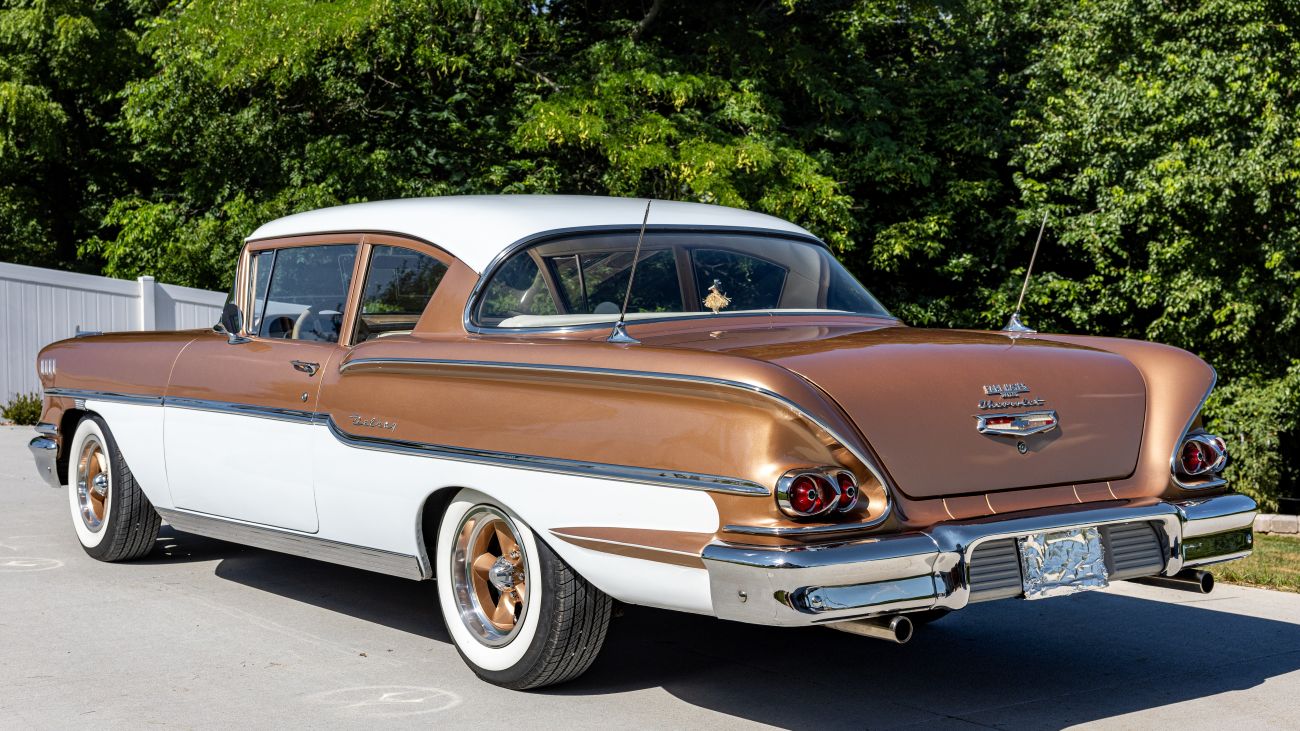
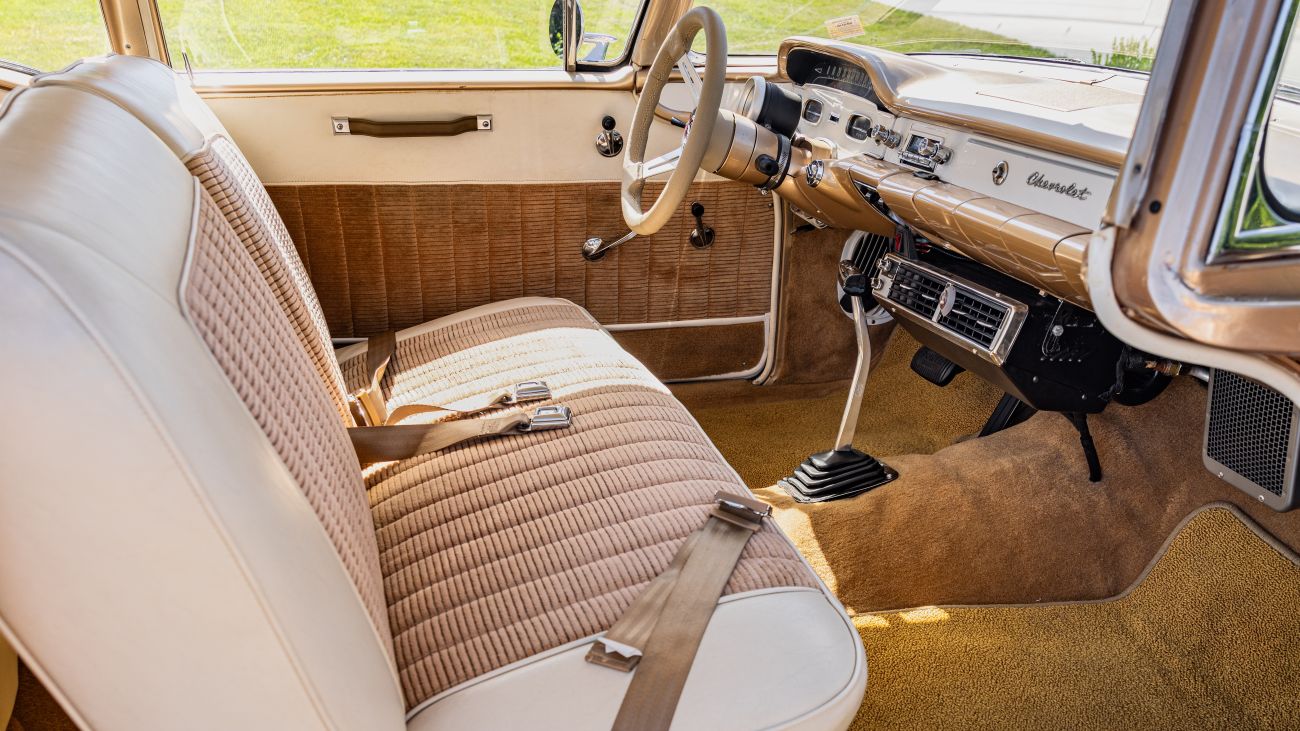
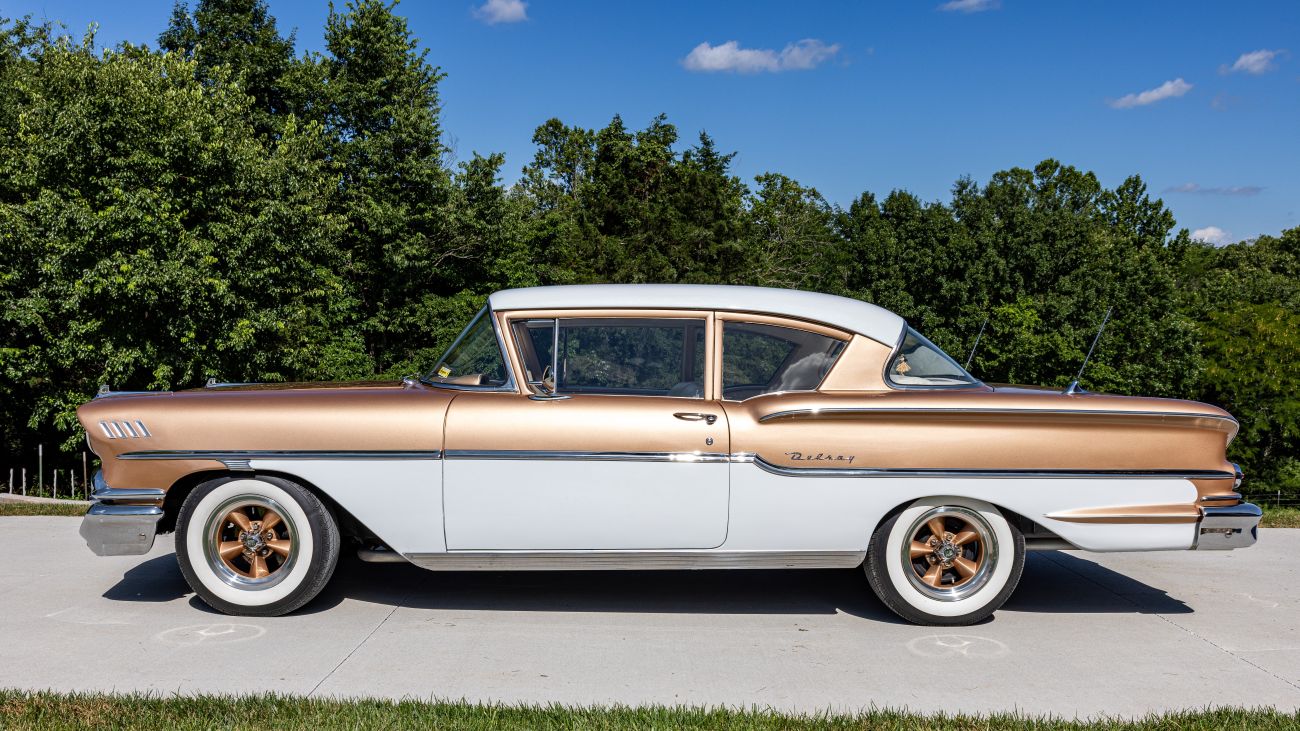
Today’s AutoHunter Spotlightis on this restored 1958 Chevrolet Delray two-door sedan with a very nice vintage look. Originally a special sub-model for the 1954-57 210, Delray officially became a stand-alone model for the 1958 model year, replacing the bottom-of-the-line 150. This one is powered by a 327ci small-block V8 paired with a four-speed automatic with overdrive. Other features include air conditioning, floor-mounted B&M shifter, Bluetooth-compatible AM/FM stereo, US Mags wheels, and more. Painted in two-tone Anniversary Gold and White with a matching white vinyl and tan cloth interior, this vintage performance cruiser comes from the private seller with a clear title.
The Anniversary Gold and White two-tone paint scheme is complemented by tasteful use of chrome. Other exterior features include a wraparound windshield and backlite, dual chrome side mirrors, rocker panel trim, Blue Dot lenses, and twin exhaust pipes poking out from under the bumper. A set of gold-painted US Mags wheels is wrapped in 215/70 whitewall Diamond radials.
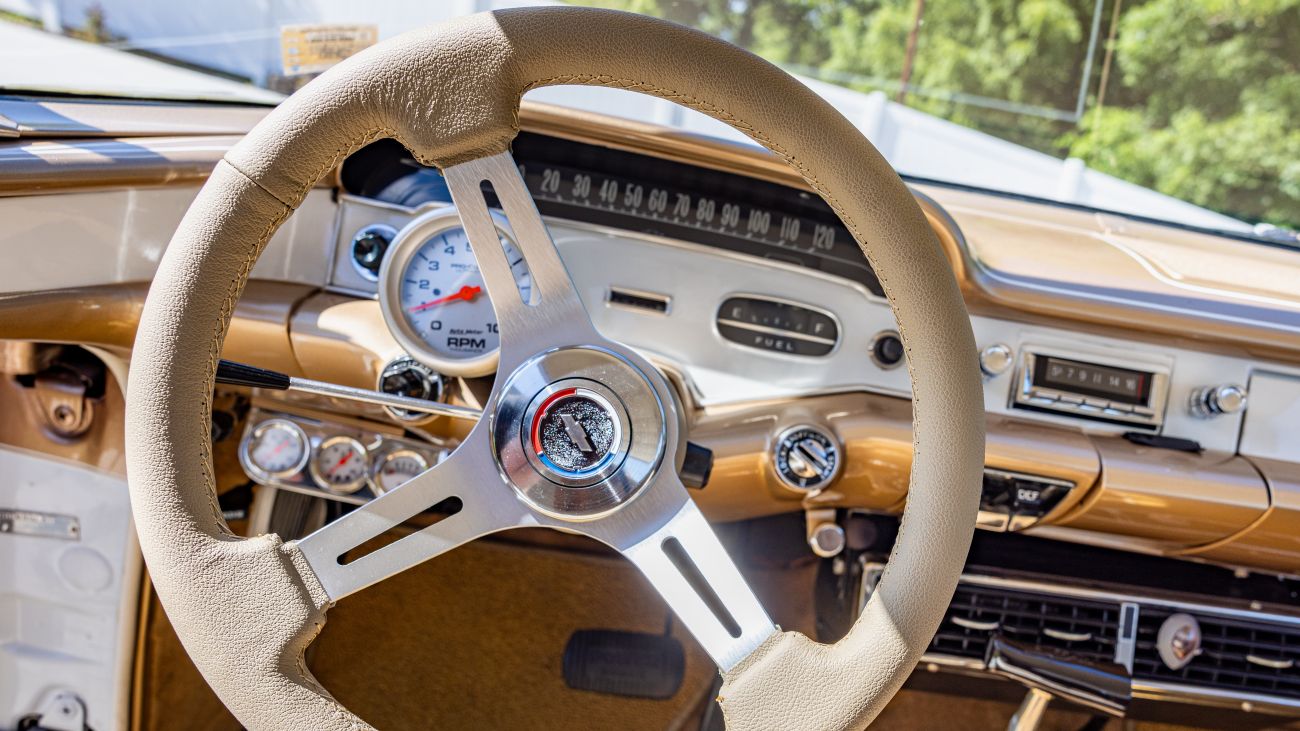
The white and tan vinyl and cloth interior features a split bench seat up front. Interior features include under-dash air conditioning, power steering with three-spoke steering wheel, floor-mounted B&M automatic shifter, clock, and Bluetooth-compatible AM/FM retro-look stereo.
The instrument panel features a 120-mph speedometer and gauges for the temperature and fuel. Additional gauges include a column-mounted 10,000-rpm tachometer and a Sunpro cluster that includes oil pressure, temperature, and voltage. The odometer shows 37,461 miles but the title reads mileage-exempt.
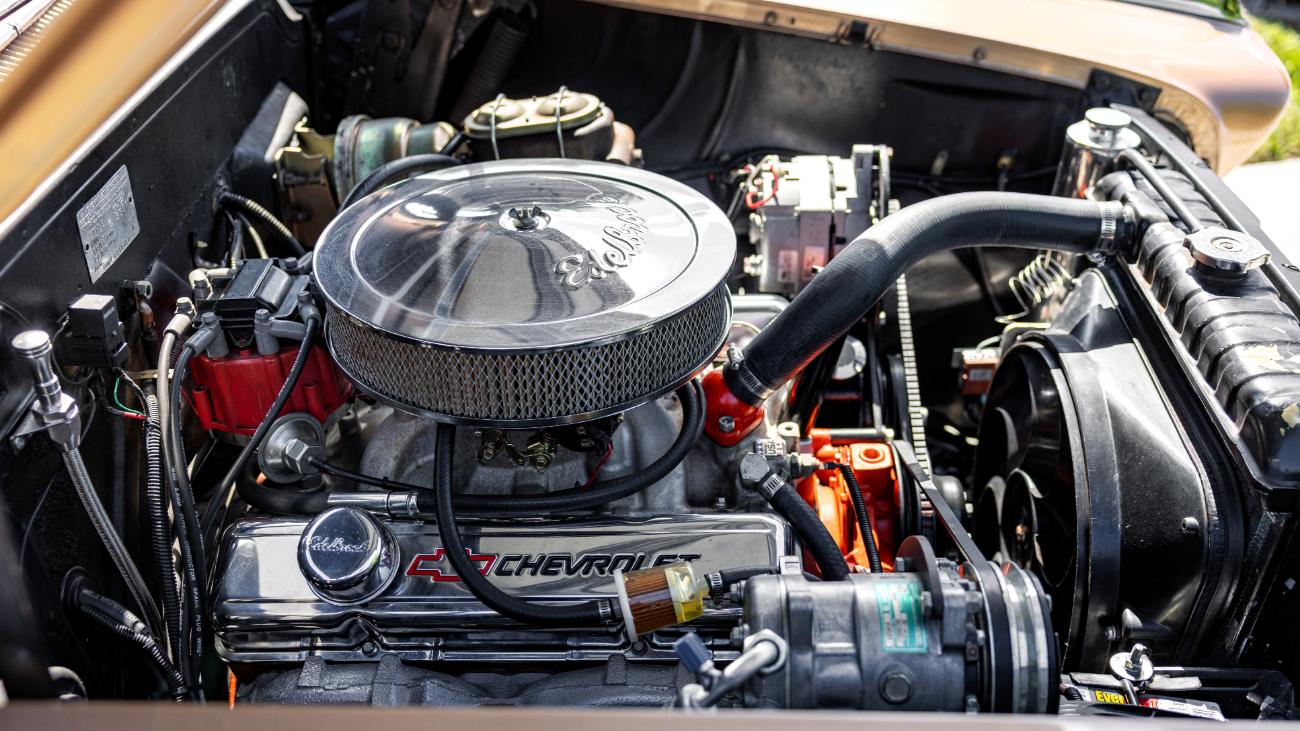
The engine currently residing under the hood is a 327 V8 topped by a four-barrel carburetor and Edelbrock air cleaner. It is backed by a four-speed 700R4 transmission with overdrive, which was rebuilt 10 months ago. The undercarriage features power front disc brakes and a dual exhaust system.
There’s plenty of vintage appeal with this classic Chevy. The paint scheme looks great, the presentation allows me to channel myself back to the mid-1960s, and the small-block V8 will always put out (and you can easily make it put out more). All that’s missing is your name on the title, so bid high and bid soon because the AutoHunter auction for this 1958 Chevrolet Delray two-door sedan ends on Wednesday, July 23, 2025, at 11:45 a.m. (PDT).
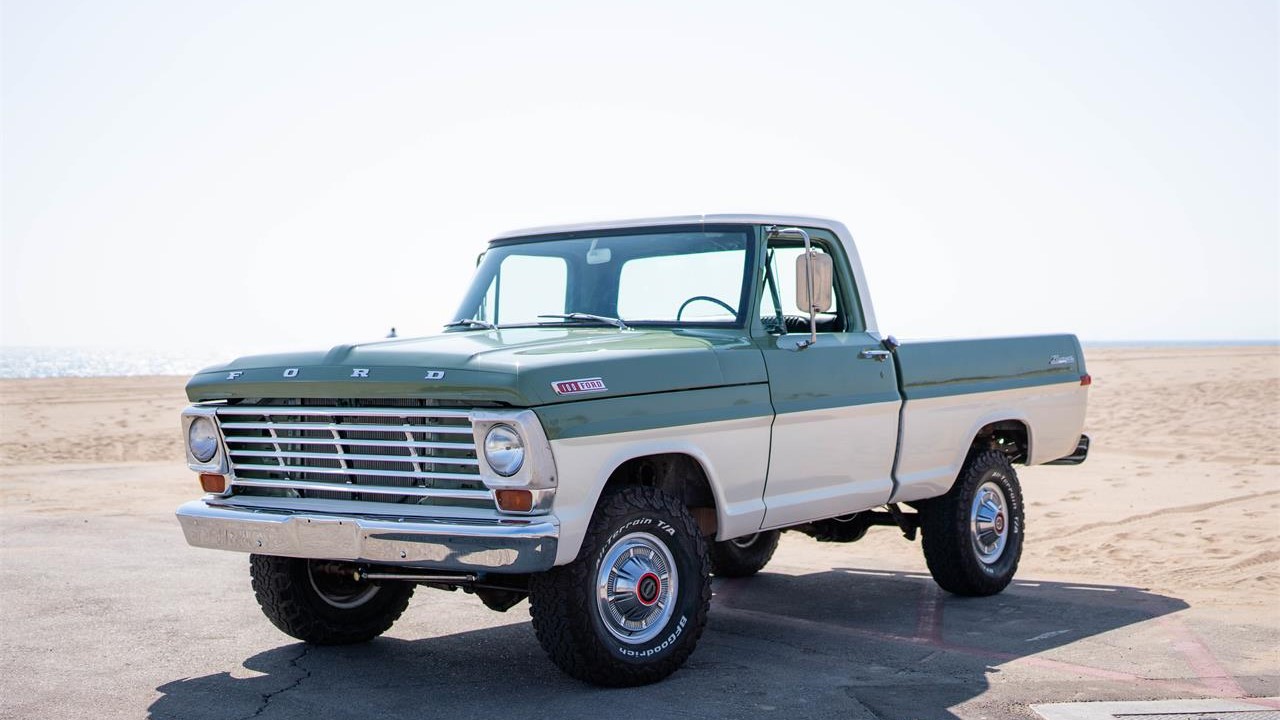
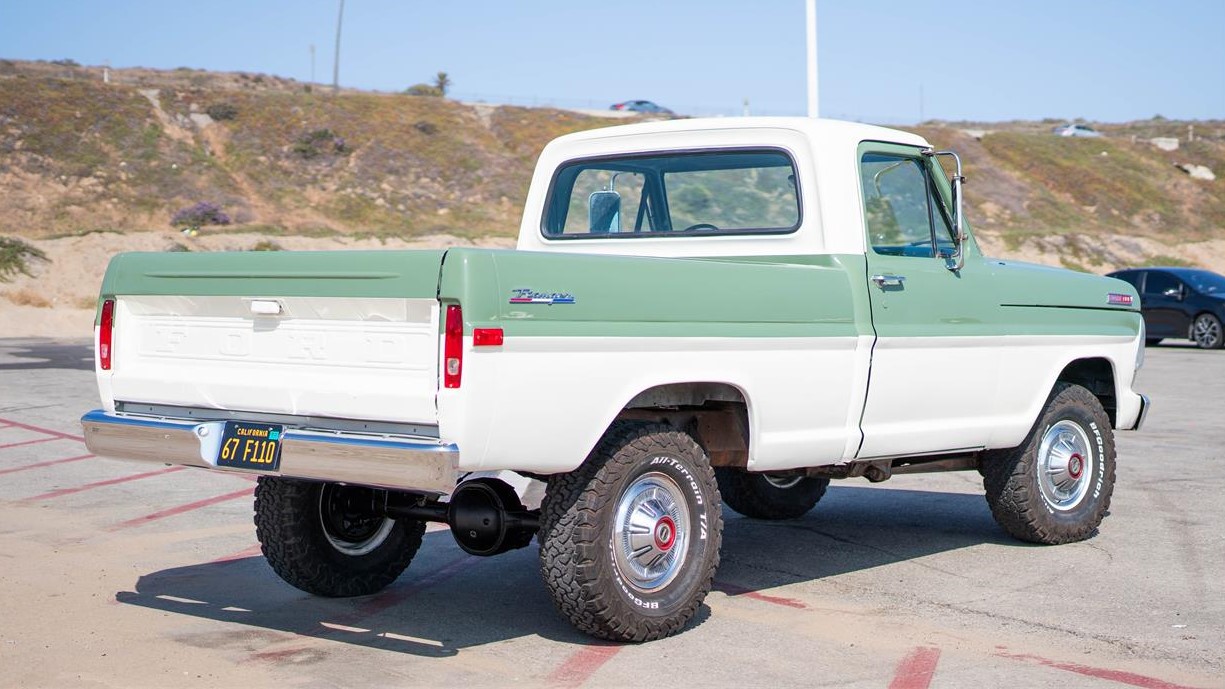
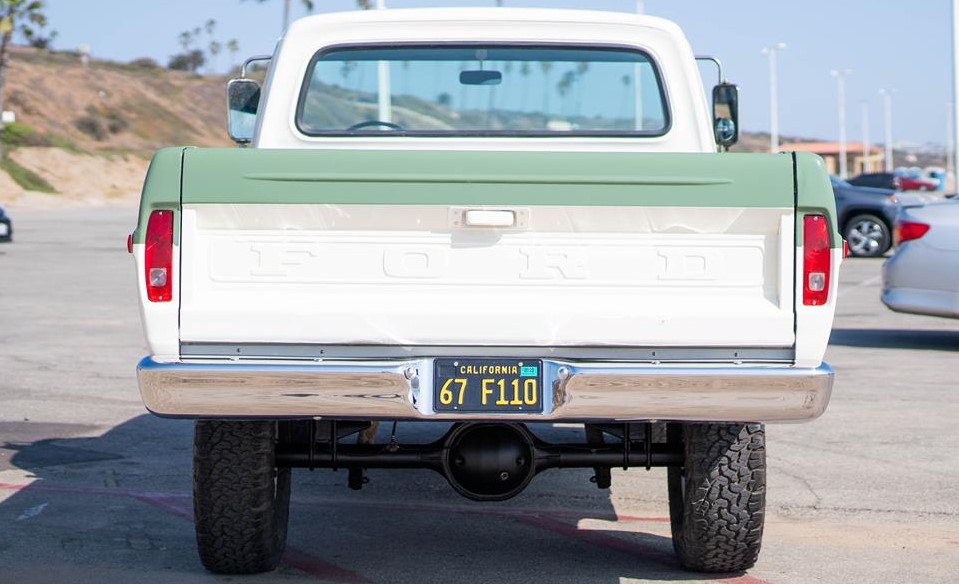
When it comes to modern trucks, some of the things that get the most attention are the stats, such as the size of their infotainment screens or how much torque they have and how many tons they can pull. But things can be much simpler with vintage pickups: you don’t think about how many camera angles they provide while you’re towing—you can just appreciate them simply for their design. Our Pick of the Day, a 1967 Ford F-100 4X4, has great lines, plus plenty more to love. You can find it on ClassicCars.com listed by a dealer in Manhattan Beach, California.
The 1967 model year marked the introduction of the fifth-generation Ford F-Series line of trucks. Exterior updates included moving the FORD lettering to the hood, simplifying the grille, and relocating the parking lights under the headlamps.
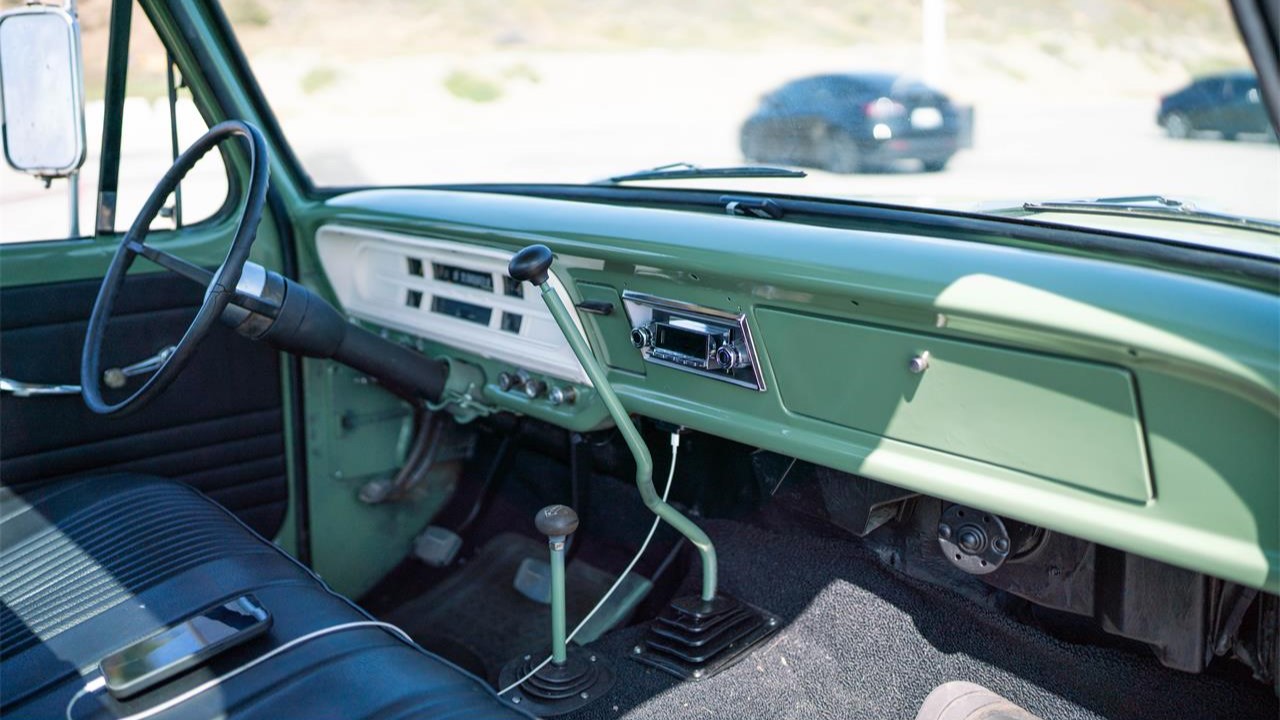
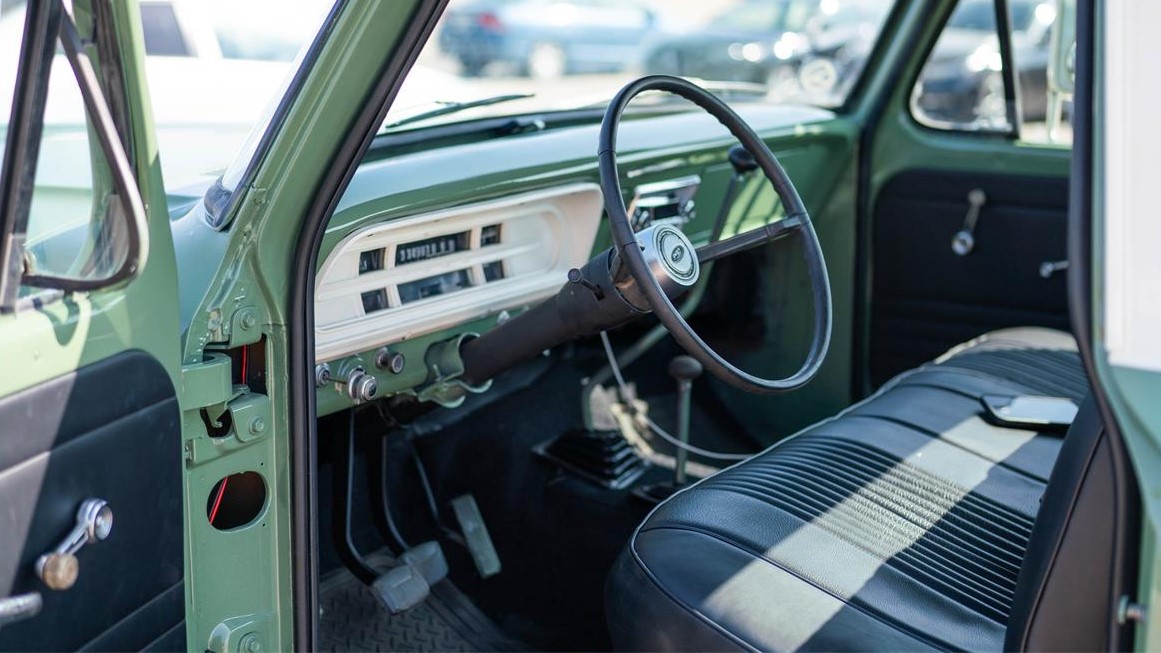
Inside, 1967 four-wheel-drive F-100 and F-250 trucks received a wider instrument cluster, redesigned instrument panel, padded dash, three-inch-wider seat, and body-color trim, all of which made their cabins “attractive, roomier and more carlike in appearance than ever!”
“Carlike” comfort is great and all, but from the outside, an F-Series should look like a truck. This F-100 certainly does. It doesn’t need a massive lift or giant wheels and tires to do that—just a single cab, a short bed, and all-terrain rubber. A fresh coat of Boxwood Green and Wimbledon White paint, and new bumpers add to its vintage charm.
Inside the cabin, the seat belts were upgraded to three-point units, the bench seat was reupholstered in black leather, and the radio was replaced with a RetroSound stereo with Bluetooth, but nothing is jarringly anachronistic.
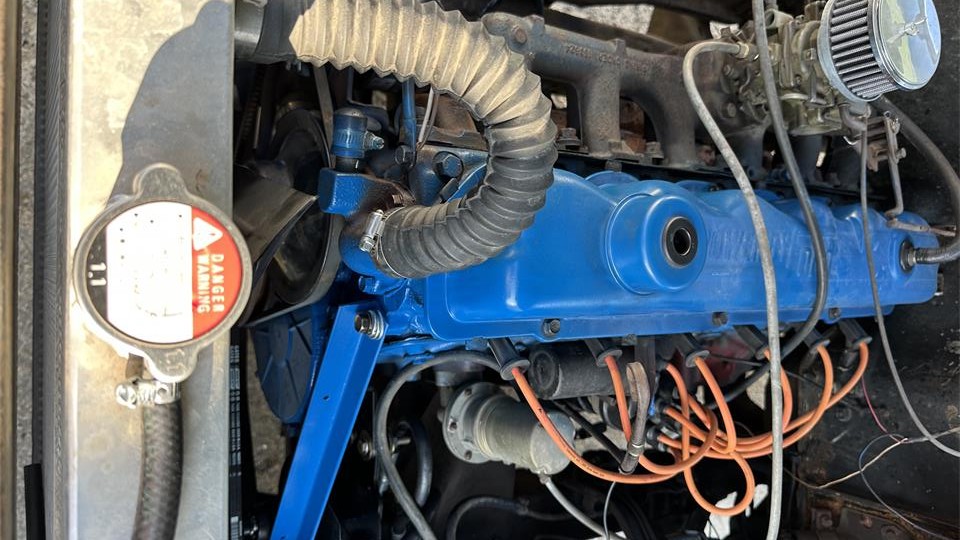
The engine matches the rest of this truck’s tasteful, low-key personality. It hasn’t been swapped out for a Godzilla 7.3-liter gasser; it’s a good old-fashioned 300ci inline-six, which draws fuel from a new gas tank. A four-speed manual gearbox and four-wheel drive help it get this truck down the road and over nature’s obstacles.
Whether this 1967 Ford F-100 4X4‘s handsome looks or thoughtful updates are the first thing that you notice about it, we have good news: You can buy this truck for $37,999 (OBO) and look at it—or drive it—anytime you want.
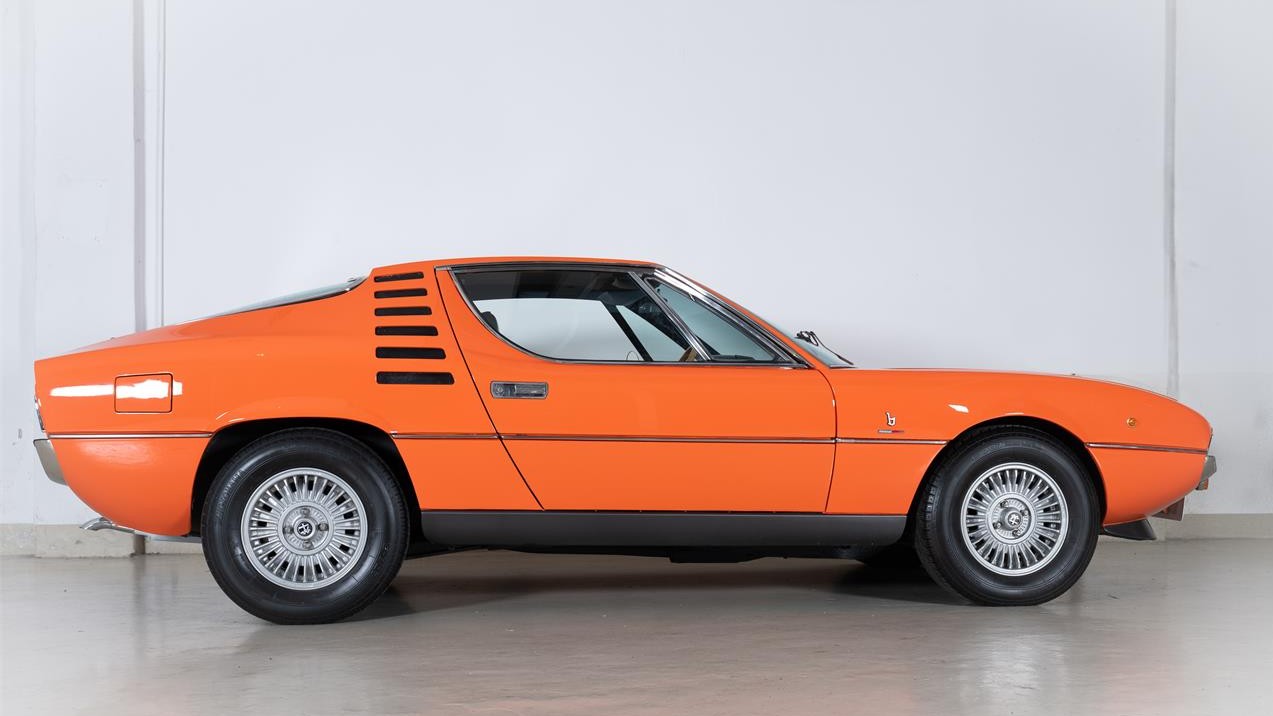
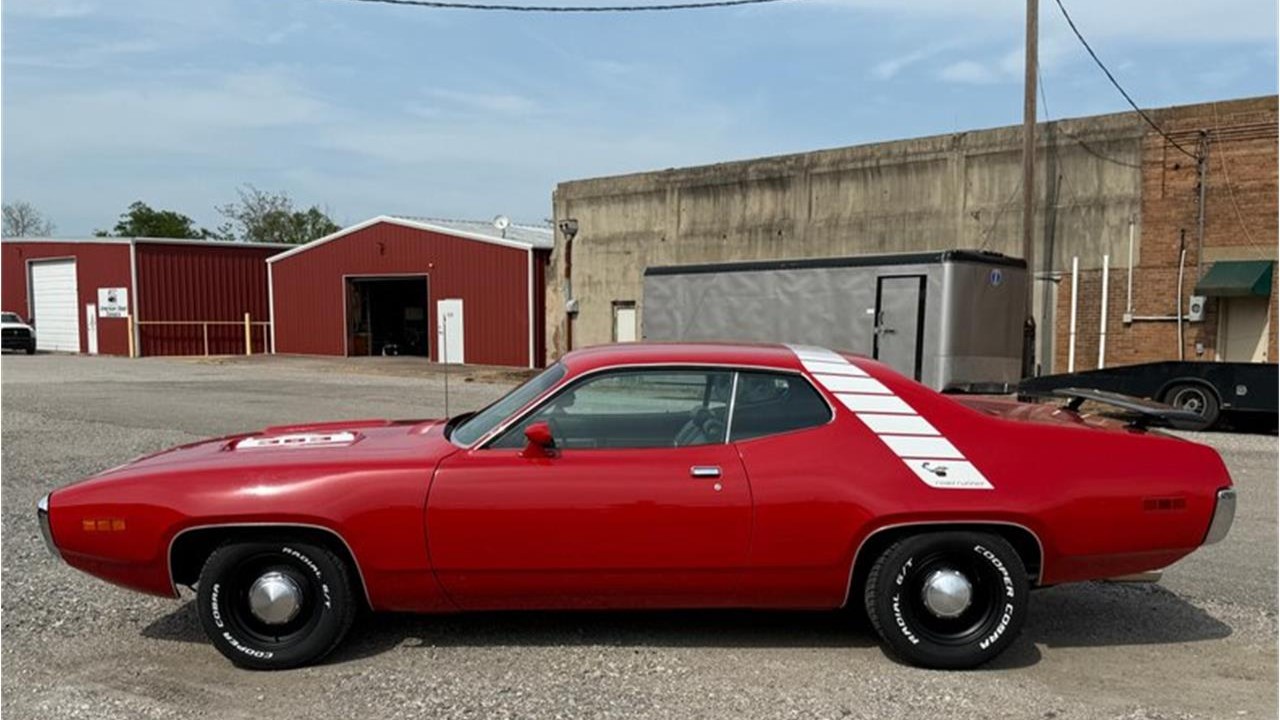
The recent Pick of the Day on the Alfa Romeo Montreal got me thinking about the cars that it may have influenced. I’ve had it in my mind that 1971 Plymouth Satellite Coupes were inspired by the Montreal. The shapes are somewhat similar, and if you look at a Road Runner with the optional strobe stripes, it does look like John Herlitz and his team gleaned something from Bertone.
Of course, the symbiotic relationship between Italy and Detroit was not new—in fact, Donald Osborne wrote “Stile Transatlantico” (Transatlantic Style) specifically for the purpose of showing decades of backs and forths between designers on both sides of the Atlantic.
1971 Plymouth Road Runner currently listed for sale on ClassicCars.com.
While writing the Pick of the Day, I learned that the Montreal’s C-pillar gills were copped from the Bertone/Giugiaro-designed Alfa Romeo Canguro. This Alfa Romeo TZ-based show car first appeared at the 1964 Paris Motor Show as part of a competition spurred by Alfa to see whether Bertone or Pininfarina could prepare a better design for a road-going version of the TZ. Notable were a stack of front fender vents to allow the engine to cool.
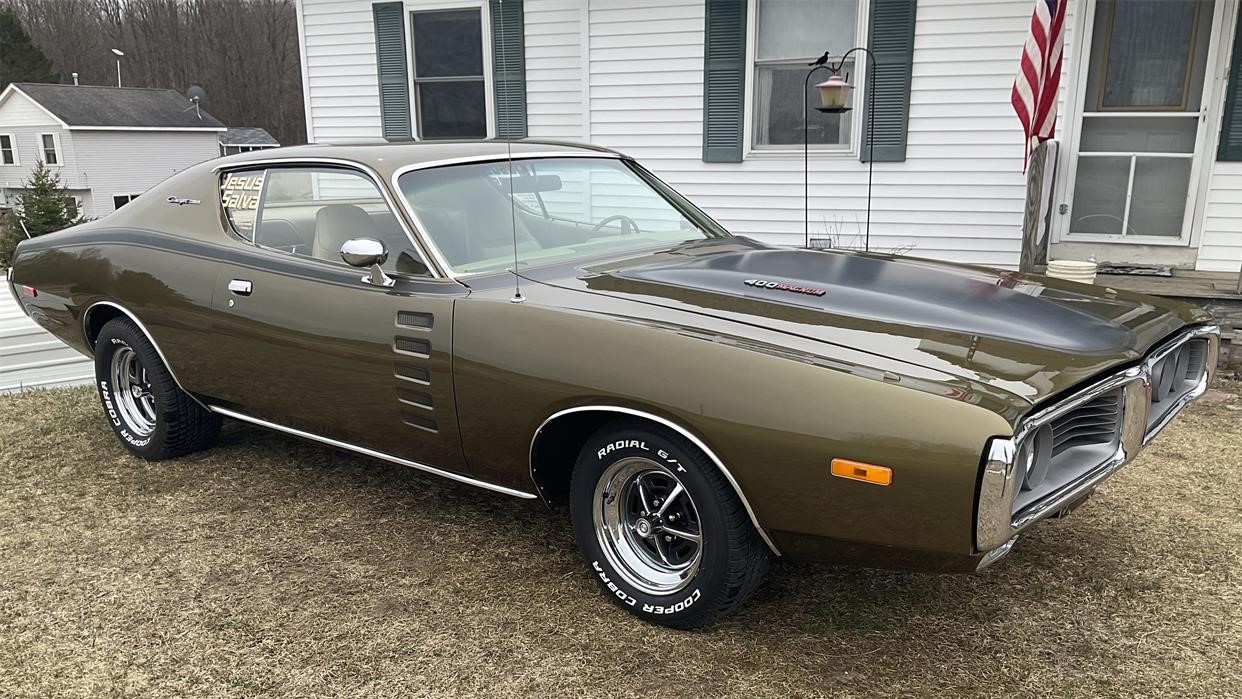
1972 Dodge Charger Rallye currently listed for sale on ClassicCars.com.
As you may have noticed, the Montreal (and the concept car that preceded it) adopted a similar motif, but along the C-pillar. It is said that this design was used to imply the vehicle was mid-engined even though the engine was mounted in the front. Upon seeing the Canguro, my mind immediately went to the 1972 Dodge Charger Rallye, which featured doors that mimicked this design.
So, it’s quite possible that the Canguro influenced the Alfa Romeo Montreal, 1971-72 Plymouth Road Runner, and 1972 Dodge Charger Rallye. I don’t have proof—just circumstantial evidence. What say you?
When I do research for articles, AutoHunter Spotlights, and Pick of the Day pieces for this website, I typically consult the particular vehicle’s window sticker, brochures, and press kits for specifications and information. Another resource full of helpful facts—about General Motors vehicles—is the GM Heritage site.
GM Heritage tells you the story of company founder William Durant and how he built the American automotive giant. Various short summaries highlight key moments in GM’s first 100 years, such as when Durant regained control after a six-year absence, the founding of the Milford Proving Ground in 1924, and the debut of the Buick Y-Job, “the first step in the evolution and popularization of concept cars within the automotive industry.”
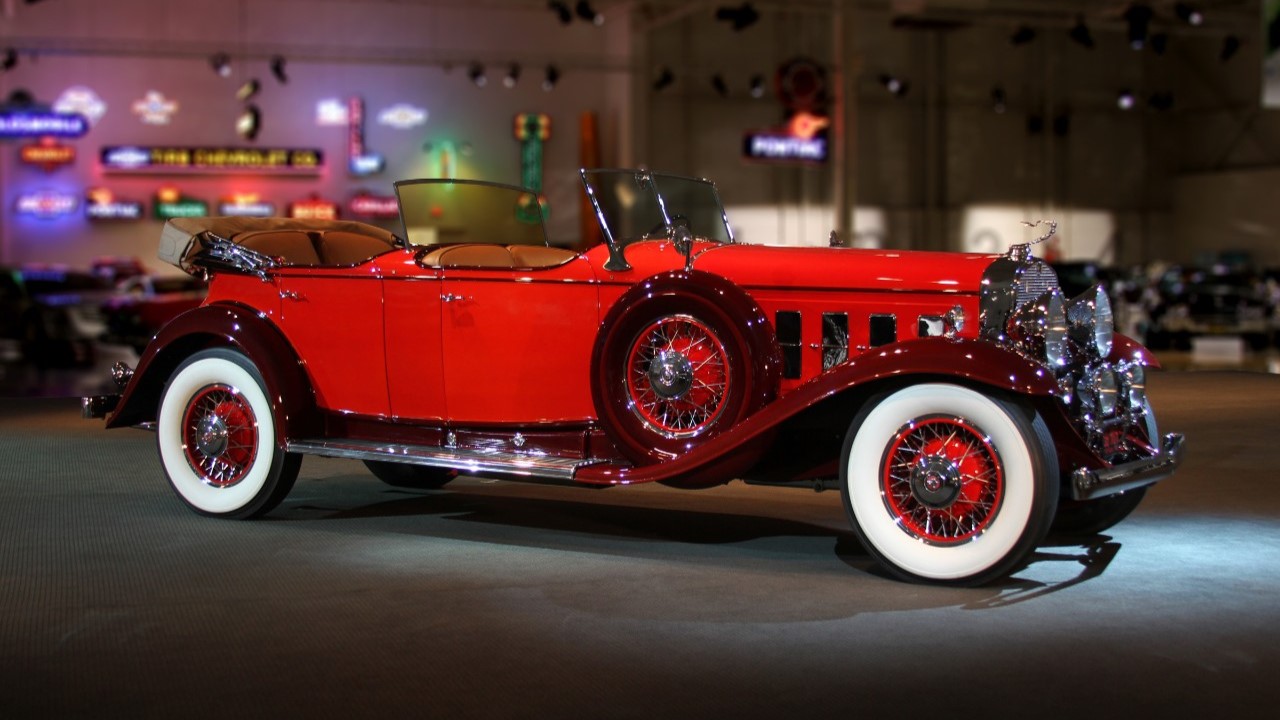
1931 Cadillac V-16 (Photo courtesy of the GM Heritage Collection)
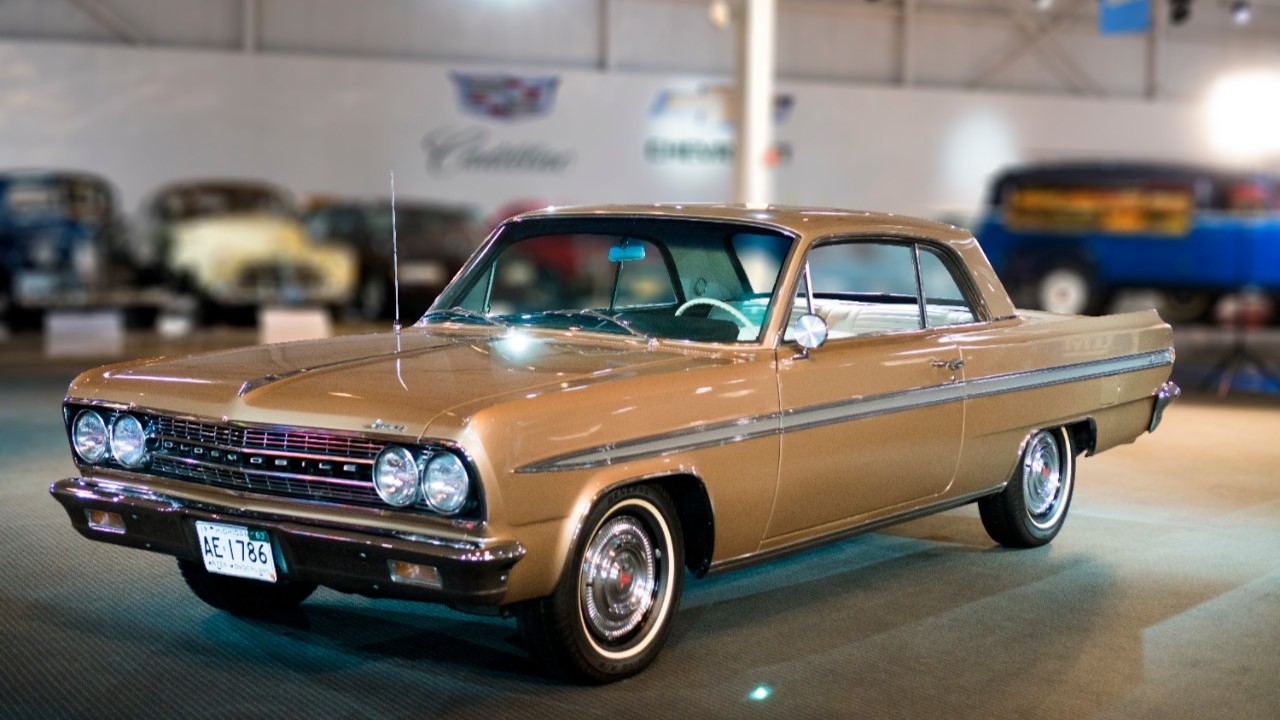
There’s also a section devoted to some of the notable Chevrolet cars and trucks, Oldsmobile, Buick, Cadillac, GMC, Pontiac, and concept vehicles in the GM Heritage Collection. Those include a ’31 Cadillac V-16, ’63 Corvette Stingray, and ’70 Buick GSX. Each one has its own short write-up and small gallery of pictures.
1963 Oldsmobile Jetfire (Photo courtesy of the GM Heritage Collection)
What I’ve found the most useful on a few occasions is the GM Heritage Archive, which holds “more than 250,000 unique historical documents consisting primarily of product catalogs, sales brochures, press materials, promotional records, engineering information and service information.” Although its 900-plus Vehicle Information Kits don’t cover Pontiac, Buick, and GMC, they contain detailed technical and marketing information for many Chevrolet, Cadillac, Oldsmobile, and even Geo vehicles (how that brand made the cut and Pontiac didn’t, who knows?).
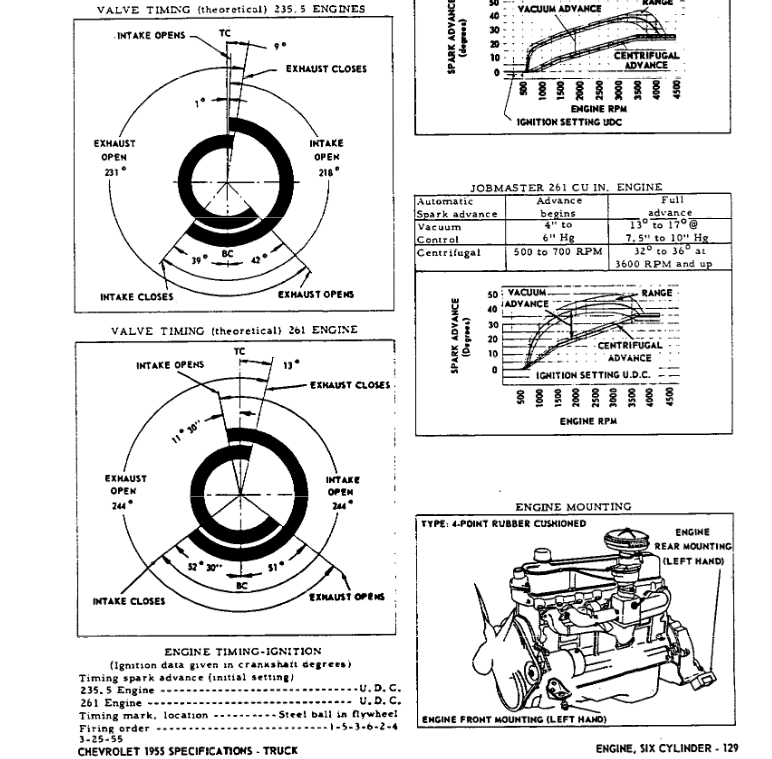
Image courtesy of the GM Heritage Collection
Want to know the valve timing of the 1955 Chevy Second Series trucks’ 235.5ci I6 engine? The info kit has a diagram of it. If you want to read the press release about the ’57 Cadillac Eldorado Brougham, you can. Need to brush up on your 1970 Oldsmobile option codes? Click here!
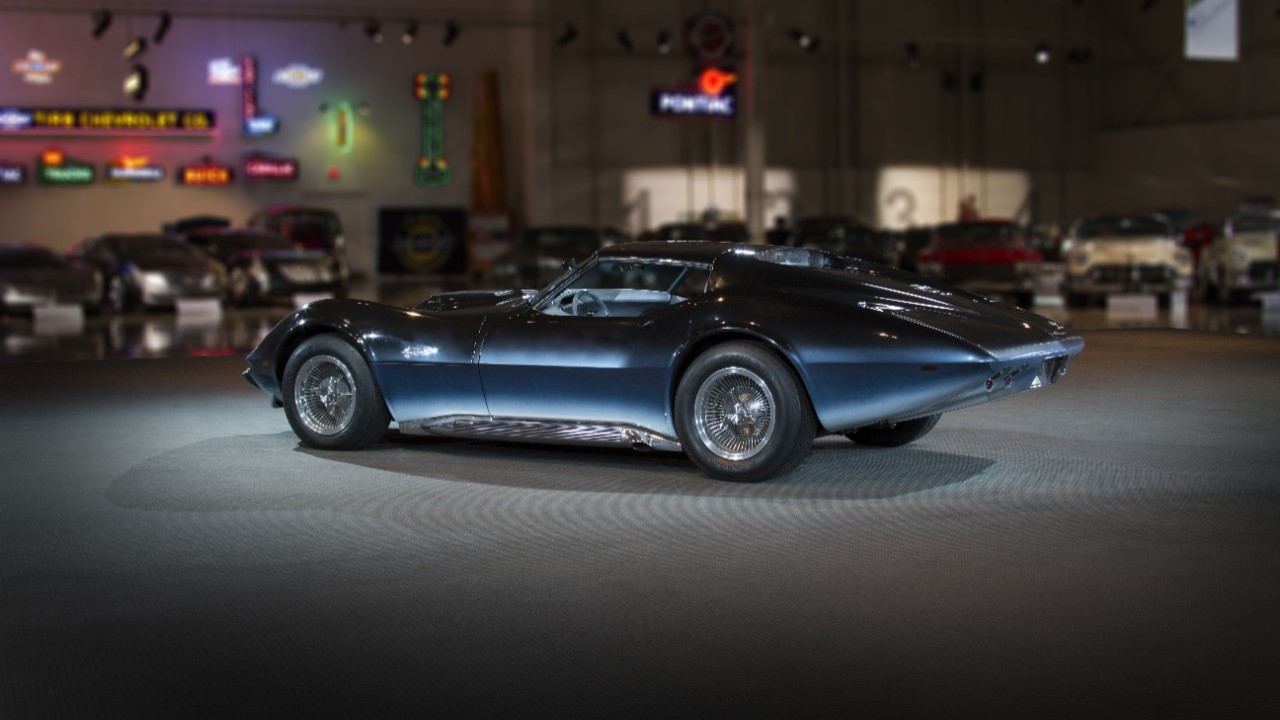
1969 Chevrolet Manta Ray Concept (Photo courtesy of the GM Heritage Collection)
Those are just tiny bits of the information you can find on the GM Heritage site, which you could spend days exploring, stuffing your brain with useful facts and figures from General Motors’ long history. I know I’ve learned a lot from it. I look forward to learning even more and sharing some of that knowledge with you.
I admit I have loved the Pontiac Trans Am ever since I first saw the film “Smokey and the Bandit” as a kid. That black Trans Am with Burt Reynolds behind the wheel and Sally Field in the passenger seat became a car I always wanted. Sadly, for a number of reasons, I have not owned one – but have driven many.
Despite my love affair with the later-generation Trans Am in my younger years, my all-time favorite Trans Am (and one of my all-time favorite pony cars – even more than the 1960s Camaro Z28) is the first-generation Trans Am.
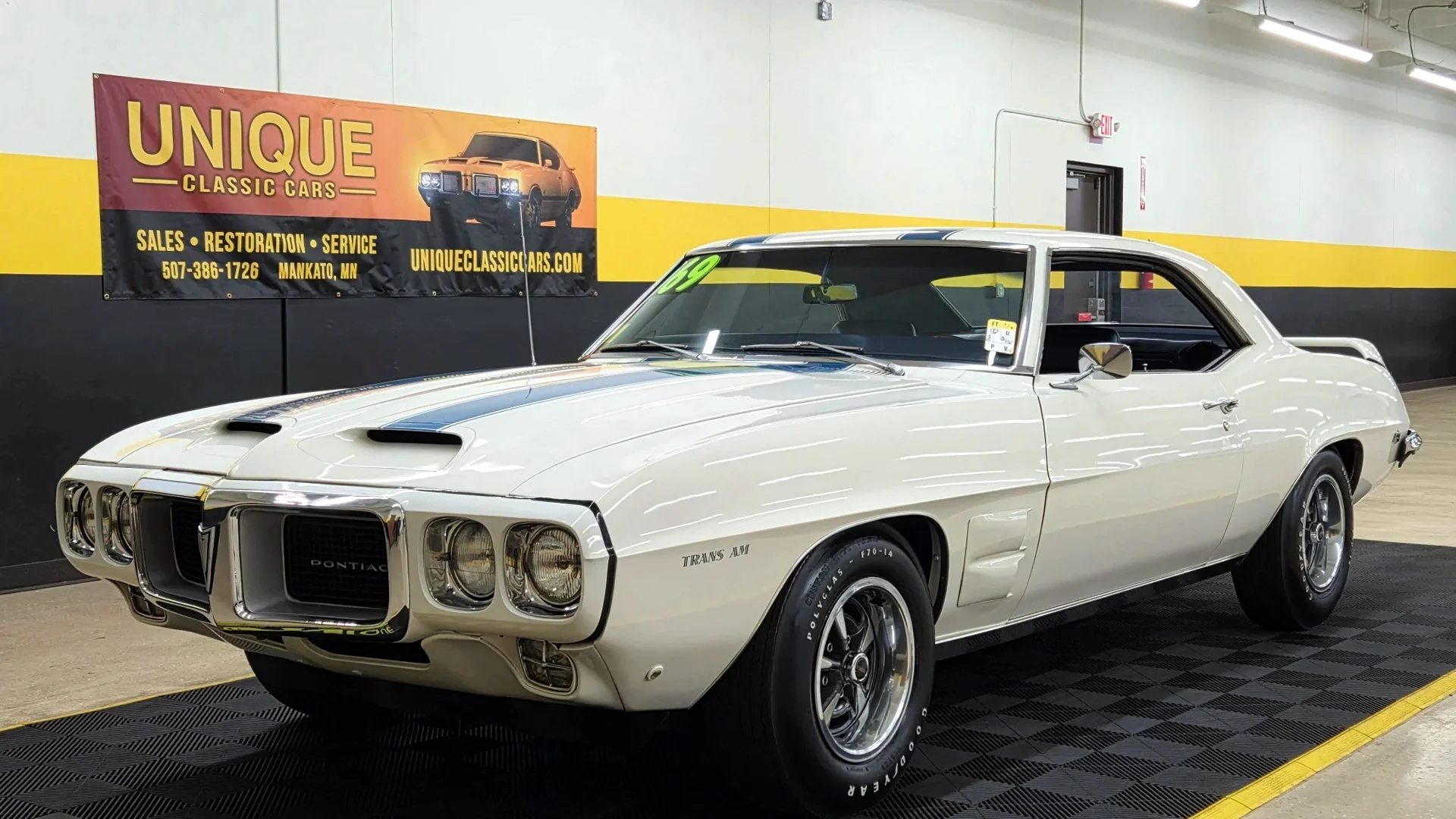
Featured on AutoHunter is this 1969 Pontiac Trans Am. The car is being offered by a dealer in Mankato, Minnesota, and the auction will end Tuesday, July 22, 2025, at 11:30 a.m. (PDT).
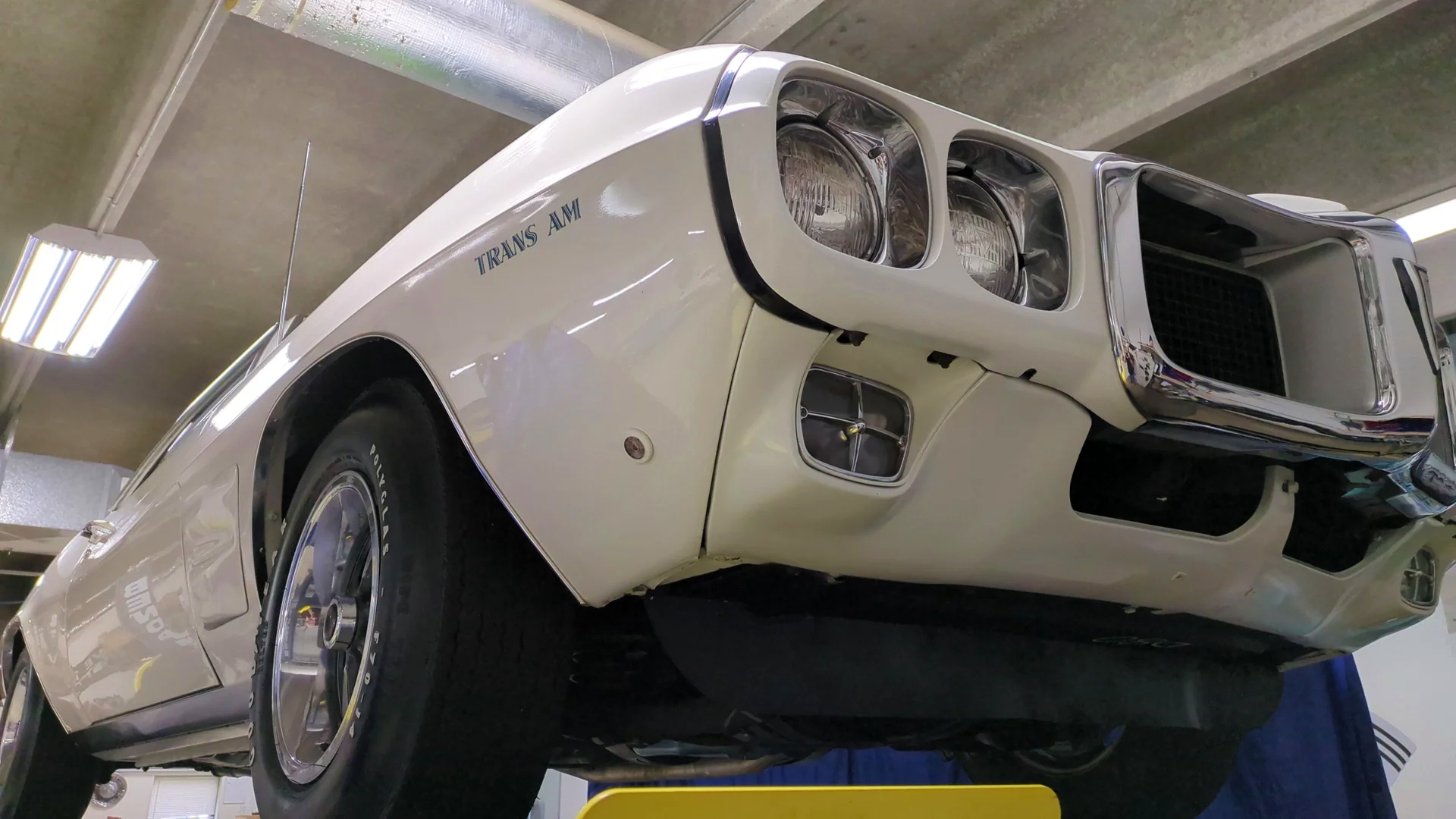
That first model had a purity of design and, while still a bit outrageous, also incorporated performance body options more subtly, with only a small Trans Am logo on the front fenders instead of the big bird covering the entire hood. It also offered great engine combinations and enough vents, spoilers and scoops to really look like a 1960s race car for the street. An interesting footnote about the 1969 Trans Am is that, despite its name, it never competed in the Trans Am racing series for which it was named. In fact, using the name also caused some issues for GM, because “Trans Am”‘ was used without permission from the SCCA, the sanctioning body and creators of the Trans Am series. They threatened to sue GM, but the automaker settled the issue by agreeing to pay $5 to the SCCA for each Trans Am it sold.
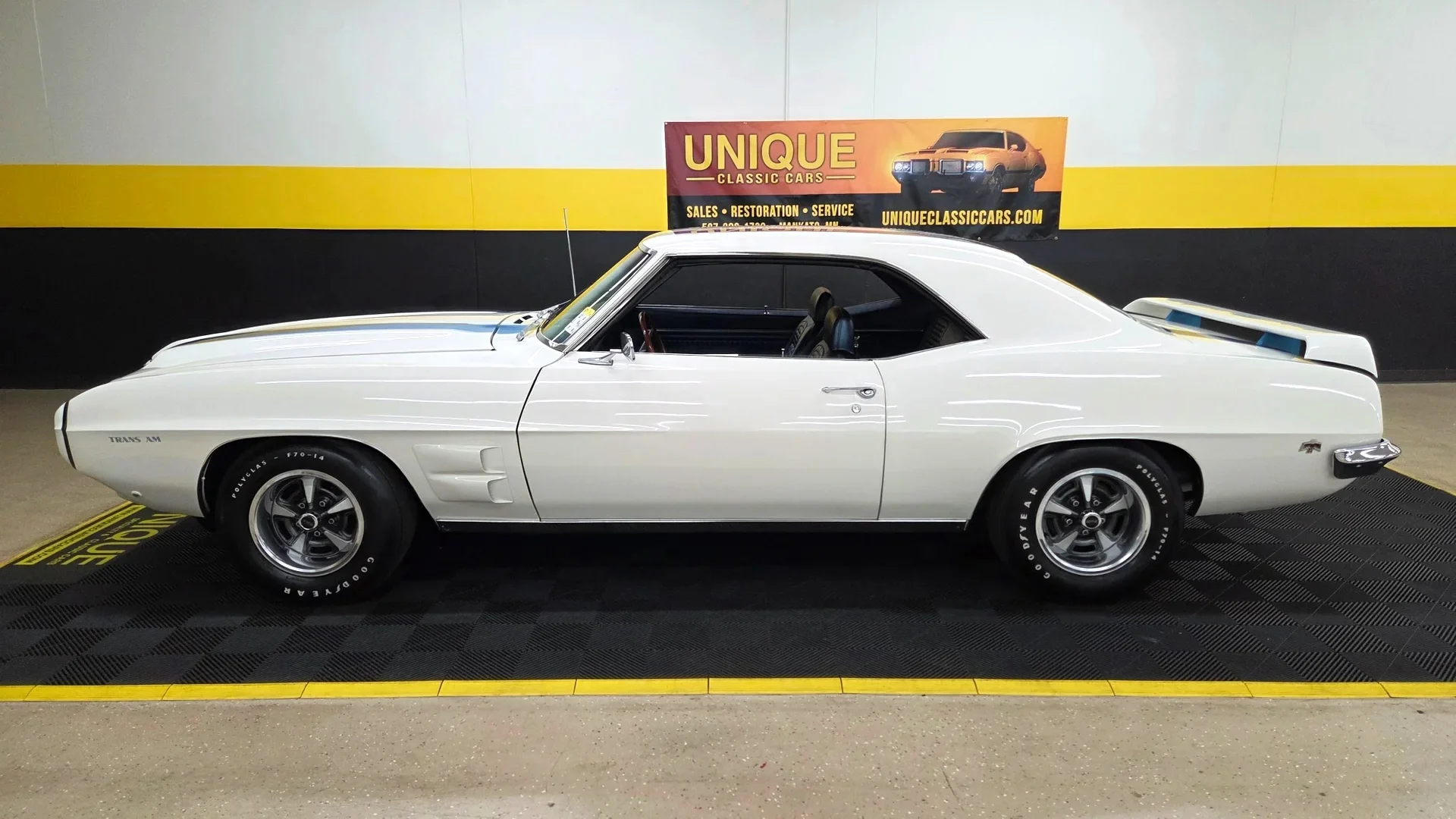
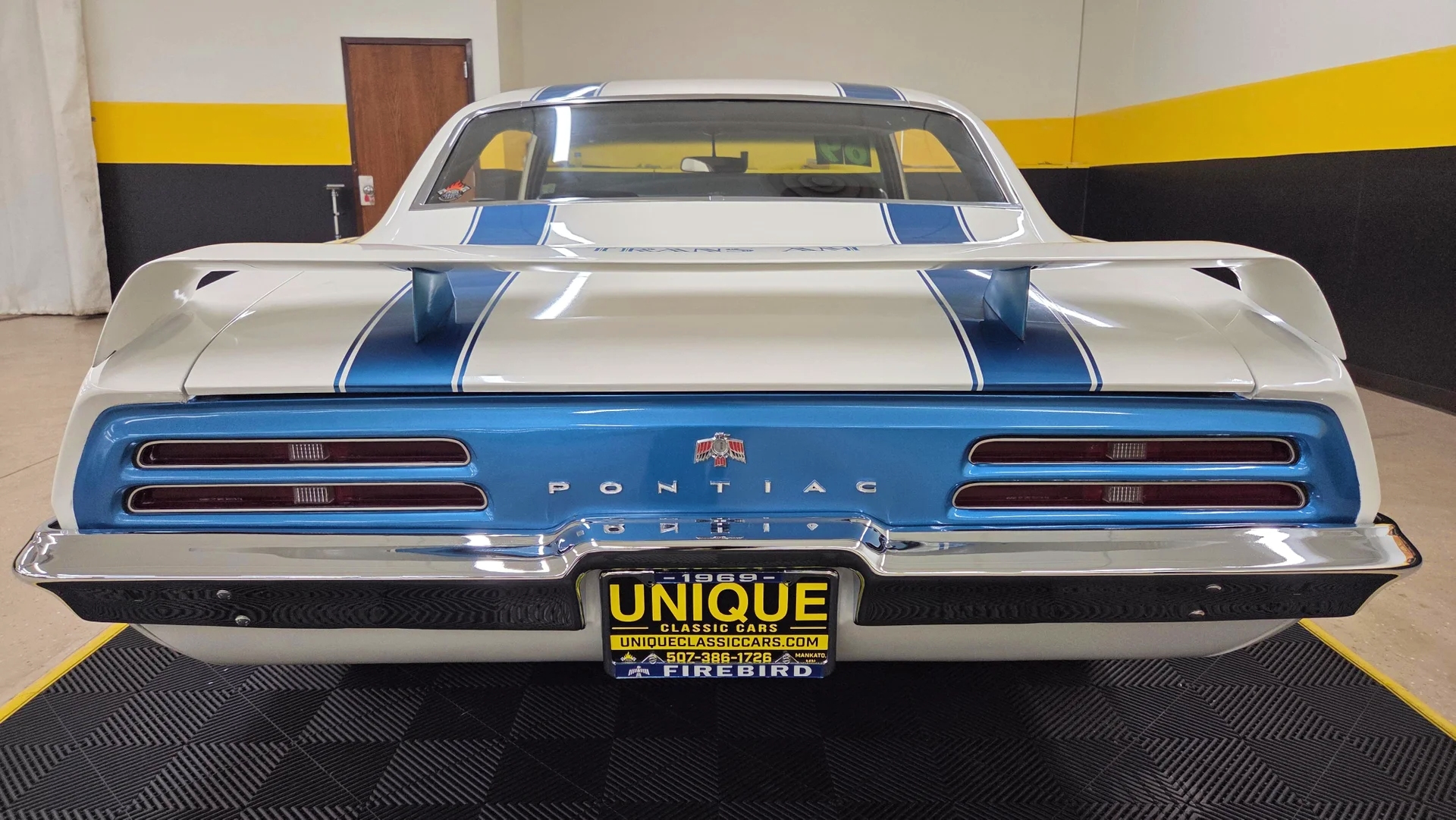
The seller describes this 1969 Trans Am as being powered by its original numbers-matching L74 400 HO Ram Air V8 mated to the original three-speed Turbo Hydra-Matic 400 automatic transmission. Finished in Cameo White with blue racing stripes over a Dark Blue vinyl interior, this pony car is offered by the selling dealer with PHS documentation, factory service manuals, an options list from GM and a clear title.
This, like any 1969 Trans Am, is a rare car, being only one of only 689 Trans Am coupes built and one of only 114 Firebird Trans Ams built with an L74 400ci engine and Turbo Hydra-Matic transmission.
The exterior looks to be in excellent condition, including the Cameo White paint. The seller does note there are some minor touch-ups from chips, but that’s it. It of course features its factory blue stripes, rear spoiler, Ram Air hood and side vents. The car rides on correct 14-inch Rally II wheels with correct F70 Goodyear Polyglas raised-white-letter bias-ply tires.
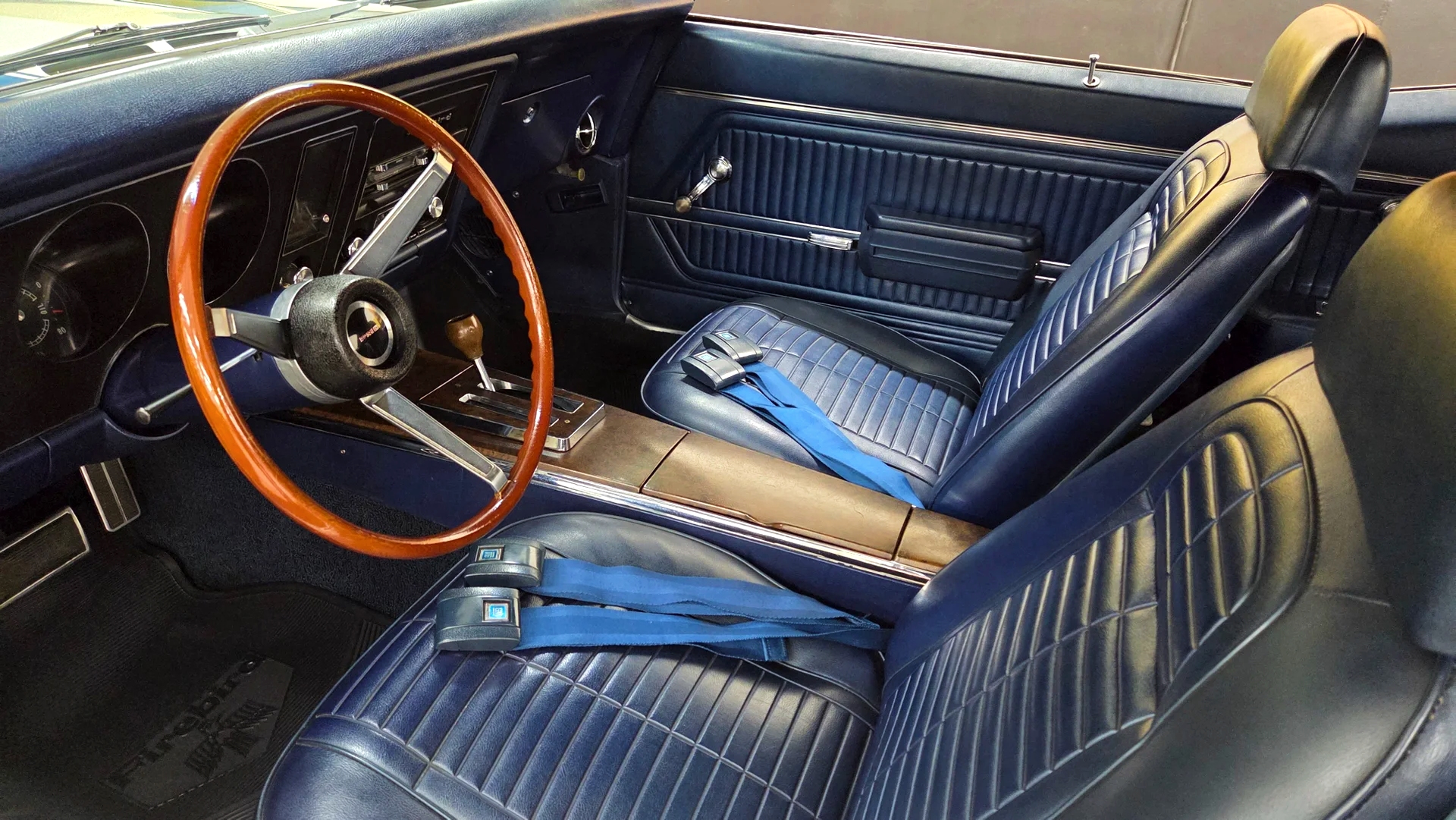
The Dark Blue vinyl upholstery also appears to be in excellent shape, apart from some minor scuffs on the driver’s seat. The car is super-correct and features burl vinyl applique, a center console with an automatic shifter and the correct wood steering wheel.
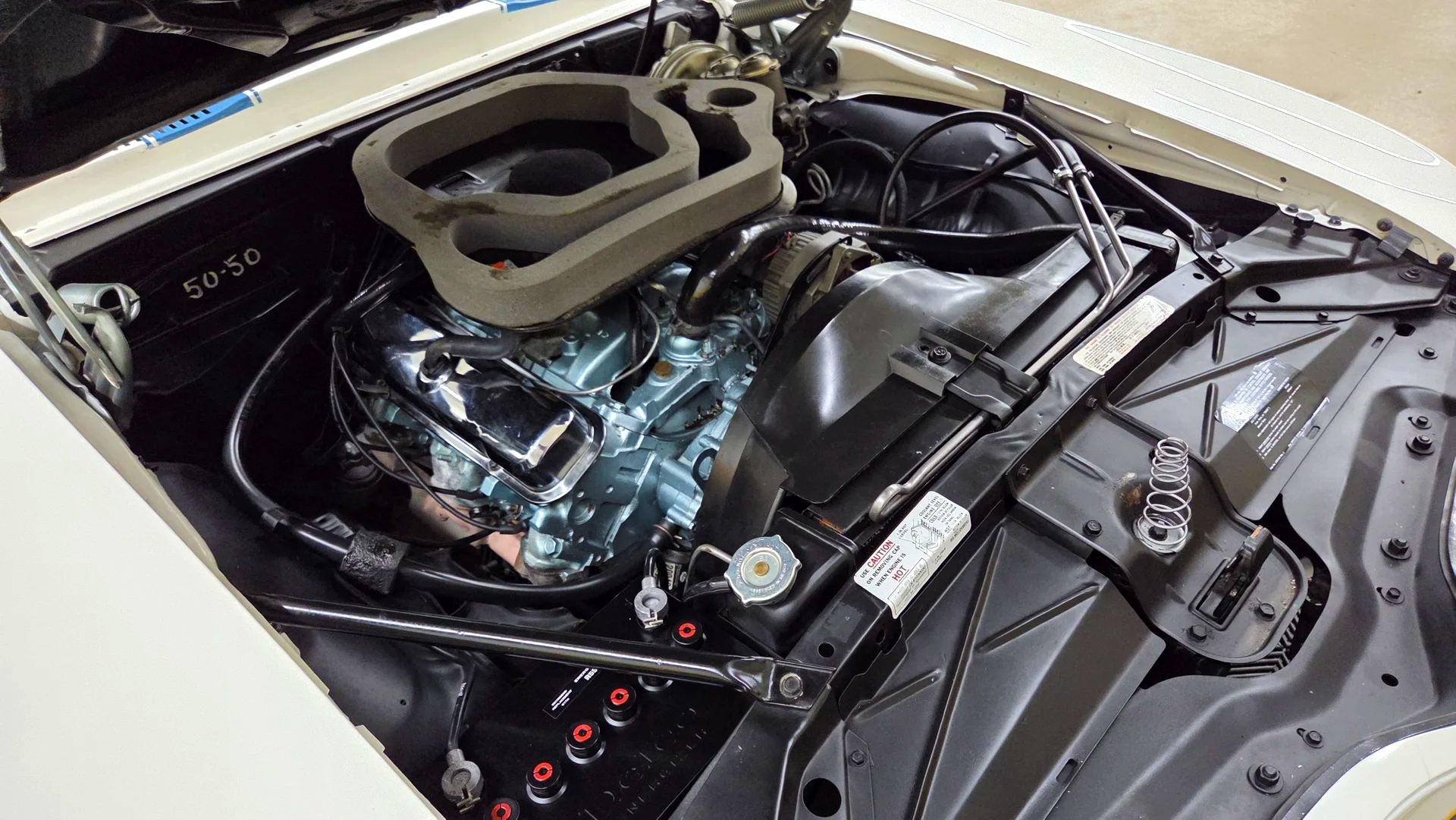
Under the hood lies the magic 400 HO Ram Air V8. I say “magic” because these Pontiac 400s are a sweetheart of an engine, with this one rated at 335 horsepower and 430 lb-ft of torque. Everything under the hood not only looks clean but also is correct. In essence, this is a show car you can drive. The seller does note there is a slight fluid leak from the power steering pump; an easy fix and something I would attend to, as this is a nice car and worth the work.
If you are looking for a late-1960s pony car that is one of the rarest ever built, with total production half of the 1969 Shelby Mustang, this is the one. While both cars are rare and cool, I still maintain these first-generation Firebirds are among the most stunning pony cars of all time.
If you are interested in this car, keep in mind it is on the clock, as the auction for this 1969 Pontiac Firebird Trans Am ends Tuesday, July 22, 2025, at 11:30 a.m. (PDT). Get out there and place a bid!