The good news just keeps on coming! Just like Audi paring back its EV initiative, word has it that BMW appears to be steadfast in maintaining the manual transmission.
According to Car and Driver, Sylvia Neubauer, Vice President of Customer, Brand, and Sales for BMW’s M sub-brand, was chatting with BMW Blog and indicated its engineers will always try to offer manual transmissions in upcoming models. “I think BMW will always be very creative. We can always think about it [M car with a manual transmission]. BMW M is a rather entrepreneurial company of very passionate M guys. So if our engineers can make it happen, I think they will always try to do so.”
Modern iteration of the BMW M2 (Image courtesy of Andy Reid)
This echoes similar sentiments made previously by other Bimmer executives. However, if changing course with the direction of future electrification is any indication, then it would be safe to assume that no sentiment is cast in stone.
So, what if you (like some of us) want a manual transmission for more pedestrian models? Manual transmissions shouldn’t have to be a luxury item, after all! This point hasn’t been addressed, though Neubauer adds, “For the current model lineup, we always have ideas in mind to bring more manuals into certain markets in a certain quantity because we know that there are manual transmission lovers out there. Yes, we will keep you happy.”
A 1999 BMW M3 strikes a natural pose.
When it comes to M cars, the M3 is the most famous and prolific. The next-gen version may offer both ICE and an electric equivalent (the latter without a manual available, no doubt).
These adorable little vehicles you see before you are currently listed for sale on AutoHunter or ClassicCars.com. They appear to be microcars from all over the world. Can you identify them?
Post your answers in the Comments section below. Bonus points if you can tell us the country of origin. When you are declared the winner, you can use those points to tell the whole Internet, and you can count on us to help you amplify it!
Featured on AutoHunter is this 1967 Cadillac DeVille Convertible, which was restored in 2022 and is powered by a rebuilt 429ci V8 connected to a Turbo Hydra-Matic three-speed automatic transmission. Finished in Sable Black with a black power convertible top over a reupholstered black vinyl interior, this Cadillac drop-top is now offered by the seller in Nevada with documentation and a clear title.
In 2000, the body of this DeVille was repainted in its original color of Sable Black. Exterior features include a chrome front bumper and matching trim, driver-side mirror, rear fender skirts, and single exhaust outlet. A power-operated black soft top covers the passenger compartment.
This Cadillac’s big body floats down the road on a set of 15-inch wheels equipped with Cadillac wheel covers and 235/75 Nexen N’Priz AH5 whitewall tires.
Both rows of seats have been reupholstered with black vinyl. Features include power windows, tilt steering column with automatic shifter, power steering, aftermarket AM/FM/Bluetooth radio, and first-row center armrest.
Instrumentation consists of a 120-mph speedometer, clock, and gauges for the temperature and fuel level. The odometer shows 29,186 miles, but the title for this vehicle indicates it’s mileage-exempt.
At the factory, this DeVille’s four-barrel 429ci V8 was rated at 340 horsepower and 480 lb-ft of torque; in 2017, it was rebuilt. That big V8 channels its output to the road through a Turbo Hydra-Matic three-speed automatic transmission via the rear wheels.
An independent front suspension and a four-link rear end carry passengers down the road; power drum brakes bring them to a stop.
If you want to be the next owner of this 1967 Cadillac DeVille Convertible, step on the gas and bid on it now. The auction for this classic open-air cruiser ends on Monday, July 7, 2025, at 11:45 a.m. (PDT).
One of my most vivid childhood automotive memories took place in my mom’s 1989 Pontiac Grand Prix. The car had a unique glove box locking mechanism with a three-digit combination lock. I remember playing around with it and wondering what would happen if we ever lost or forgot the code. A wave of nostalgia came over me when I saw the same setup in a classified ad. It’s featured in photo number 23, if you want to take a look:
“These early ’90s Pontiac Grand Prixs were popular when they came out,” the listing says. “Nothing has been altered or changed, and everything seems to work as it should.”
According to the window sticker, the car was originally delivered to Jack Shaw Pontiac in Lakewood, Ohio, following final assembly in Kansas City, Kansas. It is finished in Light Beige over Beige and came with a few options: Package 1SB included power windows, controlled-cycle windshield wipers, illuminated entry, cruise control, a tilt steering wheel, rally gauges and an AM/FM cassette stereo. On top of that, the original owner opted for the four-speed automatic transmission (as opposed to the standard three-speed) and a rear window defogger. The total vehicle price, including destination, came out to $17,196.
The sixth-generation Grand Prix marked the first time the car was front-wheel drive. It went into production in October 1987 on the General Motors W-body platform and was built for model years 1988 through 1996 as a two-door coupe or a four-door sedan. One thing I found most interesting about this Grand Prix (besides its glove box, of course) is its seating arrangement. The car can seat six people! The front features a 45/55 split-bench, and the rear has three seat belts as well. It seems pretty uncommon (maybe even impossible) to find a two-door vehicle these days with seating capacity for six people.
Under the hood, power comes from a 3.1-liter V6 mated to a four-speed automatic transmission. When new, Pontiac rated the powertrain at 140 horsepower and 185 lb-ft of torque. The listing says, “Just completely serviced and a new muffler installed. This would be a great candidate for an easy restoration or a great, reliable driver.”
The asking price for this 1993 Pontiac Grand Prix SE Coupe is $3,995, which includes an owner’s manual. As an added bonus, the car will also come with a cassette tape labeled “Pontiac Cares.” Looks like it’s still wrapped in the original plastic, too!
Chevrolet has produced close to two million Corvettes over the past 72 years, but if you look at certain points in the car’s history, you’ll see that some are much rarer than others. For instance, Chevy only built five 1963 Grand Sports, and there were supposedly only two ’69 ZL1s. As the following video from the National Corvette Museum shows, there was no official 1983 Corvette, but one of the pre-production cars still exists thanks to an odd combination of circumstances.
According to Dave McLellan, the Corvette’s chief engineer from 1975 until 1992, the third-generation Corvette ran too long, and GM had trouble adapting to the changing safety, emissions, and fuel economy regulations of the time. Clearly, “America’s Sports Car” needed to be brought up to date, which led to the initial concept of the C4 Corvette in the late 1970s/early 1980s.
Despite the use of computers and mathematical analysis in the C4‘s development, rigorous testing at the Milford Proving Grounds, and tireless work to fix various problems, the team behind the new Corvette ultimately decided to skip the 1983 model year. It simply needed more time to get the next generation of an automotive icon right.
That left the Corvette team with a bunch of pre-production cars that couldn’t be sold and needed to be destroyed. Instead of having them trucked away to be disposed of off-site, Chevy called in a mobile crusher, which processed all of them except one. Luckily for Corvette fans, it was raining the day that the car was supposed to be turned into a giant paperweight. Ralph Montileone, Quality Manager at Bowling Green Assembly Plant back then, happened to be wearing a brand-new pair of cowboy boots and didn’t want to ruin them, so he decided to delay the car’s demise until the next day. By then, the crusher was gone.
After that, the last remaining 1983 Corvette development car was largely overlooked and neglected by the Bowling Green facility’s staff. Plant manager Paul Schnoes noticed it, though. At one point, the L83-powered white car had been given a blue nose and lower-body paint along with red stripes, but Schnoes had it returned to its original plain white finish. After the National Corvette Museum opened in 1994, the 1-of-1 1983 Corvette was transferred there, where it remains as a fascinating piece of Corvette history.
Today’s AutoHunter Spotlight is on this infinitely cute 1958 BMW Isetta 600. As the bigger brother to three-wheeled Isetta models, this model is powered by a 582cc flat-twin engine hooked up to a synchronized four-speed manual transmission. Features on this 26,830 example include black soft top, chrome front fender trim, and bumper guards front and rear. Painted burgundy and white two-tone with matching leather upholstery, this bubble car comes from a Northern California seller with service records and a clear title.
The exterior is painted in a very attractive combination of white over burgundy. Features include a chrome bumper on the front-mounted door, front and rear bumperettes, black cloth sunroof, chrome trim behind the front wheel wells, and a set of 10-inch wheels with chrome wheel covers wrapped in 4.80 BFGoodrich Silvertown Radial whitewalls.
The red and white quilted leather upholstery nicely matches the exterior paint scheme. Other interior features include centrally-located floor-mounted transmission shifter and emergency brake, floor-mounted pedals, and a manual steering system that’s partially attached to the door.
The instrument panel includes an 80-mph speedometer (which suggests this example was sold in the U.S.) with 26,830 showing on the odometer. The seller claims this is accurate, and it is reflected in the title.
The rear-mounted 582cc flat-twin engine was originally rated at 19½ horsepower. It is backed by a four-speed manual with synchromesh on all gears. The transmission and carburetor have been rebuilt, and the shift linkage and motor mounts are new.
The undercarriage features drum brakes on all four corners. A single exhaust system carries emissions to the left side under the rear bumper. Wheel bearings, brake hoses, and front wheel cylinders have recently been updated.
Plenty of folks spend hundreds of thousands of dollars on bright red sports cars just for an ego stroke. I guarantee you that if you make a well-placed bid on this 1958 BMW Isetta 600 before Thursday, July 3, 2025, at 11:45 a.m. (PDT), you will upstage much fancier automobiles at the local Cars & Coffee—plus, it can carry four, which means more fun along the way.
Are you readyfor a bold statement? The R107 Mercedes-Benz roadsters (think 230/280/450/560SL) are not only the single best-built open car ever produced by the German automaker, but they also are likely to be the most over-engineered and finest constructed two-seat convertibles ever built by any manufacturer ever. I say this because I have owned two myself and have driven just about every open two-seat car model built since 1946. Even when compared to the Mercedes 300SL roadster, the R107 cars still feel more solid and almost indestructible. They are so good that even when you drive a “scruffy” one with worn-out suspension bushing and shocks, it still feels amazingly well-made.
Now I am not saying these roadsters are sports cars, because they are not; rather, they are true two-seater open GT cars that literally have no real competition—they are really in a category of their own. No, they do not offer incredible acceleration (though they work just fine in today’s traffic), but they will happily cruise all day at somewhere near 100 mph, and ride nicely and comfortably while doing so.
Of all the R107 Mercedes roadsters built (which amounts to 237,287 cars from 1971-89) my single favorite is the very first of the 1972 U.S. models. My Pick of the Day on ClassicCars.com is one of these: a 1972 Mercedes-Benz 350SL offered by a dealer located in Concord, North Carolina.
Wes and Forrest, two friends of mine who collect Mercedes cars, both agree that these earliest 350SL cars are the most interesting and the rarest of the bunch. The reason I like the early ’72 cars (besides their small European bumpers) are a few tiny details that separate them not only from every other R107 car, but also from the later 1972 cars. One of these details is the chrome surround on the shifter, which later (in 1972) was replaced with black plastic. Another difference is the steering wheel, which is also unique to the early ’72 models. To me, these subtle details make the interior seem just a bit more high-end than the later cars. I am not sure why Mercedes changed this stuff, but the look of these parts and the rarity of the early cars make them my favorites.
The 1972 350SL featured here is said to be in good shape overall. The car is finished in white with a matching white hardtop. I am not sure if the soft-top is present, but would want to know about its condition, as replacing it is not inexpensive. It does have a typical-for-the-era pinstripe, likely added by the dealer, but even though I do not like pinstripes on these cars, it’s not a deal-breaker for me, as I know it could be easily removed.
The interior looks good overall, featuring leather seats in nice shape with no fading noticeable in the photos. The carpets, dash and center console also appear to be in good shape. The only changes from stock are the JVC radio—which I personally don’t hate—and the wrap on the steering wheel, which I would immediately take off and throw in the trash. If the steering wheel underneath has deteriorated, I would spend the money to get this rare steering wheel redone.
An additional interesting interior option is the jump seats in the back. This was a factory option from Mercedes, though I am not sure if even small children would fit back there. That being said, it is a nice extra, even if it does take away a little interior luggage space.
Under the hood, this 350SL looks like an older car. It is not mint or perfectly clean or detailed, but neither is it a mess. I think taking some time to detail the engine compartment would go a long way towards making the car nicer.
The biggest surprise is the underside of this 350SL, which looks to be in amazingly good condition. The seller states that this car has covered 132,000 miles, but the underside looks excellent with no signs of corrosion of any kind.
Yes, I like this car a lot. It is a driver-level example, which to me makes it in some ways better than a truly show-worthy one, because you can drive it without worrying about a stone chip or two. Do understand the 350SL is not inexpensive to repair, but also know that when you repair or replace something, you are never likely to ever do that job again, ever. Yes, these cars are that good.
The asking price for this early 1972 350SL is what I am calling a very fair $12,995. I would be sure to get a pre-purchase inspection done by a Mercedes specialist to avoid any bad surprises. That being said, I would do this before buying any classic used vehicle. If it passes that inspection, you will have a classic European GT car that you can literally enjoy for a lifetime.
When you hear the name “Explorer”—as in Ford Explorer—what do you envision doing in the SUV? If it’s trying new upscale restaurants with valet parking, the luxurious Platinum model is probably the one for you. If it’s testing the limits of the vehicle’s handling and acceleration, go for the performance-focused ST. The 2026 Explorer Tremor is built for going further into the great outdoors.
This isn’t the first time Ford has made an off-road version of the Explorer. Remember the Timberline trim level from just a few years ago? Consider the Tremor its successor and the newest member of Ford’s Tremor line of more adventure-ready vehicles, which includes the Maverick, F-150, Expedition, and Super Duty.
As it should, the Tremor treatment goes from the ground up. A set of 18-inch wheels with all-terrain tires help it maintain a grip on challenging trails. Ford engineers improved the Tremor’s approach and departure angles to keep it moving smoothly on rough inclines and declines. Auxiliary lights illuminate the path ahead; Electric Spice accents let everyone know the Tremor is coming through.
A unique suspension with specially tuned springs and sway bars give the Tremor an extra inch of ride height—and more distance from the hazards of Mother Nature. If she gets too close, front and rear underbody protection will take the hit.
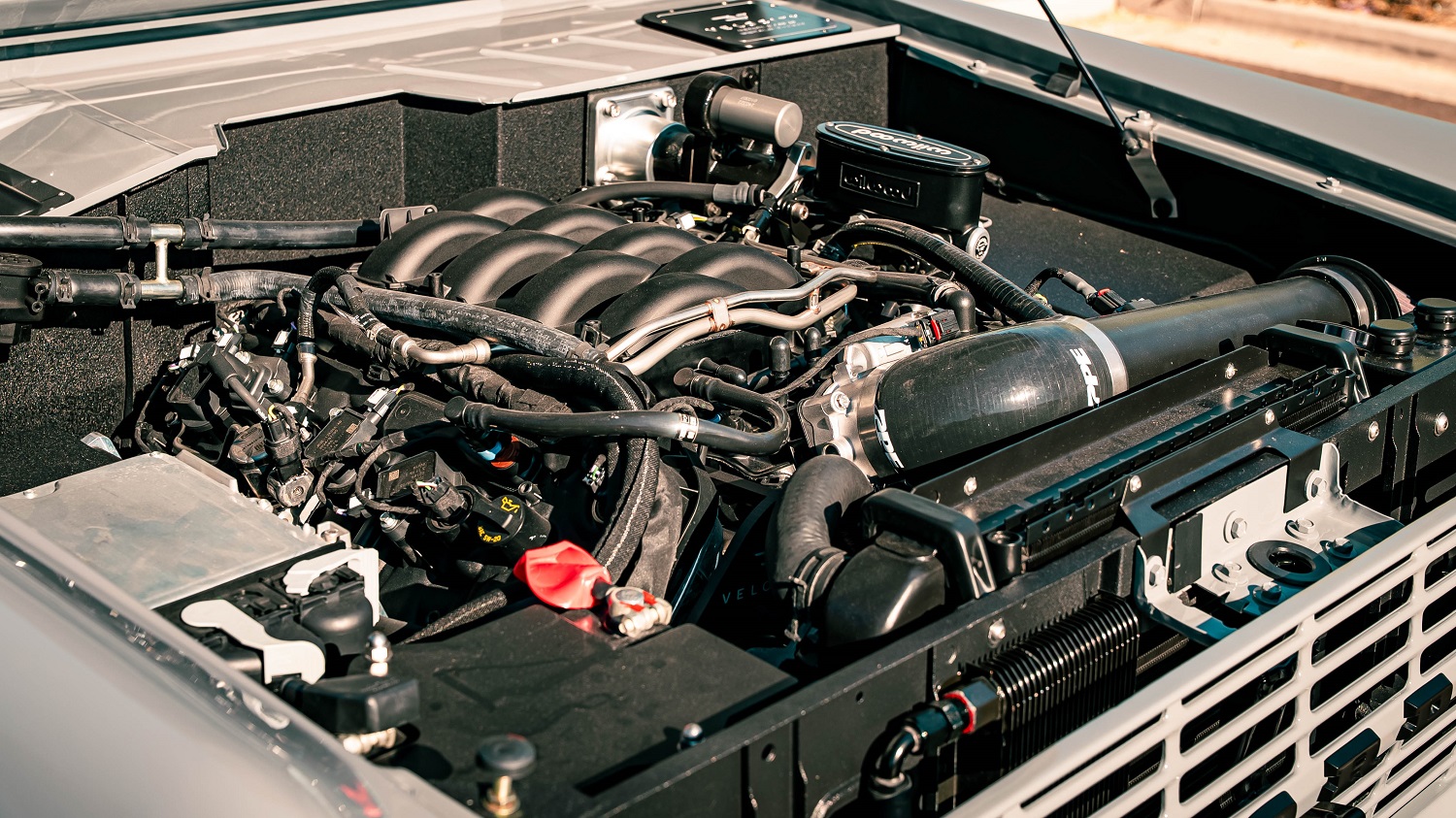
The Explorer Tremor comes standard with the 2.3-liter EcoBoost I4, but the ST’s 400-horsepower, 415-lb-ft 3.0-liter EcoBoost V6 is available. Both engines are paired with a 10-speed automatic and all-wheel drive with a Torsen limited-slip differential.
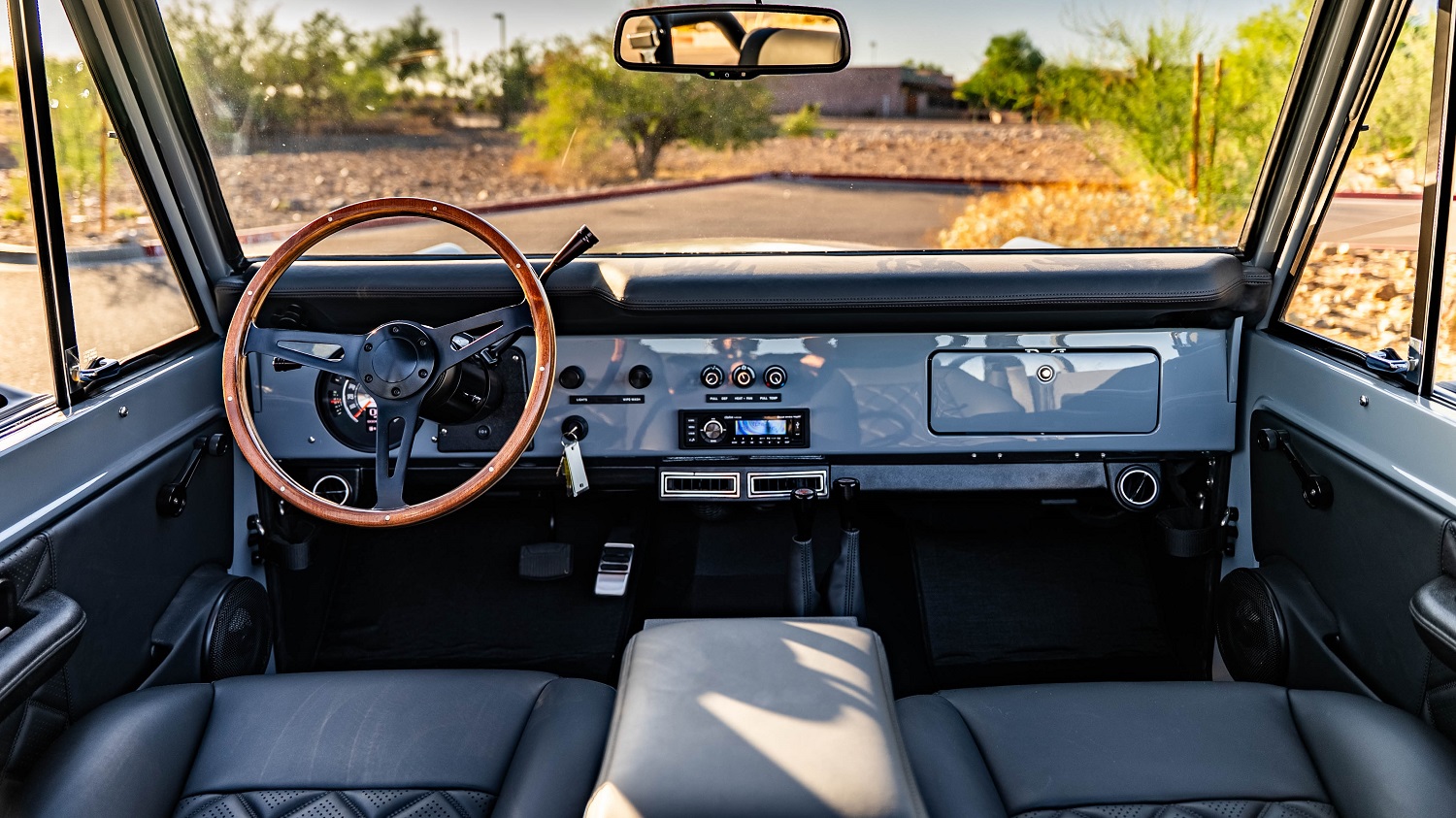
Like the exterior, the cabin of the Tremor has orange accents, such as the stitching on the seats, door panels, steering wheel, and center console, as well as Tremor logos on the front seats. While the Tremor is doing the hard work and getting dirty, the front passengers can enjoy its available massaging seats; everyone onboard can listen to the optional 14-speaker premium B&O audio system as the available BlueCruise 1.5 hands-free driving technology makes long road trips less stressful.
Ford hasn’t released prices for the 2026 Explorer Tremor yet, but it has opened the order books for it. Expect to see the MSRP and availability later this year.
You may not need us to inform you, but modern cars are infinitely safer than the classics we enjoy. The key to emerging from an accident is how the vehicle absorbs impact and dissipates the energy from the collision. Old cars were not designed in that manner, though physics suggests they may emerge better from an altercation.
The C2 Corvette is not known for being a heavyweight, so being on the receiving end of a collision looks like what? This image we found on CorvetteBlogger.com gives you an idea.
The story goes that Maine resident Gregory Boynton and a passenger were driving along in a Corvette (appears to be a 1963-64), nary a worry on their minds, when a left-turning Mitsubishi SUV traveling in the opposite direction failed to yield to the C2, resulting in this near head-on crash.
Image courtesy of Lincoln County (ME) Sheriff’s Office
The Corvette driver and passenger did not fare too well and were transported by helicopter to a medical center in Bangor. The other driver was treated at the scene for minor injuries. According to the sheriff’s office, alcohol or drugs don’t appear to be a contributing factor.
There’s no indication how fast either of them were going, but you can see the damage to the Corvette. We have to remind ourselves that no matter how salvageable a classic car may appear post-collision, it’s what happens inside the cabin that matters.
The town of Sturgis, South Dakota, is best known for its annual motorcycle rally, which draws hundreds of thousands of motorcycle enthusiasts to the area every August. My dad rode there once on his Honda Goldwing motorcycle and couldn’t say enough good things about the people, the atmosphere and the nearby attractions like the Black Hills National Forest.
As it turns out, Sturgis is a pretty good place for muscle cars, too:
Finished in Viper Red, the car has a two-door hardtop body style and has gone through a frame-off restoration. Features include a cowl induction hood, a driver’s-side mirror and chrome brightwork. Footwork comes from a set of 17-inch American Racing wheels wrapped in Nankang Sport NS-1 tires.
The second-generation Chevy II received a restyle on the General Motors X-body platform, and one of the most distinguishing characteristics was the new vertical taillight layout. The design was more squared-off than before, and influences were taken from the larger Chevelle and Impala. Consequently, in advertising, Chevrolet talked about how the car “looked” more high-end than it was. One magazine ad said, “Don’t let the expensive look frighten you. Come closer. It’s Chevy II. Relax, practical car lovers.”
The cockpit is trimmed with gray vinyl bucket seats and matching materials for the headliner, door panels and carpeting. AutoMeter gauges, a Lecarra steering wheel and a Kenwood audio system are among the updates to the interior. The odometer shows 884 miles, although true mileage is unknown (and the title reads mileage-exempt).
Now for the good stuff: Power comes from a professionally-built 406ci V8 mated to a TH350 three-speed automatic transmission. Upgrades include an Edelbrock 750cfm four-barrel carburetor, an Edelbrock aluminum intake, Hooker headers, a custom pulley system, MSD electronic ignition and an aluminum radiator with an electric fan. While horsepower is not advertised, it’s safe to say this combination yields a modest improvement over even the highest-power stock Nova drivetrain for 1966. Included in the AutoHunter listing is a cold-start video that gives us a small taste of how beastly the car sounds.
I’ve made it a life goal to own a Nova at some point, but I think it might have to be a third-generation example like my dad’s old 1968. That means I probably won’t be bidding against you on this 1966, as tempting as it looks. Have at it – and let me know how you like Sturgis when you go pick it up!