Journal Classic Cars

Category Added in a WPeMatico Campaign

Many Toyota owners will attest – a 200,000-mile odometer reading is usually just the beginning. Longevity is one of the brand’s strongest suits, and the 4Runner sport-utility has been a popular vehicle for adventure-seekers for several decades. It has a longstanding legacy as a reliable, capable rig. In some magazine advertisements, Toyota called the 4Runner “The Answering Machine for the Call of the Wild.”

The Pick of the Day is a 1996 Toyota 4Runner SR5 4WD listed for sale on ClassicCars.com by a private seller in Newland, North Carolina. (Click here to view the listing)

“This 4Runner has been carefully maintained by its owner – a mechanical engineer – for over 10 years,” the listing says. Despite the vehicle’s odometer reading of about 244,500 miles, it looks to be in remarkable shape both inside and out. The seller says the paint is original with exception of the hood, which was repainted in 2024.

The 4Runner nameplate has been around for over 40 years. It was first brought to market in 1983 with what Toyota called the “N60 series” three-door compact SUV. In other markets around the world, it was called the Hilux Surf. The 4Runner shared mechanical architecture with Toyota’s pickups of the time, and the same basic formula still holds true today: While most sport-utility vehicles now utilize unibody designs, the newest 4Runner is still built on a truck-style ladder frame (called the TNGA-F global truck platform).

The third-generation 4Runner was introduced in model year 1996 boasting a new design on an all-new chassis when compared to the outgoing model. It offered the highest ground clearance in its class, yet could be optioned with luxurious amenities like leather upholstery on upper trim models. In so doing, it paved the way for many of today’s modern SUVs. This example is an SR5 with tan cloth, but it’s still well-appointed with a power sunroof and other options. The seller has upgraded the factory sound system with a JVC head unit that has modern Apple CarPlay and Android Auto connectivity.

About that long-lived engine: Power is sourced from a 3.4-liter V6 mated to a four-speed automatic transmission and a dual-range transfer case. The listing outlines some of the maintenance that has been carried out in the last year or so: Timing belt, water pump, spark plugs, steering rack, front CV axle, lower ball joints, power steering pump, alternator, battery, muffler, tires, charcoal canister, belts and hoses. This 4Runner easily has another quarter-million miles of life left in it with that kind of service history.

“This truck turns heads and draws compliments everywhere it goes. Please reach out if you are serious about wanting to make it yours,” the listing concludes.

The asking price is $14,995.

Click here to view this Pick of the Day on ClassicCars.com

Dad was working in Stamford, Connecticut when I moved to New York City for a new job in the summer of 2004. Visiting him was easy because the Metro-North Railroad made it a direct hour-long ride. During one of those visits, I spied what was possibly an “FK5” Deep Burnt Orange Metallic Plymouth B-body two-door coupe in a fenced-in lot. The taillights told me it likely was not a Road Runner, so the body-colored B-pillar meant there was a good chance it was a Belvedere. I wondered to myself, “What if it’s a 383 car?” Not only was the idea (and irony) of a Q-ship Belvedere equipped as a Road Runner just my style, but I also was well aware 383 Belvederes were as rare as any car out there (for some reason, my little “White Book” by Galen Govier doesn’t have production figures listed, but only 13 of the similar Dodge Coronet Deluxe coupe with the 383-4 were built for the U.S. market).

The standard interior for the 1970 Plymouth Belvedere Coupe (Courtesy of Hamtramck-Historical.com)

Fast-forward to 2009. I have been living in Connecticut—15 minutes north of Stamford—to be closer to a job that I no longer had, yet commuting back to NYC for my new job. On one January morning, I missed my usual Metro-North express train and was forced to take the next, local one. In between my feeble attempts at finishing office work and getting some shuteye, I noticed the very same Belvedere in the very same spot from five years before. I made a mental note of the Woodlawn stop and closed my eyes.

A similar car in better condition to what I had found (Image courtesy of barnfinds.com)

When tax time came around a few months later, I solicited the services of an accountant in the New York City borough of the Bronx. Looking at a map for driving directions told me he was by the Woodlawn stop. After my consultation, I hunted for the train stop to use it as a reference point. I knew the Plymouth was due north from the stop, so I hopped onto the Bronx River Parkway for the first time and drove one or two exits up to Mt. Vernon, which is on the cusp where Westchester County begins. Backtracking along the train’s route immediately led me to an industrial area that wasn’t open to traffic. I turned around and tried to find a street that was more traffic-friendly and closer to the tracks. With a bunch of one-way streets that often led me astray or in circles, I honed my approach till it led me back to the industrial area.

(Image courtesy of barnfinds.com)

This time, I drove all the way to the back to find a fenced lot with a sign that proclaimed NO TRESPASSING and some other mumbo-jumbo. I had a hunch this is where the Plymouth was sitting, so I inconspicuously parked beside in another lot. Approaching a man in a car in the off-limits lot, I asked if there was a porter I could speak with. He replied in the negative, somewhat confused, so I proceeded to tell him my story (as random as it sounds to anyone who’s not a car guy or gal) and what I was looking for. He mentioned this place was a police lot so I couldn’t look around, but he thought he may know about this bronze Plymouth and who owned it. He suggested I talk with the cops in the nondescript building that I apparently had passed earlier.

(Image courtesy of barnfinds.com)

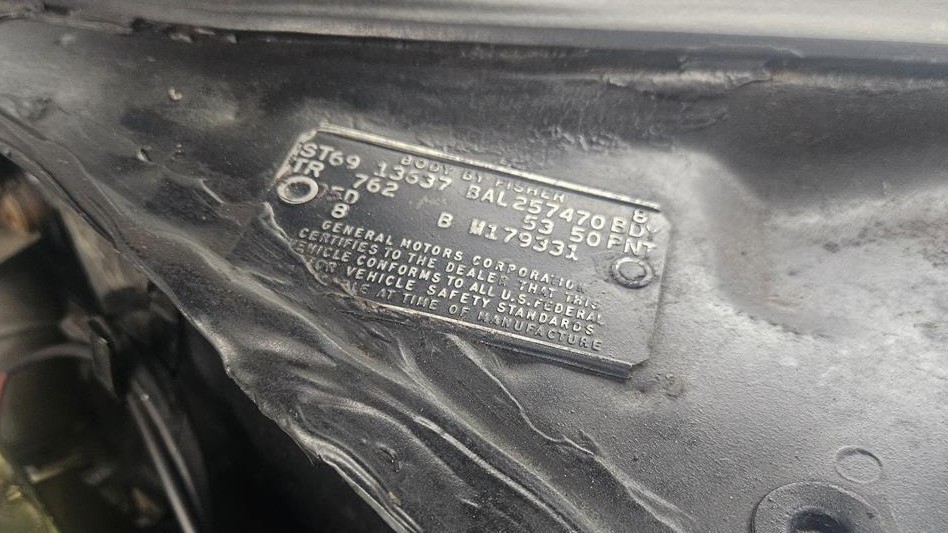
The two policemen at the front desk were soon subjected to this strange story of a car seen from the train and trying to track it down. As luck would have it, one of the officers was a car guy and understood where I was coming from, so he escorted me to the lot. There, among the late-model vehicles was a forlorn Plymouth whose image had been pinned to my brain all these years. Indeed, it was a 1970 Belvedere coupe, one of 4,717 built. Dual exhausts poking under the rear bumper made my 383 dreams look promising as I rushed to the windshield to check for that all-important “N” in the fifth character of the VIN, only to find it was obscured. Undaunted, I opened the door and uncovered the VIN. A G-code—damn! That meant this Mopar was originally equipped with a pedestrian 318. Meanwhile, the cop was chatting me up about his old rides, a 1970 Cyclone Spoiler and Camaros among them. Opening the hood of the Belvedere and analyzing the data plate revealed it had originally been painted “FT6” Burnt Tan Metallic with a black vinyl top. As it sat, this old Plymouth was junk that had suffered from “Street Cruiser Syndrome” at some moment in its past and had been relegated to the indignity that many idle vehicles have suffered over the years.

(Image courtesy of barnfinds.com)

Discovering this Belvedere was not the diamond in the rough that I had hoped may appear like an underwhelming conclusion but, after five years of imagining this car as my entry into the Mopar ranks, it was the thrill of the chase that made it far from a disappointment.

Hot Wheels is world-famous for producing 1:64 die-cast automotive models since 1968. Now, 57 years later, we have the Mattel Brick Shop x Hot Wheels project, part of the Mattel Creations collectibles platform.

(Image courtesy of Mattel)

Yes, if you’ve been out of the loop since you were a kid, the world of Hot Wheels takes on many more forms—there’s plenty of instant-collectible projects for those who used to raid the aisle at Toys”R”Us. New is the Mattel Brick Shop , a new toy line for 2025 featuring kits with brick and metal parts for detailed builds of your favorite Hot Wheel cars. Even better, you can customize each build and transform the vehicle into something even more unique.

(Image courtesy of Mattel)

You can build among three available series in three scales:

  • Hot Wheels Speed Series (1:32)
  • Hot Wheels Elite Series (1:16)
  • Hot Wheels Premium Series (1:12)

Each set comes with a companion diecast.

(Image courtesy of Mattel)

Mattel has collaborated with several manufacturers so the “builds never compromise on accuracy or proportions.” These are the available building sets:

  • 1:32
    • Maserati MC20
    • Cadillac Project GTP Hypercar
  • 1:16
    • Corvette Grand Sport
    • ’90 Acura NSX
  • 1:12
    • Mercedes-Benz 300 SL
(Image courtesy of Mattel)

These sets just dropped a few days ago but, alas, they appear to be sold out. Will more inventory become available? We don’t profess to know, but if you sign up for emails on the Mattel Creations page, you will be the first to know, plus any other Hot Wheel collectibles produced by this boutique arm of Mattel.

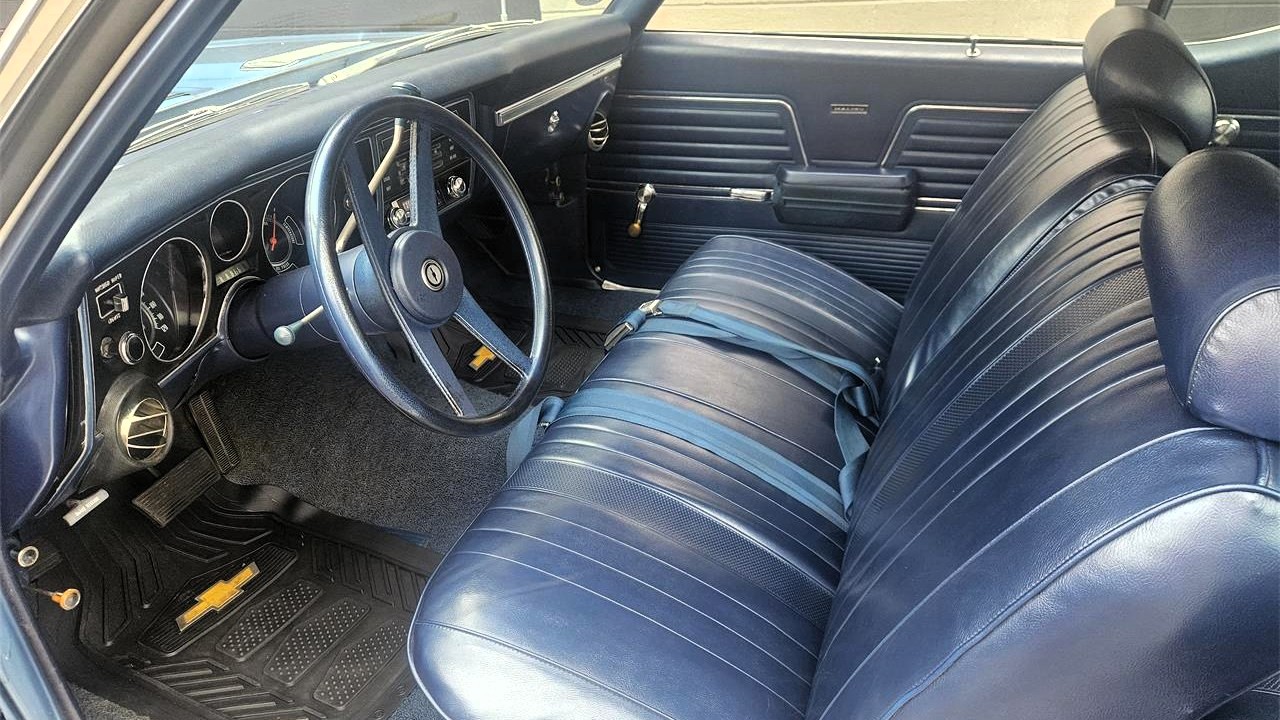
Currently listed on AutoHunter is this 1952 Chevrolet 3600 pickup, a custom build that was completed in 2022. It’s based on a 1967 Chevrolet Chevelle Malibu chassis and powered by an LS1 5.7-liter V8, which is paired with a 4L60E four-speed automatic transmission. Finished in Octane Red over a black cloth and vinyl interior, this five-window pickup is now offered by the seller in Washington with a branded title indicating this truck is an antique vehicle.

The Octane Red exterior is accented with black bumpers and a matching grille, trim, and badges. Other features include a split windshield, running boards, rectangular side exhaust outlets, a stamped tailgate, and teardrop taillights.

This modified pickup connects to the road through a set of black and chrome 17-inch Ridler wheels wrapped in 235/45 front and 255/45 rear Toyo Extensa HP II radial tires.

The single cab has a bench seat upholstered in black and red cloth and black vinyl. Interior features include power windows and steering, a tilt steering column, an aftermarket four-spoke steering wheel, Vintage Air air conditioning, and a retro-style AM/FM radio with Bluetooth connectivity.

As part of the custom build process, a set of Dolphin gauges, which includes a 140-mph speedometer and readouts for the fuel level, oil pressure, temperature, and voltage, was installed. The digital odometer shows 1,000 miles, but the title for this vehicle indicates it’s mileage-exempt.

Under the hood is an LS1 5.7-liter V8 equipped with body-color valve covers, a K&N air filter, polished headers, and an aluminum radiator with an electric fan. A 4L60E four-speed automatic delivers the engine’s output to the 3.70 rear end.

The LS1 draws fuel from a rear-mounted 1980 Chevrolet Camaro gas tank. Power Wilwood front disc brakes and a pair of rear drum brakes help this 3600 keep on truckin’.

If you’d like this updated classic pickup, bid on it now. The auction for this 1952 Chevrolet 3600 ends on Wednesday, May 7, 2025, at 12:00 p.m. (PDT).

Visit the AutoHunter listing for more information and a photo gallery
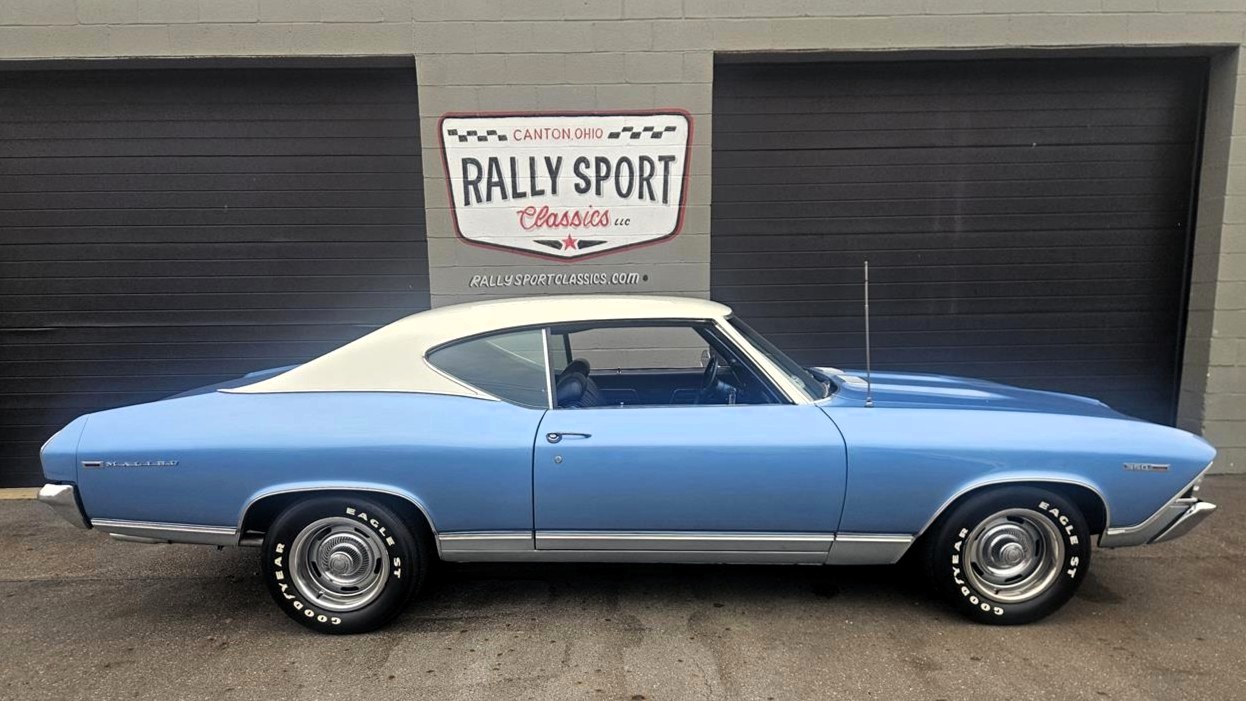
When the 426 Hemi was introduced for street-going Plymouth and Dodge models for 1966, around 2,700 B-bodies ended up being built for homologation purposes. In contrast, when the redesigned Fairlane was introduced the same model year, Ford built only 57. Our Pick of the Day is one of these rare and unusual Blue Oval vehicles, a 1966 Fairlane 500 two-door hardtop. It is listed for sale on ClassicCars.com by a private seller in Laval, Quebec, Canada.

Nineteen sixty-six was a big year for Ford: it won the 24 Hours of Le Mans, introduced the 428, and the Fairlane GT became its answer to the Pontiac GTO. Available as a nicely trimmed hardtop or convertible, the Fairlane GT was advertised in a famous ad that appeared to be a recipe on cooking a tiger—a nod to the Fairlane cooking the “GeeTO Tiger” in performance. However, the truth was the opposite.

Everything about the Fairlane GT was tasteful and upscale, with generous touches of chrome trim everywhere, from the exterior and interior to the engine bay. However, the 335-horsepower 390 was not cutting it on the drag strip. Sure, Pontiac’s standard 389 was rated the same, but Pontiac also had Tri-Power with 360 horsepower, while Ford offered no optional engines. “Genuine Imitation Joins the Supercar Spectrum,” said Car Life in March 1966 after ripping 15.4 ETs. “The GTA’s problem is, quite simply, not enough power.”

So where did that “A” come from? Ford’s new Sport Shift Cruise-O-Matic Drive turned the GT into a GTA. What was unique about this transmission was the three gears (compared to the GTO automatic’s two) with a mechanism to permit both manual and automatic shifting.

However, in the spring of 1966, Ford introduced a Fairlane 500 hardtop with a 427 side-oiler. This car was produced for organized drag racing, though the Fairlane as built was quite stock. Why choose a Fairlane 500 hardtop instead of a Fairlane Club Coupe or even a Fairlane GT? No one knows, but all 57 built were identical: Wimbledon White with black interior, four-speed, fiberglass scooped hood, dual-quad 427, 3.89 limited-slip rear, transistorized ignition, extra cooling package, and 7.75 x 14-inch blackwalls.

Ford would increase the availability of the 427 for 1967 for all Fairlane models save, strangely, the GT (though one was built), and available with a single four-barrel as well. However, even with 230 built, the 1967 Fairlane 427 was not enough to make a strong impact against Brand X. That makes this 427-powered 1966 Fairlane 500 two-door hardtop quite an important artifact of Ford’s “Total Performance” days. Known as an R-code due to the engine code in the VIN, this sanitary Blue Oval is claimed to have 5,140 miles on the original driveline, engine, transmission, and differential. The original Firestone Deluxe Champions reside on the front, while M&H Racemasters support the rear, with the original spare in the trunk.

If you were going to create a museum and feature seminal performance cars of the era, this would be one—some folks may call it a “bucket list” car. If you’re putting together the best of the best, we imagine it’s worth your time to “Contact Seller” and ask about the price.

Click here to view this Pick of the Day on ClassicCars.com

I just discovered that Nissan has a new Armada, that behemoth of an SUV that pisses off the Sierra Club. It’s not the kind of vehicle that I’d ever own but, as the product of model-year culture (especially Septembers),  I do enjoy seeing new or revamped vehicles among all automakers. However, there’s an interesting, available feature that’s worth talking about: Invisible Hood View.

Today, it seems almost every brand-new vehicle on American roads has several huge screens that connect a digital instrument panel with an infotainment panel on the center stack. How could this swath of screens be better exploited better?

(Image courtesy of Nissan)

Nissan has an answer with Invisible Hood View, a nifty piece of tech that helps you—the driver—spot hidden obstacles every time you are behind the wheel. By providing a virtual view via exterior cameras that give a view of what’s ahead and below your line of sight, you can avoid hitting the curb and other clumsy moves that may result from your lack of visibility (or, let’s be honest, driving acumen). If you’re an off-roader, you’ll certainly appreciate Invisible Hood View as it will give a view of hazards and obstacles.

In fact, the Texas Auto Writers Association, an esteemed group of enthusiasts who drive the latest and greatest, named it “Best New Feature.”

(Image courtesy of Nissan)

Invisible Hood View is but one feature under an umbrella of available camera tech to make your drive easier and safer. Another feature includes Front Wide View, which gives a wide-angle perspective from your line of sight to both corners, handy in tight, obstructed parking spaces or emerging from a driveway with parked cars blocking your view. And 3D Intelligent Around View Monitor gives you the ability to swipe the touchscreen to rotate a three-dimensional view of the Nissan and its surroundings from any angle.

Besides the Armada, Invisible Hood View is available for the Rogue and Murano SUVs. For more information on the Armada and its features, click here.

Whenever a car company adds a letter to a model name, you know what to expect. Cadillac‘s V, Audi’s S, and BMW‘s M vehicles offer higher levels of power and performance. Aston Martin also uses the letter “S” for its more aggressive models; the newest one is the DBX S.

To set it apart from other DBXs, Aston Martin gave the S model metal and enamel badges, black grille vanes and a new front splitter, side sills, and rear diffuser. Perhaps most recognizable difference is the modified exhaust system’s two pairs of stacked outlets.

Changes to the Alcantara and semi-aniline leather interior include a herringbone design and “S” embroidery on the seats along with more “S” branding on the door sill plates. Two audio systems are available, including the top-of-the-line 1,600-watt Bowers & Wilkins surround sound setup with 23 speakers.

A variety of exterior options are available to cut weight in strategic areas. According to Aston Martin, the 23-inch magnesium wheels drop 19 kilograms (41.9 pounds) of unsprung weight, which heightens the effect of the DBX S’s four-percent-faster steering ratio. Opting for the carbon fiber roof eliminates the roof rails, but further reduces weight by 18 kilos (39.7 pounds) and lowers the center of gravity – both good things for taking on a Ferrari Purosangue or Lamborghini Urus. Even the grille can be swapped out for a lighter polycarbonate honeycomb unit to make the front end ever so slightly lighter.

Aston Martin combines those reductions with an increase in output. “By using turbo technology transferred directly from the upcoming Valhalla supercar including its larger compressor wheel diameters and other internal improvements,” it was able to boost the twin-turbo 4.0-liter V8’s output to 727PS (717 horsepower) and broaden its rev range. Changes to the nine-speed automatic resulted in new shift points and more forceful downshifts in the Sport and Sport + drive modes. Combined with variable all-wheel drive, the bump in power enables the DBX S to hit 62 mph in 3.3 seconds and rip to 124 mph 0.3 seconds sooner than the DBX707, which used to be the flagship model of Aston Martin’s SUV range.

If that one “S” at the end of this ultimate DBX’s name is a big deal to you, call your local Aston Martin dealer to put in your order for one now. Expect them to call you in Q4 of this year to let you know your DBX S is ready to pick up.

For over 35 years, the Mazda Miata has made a name for itself as an exhilarating two-seat roadster with youthful driving dynamics. Just a few years after the Miata launched, the Sahuaro Miata Club in Arizona was formed in 1992. Today, the club has over 250 members and hosts regular events throughout the year. The next event will be a Route 66 road trip to Laughlin, Nevada.

Why do enthusiasts love the Miata so much? The car’s overarching appeal comes from its “affordable fun.” It was engineered with lightweight design, near-perfect weight distribution and nimble handling – all with the benefit of a relatively low entry-level price tag and mechanical reliability.

Featured on AutoHunter is this 2007 Mazda MX-5 Miata Grand Touring. The car is being sold by a private seller in Durham, North Carolina, and the auction will end Tuesday, May 6, 2025, at 11:00 a.m. PDT.

Finished in Galaxy Gray, it is an accident-free, damage-free example with a clean CARFAX report and only 34,919 miles on the odometer. The car was California and Arizona-owned until 2023 – after which it was relocated to North Carolina. It comes from the “NC” generation (2006 through 2015) and happens to be optioned in the highest trim level for its year, the Grand Touring. When new, the GT Miata stickered at about $25,060.

While maintaining an emphasis on the car’s sporty dynamics, Mazda included a number of amenities on GT models, such as a Bose premium audio system, heated leather seats, automatic climate control and silver interior trim. In this case, the factory head unit has been replaced with a modern Pioneer touchscreen interface equipped with USB, SiriusXM, CarPlay and Bluetooth connectivity.

Power comes from a 2.0-liter inline-four that Mazda rated at 166 horsepower and 140 lb-ft of torque. A six-speed manual transmission transfers power to the rear wheels via a limited-slip differential (a six-speed automatic was optional, but a car like the Miata is best enjoyed with a stick!). For buyer peace of mind, the CARFAX for this MX-5 shows that service was performed within the last month, including an oil change and a fluid check. In addition, a four-wheel alignment, thermostat replacement and transmission fluid change were performed within the past year.

Mazda said, “Some people seek therapy for their obsessions. We built a sports car.” One advertisement said, “Every aspect of the car was analyzed, designed and then redesigned to maximize performance. Even the interior was painstakingly examined inch by inch until a feeling of oneness between car and driver was achieved. Obsessive? Maybe. But then, the real obsession starts when you drive it.”

Perhaps you’ll be just as obsessed with the Miata as the members of the Sahuaro Miata Club are. And maybe you’ll even join them on the upcoming road rally to Laughlin. Here’s your chance!

The auction for this 2007 Mazda MX-5 Miata Grand Touring ends Tuesday, May 6, 2025, at 11:00 a.m. (PDT).

Visit the AutoHunter listing for more information and a photo gallery
Paddle shifters have been in Ferraris for so long that it’s hard to think of when exactly they first became available in the Italian sports cars. Now, they’re the only kind of transmission in a new Ferrari, although there’s news Ferrari may offer a three-pedal setup in the future. So when did Ferrari start down the road to footless gearchanges and faster shift times? With the 355 F1 lineup of Berlinetta, GTS, and Spider models back in 1997. Our Pick of the Day is a 1999 Ferrari 355 F1 Spider posted on ClassicCars.com by a dealer in California.

The 1995-1999 355 was an evolution of the preceding 348 and was offered in Berlinetta, GTS, and Spider body styles. Although both models had a wedge shape and a mid-engine layout, the 355 did away with its predecessor’s dated side strakes and received a slightly larger engine. Equipped with five-valve heads and lightweight titanium connecting rods, the 3.5-liter V8 produced 380 horsepower and 268 lb-ft of torque, according to Ferrari. At first, a six-speed manual was the only available gearbox. Ferrari was no stranger to two-pedal cars; it had offered automatics before in the 400 series and 456 GTA, but the F1 single-clutch automated manual was bound to happen at some point. After all, Ferrari was a Formula 1 powerhouse and its road cars were known for their speed. The body mechanics of shifting a car manually can add time to acceleration runs and lap times; keeping your right foot down while pulling back on a paddle cuts some steps out of the shifting process. About halfway through the wedge-shaped 355’s production run, Ferrari equipped it with its new F1-style six-speed gearbox.

Now for a little history on this Rosso Corsa ’99 355 F1 Spider. According to the selling dealer, it’s been a California car with only two owners since new. Neither one of them seems to have driven it much because this car has only 13,665 miles on it, which the black soft top and the overall shape of the tan interior seem to reflect.

Aside from the transmission itself, conveniences include power controls for the windows, seats, mirrors, and top. The ultimate convenience is knowing this Ferrari recently received a major service that included new timing belts, which should be shown in the service records that come with this angular ’90s classic.

If you want an example of the car that showed what the future of Ferrari was going to be, this 1999 355 F1 Spider can be yours for $109,800.

Click here to view this Pick of the Day on ClassicCars.com

Every Ferrari is special in its own way but, every now and then, the company sets certain models apart using just one word. Over the past few decades, those words have included Scuderia and Pista. Speciale is also on that list and was last applied to the ultimate version of the 458. Now Ferrari is bringing it back to identify a more powerful, athletic, and aggressive variant of the hybrid 296 GTB known as the 296 Speciale.
The visual differences between the 296 Speciale and the car it’s based on are easy to see, especially in the new Speciale-specific color of Verde Nürburgring and the available white livery. The entire front end was restyled to improve the Speciale’s aerodynamics. A 296 Challenge-style front aero damper, which sends some of the airflow from the underbody to the upper body, helps keep downforce on the nose more consistent.

The FXX K and 296 Challenge influenced the rear end, which features vertical fins and small wings designed to reduce drag while simultaneously increasing downforce. In addition to a new diffuser, the active rear spoiler’s new Medium Downforce setting, which maximizes high-speed stability, joins the Low Drag and High Downforce configurations; new programming shortens the transition time between those last two modes. According to Ferrari’s calculations, the 296 Speciale produces 435 kg (959 pounds) of downforce at 250 km/h (155 mph) – a 20-percent improvement over the 296 GTB. Additional external changes result in better cooling of the enhanced hybrid powertrain as well as the brakes.

What’s not so obvious are the materials Ferrari used to lighten the Speciale. Of course, carbon fiber is one of them, making up some of the body panels and, if a Speciale buyer chooses, the bumpers and engine compartment cover. In addition to Alcantara and aluminum, there’s more carbon fiber inside the cockpit, which has door panels made out of single blocks of the lightweight composite.

Ferrari’s diet for the Speciale also covered its twin-turbo 3.0-liter V6 engine, which is equipped with the F80’s lighter titanium connecting rods, a nitrided steel crankshaft, and racing-derived titanium screws and stud bolts. Even the turbos show a lower number on the scale. Ferrari went so far as trimming excess metal from the engine block and crankcase. Combined, those cutbacks make the Speciale’s engine nine percent lighter than the one in the 296 GTB. Overall, the Speciale is down 60 kg (132 pounds) compared to the base 296.

It should come as no surprise that the Speciale is more powerful than its regular counterpart, too. The V6’s upgraded hardware and the seven-percent-higher combustion chamber pressure unlocked by a new boost management strategy add up to 700 cv (690 horsepower) at 8,000 rpm and 755 Nm (557 lb-ft) of torque at 6,000 rpm. New acoustic ducts and individually tuned tubes that carry engine sound into the cabin should “express the rich harmony of the engine to the full.”

Thanks to optimized operating and cooling strategies, the Speciale’s electric motor is 13 cv (12.8 horsepower) more potent than the one in the 296 GTB and provides up to 25 kilometers (15.5 miles) of all-electric driving range. The eManettino dial’s “Qualify” setting engages a new overboost mode that produces up to 180 cv (177 horsepower) and 315 Nm (232 lb-ft) of torque between 6,000 and 8,500 rpm. Altogether, the more potent engine and electric motor bring the Speciale’s total output up to 880 cv (867 horsepower), “50 more [cv] than the 296 GTB and a record for a rear-wheel-drive production Ferrari,” according to the automaker.

Special roll-reducing spring and damper settings and new 20-inch forged wheels with specially designed Michelin Pilot Sport Cup 2 tires transmit the hybrid’s higher power to the road or track. New upshift settings for the eight-speed dual-clutch gearbox’s first seven gears lower shift times.

So just how fast is the 296 Speciale with these comprehensive improvements? Ferrari’s stopwatch shows that it can reach 100 kph (62 mph) in 2.8 seconds and takes only 7.0 seconds to hit double that speed. It only needs 1:19 to complete a lap of Ferrari’s Fiorano test track. All three of those figures better the ones achieved by the 296 GTB. Flat out, the Speciale can go past 330 kph (205 mph).