Journal Classic Cars

Category Added in a WPeMatico Campaign

The AutoHunter Spotlight for today is this restored 1979 International Scout II. Power comes from International’s 345ci V8 paired with a three-speed automatic transmission. Features include four-inch Rough Country lift kit, bucket seats and console, air conditioning, upgraded sound system, backup camera, and more. Painted gray with a black vinyl and plaid cloth interior, this 4WD proto-SUV is now offered by the selling dealer with a clear title.

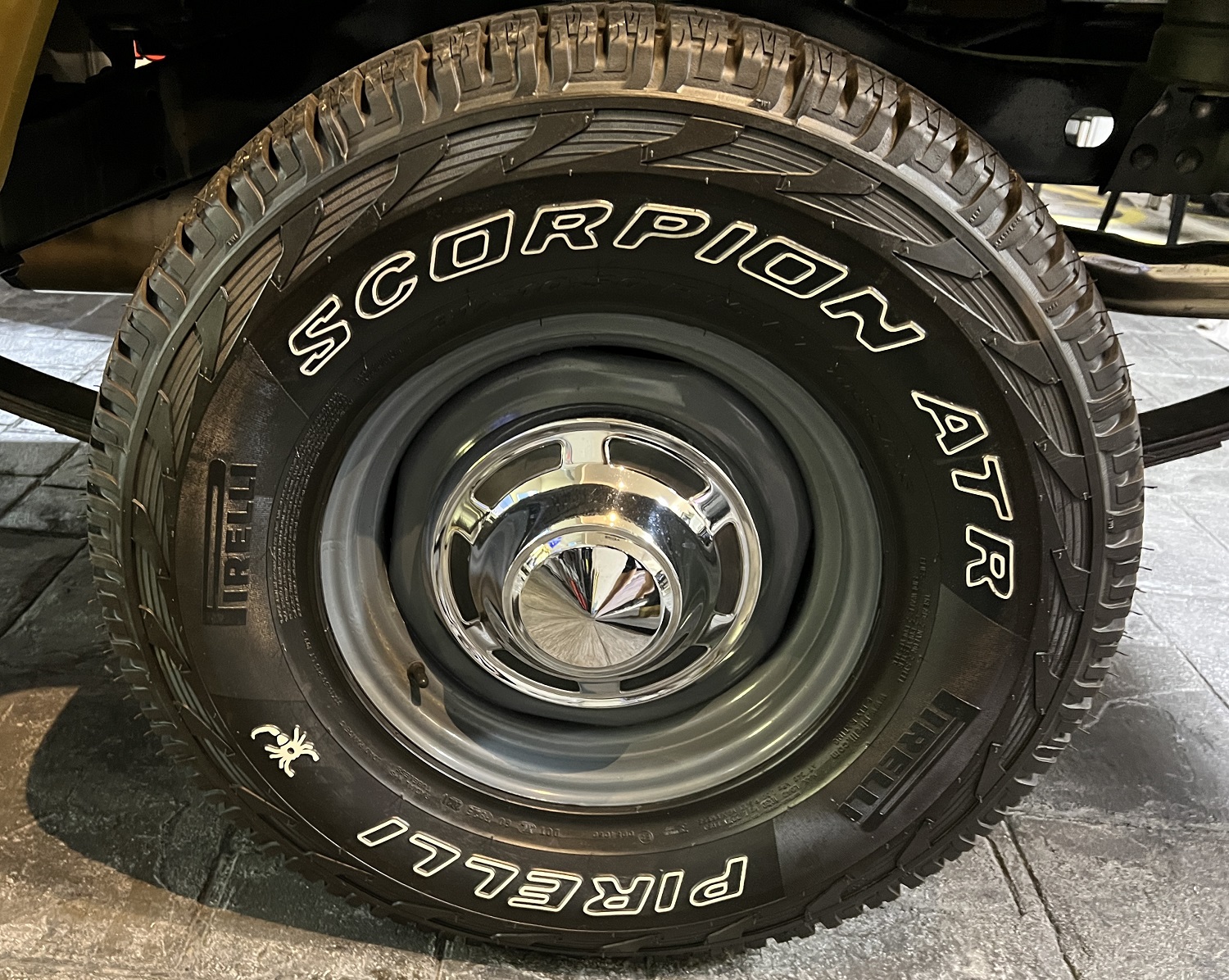
The photogenic gray paint is new, as is the decal kit that adorns all four sides. Other exterior features include a tan softtop, dual chrome side mirrors, and white grille with matching bumpers front and rear. A set of 15-inch white and chrome wheels (with manual front locking hubs) are wrapped in 33×10.50 BFGoodrich All Terrain T/A off-road tires.

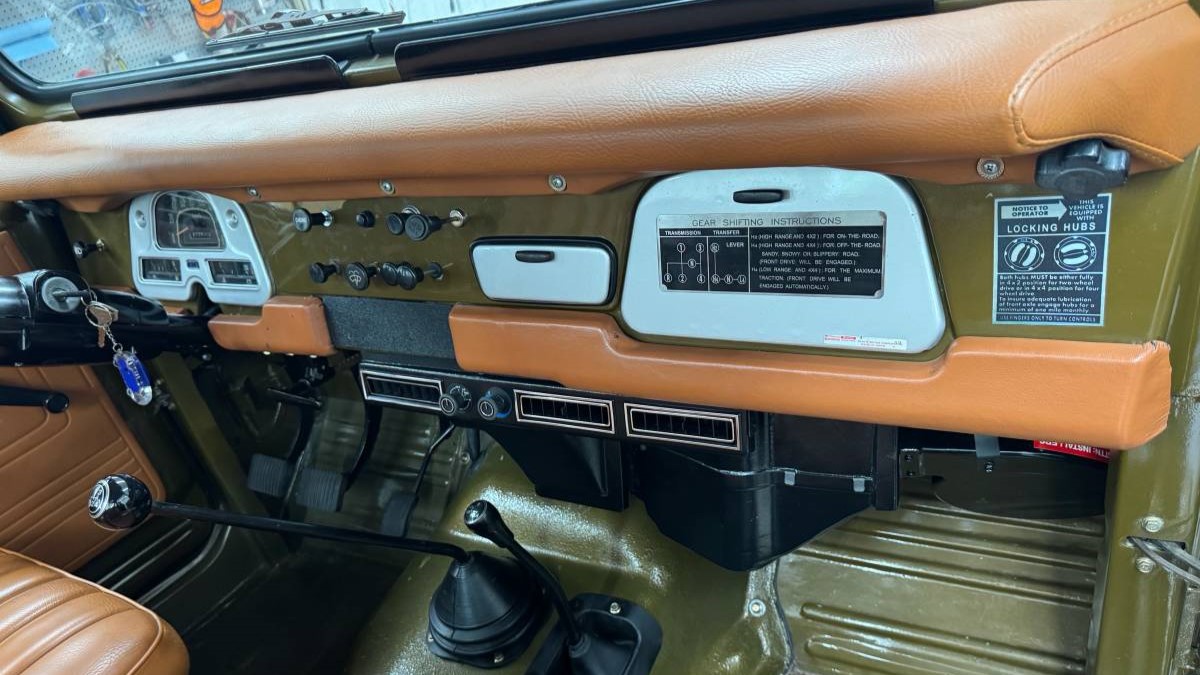
The redone black vinyl interior features front bucket seats with gray and red plaid cloth, plus matching door panels. Other interior features include power steering, air conditioning, center console, Bluetooth-compatible touchscreen stereo with back-up camera and upgraded sound system that includes MTX Audio subwoofers and Rockville amplifier. The red seat belts are a nice touch.

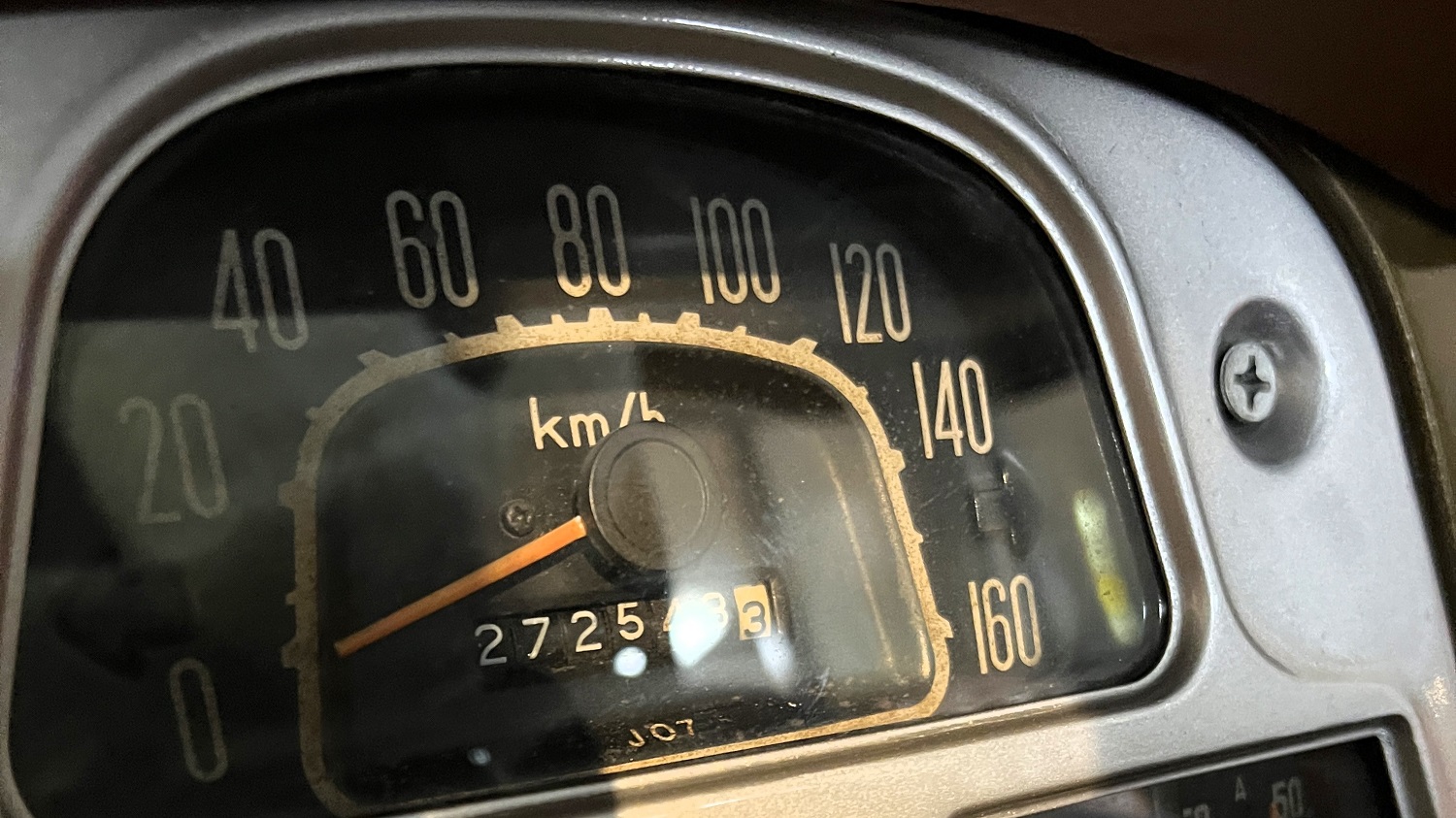
The instrument panel features a 100-mph speedometer and gauges for the oil pressure, temperature, alternator, and fuel. The odometer shows 10,601 miles, though the title reads mileage-exempt.

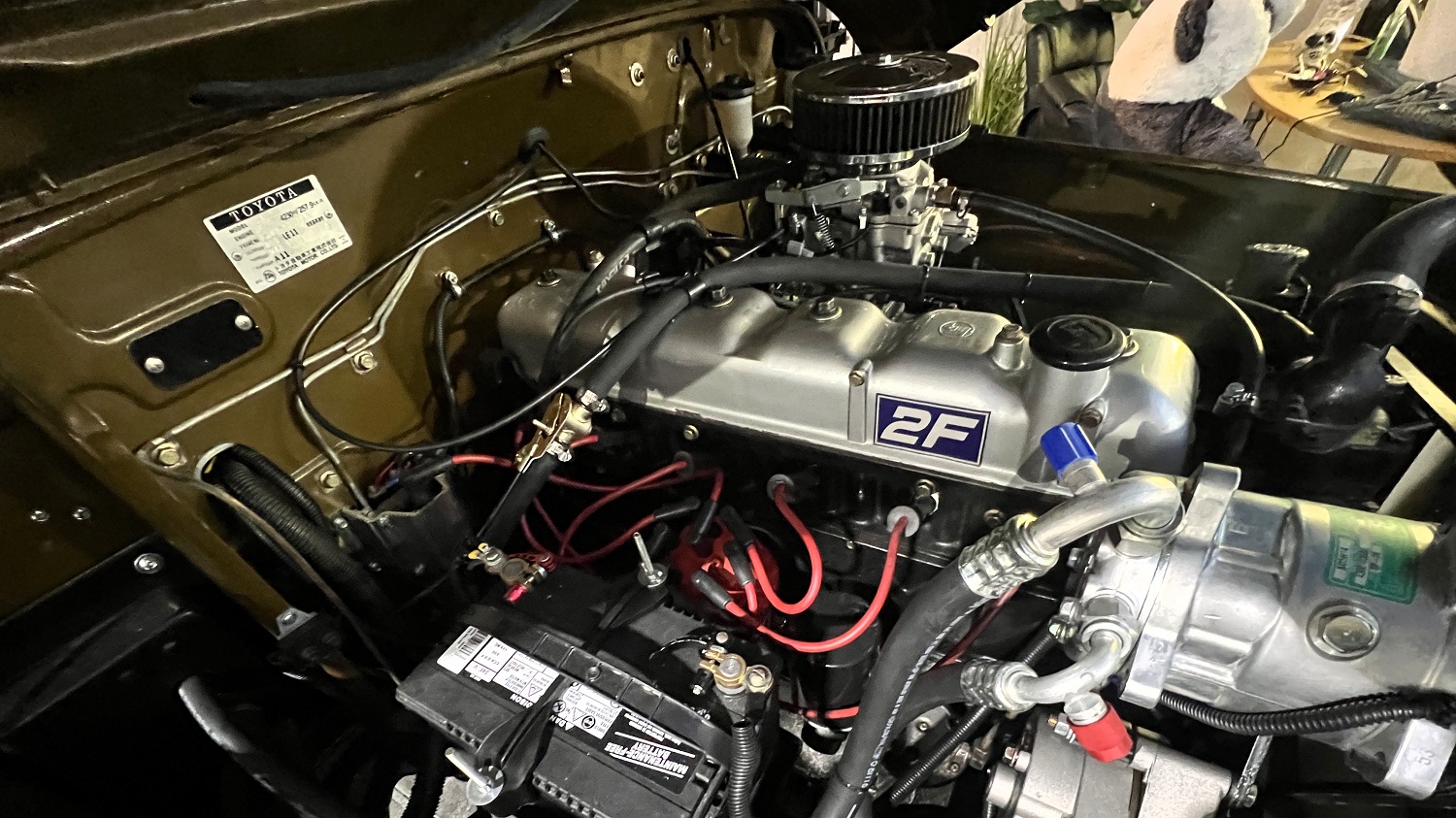
The 345ci V8 features a four-barrel carburetor, which developed 148 horsepower when new. It is backed by a Chrysler A-727 TorqueFlite, which International sourced since 1972. There also is a two-speed transfer case. The seller indicates that all seals were changed earlier this year.

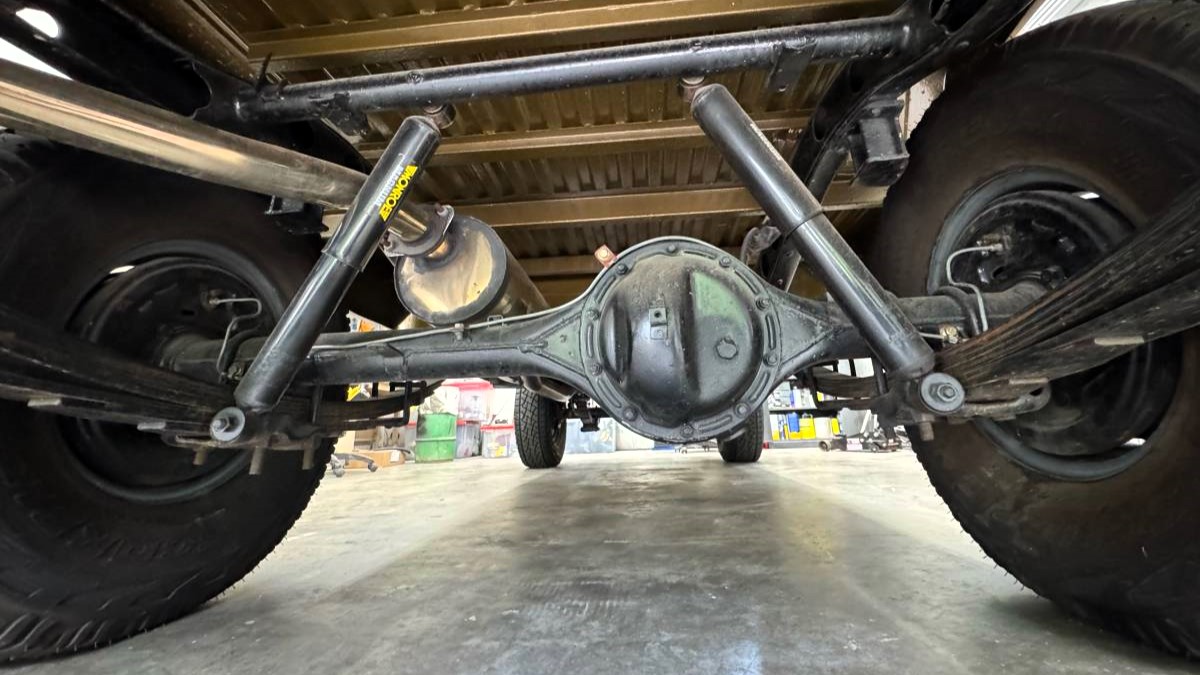
The undercarriage features a four-inch Rough Country lift kit, power front disc brakes, and a dual exhaust system (originally, it was single). The brakes, gas tank with fuel lines, and exhaust system are new.

This 1979 International Scout II with 4WD currently listed on AutoHunter is a neat way to experience the ruggedness, 1970s style, and utility that only a Scout can give. Plus, as a cherry on top, the seller states (s)he is willing to assist with transportation to you once you win, so why not pull the trigger now and place a bid? Do it before Thursday, July 17, 2025, at 11:15 a.m. (PDT) because once the clock passes that threshold, you will no longer have that opportunity. Good luck!
Visit the AutoHunter listing for more information and a photo gallery

The 1990s started 35 years ago (yikes!) but, in many ways, the decade of the Clinton administration and the Dallas Cowboys winning Super Bowls is still going strong. There are people out there who watch Friends every day. You can buy baggy, oversized clothing from J. Crew and Polo. And the XJ Jeep Cherokee, which was primarily produced in the ’90s (1984-2001), is a perennial favorite of off-roaders and those who enjoy nostalgic vehicles. Our Pick of the Day, a 1996 Jeep Cherokee Country 4X4, is even more representative of its time for one major reason.

Any guesses? You could say the Cherokee’s boxy design is from an era in which car companies didn’t give their SUVs fast rooflines to make them look like sport coupes, but that’s not what I’m getting at. The reason this XJ is super ’90s is its color: the Bright Jade Metallic on this rig fits right in with the teals, greens, and aquas that seemed to be so popular back then. Silver bumpers, wheel arches, and lower-body cladding keep it from being too visually loud.

The 1990s was also before most vehicles had infotainment screens in them, so the cabin is pretty straightforward. That doesn’t mean it’s spartan, though. Yes, it has light gray cloth and vinyl seating, but it also comes equipped with power windows and locks, cruise control, air conditioning, four-speed automatic, and a Pioneer AM/FM/CD head unit. The trusty 4.0-liter inline-six and the lever for the dual-range transfer case are great for making sure this Jeep gets out of the sticky situations that Cherokees typically encounter.

Over the past 29 years, this XJ has racked up only 115,904 miles, which is significantly lower than the mileage you usually see on Cherokees of this age (many of which have been extensively modified and trail-beaten). According to the CARFAX report, it has received several mechanical updates along the way: in 2016, the serpentine belt was replaced, and new cooling and exhaust system parts were installed in 2018. Plus, within the past two years, the power steering system has been equipped with fresh hardware. In a previous listing for this vehicle, the seller at the time noted the presence of corrosion on the undercarriage; the CARFAX indicates an undercoating was applied in June of this year.

Whether you want to throw on your favorite Starter jacket and head to the mountains, or jam out to Soundgarden during a windows-down drive to the beach, an XJ Cherokee is a great retro way to get there (just don’t expect to get a McDonald’s Arch Deluxe or a Crystal Pepsi on your way out of town). To start going on adventures in this 1996 Jeep Cherokee Country 4X4, it’ll cost you $13,995.

Click here to view this Pick of the Day on ClassicCars.com

Detroit has a bad habit of offering a neat car model, only to ruin a good thing by exploiting the name for a more mainstream audience. This can water down the equity of the name and the perception of the car-buying public. What are some of the more transgressive ones in postwar American history? Here are several that come to mind.

Plymouth Fury
The Fury first appeared in 1956 as a special performance Plymouth model having a very specific image and presentation (a formula exploited much later by the 1964 Pontiac GTO). All Furys were painted Eggshell White with anodized gold trim. This model continued with Plymouth’s 1957 redesign, with Sand Dune White and Buckskin Beige being the respective 1957-58 colors. However, for 1959, Plymouth mainstreamed the Fury name, giving it top billing and pushing Belvedere down a notch.

1962 Sport Fury

New was the Sport Fury, an heir apparent of sorts to the 1956-58 Fury that included a convertible, though in reality it was more a response to the 1958 Chevrolet Impala. For 1960, the Sport Fury was discontinued, though the name was reintroduced for 1962 as a buckets-and-console hardtop and convertible. Oddly, with “Sport” in its name, the Sport Fury gained a four-door in 1970.

1957 Pontiac Bonneville

Pontiac Bonneville
The first Bonneville was a very special 1957 halo creation  to showcase Pontiac’s new-found youthful and performance identity. Power came from a fuel-injected V8, the only other General Motors product aside of Chevrolet to offer such a feature. Pontiac could be forgiven in 1958 for lowering the price and introducing a hardtop to go along with the droptop, as the car was still distinctive and special but, for 1959, Pontiac renamed its mainstream lineup and made the Bonneville the top model.

1983 Pontiac Bonneville

The Bonneville now was a popular model that nicely faked competing against more prestigious Oldsmobile and Buick models but, to add insult to injury, the company created the 1971 Grand Ville and knocked the Bonneville down one rung. This continued through 1975 and, believe it or not, the full-size Bonneville  was discontinued when GM discontinues many of its full-size cars. The Bonneville name was ten applied to the former (midsize) LeMans through 1986. For 1987, the Bonneville returned to for, moving up to GM’s FWD H-body platform (and, later, G-body) through 2005.

1965 Dodge Monaco

Dodge Monaco
Thanks to the success of the 1962 Pontiac Grand Prix, Dodge introduced the 1965 Monaco in response. It too was only available as a two-door hardtop and included fancy touches like Rattan-backed bucket seats and -lined door panels and unique trim, especially the taillights. However, when Dodge discontinued the Custom 880 for 1966, it applied the Monaco name to the lineup.

1968 Dodge Monaco 500

The personal luxury car was now the Monaco 500, and it remained a model or trim package through 1970, with the later years being quite watered down. (Canadians received an altogether different Monaco 500—don’t mix up the two!)

1967-Mercury-Cougar
1967 Mercury Cougar (Photo courtesy of Ford)

Mercury Cougar
As you know, the original 1967 Mercury Cougar was Ford Motor Company’s bid to offer a more upscale pony car, to much success. While the pony car evolved into a personal luxury car, the Cougar never really strayed from its roots . . . until 1977, when the redesigned personal luxury coupe (now as the XR-7) was joined by a regular two-door, sedan and station wagon, with a fancier Brougham trim level in the middle.

1977 Mercury Cougar

In other words, the XR-7 continued to play the traditional Cougar role, while the Cougar and Cougar Brougham replaced the Montego. This would continue through 1979, upon which the redesigned 1980 Cougar XR-7 remained as the only Cougar. Then, in 1981, Mercury expanded the Cougar line once again, offering two- and four-door sedans and a wagon. For 1983, the Cougar reverted back exclusively as a personal luxury coupe.

It was only a matter of time. With mass production of clocks on the rise in the late 19th century, it’s not surprising that the advent of clocks used for advertising purposes happened around the same period. Credit for that goes to one Edward Payson Baird, who left clockmaking giant Seth Thomas to branch out on his own in 1887. Based in Montreal, Canada, the Baird Manufacturing Company produced cases and doors for advertising clocks that housed Seth Thomas movements.

Always on the lookout for innovative ways to advertise, companies clamored to get their branding on these clocks, which they would then give away to businesses that used their products. The hope: A branded clock in a public place would likely garner thousands of glances from prospective customers as they checked the time of day. In the late 19th and early 20th centuries, one of the best locations for advertising clocks in rural areas proved to be the local general store, where consumers naturally spent lots of time.

The early 20th century also saw an increase in production—and big decrease in price—of that newfangled mode of transportation known as the automobile, initially a luxury only the wealthy could afford. Now the average Joe could pile the wife and kids in the family car and head off on a cross-country vacation, thanks to the growing U.S. highway system (most famously Route 66, commissioned in 1926 and completely paved by the end of the 1930s). By the 1950s, American road trips had firmly taken hold.

Those road-weary travelers naturally had to stop for a bite to eat or a night’s rest on their journey—as well as take care of any car problems along the way. Roadside restaurants, bars, motels and service stations sprung up to cater to the vacation-by-road adventurers—all of which became prime locations for advertising clocks hawking everything from soft drinks, beer and milk to spark plugs, tires and gas. Car dealerships, too, found a strategically placed clock—often embellished with brightly colored neon—went a long way in keeping their brand at the forefront of potential customers’ minds.

Colorful advertising clocks are often hot commodities at Barrett-Jackson Automobilia Auctions. Sometimes it’s a particular brand name—along with rarity of an item—that turns bidders’ heads. At the 2025 Palm Beach Auction, an extremely rare Dunlop Tires neon porcelain clock from the 1940s (pictured at top) brought in a whopping $79,350. “The clock was a stellar example with pristine porcelain, bright neon and was restored to time-keeping condition,” says Barrett-Jackson Automobilia Director Rory Brinkman. “It is a true once-in-a-lifetime find, and its auction performance demonstrated that.”

Another item representing the company founded by John Boyd Dunlop, who invented the pneumatic tire in 1888, sold at the 2017 Scottsdale Auction for $12,075; this example an extremely rare neon sign with a clock dating from the 1930s that was made for the French market.

Other times buyers may be searching for a unique item showcasing their favorite automobile make. A Packard fan went home from the 2023 Scottsdale Auction after placing the winning bid of $18,975 for a beautiful clock from the 1930s featuring the automaker’s name in neon, while a museum-quality 1950s Edsel Service neon clock sold for $28,750 at the 2022 Scottsdale Auction.

The Soda Wars are alive and well in the world of vintage advertising clocks, too. A stunning museum-quality all-original 1950s Pepsi-Cola neon clock with lighted marquee went to a new home for the winning bid of $21,850, while a neon Coca-Cola clock from the same time period sold for $11,500.

Whether you’re seeking out a unique piece of nostalgia to embellish a wall in your home or garage – or to display with your car collection – a vintage advertising clock may be just the timely ticket.

This article was originally published on Barrett-Jackson.com.

Right now on AutoHunter, you can find this restored 1963 Lincoln Continental Four-door Sedan. It’s powered by its reportedly original 430ci V8, which is paired with a Twin-Range Turbo-Drive three-speed automatic transmission. This Continental is finished in Platinum over a blue leather interior, and comes from the selling dealer in Oregon with a clear title.

The stately body is finished in Platinum paint and equipped with features such as chrome bumpers, stainless steel trim, a driver-side adjustable mirror, rear suicide doors, a power antenna, and dual exhaust outlets.

A set of 14-inch wheels with Lincoln Continental covers and 225/75 whitewall tires help this big sedan cruise down the road.

The bottom portion of the power split-bench front seat has been reupholstered in blue leather. Interior features include walnut accents, power locks and windows, power steering, factory air conditioning, and a factory AM/FM stereo.

Instrumentation consists of a 120-mph speedometer and gauges for the temperature and fuel level. The odometer shows 194 miles, but the true mileage on this vehicle is unknown.

Under the front-hinged hood is the reportedly numbers-matching, four-barrel MEL 430ci V8, which delivers its power to the road through a Twin-Range Turbo-Drive three-speed automatic and a 2.89:1 rear end. Power drum brakes help keep this three-box design in one piece.

If you like what you see, bid now because the auction for this 1963 Lincoln Continental Four-door Sedan ends on Thursday, July 17, 2025, at 12:15 p.m. (PDT).

Visit the AutoHunter listing for more information and a photo gallery

Today’s Pick of the Day, a 1984 BMW 633csi on ClassicCars.com located at a dealer in O’Fallon, Illinois, starts with a confessional story.

Way back in October 1982, I was a sophomore in high school and had just obtained my driver’s permit. At the time, my dad had a 633csi like this one. I had accompanied my parents to a school-related party in the back of the 633 and was starting to get bored. I ran into my best friend, Jody Chaimberlin, who had also been dragged to the party, which was almost made up of all adults. Somehow, he and I had the great idea to get the keys of the 633 and take it for a spin. I think what I told my dad was that I had to get something out of the car, and he stupidly handed them over.

Jody and I jumped in the car and took it for the spirited drive we thought both we (and the car) deserved. At around 65 mph, we were going around a sharp corner on River Road that we had named “Deadman Curve.” At the exit of the turn, I hammered the gas just in time to see flashing lights in my rear-view mirror. We were pulled over and my brand-new driver’s permit was confiscated by the officer, meaning Jody had to drive us back in the 633.

Somehow my parents never found out about this escapade. The crazy part is that my takeaway of the event (which I maintain to this day) was just how amazing it felt to drive that BMW 633csi. It handled so well, with an engine sound that was awesome, and it offered enough performance to get my driver’s permit confiscated. In other words: it was at the time the perfect car.

The first thing that led me to pick this specific 633 was that it is the exact same Polaris Silver paint color with a blue leather interior as my dad’s car.

This looks to be a very clean example and, though it has covered more than 160k miles, appears to have been cared for over the years. That seems to be a thing about the E24 6 Series cars: they were either taken care of or completely driven into the ground.

Like all U.S.-spec 6 Series cars, this one has air conditioning, sunroof, and just about every other option you could ask for in 1983. The 633 was one of BMW top-line cars in the 1980s and all delivered here were very well equipped.

The paint looks to be in excellent condition, as does the blue leather interior. I saw no flaws, and the only interior change was the addition of an aftermarket radio.

It looks spotless underneath the hood, again suggesting this car looks to be in that category of BMW 6 series cars that have always been taken care of. The fact that it looks like it includes its books, a complete BMW toolkit, and that it is still running on its stock alloy wheels make me think that it has had a nice life.

Every once in a while I find a car that is something I consider buying myself. Yes, this car has an automatic transmission, but this is definitely a car I would buy now if it is as good as it looks. The asking price of only $19,000 makes it all the more attractive.

So, if you are looking for one of the best GT cars of the 1980s for driving pleasure, RADwood participation, or just to park in the garage and look at, this 1984 BMW 633csi looks like a great choice.

Click here to view this Pick of the Day on ClassicCars.com.

I’m not in the market for an EV, but I do glance at cruising ranges when reading about one in the buff books. Around town, most seem reasonable, but I’m the kind of guy who doesn’t want to be restricted (or stranded) by a range-limited vehicle if I have a six-hour road trip. Some are better than others, with my expectation of 350 miles being somewhat too aspirational for most new EVs. However, Lucid is bucking that trend, setting a Guinness World Record that would make any ICE-powered vehicle envious.

The Lucid Air is a car I see somewhat often in metropolitan Phoenix. I suspect the factory in nearby Casa Grande has something to do with it. Looking at the Lucid Motors website, I note several trim levels for the Air:

  • Pure ($69,900)
  • Touring ($78,900)
  • Grand Touring ($110,900)
  • Sapphire ($249,000)

Obviously, there’s more to trim levels with Lucid than a fancier interior and wheels. The “estimated range” for the respective four trim levels are 420, 406, 512, and 427 miles all impressive considering our recent Hyundai Ioniq 5 Limited AWD test car is rated by the EPA has having a 269-mile all-electric range (though the RWD version has a much more reasonable 318 miles). Considering the only EV I’ve desired—the Volkswagen ID. Buzz—can only offer a best of 234 (which seems unacceptable for a new model), the Lucid Air Grand Touring is especially impressive.

Image courtesy of Lucid Motors

This is the same model that holds the record at Car and Driver for the longest-driving EV (at 410 miles), though now it seems it’s official, as it has set a new Guinness World Record for the longest drive on a single charge by any electric vehicle. Would you believe 749 miles?

So, how does a car that’s rated at 512 miles achieve over 200 more?

According to Car and Driver, there are several things to consider: the starting point of St. Moritz, Switzerland is 6000 feet above sea level, while the destination of Munich, Germany is 1700 feet above sea level. Though the drive between the two cities is around 220 miles, the long, scenic, and gradual downhill route can be around 750 miles. The gravity worked in conjunction with the regenerative braking system to generate the exponential improvement.

This reminds me of the old, coast-to-coast Mobil Economy Run, which was especially popular with manufacturers after World War II. Though the event was designed to show real-world fuel efficiency, companies began to find every which way to eke out fuel savings in the interest of bragging rights in marketing, even though the average driver would never achieve such results. If you thought hypermiling was a recent phenomenon, think again.

Lucid likes to brag that “with up to 512 miles of estimated range at your disposal, ‘range anxiety’ is not in your vocabulary.” While looking for a charging station and dealing with the length of time to fully charge a vehicle are other detriments to EVs, the Lucid Air appears to have removed one hurdle.

Most of my friends are into cars in one way or another. One of them is an automotive designer. Another has a small fleet of vehicles and works in the insurance industry. A third is the sales director for an auction house.

(Photo courtesy of Dire Wolff)

Then there’s my pal Dan Wolff, who’s not a car guy at all. As a talented comic artist, he’d rather stay up all night drawing his latest character instead of lusting over cars on the Internet or chatting stats. How were we roommates for several years without boring each other to death? How have we been great friends for more than a decade?

The simplest, most fundamental answer is that we have other interests in common. We met when we were cast in a community theater play. Right off the bat, it was clear we were both interested in the arts. The more I talked with him, the more I realized we had similar personalities. Like me, Dan is a sensitive guy with a silly side (which often leads to doing terrible Andrew Dice Clay impressions). We can talk and laugh for hours without even a mention of cars—hypothetically, of course. I always bring up cars at some point.

Just being a good human has helped too. A lot of people say it’s a bad idea to be roommates with friends, but I had no reservations about us moving into a bachelor pad in Austin back in 2014. It was great. We both always paid our rent on time, minded each other’s space, and kept the place in order (at least to the standards of two single guys in their late 20s/early 30s).

2019 Toyota Prius XLE AWD
Photo courtesy of Toyota

Our time in that apartment taught me even more about the importance of common interests. I learned how to discuss cars with Dan in his language. One week, I had a Toyota Prius to review. Although Dan didn’t care about the car itself, given his love of the environment, I knew he would appreciate the Prius’ fuel economy. Dan creates characters and entire worlds with the stroke of his pen, so I asked him what he thought of the hybrid’s lines and use of colors, which he was more than willing to discuss. Ultimately, despite the big difference between us, Dan and I were still able to relate to each other (but I will never be able to agree with him that Cincinnati chili is delicious).

2015 Jeep Wrangler Unlimited Sahara
Photo courtesy of Stellantis

I know it sounds strange, but sandwiches have also played a role in my friendship with Dan, giving us a reason to combine the things we enjoy. Dan was born and raised in Cincinnati, so he’s a big fan of Penn Station East Coast Subs and Graeter’s ice cream. When we were roommates, he didn’t have many chances to go back to the Midwest and get a taste of home. A quick search revealed there were three Penn Station locations in Texas, all of which were more than three hours away in the Dallas area.

2016 Mazda MX-5 Miata
Photo courtesy of Mazda

Right around the time Dan made that discovery, I had the keys to a Jeep Wrangler Unlimited Sahara press loaner without a mileage limit. Not only did the seven-hour round trip teach me about the JK’s road manners and fuel economy, but it also made for a great day with one of my buddies, who finally got his fill of the food he loved when he was growing up. Dan and I made a few more treks to Penn Station, each time in a different vehicle: the Mazda MX-5 Miata Grand Touring, Ford F-150 Limited, and Alfa Romeo 4C Spider.

As much as I love cars and talking about them, the truth is that they’re not an all-powerful unifying force. I’ve known gearheads that I had no chemistry with because we had wildly different personalities and cars were the only thing we had in common. But if you make the right friends, you can have a great time with them doing something completely unrelated to automobiles, yet still share your passion for cars with them in a way that both of you understand and enjoy.

Many people lump the coupe version of the Mercedes-Benz R107 series cars in with the 450SL roadsters. The two cars look the same, so they must drive and feel the same, right? Well, having driven the roadster and the coupe, I can confidently say these are very different. Both are of the absolute highest quality, but the coupe version of the SL edges the roadster just a bit. No, the top does not go down, but the addition of the permanently fixed roof, along with a more spacious cabin, makes the SLC something that feels even better than the already excellent SL.

The SL’s feeling of solidity is somehow magnified in the coupe, and when you combine that with the extra space in the coupe (providing more legroom and headroom), it adds up to the 450SLC being one of the absolute finest sporting GT cars ever built. Sure, the SEC car that replaced it is also world-class, but the coupe feels like a much bigger car than the SLC. That replacement also loses a bit of its classic styling, which has been why I have always preferred the SLC to the SEC.

Featured on AutoHunter is one of these amazing cars, a 1976 Mercedes-Benz 450SLC. The car is offered by a private seller in Fort Worth, Texas, and the auction will for this car will end Thursday, July 17, 2025, at 12:00 p.m. (PDT).

The seller describes this 450SLC as being powered by a rebuilt M117 4.5L V8 mated to a three-speed automatic transmission. This W107, finished in its very 1970s Milan Brown over a Cream leather interior, is being offered by the seller with service records and a clear title.

The seller states this SLC has had $103,000 invested in it over the years. Most recently, the engine was rebuilt, and the front suspension and brake system were completely redone.

The exterior of the car looks to be in very good shape, with only a few minor scratches and tiny dings present. The Milan Brown paint seems in excellent condition overall.

The interior features the original Parchment leather, which appears to be in great shape. The carpets, door cards and dash all look to be in excellent condition as well. The only departures from original are a leather wrap for the steering wheel and a modern radio.

Lifting the hood does not show anything alarming, though the car is due for a detailing and, when doing that, I would also recommend replacing the under-hood pad.

While Mercedes SLC cars have been underappreciated by collectors for a very long time, younger collectors seem to have figured out what the SLC is about and, and as a result, prices are now slowly creeping up. When new, these were the most expensive new Mercedes-Benz cars you could buy, costing $26,000 in 1976. For now, they remain relative bargains, but good examples—as this one appears to be—are difficult to find.

The auction for this 1976 Mercedes-Benz 450SLC ends on Thursday, July 17, 2025, at 12:00 p.m. (PDT).

Visit the AutoHunter listing for more information and a photo gallery

It’s like a joke that wrote itself: an Italian and a Frenchman walk in a bar . . . and then they emerge with a car they designed themselves. A recipe for disaster? Depends on how you look at it, but that car is our Pick of the Day, a 1973 Citroen SM. It is listed for sale on ClassicCars.com by a dealership in Newport Beach, California.

My favorite Matchbox diecast was a blue and red Citroen SM. I don’t know what it was about that model, but I thought it looked cool. I had never seen one in the flesh as a kid, though I had seen one on the cover of a book that was on display at Woolworth’s. The front end looked like nothing I had ever seen before, though I didn’t recognize there were six headlights instead of four.

As my parents are originally from Argentina, I was able to see Citroens in person, though the bulk were 2CVs and Ami 8s—quite the antithesis of the SM. Yet I was also taken by those utilitarian models, and I cannot explain why. Was it the unusual shifter? At least with the Ami 8, I know that I really dug the European halogens, a common theme among other cars that captured my interest when I was a kid. Over time, I became aware of the GS and CX, both of which had what I thought were good looks and a nifty instrument panel with a rotating barrel speedometer like (I’d later discover) you’d find on a first-gen Oldsmobile Toronado.

Then, randomly, when I was around 10, I unexpectedly caught sight of my first SM at the Wanamaker’s store in Wilmington (of all places). My mom passed it and I thought, “Wait a minute—isn’t that a Citroen?” I asked her to back up and, lo and behold, here was my dream car. It featured U.S.-spec sealed-beam headlights, which was a new (and disappointing) revelation to me. I also didn’t find the view from the rear too engaging, lacking the grace of the front-end. Never did I see this car again, but I did catch a sighting of a “proper” SM in the streets of Paris when I was in high school.

During my adolescence, I didn’t understand the unique history of the SM, such as Citroen’s partial acquisition of Maserati, the development of a French GT with a Maserati V6, and front-wheel drive. The marriage of Italian and French engineering sounded like a disaster but, if properly maintained, worked fine. The problem was properly maintaining it. Unless you lived somewhere where Citroen were relatively popular, like the West Coast, it was a difficult proposition. For such an interesting, stylish car, disrepair was not an uncommon occurrence, as evidenced by the SM I saw resting on its haunches on the side of the road in Boulder, Colorado around 1996. Sure, this position was common when parked, but chances are the suspension needed a new breath of life in order to rise for the occasion of getting to Point B.

With the advent of impending safety and emissions standards, combined with the first oil crisis and financial difficulties for Citroen, the SM had trouble surviving though managed to last for five model years. Out of 12,924 built, approximately 2,007 were sold in North America, which is impressive considering the brand never really gained traction in the U.S. This Or de Simiane (Simian Gold) 1973 Citroen SM is one of those. It’s not uncommon for U.S.-spec cars to have had their headlights converted to the Euro halogen system by enthusiasts, but this one’s original system remains intact, showing off the fixed sealed-beam illumination without the aero lens covers. According to the seller, this one sold new in Beverly Hills for $13,844, which was several thousand dollars more than a Cadillac Eldorado convertible and more in line with a Mercedes-Benz 450SL. “Owned for a few years by Citroen service guru Jerry Hathaway,” says the seller. “Extensive service records, known history, well maintained and refurbished over the past 10-plus years and in wonderful condition inside and out.”

Most of these came with a five-speed manual, but this one features the Automatique—not a surprise considering its LA origin. An SM that’s sorted out is a wonderful thing and, in real dollars, it would cost a lot more than the $54,800 being asked today.

Click here to view this Pick of the Day on ClassicCars.com