Any Duesenberg is bound to attract attention, but the car featured on this episode of “Jay Leno’s Garage” has always stood out from the rest.
This four-door was built as a show car for the 1933 Chicago World’s Fair, where it became famous in its time as the “Twenty Grand” Duesenberg because of its then-outrageous price of $20,000. Leno notes in the video that the average American car cost less than $1,000 at the time, and the average house was less than $2,000.
The one-off Twenty Grand was not the most expensive Duesenberg ever built—the 1934 Duesenberg Walker Coupe cost $25,000 when new—but it was too expensive to attract a buyer the first time around. Duesenberg repainted it black and brought it back to Chicago in 1934, where it was eventually sold to a wealthy buyer. It’s now part of California’s Nethercutt Collection, where it’s displayed alongside other classics from storied automakers like Bugatti and Hispano-Suiza.
Like other Duesenbergs, the Twenty Grand is powered by a straight-8 engine based on Indianapolis 500 racing engines. This car’s engine displaces 421 cubic inches and has a supercharger, generating 320 hp. Like the car’s price, that was an astounding figure in the 1930s.
The race-bred engine and the performance it provided meant that Duesenbergs were considered driver’s cars in their time, but this car was also designed to be chauffeur driven. Its unique coachbuilt body includes a partition and a complete set of gauges for rear-seat passengers so they monitor what the driver is doing. It gives new meaning to the term “back-seat driver.”
The car was restored in 1979 and has been shown frequently since then, although because of its value it isn’t driven very often anymore. That means the driving portion of this video is limited to a bit of taxiing around an airport apron, but it’s rare to see this unique Duesenberg in motion at all.
Any Duesenberg is bound to attract attention, but the car featured on this episode of “Jay Leno’s Garage” has always stood out from the rest.
This four-door was built as a show car for the 1933 Chicago World’s Fair, where it became famous in its time as the “Twenty Grand” Duesenberg because of its then-outrageous price of $20,000. Leno notes in the video that the average American car cost less than $1,000 at the time, and the average house was less than $2,000.
The one-off Twenty Grand was not the most expensive Duesenberg ever built—the 1934 Duesenberg Walker Coupe cost $25,000 when new—but it was too expensive to attract a buyer the first time around. Duesenberg repainted it black and brought it back to Chicago in 1934, where it was eventually sold to a wealthy buyer. It’s now part of California’s Nethercutt Collection, where it’s displayed alongside other classics from storied automakers like Bugatti and Hispano-Suiza.
Like other Duesenbergs, the Twenty Grand is powered by a straight-8 engine based on Indianapolis 500 racing engines. This car’s engine displaces 421 cubic inches and has a supercharger, generating 320 hp. Like the car’s price, that was an astounding figure in the 1930s.
The race-bred engine and the performance it provided meant that Duesenbergs were considered driver’s cars in their time, but this car was also designed to be chauffeur driven. Its unique coachbuilt body includes a partition and a complete set of gauges for rear-seat passengers so they monitor what the driver is doing. It gives new meaning to the term “back-seat driver.”
The car was restored in 1979 and has been shown frequently since then, although because of its value it isn’t driven very often anymore. That means the driving portion of this video is limited to a bit of taxiing around an airport apron, but it’s rare to see this unique Duesenberg in motion at all.
One thing I love about the collector car world is that, despite the seemingly ever increasing prices of many cars, there are still quite a few great cars that are available at more affordable prices. One of my favorites is the Chevrolet Corvair.
The Corvair was designed to be the Chevy competition with the smaller and more economic cars that were starting to make their way in the early 1960 to the US from Europe. It was at the time one of the most expensive development projects ever undertaken by GM, and the car that came from this work was something GM had never built: a sporty looking rear engine car powered by an air-cooled boxer 6-cylinder engine. Sales when launched were quite strong, but a book called Unsafe at Any Speed by Ralph Nader (yes, that Ralph Nader) said that the car was dangerous and the rear engine was a bad design. This was really not true, but the book and stories of cars spinning caused buyers to think that the Corvair was a bad car. If you have any doubt, consider that the Corvair was a very successful racecar when new which is something a bad design could not accomplish.
Since then, the Corvair has had a continued following of enthusiast owners, a strong parts network and one of the most fun car clubs in the country. These enthusiasts love the cars and do everything they can to spread the word about the Corvair.
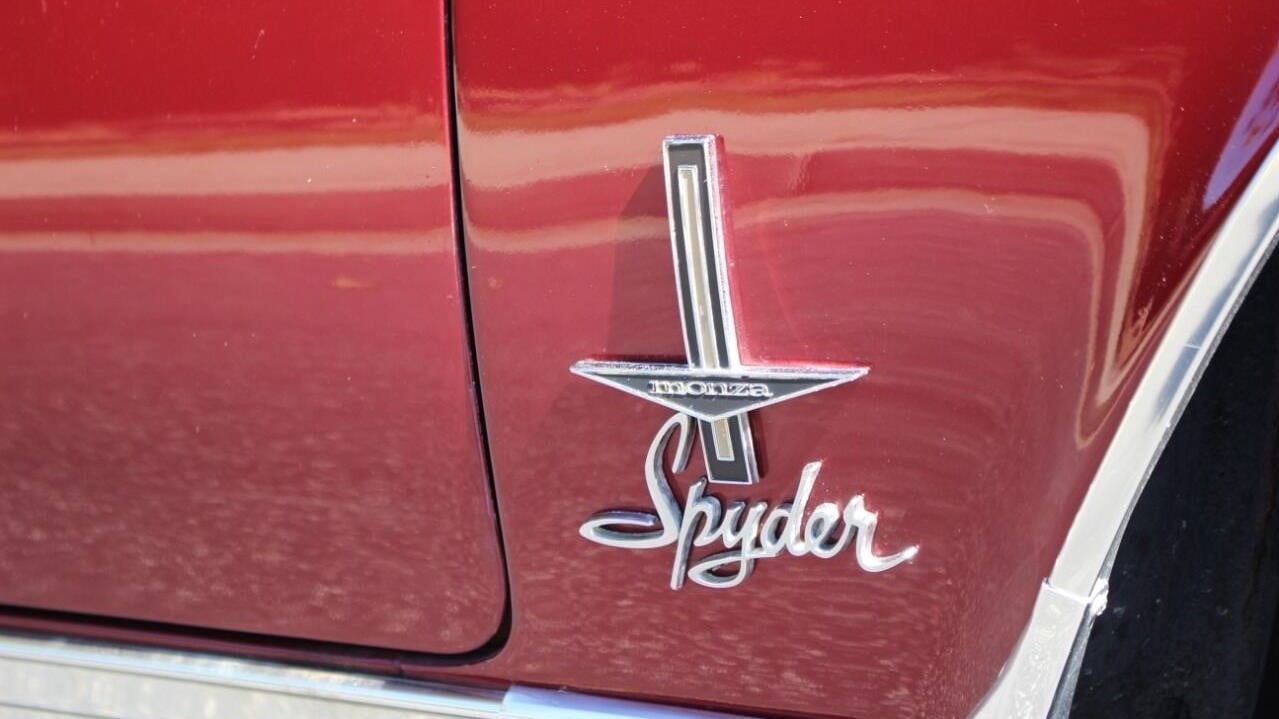
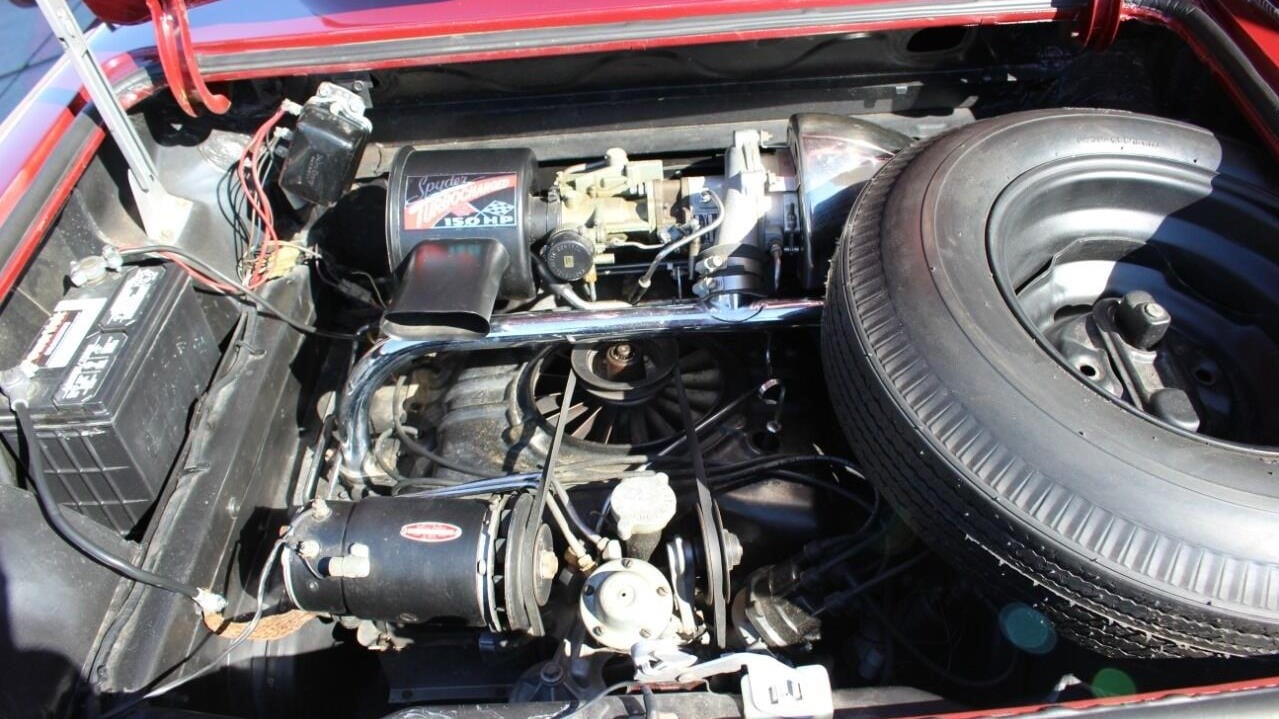
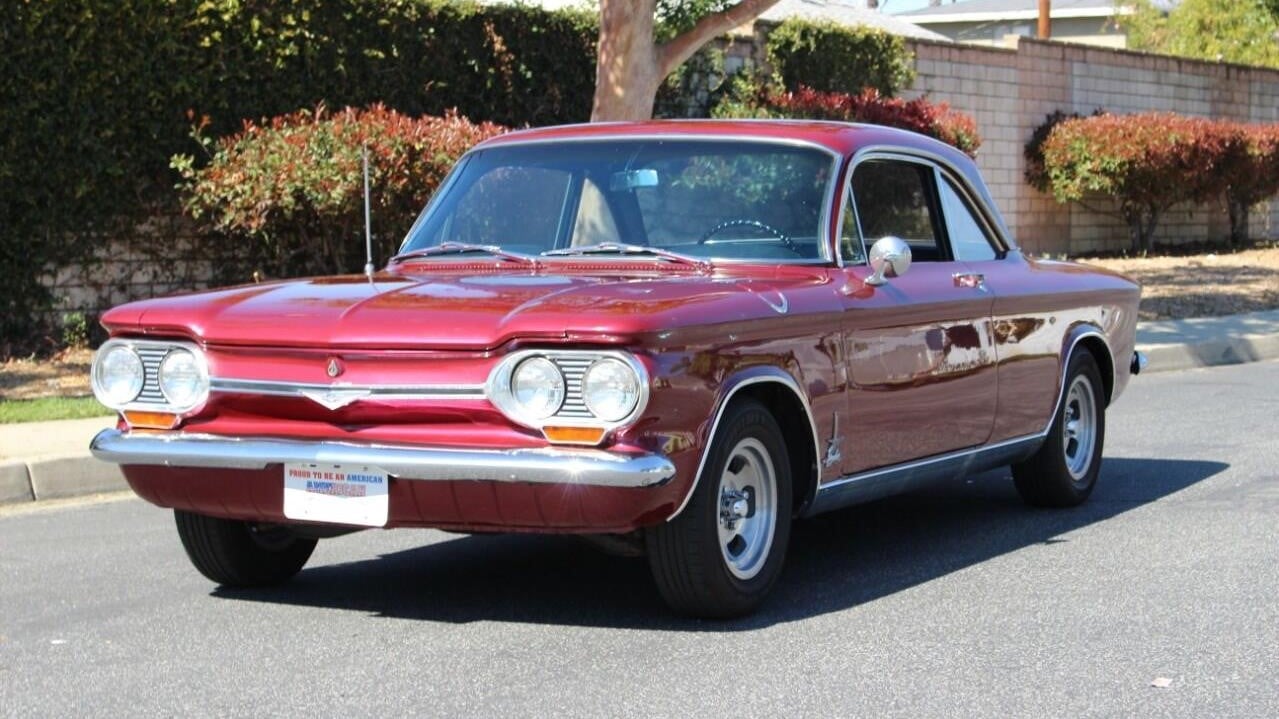
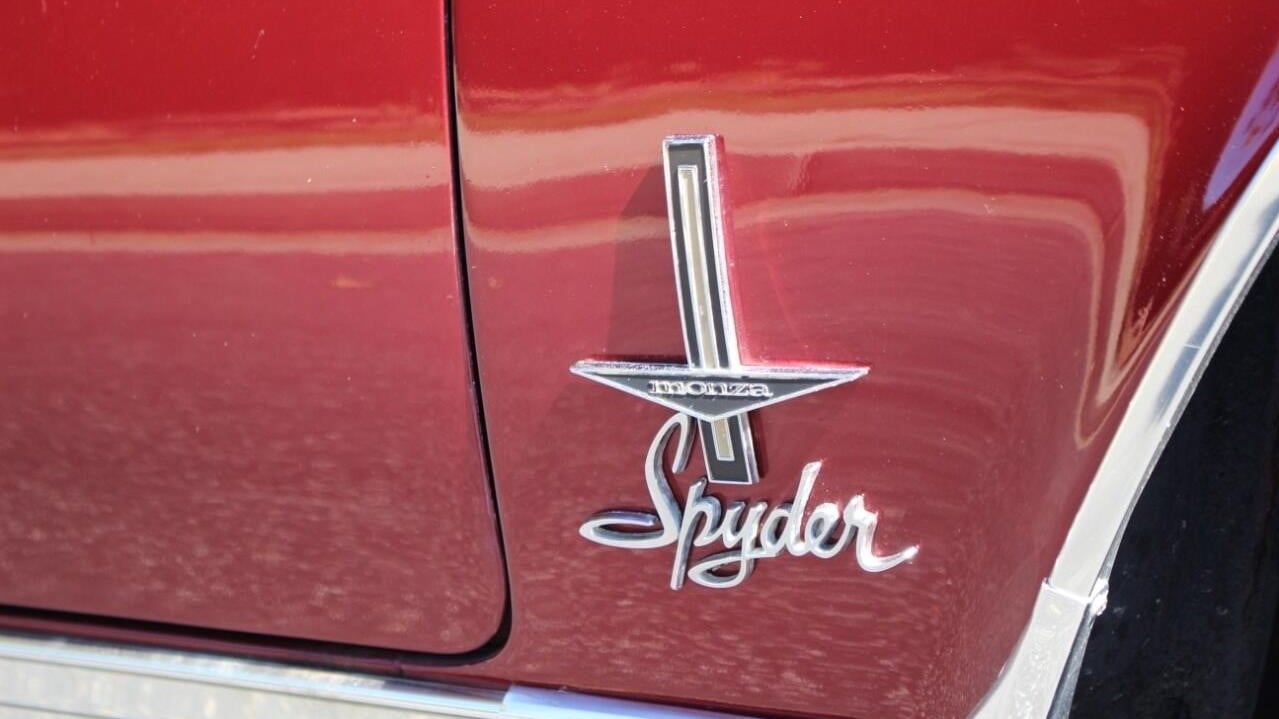
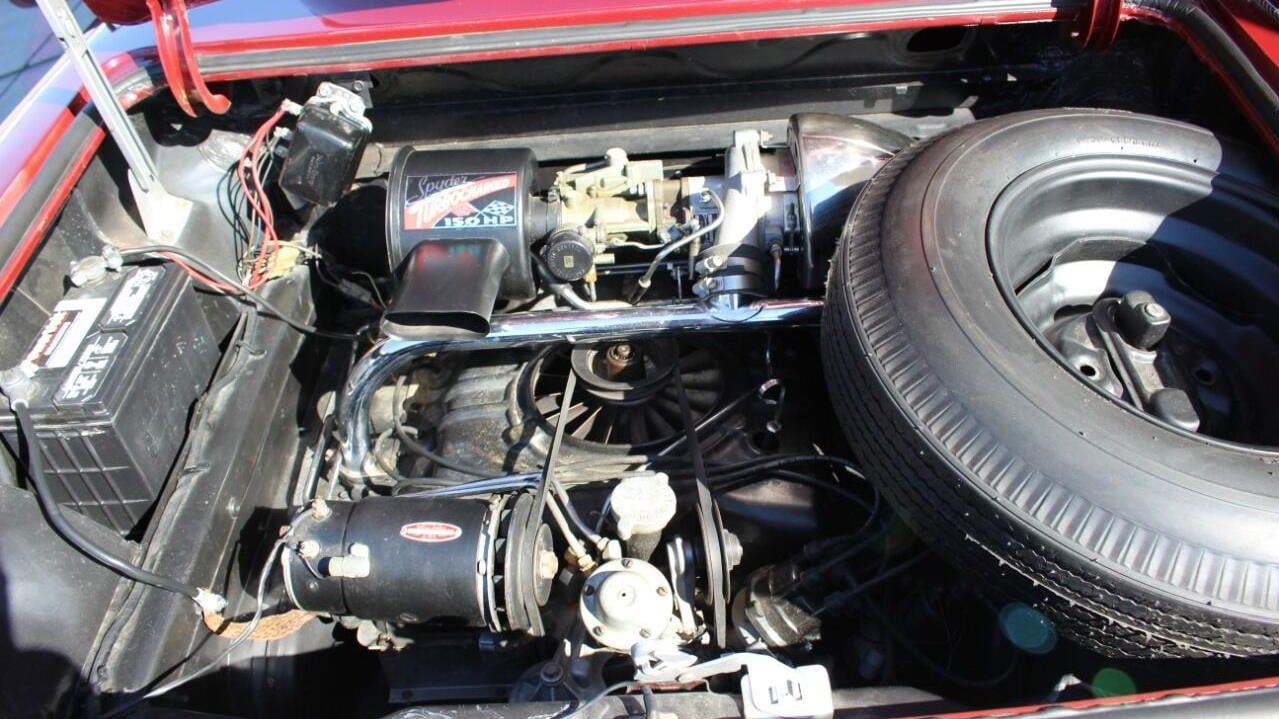
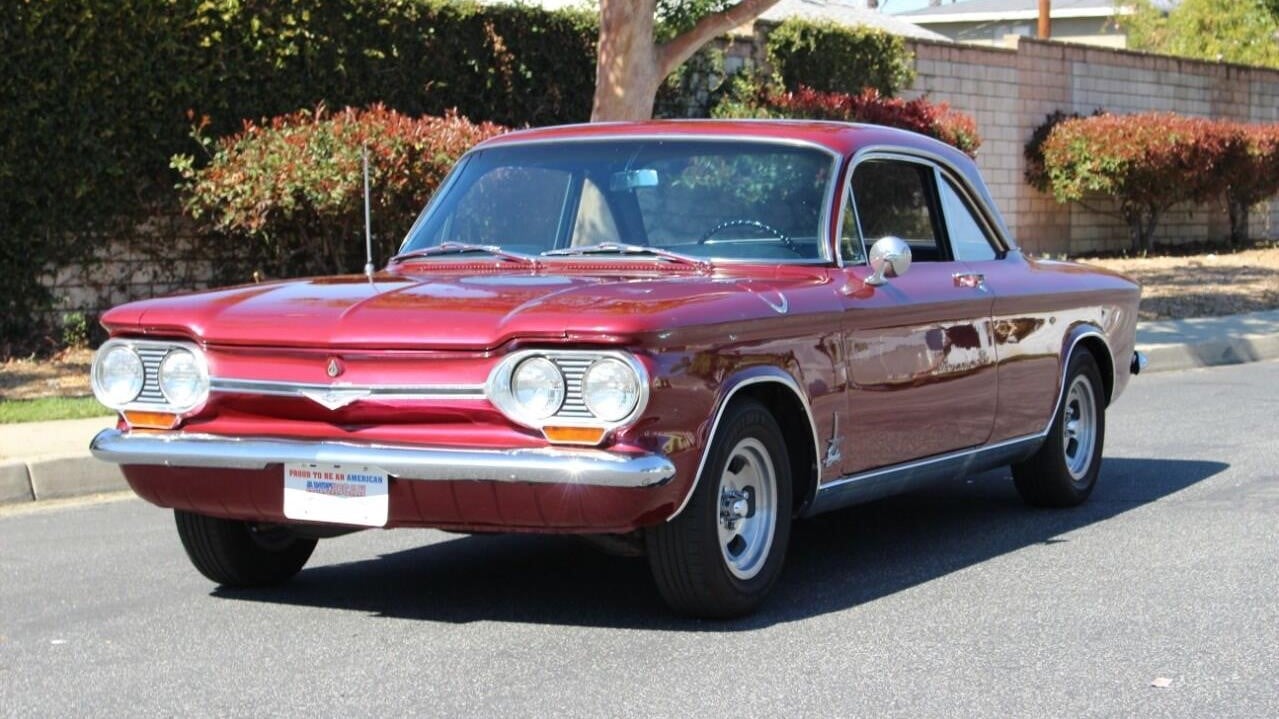
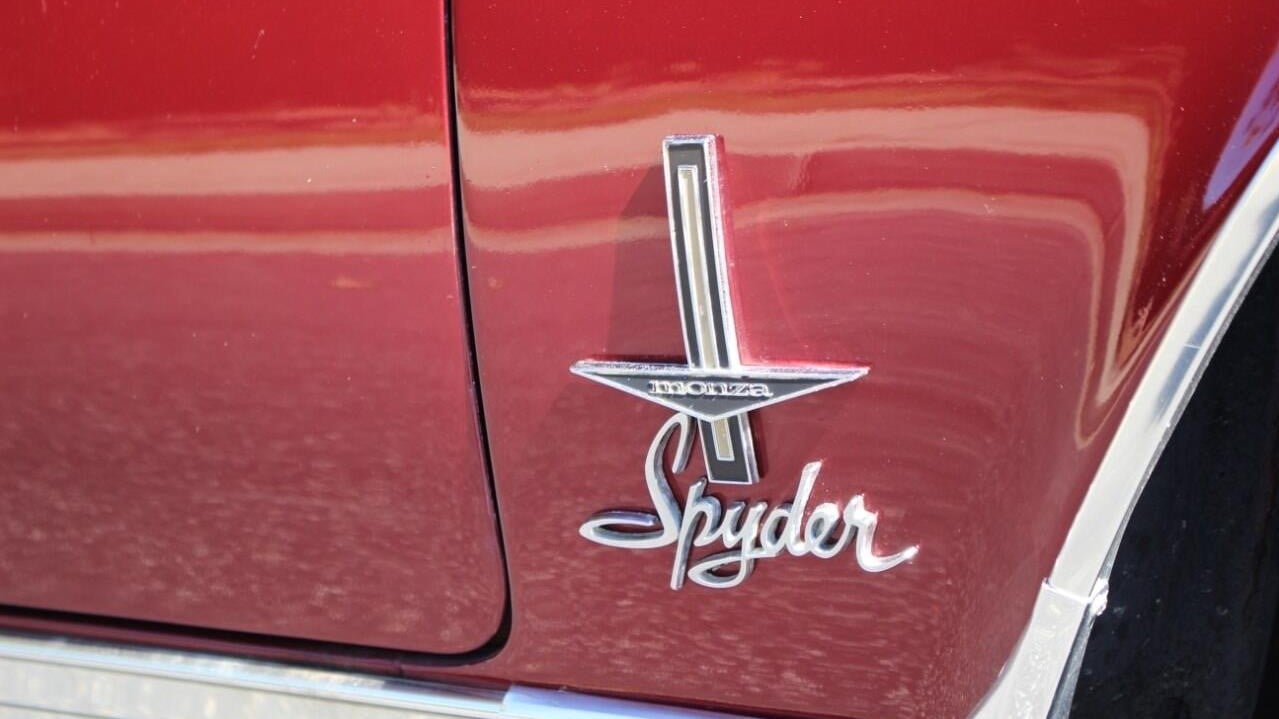
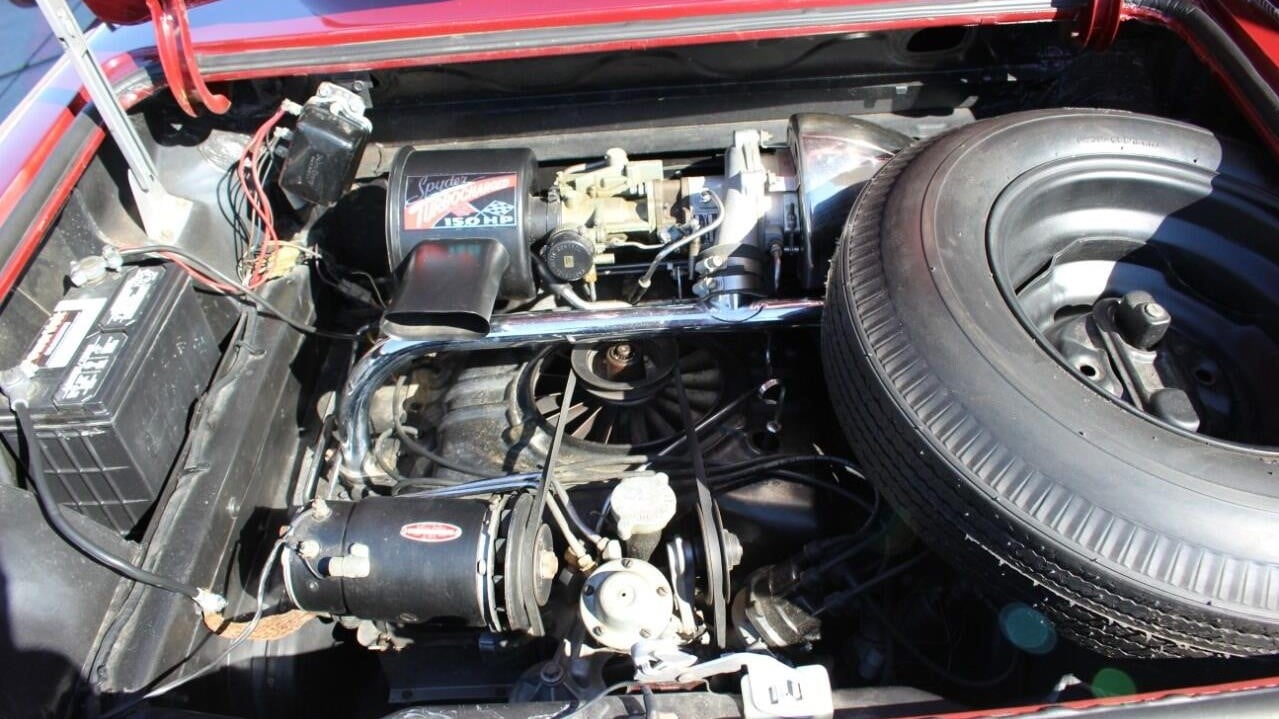
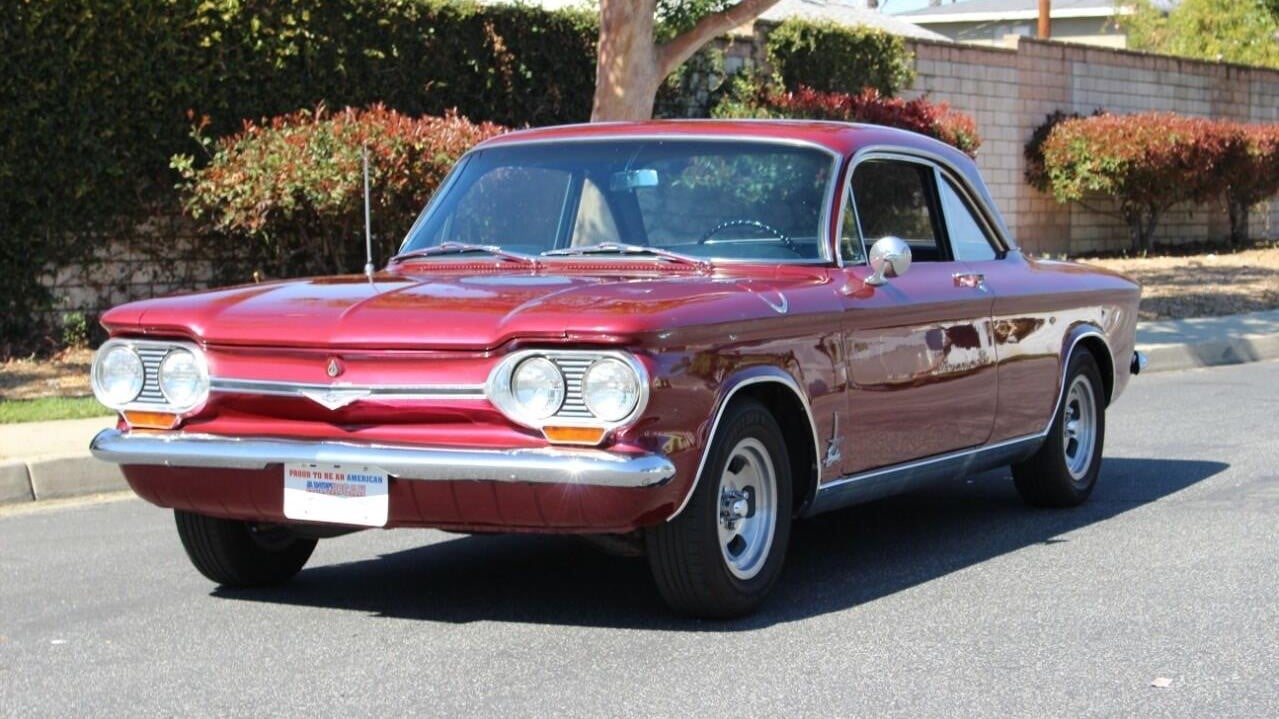
The Pick of the Day is my very favorite version of the Corvair, a 1964 Corvair Monza Spyder Coupe. The Spyder designation often means convertible but for the Corvair it means that the car is turbocharged, with the engine producing 150hp instead of the stock Monza 110 hp.
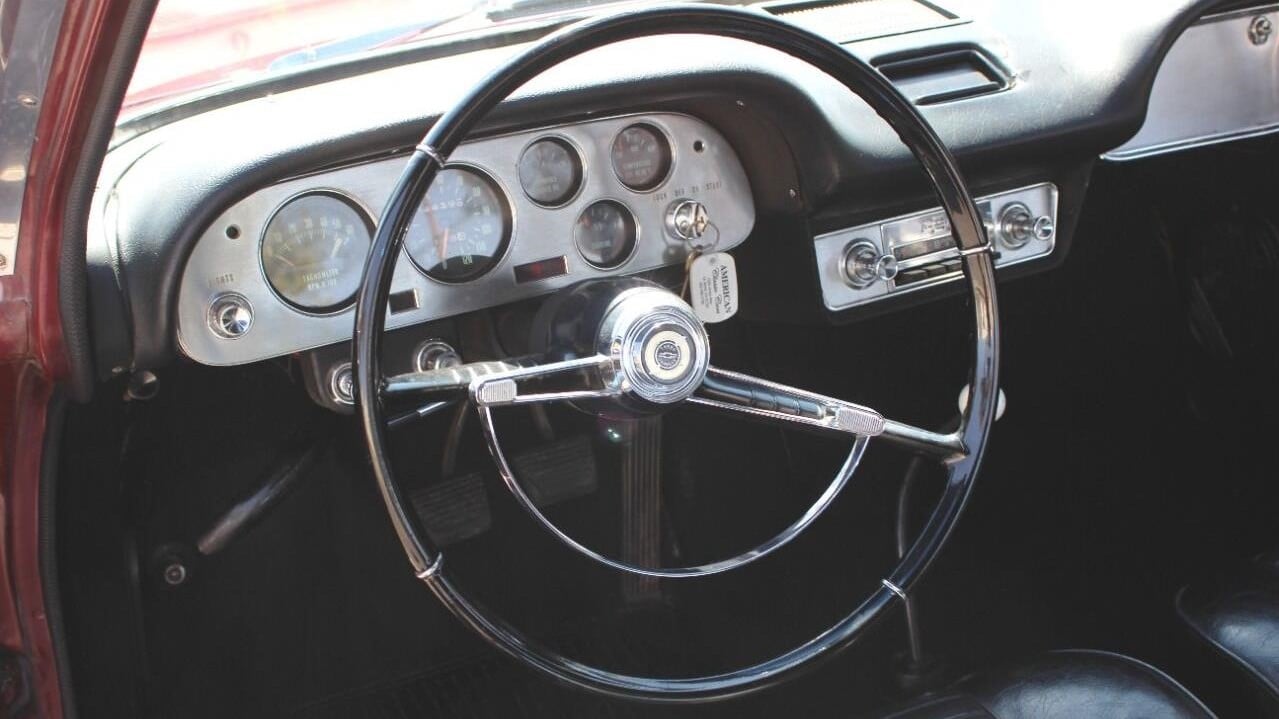
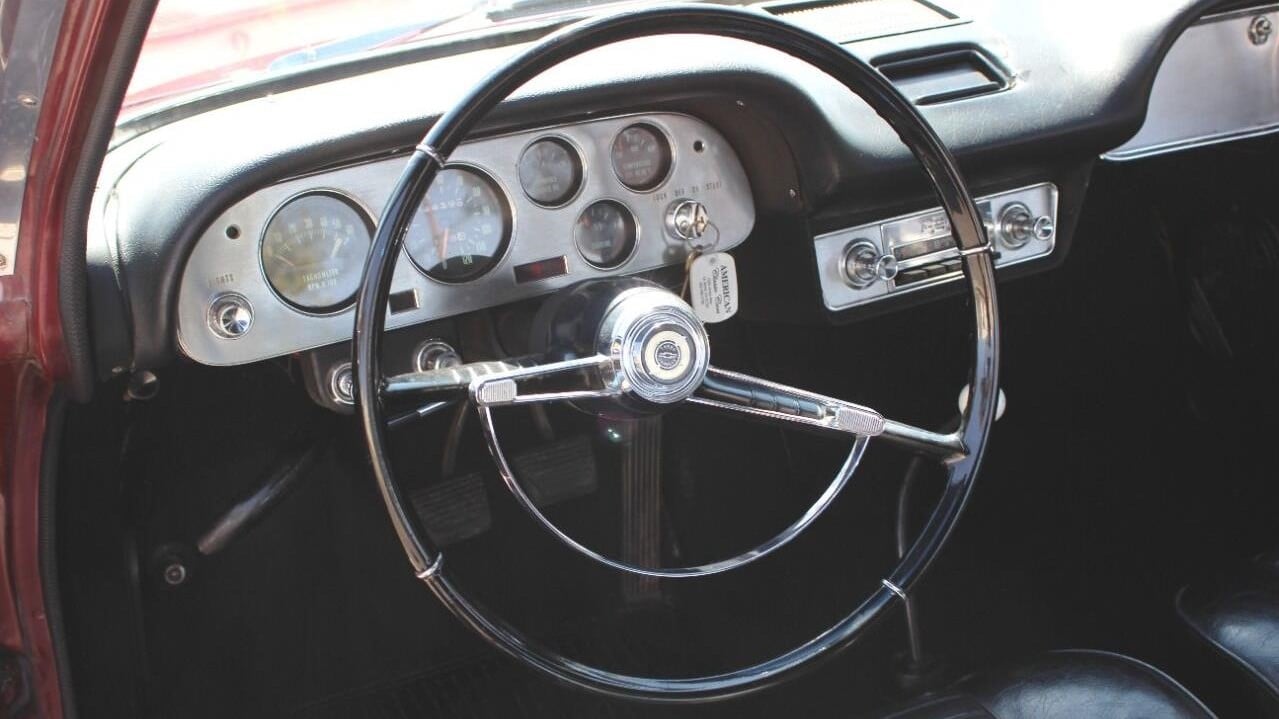
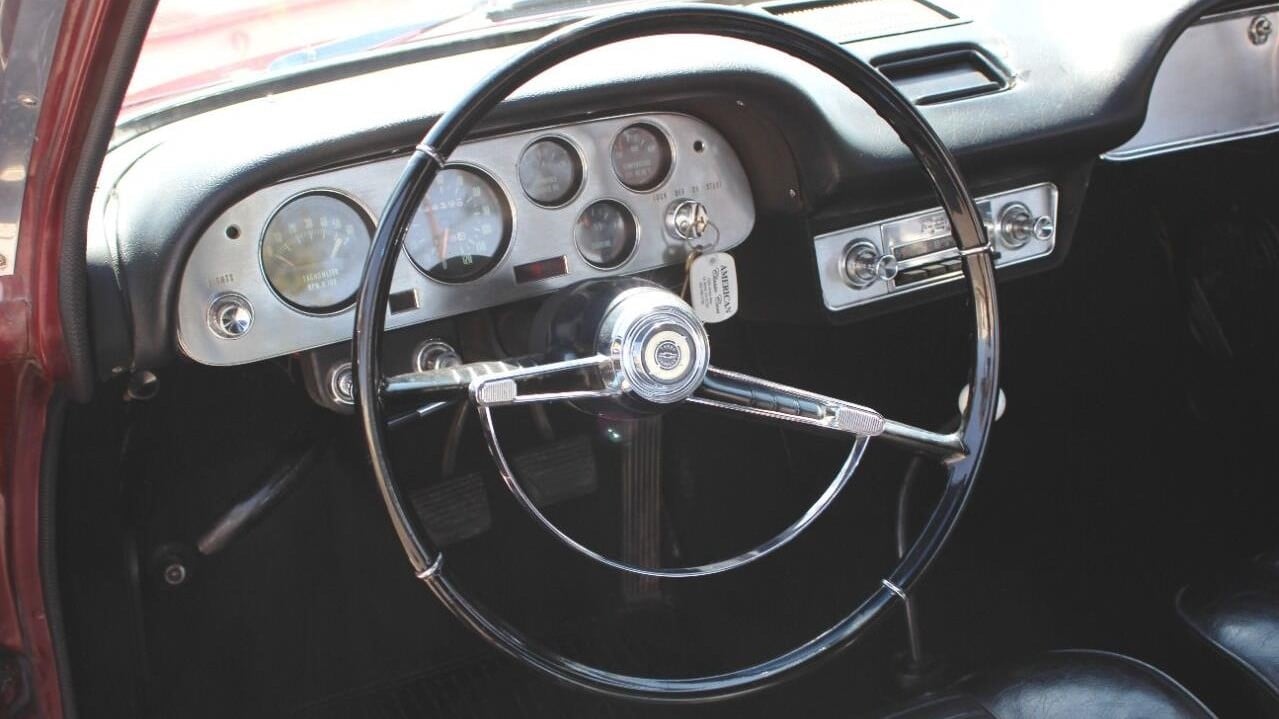
The La Verne, California seller describes this Corvair Spyder as having been professionally stored for 40 years and then in 2017, the car emerged and received a complete and professional service on all mechanical parts including new paint, shocks, carpets, tires, spark plugs, fuel filter exhaust and more. All exterior trim was replaced with NOS parts. Chevy only built 6,480 Corvair Monza Spyders in 1964, which makes it one of the rarest Corvair models. The car includes its original spare tire and looks to be ready to use and enjoy immediately.
For the asking price of only $21,900 this Corvair Monza Spyder represents a lot of car for the money.
One thing I love about the collector car world is that, despite the seemingly ever increasing prices of many cars, there are still quite a few great cars that are available at more affordable prices. One of my favorites is the Chevrolet Corvair.
The Corvair was designed to be the Chevy competition with the smaller and more economic cars that were starting to make their way in the early 1960 to the US from Europe. It was at the time one of the most expensive development projects ever undertaken by GM, and the car that came from this work was something GM had never built: a sporty looking rear engine car powered by an air-cooled boxer 6-cylinder engine. Sales when launched were quite strong, but a book called Unsafe at Any Speed by Ralph Nader (yes, that Ralph Nader) said that the car was dangerous and the rear engine was a bad design. This was really not true, but the book and stories of cars spinning caused buyers to think that the Corvair was a bad car. If you have any doubt, consider that the Corvair was a very successful racecar when new which is something a bad design could not accomplish.
Since then, the Corvair has had a continued following of enthusiast owners, a strong parts network and one of the most fun car clubs in the country. These enthusiasts love the cars and do everything they can to spread the word about the Corvair.
The Pick of the Day is my very favorite version of the Corvair, a 1964 Corvair Monza Spyder Coupe. The Spyder designation often means convertible but for the Corvair it means that the car is turbocharged, with the engine producing 150hp instead of the stock Monza 110 hp.
The La Verne, California seller describes this Corvair Spyder as having been professionally stored for 40 years and then in 2017, the car emerged and received a complete and professional service on all mechanical parts including new paint, shocks, carpets, tires, spark plugs, fuel filter exhaust and more. All exterior trim was replaced with NOS parts. Chevy only built 6,480 Corvair Monza Spyders in 1964, which makes it one of the rarest Corvair models. The car includes its original spare tire and looks to be ready to use and enjoy immediately.
For the asking price of only $21,900 this Corvair Monza Spyder represents a lot of car for the money.
One thing I love about the collector car world is that, despite the seemingly ever increasing prices of many cars, there are still quite a few great cars that are available at more affordable prices. One of my favorites is the Chevrolet Corvair.
The Corvair was designed to be the Chevy competition with the smaller and more economic cars that were starting to make their way in the early 1960 to the US from Europe. It was at the time one of the most expensive development projects ever undertaken by GM, and the car that came from this work was something GM had never built: a sporty looking rear engine car powered by an air-cooled boxer 6-cylinder engine. Sales when launched were quite strong, but a book called Unsafe at Any Speed by Ralph Nader (yes, that Ralph Nader) said that the car was dangerous and the rear engine was a bad design. This was really not true, but the book and stories of cars spinning caused buyers to think that the Corvair was a bad car. If you have any doubt, consider that the Corvair was a very successful racecar when new which is something a bad design could not accomplish.
Since then, the Corvair has had a continued following of enthusiast owners, a strong parts network and one of the most fun car clubs in the country. These enthusiasts love the cars and do everything they can to spread the word about the Corvair.
The Pick of the Day is my very favorite version of the Corvair, a 1964 Corvair Monza Spyder Coupe. The Spyder designation often means convertible but for the Corvair it means that the car is turbocharged, with the engine producing 150hp instead of the stock Monza 110 hp.
The La Verne, California seller describes this Corvair Spyder as having been professionally stored for 40 years and then in 2017, the car emerged and received a complete and professional service on all mechanical parts including new paint, shocks, carpets, tires, spark plugs, fuel filter exhaust and more. All exterior trim was replaced with NOS parts. Chevy only built 6,480 Corvair Monza Spyders in 1964, which makes it one of the rarest Corvair models. The car includes its original spare tire and looks to be ready to use and enjoy immediately.
For the asking price of only $21,900 this Corvair Monza Spyder represents a lot of car for the money.
Lexus calls the UX 250h a crossover SUV with best-in-class turning radius and fuel efficiency. We call it a luxury hatchback with crossover pretenses. Yes, you can get an AWD version of the UX, but the ability to distribute traction does not a crossover SUV make. Nonetheless, the version of the 2023 Lexus UX 250h we evaluated — F Sport Handling AWD — is a stylish luxury crossover SUV that boasts a range of features that can be found in many SUVs in its price class but, when appraised as a hatchback, there are few in its price class in the American market.
Nonetheless, with a blend of style, luxury and performance in a package that’s unusual in the crossover class, the Lexus UX 250h may have more appeal for those who wish to experience fuel efficiency and luxury without the trappings of climbing into a 5,000-pound vehicle. Be sure to check out the video below as it will give you an in-depth look at the features and performance of this quasi-SUV.
Exterior
The Lexus UX 250h features plenty of creases and tucks that complement the triangular theme that Lexus leaned into several years ago. These days, the spindle grille has found its mojo after unceremoniously slathered onto every Lexus’ nose, no different than when Audi decided it needed to exponentially increase the size of its grille 20 years ago. As such, the UX 250h sometimes comes off as a mini-Lexus RX with enough utility for a quick jaunt to Whole Foods thanks to 17.1 cu-ft behind the second row, but keep your Home Depot shopping list limited to tools and glue.
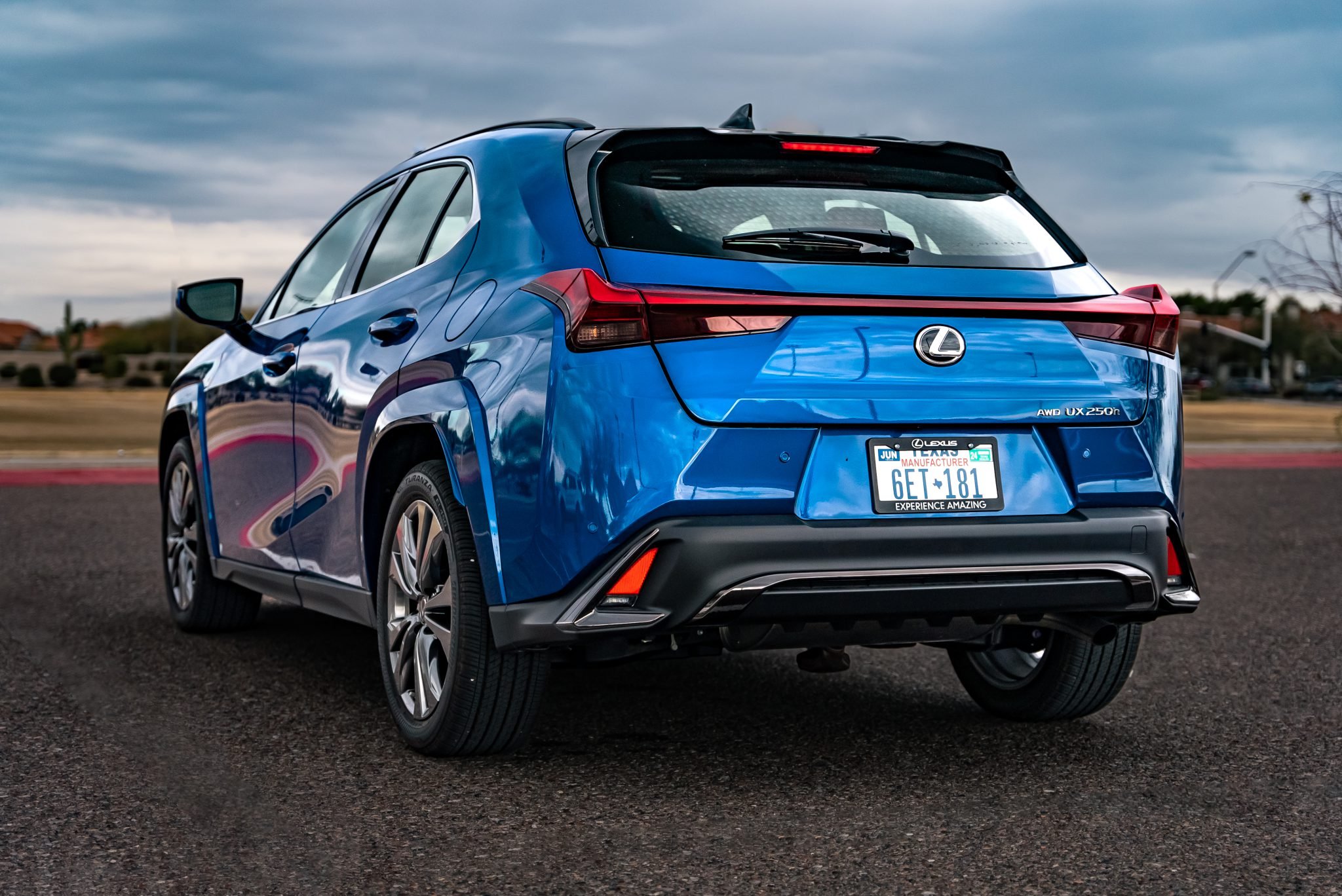
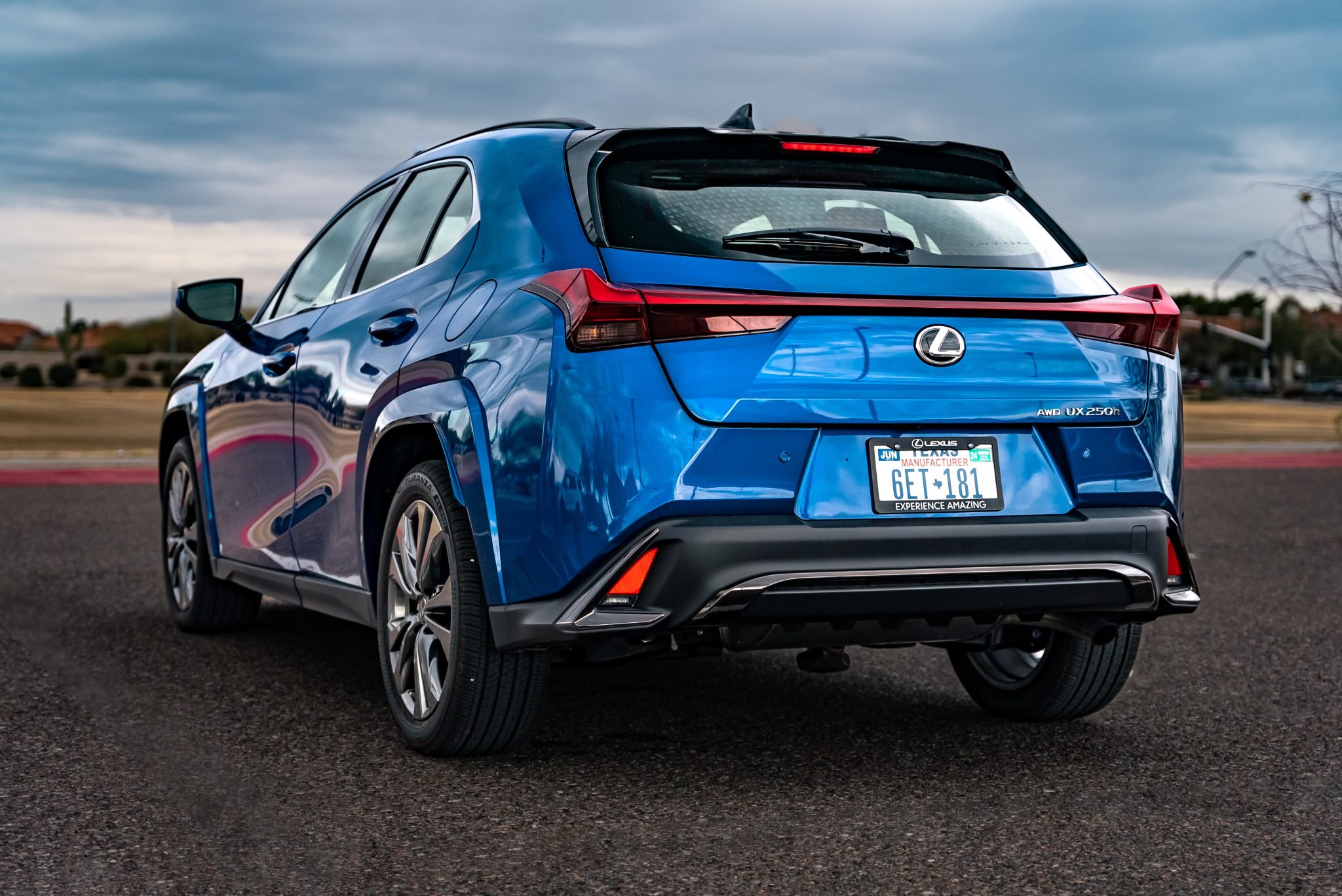
To its target market, the US 250h comes off as somewhat sporty, though we aren’t the target market and our opinion may contrast. Nonetheless, the UX 250h may appear sportier when you go up the trim levels from the base, which includes color-keyed “overfenders” wheel well bulges, more aggressive front fascia and black contrast roof, the latter two being features of both F Sport models, Design and Handling. Both F Sports also feature 18-inch F Sport alloy wheels that subtly distinguish themselves from the 18-inchers on the base and UX 250h Premium models.
Color choices are of no help to the indecisive as there are nine colors in which to select. If you go with the UX 250h F Sport Handling, color choices are restricted to six, with Ultrasonic Blue Mica 2.0 being the one on our test car.
Interior
2023 Lexus UX 250h F Sport (Photo by Dustin W. Johnson)
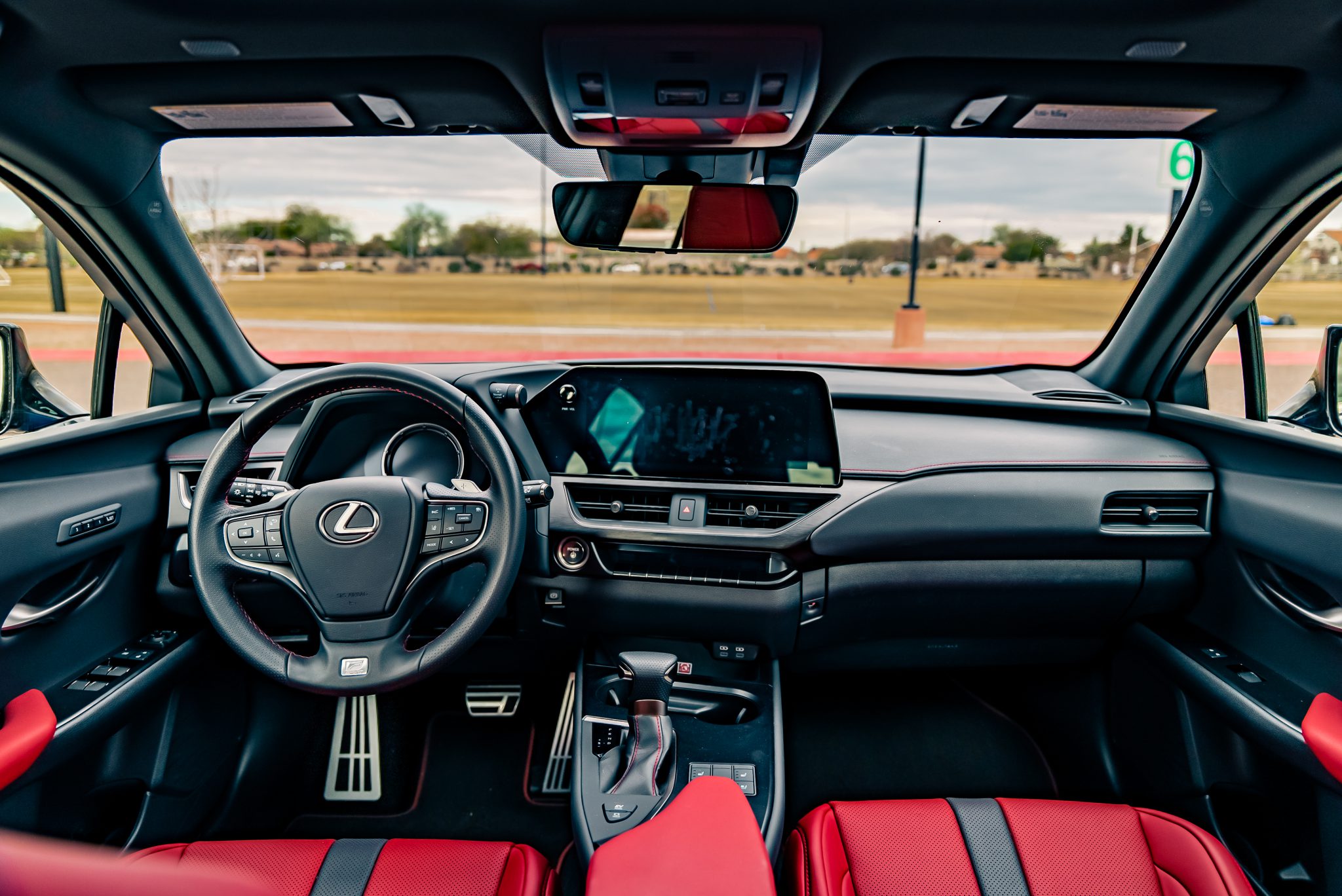
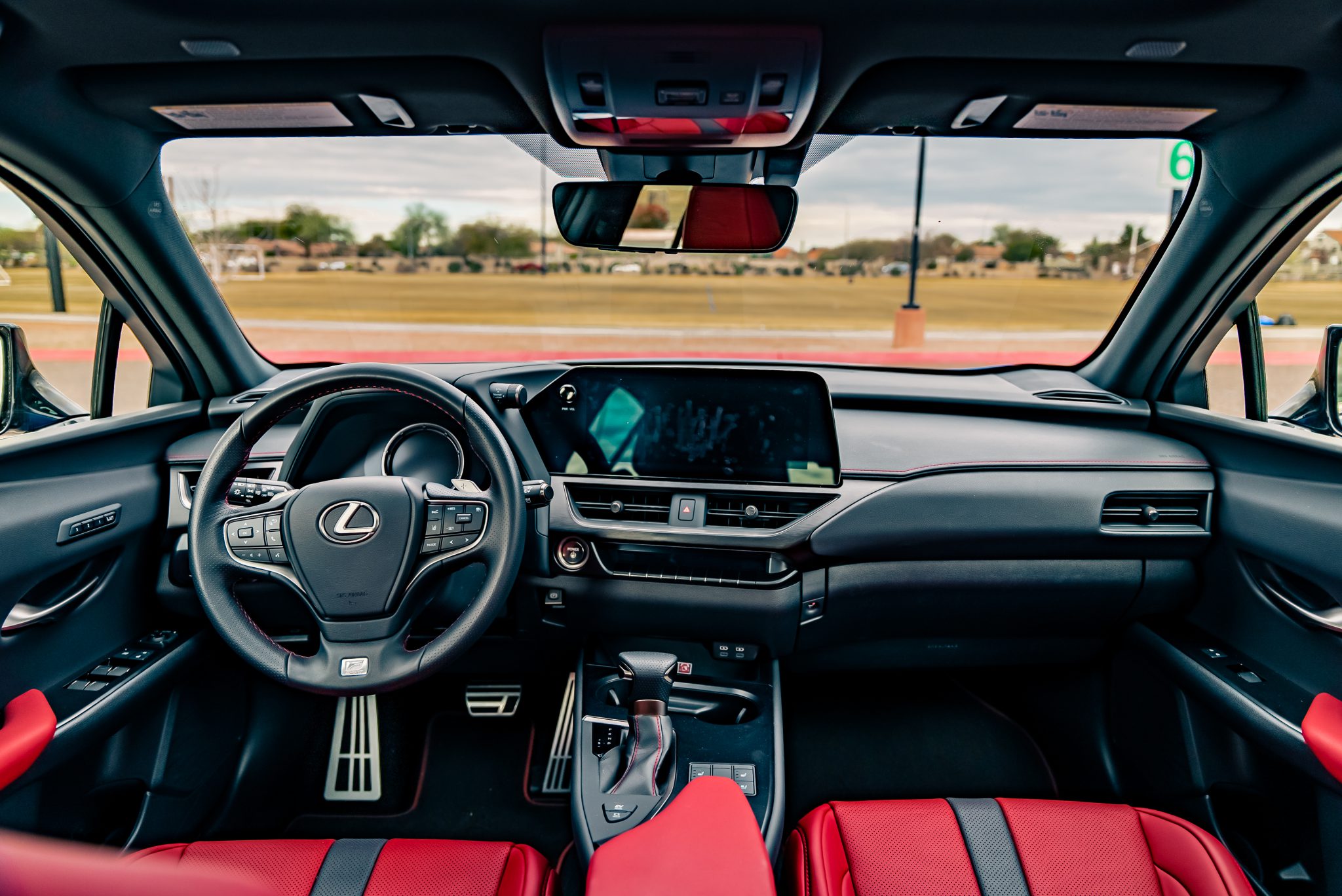
The interior of the 2023 Lexus UX 250h F Sport Handling is a mix of (surprise!) luxury and sport. The F Sport Handling model adds very attractive sport seats with unique upholstery plus race-inspired instrumentation, aluminum pedals and front door scuff plates, perforated leather steering wheel and shift knob, and more. The cabin has enough legroom and headroom for front and rear passengers, though we wouldn’t recommend three in the rear unless they’re very familiar with each other.
All UX 250h models save the F Sport Handling feature a standard eight-inch touchscreen infotainment system with Apple CarPlay and Android Auto compatibility, but the F Sport Handling features a 12.3-inch upgrade; it is available as an option for the UX 250h Premium. Likewise, all models save the F Sport Handling feature a seven-inch color multi-informational display (aka “instrument panel”) while essential information for the F Sport Handling is displayed in one that is an inch larger.
Performance
2023 Lexus UX 250h F Sport (Photo by Dustin W. Johnson)
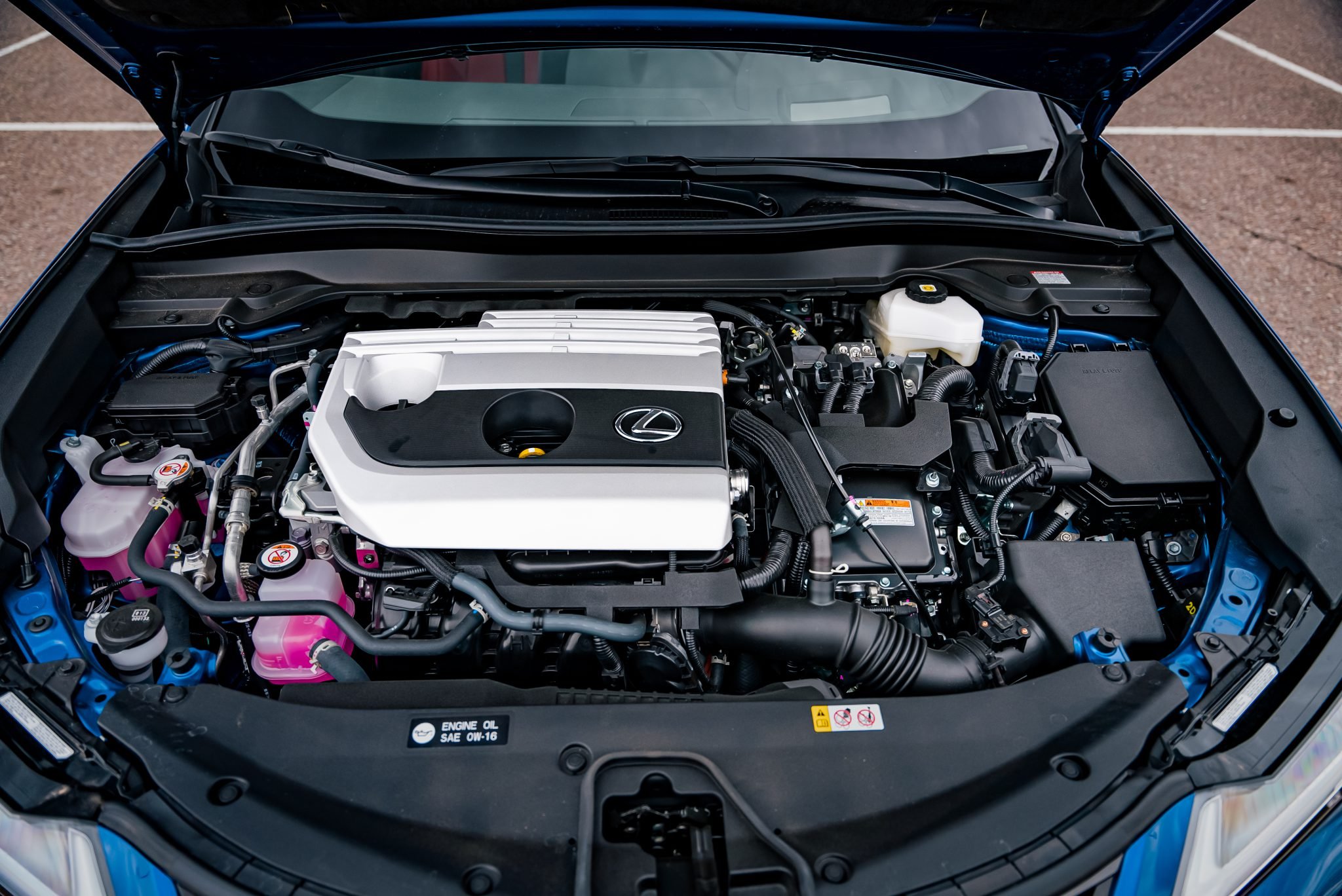
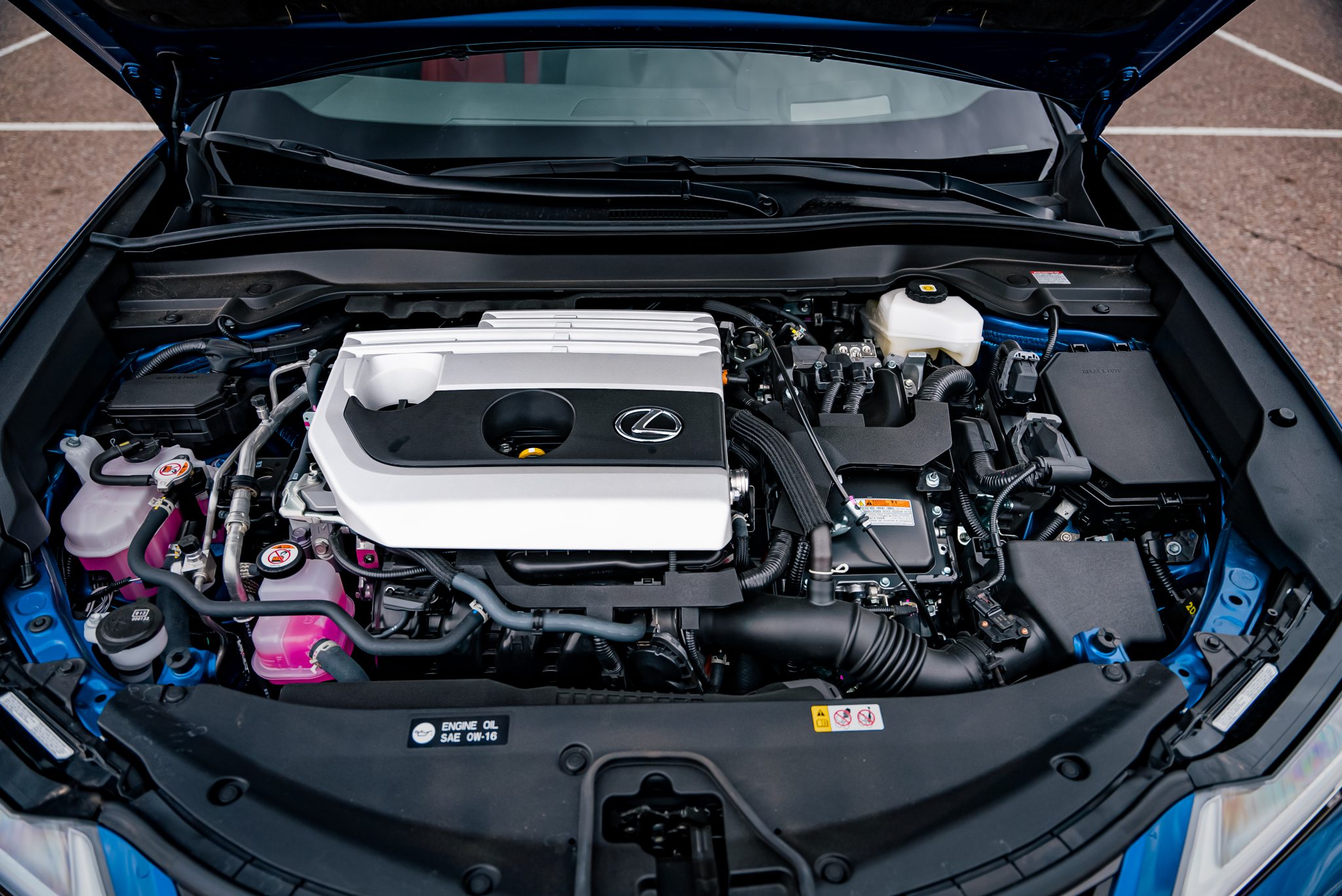
All versions of the Lexus UX 250h are powered by a 2.0-liter four-cylinder engine paired with an electric motor to produce a combined 181 horsepower — for such sporting pretensions, it seems more like bench-warmer. Like most hybrid powertrains, it is mated to a continuously variable transmission that provides smooth acceleration, though no one would accuse it of being brisk. In fact, Lexus’ own tests suggest the FWD version is faster than the AWD version, which is counter to most cars. The EPA has rated the UX 250h at an estimated 41 city, 38 mpg highway and 39 combined, which is quite generous for a car masquerading as an SUV.
A shiny side to the UX 250h F Sport Handling is its sport-tuned suspension that provides a firm yet comfortable ride, with the Handling model offering more drive modes to lend credence to its appropriated name. Steering feels precise and responsive, making it easy to maneuver in tight spaces compared to your average crossover. Our UX 250h F Sport Handling also featured the option of all-wheel drive, something that is optional for all UX models.
Features
The Lexus UX 250h F Sport Handing comes with a range of features that include the following:
Wireless Apple CarPlay and Android Auto compatibility
10-speaker premium audio system
Available WiFi and other connected technologies
Heated outer mirrors
Automatic dual-zone climate control with rear vents
Adjustable rear cargo deckboard
Power moonroof
Auto-dimming rear mirror with HomeLink
Lexus Memory System for driver’s seat and outside mirrors
Active Sound Control
Paddle shifters
Safety
A range of safety features also include:
10 airbags
Pre-collision system with pedestrian detection
Dynamic radar cruise control
Lane tracing assist
Lane departure alert with steering assist
Road sign assist
Blind spot monitoring
Lexus Enform Safety Connect and Service Connect
2023 Lexus UX 250h F Sport (Photo by Dustin W. Johnson)
Conclusion
Overall, the 2023 Lexus UX 250h F Sport is a fine luxury subcompact, but a lackluster crossover SUV. Some may be attracted to its unique blend of performance, style and efficiency, but don’t expect utility anything beyond your typical hatchback. The UX 250h F Sport Handling model adds a sporty touch to the interior and, sometimes, its driving chops, while the hybrid powertrain provides a smooth but unexciting driving experience. With its advanced safety features and excellent fuel economy, the UX 250h F Sport is a solid choice for folks looking for a luxury subcompact but, if you need practicality and driving fun, there are more traditional crossover choices to be had that can offer that sweet spot.
Lexus calls the UX 250h a crossover SUV with best-in-class turning radius and fuel efficiency. We call it a luxury hatchback with crossover pretenses. Yes, you can get an AWD version of the UX, but the ability to distribute traction does not a crossover SUV make. Nonetheless, the version of the 2023 Lexus UX 250h we evaluated — F Sport Handling AWD — is a stylish luxury crossover SUV that boasts a range of features that can be found in many SUVs in its price class but, when appraised as a hatchback, there are few in its price class in the American market.
Nonetheless, with a blend of style, luxury and performance in a package that’s unusual in the crossover class, the Lexus UX 250h may have more appeal for those who wish to experience fuel efficiency and luxury without the trappings of climbing into a 5,000-pound vehicle. Be sure to check out the video below as it will give you an in-depth look at the features and performance of this quasi-SUV.
Exterior
The Lexus UX 250h features plenty of creases and tucks that complement the triangular theme that Lexus leaned into several years ago. These days, the spindle grille has found its mojo after unceremoniously slathered onto every Lexus’ nose, no different than when Audi decided it needed to exponentially increase the size of its grille 20 years ago. As such, the UX 250h sometimes comes off as a mini-Lexus RX with enough utility for a quick jaunt to Whole Foods thanks to 17.1 cu-ft behind the second row, but keep your Home Depot shopping list limited to tools and glue.
To its target market, the US 250h comes off as somewhat sporty, though we aren’t the target market and our opinion may contrast. Nonetheless, the UX 250h may appear sportier when you go up the trim levels from the base, which includes color-keyed “overfenders” wheel well bulges, more aggressive front fascia and black contrast roof, the latter two being features of both F Sport models, Design and Handling. Both F Sports also feature 18-inch F Sport alloy wheels that subtly distinguish themselves from the 18-inchers on the base and UX 250h Premium models.
Color choices are of no help to the indecisive as there are nine colors in which to select. If you go with the UX 250h F Sport Handling, color choices are restricted to six, with Ultrasonic Blue Mica 2.0 being the one on our test car.
Interior
2023 Lexus UX 250h F Sport (Photo by Dustin W. Johnson)
The interior of the 2023 Lexus UX 250h F Sport Handling is a mix of (surprise!) luxury and sport. The F Sport Handling model adds very attractive sport seats with unique upholstery plus race-inspired instrumentation, aluminum pedals and front door scuff plates, perforated leather steering wheel and shift knob, and more. The cabin has enough legroom and headroom for front and rear passengers, though we wouldn’t recommend three in the rear unless they’re very familiar with each other.
All UX 250h models save the F Sport Handling feature a standard eight-inch touchscreen infotainment system with Apple CarPlay and Android Auto compatibility, but the F Sport Handling features a 12.3-inch upgrade; it is available as an option for the UX 250h Premium. Likewise, all models save the F Sport Handling feature a seven-inch color multi-informational display (aka “instrument panel”) while essential information for the F Sport Handling is displayed in one that is an inch larger.
Performance
2023 Lexus UX 250h F Sport (Photo by Dustin W. Johnson)
All versions of the Lexus UX 250h are powered by a 2.0-liter four-cylinder engine paired with an electric motor to produce a combined 181 horsepower — for such sporting pretensions, it seems more like bench-warmer. Like most hybrid powertrains, it is mated to a continuously variable transmission that provides smooth acceleration, though no one would accuse it of being brisk. In fact, Lexus’ own tests suggest the FWD version is faster than the AWD version, which is counter to most cars. The EPA has rated the UX 250h at an estimated 41 city, 38 mpg highway and 39 combined, which is quite generous for a car masquerading as an SUV.
A shiny side to the UX 250h F Sport Handling is its sport-tuned suspension that provides a firm yet comfortable ride, with the Handling model offering more drive modes to lend credence to its appropriated name. Steering feels precise and responsive, making it easy to maneuver in tight spaces compared to your average crossover. Our UX 250h F Sport Handling also featured the option of all-wheel drive, something that is optional for all UX models.
Features
The Lexus UX 250h F Sport Handing comes with a range of features that include the following:
Wireless Apple CarPlay and Android Auto compatibility
10-speaker premium audio system
Available WiFi and other connected technologies
Heated outer mirrors
Automatic dual-zone climate control with rear vents
Adjustable rear cargo deckboard
Power moonroof
Auto-dimming rear mirror with HomeLink
Lexus Memory System for driver’s seat and outside mirrors
Active Sound Control
Paddle shifters
Safety
A range of safety features also include:
10 airbags
Pre-collision system with pedestrian detection
Dynamic radar cruise control
Lane tracing assist
Lane departure alert with steering assist
Road sign assist
Blind spot monitoring
Lexus Enform Safety Connect and Service Connect
2023 Lexus UX 250h F Sport (Photo by Dustin W. Johnson)
Conclusion
Overall, the 2023 Lexus UX 250h F Sport is a fine luxury subcompact, but a lackluster crossover SUV. Some may be attracted to its unique blend of performance, style and efficiency, but don’t expect utility anything beyond your typical hatchback. The UX 250h F Sport Handling model adds a sporty touch to the interior and, sometimes, its driving chops, while the hybrid powertrain provides a smooth but unexciting driving experience. With its advanced safety features and excellent fuel economy, the UX 250h F Sport is a solid choice for folks looking for a luxury subcompact but, if you need practicality and driving fun, there are more traditional crossover choices to be had that can offer that sweet spot.
Formula 1 is all about speed, but actually getting a car prepped to go out on track requires patience. Even 25 years ago, F1 race cars took hours to start, as YouTuber Matt Amys explains in this video.
The car used for this demonstration is a Minardi M198, campaigned by the Italian team today known as AlphaTauri, during the 1998 season. It wasn’t the most competitive car, as it was estimated to be about three seconds off the pace of Michael Schumacher’s Ferrari F300 and the McLaren MP4/13 that Mika Häkkinen drove to the driver’s title that season, but it’s representative of the technology of the day.
Cars from this period, when F1 used glorious high-revving V-10 engines, can take 1.5 to 2.5 hours to start, depending on a number of factors including ambient temperature (they take longer to get going on cold days), according to TDF, which maintains this Minardi and other vintage F1 cars for collectors.
The process starts by pre-heating the engine with warmed coolant. A common misconception is that the tolerances in these engines are so tight that they are seized when cold. While that isn’t true, running an engine like the M198’s Ford-Cosworth V-10 at lower-than-optimal temperatures leads to excessive wear. Air is also flushed out of the hydraulic lines before the car is started.
Next, onboard air cylinders need to be charged. These provide air to actuate the valve springs, as conventional valve springs can’t keep up with the speed at which the engine revs. The engine is then primed with fuel and cranked over using an external starter motor, which plugs into the back of the gearbox, which in turn spins the crankshaft.
Everything is controlled by an ancient laptop running Windows 95, because the car’s software isn’t compatible with newer computers. Even some period laptops are faster than the car’s onboard computers, which can skew readings. This isn’t a problem limited to race cars from the 1990s; the McLaren F1 also requires 1990s computers to interface with its outdated electronics. If all temperatures and pressures look good, the car is ready to hit the track.
Formula 1 is all about speed, but actually getting a car prepped to go out on track requires patience. Even 25 years ago, F1 race cars took hours to start, as YouTuber Matt Amys explains in this video.
The car used for this demonstration is a Minardi M198, campaigned by the Italian team today known as AlphaTauri, during the 1998 season. It wasn’t the most competitive car, as it was estimated to be about three seconds off the pace of Michael Schumacher’s Ferrari F300 and the McLaren MP4/13 that Mika Häkkinen drove to the driver’s title that season, but it’s representative of the technology of the day.
Cars from this period, when F1 used glorious high-revving V-10 engines, can take 1.5 to 2.5 hours to start, depending on a number of factors including ambient temperature (they take longer to get going on cold days), according to TDF, which maintains this Minardi and other vintage F1 cars for collectors.
The process starts by pre-heating the engine with warmed coolant. A common misconception is that the tolerances in these engines are so tight that they are seized when cold. While that isn’t true, running an engine like the M198’s Ford-Cosworth V-10 at lower-than-optimal temperatures leads to excessive wear. Air is also flushed out of the hydraulic lines before the car is started.
Next, onboard air cylinders need to be charged. These provide air to actuate the valve springs, as conventional valve springs can’t keep up with the speed at which the engine revs. The engine is then primed with fuel and cranked over using an external starter motor, which plugs into the back of the gearbox, which in turn spins the crankshaft.
Everything is controlled by an ancient laptop running Windows 95, because the car’s software isn’t compatible with newer computers. Even some period laptops are faster than the car’s onboard computers, which can skew readings. This isn’t a problem limited to race cars from the 1990s; the McLaren F1 also requires 1990s computers to interface with its outdated electronics. If all temperatures and pressures look good, the car is ready to hit the track.
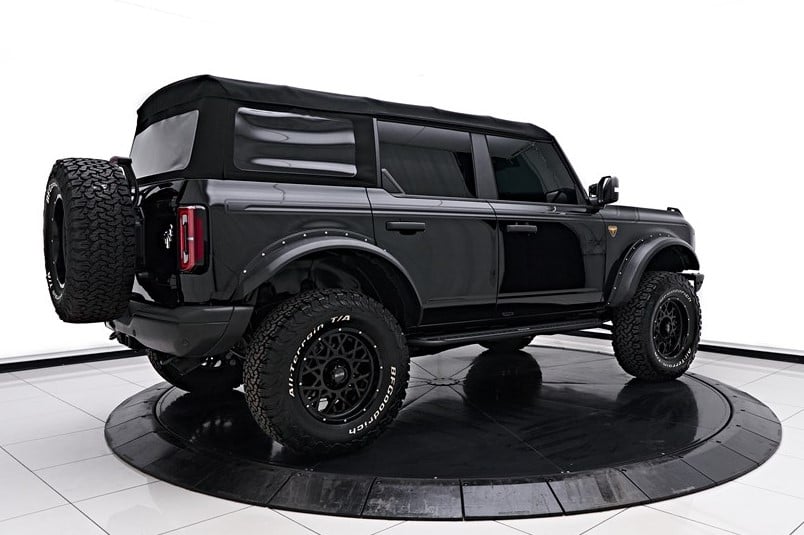
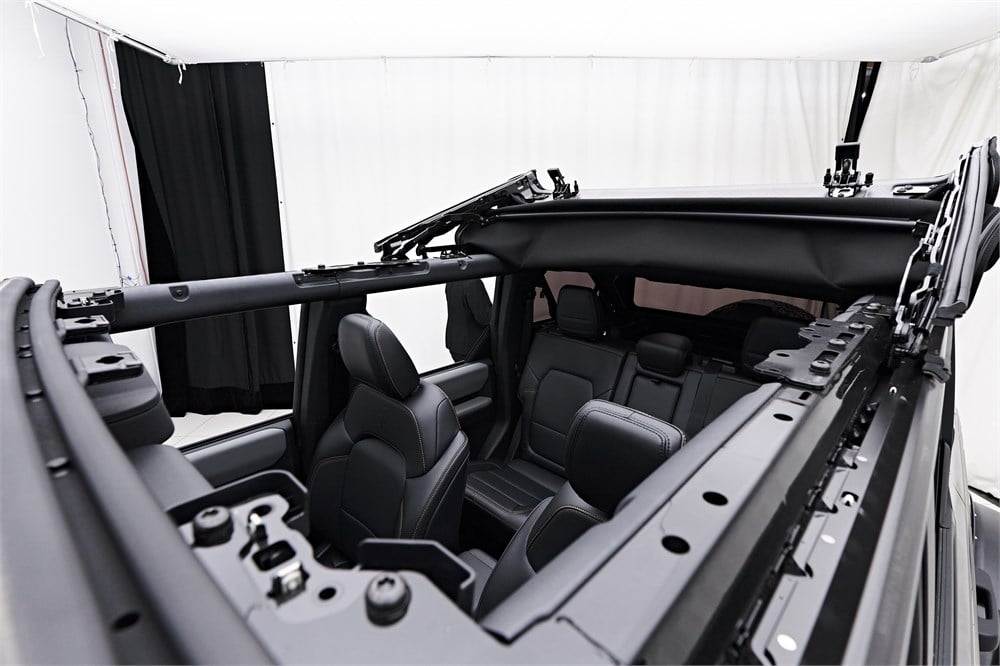
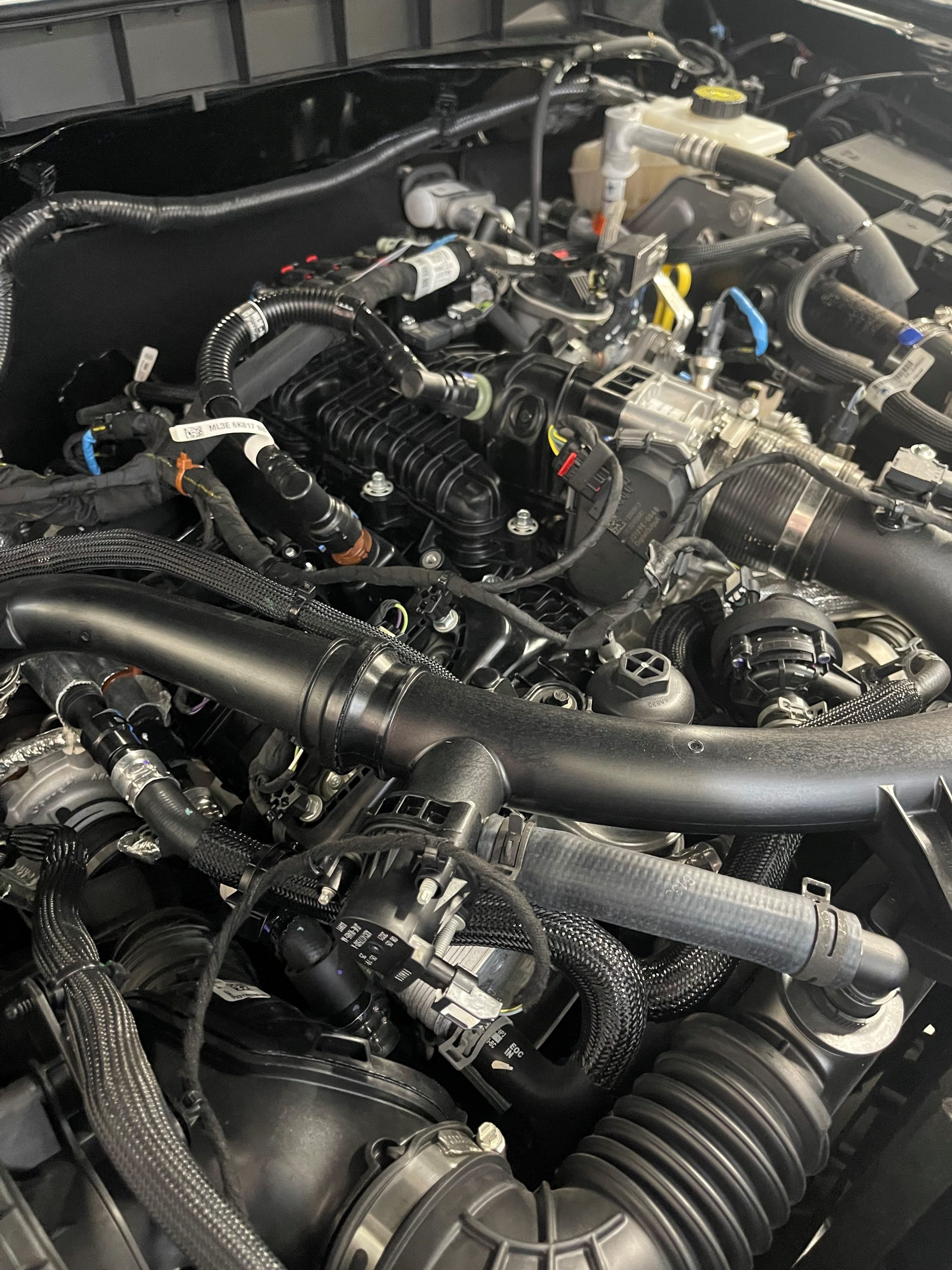
Featured on AutoHunter, the online auction platform driven by ClassicCars.com, is this 2021 Ford Bronco Badlands four-door that has been upgraded by Maxlider Brothers Customs with its Stage-1 off-road package that includes four-inch BDS suspension lift and upper control arms. The 4,670-mile 4×4 is powered by a turbocharged 2.7-liter EcoBoost V6 mated to a 10-speed automatic transmission and a dual-range transfer case. Features include SYNC 4 infotainment system, auxiliary LED lighting, electronic sway bar disconnect feature, 35-inch BFGoodrich tires and much, much more. Finished in black with matching retractable soft top over black leather interior, this low-mileage and modified 2021 Bronco Badlands will include owner’s manuals, clean CARFAX report and clear title with the sale.
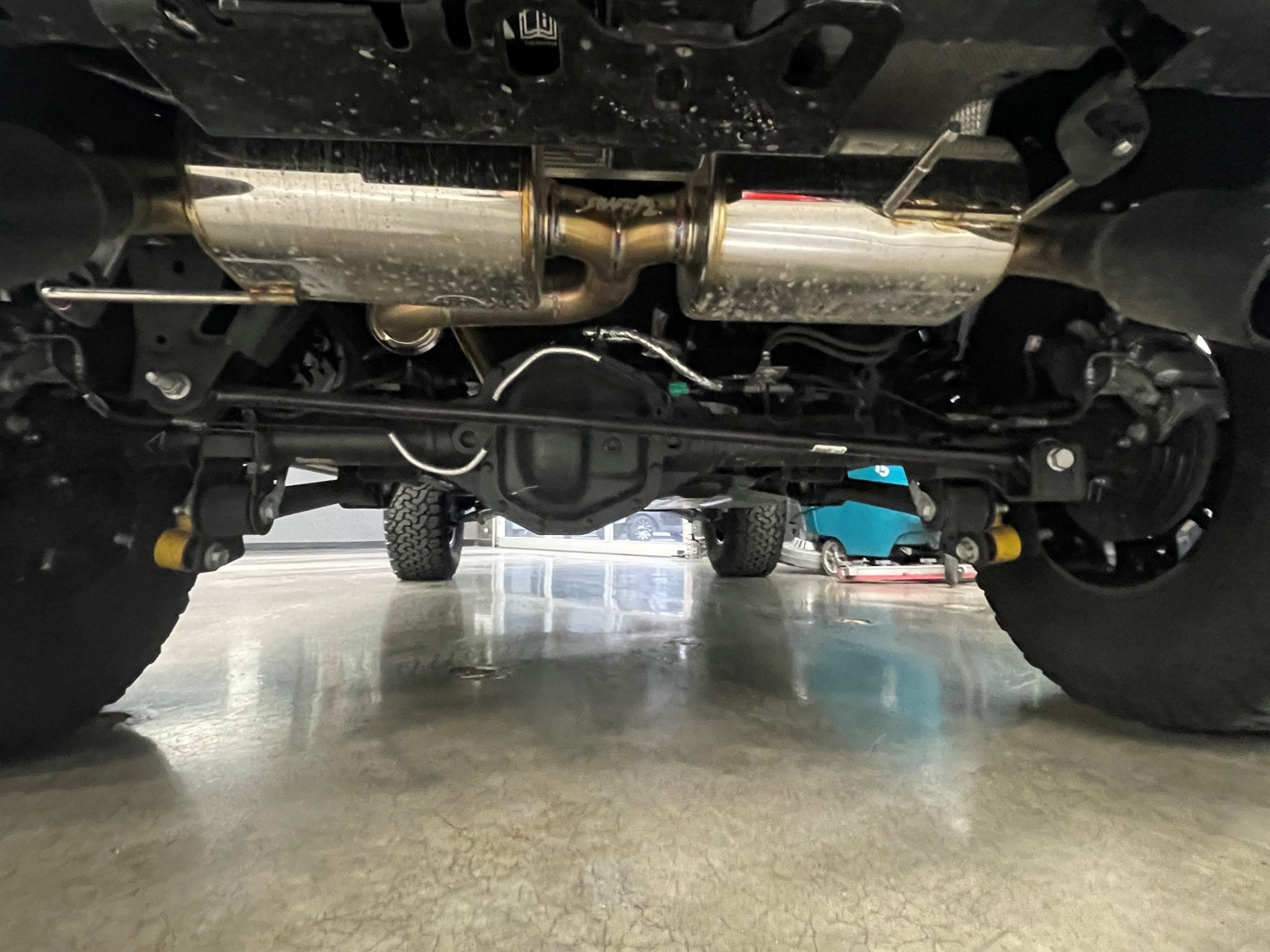
This Shadow Black Bronco is complemented by a black manual soft top. Exterior features include LED headlights, steel front bumper with pod lights, tow hooks, keyless entry keypad, heated mirrors with auxiliary lights, swing-away rear tailgate with spare tire carrier, steel tubular side steps, custom stainless steel cat-back dual exhaust system and more.
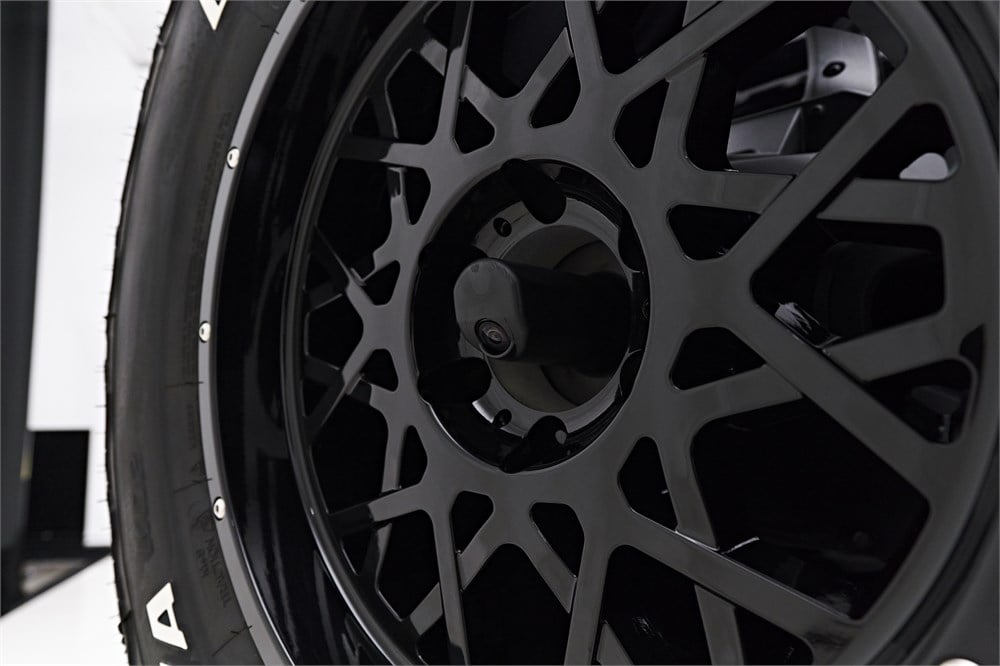
Black 18-inch aluminum wheels are wrapped in 35-inch BFGoodrich All-Terrain KO2 tires.
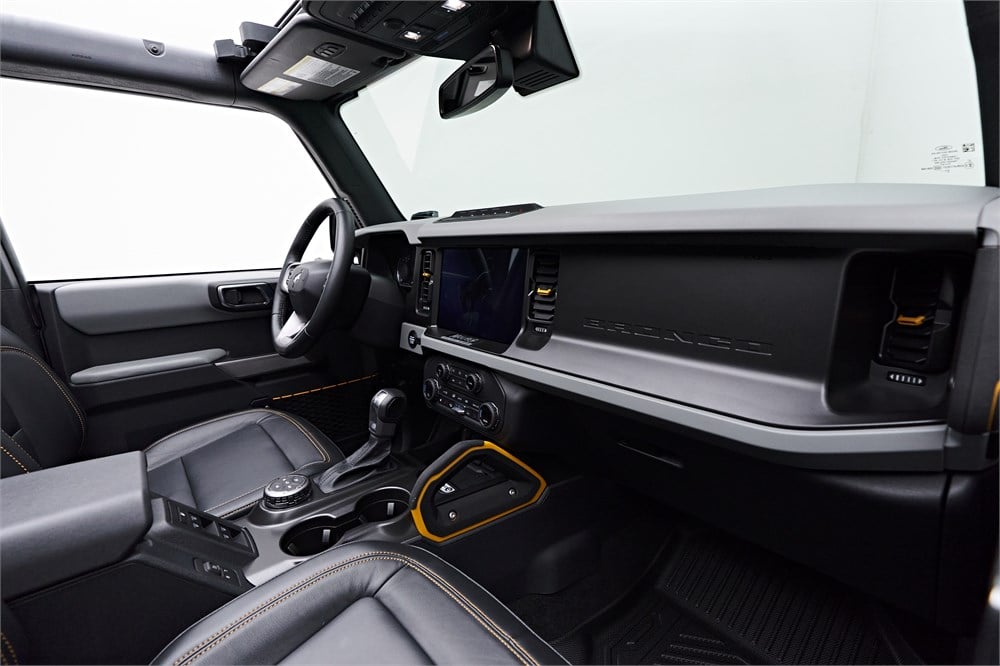
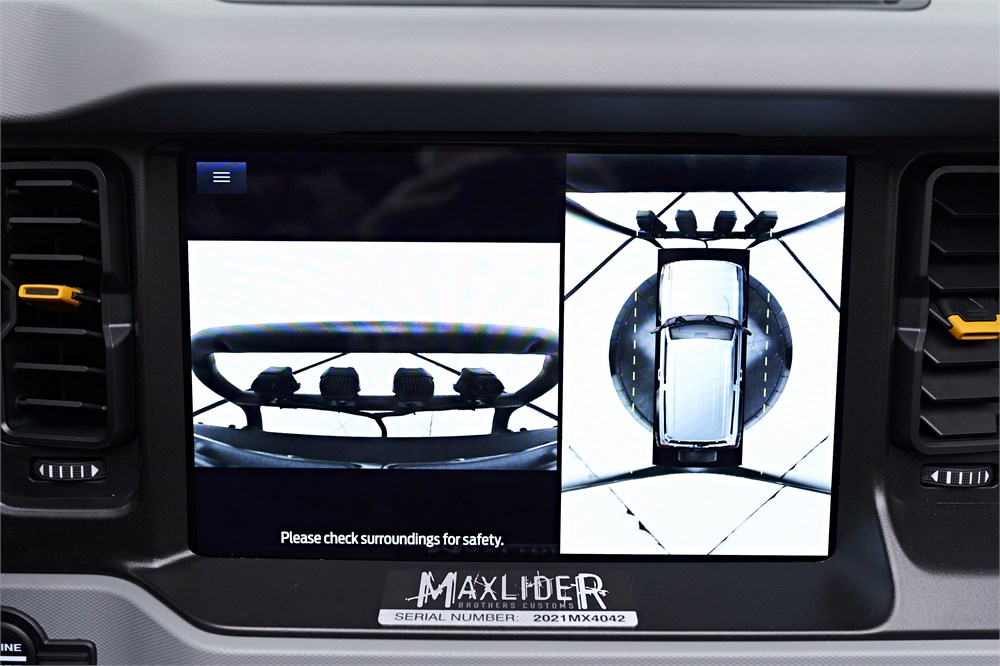
The Black Onyx leather interior is fitted with heated front bucket seats and features matching door panels, dash, center console, and carpeting. Amenities include front and rear floor liners, leather-wrapped shift knob and heated steering wheel, 12-volt power points, USB outlets, rearview camera and remote start, adaptive cruise control, 12-inch center touchscreen, wireless charging pad and dual-zone automatic climate control. A dashboard plaque on the center stack identifies this Bronco as Maxlider Brothers Customs serial number 2021MX4042.
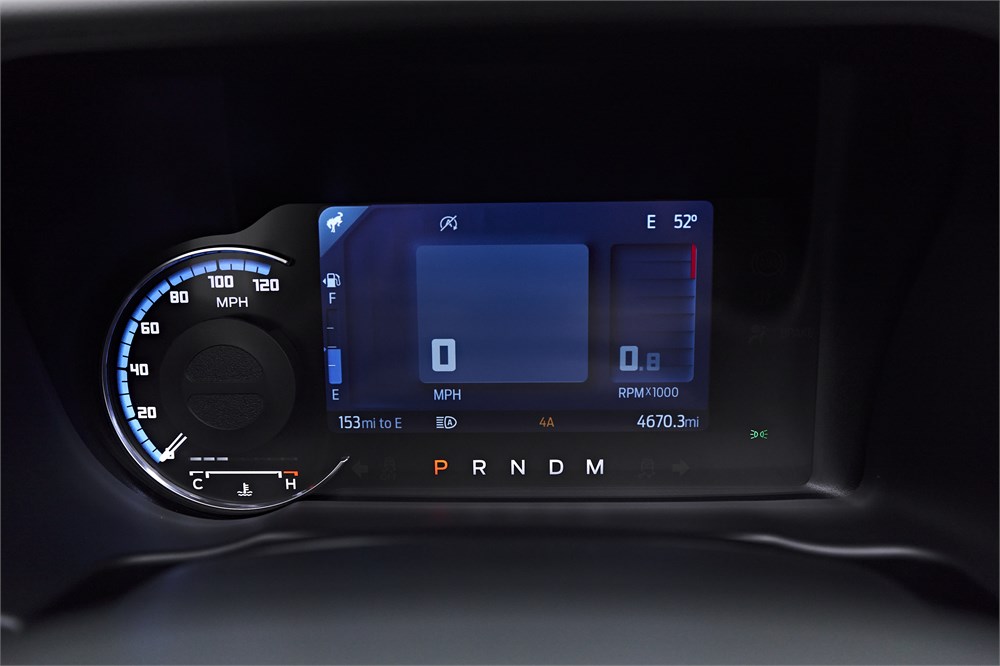
Instrumentation includes an analog 120-mph speedometer complemented by an eight-inch digital screen with customizable auxiliary gauges. The digital odometer reads 4,670 miles.
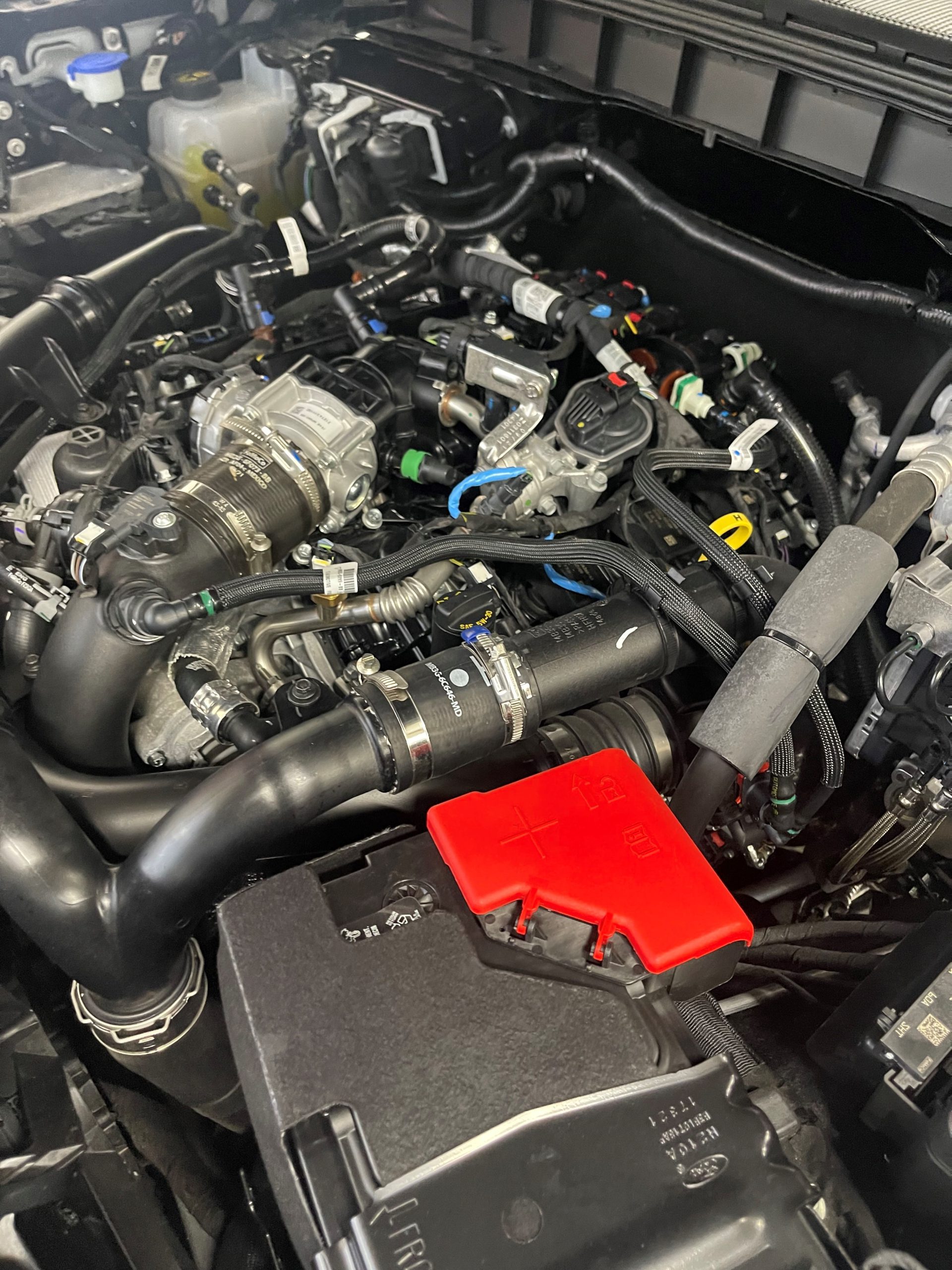
The turbocharged 2.7-liter EcoBoost V6 was factory-rated at 330 horsepower and 415 lb-ft of torque. Power is fed to all four wheels through a 10-speed automatic transmission, dual-range transfer case and locking front and rear differentials.
The Maxlider Brothers Customs Stage-1 suite of modifications adds a four-inch BDS Suspension lift, pair of BDS Suspension upper control arms, front bump stop extensions, billet aluminum steering reinforcements and more. Four-wheel anti-lock disc brakes help the Bronco stop in a controlled manner.
The sale of this Bronco includes owner’s manuals, plus a digital window sticker that shows the original MSRP of $58,445 (before Maxlider Brothers Customs upgrades) is accessible via the CARFAX report.
The auction for this 2021 Ford Bronco Badlands four-door modified by Maxlider Brothers Customs ends on Monday, March 27, 2023, at 3:20 p.m. (PDT)