Journal Classic Cars

Category Added in a WPeMatico Campaign

Everyone wanted to be first by far with a postwar car, and Studebaker ended up being that brand. Every other manufacturer was anxious to unveil all-new vehicles, but a brand-new corporation was able to beat the others to the punch in 1947: Kaiser-Frazer Corporation was the upstart of the industry, and one of the company’s most majestic vehicles, a 1949 Kaiser Virginian, is our Pick of the Day. It’s listed for sale on ClassicCars.com by a dealership in Davenport, Iowa. (Click the link to view the listing)

Today he may be best known for founding a health care network, but industrialist Henry J. Kaiser teamed up with automotive executive Joseph W. Frazer to produce their automotive namesakes right after World War II. Howard “Dutch” Darrin styled the two brands, both four-door sedans featuring flush fenders and a 123.5-inch wheelbase. Initially, Kaisers were planned to be front-wheel-drive, but a number of complications made the company do an about-face and it ended up being a badge-engineered take of the more upmarket Frazer.

The Special was the only Kaiser available until the Custom debuted later in the model year. Every Kaiser (and Frazer) was powered by a 226cid L-head inline-six offering 100 horsepower, and all were hooked to a three-speed manual transmission. Customs were available with an optional intake and exhaust manifolds that upped horses by 12. Over 70,000 Kaisers were built in 1947, then another 92,000 for 1948. These were fine numbers for a new brand in a market full of car-hungry consumers, and Kaiser-Frazer’s balance sheet was strong as well. It wouldn’t last much longer.

For 1949, Kaisers (and Frazers) were given a nice restyle to keep them contemporary. However, competition from other Detroit manufacturers began to reveal the company’s weaknesses, which included an outclassed engine and the lack of an automatic transmission. Additionally, the issue of style came to the forefront when Oldsmobile, Buick, and Cadillac introduced proper two-door hardtop convertibles. Many manufacturers scrambled to create special-edition models to make up for the lack of a hardtop body style, but Kaiser had already been faking it with the Virginian. Though posing as a four-door hardtop, the Virginian was simply a nicely trimmed four-door sedan with a pair of thin chrome B-pillars with glass panes.

Characterized as a “the blueblood of all cars,” the Virginian combined the “sleek low lines of a convertible with the security of a steel roof, nylon-covered. And the custom-styled interior of a town car.” A harmonious blend of styling, color, and fabrics characterized the Virginian and set the tone for Kaisers to come, but the Virginian’s price was veering on Cadillac territory, a luxury brand powered by a modern OHV V8. This may explain why an estimated 946 Virginians were built between 1949-50.

This 1949 Kaiser Virginian has been garage-kept its whole existence and was in the hands of its previous owner for 60 years, having been restored in 1981. The engine has been rebuilt and, of course, it features a three-speed manual with optional overdrive. The interior features new upholstery. “Engine compartment is tidy,” says the seller.

This gray and blue hues look gorgeous, and the attempt to make a hardtop sedan is almost quaint yet comes off as quite striking. The Virginian is quite possibly a precursor to the Kaiser Dragon, another nicely trimmed model that would appear several years later, though the lack of V8 and hardtop style was the death knell for the company. However, for late 1940s high style, this $19,900 1949 Kaiser Virginian will crown you the Southern Belle of the road no matter your gender.

Click here for this ClassicCars.com of the Day.

Everyone wanted to be first by far with a postwar car, and Studebaker ended up being that brand. Every other manufacturer was anxious to unveil all-new vehicles, but a brand-new corporation was able to beat the others to the punch in 1947: Kaiser-Frazer Corporation was the upstart of the industry, and one of the company’s most majestic vehicles, a 1949 Kaiser Virginian, is our Pick of the Day. It’s listed for sale on ClassicCars.com by a dealership in Davenport, Iowa. (Click the link to view the listing)

Today he may be best known for founding a health care network, but industrialist Henry J. Kaiser teamed up with automotive executive Joseph W. Frazer to produce their automotive namesakes right after World War II. Howard “Dutch” Darrin styled the two brands, both four-door sedans featuring flush fenders and a 123.5-inch wheelbase. Initially, Kaisers were planned to be front-wheel-drive, but a number of complications made the company do an about-face and it ended up being a badge-engineered take of the more upmarket Frazer.

The Special was the only Kaiser available until the Custom debuted later in the model year. Every Kaiser (and Frazer) was powered by a 226cid L-head inline-six offering 100 horsepower, and all were hooked to a three-speed manual transmission. Customs were available with an optional intake and exhaust manifolds that upped horses by 12. Over 70,000 Kaisers were built in 1947, then another 92,000 for 1948. These were fine numbers for a new brand in a market full of car-hungry consumers, and Kaiser-Frazer’s balance sheet was strong as well. It wouldn’t last much longer.

For 1949, Kaisers (and Frazers) were given a nice restyle to keep them contemporary. However, competition from other Detroit manufacturers began to reveal the company’s weaknesses, which included an outclassed engine and the lack of an automatic transmission. Additionally, the issue of style came to the forefront when Oldsmobile, Buick, and Cadillac introduced proper two-door hardtop convertibles. Many manufacturers scrambled to create special-edition models to make up for the lack of a hardtop body style, but Kaiser had already been faking it with the Virginian. Though posing as a four-door hardtop, the Virginian was simply a nicely trimmed four-door sedan with a pair of thin chrome B-pillars with glass panes.

Characterized as a “the blueblood of all cars,” the Virginian combined the “sleek low lines of a convertible with the security of a steel roof, nylon-covered. And the custom-styled interior of a town car.” A harmonious blend of styling, color, and fabrics characterized the Virginian and set the tone for Kaisers to come, but the Virginian’s price was veering on Cadillac territory, a luxury brand powered by a modern OHV V8. This may explain why an estimated 946 Virginians were built between 1949-50.

This 1949 Kaiser Virginian has been garage-kept its whole existence and was in the hands of its previous owner for 60 years, having been restored in 1981. The engine has been rebuilt and, of course, it features a three-speed manual with optional overdrive. The interior features new upholstery. “Engine compartment is tidy,” says the seller.

This gray and blue hues look gorgeous, and the attempt to make a hardtop sedan is almost quaint yet comes off as quite striking. The Virginian is quite possibly a precursor to the Kaiser Dragon, another nicely trimmed model that would appear several years later, though the lack of V8 and hardtop style was the death knell for the company. However, for late 1940s high style, this $19,900 1949 Kaiser Virginian will crown you the Southern Belle of the road no matter your gender.

Click here for this ClassicCars.com of the Day.

Featured on AutoHunter, the online auction platform driven by ClassicCars.com, is this 5.7-Liter Powered 1955 Chevrolet Bel Air Nomad.

This first-year Nomad leaves little to be desired for the restomod enthusiast. It was treated to a frame-off overhaul in Regal Turquoise and comes with all the creature comforts of the modern era like power windows, power disc brakes, power steering, air conditioning, and a Custom Autosound stereo system. It is being sold by a dealer in New Braunfels, Texas, and the auction will end on Tuesday.

Penned by General Motors designer Harley Earl, the original Nomad first came to life exactly 70 years ago in 1954 at General Motors’ “Motorama” show. Motorama has an interesting story all its own: The event first started in 1949 as a glorified auto show at the elite Waldorf Astoria hotel in New York City. In 1953, the annual show started to travel around the country, but it still started at the same hotel.

There were 1.9 million visitors who attended the event in 1954 – the year in which the Nomad debuted. One thing that made the Nomad concept car unique was that it used the front fascia of the Corvette. By the time the car went into production for the inaugural 1955 model year, it used the “A-body” platform which underpinned other GM cars of the time.
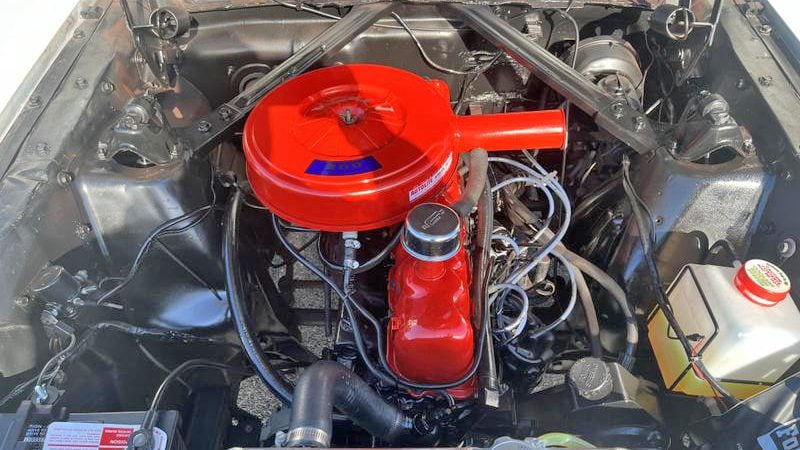
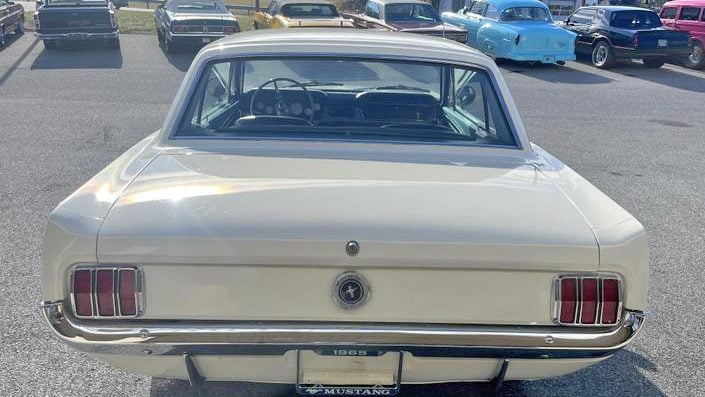
The restoration of today’s featured car appears to have left no stone unturned. Even the exterior lighting was upgraded to modern LED, and the 20-inch Ridler Style 607 wheels give a more aggressive stance to this souped-up station wagon. The car will come with a binder of photographs that chronicle the restoration process. Also provided is a four-minute walk-around video showing the exterior, interior, cargo area, engine bay, and a start-up.
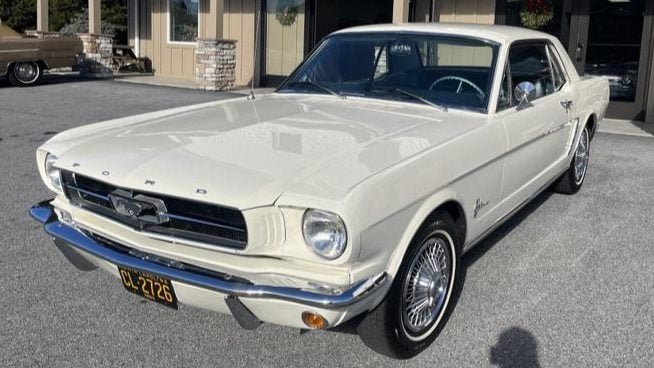
While not having a sports car body design, this wagon definitely has the performance upgrades to make it a capable cruiser. Power comes from a 5.7-liter V8 that has received aluminum valve covers, an Edelbrock fuel-injection system, and much more. This wagon can haul, in more ways than one.

By the way, it took more than 100 trucks each year to transport Motorama shows to the various destinations between 1953 and the final event in 1961. That effort was perhaps one of the reasons why the event was phased out. In its place, the traditional single-city-based auto shows would serve to introduce the public to the latest in automotive design and engineering.

The auction for this 5.7L-Powered 1955 Chevrolet Bel Air Nomad ends Tuesday, March 26, 2024 at 11:30 a.m. (PDT)

Visit the AutoHunter listing for more information and photo gallery

Lamborghini as a car company was established in 1963 but didn’t start building any cars until the following year, meaning its first car is now 60 years old.

That first car was the 350 GT, which made its formal debut in the month of March at the 1964 Geneva auto show, at which point Lamborghini started accepting the first orders. A one-off prototype known as the 350 GTV was shown a year earlier at an auto show in Turin, though.

As the story goes, it was a dispute between Ferruccio Lamborghini and Enzo Ferrari that was ultimately responsible for the creation of the 350 GT. Lamborghini, who already had a successful company building tractors, had a problem with the clutch in a Ferrari he owned and complained to Enzo himself that better parts should have been used. After being rebuffed by Ferrari, Lamborghini decided to go out and build his own cars.

The 350 GT’s aluminum body was designed by coachbuilder Carrozzeria Touring Superleggera, and initially previewed on the 350 GTV which featured a slightly different design to the 350 GT. The chassis was developed by a young Giampaolo Dallara, who would go on to start race car constructor Dallara a decade later.

As for the engine, a 3.5-liter V-12 that formed the basis of Lamborghini V12 engines right up until the launch of the Aventador, was developed by Giotto Bizzarrini, who helped develop the Ferrari 250 GTO and also attempted the launch of his own Bizzarrini sports car marque, a marque that’s currently undergoing a revival.

Bizzarrini had developed the engine for use in motorsports, and fellow engineer Paolo Stanzani was tasked with taming it for road use. The engine, which featured a four-cam design, was rated at 350 hp and blessed with a stratospheric (for the period, at least) 7,000-rpm redline.

The first 350 GT off the line, the car bearing chassis number 101, was finished in green and had a white interior. It was the car on display at the Geneva debut. It was retained by Lamborghini and later used as a test model for endurance testing, though it was ultimately destroyed after being rear-ended at a stop light.

The second 350 GT built, finished in silver with a red interior, was delivered to a customer in Geneva in August of 1964. The car, shown here, is now the oldest production Lamborghini. The original 350 GTV prototype is still considered the oldest Lamborghini.

HIGH-RES GALLERY: 1964 Lamborghini 350 GT

This article was originally published by Motor Authority, an editorial partner of ClassicCars.com

When you have to compete against the Big Three, sometimes you have to try a little harder, right? That’s the position American Motors was in in the late 1950s. Through sheer creativity, AMC was able to develop clever transportation solutions that would eventually carry it to number three in sales, but our Pick of the Day, a 1959 Rambler American Deliveryman panel wagon, is number three for a different reason, which we’ll explain below. It is listed for sale on ClassicCars.com by a dealership in Hopedale, Massachusetts. (Click the link to view the listing)

The 1950s were a tumultuous time to be an independent automaker, but Hudson and Nash managed to handle themselves all right by joining forces and exploiting its strengths in the marketplace. While the Big Three were shooting for the moon, the newly christened American Motors were shooting for consumers’ rational needs with the Rambler brand. The Rebels and Ambassadors that would come were not as flashy as their upsized Detroit competition, but they were able to handle any task on equal terms, including comfort and routine performance.

Before the formation of American Motors, Nash had built the compact Rambler model, but America wasn’t quite ready for a compact. However, by 1958, the onslaught of foreign brands and the increasing popularity of a funny car from Germany gave AMC executives an idea: why not reengineer the discontinued Nash Rambler from several years before? With the original tooling in AMC’s possession, this was entirely possible. Though more austere than the nicely trimmed Nash, the new Rambler America’s most noticeable design change was fully exposed wheels.

When introduced at the turn of the 1958 calendar year, the American two-door sedan was the most affordable American car in the market and the only compact car available with an automatic transmission. Said George Romney, AMC president, “Essentially, it was simple: Let’s build an automobile for the American people that appeals as much to their native intelligence as to their ego.”

For 1959, the American series was expanded to include a station wagon. Both were available in the two trim levels that carried over from 1958: Deluxe and Super. However, Rambler also offered a sedan delivery for tradespeople called the Deliveryman. This commercial wagon lacked a rear seat, allowing the cargo floor to extend all the way to the rear of the front seats. American Motors offered versions with and without side glass, but it’s possible neither were officially offered because only six were built in total – three in each configuration.

As you can see, this 1959 Rambler American Deliveryman panel wagon is extremely rare and, luckily for the collector world, this vehicle has been given its due by the founder of the AMC Club of America. A “nut and bolt” rotisserie restoration has given this Autumn Yellow Deliveryman a luster that’s better than it had at Kenosha. “Excellent fit and finish throughout,” says the seller. “Awesome chrome bumpers. Beautiful glass. Painted steel wheels with correct “R” hubcaps.”  Power comes from a 195.6cid flathead inline-six with a three-speed manual transmission. “Stunning engine bay detailed properly,” adds the seller. “Whisper quiet, shifts like butter.”

Keep in mind that this vehicle is rarer than just about everything that you have read in the ClassicCars.com Journal. Being that only three were built like this, you’d think it would cost an arm and a leg to own, but the asking price is only $30,500. That’s a bargain in the truest sense of American Motors.

Click here for this ClassicCars.com Pick of the Day.

On the AutoHunter Drive the Bid Podcast this week, Derek Shiekhi and Luke Lamendola, returning Social Media/On-Camera Host for the Collector Car Network, get together to discuss Our Significant Automotive Memories. Maybe few of us have been as lucky to catch the car bug from Dad or Mom’s Lambo, but we all have had a car or two – even a Toyota Cressida – that has made an imprint and given us the nudge to explore the world of automobiles.

Other discussions include news on the six-figure Jeep Wrangler V8 Final Edition, and two AutoHunter picks: a nicely presented 1959 Chevrolet El Camino, and a Duramax-powered 2014 Chevrolet Express 3500 4X4 conversion.

AutoHunter Cinema has plenty of other videos and podcasts created by the experts behind ClassicCars.com, the world’s largest online collector car marketplace. AutoHunter brings forth a dedicated live customer support team, quicker auction listings and exclusive benefits for both buyers and sellers.

The Duesenberg name may have only been a blip along the automotive industry’s vast timeline, but it left a lasting mark that ensures its cars today typically trade hands for multiple millions.

That’s why it isn’t surprising at all that a 1930 Duesenberg Model J with coachwork by Murphy sold at an RM Sotheby’s auction in Miami earlier this month for almost $4 million. The final price paid was $3,855,000.

This particular Duesenberg, which bears chassis number 2369, was originally ordered in 1929 by Esther Fiske Hammond, the granddaughter of the head of department store chain Jordan Marsh at the time. Duesenberg delivered its cars as unfinished chassis, and Hammond had her chassis given a body by the coachbuilder Walter M. Murphy Company based in Pasadena, California, close to where Hammond lived.

The body was one of Murphy’s signature convertible coupes with a roof known as a disappearing top. Only about 25 Duesenbergs featured this body style, and according to the listing only two examples remain with original rear-mounted spares, one being this car.

1930 Duesenberg Model J with coachwork by Murphy – Photo credit: RM Sotheby’s

The car doesn’t feature its original engine, though. Hammond sold the car in 1934 and after trading hands several more times, Charles Allen, a radio host, had the car’s engine changed at some point during the 1950s. Like all Duesenbergs, the car features an inline-8 which in Model J specification delivers around 265 hp.

The car also lost its original rear-mounted spares at one point. Fortunately famed Duesenberg restorer Randy Ema of Orange, California, had spotted the original dual rear-mount spare hub at a swap meet and held onto it for almost 30 years, saving it for the day when it might be reunited with the car. That happened in 2017 when Paul Petrovich of Sacramento, California, brought the car in for a full restoration by Ema. It was the last restoration handled by Ema before his retirement.

Other highlights of the recent RM Sotheby’s auction included a 1990 Ferrari F40 that sold for almost $3.4 million, a 1930 Cadillac V-16 that sold for just over $1 million, and a 1937 Mercedes-Benz 540K Special Roadster that sold for $2.2 million.

HIGH-RES GALLERY: 1930 Duesenberg Model J with coachwork by Murphy – Photo credit: RM Sotheby’s

This article was originally published by Motor Authority, an editorial partner of ClassicCars.com

Even rain couldn’t dampen anyone’s spirits at the 2024 Arizona Concours d’Elegance in January. ClassicCars TV encountered an impressive collection of classics, ranging from a 1930s Bugatti to a sleek 1990s Ferrari, with each packing rich automotive heritage. Standouts included a unique 1936 Packard Mulholland Speedster and the gilded flanks of a 1957 Studebaker Golden Hawk. The overcast skies offered some benefits as the legendary 1967 Shelby King Cobra sparkled with the rain droplets.

Subscribe to the ClassicCars TV channel for more finds, car reviews, and event recaps!

A menacing black paint job is only the tip of the iceberg when it comes to upgrades and enhancements for today’s featured Mustang. The longer you look at it, the more impressive it becomes. One thing is for sure, this build gave attention to even the smallest details. The results are jaw-dropping.

The Pick of the Day is a custom 1967 Ford Mustang coupe listed for sale on ClassicCars.com by a private seller in Roswell, Georgia. (Click the link to view the listing)

“The full blackout style of this 1967 Ford Mustang restomod gets you ready for a mean power pony, and the fuel-injected Boss crate motor doesn’t disappoint. But more than just muscle, you also get a ton of upgrades like a sports suspension, overdrive transmission, four-wheel disc brakes, and a loaded custom A/C interior. So this is exactly how to get the best of everything in one iconic package,” the listing says.

The car looks good from every angle, but my favorite perspective is the rear end which showcases the integrated spoiler. The subtle charcoal metallic ghost stripes are an attractive feature.

Power under the hood comes from a Ford Performance crate-sourced 363cid V8. Upgrades include aluminum heads, an Edelbrock intake, cast Ford Racing valve covers, Holley Terminator electronic fuel injection, MSD ignition components, and an aluminum radiator with an electric fan. Torque is sent to the rear wheels through a four-speed automatic transmission and a Currie nine-inch rear end with 4.10:1 gearing. What speeds up must slow down, and a set of Wilwood disc brakes does the duty there.

The listing has 74 photos showing detailed aspects of the car including the exterior, interior, engine bay, and the underside. I’m tempted to use the word “flawless” to describe it, but that’s really how it looks.

This Ford carries a proper Blue Oval muscle-machine vibe. The dual exhaust even has cutouts in case you want people to hear you coming well before you get to the show. Then again, you may choose to skip all events entirely just because you’re having too much fun on the road,” the listing says.

The asking price is $72,000 or best offer. The car was ceramic-coated within the past year, so that brilliant exterior finish will present well at shows for many years to come.

To view this Pick of the Day on ClassicCars.com, check out the listing here.

The 300th Porsche 911 reimagined by Singer – Classic Study has been completed in California.

The 1990 Porsche 911 was restored in collaboration with its owner who has named their car the ‘Sotto’ commission. This car is an example of Singer’s personalization services and love affair with the 911. Its specification represents requests made by its owner. 

1990 Porsche 911 Targa (Type 964)

  • Presented with carbon fiber bodywork in Resistance Blue with ghosted side stripes
  • Bespoke interior trimmed in Orange leather with black stitching
  • Lightweight carbon fiber track seats with woven leather centers and nickel grommets
  • 4.0L, naturally aspirated, air-cooled flat six, paired with a 5-speed manual transmission sending power to the rear wheels
  • Carbon ceramic brakes
  • Titanium sports exhaust 

The milestone represents Singer’s careful but steady growth since its founding in 2009. Singer now employs over 600 people across world-class teams in California and the UK. On behalf of its global clientele, Singer brings together beauty, craftsmanship and innovation.