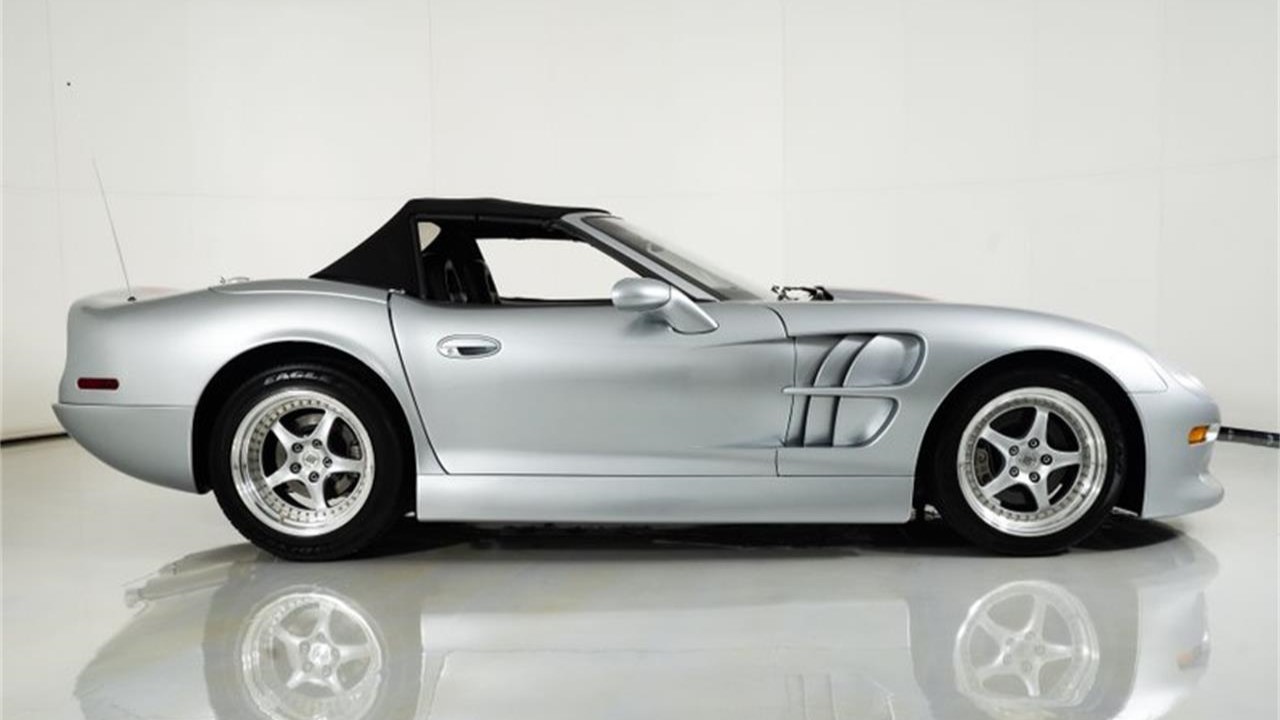
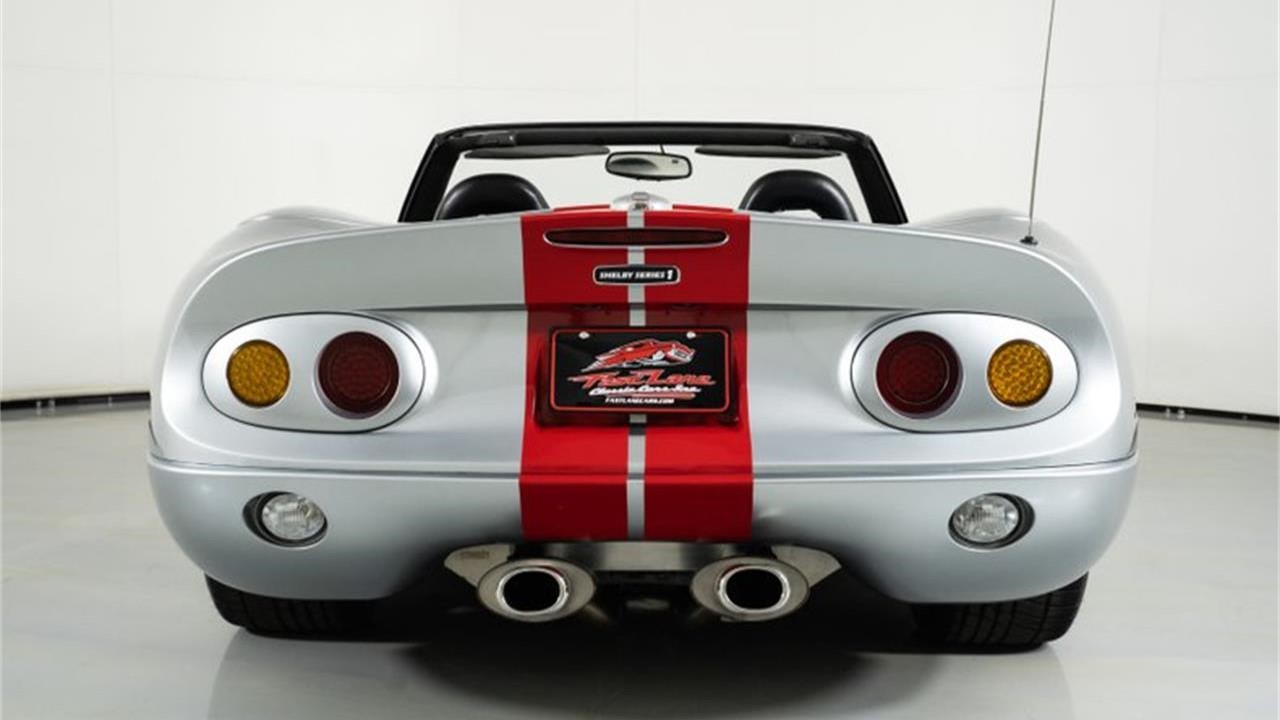
If you follow professional sports, you know that players that made a name for themselves with a certain team sometimes briefly play for a different organization. For instance, Hakeem Olajuwon spent almost his entire 18-season career (and won two NBA championships) with the Houston Rockets, but he played his final 61 games with the Toronto Raptors. Think of the 1999 Shelby Series 1 as the automotive equivalent of that for Carroll Shelby. After decades of souping up Ford and Dodge vehicles, he used a General Motors engine in a short run of DOHC V8-powered sports cars (although he later returned to collaborating with Ford). We consider the one you see here, a 1999 Shelby Series 1 posted on ClassicCars.com by a Missouri dealership, our Pick of the Day.
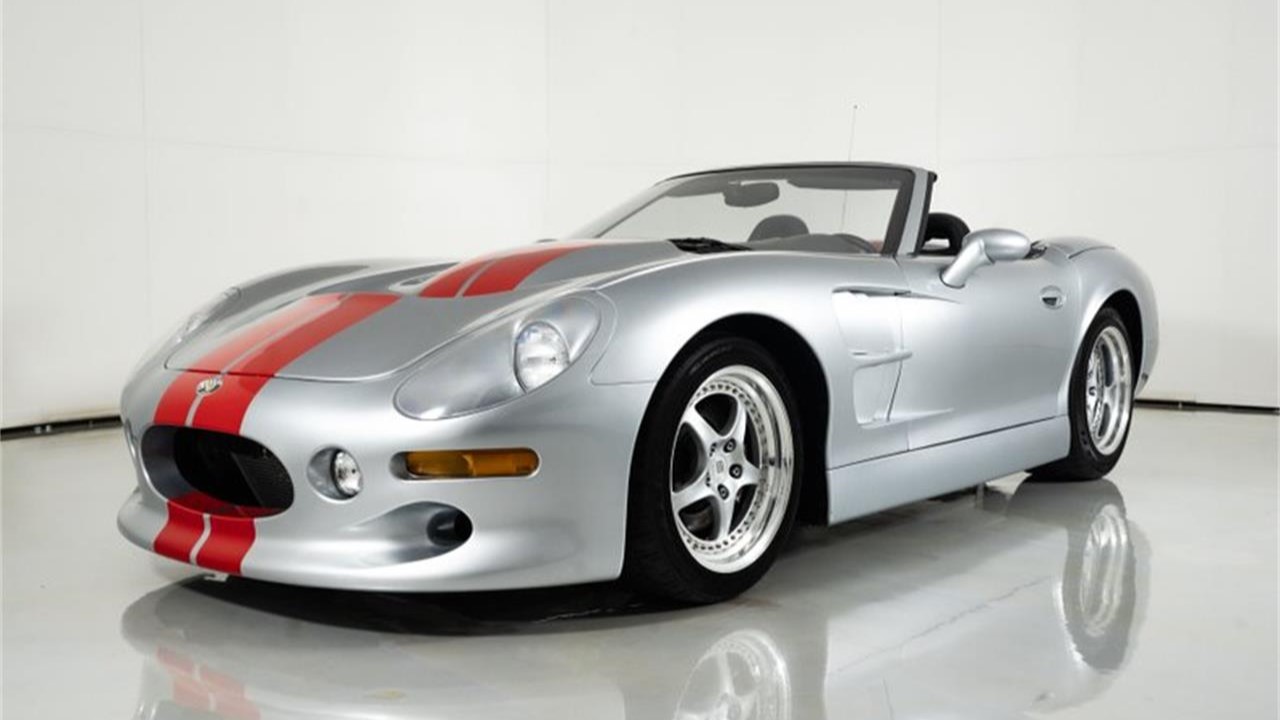
If you’re not familiar with this part of Shelby history, that’s OK. It’s not as if you’ve had a lot of chances to see one of these on the road. Shelby only ended up producing 249 of these, all of them 1999 models. This silver one with red stripes and a black soft top is #4 from that short run.
It’s a shame Series 1s are such rare sights because they have attractive curves rendered in carbon fiber, all laid over an aluminum chassis. There’s a certain boldness and aggression to the power-dome hood, massive fender vents, 18-inch wheels, and dual exhaust outlets that jut out from the rear at an angle, as if they’re artillery ready to fire at trailing vehicles. What’s harder to see is the double-wishbone suspension with inboard-mounted coilovers.
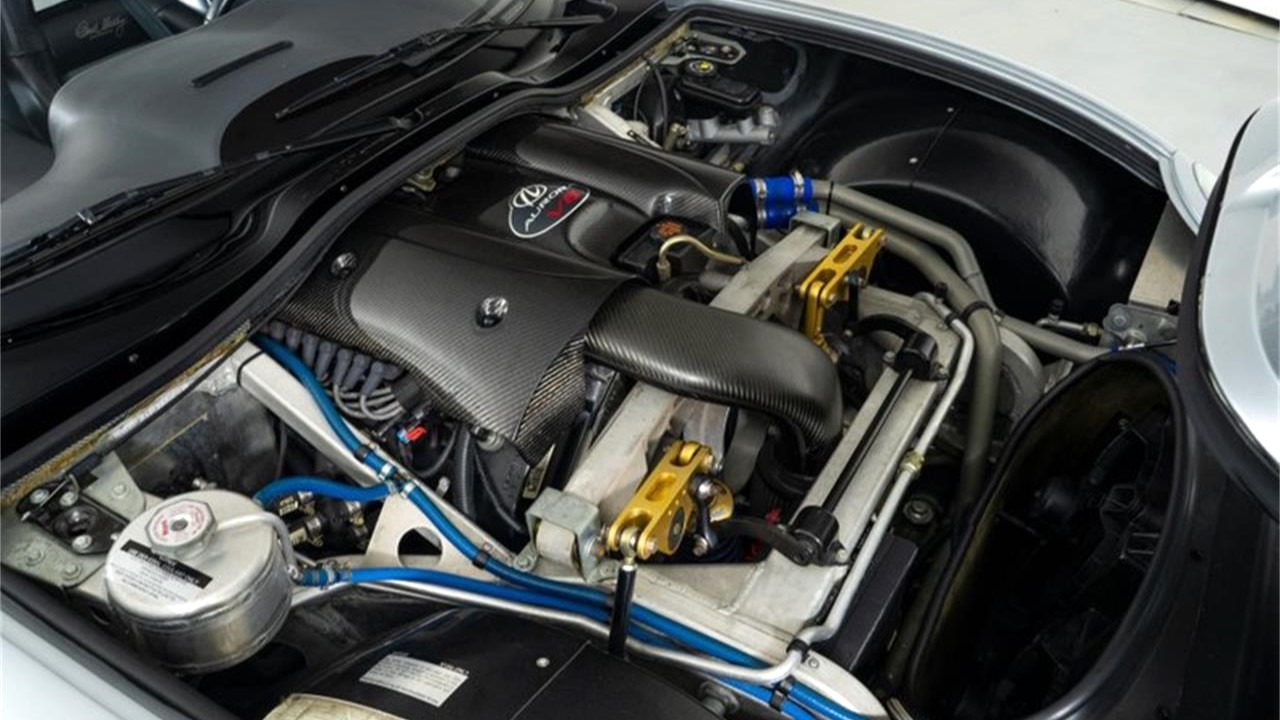
Not only is the Series 1 a limited-production car, but it also has a relatively unusual engine for a car like this. True, the 320-horsepower 4.0-liter V8 from the Oldsmobile Aurora is not a flat-plane-crank Ferrari engine, but it’s a GM power plant with double overhead cams mated with a six-speed manual gearbox. By making the Series 1 with this engine, Shelby completed a trifecta with the “Big Three” Michigan brands.
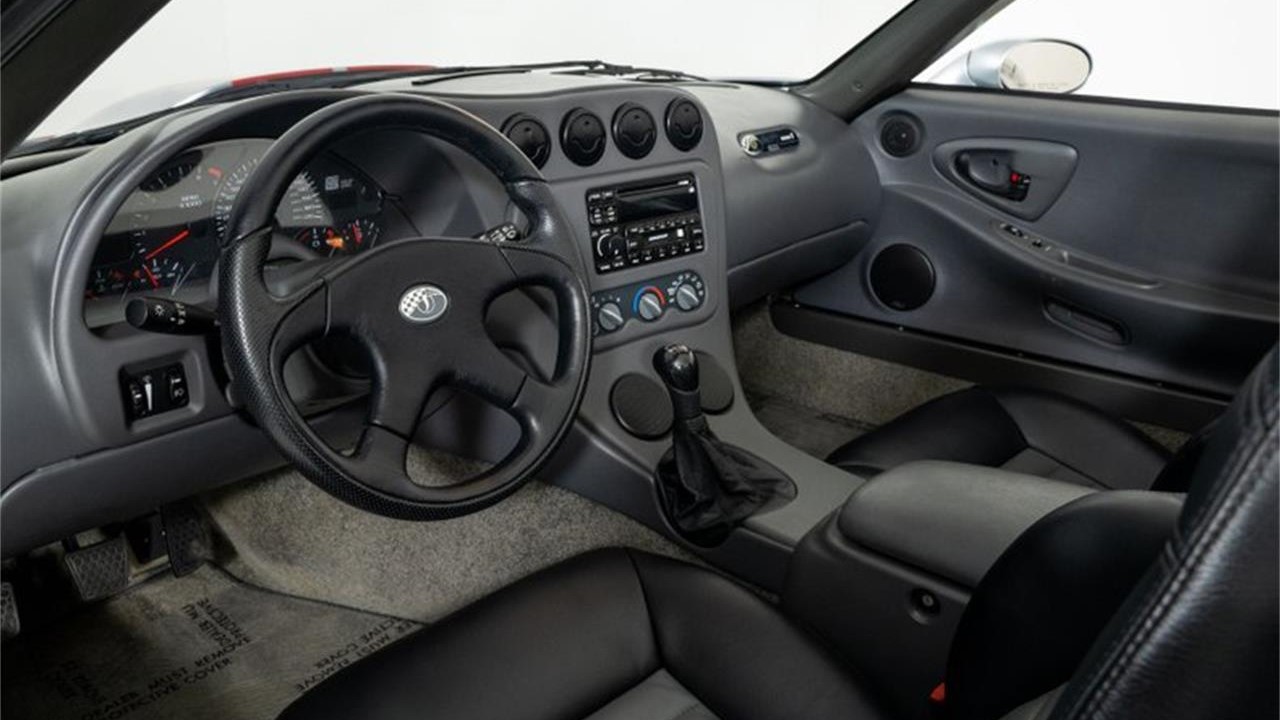
Aside from familiar GM parts, the cockpit has black and gray leather seats with embroidered Carroll Shelby autographs, a Monsoon AM/FM/CD/cassette audio system, and air conditioning. Perhaps its most important feature is the number on the odometer: 739.
To add to that ultra-low mileage figure, you need to add this 1999 Shelby Series 1 to your garage. To do that, it’ll take $184,995.
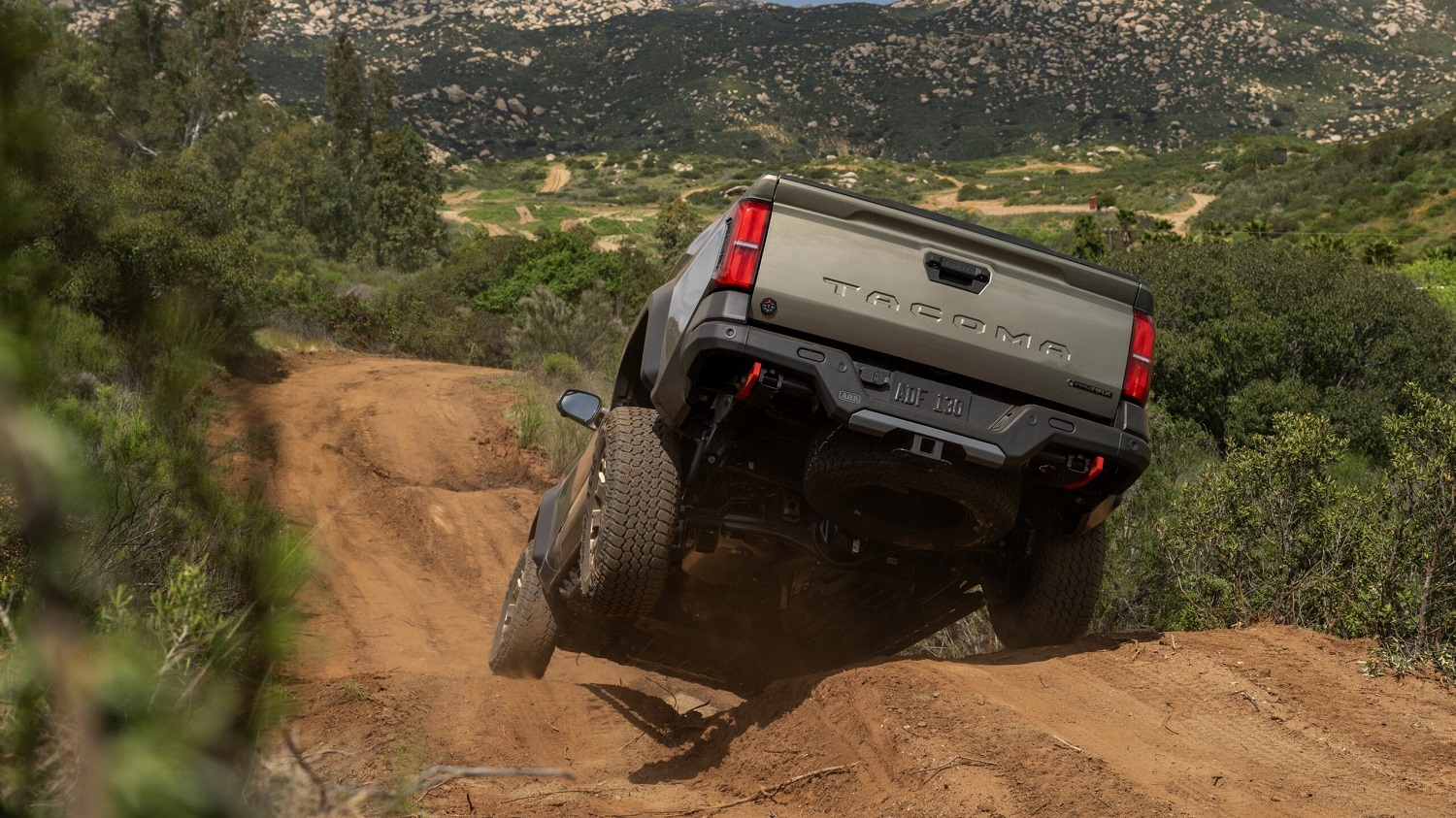
Ever since 2025 began, I’ve been thinking about the vehicles I want to review. On that list are the S650 Ford Mustang, 2025 Expedition Tremor, Ram 1500 RHO, and 2026 Honda Passport TrailSport. The 2025 Toyota Tacoma is also appealing, which led me to learning about its extensive range of available accessories.
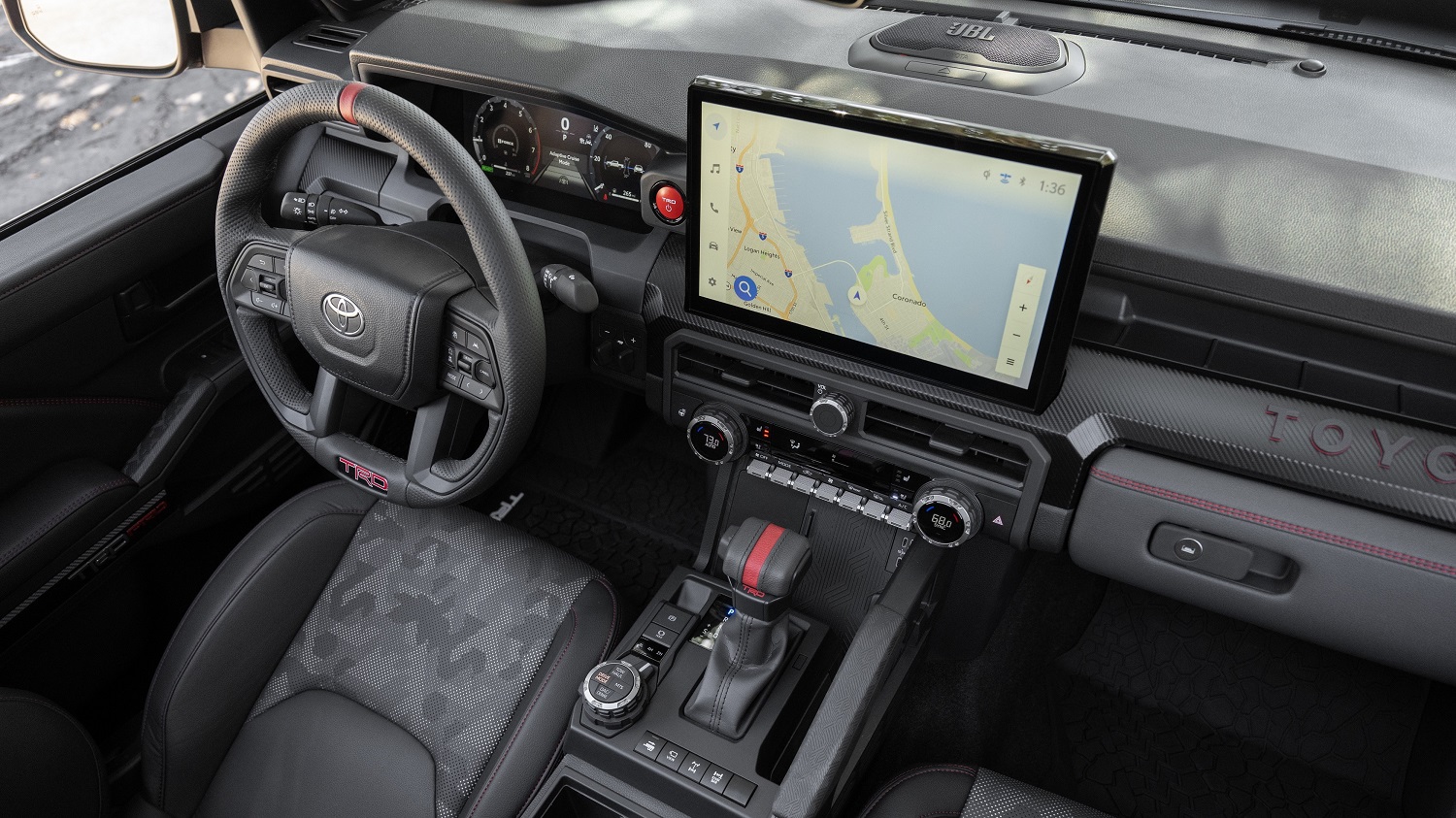
Toyota offers a wide variety of Tacomas built to fit different needs and lifestyles. You can get it with a turbocharged 2.4-liter I4 gas engine or as a hybrid. A six-speed manual and an eight-speed automatic are available. You can choose between the XtraCab and Double Cab body styles and the five- and six-foot bed lengths. Then there are the trim levels: six for the pure-ICE model and five for the hybrid. Many are focused on off-roading. The TRD Off-Road grade comes equipped with Bilstein shocks with remote reservoirs. Toyota prepares the Trailhunter for the outdoors with Old Man Emu 2.5-inch forged position-sensitive shocks with rear piggyback-style remote reservoirs. Tacoma TRD Pro models have similarly sized Fox shocks with internal bypasses and IsoDynamic Performance front seats with their own shock absorbers.
If those trim levels aren’t enough as they are, you can add an impressive variety of storage, towing, lighting, camping, performance, and other accessories to your Tacoma configuration. Want an electric cooler for your next excursion into the wild? Toyota will be glad to sell you one for $900. Need to store small valuables while you’re out hiking? Spec your Tacoma configuration with the $395 center console safe. Would a little more horsepower and additional low- to mid-range torque be nice? Of course it would be—and those are what the $995 TRD performance exhaust was designed to deliver.
Most of the accessories available for the Tacoma came as no surprise. But then I saw the available Accessory Packages. If you have a lot of money to throw at your next Tacoma and you just want a pre-configured, ready-to-go bundle of hardware for the next football game you attend or a future off-road adventure, you have two options. For $5,342, you can get the All-Pro Tailgate Package, which includes the following features:
Dometic HUB 2.0 inflatable shelter
Pelican 20-quart Elite Cooler
Dometic GO Compact Chair
Dometic GO Hydration Water Faucet
Dometic GO Compact Camp Table
Soft tonneau cover
BedStep
Yakima EXO OpenRange camp kitchen
Bed extender
JBL Bluetooth speaker
Cast aluminum running boards
(What? No built-in BBQ grill?!)
Toyota also offers a $12,479 Moab Package, which consists of:
TRD lift kit
TRD front skid plate
Bed Rack HD Kit with Molle panels
Black TRD 18-inch wheels
Black five-inch oval tube steps
Illuminated front emblem
Bed Scene Lighting
Kammok Crosswing single panel shade
Yakima RoadShower portable pressurized water storage
Pelican BX140R cargo case
ARB Elements fridge/freezer
ARB Elements fridge slide
ARB Tred Pro traction pad
Black Chrome exhaust tip
In the past, I was fortunate enough to review vehicles equipped with lifestyle accessories (such as the Nissan Titan XD). If I manage to get my hands on a 2025 Tacoma with camping or additional off-road gear, you’ll know because I’ll post my review right here on the ClassicCars.com Journal.
One of the most iconic American cars of the 1950s is the 1959 Cadillac. Not only was it part of a new wave of cars from General Motors, but it also featured the tallest fins of the era. However, some lean into the cleaner, elegant ’60. One of the prettiest examples of the latter, a 1960 Eldorado Seville, will be crossing the block at the Barrett-Jackson 2025 Palm Beach Auction April 24-26th.
The Cadillac Eldorado first appeared in 1953, a limited-edition semi-custom convertible that was a companion to the Buick Skylark and Oldsmobile Fiesta. The Eldorado achieved regular production for 1954 and, the following year, the model received unique rear styling: rocket-inspired fins that replaced the airplane-inspired fins that had distinguished mainstream models since 1948. The facelifted 1956 model introduced a new body style and two new names: the new coupe was called the Eldorado Seville (the city in Spain), and the convertible was now known as the Eldorado Biarritz (a seaside city in the French Basque region).
With the 1959 redesign, the fraternal Eldorados lost their unique rear styling, though they featured distinctive trim to distinguish them from lesser Cadillacs. Interestingly, this also was the model year that the Eldorado Seville began to sell in fewer numbers than its Biarritz stablemate. Could it be why the Seville was discontinued for 1961?
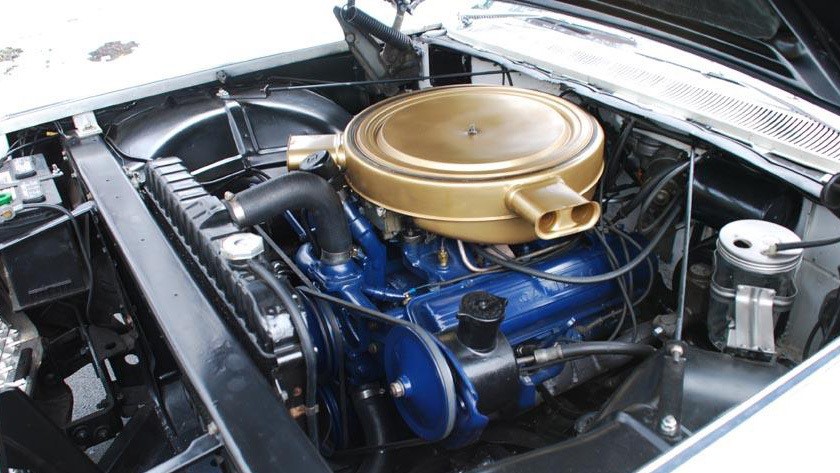
While a 1960 Cadillac Eldorado Seville is a sleek, dashing vehicle on several levels, what sets this unrestored example apart is its code 99 Heather metallic hue, which just so happens to be the very same one applied at the Clark Street factory. This color, along with the Ivory vinyl top, is replicated in the special-order leather interior (“SO928” per the data plate), which is as original as the exterior. Power comes from a 390 V8 with three two-barrel carburetors, which was rated at 345 effortless horsepower.
If ever there was a car that could be considered privileged, it would be this one, as it’s been in a climate-controlled garage for its entire life. To make the planets align to afford you the privilege of owning this vehicle, register to bid at the Barrett-Jackson 2025 Palm Beach Auction.
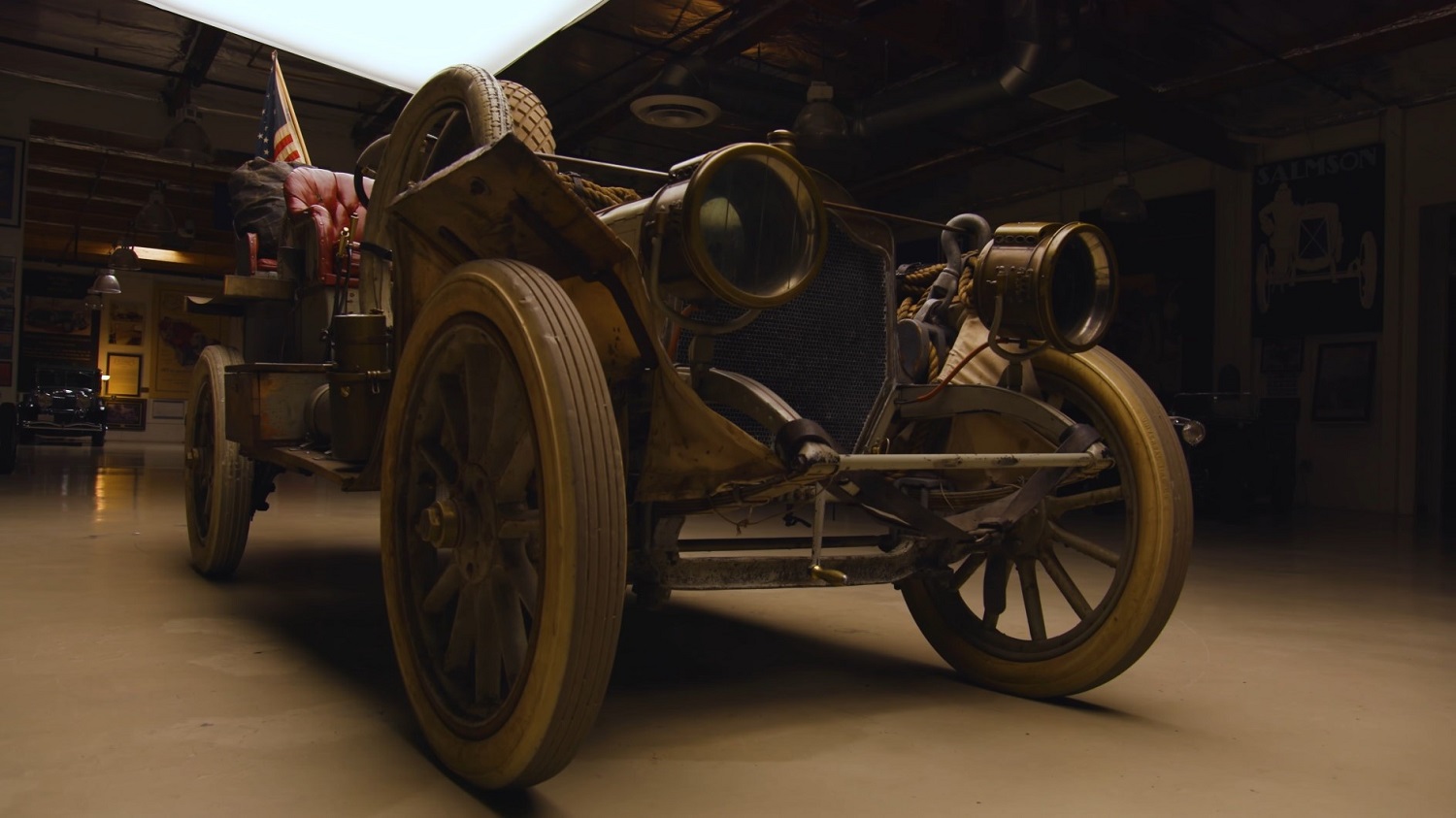
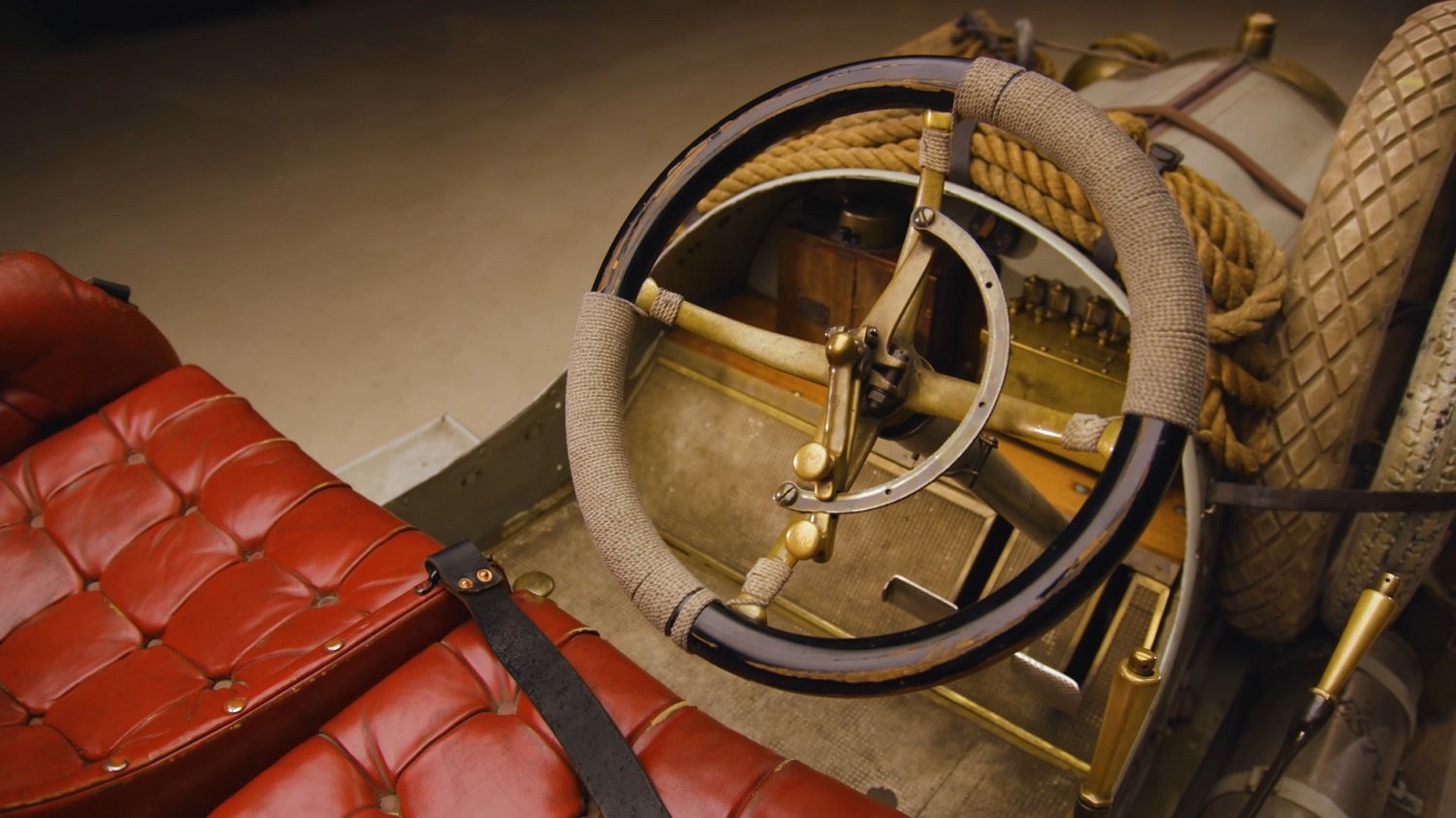
Aside from rocks and dirt, anything that makes it past 100 years old is either tough or fortunate. The 1907 Thomas Flyer that recently appeared on Jay Leno’s Garage is both. It made it through the grueling 1908 New York to Paris Race, eventually wound up in the hands of car collector William F. Harrah, and later became an exhibit at the National Automobile Museum in Reno, Nevada.
As Phil MacDougall, president of the NAM, explains, there were doubts about the durability of cars very early in the 20th century. Keep in mind, this was when carrier pigeons were still in use. The 1908 New York to Paris Race proved to be the ultimate test of a vehicle’s build quality and mechanical toughness. Not only was it a trek of more than 20,000 miles, but it was also over poor excuses for roads, through deep Alaskan and Siberian snow, and past bandits determined to kidnap drivers and hold them for ransom. Teams from France, Germany, and Italy entered the event and almost didn’t have an American rival. Fortunately, the E. R. Thomas Motor Company wanted some publicity and decided to run one of its Flyer models fresh off a showroom floor.
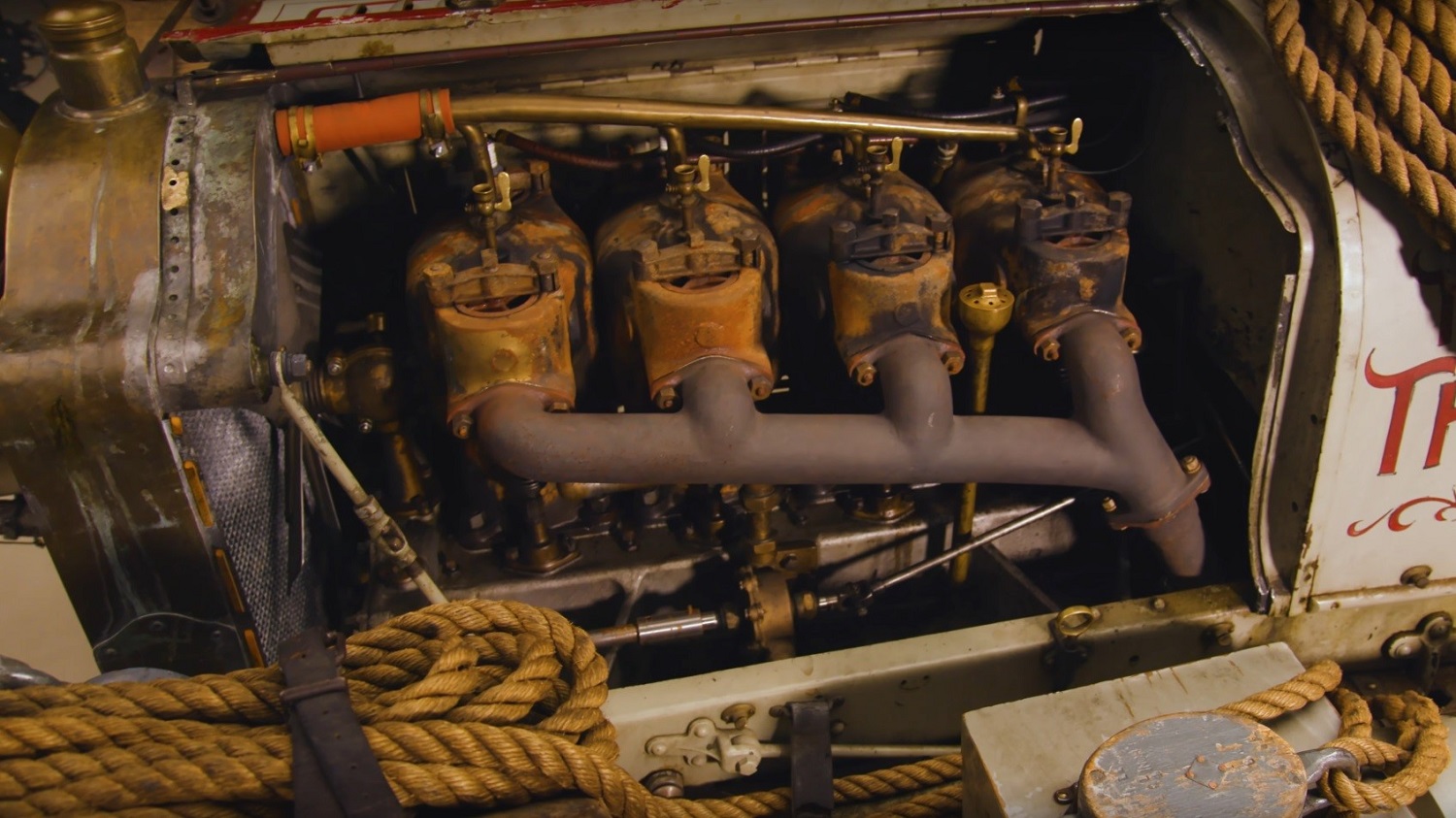
The Flyer needed power to make good time; its massive 571ci four-cylinder engine had the goods. Twenty- and 35-gallon tanks kept it fueled.
It took driver George Schuster and his crew about 170 days to reach Paris, where they hit a major snag. A bird had hit one of the headlights and destroyed it in Russia, leaving the Flyer with only one working light. Watch the video below to learn what happened after that.
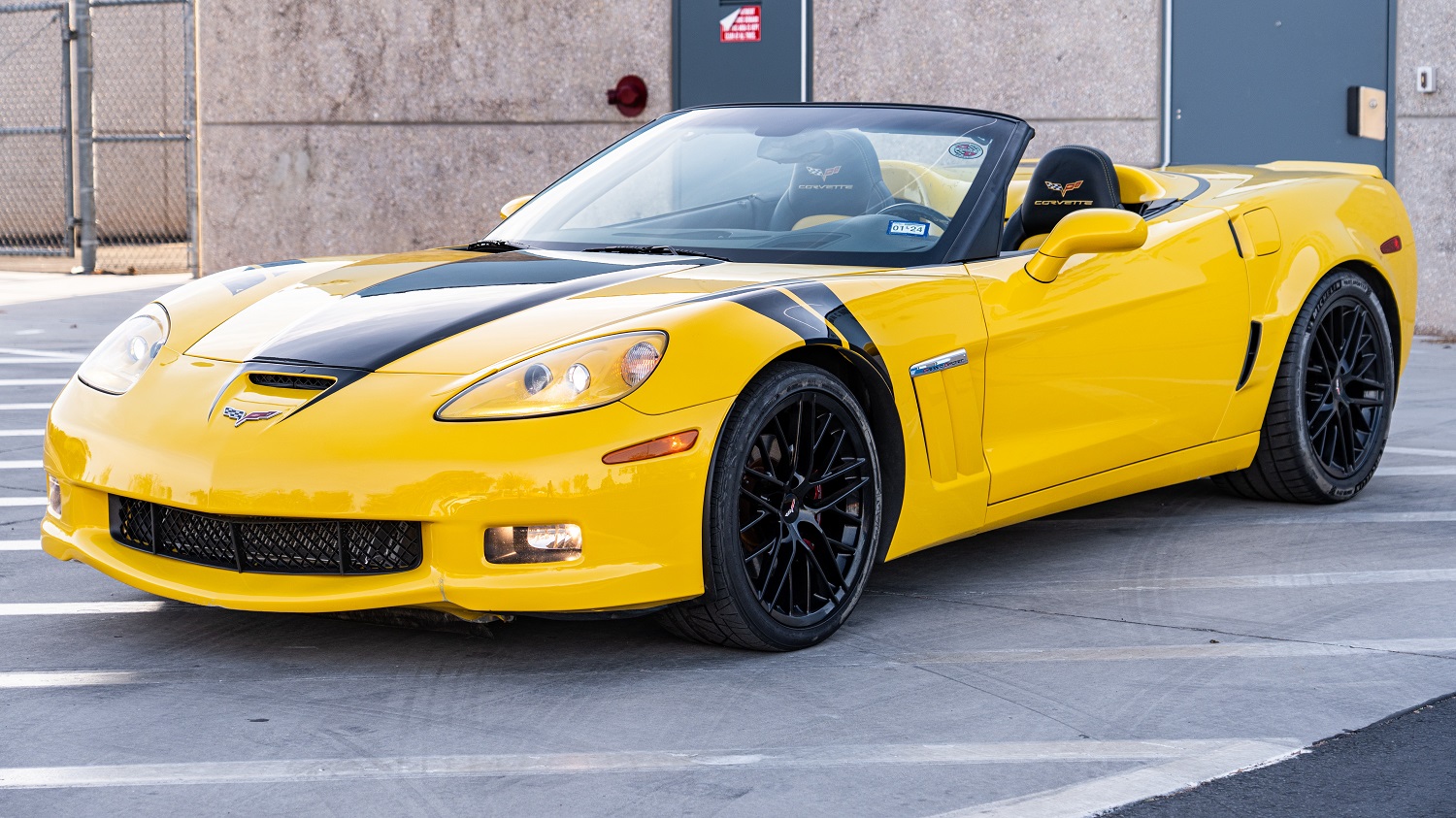
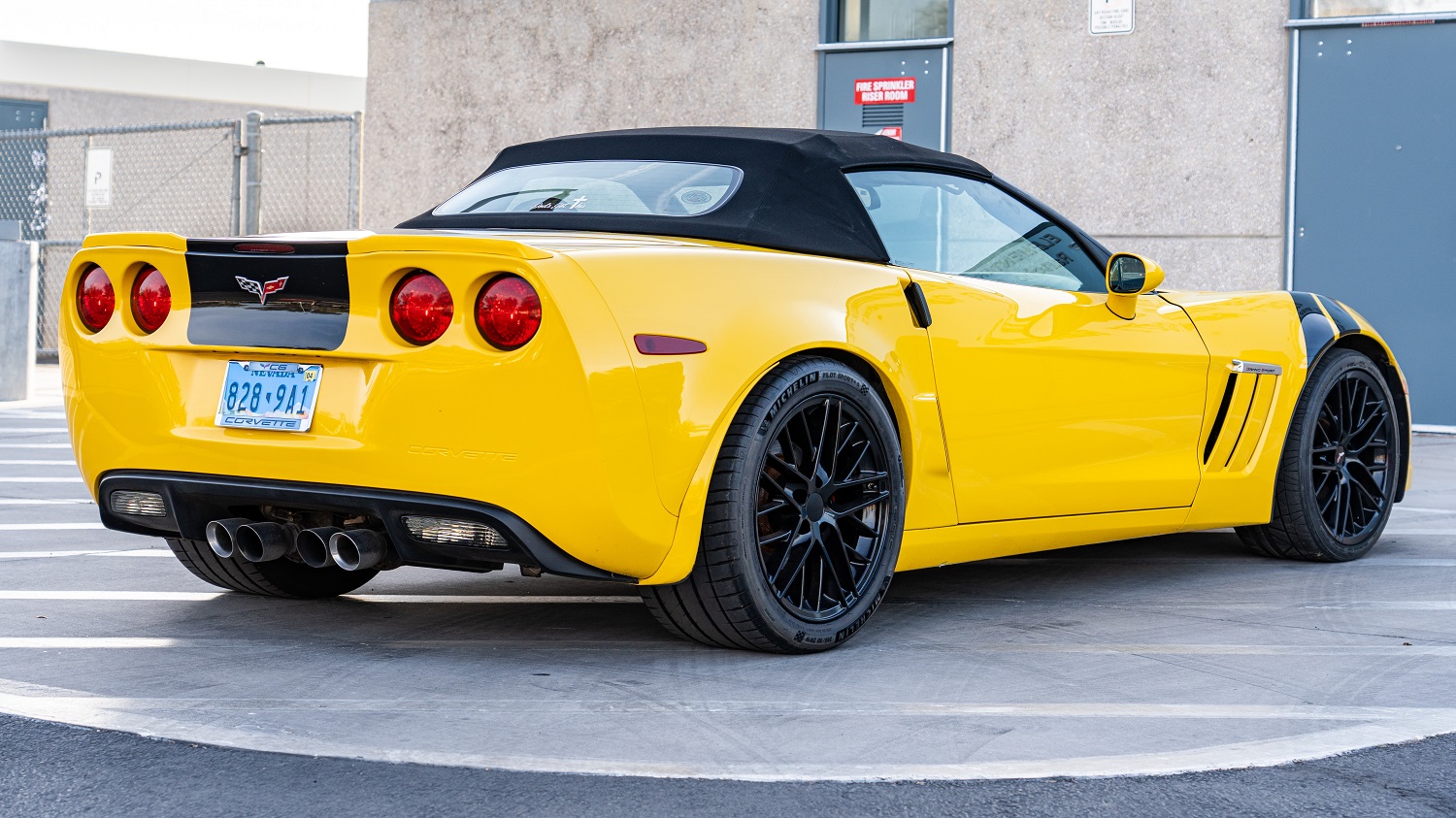
Currently listed on AutoHunter is this 2008 Chevrolet Corvette convertible. Its LS3 6.2-liter V8 has been enhanced with a Vortech supercharger, with the engine’s output channeled through a six-speed automatic transmission. Finished in Velocity Yellow with black stripes and equipped with a power-operated black soft top over a black and yellow leather interior, this modified C6 is now offered by the private seller in Nevada with an owner’s booklet, dyno sheet, CARFAX report, and clear title.
The Velocity Yellow body has black striping on the nose, hood, front fenders, trunk lid, and rear end. Exterior features include fog lights, power-operated black soft top with a heated glass rear window, body-color top boot, low-profile rear spoiler, and custom high-flow dual exhaust system with four outlets. C6 Grand Sport-style parts include the nose with an integrated scoop, front fender badges and vents, and side scoops.
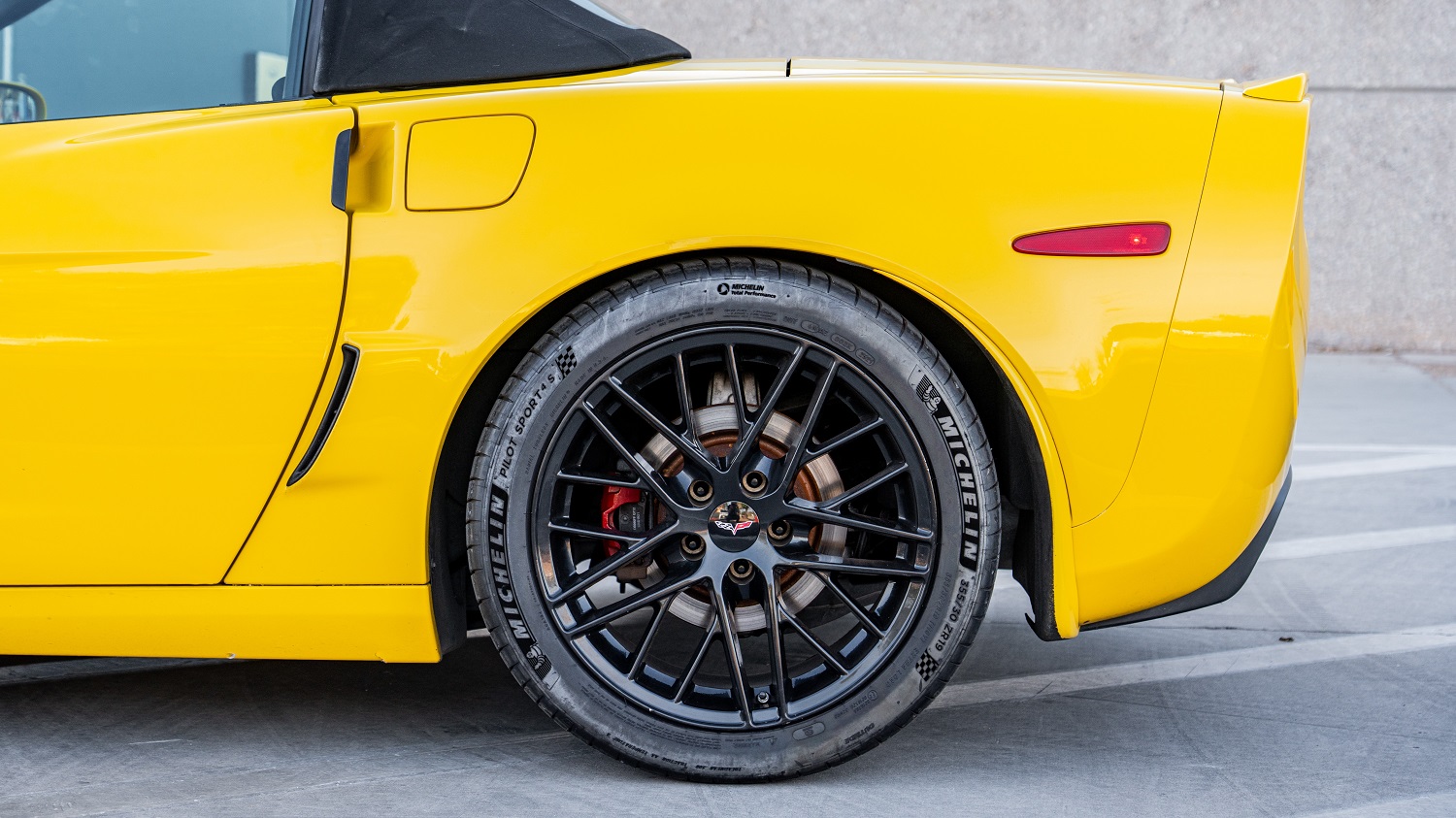
A set of black C6 ZR1-style 19-inch wheels wrapped in 285/30 Nitto Invo front and 355/30 Michelin Pilot Sport 4 S rear tires connects this Vette to the road. Behind those wheels are power anti-lock disc brakes.
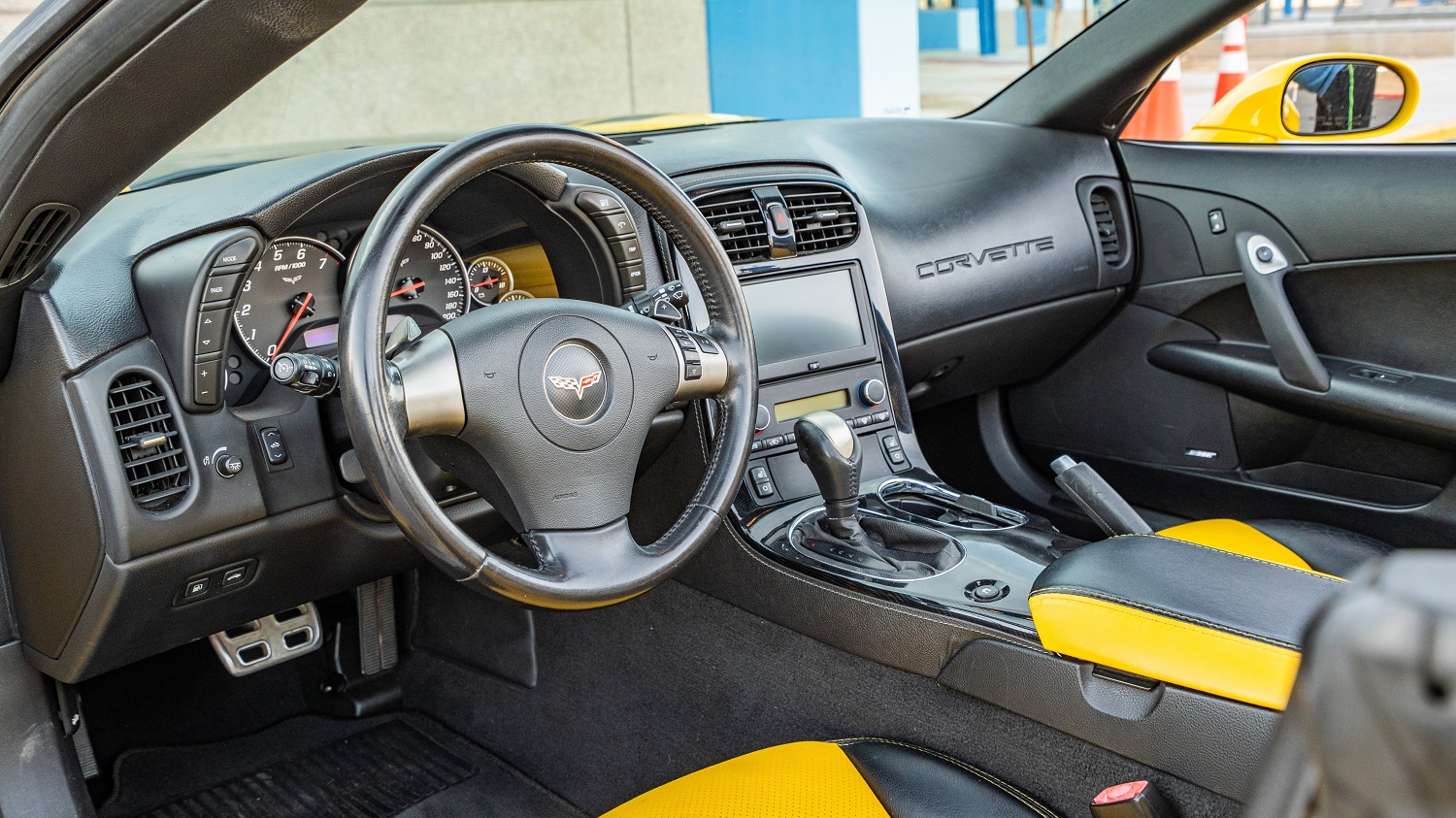
The cockpit has seating for two upholstered in black and yellow leather. Comfort and convenience features include heated and power-adjustable seats, cruise control, a head-up display, push-button start, carbon fiber-style center stack and console trim, dual-zone automatic climate control, and an AM/FM/CD touchscreen infotainment system with Bose speakers.
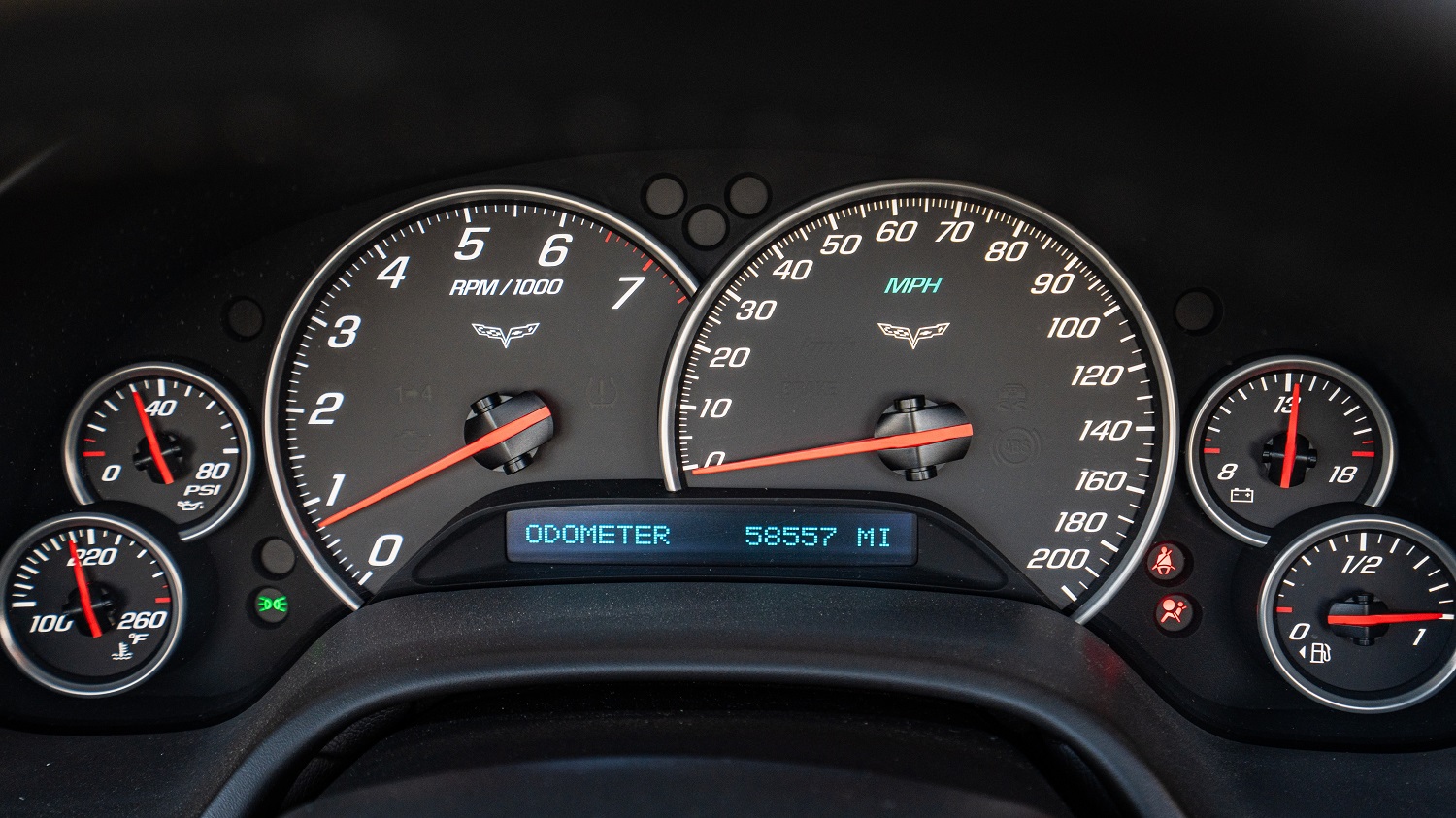
Instrumentation consists of a 7,500-rpm tachometer, 200-mph speedometer, and gauges for the temperature, oil pressure, voltage, and fuel level. The digital odometer currently shows 58,557 miles, which is in line with the CARFAX reading of 58,553 in April 2024.
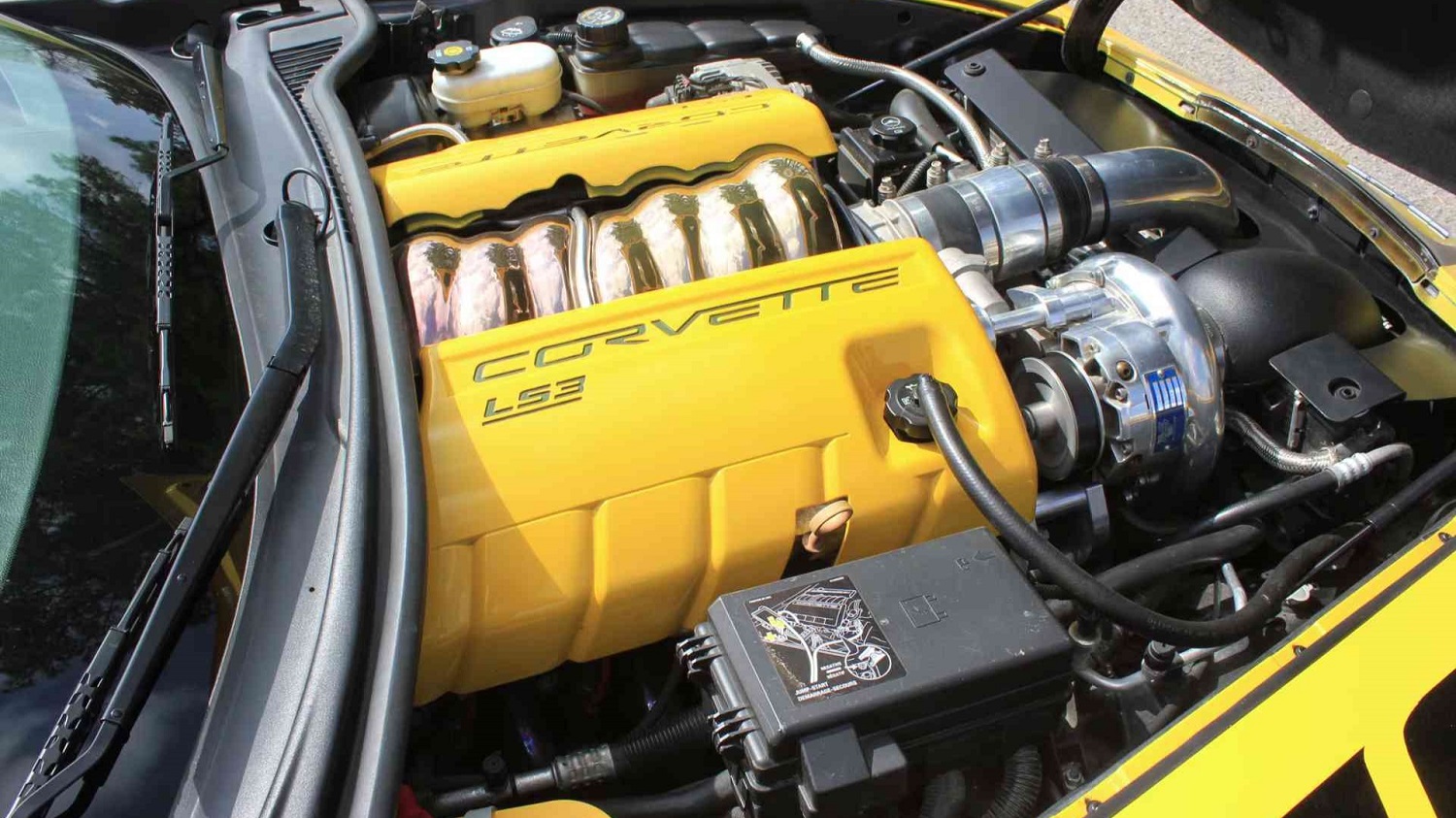
Under the hood, the LS3 6.2-liter V8 has been modified with a Vortech supercharger, ported and polished throttle body, headers, and upgraded fuel injectors. The included dyno sheet indicates those changes led to peak readings of 601 horsepower and 525 lb-ft of torque. A six-speed automatic with paddle shifters helps send the engine’s increased output to the limited-slip rear end.
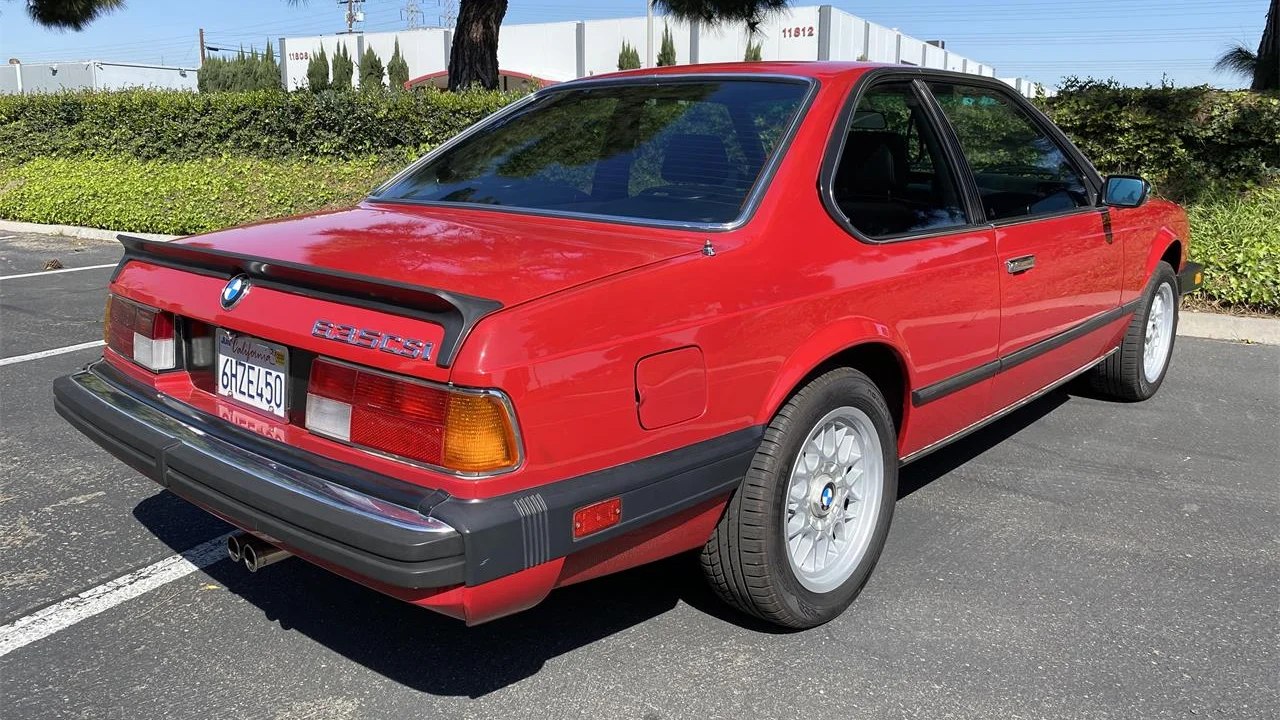
Now 91 years old, Paul Bracq has made a significant impact in the automotive world. The French designer was appointed Design Director at BMW in 1970 and played a role in the development of at least four different models in the several years that followed. Even today, he remains active in the industry and has been a judge at events like the Pebble Beach Concours d’Elegance. One of the cars Bracq drew was the BMW E24 6-Series.
Known for its sleek design and elevated performance, the 6-Series was a grand-touring luxury coupe that rode on what BMW called the E24 platform and was produced from 1978 through 1989. BMW put a great deal of engineering effort into fit and finish. A magazine advertisement from the period said, “As long as there are people who can afford perfection, BMW will continue to pursue it.”
Car and Driver gave the car its fair share of praise, too: “In many ways, the 635CSi is a superlative car. It exhibits much better handling than BMW’s early 6-Series coupes. It is put together with rare care. And now it has Bosch ABS anti-lock braking equipment for help during emergency stops. All told, the 635CSi is a very accomplished piece of work.”
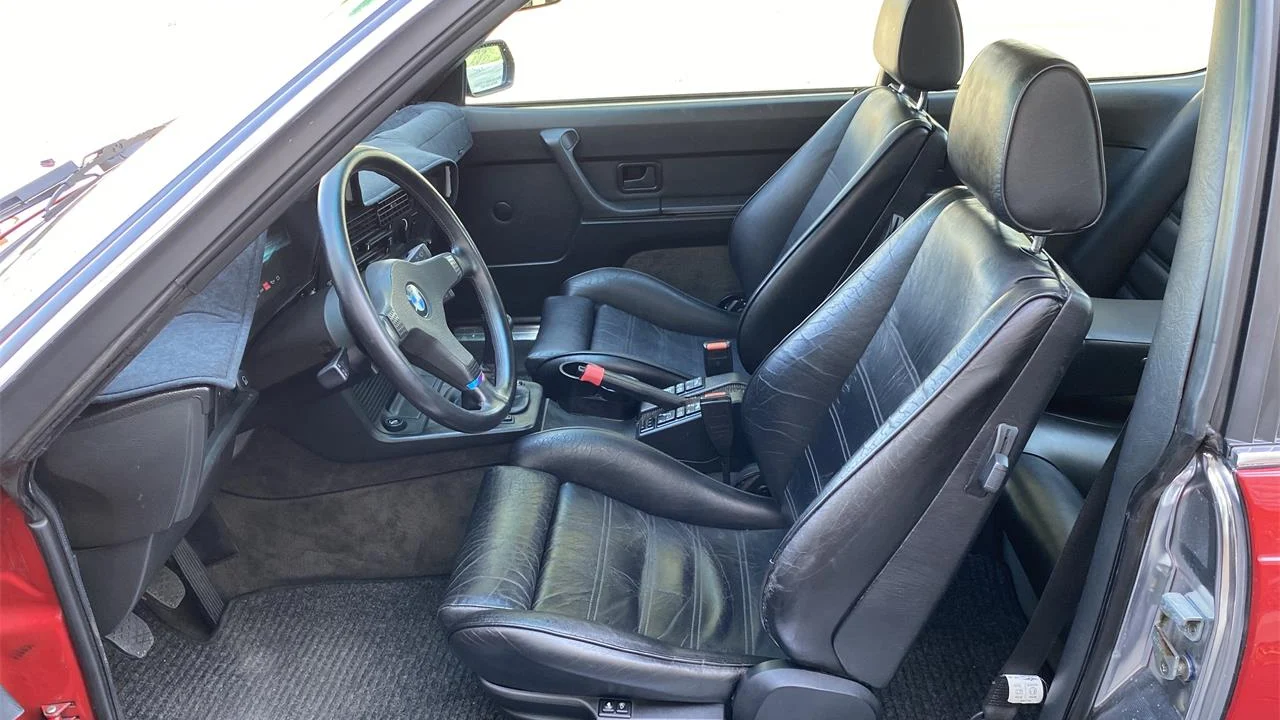
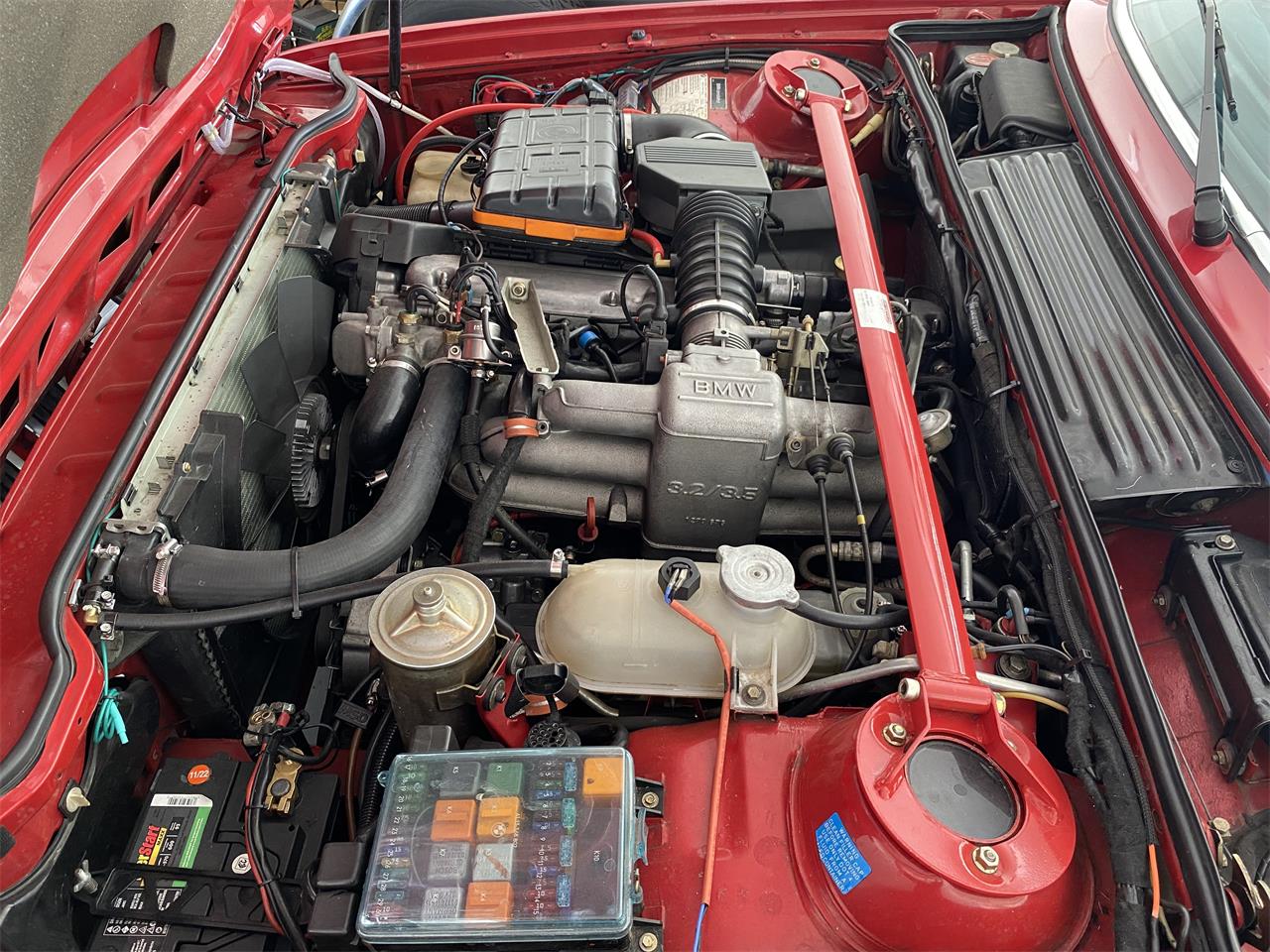
Finished in red over a black leather interior, this 6-Series comes with the provenance of enthusiast ownership: The seller says that the car was previously owned by an engineer who restored it over the last 20,000 miles. The long list work performed included the installation of a more powerful engine than the original – an M30 B35, to be exact. It was rated at 208 horsepower and 225 lb-ft of torque.
In addition, the transmission was rebuilt, the gears were replaced, the clutch was replaced, the front and rear suspension were rebuilt, and the brakes, wiring hardness and fuel lines all received needed service. “You name it, and he replaced it,” the listing reads. The car is said to have spent its life in California and is rust-free. In addition, the amenities like the air conditioning, power windows, antenna, sunroof and Alpine stereo are all in working order.
The seller concludes, “Here is a beautiful car you can proudly show off and enjoy driving hard and fast as it was intended by its German engineers. I have the title in my name, ready for the next owner.” The asking price is $27,500 or best offer.
How lucky I am! Sometimes it’s tough to find like-minded people who can appreciate a few hours of car talk. There are several people who live on my street who “get it,” and I finally got a chance to spend time with them and their sweet machines over the weekend.
We recently read about Diego’s encounter with a blue Oldsmobile at the Pavilions show. Dubbed the “Rock and Roll” car show, the Pavilions event in Scottsdale has been taking place every Saturday afternoon for decades. I remember attending it when I first moved to Arizona 20 years ago. The nice thing about the show is its variety – there is always something for everyone.
Here were the five rides in our convoy, in model-year order:
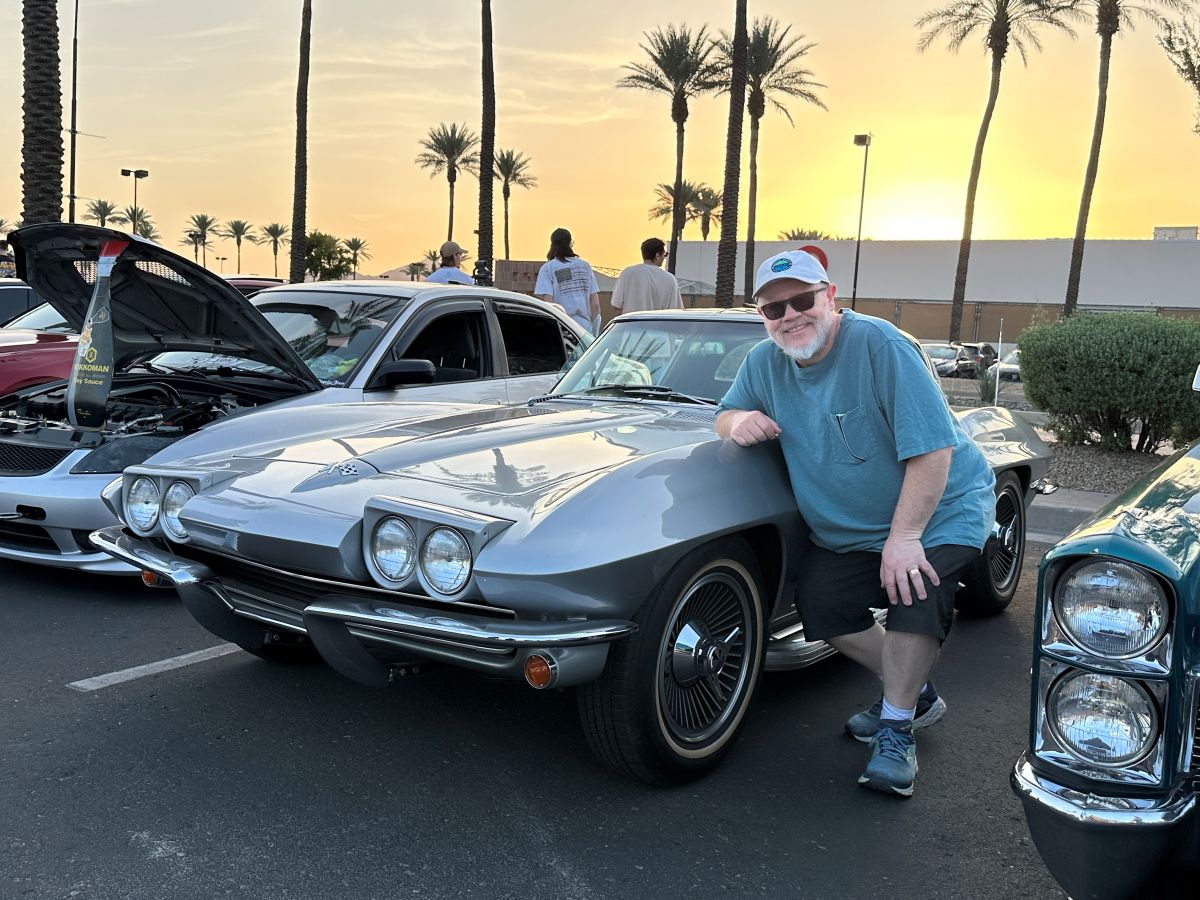
Terry’s 1965 Chevrolet Corvette Sting Ray Coupe
By the mid-1960s, the ‘Vette had evolved into its second generation and held its place in many garages (and hearts) across America. The 1965 Sting Ray sold 23,564 units – a record for annual sales up to that point. There were a number of noteworthy design updates implemented for 1965, including a refreshed grille, a smoothed hood and louvered front fenders. Terry’s C2 is a numbers-matching car in silver metallic that sounds as great as it looks. It is powered by a 327ci small-block V8 mated to a four-speed manual transmission. Terry said that some of his maintenance over the years included replacing the original generator with a newer alternator. The turbine-style wheels, pop-up quad headlights and side-exit exhausts make for an attractive period-correct car from any angle.
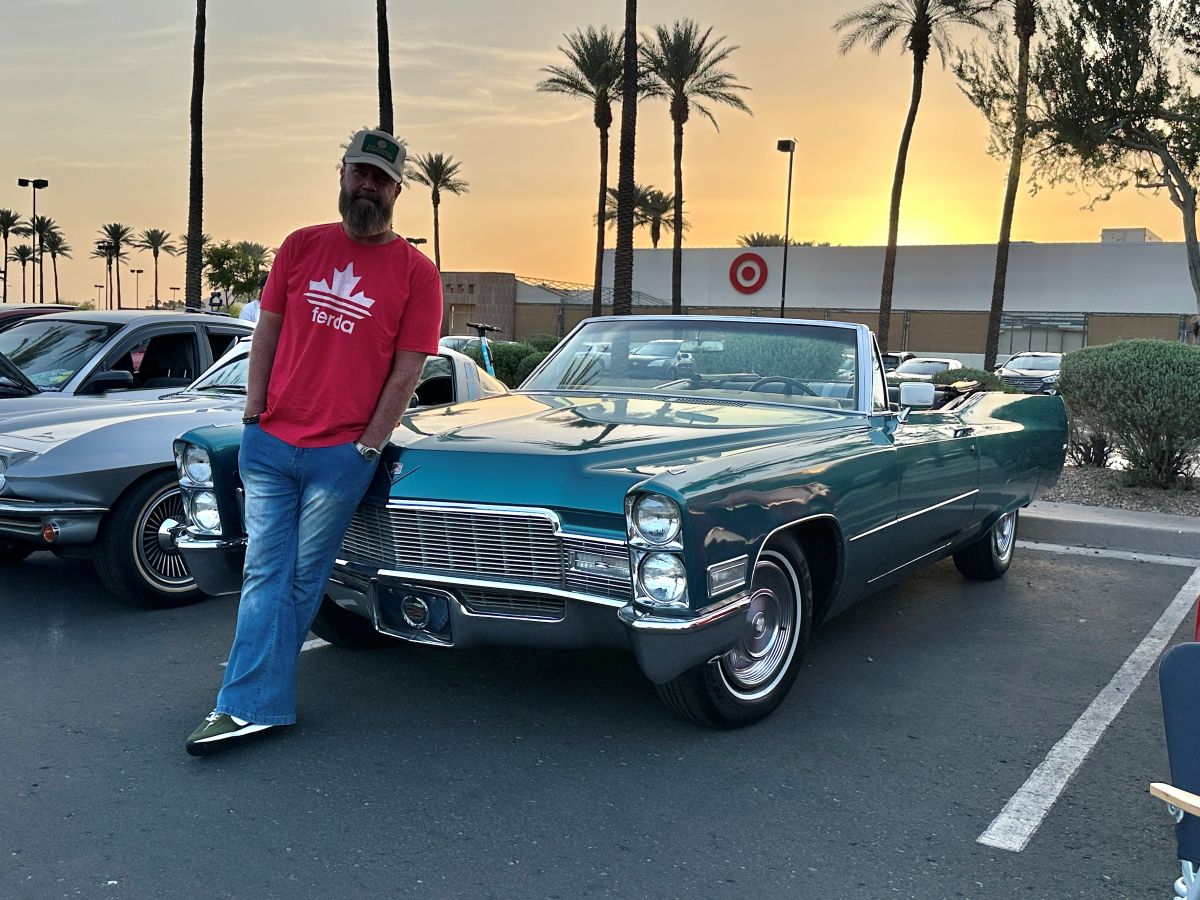
Nick’s 1968 Cadillac DeVille Convertible
Drawing an immediate crowd due to its commanding size and eye-catching turquoise metallic color, the DeVille ragtop was a conversation piece throughout our evening. Designed by Bill Mitchell, the 1968 DeVille carried a retail price of $5,736 when new. It had an overall length of 224.7 inches (nearly 19 feet) and tipped the scales at over 4,500 pounds. In order to get a car of its size moving, General Motors employed a 472ci big-block V8 mated to a Turbo-Hydramatic three-speed automatic transmission. Exterior features like the stacked quad headlights were a favorite among consumers, and 1968 would mark the last year of such an arrangement. Nick told me he purchased his highly-optioned DeVille out of Georgia, and even though he had it transported home initially, he wouldn’t hesitate to drive it cross-country.
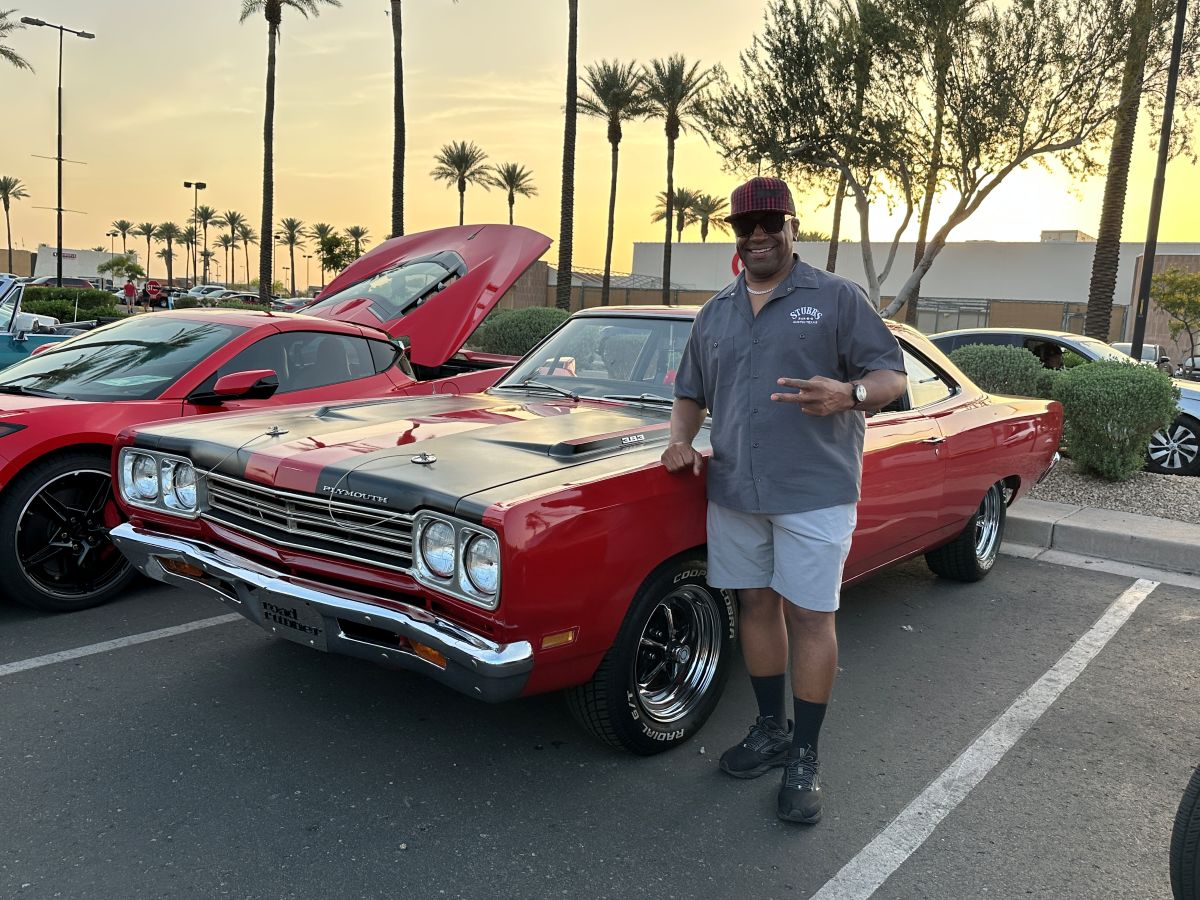
Chuck’s 1969 Plymouth Road Runner
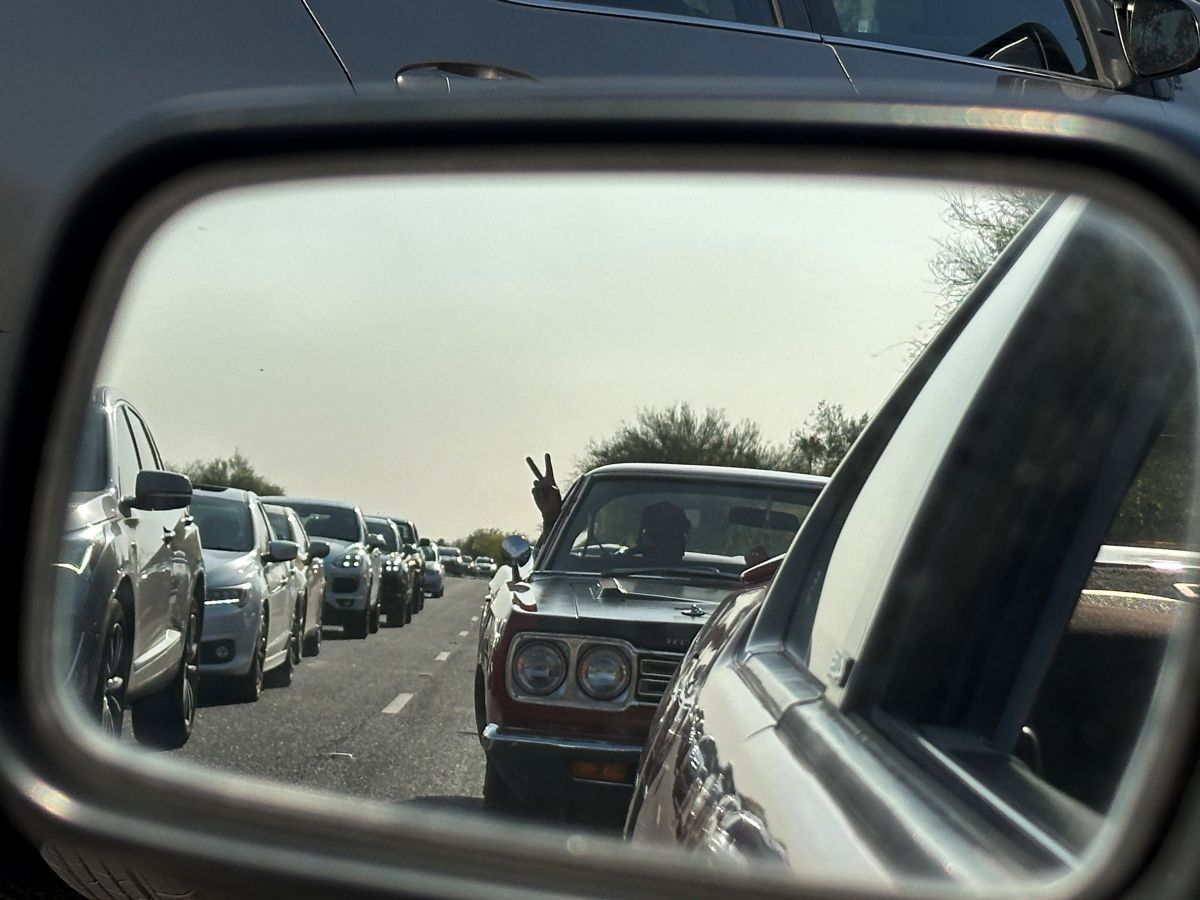
Riding on the Chrysler B-body platform, the 1969 Road Runner was awarded the coveted Motor Trend “Car of the Year” award, receiving praise for its strong merits in both value and performance. Its front fenders bore the likeness of the famous road runner from the Warner Bros. cartoons. Even the “beep-beep” sound from the cartoons was licensed for use as a horn note. Power came from a 383ci “Wedge” B-series V8 mated to a three-speed automatic transmission. Chuck obtained his Road Runner from his uncle, and the car has been in his family since it was new. Aside from commissioning a cosmetic refresh, Chuck added air conditioning and a modern sound system. The car is still basic in some other regards, though, since it lacks power steering and disc brakes. Every day is arm day at the Road Runner gym.
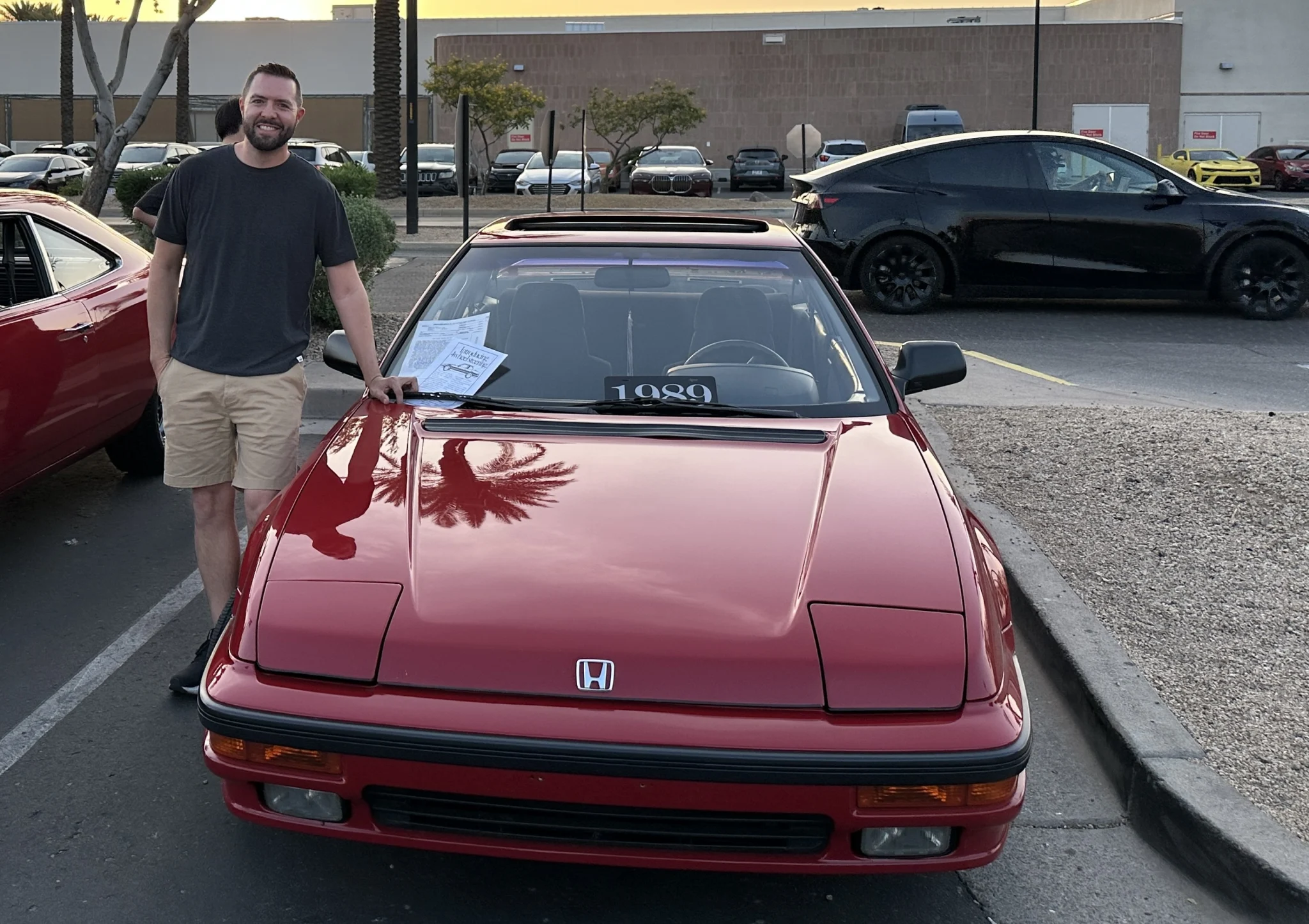
Tyson’s 1989 Honda Prelude Si 4WS
My beloved third-generation Prelude has been featured on The Journal previously, and the AutoHunter team even produced a video about it a couple of years ago. It is a relatively unremarkable car from a performance standpoint – its 2.0-liter DOHC inline-four was rated at just 135 horsepower – but what it lacks in muscle, it makes up for in fun factor. Contributing to the exhilarating driving experience is its innovative four-wheel steering system – a $1,485 option when new. At 186,000 miles and counting, the car is barely broken in by Honda standards.
James’ 2023 Chevrolet Corvette Stingray 2LT
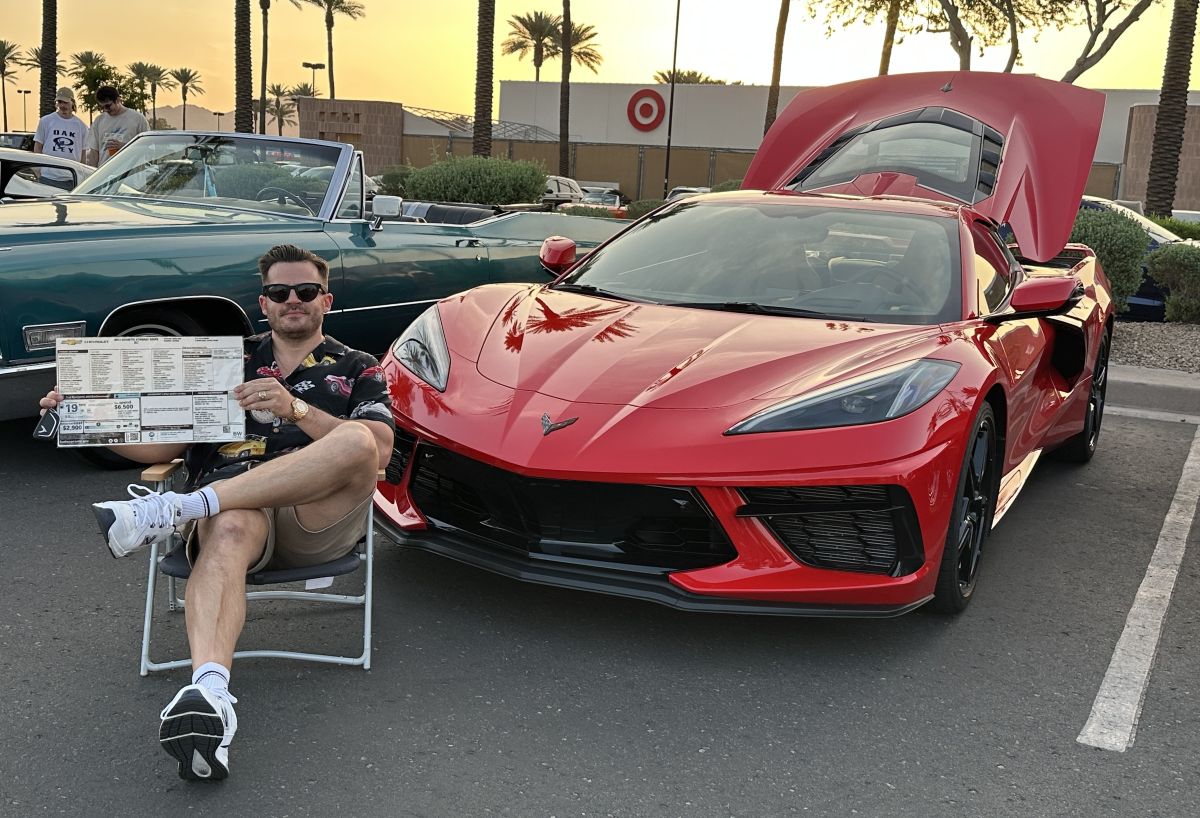
Now in its eighth generation, the newest Corvette took a vast departure from prior versions by adopting a mid-engine arrangement. With production beginning in February 2020 in Bowling Green, Kentucky, power was sourced from a 495-horsepower LT2 6.2-liter V8 mated to an eight-speed dual-clutch automatic transmission. James summed up his Corvette ownership experience best when he announced, “Some guys bring their cars. I brought a lifestyle.” That’s because he showed up to the show with a camp chair, a Corvette-themed button-down, a laminated window sticker, and New Balance sneakers with athletic socks. His Torch Red C8 was special-ordered with the Z51 performance package, carbon flash aluminum wheels, red brake calipers and black exhaust tips. It was a hot topic among show attendees all evening.
There is always plenty of eye candy at the Pavilions show, and we were glad to represent our respective rides. By the way, there’s a house for sale on my street if we have any gearheads in the audience looking to move to a welcoming area of town!
There are car enthusiasts out there who always buy the newest version of a particular model. You may be one of them, a person who has always driven Ford Mustangs and always makes sure to buy one from the latest generation. At the 2025 Arizona Concours d’Elegance, I met Tim Trani, who went the opposite direction with his love of Bentleys and ended up buying the 1958 S1 Continental Flying Spur you see here.
Trani lived in England as a child and his father had a 1949 Jaguar, so he’s always had an affinity for English cars. In fact, he’s the owner of a 2022 Bentley Flying Spur. Trani enjoys that car so much that he decided to get one of its ancestors to go with it. One night, he found a beautiful dark green 1958 S1 Continental Flying Spur with H.J. Mulliner bodywork, a tan leather interior, and a fascinating history: legendary director Alfred Hitchcock ordered this Flying Spur through a Rolls-Royce dealer in New York and had it delivered to his California estate.
To see my entire interview with Trani and learn more about this beautiful classic Bentley, watch the video below, which is sponsored by Borro, the trusted source in liquidity when you need it most. Call Borro today at (720) 458-6788 or learn more at borro.com.
You’re probably aware by now that on April 3, 2025, the White House instituted a 25 percent tariff on vehicles imported into the U.S., and that it will level the same tariff against imported parts starting May 3. That’s bad news if you were planning on buying a new car or components to work on your vintage Jaguar project. The good news is that if you want to import a vehicle that’s 25 years or older, you shouldn’t be hit with that price hike.
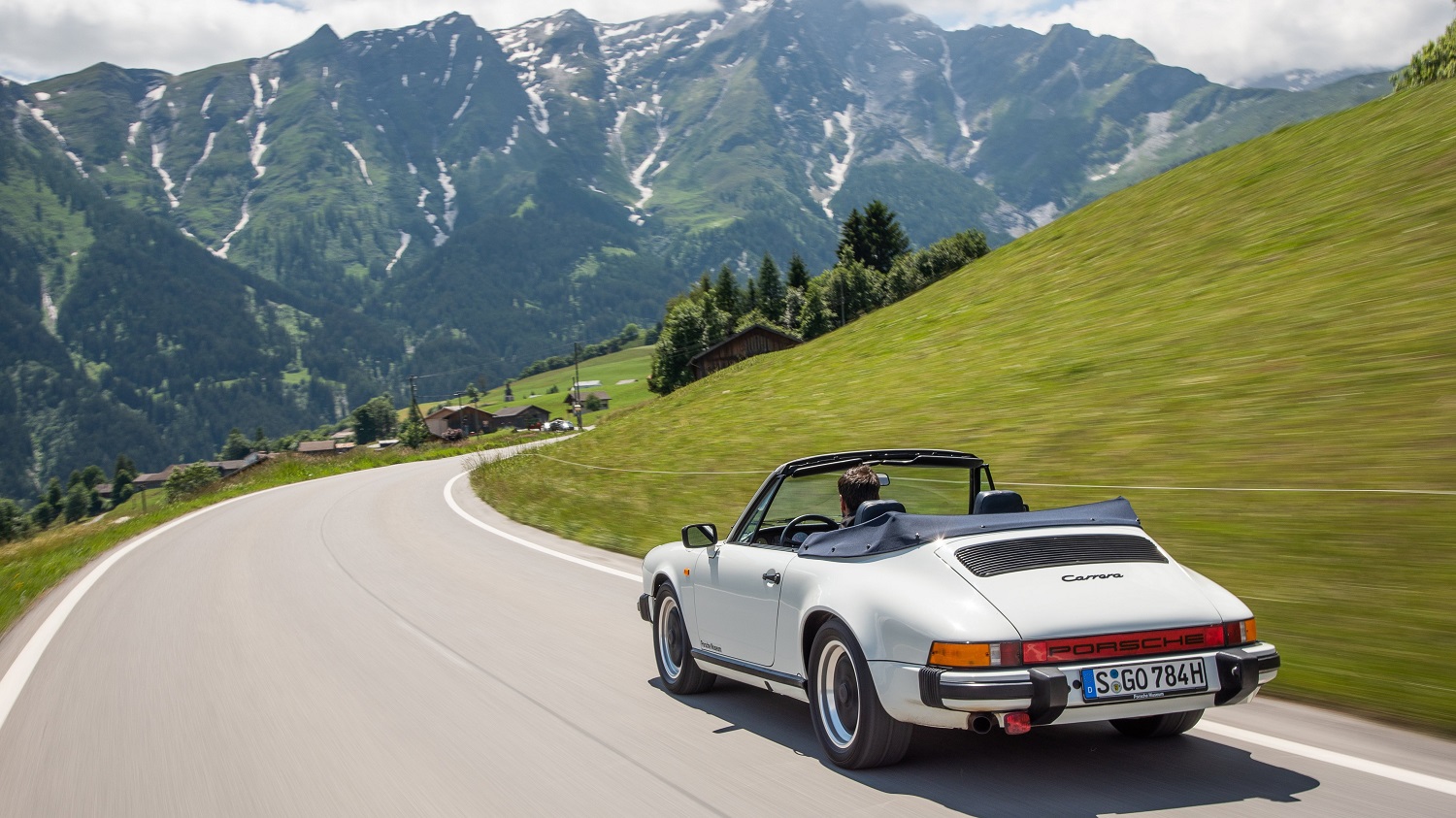
(Photo courtesy of Porsche)
Although designed to incentivize domestic vehicle and parts production, these tariffs have led to confusion and concern. According to Hagerty, it was initially unclear whether or not the tariff on imported cars was unilateral, regardless of the vehicle’s age. Then came an update that vehicles made “at least 25 years prior to the year of the date of entry” would not be subject to the 25 percent tariff. That means the Euro-market Porsche 911 you’ve had your eye on is still within reach. However, vehicles will be taxed at 2.5 percent of their value at the port of entry, except for pickup trucks, which will be taxed at 25 percent (aka the “Chicken Tax”).
There’s another potential silver lining here, thanks to the United States-Mexico-Canada Agreement (USMCA) that replaced the North American Free Trade Agreement (NAFTA) in 2020. The White House website states, “For automobiles that qualify for preferential tariff treatment under the USMCA, importers of such automobiles may submit documentation to the Secretary [of Commerce] identifying the amount of U.S. content in each model imported into the United States.” The percentage of American parts would not be impacted by the 25 percent tariff, but the foreign/imported balance would be.
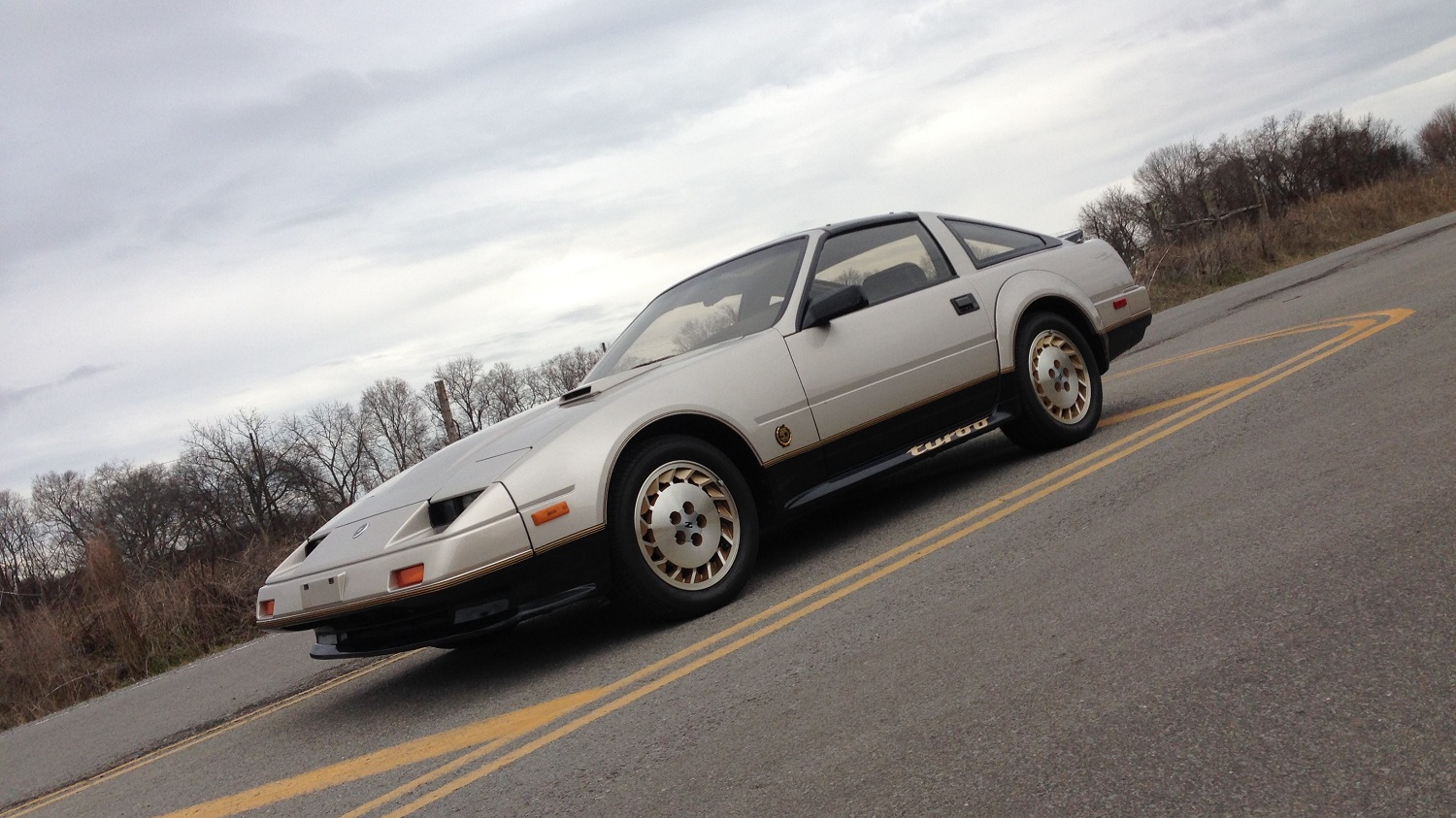
(Photo courtesy of Nissan)
Unfortunately, other tariffs can also drive prices up. Within the next week, all countries will be charged a 10 percent tariff as part of an effort to “to rebalance global trade flows;” certain nations will also face individual reciprocal tariffs. The U.S. has levied a reciprocal tariff of 24 percent on all products from Japan. The Autopian reports, “If you have a car arriving from Japan on or after April 5, but before April 9, your vehicle may be subjected to a 10 percent duty on top of existing duties. That means 2.5 percent plus 10 percent for a total of 12.5 percent for regular cars. If you’re importing a Kei truck, you still have to deal with the 25 percent Chicken Tax, and then you may pay the additional 10 percent to get you to 35 percent. If your vehicle arrives from Japan on or after the above April 9 time, your total duty might increase to 26.5 percent or 49 percent, respectively.”
Plenty of changes have taken place in the automotive industry in a short amount of time, with more likely to come. Have these tariffs affected your current or planned purchases? Tell us in the Comments section below.
Most, if not all, automakers today frown on the use of aftermarket parts. In fact, a vehicle manufacturer can explicitly deny warranty coverage if a modification or aftermarket part contributed to a failure. But during the late 1960s, at least one manufacturer actually encouraged vehicle owners to soup up their rides.
A magazine ad for the AMC AMX said, “Famous names are making custom parts specifically for the AMX: Hurst shifters, Doug’s headers, Isky cams, Edelbrock and Offenhauser intake manifolds, Grant Industries’ piston rings, Schiefer clutches and flywheels. These are just a few. But the point is you have a choice.”
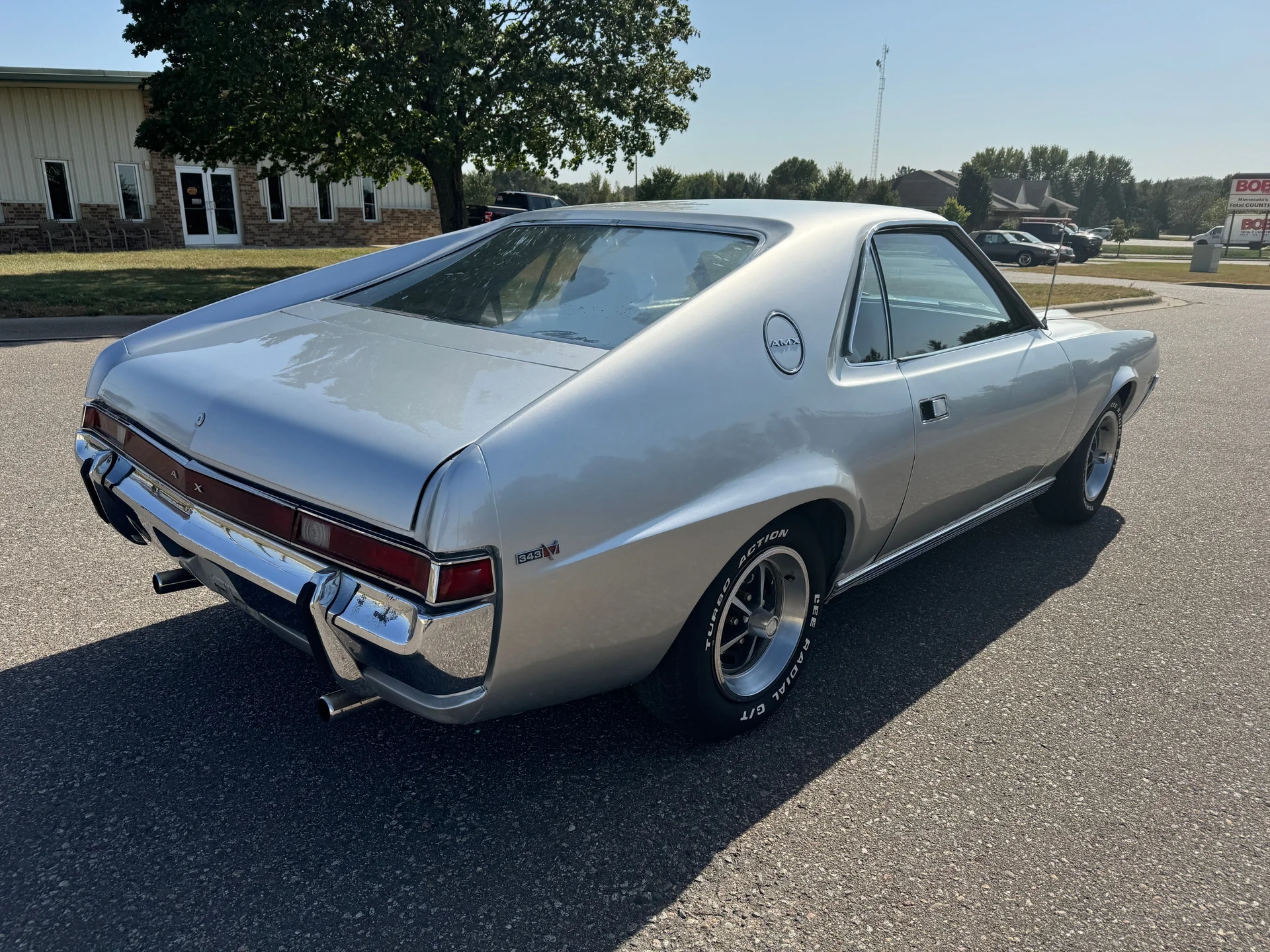
Featured on AutoHunter is this 1969 AMC AMX. It is being offered by a dealer in Ramsey, Minnesota, and the auction will end on Tuesday.
With origins dating back to a concept car unveiled in 1966, the AMX name stood for American Motors Experimental. The car signaled a shift by AMC to appeal to a younger, more performance-focused audience, and it was a unique car for its time, to say the very least.
As a two-seater with a short wheelbase and a V8 powerplant, the AMX was positioned in marketing materials as “the first American sports car for under $3,500 since 1957.” Some of AMC’s magazine advertisements even portrayed the car as a spiritual successor to the Chevrolet Corvette and the Ford Thunderbird. AMC kept its production volumes low and the AMX was only built for three model years, from 1968 through 1970. Roughly 19,000 units were cranked out during that span.
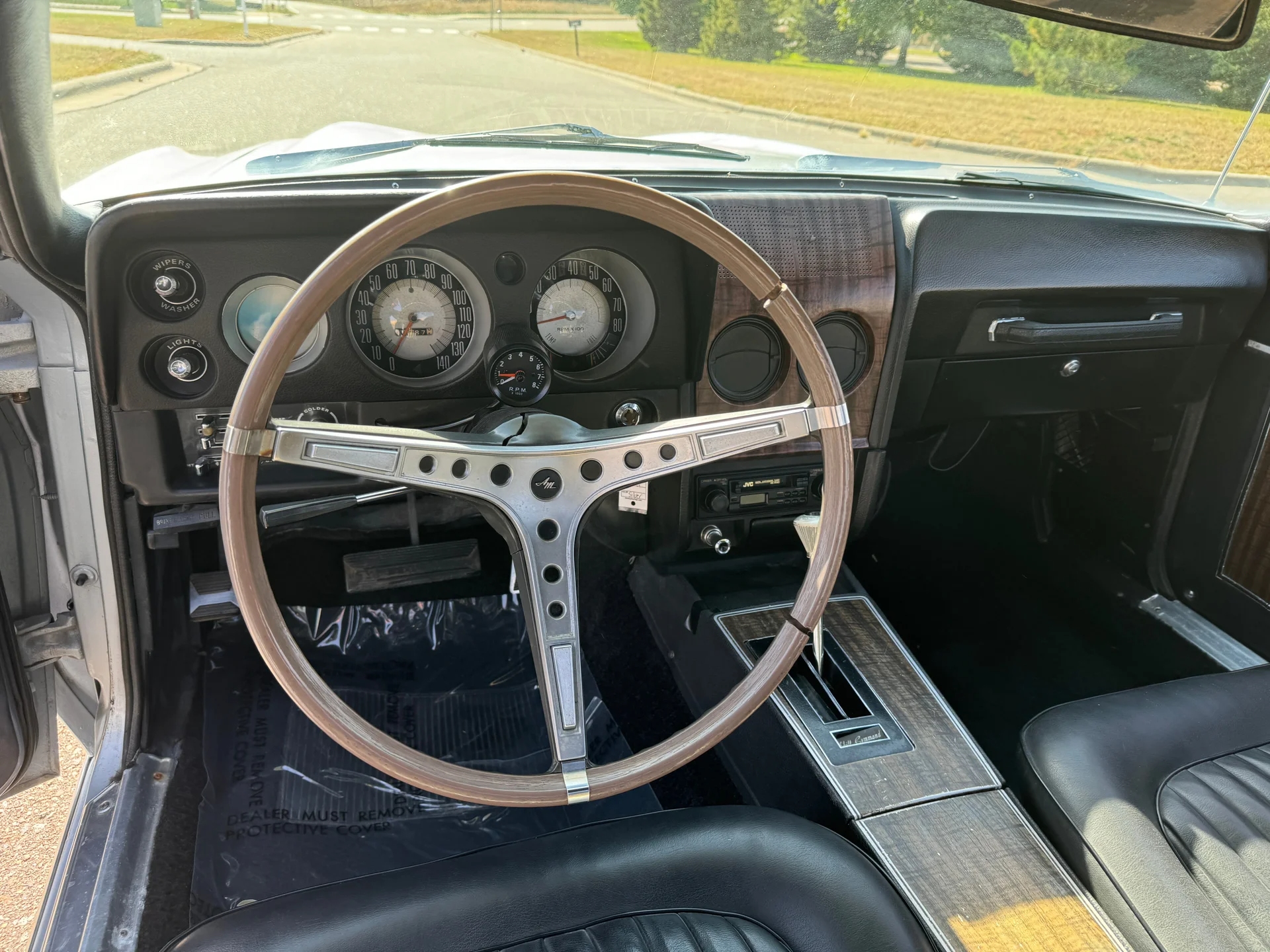
The exterior of today’s spotlighted car looks fresh because it is. In fact, according to the AutoHunter listing, the silver paint job was applied within the last year. The cabin is well appointed for a car of small proportions. Creature comforts include black vinyl upholstery, wood-grain trim, a center console, a wood-rimmed steering wheel, and a JVC audio system. The 140-mph speedometer and 8,000-rpm tachometer became standard for 1969 models – again, helping AMC lean into the performance side of things.
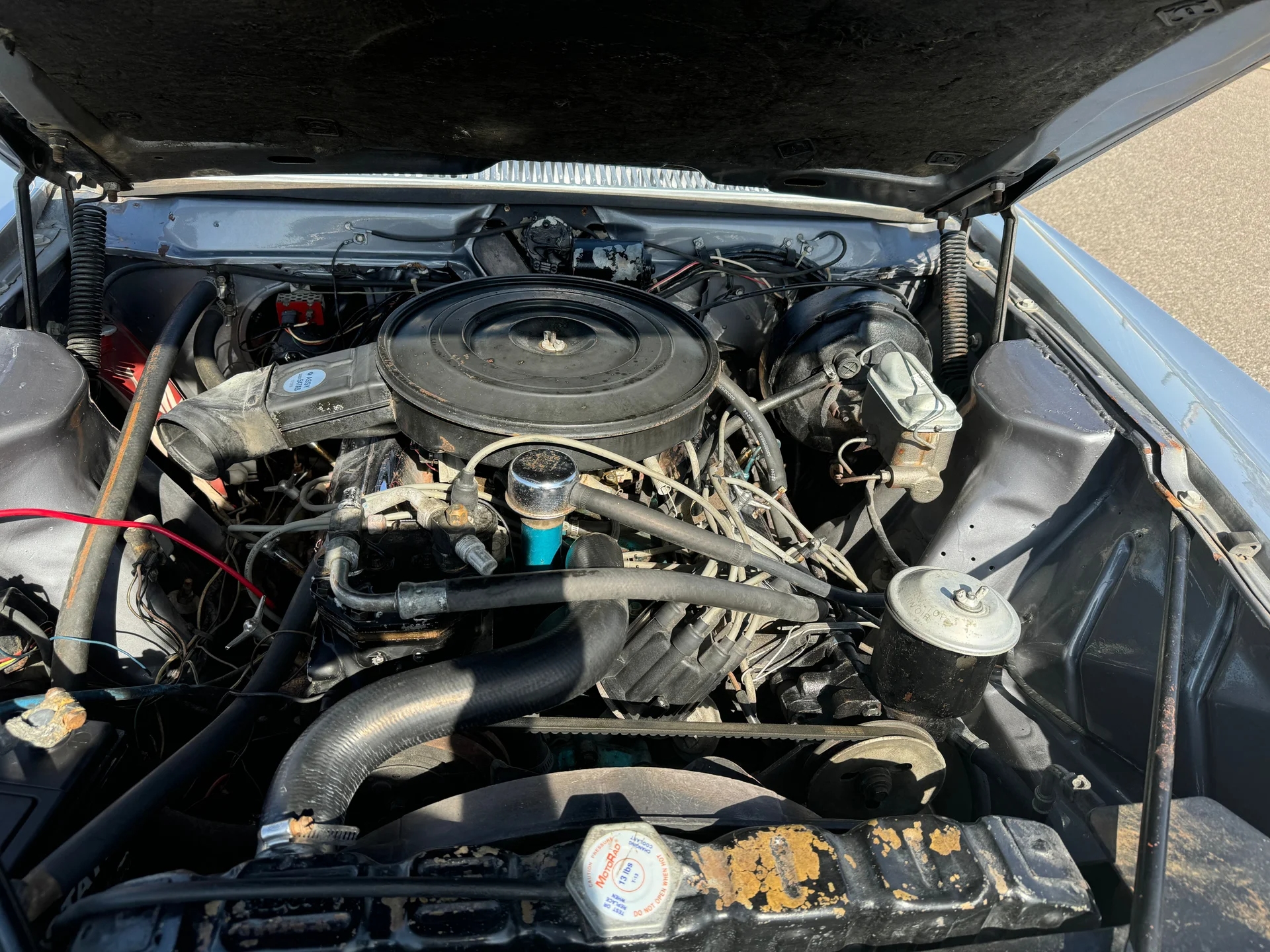
Power comes from a 343ci V8 rated by the manufacturer at 280 horsepower and 365 lb-ft of torque; it is mated to a Shift-Command three-speed automatic transmission. Traction comes from a set of 14-inch wheels wrapped in Lee Radial white-letter tires. The equipment list boasts other niceties like power front disc brakes and a dual exhaust system.
Thanks to the AMX’s power-to-weight advantage, it performed well in races. A modified version of the car set over 100 speed and endurance records in 1968. To some, the AMX was considered an underdog of the muscle car segment. To many, the AMX was a foundation upon which to craft a custom car, thanks to so much aftermarket support.
So what are you waiting for? Place a bid and begin your muscle car build. The auction for this 1969 AMC AMX ends Tuesday, April 8, 2025, at 11:15 a.m. (PDT).