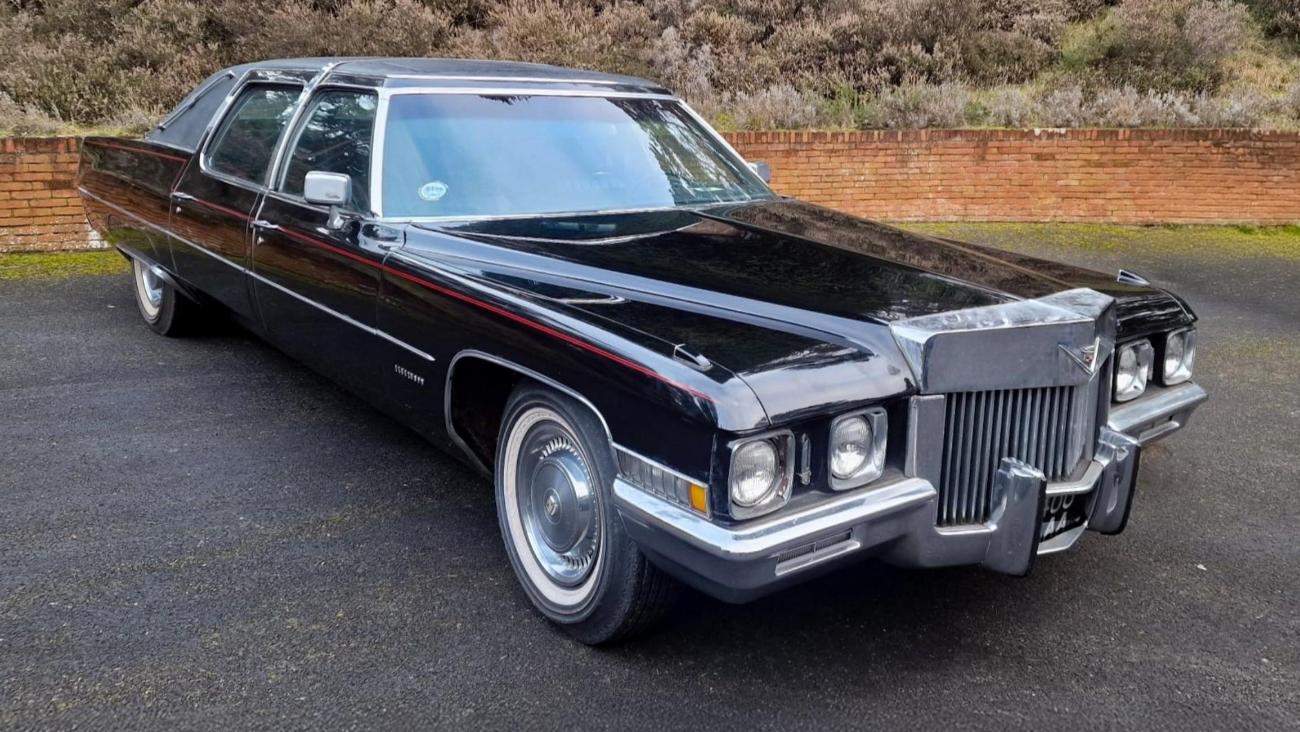
Cars may be a way for people to display their wealth or status, but which famous rock stars truly loved cars? The late Jeff Beck was one. Pink Floyd’s Nick Mason is another. What about John Entwistle, bassist par excellence for The Who? Hard to say, but this 1971 Cadillac Fleetwood Series 75 Limousine he once owned will have found a new owner by the time you read this.
(Image courtesy of H&H Classics)
When it comes to The Who and cars, I tend to think of drummer Keith Moon—no, he wasn’t a car guy per se, but there are many stories about him and cars (like driving a Lincoln into a pool at a hotel—and it wasn’t even his car). One story I recall is about a tabloid or magazine doing an article on musicians and their cars. I can’t say I’ve seen the story so I don’t know what other musicians or cars appeared, but Moonie—ever the resourceful chap—scored an antique milk float (an electric milk wagon) and fitted it with a couch, liquor cabinet and, possibly, a keg. The picture I’ve seen also has John Entwistle’s long black Cadillac in the background.
(Image courtesy of H&H Classics)
Nineteen seventy-one was the year for new Cadillacs across the board. The Eldorado was completely redesigned, now featuring a convertible (absorbed from the deVille series), while the full-size Cadillac was bigger and bulkier, perhaps influenced by “fuselage” Imperials of the era. The pair of headlights on each side were spaced a bit further from each other than what you’d expect, giving a unique look that would be muted for 1972 by parking lights resting in-between.
(Image courtesy of H&H Classics)
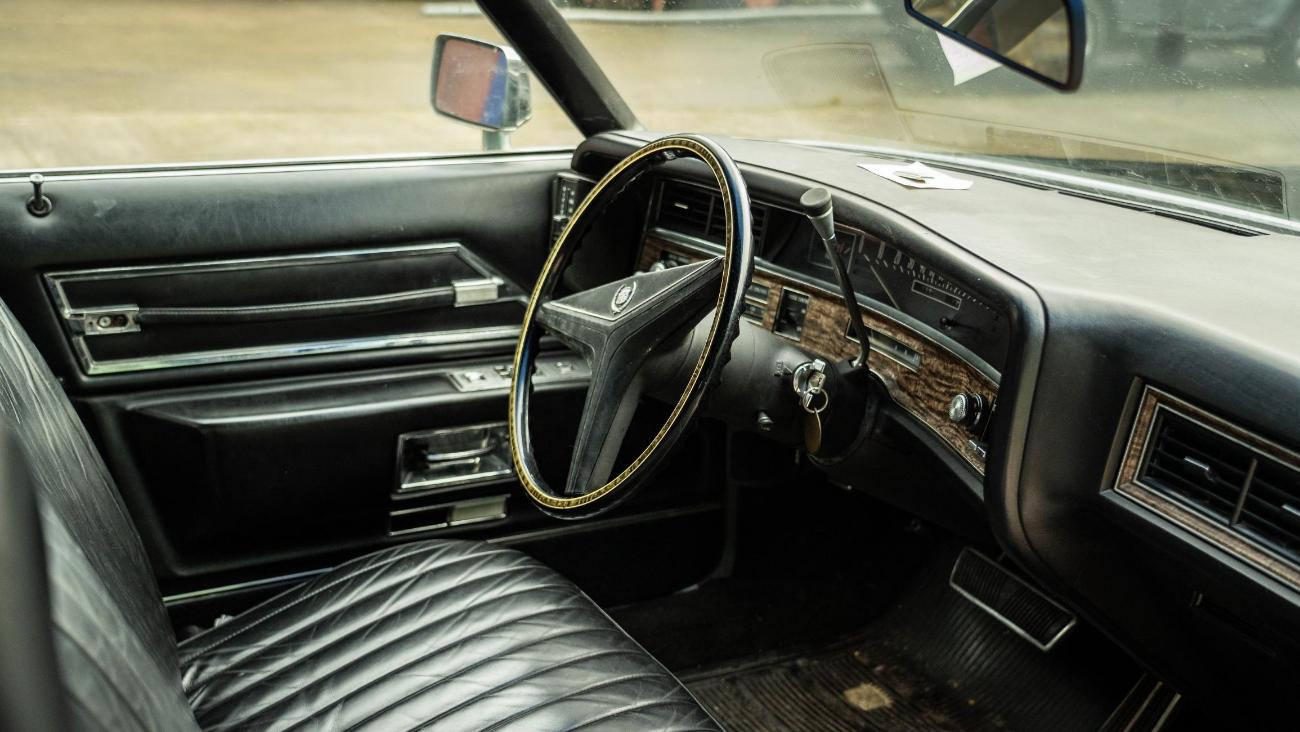
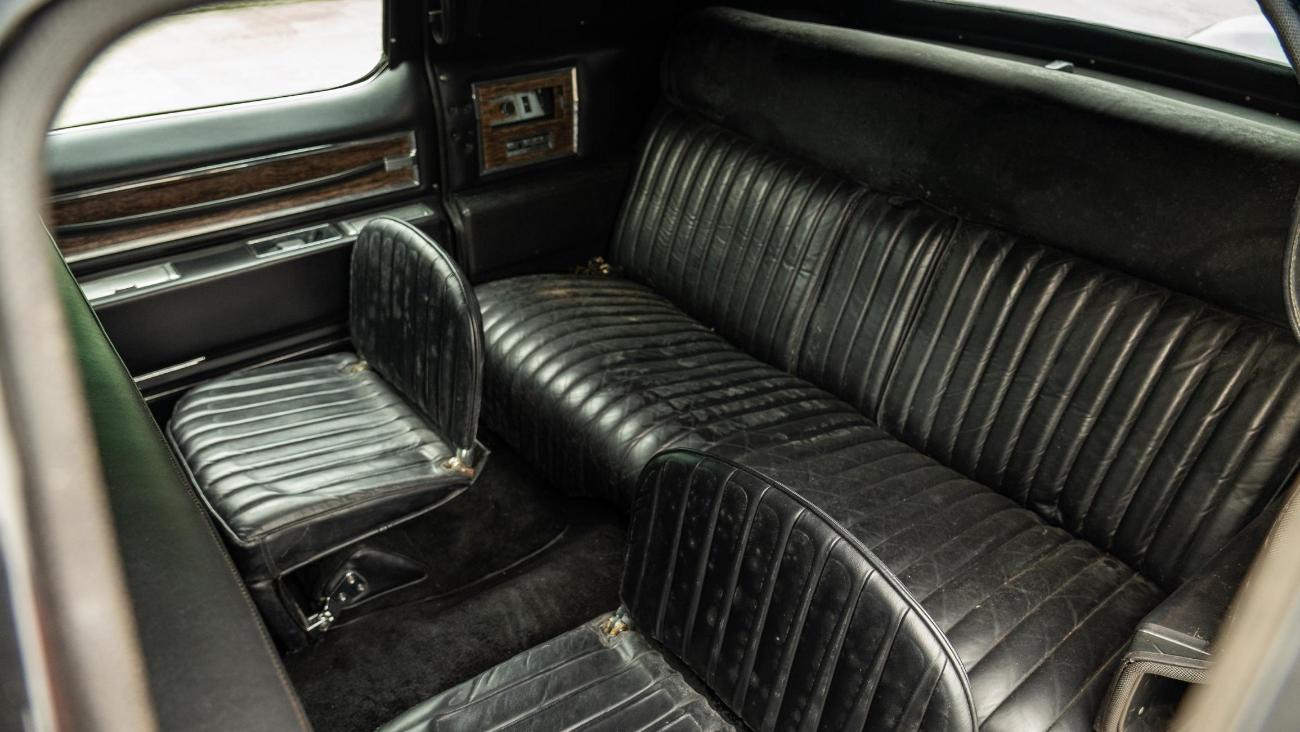
The most aristocratic of all Cadillacs was the Series 75, part of the Fleetwood sub-series. There were three ways to enter the world of Series 75: four-door sedan, four-door limousine, or commercial chassis. The former two were based on a looong 151½-inch wheelbase, but the limo included an electric partition between rear passenger(s) and driver (plus Automatic Climate Control systems for both), special interior appointments, and doors that cut into the roof. Both sold in numbers under a thousand, with the limo the more popular of the two at 848.
(Image courtesy of H&H Classics)
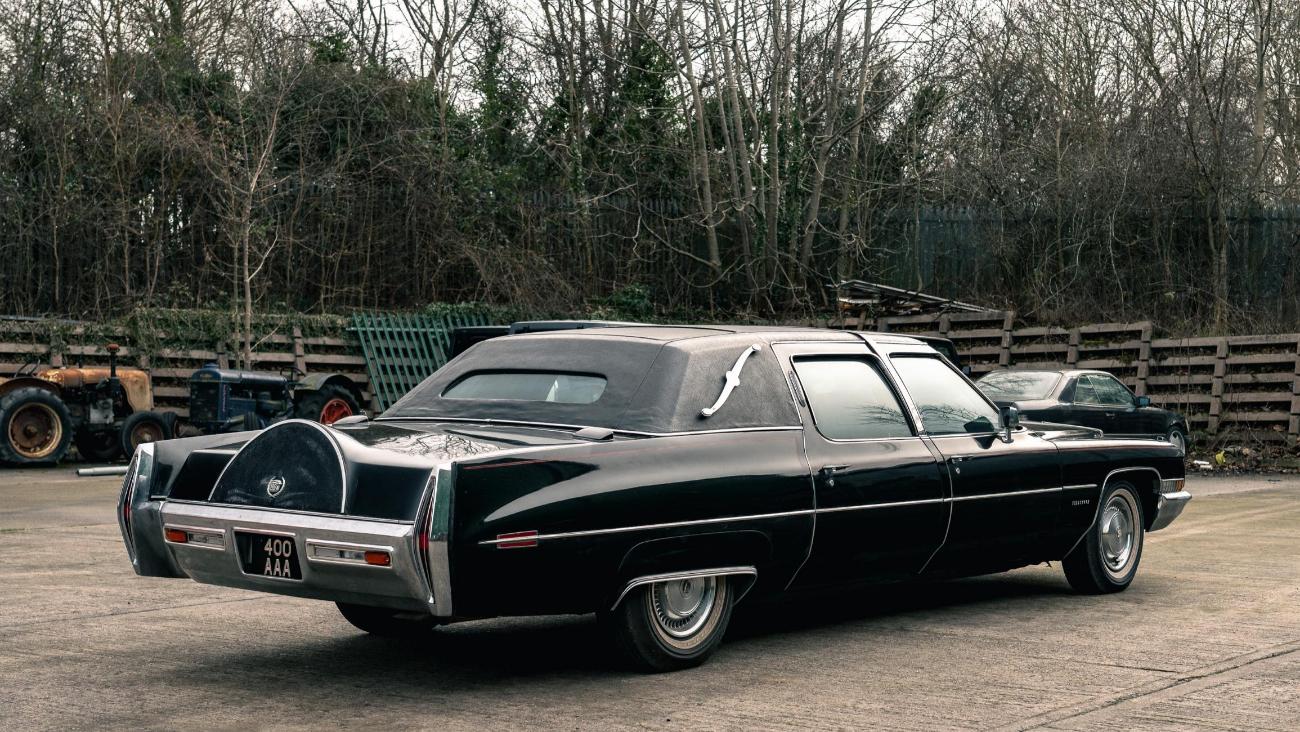
Entwistle’s limo appears to be pimped out compared to the usual fare, as evidenced by the bold chrome grille, Continental-inspired trunk lid, and landau bars. Otherwise, it’s a typical black limousine originally built for rock royalty in “substantially original” condition.
If cars could talk, this one likely would require several sessions at the pub.
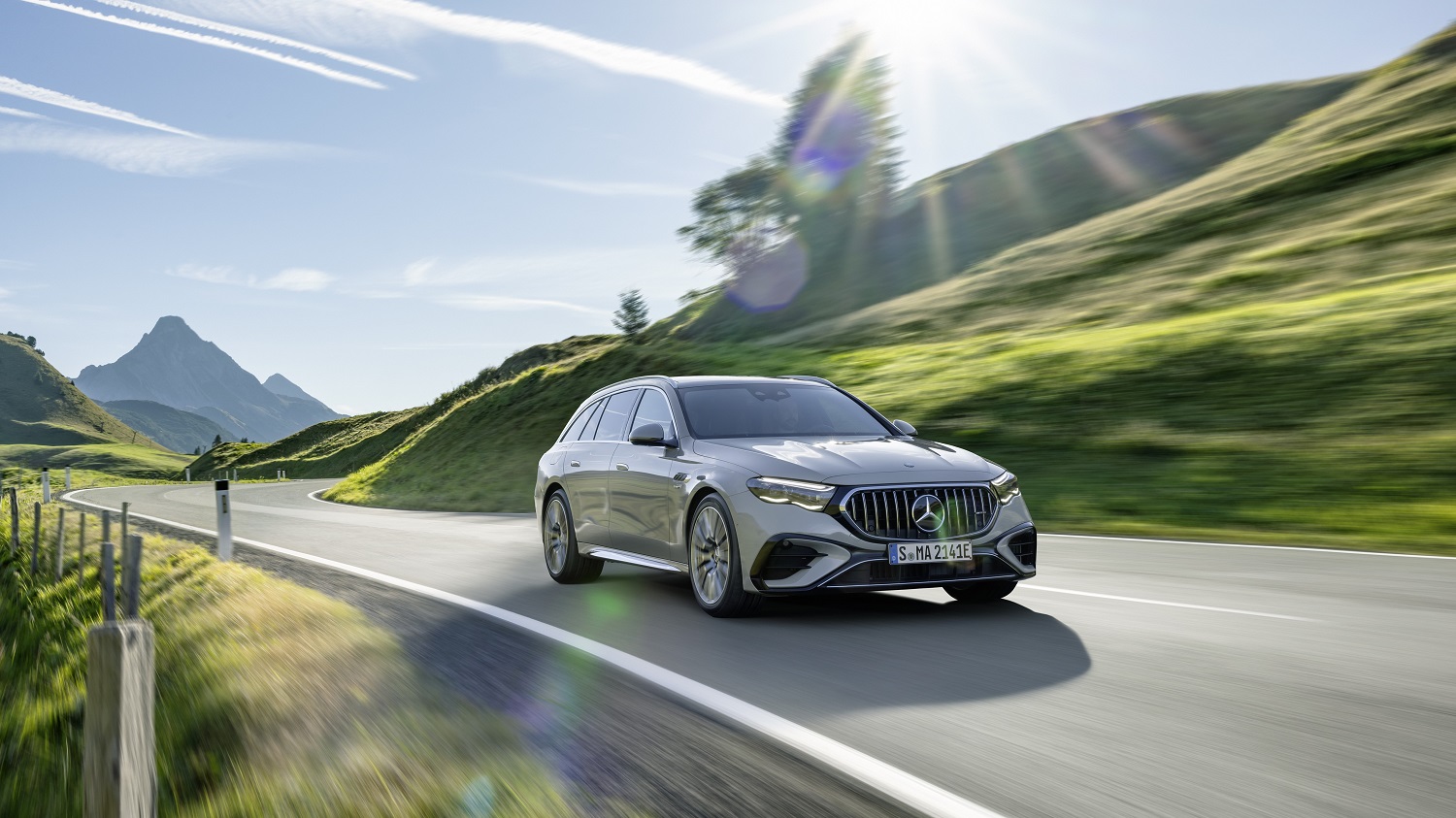
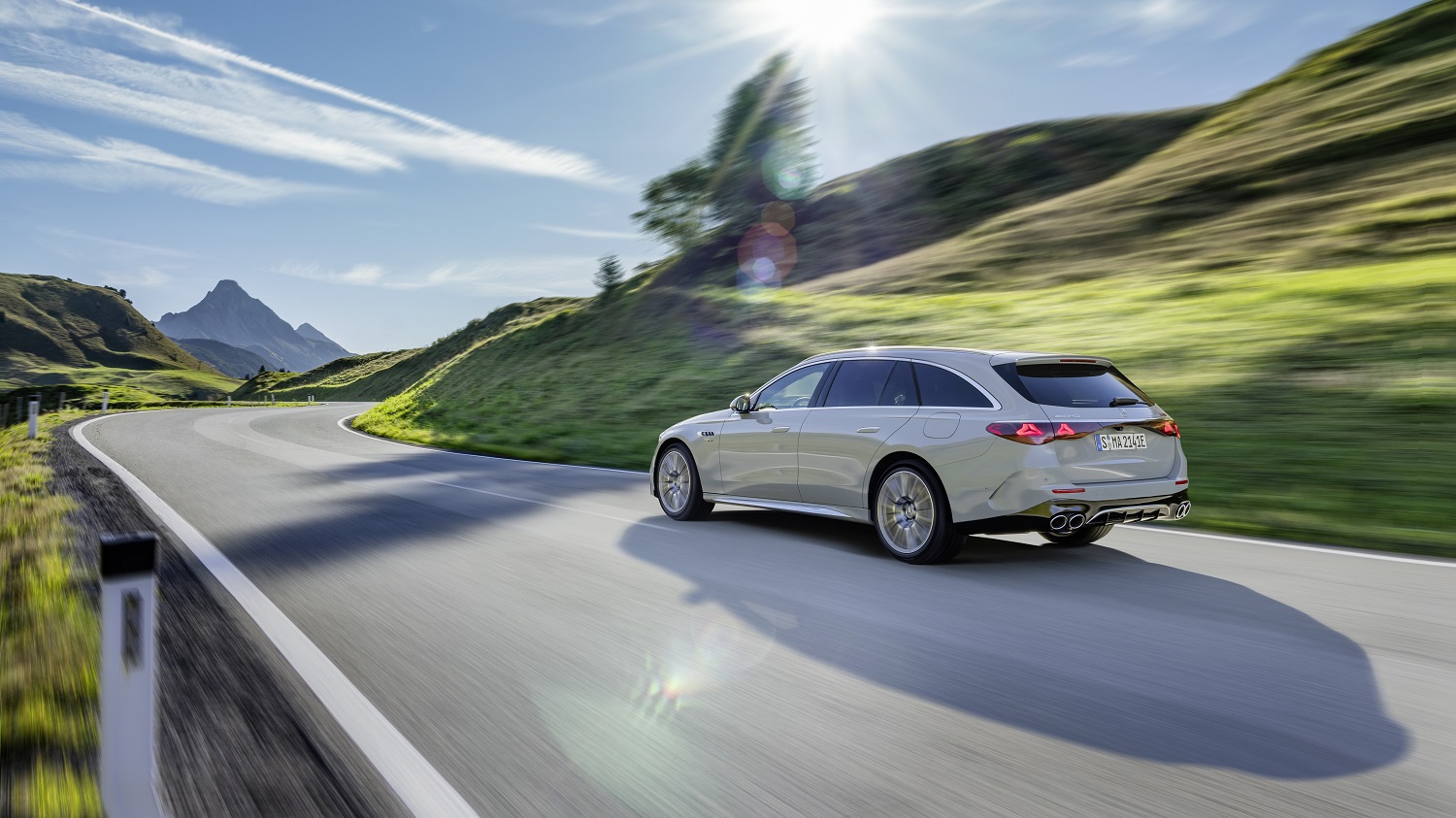
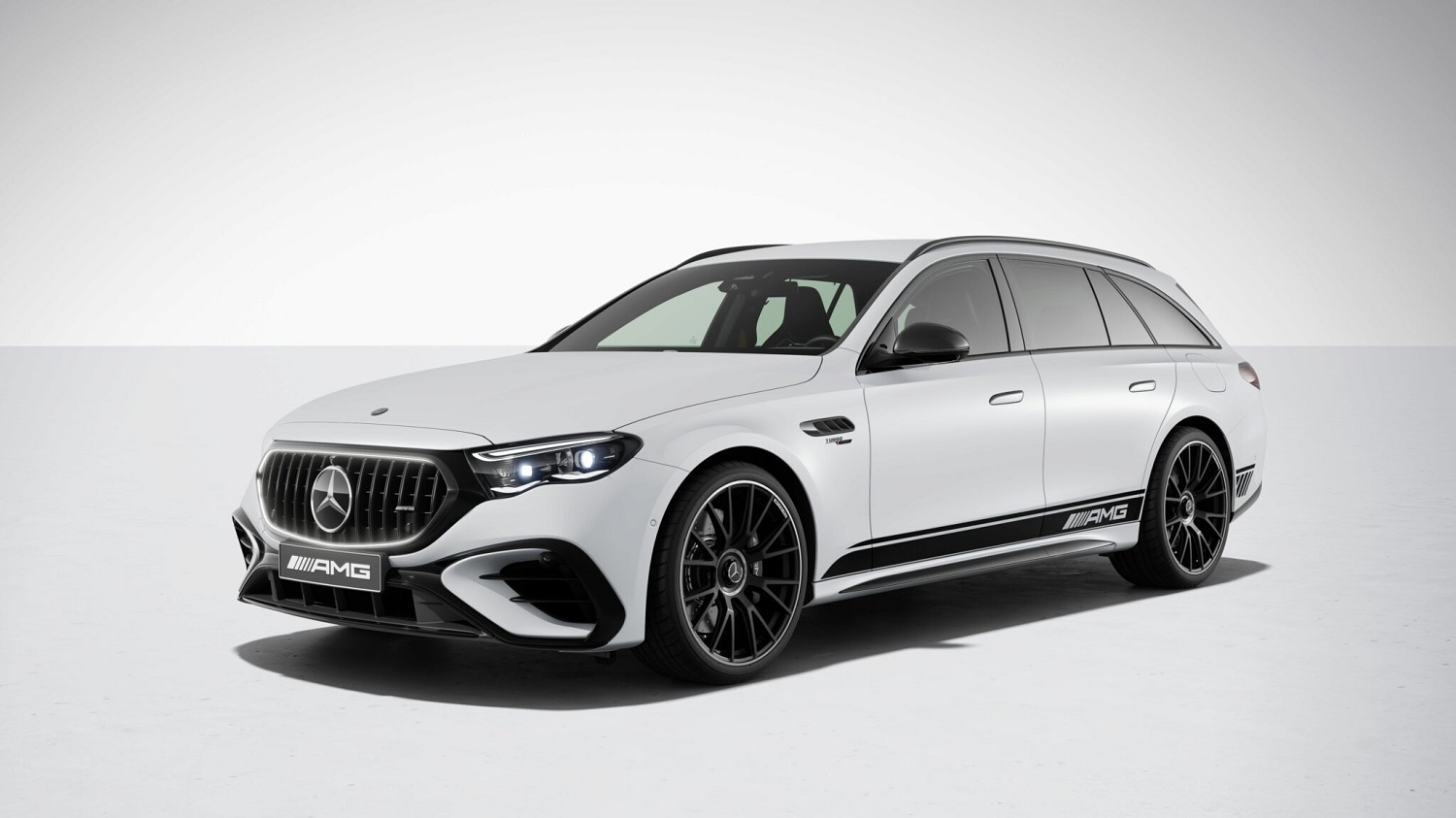
Whether you’re a performance car fan or a wagon lover, we have great news for you: Mercedes is doubling its U.S. longroof lineup (which is currently just one model) with the 2026 Mercedes-AMG E 53 Hybrid Wagon.
Mercedes wagons are nothing new to the U.S. market, but the E 53 will be the first performance hybrid wagon the automaker has offered here. It discontinued the twin-turbo V8-powered E 63 S Wagon several years ago, which leaves the E 450 4Matic All-Terrain as the only vehicle of its kind in the Mercedes lineup. While the E 53 Hybrid can’t be considered a direct replacement for the E 63 S, its numbers are substantial.
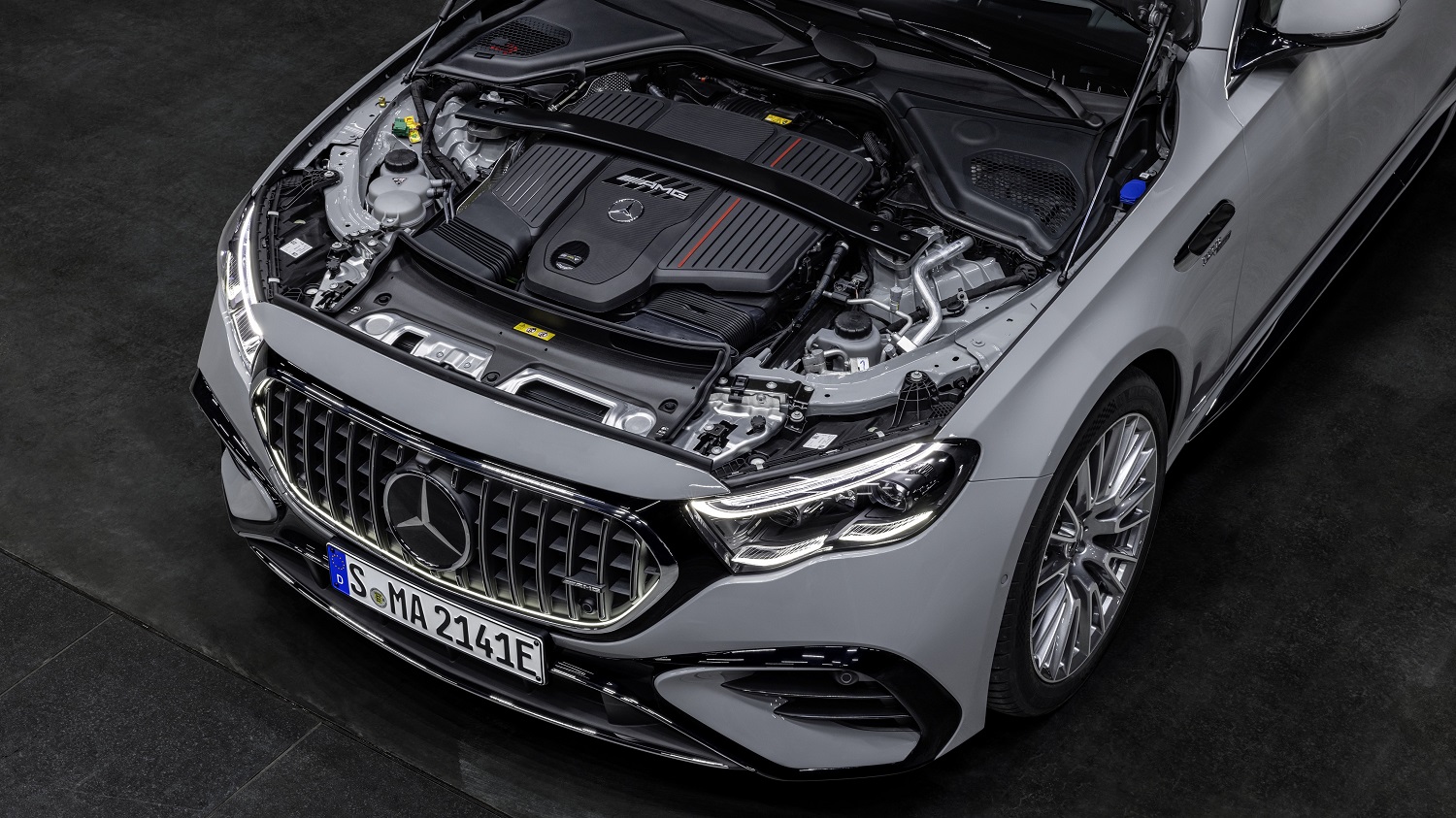
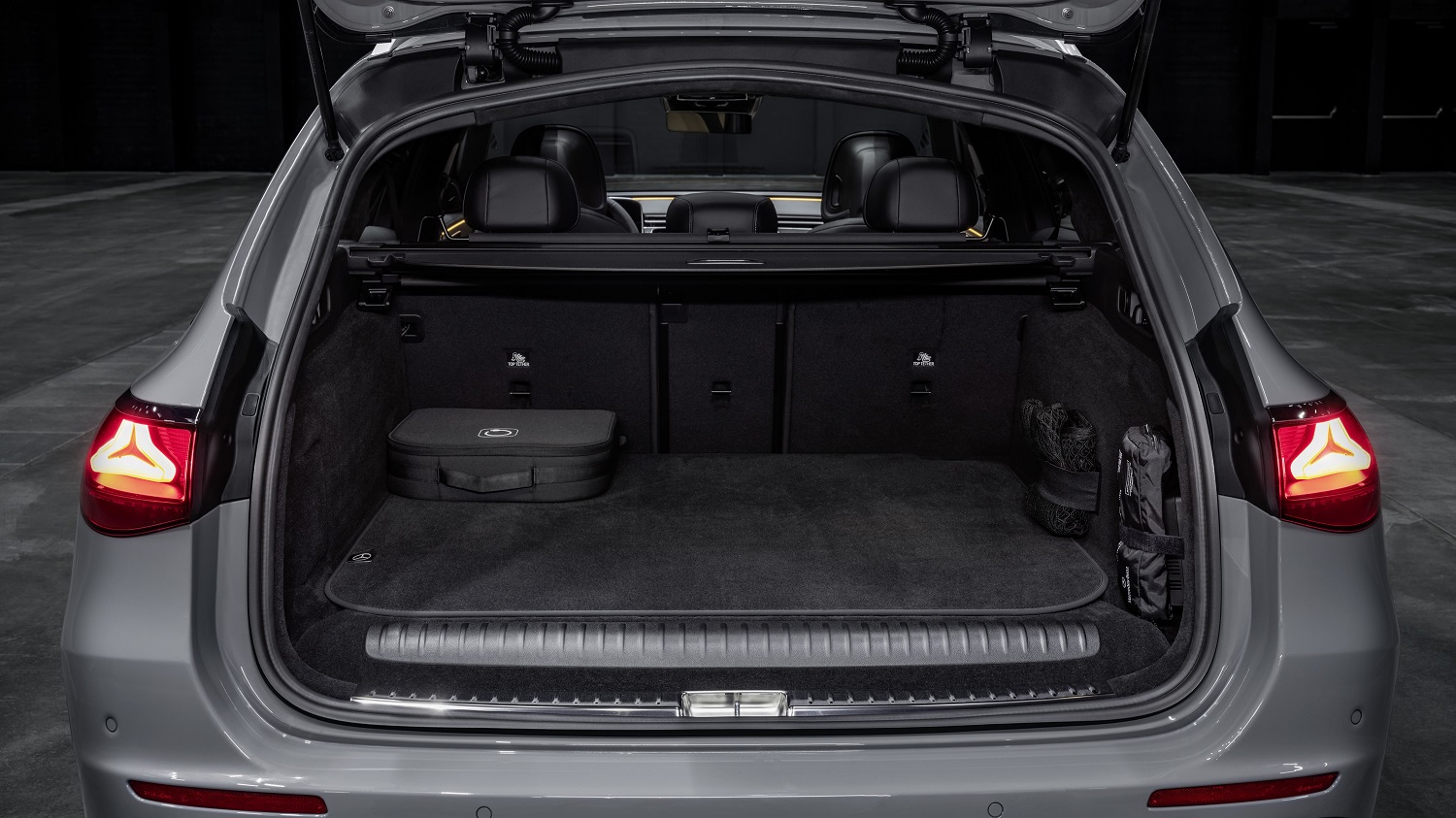
The internal combustion half of the E 53 is an AMG-modified turbocharged 3.0-liter I6 that generates 443 horsepower and 413 lb-ft of torque. Mercedes turns what would otherwise be a brisk wagon into a tire-scorching plug-in hybrid by adding a 161-horsepower, 354-lb-ft electric motor to the AMG Speedshift TCT 9G automatic transmission and dropping in a 400-volt battery under the cargo area. The battery is rated at 28.6 kWh, 21.2 of which is usable in everyday driving; the remaining amount is available for electric boost. No word yet on the E 53’s electric driving range, but it will be capable of traveling on pure electricity at speeds up to 87 mph.
Altogether, the ICE and electric hardware deliver 577 horsepower and 553 lb-ft, which join forces with AMG Performance 4Matic+ all-wheel drive to make the dragon wagon capable of hitting 60 mph in four seconds flat and topping out at 155 mph. The AMG Ride Control suspension with adaptive damping and standard rear-wheel steering smooth out the straightaways and curves ahead.
Adding the optional Race Start feature, which Mercedes says “enables optimal vehicle acceleration from a standstill,” bumps output up to 604 horses and drops the 0-60 time to 3.8 seconds. The available AMG Dynamic Plus Package includes Race Start, active engine mounts, AMG limited-slip rear differential, and Nappa leather/microfiber AMG Performance Steering Wheel. It also enables the E 53 to reach 174 mph and come back down to legal speeds with the AMG High Performance Composite Brake System.
The E 53 Hybrid Wagon will be available in eight standard colors as well as four Manufaktur choices, all of which can be accented with the AMG Night Package, AMG Night Package Plus, and/or AMG Exterior Carbon Fiber Package. Wheel options include a trio of 20- and 21-inch AMG rollers in different finishes.
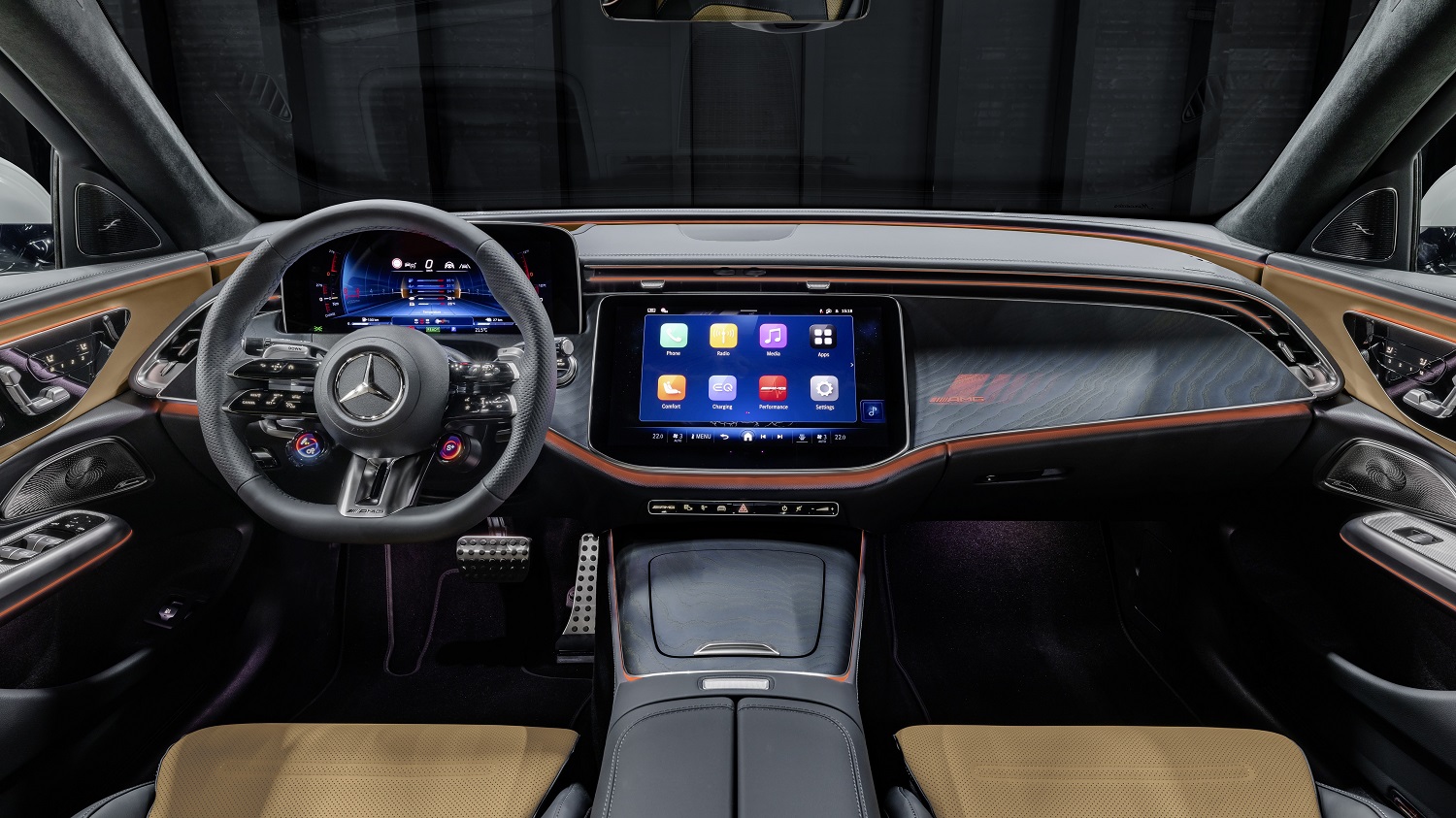
Inside, the E 53 comes standard with a 17-speaker, 750-watt Burmester 4D surround sound system. The cabin can be configured with AMG MB-Tex/Microfiber or AMG Nappa leather upholstery, the optional AMG Performance Seat Package Advanced with strategically bolstered multi-contour buckets, and the AMG Performance steering wheel in a variety of finishes. Also on the list of available features is the MBUX Superscreen Package’s 12.3-inch passenger-side display.
Given that 2026 is the first model year for the E 53 Hybrid Wagon, Mercedes-AMG will also offer an “Edition 1” model. According to Mercedes, that features “MANUFAKTUR Alpine Grey paint with unique AMG graphics, distinctive exterior accents, 21-inch AMG Forged Cross-Spoke wheels, a specially curated interior with unique design elements, and an extensive suite of standard equipment.”
We’re inclined to say that this news comes as a surprise, but maybe it shouldn’t. Mercedes offered a performance wagon here before, and Audi still does. Plus, BMW is finally selling an M5 Touring in the States. Either way, we’re happy to hear it.
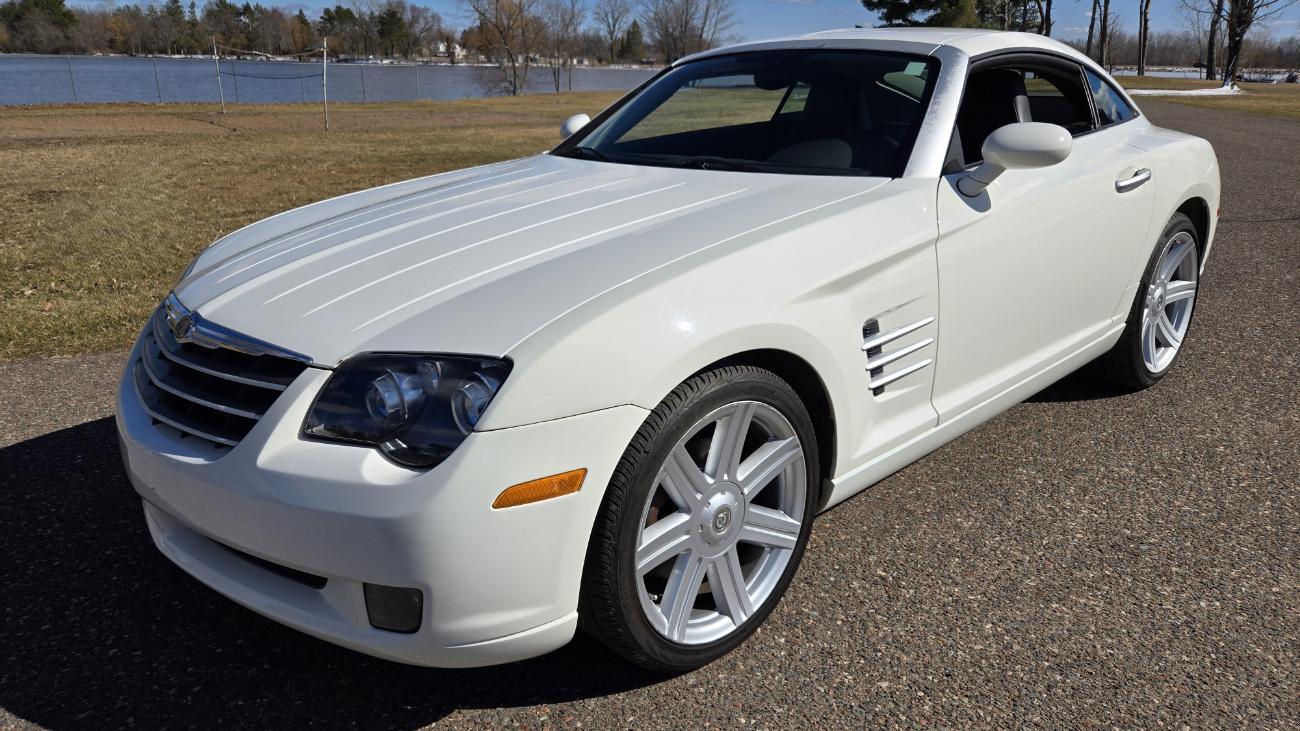
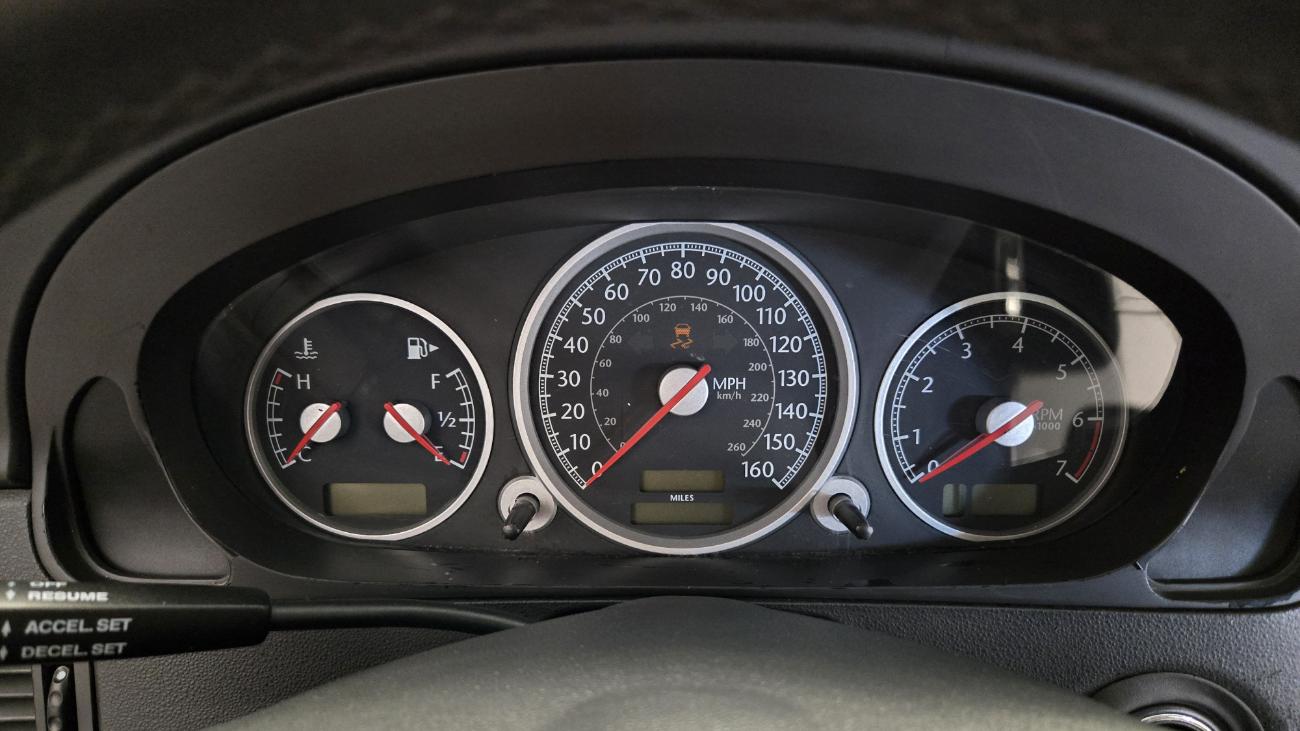
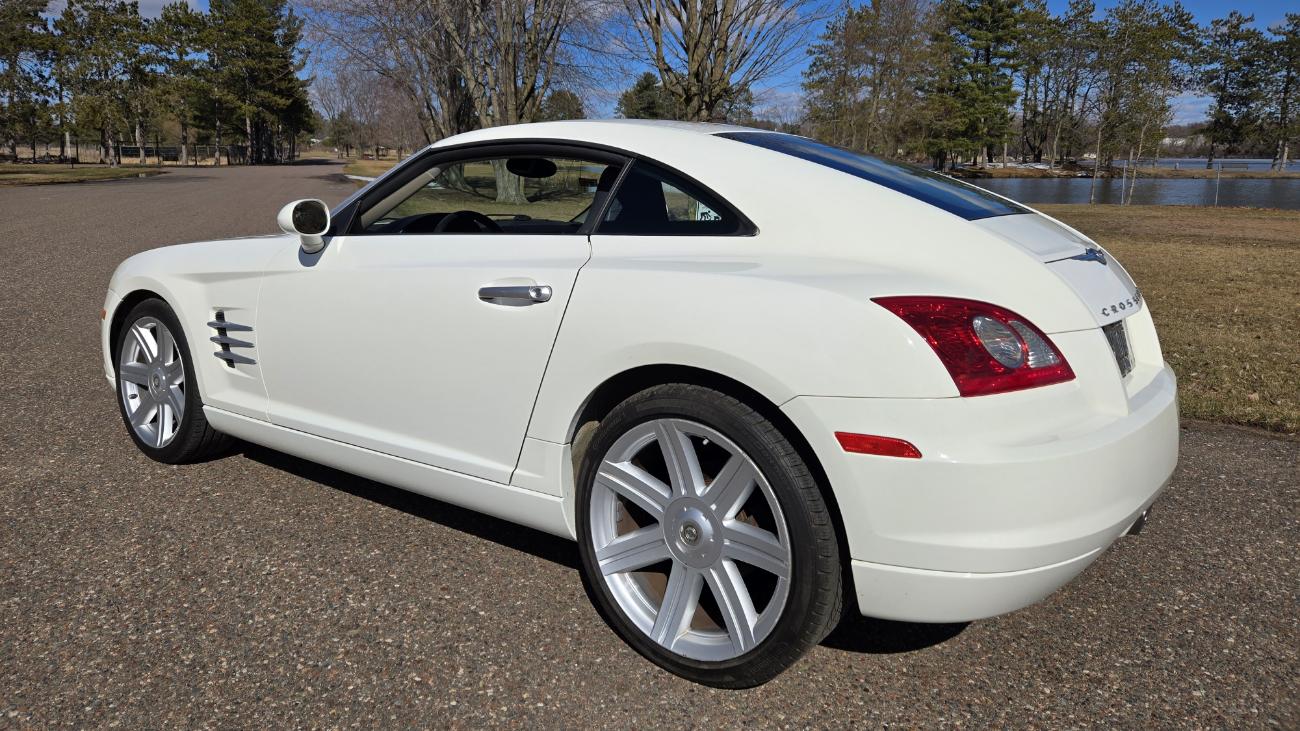
Currently on AutoHunter is this 2004 Chrysler Crossfire Limited Coupe. A product of Mercedes-Benz’s “merger of equals” with the Chrysler Corporation, the rear wheel-drive Crossfire was available for five model years, all based on the first-generation Mercedes SLK’s platform. The hand-me-downs helped give the Crossfire handling chops, but it likely was the styling that pulled enthusiast in. Looking like a cross (pun not intended) between a 1950s Chrysler-Ghia and a Talbot Lago, the Crossfire could be considered an American alternative to the revived Ford Thunderbird, though its main competition was closer to sporty coupes like the Infiniti G35. This Alabaster over Dark Slate Gray example is powered by a 3.2-liter V6 backed by a six-speed manual and comes from the selling dealer with a CARFAX report and clear title.
The Alabaster exterior features a ribbed hood, tapered boat tail, heated power-folding side mirrors, and front-fender air extractors. Staggered-width seven-spoke wheels (18 inches front, 19 inches rear) are wrapped in Continental Pro Contact radials (225/40 front, 255/35 rear).
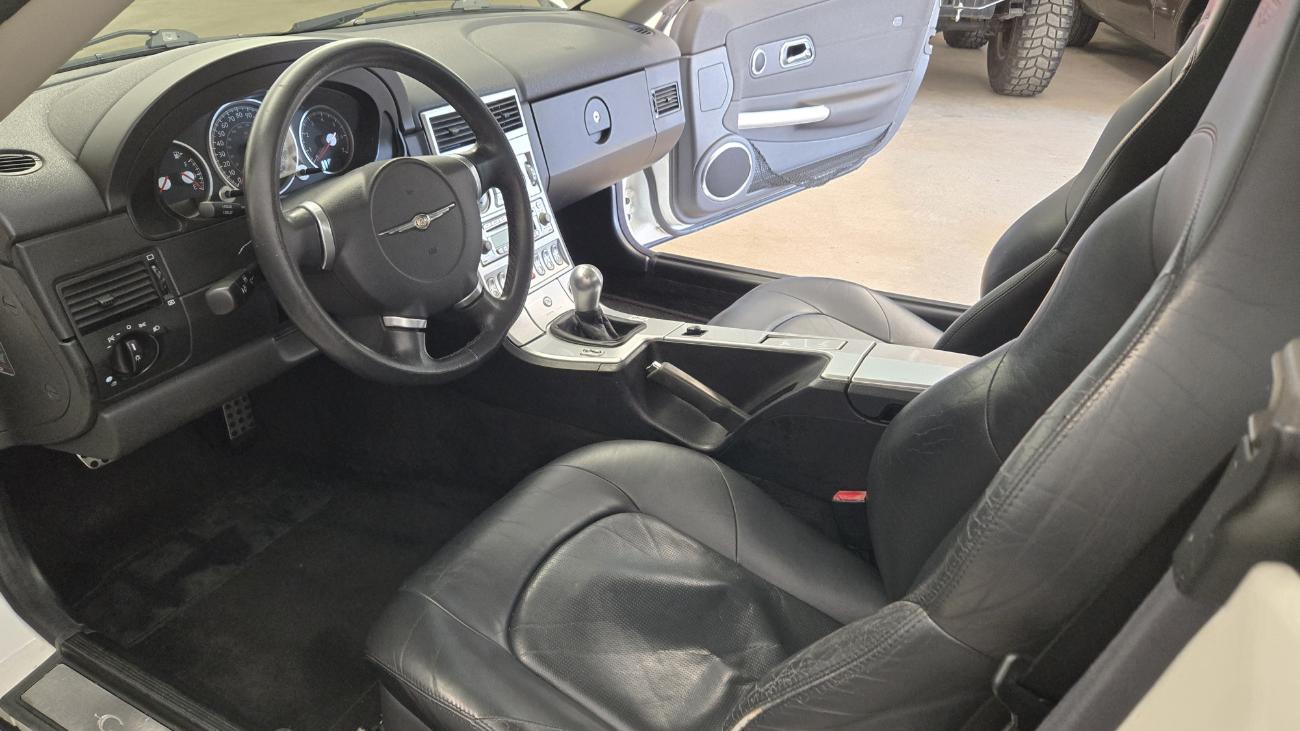
The cabin is furnished with power and heated Dark Slate Gray leather buckets, with center console housing the manual shifter. Other features include power steering, manual telescopic steering column, cruise control, dual-zone climate control system, and factory stereo system with AM/FM and CD player.
The instrument panel consists of a 160-mph speedometer, 7,000-rpm tachometer, and gauges for the temperature and fuel. The odometer currently reads 121,615 miles, which is in line with the most recent CARFAX from November 2024.
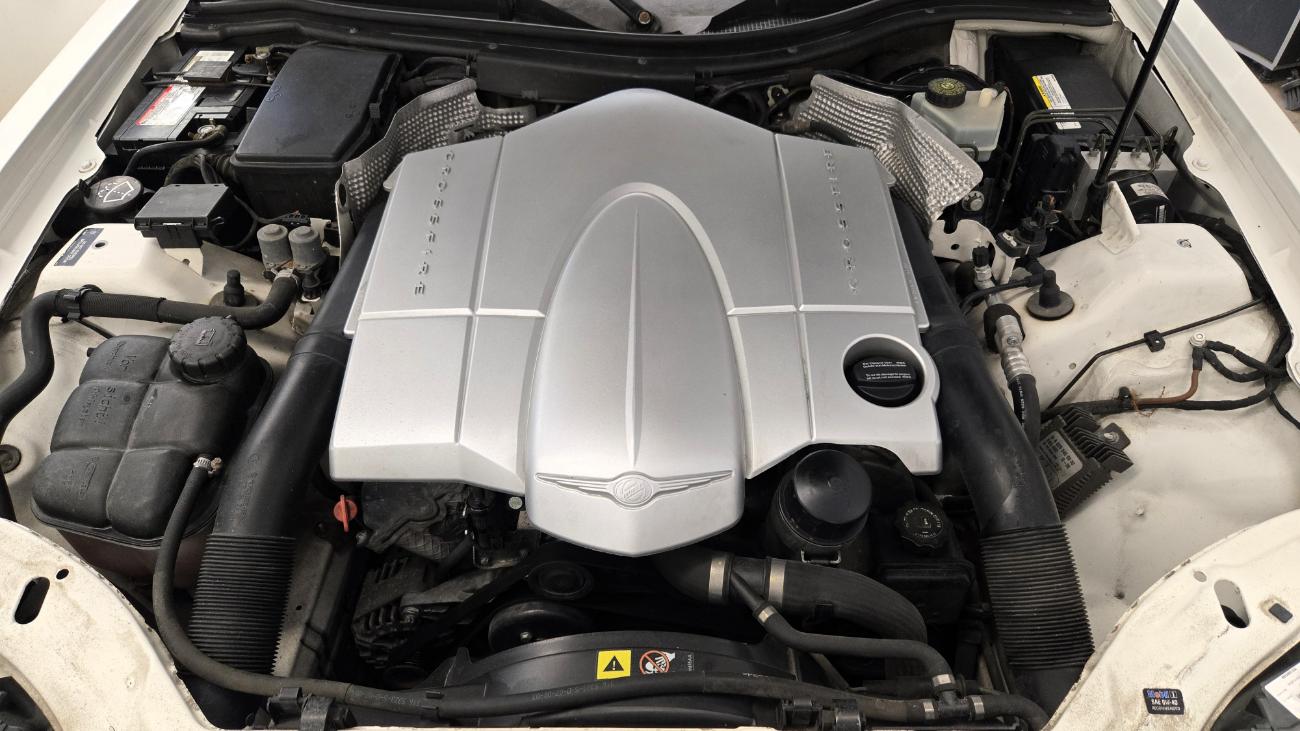
The engine powering this retro-style coupe is a Mercedes 3.2-liter SOHC V6 putting out 215 horsepower. Its revs are controlled by a six-speed manual—out of 25,123 Crossfire Coupes in 2004, only 7,247 featured this transmission.
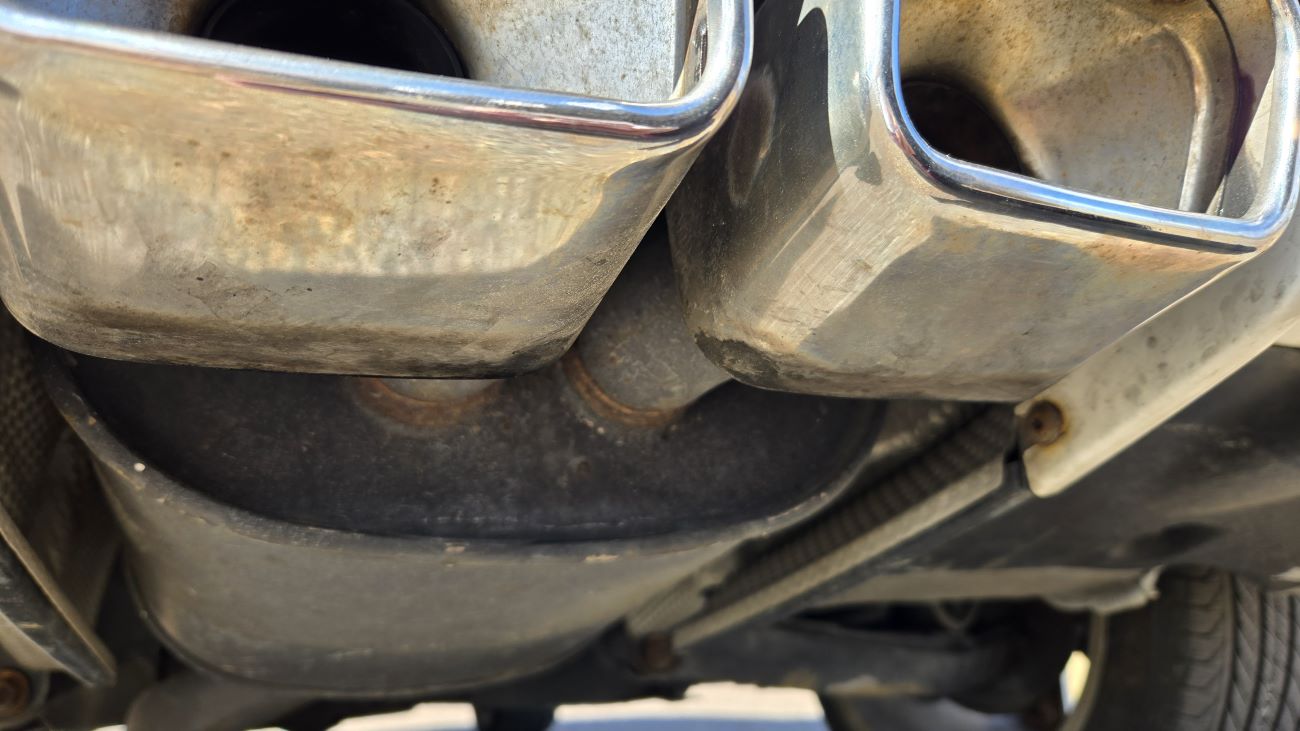
An Electronic Stability Program, in conjunction with four-wheel power disc brakes with ABS, helps maximize traction and stability. The rear differential holds a 3.27 gear. A single exhaust system leads to twin tips that poke through the rear valance.
According to Hagerty, it sees signs of this retro sports coupe (and roadster, available for the 2005-2008 model years) heading towards collector status. This 2004 Chrysler Crossfire Coupe with a six-speed manual is a fine way to get in early on this collectible, so place your bid soon as the AutoHunter auction ends on Tuesday, April 15, 2025 at 11:45 a.m. (PDT).
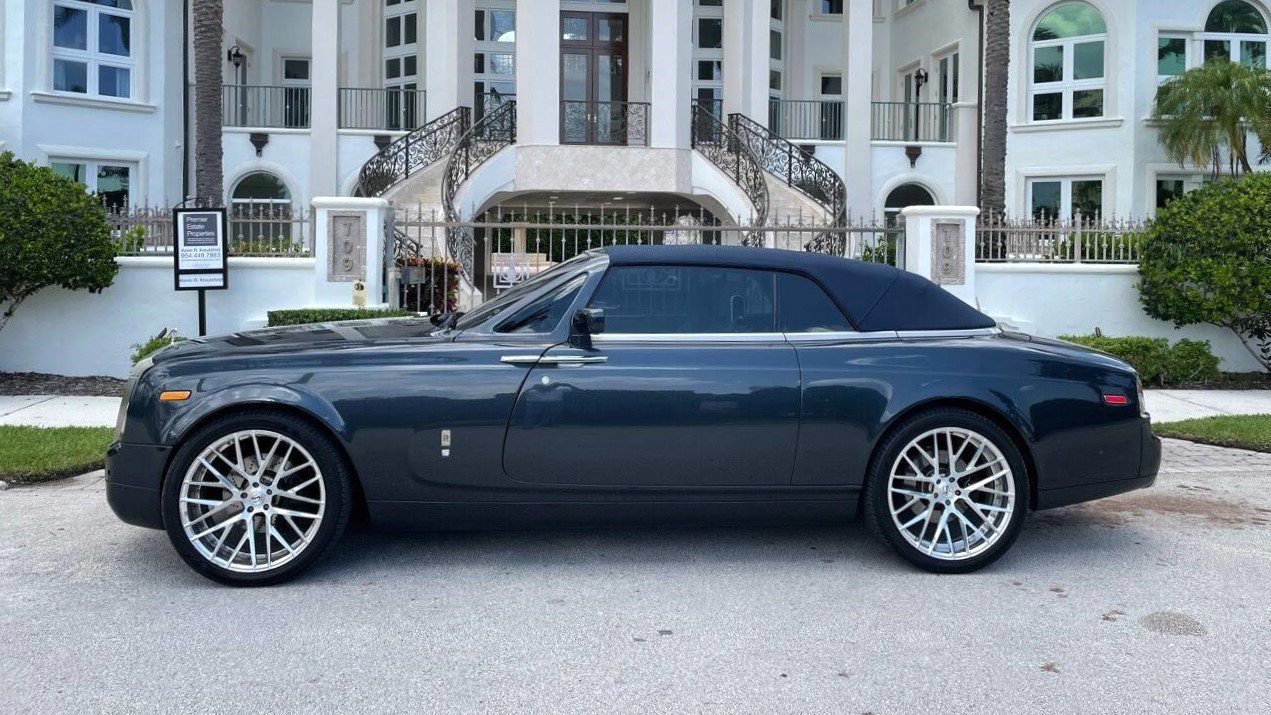
The launch of thePhantom VII in 2003 marked the beginning of a new era for Rolls-Royce. It was under BMW ownership with a new home and production facility in Goodwood, England. For the first time in decades, the Phantom had V12 power. It also had versatility, as shown by the subsequent Extended Wheelbase and Coupe versions. Rolls-Royce even made a two-door convertible variant, one of which happens to be our Pick of the Day: a 2009 Rolls-Royce Phantom Drophead Coupe, which is available on ClassicCars.com from a dealer in Fort Lauderdale, Florida.
At more than 18 feet long and with a curb weight of close to three tons, the Phantom Drophead Coupe (aka convertible) can be considered what some would call a “land yacht.” That’s a fitting name for another reason as well: its design was inspired by the America’s Cup J-Class racing yachts of the 1930s and the Italian Riva motor launches of the 1950s. As Rolls-Royce stated in a brochure for the Drophead Coupe, “Indeed, the overall appearance of the car has been designed to give the impression of an elegant motorboat at speed.”
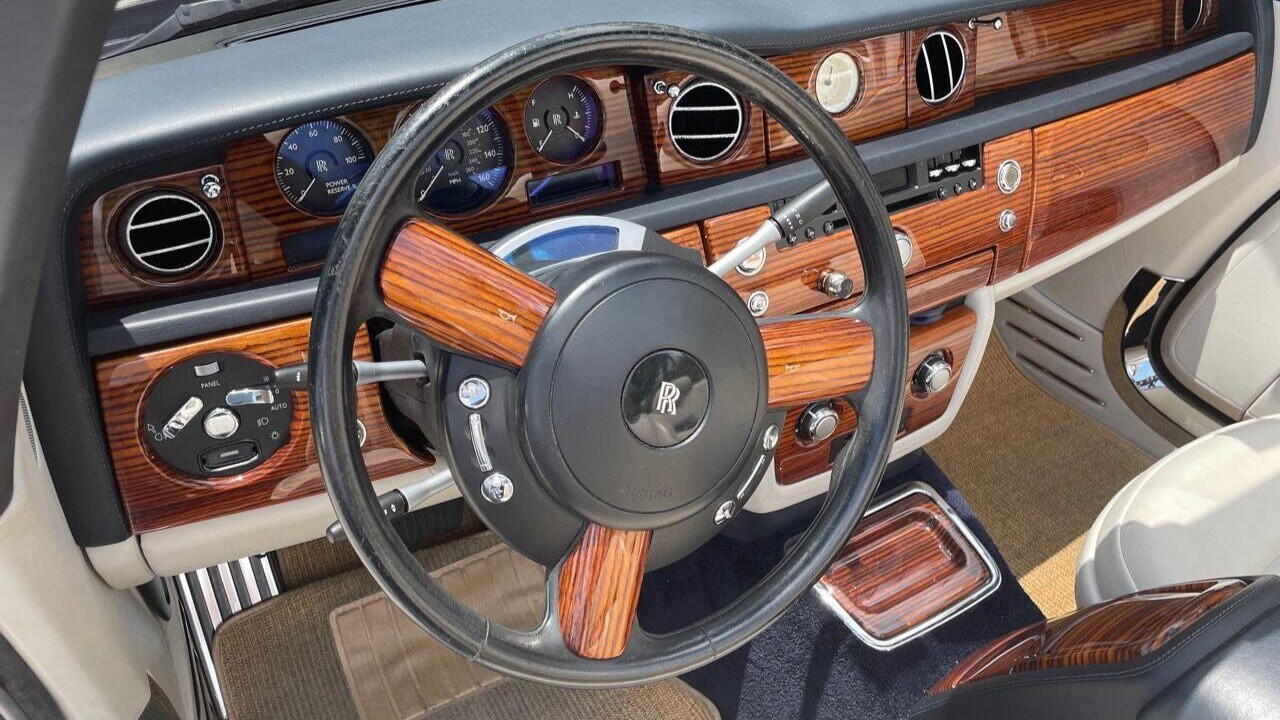
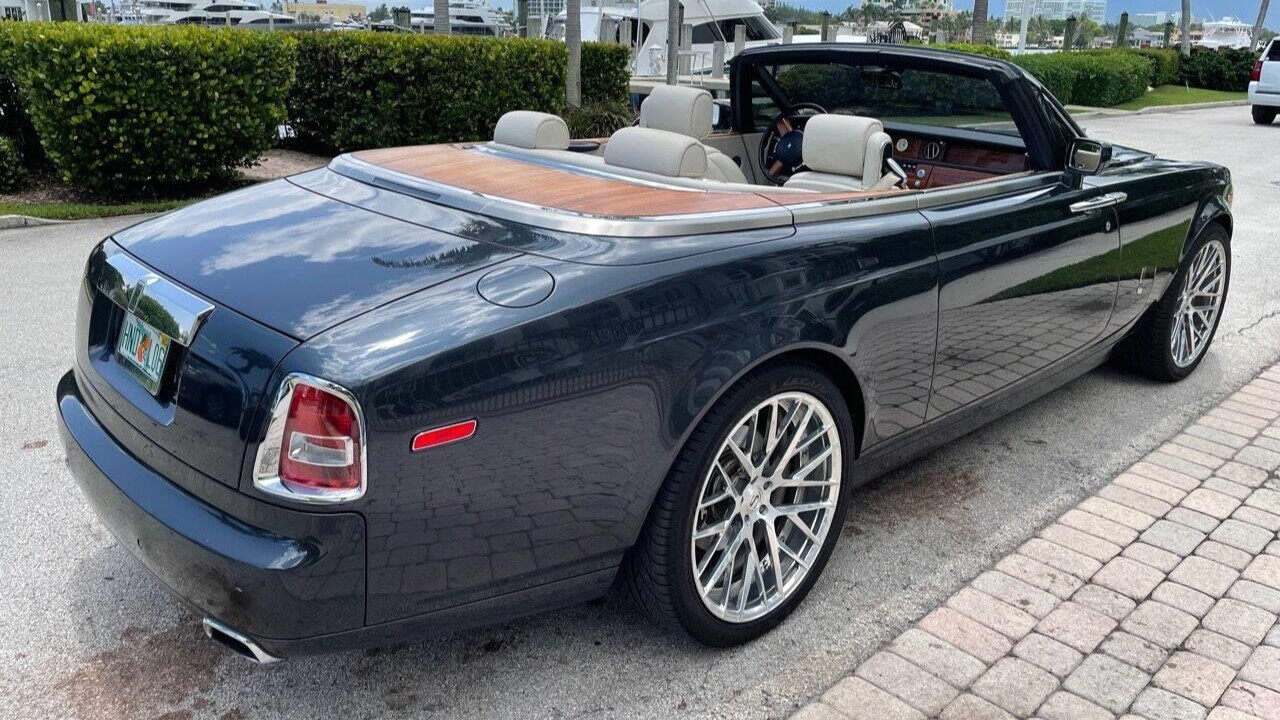
Four people can enjoy the experience of sailing down the road on this dark blue ultra-luxury convertible’s air suspension and aftermarket wheels. The cabin is lined with 250 pieces of cream and black leather, metal hardware, and what appear to be glossy rosewood veneers. A panel of oiled teak serves as the tonneau cover for the soft top, further adding to the nautical theme.
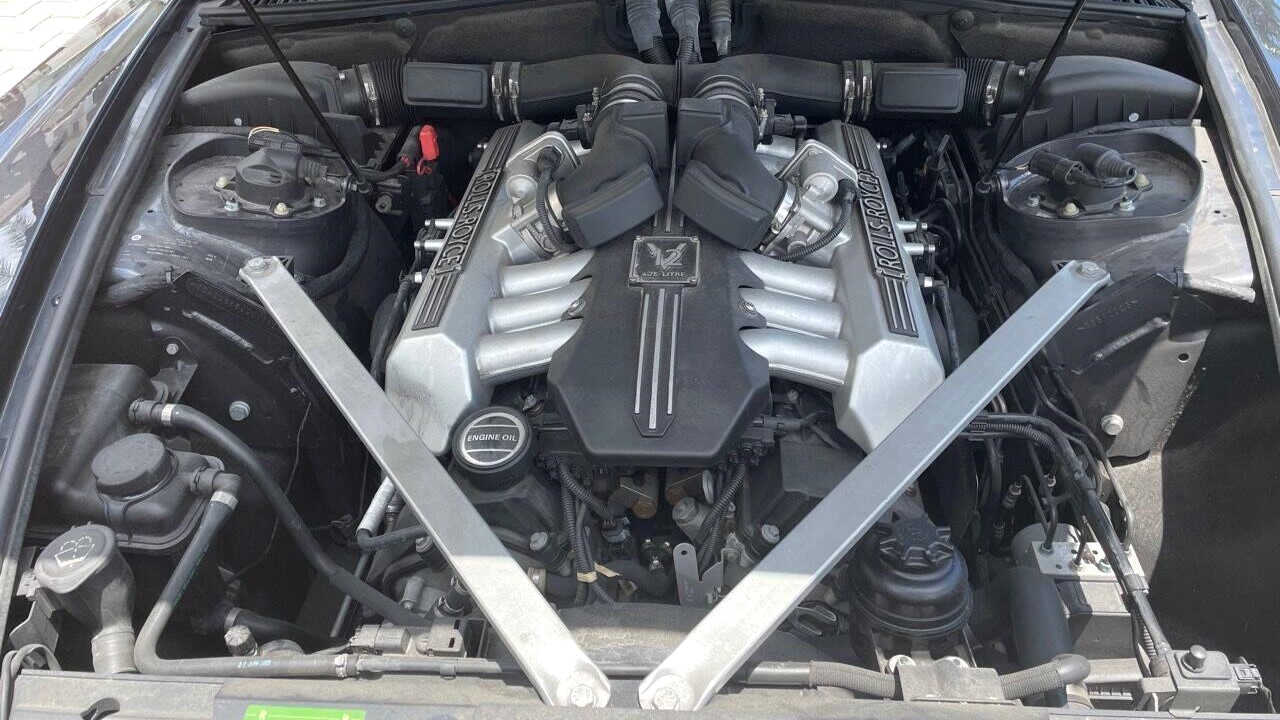
No matter where the Spirit of Ecstasy is pointed, the Drophead Coupe will get to the ultimate destination quickly. The massive hood covers a 6.75-liter V12 that produces 453 horsepower and 531 lb-ft of torque, which flow through a ZF six-speed automatic.
When the sunlight gives way to stormy weather, the five-layer, cashmere-lined soft top is ready to keep everyone inside dry and warm. Those who choose to disembark from the Drophead Coupe can grab one of the umbrellas that slide into the front fenders.
Over the past 16 years, this Rolls-Royce has only traveled 28,927 miles – an average of less than 2,000 miles a year. There are still more voyages to go on in this 2009 Rolls-Royce Phantom Drophead Coupe. You can set sail for $179,900.
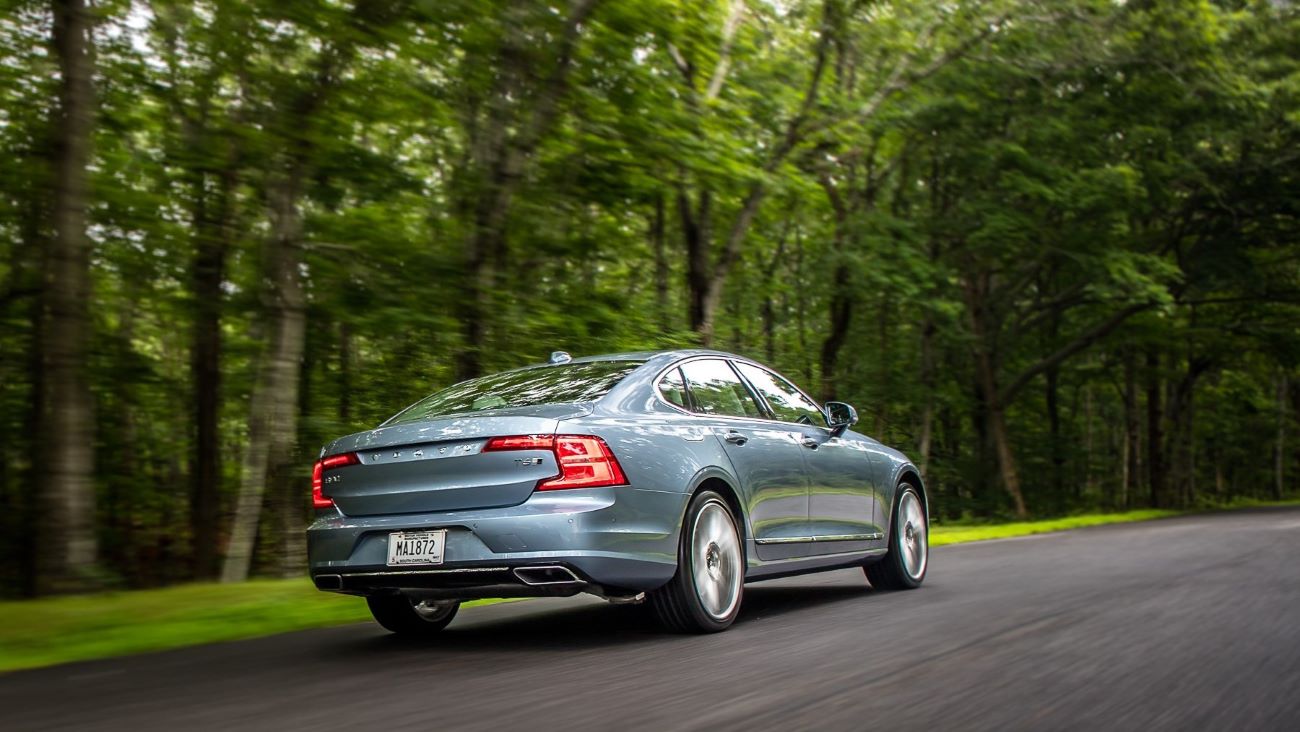
Ford did it. Buick did it. Now Volvo, the unofficial car of Bethesda, Maryland, may be without a sedan in the American market. This may not come as a shock to those who survey the market, but the reasoning why may not be what you expect.
In case you were asleep during the previous recession (circa 2009), Volvo is now owned by a Chinese company called Geely Holding Group, which produces the Geely automotive brand and has holding interests in such familiar names as Lotus and Smart. Guess where Volvo’s S90 is built? China, and the new 125 percent tariff on Chinese-made goods that went into effect on April 9th means this sedan likely won’t appear at Volvo dealerships for 2026.
Volvo S90 (Image courtesy of Volvo)
As reported by Automotive News, a Volvo insider has indicated that the large, slow-selling (1,752 in 2024, with 543 currently sold through March 2025) S90, likely won’t make a return appearance for the next model year in the American market. While this is not official, the current political climate points in that direction. The S90 has been available to American consumers since the 2017 model year.
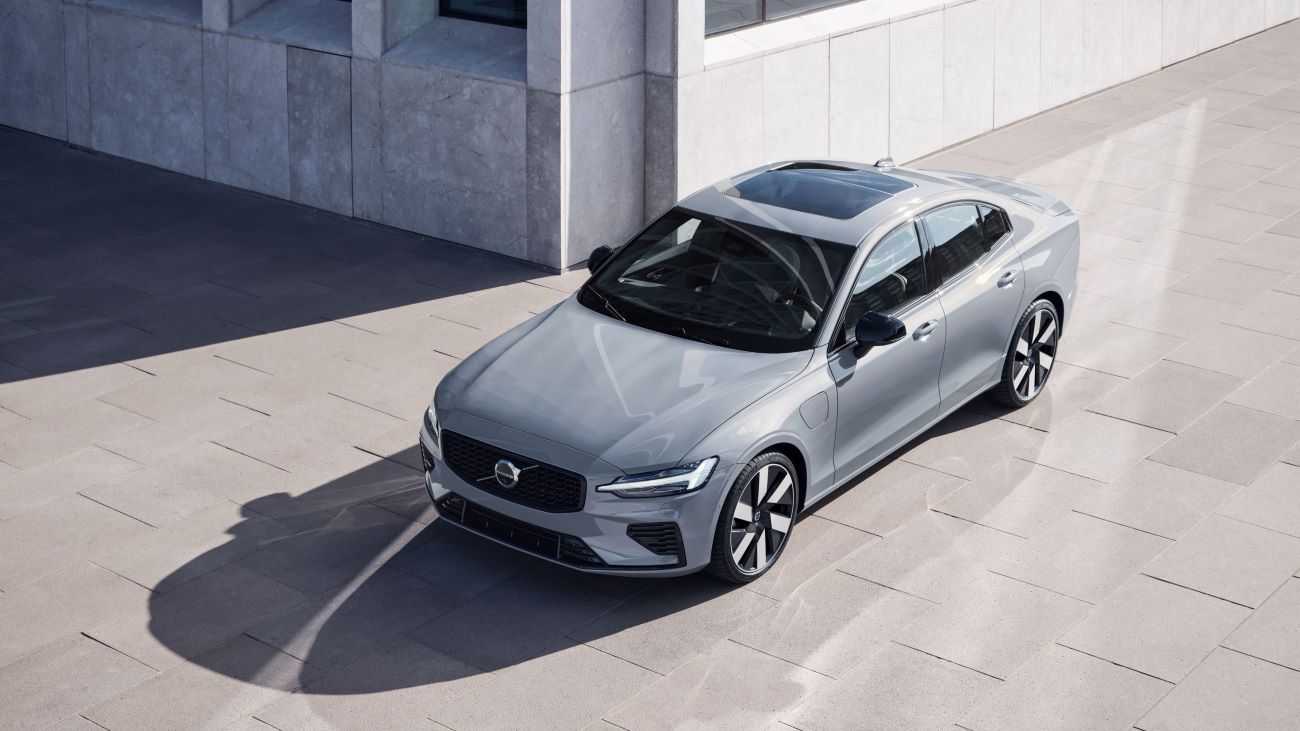
Volvo fans may point out that the S60 is currently being built and sold in the U.S., but that model is headed for extinction for 2026 anyway.
Volvo S60 (Image courtesy of Volvo)
The automotive trade weekly also reports that Volvo is considering adding another model to its South Carolina factory, which has the capacity to produce more than what Volvo currently sells in the U.S.
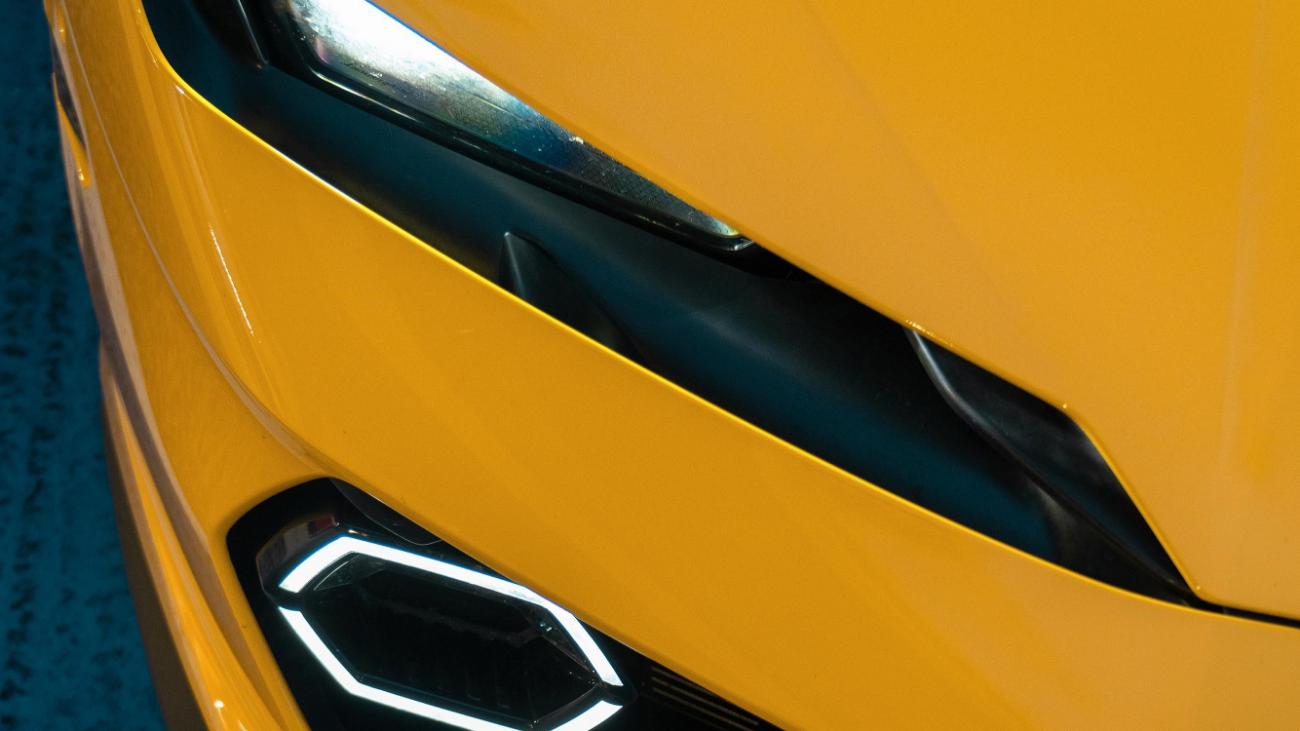
We compare cars with several metrics, such as sprints, lateral force, and fuel efficiency. Few cars can be compared by their redlines. The fierce Lamborghini Temerario is the king of the hill.
(Image courtesy of Lamborghini)
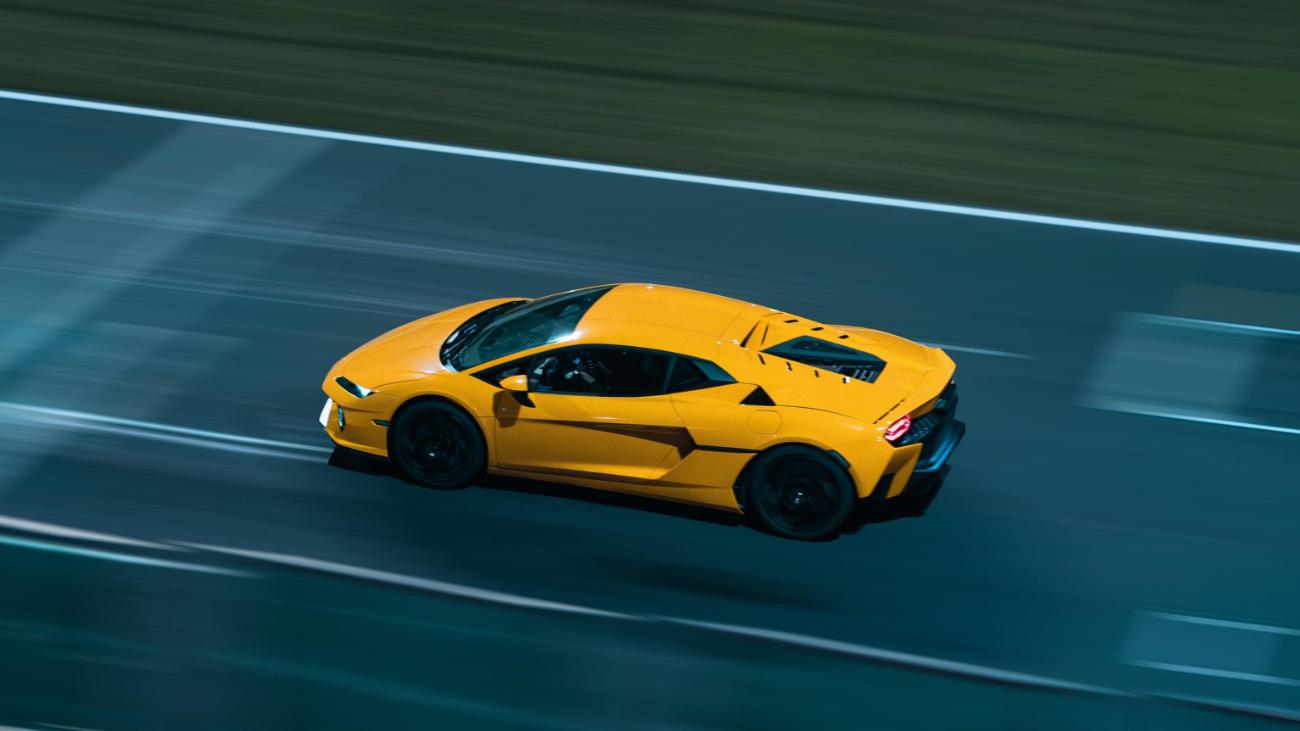
The Temerario (roughly translates to “fearless” in Italian—think a variation of “temerity” in English) is the only production sports car to achieve a 10,000 redline. New for 2025, the mid-engined, twin-turbo 4.0-liter V8 AWD plug-in hybrid achieves its high revs via titanium connecting rods, flat plane crankshaft, and three electric motors: complementing the 789-horsepower V8 is a 148-horse electric motor between the engine and transmission (an 8-speed dual-clutch affair), plus two more on the front axle for a combined 907 horsepower.
For redline context, let’s look at several collectible cars spanning several decades: the 1969 Camaro Z/28 had a 6,000-rpm (later, 6,500) redline. A Ferrari Dino 206 GT had a 8,000-rpm redline. The 2000-03 Honda S2000 had a 9,000-rpm redline. All of those are dwarfed by the Temerario.
(Image courtesy of Lamborghini)
Lamborghini “claims” that the Temerario will go 0-60 in 2.7 seconds and top out at approximately 213 miles per hour—all fine stats. But it’s the redline that is truly romantic. “Temerario is an incredible super sports car that combines top level performance with a distinctly fun-to-drive character,” says Lamborghini Squadra Corse team driver, Andrea Caldarelli. “What’s more, the V8 engine provides an unlimited progression, and as the tachometer climbs toward 10,000, you have the sensation of being behind the wheel of a race car, characterized by a unique sound and an authentic and compelling driving experience.”
The Huracán was the entry-level Lambo that the Temerario is replacing. Powered by a rear-engined V10, the Huracán enjoyed a production run of 11 years. Now, with a smaller (by 1.2 liters) naturally aspirated engine featuring two fewer cylinders but complemented by turbos and hybrid power, the Temerario is bound to set to impress with its embrace of technology despite being several hundred pounds more in weight.
Three-thousand seven-hundred twenty-six pounds sounds sacrilegious? That’s part of the game these days. With performance once never imagined, we can only envision technology bringing back a trimmer waistline with even more performance.
And maybe a manual transmission. But that’s for the future. For now, enjoy the current version of the future.
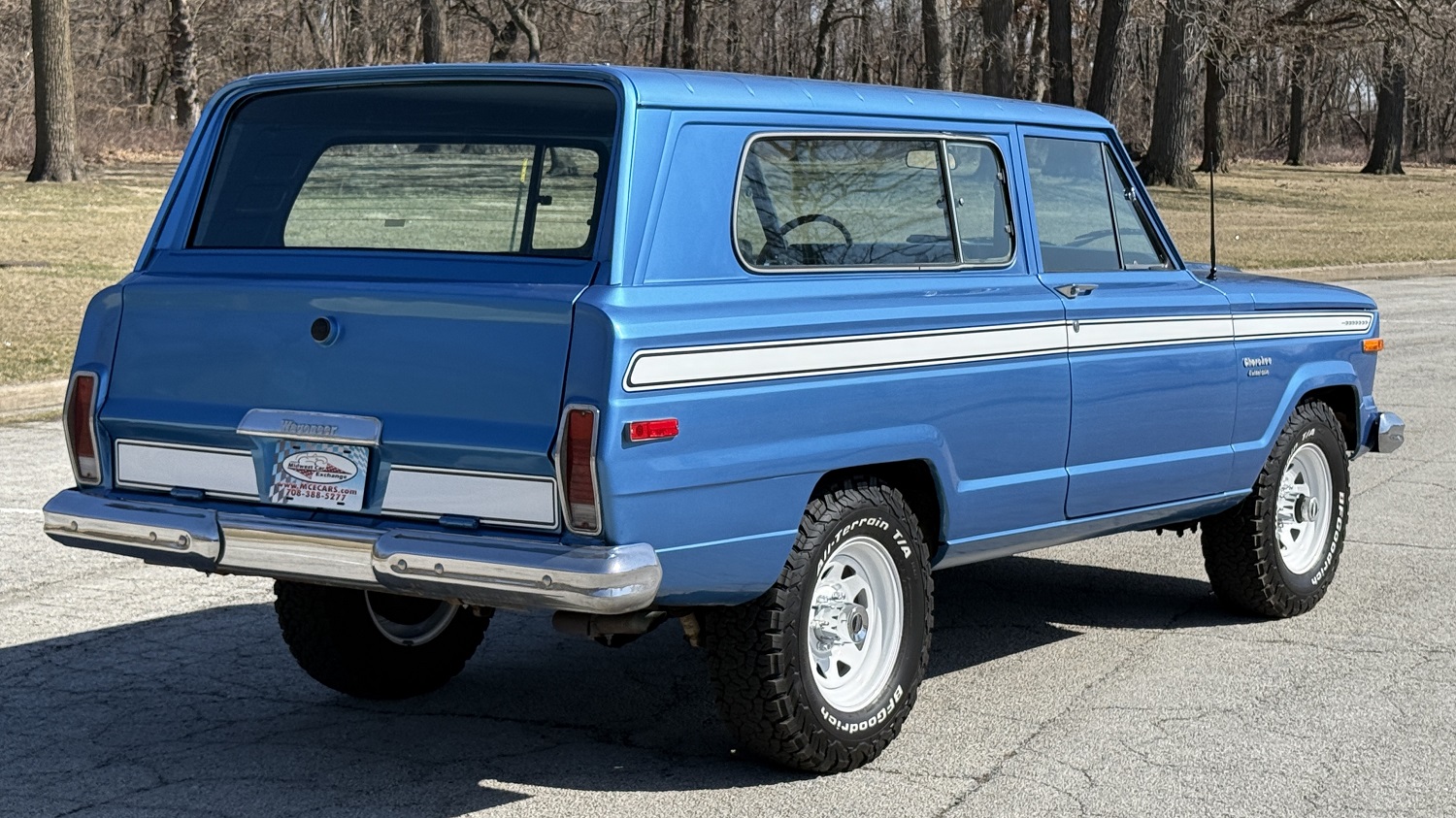
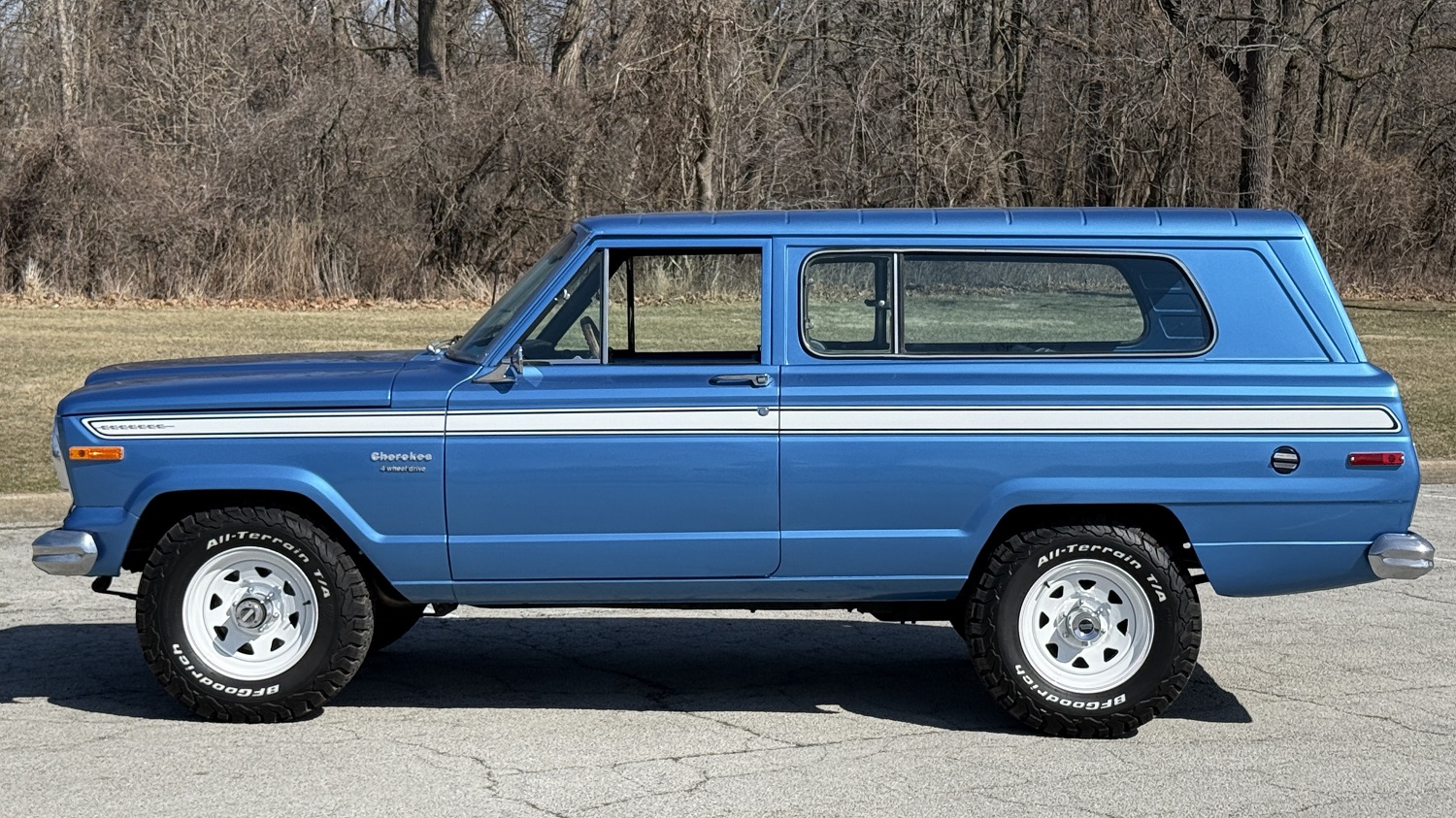
Currently listed on AutoHunter is this two-door 1978 Jeep Cherokee. which gets down the road and over trails with the help of a 258ci inline-six, three-speed manual transmission, and four-wheel drive with a dual-range transfer case. Finished in Brilliant Blue with white vinyl side stripes over a blue vinyl and gray cloth interior, this SJ Cherokee is now offered by the selling dealer in Illinois with a clear title.
Formerly Pewter Gray Metallic, the body was repainted Brilliant Blue and accented with white vinyl side stripes. Exterior features include chrome bumpers, “razor” grille, driver-side mirror, exposed fuel cap, and heated power rear window.
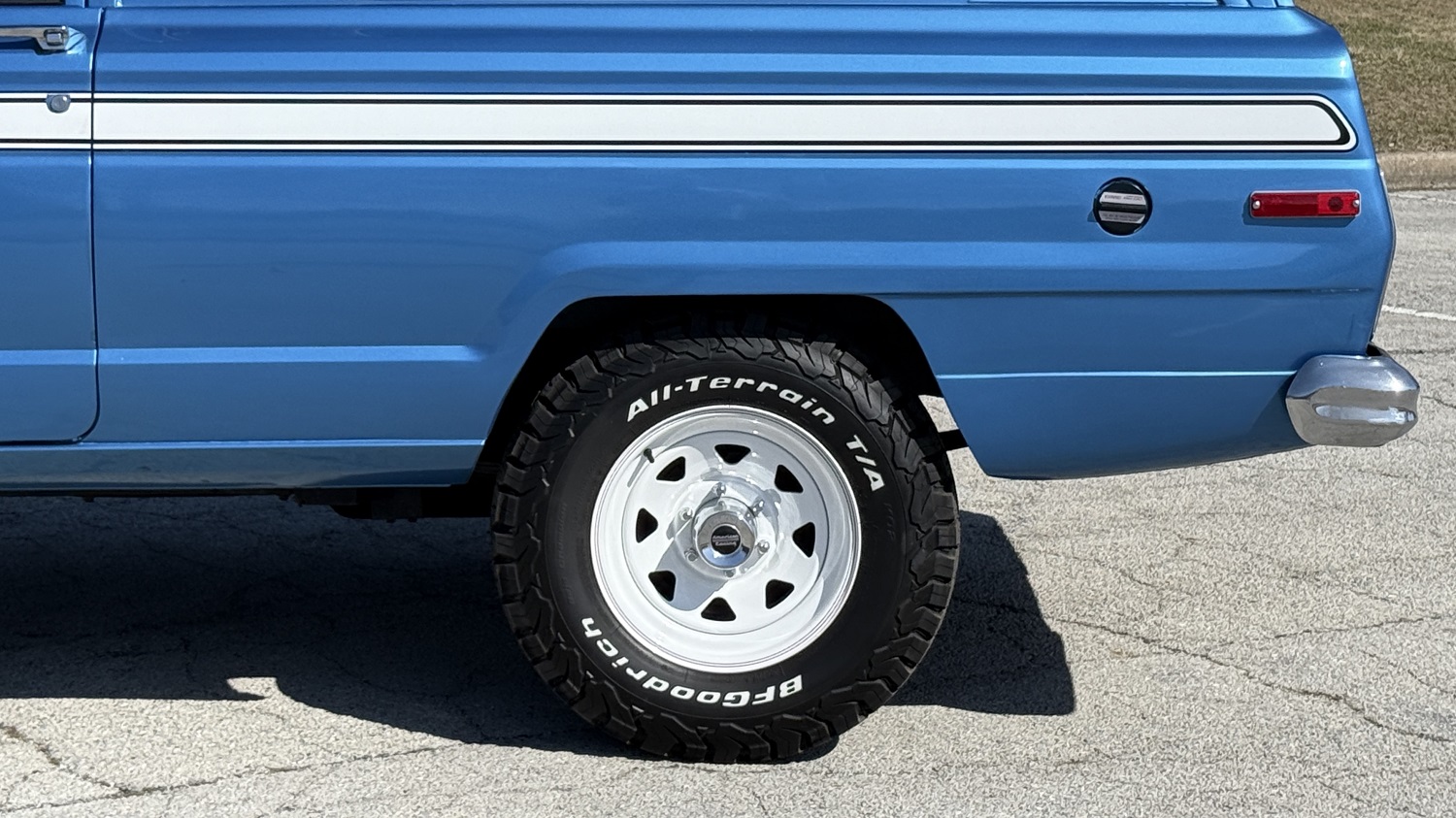
The 16-inch white wagon wheels have locking front hubs and come wrapped in 245/75 BFGoodrich All-Terrain T/A raised-white-letter radial tires.
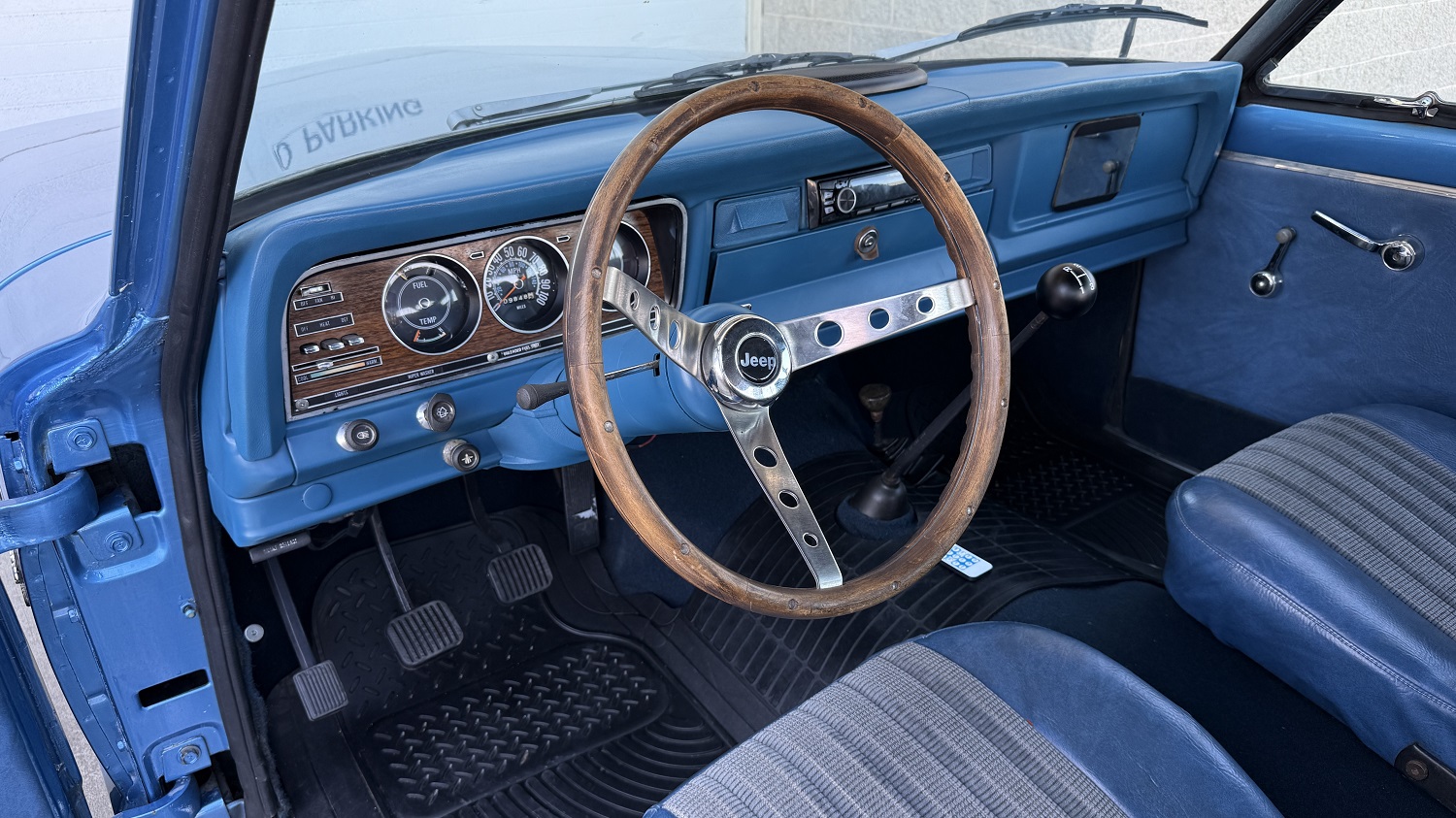
Inside, this full-size Cherokee has front bucket seats and a rear bench upholstered in blue vinyl with gray cloth inserts. Features consist of manual windows, power steering, wood-rimmed steering wheel, floor-mounted transmission and transfer case shifters, Dee Zee all-weather front floor mat, AM/FM/AUX/USB head unit with a remote, and locking glove box.
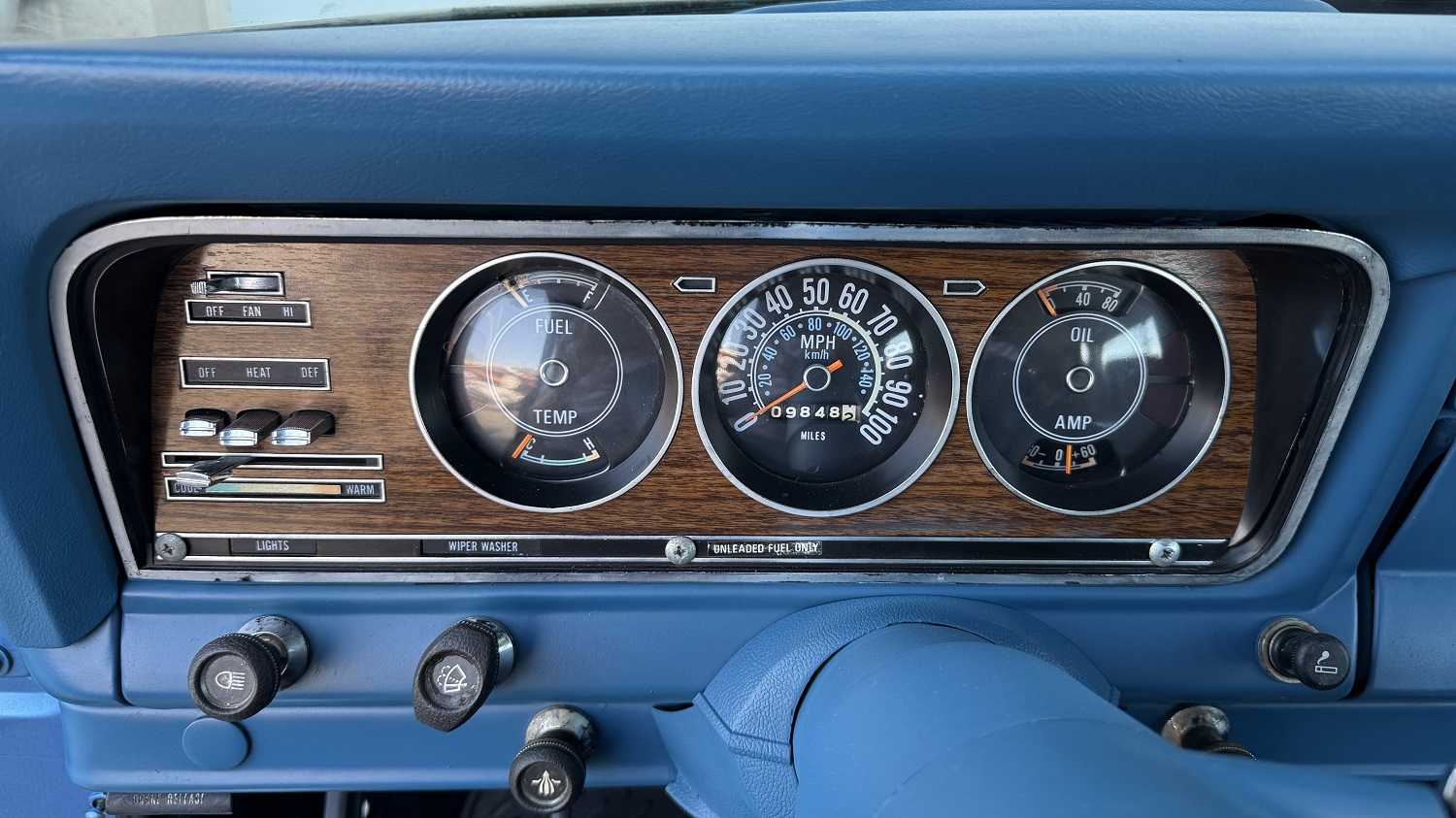
A 100-mph speedometer and gauges for the fuel level, temperature, oil pressure, and amperage display important vehicle information. The analog odometer shows 9,848 miles, but the title reads this vehicle is mileage-exempt.
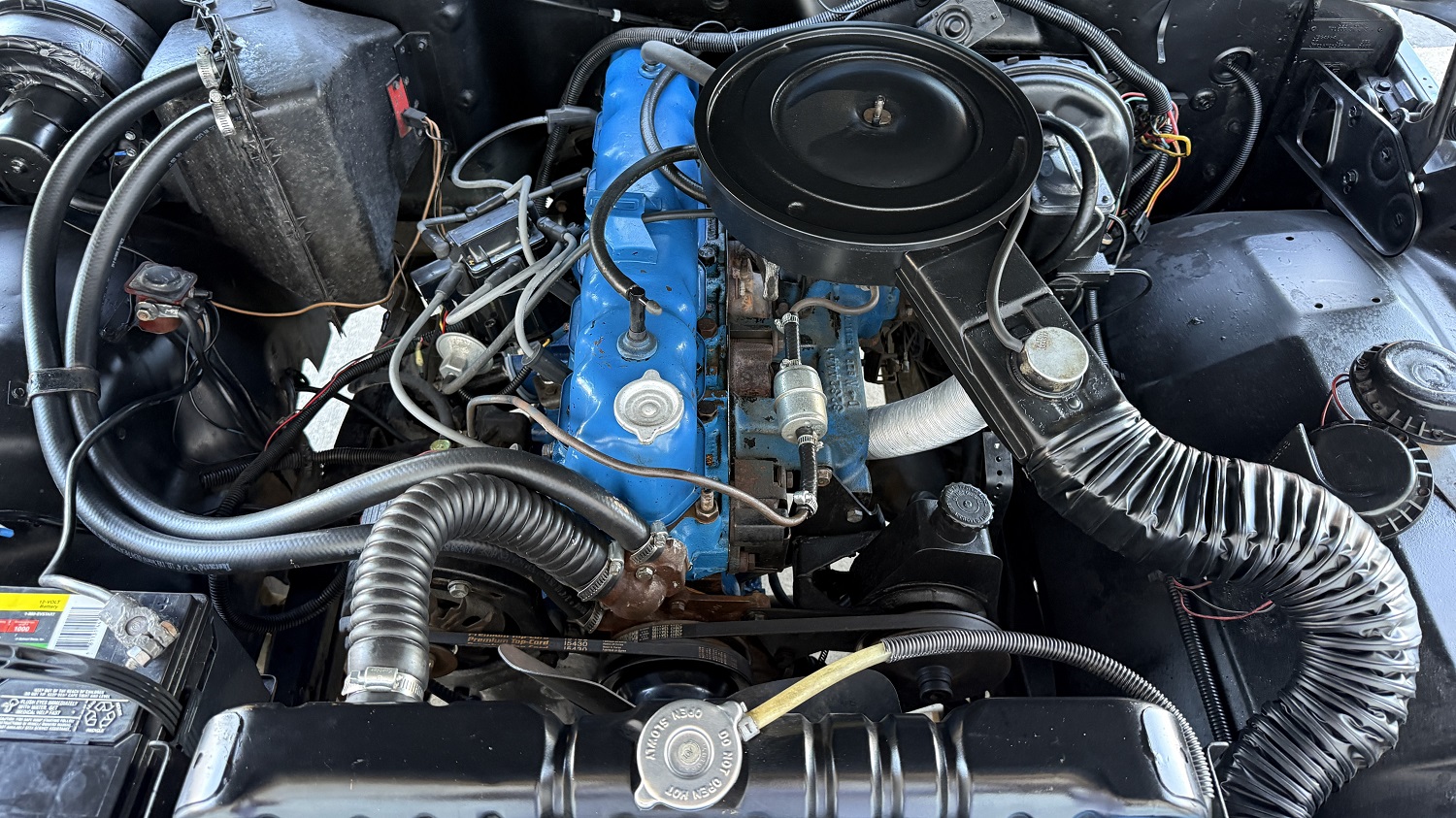
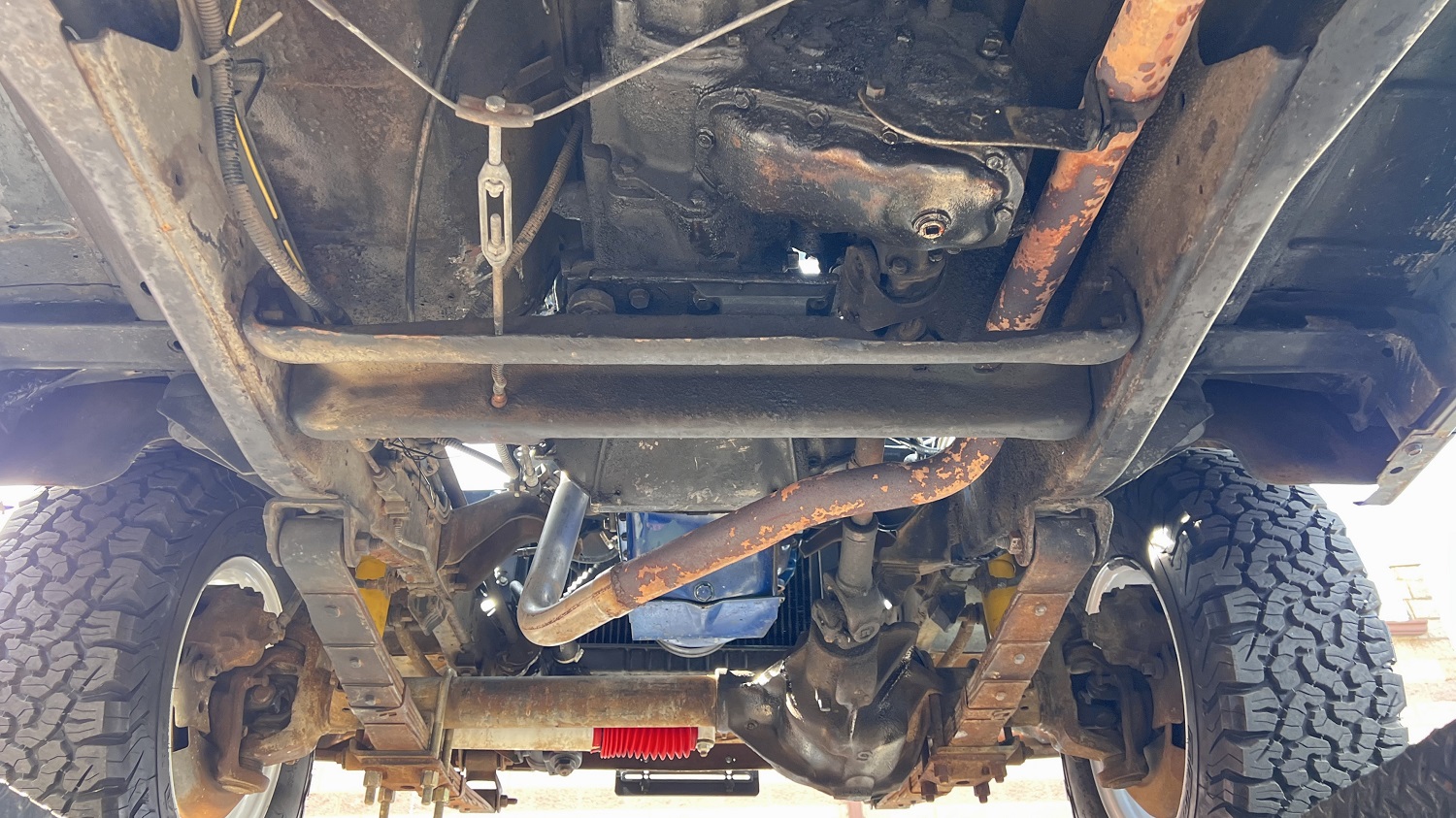
Under the hood, there’s a 258ci I6, which is equipped with a two-barrel carburetor and HEI ignition. The engine delivers its power to the pavement or dirt through a three-speed manual transmission and dual-range transfer case.
Power front disc and rear drum brakes keep this Jeep from flying through an intersection or barreling down a mountain.
If you’re thinking about getting this 1978 Jeep Cherokee, don’t stop now—speed up! Place your bid before the auction ends on Thursday, April 17, 2025 at 11:15 a.m. (PDT).
A few of you enjoyed my recent feature of a 1949 Ford two-door convertible enough to share a comment about it. How about we go back one decade even deeper into the past? The year 1939 would mark a pivotal year in world history, as World War II kicked off that September. Let’s look at a car that rolled off Ford’s assembly lines just before that.
“Henry would be proud!” the listing begins. “90% is factory.”
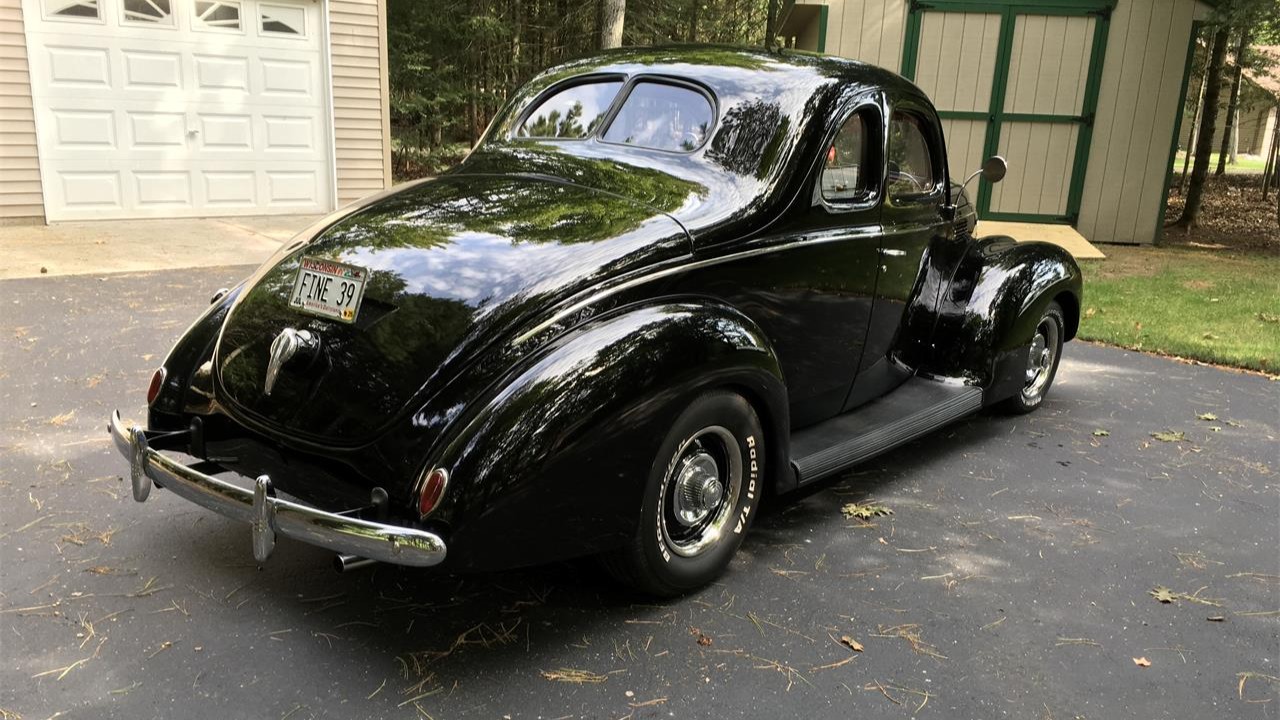
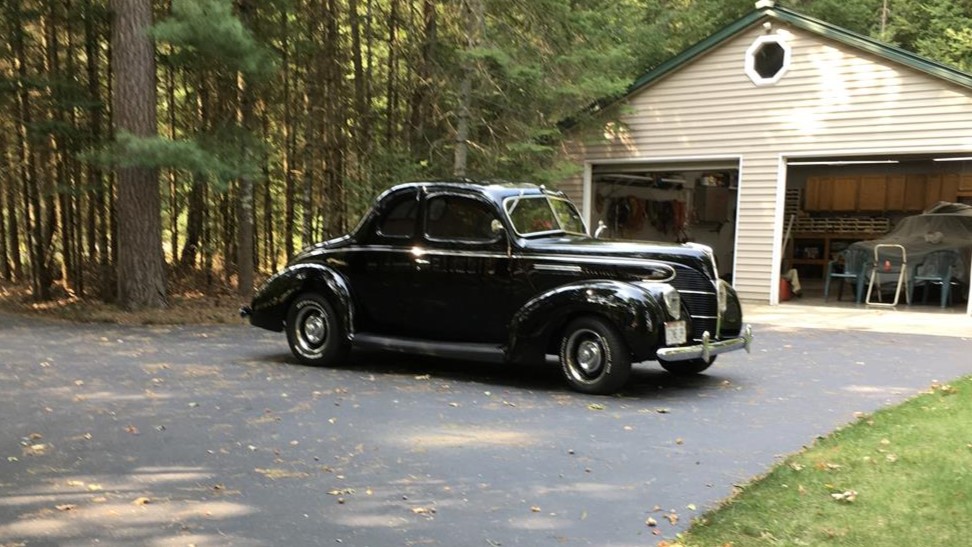
Boasting a license plate that reads “FINE 39,” the car lives up to the claim. The black exterior comes accessorized in lots of brightwork, including dual mirrors and chrome bumper guards. The wheel and tire setup appears to be inspired by a later-model Rally design, and dual exhaust outlets are seen exiting beneath the rear bumper. One upgrade worth calling attention to: “Standard” Ford models for the 1939 year would have apparently come with only one taillamp. This car has been upgraded to two, like the Deluxe model would have had.
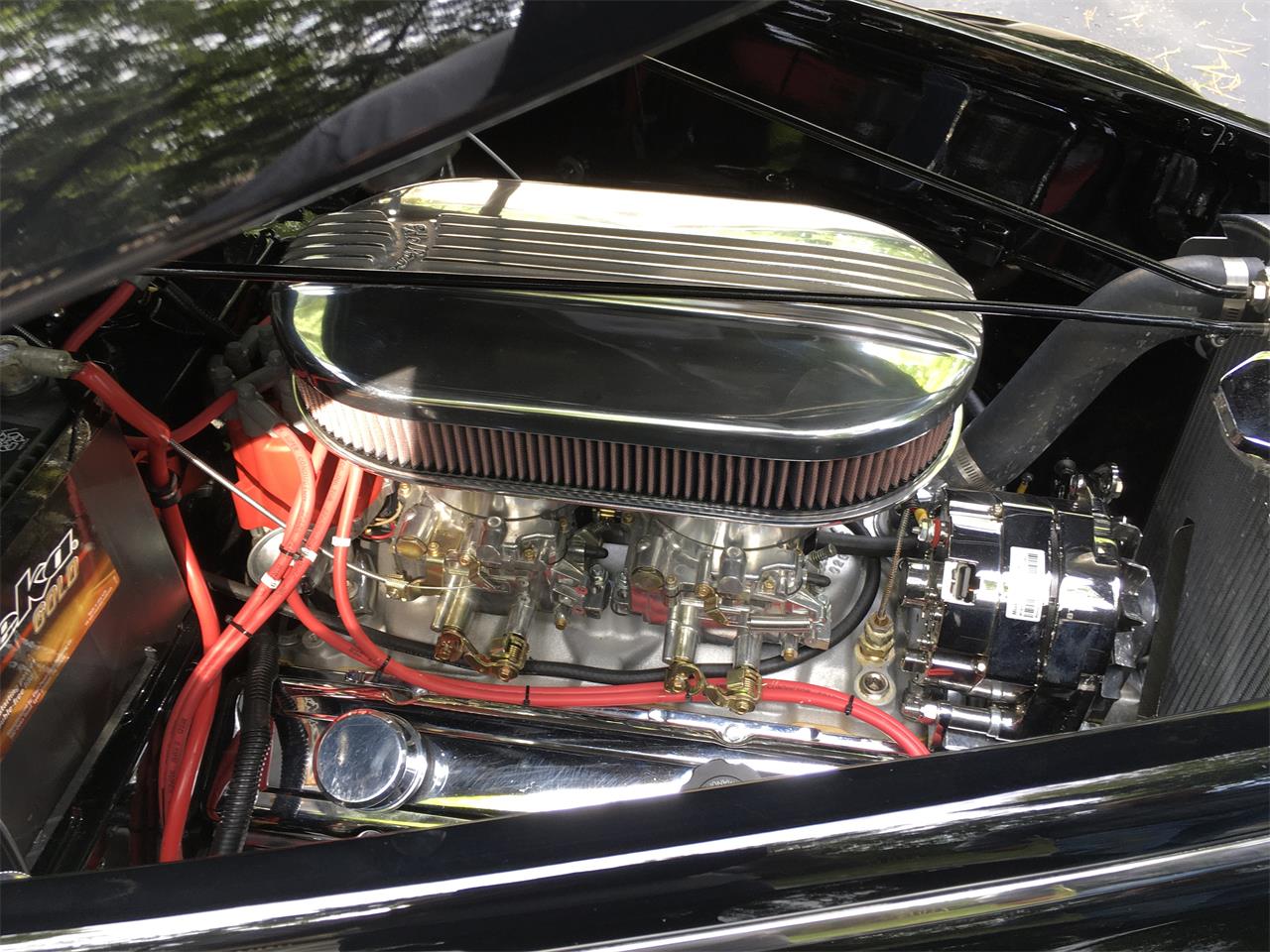
In place of the car’s original flathead V8 now resides a BluePrint Engines 355ci V8 mated to a three-speed manual transmission with Lincoln Zephyr gears and Columbia overdrive. BluePrint is based in Kearney, Nebraska and calls itself “The Authority in Crate Engines.” Added features to the mechanical roster include an electronic ignition system, an aluminum radiator, a dual-reservoir master cylinder and front disc brakes. The odometer of the car shows 52,921 miles, although the seller doesn’t specify whether the number’s validity.
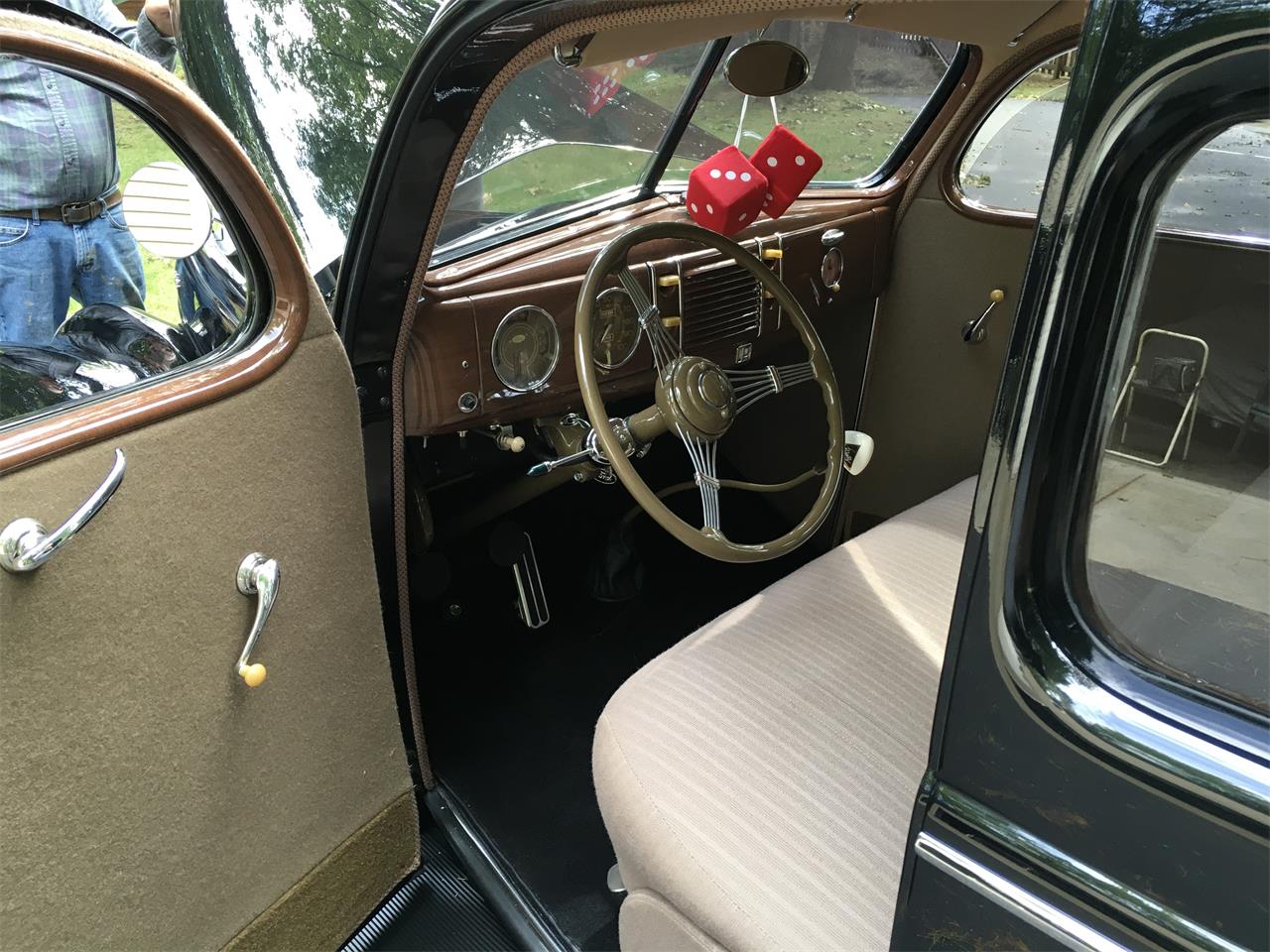
The interior has wood-grain trim, the original instruments, an AM/FM radio and a clock. All in all, the car is a clean machine, and the seller is proud of it. “I have 40-plus years of professional restoration and was involved in the complete restoration of this car,” the listing says.
One thing is for sure, Ford did know a thing or two about vehicle production by 1939. A magazine ad from the period said, “When Ford builds ‘em, I know they’re right!” It continues, “It’s natural enough, I guess. Henry Ford knows more about building cars than anyone else because he’s built more than anybody else in the world.”
Ready to have a piece of history in your garage? The asking price is $59,900 or best offer.
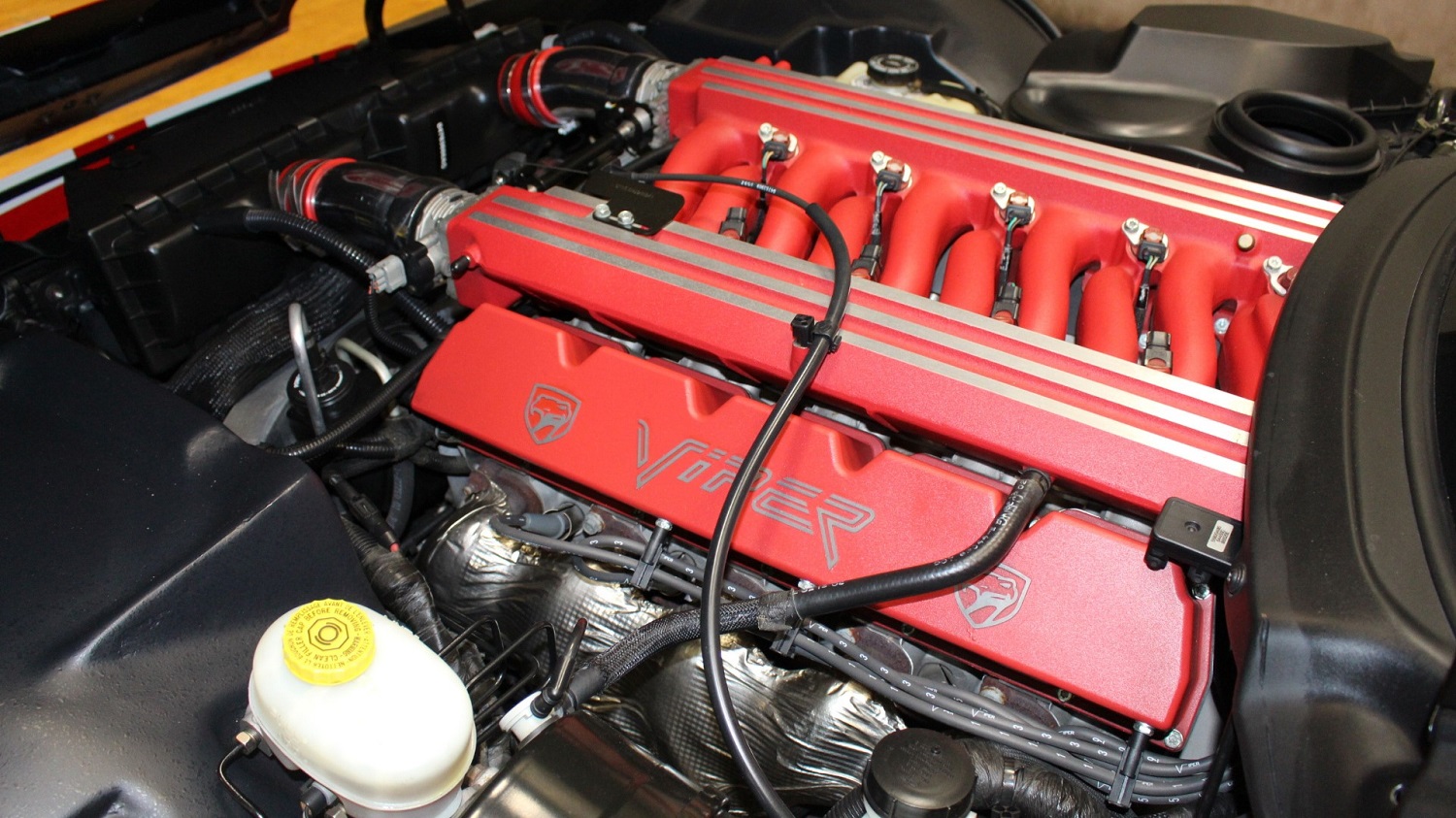
The original Dodge Viper RT/10 debuted as a 1992 model. Back then, the Ford Mustang GT had angular lines that contained 225 horsepower. The Viper was a completely different animal, a modern reincarnation of the Shelby Cobra with bold curves, side pipes, and a 400-horsepower 8.0-liter V10 under its enormous hood. Aside from its relative lack of creature comforts, one catch to the Viper RT/10 was that Dodge didn’t offer it as a coupe. The automaker filled that hole in the Viper lineup with the 1996 GTS. Not only did it provide comfort in all weather conditions, but it also had an additional 50 horsepower.
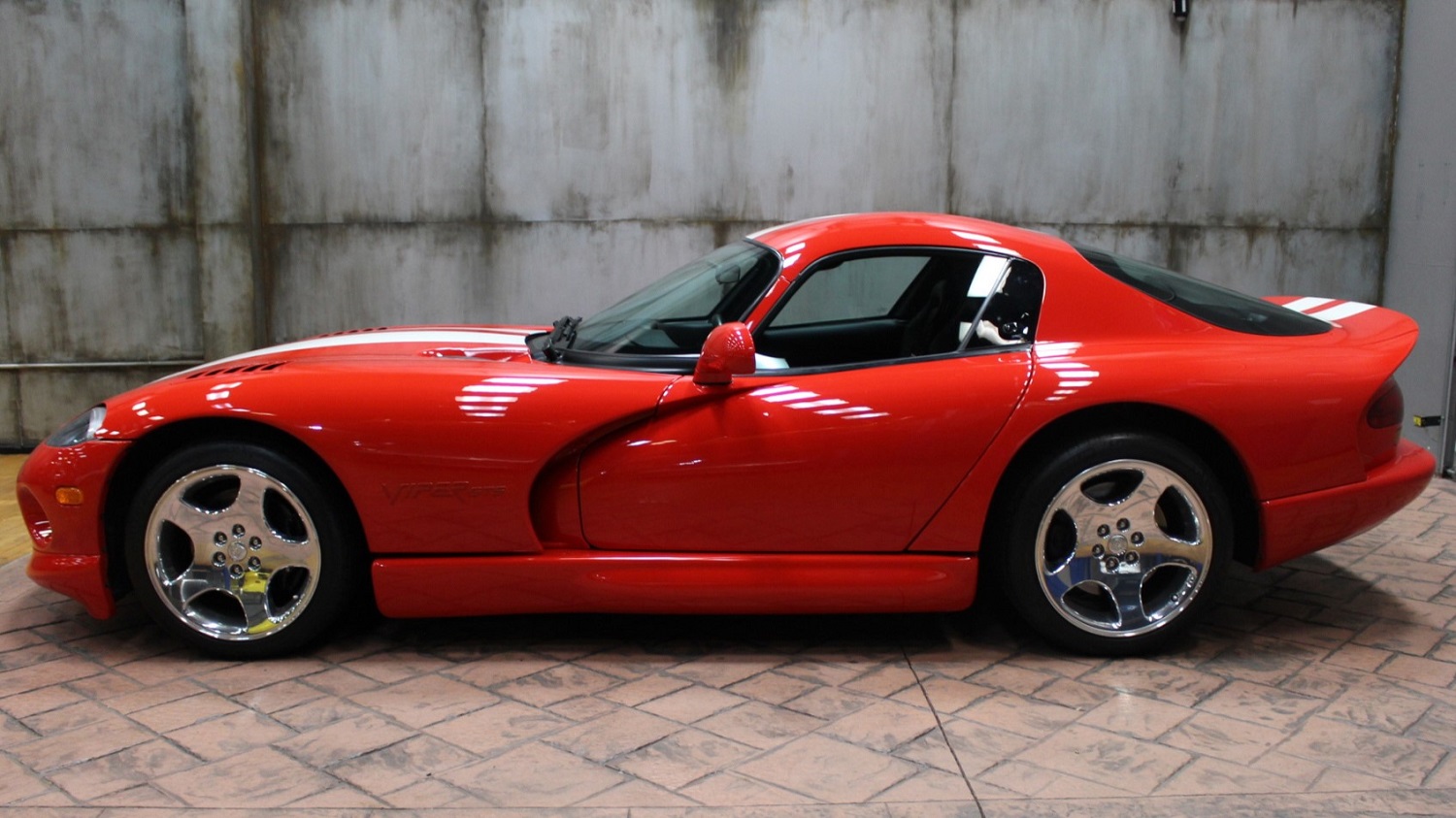
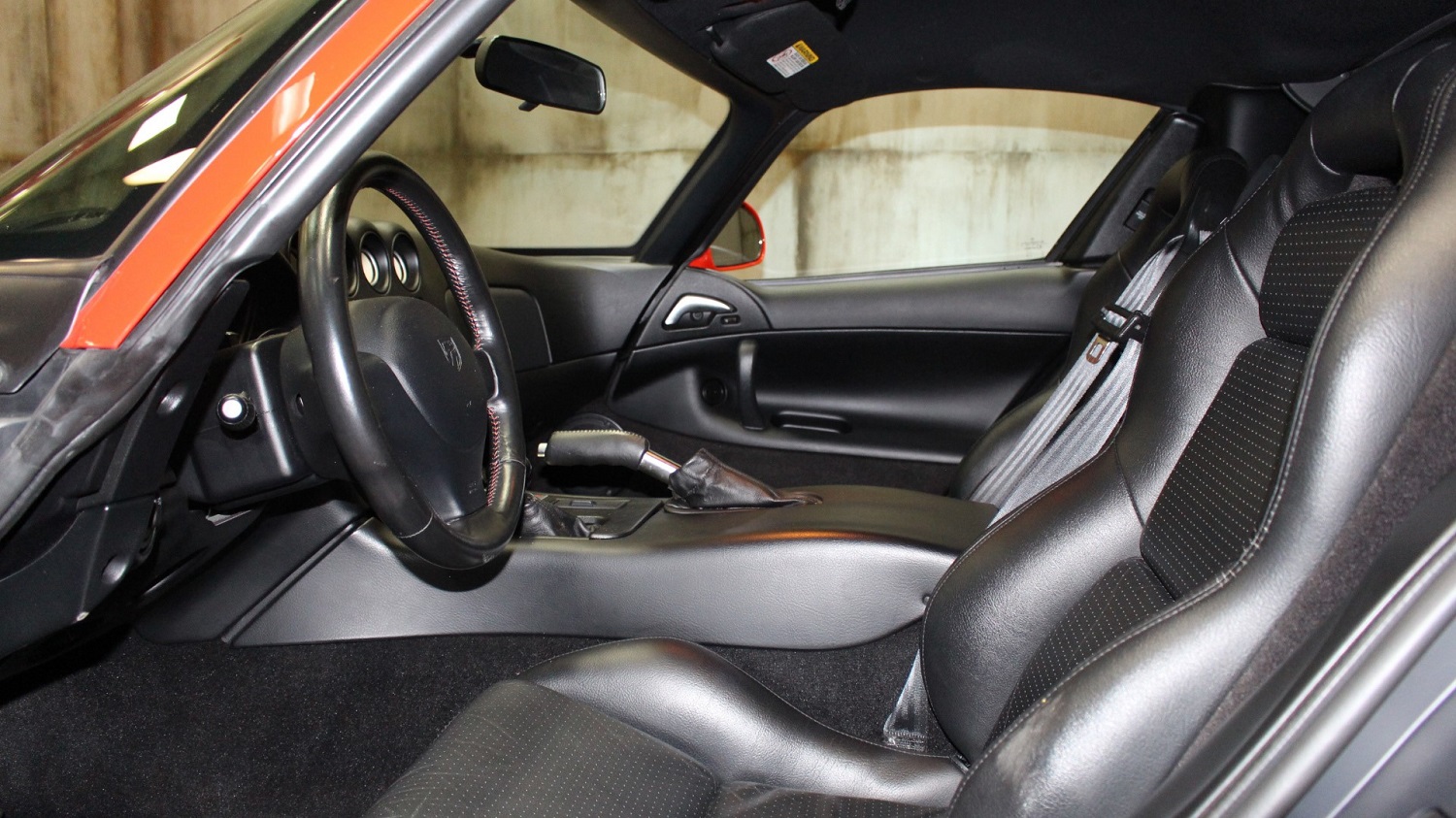
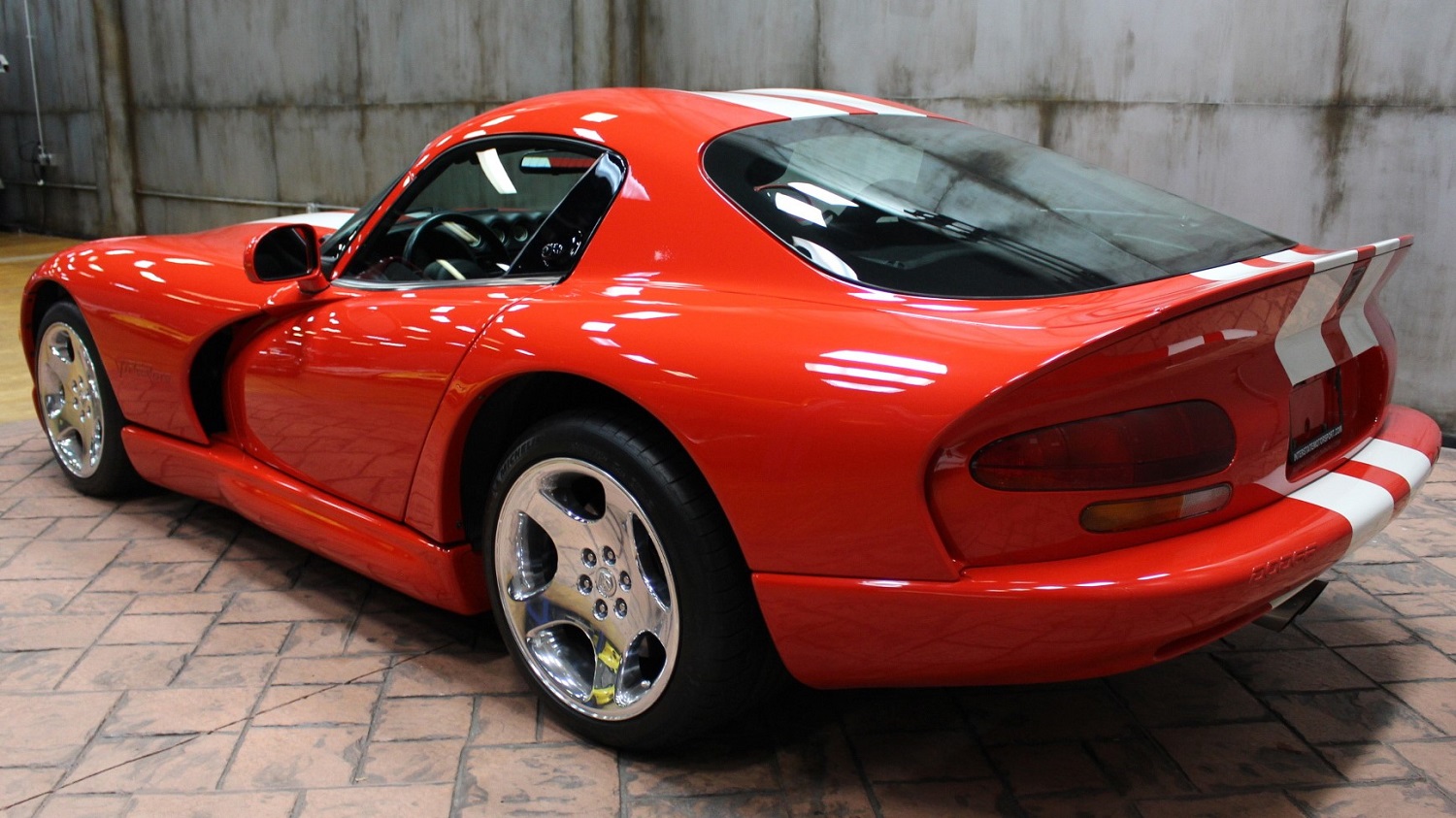
By 2002, it was time for the Viper to shed its skin and enter a new generation of design and performance. To commemorate the end of the first-generation Viper coupe, Dodge produced 360 Final Edition models, each finished in Viper Red with full-length Stone White stripes over a black leather interior. Inside the cockpit, red accent stitching and an individually numbered plaque near the shifter for the six-speed manual gearbox visually separated the Final Editions from other GTSs.
This particular GTS Final Edition is #51 out of the 360-unit production run. Since leaving Dodge’s Conner Avenue Assembly Plant, it’s been driven only 10,847 miles. The combination of that gentle use and full-body paint protection film means this special Viper looks much newer than its model year would suggest. Luckily, its previous owner resisted the urge to modify it and left it as Dodge intended it to be. The big V10 is stock, although the eye-catching 18-inch chrome wheels have new Michelin Pilot Sport tires. Those will come in handy because, even in 2025, 450 horsepower and 490 lb-ft of torque is a lot to handle.
Your chance to place the winning bid on this piece of Dodge Viper history is coming up soon. The Barrett-Jackson 2025 Palm Beach Auction will heat up South Florida with hot cars and high-octane fun April 24-26.
One of the most exciting things about reviewing a vehicle is using it for its intended purpose. Yes, a C8 Corvette has great curves and sounds mean, but it’s most satisfying when you drop the hammer and fly down the road. Testing the Mercedes-AMG GLS 63 several years ago was more enjoyable because I was able to fill all three rows of seats with my friends. Off-road SUVs are meant to be put into 4LO and taken into the wild. When I learned I would be getting my hands on a 2025 Toyota Sienna Platinum, I got excited because I knew I would be testing the luxurious minivan not just as an automotive writer, but as a dad and family man.
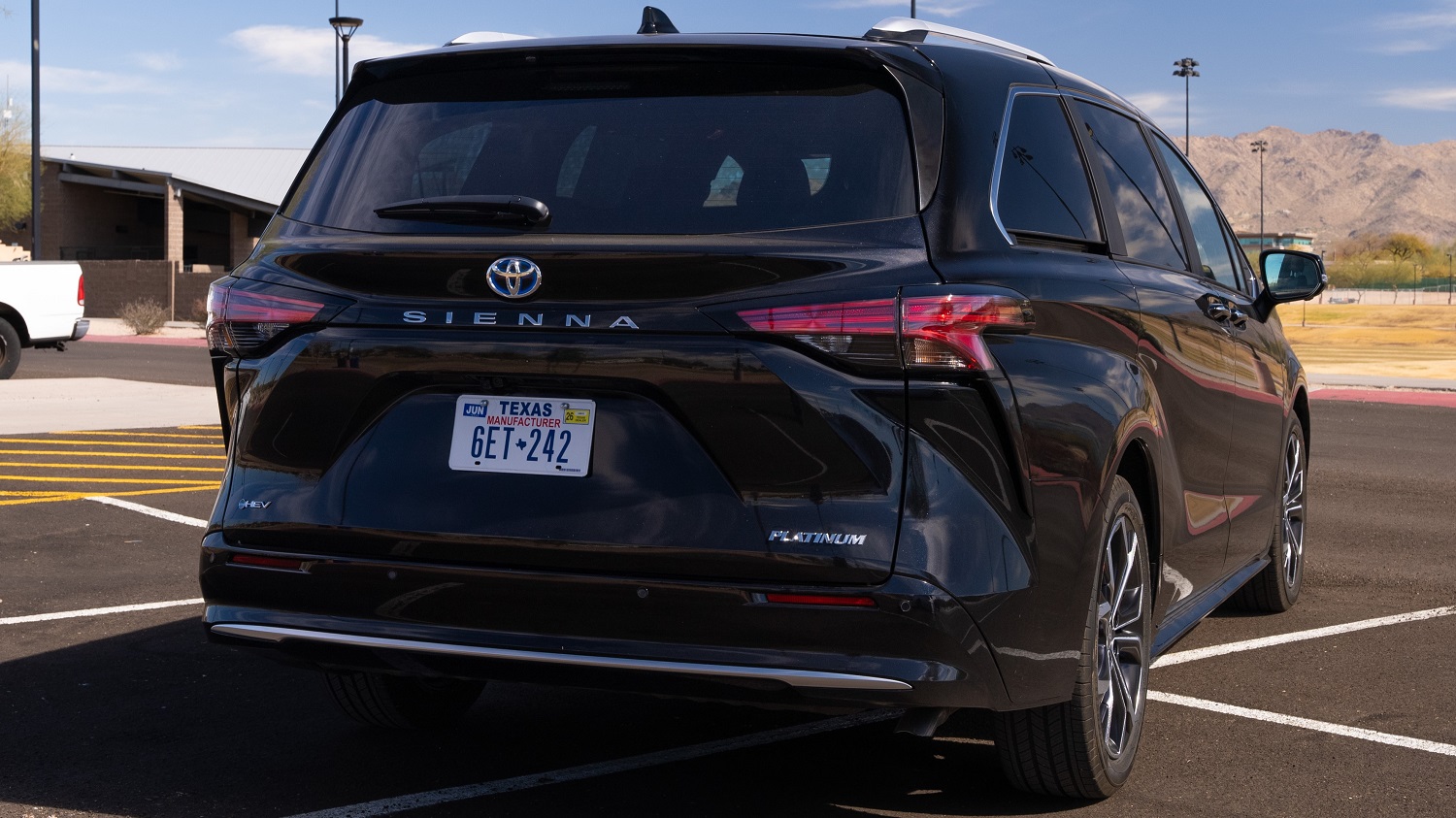
WHAT’S NEW When it was introduced as a 2021 model, the fourth-generation Sienna was a radical departure from its predecessor. Not only did it have a dramatic front end inspired by the design of Japan’s Shinkansen bullet train, but it also was only available with hybrid powertrain. For 2025, you can consider the Sienna having a mid-cycle refresh: the exterior updates are subtle and include color and trim changes as well as new wheel designs for the Woodland Edition and Platinum model, which gets two-tone 20-inch rollers. A new Hybrid Electric Vehicle badge reminds onlookers of the choice Toyota made years ago.
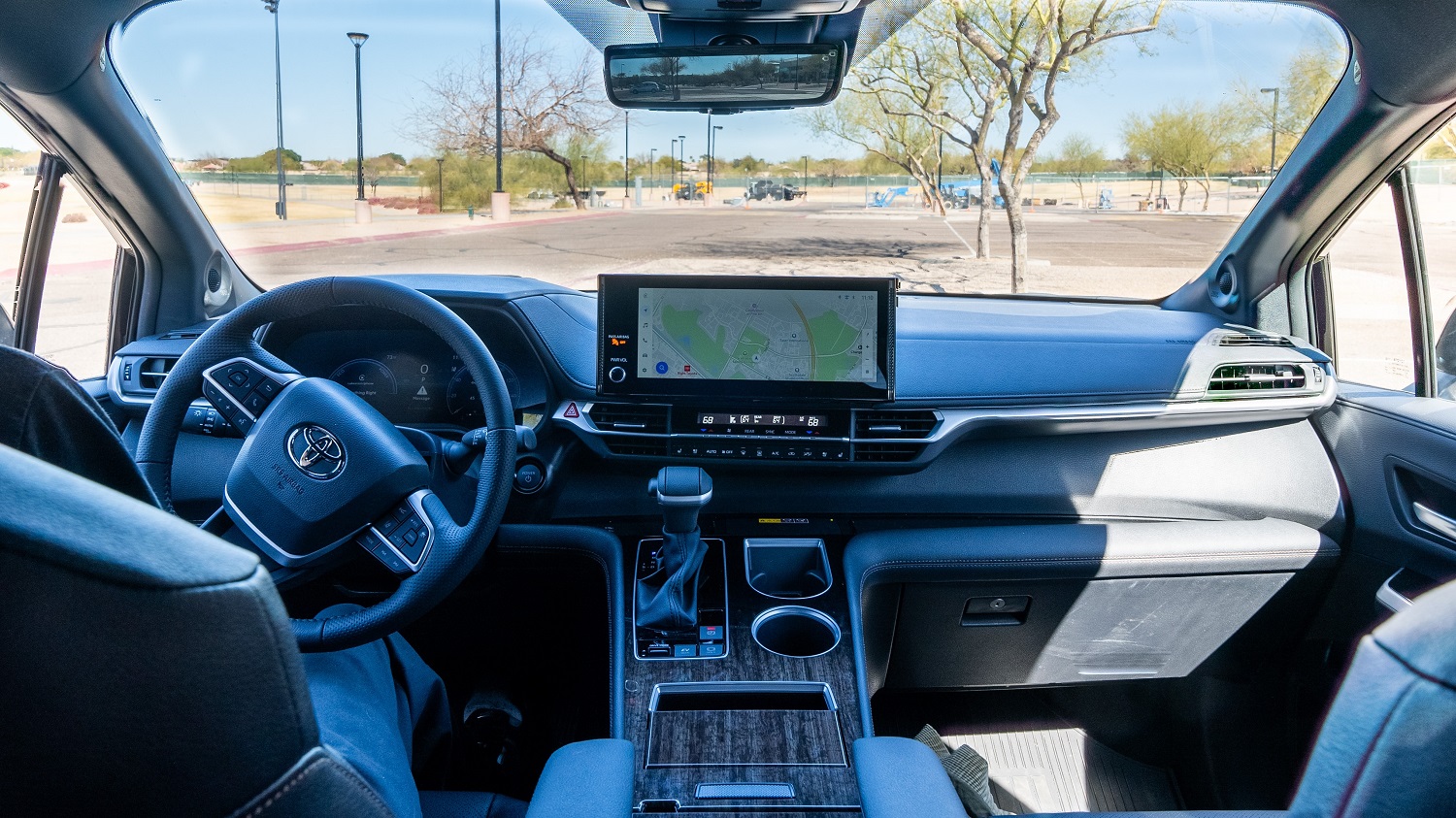
The bulk of the revisions to the 2025 Sienna are on the inside. All trim levels come equipped with dual microphones for better call clarity, cabin-wide USB-C charging, and a new, faster-charging fifth-generation Qi wireless charger. New colors join the palette of available options and come paired with different finishes for the center console, which has a woodgrain look in the Limited and Platinum models. Most importantly, the 2025 Sienna is the launch vehicle for Toyota’s Advanced Rear Seat Reminder system, which uses millimeter-wave radar to detect movement in the second and third rows before issuing an escalating series of alerts. XSE, Woodland Edition, Limited, and Platinum grades receive a customizable 12.3-inch digital gauge cluster; only the Platinum gets a 10-inch head-up display, built-in vacuum, and FridgeBox cooler as standard equipment. My Platinum press loaner was optioned with the digital rearview mirror camera and a few small protective accessories, which took it from a base price of $56,145 up to an as-tested price of $58,774.
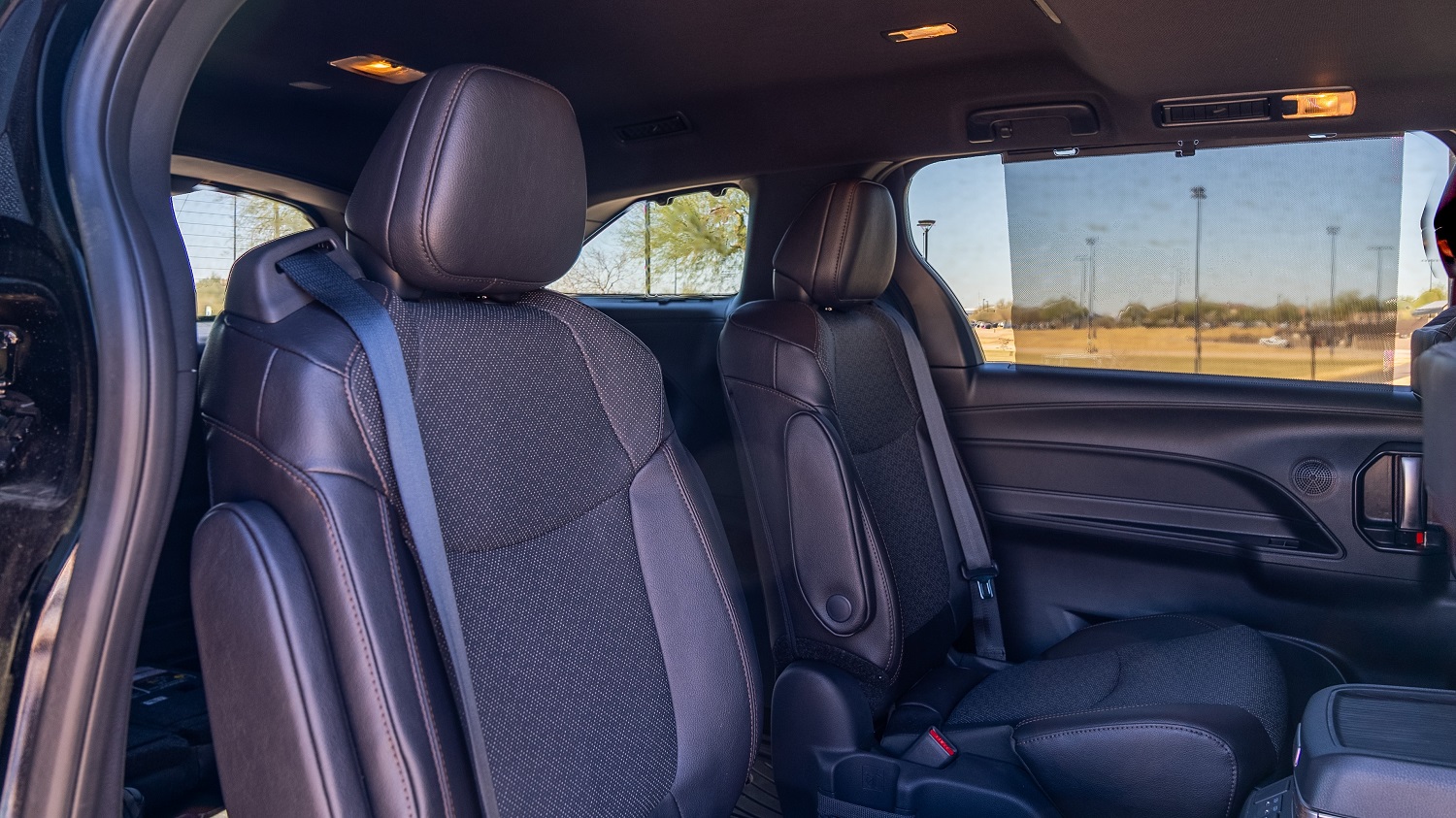
BABY ON BOARD This past January, my son Hayden was born. Not only has he changed my life for the better, but he also changed the way I look at vehicles. Now, one of the first questions that pops into my head when I get the keys to a new review vehicle is, How does it handle a car seat and a stroller? After a weekend of running errands and shopping with my wife, mother-in-law, and son, I learned the answer is “very well.” After opening the passenger-side power sliding door with just a wave of my foot, I didn’t have to move the front passenger seat forward to accommodate Hayden’s car seat in the second-row captain’s chair. Folding the third row of seats down freed up a total of 75.2 cubic feet of cargo space, which was more than enough for my little guy’s collapsible stroller. Even when the back row was up, I was easily able to fit the stroller into the deep cavity behind it.
During a stop at Old Navy, where I was glad to stay with Hayden in the Sienna while the ladies shopped inside, I had a chance to enjoy one of the highlights of the Platinum model. I pushed the driver-side second-row seat back, reclined, and deployed the ottoman. It was a relaxing, luxurious way to pass the time while keeping an eye on my boy.
FAMILY MATTERS The Sienna turned out to be as comfortable as it was capable. Every seat was a good one. All four people in the first two rows had their own climate zone. The digital gauge panel and 12.3-inch center touchscreen were large and legible. When it was cool in the morning, I could use the heated steering wheel and front seats; when temperatures rose in the afternoon, I simply pushed the button for the seat cooler. Whoever rode next to Hayden in the second row had her own heated seat. Although not every cup holder was large enough to hold my 17-ounce water bottle, there were plenty spread throughout the cabin. The same goes for the manual side sunshades—I expected to the see them in the middle row, but I was surprised that Toyota also installed a pair in the third row.
My wife and mother-in-law never leave our house without a cool beverage, and they didn’t have to leave the Sienna without one thanks to the FridgeBox. It didn’t take long for my wife to decide what she thought of the Sienna. Within minutes of being in it, she told me, “I want one of these.” Hayden seemed pleased with the ride quality. I could tell by looking at his beautiful, peaceful face as he slept.
STUFF SHUFFLIN’
After my family moved into our new house (a process which seems to never end), the last thing I wanted to do was fill another vehicle with housewares. But I was eager to see how the Sienna performed as a sort of domestic work vehicle, so I gladly helped load it with seasonal decor items bound for my mother-in-law’s storage unit. Given the shape of some of my cargo, I left the second-row captain’s chairs up, but lowered the rear seats. That configuration allowed me to carry a dining room chair, pop-up singing Santa Claus, and artificial Christmas tree split into two massive zip-up bags. After my mother-in-law and I unloaded the Sienna, she told me she wanted to bring four large totes back to the house. That pit behind the third row was so deep and roomy that, by the time I had all the bins in the van, it looked as if the bottom two weren’t even there. I was impressed.
THE TRADE-OFF
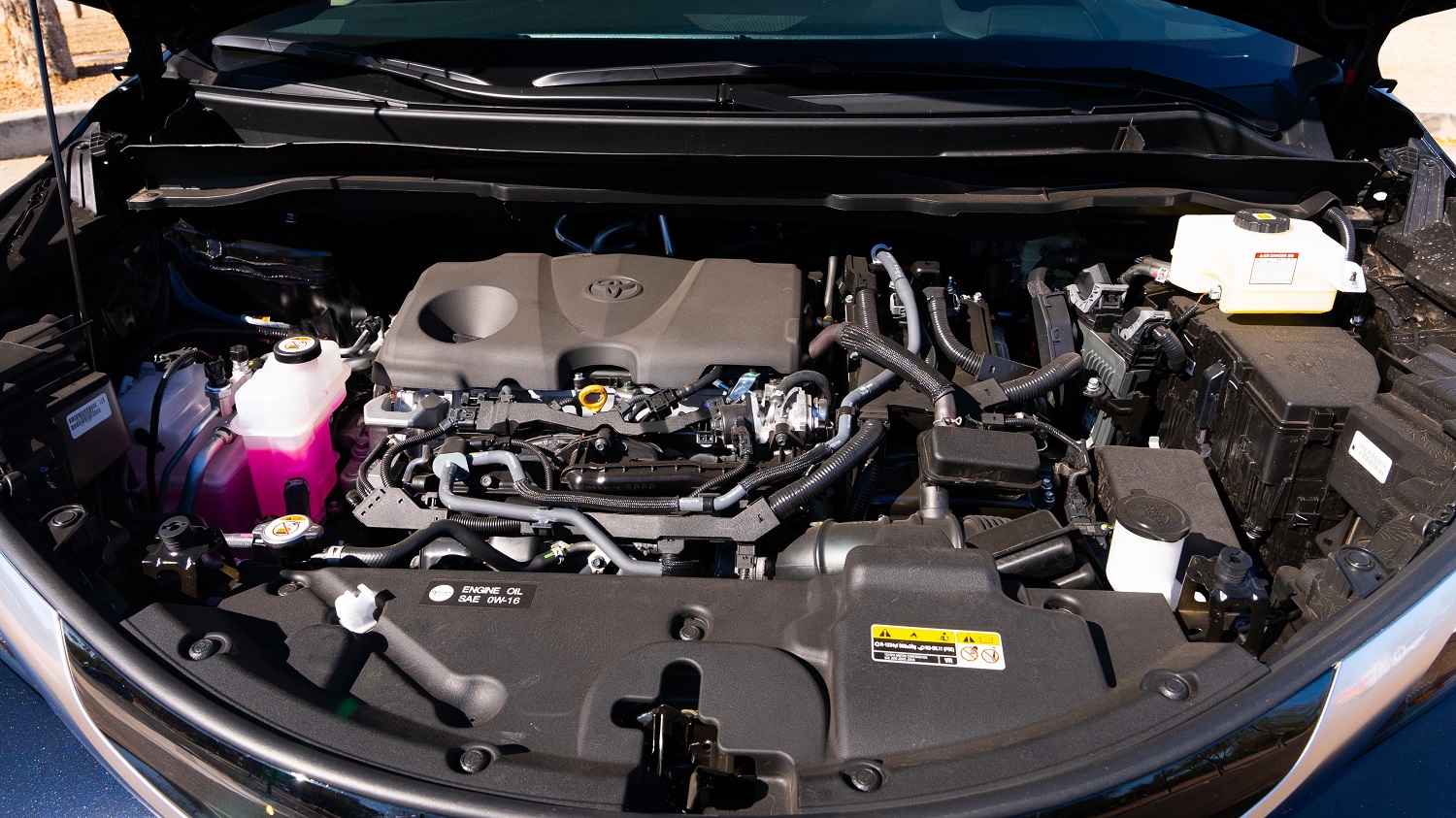
If you’re thinking a hybrid minivan doesn’t sound like the most engaging driving experience, you’re right—it’s not. The Sienna’s 189-horsepower, 176-lb-ft 2.5-liter I4; 180-horsepower electric motor and Nickel Metal Hydride battery produce 245 net horsepower. The engine sounds coarse and, although it has a certain sense of urgency under heavy throttle, the acceleration doesn’t equate to fun or excitement. Neither does the electric power steering or the stiff and stoic brake pedal.
You know what? That didn’t matter to me. I didn’t expect the Sienna to be a driver’s vehicle. I knew it was meant to be more of a tool than a toy. It did what it was built to do well, all while returning an average of 36.9 mpg over the course of 306.5 miles.
Ten years ago, I never thought I’d like a minivan. The Honda Odyssey and Chrysler Pacifica Hybrid changed that, but neither one of those made me want a minivan. The 2025 Toyota Sienna Platinum and my family changed that.