Journal Classic Cars

Category Added in a WPeMatico Campaign

For many of you out there, it’s convertible season now. Once you have the top down, you can either soak up the sun or enjoy the cool night breeze and the view of the stars above – or both, if you just can’t get enough top-down driving. You can do that while rowing your own gears in an iconic sports car in our Pick of the Day, a 1999 Porsche 911 Carrera Cabriolet posted on ClassicCars.com by a dealer in California.

The 1990s was a significant decade in Porsche history. It marked the end of the V8-powered 928, the debut of the mid-engine Boxster, and the arrival of the all-new 911, otherwise known as the 996 generation. Yes, the 1998 911 was larger than the outgoing 993 and had distinctive headlights, but its most significant difference from its predecessor was its engine. For the first time in its history, the 911 had a water-cooled engine. But many things remained the same: the general shape, flat-six power, the availability of a manual gearbox, and coupe and cabriolet body styles, among many others.

The ’99 Cabriolet you see here looks as if it was purpose-built for fun times in great weather. Its Guards Red paint is a great start because it’s an unwritten law that red convertibles need to be driven fast with the top down. The power-operated soft top adds convenience to the festivities.

The Savanna Beige leather interior also gets in on the fun. How? Look in the middle at the shifter for the six-speed manual gearbox, which sends power to the rear wheels.

That means you can not only feel the wind streaming through your hair, but you can also feel the rush of winding up the 296-horsepower, 258-lb-ft 3.4-liter flat-six and upshifting. One thing you don’t have to experience is stressing about the IMS bearing because that’s been handled, according to the selling dealer.

If you’re ready to get out there and burn up the road with the top down, you can do that in this 1999 Porsche 911 Carrera Cabriolet for $22,995.

Click here to view this Pick of the Day on ClassicCars.com
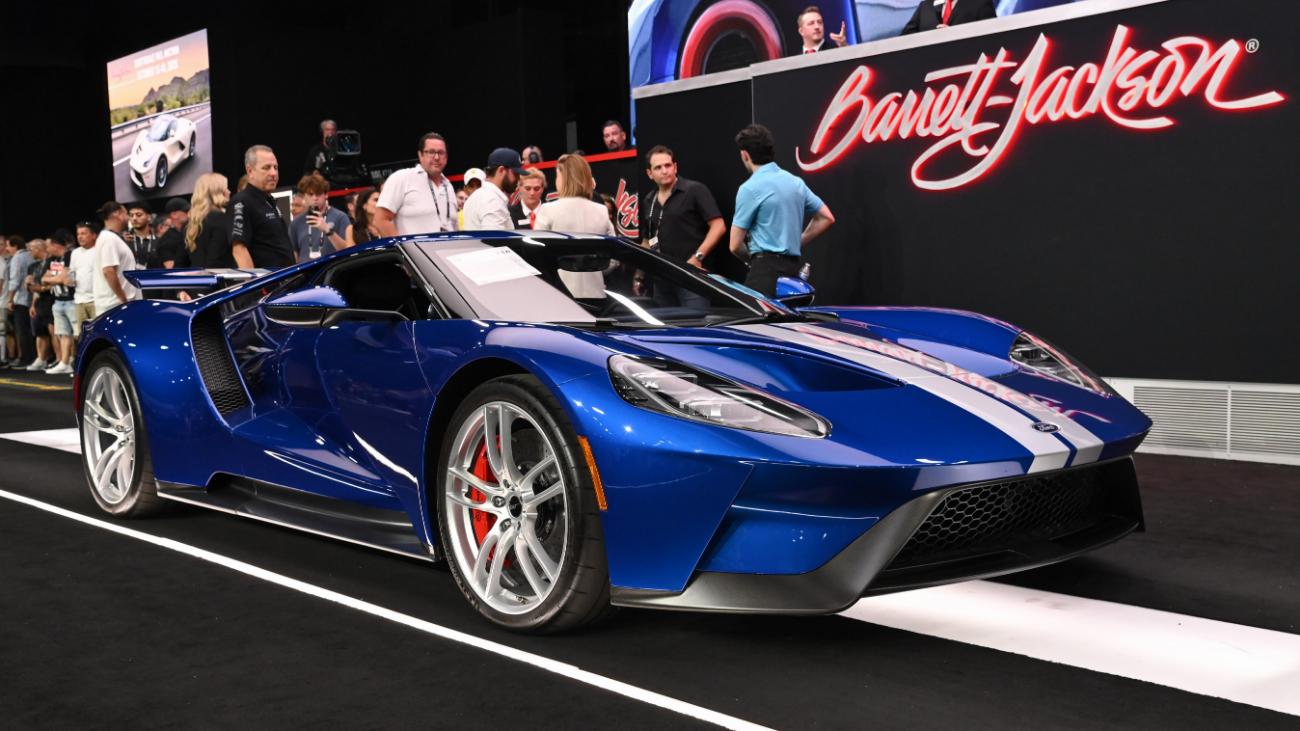
Spring in Florida is a wonderful thing. Combine that with classic cars and you have what must be the most spectacular moments of the season at the Barrett-Jackson 2025 Palm Beach Auction. With Friday, April 25th now part of the history books, let us tell you about the excitement from Day 2 of the auction.

Among three charity vehicles, $370,000 was raised, including $200,000 for a 2025 Chevrolet Corvette Z06 convertible, VIN 001, owned by famed NFL running back Jerome Bettis. The sale of this C8 goes to the The Jerome Bettis Bus Stops Here Foundation, an organization dedicated to providing educational, recreational, developmental, and financial assistance programs for underserved youth.

Other charity cars included a 1965 Superformance MKIII Custom Roadster for $110,000 (benefiting Breakthrough T1D in support of Type 1 diabetes research and advocacy), and a 2017 Ford F-250 Dwyane Wade Champions Edition Custom Pickup for $60,000 (benefiting Social Change Fund United, a nonprofit co-founded by Wade that harnesses collective influence and resources to drive meaningful impact in underrepresented communities of color).

Taking top honors was $203,500 for a 2012 Mercedes-Benz SLS AMG Gullwing Coupe. Below is the Top 10 list for your pleasure.

Lot Description Price
412 2012 Mercedes-Benz SLS AMG Gullwing Coupe $203,500
3002 Jerome Bettis’ 2025 Chevrolet Corvette Z06 Convertible VIN 001 $200,000
391.1 1971 De Tomaso Pantera $143,000
395 1966 Pontiac GTO Custom Convertible $137,500
474 1964 Ford Thunderbird Convertible $126,500
384 1964 Chevrolet Corvette Custom Coupe $125,400
423 1985 Land Rover Defender 130 Custom Pickup $121,000
393 2023 Ford F-250 Shelby Super Baja Pickup $118,800
3001.1 1965 Superformance MKIII Custom Roadster $110,000
468 1988 Rolls-Royce Corniche II Convertible $110,000
449 1969 Pontiac Firebird Trans Am Ram Air III Recreation $110,000
400.1 2010 Ferrari California Convertible $110,000

The Barrett-Jackson 2025 Palm Beach Auction runs through today, April 26, 2025 at the South Florida Fairgrounds. Want to bid on a car or just attend and watch the fireworks? Go to Barrett-Jackson.com. Can’t make it to the auction? Thanks to technology, you can watch it online at Barrett-Jackson.com! Gates open at 8 a.m.

Because of our proximity to the border, us Arizonans are accustomed to seeing the occasional Mexican license plate zooming around our freeways. One of the highlights of a recent trip to Mexico City for a friend’s birthday was the chance to see what the car selection was like south of the border. In particular, I was fascinated by the volume of vehicles with manual transmissions. Every Uber ride I took was in a manual-transmission vehicle.

Here were 10 vehicles that caught my eye, in alphabetical order by manufacturer.

BYD Tang DM-i

I saw the “BYD” name a lot – and naturally, I wondered what it stood for. Turns out, it’s “Build Your Dreams.” The Chinese company was founded in 2003 and has been gaining a lot of momentum in Latin American markets. The Tang is a midsized crossover with a plug-in hybrid 1.5-liter inline-four engine and seating for seven passengers. It has been around since 2014 and is in its second generation.

Chevrolet Groove

What a cool name, right? The Groove is a subcompact crossover SUV developed by SAIC-GM, targeting emerging markets. It is sold in some parts of the world as the Baojun 510 and comes with a 1.5-liter L2B inline-four.

GAC GS3 Emzoom

This is another one from China, produced by the GAC Group, which is headquartered in Guangzhou. The GS3 had pricing in the Chinese market starting at 73,800 yuan, which comes out to about $10,120. It could be optioned with a few different four-cylinder powertrains, and – you guessed it – could come with a manual transmission, too.

Great Wall Pao (GWM) Poer Pickup

The GWM Poer (also called Pao in some markets) is a mid-size pickup from Great Wall Motors – yet another Chinese company. The truck has been around since debuting in 2019 at the Shanghai Auto Show.

Honda City

Finally, a brand name I recognized, but a model I did not. Turns out, the City has been sold under a number of different nameplates, including the Fit Aria, the Ballade and the Greiz, depending on the market. The fifth generation of the City received a facelift in 2011, and that look matches with the car that I saw.

MG GT

While I didn’t get a great photo of this car, it was one of my favorites from the trip. The GT has been in production by SAIC Motor in China since 2012. In some markets, it’s called the MG 5. The larger of the two available engines is a turbocharged 1.5-liter with 171 horsepower.

Pontiac Matiz

The Matiz, a rebadged version of the Daewoo Matiz, was also a rebadged version of the Chevrolet Spark. It was a tiny city car offered in some Latin American markets. It was a bare-bones economy car that fit well in urban cities.

Renault Duster

I saw a lot of these little SUVs running around. The Duster was offered with both front-wheel and all-wheel drive configurations, marketed jointly by Renault and its subsidiary Dacia. The 4×4 had underbody protection and beefy body cladding.

Seat Ibiza Hatchback

The Ibiza has been around since 1984 and was classified as a “Supermini” car. It was manufactured in Spain and built on the same platform as the Volkswagen Polo. One thing I noticed in researching all of these cars: Oftentimes, they have been marketed under many different brand names simultaneously.

Suzuki Jimny

This was our traveling group’s favorite. The Jimny is a cult-favorite compact 4×4 in Latin America, celebrated for its off-road prowess despite its small size. It has retro styling, body-on-frame construction, and Suzuki’s “ALLGRIP PRO” traction system.

I enjoyed that the roadways were filled with such unique cars during my Mexico trip and, I have to admit, I did browse the local classified listings to see if there was anything in particular that I would want to drive home to the United States.

Gracias for coming along for the ride! Do you have any international trips planned this summer? If so, what types of vehicles do you expect to see at your destination?

Currently listed on AutoHunter is this 1957 Chevrolet Bel Air 2-door sedan, which is powered by a new 350ci V8 crate engine mated to a 700R4 four-speed automatic transmission. Finished in dark blue over a two-tone gray vinyl and cloth interior, this Bel Air is now offered by the seller in Colorado with a clear title.

The dark blue body features chrome bumpers and trim, hood ornaments, driver-side mirror, gold Bel Air badges, and dual exhaust outlets.

This Bel Air rides on a set of staggered-width 15-inch front and 17-inch rear Boyd Coddington chrome wheels fitted with 205/60 and 255/50 BFGoodrich radial tires, respectively.

The cabin is furnished with a light gray vinyl and gray cloth split-bench front seat and a matching bench seat in the rear. Features include power windows, tilt steering column, power steering, and Vintage Air climate control system.

Instrumentation from Classic Instruments consists of a 140-mph speedometer, 8,000-rpm tachometer, and gauges for the temperature, voltage, oil pressure, and fuel level. The odometer shows 1,388 miles, but the title for this vehicle indicates that it’s mileage-exempt.

Under the hood is a new 350ci V8 crate engine, which is equipped with an Edelbrock four-barrel carburetor and paired with a 700R4 four-speed automatic transmission.

The engine transmits its output to the road through a nine-inch rear end. Power front disc and rear drum brakes keep that power in check.

If you want this American classic with more modern updates, bid on it now. The auction for this 1957 Chevrolet Bel Air ends on Tuesday, April 29, 2025, at 11:45 a.m. (PDT).

Visit the AutoHunter listing for more information and a photo gallery

Some cars are more unusual than others—take our Pick of the Day as an example. Sure, 87,684 of them were built in this particular model year, so it may be difficult to figure out what’s so unusual when it seems everyone and his/her neighbor owned one. But, if you glance at the color combination, you may notice something different about this 1968 Pontiac GTO. It is listed for sale on ClassicCars.com by a dealership in Depew, New York.

Yes, Pontiac built close to 88,000 GTOs in 1968, which stands as a record for the second best-selling muscle car ever (the 1966 GTO is number one, 1969 Chevelle SS 396 is number three). It was a complete redesign after four model years of the previous generation, with Pontiac’s effort garnering recognition from Motor Trend with its Car of the Year award.

And while it is arguable that any COTY award is worthy of bragging rights, the GTO certainly was a fine contender thanks to its curvaceous design and monochromatic styling (at least from the front), the latter due to Pontiac’s use of Endura, an energy-absorbing plastic that could return to form and resist dents in parking lot-grade incidents. For those who were not a fan of the Endura look or suspicious due to imperfect fitment, the chrome version used on Tempests and LeMans was available as a delete option.

For all the hubbub about the GTO, it should be noted that its engines were mostly carry-overs from 1967:

  • Standard 400/350 (in 1967, it was rated at 335 horsepower)
  • 400/265 two-barrel (rated at 255 horses in 1967)
  • 400 HO, rated at 360 horses
  • 400 Ram Air, also rated at 360 horses though at a different rpm than the HO

In April 1968, Pontiac introduced a new engine to take over from the 400 Ram Air. Called Ram Air II, its most notable feature was the round-port design for its heads. According to the manufacturer, it was rated six horses more than the engine that it replaced.

An interesting option for the GTO was concealed headlights, a feature that was becoming more popular at the time. It certainly made the GTO appear more contemporary, though only about half of GTO customers opted for the option. Along with the Grand Prix and Bonneville (a mid-year option for the latter), 1968 was the only year Pontiac offered so many cars with concealed headlights.

Despite the number of GTOs built, this 1968 Pontiac GTO is on the rarer side thanks to its trim combination. Sure, a white top paired with Mayfair Maize may run second to yellow and black, but look closer—that is Cameo White paint, not vinyl. Two-tone cars are quite unusual and rare, plus the choice of painting the top gave the opportunity for more combinations (dare I suggest Cameo White with a Mayfair Maize top?). Though the seller offers no information in the description, I spy hidden headlights, Rally II wheels, exhaust tips, center console with Hurst Dual-Gate automatic, three-spoke steering wheel, Rally Cluster, air conditioning, and AM radio with CD player update in the glovebox. From the looks of the engine, it’s likely the standard 350-horsepower version.

Do you know how people sometimes gravitate to filing in line without looking to see if there’s an easier way in? That’s what the average car guy or gal does when shopping for a classic. You? You’re the kind of person to seek another way in, and this GTO does that for you. For $57,900, you can avoid falling into formation with the rest.

Click here to view this Pick of the Day on ClassicCars.com
You may have heard recently that Nissan has stopped taking orders for the GT-R, the two-ton supercar that was spun off from the Skyline. After over 17 years, Nissan is calling it a day for this two-ton coupe, but Nissan faithful don’t need to worry—another GT-R will be coming.

Just not yet.

The current GT-R was introduced at the end of 2007 as a 2009 model, with Americans getting its first taste of the GT-R in the summer of 2008. At the beginning, the GT-R started out with 473 horsepower and is capping its tenure at 592 horses, though there were two special-editions with more horsepower targeted to millionaires (GT-R50) or track days (NISMO Track Package). Despite being long in the tooth, the GT-R is still a spectacular supercar, somewhat how the Subaru was to Lamborghini in The Cannonball Run—clever tech over exotic.

Certainly, the world of performance cars is different today than in 2009, and GT-R sales are no longer robust. After a high of 3,158 for the initial North America debut, production settled to around 1,500 per model year until 2018, when the number cratered to 458 and has been under 300 units for the past several years.

You would think Nissan would already have a successor in place, but that’s simply not what has happened. Admittedly, Nissan isn’t in the best shape at the moment, which is a circumstance that American enthusiasts know all too well (note the shelf life of the C3 Corvette, for example).

2024 Nissan GT-R Special Editions

According to Car and Driver, the next GT-R is still three to five years into the future and, like most future-leaning cars, it is expected to use a hybrid powertrain. Will it be a conventional hybrid or of the plug-in (PHEV) variety? That has yet to be determined, but a conventional hybrid would give the next-gen GT-R the faculty to handle Nürburgring—another reason Nissan abandoned the GT-R EV after several prototypes. The ICE part of the equation should include an improved-yet-familiar turbo-six.

Despite the failure of the Nissan/Honda merger, there’s also word that the new GT-R will be part of a joint effort between the two companies, which means that a next-gen NSX may be on the horizon. Honda tends to march to the beat of its own drummer so, if true, variations between the two may be chin-scratcher.

This is a carryover model year for the Hyundai Santa Fe, so aside from Atlantis Blue joining the palette of available colors, it hasn’t changed significantly since 2024. You may look at the Santa Fe in this review and think it’s the exact same one we reviewed last year. After all, it’s a top-of-the-line Calligraphy model with Earthy Brass Matte paint, a Gray Nappa leather interior, and HTRAC all-wheel drive. There’s one major difference, though: what’s under the hood, which completely changes the character of the Santa Fe.

Prices for the 2025 Santa Fe Hybrid start at $37,800 for the base SEL model with front-wheel drive. With its $1,000 matte paint, $210 carpeted floor mats, and $1,415 inland freight and handling charge, our all-wheel-drive Santa Fe Hybrid Calligraphy review vehicle had an as-tested price of $51,675.

The Santa Fe has instant identity in any parking lot, although some passers-by may confuse the upright, two-box design for a Land Rover Defender 110. Given that those are upscale hardcore off-roaders priced from $60,800, it’s hard to imagine Santa Fe owners being angered by the mix-up. However, if they’re not used to a vehicle with matte paint, they may be unpleasantly surprised by its maintenance requirements, which prohibit automated car washes, conventional polishes and other paint care products, and wiping too hard, all of which can ruin the finish. Earthy Brass Matte is a handsome color, but it makes a sensible SUV that’s “built for your grandest adventures” a little less practical and rugged.

Most modern vehicle seats hit a certain baseline of comfort. However, there are some that are truly outstanding when it comes to making the driving experience significantly more pleasant. The Zero Gravity seats in the Nissan Altima, which can make a long road trip seem much shorter, come to mind. The heated and ventilated front seats of the Santa Fe Calligraphy are also on that level. They were absolutely pillowy. Along with the Santa Fe’s gentle suspension tuning, they made every drive better. The heated steering wheel, wireless Android Auto and Apple CarPlay, dual wireless phone charging pads, and heated captain’s chairs and manual sunshades in the second row only added to the serenity of the Santa Fe’s cabin.

The 2024 Santa Fe Calligraphy was a lovable vehicle for the reasons above and many more, but its engine had a major drawback. Although the turbocharged 2.5-liter I4 was powerful, its turbo lag meant always playing a game of “Hurry Up and Wait” for its 277 horsepower and 311 lb-ft of torque. The hybrid model combines a 1.6-liter turbo four with an electric motor and a 1.49-kW lithium-ion battery; total output is 231 horsepower and 271 lb-ft. Under ideal conditions, the Hybrid Calligraphy with HTRAC is capable of returning 35 mpg in the city, 34 on the highway, and 34 combined. In our test vehicle, we averaged a significantly lower 30.5 mpg across 390.8 miles. True, the hybrid setup wasn’t as economical as it could’ve been nor as powerful as the gas-only option, but its power delivery was superior. The delay between requesting acceleration and getting it was minimal. Not only was the hybrid system much more responsive and enjoyable, but it also fit the positioning of the Calligraphy trim better. Soothing leather seats, a suede-like headliner, and a 12-inch head-up display are luxuries, but one of the greatest luxuries is not having to wait.

To learn even more about the 2025 Hyundai Santa Fe Calligraphy AWD, watch our full video review below.

Click above to watch our full video review on YouTube!

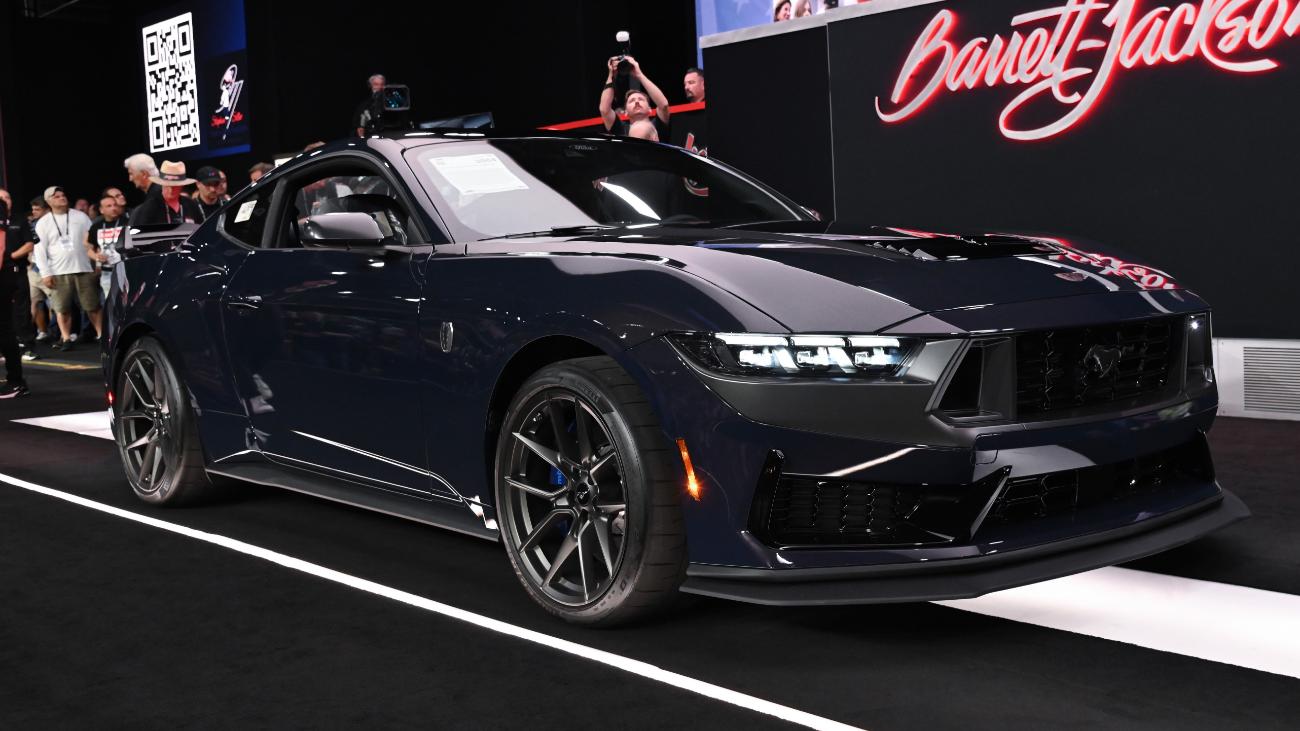
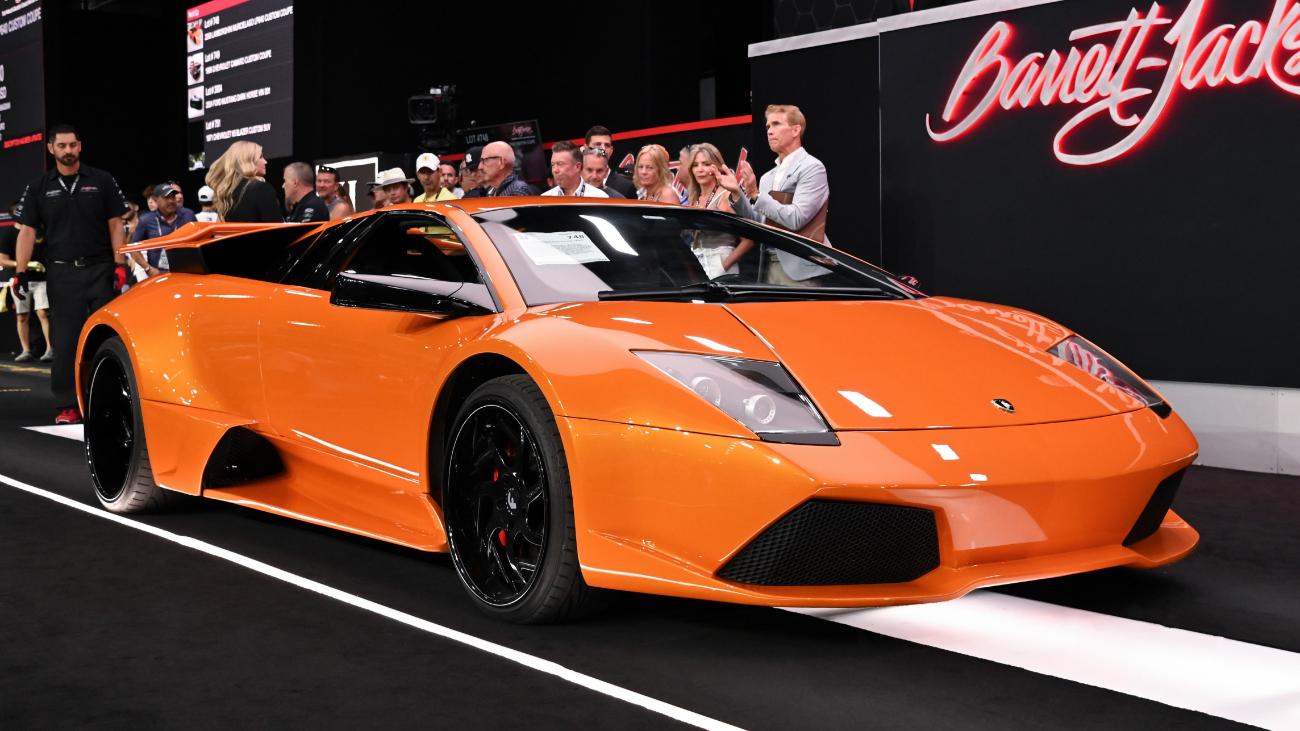
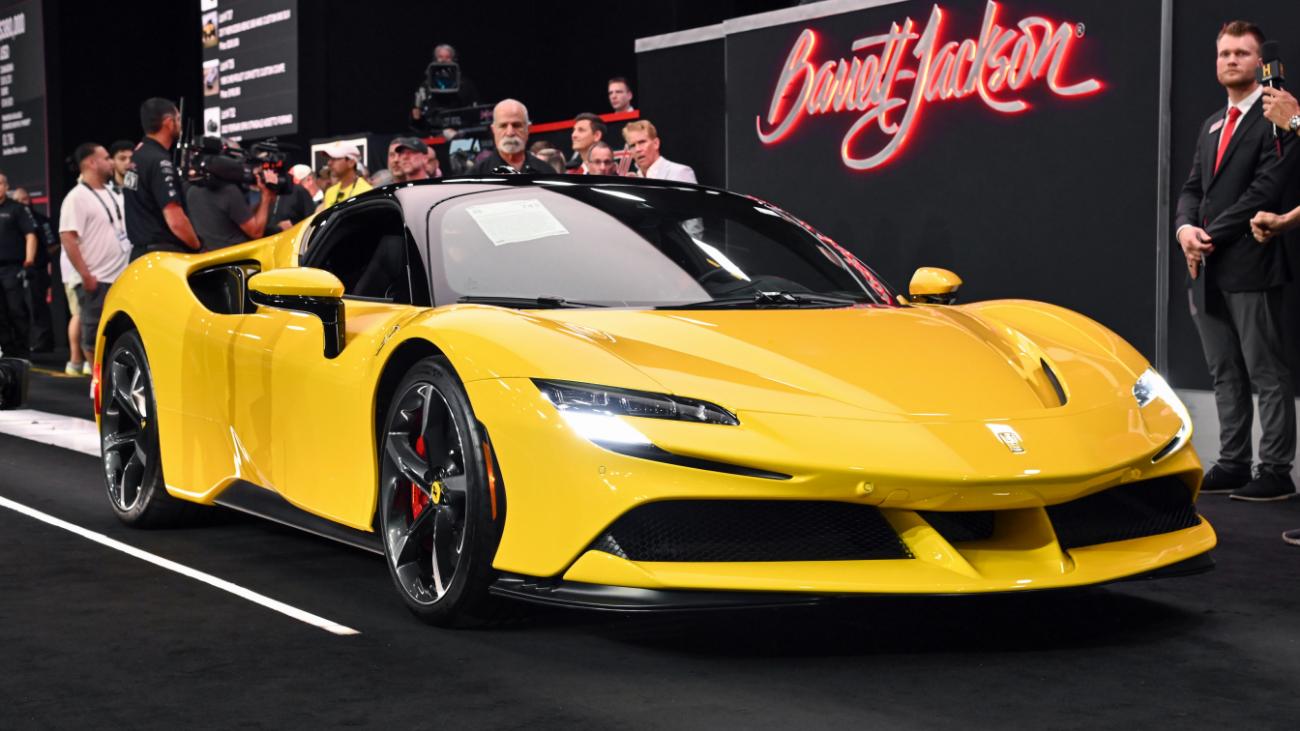
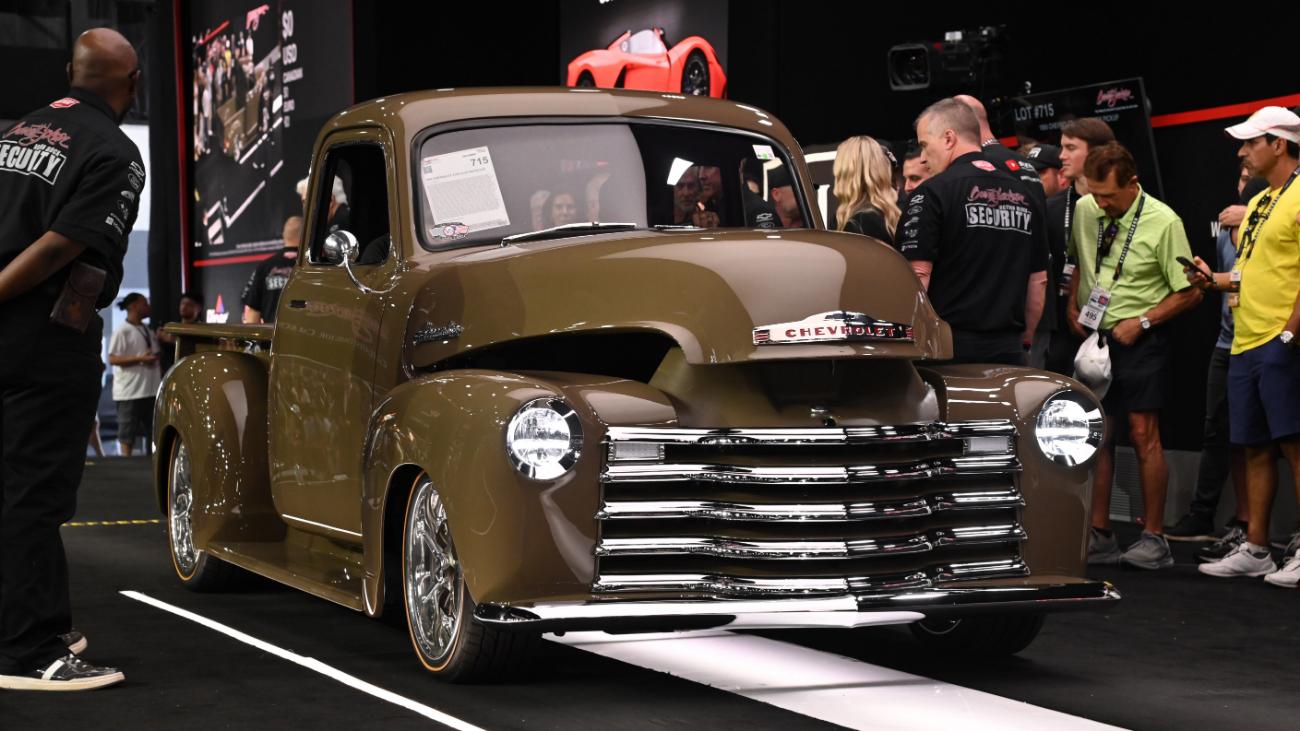
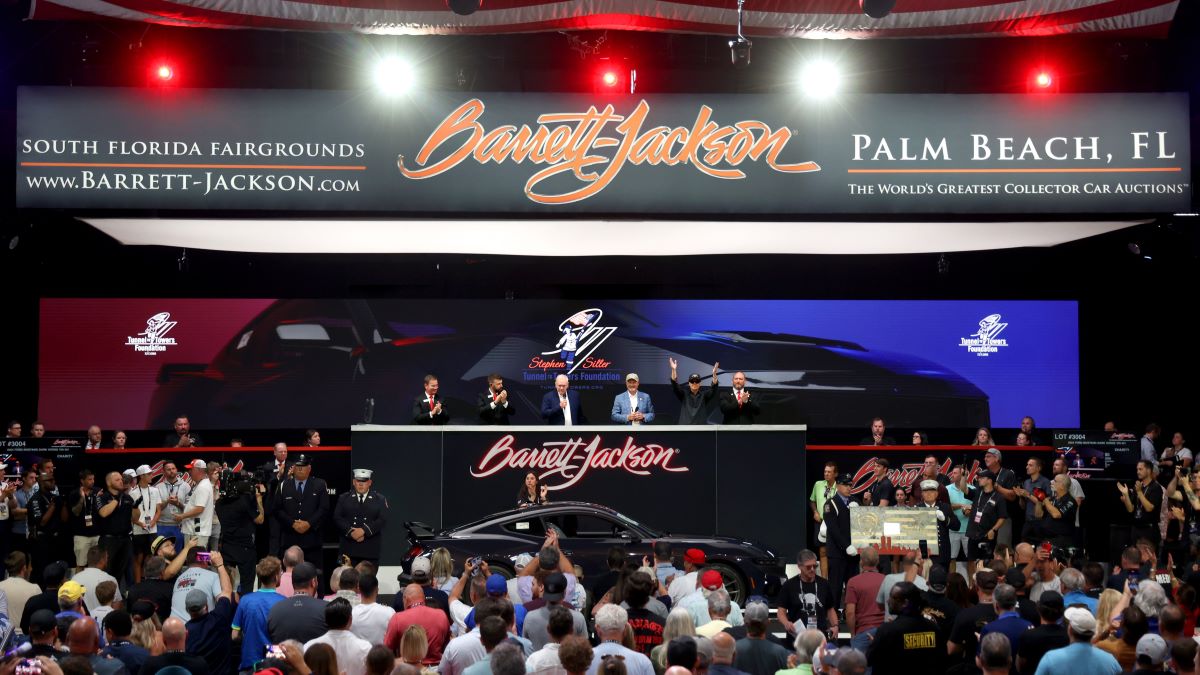
The Barrett-Jackson 2025 Palm Beach Auction has commenced! So many classics and collectibles on the block in the Sunshine State is a fine spring follow-up from the winter success of Scottsdale just three months ago. With Thursday, April 24, 2025, being the first of three exciting days, you’re probably interested in seeing some of the excitement from Day 1, right?

Glad you asked!    

After over 100 examples of automotive memorabilia crossing the block in the morning, it was time for the collector cars—175 of ‘em, including six charity car auctions! In fact, the top car, a 1994 Dodge Viper RT/10, raised proceeds benefiting the Florida Highway Patrol Council, which provides support to the families of troopers who lose their life or sustain life-threatening injuries in the line of duty. Note the day’s highlights below.

Lot Description Price
3000 1994 Dodge Viper RT/10 Convertible $87,000
109.2 1972 Chevrolet K20 Custom Pickup $68,200
116 1956 Chevrolet Corvette 265/245 $56,100
119 2019 Karma Revero $55,000
118 1968 Chevrolet Chevelle SS 396 $55,000
111.1 1999 Ferrari 456 GTA $55,000
127 1971 Chevrolet Camaro Custom Coupe $52,800
112 2012 Chevrolet Corvette Grand Sport Coupe $51,700
72 1972 Chevrolet El Camino Custom Pickup $51,700
95.1 1967 Chevrolet Impala SS Convertible $50,600
110 2017 Mercedes-Benz S550 Cabriolet $49,500

The Barrett-Jackson 2025 Palm Beach Auction runs through Saturday, April 26, 2025 at the South Florida Fairgrounds. Want to bid on a car or just attend and watch the fireworks? Go to Barrett-Jackson.com. Can’t make it to the auction? Thanks to technology, you can watch it online at Barrett-Jackson.com! Gates open at 8 a.m. each day.

Did you love the looks of the 1980 Mercedes-Benz G 280 GE that we selected as our Pick of the Day back in February yet wished it had more modern technology? Well, we have great news: the Mercedes-Benz Stronger Than the 1980s Edition G-Wagen combines that cool retro style with the power and conveniences of today’s G 550 model.

If you’re thinking the vehicle you see here looks an awful lot like the G 280 SE that we highlighted, there’s a reason for that: Mercedes based the looks of the Stronger Than the 1980s Edition on the 280 SE. In fact, the Agave Green on our Pick of the Day is one of the throwback colors Mercedes offers on its heritage-inspired rig, albeit it’s now a shade from the Manufaktur line; the other colors are Cream (a color popular with people in the ’80s who drove their G-Classes in the city) and Manufaktur Colorado Beige. Keeping with the retro theme, Mercedes used Manufaktur Night Black Magno to black out the front fascia, grille, brush guard, bumpers, side sills, wheel arch flares, and mirror caps. The Manufaktur Logo Package adds black door handles with an embossed “G” logo. A set of silver 18-inch alloy wheels break up the two-tone look.

Other visual references to the era of Reagan and Thatcher include the old-school Mercedes badge on the hood and the “Mercedes-Benz” lettering on the rear door, which carries a spare tire with an edition-specific cover. Functional upgrades include mud flaps and all-terrain tires; models finished in Manufaktur Agave Green paint also come equipped with a roof rack.

Inside, the Stronger Than the 1980s Edition has black leather seats with checkerboard fabric inserts, as well as explicit branding on the passenger-side grab handle. The Schöckl mountain near Graz, Austria, where G-Classes have been tested and validated off-road since 1979, earns recognition in the form of the topography displayed on the front door sill panels and a “Schöckl Proved” badge at the base of the B-pillar.

The “1 of 460” badge on the center console not only pays homage to the first G-Class model series, W460, but it also indicates how many Stronger Than the 1980s Editions Mercedes will be built for the world market. Units from the U.S. allotment are scheduled to arrive in dealerships sometime later this year. There’s no official word on pricing yet, but we have a hunch the MSRP won’t be from the 1980s.

In the United States, we have a reasonable expectation of privacy. That means you can’t escape an influencer’s camera lens while in public, but you can live in your residence and let it all hang out to your heart’s content.

So, what about when you’re driving in public? A court case in Georgia may clarify what your expectations should be.

(Image courtesy of General Motors)

Currently, you can drive a modern General Motors vehicle and, while you accumulate miles, the vehicle’s computer is accumulating driving data that can be sold to another company. GM’s position is that “driving a vehicle—which necessarily involves conduct that takes place on public roads—cannot form the basis for any privacy-based claim” because “a public place is not an intrusion upon one’s privacy.”

However, the plaintiffs in the lawsuit claim they had a “reasonable expectation of privacy” regarding their driving behavior, and that GM violated the Federal Wiretap Act, the Stored Communications Act, and the Computer Fraud and Abuse Act. Nonetheless, GM counters that “roadways are public, and these behaviors are observed by all.”

That’s definitely true and, as a result, we have had to rely on law enforcement to bear witness to infractions, with the opportunity to face our accuser. That’s been one argument against red-light or speed cameras, though laws will depend on the state—some have banned automated cameras, while others limit where the cameras can be used (for example, in Scottsdale, Arizona, cameras are allowed on municipal roads but not on state highways).

General Motors claims, “Driving data includes vehicle location, driving routes, braking events, and speed, all of which occur on ‘public thoroughfares,’” and then cites a 2015 case where, according to Motor1.com, the courts ruled that a person being surveilled by a drone did not have his/her privacy violated because the person was in public.

LexisNexis and Verisk are co-defendants in this case because GM sold them the data. Of course, they too are requesting the case be dismissed. “Plaintiffs allege that Driving Data was collected from their vehicles as they drove on public roadways,” the pair said in their filing. “Courts consistently hold there is no reasonable expectation of privacy in driving activity on public roads.”

Considering your car logs everything between Point A and Point B, and the manufacturer may give data to an organization that you may or may not deem nefarious (read: your insurance company), can you expect your rates to increase based on charges that you don’t know about and cannot fight?

Like the Luddites discovered over 200 years ago, the nature of technology will challenge our belief systems, but everything should settle appropriately.