mod@tech

Woodill Wildfire

Dr. Milton W. Phair, from Burnet, Texas, sent us a letter with a copy of the August 1953 of Motor Trend, the cover of which shows a Woodill Wildfire. Milton wonders how many could still be around and notes that it likely was built before Chevy’s iconic fiberglass sports car, the Corvette, was unveiled to the public. As luck would have it, we’ve featured two Wildfires in Drive Reports over the last 50 years: Special Interest Autos Mar./Apr. 1974; and Hemmings Motor News February 2013. In the latter, author Jim Donnelly reported that the Wildfire was unveiled in Los Angeles in 1952 as a Willys-based sports car by B.R. “Woody” Woodill. It never became an official Willys model; the company was purchased by Henry J. Kaiser, who then approved the production of the Kaiser Darrin. It’s thought only a handful of complete Wildfires were built, though several body and frame kits, which were compatible with many marques, were available. Fords and Ford flathead engines seemed to be the most popular options for kits. Overall, there are probably only a few dozen still in existence. Have you seen one recently?

Pony Pacer

Pony Pacer

Pony Pacer

Pony Pacer

Pony Pacer

Allen Archer from Lenox Dale, Massachusetts, and his buddies were exploring an old oil company property that he thinks dated to the late 1800s. With old brick buildings strewn about, they opened the garage to see what was within. To their surprise, this old mobile barrier, which was used for harness racing, was tucked away. It turns out the modified 1947 Chrysler was a part of countless races at Yonkers Raceway, serving as the starting gate on wheels. Extensively altered from its street-car origins, the chassis and body were lengthened and required two people to operate it: one to drive and one to check for proper starting positions. Just as in today’s harness races, jockeys would ride up to the slow-moving gate on their sulkies, while the Chrysler would accelerate after the starting line, fold up its gates, and exit the track as the race was on. Allen notes that there was some kind of air compressor and controls that worked the gates, which he thinks were made of aluminum. Note that a pair of sulkies are sitting on the hood. What kind of cars and trucks do you remember operating the mobile gates at your local horse races?

Recently discovered a unique or noteworthy classic car or vehicle? 

Let us know. Photographs, commentary, questions, and answers should be submitted to Lost & Found, c/o Hemmings Classic Car, P.O. Box 196, Bennington, Vermont 05201, or emailed to tcomerro@hemmings.com.

From Stellantis backward, you can trace the history of Chrysler through the generations — including the fallen flags of defunct manufacturers that were eventually absorbed under the sign of the Pentastar. Here’s how: The veteran independents Hudson and Nash merged in 1954 to create American Motors, which in turn was swallowed up as a Chrysler holding in 1987 after a short, lamentable stint of Renault partnership. So, it makes perfect sense that this stunning, Mopar-motivated street rod is based on a 1947 Hudson Super Six coupe, one of 49,278 Super Sixes that Hudson produced that year.

So there’s your Chrysler lineage. It’s expressed spectacularly in this Hudson, which was sinking into the Illinois soil, in primer from an interrupted restoration, when the owner of this car spotted its hulk offered for sale via Hemmings Auctions. After about $2,000 changed hands, the rusted Super Six was towed to the Harvard, Illinois, shop of Schwartz Performance, which transformed the Hudson into the high-tech Mopar screamer you see here. It rides on a proprietary chassis that gives it canyon-carver handling, and is now powered by an upgraded modern Hemi crate engine that’s estimated to churn out some 500 horsepower.

1947 Hudson Super Six Restomod - Raw Materials

The raw material. The Super Six coupe had been sunk into the dirtPhoto: Provided by Schwartz Performance

Schwartz Performance specializes in very high-end street rod and muscle car projects, using its custom-built G-Machine chassis, which incorporates contemporary handling technology and exists for more than 150 unique applications. Regrettably, a 1947 Hudson wasn’t one of them, but we’ll get to that. Max Lown of Lake Forest, Illinois, had already sampled Schwartz Performance’s quality when it slipped a G-Machine chassis under his 1970 Buick Skylark, which also received Chevrolet LS7 power and an estimated 600 horsepower. The job led Max to praise the shop and its proprietor, Jeff Schwartz.

“Jeff had done a great job on the Buick, and I’ve always been interested in a street rod,” Max explained. “I have an interest in Hudson, going back to the early days of NASCAR. I was looking online in the Hemmings Auctions and looking at Hudsons, which are usually either pristine condition or wrecks. This wreck was right near me in Crystal Lake. The guy with it was smart enough to take the fenders off and hang them inside his garage. Jeff went to look at it and said, ‘You’ve got to do this. This car would be gorgeous.’ And I told him, go ahead. The car had just rusted into the mud. The frame was gone.”

1947 Hudson Super Six Restomod - original frame and engine

The original Hudson inline-six and frame. Note the degree of factory engine setback.Photo: Provided by Schwartz Performance

Regardless, the Super Six was a complete car that was partly finished. The basic plan was to reimagine the Hudson as a modern car with copious power and sports car handling. In keeping with Hudson’s heritage, the decision was made to go with Chrysler power. “I said, ‘We could put an LS or an LT into it, but they’re a dime a dozen,’” Jeff tells us. “And it’s kind of weird putting a Ford Coyote into a Hudson. So, I said, ‘Let’s do a Hemi.’”

Though somewhat disassembled alongside the previous owner’s shop, the Super Six was mostly there except for one missing piece of rocker trim. Jeff was surprised to learn that the Hudson had a front-hinged hood, noting that the setback of its standard inline-six engine transformed it into “…a front-mid engine car. The engine was so far back that if they used a conventional hood, you wouldn’t be able to reach anything.”

1947 Hudson Super Six Restomod - Chassis

Schwartz’s own G-Machine chassis uses ladder frame design and tubular gusseting for additional rigidity.Photo: Provided by Schwartz Performance

The Hudson’s primered body had deteriorated somewhat from being planted in the mud. The car was chemical dipped, which was when, as Jeff put it, “the surprises come out.” In this Hudson’s case, that meant doing metal repair from the bottom up, including fabrication of a new floor pan, inner fenders, and other sheetmetal, using measurements to apply the correct steel thickness. A custom firewall was necessary so the Mopar 6.4-liter Hemi crate engine could be squeezed into place. Mini wheel tubs were also installed at the rear to accommodate the 335-section rear tires.

The Hemi was outfitted with custom “392” rocker covers, and Schwartz Performance fabricated an adapter that would link the drive-by-wire throttle body for the fuel injection to a four-barrel intake manifold. With a free-flowing exhaust that included Schwartz-fabricated headers and finished with an open air cleaner, Jeff guesses that the Hemi produces “500 horsepower, easy.”

1947 Hudson Super Six Restomod - Engine Bay

The ignition coils were moved off of the rocker covers to give the 392 Hemi a more traditional look. Schwartz’s fabricated headers and exhaust promote deep breathing.Photo: Matt Lankford

The choice was made to use a Wilcap adapter to pair a General Motors 4L60E automatic overdrive with the Hemi due to the availability of aftermarket programming software for the GM transmission; a US Shift computer was used here. A custom steel driveshaft linked the powertrain to a 9-inch Moser rear that was outfitted with 31-spline axles, Baer Brakes hubs, and a TrueTrac differential turning a 3.70:1 gearset.

1947 Hudson Super Six Restomod - Floor/Trans Tunnel

This fabricated transmission tunnel shows the high quality of welding and metal work performed.Photo: Provided by Schwartz Performance

The heart of this Hudson, however, is its G-Machine ladder-frame chassis laid out specifically to match the mounting points on the Hudson body. As Jeff explained, “The old chassis was riveted together and the rivets loosen with time, because they were never intended to last over 50 years.” The shop made a 3D scan of the Super Six’s underbody and used the scan to determine the chassis dimensions. Ridetech single-adjustable coilover shock absorbers were combined with a Flaming River power rack-and-pinion steering system, with an eye toward additional suspension travel when compared to the more common Mustang II-style front end setup. Fourteen-inch Baer brake rotors were installed at all corners, with six-piston calipers – Jeff said the original Hudson C-channel frame would have likely deformed from the braking forces, plus the Hemi’s copious torque. Splined anti-roll bars were installed front and rear. BFGoodrich Rival S tires, 275 section in front and 335 at the rear, on 18-inch Forgeline JO3C wheels complete the underpinnings.

1947 Hudson Super Six Restomod - Interior

Photo: Matt Lankford

Once the body was repaired, the surface metal was treated with an etching solution, then primed and sealed. The paint and primer were from PPG, and the maroon finish was sprayed on in two base coats with three to four coats of clear. The finish was then wet-sanded working up to 2000-grit paper before buffing. All the Hudson brightwork was restored and reused while custom Hemi logos were added to the sides of the front-hinged hood. The big hood now also has an inside cable release.0

1947 Hudson Super Six - Rear 7/8

Photo: Matt Lankford

The interior was covered with distressed butterscotch-dyed leather stretched over street rod seats of uncertain sourcing. The factory dash was used, with a Schwartz-made lower steel section that incorporated outlets and controls for the Vintage Air Gen IV climate system. The original instruments were sent out to a Chicago-area Corvette shop for conversion to 12-volt electronic operation. A Flaming River tilt steering column and Lokar floor-mounted shifter were also installed. After snapping a photo of a Hudson emblem, Jeff commissioned Con2R of Beaverton, Oregon to create a smaller-diameter steering wheel, wrapped in leather, and with the Hudson logo on the horn button.

Max is justifiably proud of his very atypical Hudson street rod and its exquisite execution. He considers the build, which took two and a half years to complete, to be triumphant. As he put it, “The car is unbelievably beautiful. The guys in the shop tell me it’s the best car they’ve ever done, and they’ve done a lot of cars.”

Gallery – 1947 Hudson Super Six

Gallery – 1947 Hudson Super Six

Featured on AutoHunter, the online auction platform driven by ClassicCars.com, is this 1994 Toyota Supra Turbo.

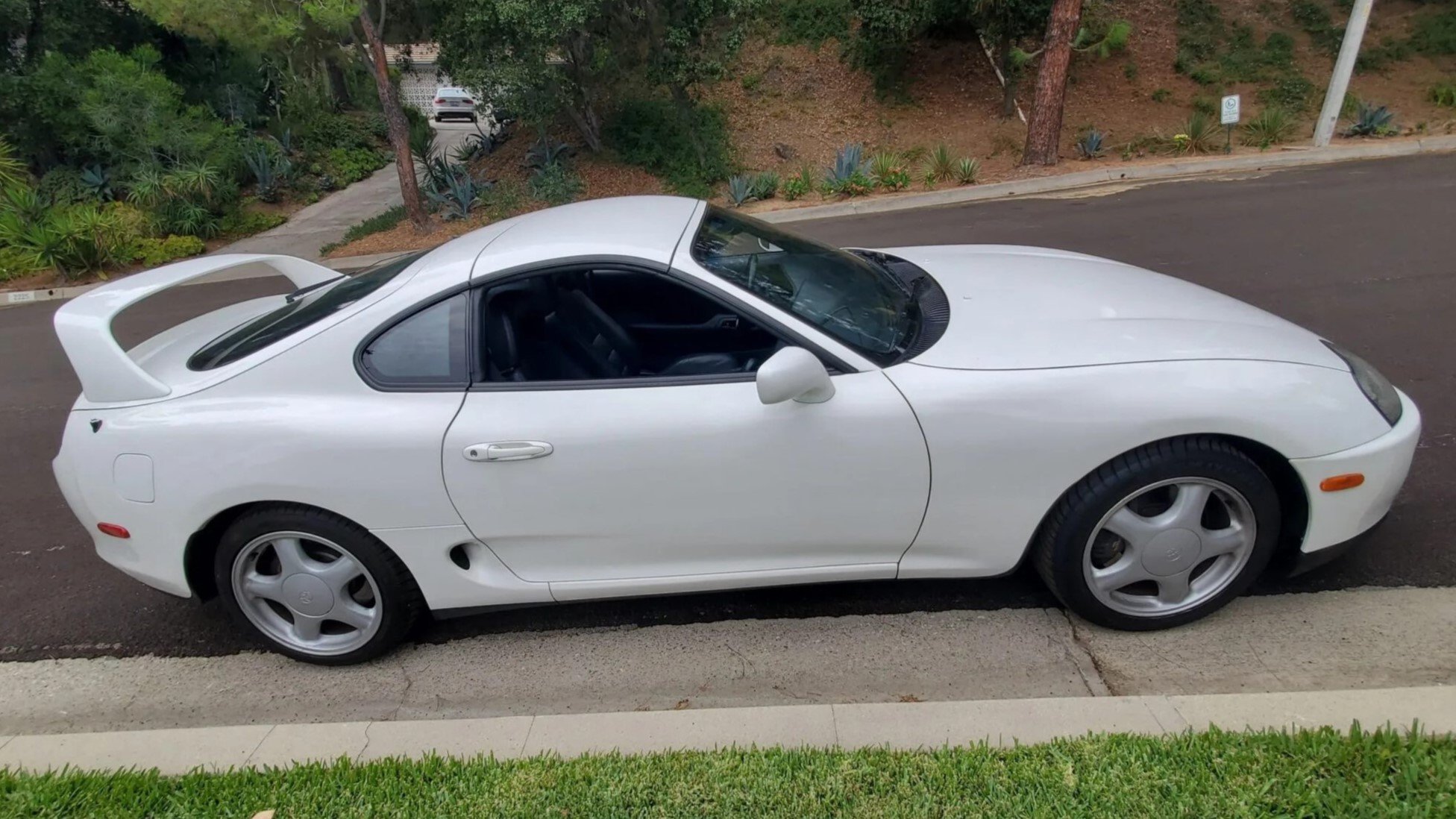
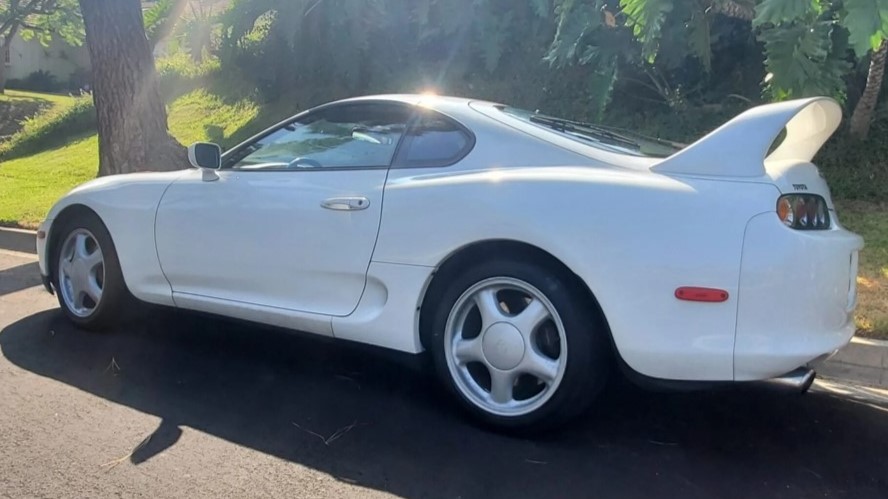
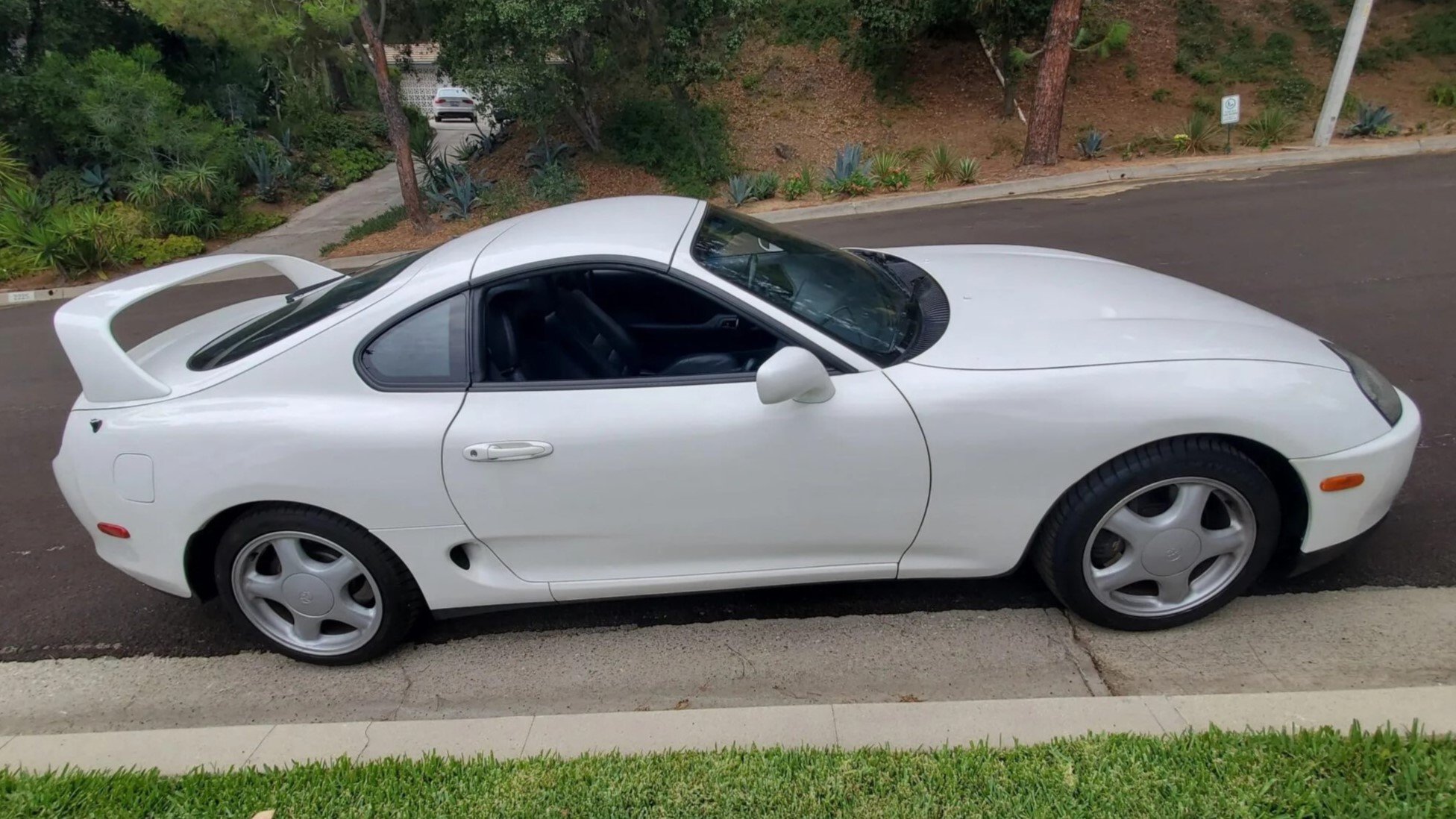
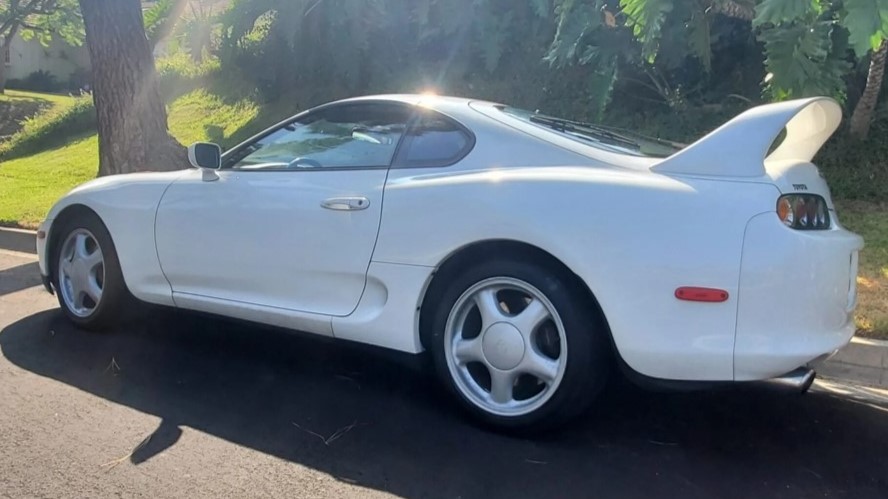
The first mention of the Supra name in the automotive world came about in the late 1970s in Japan, where it was launched as a variant of the compact Celica liftback. The Supra became a popular performance car – particularly in the “tuner” communities – because of its agile handling, capable drivetrains, and strong aftermarket support. These days, finding an unmodified Supra is no easy task, and finding an original with fewer than 50,000 miles on the odometer is even more challenging. That’s where today’s Super White 1994 Supra Turbo comes in: This car is being offered on AutoHunter by a private seller in Arcadia, California, and the auction ends this coming Wednesday.

Today’s Supra comes from the fourth generation which launched with the “A80” body in model year 1994. Chassis components at the time were shared with the first-generation Lexus SC coupe (sold as the Toyota Soarer in Japan). This Supra has somehow survived for the last 30 years without being modified. The CARFAX report also shows California-kept ownership all its life, with no accidents or damage on record. A new owner was reported about three years ago, and the history overall is squeaky clean.

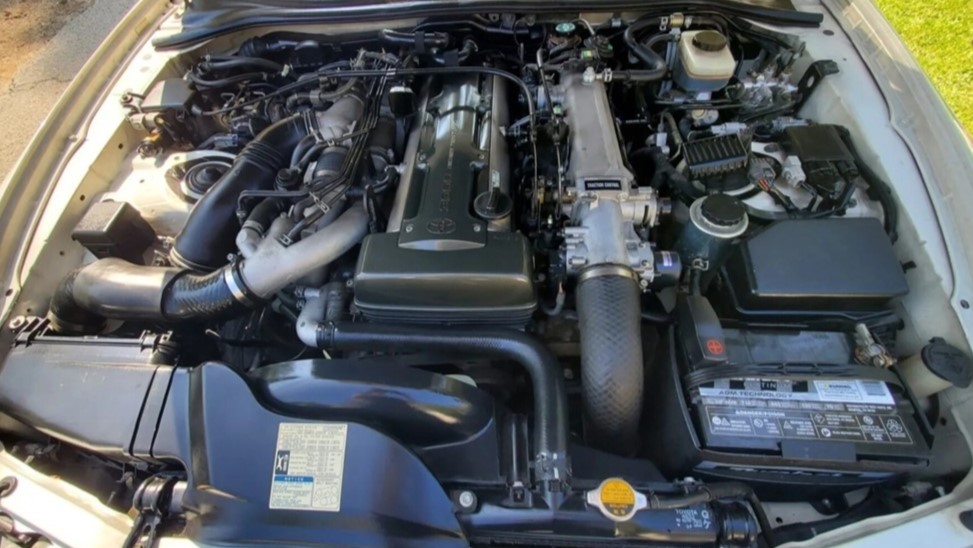
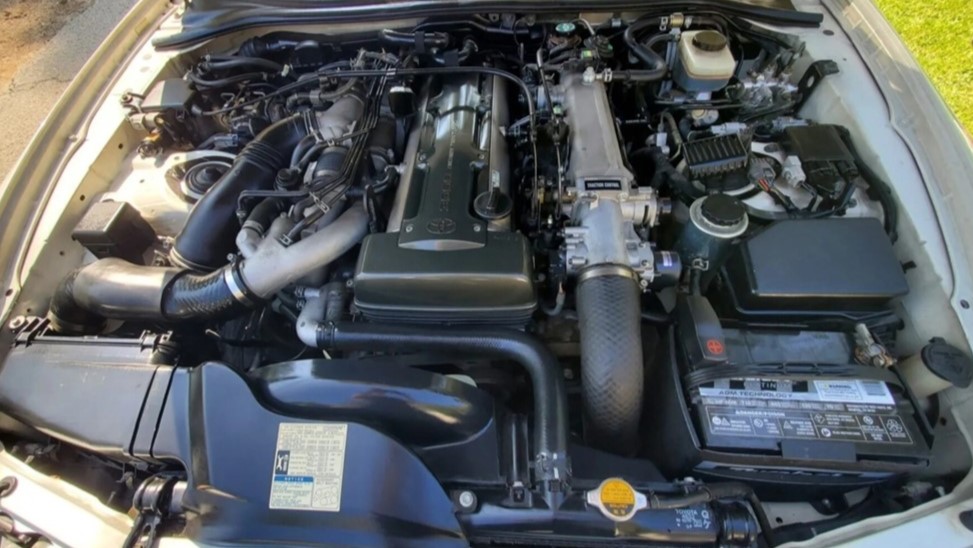
The Supra was offered with two different inline-six powerplants: One was the 3.0-liter 2JZ-GE, and the other was a 3.0-liter 2JZ-GTE with twin turbos. The latter was capable of 320 horsepower and 315 lb-ft of torque. Toyota and Lexus shared this architecture for a number of years. In fact, my brother’s 2002 Lexus IS300 that was recently raced at No Fly Zone in Arizona has a 2JZ-GTE motor. His entire “brand” on social media centers around the “Two Jay” name for that reason.

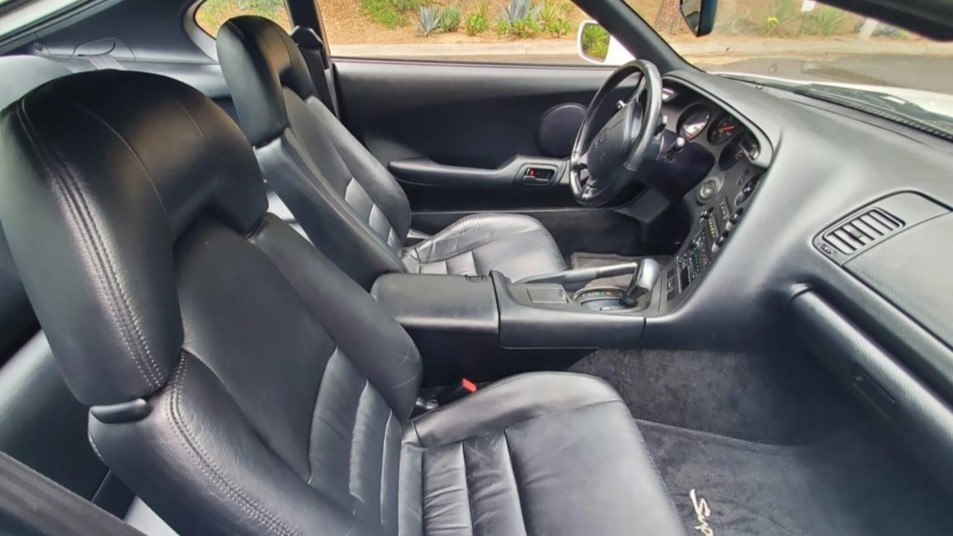
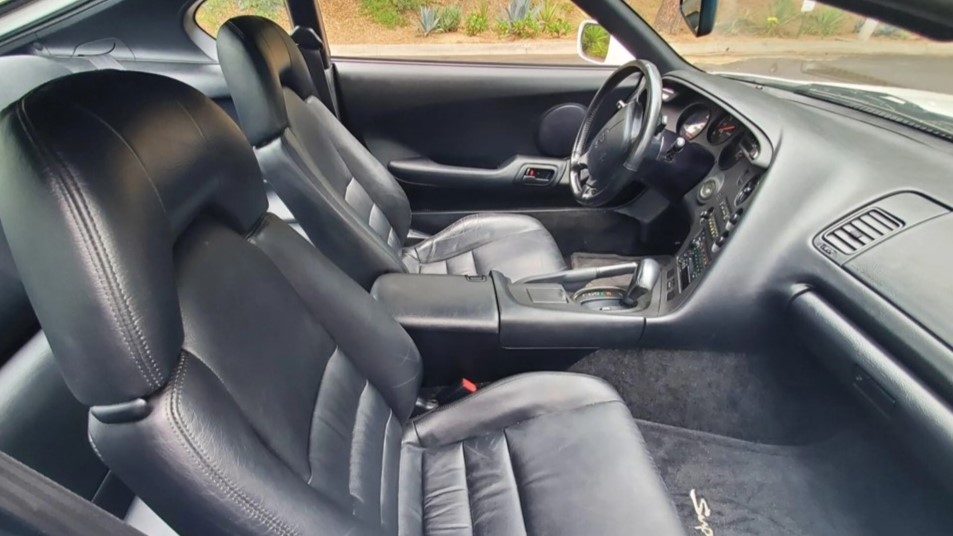
While the Supra could easily be put to use as an all-out race car, it also catered to the grand-touring crowd – especially when outfitted with the optional four-speed automatic transmission as seen in today’s feature car. The roof has a color-matched removable panel for an open-air feeling, and the cabin is appointed with leather upholstery and automatic climate control.

You could argue that this car offers the best of multiple worlds: It has a performance-bred (yet reliable) twin-turbocharged heart, the sexy looks of a sports car, and the comfort and conveniences of a long-distance highway cruiser. You won’t find an opportunity like this very frequently. Check it out!

The auction for this 1994 Toyota Supra Turbo ends Wednesday, November 15, 2023, at 12:15 p.m. (MST)

Visit the AutoHunter listing for more information and photo gallery

Featured on AutoHunter, the online auction platform driven by ClassicCars.com, is this 1994 Toyota Supra Turbo.

The first mention of the Supra name in the automotive world came about in the late 1970s in Japan, where it was launched as a variant of the compact Celica liftback. The Supra became a popular performance car – particularly in the “tuner” communities – because of its agile handling, capable drivetrains, and strong aftermarket support. These days, finding an unmodified Supra is no easy task, and finding an original with fewer than 50,000 miles on the odometer is even more challenging. That’s where today’s Super White 1994 Supra Turbo comes in: This car is being offered on AutoHunter by a private seller in Arcadia, California, and the auction ends this coming Wednesday.

Today’s Supra comes from the fourth generation which launched with the “A80” body in model year 1994. Chassis components at the time were shared with the first-generation Lexus SC coupe (sold as the Toyota Soarer in Japan). This Supra has somehow survived for the last 30 years without being modified. The CARFAX report also shows California-kept ownership all its life, with no accidents or damage on record. A new owner was reported about three years ago, and the history overall is squeaky clean.

The Supra was offered with two different inline-six powerplants: One was the 3.0-liter 2JZ-GE, and the other was a 3.0-liter 2JZ-GTE with twin turbos. The latter was capable of 320 horsepower and 315 lb-ft of torque. Toyota and Lexus shared this architecture for a number of years. In fact, my brother’s 2002 Lexus IS300 that was recently raced at No Fly Zone in Arizona has a 2JZ-GTE motor. His entire “brand” on social media centers around the “Two Jay” name for that reason.

While the Supra could easily be put to use as an all-out race car, it also catered to the grand-touring crowd – especially when outfitted with the optional four-speed automatic transmission as seen in today’s feature car. The roof has a color-matched removable panel for an open-air feeling, and the cabin is appointed with leather upholstery and automatic climate control.

You could argue that this car offers the best of multiple worlds: It has a performance-bred (yet reliable) twin-turbocharged heart, the sexy looks of a sports car, and the comfort and conveniences of a long-distance highway cruiser. You won’t find an opportunity like this very frequently. Check it out!

The auction for this 1994 Toyota Supra Turbo ends Wednesday, November 15, 2023, at 12:15 p.m. (MST)

Visit the AutoHunter listing for more information and photo gallery

The second-generation Ford GT evolved the formula from the more “authentic” first-gen, but it wasn’t lesser because of it. Paying homage to its 1966 Le Mans win, Ford called the track car version the GT Mark II and built 45 of them, all powered by a twin-turbo 3.5-liter V6 producing 700 horsepower (40 horses more than the street version). Other tweaks include a roof-mounted intake, special outboard system, larger fixed wing and diffuser, downsized 19-inch wheels with Michelin Pilot Sport GT racing tires, fixed ride height, and stripped interior (helping reduce 200 pounds in the process). When new, the 2020 GT Mark II cost over $1.2 million, with this particular example selling for $1,088,500 at RM Sotheby’s auction during Monterey Car Week 2023.

For more Interesting Finds, car reviews, and interviews make sure to subscribe to the ClassicCars TV channel on YouTube.

The second-generation Ford GT evolved the formula from the more “authentic” first-gen, but it wasn’t lesser because of it. Paying homage to its 1966 Le Mans win, Ford called the track car version the GT Mark II and built 45 of them, all powered by a twin-turbo 3.5-liter V6 producing 700 horsepower (40 horses more than the street version). Other tweaks include a roof-mounted intake, special outboard system, larger fixed wing and diffuser, downsized 19-inch wheels with Michelin Pilot Sport GT racing tires, fixed ride height, and stripped interior (helping reduce 200 pounds in the process). When new, the 2020 GT Mark II cost over $1.2 million, with this particular example selling for $1,088,500 at RM Sotheby’s auction during Monterey Car Week 2023.

For more Interesting Finds, car reviews, and interviews make sure to subscribe to the ClassicCars TV channel on YouTube.

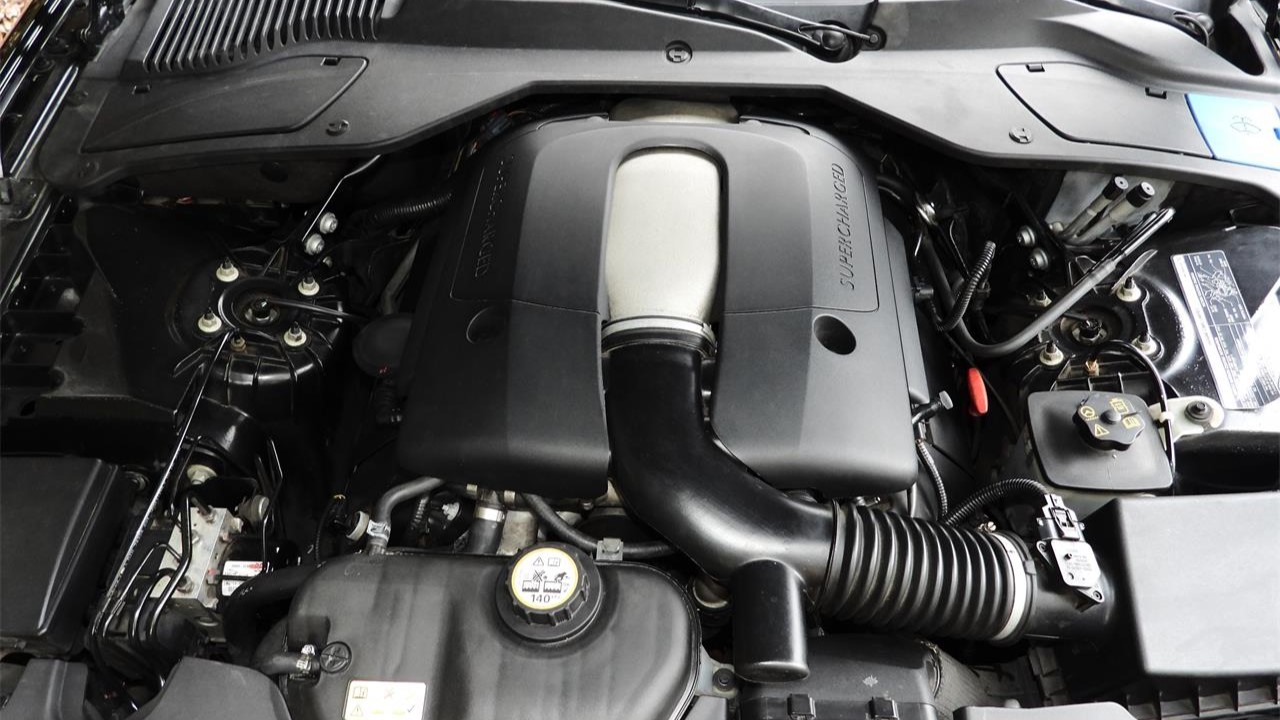
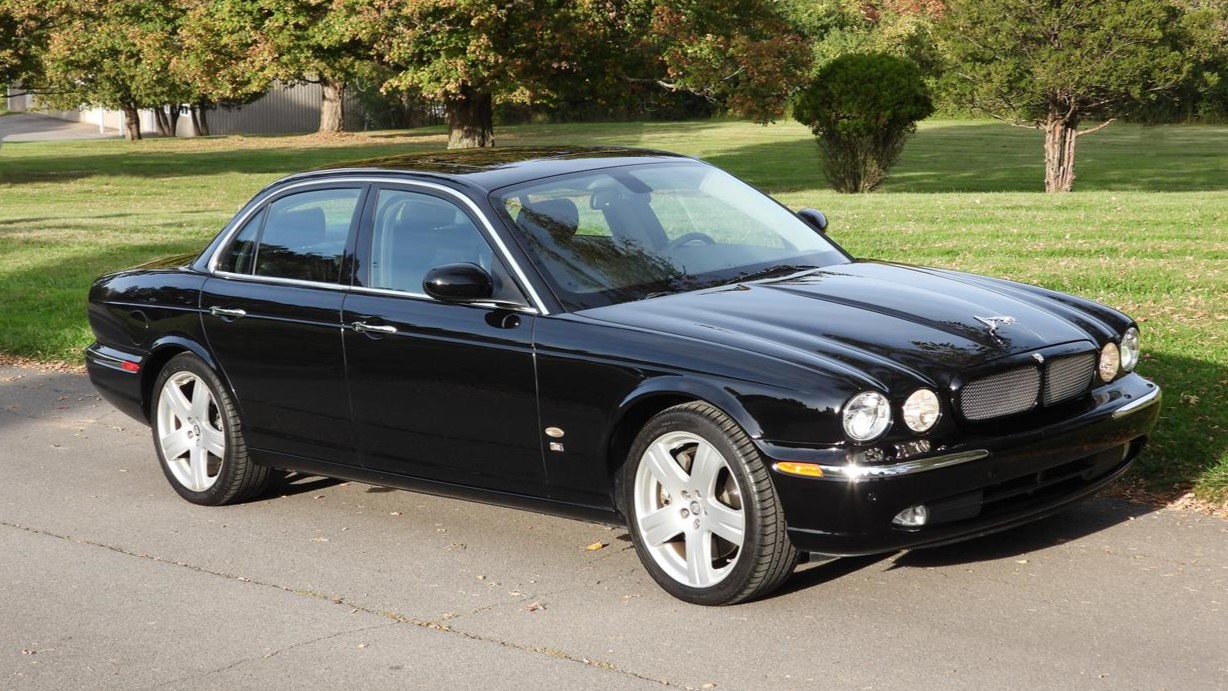
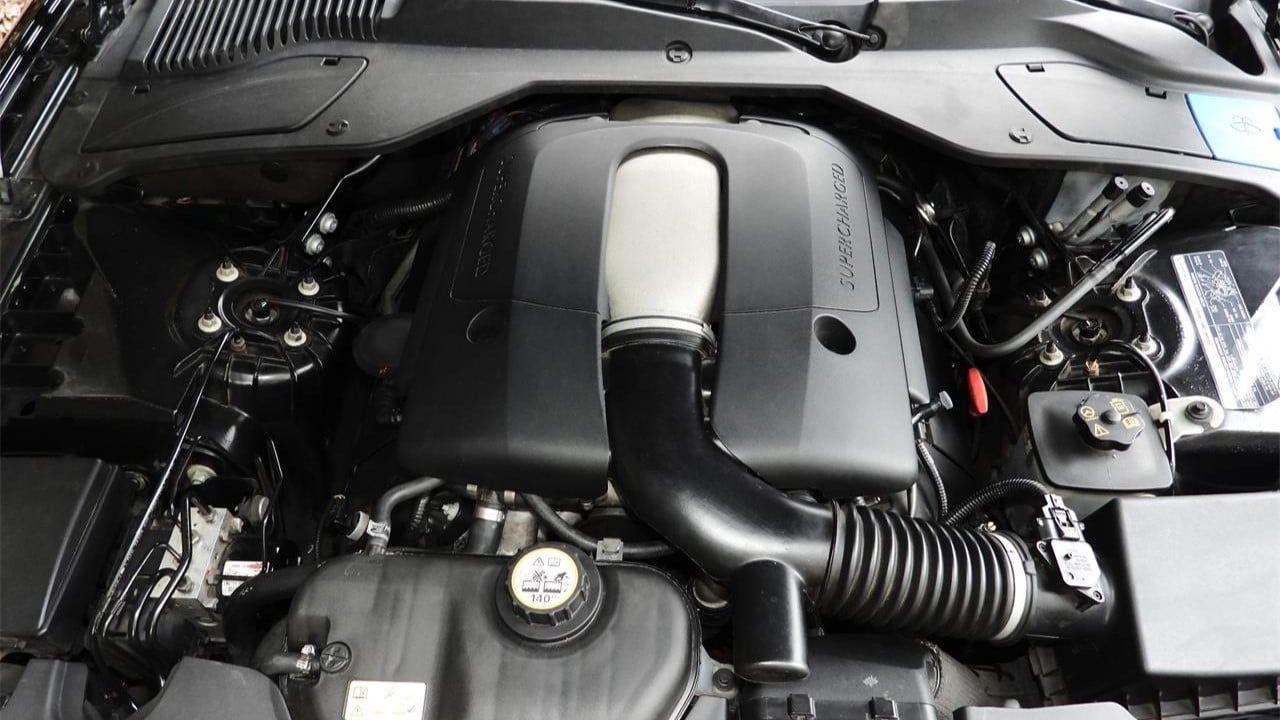
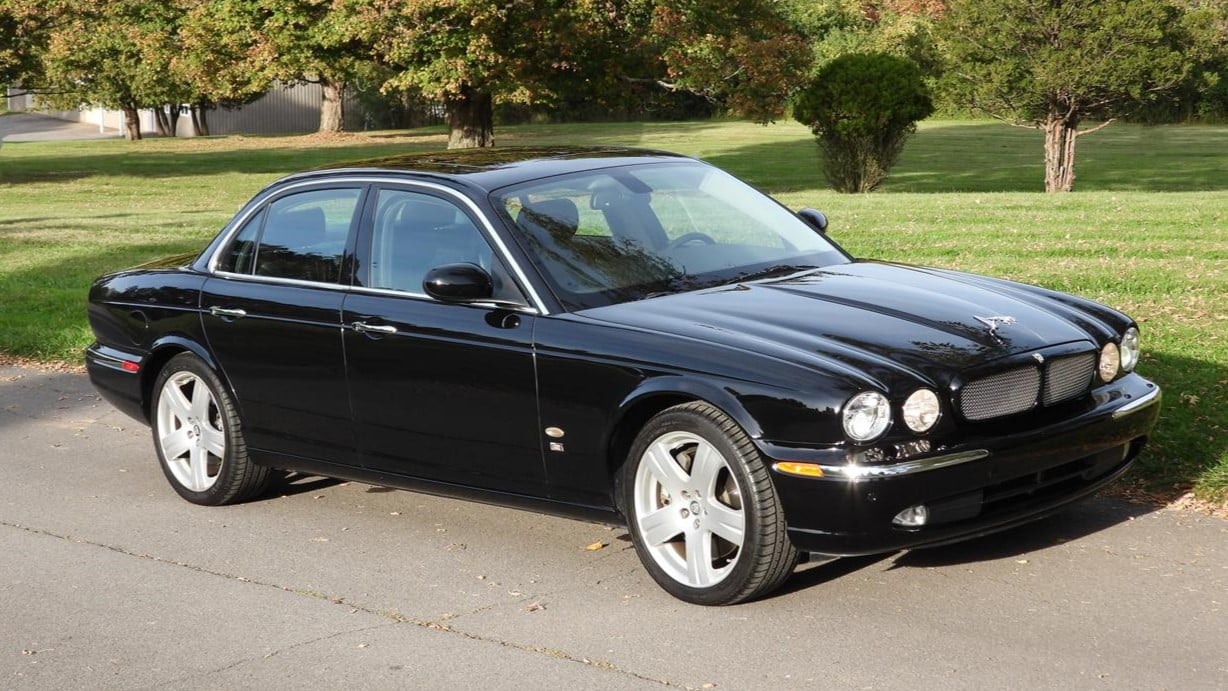
There is something mysterious about a black cat. This Jag’s elegant body lines, prominent hood ornament, and chrome accent trim evoke a luxurious and sophisticated feeling. Best of all, it has a 400-horsepower supercharged V8 engine under the hood, so this car is equal parts “go” and “show.”

The Pick of the Day is a low-mileage 2007 Jaguar XJR listed for sale on ClassicCars.com by a dealer in Clinton, New York. (Click the link to view the listing)

“I have personally owned this car for the last five years and have honestly loved every minute of it,” the listing says. “This car is spectacular with only 67,100 accident-free miles, of which I have put on approximately 10,000 of them.”

The XJ model has a longstanding history in the British luxury car world: Its first iteration – or “Series 1” – debuted 55 years ago in 1968 as a four-door saloon with a straight six powerplant. Evolution took it through a number of changes over the years, and the model has been gone from the Jaguar lineup since 2019. There’s no telling what kind of tricks the product planners might have up their sleeves to plan a rebirth.

Today’s car comes from the “X350” platform which spanned model years 2004 through 2010. Engineering advancements brought some important updates to this generation: The body shell was reportedly 40 percent lighter and 50 percent stiffer than the outgoing model’s, and an available adaptive air suspension kept things on the level at all times.

At the high end of the performance spectrum, the “XJR” model as seen today brought a supercharged 4.2-liter V8 to the formula – a powerplant that produced 400 horsepower and 413 lb-ft of torque. A six-speed automatic transmission put the power to the ground via the rear wheels.

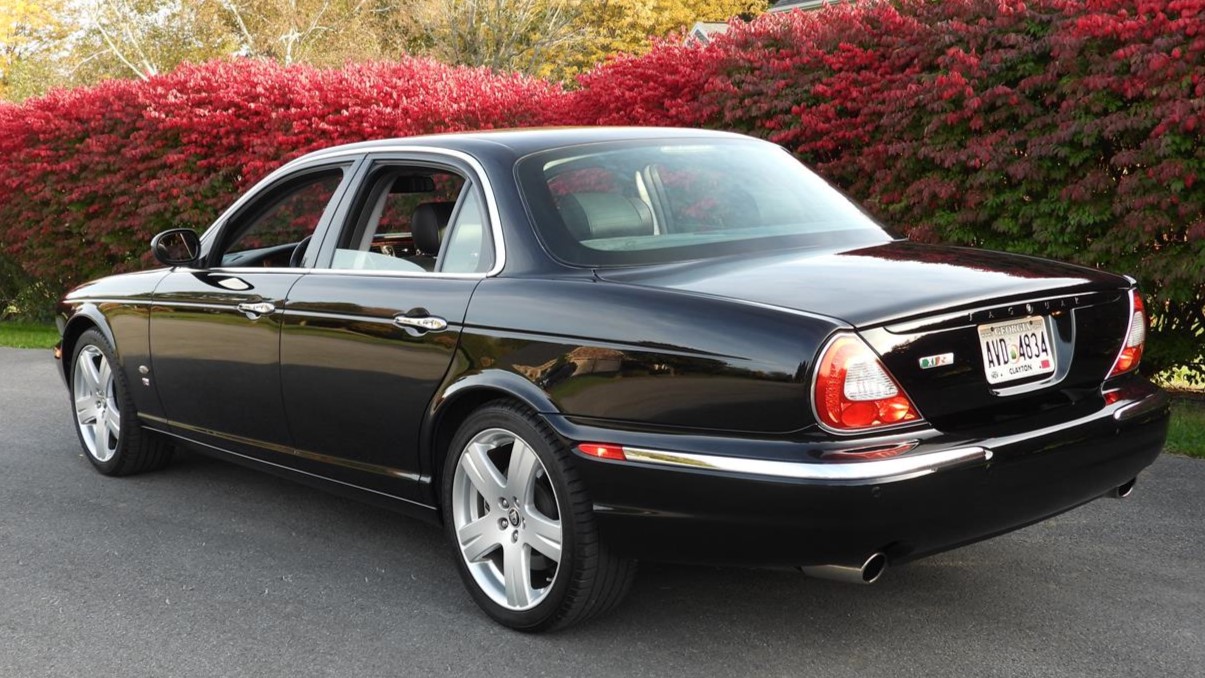
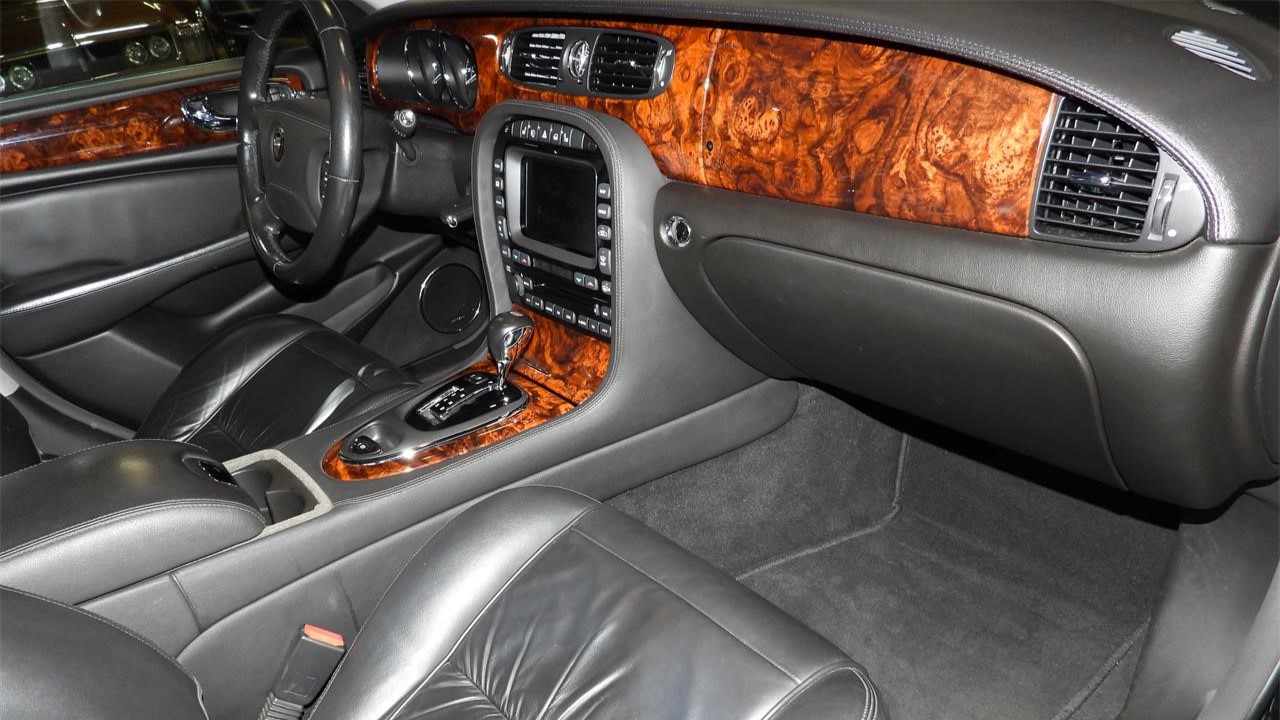
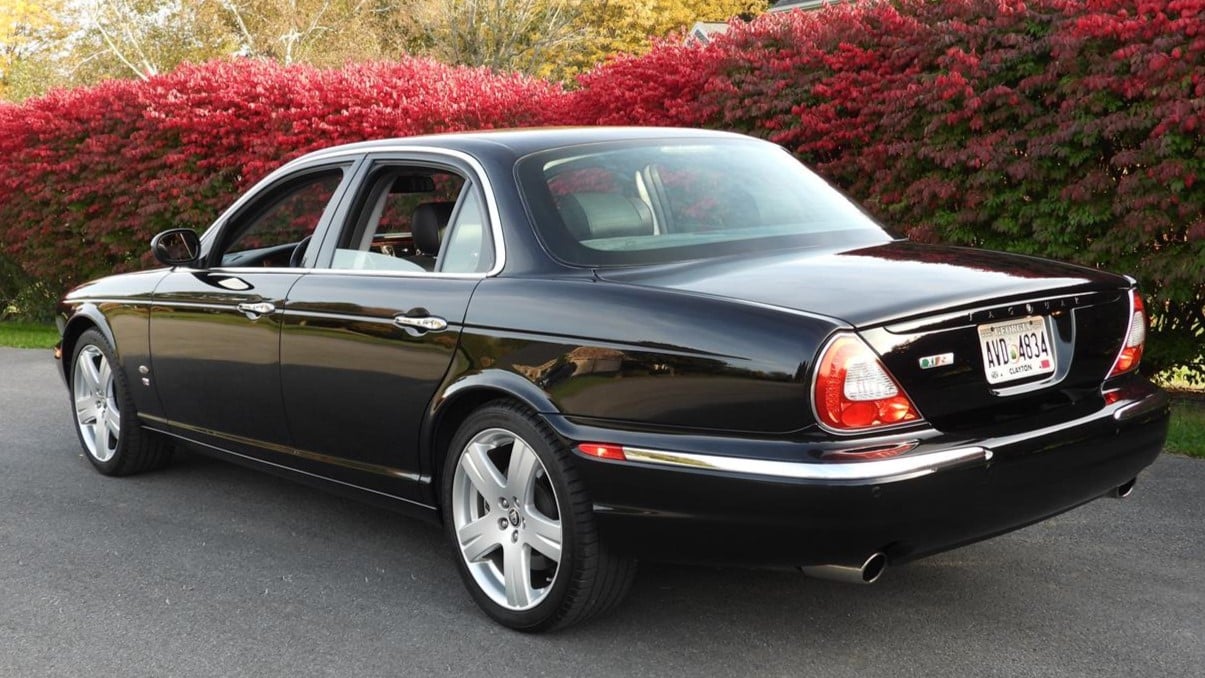
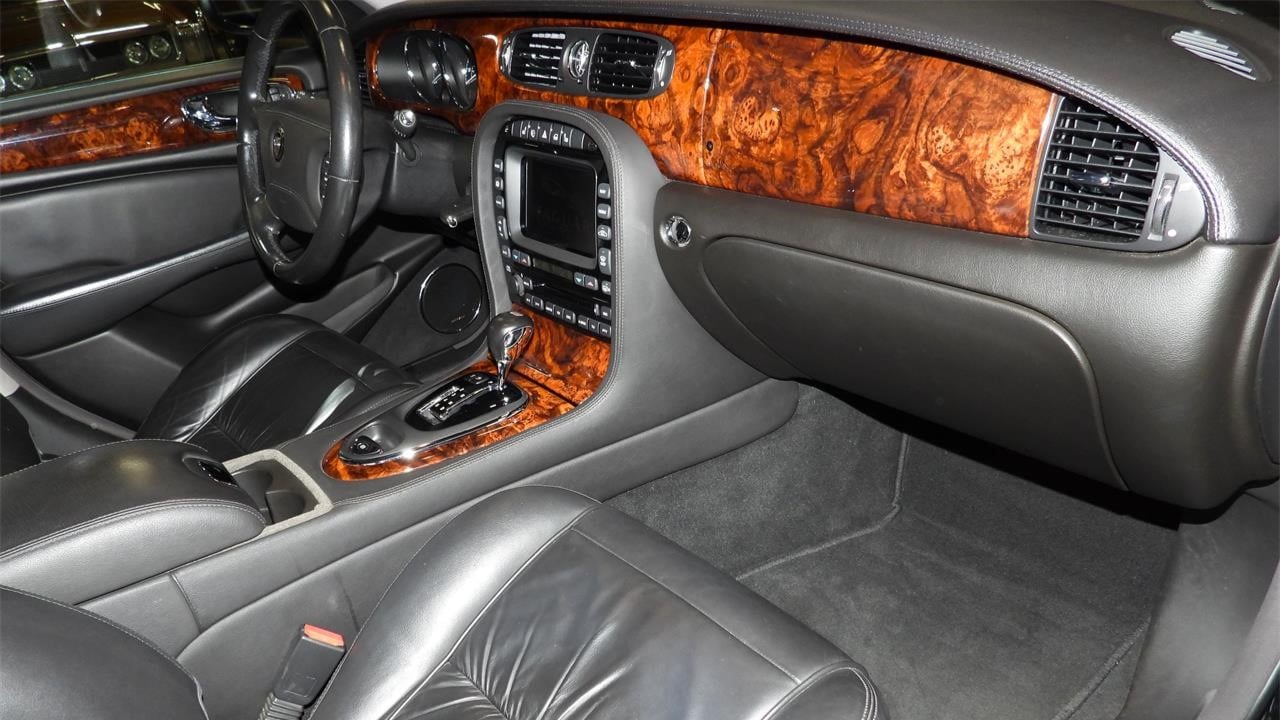
 The seller has prepared a thorough presentation of dozens of photos and a 12-minute video to showcase the vehicle in its entirety. The elegant black finish looks well-kept, and those blocky five-spoke wheels give a sense of presence and power. Even the interior is primo-looking for being 16 years old.

The seller states, “Unquestionably, these XJRs have already become collectible, and the values continue to rise and for good reason. I do not let cars like this leave my stable every day. However, I have decided to let this seductive and alluring Jag free to find another garage to purr in.”

The asking price is $29,500 or best offer for this Jag.

To view this listing on ClassicCars.com, see Pick of the Day.

There is something mysterious about a black cat. This Jag’s elegant body lines, prominent hood ornament, and chrome accent trim evoke a luxurious and sophisticated feeling. Best of all, it has a 400-horsepower supercharged V8 engine under the hood, so this car is equal parts “go” and “show.”

The Pick of the Day is a low-mileage 2007 Jaguar XJR listed for sale on ClassicCars.com by a dealer in Clinton, New York. (Click the link to view the listing)

“I have personally owned this car for the last five years and have honestly loved every minute of it,” the listing says. “This car is spectacular with only 67,100 accident-free miles, of which I have put on approximately 10,000 of them.”

The XJ model has a longstanding history in the British luxury car world: Its first iteration – or “Series 1” – debuted 55 years ago in 1968 as a four-door saloon with a straight six powerplant. Evolution took it through a number of changes over the years, and the model has been gone from the Jaguar lineup since 2019. There’s no telling what kind of tricks the product planners might have up their sleeves to plan a rebirth.

Today’s car comes from the “X350” platform which spanned model years 2004 through 2010. Engineering advancements brought some important updates to this generation: The body shell was reportedly 40 percent lighter and 50 percent stiffer than the outgoing model’s, and an available adaptive air suspension kept things on the level at all times.

At the high end of the performance spectrum, the “XJR” model as seen today brought a supercharged 4.2-liter V8 to the formula – a powerplant that produced 400 horsepower and 413 lb-ft of torque. A six-speed automatic transmission put the power to the ground via the rear wheels.

 The seller has prepared a thorough presentation of dozens of photos and a 12-minute video to showcase the vehicle in its entirety. The elegant black finish looks well-kept, and those blocky five-spoke wheels give a sense of presence and power. Even the interior is primo-looking for being 16 years old.

The seller states, “Unquestionably, these XJRs have already become collectible, and the values continue to rise and for good reason. I do not let cars like this leave my stable every day. However, I have decided to let this seductive and alluring Jag free to find another garage to purr in.”

The asking price is $29,500 or best offer for this Jag.

To view this listing on ClassicCars.com, see Pick of the Day.

Like some other young boys of my generation, my car lust was fueled in part by a book published in 1954 titled The Red Car, authored by Don Stanford. The novel was about a relatively poor kid growing up with a love of cars who, by a series of happenstance, was able to buy a partially wrecked MG TC—a small British sports car with two seats, wire spoke wheels, and a racing heritage—and repair it. Of course, the car was red and by the end of the story it brought the kid happiness, success, and a pretty girl.

Of course, my car lust started prior to reading the novel. Family lore has it that my first word was “automobile,” and long before I could read The Red Car, I could identify any kind of vehicle on the streets of Brooklyn, New York; apparently, I would interrupt conversations to do so. That habit, annoying to some, continues to this day when I see something remarkable on the road. My defense is that if I do not interrupt, the vehicle will be gone and only I will be able to enjoy the automotive eye candy. Typically, no one else cares, but I blame my obsession and annoying habit on The Red Car.

My family moved to Long Island when I was eight. There, I could drive legally at 17, and I initially borrowed my parents’ sedans to do so. But what I really needed was my own “red car.” How else would I achieve happiness and success, and get a pretty girl?

In those days, local used cars were advertised in our regional publication, Buy Lines, devoted to such vehicles. Every week, I scoured the pages for a “red car” I could buy with the $100 I had saved. I eventually found what I needed: a 1959 Renault 4CV, a small French car with a manual transmission, front bucket seats, and a four-cylinder engine in the back. In my mind, it was like a Porsche, but different. Of course, it wasn’t a British sports car, and it wasn’t red, but it was going to be mine.

The 4CV’s engine made 28 horsepower, at a time when the more luxurious Renault Dauphine offered 32 hp and a Volkswagen boasted 36 hp. The car also offered four doors and four seats, but the front doors were hinged at the center post, along with the rears, that created an odd reverse “suicide” arrangement. Significantly, the Renault before me featured a floor shifter, was within my budget, and it ran.

Truth be told, it didn’t run all that well. Having purchased the 4CV, the engine just stopped on the way home, 4-½ miles into the 5-mile trip from the seller’s location. Fortunately, the Renault was both small and light enough, enabling me to easily push it the rest of the way home.

The first problem to solve was why the car wouldn’t run. It turned out to be an easy repair once I learned the nuances of points and plugs. It ran fine after that. Next, I had to work out the “red” problem. A little sandpaper, a fine bristle brush, some masking tape, a quart of red paint, and a few hours of labor, and I had a red car. It looked good, but to make it closer to sporty I added three white racing stripes on the car. Pretty spiffy.

My Renault had an AM radio and a sunroof, and it usually ran. Unfortunately, the engine’s internals were worn, and it smoked and leaked oil everywhere. I didn’t care – I had my red car; my own wheels during the summer prior to my freshman year of college.

I learned all about simple automotive repairs. Things like changing water hoses, brakes, and fan belts, and even more challenging tasks like replacing a leaky water pump. I became a real grease monkey. Soon enough, the 4CV was reasonably reliable and I drove it all over Long Island.

Those who grew up on Long Island in the Sixties will recall that Nathan’s, in Long Beach, was the place to hang out. My girlfriend that summer was a folk singer. Nathan’s had an open mike hootenanny on certain nights. One evening she and I, and her guitar player, took my red car to Nathan’s so she could sing. Besides using a lot of oil, the Renault also periodically needed water. Typically, it would use half a quart every couple of days, so I carried a one-gallon container. On this night, after the show, I added the usual amount, and it still wasn’t full. I added the entire gallon and the radiator never filled. It finally dawned on me that I had parked on a slight grade; water was leaking out of the engine and rolling downhill in front of the car. I had not seen the puddle because the radiator neck poked out the back. Opening the rear hood, I found a burst radiator hoses. Luckily my girlfriend used a capo on her guitar, a clamp that fits on the neck to change pitch. Between the capo, more water, and some aluminum foil from Nathan’s – wrapped around the hose clamped together by her capo – we made it home. I had also loosened the radiator cap so there would be no water pressure.

Towards the end of my sophomore year, I talked my parents into letting me drive my 4CV to college in upstate New York. The 160-mile trip took nearly eight hours with frequent stops for oil, water, and gas, not to mention that my tired 28 hp engine was no match for the hilly Taconic Parkway. The Renault’s 59 MPH advertised top speed when new was more like 30 in places. Eventually I arrived in Troy, where the Renault was driven between my fraternity house and campus. On weekends it was my date car.

One night my buddy and I took our girlfriends to a drive-in movie. We drove up the embankment, pointing the front end towards the screen, hooked the speaker to the driver’s window, and settled in to watch the film. At some point, someone moved, and it was enough to cause the brakes to slip; the 4CV rolled backwards. Apparently 550 pounds of passengers in a 1,200-pound car was pushing things.

When we rolled back, the speaker wire stopped us cold. A full-size car would have simply broken the wire; however, the speaker merely slid forward on top of the window until it was wedged in the front corner of the door and anchored the 4CV. Due to the door configuration, I could not open it. To get us free and back into a viewing position, I had to drive forward, but the engine couldn’t do it. Thus, my buddy and our dates had to get out and assist the engine with a push amid the cheers and jeers of others around us.

The adventures with the Renault continued. Eventually, the engine bay was coated with oil and the fan belt started to slip. I found that a lawn mower fan belt was half the price of an automotive belt; a significant budget consideration, so that’s what I purchased as a replacement. It wasn’t long before I learned why there was a price difference. Lawn mower belts were made of rubber that broke down when coated with oil, but automotive belts had greater resistance. Thus, shortly after a new lawn mower belt was installed it would slip and disintegrate.

I drove the car anyway since the belt only turned the generator and not the water pump. The problem with using a slipping, disintegrating belt was that it would drain the battery. As long as I could avoid using headlamps I could drive for about a week before the battery died. Fortunately, the Renault had an emergency crank I used for starting when I was without a fan belt. Starting the engine with a crank was not a big deal. If the battery had some power, the car would run. I learned it was time to buy a new fan belt when the battery was so dead merely stepping on the brakes – thus activating the lamps – used whatever voltage was left and caused the engine to stall. Silly ingenuity took over at times like these; I would open the door and slide my foot to stop the car from slow speeds, and thus not stall the engine. More than one trip to the lawn mower store ended this way.

My time with the first red car ended shortly after my sophomore year when a fellow student begged me to sell it to him. Sadly, for him, it caught fire on his drive home to show his parents. Apparently, an oil coated engine is not only messy but dangerous too. Lesson learned. He was a hockey player, and I spent the next two years avoiding him. I never again sold a car to someone I knew.

The red Renault was just the first. It was followed by a black Triumph, then a British Racing Green Jaguar, and a green Griffith, followed by a blue Austin-Healey, a black Sunbeam Tiger, and many others. My passion for cars has continued over some 55 years and about 50 cars. So far, I have had the “red” British sports car several times: happiness, success, and the pretty girl. I am still waiting for the red MG-TC, though.
The Nextgen Guide To Car Collecting

"The Nextgen Guide To Car Collecting" cover

  • Author: Robert C. Yeager, with introduction by McKeel Hagerty
  • Motorbooks
  • 978-282-9590
  • quarto.com
  • ISBN 9780760373378
  • $29.99
  • ★★★☆

While the core elements remain constant, today’s old-car scene looks much different than it did 20 or more years ago. Enthusiasts now preserve and enjoy new segments of vehicles, while the expansion of niche online communities has changed the way we interact with like-minded gearheads. Younger people entering our hobby may feel a bit disconnected from the traditional ways in which we’ve long gathered and fraternized, but that doesn’t have to be the case.

Lifelong car buff Robert C. Yeager has authored a resource focused on this very subject. Subtitled “How to Buy, Sell, Live with and Love a Collectible Car,” the 192-page softcover welcomes those new to the hobby — people in their 20s, 30s, 40s, or 50s who are interested, but haven’t before participated. Yeager gives an overview of this pastime before offering solid advice on numerous points, including:

  • picking your favorite (potentially modern-classic) domestic or imported collectible vehicle,
  • the best way to evaluate, buy, maintain, and live with a special-interest automobile,
  • how to connect with others who share your enthusiasm.

While it’s especially helpful for youthful readers, this book is very enjoyable for petrolheads of all ages since its text contains many respected, encouraging voices and its well-captioned color images enhance the message. Pick up a copy for the fledgling car buff in your life.

Porsche 356: 75th Anniversary

"Porsche 356 75th Anniversary" cover

  • Author: Gordon Maltby, with foreword by Grant Larson
  • Motorbooks
  • 978-282-9590
  • quarto.com
  • ISBN 9780760377376
  • $75
  • ★★★☆

Countless books have celebrated the winning products of the Porsche company. Its first production sports car — the 356 developed under the direction of founding scion Ferry Porsche — has been the subject of many. Do we need another? The newly published Porsche 356, created to honor the model and firm’s shared landmark 75th anniversary, shows how this car set the stage for everything Porsche now is and, if tradition holds (as it always does at this firm), will remain into the future.

Longtime Porsche 356 Registry editor and multiple-Porsche owner Gordon Maltby starts his handsomely presented, exhaustively illustrated, 256-page, jacketed hardcover with an overview of Professor Ferdinand’s accomplishments that led up to the development of the car bearing the family name. We follow this model from the aluminum-bodied, mid-engine 356-001 to the steel-bodied, rear-engine production cars year by year, highlighting special variants and covering the engineering labs, factories, dealerships, and racetracks through the 356’s 17 years of production. Competition fans will appreciate rare period photos of the RSK, 718, and 904; we particularly enjoyed the chapter covering “other Porsches,” including the Porsche-Diesel tractor, stationary engines, and more.

Even well-read Porsche enthusiasts really will find something interesting and worthwhile in this coffee-table-worthy tome.