When the original two-seat Acura NSX debuted for the 1991 model year in the United States, it introduced the automotive world to the notion that a car could be exotic-looking, performance-oriented, and reliable all at the same time. Over thirty years later, some owners are truly putting that promise to the test.

Power for the NSX came from a mid-mounted, naturally aspirated 3.0-liter V6 that produced 270 horsepower and was available mated to either a five-speed manual or a four-speed automatic transaxle. While 270 horsepower did not sound like a big number, the true expertise of the NSX became evident in its handling: this car was built to cut up canyon roads like a razor-sharp scalpel. Its all aluminum body and optimal weight distribution made for confidence-inspiring balance that even Formula 1 legend Ayrton Senna embraced.

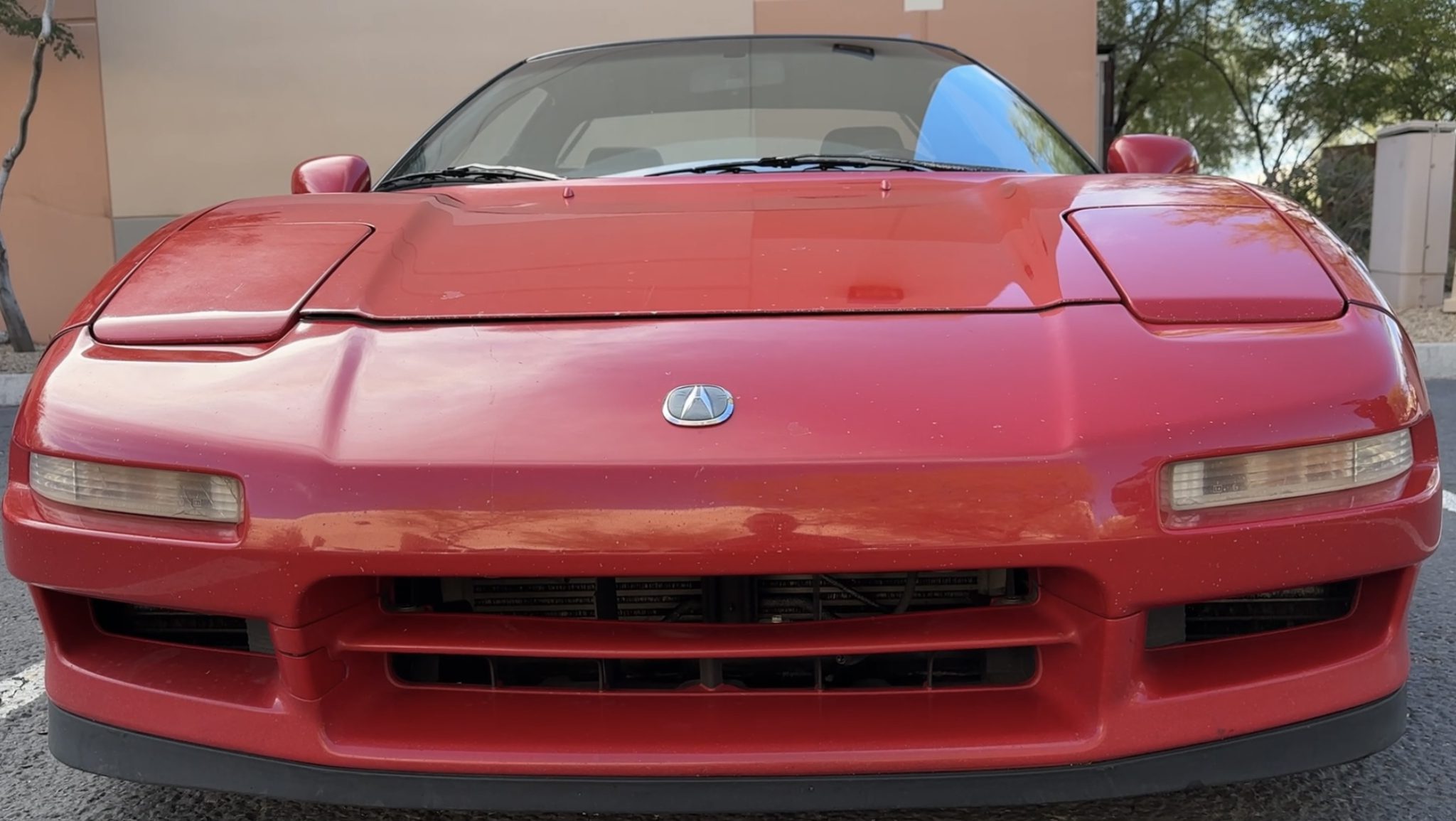
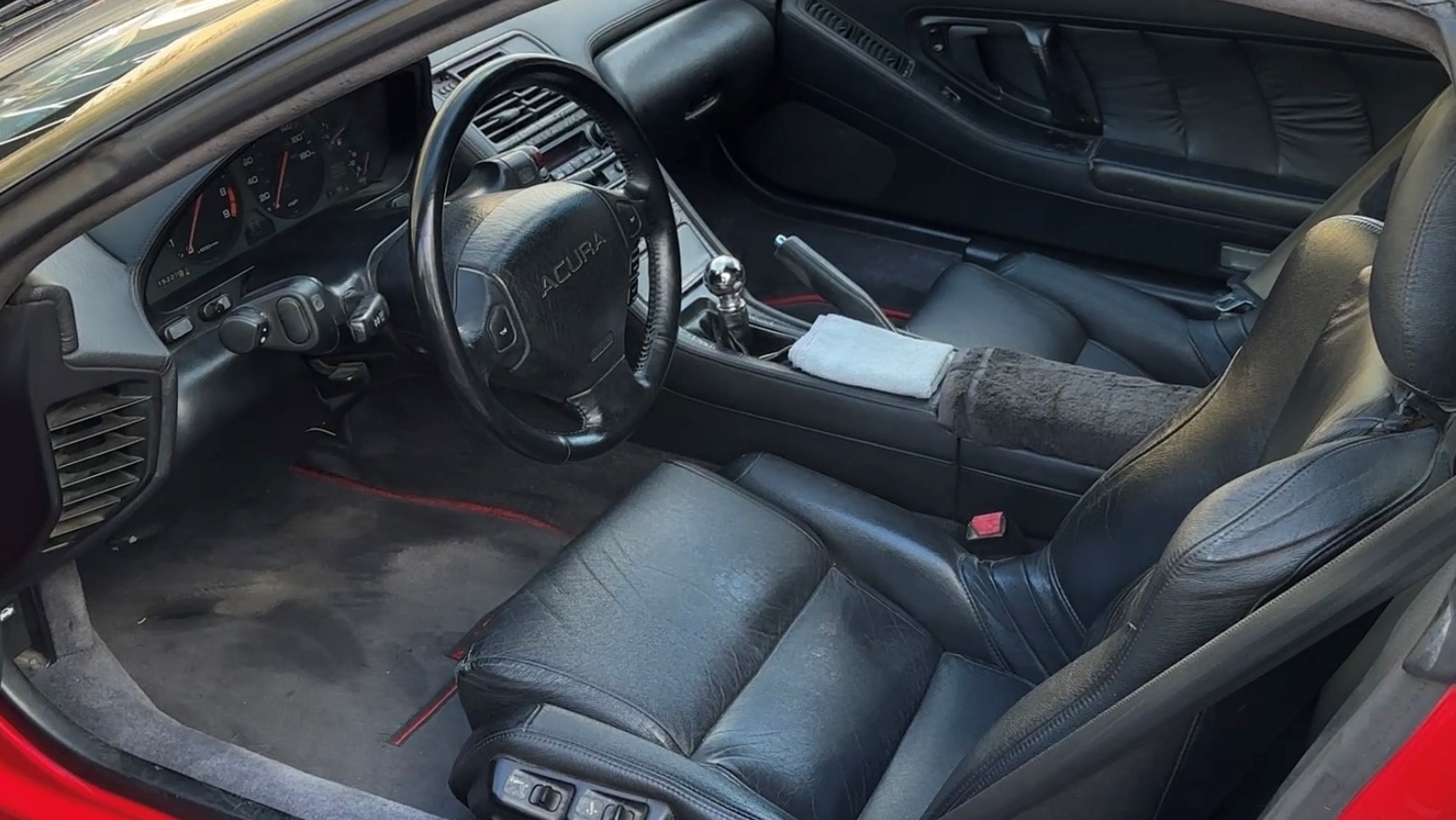
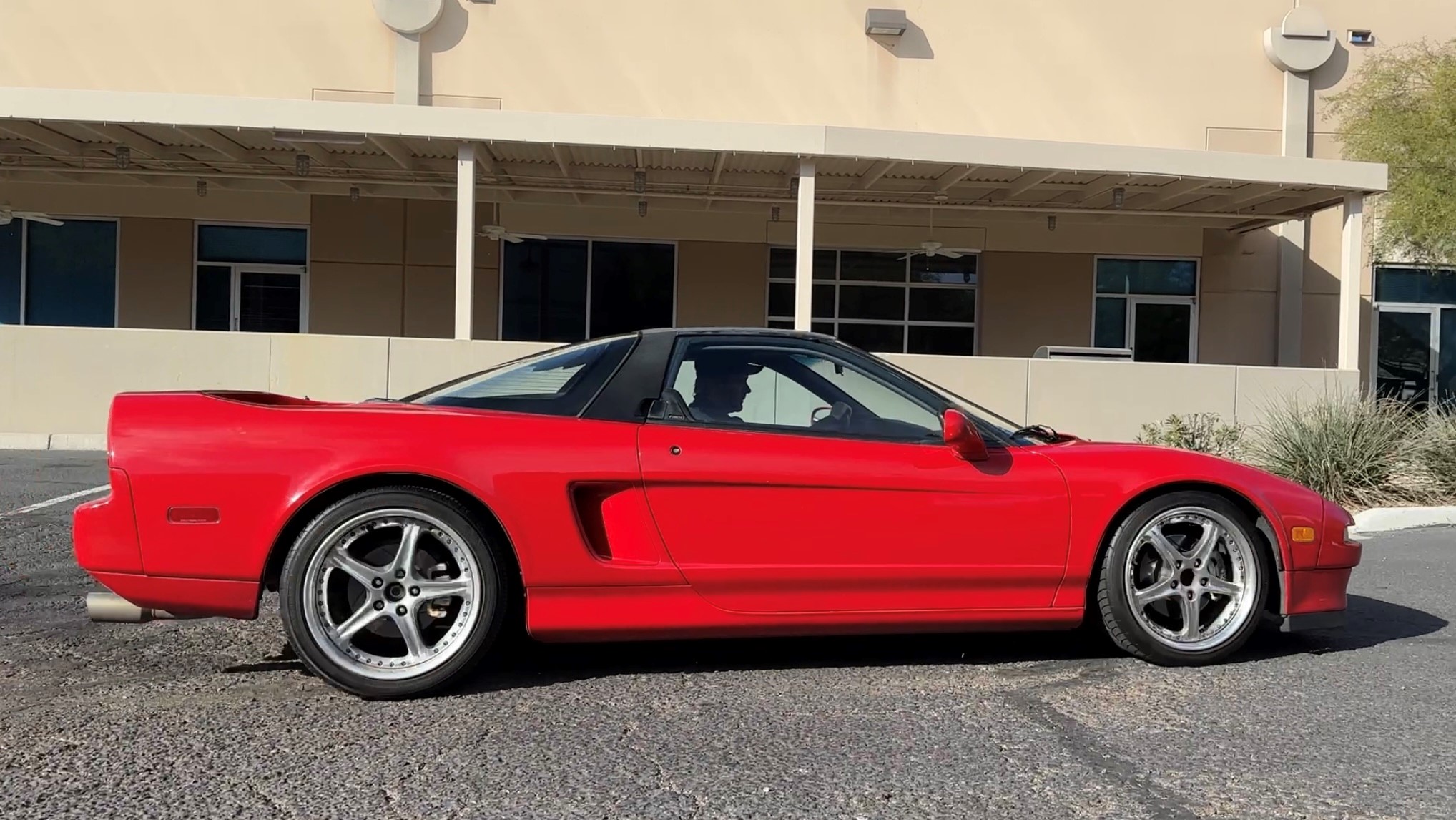
In all, the first-generation NSX sold a total of 8,949 units between model years 1991 and 2005 in North America. About a decade ago, I scooped up a moderately-used 1992 unit in Formula Red with a black leather interior and 80,000 miles on it. I have since added about 40,000 additional trouble-free miles to its odometer. Some people are surprised that I have driven my car that much. After all, relatively few people who bought the NSX did so with the intent of driving it daily. Most folks stored the car away for weekend use under a cover and hooked it up to battery tender. According to production statistics, my NSX is 1 of 421 units that were made of its configuration for 1992.

I recently attended an open house at ScienceofSpeed (SoS) in Chandler, Arizona. ScienceofSpeed has established a foothold in the enthusiast communities for the Acura NSX and the Honda S2000 over the past 20 years as a premier developer of performance parts, a provider of mechanical service, and an overall resource on the ownership experience for some of Honda’s beloved high-revving sports cars.

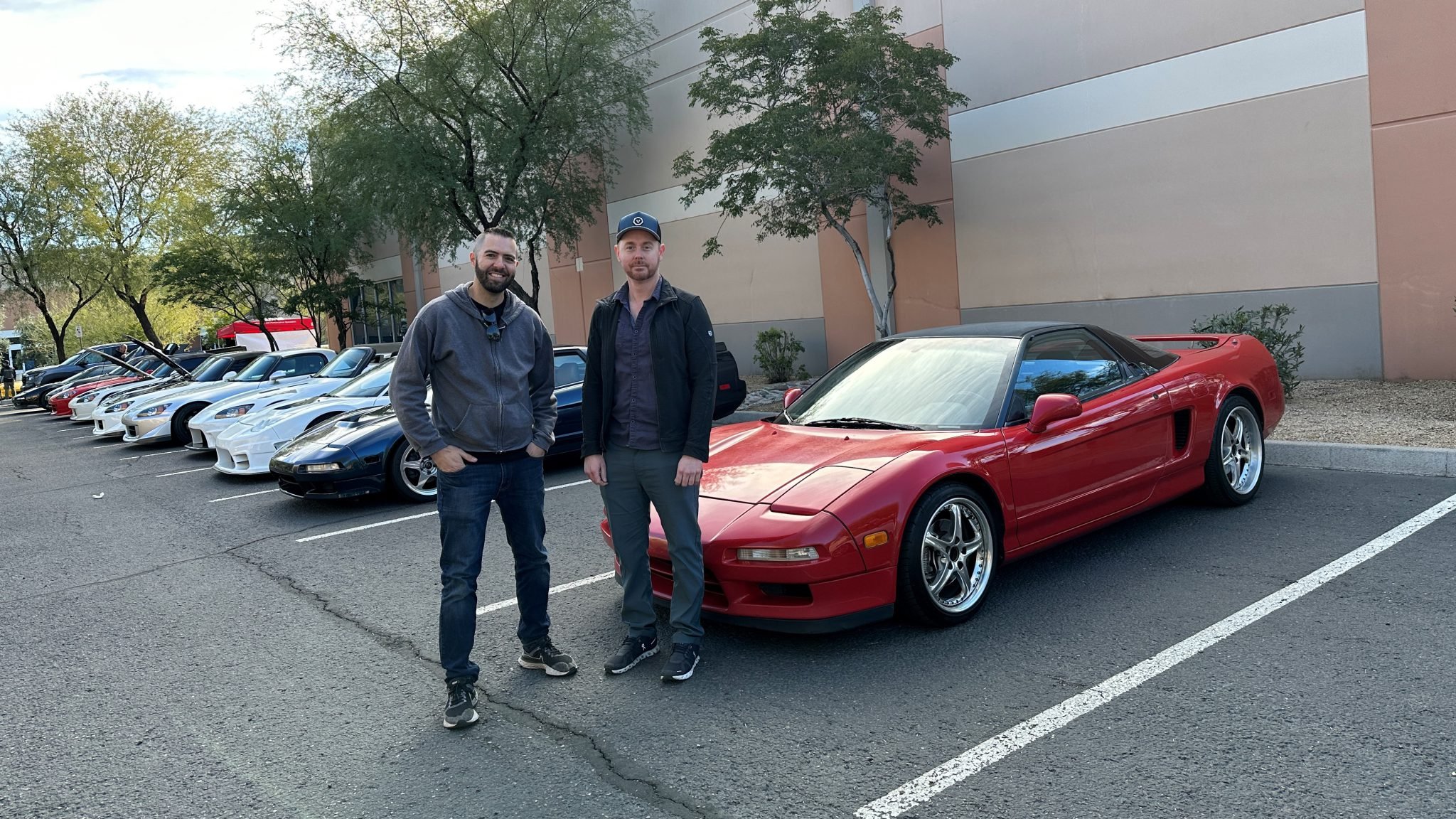
Tyson and Sean with the 400k+ mile NSX

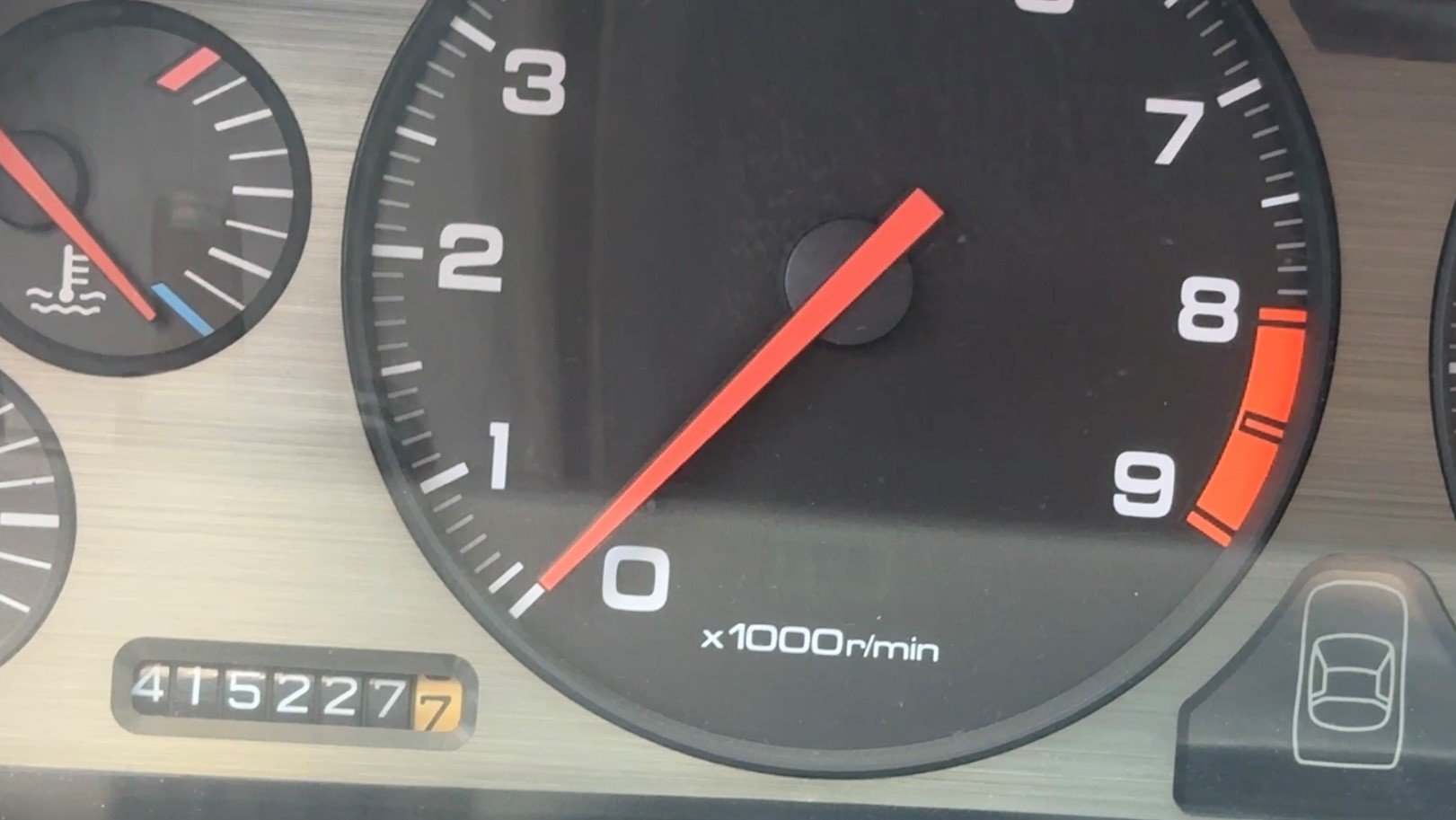
During the open house, I met a local NSX owner named Sean who has an NSX that looks a lot like mine, aside from the fact that it is sitting on a set of chrome finished SSR wheels. Coincidentally, his car is also one of the 421 cars in Formula Red over black with a five-speed manual from 1992. But Sean’s NSX has one very unique characteristic: it has left mine in the dust as far as mileage goes. The car has over 415,000 miles on it.

The proof’s in the odometer

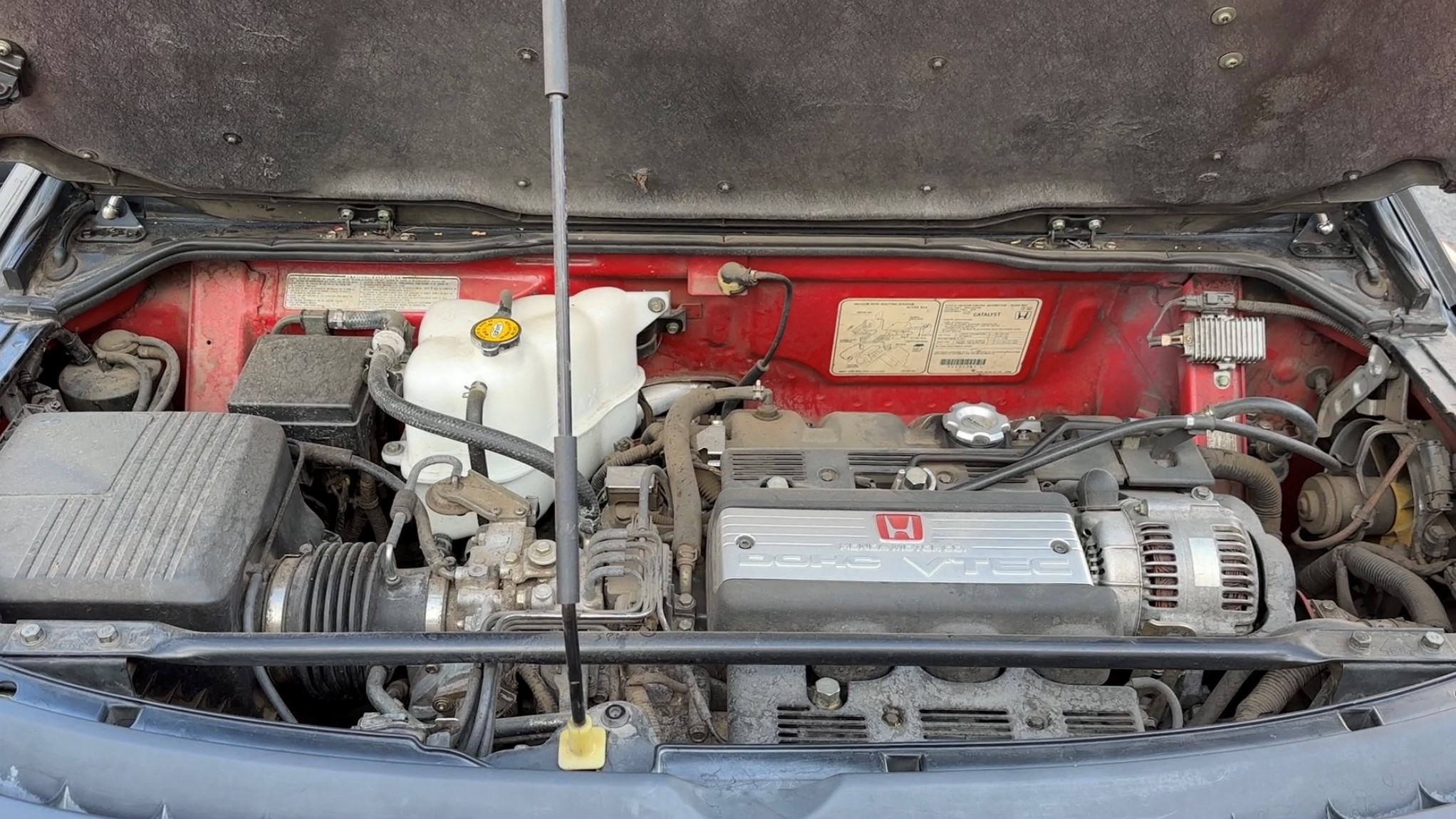
I caught up with Sean for some brief Q&A and a walkaround of his special car. He purchased it in Sedona, Arizona, about 18 years ago with about 70,000 miles on the odometer and put the wheels into motion with the car as his daily driver. He has kept up on all of his maintenance at ScienceofSpeed. “I’m religious about routine maintenance,” he said. “I’m on point when it comes to every service interval; always taking care of the engine like clockwork.” Like many Honda motors, the C30A engine in the NSX calls for a timing belt and water pump every 60,000 to 90,000 miles but overall, Sean said there have been no major surprises.

Sean was awarded recognition at last October’s annual NSX Club of America meet-up, dubbed “NSXPO.” While his car has a few rock chips and some faded paint, the fact that this 32-year-old supercar has driven to the moon, and is well its way back, is truly remarkable.

We wish Sean a safe journey as he continues to 500,000 miles, and we’ll share an update when he gets there!

The Toyota SR5 has established itself as the collectible Japanese 4×4 truck from the 1980s. When you are a plot point in Back To The Future, and pined over by Marty McFly, your potential as a collector car rises exponentially. Product placement can yield some great returns, folks. Ask the Hershey’s marketing team how a Reese’s Pieces appearance in E.T. helped its sales numbers.

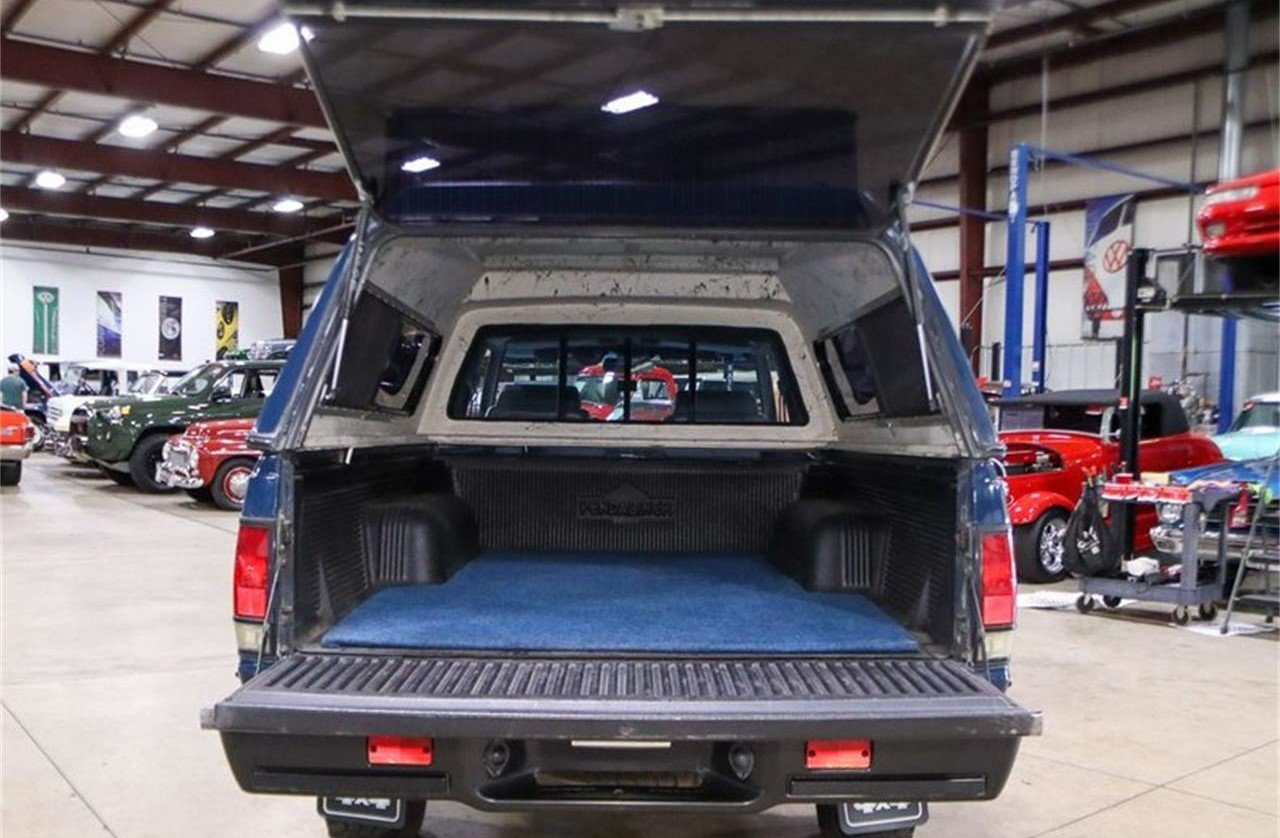
1986 Nissan Kingcab 4×4 Pickup

Should Nissan have followed suit and tried to get its trucks on the silver screen? I think so because its Kingcab 4×4 is aesthetically on par with a Toyota SR5 pickup, but has been largely overlooked in collector car circles. Will Nissan’s Kingcab become the next big thing for 1980s trucks? I’m not Nostradamus, or even Miss Cleo, but I think keeping an eye on the Nissan pickup market could behoove you.

The Pick of the Day is a 1986 Nissan Kingcab 4×4 pickup listed for sale on ClassicCars.com by a dealer in Kentwood, MI. (Click the link to view the listing)

“Sold new out of Puyallup WA and remained in the same custody of the original family until we recently acquired the vehicle,” the listing states. “Always a Washington truck from new and the quality care and presentation of this one is remarkable.”

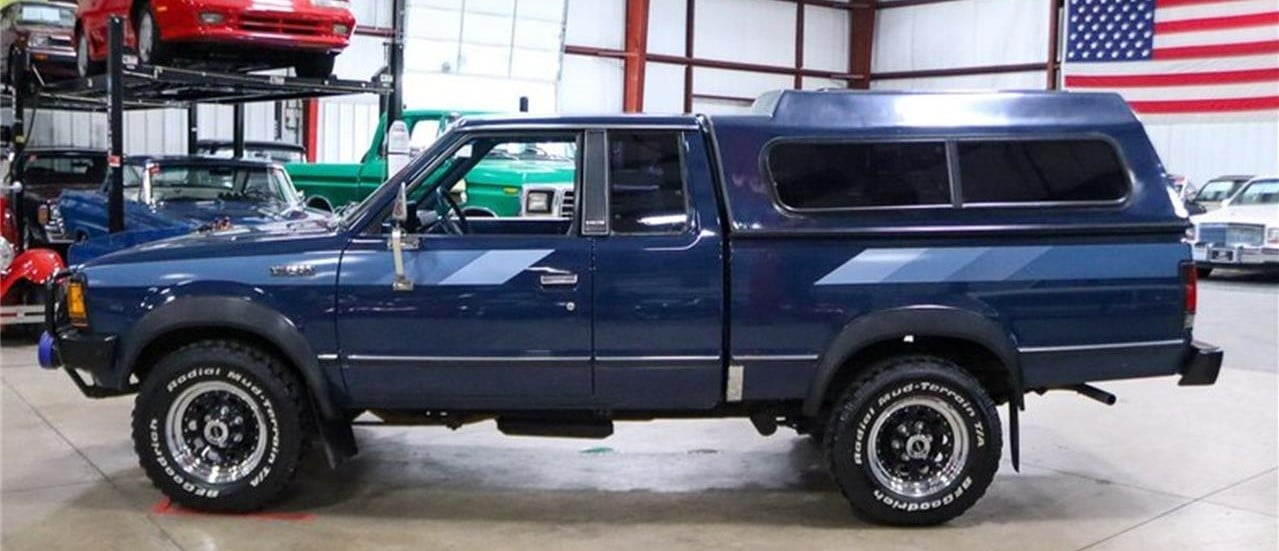
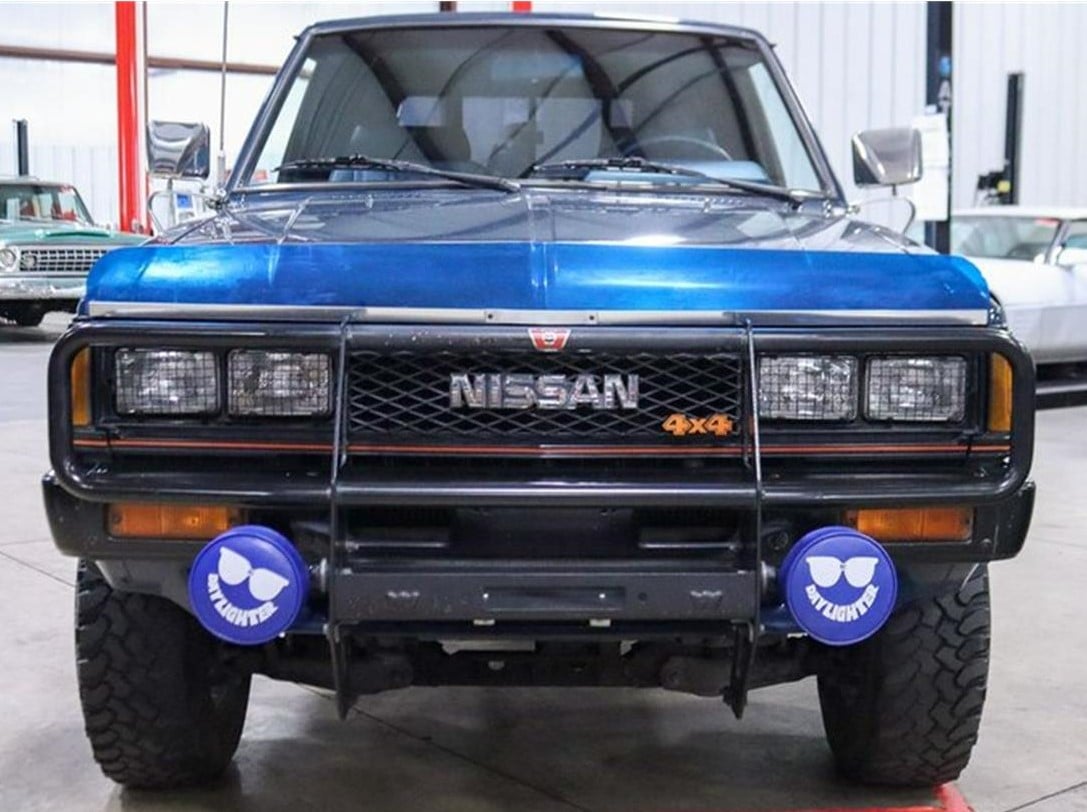
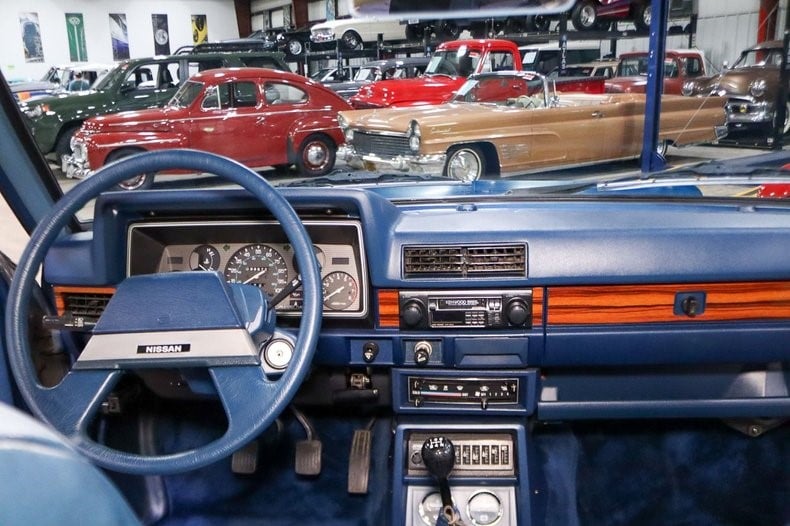
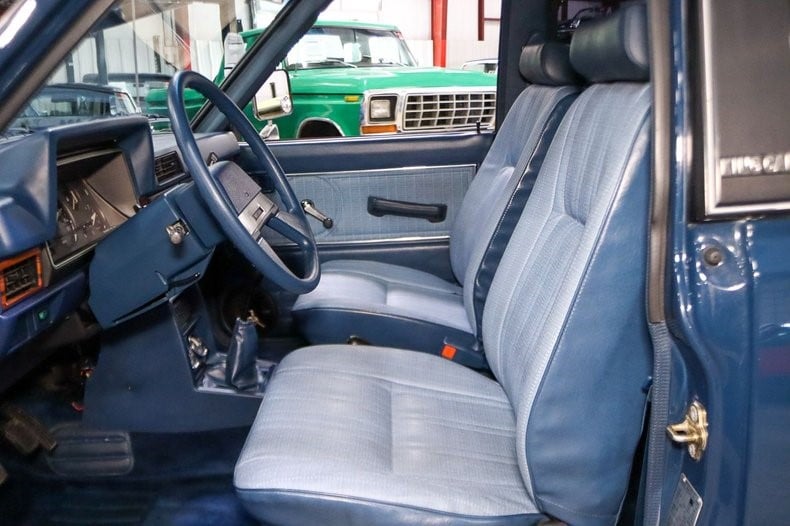
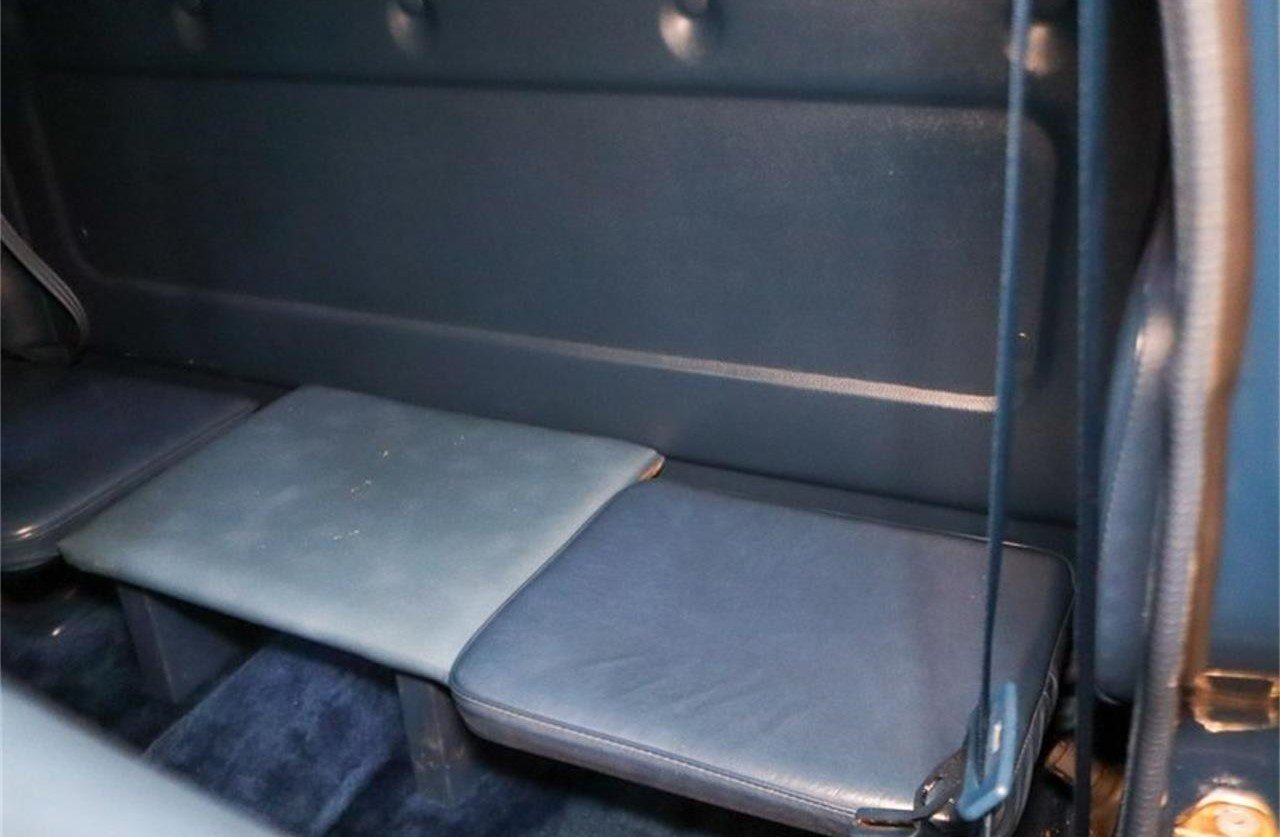
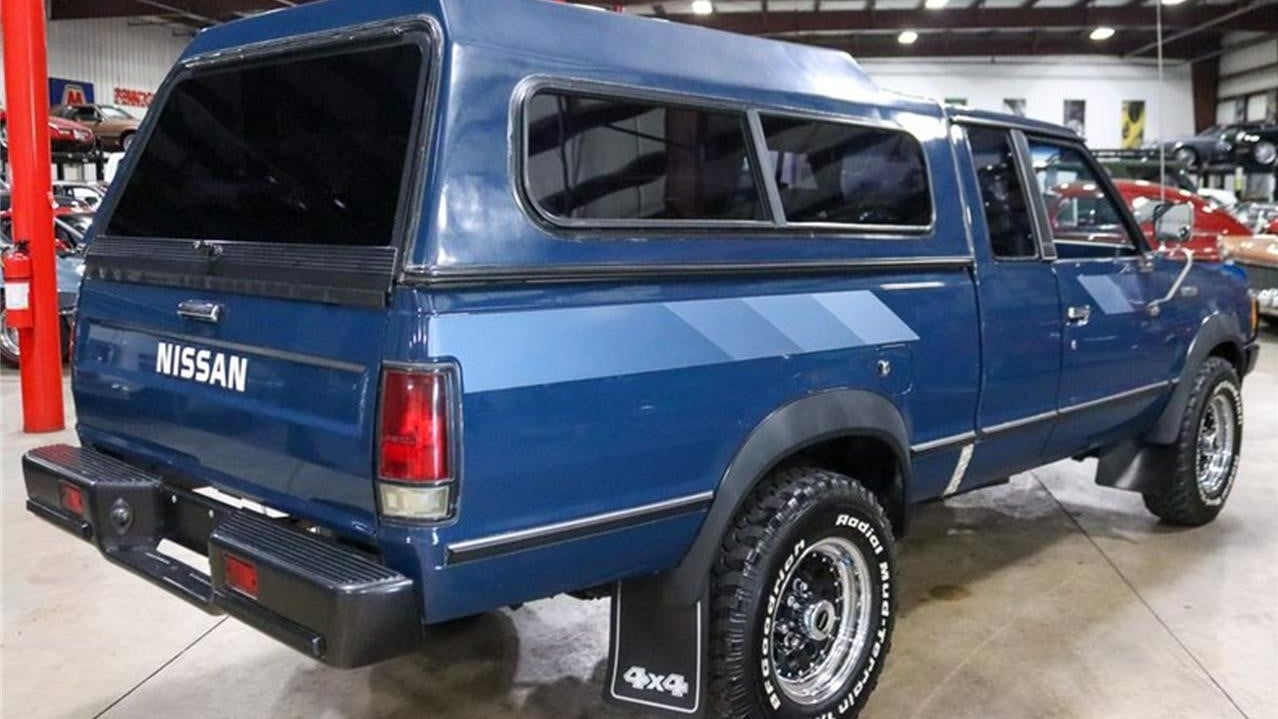
Finished in deep blue with light blue body stripes this Nissan features a fiberglass top, bed liner, KC Daylighter fog lights, a Warn front brush guard, and a bug shield. The Nissan’s blue interior has front bucket seats, rear jump seats, a sliding rear window, cigarette lighter, and a Kenwood stereo with a cassette player. The six-digit odometer shows 99,872 miles.

1986 Nissan Kingcab 4x4 Pickup
1986 Nissan Kingcab 4×4 Pickup

Judging by the pictures in the listing this Nissan pickup is in solid shape with the usual wear and tear you’d expect from a vehicle produced in the same year as the last time the New York Mets won the World Series.

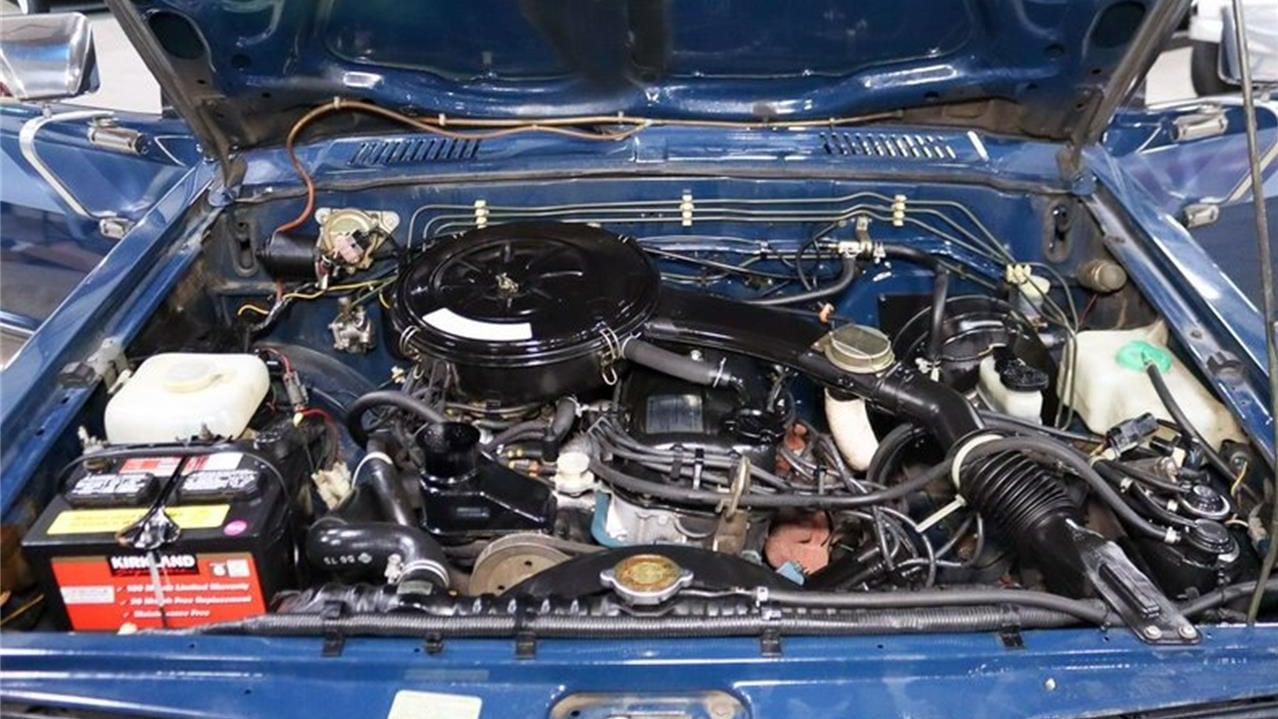
This Nissan 4×4 is powered by a 2.4-liter four-cylinder engine paired with a five-speed manual transmission. It rides on 15-inch Western wheels with BFGoodrich tires.

2.4-liter four-cylinder engine

The listing price for this 1986 Nissan Kingcab 4×4 Pickup is $19,900, and the sale includes factory owner’s manuals, original bill of sale and warranty booklet, registrations, and receipts.

1986 Nissan Kingcab 4x4 Pickup
1986 Nissan Kingcab 4×4 Pickup

Every Japanese pickup manufacturer can’t have Michael J. Fox and Claudia Wells talking up its product in a movie, but don’t hold that against Nissan. This 1986 Kingcab 4×4 warrants a second look as a possible future collector car and don’t hold a lack of product placement against a Nissan pickup.

To view this listing on ClassicCars.com, see Pick of the Day.

The Grand National Roadster Show is now a national success and perhaps the best custom car show held in the United States. But that didn’t happen over night. In fact, the Grand National Roadster Show at its founding in 1950 in Oakland, California was a local event and limited to just a few types of vehicles.

By 1962 “Grand” was added to its original “National Roadster Show” title and everything from customized go-karts to chopped Harley-Davidsons filled in the gaps between two-seater T-Birds and customized 1/2-ton pickups. In 2004 the Grand National Roadster Show moved from Northern California to Southern California and immediately grew from just three buildings in 2004 to consuming everything from outdoor spots up to Building 10 in 2005 at Pomona’s Fairplex.

For the 2023, 73rd edition of the Grand National Roadster Show a special tribute was held in GNRS’ “special features building” celebrating 50 years of unique classic trucks from 1948 up to 1998 and displayed a healthy helping of former magazine cover trucks and local icons from the past.

1954 Chevy AD with Chrysler Hemi power built by Harold’s Hot Rod Shop of Enid, Oklahoma and on the February 2023 cover of Classic Truck Performance.

Powered by a 429-inch Ford V-8 the “Lone Ranger” a very custom 1969 Ford Ranger originally a pickup by Kykers Rod & Kustom of Telford, Tennessee.

Kennedy Waite’s LS1 powered 1958 Chevy Cameo Carrier with paint and body by Squeeg’s Kustoms and upholstery by Gabe’s Custom Interiors on Wheelsmith wheels.

Darryl Hollenbeck custom painter for 2023’s AMBR winning 1932 Ford entered his 1974 Chevy C-10 stepside with special thanks to his friends that helped refresh it.

Chip Foose’s first car was a truck —Chip’s 1956 Ford “Big-Window pickup originally in CoCo Brown Metallic was restyled to Chip’s wishes in an episode of Overhaulin’.

Nothing brings back 1980s mini-trucking nostalgia like this 1977 Datsun 620 King Cab mini truck that came to Pomona all the way from New York.

Grand National Roadster Show 2023 Classic Trucks

With regulations in several countries pressuring automobile manufacturers to shift into a future of hybrid electric vehicles by 2030, driving full force to all electric power by 2035, the unknown fate of certain production sports cars is unsettling for car lovers. In the midst of uncertainty, Martijn ten Brink, chief executive of Mazda in Europe, shared some good news: The Miata MX-5 will live on.

In an interview with Autocar, while discussing plans for the Miata’s next generation, ten Brink said, “How do you stay true to the concept of what the car stands for taking it into the next generation of technologies? That’s not been decided. But I think for Mazda it would be fair to say that the MX-5 will never die. I think it will continue to exist forever and it will have to go with the times. That’s a super challenge, and people are passionate about this car in Mazda.” He added, “Of course, as you can imagine, people have opinions on which direction it should go. So, I’m very curious where it will end up, but it will definitely remain part of the line-up.”

Since its introduction at the 1989 Chicago Auto Show, the Miata has been a symbol of Mazda’s car making philosophy, “Jinba Ittai,” which translates to the “horse and rider as one,” representative of the little lightweight sports car’s responsive, fun-to-drive platform. The Miata holds a special place in the Mazda lineup and in the hearts of its diehard enthusiasts.

In May 1989, the two-seater convertible became available to U.S. and Canadian buyers as a 1990 model. Mazda sold 35,944 Miatas within that first year. Automobile Magazine was obviously impressed, naming it “Automobile of the Year.”

“It was a labor of love, that’s for sure,” said Tom Matano, now retired as Mazda’s Chief of Design. “It still is.”

Built on its own unique platform, the Miata combines the best of past British sports cars with Japanese reliability. It’s also one of the few cars still sold with a manual gearbox. It’s no surprise that the little budget sports car has made its mark in motorsports. It provides a perfect platform for reliable, fun daily driving on weekdays and transitions to a quick, maneuverable weekend racer on the track. A forgiving car that is on the driver’s side, it knows you want to have fun but don’t necessarily want to be scared silly. Today, Miatas are abundant in SCCA classes and beyond. The platform has introduced many novice drivers into the competitive driving scene.

Mazda Miata at the first Midwest Miata National in Indianapolis Motor Speedway

Indianapolis Motor Speedway, 1992

In a melting pot of SUVs that look the same, where performance names are slapped on just about anything to draw attention, reassurance in knowing that this automotive icon won’t be watered down feels similar to taking a deep breath of fresh, untouched mountain air. Very Zen.

In its 34-year run, the Miata generations have lived longer than most other models on the market. The original version, the first-generation NA, was in production for eight years. The second-generation NB lasted for seven, and the third-generation NC lived for a decade. The current ND model was released in 2015 and an upgraded ND2 engine may help to extend its life.

Will the next generation see hybrid-electric technologies? With the trend toward EVs, it’s likely unavoidable, but one thing is for certain: Miata will always be the answer.

Featured on AutoHunter, the online auction platform driven by ClassicCars.com, is a 1963 Chevrolet Nova SS convertible.

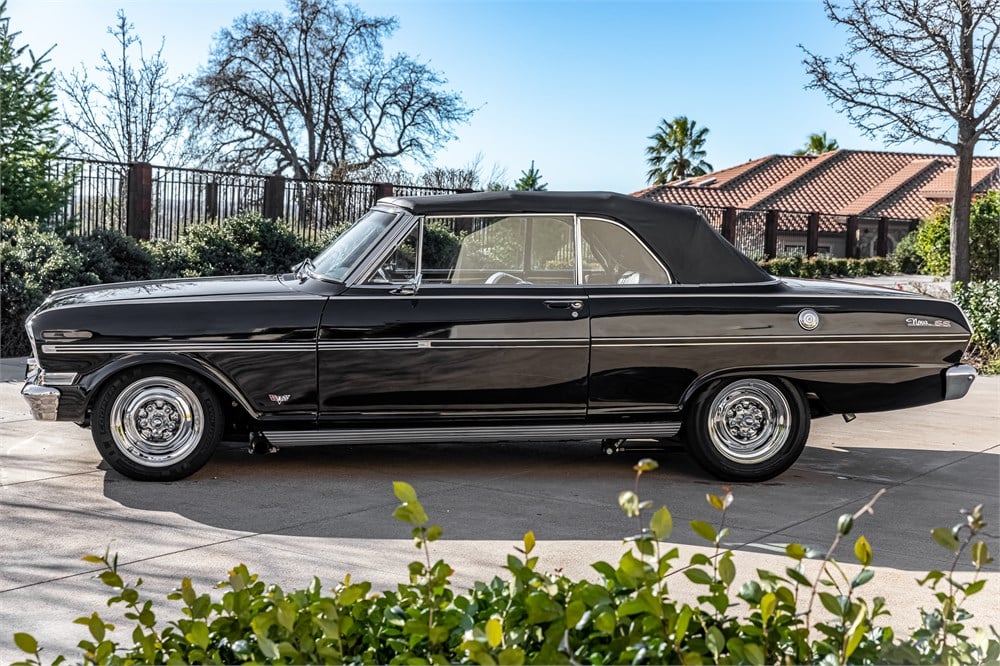
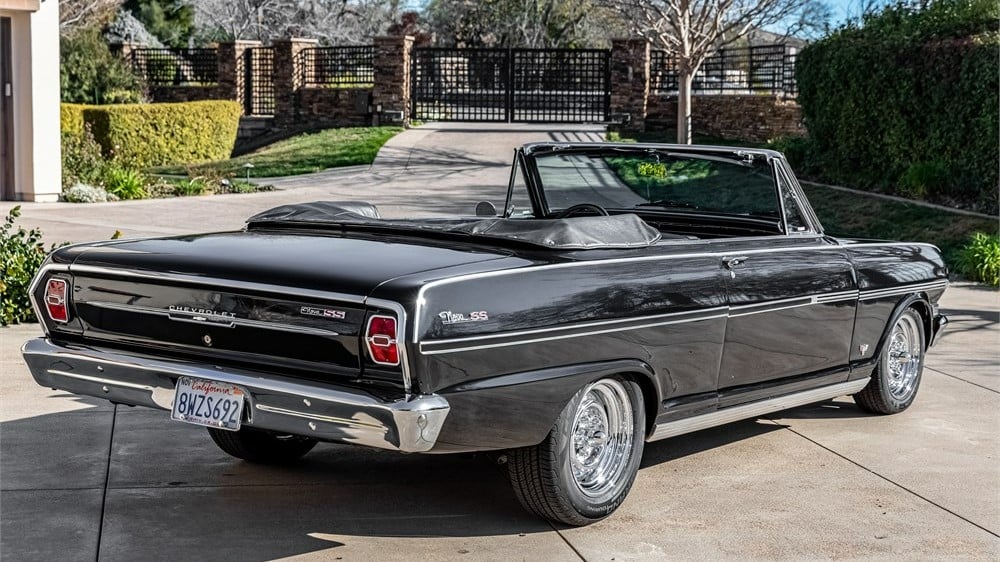
“The exterior has been finished in black and blue pearl,” the listing states. “Features include newly re-chromed bumpers, new glass, a front bumper grille guard, a polished aluminum grille, a driver-side mirror, side and rocker trim, Nova SS emblems, rear body trim, and a new black vinyl convertible top.”

1963 Chevrolet Nova SS convertible

It rides on 15-inch chrome Wheel Vintiques 64 Series O.E. wheels with 185/60 front and 215/60 rear Cooper radial tires.

1963 Chevrolet Nova SS convertible

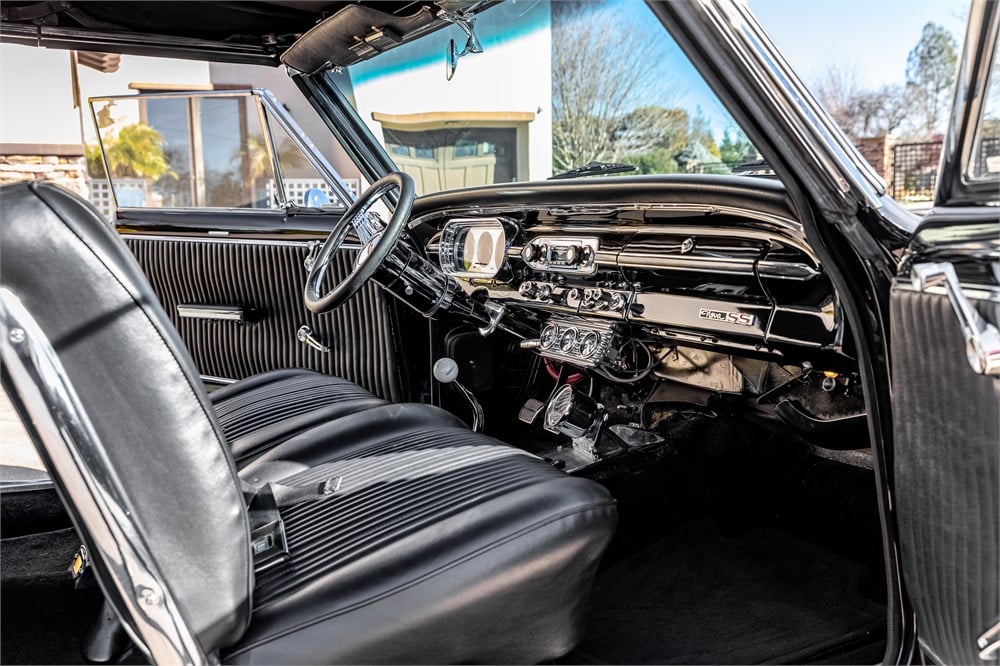
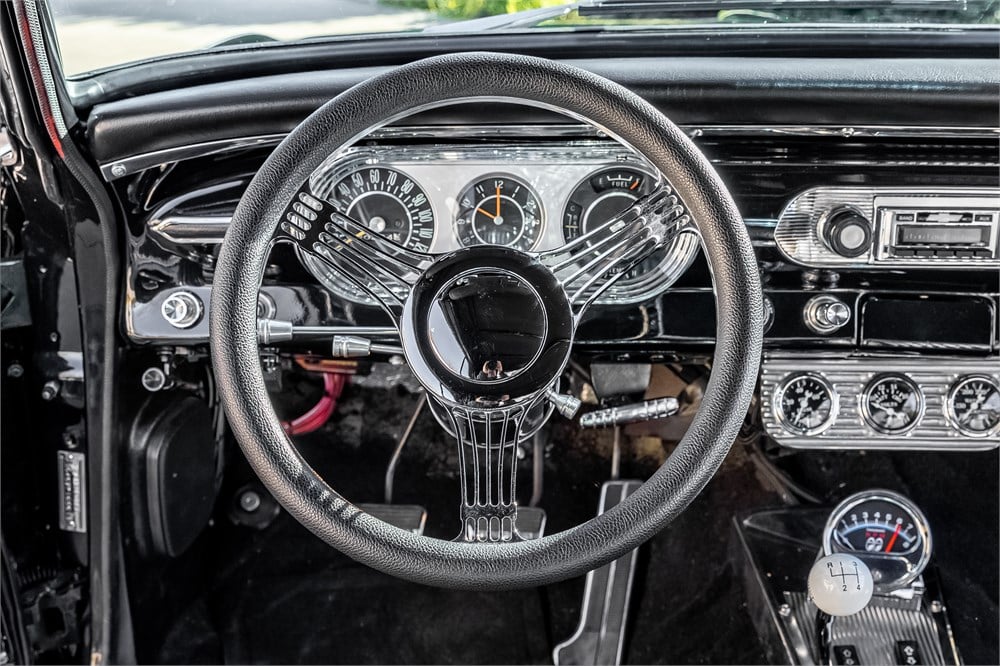
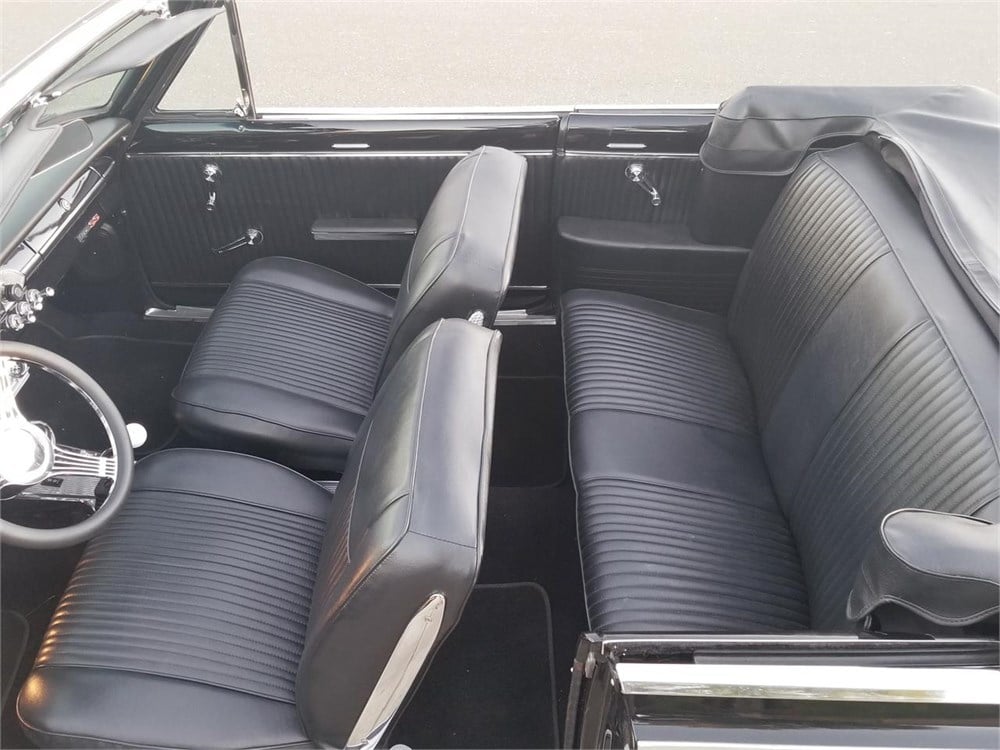
This Chevrolet Nova’s front bucket seats, rear bench seat, and door panels were reupholstered in black vinyl. It features a Custom Autosound AM/FM stereo with four Pioneer speakers, new black carpet, new black dashboard pad, a billet aluminum banjo steering wheel, and a center console.

1963 Chevrolet Nova SS convertible

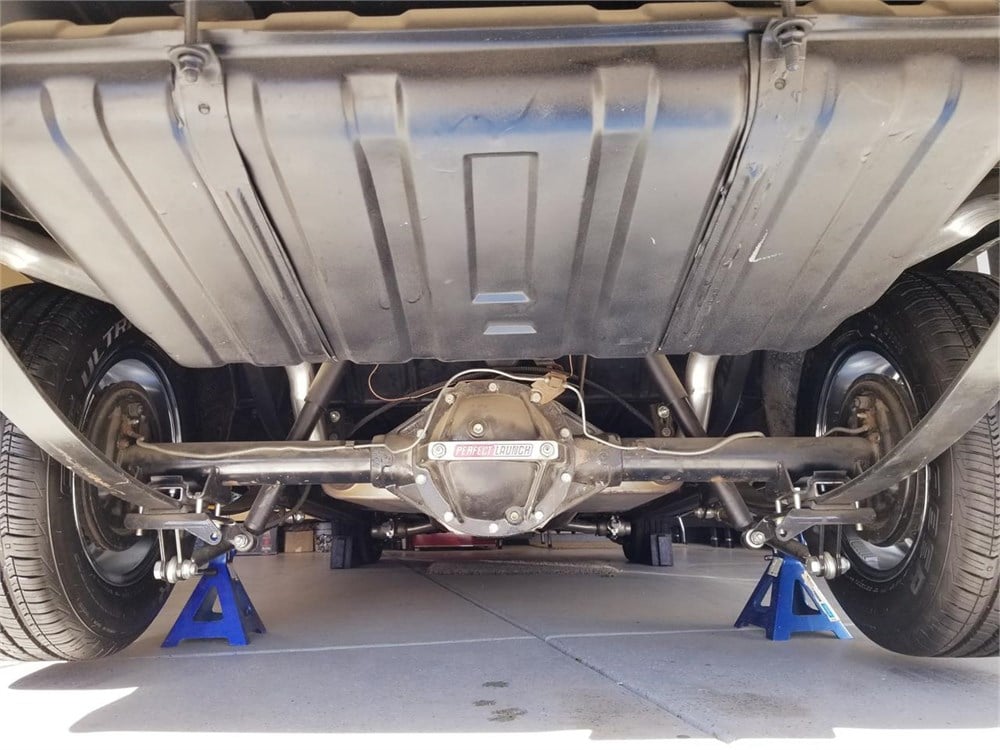
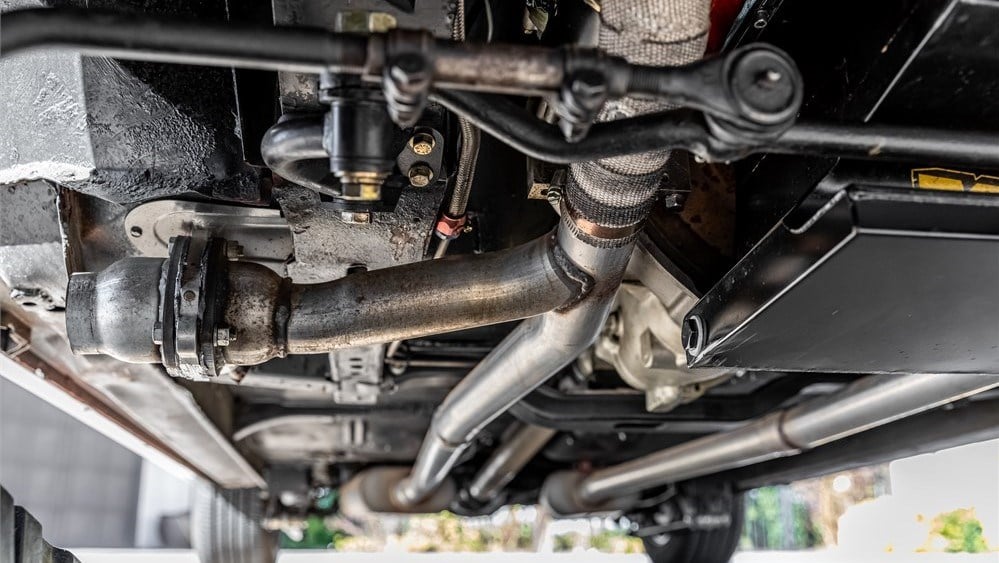
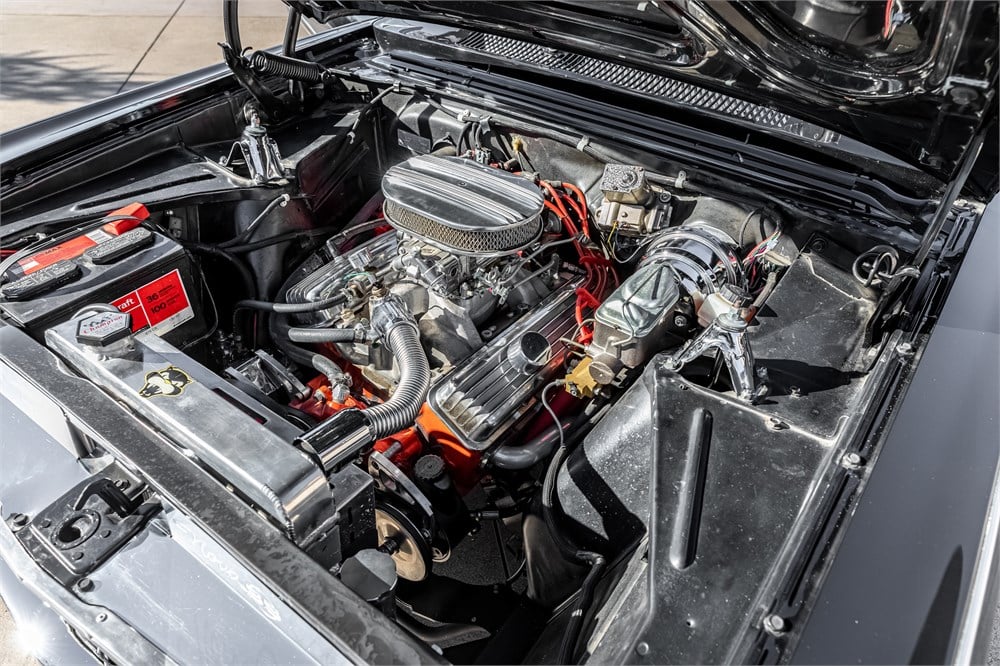
Under the hood is a newly built 1964 Corvette 327ci V8 engine with an Edelbrock high-rise aluminum intake, a 750-cfm Holley Quick Fuel Technology four-barrel carburetor, cast iron double-hump Corvette 202 heads, and an Isky Racing Cams high-performance camshaft and lifters. The engine is paired with a Super T-10 four-speed manual featuring a rebuilt 11-inch hydraulic clutch, and an Eaton 10-bolt rear end with a 3.55:1 gear ratio. 

A Classic Performance Products (CPP) power steering gearbox, pump, and control arms were installed. This Nova’s suspension was upgraded with new shocks, rebuilt front control arms, new front coils, Calvert Racing CalTracs traction bars, and two-inch dropped spindles.

The odometer indicates 600 miles, which the owner indicates is the mileage on the new engine but the true mileage of the vehicle is unknown. Three-hundred miles was added by current ownership.

1964 Corvette 327ci V8 engine

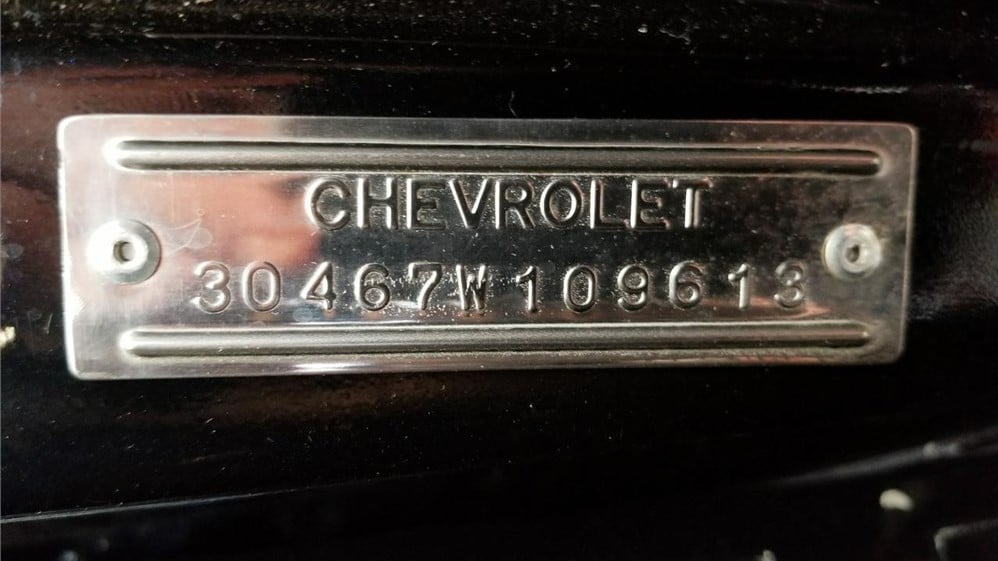
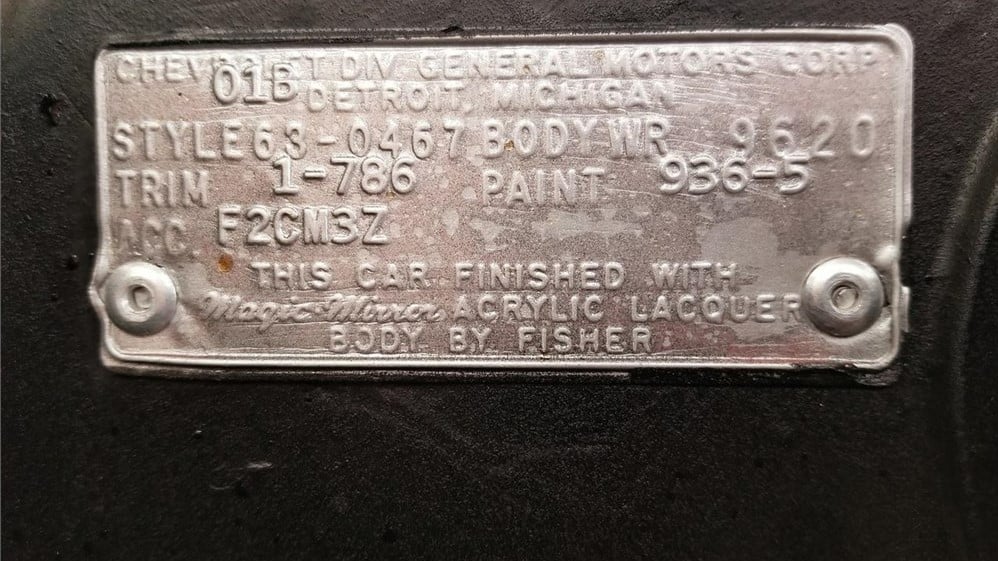
“The doorjamb VIN tag is a replacement that has been attached with rivets; the original was factory spot-welded to the body,” the listing states. “The cowl-mounted body trim tag under the hood has been removed and is currently attached with rivets. An appraisal will be included with the purchase of the car.”

The sale includes a clear California title in the seller’s name.

This 1963 Chevrolet Nova SS convertible’s auction ends on Monday, February 13, 2023, at 4:20 p.m. (MST)

Visit the AutoHunter listing for more information and photo gallery

If you find your new C8 Chevrolet Corvette Stingray coupe a bit slow Hennessey Performance can alleviate this fear with its H700 supercharger package. Hennessey takes the C8’s naturally-aspirated LT2 6.2-liter V8 engine and upgrades it with a high-flow centrifugal supercharger, an air induction system with an air-to-water intercooler, high-performance software, and an optional enhanced cat-back exhaust. The upgraded parts and Hennessey’s magic increases the C8 Corvette Sting Ray coupe’s stock 490 horsepower and 465 lb-ft of torque to 708 bhp and 638 lb-ft: a 44 percent increase in horsepower and a 37 percent increase in torque over the factory rating. To put things into context Chevy’s flagship C8 Z06 Corvette’s naturally-aspirated 5.5-liter V8 LT6 engine produces a factory-rated 670 bhp and 460 lb-ft of torque.

“The stock C8 Corvette Stingray is an extraordinary sports car, yet Chevrolet left some V8 performance on the table,” said John Hennessey, founder and CEO. “Our exciting ‘H700’ supercharger package integrates seamlessly with the 8-speed dual-clutch gearbox, and our exhaust upgrade sounds much more aggressive than stock. Considering that our power and torque surpass the factory Z06, the Hennessey ‘H700’ is arguably the best value high-performance supercar in the world.”

Hennessey 'H700' Corvette C8
Hennessey ‘H700’ Corvette C8

What do you get with the H700 package and what does it cost?

You get the aforementioned supercharger, intercooler, engine tune, and optional cat-back exhaust. On top of the performance upgrades your C8 gets a vinyl Hennessey livery (available in blue, white, black, silver, or red), ‘Hennessey’ and ‘H700’ badging, and a serial numbered plaque.

Supercharged LT2 6.2-liter V8 engine

The H700 rides on a set of 19- and 20-inch alloy wheels that are available with a brushed aluminum, satin black, or graphite finish. The H700 package will set you back $49,995, and if you just want some horsepower a power-only package with just the supercharger upgrade is available for $34,950. 

Hennessey 'H700' Corvette C8
Hennessey ‘H700’ Corvette C8

The H700 package fits all 2020-2022 C8 Corvette coupe models and has a three-year/36,000-mile limited warranty.

H700 C8 Corvette upgrade package

POWER

  • 708 bhp @ 5,900 rpm
  • 638 lb-ft torque @5,000 rpm

UPGRADES TO STANDARD C8 CORVETTE

  • High-Flow Centrifugal Supercharger System
  • High-Flow Air Induction System
  • Air-To-Water Intercooler Upgrade
  • High-Flow Cat-Back Sport Exhaust System
  • Hennessey Calibration Upgrade
  • All Necessary Gaskets and Fluids

OTHER

  • Professional Installation
  • Chassis Dyno Calibration & Testing
  • Road Testing (Up To 500 Miles)
  • 19” (F) and 20” (R) Lightweight Street Wheels (Brushed Aluminum, Satin Black, or Graphite)
  • Hennessey C8 Heritage Livery (Blue, White, Black, Silver, or Red)
  • Hennessey Exterior Badging
  • H700 Exterior Badging
  • Serial Numbered Engine Bay Plaque
  • 3 Year / 36,000 Mile Warranty

*Exhaust removes active valve functionality

Porsche has issued a recall on certain versions of the Panamera hatchback and wagon due to a potential fire risk.

The recall affects Panameras and Panamera Sport Turismos from the 2017-2021 model years, and specifically the Panamera, Panamera 4, Panamera GTS, Panamera Turbo, and Panamera Turbo S grades.

A total of 24,467 examples may be affected in the U.S., according to the recall notice published by the NHTSA on Jan. 27.

The issue is caused by the external coolant pump for the climate control system on the vehicles. In some cases, humidity may enter the pump and cause an electrical short circuit, which in turn could lead to a fire.

The remedy requires dealers to replace the coolant pump and inspect and replace the plug-in connection, if necessary. The service will be offered free of charge.

Owner notification letters are expected to be mailed out on March 27, but anyone looking for further information can contact Porsche at 1-800-767-7243 or the NHTSA at 1-888-327-4236 (reference recall campaign number 23V033000).

This article was originally published by Motor Authority, an editorial partner of ClassicCars.com.

In many ways, traditional hot rodding has taken a turn toward coach building over the last several years with an increasing emphasis not so much on gathering the right parts to replicate what could have been done in the Forties and Fifties, but rather on applying high standards of craftsmanship to rework original sheetmetal into something new and daresay elegant that still evokes period aesthetics. This 1936 Ford speedster listed for sale on Hemmings.com is a perfect example of that trend. Originally a Tudor sedan, the car has had its roof artfully lopped off with a nice DuVall-style windshield giving the impression that no metal roof had ever topped this car.

While the rest of the fenderless exterior looks typical hot rod black, as the seller notes it took a good deal of reshaping to peak that prow and to make a car never meant to run fenderless look as natural as any Deuce highboy. It’s all subtle, though, compared to the interior, which combines vintage-look gauges and steering wheel with an amalgamation of rivets, diamond-pattern leather upholstery, bare aluminum, brass-appearing holepunched panels, and even wood decking covering the space behind the seats. Half a dozen separate finishes typically doesn’t make for a cohesive theme, but they all somehow complement each other while giving the interior seemingly endless points of interest.

The Pontiac GTO-sourced 5.7L LS V-8 under the hood looks like an LS. For somebody looking to make a splash and win top-level awards with a car like this, there are plenty more creative engine options out there or, at the least, an entire aftermarket’s worth of dress-up items. On the other hand, the LS is a compact, powerful, reliable, and well-supported option for somebody concerned less with awards than with getting some wind in their hair. Similarly, the 4L60E automatic transmission, the 9-inch rear axle, and the hidden disc brakes make for rational choices for a streetable car.

1936 Ford speedster for sale on Hemmings.com

1936 Ford speedster for sale on Hemmings.com

1936 Ford speedster for sale on Hemmings.com

1936 Ford speedster for sale on Hemmings.com

1936 Ford speedster for sale on Hemmings.com

Just over a week ago, Mazda unveiled the CX-90. Who cares, right? Sure, but we enthusiasts also have utilitarian needs and, if station wagons seem to be a dying breed, what is the best Plan B? A vehicle from a company that caters to the enthusiast no matter how insipid the transportation device. We can accept that when forced, plus Mazda has that highly anticipated inline six.

But have you ever perused Mazda’s trim levels? They’re unnecessarily elaborate and complicated, and CX-90 pricing bears that out. Because of this, let’s try to make some sense out of it.

The general core trim levels in Mazda’s lineups include Select, Preferred, Preferred Plus, Premium and Premium Plus. With so many plusses and Ps, it’s quite difficult to keep up with Mazda’s hierarchy.

2024 Mazda CX-90 Reveal

Nonetheless, those trim levels have an umbrella hovering above them. In the case of the CX-90, there are three core sub-models: 3.3 Turbo, PHEV (over time, you’ll learn that means “plug-in hybrid”) and Turbo S.

The 3.3 Turbo comes with a 280-horsepower e-Skyactiv G engine that can achieve 24 city/28 highway/25 city combined mpg on regular fuel. A mild, 48-volt hybrid system called M-Hybrid Boost plays a role in its performance and economy.

The mid-level sub-model is the PHEV, which is equipped with the e-Skyactiv PHEV electric motor supported by a 17.8 kWh high-capacity battery and mated to Mazda’s familiar 2.5-liter naturally aspirated four-cylinder. Combined, the system produces 323 horsepower on premium fuel. Fuel economy stats are not currently available for this one.

The top sub-model is the Turbo S. Its e-Skyactiv G engine offers 340 horsepower on premium fuel. While a substantial bump over the regular 3.3 Turbo, fuel economy doesn’t seem to have taken a toll considering the 23/28/25 ratings, with the higher cost of premium likely to be the main increase in operating costs. The Turbo S too is equipped with M-Hybrid Boost.

For the trim levels, the 3.3 Turbo will be available in all five packages, from Select to Premium Plus.

The PHEV will be available in three packages: Preferred, Premium and Premium Plus.

For the Turbo S, it’s available in three trim levels that include the base Turbo S, Premium and Premium Plus.

I’m sure you don’t want to be more confused, but the content mix for one Premium sub-model may be different than another. In other words, you cannot count on a 3.3 Turbo Premium having the same content mix as the Turbo S Premium.

Below you can find the prices of each sub-model and trim level. If you’re interested in shopping for a CX-90, your best bet is to peruse Mazda’s website to find the particular vehicle that has the proper level of equipment to suit your needs because there’s no way you’re going to be able to figure it out easily.

STARTING MSRP FOR THE 2024 MAZDA CX-90 IS AS FOLLOWS: