If you have had your finger on the pulse of the old car hobby, it should be no surprise that the American car scene in Sweden (if not Scandinavia) is quite vibrant, possibly number one in popularity outside North America and Australia. If you didn’t know this, then this may come as a revelation. In fact, when things got lean in America, many used American cars were exported to Sweden — even substantial vehicles like a 1970 Hemi Challenger R/T convertible. Today, Swedes area known for their love of Virgil Exner finned 1950s starships, among other vehicles.

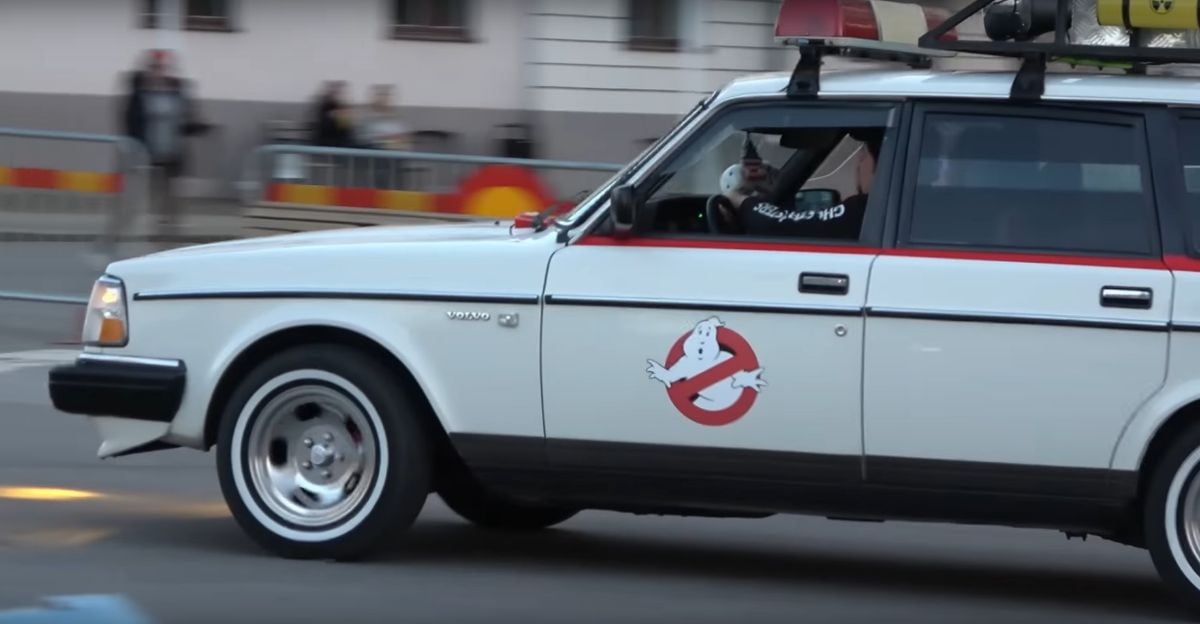
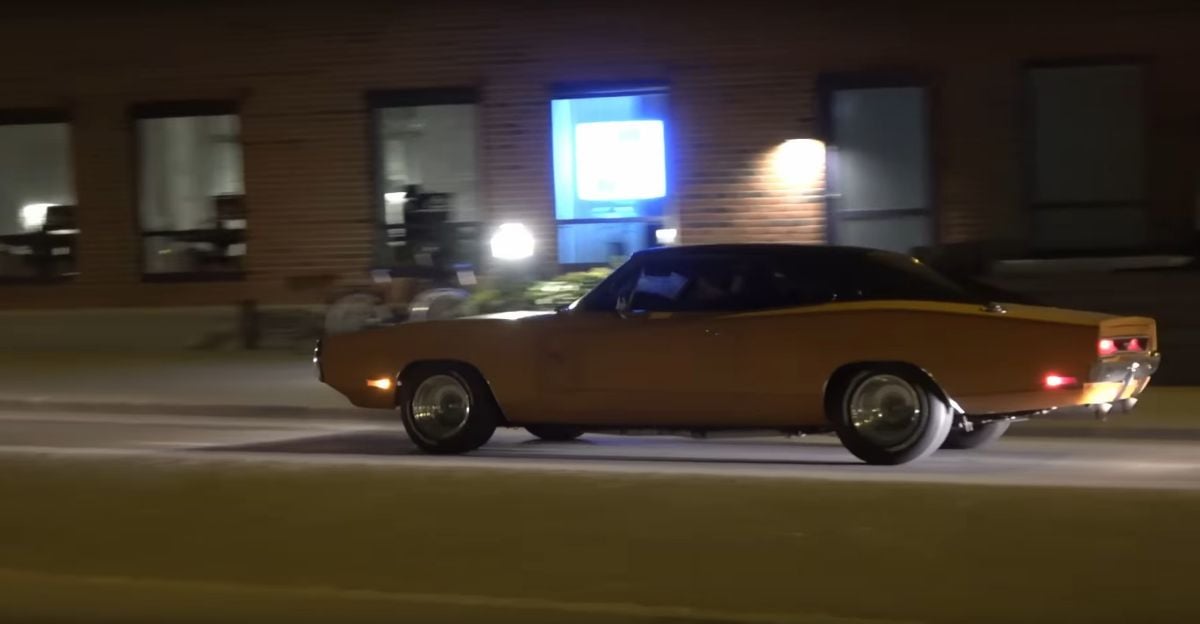
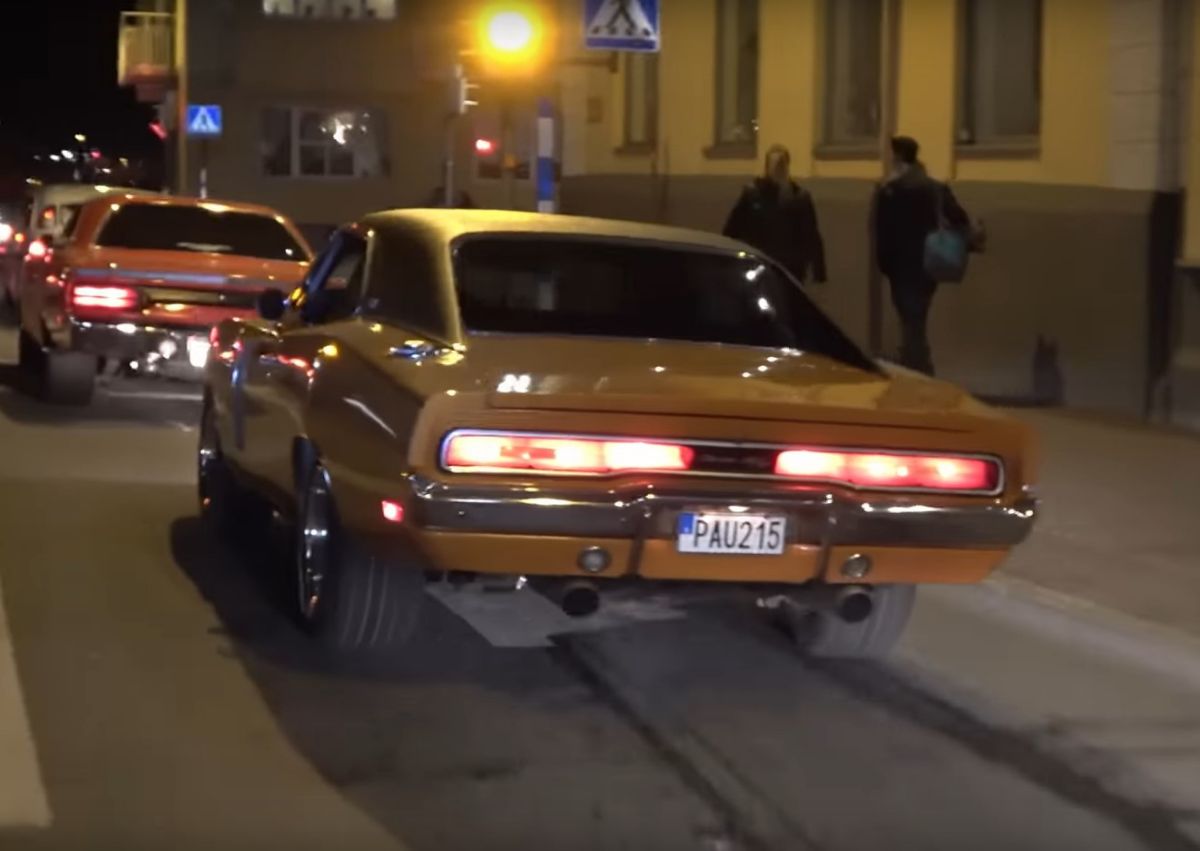
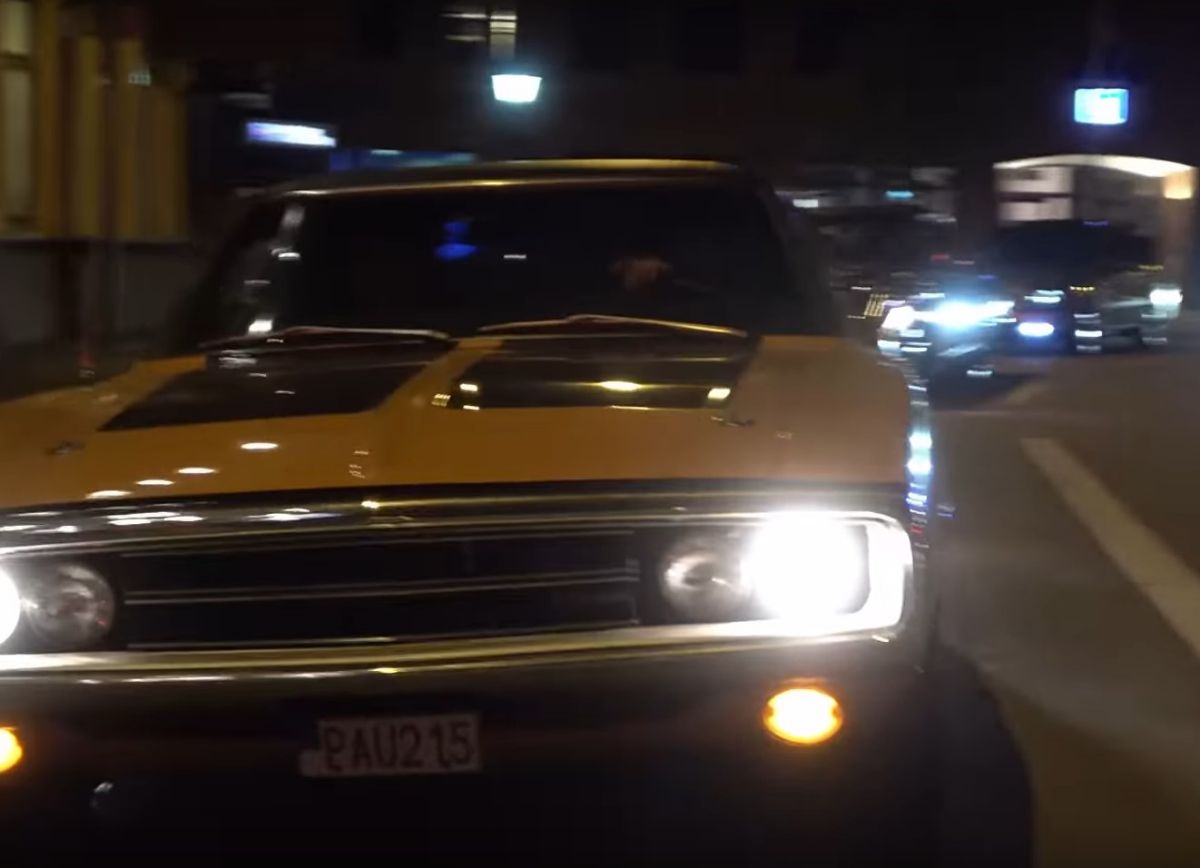
If you want to catch a slice of Swedish car culture, check out this video “American Car Cruising Gone Wild in Sweden” by Woody Piano Shack. This cruise can’t be confused for something on American soil, especially with the raggare, which Woody characterizes as Swedish redneck culture. You can tell these cars because they lean towards the trashed side and may be inhabited by trashed passengers drinking (presumably) American swill and glögg. We at the ClassicCars.com Journal have selected a few snapshots from the video to show you the variety of vehicles in this cruise in the southern Swedish coastal town of Ystad, a seven-hour car ride from Stockholm.

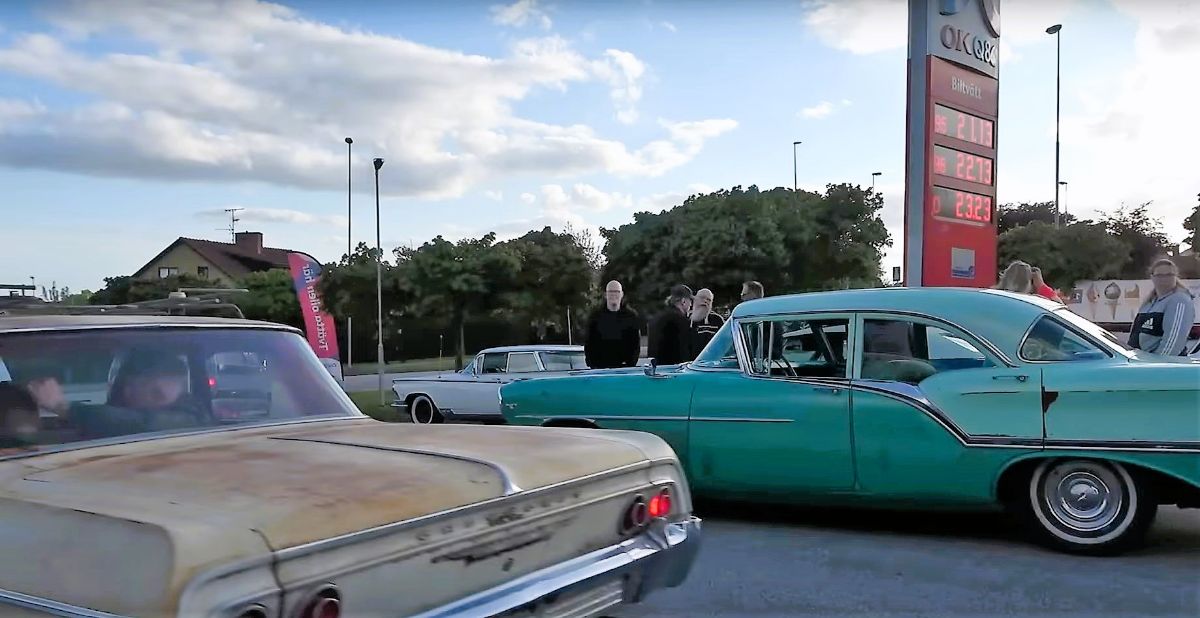
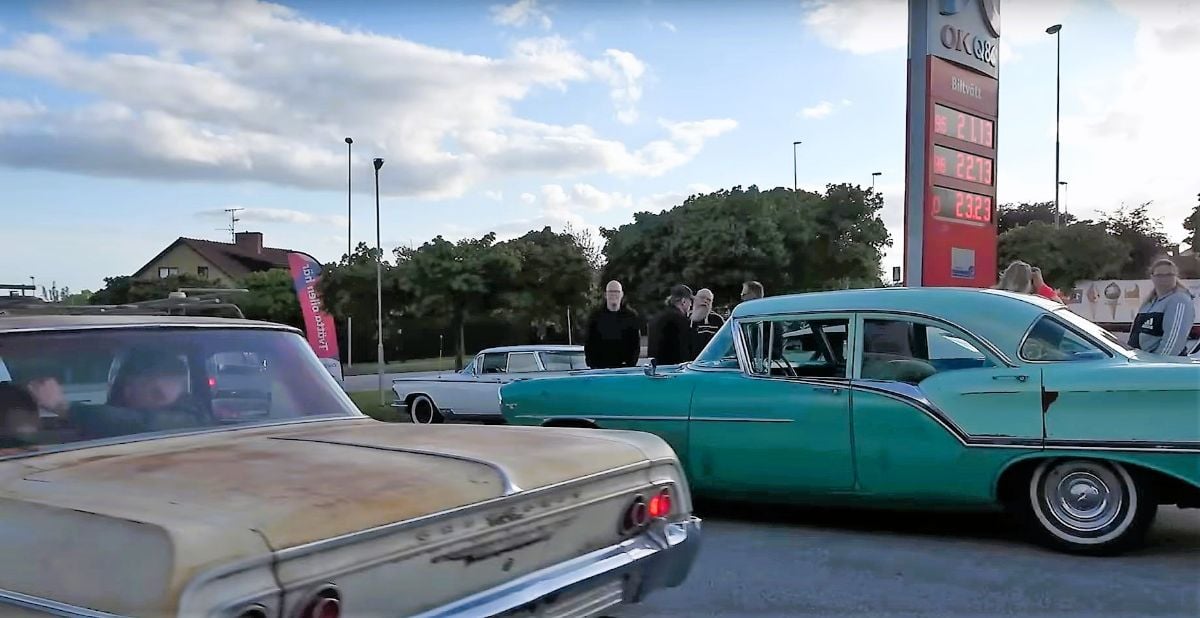
Here I spy a 1964 Chevrolet Bel Air, a 1957 Oldsmobile Super 88, and a 1959 Buick Electra 225. But I also spy Swedish gas prices: 21.13 kr per liter today is approximately $7.65 per gallon.

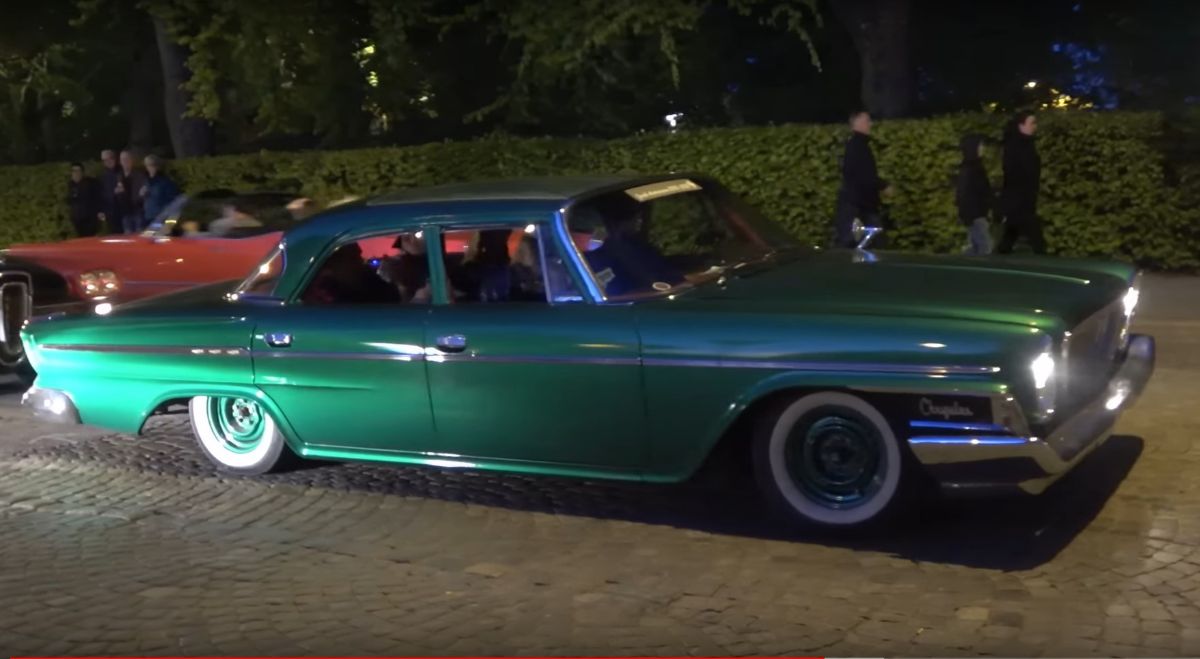
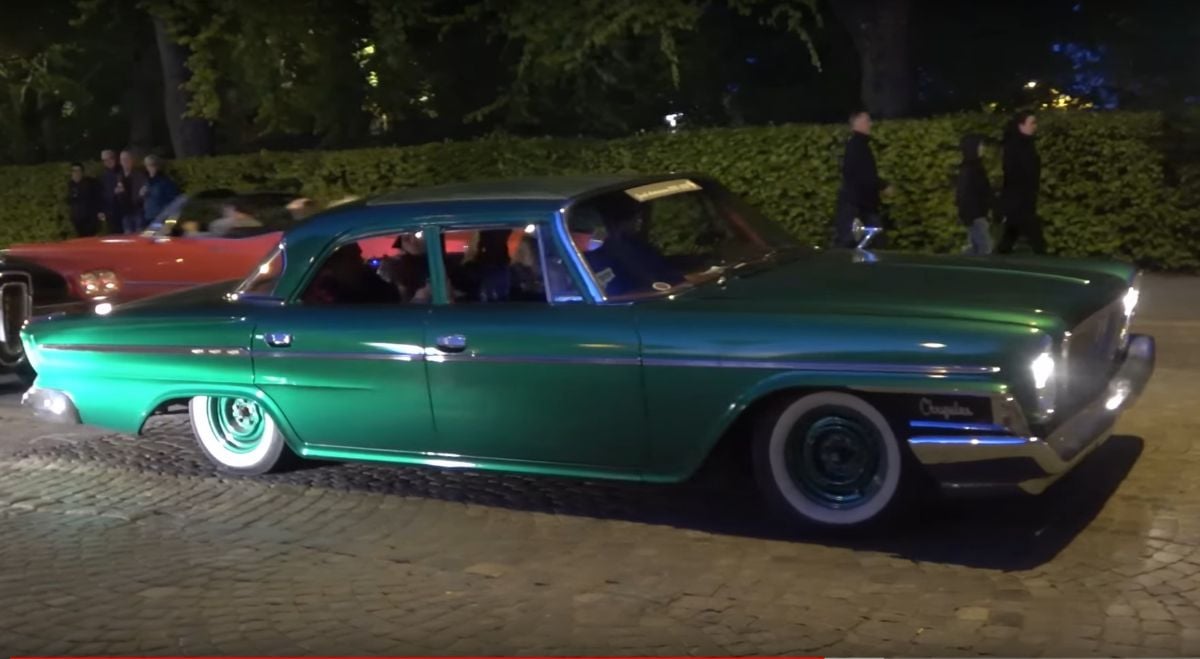
Here’s a 1962 Chrysler Newport, the “plucked chicken” of Exner’s creations. It would serve as the basis of the mid-year Dodge 880. If you want classic styling on the cheap, there are few cars that can rival this one.

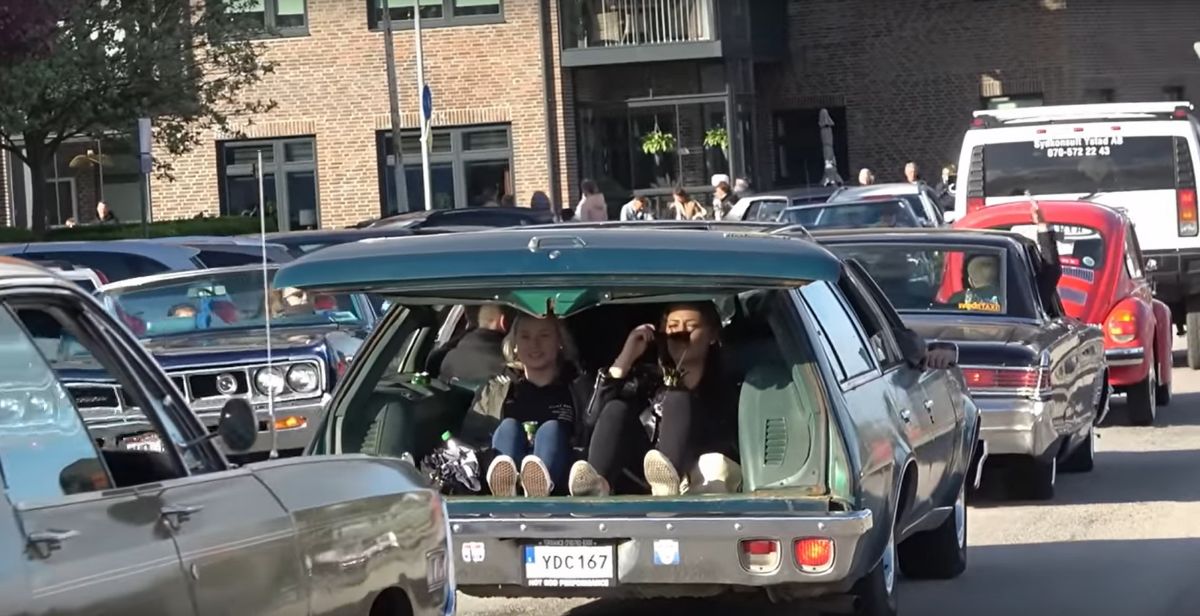
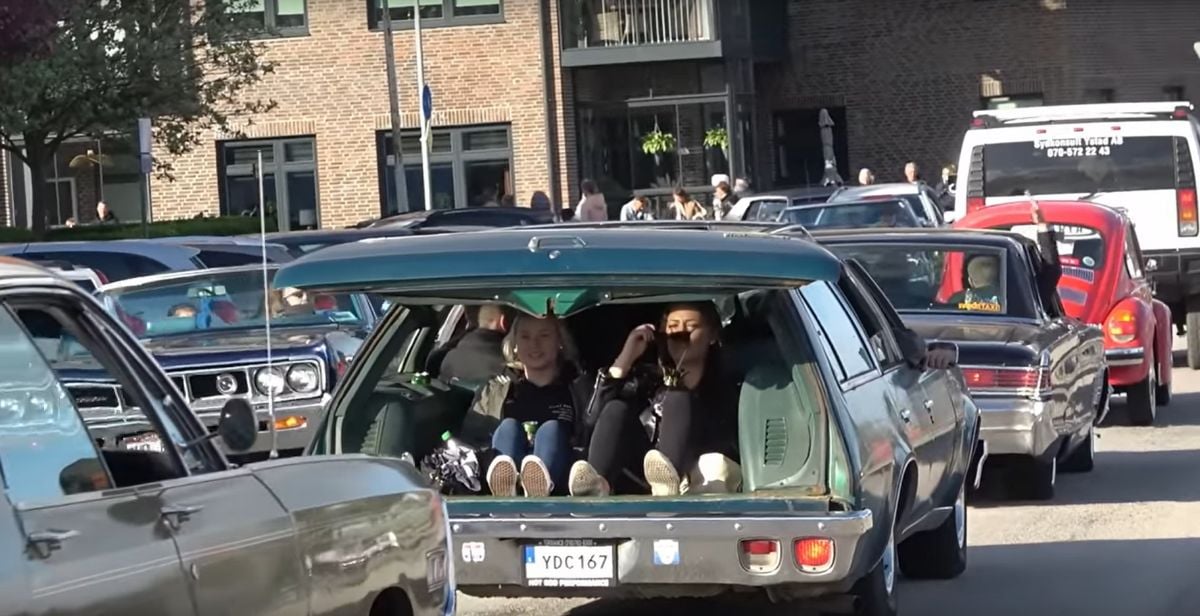
Maybe a 1974 Chevelle wagon isn’t too interesting, but the 1966 Chrysler 300 in front of it is. And see that 1969 Dodge Polara convertible peeking from the left? Only 1,425 were built, and this one has the rare Super-Lite auxiliary driving light.

Here’s a neat procession that includes a 1958 Edsel, 1963 Chevrolet, 1959 Imperial and late-model Mustang.

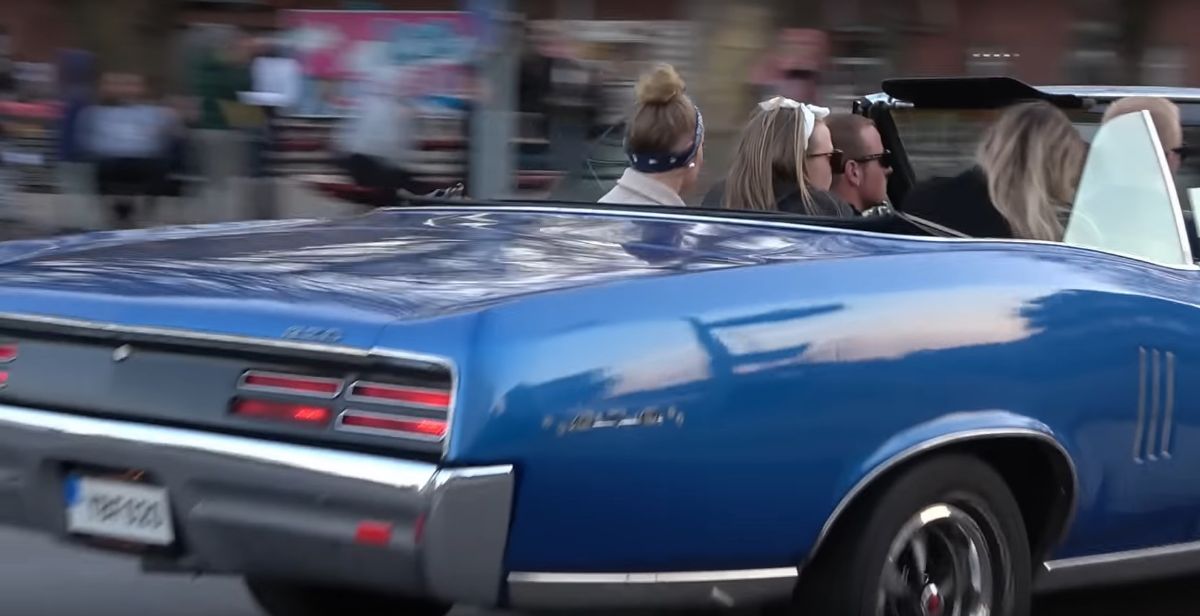
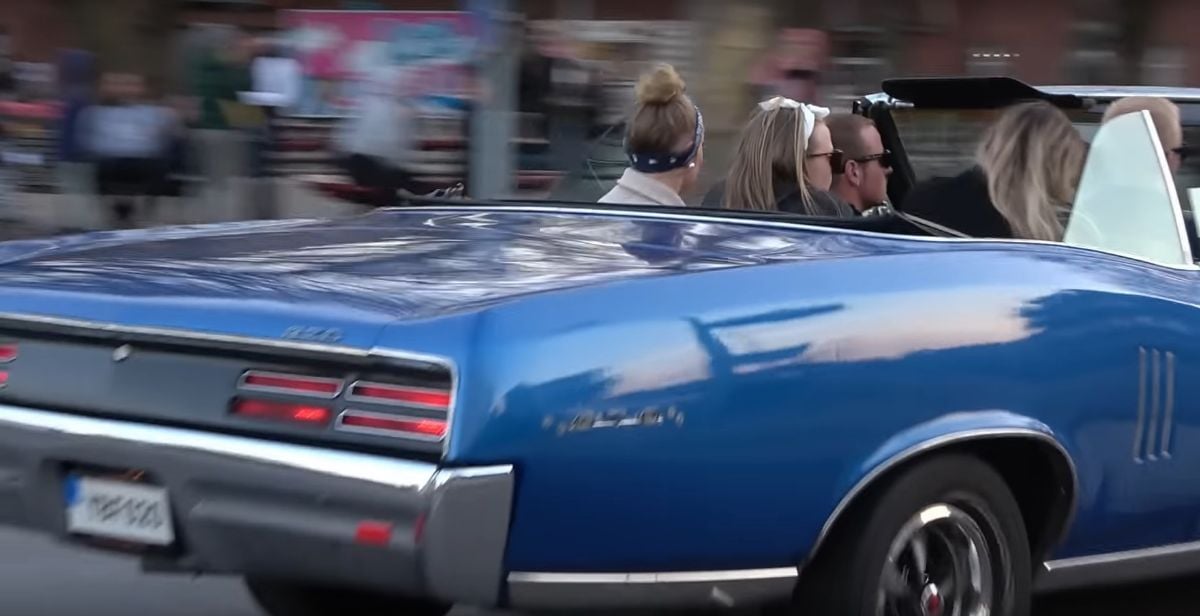
This 1967 Pontiac strikes me as being curious. It has a 1967 GTO tail panel and badges, but also features 1967 LeMans rear fenders. My money’s on it being a LeMans.

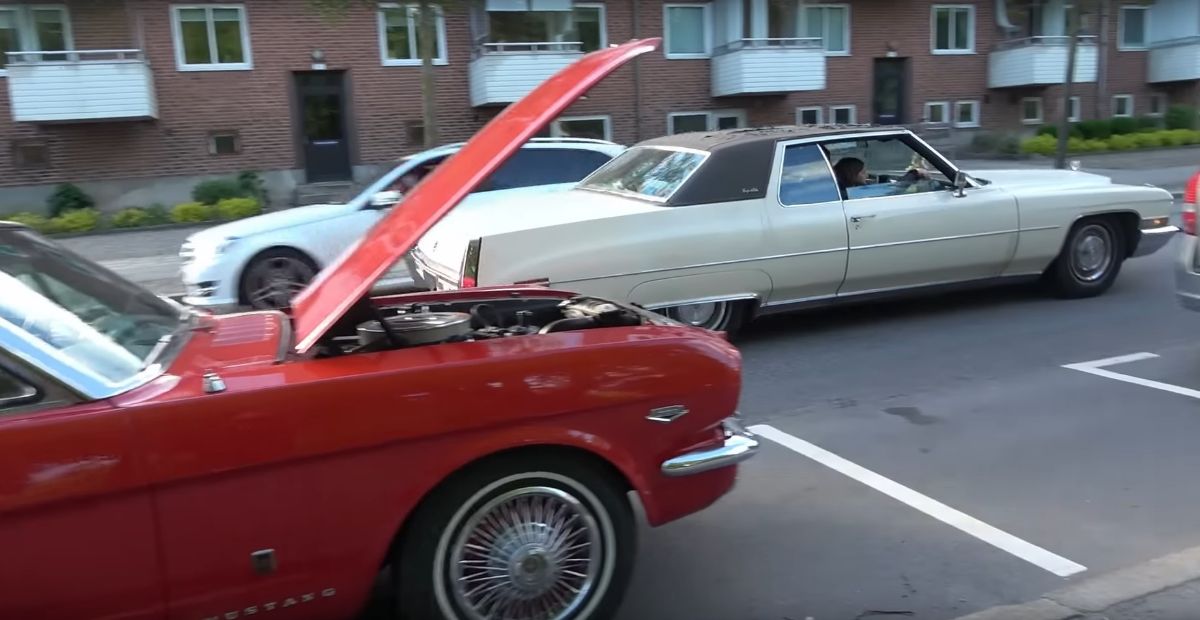
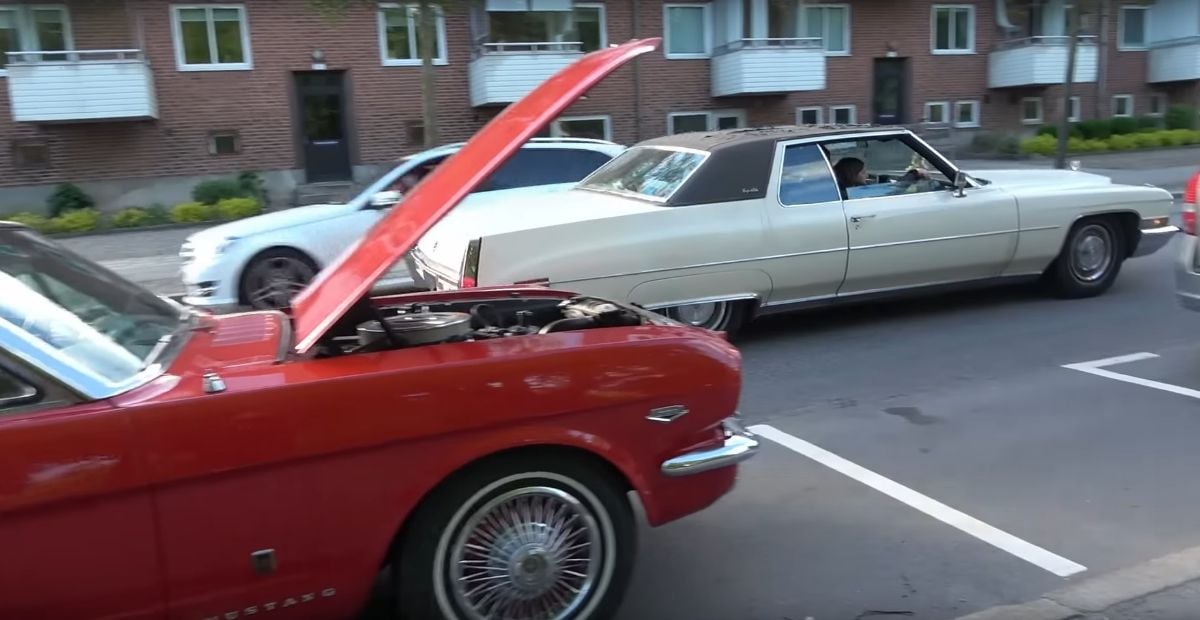
A 1972 Cadillac Coupe de Ville passes by a 1965-66 Mustang convertible with GT badges. But check out the engine badge — could that be an honest-to-goodness K-code? The air cleaner is also giving me good vibes. A 289 High-Performance would be a sweet find in Sweden.

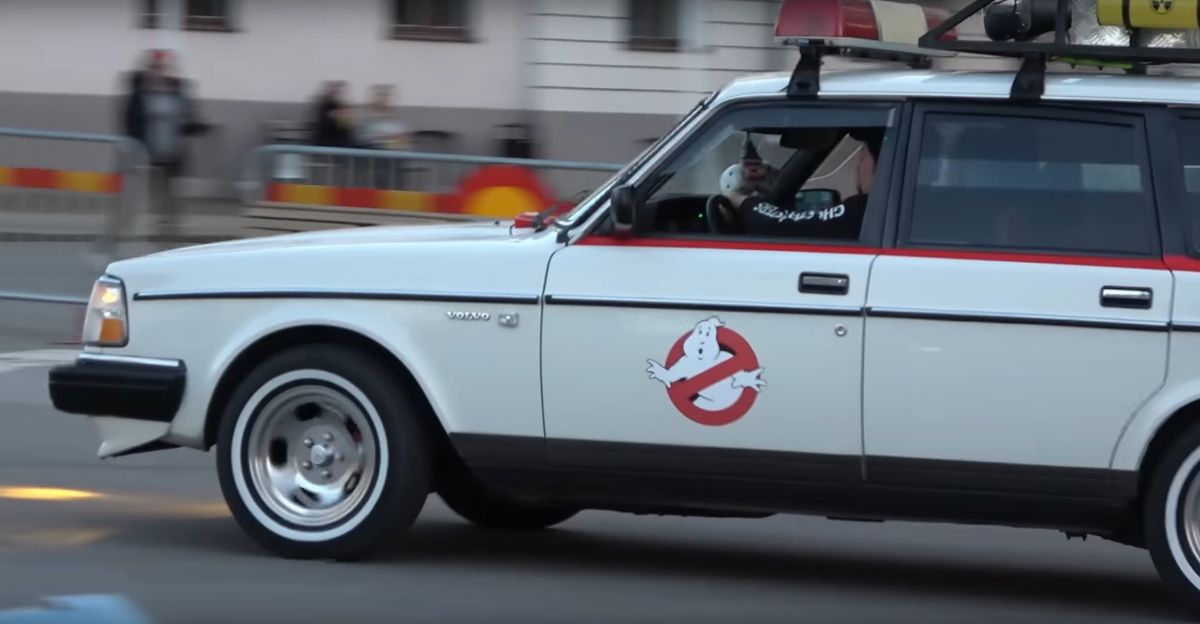
Hey, how did this thing get in here?!

Ignore the 1963 Chevrolet and note the trio of Buicks: 1969 LeSabre convertible, 1959 and, tucked behind, a 1966 Electra.

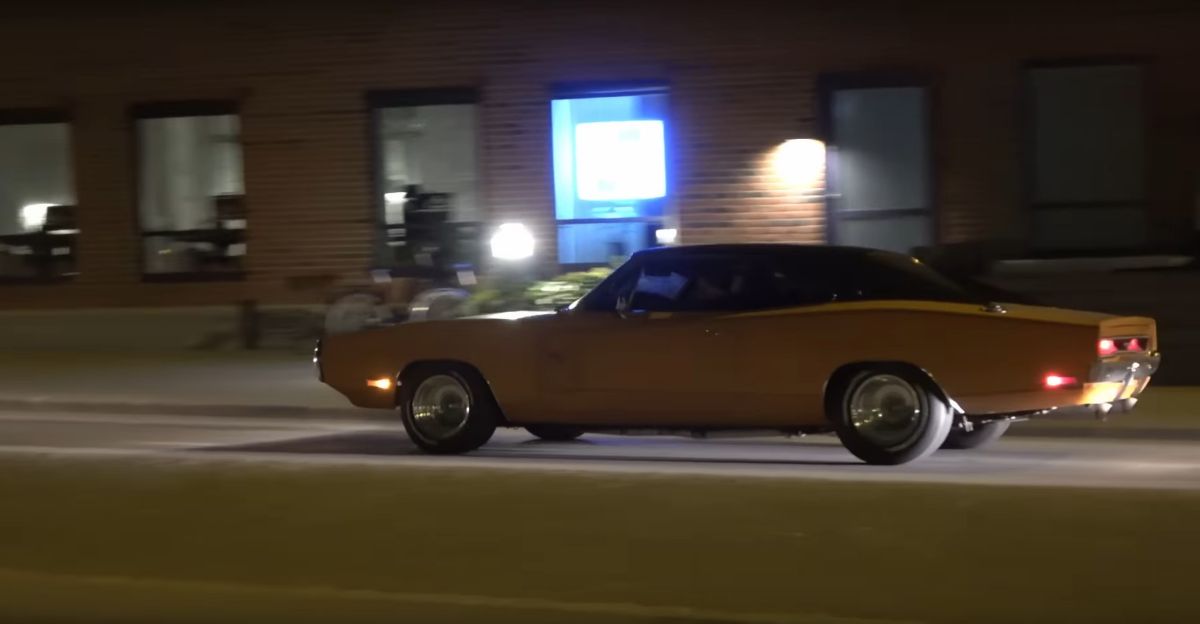
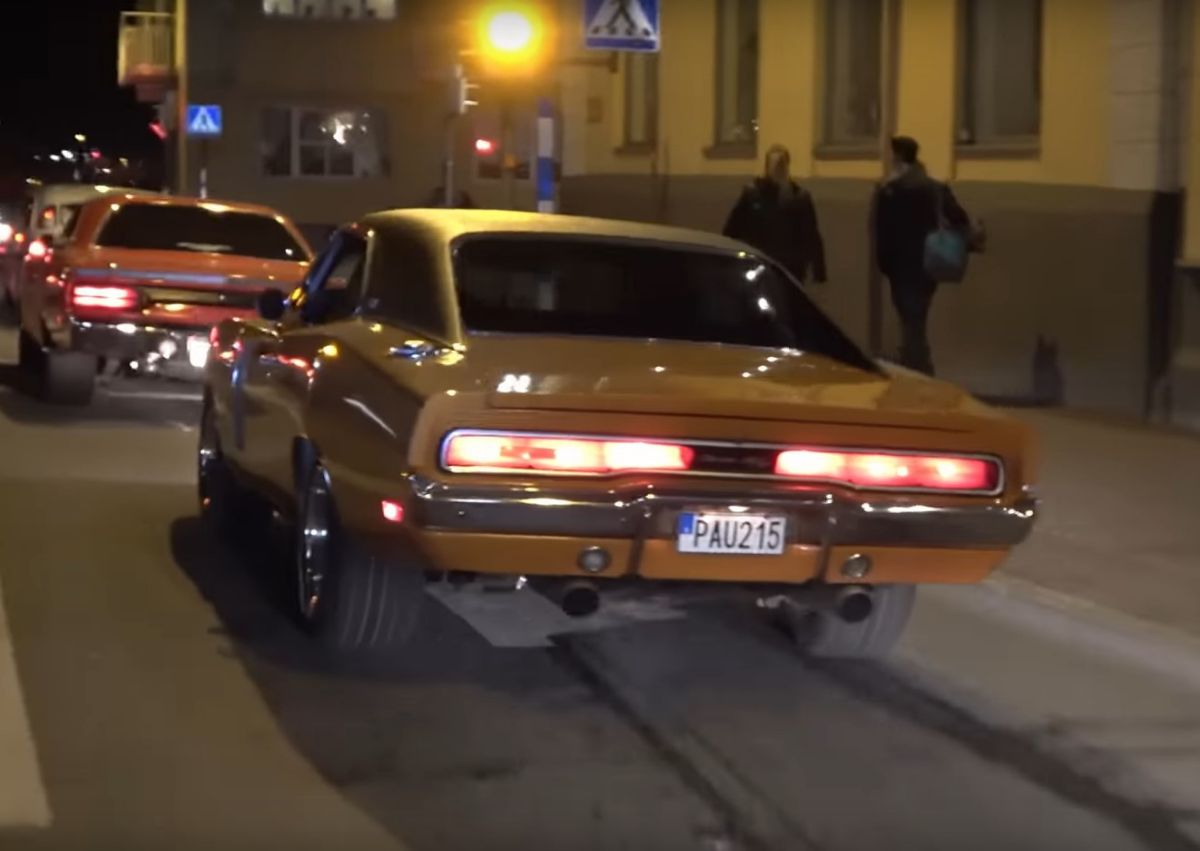
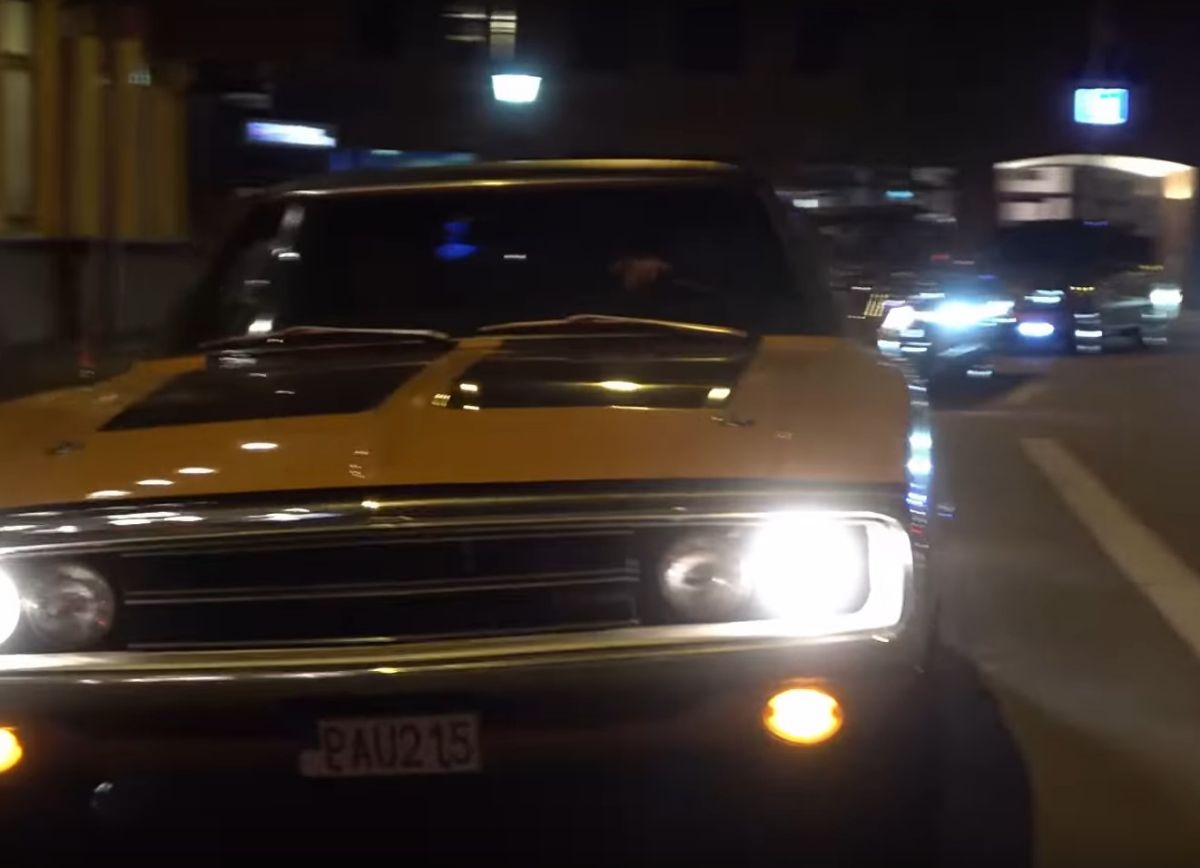
Swedes love American muscle, though there aren’t many in the video. This is a 1970 Charger R/T SE. Note the rare V21 hood stripes, plus the 1970 Road Runner in front of it.

Sick Week 2023 is in motion! We’re sure you can agree that winter has a shelf life. We look forward to it when we settle around the table for the turkey dinner. We revel in it as we open presents and as we ring in the new year, but by early February, the majority of us are sick of it and are more than ready for warmer temperatures and outdoor activities. For 350 racers, the remedy includes packing up the race car or truck and heading south to Orlando, Florida to join Tom Bailey’s drag-and-drive romp through Florida and Georgia. The program hasn’t changed since Sick Week was created, and it isn’t too far removed from Hot Rod Magazine’s Drag Week, a competition that Bailey has won five times.

Sick Week 2023 Day 1

Sick Week brings 350 race cars down south for a drag-and-drive that only a Hot Rod Drag Week veteran could put together. With five tracks to hit between the states of Florida and Georgia, there’s plenty of racing action to keep everyone entertained.Cole Reynolds

With racers having spent Sunday testing and tuning and finalizing their plans to tackle the week, it was time to get straight to the business at hand Monday morning. Many heavy hitters were ready to take their swipe at the tree. Alex Taylor and her 1955 Chevrolet were right at the front of the line first thing. As the day moved along, many names familiar to these events would roll through. Eric Yost, who hasn’t raced at an event since 2017, got right back into the groove with his 1968 Chevrolet Camaro, knocking out a 7.408-second run at 182.39 MPH. Bryant Goldstone made his triumphant return to the scene with his twin-turbocharged Unlimited Iron-class 1973 AMC Javelin, laying out a stout 6.741-second lap at 211.33 MPH, not bad for a car that was last seen parked on its roof after a big crash at US 131 Motorsports Park during Hot Rod Magazine’s Drag Week 2021.

Sick Week 2023 Day 1

The spread of cars that are taking on Sick Week is impressive. Everything from a mid-1960s Suburban that’s running 26-second laps to numerous competitors in the six-second range, you’ll find it cruising along!Cole Reynolds

But for every good lap, there’s a bit of bad. Dave Schroeder of the Schroeder-Ens racing partnership was on a tear in their Unlimited-class 2019 Chevrolet Corvette when the car got loose, turned right and took aim at the right sidewall near the 1,000-foot mark in the middle of a mid-six second pass. After bouncing off the wall at over 200 MPH, the C7 started rolling and smacked the left side before coming to rest on the wheels. Schroeder walked away unhurt. They may have had the worst luck of day one, but there were others in the pits thrashing away, fixing broken parts and making sure that they could make the drive that includes stops at the Big Toho Marina at Lake Tohopekaliga and Woody’s River Roo before the drivers make their way to either their hotel or to Bradenton Motorsports Park for the night.

Sick Week 2023 Day 1

Even on the first day, carnage could easily be found in the pits. Here, Jeremie Ziegler and company are performing surgery on his 1989 Ford Festiva in the hopes of continuing on to Bradenton.Cole Reynolds

Day One Leaders:

  • Unlimited: Tom Bailey, 1969 Chevrolet Camaro, 6.249@188.91
  • Unlimited Iron: Bryant Goldstone, 1973 AMC Javelin, 6.741@211.33
  • Modified: Brett LaSala, 2012 Ford Mustang, 6.524@212.26
  • Pro Street: Clark Rosenstengel, 2010 Chevrolet Camaro, 7.128@206.20
  • Super Street: Eric Yost, 1968 Chevrolet Camaro, 7.408@182.38
  • Stick Shift: Richard Guido, 1965 Pontiac GTO, 8.919@154.86
  • Naturally Aspirated: James “Doc” McEntire, 1968 Chevrolet Camaro, 7.850@143.38
  • Rowdy Radials (1/8th Mile): Jordan Tuck, 1993 Ford Mustang, 4.685@162.55
  • Sick Week Freaks: Tony Niemczyk, 1995 Mitsubishi Eclipse, 8.799@154.63
  • Hot Rods vs. Beetles: Larry West, 1941 Willys, 9.934@135.47
  • Street Race 275: William Lujan, 1990 Ford Mustang, 8.506@161.71
  • Sick Street Race: Aaron Shaffer, 1998 Chevrolet Camaro SS, 8.516@163.61
  • Pro DYO: Nick Wiegand, 1976 Pontiac Trans Am, 8.610@158.99
  • DYO: Rajveer Ahuja, 1967 Oldsmobile 442, 10.124@132.40
  • Challenge: Robert Sharp, 2019 Dodge Charger, 10.630@131.64

Sick Week 2023 Day 1: Orlando Speed World

Sick Week 2023 Day 1: Orlando Speed World

Sick Week 2023 Day 1: Orlando Speed World

Sick Week 2023 Day 1: Orlando Speed World

Sick Week 2023 Day 1: Orlando Speed World

Sick Week 2023 Day 1: Orlando Speed World

Sick Week Day One Photo Gallery

Sick Week 2023 Day 1: Orlando Speed World

Sick Week 2023 Day 1: Orlando Speed World

Sick Week 2023 Day 1: Orlando Speed World

Sick Week 2023 Day 1: Orlando Speed World

Sick Week 2023 Day 1: Orlando Speed World

Sick Week 2023 Day 1: Orlando Speed World

Sick Week 2023 Day 1: Orlando Speed World

Sick Week 2023 Day 1: Orlando Speed World

Sick Week 2023 Day 1: Orlando Speed World

Sick Week 2023 Day 1: Orlando Speed World

Sick Week 2023 Day 1: Orlando Speed World

Sick Week 2023 Day 1: Orlando Speed World

Sick Week 2023 Day 1: Orlando Speed World

Sick Week 2023 Day 1: Orlando Speed World

Sick Week 2023 Day 1: Orlando Speed World

Sick Week 2023 Day 1: Orlando Speed World

Sick Week 2023 Day 1: Orlando Speed World

Sick Week 2023 Day 1: Orlando Speed World

Sick Week 2023 Day 1: Orlando Speed World

Sick Week 2023 Day 1: Orlando Speed World

Sick Week 2023 Day 1: Orlando Speed World

Sick Week 2023 Day 1: Orlando Speed World

Sick Week 2023 Day 1: Orlando Speed World

Sick Week 2023 Day 1: Orlando Speed World

Sick Week 2023 Day 1: Orlando Speed World

Sick Week 2023 Day 1: Orlando Speed World

Sick Week 2023 Day 1: Orlando Speed World

Sick Week 2023 Day 1: Orlando Speed World

Sick Week 2023 Day 1: Orlando Speed World

Sick Week 2023 Day 1: Orlando Speed World

Sick Week 2023 Day 1: Orlando Speed World

Sick Week 2023 Day 1: Orlando Speed World

Sick Week 2023 Day 1: Orlando Speed World

Sick Week 2023 Day 1: Orlando Speed World

Sick Week 2023 Day 1: Orlando Speed World

Sick Week 2023 Day 1: Orlando Speed World

Sick Week 2023 Day 1: Orlando Speed World

Sick Week 2023 Day 1: Orlando Speed World

Sick Week 2023 Day 1: Orlando Speed World

Sick Week 2023 Day 1: Orlando Speed World

Sick Week 2023 Day 1: Orlando Speed World

Sick Week 2023 Day 1: Orlando Speed World

Sick Week 2023 Day 1: Orlando Speed World

Sick Week 2023 Day 1: Orlando Speed World

Sick Week 2023 Day 1: Orlando Speed World

Sick Week 2023 Day 1: Orlando Speed World

Sick Week 2023 Day 1: Orlando Speed World

Sick Week 2023 Day 1: Orlando Speed World

Aerial combat advanced at an astonishing rate during World War I, and though it seems unimaginable today, there were no American-designed aircraft deemed suitable for battle in the skies over Europe. There was a U.S.-designed engine in the fight, however: the Liberty V-12, or L-12.

The L-12 engine was America’s greatest technological contribution to the aerial war effort. Its initial assignment was powering the “Liberty Plane”—a version of the British-designed De Havilland/Airco DH-4 bomber produced in the U.S. by Dayton-Wright in Ohio, Fisher Body Corporation in Michigan, and Standard Aircraft in New Jersey. In addition to powering the DH-4 and a variety of other airplanes, over its long service life the L-12 powered tanks, high-speed watercraft, and land-speed racers.

Color closeup image of an L-12 engine in a De Havilland DH-4 airplane.

An L-12 at home in the front of De Havilland DH-4 at the National Air and Space Museum. The engine weighed about 844 pounds and produced approximately 400 hp at a maximum rpm of about 1,800.Photo provided by The Smithsonian

The L-12 came about because Packard’s head of engineering, Jesse G. Vincent, recognized the need for a standardized line of aircraft engines that could be mass produced during wartime. The government assigned Vincent to the task of creating this engine and teamed him up with Elbert J. Hall of the Hall-Scott Motor Company. The two met in Washington, D.C., on May 29, 1917 and, with the help of volunteer draftsmen, created detailed drawings and a full report by May 31. This original design was a V-8, but in their report Vincent and Hall outlined how the engine could be configured as a 4-, 6-, 8- or 12-cylinder.

By July 3, a V-8 prototype assembled by Packard was running, and a V-12 soon followed. Due to its superior horsepower potential, the 1,650-cu.in. V-12 was given the nod for mass production.

Color closeup of an L-12 engine at the Glenn H. Curtiss Museum.

On this L-12 on display at the Glenn H. Curtiss Museum, the spark plugs have been removed (note the hole on top of the right cylinder) and the plug wires cut. Note the copper tubing that carries oil up the cylinders to lubricate the cam and valvetrain.Photo by Mike McNessor

Not only did the Liberty engine mark a great achievement for American aviation, it was responsible for creating a landmark car company: Lincoln. Henry Leland, who founded Cadillac, and his son Wilfred started Lincoln with a $10 million government contract awarded to build Liberty engines. The Lelands left Cadillac to form Lincoln because General Motors President William C. “Billy” Durant was a pacifist and initially rejected the government’s call for GM to build L-12s. (Liberty engines were later manufactured by GM.) Production numbers seem to vary for output before and after the war but, in total, Ford, Lincoln, Packard, Marmon, and Buick produced 20,748 L-12 engines.

The L-12 was a liquid-cooled, single-overhead-camshaft, V-12 rated to make 400-plus horsepower. The deep box-section crankcase was two-piece—upper and lower—and cast out of aluminum. The cases were joined together by bolts around the perimeter as well as by bolts on each side of the main bearings. The cylinders were individual with welded-on cooling jackets and they extended down into the crankcase for increased rigidity. The stroke was 7 inches while the bore was 5 inches, and aluminum pistons on floating pins helped pump up 5.4:1 compression. The cylinders breathed through 2.5-inch valves (one intake, one exhaust) with exposed rockers and valve springs, while carburetion was handled by a pair of Zenith model US52s.

Color closeup of a Liberty 12 Firing order tag on the L-12 engine at the Glenn H. Curtiss Museum.

An I.D. tag shows the L-12’s firing order and reveals that this example at the Glenn H. Curtiss Museum was built by Lincoln on September 25, 1918.Photo by Mike McNessor

The Liberty is a fascinating engine built with many advanced features. A full report about the L-12 presented in 1919 to the Society of Automotive Engineers by Jesse G. Vincent is available as a free download at jstor.org.

Illustration showing the intricacies of a Liberty 12 engine.

Buyers waiting for their Ford F-150 Lightning electric truck might have to wait a bit longer than anticipated.

On Tuesday, Ford spokesperson Emma Bergg confirmed to Motor Authority that both a stop-build and an in-transit stop-ship order have been issued for the F-150 Lightning due to a potential battery issue.

The nature of the battery issue was not disclosed by the automaker.

Bergg said the potential issue was identified as part of Ford’s pre-delivery quality inspections. The automaker is unaware of any incidents or issues associated with this potential issue in the field with customer-owned trucks.

A stop-sale has not been issued and all F-150 Lightnings already built and at dealers are cleared for scheduled delivery.

Bergg wouldn’t elaborate on the potential battery issue. The engineering team is currently establishing the root cause of the potential issue.

A timeline hasn’t been given as to when the stop-build and in-transit stop-ship orders will be lifted.

“It depends on how long it will take to conduct the root cause analysis,” Bergg said.

The Lightning has received three price hikes since its launch nearly a year ago. Starting from $57,869, the Lightning is now 38.9% more expensive than when it first went on sale.

This article was originally published by Motor Authority, an editorial partner of ClassicCars.com.

Buyers waiting for their Ford F-150 Lightning electric truck might have to wait a bit longer than anticipated.

On Tuesday, Ford spokesperson Emma Bergg confirmed to Motor Authority that both a stop-build and an in-transit stop-ship order have been issued for the F-150 Lightning due to a potential battery issue.

The nature of the battery issue was not disclosed by the automaker.

Bergg said the potential issue was identified as part of Ford’s pre-delivery quality inspections. The automaker is unaware of any incidents or issues associated with this potential issue in the field with customer-owned trucks.

A stop-sale has not been issued and all F-150 Lightnings already built and at dealers are cleared for scheduled delivery.

Bergg wouldn’t elaborate on the potential battery issue. The engineering team is currently establishing the root cause of the potential issue.

A timeline hasn’t been given as to when the stop-build and in-transit stop-ship orders will be lifted.

“It depends on how long it will take to conduct the root cause analysis,” Bergg said.

The Lightning has received three price hikes since its launch nearly a year ago. Starting from $57,869, the Lightning is now 38.9% more expensive than when it first went on sale.

This article was originally published by Motor Authority, an editorial partner of ClassicCars.com.

The order came down in the fall of 1970: No more aero cars in NASCAR for the 1971 season. Ford and Mopar had taken the cars to speeds and the sport to a level that Bill France hadn’t anticipated or wanted, so he limited all “special” cars to a maximum engine size of 305 cubic inches. Aero development programs for 1971 stopped. Factory support withered. Engineers were assigned elsewhere. While nothing initially came of those development programs, 30 years later a trio of wing car enthusiasts built a series of cars imagining what they would have looked like, some of which will head to auction this May.

The germ of the one-of-none 1971 wing cars that Massachusetts residents Gary and Pam Beineke and Mike Goyette built in the early 2000s came from a handful of photos that Goyette discovered of wind tunnel tests for aerodynamic modifications for the 1971 Dodge and Plymouth B-bodies. Described as the G series following the 1969 E series and 1970 F series, the aerodynamic modifications were tested on 3/8-scale models in the Wichita State University wind tunnel over three months. According to an interview Chrysler aerodynamicist Gary Romberg gave to Steve Magnante at Hot Rod magazine in 2005, the purpose of the tests was mainly to try out “various nose cones, wings, fairings, rooflines, and windshield configurations.” Among those configurations were a bi-level wing and even a tri-level wing.

While the tests were cut short by France’s decree, Romberg and his team were still able to deliver a 406-page report in October 1970 outlining their findings. “Though they look sleeker, the fact is the ’71 cars were not as good,” Romberg told Magnante. “They were wider and presented a greater cross-sectional area that was an immediate disadvantage.” According to Steve Lehto’s book, “Dodge Daytona and Plymouth Superbird,” even with the aerodynamic modifications, the 1971 cars would have run at least 2 MPH slower than their predecessors.

Romberg also confirmed that no full-size 1971 cars were built with any of the aerodynamic modifications that his team tested in the wind tunnels. Regardless, Goyette and the Beinekes – 1971 B-body enthusiasts who already had a 1971 Dodge Charger awaiting restoration – decided to see what such a creature would look like.

1971 Dodge Daytona

1971 Dodge Daytona

1971 Dodge Daytona

1971 Dodge Daytona

1971 Dodge Daytona

1971 Dodge Daytona

1971 Dodge Daytona

1971 Dodge Daytona

1971 Dodge Daytona

1971 Dodge Daytona

The Charger, a rusty junkyard refugee originally equipped with a 383 and four-speed, benefited from an NOS pair of quarter panels, new doors, fenders, and rocker panels, Ramcharger forced-air hood, and the roof skin and mechanisms from a sunroof car. To the car, Goyette added a scratchbuilt steel bi-level wing like the one seen in the wind tunnel test photos, equipped with a latch for tilting the lower wing out of the way so the trunk lid can fully open and the appropriate strut braces. For the nosecone, Beineke and Goyette took a fiberglass reproduction of a 1969 Charger Daytona’s nose, cut it up into four pieces to fit it to the 1971 Charger’s fenders and hood, widened it by an inch and a half, then took a mold off the modified nosecone to produce a one-piece fiberglass nosecone that they then mounted to the car using 1969 Daytona retractable headlamp buckets adapted to the 1971 Charger’s electric headlamp door actuators.

While the rest of the car was built to look like one would expect a loaded, Hemi-powered, manual transmission 1971 Charger Daytona to appear, it’s largely a facade. The Hemi, for instance, is a 472-cu.in. crate engine with forged innards and an aluminum intake manifold that Goyette fabricated to mount three two-barrel Holley carburetors, creating a never-was Hemi Six-Pack. It has a five-speed manual transmission with Pistol Grip shifter instead of the expected four-speed, a Dana 60 rear axle with 4.10 gears, and 11-inch discs front and rear.

1971 Plymouth Superbee

1971 Plymouth Superbee

1971 Plymouth Superbee

1971 Plymouth Superbee

1971 Plymouth Superbee

1971 Plymouth Superbee

1971 Plymouth Superbee

Naturally, the Beinekes and Goyette followed the 1971 Daytona build with a 1971 Superbird though, just as the 1969 Charger Daytona’s aero parts differed significantly from the 1970 Plymouth Superbird’s, the team took different approaches for the front and rear aerodynamic modifications for their one-of-none builds. Rather than adapt E- or F-series aero parts for the nosecone, they built the unit for the 1971 Superbird from scratch to replicate the one seen in the wind tunnel testing photos, starting with a wireframe built from thin-steel tubing, over which they applied a fiberglass skin and into which they inserted headlamp mechanisms from a Pontiac Fiero. The single-plane rear wing might have the same angle of a 1970 Superbird’s, but Goyette still had to fabricate it entirely out of steel to match the complex contours of the Plymouth’s upper quarter panels. As with the 1971 Daytona, the 1971 Superbird received a 472-cu.in. Hemi with a fabricated six-barrel intake, five-speed manual transmission, and disc brakes.

1971 Plymouth GTX

1971 Dodge Charger R/T

1971 Dodge Charger restomod

In addition to the two never-was wing cars, Gary Beineke has put up for auction a pair of 1971 B-bodies reportedly based off of discarded styling concepts – a 1971 GTX with ‘Cuda-style hood and fender vents and a 1971 Charger R/T with a shorter variable-pitch rear wing and color-matched bumpers and hideaway headlamps – as well as a winged 1971 Dodge Charger restomod with a 6.1L Gen III Hemi V-8 and six-speed manual transmission.

All five will cross the block as part of Mecum’s Indianapolis auction, scheduled for May 12-20. For more information, visit Mecum.com.

If you find yourself blinded by the lights while driving at night, you aren’t alone. Complaints from drivers who are being blinded by oncoming traffic is becoming a regular topic of conversation, with some folks avoiding going out at night whenever possible to remedy the situation. Sometimes turning mirrors away from the glare isn’t enough. For driver’s piloting shorter vehicles, the passing of a large truck or SUV can easily light up the other car’s interior like an aquarium on display.

Today’s headlights are faster than the speed of dark. The LEDs in new vehicles can turn nighttime into daytime with the flick of a switch, but how safe is it, really? Regulations on headlights hasn’t changed in decades, while vehicle design and bulb technology has advanced. There are active online communities and petitions dedicated to discussing the causes and solutions to blinding headlights. A quick internet search for “ban blinding headlights” will reveal several pages of results.

According to John Bullough, the Light and Health Research Center’s Program Director at the Icahn School of Medicine, there are three primary issues that have added to bright beams causing temporary blindness on the roads, the most obvious being America’s love for big, tall vehicles. The rising placement of headlights on supersized pickup trucks and SUVs creates a more direct line of glare right into the eyes of those who opt for cars that sit lower to the ground.

The second cause of being blinded by the light is the changing of bulb technology and varying color hues. Vehicle manufacturers have long moved away from the standard halogen bulbs which produce a yellowish ray of light that is easier on the eyes. The move to LEDs introduced a brighter, harsher blue or white light that seemingly reaches farther to cut through the darkness, but commonly causes drivers to see spots after the vehicle passes even if eyes are averted to avoid the glare. The main issue is how the regulated lighting is measured: The human eye in sensitive to an LED’s blue hues vs. the warmer yellow halogen lights, but the light meters are not. Perhaps continuing the use of the old method of measurement isn’t too bright.

The third and most easily fixed issue for light blindness is headlight alignment. Bullough states that is it increasingly common for vehicles to have headlights out of alignment, even in new cars from the factory; “We actually did some measurements not too long ago and found that probably about two-thirds of every car had at least one headlight that was either aimed too high up, which is something that creates a lot of glare for other drivers, or too far down, which essentially limits their visibility.”

Matt Brumelow, Senior Research Engineer at the Insurance Institute for Highway Safety, supports this claim, explaining that federal regulations over headlights are certified based upon the independent vehicle. After installation, there is no further testing to ensure the headlights are aimed properly. Are you constantly flashed by the opposing traffic’s brights, even though your vehicle’s brights aren’t activated? Your lights could be out of alignment. Just to make sure, it’s a good idea to make any adjustments necessary to avoid blinding other drivers, and to ensure you’re getting the most out of your vehicle’s lighting.

The solution feels like it’s lightyears away

There is a potential solution in the works that involves implementing “adapting driving beams” into new vehicles. Adaptive driving beams automatically adjust the light output emitted from LED headlights to avoid blinding pedestrians and other drivers in passing. However, Brumelow warns that the availability of this new technology may not reach our roads anytime soon; “We’re still not aware of any that are available in the U.S., so it might take a few years for the manufacturers to make sure that their high beam or their adaptive driving beam technology meets the requirements that the NHTSA has released.”

Currently, no regulations or legislation is in place that would require automobile manufacturers to implement the adaptive driving beams into vehicles by a specific date. Even if this technology is adopted by the United States, it doesn’t resolve the fact that millions of vehicles are already on the road without this feature in place. In the meantime, the future will likely get even brighter. The best short-term solution for drivers with sensitive eyes could be to keep a pair of polarized night driving glasses in the glovebox, available for under $20 on Amazon.

When I think of British sports cars that were brought over after World War II, the one that brings majesty and beauty to my mind is Jaguar. The company has contributed some of the most gorgeous cars ever, but how did it all start? The recent Arizona Concours d’Elegance gave spectators a peek of what could be considered the first Jaguar: the SS 90 prototype.

If you’re not familiar with Jaguar history, then you may be surprised to learn the company has its origins as the Swallow Sidecar Company. The Jaguar name actually first appeared as a model name for the 1935 SS 2½-litre sports saloon in 1935. The sports-car version was called the SS Jaguar 90 because that was its top speed from its Standard-derived 2663cc side-valve six.

Only twenty-three were built until the 1936 SS Jaguar 100 continued where the SS Jaguar 90 left off, initially offered with the 2.7 (though now with a new OHV cylinder head) but in 1938 a 3.5L OHV six was added. It was during this time that SS adopted the leaping jaguar hood ornament. The company officially became Jaguar in 1945.

This particular prototype, which features a rear deck design that was not shared with production SS Jaguar 90s, served as the company’s first competition car. The SS prototype was then purchased in 1937 from the factory by a Royal Air Force Wing Commander Hugh Kennard. He sold the car in 1944, upon which it was traded several times through the 1950s until it was purchased by an enthusiast in 1962, though it sat in a Norfolk garage for over 30 years.

It then was snapped up by a Swiss collector in 1996, who commissioned Mesa, Arizona-based Terry Larson to restore it. The prototype came full circle in 2019 when Larson became the new owner.

This SS 90 prototype competed in the Aerodynamic Pre-War Sports and Race Cars class of the Arizona Concours d’Elegance, where it won Best in Class. The whole event was centered around the Art of Aerodynamics theme that demonstrated the evolution of the effect of aerodynamics on automobile design, from the Brass Era (pre-1916) through exotic sports cars from 1975-2000.

Featured on AutoHunter, the online auction platform driven by ClassicCars.com, is a restored 1965 Ford Mustang fastback.

This pony car was restored by previous ownership and custom exterior features include rolled fenders, color-matched flush-fit Kindig It Designs door handles, and a hood scoop. It rides on 17″ x 8″ front and 18″ x 9″ rear Foose Legend wheels with 215/45/17 front and 245/40/18 rear radial tires.

1965 Ford Mustang fastback

“The heated and power-adjustable 2006 Mustang front seats and the rear seat are upholstered in black vinyl,” the listing states. “Features include a center console with a storage compartment and a five-speed manual shifter, a tilt steering column, a three-spoke Forever Sharp billet aluminum steering wheel, factory air conditioning, and a Sony AM/FM/XM stereo. Power features include the brakes, windows, steering, and trunk release.”

1965 Ford Mustang fastback

This Mustang fastback has a fuel-injected 5.0-liter V8 engine paired with a BorgWarner five-speed manual transmission. The engine bay was upgraded with an export brace, and Ringbrothers billet aluminum hood hinges. This Mustang’s battery was moved to the trunk.

Fuel-injected 5.0-liter V8 engine

The Mustang’s suspension features upgraded Hotchkis Sport Suspension parts. A full-length dual exhaust system flows through the rear valance with exhaust cutouts.

1966 Ford Mustang fastback

This pony car’s odometer reads 9,243 miles, but the true mileage on this vehicle is unknown. The sale includes a clear Texas title in the seller’s name, service records, and receipts.

This 1965 Ford Mustang fastback’s auction ends on Thursday, February 16, 2023, at 4:20 p.m. (MST)

Visit the AutoHunter listing for more information and photo gallery