Featured on AutoHunter, the online auction platform driven by ClassicCars.com, is this restored 1968 Mustang California Special. This Ford is powered by a 289cid V8 backed by a C4 automatic transmission. Features include special GT/CCS stripes and emblems, fiberglass trunk lid and non-functional rear quarter extensions, Classic Auto Air climate control system, and more. Finished in Presidential Blue with white stripes over two-tone Aqua vinyl interior, this Mustang (which is listed in the California Special Registry) comes with a Marti Report, engine rebuild receipts and pictures, and clear title in the seller’s name.

Only 3,867 California Special Mustangs were produced for the 1968 model year for Ford’s western region (plus there were an additional 251 earmarked as the High Country Special for the Denver district). The Presidential Blue (code X) exterior is accented by white GT/CS stripes. Features include Lucas fog lights, special black grille, chrome hood locks, dual side mirrors, non-functional fiberglass Shelby-style rear quarter extensions, and Shelby sequential taillights, among other items.

A set of 14-inch Styled Steel Wheels with trim rings and GT center caps is wrapped in 215/70R14 Cooper Cobra Radial G/T tires.

The interior has been upgraded from the standard “2B” standard Blue buckets to “2K” two-tone Aqua. Features include Deluxe steering wheel, power steering, floor-mounted transmission shifter, Classic Auto Air climate control system, AM radio, and NOS kick panels.

The instrument panel includes a 120-mph speedometer and gauges for the fuel level, alternator, oil pressure, and coolant temperature. The odometer reads 143,609 miles, though it’s currently inoperative.

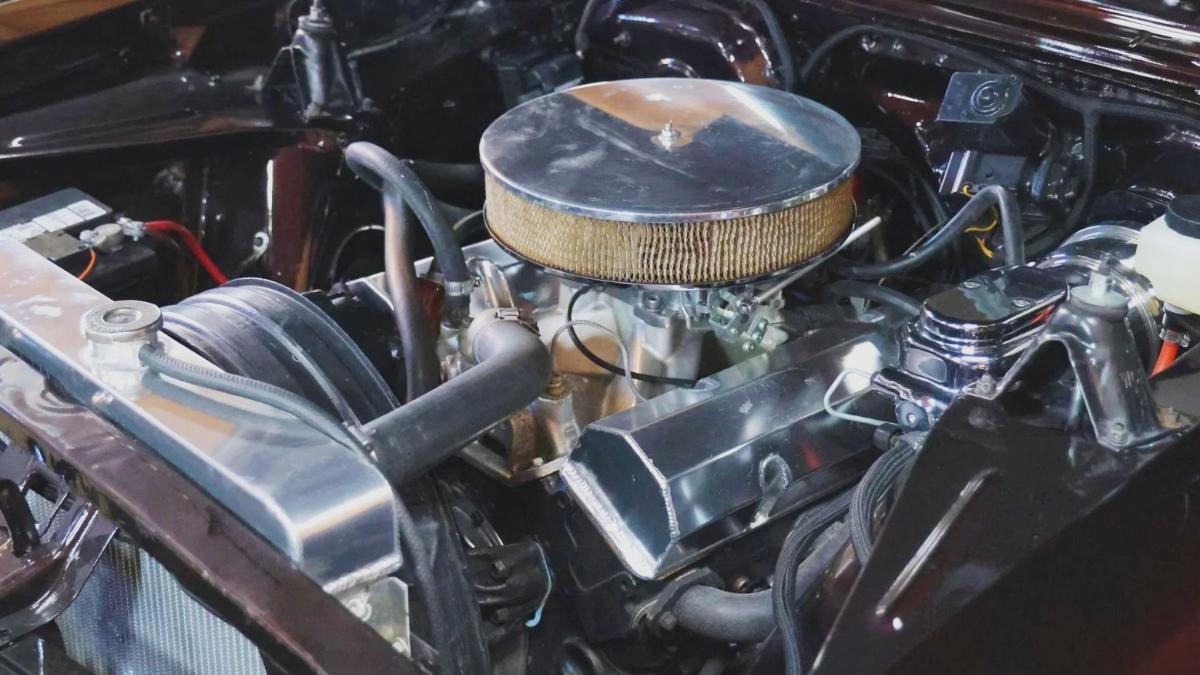
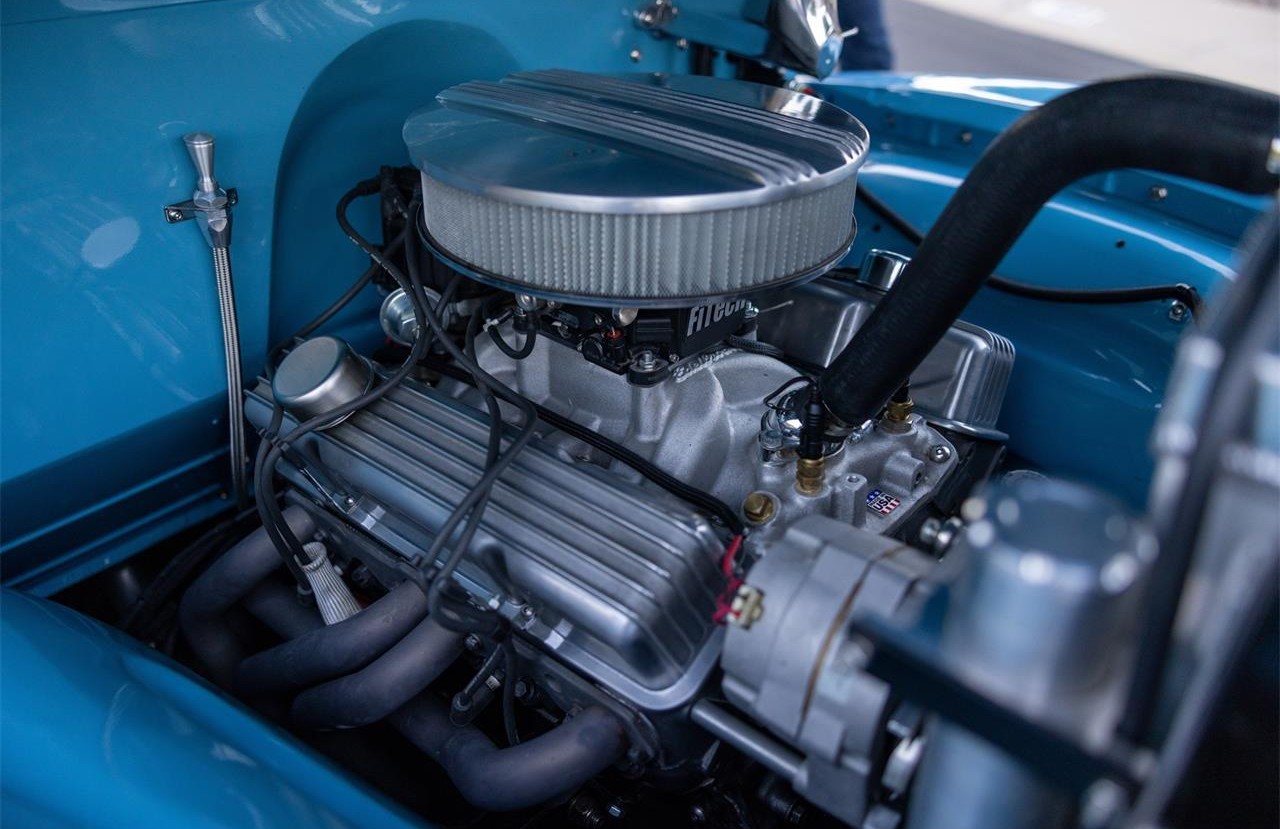
Power is provided by a rebuilt 289cid V8 bored 30 over and topped by a Holley Street Avenger two-barrel. The engine is reportedly original, as is the rebuilt C4 three-speed automatic transmission. The seller states that most of the engine and underhood components feature NOS parts.

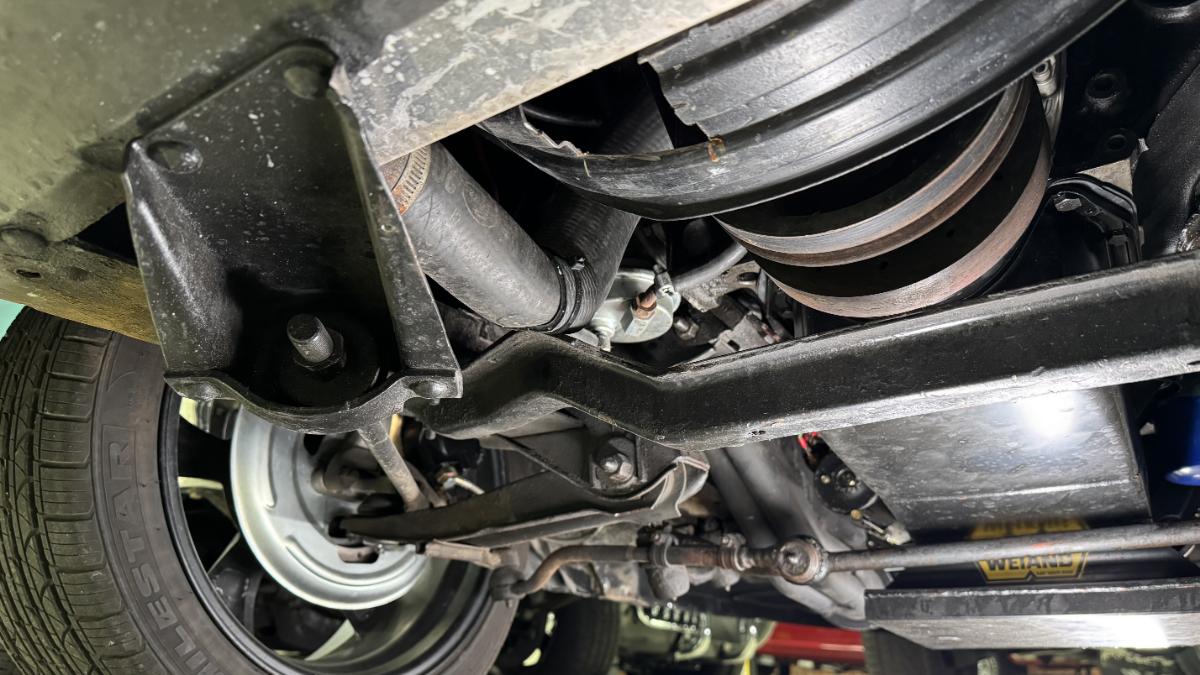
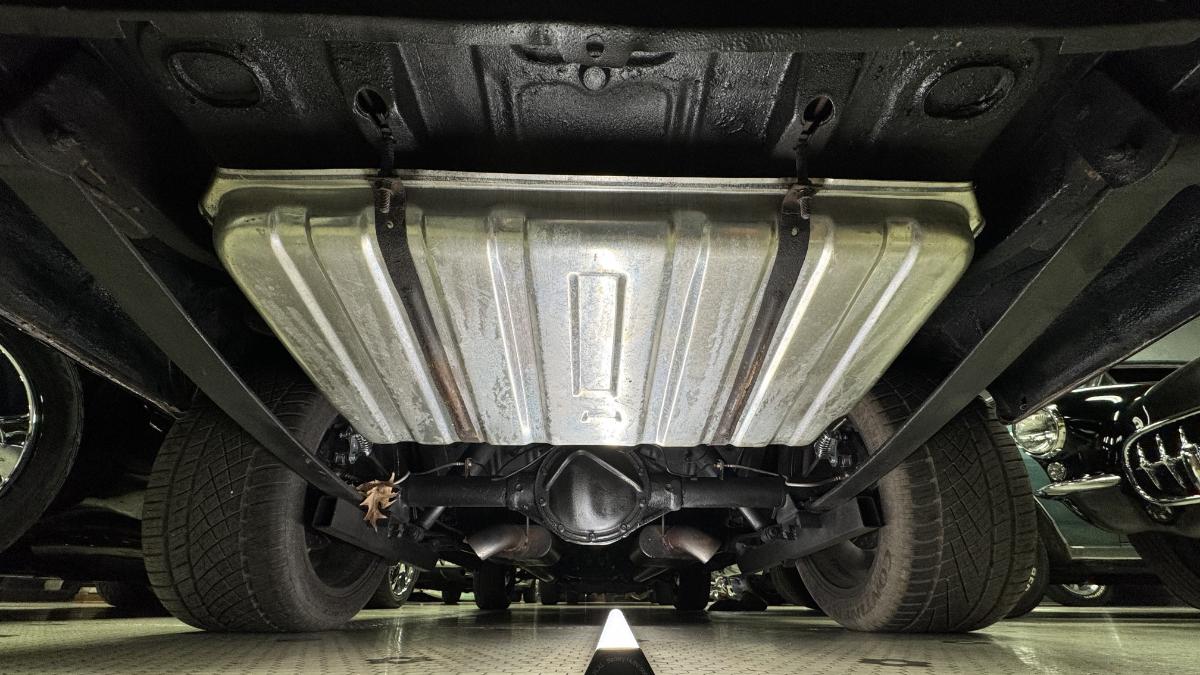
This Mustang was factory-equipped with an independent front suspension and a solid rear-drive axle. Braking is provided by power front discs and rear drums. Less than a decade ago, new steering components, front disc brakes, and suspension parts front and rear were installed. A new dual exhaust system, rear brakes, and brake lines were added in 2020.

The auction for this 1968 Ford Mustang California Special ends Wednesday, September 6, 2023, at 12:40 p.m. (PDT)

Visit the AutoHunter listing for more information and photo gallery

Featured on AutoHunter, the online auction platform driven by ClassicCars.com, is this restored 1968 Mustang California Special. This Ford is powered by a 289cid V8 backed by a C4 automatic transmission. Features include special GT/CCS stripes and emblems, fiberglass trunk lid and non-functional rear quarter extensions, Classic Auto Air climate control system, and more. Finished in Presidential Blue with white stripes over two-tone Aqua vinyl interior, this Mustang (which is listed in the California Special Registry) comes with a Marti Report, engine rebuild receipts and pictures, and clear title in the seller’s name.

Only 3,867 California Special Mustangs were produced for the 1968 model year for Ford’s western region (plus there were an additional 251 earmarked as the High Country Special for the Denver district). The Presidential Blue (code X) exterior is accented by white GT/CS stripes. Features include Lucas fog lights, special black grille, chrome hood locks, dual side mirrors, non-functional fiberglass Shelby-style rear quarter extensions, and Shelby sequential taillights, among other items.

A set of 14-inch Styled Steel Wheels with trim rings and GT center caps is wrapped in 215/70R14 Cooper Cobra Radial G/T tires.

The interior has been upgraded from the standard “2B” standard Blue buckets to “2K” two-tone Aqua. Features include Deluxe steering wheel, power steering, floor-mounted transmission shifter, Classic Auto Air climate control system, AM radio, and NOS kick panels.

The instrument panel includes a 120-mph speedometer and gauges for the fuel level, alternator, oil pressure, and coolant temperature. The odometer reads 143,609 miles, though it’s currently inoperative.

Power is provided by a rebuilt 289cid V8 bored 30 over and topped by a Holley Street Avenger two-barrel. The engine is reportedly original, as is the rebuilt C4 three-speed automatic transmission. The seller states that most of the engine and underhood components feature NOS parts.

This Mustang was factory-equipped with an independent front suspension and a solid rear-drive axle. Braking is provided by power front discs and rear drums. Less than a decade ago, new steering components, front disc brakes, and suspension parts front and rear were installed. A new dual exhaust system, rear brakes, and brake lines were added in 2020.

The auction for this 1968 Ford Mustang California Special ends Wednesday, September 6, 2023, at 12:40 p.m. (PDT)

Visit the AutoHunter listing for more information and photo gallery

I remember when the Acura RSX first came out about 20 years ago, and examples were everywhere. The fan-favorite model enjoyed a five-year lifespan between 2002 and 2006 with a mid-cycle refresh taking place in 2005. Acura sold a total of 114,451 units in the United States during that timeframe. Nowadays, the majority of those have been junked, modified, or destroyed beyond the point of no return. It’s been two decades after all, and this high-revving sports coupe gained popularity in the tuner community as a platform for modification.

RSX Model History

The RSX had large shoes (or tires, rather) to fill when it initially hit the streets in 2002. After all, the Integra which it replaced had grown to be well-loved compact commuter for tuners and daily commuters alike. The RSX launched in base and Type-S variants, and both used a 2.0-liter 16-valve DOHC inline-four powerplant with “i-VTEC” variable valve timing. The base was rated at 160 horsepower and the Type-S at an even 200. Other nuances separated the two, including a six-speed manual in the Type-S as compared to a five-speed in the base.

Susan’s RSX

On January 21, 2002, my neighbor Susan paid $26,485.17 for a 2002 RSX Type-S from Scottsdale Acura in Arizona including tax and an extended service contract. She had initially visited the dealership to drive an Anthracite Metallic RSX, but it sold by the time she was ready to make a purchase. So, Satin Silver it was. A rear spoiler and window tint were added prior to delivery, and the car had 12 miles on the odometer when she proudly drove it off the lot.

Dick Colliver, Acura Executive Vice President, stated during the April 2001 model reveal: “The RSX was designed and built to deliver a true, race-bred driving experience because performance is the hallmark of the Acura brand – the common denominator that links all of our products – and which makes this sporty coupe a vital new member of the Acura family.” The car was marketed as a gateway to the brand, and its target customers were 27 years old with a college degree. I didn’t quite fall into that demographic in 2001 – in fact, I was fresh out of high school then.

My ownership opportunity came on December 13, 2022, when over 20 years later, I took delivery of Susan’s RSX after wanting one for so long. It wasn’t much to look at. In fact, it was downright rough cosmetically.

Acquisition at Last

My restoration began in earnest. The first order of business was addressing the car’s mechanical needs. Among them, the power steering system needed an overhaul, the motor mounts were shot, the front suspension had some clunks, and about half the exterior bulbs were burned out. The good news was that the “bones” were good. The car only had about 124,000 miles on the odometer and had been dealer-serviced most of its life.

Susan turned 75 a few months later, and when I sent a text message to wish her a happy birthday, she said, “I know it’s silly, but it warms my heart to know the RSX is in a good home.”

Little did she know that by that time, I was already well into my front-to-back restoration process. In fact, by then I’d already taken the car to Apex Wet Werks in Phoenix to have them work their magic on getting the body back into shape. I worked with Apex on sourcing some needed parts like window moldings, replacement headlights, a new sideview mirror, and accessory fog lamps. I paid a visit to the body shop each Friday to check the progress, and it was exciting to see things take shape.

Watch the RSX’s journey on YouTube!

The Big Reveal

In late June, the car came out of paint and I spent an entire weekend getting the details fine-tuned: I worked on the engine bay, the interior, the wheels, and the underbody to make it show-ready. And on July 8, I finally had the chance to reveal the restored RSX to Susan. Her reaction was priceless. We laughed when I talked about how I’d replaced the passenger sideview mirror that used to be held on with duct tape. “I was very ghetto,” she said.

I invited Susan to take a seat and fire it up. “No rattles!” she said when she felt how smooth the drivetrain was since the motor mounts had been replaced. “It is beautiful. You did a great job,” she said. “I can’t tell you how many times, besides you, people had asked me if I wanted to sell it.” I presented Susan with a framed photo of the restored car and gave her a hug as she headed back home.

Takeaways

As fun as it is to drive an enjoy a collector car, the true magic of this hobby lies in the people and the relationships. I will eventually be finding Susan’s old RSX a new home now that I’ve had my fun with it, but it’s rewarding to know that I gave a deserving car a second chance at life, and hopefully it will continue to be loved and preserved.

Do you have a classic car restoration story to share with us? Let’s hear it! Thanks for staying tuned to the ClassicCars.com Journal.

I remember when the Acura RSX first came out about 20 years ago, and examples were everywhere. The fan-favorite model enjoyed a five-year lifespan between 2002 and 2006 with a mid-cycle refresh taking place in 2005. Acura sold a total of 114,451 units in the United States during that timeframe. Nowadays, the majority of those have been junked, modified, or destroyed beyond the point of no return. It’s been two decades after all, and this high-revving sports coupe gained popularity in the tuner community as a platform for modification.

RSX Model History

The RSX had large shoes (or tires, rather) to fill when it initially hit the streets in 2002. After all, the Integra which it replaced had grown to be well-loved compact commuter for tuners and daily commuters alike. The RSX launched in base and Type-S variants, and both used a 2.0-liter 16-valve DOHC inline-four powerplant with “i-VTEC” variable valve timing. The base was rated at 160 horsepower and the Type-S at an even 200. Other nuances separated the two, including a six-speed manual in the Type-S as compared to a five-speed in the base.

Susan’s RSX

On January 21, 2002, my neighbor Susan paid $26,485.17 for a 2002 RSX Type-S from Scottsdale Acura in Arizona including tax and an extended service contract. She had initially visited the dealership to drive an Anthracite Metallic RSX, but it sold by the time she was ready to make a purchase. So, Satin Silver it was. A rear spoiler and window tint were added prior to delivery, and the car had 12 miles on the odometer when she proudly drove it off the lot.

Dick Colliver, Acura Executive Vice President, stated during the April 2001 model reveal: “The RSX was designed and built to deliver a true, race-bred driving experience because performance is the hallmark of the Acura brand – the common denominator that links all of our products – and which makes this sporty coupe a vital new member of the Acura family.” The car was marketed as a gateway to the brand, and its target customers were 27 years old with a college degree. I didn’t quite fall into that demographic in 2001 – in fact, I was fresh out of high school then.

My ownership opportunity came on December 13, 2022, when over 20 years later, I took delivery of Susan’s RSX after wanting one for so long. It wasn’t much to look at. In fact, it was downright rough cosmetically.

Acquisition at Last

My restoration began in earnest. The first order of business was addressing the car’s mechanical needs. Among them, the power steering system needed an overhaul, the motor mounts were shot, the front suspension had some clunks, and about half the exterior bulbs were burned out. The good news was that the “bones” were good. The car only had about 124,000 miles on the odometer and had been dealer-serviced most of its life.

Susan turned 75 a few months later, and when I sent a text message to wish her a happy birthday, she said, “I know it’s silly, but it warms my heart to know the RSX is in a good home.”

Little did she know that by that time, I was already well into my front-to-back restoration process. In fact, by then I’d already taken the car to Apex Wet Werks in Phoenix to have them work their magic on getting the body back into shape. I worked with Apex on sourcing some needed parts like window moldings, replacement headlights, a new sideview mirror, and accessory fog lamps. I paid a visit to the body shop each Friday to check the progress, and it was exciting to see things take shape.

Watch the RSX’s journey on YouTube!

The Big Reveal

In late June, the car came out of paint and I spent an entire weekend getting the details fine-tuned: I worked on the engine bay, the interior, the wheels, and the underbody to make it show-ready. And on July 8, I finally had the chance to reveal the restored RSX to Susan. Her reaction was priceless. We laughed when I talked about how I’d replaced the passenger sideview mirror that used to be held on with duct tape. “I was very ghetto,” she said.

I invited Susan to take a seat and fire it up. “No rattles!” she said when she felt how smooth the drivetrain was since the motor mounts had been replaced. “It is beautiful. You did a great job,” she said. “I can’t tell you how many times, besides you, people had asked me if I wanted to sell it.” I presented Susan with a framed photo of the restored car and gave her a hug as she headed back home.

Takeaways

As fun as it is to drive an enjoy a collector car, the true magic of this hobby lies in the people and the relationships. I will eventually be finding Susan’s old RSX a new home now that I’ve had my fun with it, but it’s rewarding to know that I gave a deserving car a second chance at life, and hopefully it will continue to be loved and preserved.

Do you have a classic car restoration story to share with us? Let’s hear it! Thanks for staying tuned to the ClassicCars.com Journal.

The National Motor Museum at Beaulieu is celebrating a centenary of the MG car marque as it exhibits rarely seen archive photographs from the Museum’s collections. The Magic of the Marque – 100 Years of MG in the museum’s In-Focus Gallery will feature a special selection of images celebrating 100 years of the famous automotive brand and Britain’s leading sports car manufacturer founded by Cecil Kimber.

Photographs and film clips on display depict the early years of MG. Oxford based Morris Garages, owned by motor manufacturer William Morris, began selling re-bodied versions of the popular bullnose models in 1923. Led by General Manager Cecil Kimber, the firm soon abbreviated its name to MG and developed its own distinct identity. Within a decade MG was building a whole range of cars at a factory in Abingdon. Other photographs in the exhibition include private motoring, class speed records, motor sport and personalities associated with the MG marque. Although famous for sports cars, the octagonal badge has adorned everything from racing cars to hatchbacks, record breakers to family saloons.

Andrea Bishop Director of Collections & Engagement says, “This exhibition offers a rare chance to see a selection from our extensive photographic archive. Visitors to the Museum will be familiar with the MG cars in our collection, but these images capture the magic associated with this iconic marque.”

The Magic of the Marque – 100 Years of MG will be in the National Motor Museum In-Focus Gallery from the September 16, 2023, through January 6, 2024.

The National Motor Museum at Beaulieu is celebrating a centenary of the MG car marque as it exhibits rarely seen archive photographs from the Museum’s collections. The Magic of the Marque – 100 Years of MG in the museum’s In-Focus Gallery will feature a special selection of images celebrating 100 years of the famous automotive brand and Britain’s leading sports car manufacturer founded by Cecil Kimber.

Photographs and film clips on display depict the early years of MG. Oxford based Morris Garages, owned by motor manufacturer William Morris, began selling re-bodied versions of the popular bullnose models in 1923. Led by General Manager Cecil Kimber, the firm soon abbreviated its name to MG and developed its own distinct identity. Within a decade MG was building a whole range of cars at a factory in Abingdon. Other photographs in the exhibition include private motoring, class speed records, motor sport and personalities associated with the MG marque. Although famous for sports cars, the octagonal badge has adorned everything from racing cars to hatchbacks, record breakers to family saloons.

Andrea Bishop Director of Collections & Engagement says, “This exhibition offers a rare chance to see a selection from our extensive photographic archive. Visitors to the Museum will be familiar with the MG cars in our collection, but these images capture the magic associated with this iconic marque.”

The Magic of the Marque – 100 Years of MG will be in the National Motor Museum In-Focus Gallery from the September 16, 2023, through January 6, 2024.

There’s truly something for everyone in the classifieds these days. Some of you might be on the hunt for a high-horsepower muscle car, and others might want a mint-condition econobox. You’re both in luck.

The Pick of the Day is a low-mileage 1971 Ford Pinto listed for sale on ClassicCars.com by a dealer in Latrobe, Pennsylvania. (Click the link to view the listing)

“Absolutely gorgeous unrestored Pinto with only 30,XXX actual miles from new,” the listing states. “All original paint, interior, and motor. Always garage kept and maintained.”

The subcompact Pinto holds a special place in automotive history, with over three million units sold between model years 1971 and 1980. The Pinto and its badge-engineered sibling, the Mercury Bobcat (which arrived in the United States in 1975), rolled off three different Ford assembly lines. Marketing materials for the Pinto portrayed it as “The Little Carefree Car.” Indeed, it was a success with American buyers, selling over 350,000 units during its first model year at a retail price of only around $2,000.

This 30,000-mile Medium Yellow example looks clean, crisp, and unmodified – right down to the whitewall tires and original 13-inch polished wheel covers. The photo gallery shows up-close details like the rocker panels, exhaust, and undercarriage, all of which look exceptionally rust-free for a car that is over 50 years old.

The Medium Ginger cloth and vinyl (code 2F) interior looks equally well preserved, offering a 2+2 seating arrangement with high-back bucket seats up front. Up in front, power comes from a 2.0-liter inline-four mated to a three-speed automatic transmission driving the rear wheels. The seller states that the car “runs and drives excellent.” At only 75 horsepower, it won’t win any drag races, but what it lacks in acceleration, this car makes up in fuel economy. It may even outperform a modern hybrid in that regard.

The seller states that the lights, gauges, horn, and radio work. The car comes with a clean Pennsylvania title and is ready to turn heads at your local cars & coffee this fall.

“This has to be one of the nicest Pintos on the market today! This car gets more attention than anything I’ve owned in a while,” the listing concludes. The asking price is $21,900 or best offer.

To view this listing on ClassicCars.com, see Pick of the Day.

There’s truly something for everyone in the classifieds these days. Some of you might be on the hunt for a high-horsepower muscle car, and others might want a mint-condition econobox. You’re both in luck.

The Pick of the Day is a low-mileage 1971 Ford Pinto listed for sale on ClassicCars.com by a dealer in Latrobe, Pennsylvania. (Click the link to view the listing)

“Absolutely gorgeous unrestored Pinto with only 30,XXX actual miles from new,” the listing states. “All original paint, interior, and motor. Always garage kept and maintained.”

The subcompact Pinto holds a special place in automotive history, with over three million units sold between model years 1971 and 1980. The Pinto and its badge-engineered sibling, the Mercury Bobcat (which arrived in the United States in 1975), rolled off three different Ford assembly lines. Marketing materials for the Pinto portrayed it as “The Little Carefree Car.” Indeed, it was a success with American buyers, selling over 350,000 units during its first model year at a retail price of only around $2,000.

This 30,000-mile Medium Yellow example looks clean, crisp, and unmodified – right down to the whitewall tires and original 13-inch polished wheel covers. The photo gallery shows up-close details like the rocker panels, exhaust, and undercarriage, all of which look exceptionally rust-free for a car that is over 50 years old.

The Medium Ginger cloth and vinyl (code 2F) interior looks equally well preserved, offering a 2+2 seating arrangement with high-back bucket seats up front. Up in front, power comes from a 2.0-liter inline-four mated to a three-speed automatic transmission driving the rear wheels. The seller states that the car “runs and drives excellent.” At only 75 horsepower, it won’t win any drag races, but what it lacks in acceleration, this car makes up in fuel economy. It may even outperform a modern hybrid in that regard.

The seller states that the lights, gauges, horn, and radio work. The car comes with a clean Pennsylvania title and is ready to turn heads at your local cars & coffee this fall.

“This has to be one of the nicest Pintos on the market today! This car gets more attention than anything I’ve owned in a while,” the listing concludes. The asking price is $21,900 or best offer.

To view this listing on ClassicCars.com, see Pick of the Day.

Featured on AutoHunter, the online auction platform driven by ClassicCars.com, is this 1969 Datsun 2000 Roadster.

Companies in Japan are quite interesting. In the 1950s and early 1960s Japanese products were often though of as cheap imitations of products made in Europe and the United States. Most of this was post-war bias and hostility towards Japan, because in reality what Japanese companies did was to take exciting products, electronics, cameras, watches, and even automobiles and improve them. They did this by adding increased precision in manufacture, more advanced technologies, and offered these products at a lower price than their competitors.

Today’s AutoHunter Spotlight, a 1969 Datsun 2000 Roadster, is a prime example of this phenomenon, and while it might look a lot like an MG or a Triumph, was actually something that was a better car built with much higher quality and technology. This specific 2000 Roadster has also been further upgraded by its previous owner to make it even better that the original and, yet, has stayed true to the original idea the engineers had when they built the car, using later model and even higher quality Datsun/Nissan technology.

According to the listing, this 1969 Datsun 2000 roadster has had an engine swap from the original SOHC inline 4 cylinder to an upgraded SR20DE 2.0-liter inline-four mated to a five-speed manual transmission. It was the recipient of a frame-off rebuild and comes with front disc brakes, a sway bar, and a JVC stereo. Finished in red over a black vinyl interior, this restored Datsun also comes with a removable black hardtop. The seller states that this car is rust free, an important piece of data for anyone considering any early Datsun car. The car rides on 14-inch seven-spoke aluminum Minilite style wheels that are wrapped in 175/70 Firestone FR680 radial tires.

The interior of the car features an original two-seat cockpit black vinyl bucket seats, matched to the door panels, dash, lap belts, and new carpeting. Features include a clock, a JVC radio, a black roll bar, and a trunk-mounted spare tire. The instruments have been upgraded to Speedhut instrumentation that includes a 140-mph speedometer, an 8,000-rpm tachometer, and a combination gauge that shows the fuel level, coolant temperature, oil pressure, and voltage. 

The seller listing this car for auction resides in Coeur d’Alene, Idaho, and goes on to state that this car’s updated engine is a fuel injected SR20DE twin-cam 2.0-liter inline-four with 165 horsepower. This, to me, makes this 2000 Roadster the perfect car to take on vintage rallies with the additional power and fuel injection making for a perfect combination. The car will be both more reliable as well as considerably faster. I bet this car is a blast to drive.

If you have always loved British roadsters but want something a bit different that is also more drivable, you should seriously consider this thoughtfully upgraded 1969 Datsun 2000 Roadster.

The auction for this 1969 Datsun 2000 Roadster ends Tuesday, September 5, 2023, at 12:00 p.m. (PDT)

Visit the AutoHunter listing for more information and photo gallery

Jaguar will launch a large electric sedan as one of the three vehicles planned in its brand overhaul, Autocar reported on Wednesday citing a source familiar with the plans.

The overhaul, known as Reimagine and announced in 2021 by former CEO Thierry Bollore, will see Jaguar’s current lineup phased out and replaced by three electric vehicles all positioned at higher price points than any members of the current fleet.

The first of the new Jaguars arrives in 2025. It’s been confirmed by the brand as a sleek four-door grand tourer.

It was previously thought the GT would be followed by a pair of SUVs, though according to the Autocar report only one SUV, a mid-size offering targeting the Bentley Bentayga and Range Rover, is coming, with the third model to be the large sedan.

All three will reportedly ride on a purpose-built EV platform dubbed JEA (Jaguar Electric Architecture), which Jaguar has previously confirmed for its four-door GT.

Though the market is clamoring for SUVs of all sorts, the segment is already extensively covered by fellow JLR (formerly Jaguar Land Rover) brands Range Rover, Discovery, and Defender. Instead, Jaguar, with its new focus on lower-volume, higher-margin vehicles can target segments where the other JLR brands aren’t present.

And having two sedans in its lineup (the four-door GT will likely be a hatch) is a strategy Jaguar has explored for a while. When planning for the future of the XJ early last decade, Jaguar looked at introducing two body styles: a sporty coupe-like design for performance fans and a roomier three-box design to be targeted at well-heeled Chinese buyers who prefer to ride in the back.

This article was originally published by Motor Authority, an editorial partner of ClassicCars.com