There’s a lot of celebrity memorabilia out there, but to a car enthusiast, it doesn’t get any better than buying a star’s vehicle. At a Barrett-Jackson auction, someone paid $107,800 to get not only comedian and actor David Spade’s 1978 Ford F-250 Ranger XLT, but also a piece of Ford truck history.
This is what you call a “Dentside” because of the indentation down both sides of the body, a styling cue on Blue Oval trucks from 1973-1979. As a ’78, this one has the visual updates that Ford incorporated for the model year. Speaking of updates, Spade bought this truck after its 400ci V8 and three-speed automatic were rebuilt. It had also been upgraded with a four-inch lift, 17-inch Raceline Rockcrusher wheels with BFGoodrich KO2s, a hotter cam, an Old Air Products air conditioning system, and more. If you missed your chance to get Spade’s F-250, don’t worry — he’s sold several vehicles through Barrett-Jackson before and we’re sure there are more to come.
The Grundy Insurance Agency has offered Agreed Value Collector Vehicle Insurance to America’s automobile enthusiasts for over 75 years. Their policies are designed for car guys and girls to enjoy their vehicles without fear of loss. Additional benefits include towing and labor, trip interruption, repair shop of your choice, and more. Contact them today for a quote on one or all of your vehicles. www.grundy.com
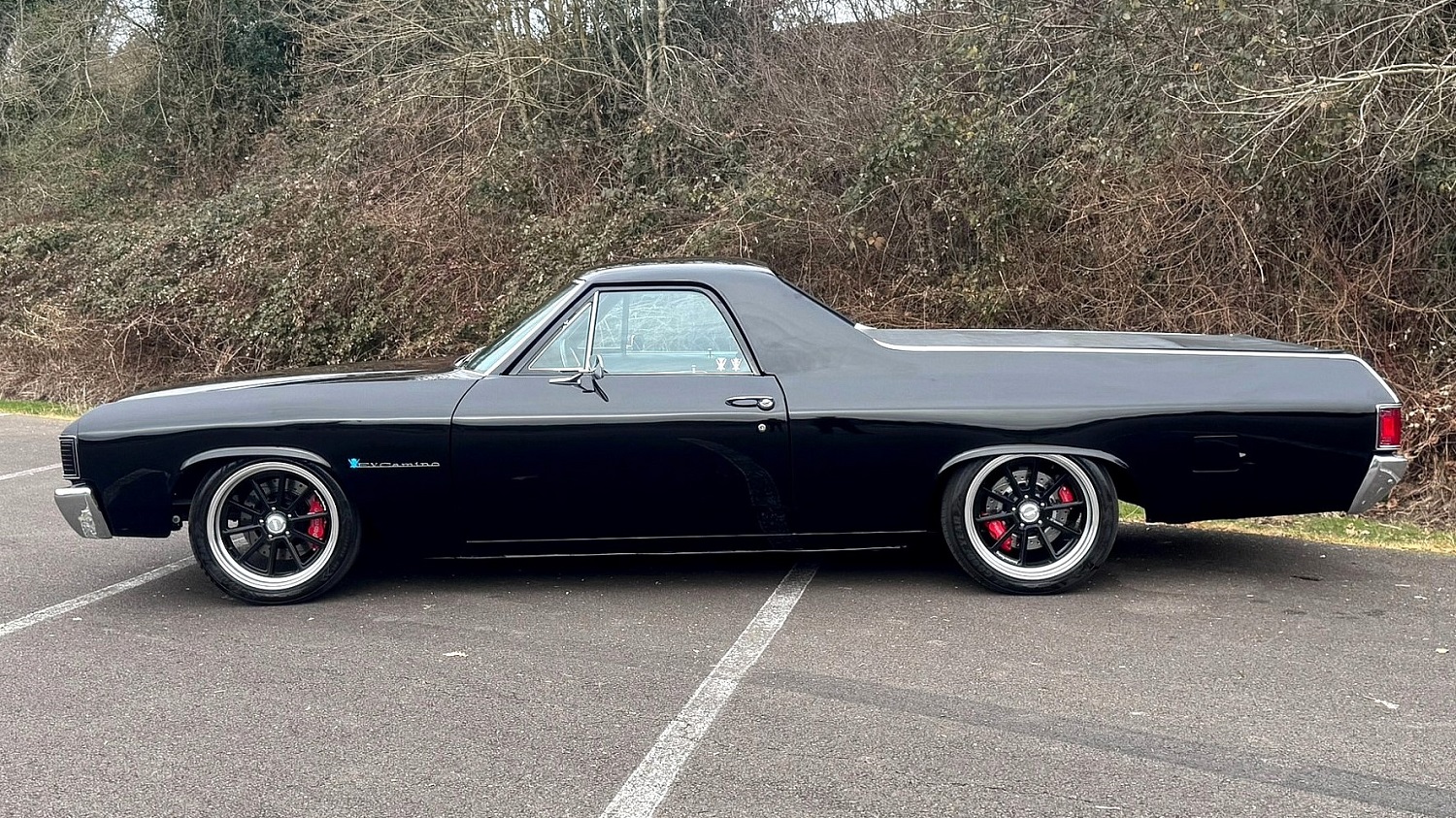
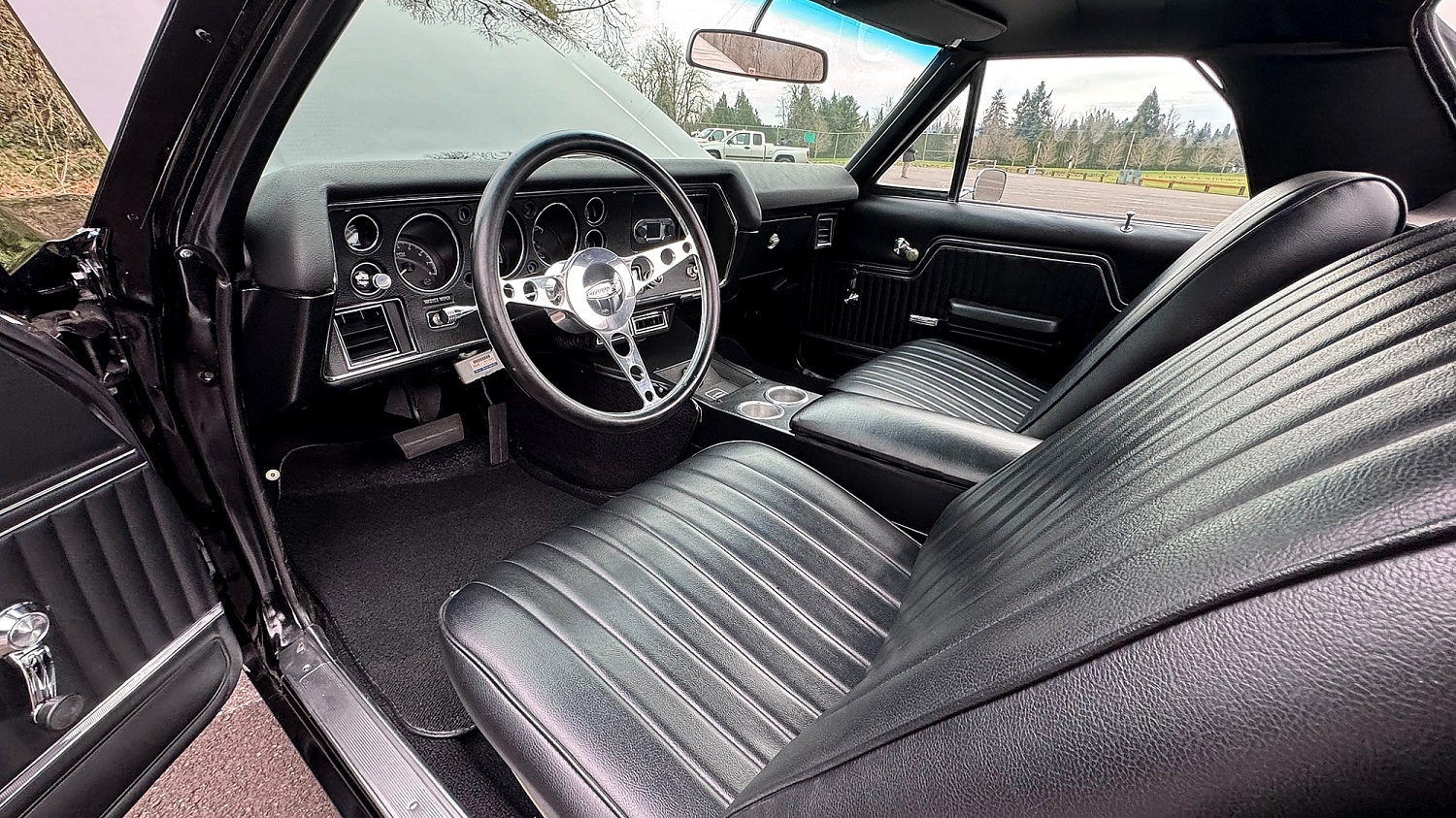
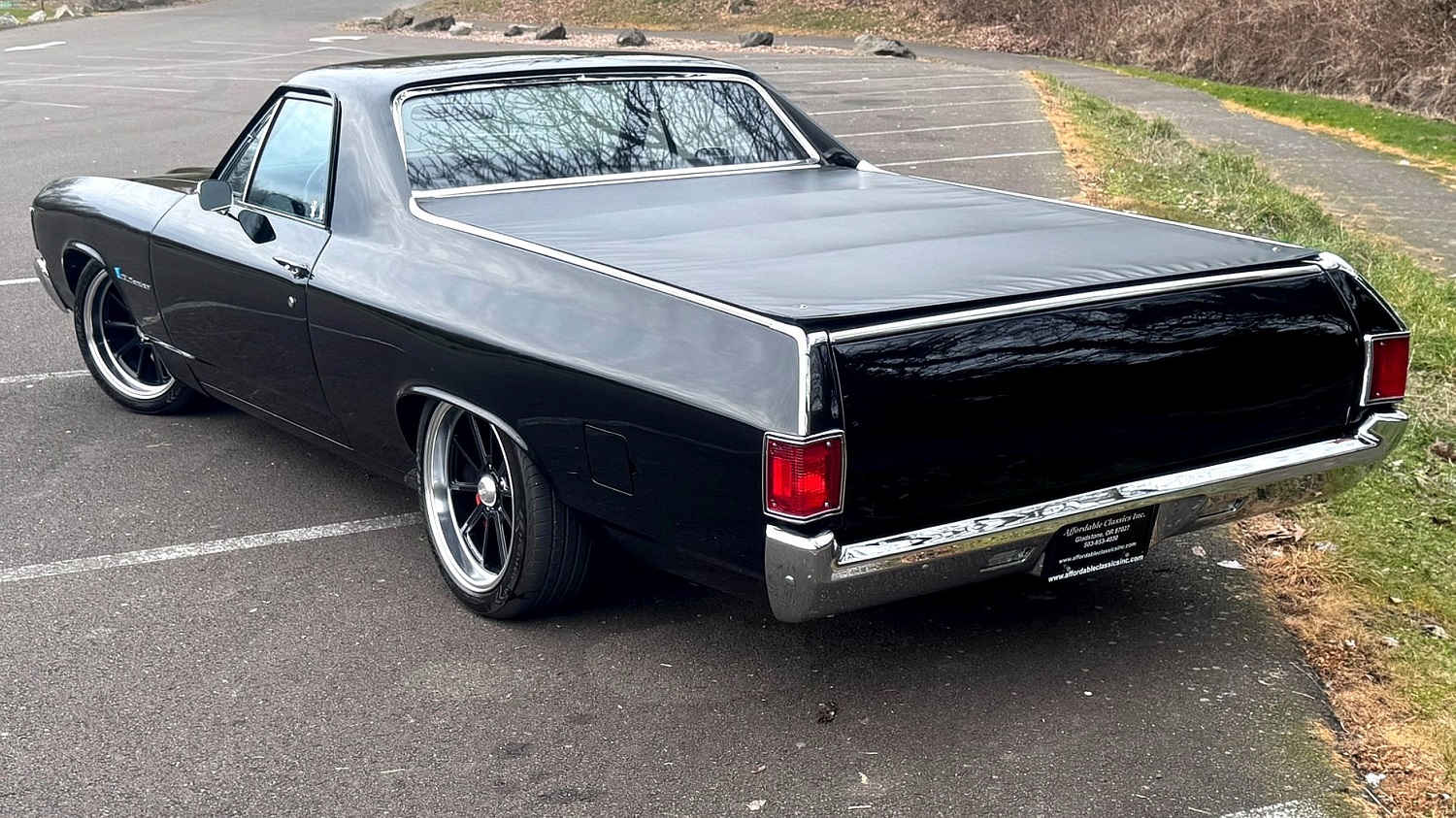
Right now on AutoHunter, you can find this 1972 Chevrolet El Camino EV conversion built by Vintage Iron & Restoration of Scottsdale, Arizona. It’s powered by a pair of NetGain HyPer9 electric motors mated to a single-speed automatic transmission. Highlights include air conditioning, power steering, QA1 coilovers, and power disc brakes. Finished in black over a black vinyl interior, this all-electric restomod is now offered by the selling dealer in Oregon with a clear title.
The body may look purely black but, if you catch it from certain angles, you’ll see gold flakes in the finish. Exterior features include chrome bumpers, custom “EV Camino” fender badges, chrome mirror housings, and folding soft tonneau cover.
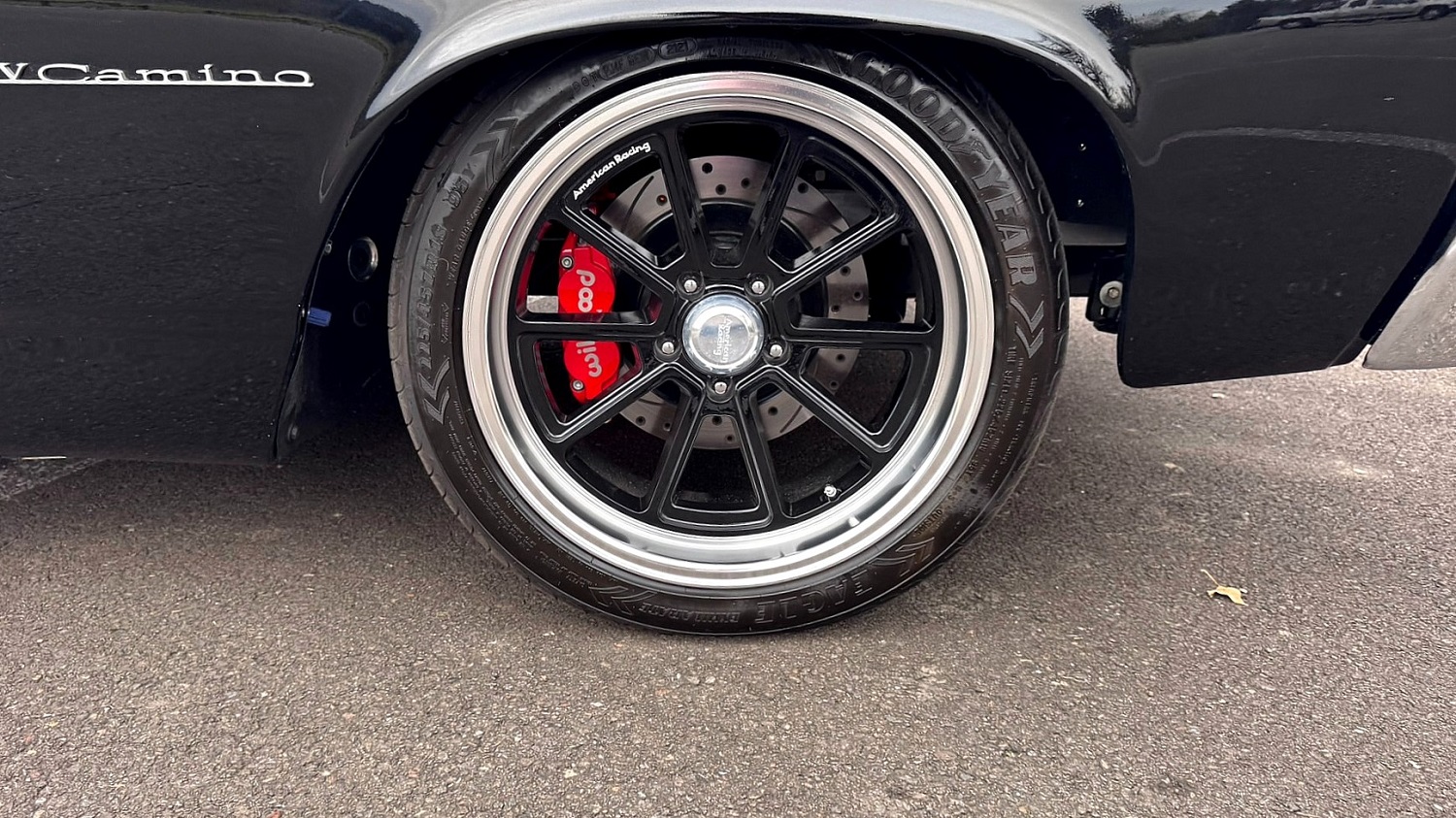
This distinctive build rides at the perfect height on its black 18-inch American Racing Torq Thrust wheels with polished lips and 225/45 Goodyear Eagle radials.
The cabin continues the blacked-out theme with aftermarket black vinyl bucket seats, which are divided by a center console with an armrest, two cup holders, wireless charging pad, and drive mode selector dial. Other features include electric power steering, Budnik three-spoke steering wheel, air conditioning, and RetroSound AM/FM radio with Bluetooth connectivity.
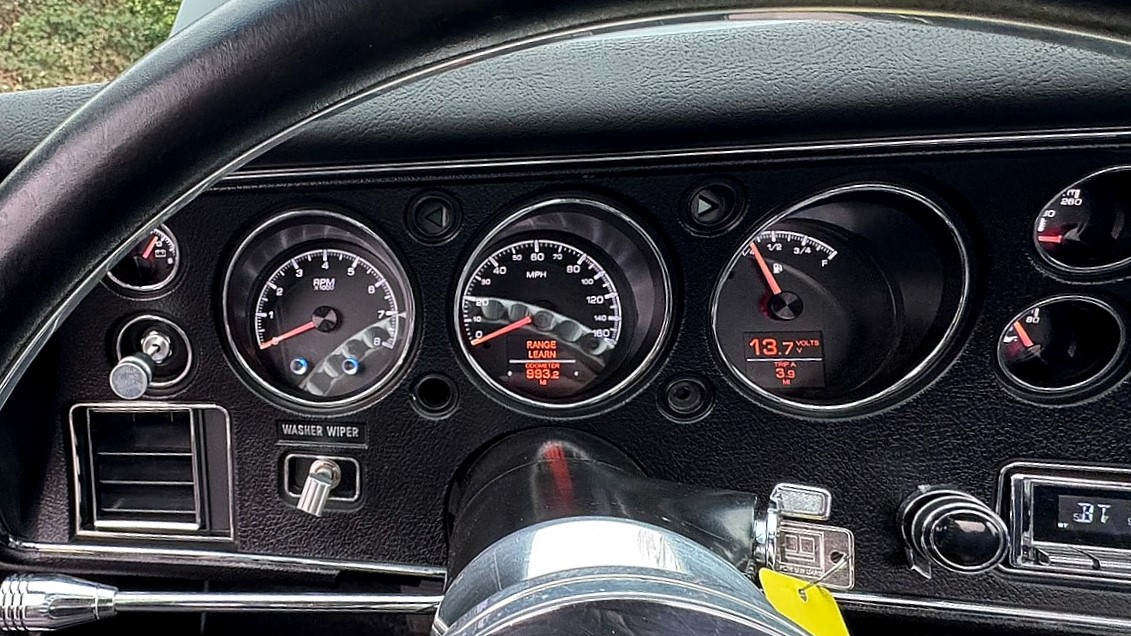
Instrumentation consists of a 160-mph speedometer, 8,000-rpm tachometer, and gauges for the voltage, fuel level, temperature, and oil pressure — all from Dakota Digital. The digital odometer shows 993 miles, but the true mileage on this vehicle is unknown.
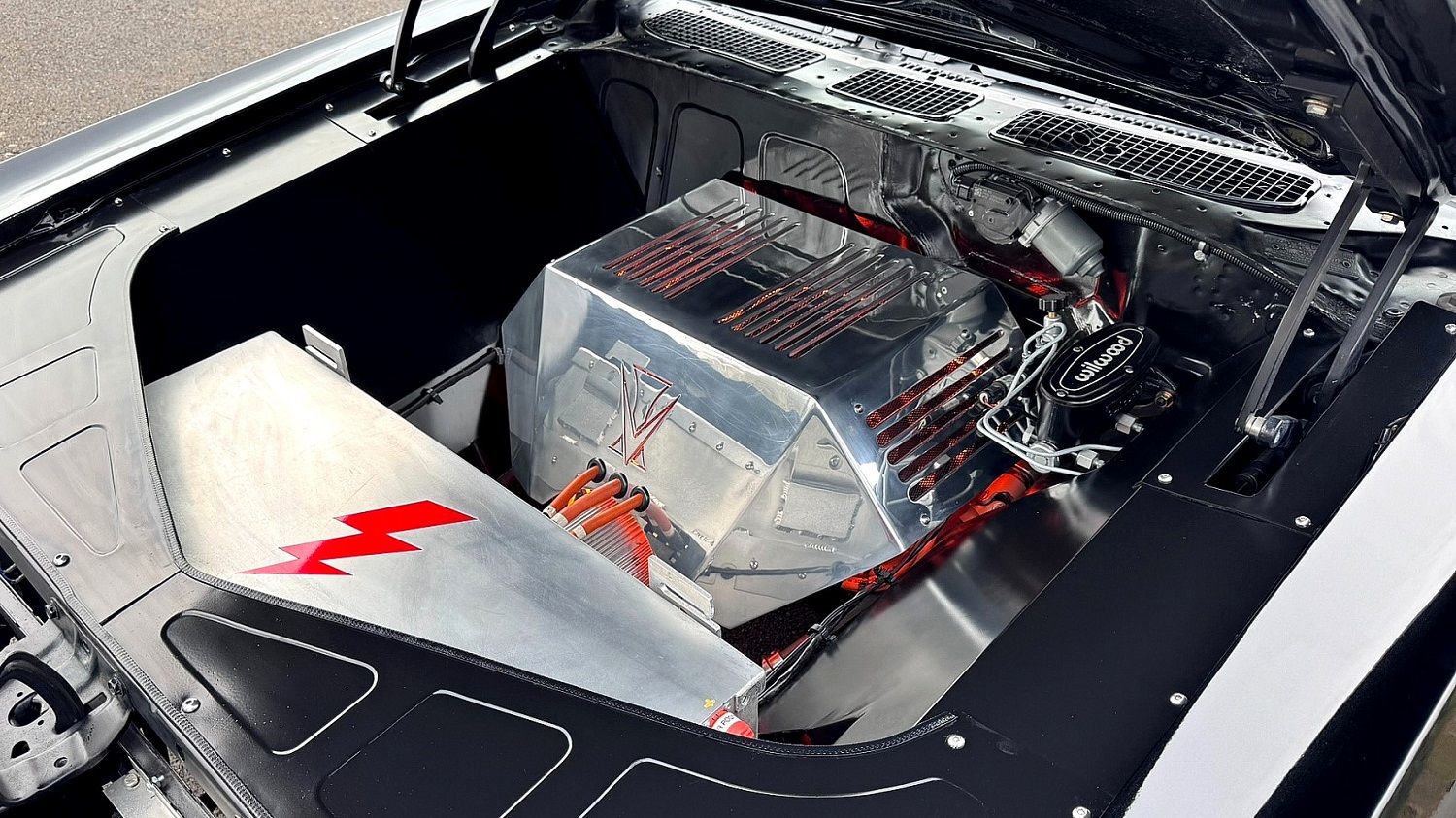
According to the EV Builder’s Guide, a pair of NetGain HyPer9 electric motors with 253 horsepower 649 lb-ft of torque power this pickup/passenger car. The 66.6-kWh battery pack is divided between the engine bay and the cargo bed. A single-speed automatic and an aluminum driveshaft sends that zip (and zap) to a 1992 Ford Thunderbird rear end. Also on this build’s long list of updates is a Ford Mustang II front end, QA1 coilovers, and Wilwood power four-wheel disc brakes.
Just as the El Camino is a hybrid of car comfort and truck utility, this customized 1972 model is a hybrid of retro styling and modern EV power. If you’re all charged up and ready to make it yours, bid on it before the auction ends on Friday, March 13, 2026, at 12:15 p.m. (PDT).
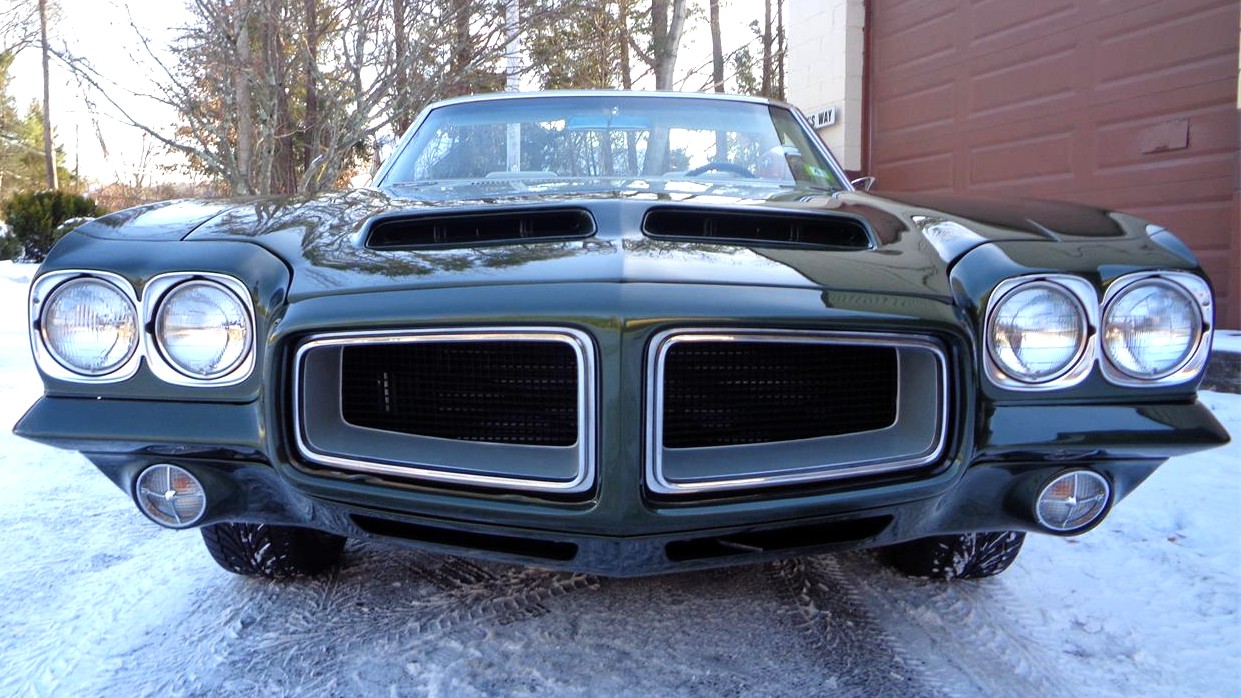
In an interesting twist of events, Pontiac did not offer a GTO convertible for 1972. However, Buick continued to offer the GS convertible, Chevrolet the Chevelle SS convertible, and Oldsmobile the 4-4-2 convertible. Our Pick of the Day is what a Pontiac enthusiast could order in substitution: This 1972 Pontiac LeMans Sport convertible is listed on ClassicCars.com by a dealership in Palmer, Massachusetts.
Pontiac actually discontinued the GTO convertible in the middle of the 1971 model year. Why an automaker would discontinue a body style of one of the most important performance models in the middle of the model year is anyone’s guess, though Pontiac had new general manager starting in 1969 and things were done differently than before.
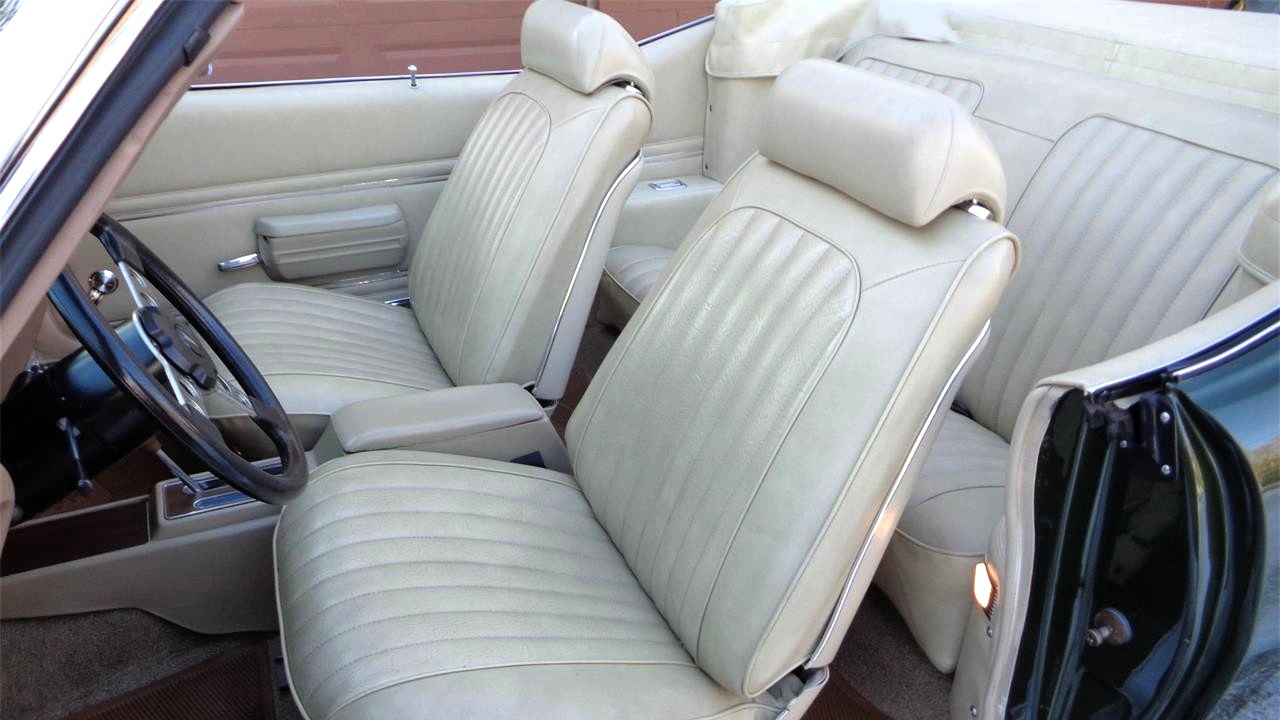
Even though the GTO convertible was gone, the same equipment was available, so judicious use of the order form could create a quasi-GTO convertible. The first thing that one had to do was specify the LeMans convertible. For 1970-71, the LeMans Sport was the “regular” ragtop for consumers, but for 1972, the Sport became an option package with a “W70” order code. This package was included on all LeMans convertibles (optional for the hardtop) and included bucket seats and “distinctive door and quarter trim panels” plus “LeMans Sport” identification and additional interior lighting for the convertible.
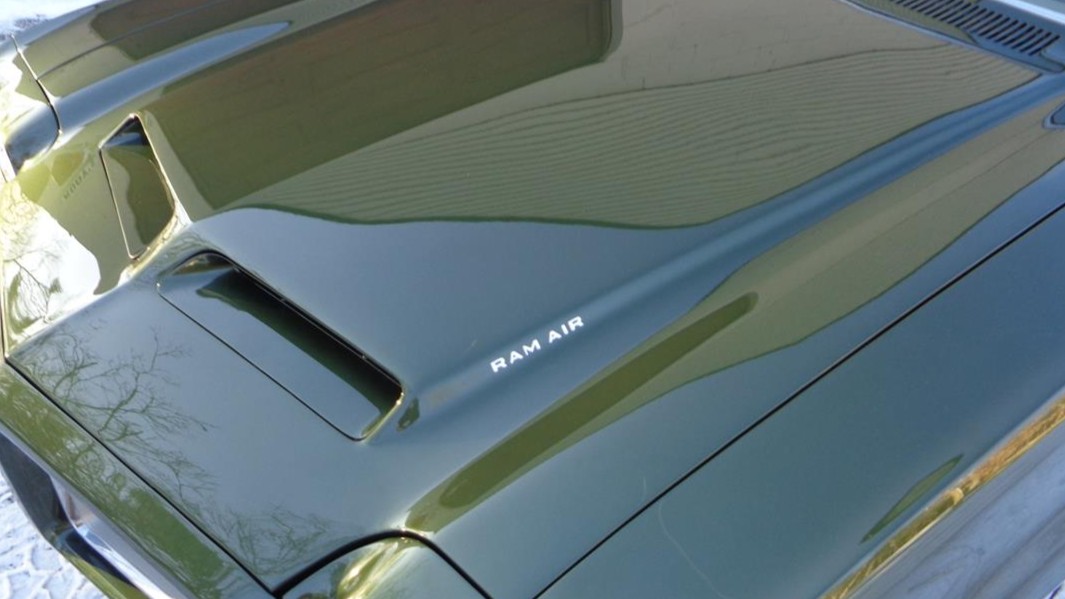
The GTO also reverted to a package, the first time since 1965. It included a heavy-duty three-speed manual, 400 four-barrel with dual exhaust, exhaust splitters, G70-14 blackwalls, Endura front bumper, special hood with scoops, front-fender air extractors, firm-control shocks, front and rear stabilizer bars, and GTO identification. While it wasn’t possible to add the whole package to a LeMans convertible, it was possible to individually select most of the good stuff, including the “T41” Endura Styling Option that included the GTO’s front bumper, special hood, and front fenders. It was a GTO convertible in all but name.
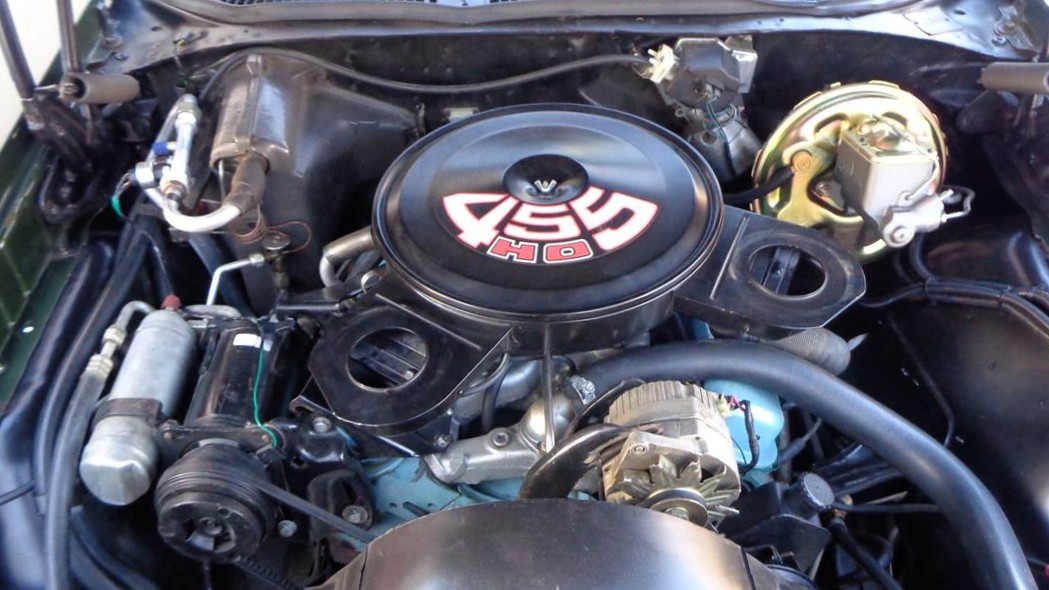
Engine options to fake a GTO convertible included the 455/220 (250 horses with dual exhaust) or the 455 HO, which was now rated at 300 net horses. It required the Turbo Hydra-matic or “M22” heavy-duty close-ratio four-speed, T41 package with ram air (required, unlike in 1971), unitized ignition, and dual exhaust. Only 33 LeMans Sport convertibles were built with this engine, including seven with the GT package, a replacement of sorts for the GT-37 that included a manual heavy-duty three-speed, G70-14 white-lettered tires, body-color mirrors on both sides, Rally II wheels sans trim rings, Rally stripes, dual exhaust with side splitters, and GT identification.
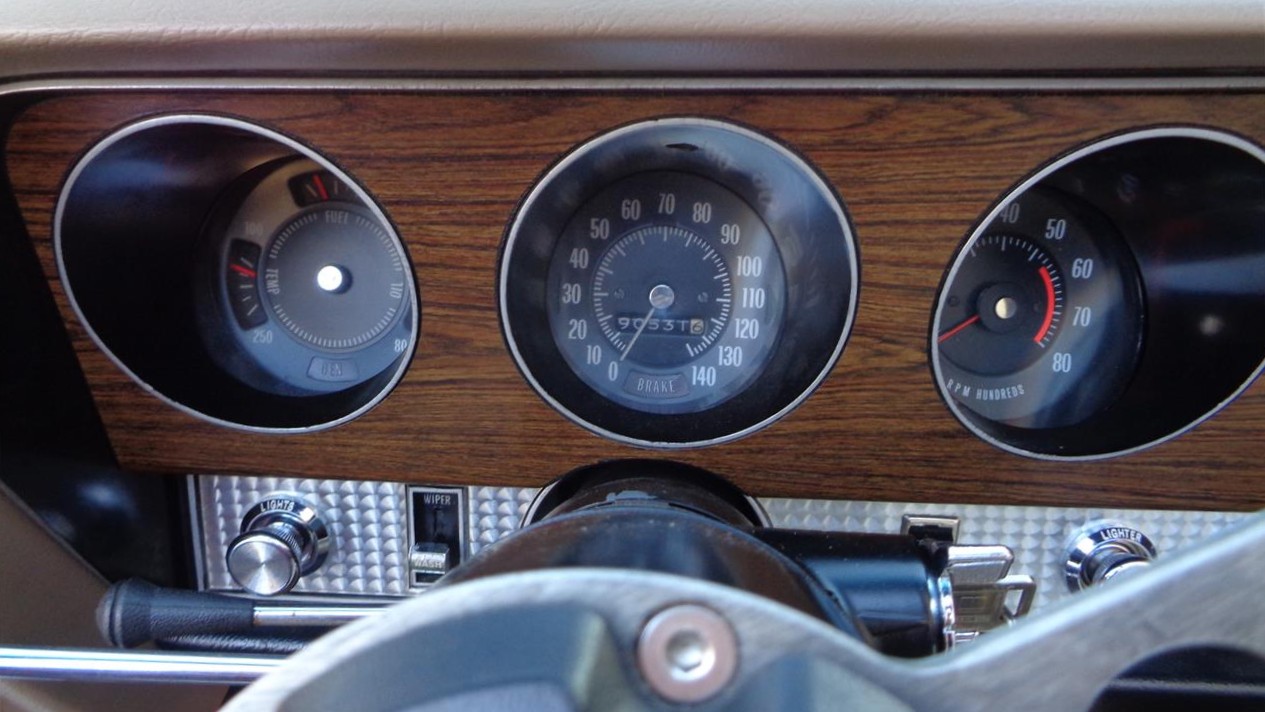
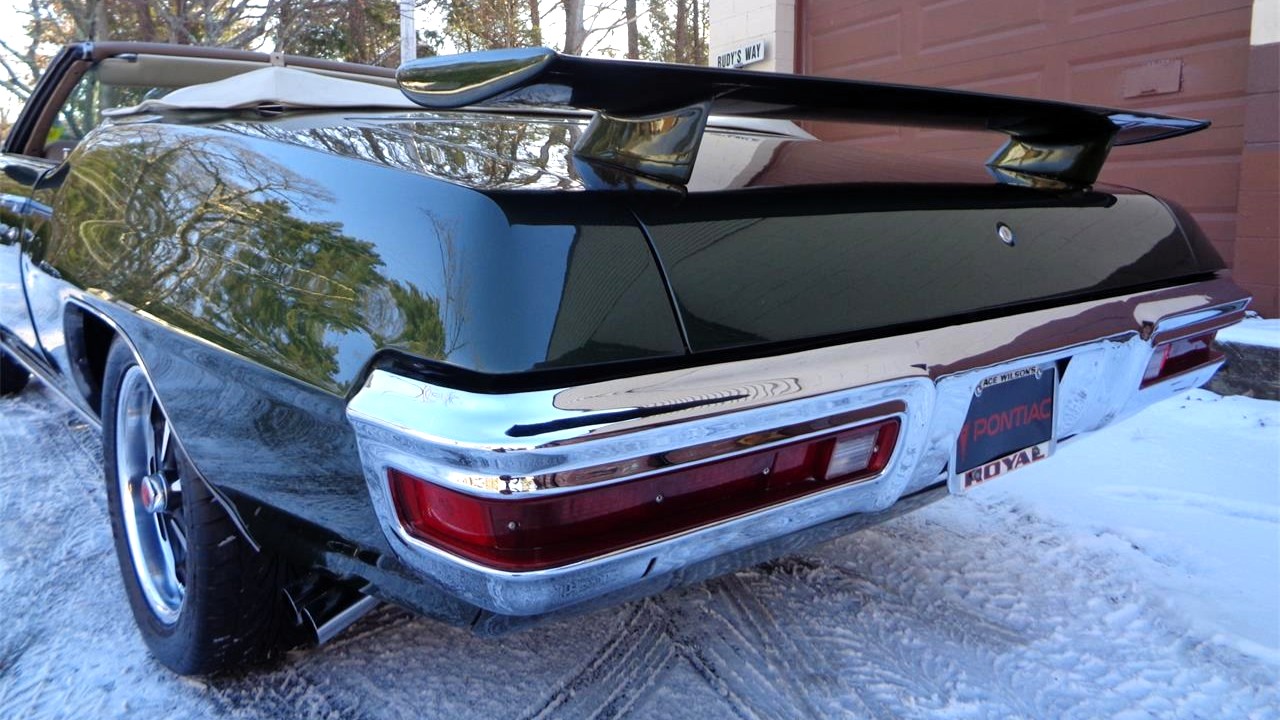
This Wilderness Green 1972 Pontiac LeMans Sport convertible is one of 26 like it built with the 455 HO, and we know this to be true thanks to the “X” in the VIN. Of those, 12 were equipped with an automatic. “This fine example has received a complete frame-off restoration and was previously owned by the meticulously renowned Hendrik Performance Collection,” says the seller. Features include a Black convertible top, power steering and disc brakes, heavy-duty suspension (upgraded with Bilstein shocks), 17-inch Rally II wheels (though the original 15-inchers are included), tinted glass, center console, Rally gauges, tilt column, and Formula steering wheel. Modifications include an Eaton Suretrac 3.73 limited-slip setup, RetroSound AM/FM/Bluetooth stereo, and 1970-71 rear spoiler.
Sounds like a GTO, right? Drives like one as well. And, when it comes to most GTO convertibles out there, this one is rarer and faster (despite the low compression), stock for stock. This is the last of the stout A-bodies from Pontiac, and the top drops too! For $74,900, you will get a stellar piece of Pontiac history.
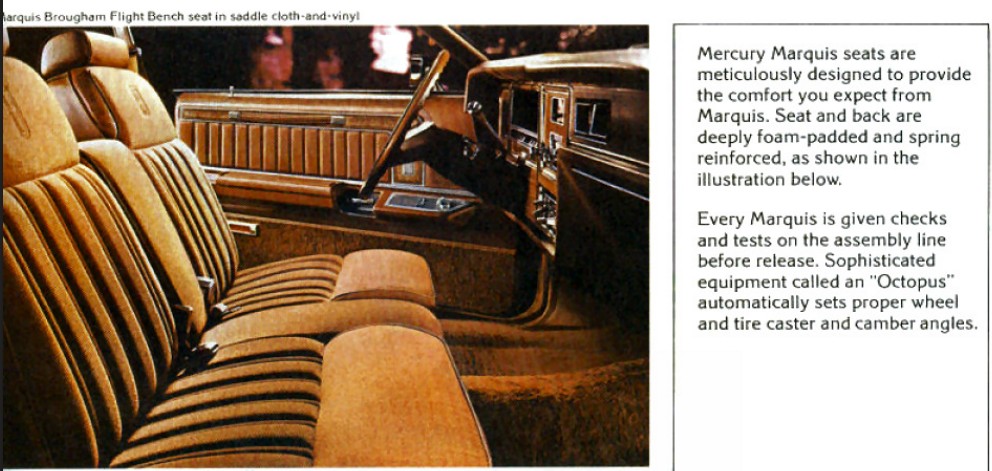
Representing peak late-1970s “land yacht” heft and styling, the Mercury Marquis was offered as a full-sized coupe, sedan, or station wagon. It rode on the body-on-frame platform and epitomized American luxury for its era. This brochure shows some of the available body styles, trim levels, and options.
The Marquis was geared inside and out toward touring. Mercury’s promotional materials said, “Full-size luxury, full-size comfort.” The brochure said, “It gives you room for six passengers with ample hip and shoulder room, even for three adults.”
At the recent Melrose Street Fair, one of the noteworthy cars on display was this beautiful, boxy, brown 1978 Mercury Grand Marquis with only 56,620 original miles. The car had a very “Lincoln-esque” vibe to it, featuring vertical marker lamps, waterfall-style grille, hideaway headlights (with “crown” medallions!), hood ornament, beefy bumpers, wheel skirts, and vinyl landau roof covering.
I caught up with the owner, Rick, who popped the hood. His car was optioned with a 460ci big-block V-8 – an upgrade from the standard 351ci V-8 and even the optional 400ci V-8. A three-speed automatic transmission was the sole offering, regardless of engine choice. The car probably gets about the same gas mileage as my Ford F-250.
Notice that Rick’s car was also equipped with a receiver hitch. Mercury’s brochure said, “Marquis sedans and station wagons offer uncommon trailer towing capabilities when equipped with the Class III Trailer Towing Package. Marquis recommended weight maximums of 7,000 pounds are higher than those for Olds 98 or Toronado, Buick Riviera or Electra, even Cadillac Eldorado or deVille. If you’re a trailer enthusiast, you’ll want to look into Marquis.”
By the way, 1978 would mark the final year for the big-body Marquis. In 1979, the car and its direct counterpart from the Ford lineup, the LTD Crown Victoria, were downsized. In fact, the 1979 models were 17 inches shorter and about 1,000 pounds lighter.
Looking at it that way, Rick’s Grand Marquis represents the last of its kind, and to many, it’s a strong reminder of the “excess” that defined some 1970s American cars.
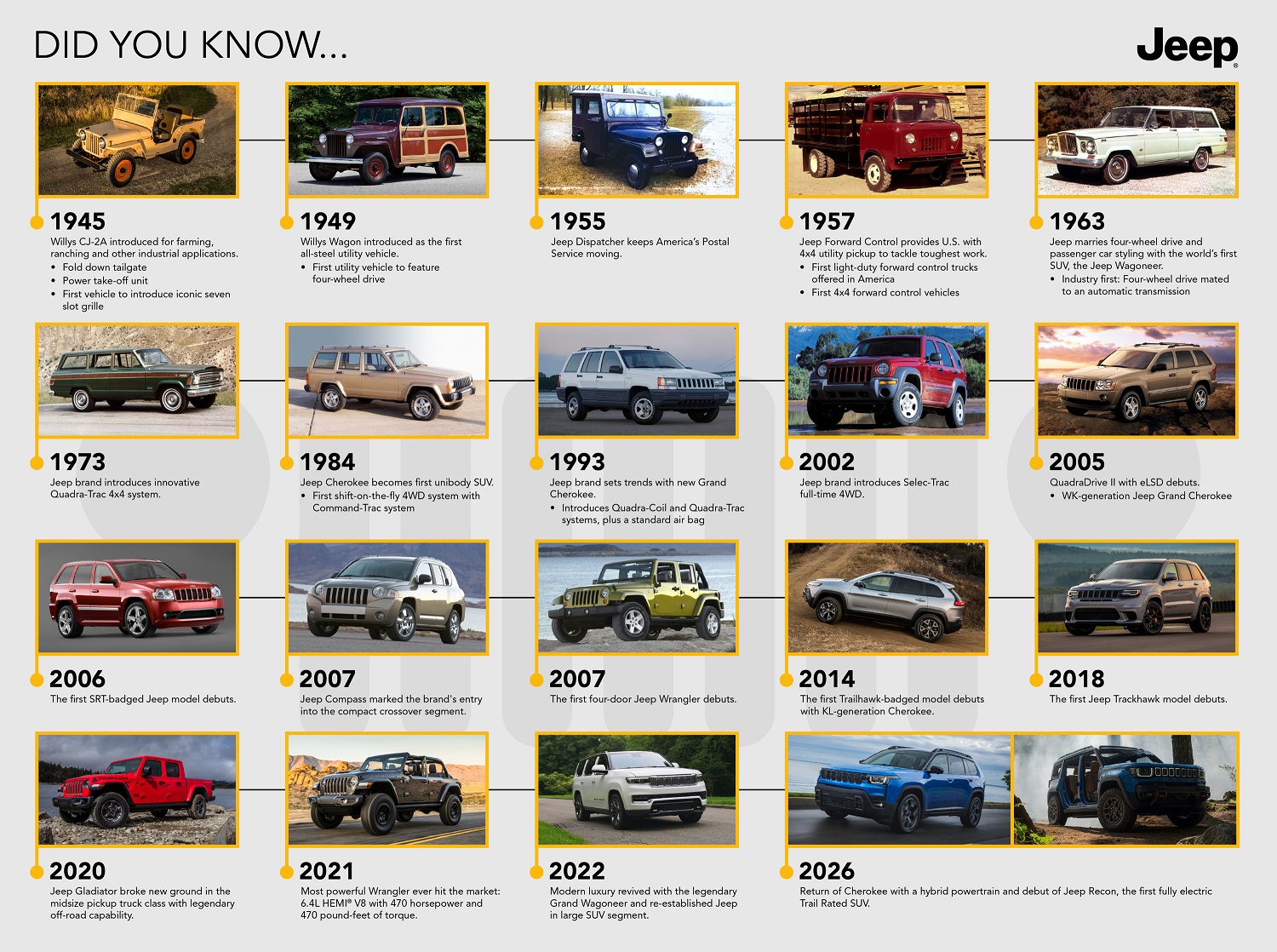
If you’re a Jeep fan, I have a feeling you’re really enjoying 2026. This year marks the brand’s 85th anniversary, which Jeep started celebrating last year with its ongoing Twelve 4 Twelve series of Wrangler special-edition models. The Jeep Convoy line of “mission-ready special editions that embody strength, unity and purpose” continues. And Jeep has released 85th Anniversary editions of the Wrangler and Gladiator, which will soon be joined by commemorative versions of the Compass, Cherokee, Grand Cherokee, and Grand Wagoneer.
Since its founding, Jeep has not only honed its identity as the manufacturer of rugged and capable vehicles, but it’s also made a significant impact on the automotive industry as a whole. According to Stellantis, the 1949 Willys Wagon was the first utility vehicle with four-wheel drive. The 1963 Wagoneer was the first 4×4 with an automatic. Equipped with removable doors and roof just like the Wrangler, the 2020 Gladiator was the first open-air midsize truck.
To mark Jeep’s 85th Anniversary, Compass, Cherokee, Grand Cherokee, and Grand Wagoneer special editions will come with “Steel Oxide wheel designs and unique badging graphics finished in Agave Blue. On the inside, vehicles receive unique elements, including Mayan Gold thread accents and seat tags finished in Blue Agave and Mayan Gold.”
Given the limited details, it looks as if the 85th Anniversary treatment is just a cosmetic package. Perhaps there is more to it and Jeep will fill in the blanks around the time that it announces pricing. However, judging by the press release and the single photo of the 85th Anniversary lineup, it’s reasonable to assume that only the Wrangler and Gladiator have the cool plaid seat inserts.
In the context of late-1960s muscle cars, the Dodge Charger and Coronet get a lot of attention from enthusiasts. But there was a “mini Mopar” that, when properly equipped, had plenty of get-up-and-go. Featured on AutoHunter is a 1967 Dodge Dart GT Convertible listed by a dealer in St. Louis, Missouri. The auction will end on Tuesday, March 10, 2026, at 12:30 p.m. (PDT).
Rolling on Chrysler’s A-platform, the compact Dart (in this case, from the 1967-76 generation) was known for being versatile and lightweight. Some Darts were relatively pedestrian in form and function, while others were formidable players in the muscle-car segment. The unibody Dart enjoyed a modest power-to-weight advantage over traditional body-on-frame cars.
The light blue exterior of this Dart has fully restored trim and GT badging. Features include fender-mounted turn signal indicators, driver-side mirror, power-retractable top, and Rally wheels with BFGoodrich Radial T/A tires.
The Dodge brand officially got its start in 1914, and some of the company’s marketing materials in the 1960s celebrated the brand’s 50-plus years in business. One advertisement said, “How dare it be so dashing? The Dart is a car meticulously-engineered, from its deep-chromed bumper to its sumptuous interior trim, by the internationally acclaimed Chrysler Corporation. By all means, buy a Dart for its style and verve. By all means forget its dependable fifty-year reputation. You can be sure that Dodge won’t.”
This Dart’s cabin has black vinyl upholstery and newer carpeting. Amenities include bucket seats, console, power steering, and hidden stereo with kick panel-mounted speakers.
Under the hood is a four-barrel-carbureted 340ci V-8 mated to a TorqueFlite 727 three-speed automatic transmission and a 2.94:1 rear end.
The Dart was unique for its all-around versatility, since it could “wear multiple hats” depending on how it was optioned (economy car, family-hauler, weekend drag-racer). This convertible with its restored paint, robust V-8, and rocking stereo is a compelling ride for Mopar fans, and it will probably be less common at shows and cruises than its big brother, the Charger.
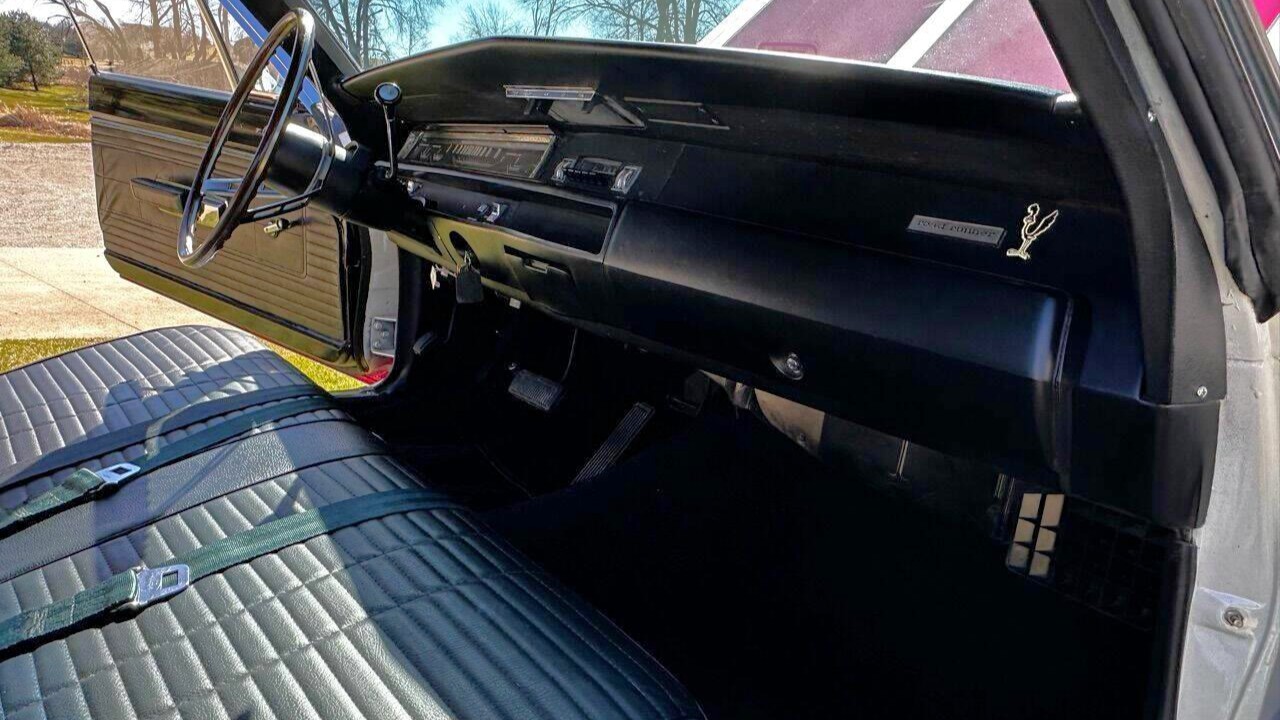
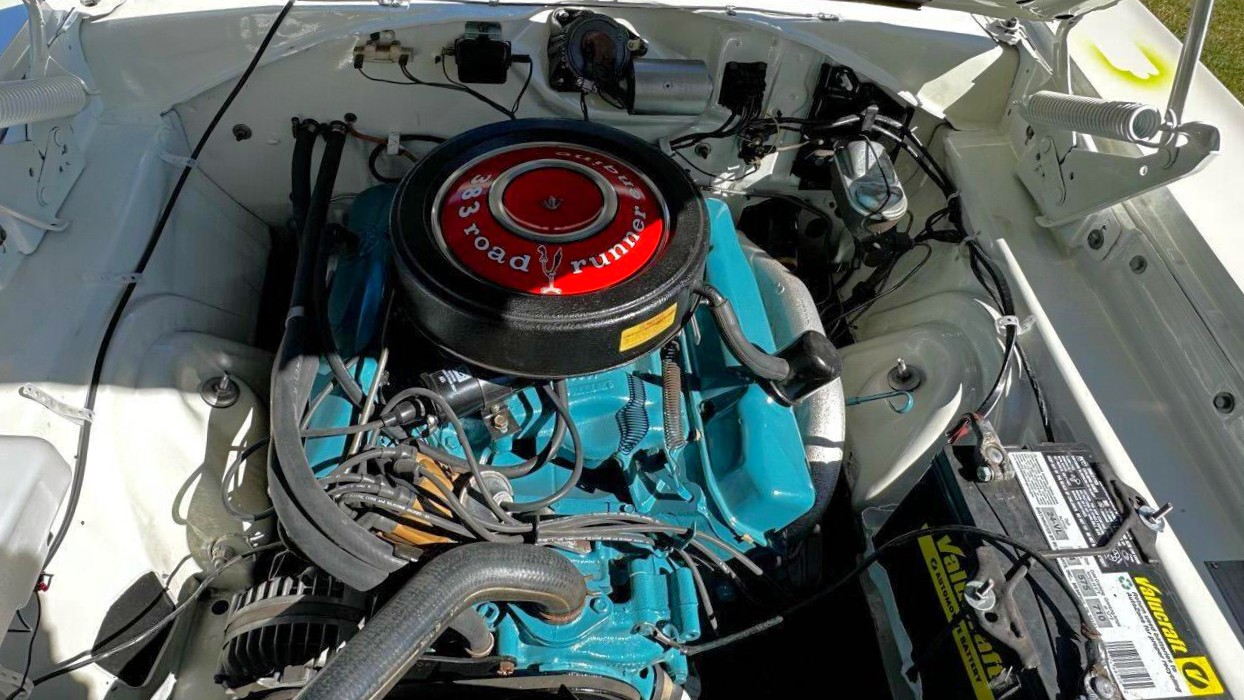
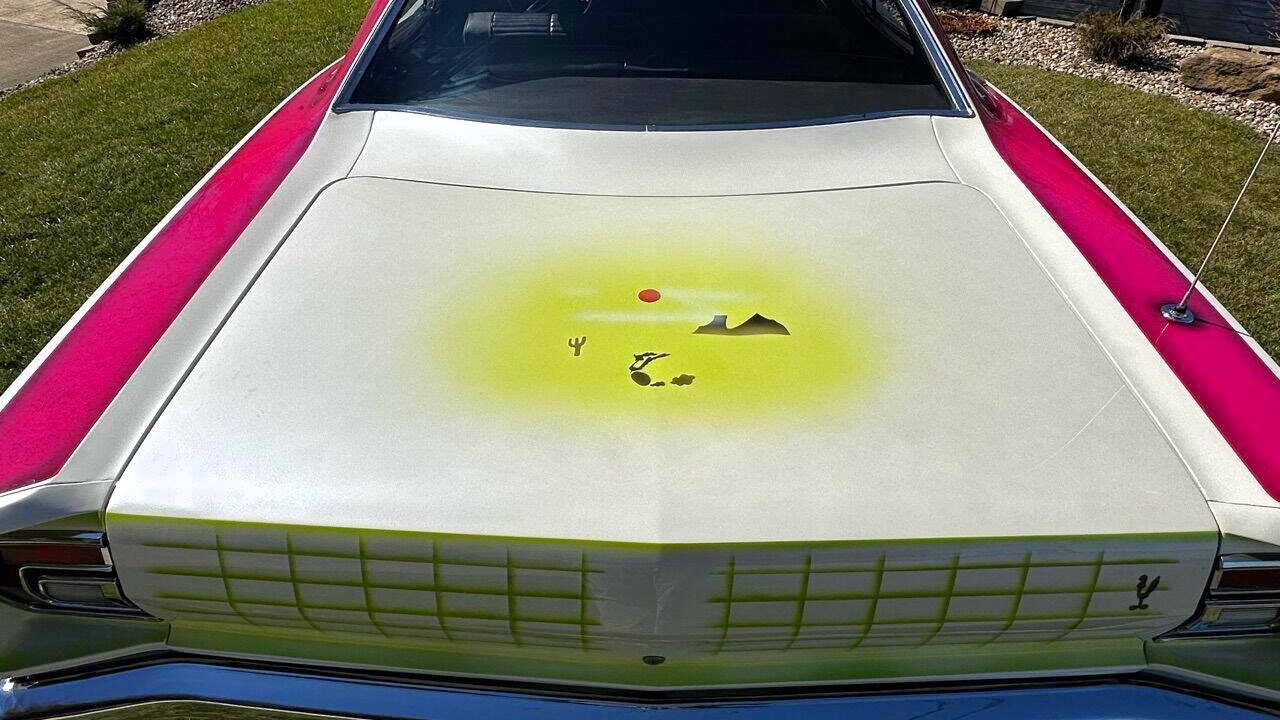
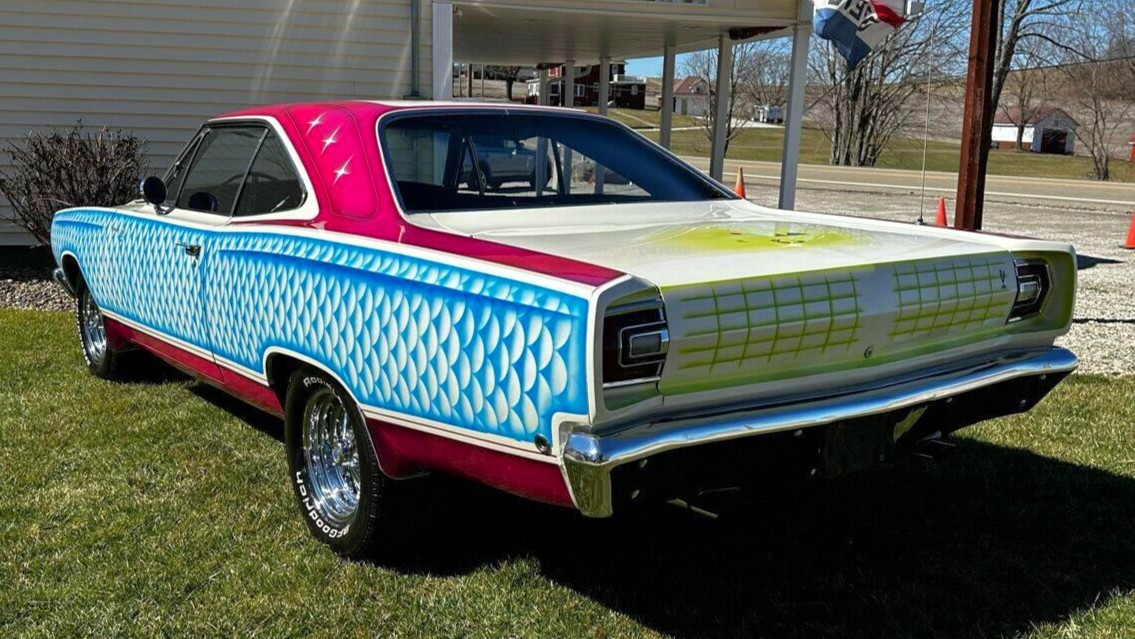
Do you find yourself growing as an enthusiast? Or are you stuck in your old ways and enjoying that? Some of us get hung up on the past, complaining about how no good music is made anymore, while others evolve into having more texture and depth to their Pinterest page. Our Pick of the Day may be for the latter group: This 1968 Plymouth Road Runner hardtop is currently listed for sale on ClassicCars.com by a dealership in Louisville, Ohio.
The 1968 Plymouth Road Runner could be considered the model that ushered in Muscle Car Era 3.0 (with 1.0 being early muscle and 2.0 being the Pontiac GTO). If you take a look at old road tests like this GTO, 427 Galaxie 500/XL, and Coronet R/T, none of the cars were affordable to the kid bagging groceries at the local Pantry Pride. Spurred by the advice of automotive journalist/assassin Brock Yates soon after the introduction of the 1967 GTX, Plymouth bosses ran with a concept that would attract enthusiasts 18-20 years old: The performance car needed to be affordable for buyers and cheap for Plymouth, and it had to be ready for a September 1967 introduction.
Plymouth’s ad agency created a list of names for the new model, but it was product planner Gordon Cherry who came up with the Road Runner idea after seeing his kids watch the popular cartoon. His boss (and leader of the project), Jack Smith, registered the name with the Automobile Manufacturers Association, then consulted with Warner Brothers. As the road runner was a bird in the public domain, Warner Brothers was cornered as it did not have enough wiggle room to shop its cartoon bird to other manufacturers. Smith claimed the rights cost $40-50,000 at the time.
Budget constraints dictated the Road Runner’s components needed to come from the parts bin as much as possible. Thanks to updated heads, the 383 four-barrel was able to increase its horsepower from 325 to 330; a more aggressive camshaft was implemented to up the horses another five. The cherry on top was the bright idea to have a horn that mimicked the cartoon Road Runner. One of the suppliers had a horn that did a fine job sounding like the animated bird, but that cost an expensive $45 per unit; it was a heavy-duty item for a military-spec amphibious vehicle, so Smith asked the supplier to decontent the horn. This resulted in a horn that cost only 40 cents more than the Belvedere’s horn — all that was needed otherwise was a new mounting bracket.
When the Road Runner was introduced, it was only available as a pillared coupe (with pop-out rear-quarter windows). In January, a hardtop was introduced to create even more mass appeal for what was turning out to be a remarkably successful model. In fact, the Road Runner was turning into a disruptor: Plymouth built more than 44,000 units. While it was far from the numbers of the best-sellers in the market (Pontiac GTO and Chevrolet Chevelle SS 396), the Road Runner would lead to several me-too responses for 1969, if not become the #2 seller (and within less than 2,000 units from the Chevy) in the segment.
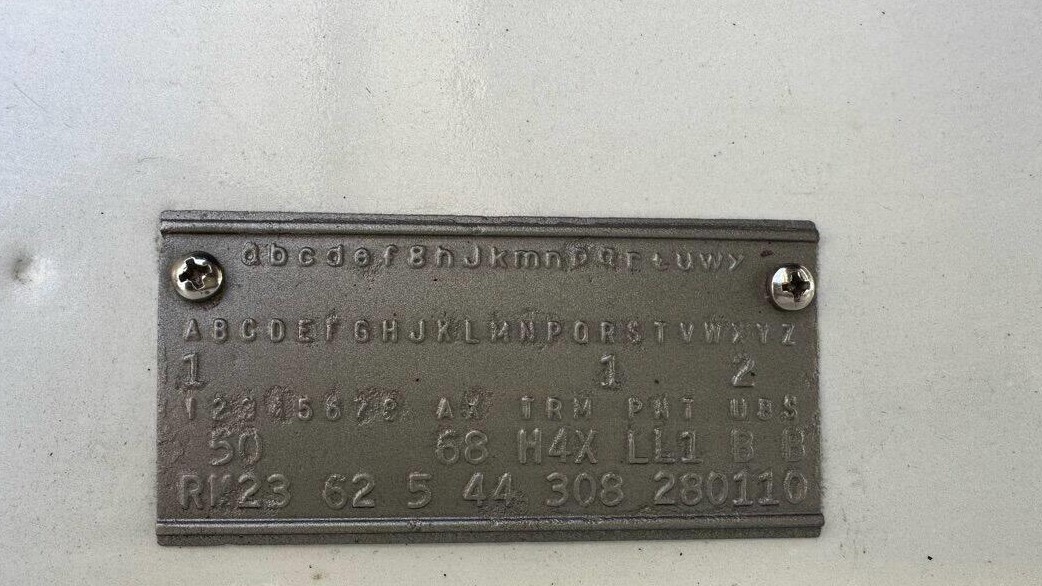
This 1968 Plymouth Road Runner hardtop is the mid-year model, so it’s one of 15,334 built. In 1972, the original owner sold it and, within a year, the new owner repainted it the scheme you see here. The original owner bought it back several years later, not knowing that this was his original car. Then he passed away, leading to almost five decades of storage until 2022. “The motor and transmission are original numbers-matching to the car,” says the seller. “The motor was pulled out and overhauled since it hadn’t been started in 49 years. Heads were gone over with bronze guides, and a Mopar Performance purple camshaft was added.” The 727 TorqueFlite connects the power to the 3.55 rear end “The odometer shows about 56,000 miles to the car,” adds the seller.
Yes, I am one of those guys who has always been a purist at heart, but as I’ve grown older, my tastes have evolved and I have more appreciation for the things that used to repel me. Maybe I haven’t warmed up to modern music, but I’ve warmed up to cars like this $68,900 Road Runner. Take it to Autorama and watch the public drool in amazement.
Sometimes you don’t need a plan for things to happen. As I always do for Car Connections, I had the Random Word Generator produce three words, which I then related to cars in some way. After I did that, I realized there was a theme to all my responses. This week’s words are seal, register, and cottage. Keep reading to find out the theme. How would you associate these words with cars? Tell us in the Comments section below.
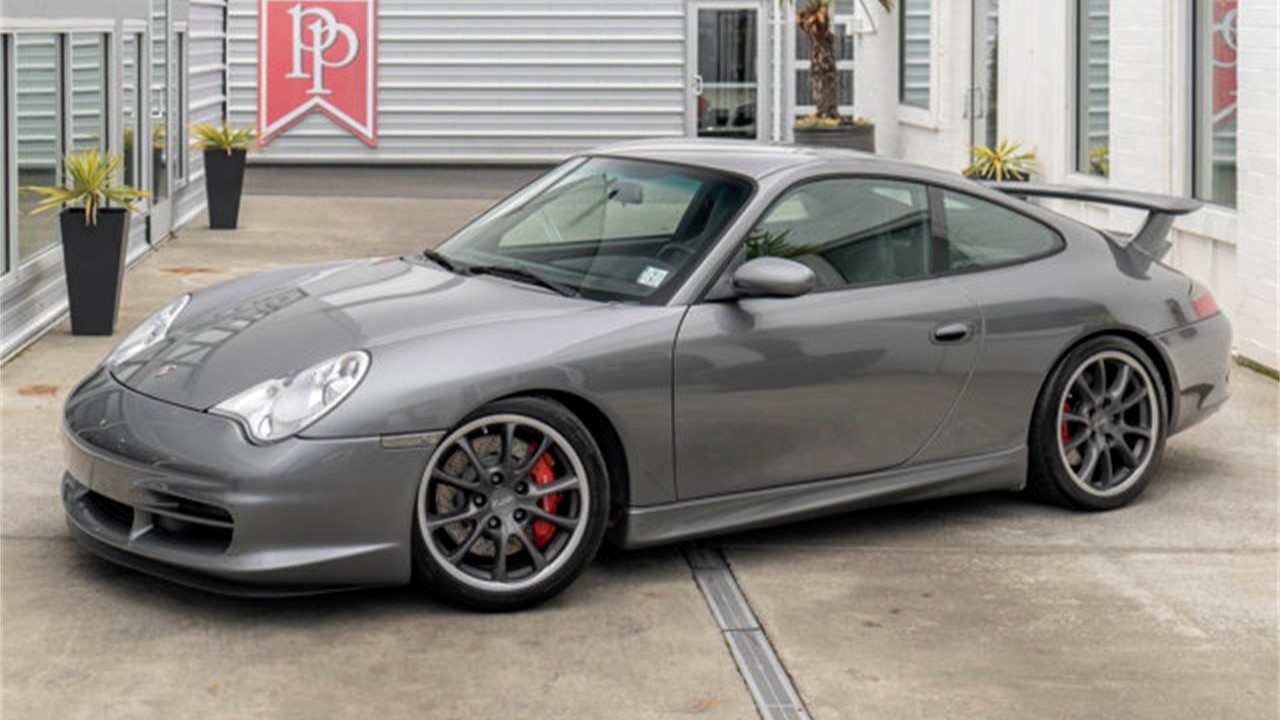
Seal: Many seals are gray. Hmmm … seal gray — make that Seal Grey Metallic, a color that Porsche offered on the 996 generation of the 911, which produced the 2004 GT3 you see above. You can learn more about it on ClassicCars.com.
Photo courtesy of eBay
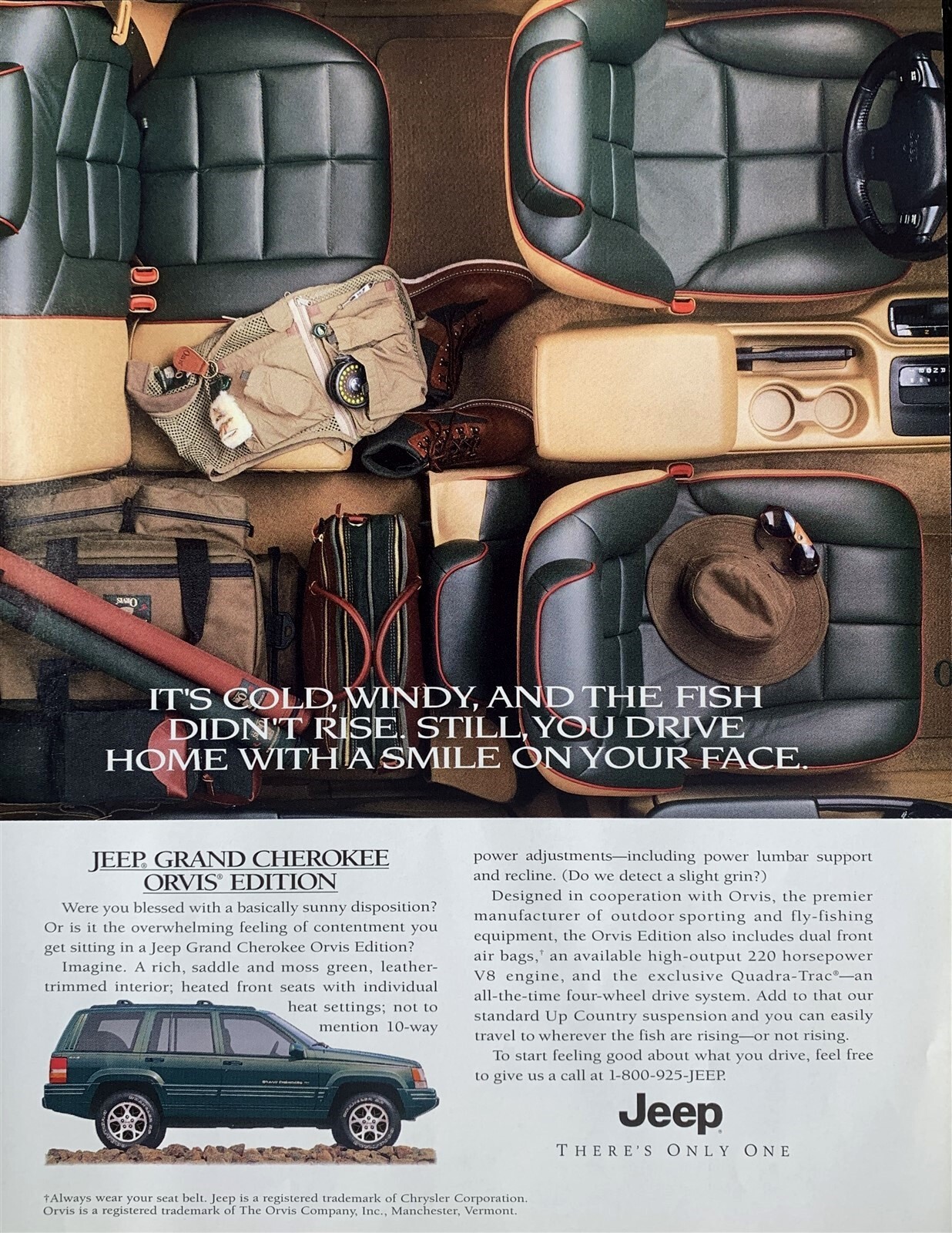
Register: As in cash. Cash here in the United States is green (and white). A recent Pick of the Day, a 1999 Jeep Wrangler Sahara, has Dark Green and Camel Trailcloth seats. Those made me think of the ZJ Grand Cherokee Orvis Edition’s saddle tan and moss green leather interior.
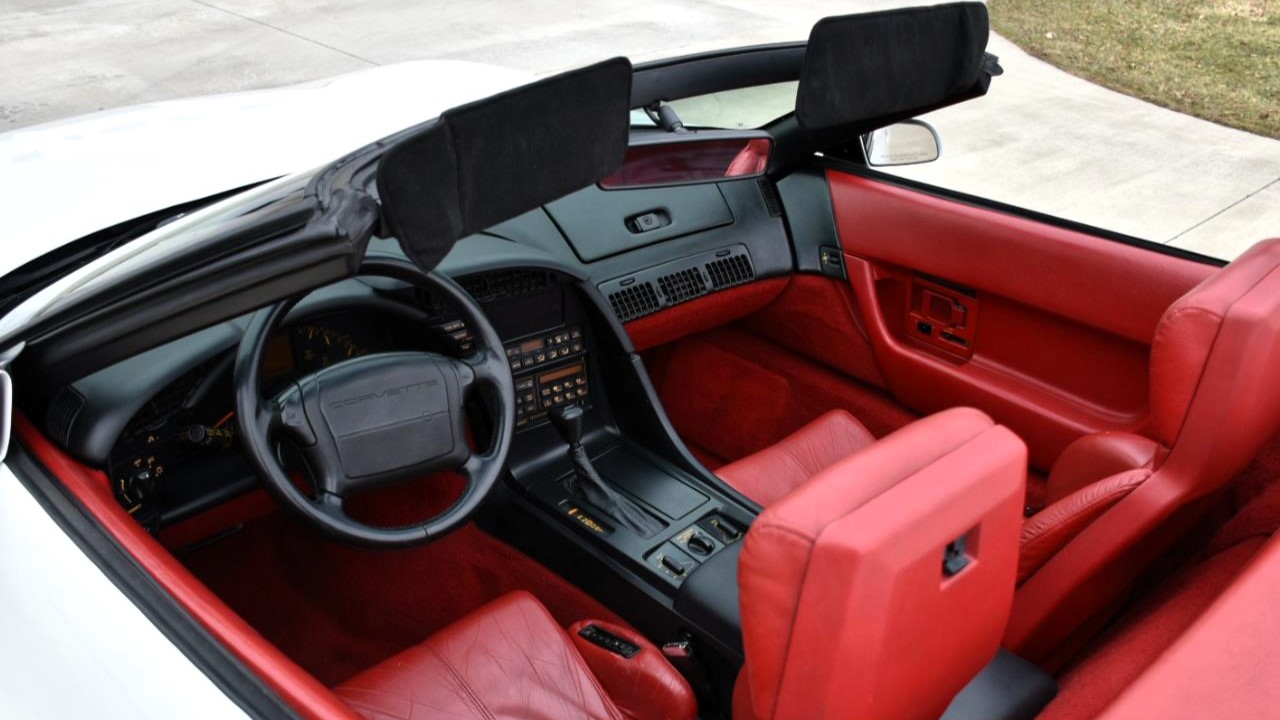
Cottage: Cottage cheese. Cottage cheese is white. White, eh? That makes me think of Ermine White, a Chevrolet color. One Chevy that looks great in white, especially with a red interior, is the C4 Corvette — just look at this Arctic-White-over-Red ’92 convertible on ClassicCars.com.
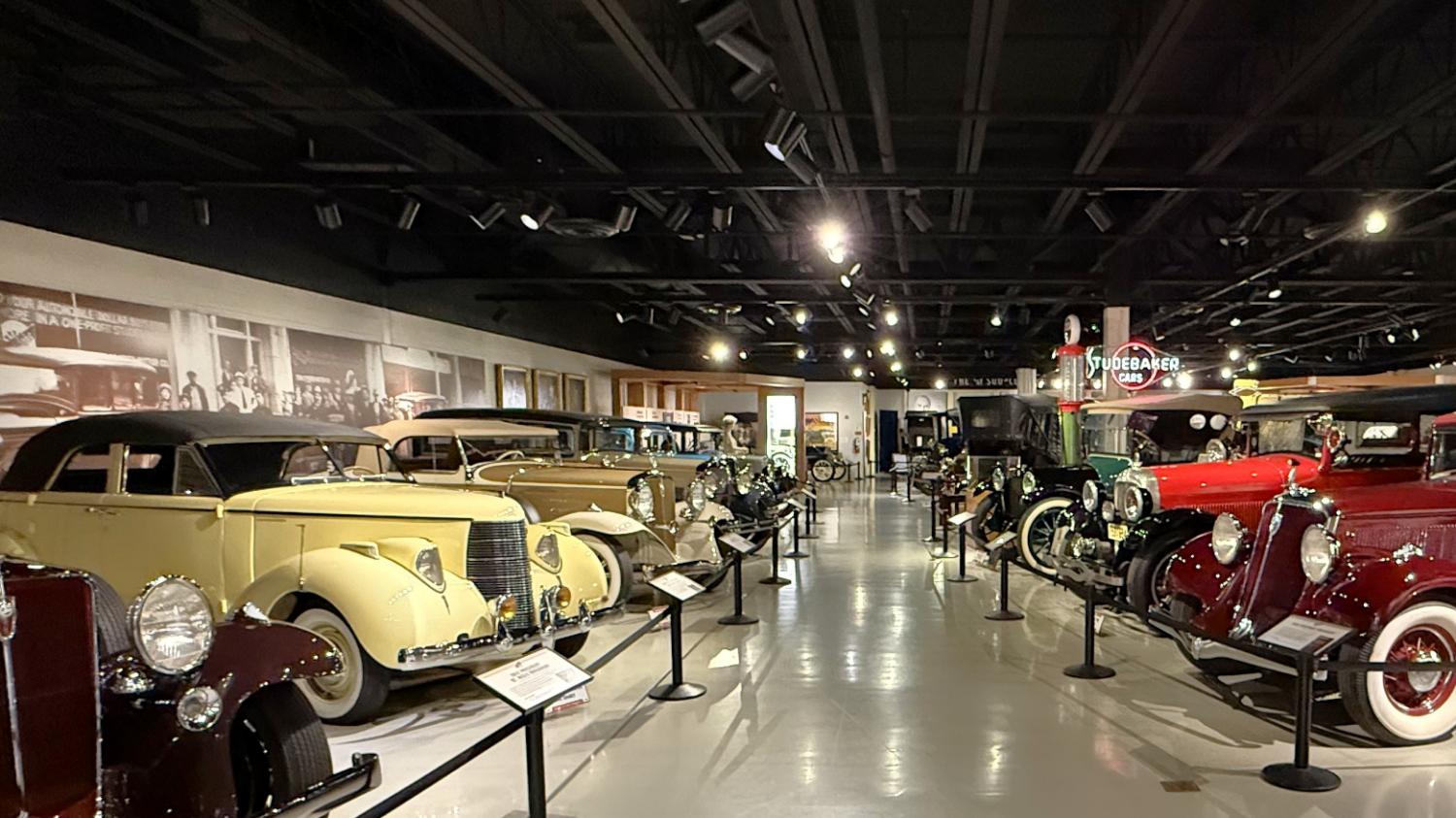
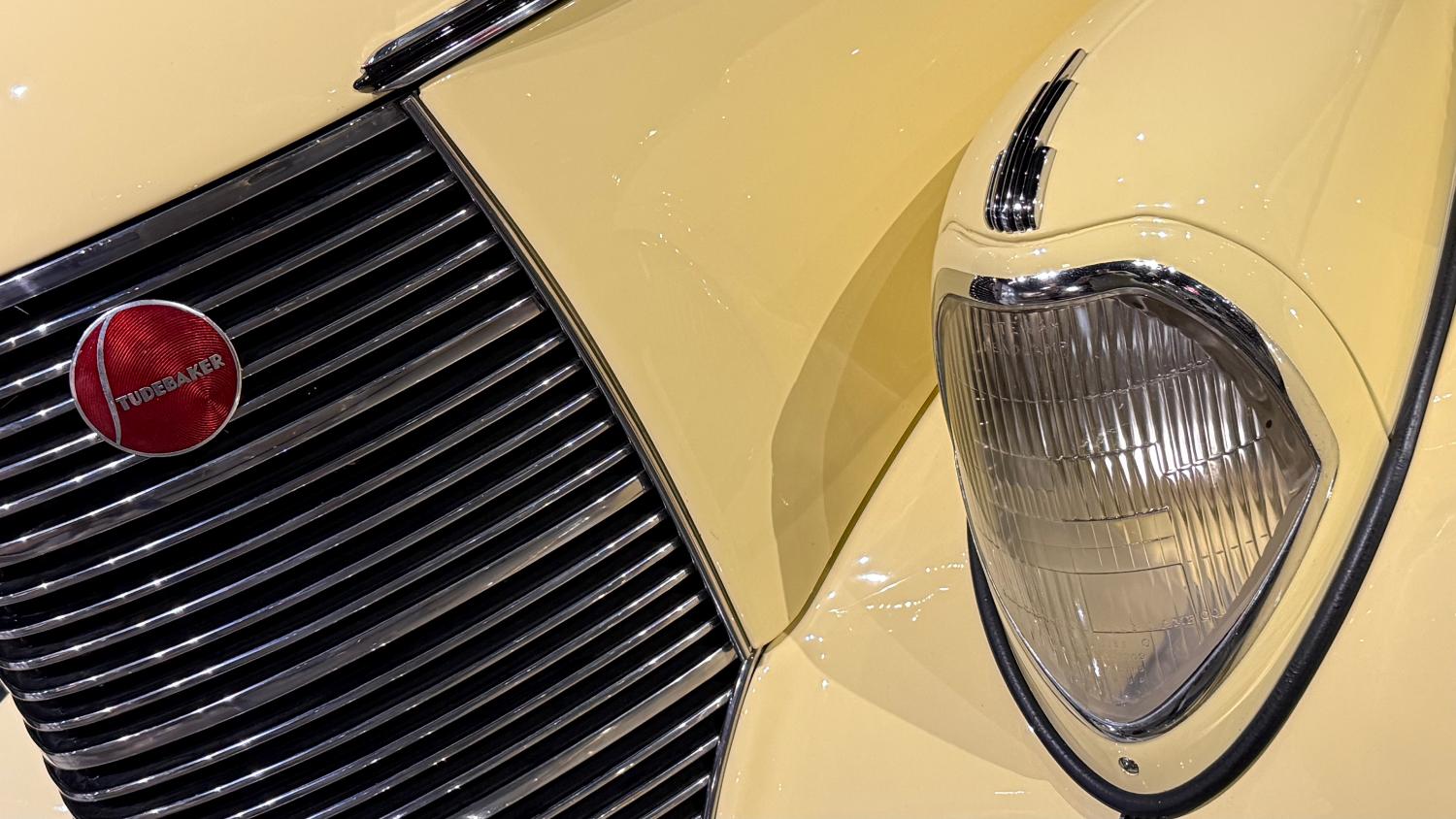
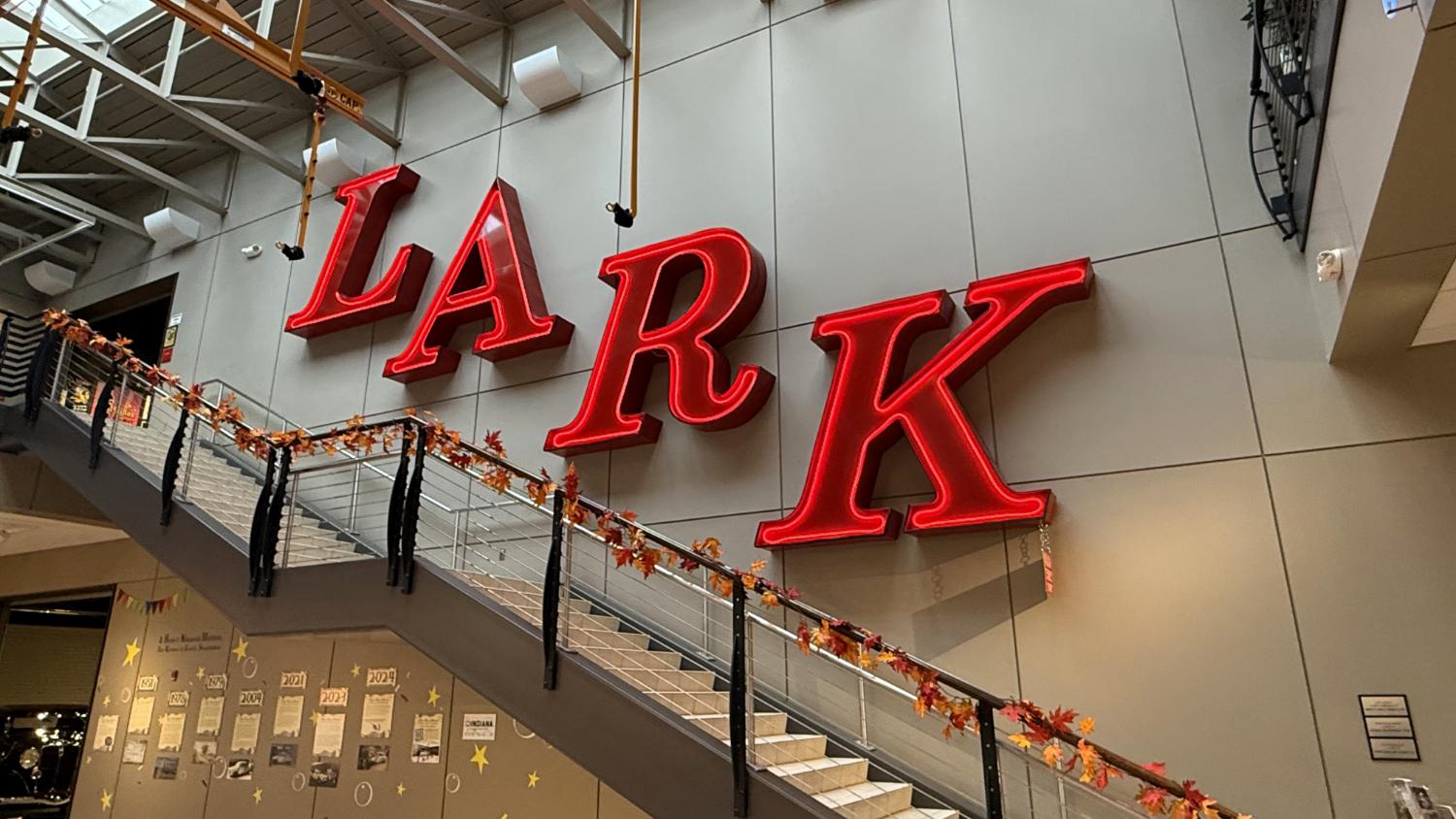
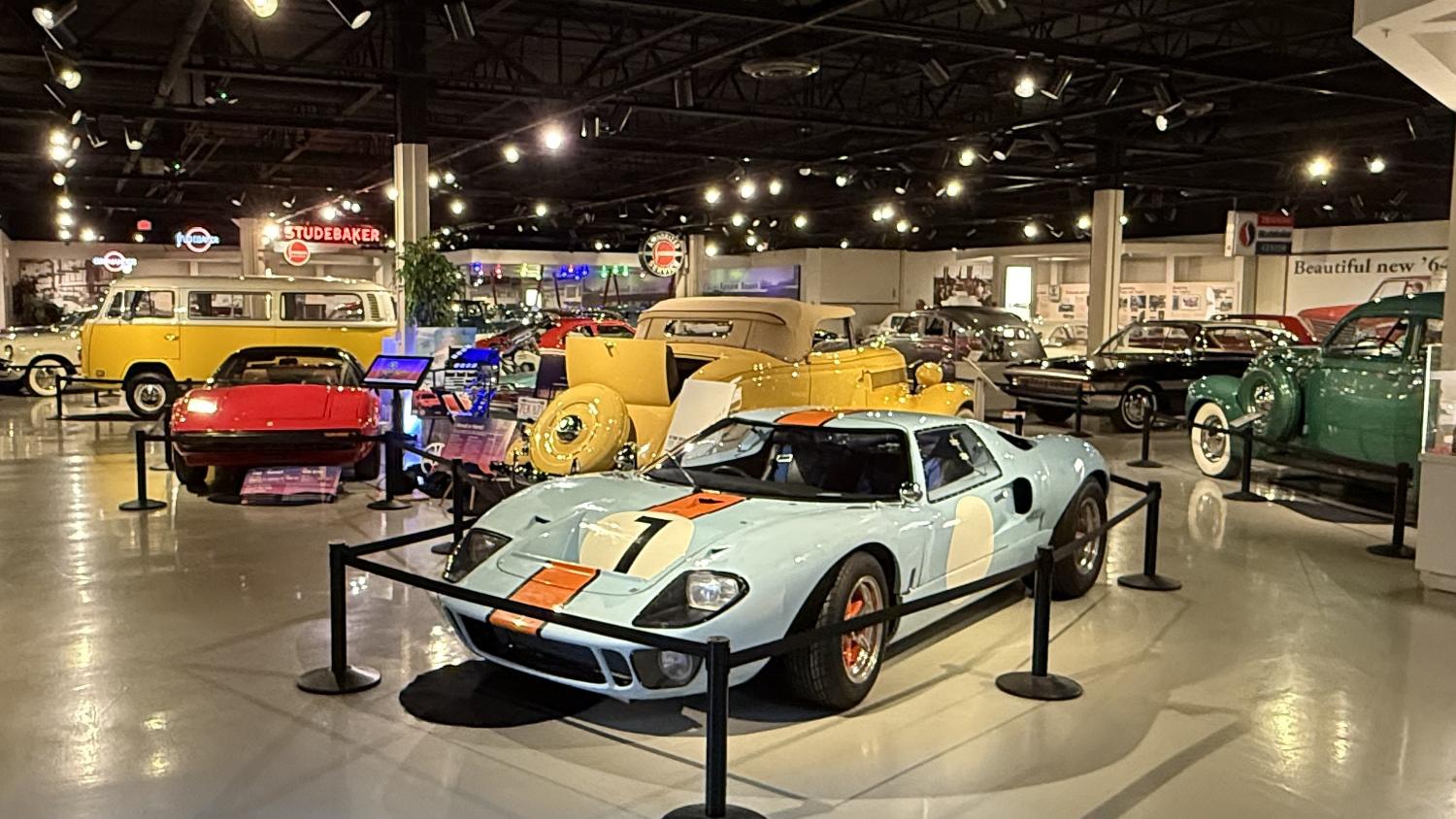
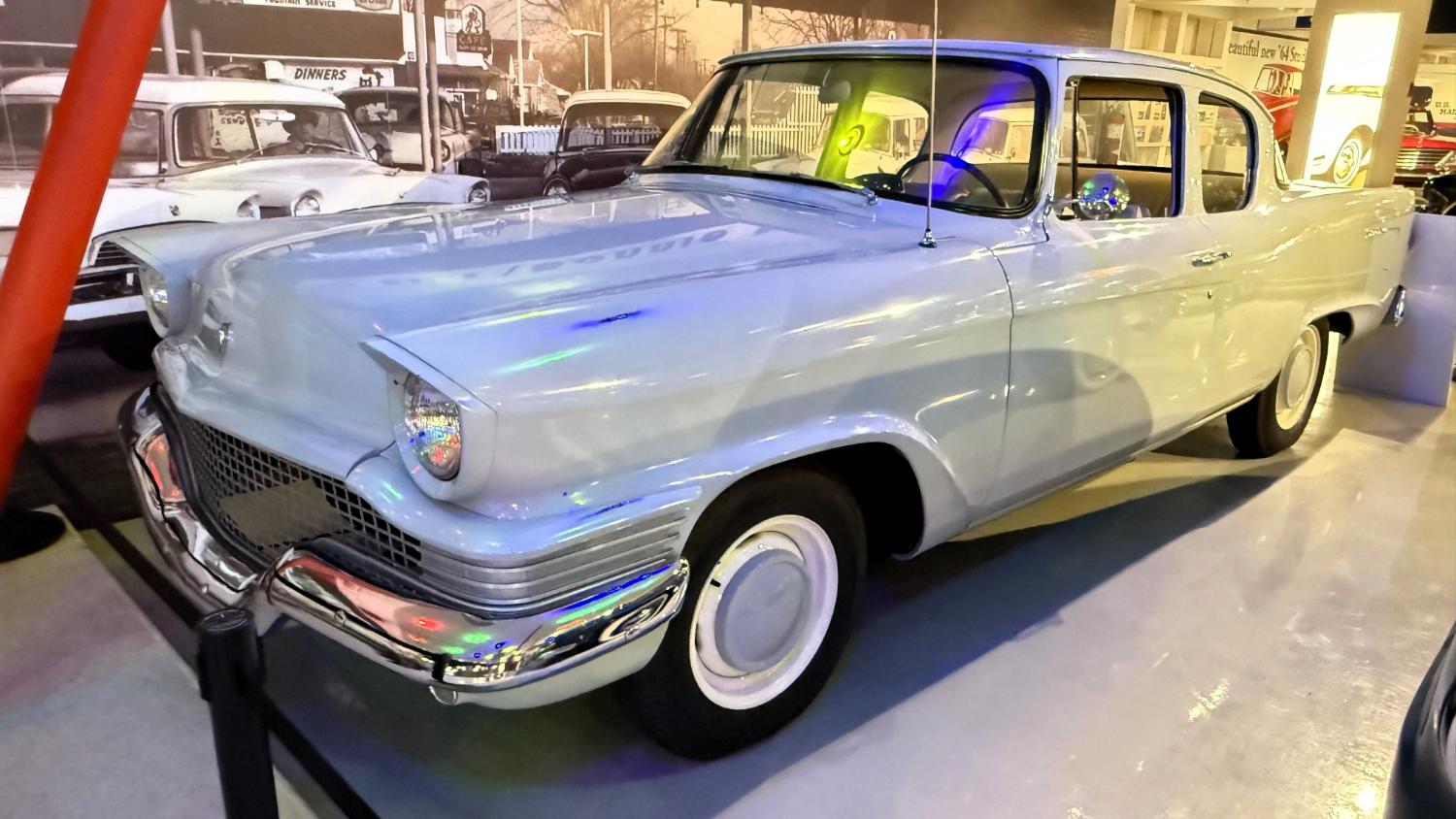
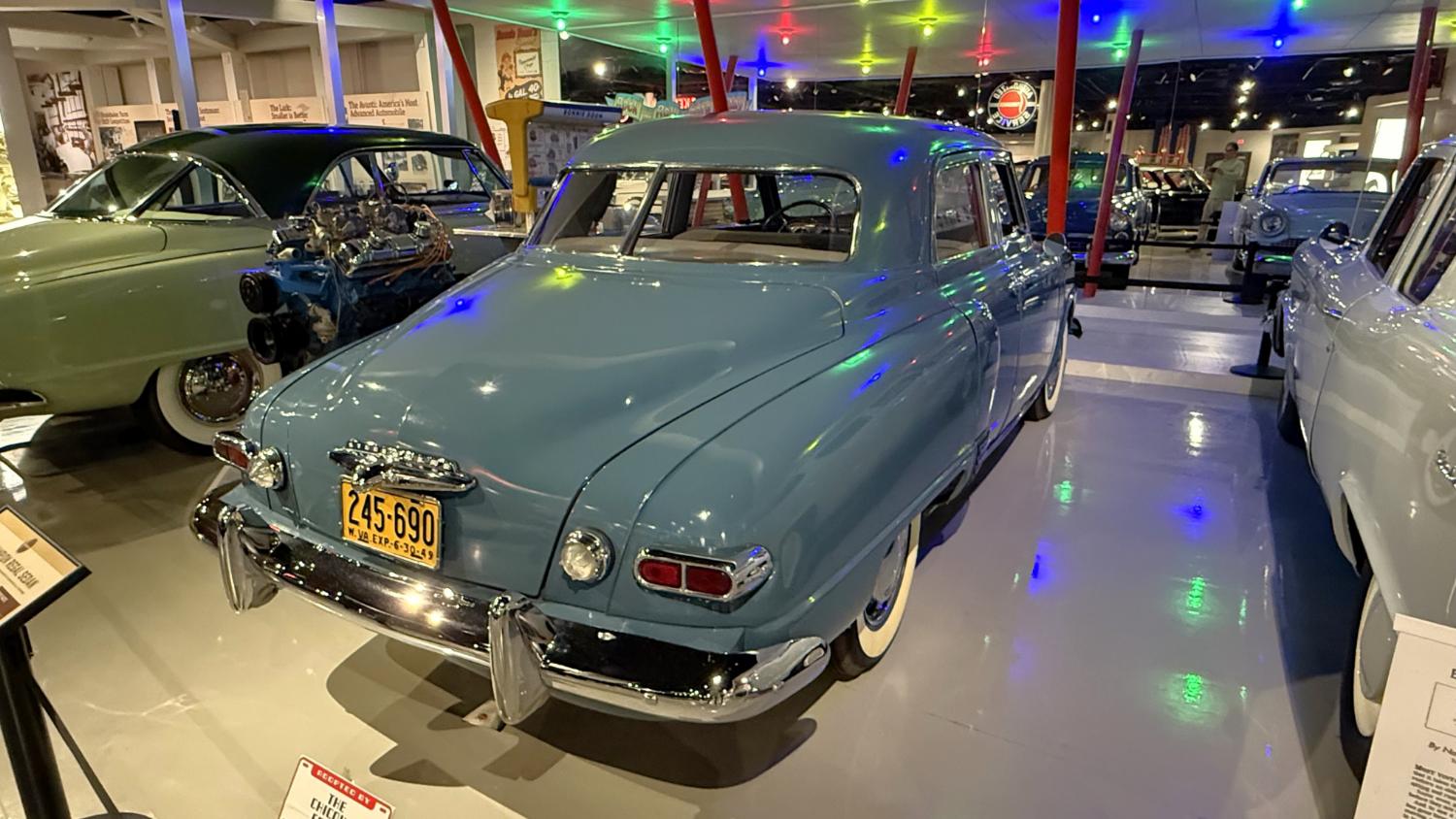
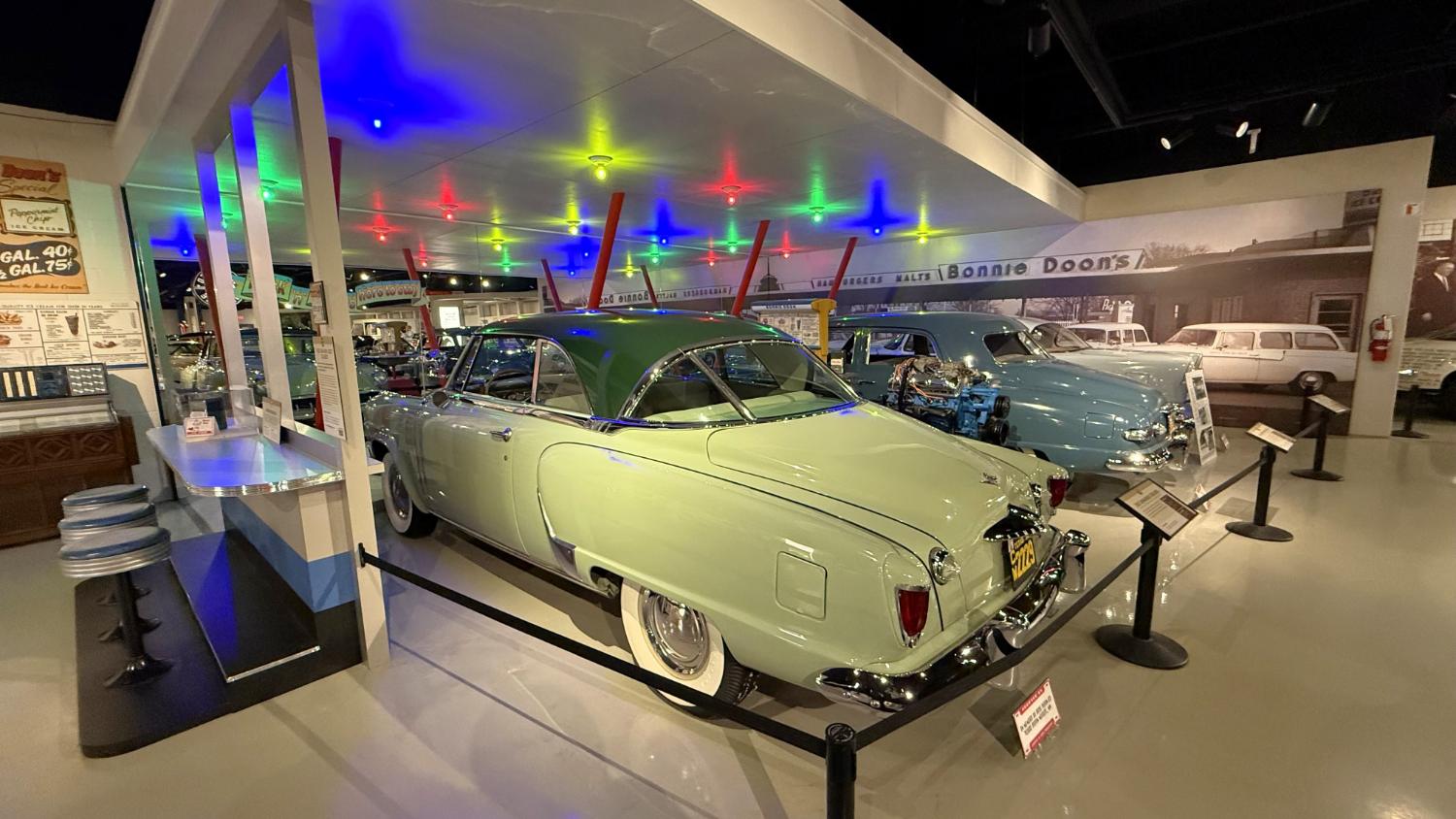
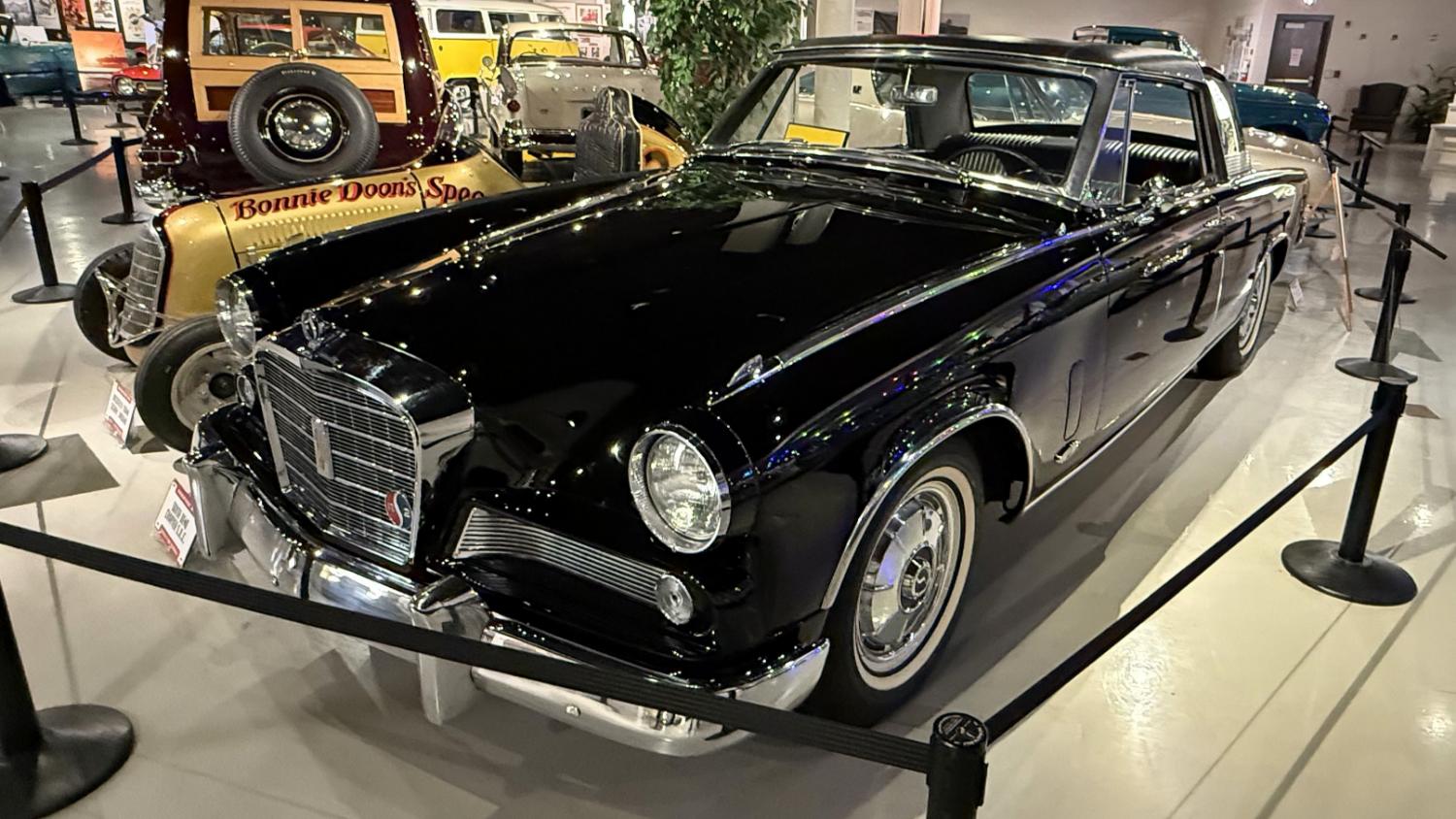
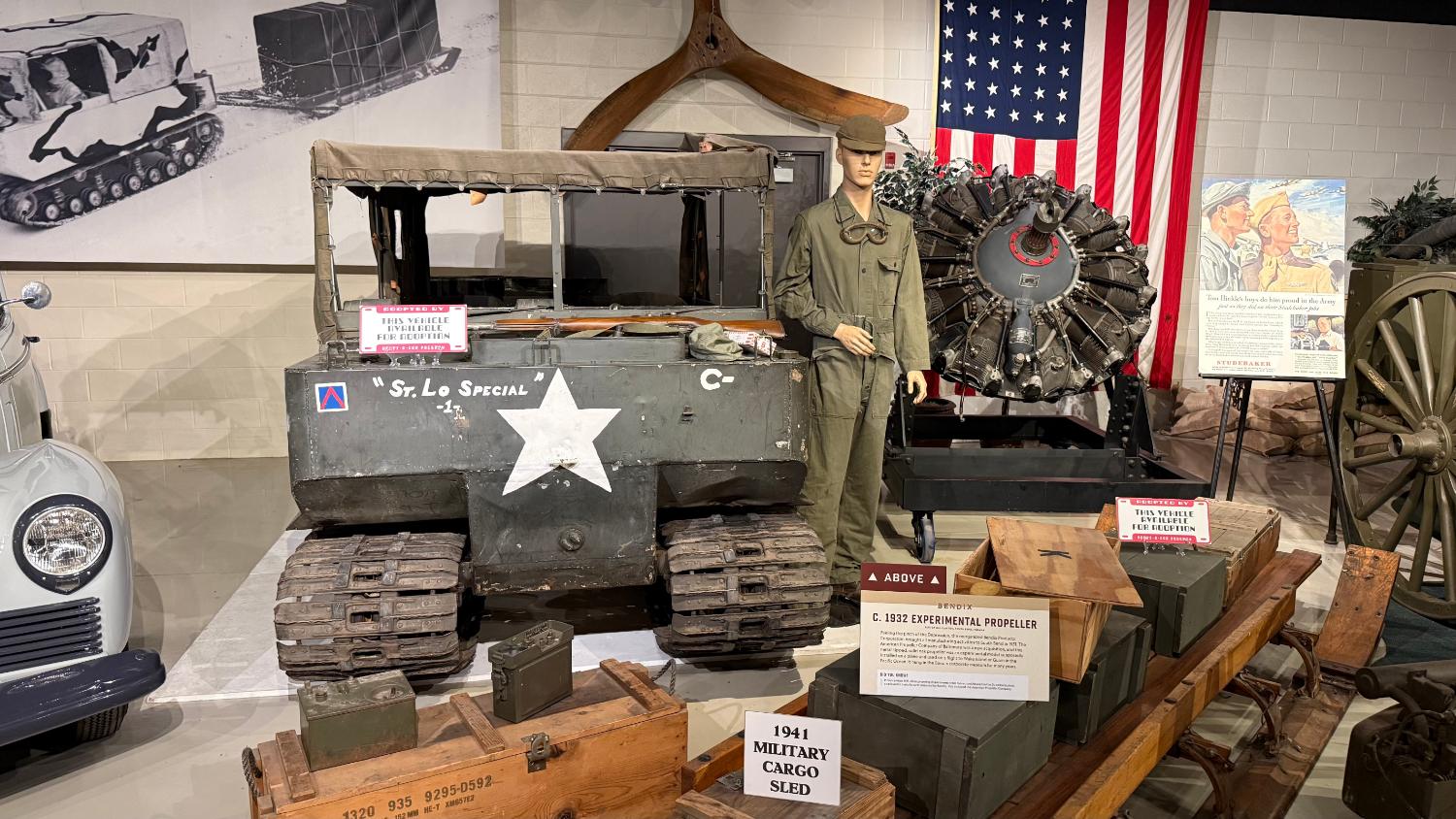
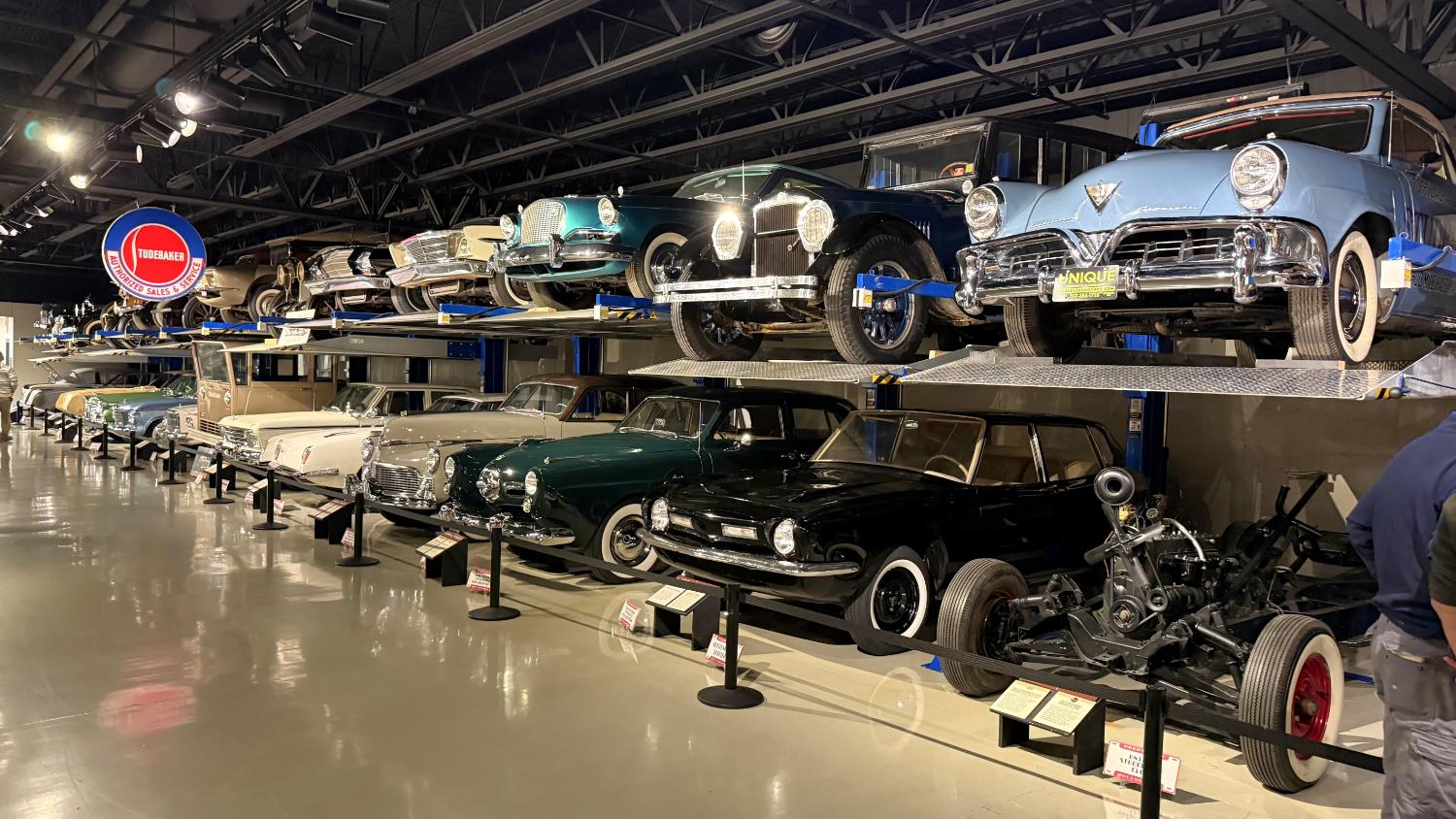
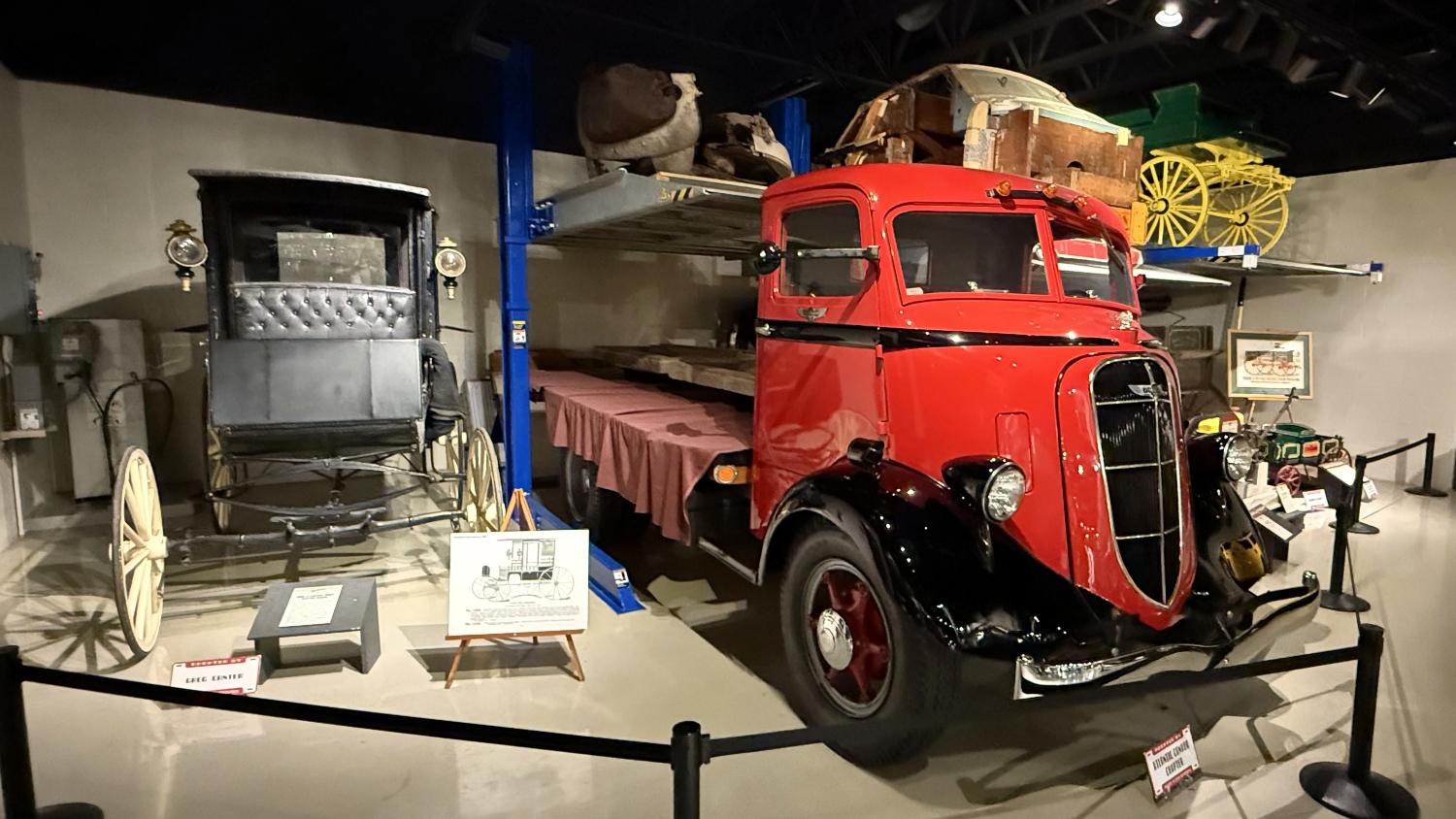
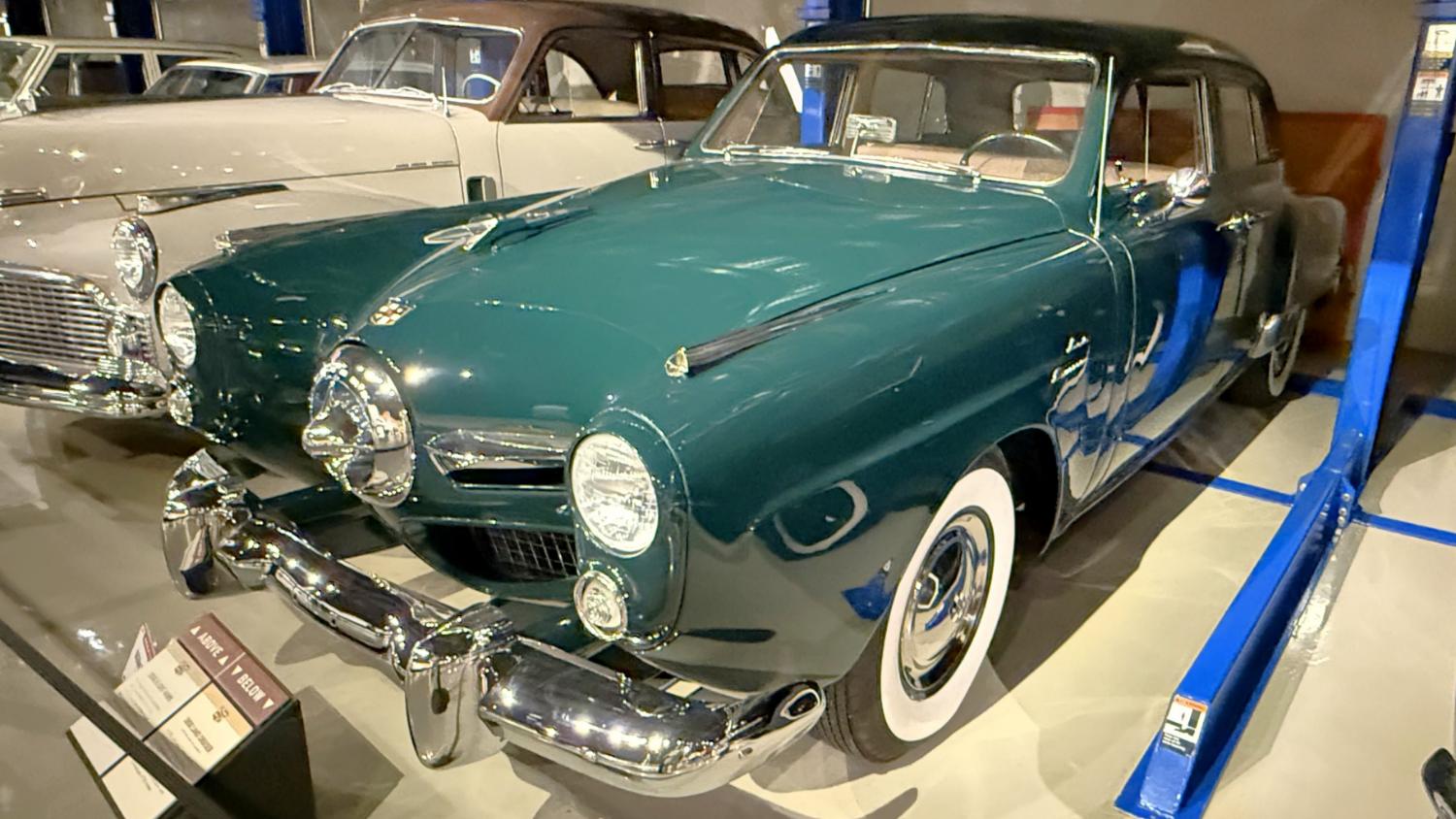
During my trip to the Muscle Car and Corvette Nationals in Chicago, I rented a car and drove with my bud Alan Munro to South Bend, Indiana. It’s an easy two-hour trip to visit the Studebaker National Museum, which is a more interesting attraction than any Notre Dame gridiron game (RIP Lou Holtz).
Even when I was a kid, I knew Studebakers were special. I remember seeing a Hawk in Rehoboth Beach when I was eight, and a babysitter’s friend had a 1964 sedan that earned him this response when he visited a mechanic: “Don’t call it a car — it is an automobile.” I had several occasional Avanti (or Avanti II) sightings throughout my youth and, when I started buying magazines, Raymond Loewy seemed to be mentioned constantly and with reverence.
Studebaker was never a first-tier interest for me, but the company that once was America’s oldest automobile manufacturer always commanded respect. Fast-forward to around 2000 and several die-hards of the Studebaker Drivers Club showed up at the Pure Stock Muscle Car Drag Race and educated the masses on the performance potential of the 289 and 304.5ci V-8s.
Clearly, it was high time to visit this South Bend homage to automotive history.
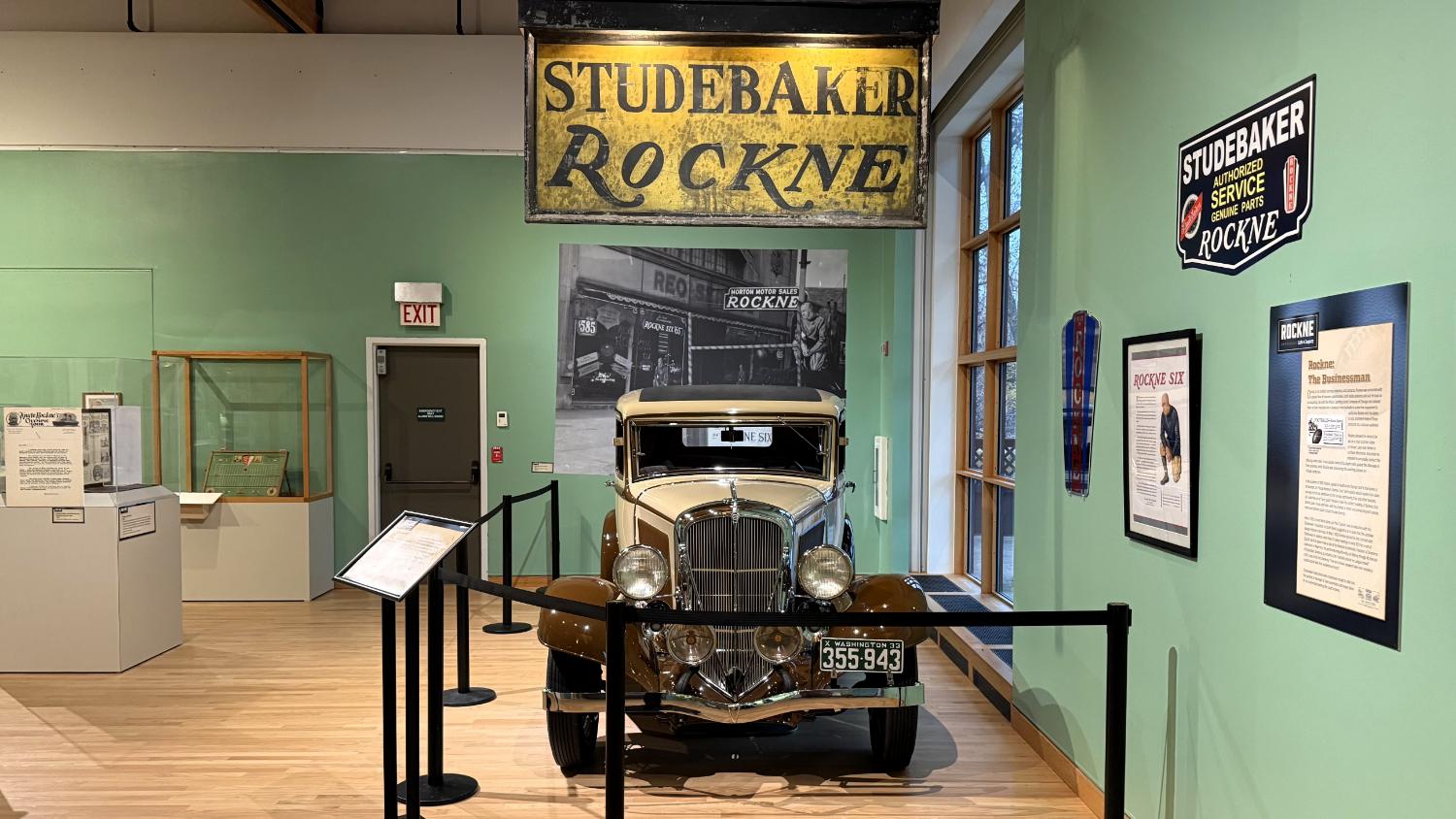
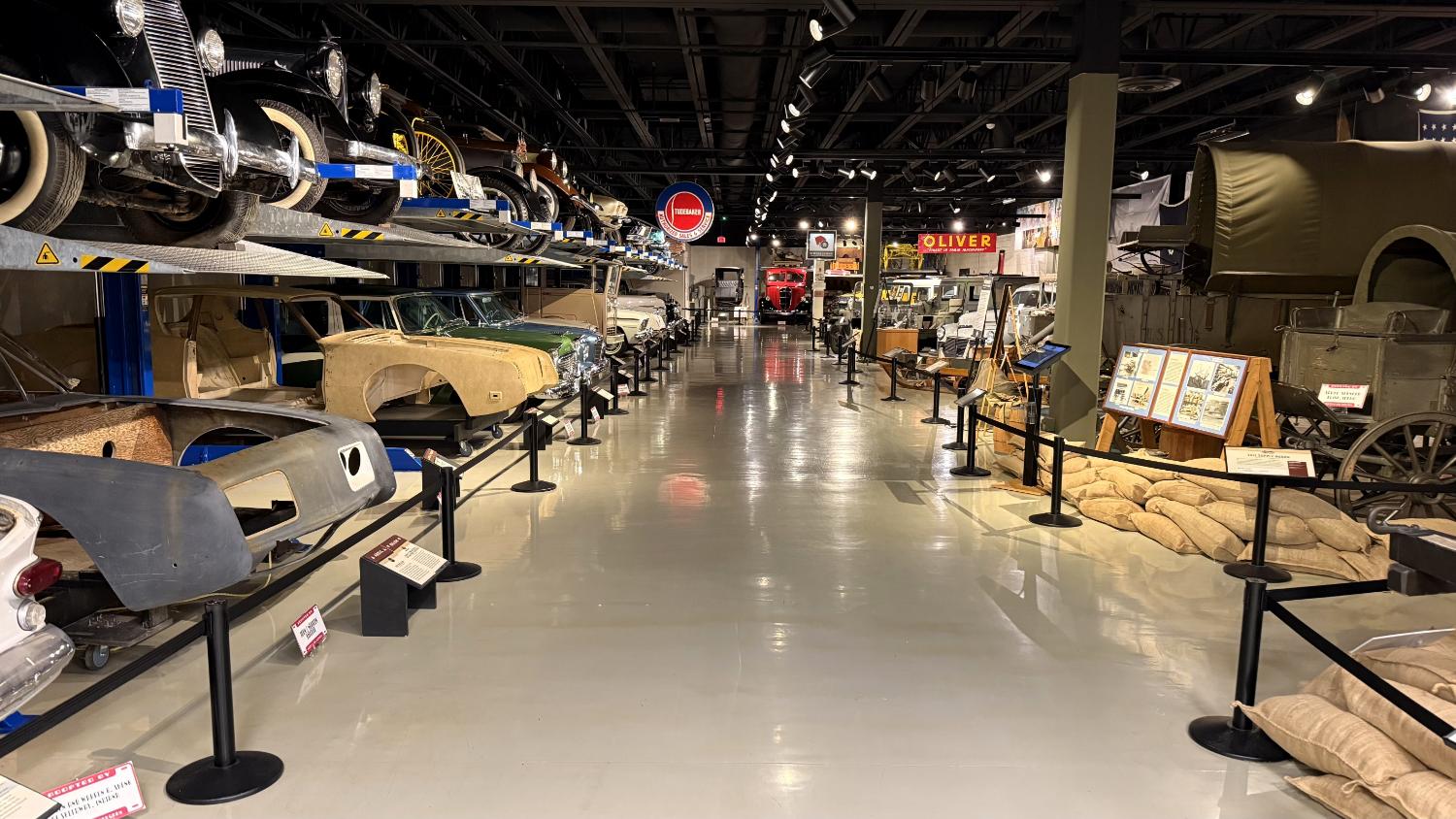
The Studebaker National Museum is more than just cars, as the facility shares space with The History Museum. Over there, you’ll find exhibits like Rockne: Life & Legacy, Great Lakes Shipwrecks, and more pertaining to local and regional interests. But let’s not forget that Studebaker built buggies well before cars appeared on the radar. As such, the Studebaker National Museum is as much about American history as it is about automobiles.
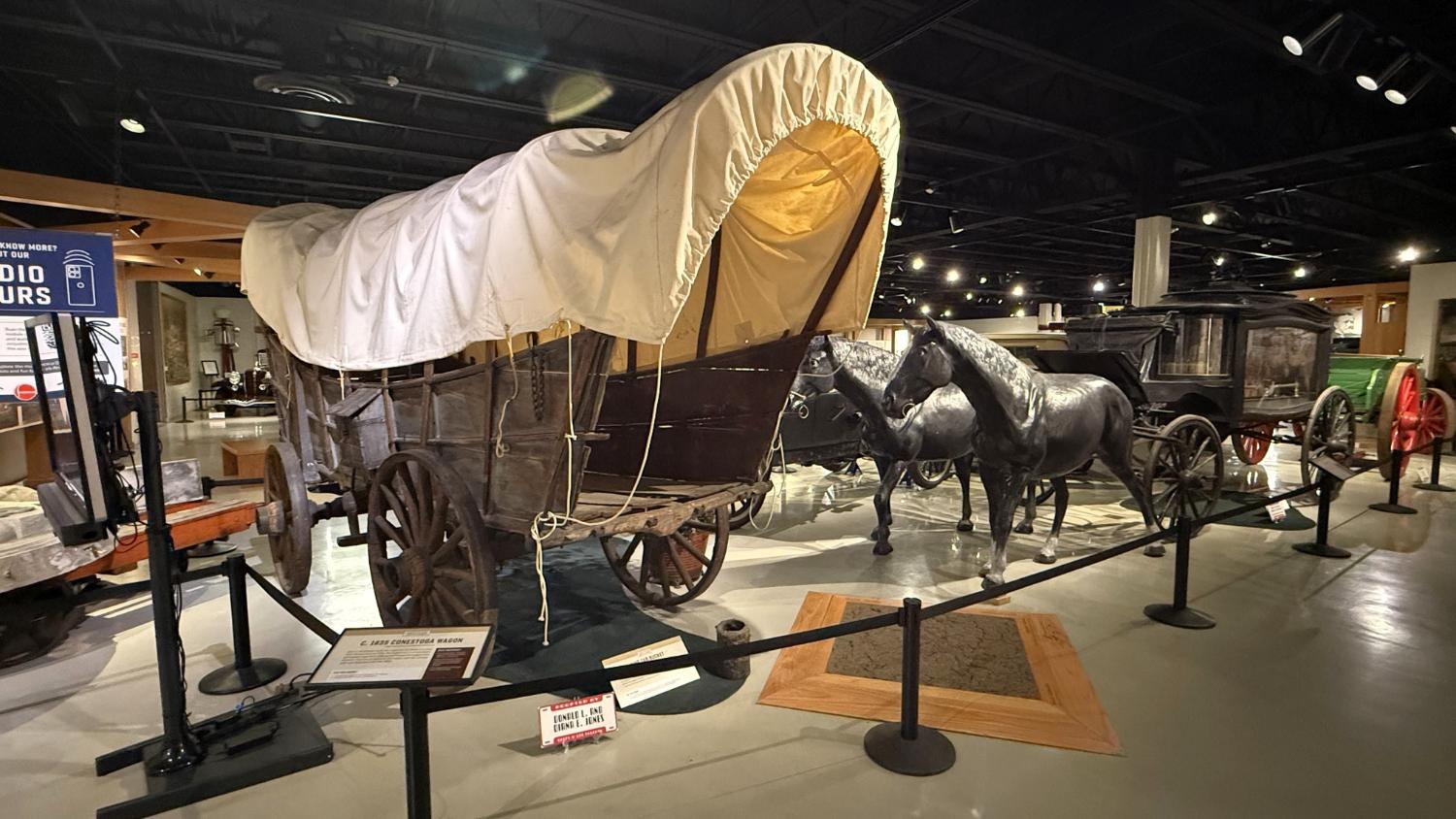
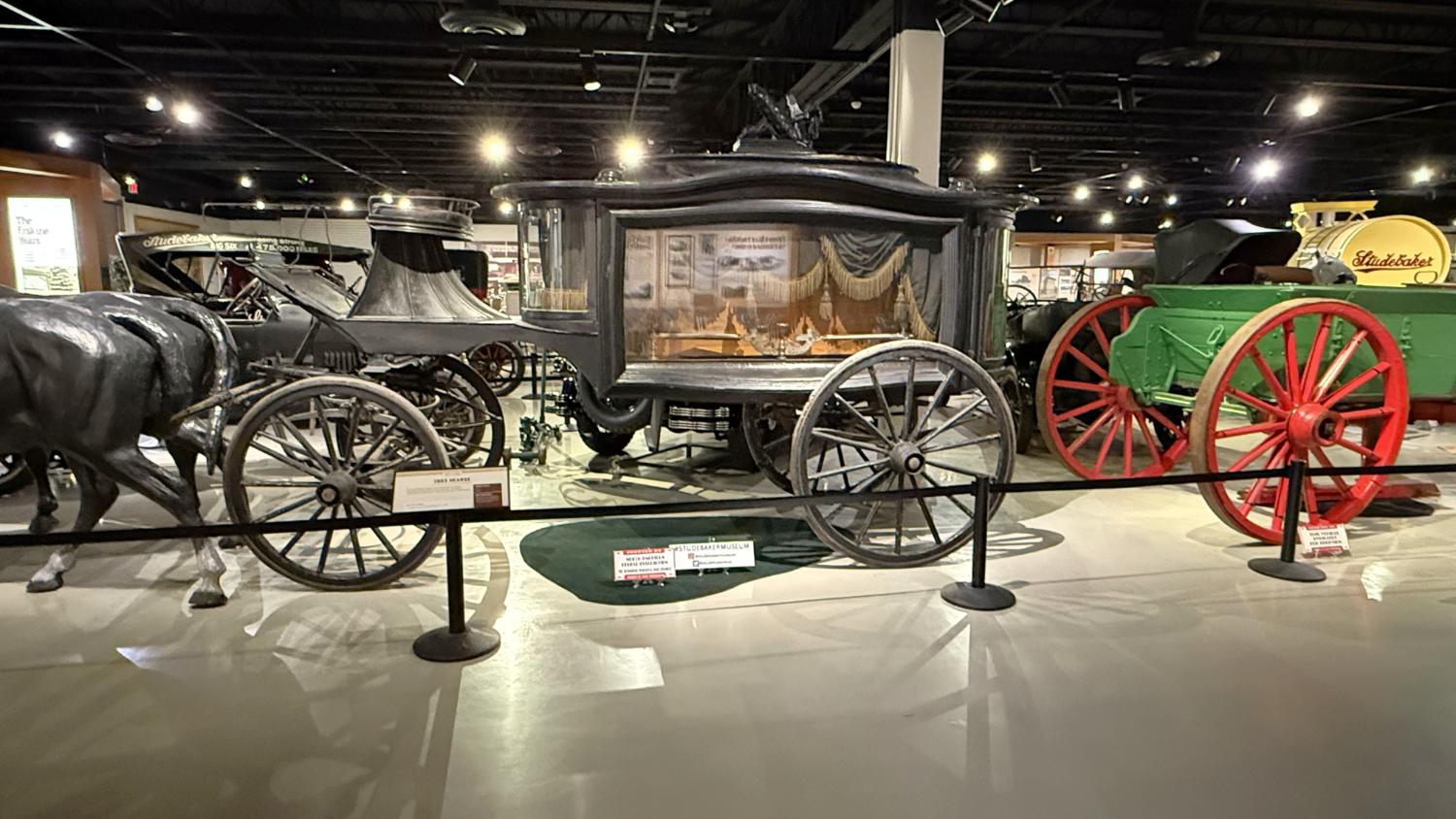
Below you can find photos that cover all three floors of the Studebaker National Museum, plus an extra from the Knute Rockne exhibit as Studebaker built a vehicle named after the football great. This museum is mandatory for anyone interested in automotive, industrial, or Indiana history — visit www.studebakermuseum.org for information.
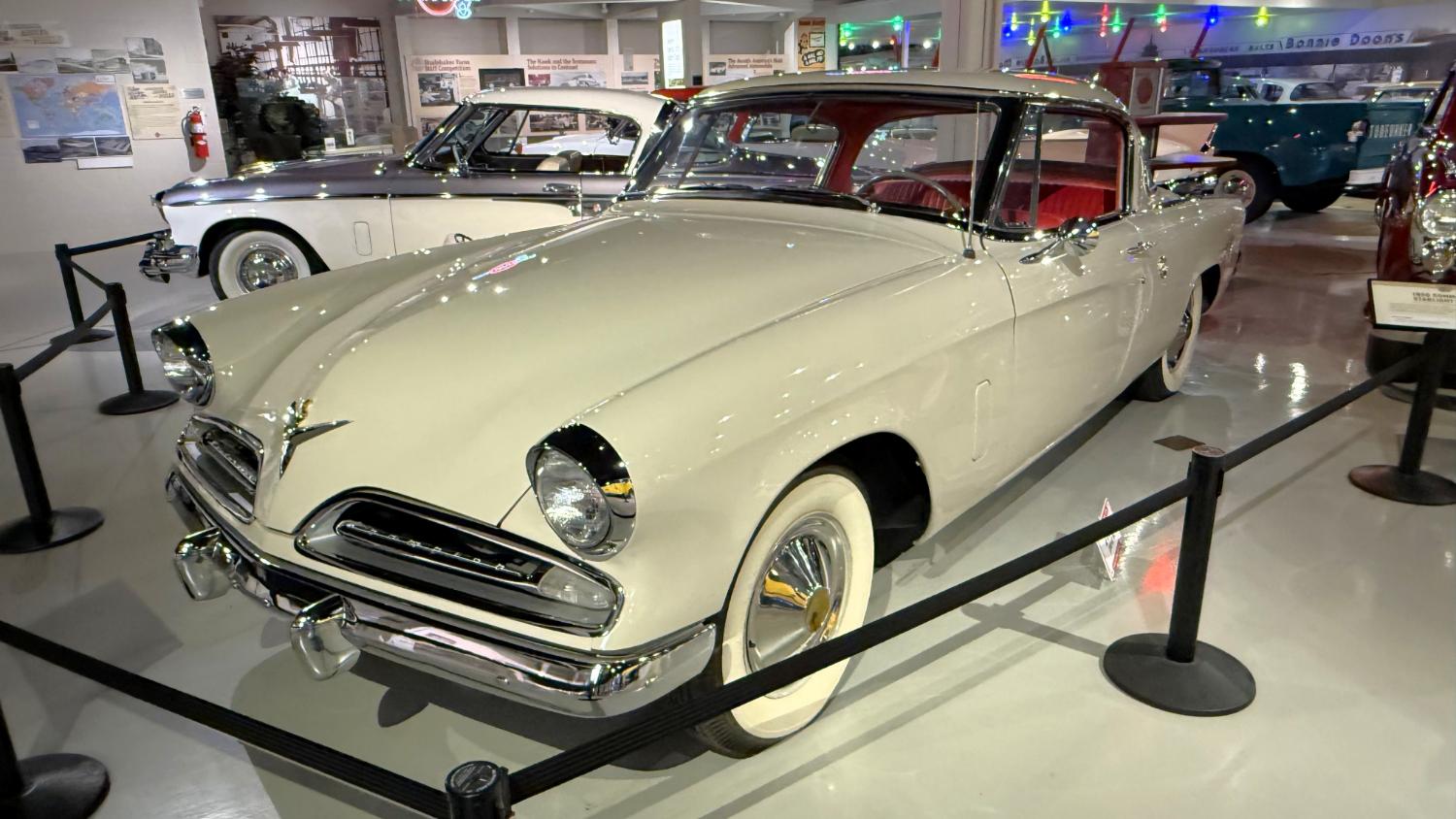
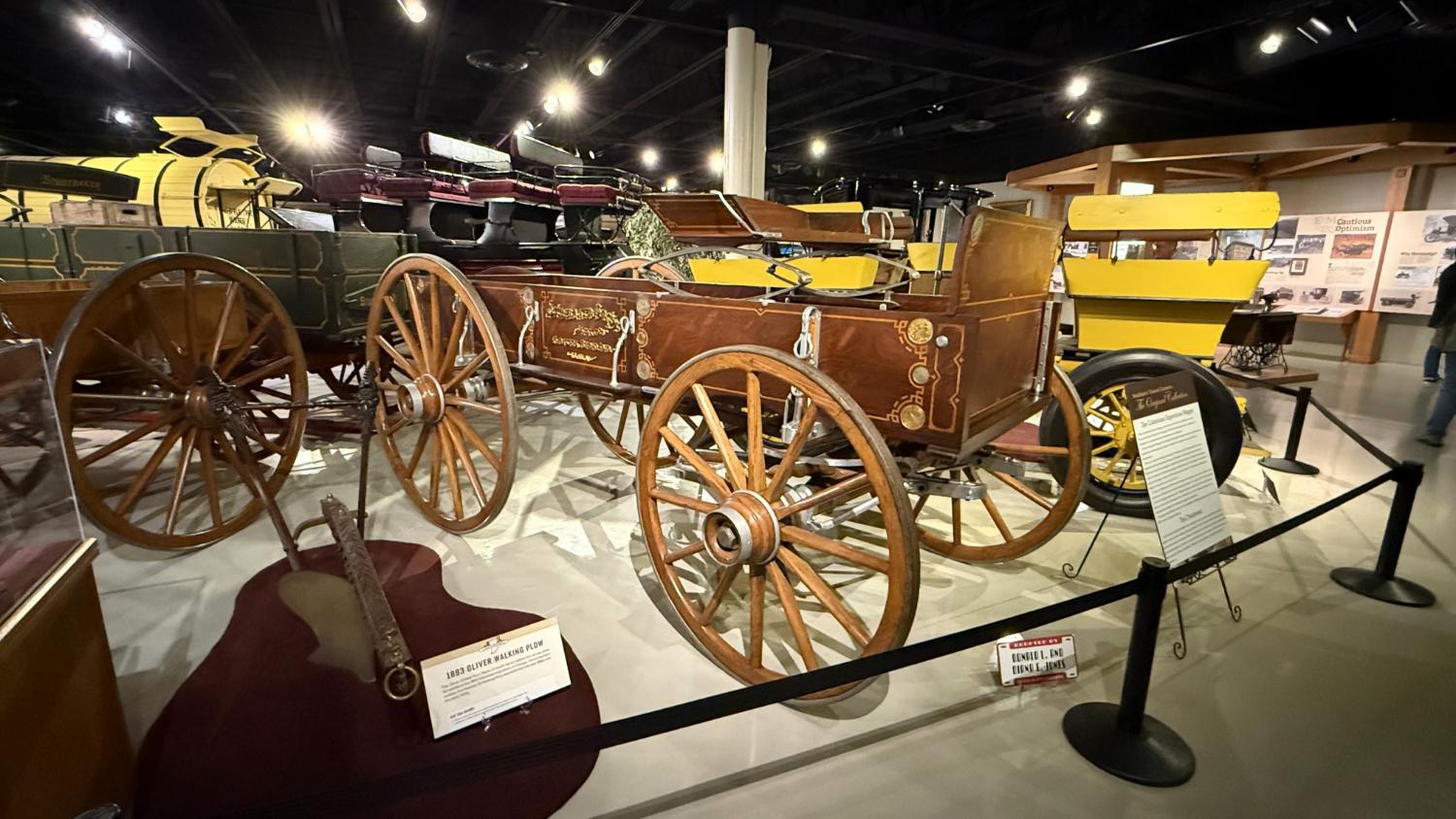
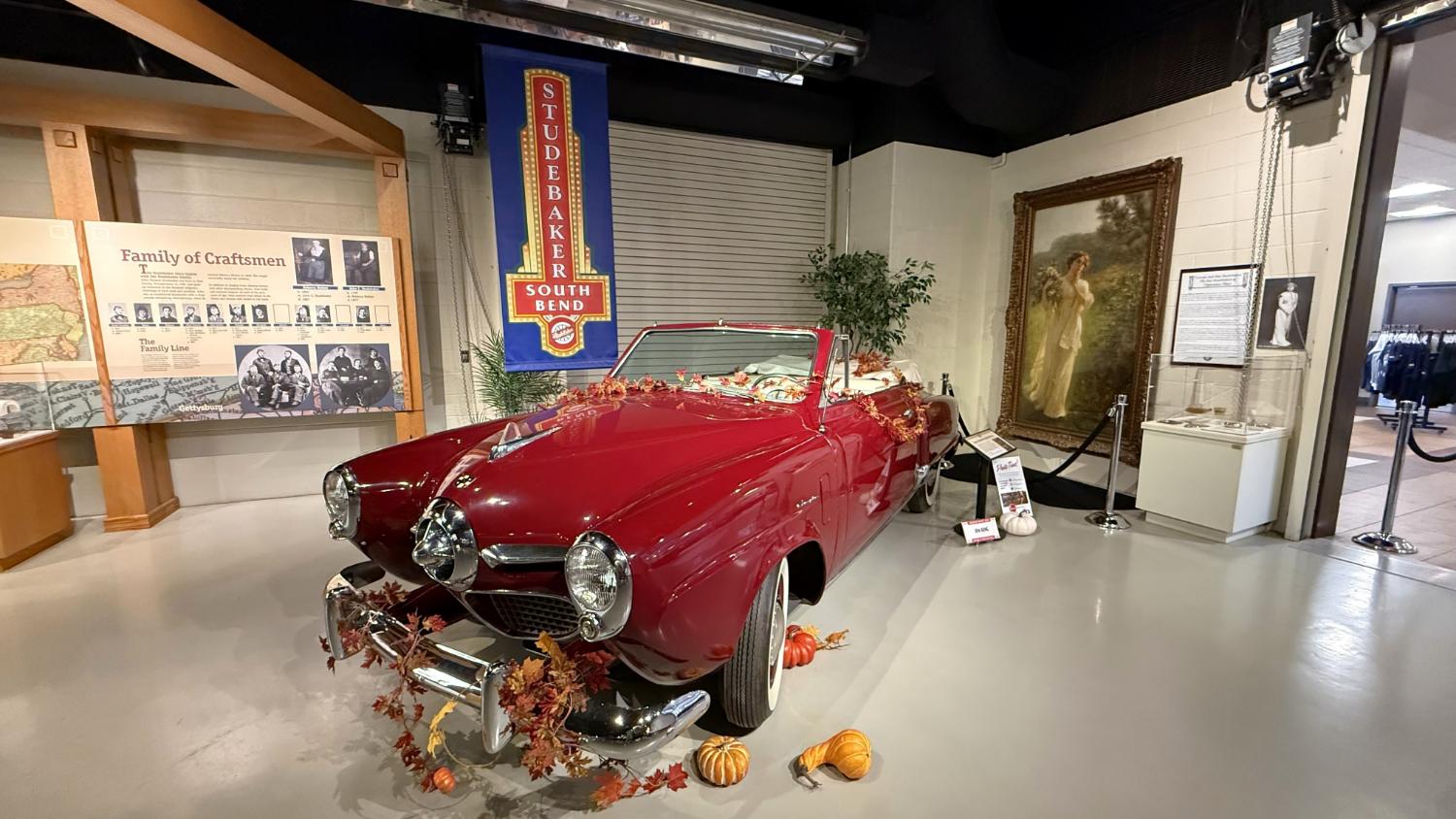
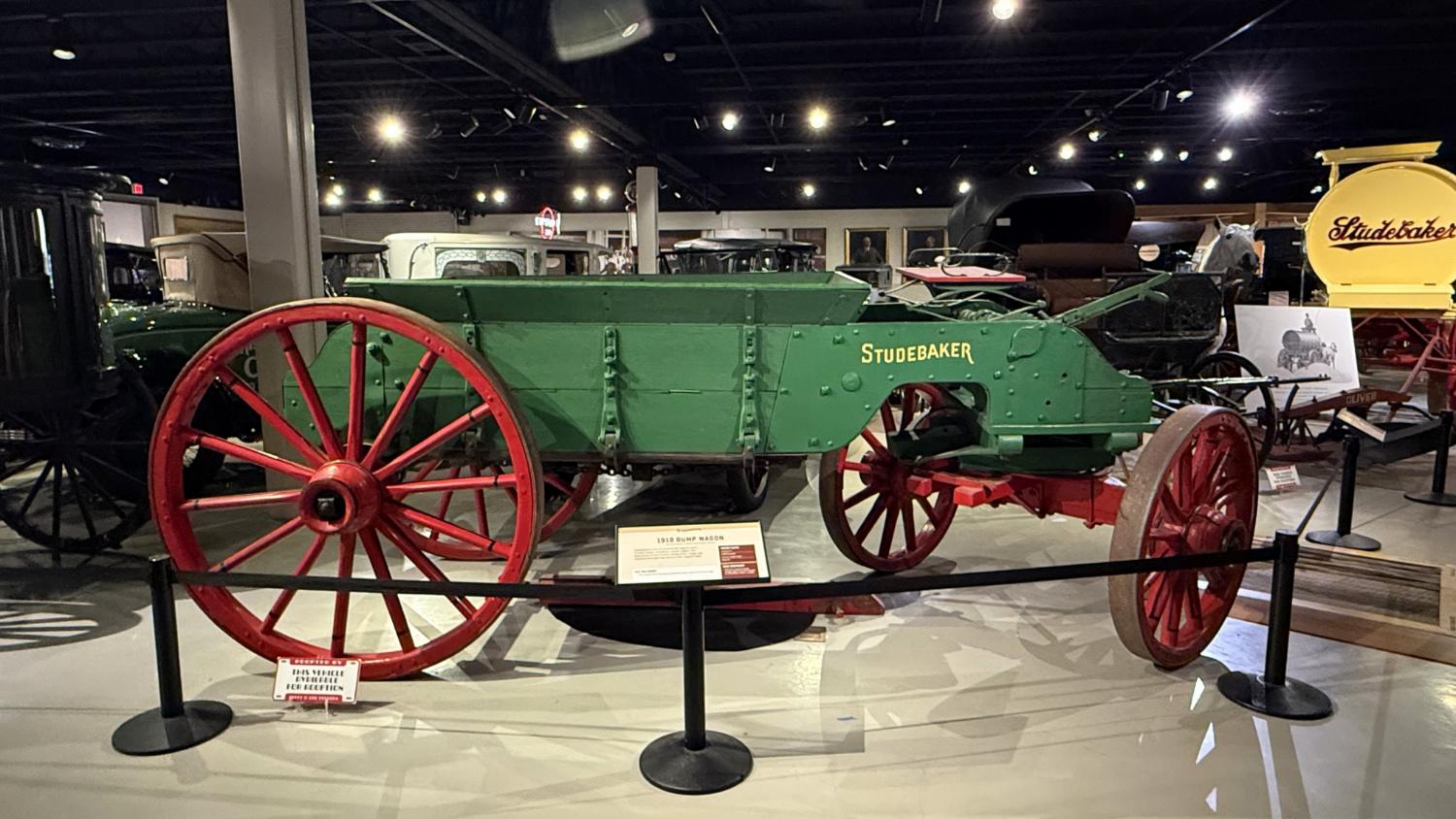
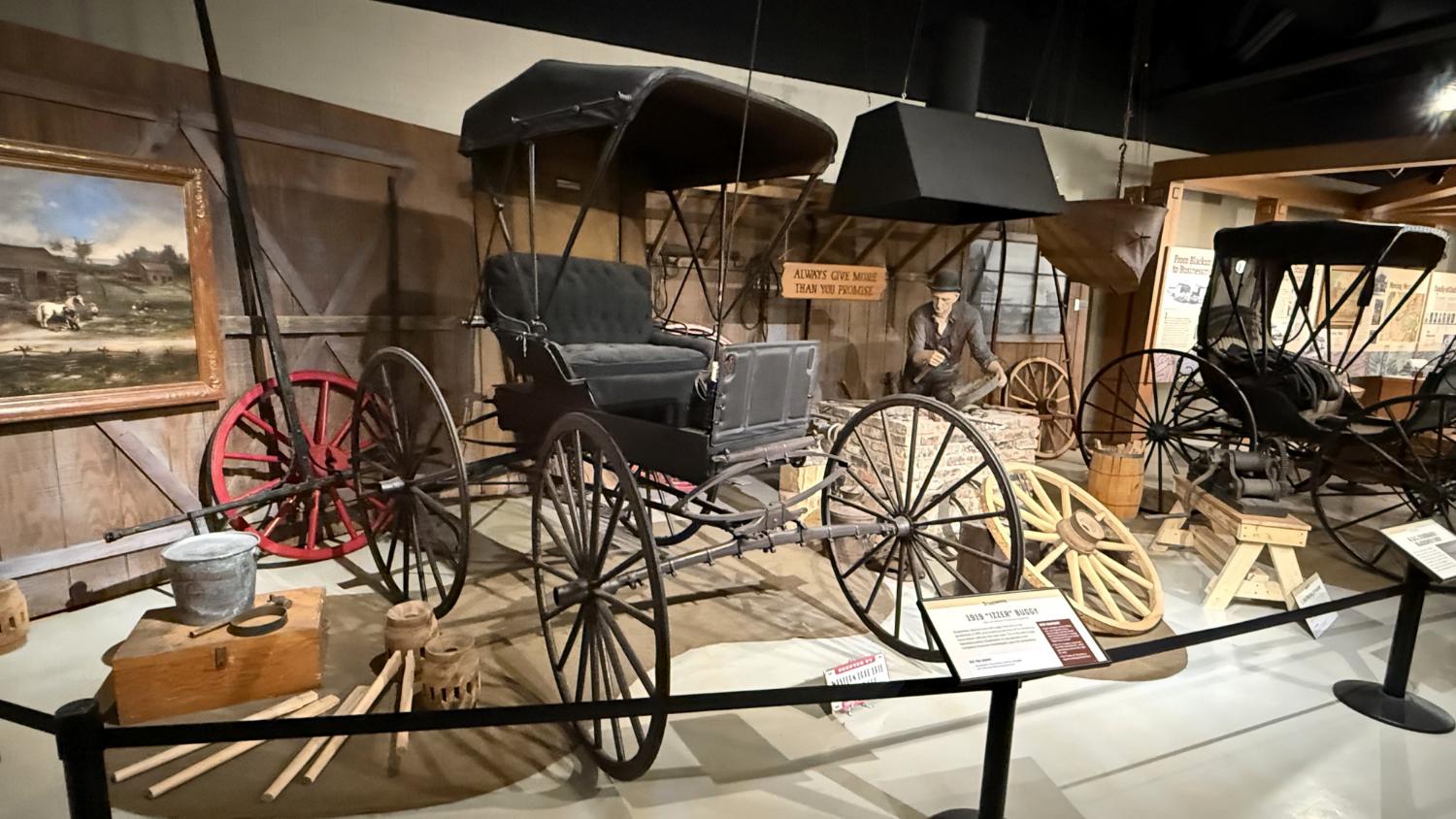
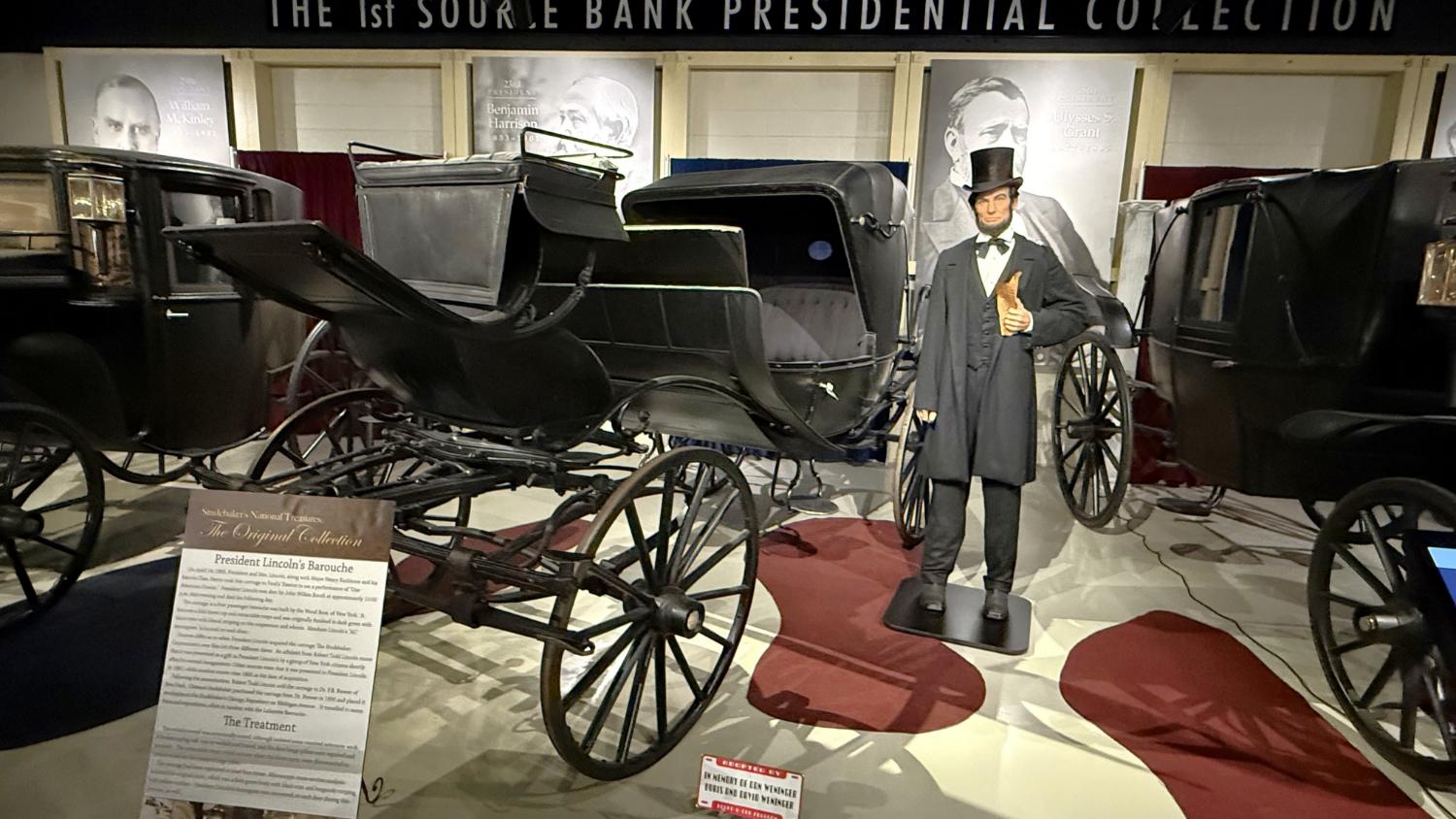
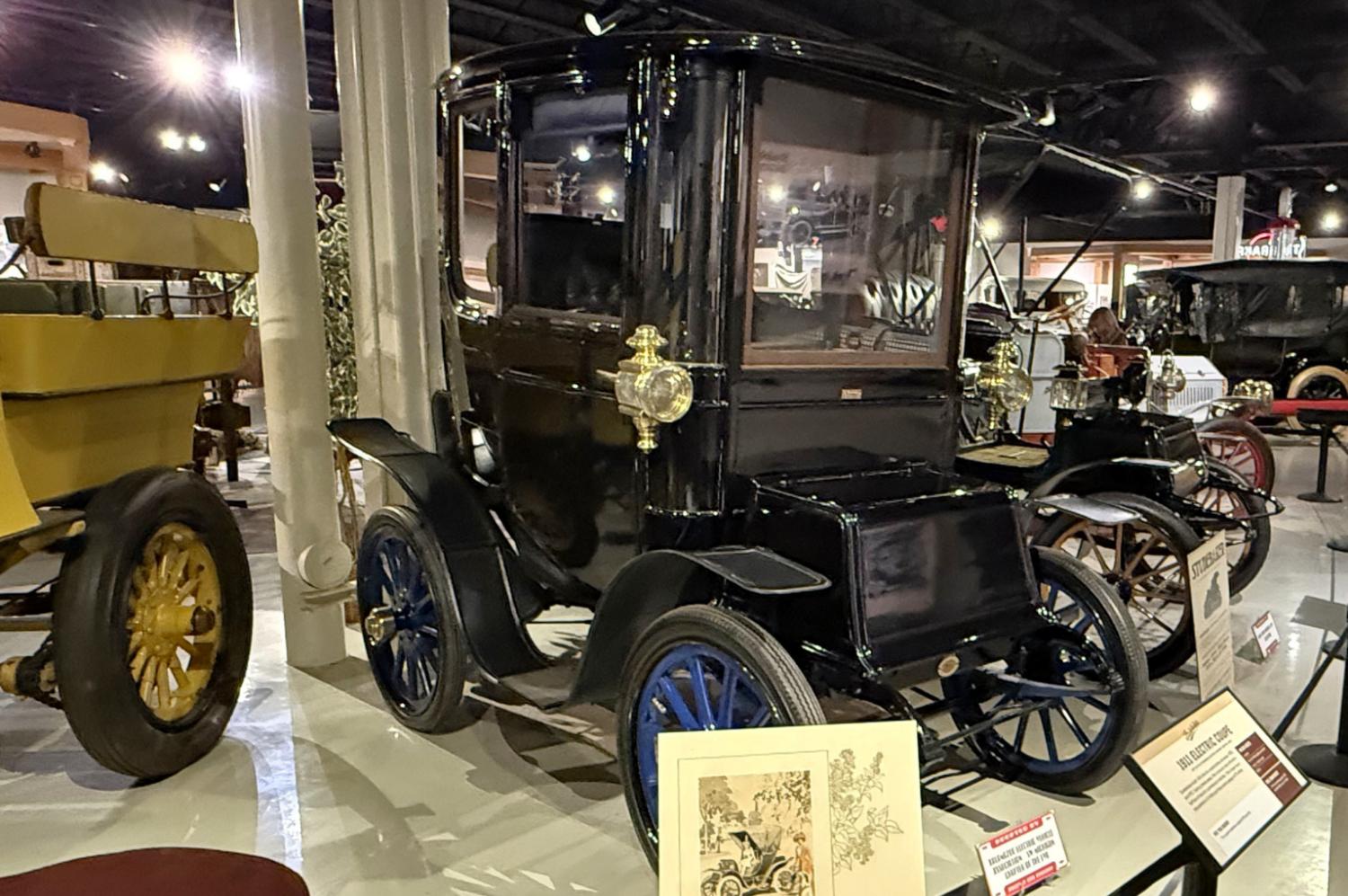
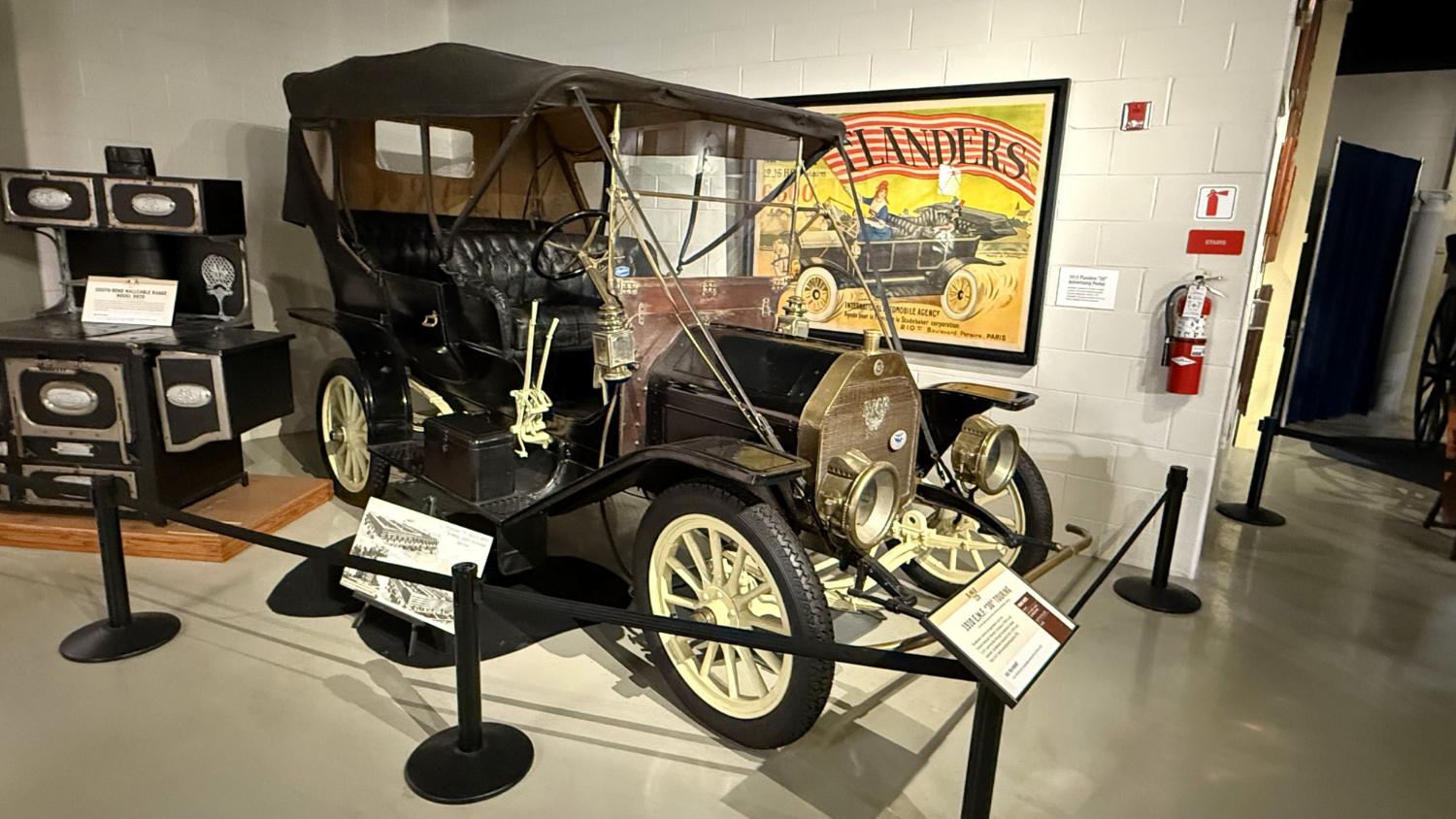
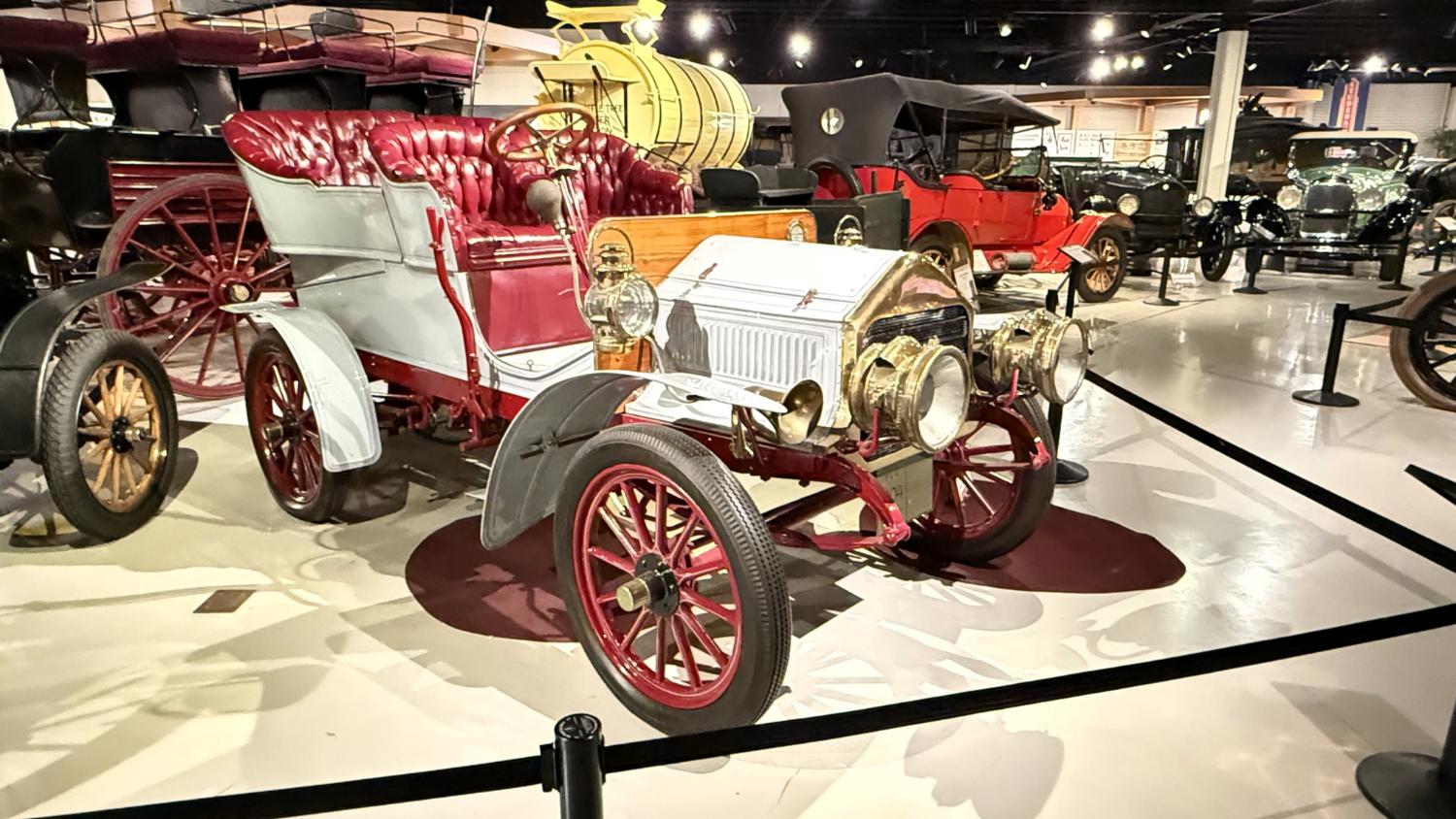
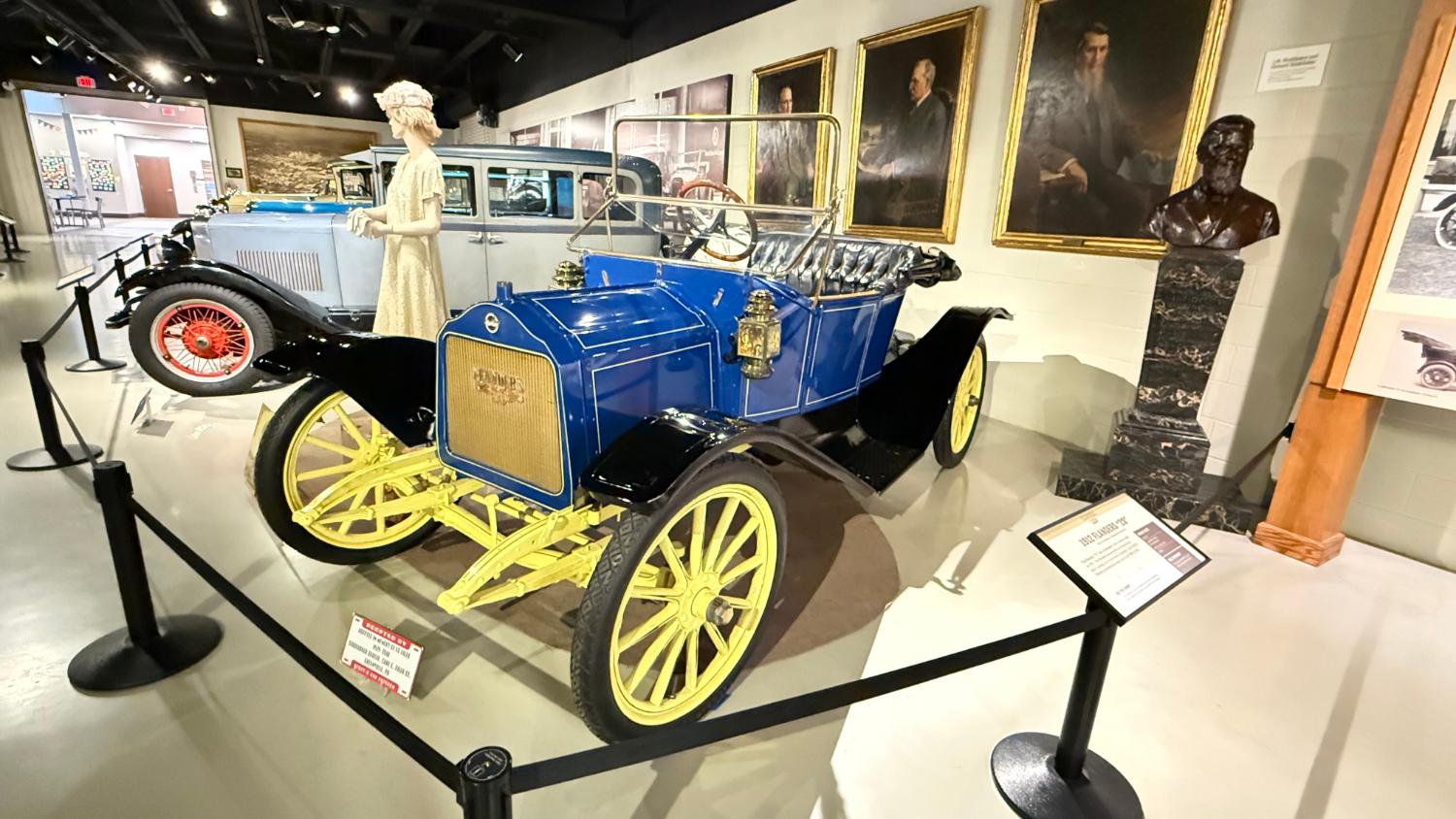
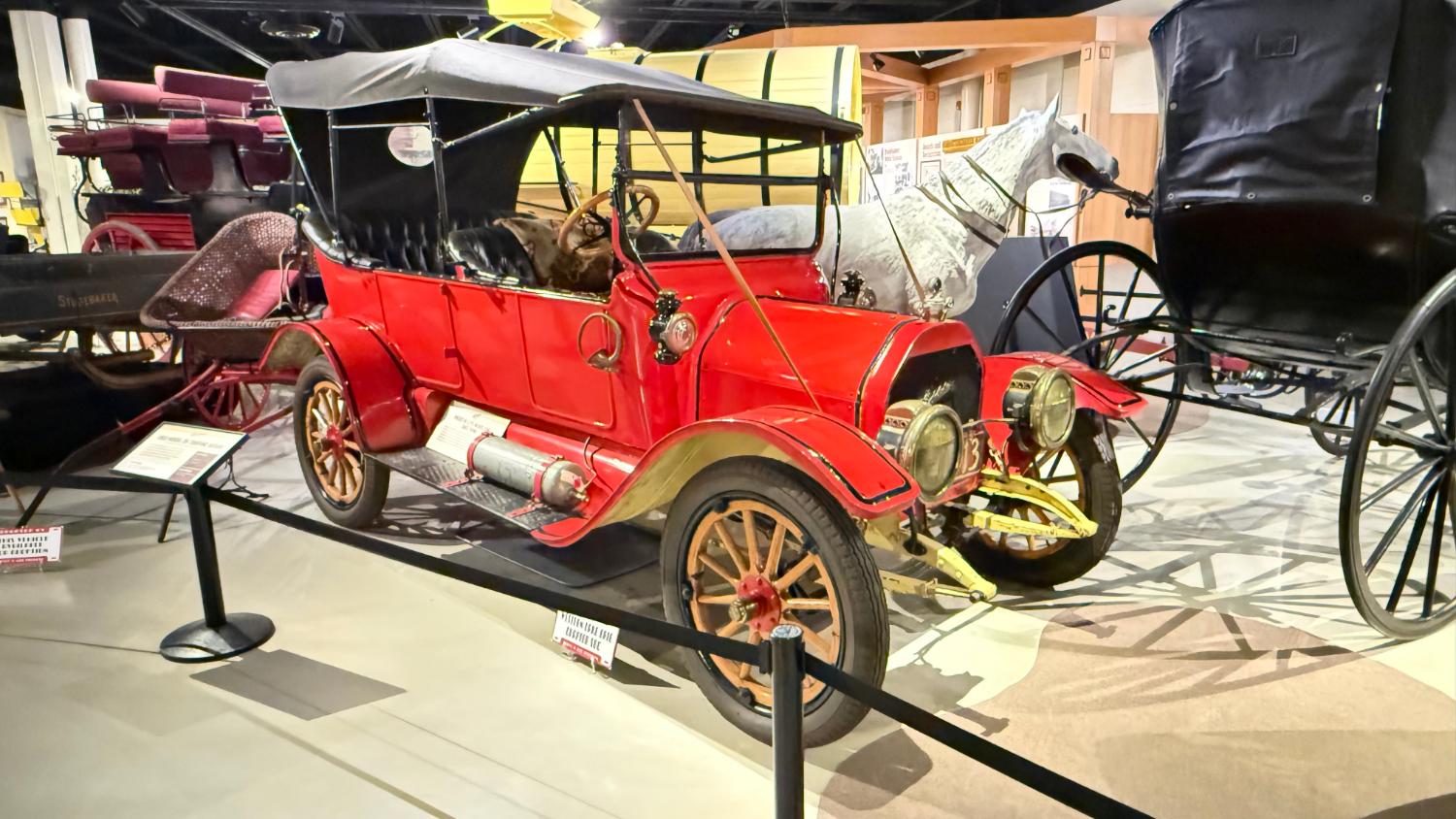
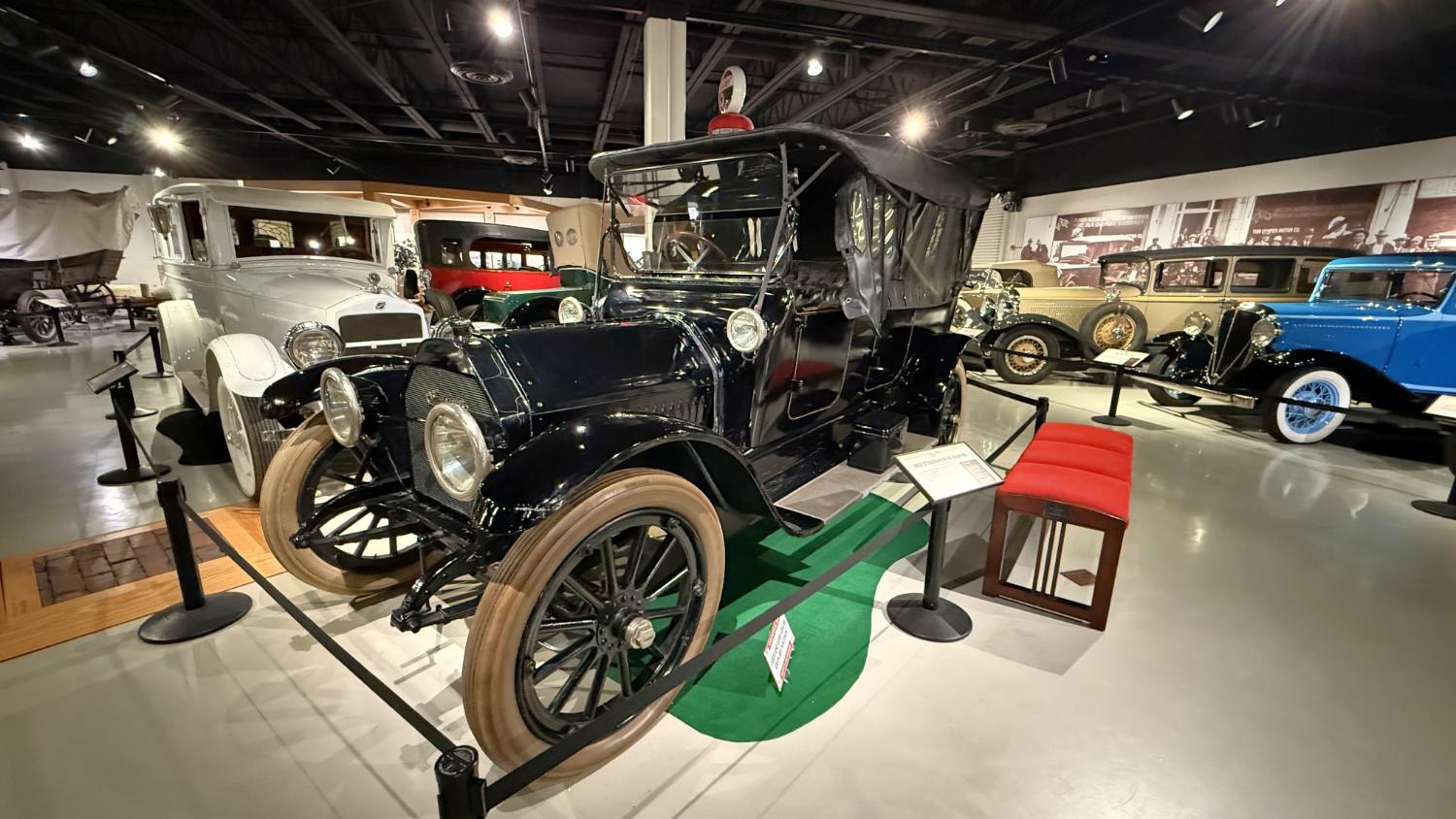
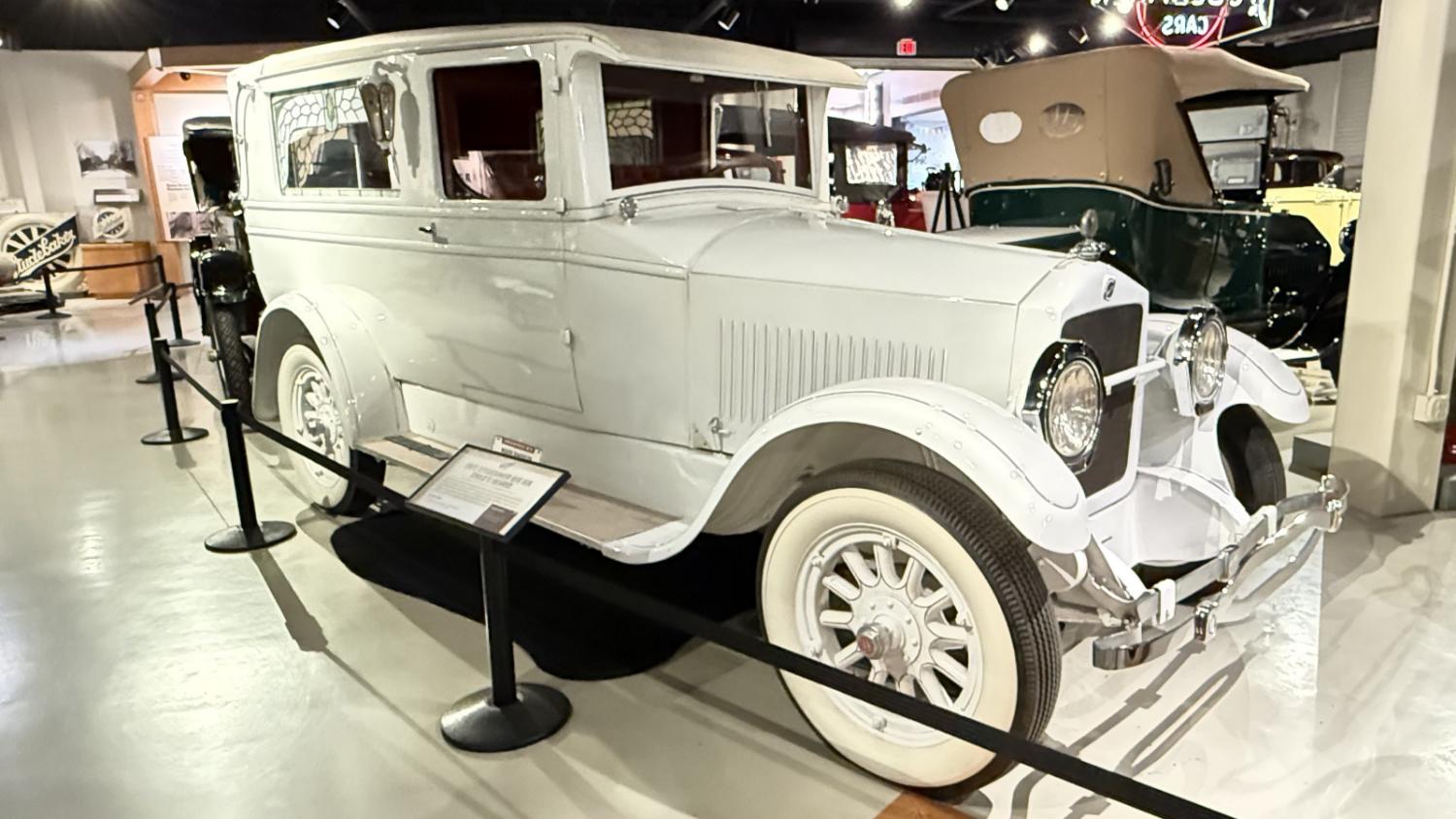
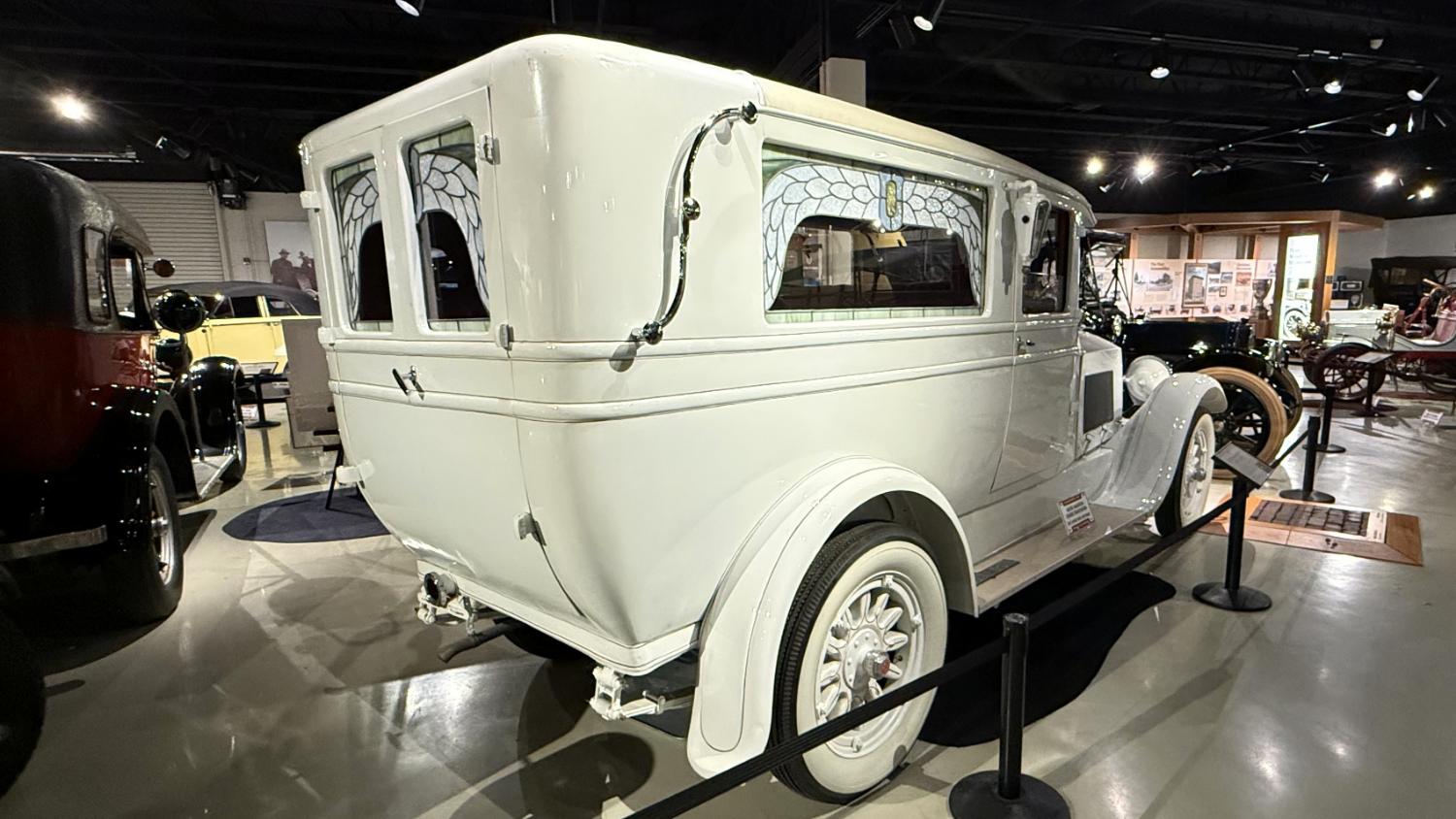
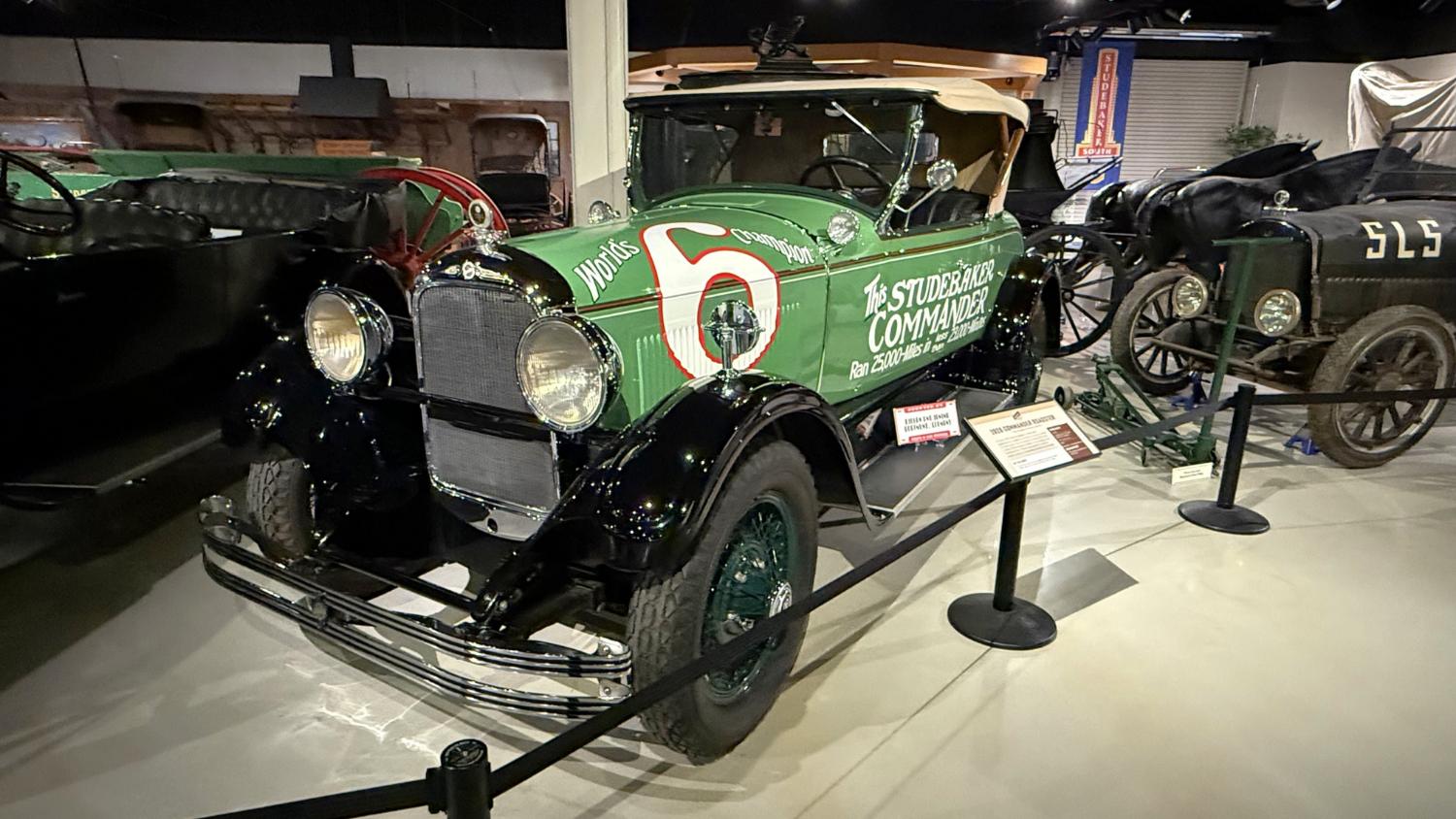
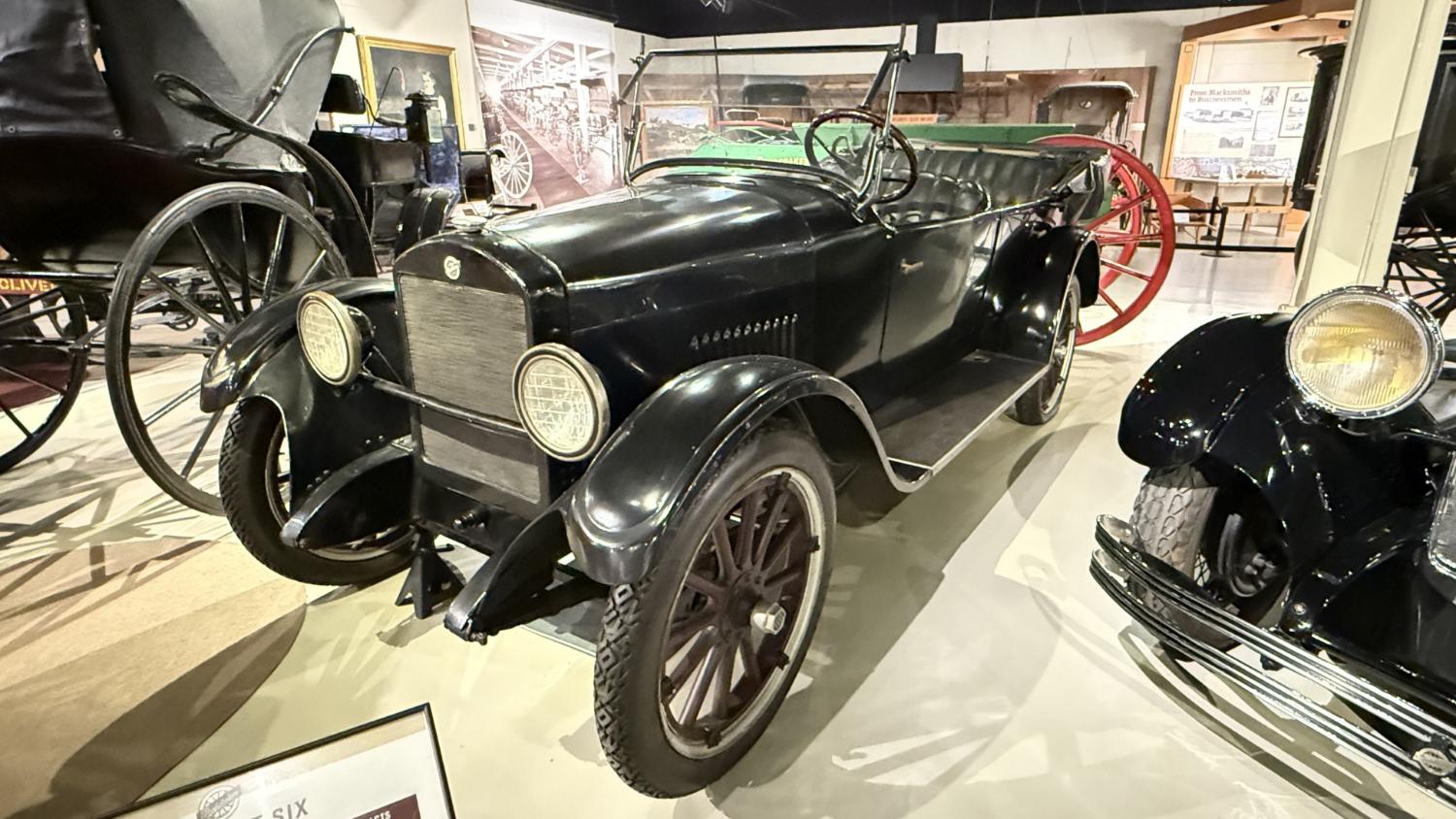
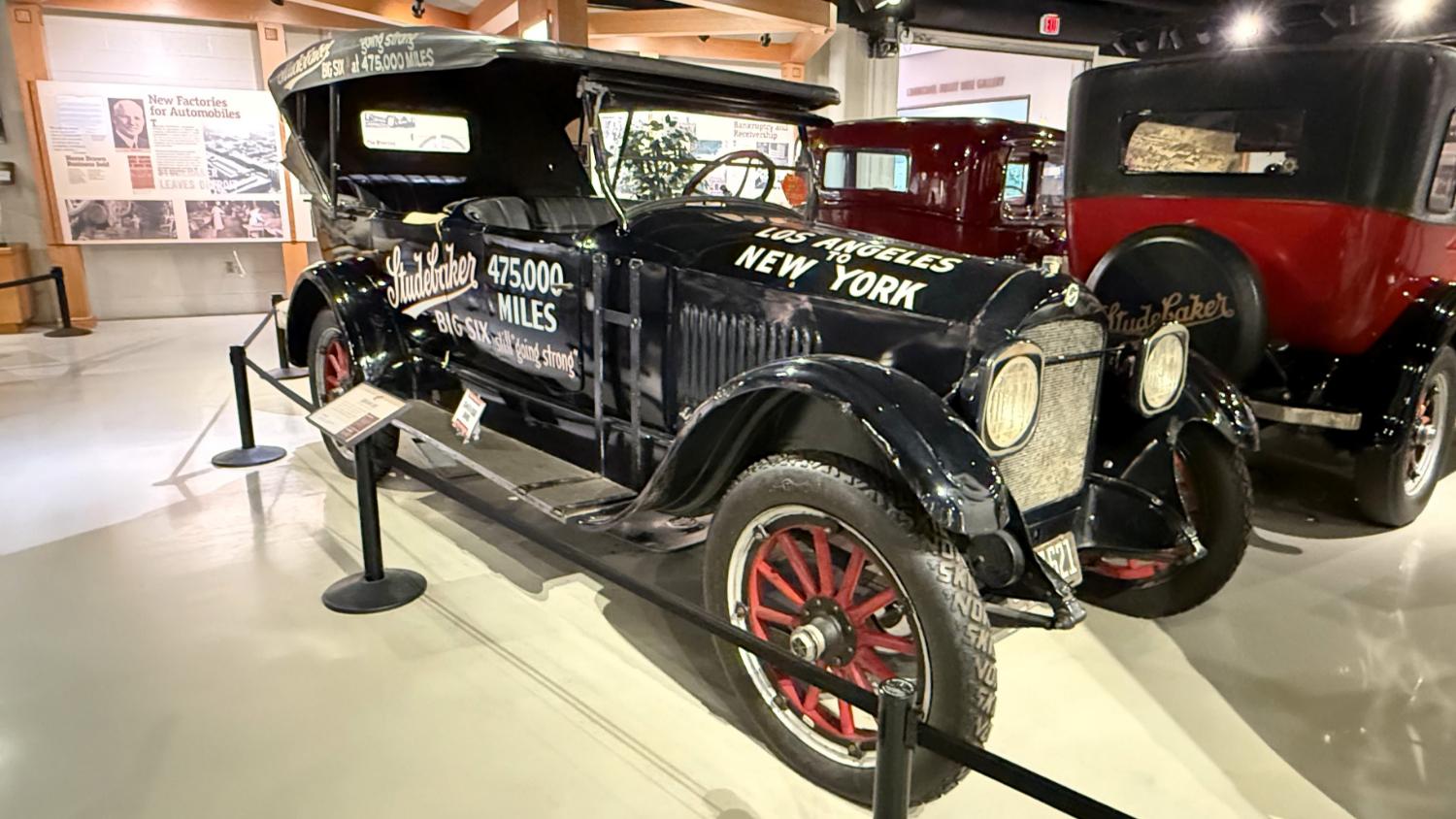
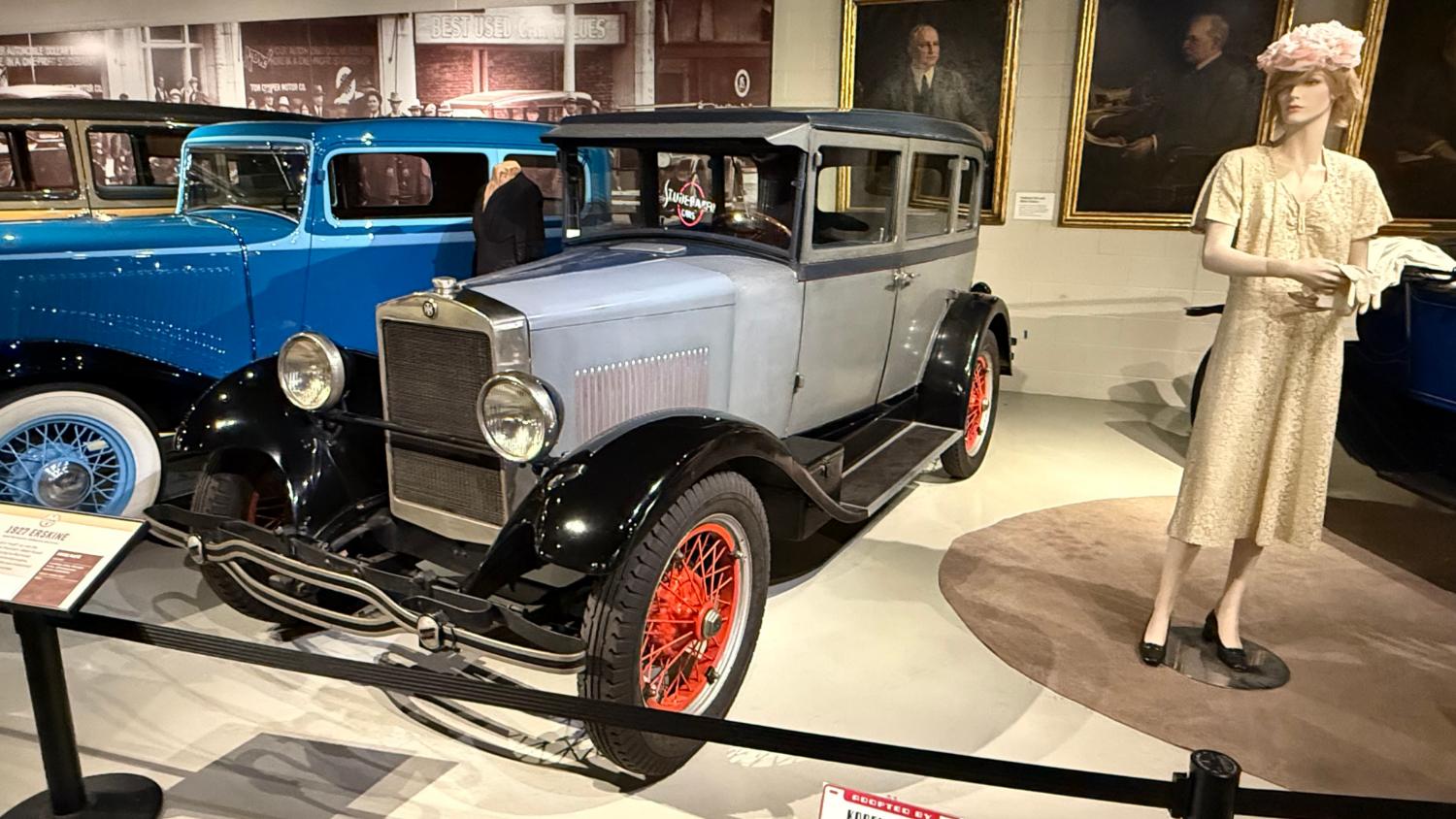
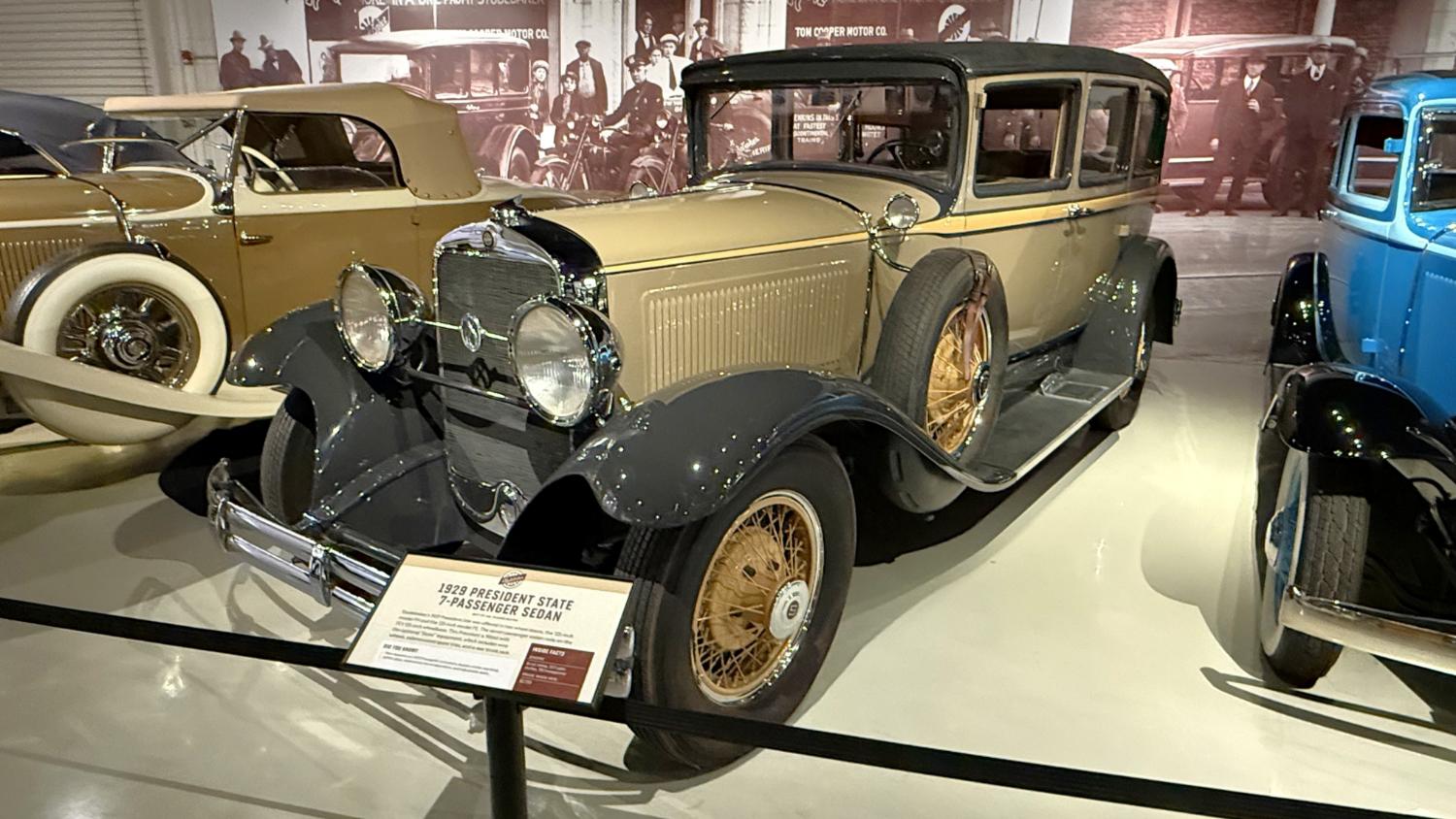
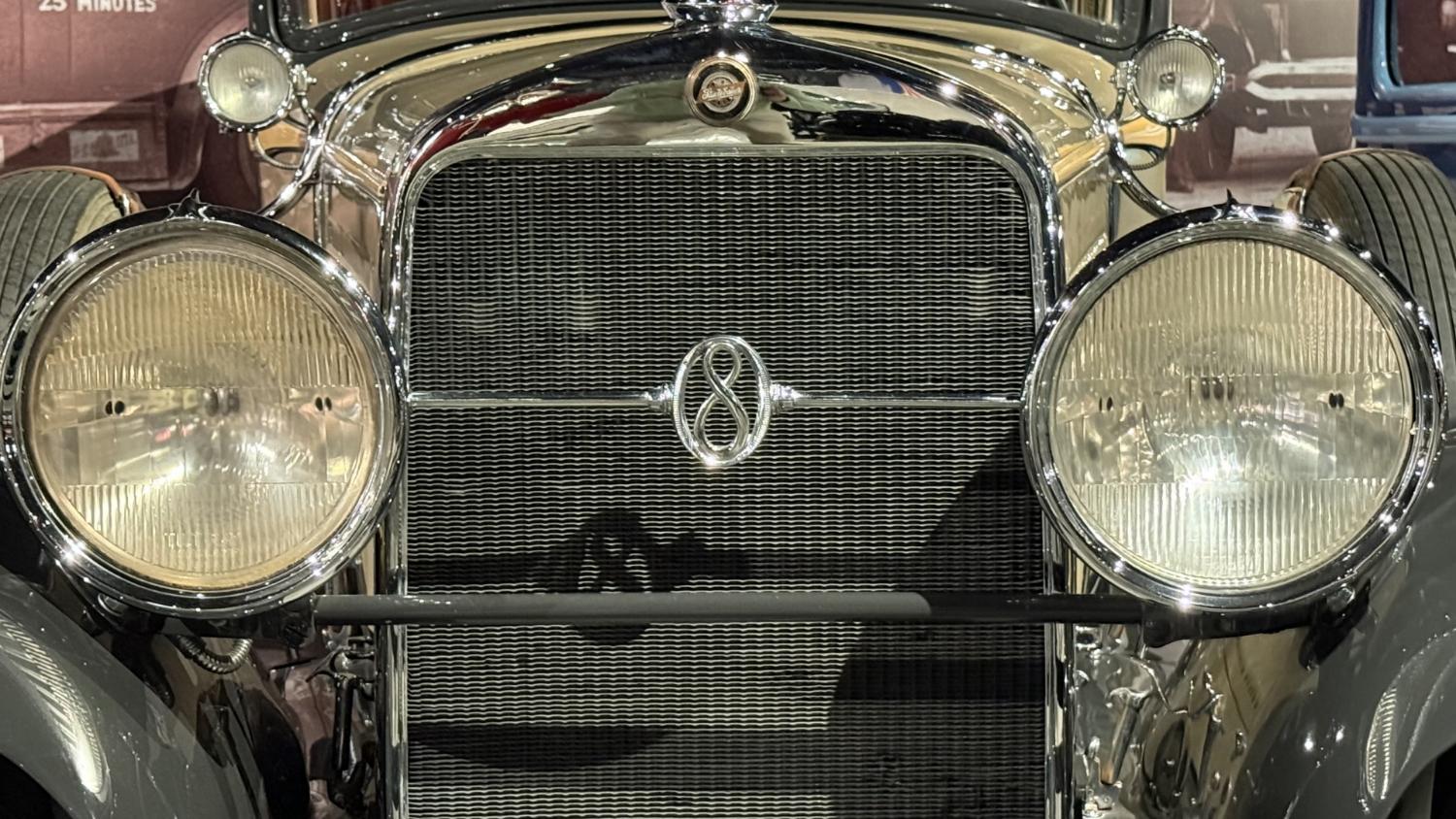
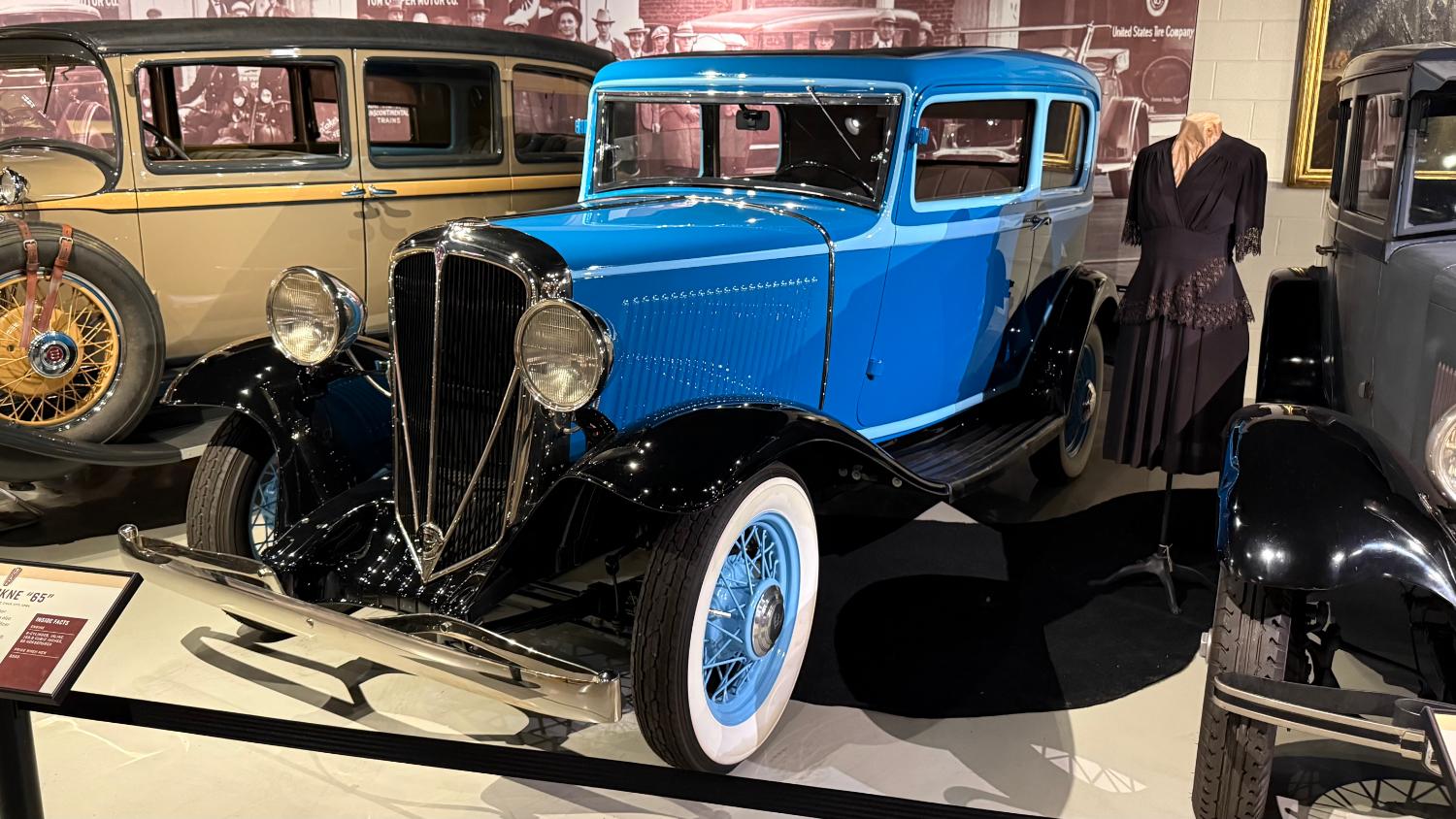
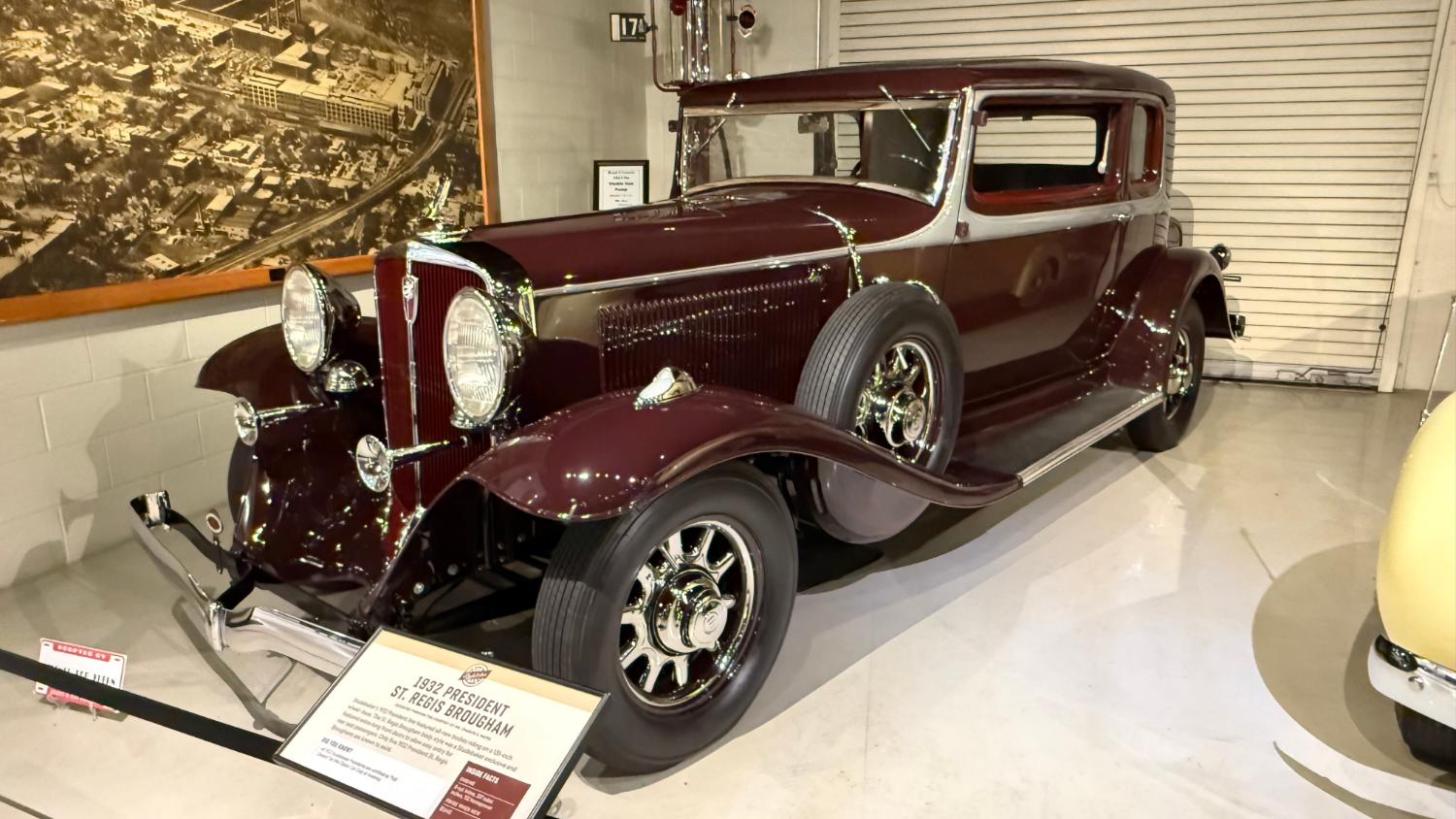
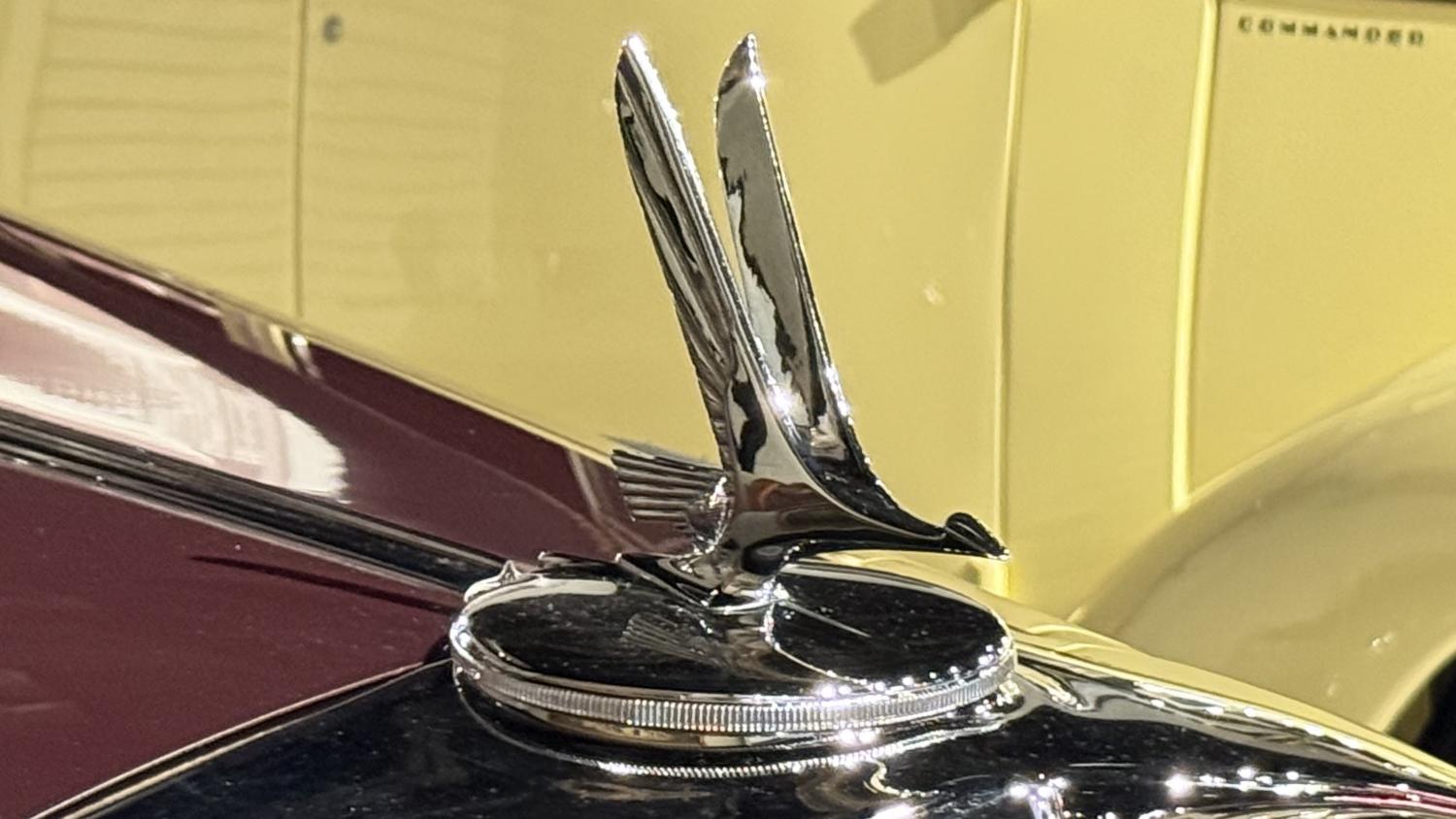
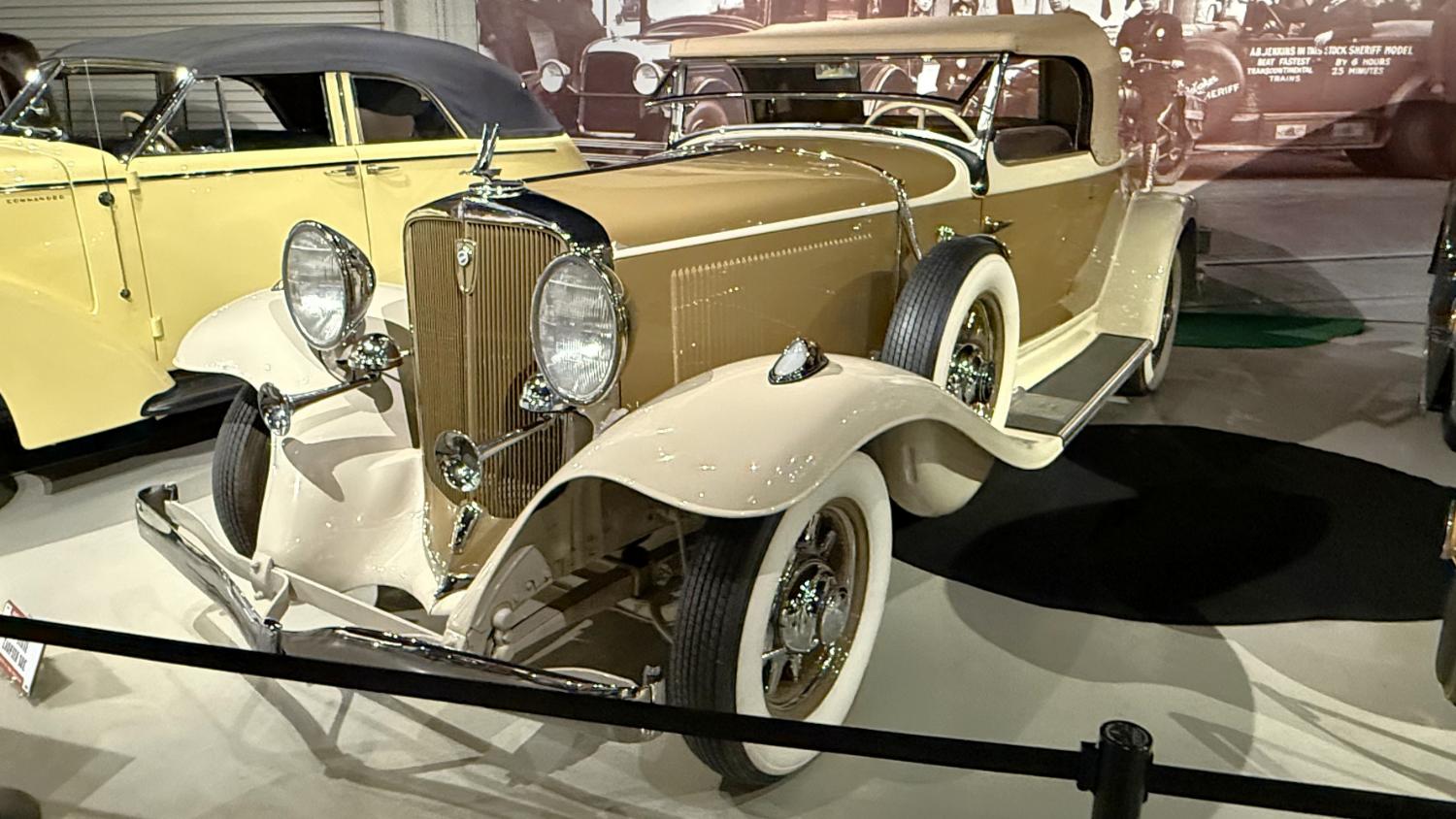
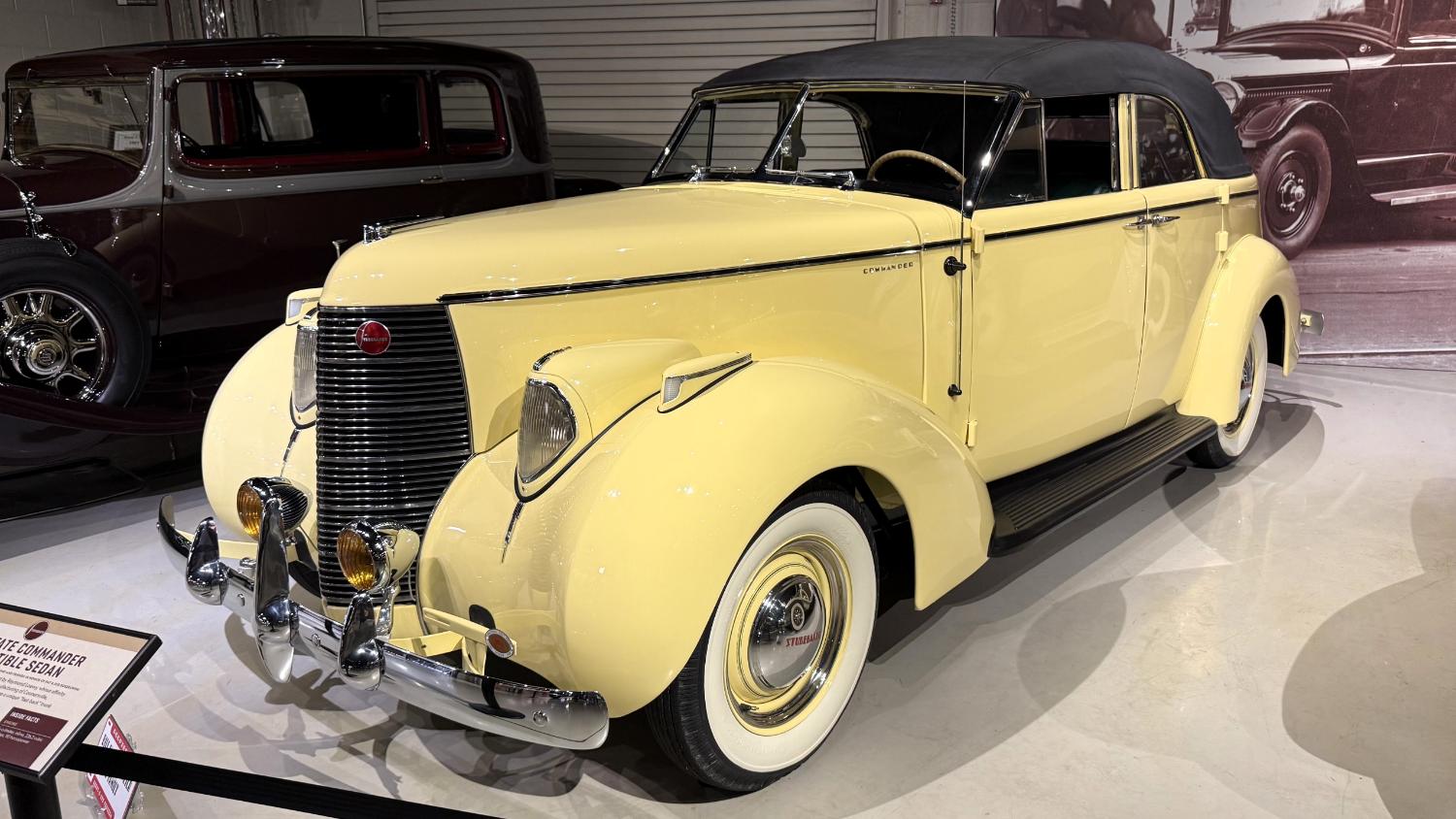
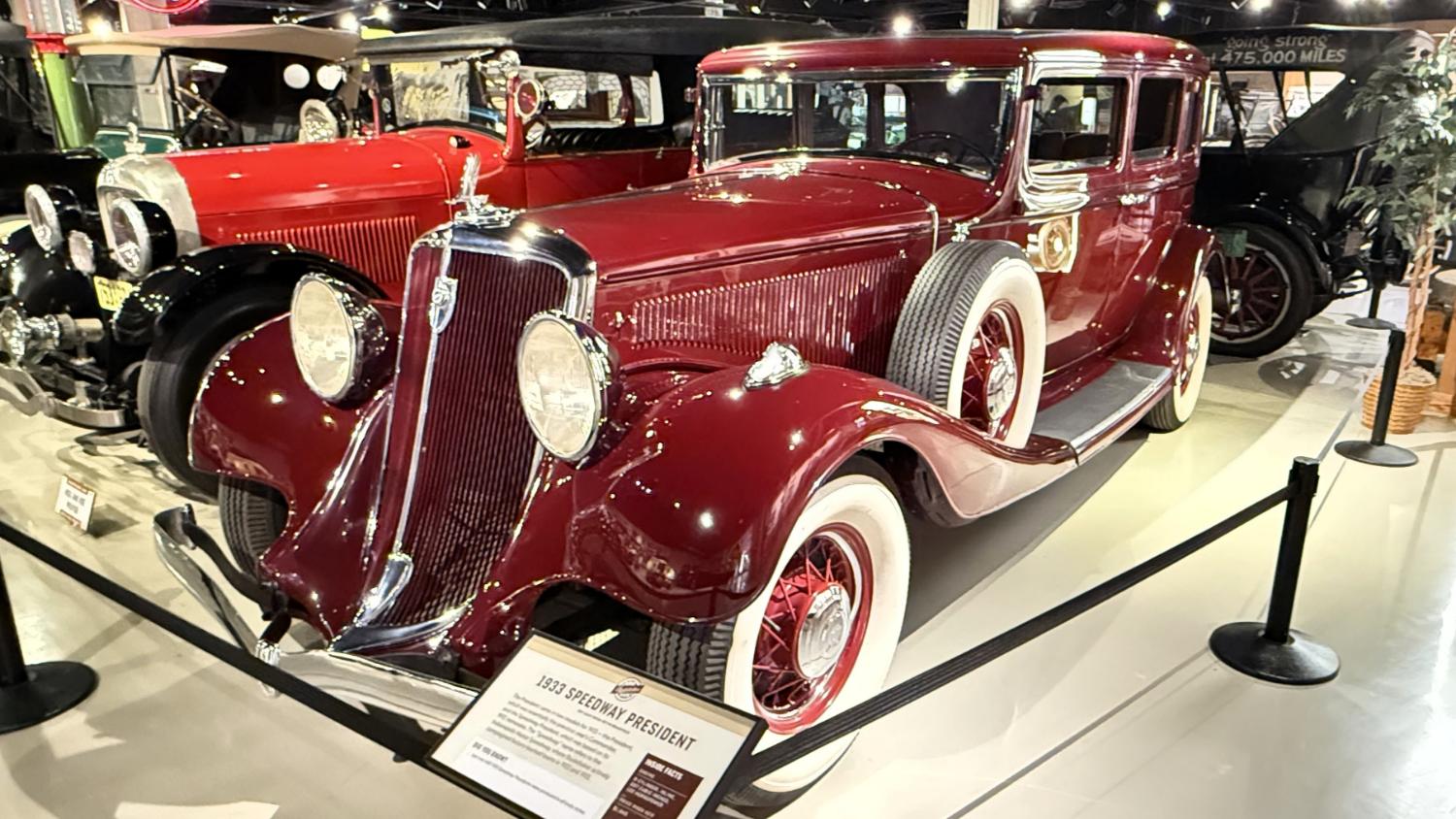
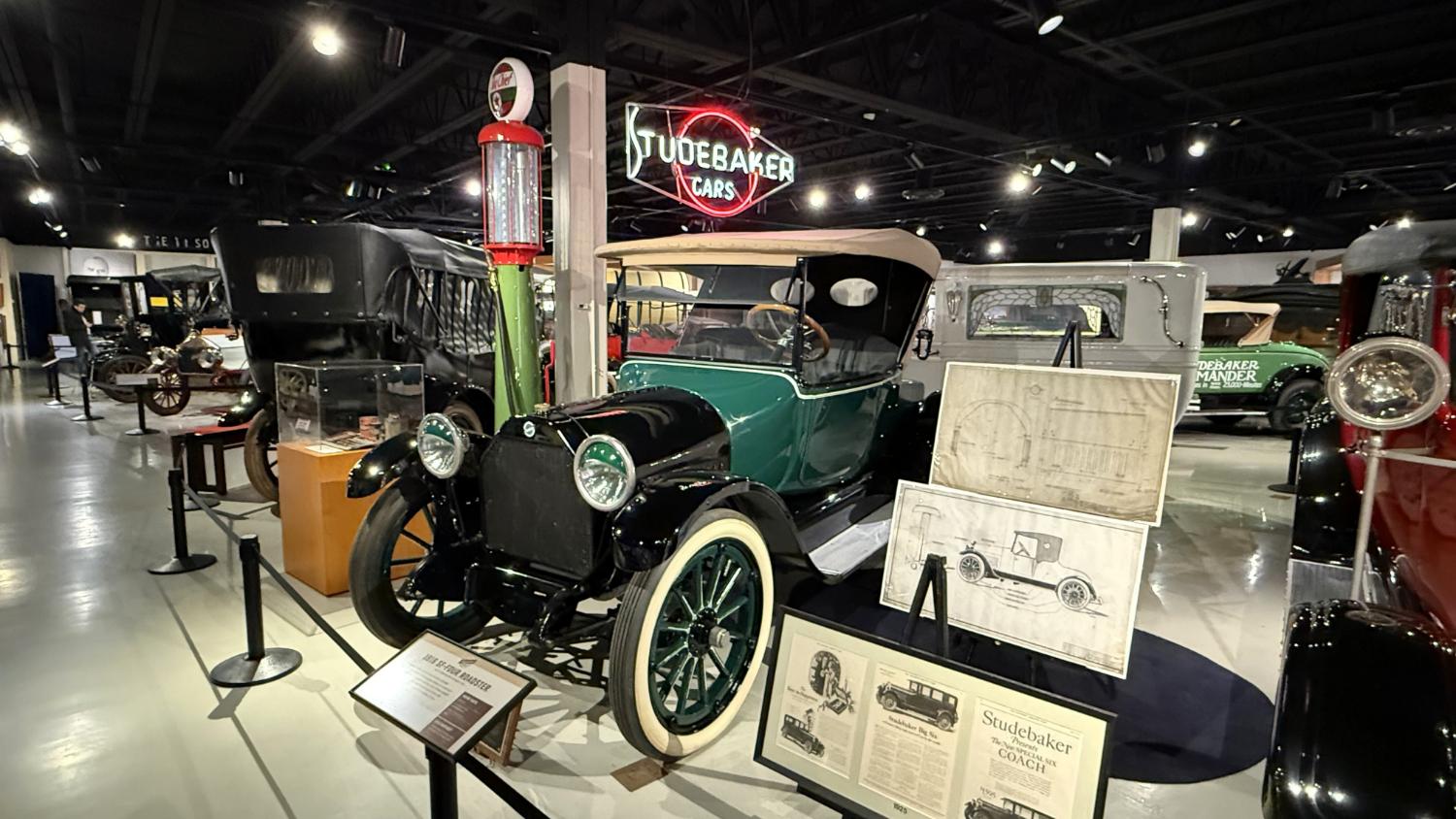
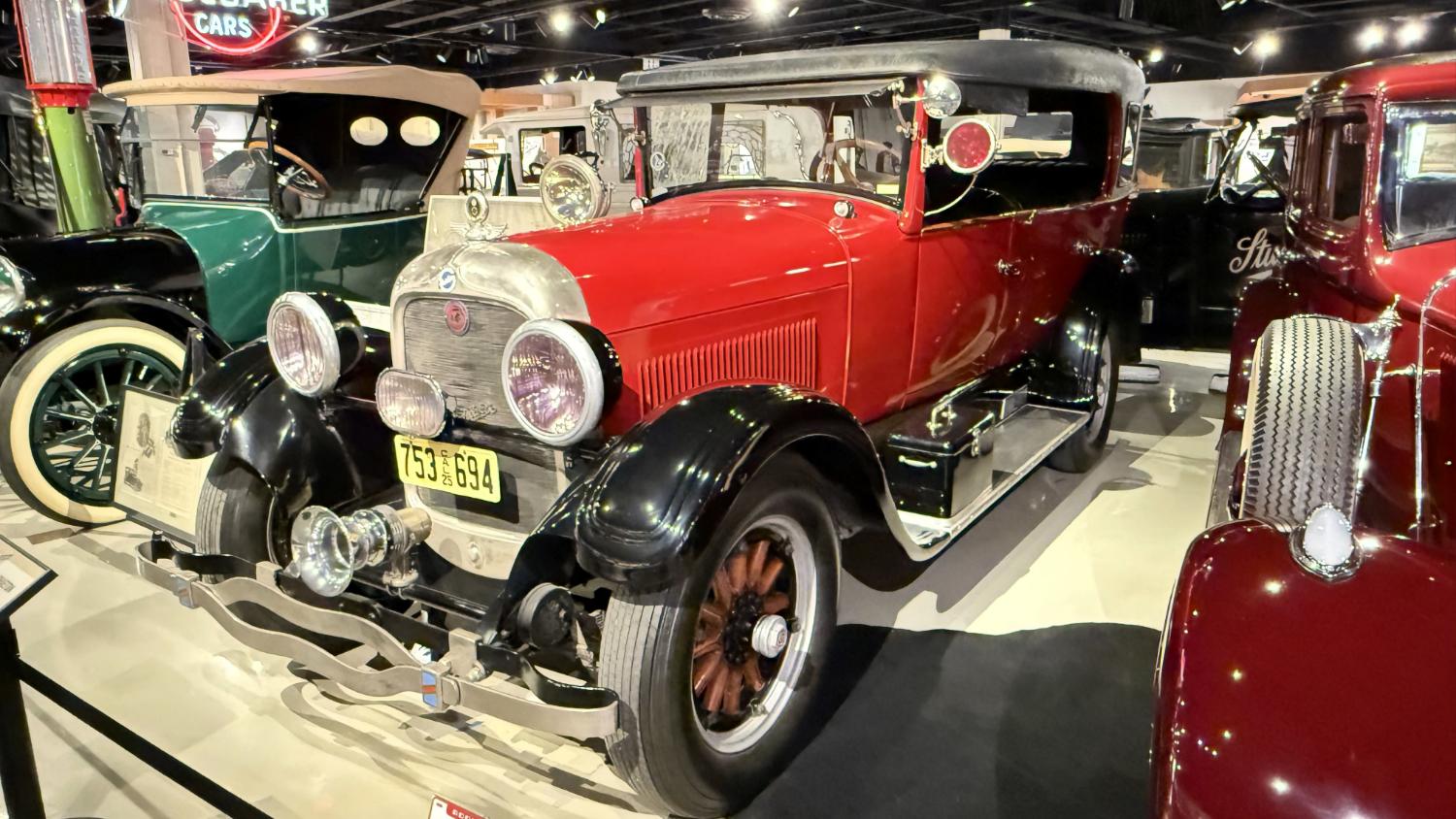
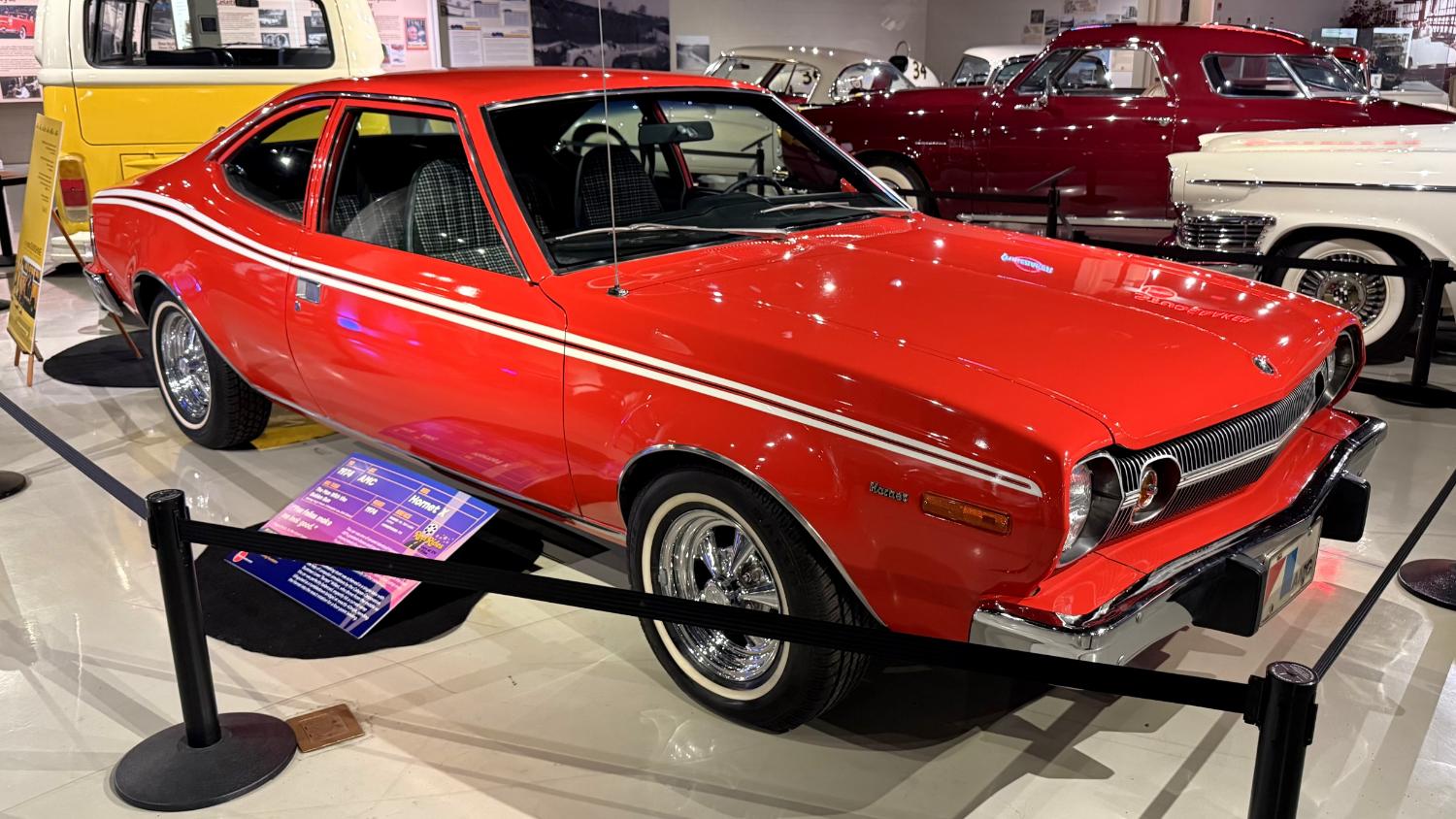
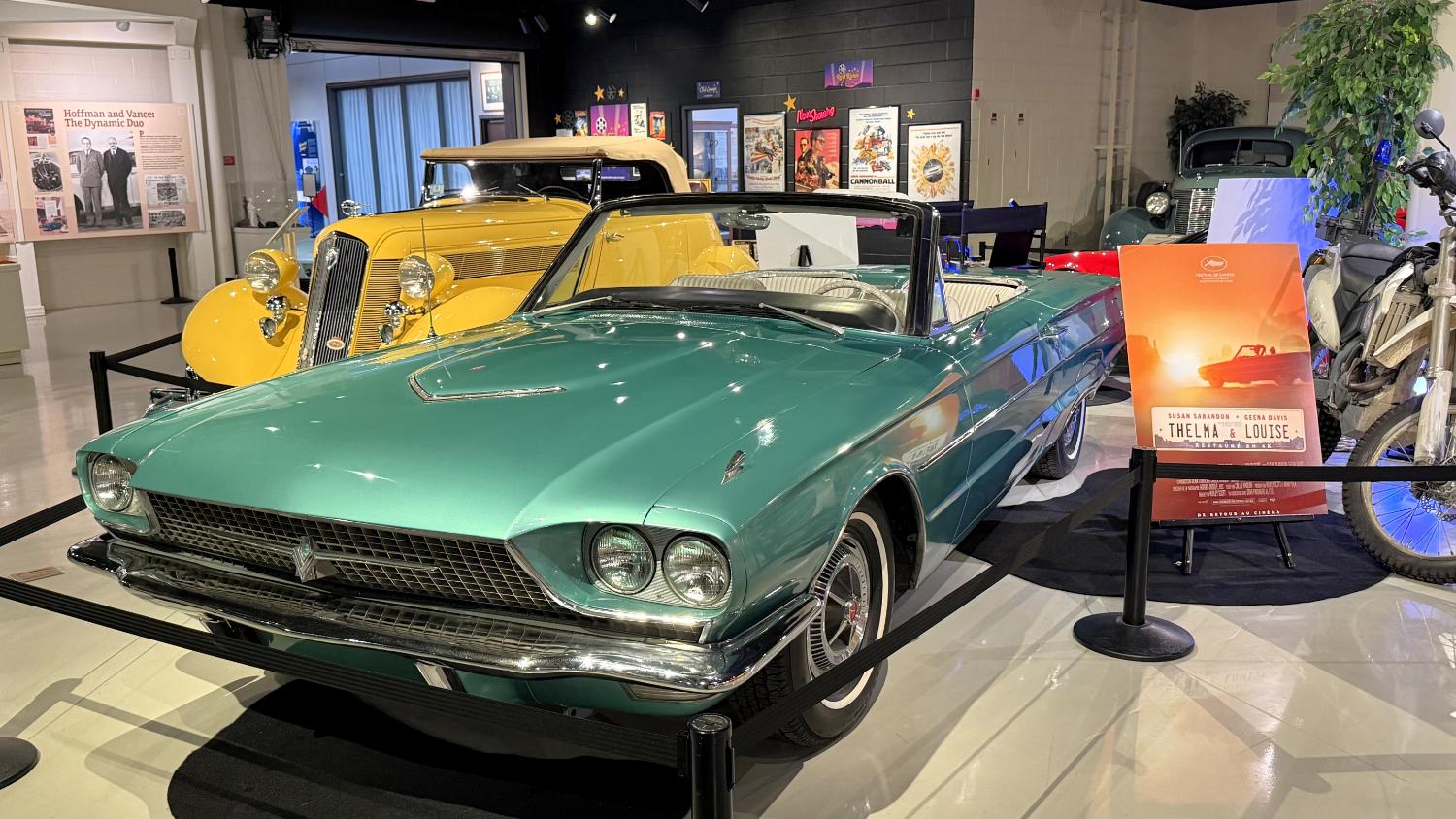
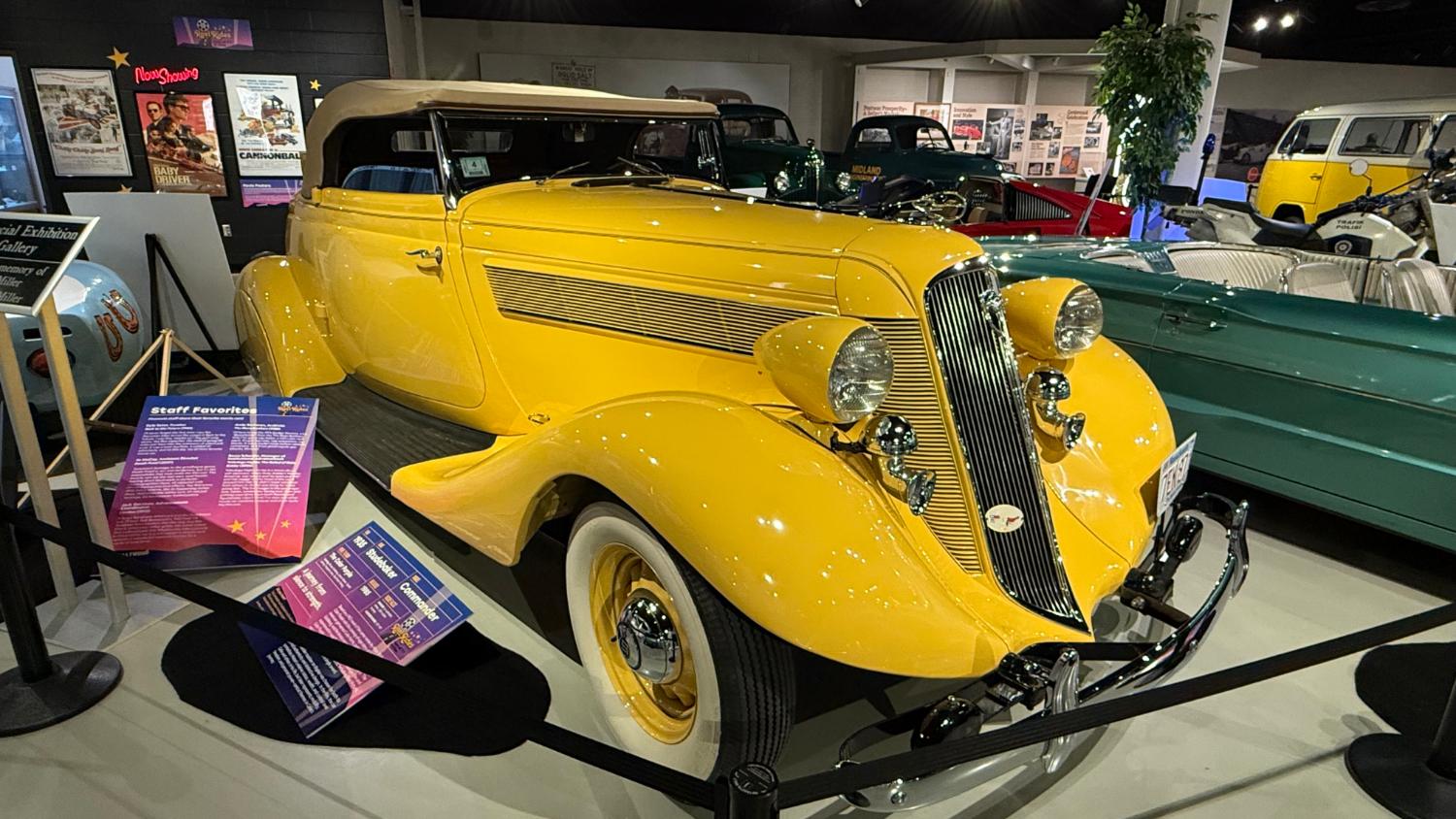
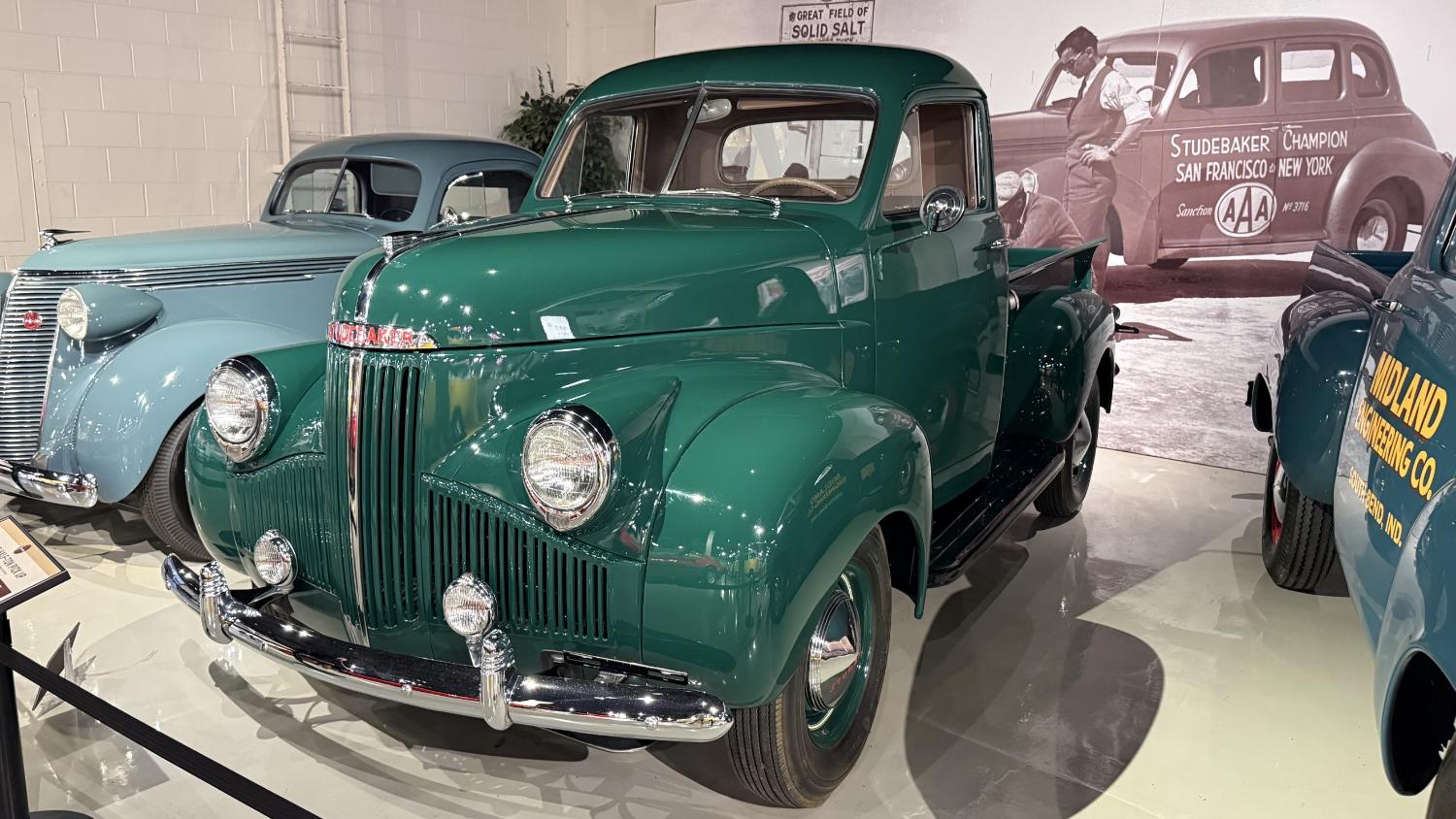
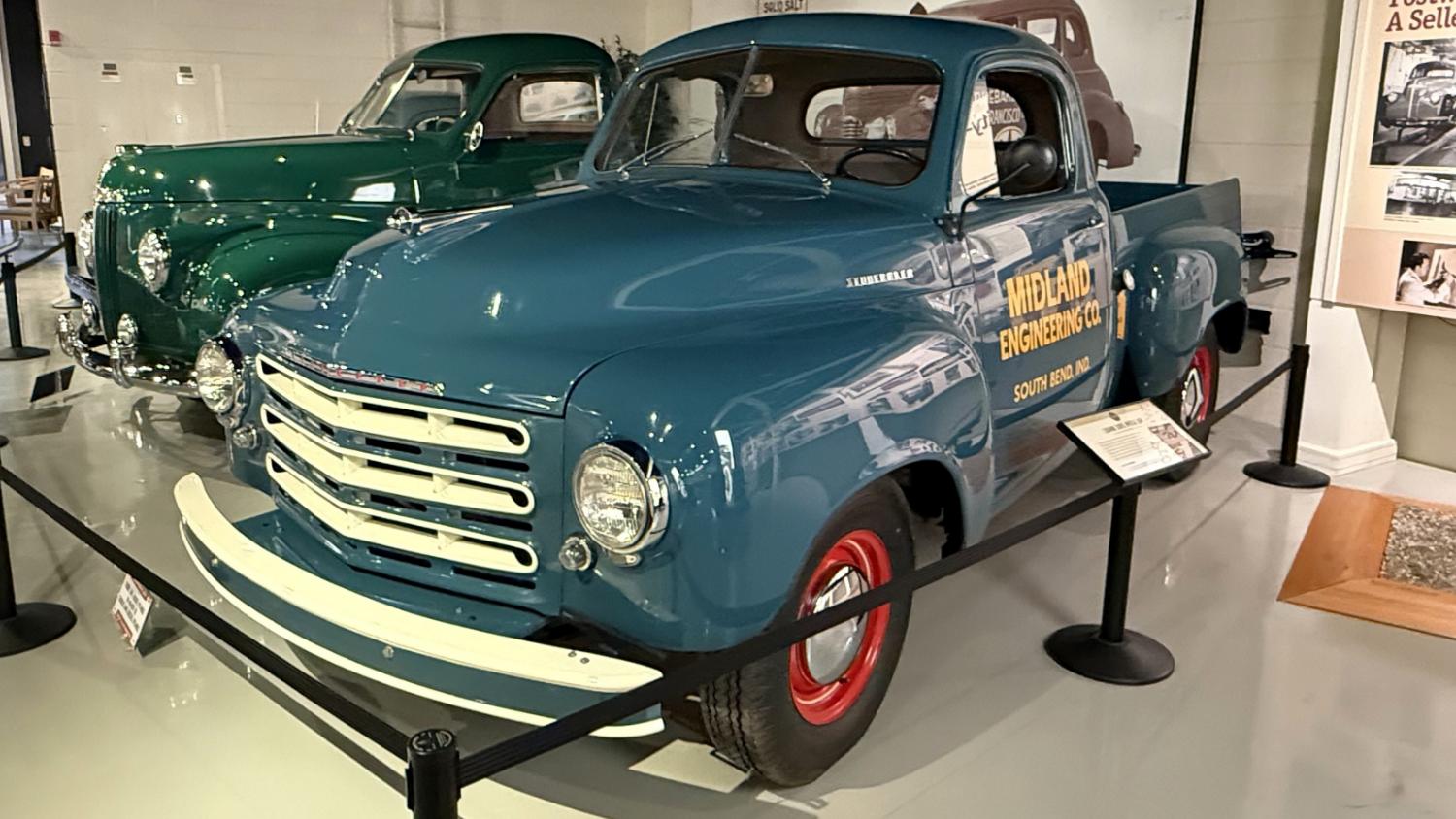
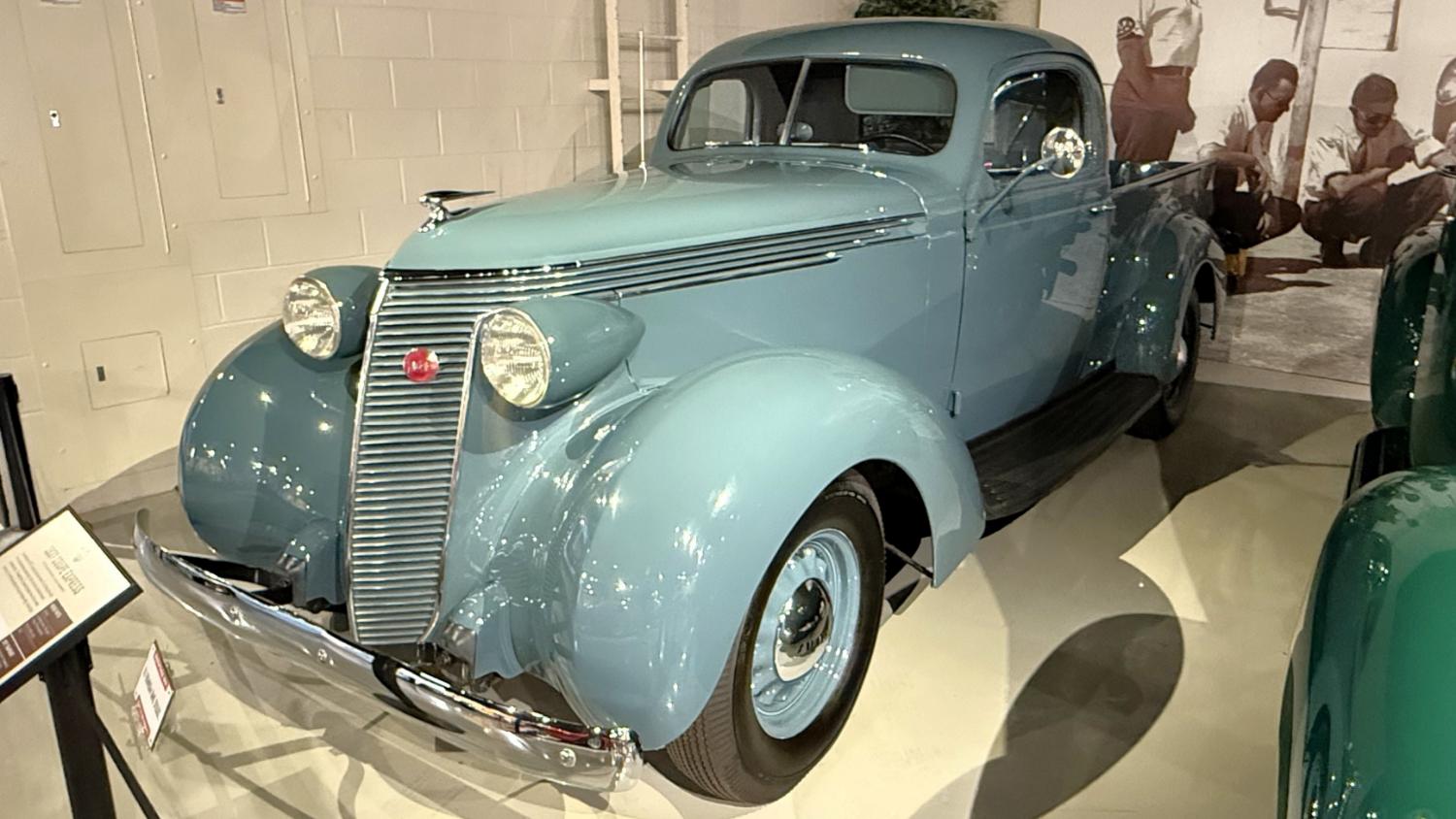
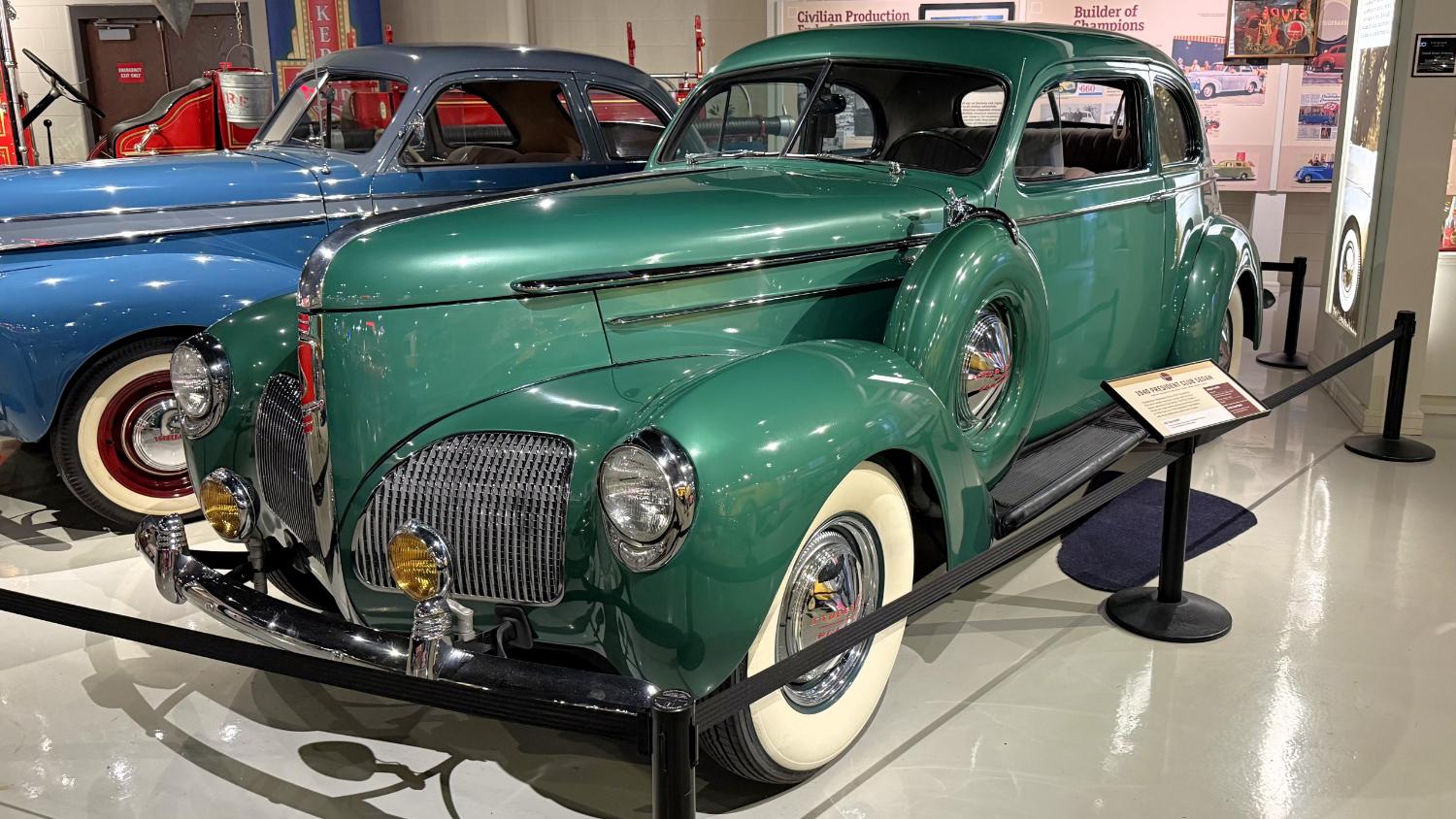
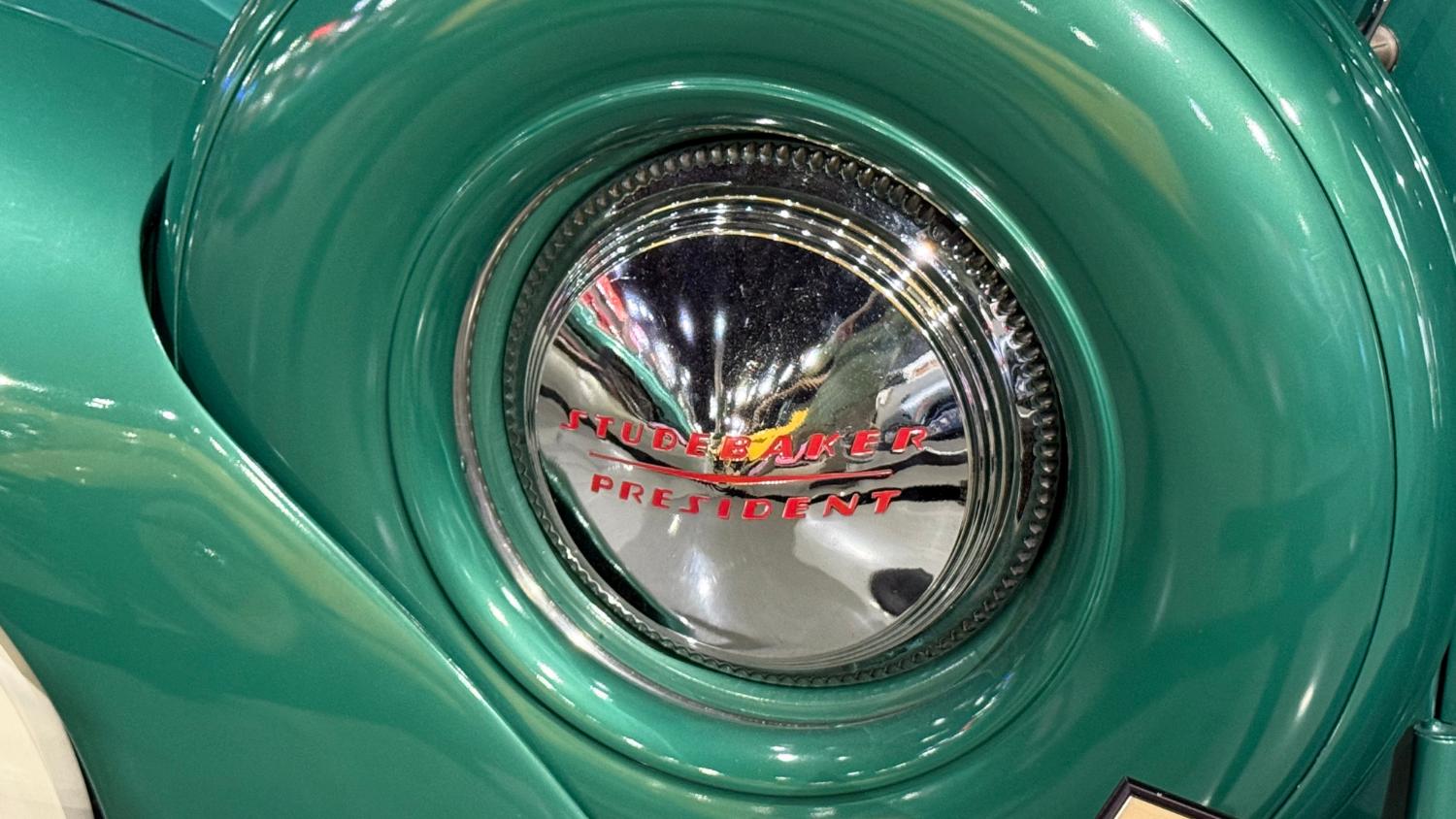
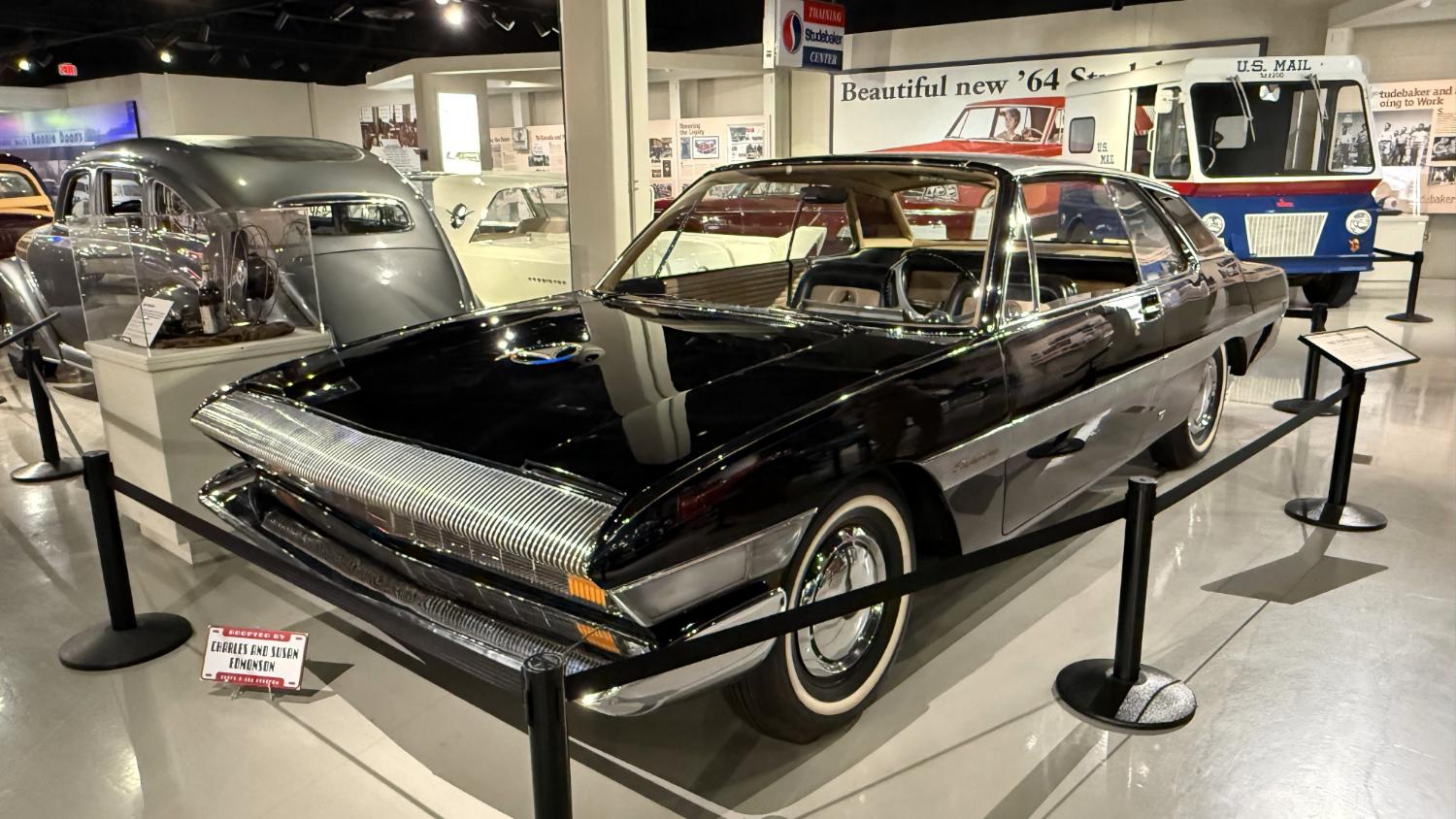
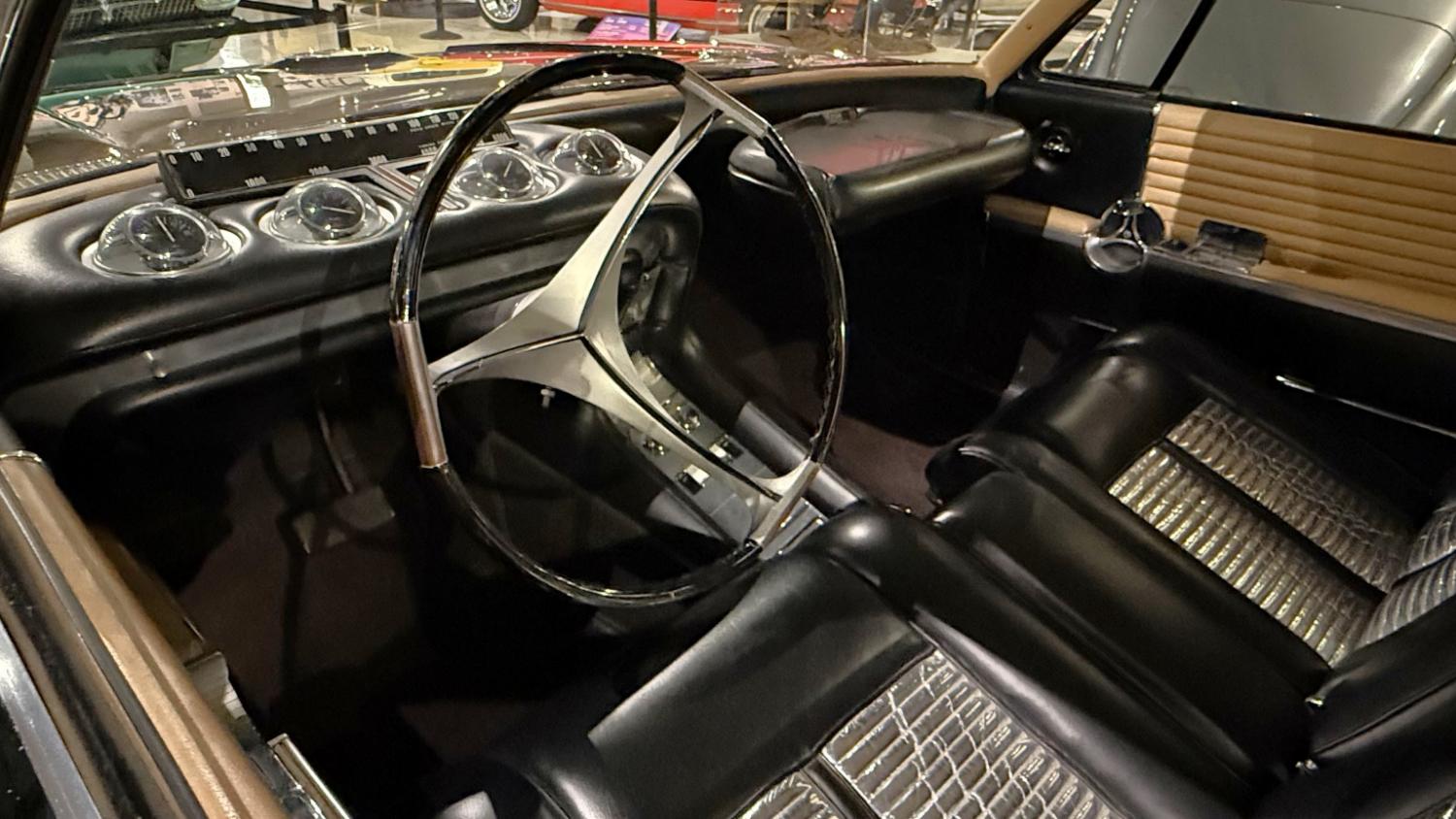
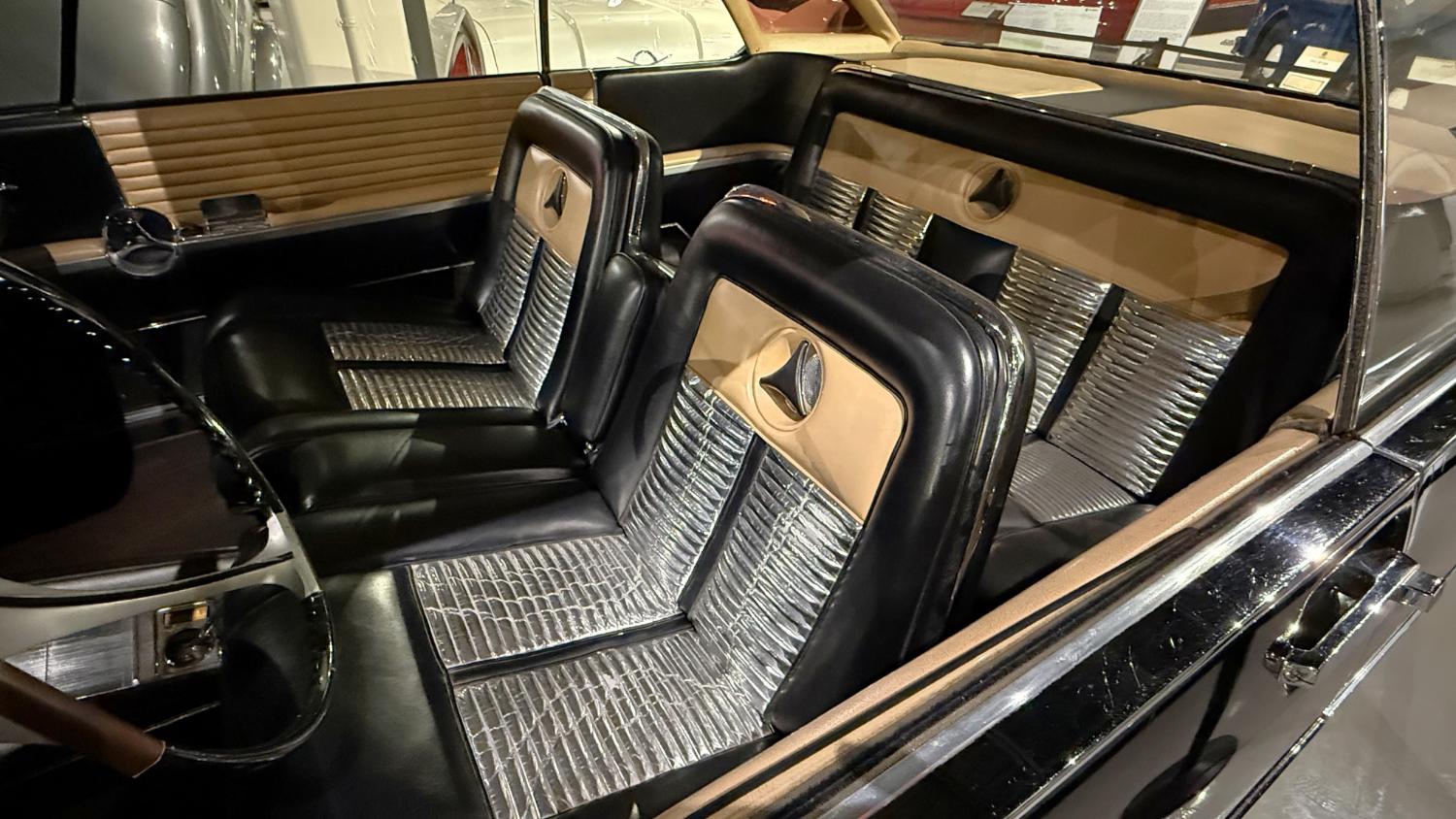
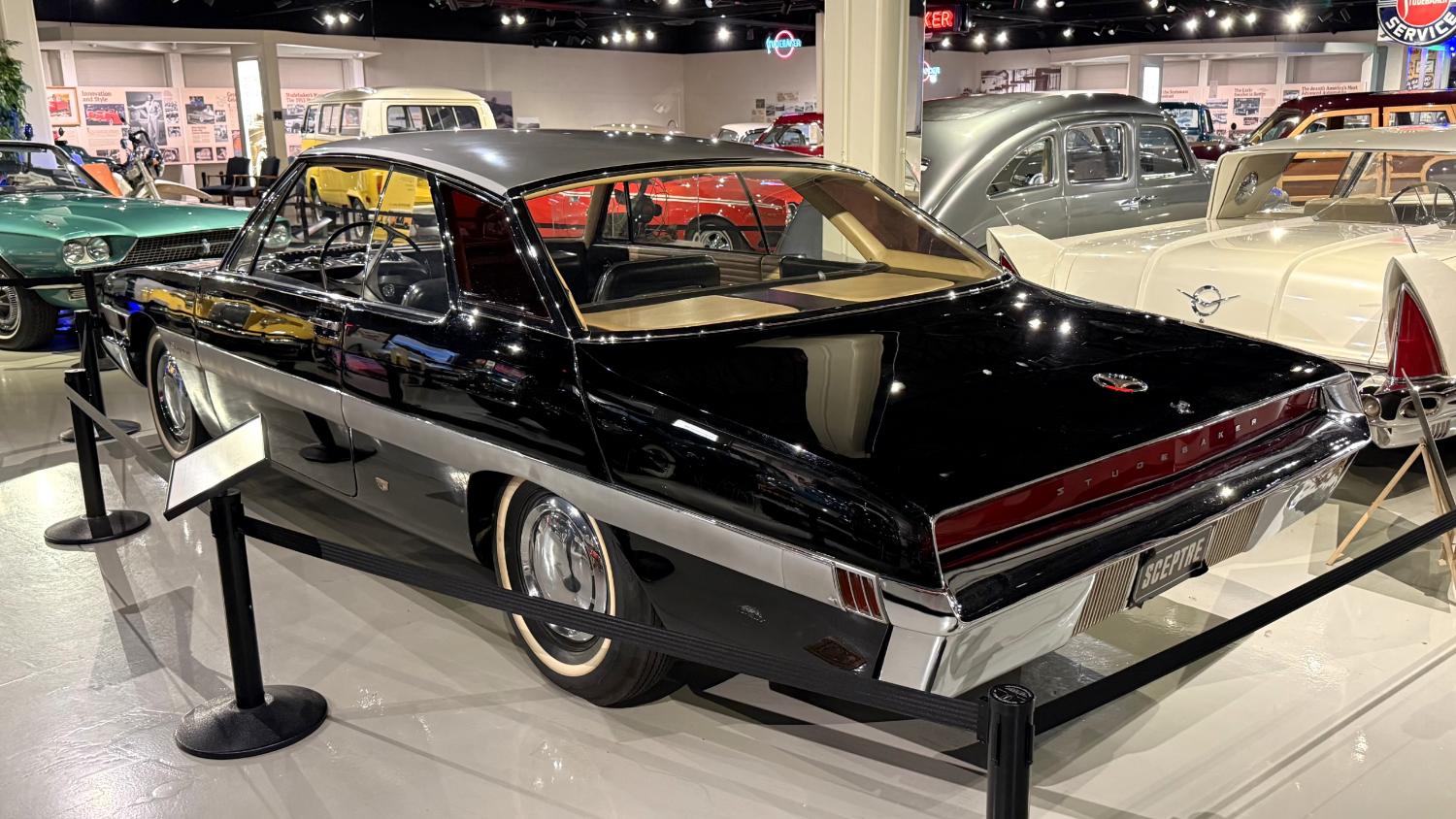
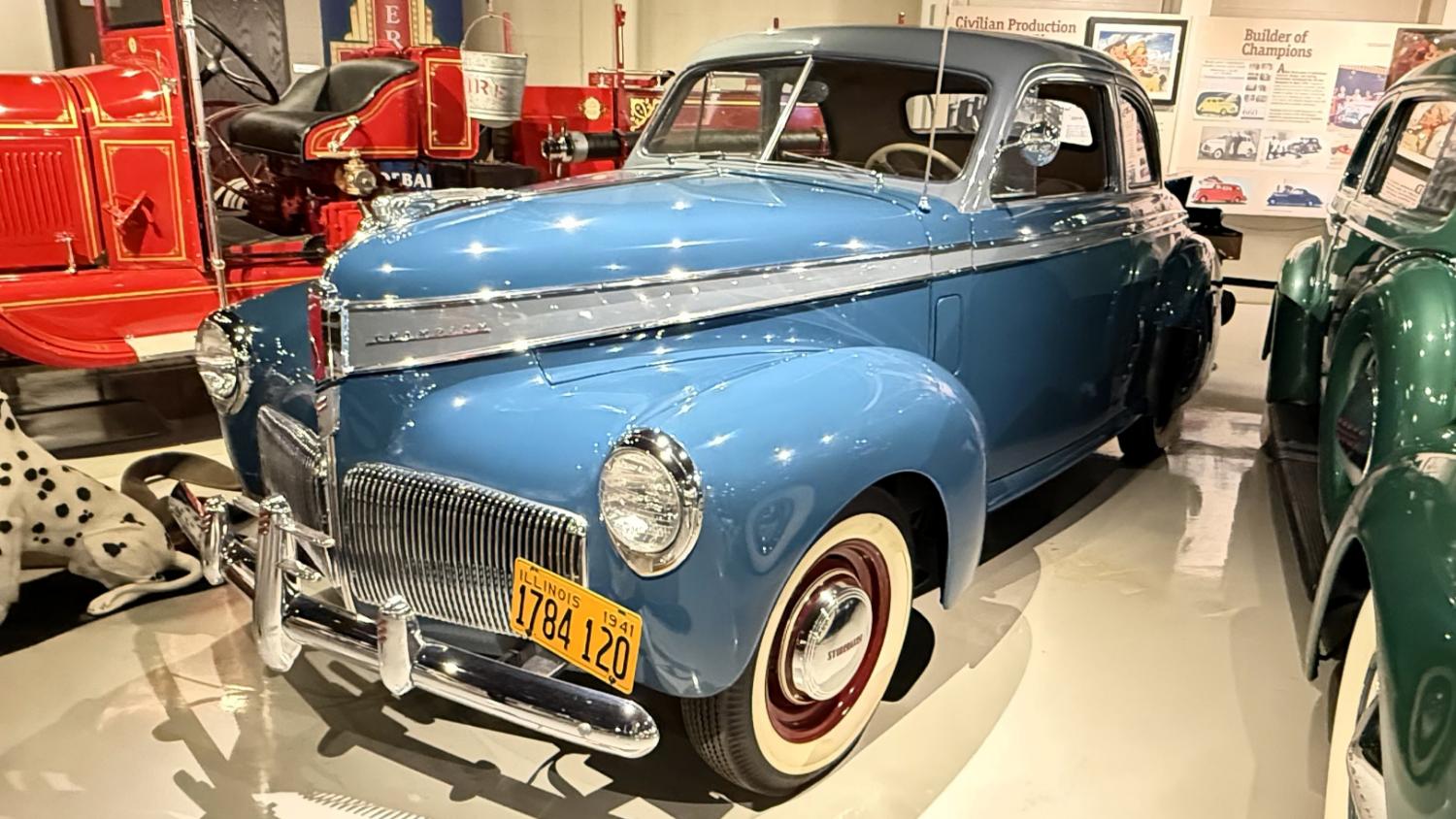
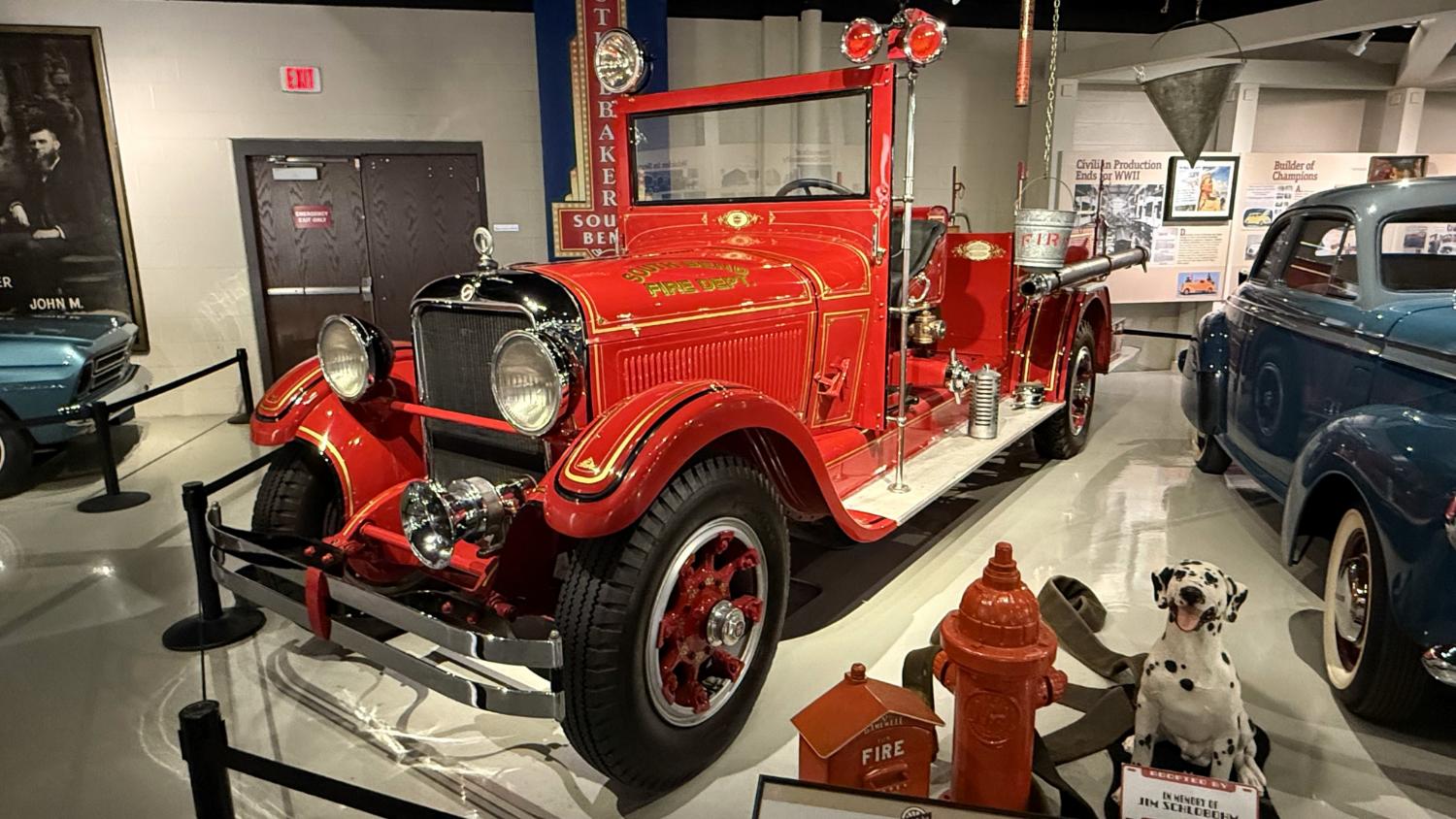
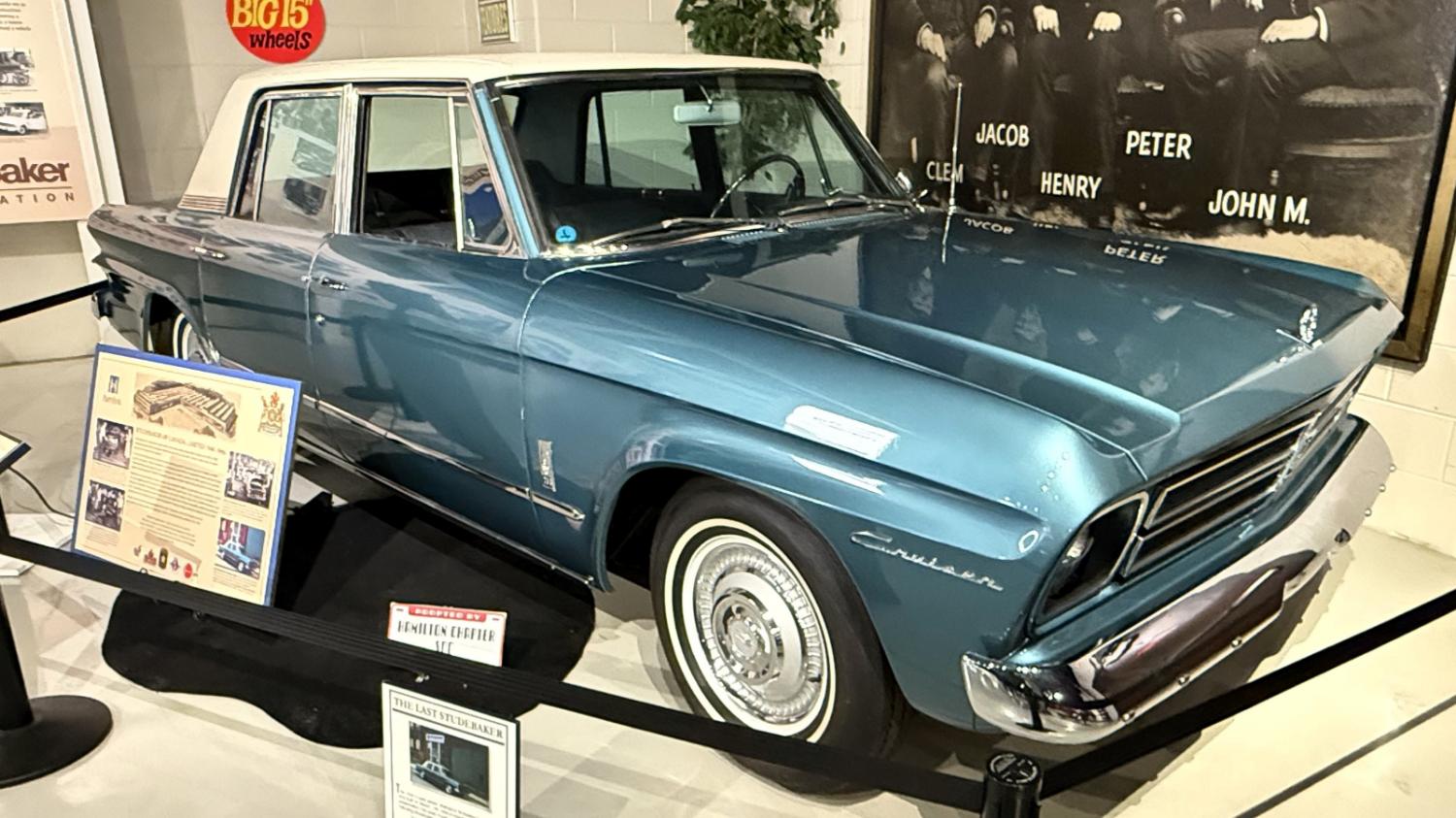
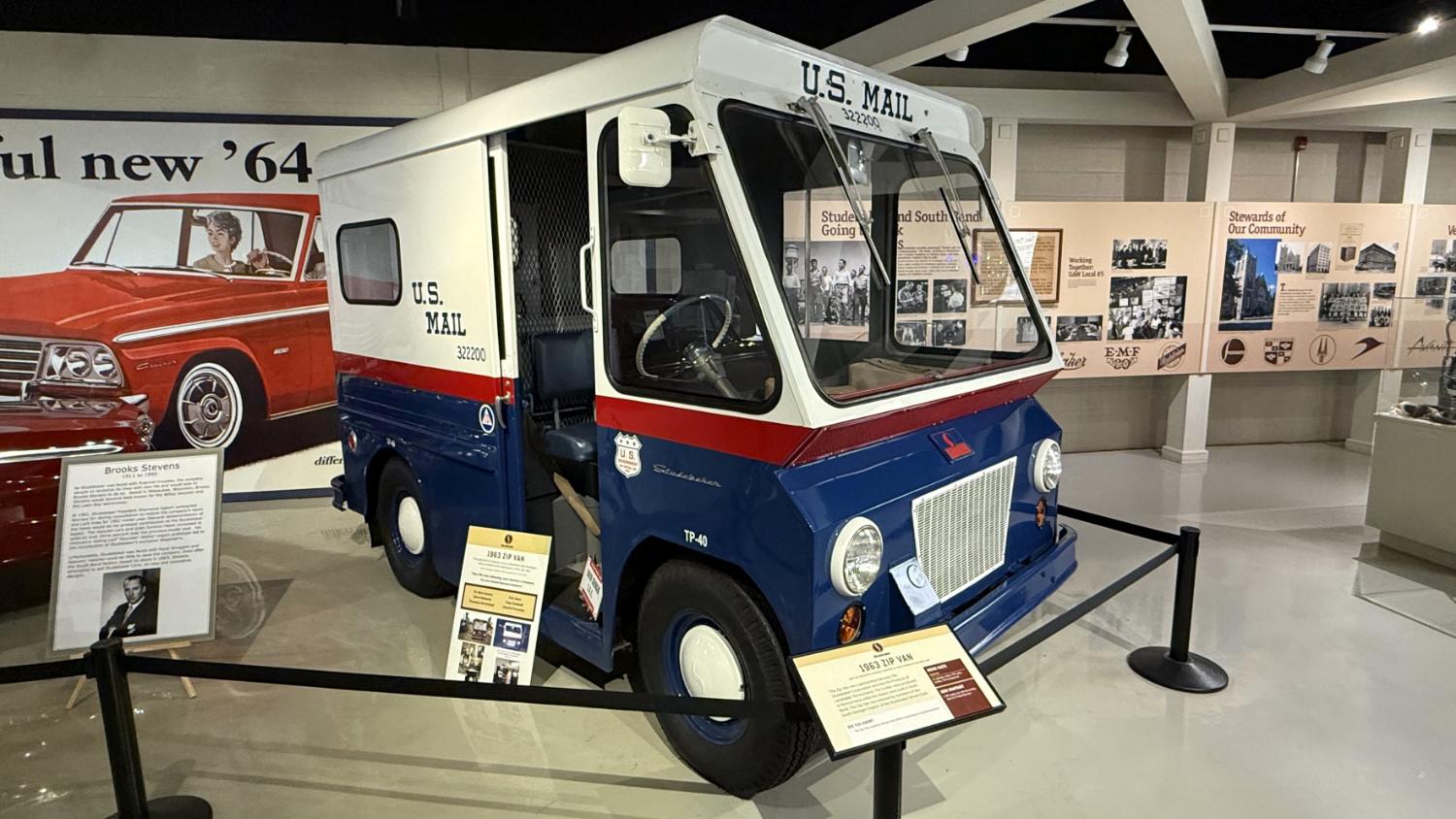
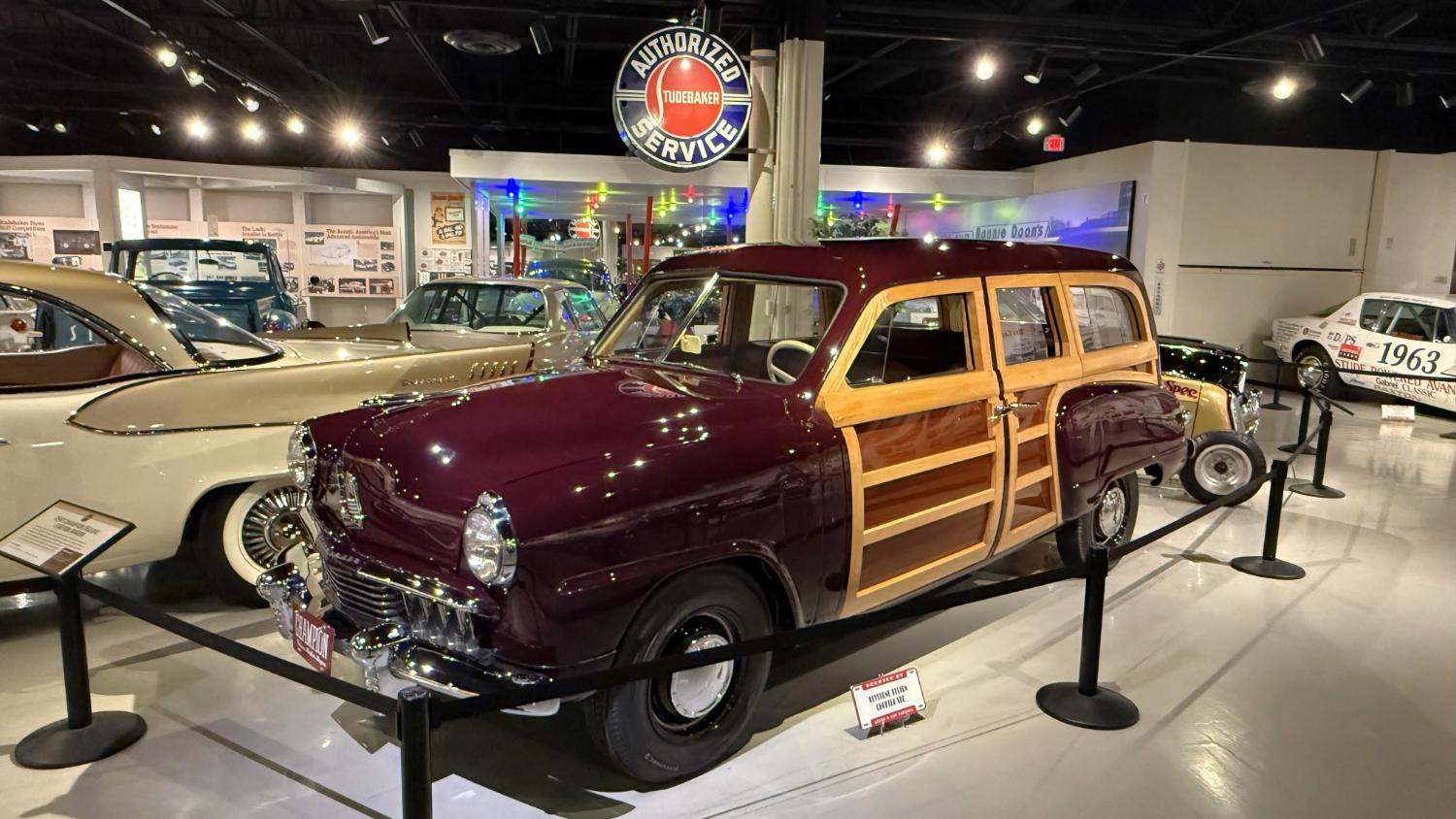
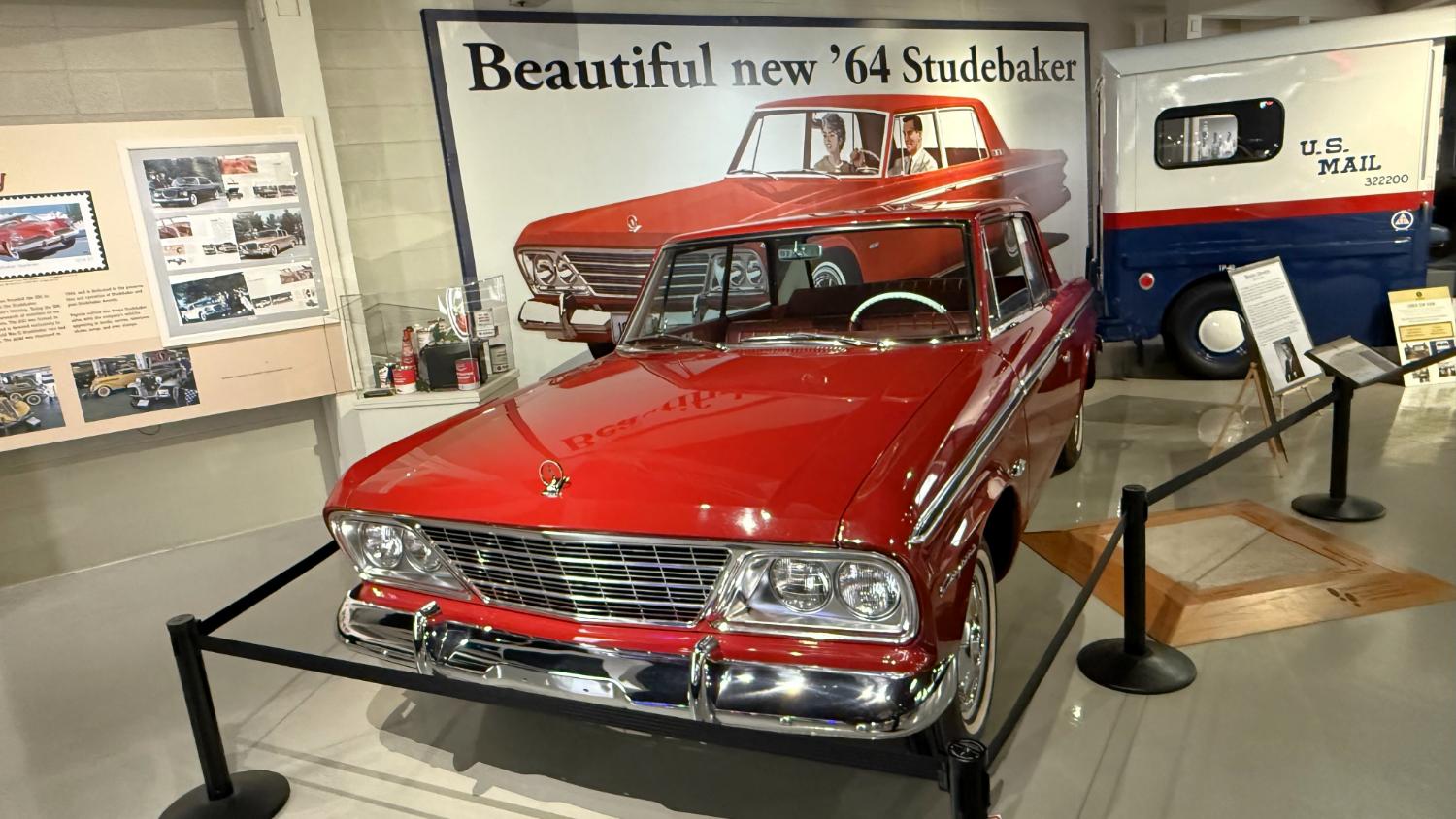
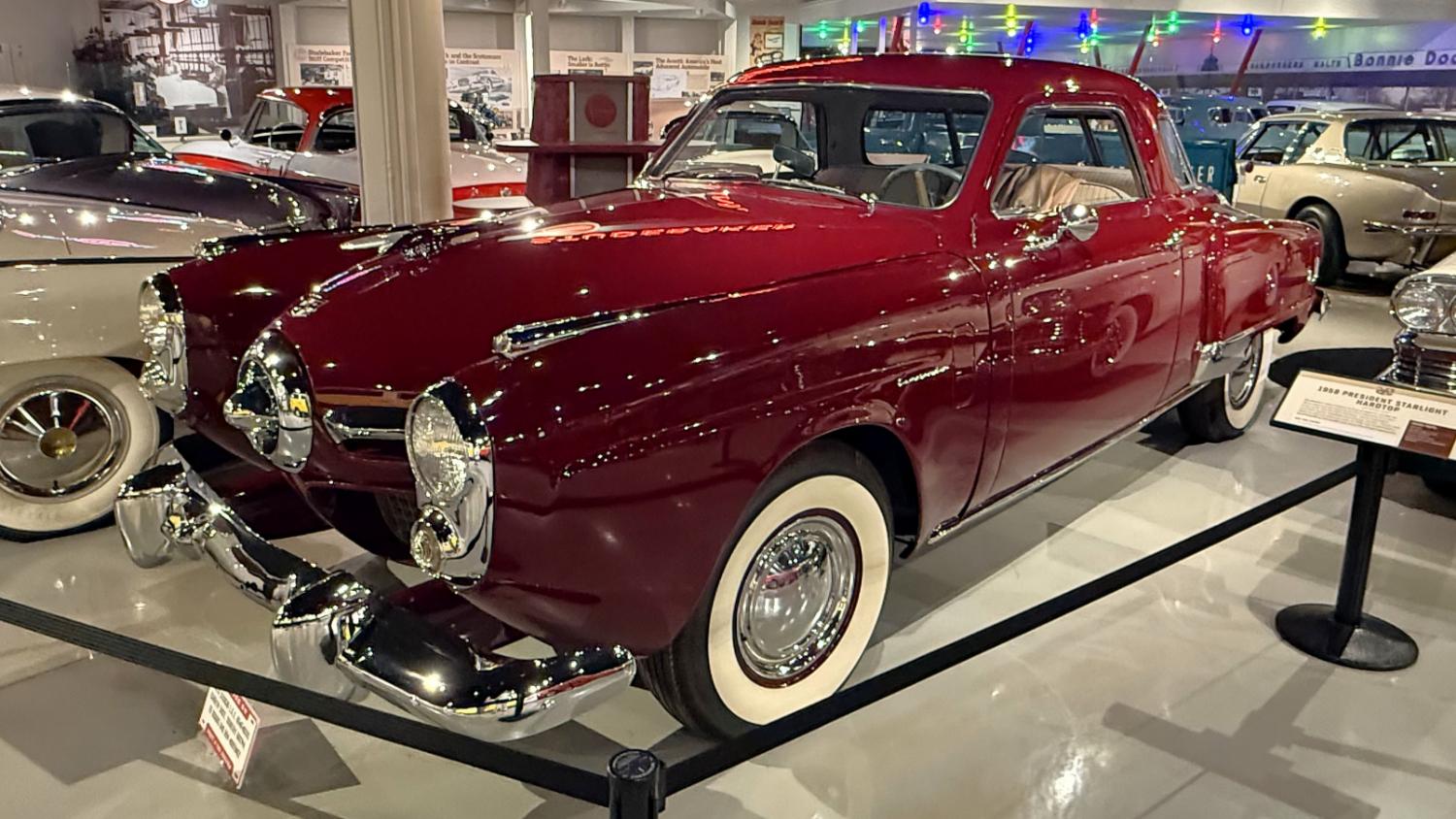
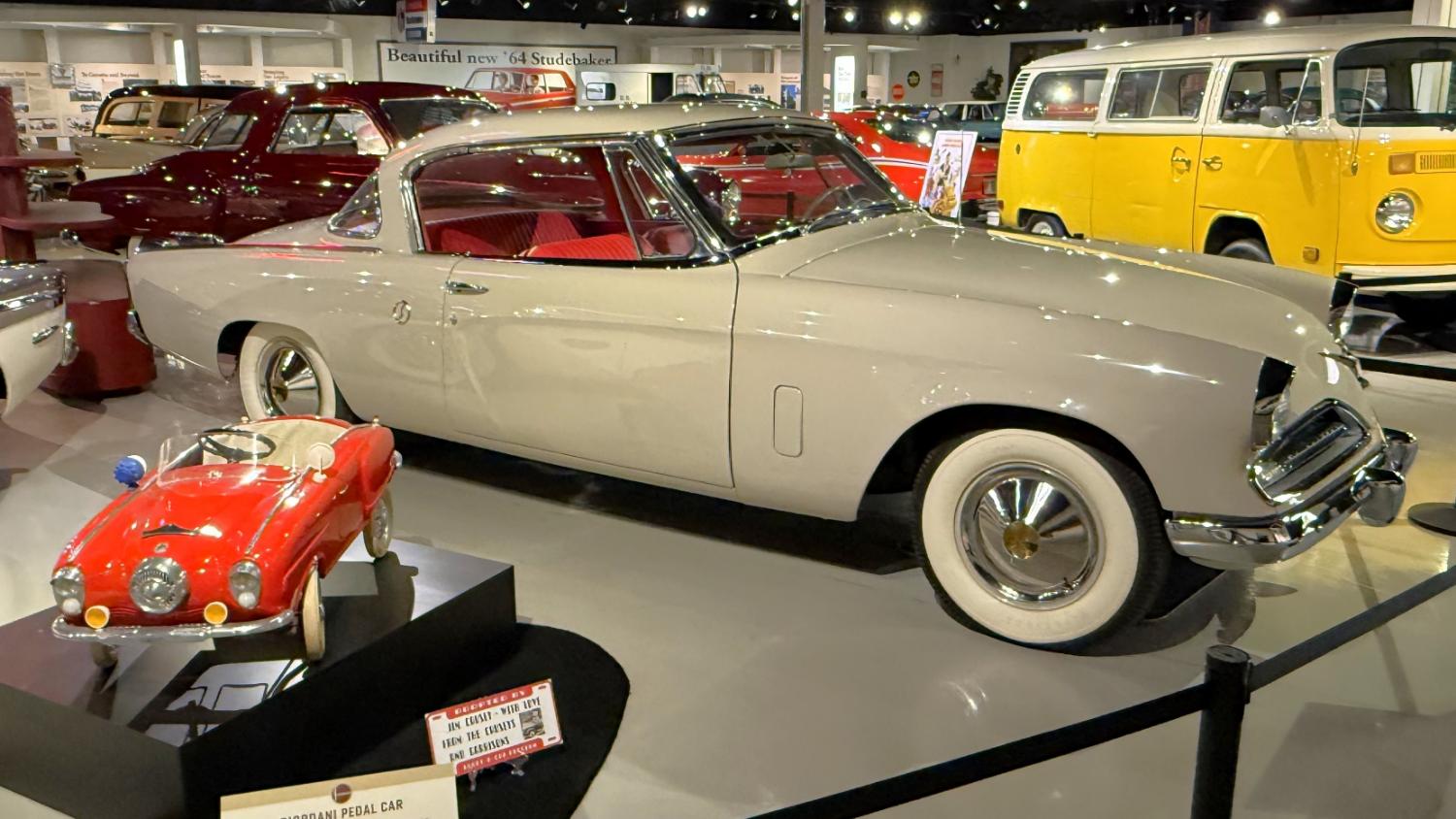
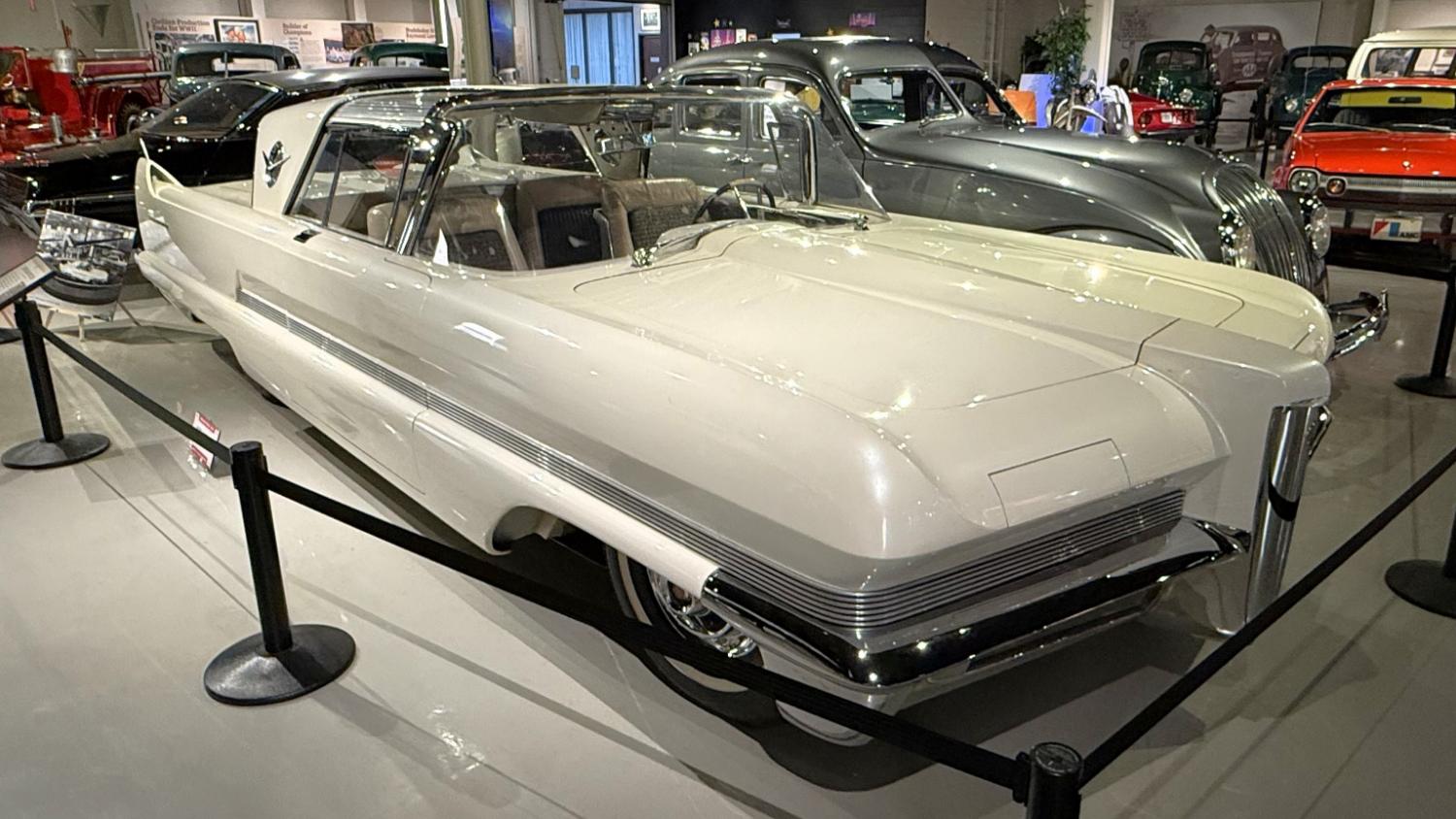
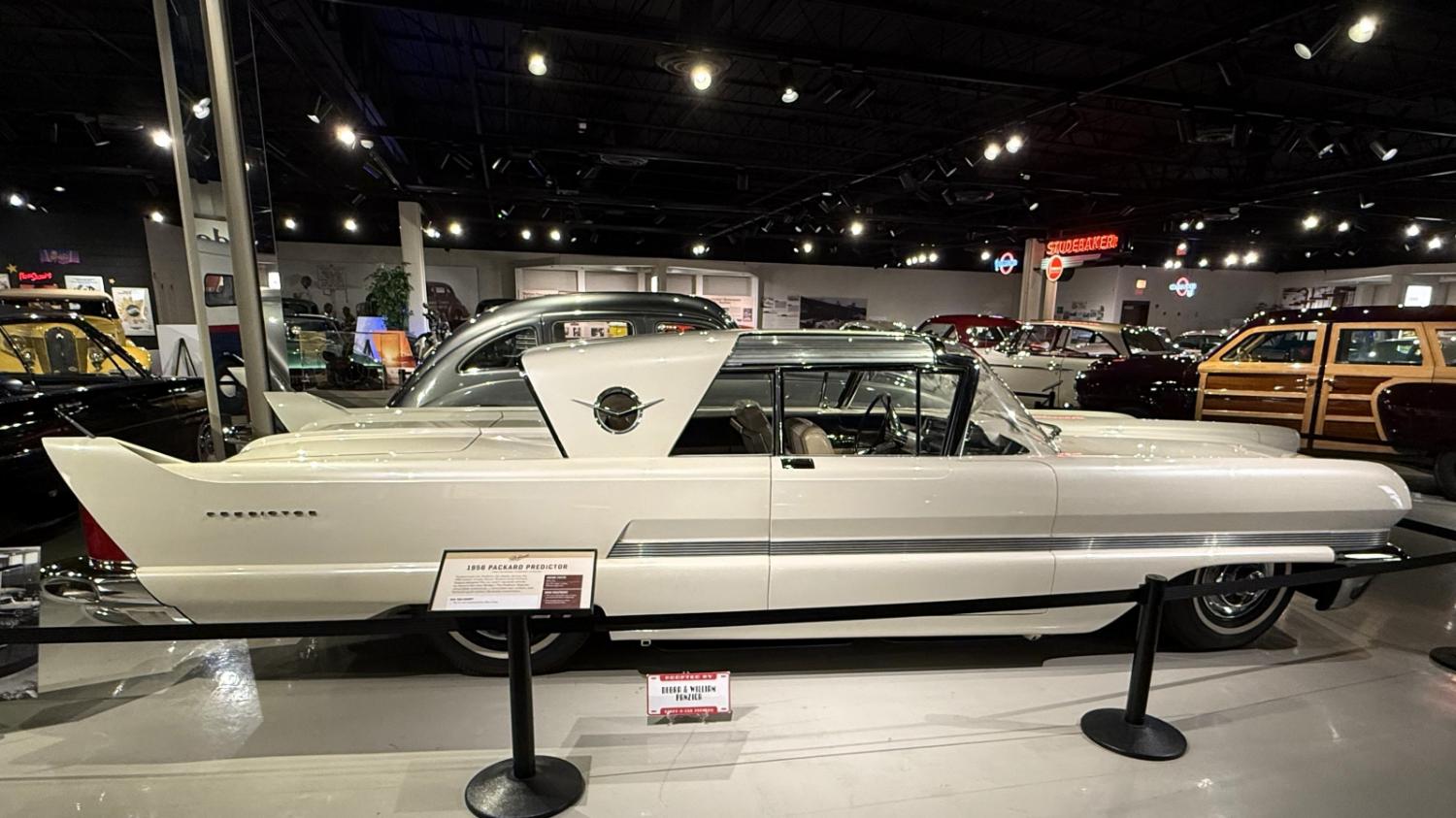
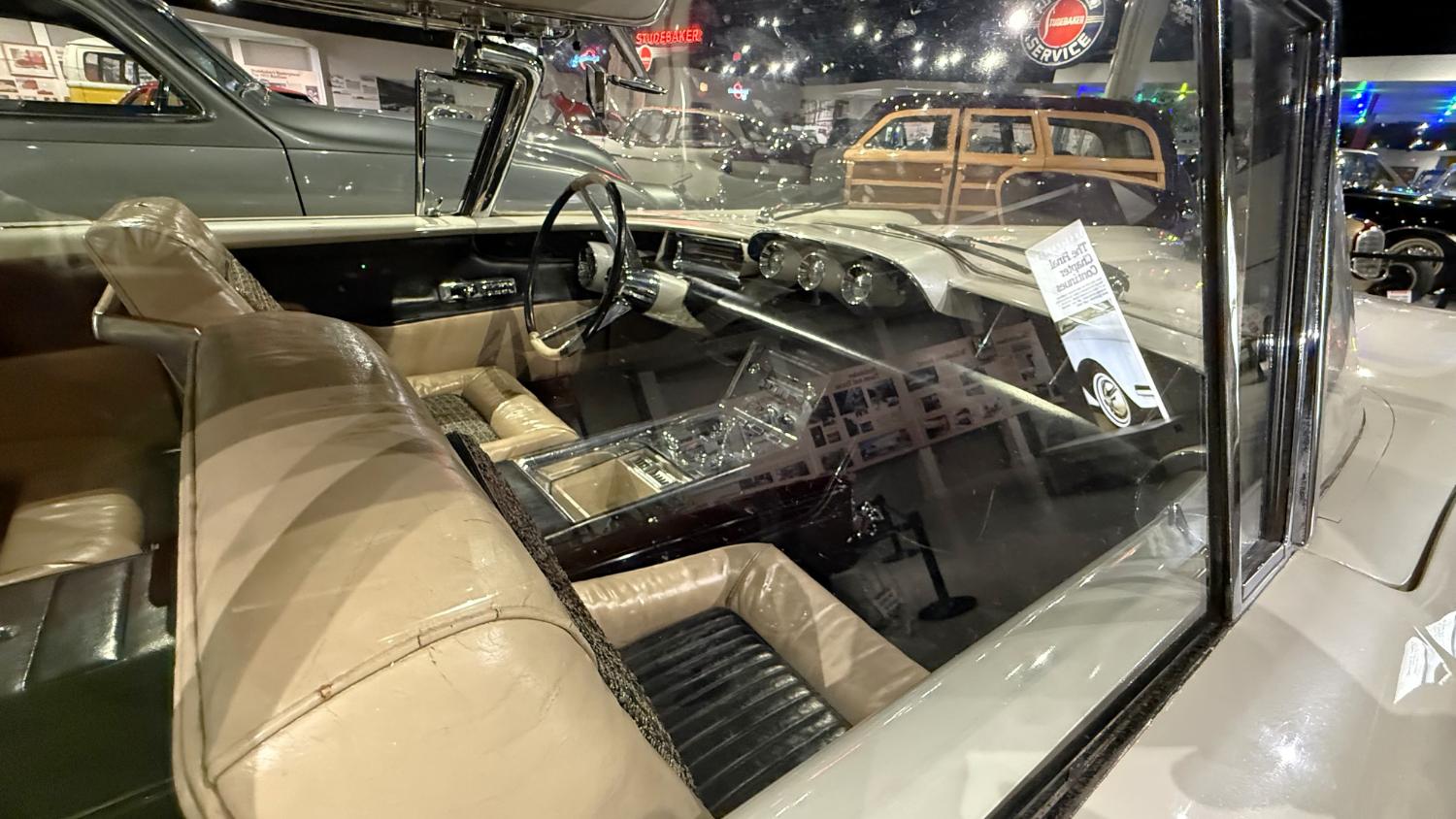
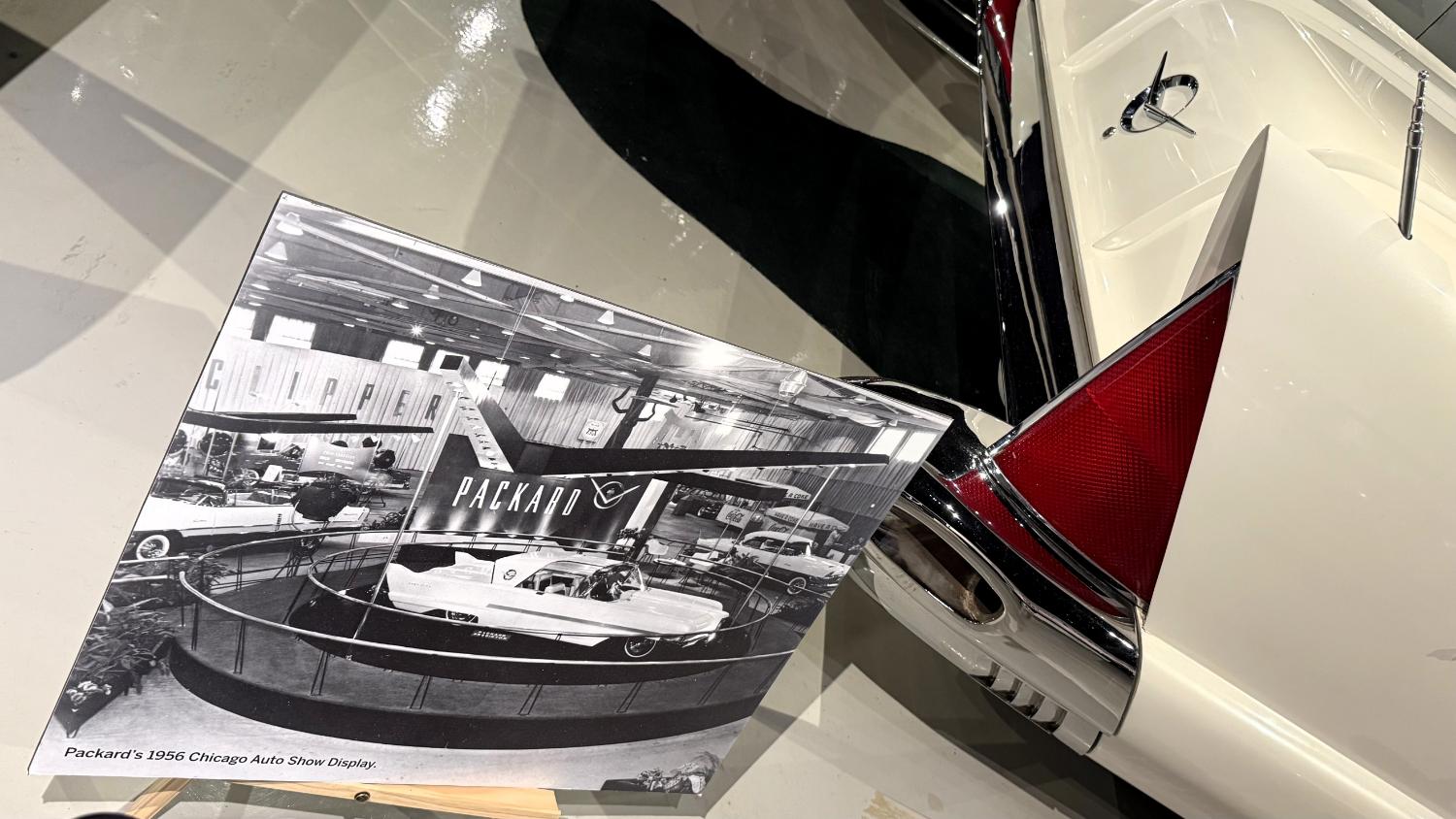
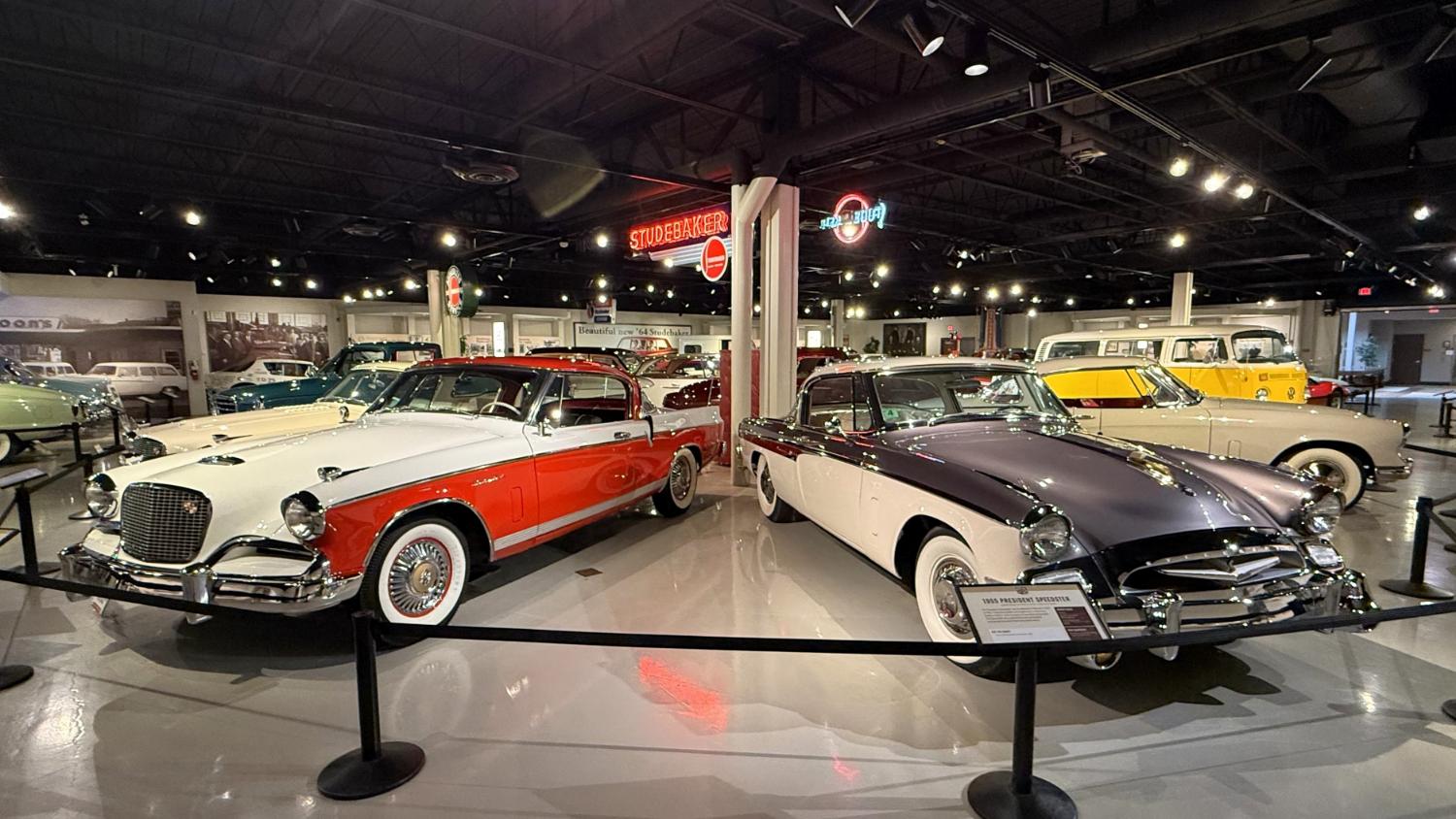
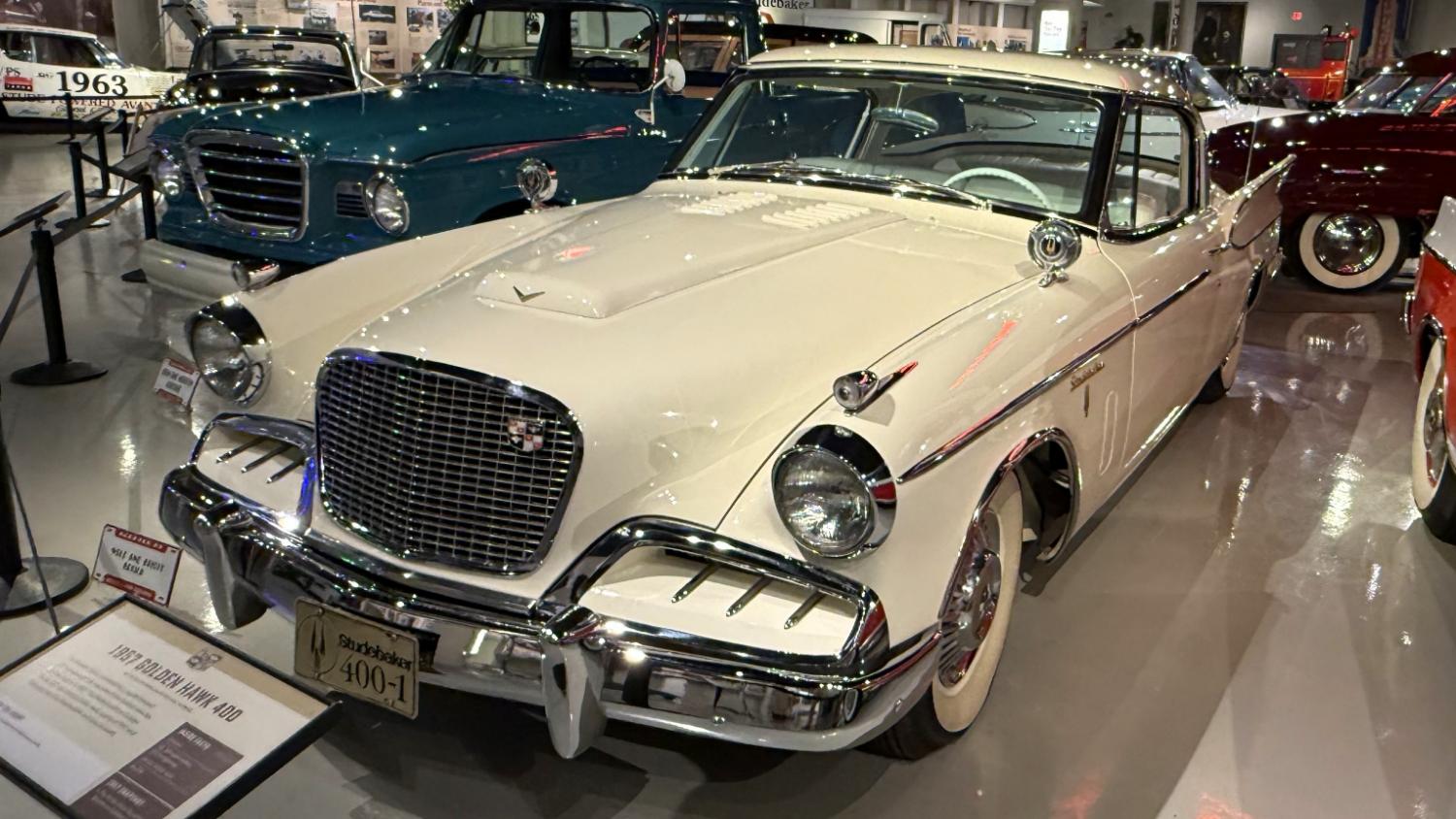
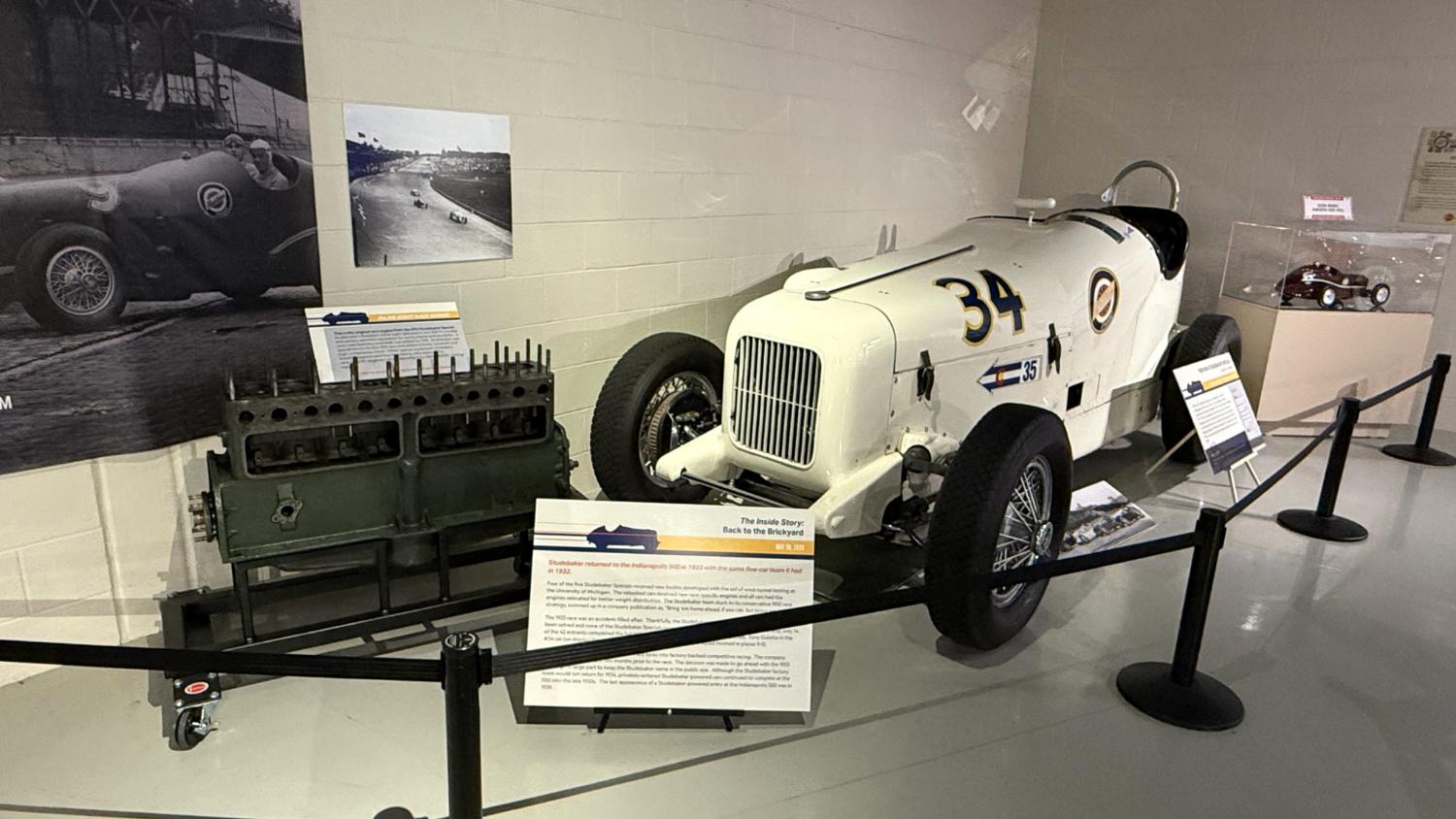
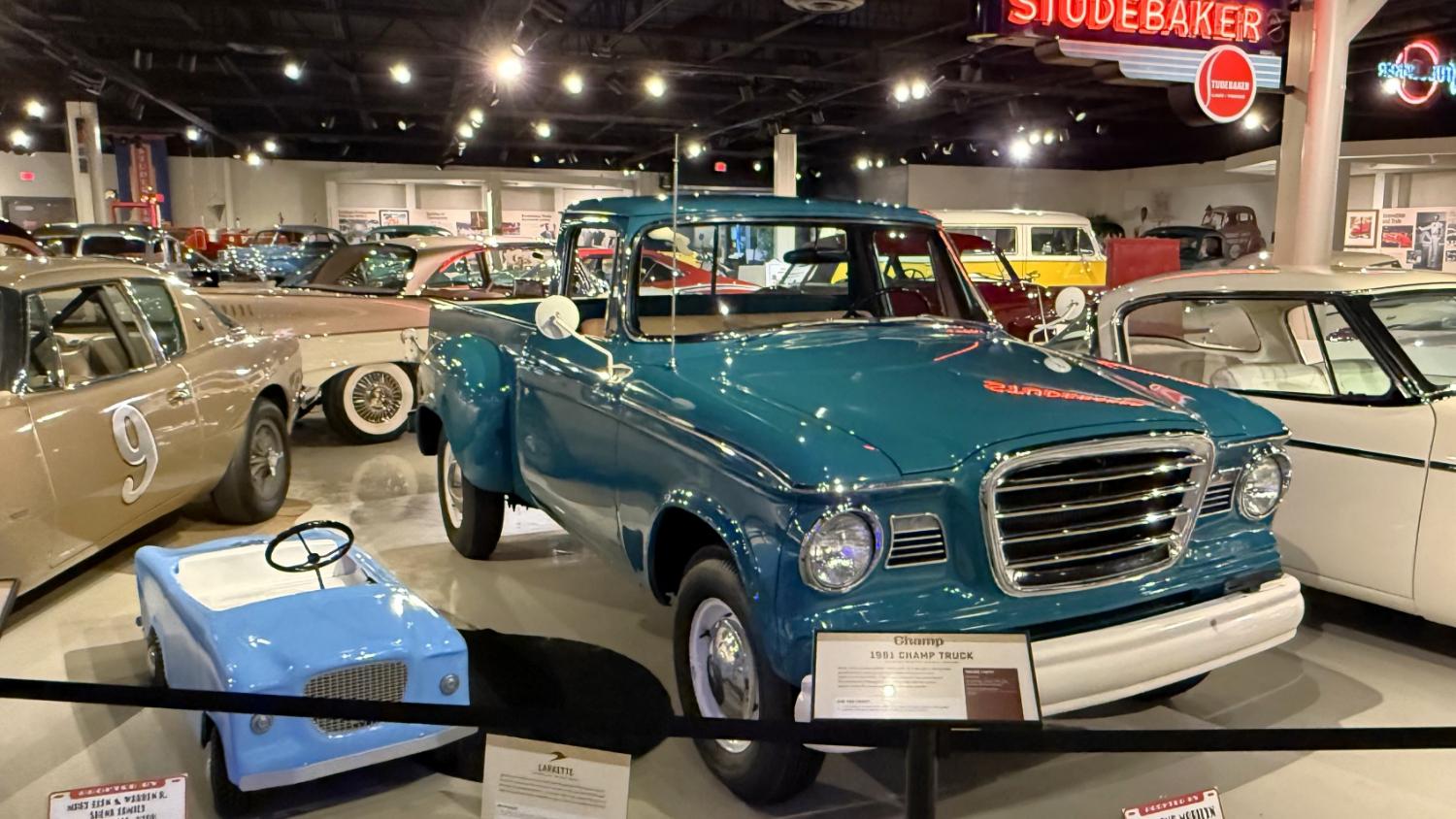
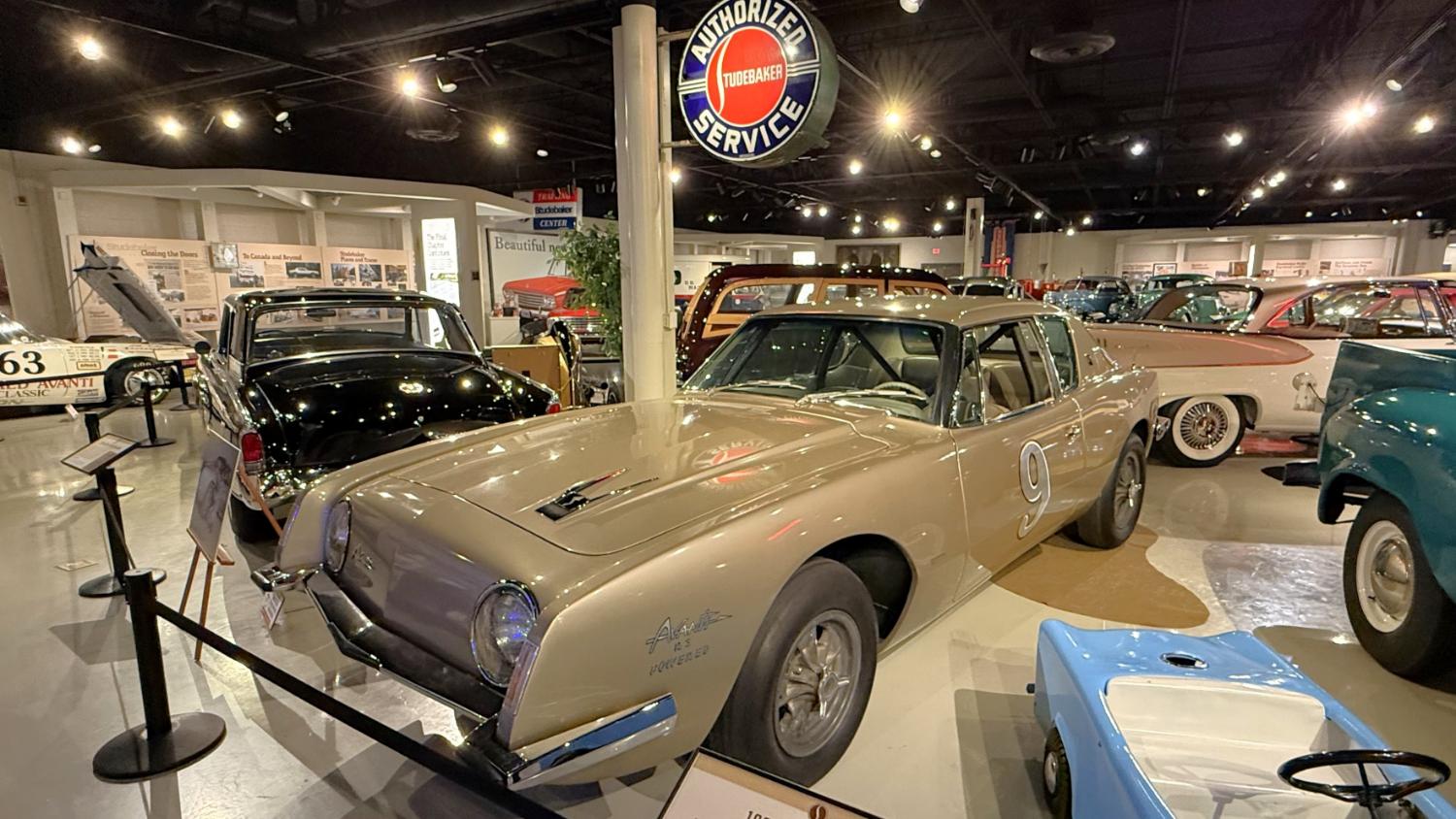
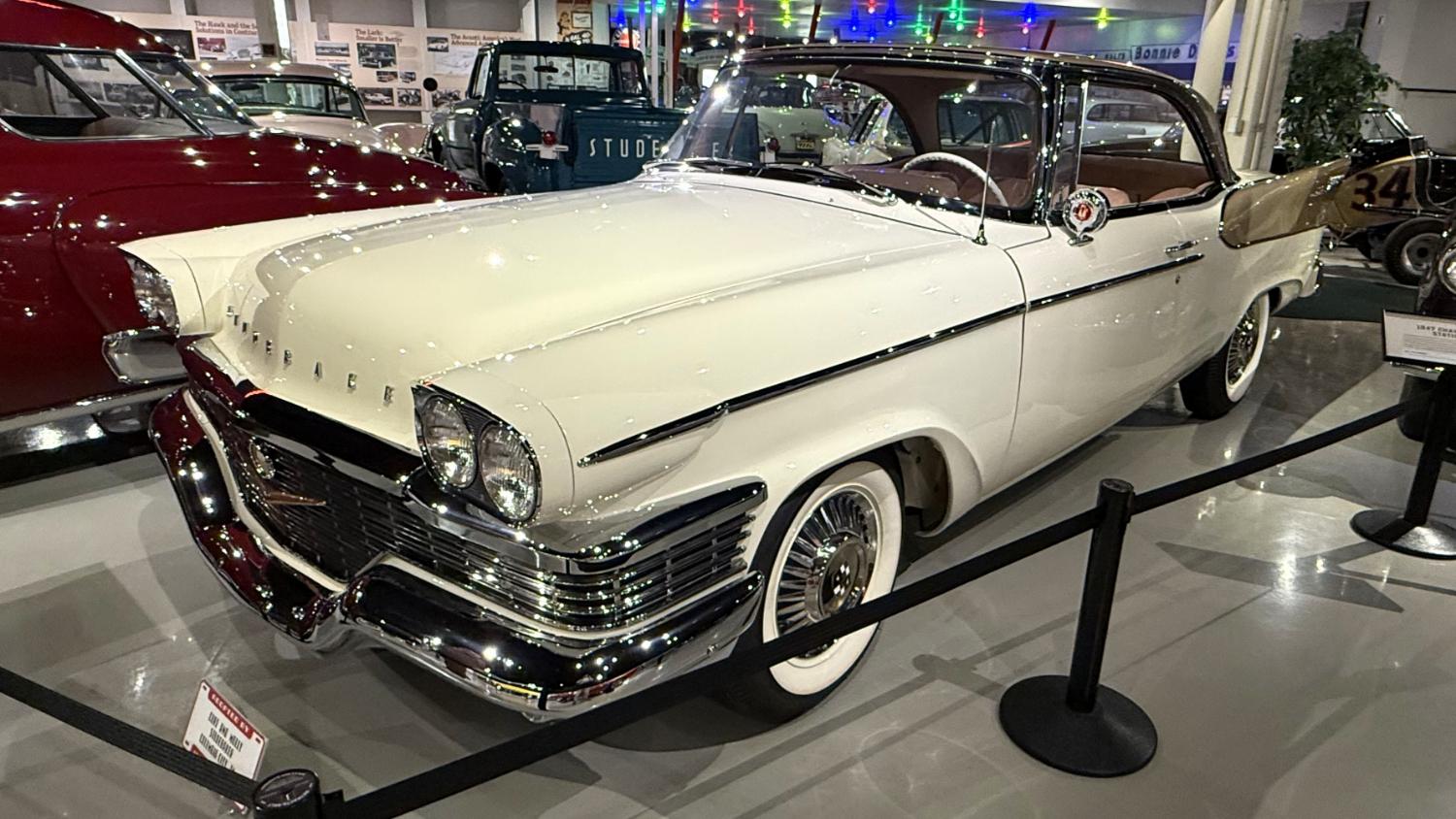
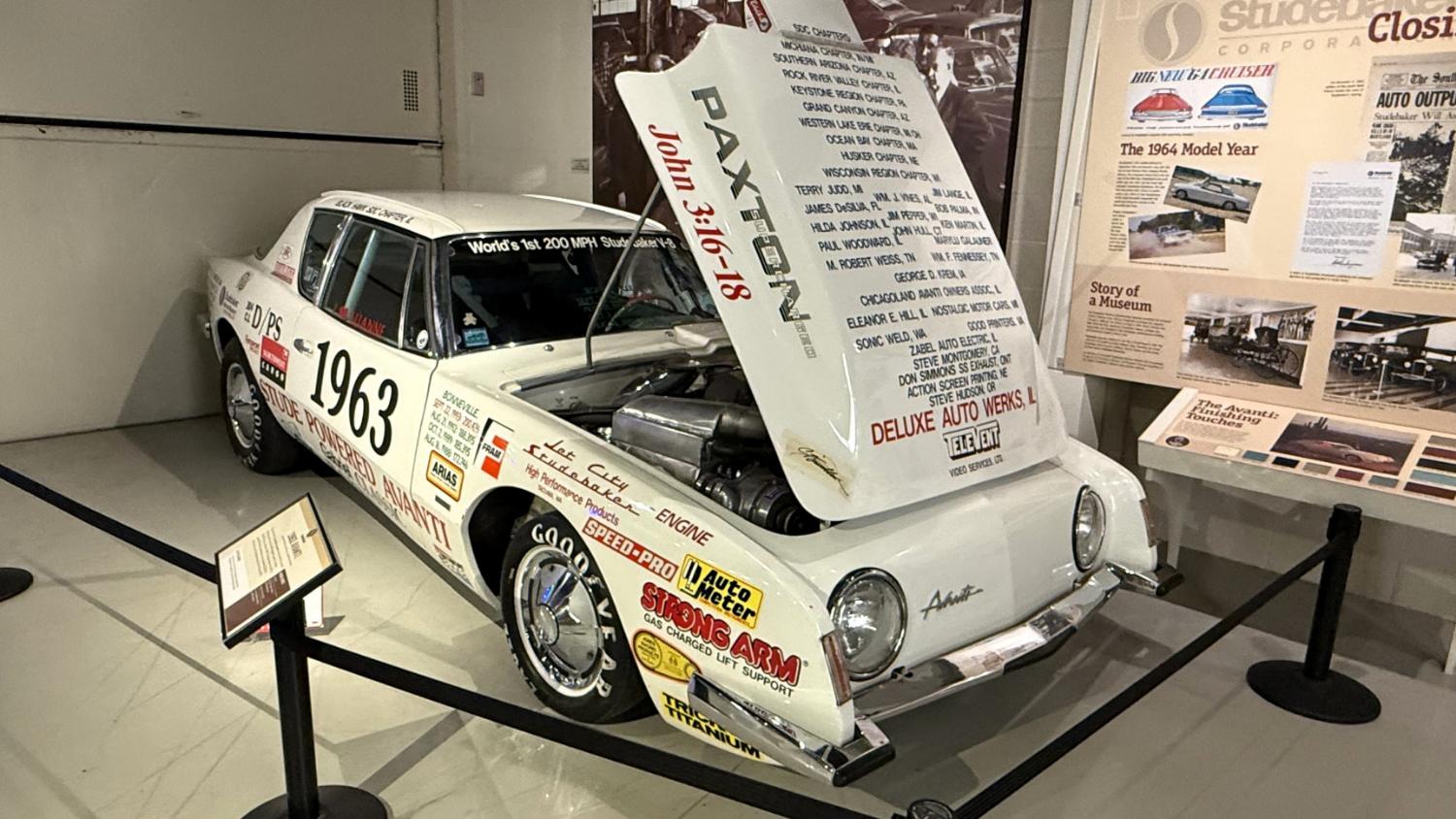
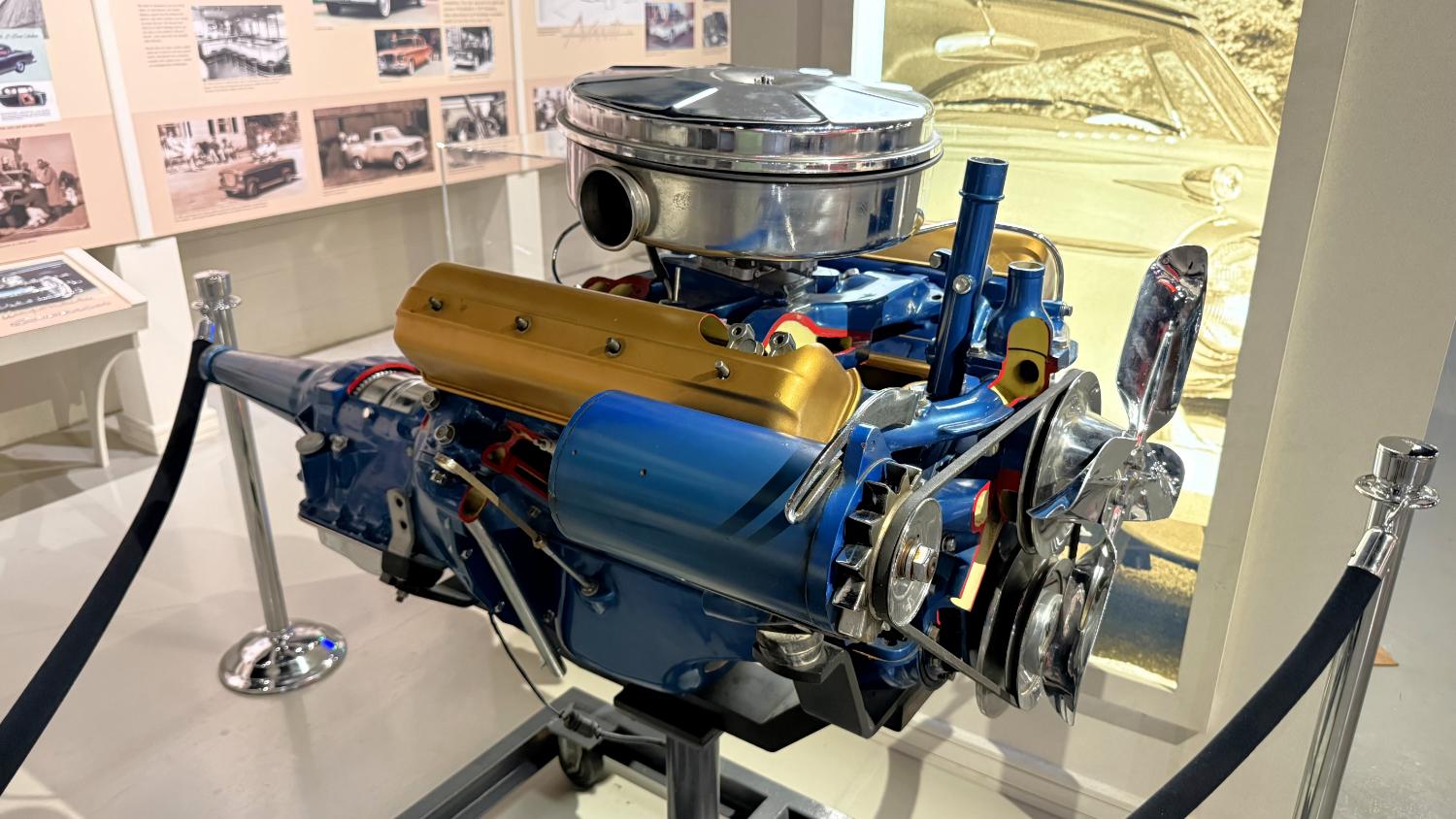
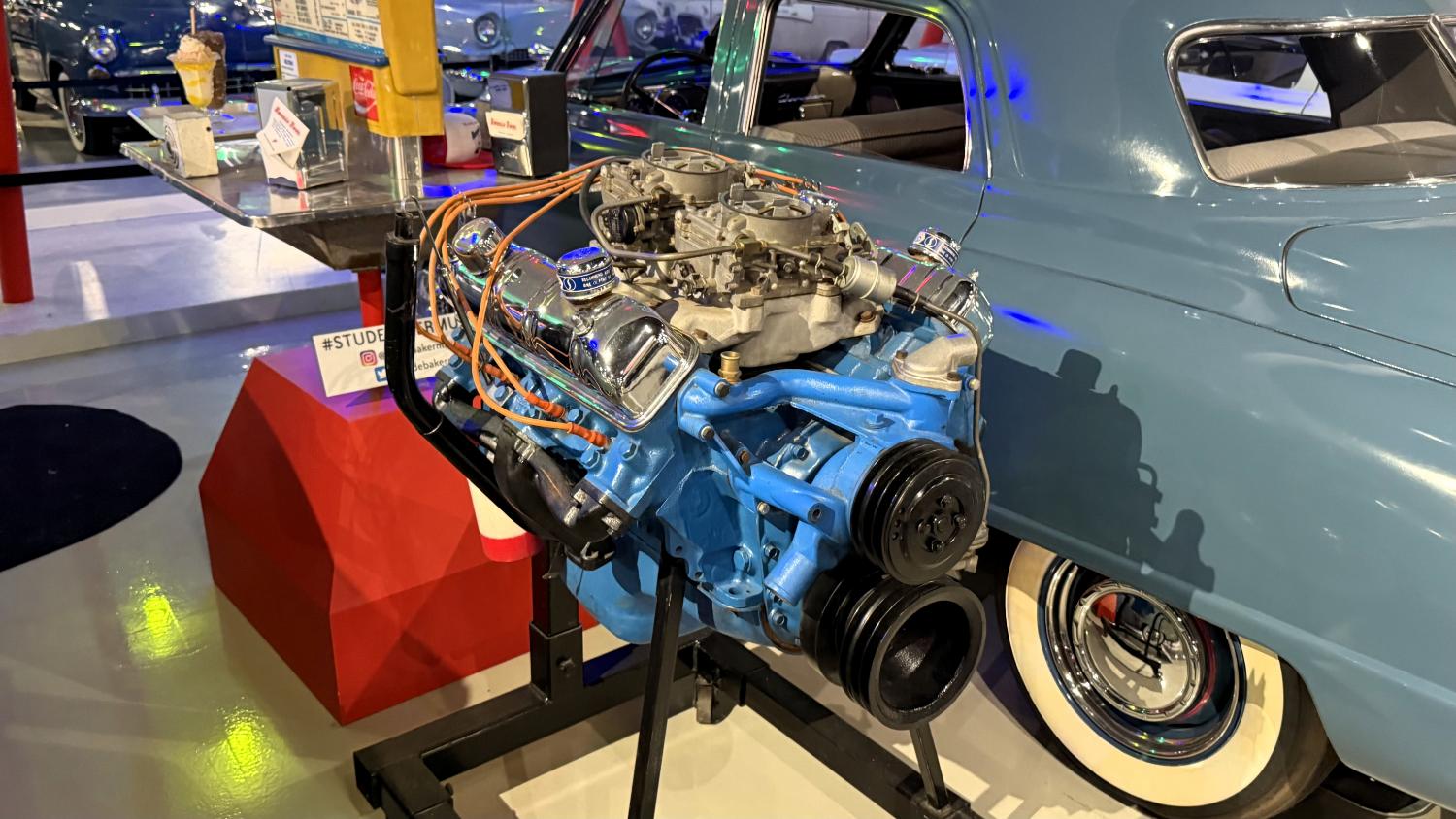
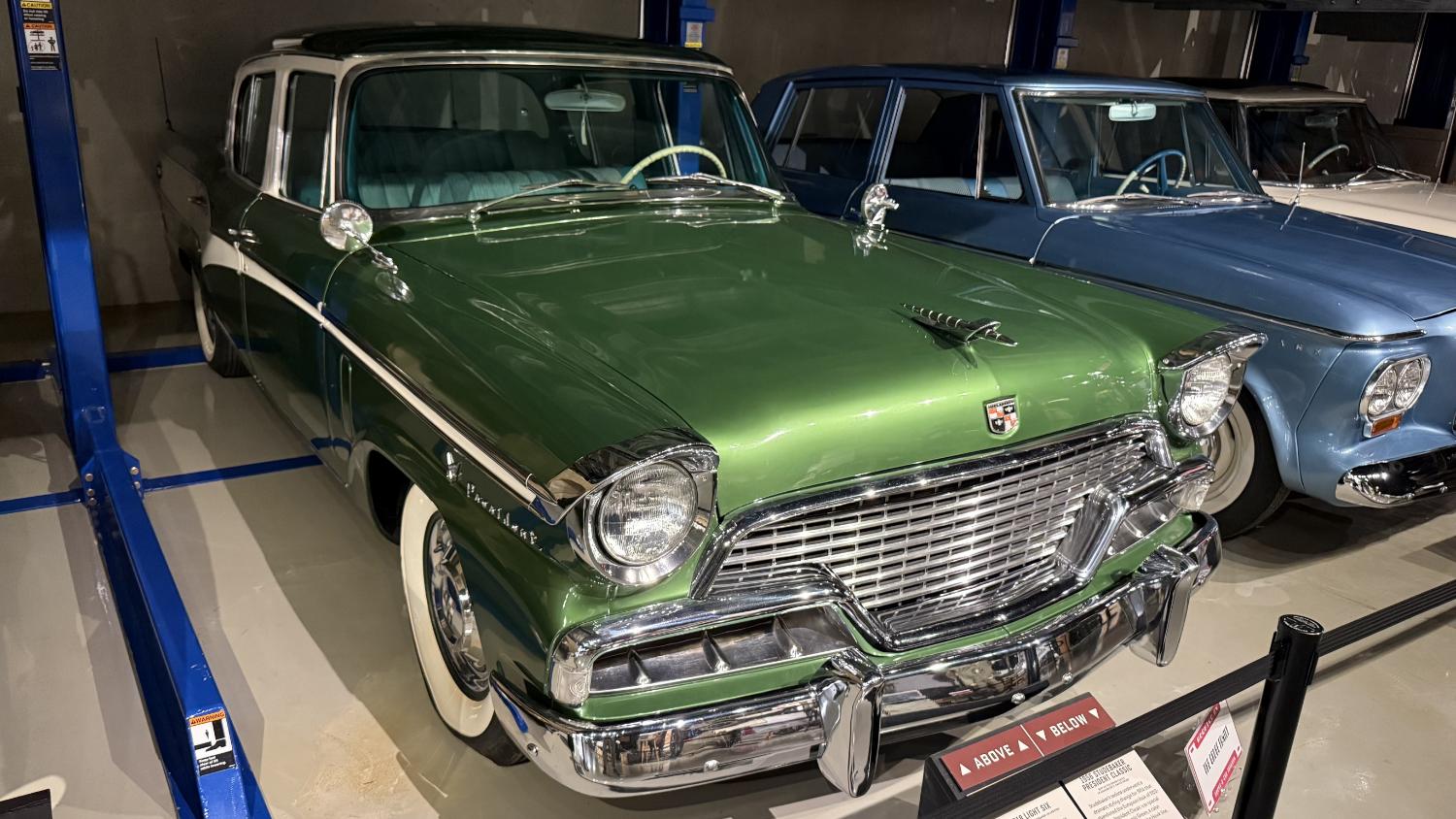
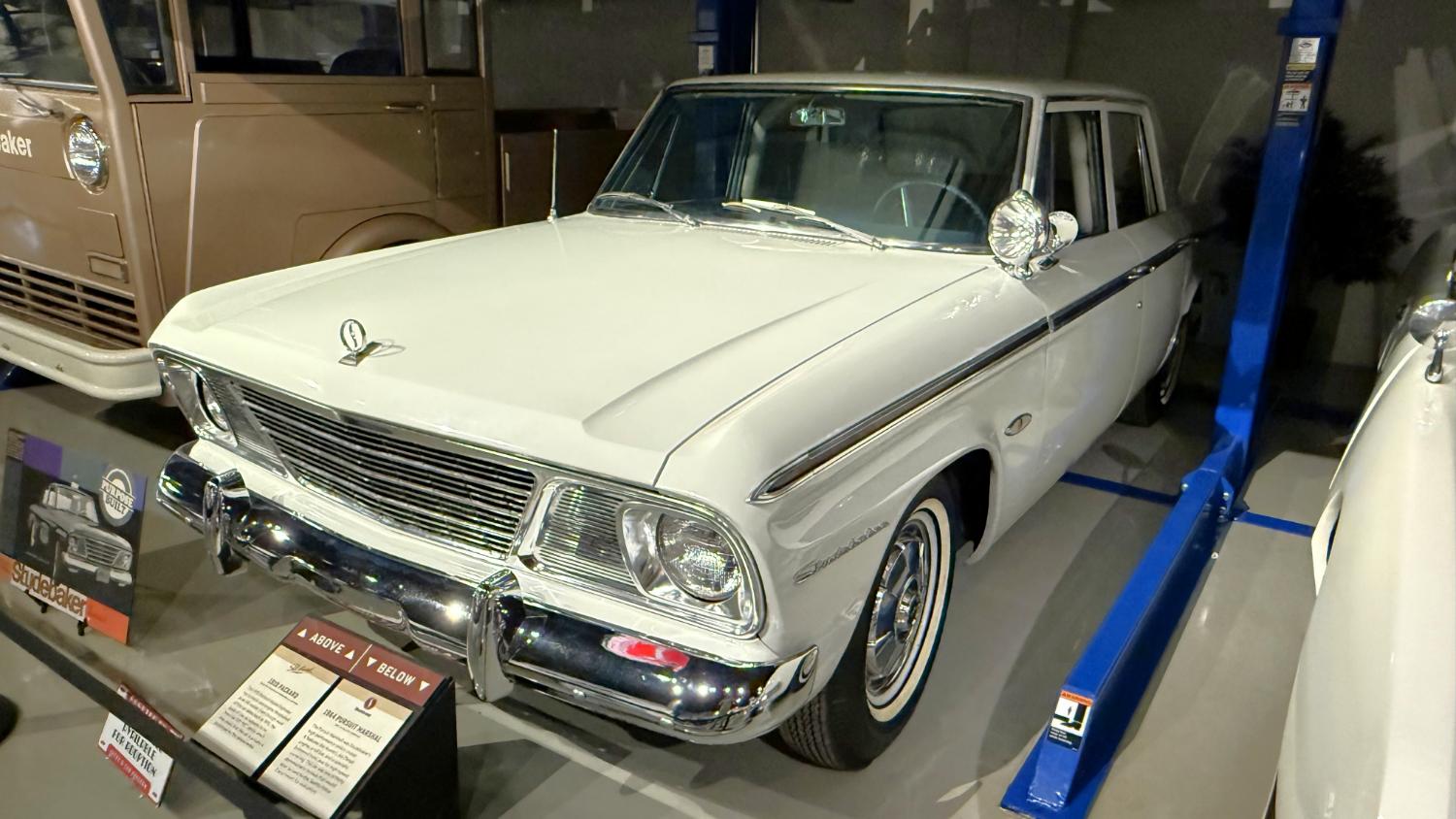
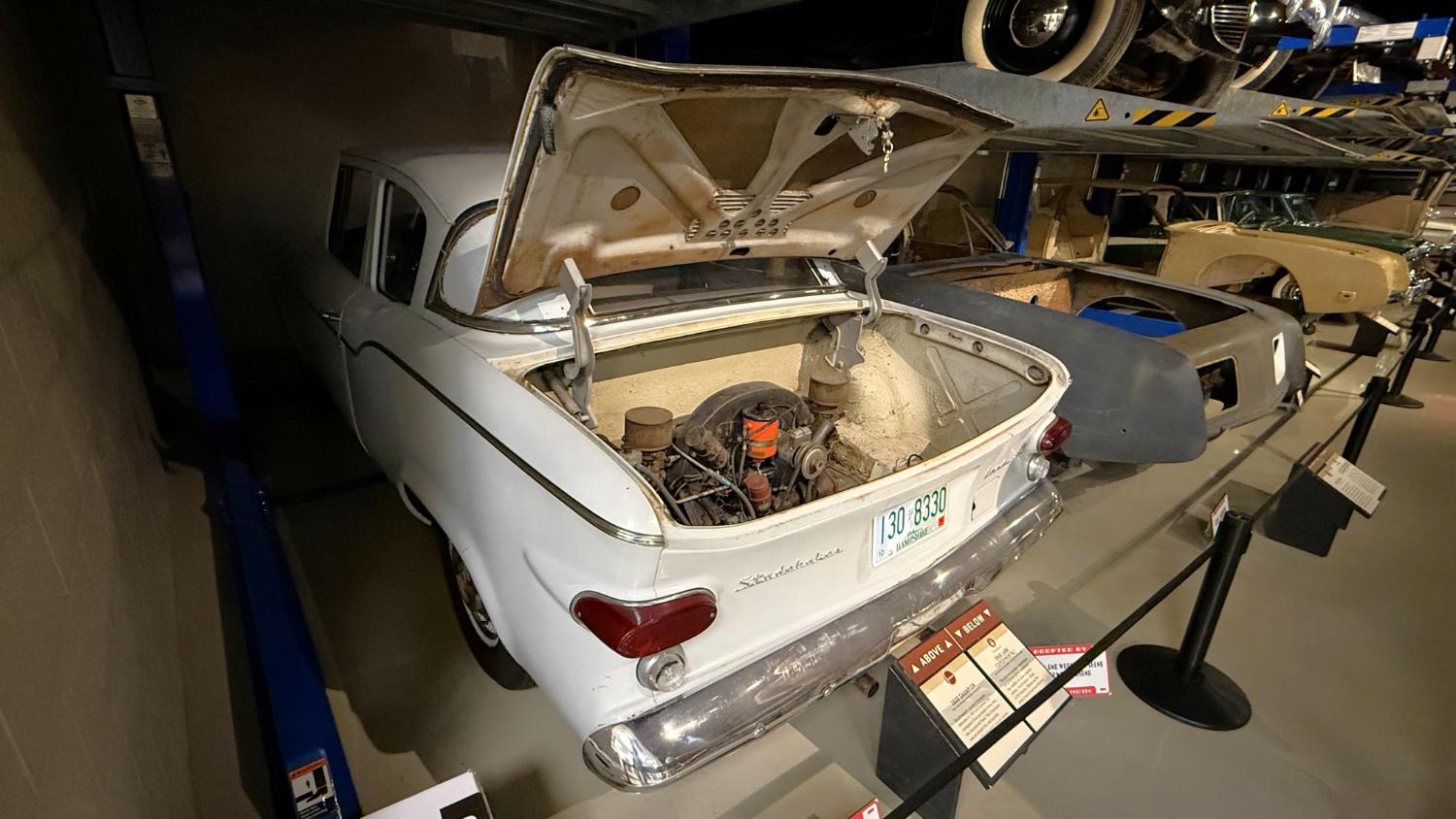
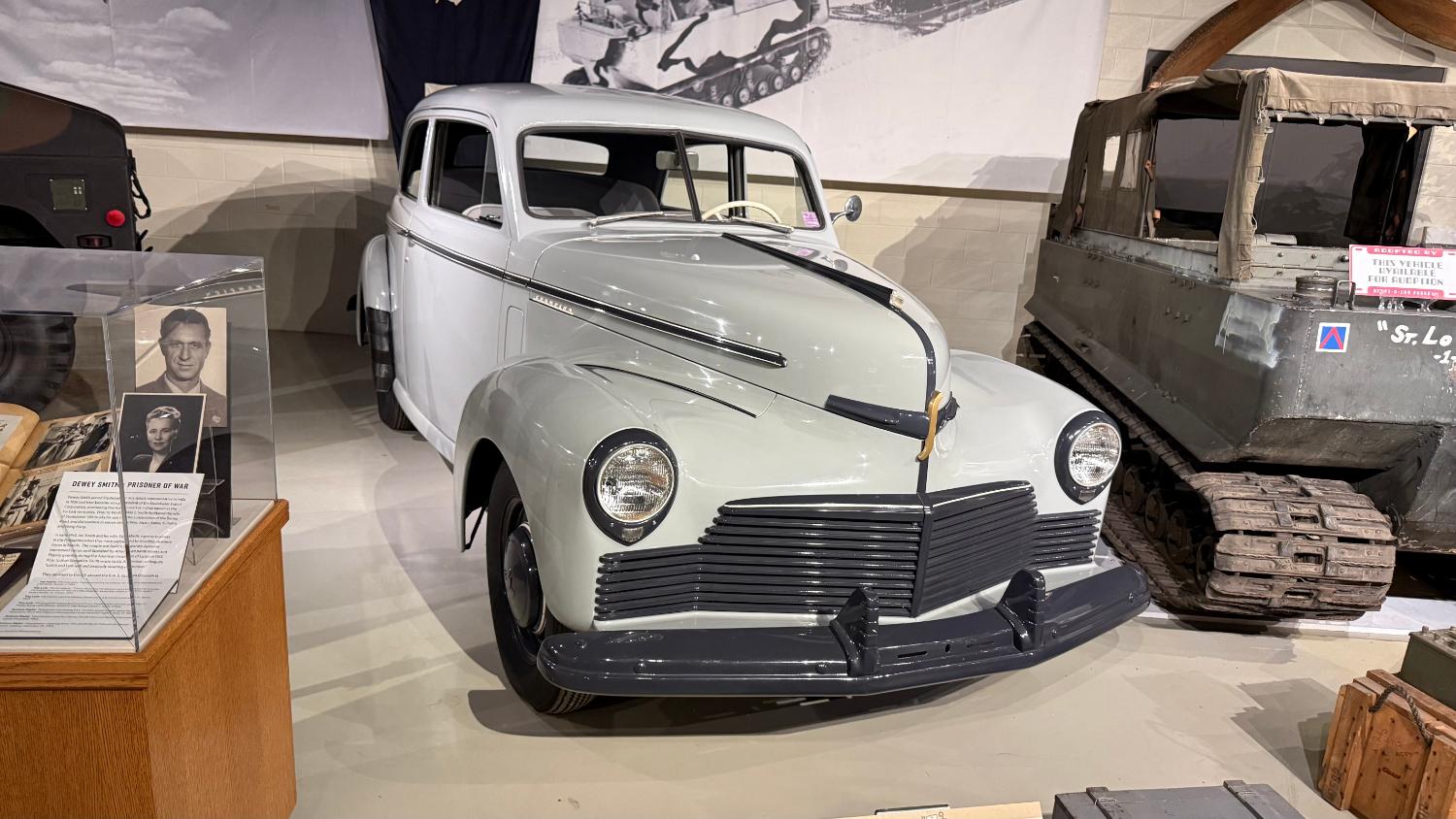
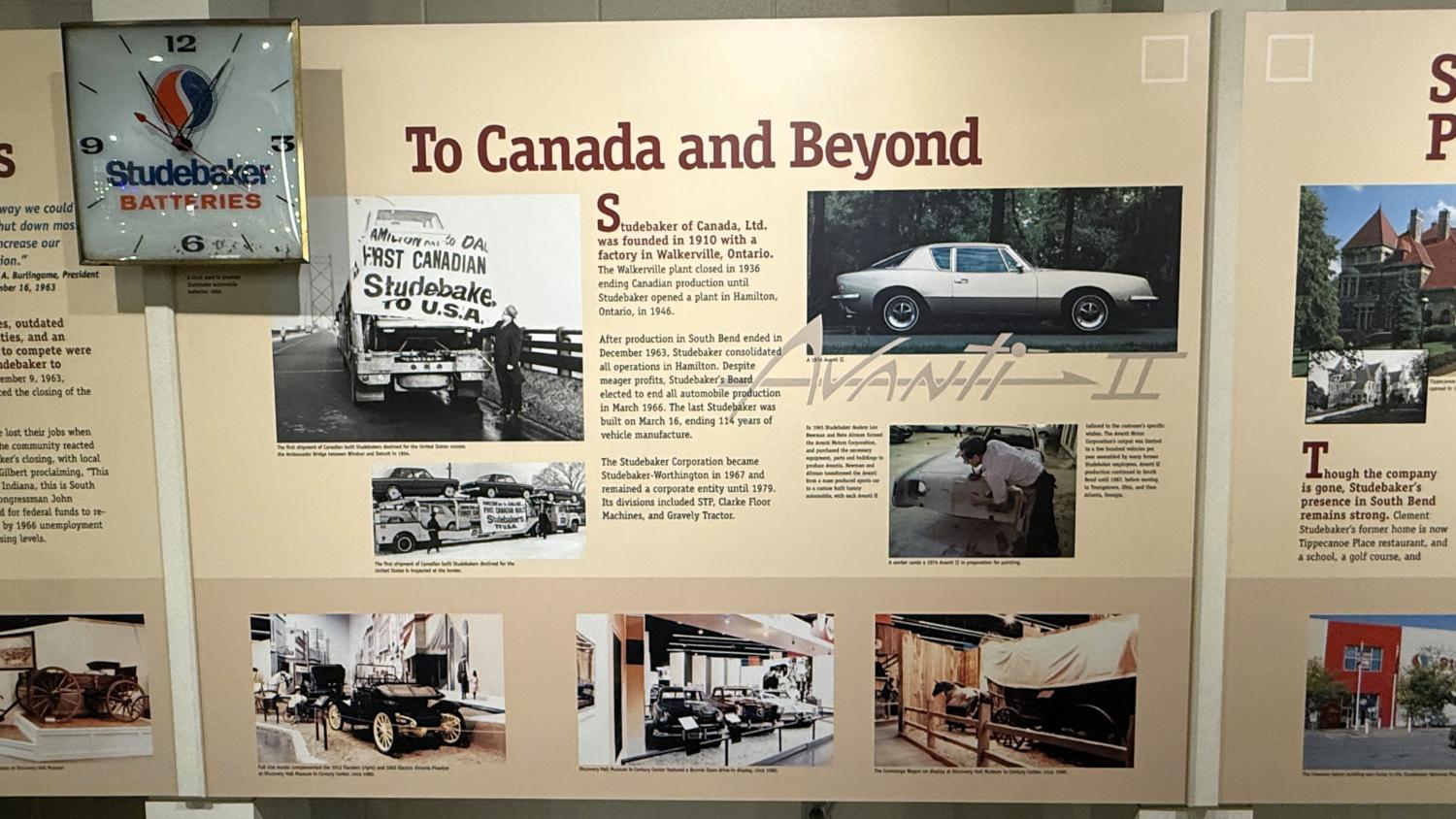
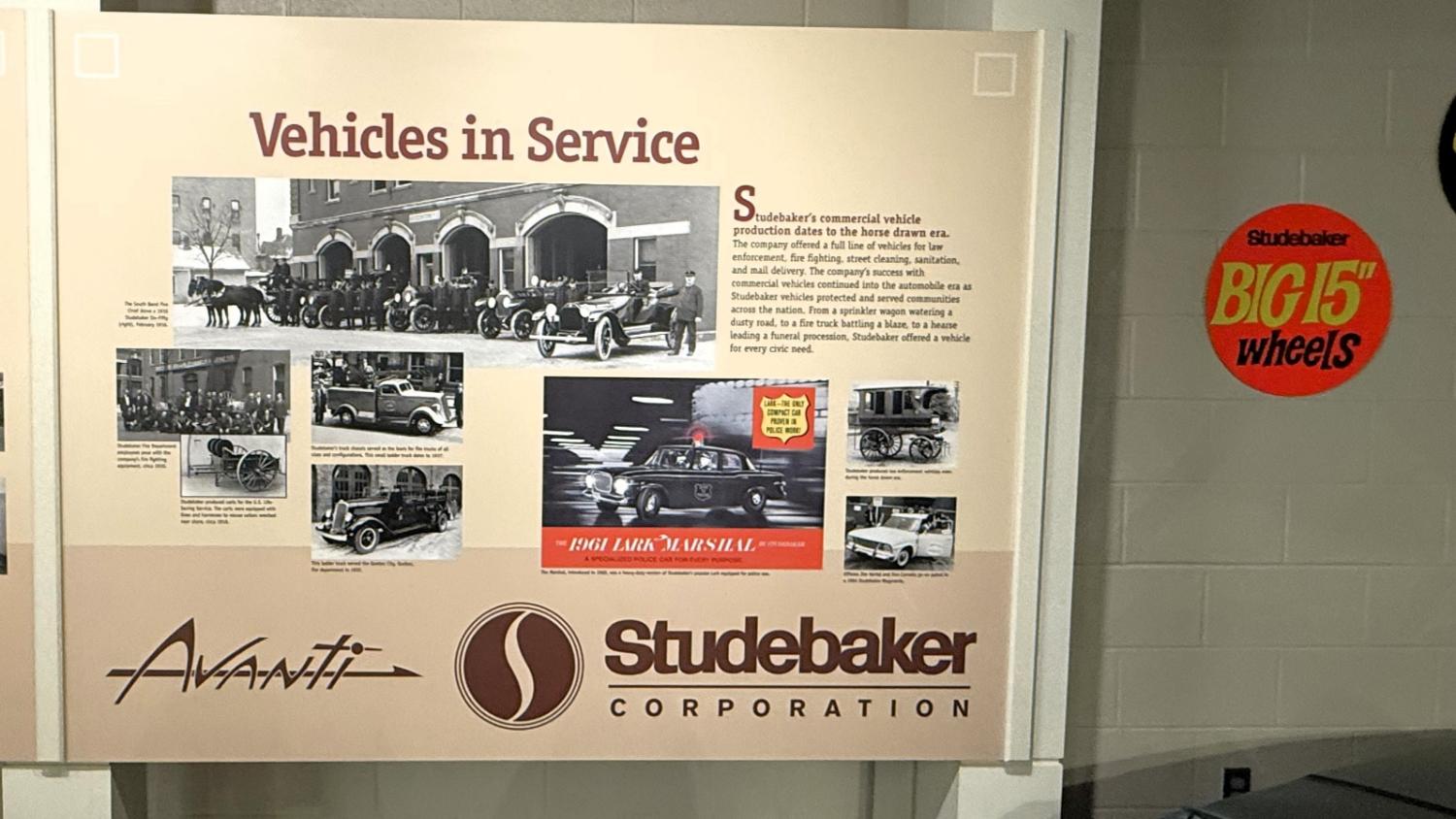
c.1835 Conestoga wagon1863 hearseOliver, a company from South Bend, built this plow in 1893.1950 Champion convertible1910 dump wagon1919 “Izzer” buggy, the last Studebaker buggy built.This Barouche carriage took President Lincoln to Ford’s Theatre. You know what happened next.Studebaker built EVs before ICE cars. This coupe is from 1911.The 1910 E.M.F. was sold by Studebaker dealers, then absorbed by the company.This 1904 Model C is the oldest surviving gas-powered Stude.1912 Flanders 20 was Studebaker’s entry-level model.1913 Model 25 Touring featured a rear-mounted transaxle.1913 E6 Touring was the first six-cylinder Studebaker, helping the branch achieve fourth place in the industry.1922 Big Six child’s hearse1928 Commander roadster traveled 25,000 miles in under 23,000 minutes (just under 16 days). 1920 Light Six, the first Studebaker auto build in South Bend.This 1919 Big Six traveled 90,000 miles in two years, 390,000 in five.1927 Erskine, Studebaker’s attempt at a lower-cost vehicle.1929 President State 7-passenger sedan with 135-inch wheelbase.The Rockne succeeded the Erskine but was only built from 1932-33. This is a 1932 Rockne 65.1932 President St. Regis Brougham1932 President convertible coupe1938 State Commander convertible sedan1933 Speedway President1916 SF-Four roadster1925 Big Six Duplex phaetonThese letters were used by the Newman Altman Studebaker dealership in South Bend.Upstairs, we find several movie cars mixed in with more of Studebaker’s history.Any James Bond fans recognize this 1974 AMC Hornet?1966 Ford Thunderbird from “Thelma & Louise”This 1935 Commander was used in “The Color Purple.”1947 M5 half-ton pickup1949 2R5 pickup1937 Coupe Express was produced through 1939.1940 President Club Sedan1962 Sceptre prototype designed by Brooks Stevens was to replace the Hawk.1941 Champion1928 fire truck from St. Joseph, MichiganThis 1966 Cruiser is the final Studebaker built, marking an end to 114 years of vehicle manufacturing.1963 ZIP van1947 Champion Deluxe station wagonThis 1964 Daytona was the last vehicle to be built in South Bend; production resumed in Hamilton, Ontario, Canada. It is powered by an R1 289.1950 Commander Starlight coupe1953 Champion Starliner 1956 Packard Predictor show car1956 Golden Hawk and 1955 President Speedster1957 Golden Hawk 400, a rare version with an all-leather interior.Studebaker Special raced in the 1933 Indy 500.1961 Champ truck1963 Avanti “#9” hit 170.81 mph at Bonneville.1958 President Starlight1958 Scotsman1949 Champion Regal sedan1952 Commander Starliner1964 GT Hawk with supercharged R2 engine originally owned by Brooks Stevens.This 1963 Avanti hit 200 mph at Bonneville in 1993.Studebaker’s first V-8 appeared in 1951.The 1964 R4 measured 304.5ci and featured dual quads and 12.0:1 compression.The basement vault featured more eclecticism from different Studebaker eras.1956 President Classic special-ordered in Ceramic Green, a Hawk color.1964 Pursuit Marshall was one of 30 sent to the Seattle Police Department for evaluation.1959 Lark features an experimental rear-engine layout powered by a 1953 Porsche.“Blackout” 1942 Champion c.1942 T42 Weasel1908 “Extension” station wagon and 1936 Ace truckThe 1950 Land Cruiser rode on a 124-inch wheelbase.
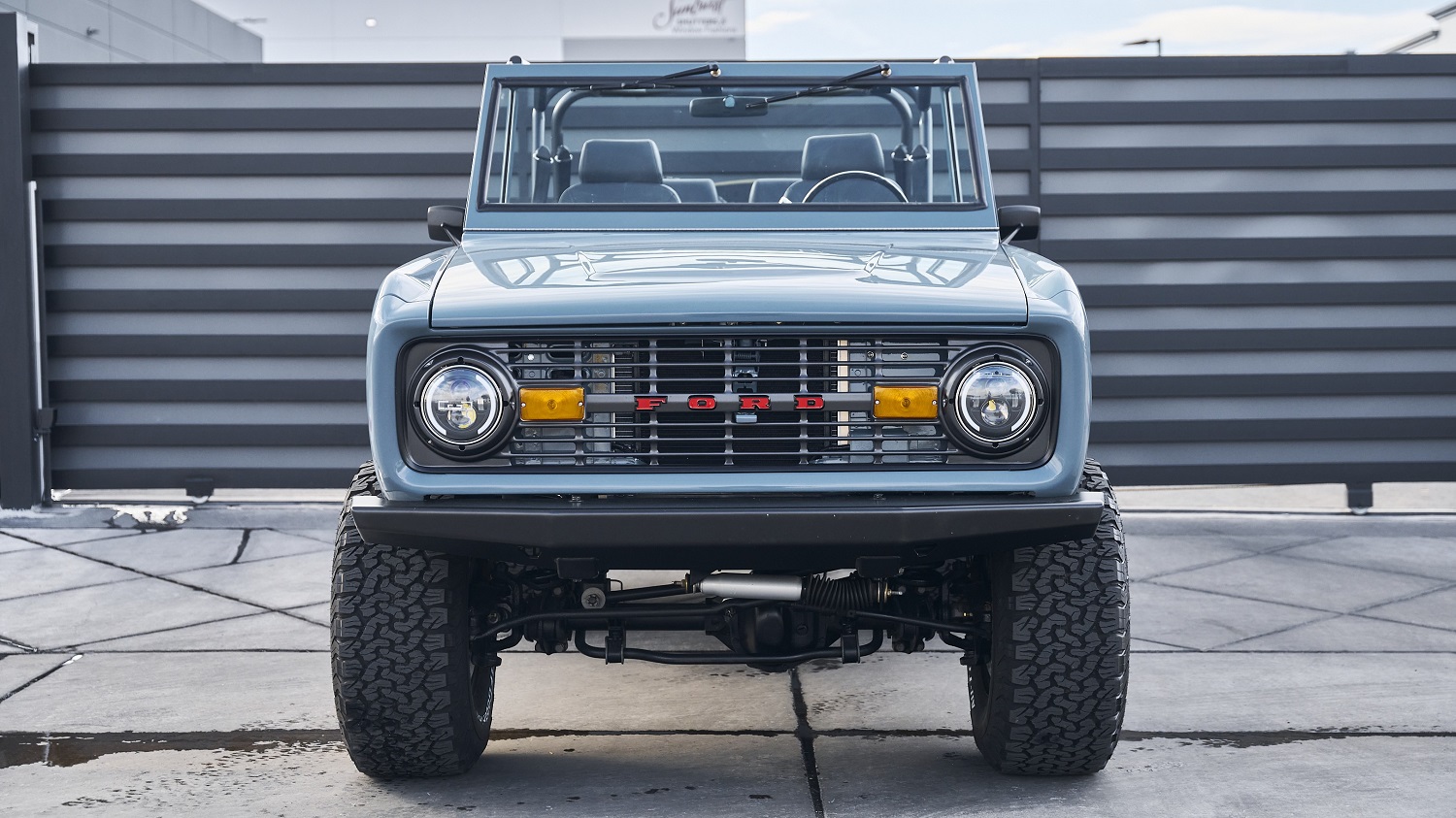
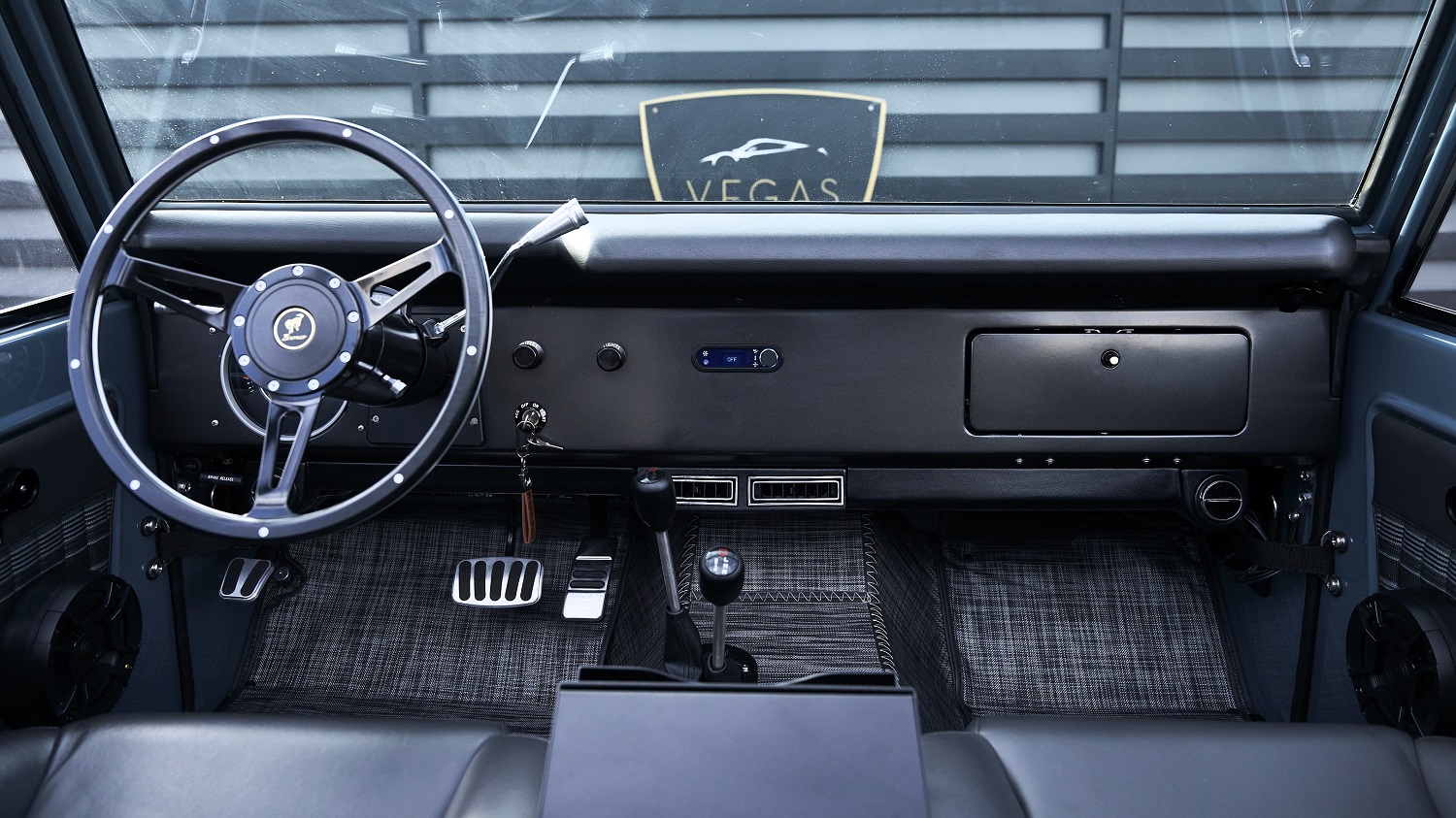
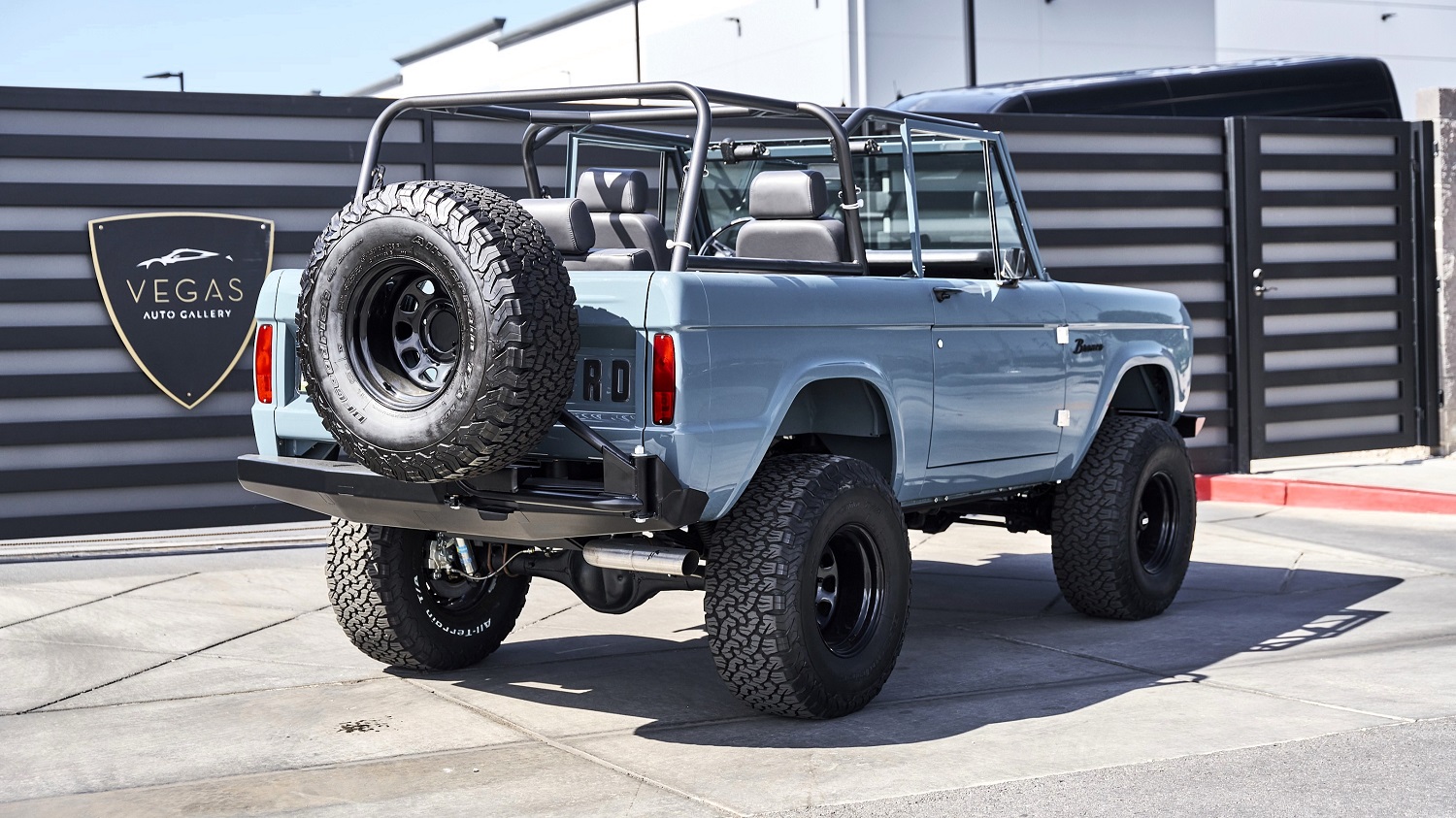
Right now on AutoHunter, you can find this 1977 Ford Bronco restomod, which is powered by a third-generation Ford Coyote 5.0-liter V-8 paired with a 6R80 six-speed automatic transmission and dual-range transfer case. Highlights include hydroboost power steering and brakes, lift kit, and Ford nine-inch rear end. Finished in Area 51 blue over a charcoal gray leather and patterned cloth interior, this updated first-generation Bronco build comes from the selling Las Vegas dealer with a clear title.
If you’re familiar with modern Fords, the Area 51 paint shouldn’t be alien to you because it’s a color that was previously offered on the current generation of the Bronco. The hue is complemented by charcoal gray bumpers and trim. Exterior features include LED headlights, manual locking front hubs, dual mirrors, tinted windows, AMP Research power running boards, roll cage, rear-mounted swing-away spare tire carrier, and single exhaust outlet. The video below shows a full exterior and interior tour of the vehicle.
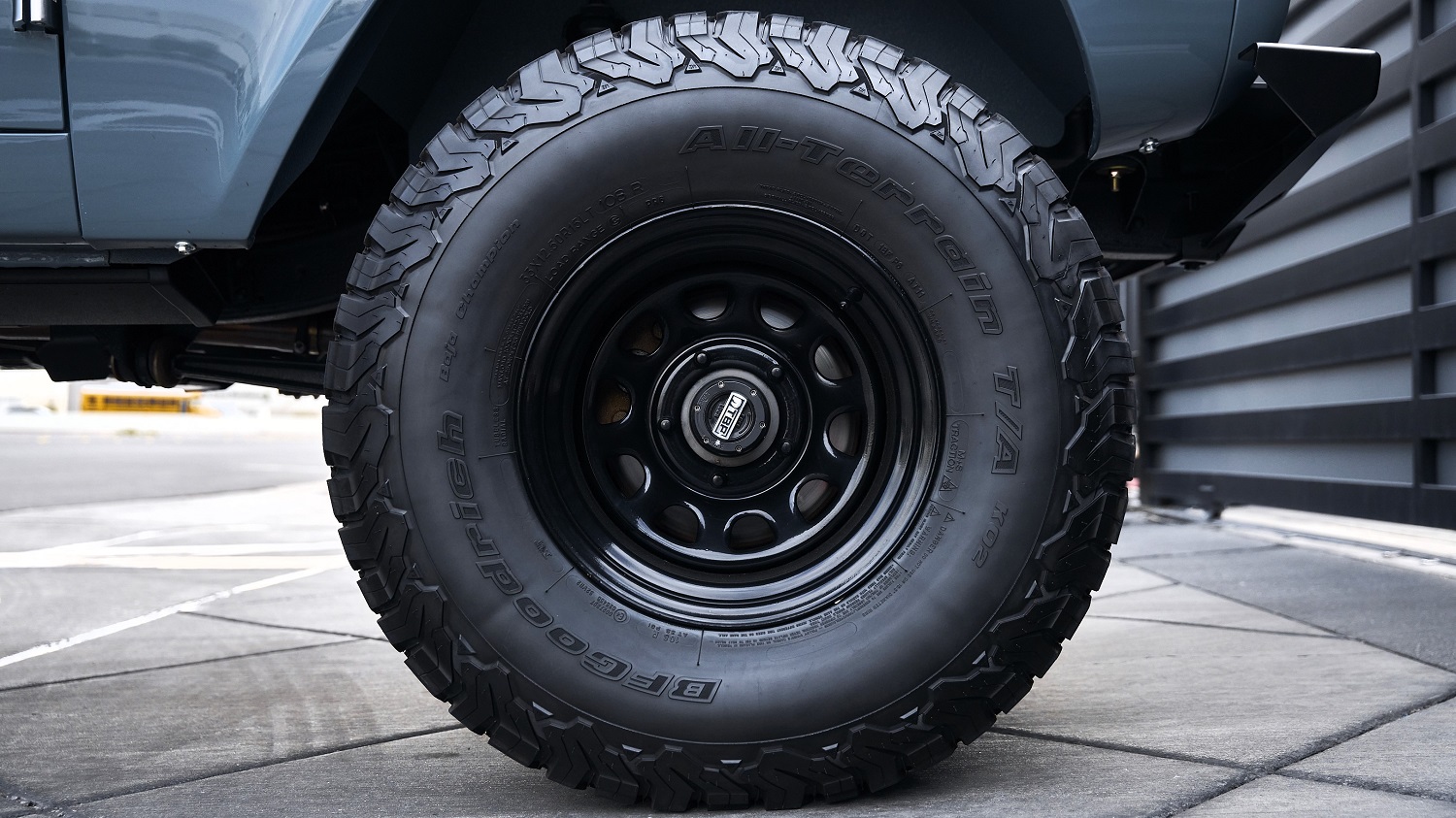
As part of the extensive series of modifications, the wheels and tires were upgraded to 15-inch black steel wheels with 33-inch BFGoodrich All-Terrain T/A KO2 tires.
The cabin is outfitted with charcoal gray leather leather bucket (front) and bench (rear) seating with gray and white patterned cloth inserts. Interior features include power windows with manual-style cranks, tilt steering column with billet control knobs, hydroboost power steering, gray and white patterned floor mats, aftermarket climate control, and Bluetooth-compatible Pioneer AM/FM/CD radio concealed in an Icon center console. The glove box contains a Centech Wiring fuse panel and US Shift Quick 6 stand-alone transmission controller.
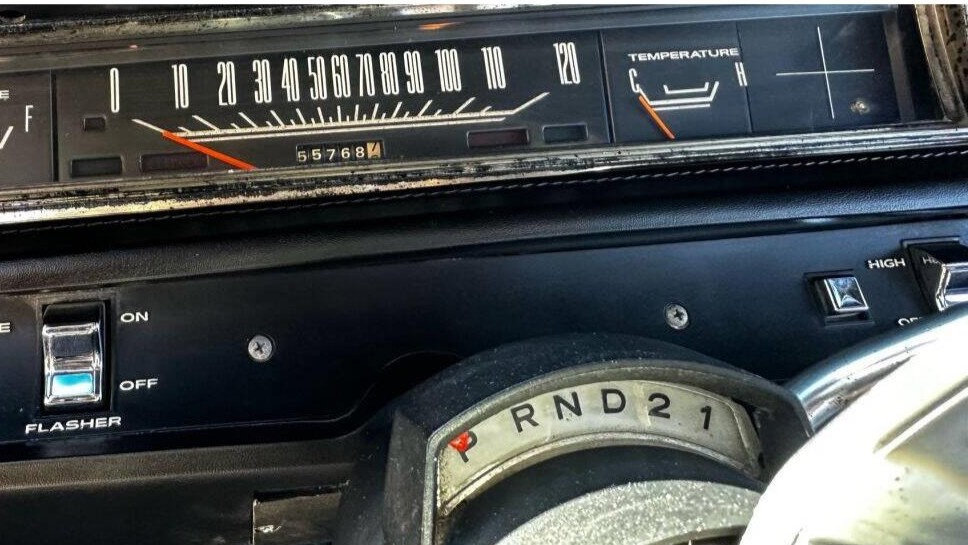
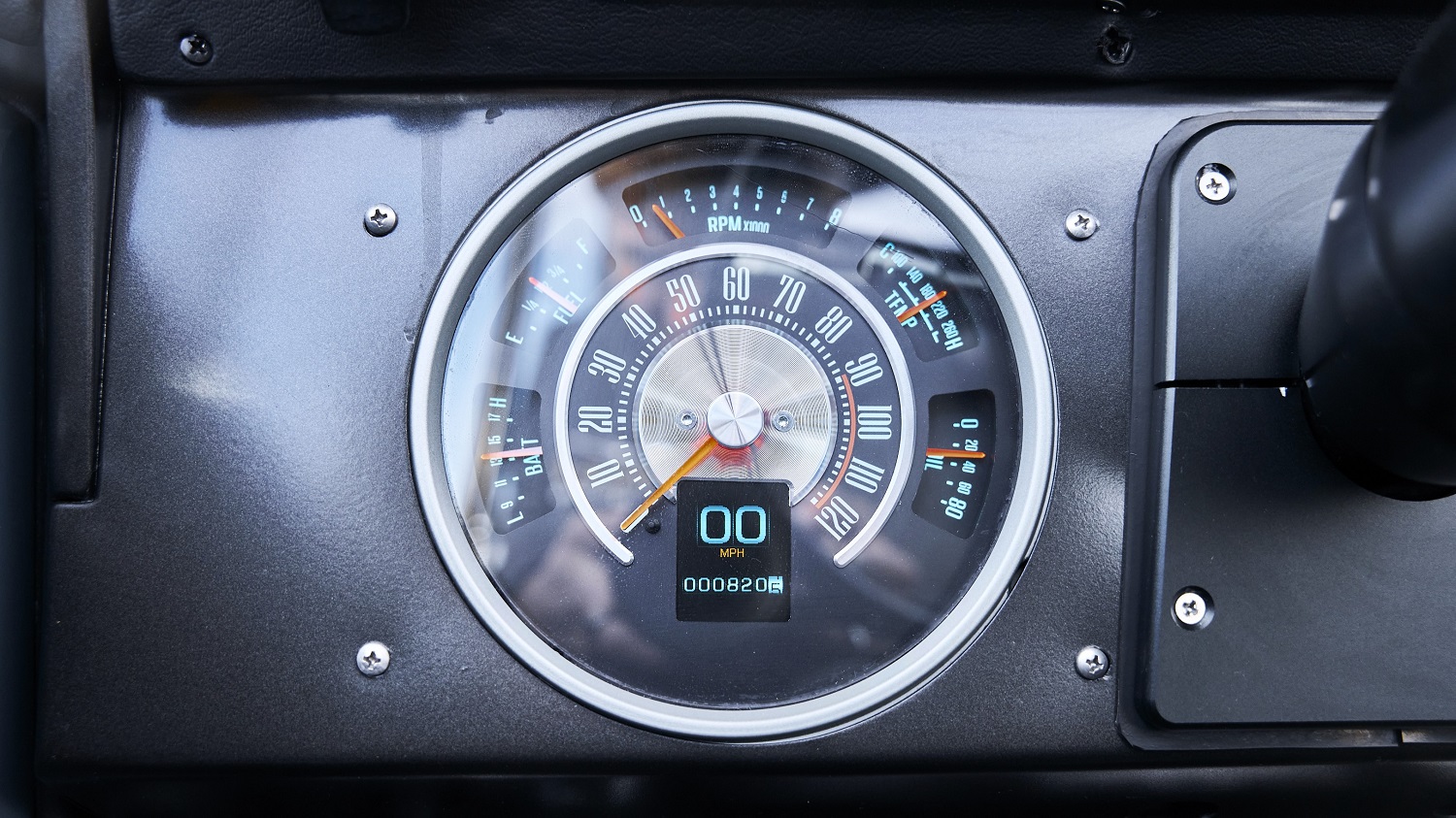
A Dakota Digital combination gauge houses a 120-mph speedometer, 8,000-rpm tachometer, and battery, fuel, temperature, and oil pressure gauges. The digital odometer shows 820 miles, but this rig is mileage-exempt, according to its title.
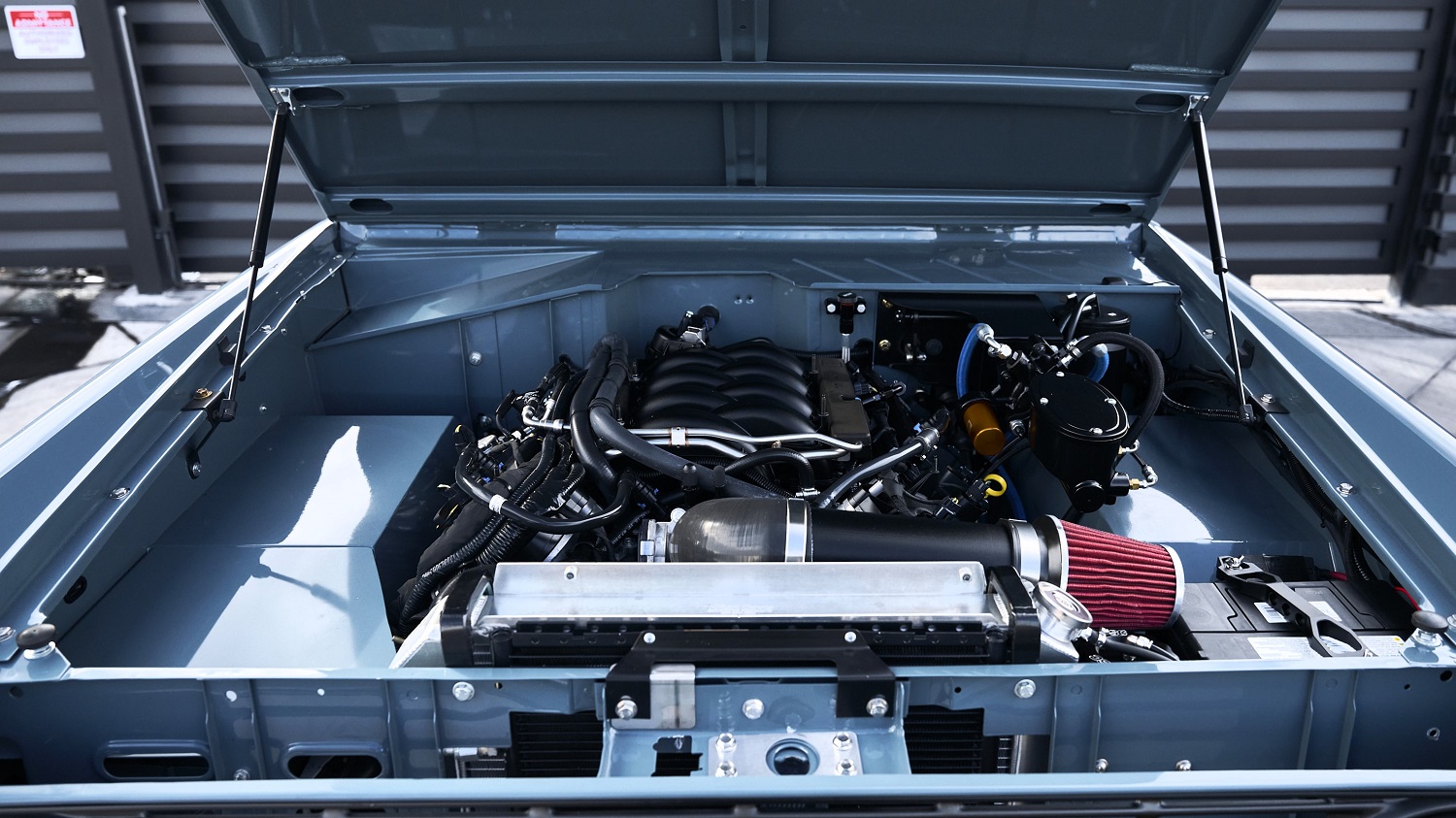
Under the hood, the original 302 was replaced with a third-generation Ford Coyote 5.0-liter V-8. The original transmission was replaced with a 6R80 six-speed automatic. Power reaches the rear or all four wheels through a dual-range transfer case with a twin-stick setup, which offers independent control of both axles and a low-range setting for just the rear end.
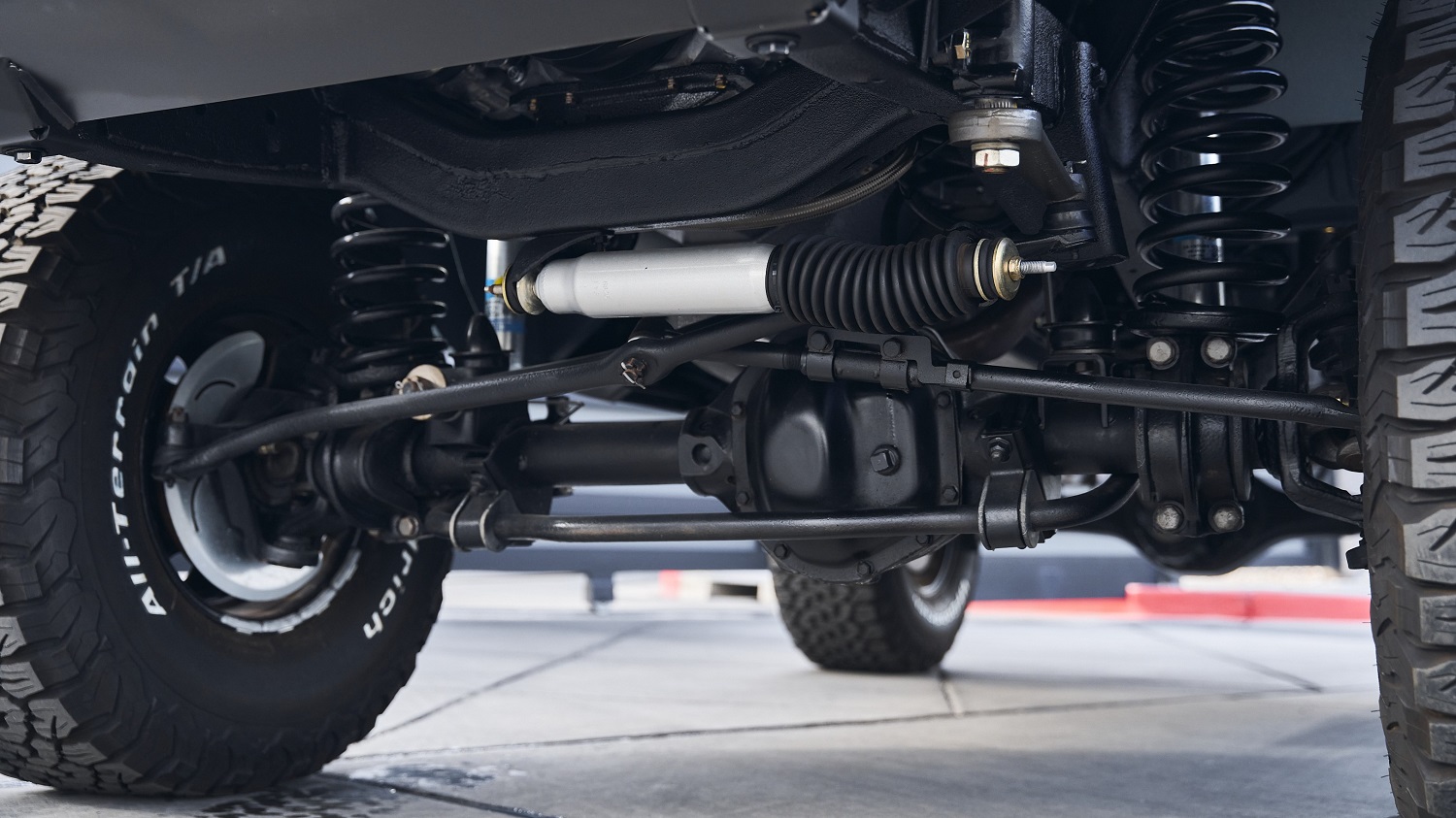
Additional upgrades include Rhino Linings underbody coating, steering stabilizer, Dana 44 front axle, nine-inch Ford rear end, lift kit, and Bilstein shocks. Hydroboost power four-wheel disc brakes keep this Bronco from running wild.
If you’re wild about this Coyote-powered 1977 Ford Bronco restomod, bid on it now before the auction ends on Thursday, March 12, 2026, at 12:00 p.m. (PDT).